
Lost In Space is not remembered as being serious science fiction, or even as a serious series. Though this is primarily because of the second and third season. The first season was intended as a serious action adventure series giving a science fictional spin to the early 19th Century novel, The Swiss Family Robinson, which had itself been inspired by the 18th Century novel, Robinson Crusoe. Like those novels, the early episodes focused on the crew as castaways trying to survive in a hostile environment. Some of the sci fi notions of some first season episodes were pretty silly by modern standards, but mostly because they were attempts to adapt the sort of complications that might appear in a western series or a contemporary slice-of-life series and put a spacey spin on it…
The show took a serious turn for the campy comedy in the second season. There have been various explanations for this shift. The actor who played Dr. Smith, Jonathan Harris, freely admitted that after reading the first few scripts, he feared that his villainous character was being set up to be killed off, so he started ad libbing comedic lines, making his character less sinister than the scripts called for, and more of a bumbling coward. Harris had already achieved fame playing such bumbling or ineffectual minor villains in two different comedy series of the 50s. In fact, one of Dr. Smith’s frequently recurring lines, “Oh, the pain! The pain!” was originally the catchphrase of one of those previous characters.
The other frequently cited culprit was the Batman live action series that debuted on ABC in the same time slot just four months after Lost In Space. Batman was immediately a surprise smash hit, and many shows the following year adopted more campy story lines because of it. While I’m pretty sure we tuned in each week to watch Lost In Space for the first few months, I know that once Batman debuted we started watching it instead. Since Batman episodes were only a half hour, and Lost In Space a full hour, we’d change channels to catch the last half of the adventures of the Space Family Robinson after watching the Caped Crusaders. We weren’t the only ones, obviously. Lost In Space had never had fantastic ratings, but they had been good enough for the show to be renewed twice. But even though the final episode of season three ends on probably the most suspenseful cliffhanger ever because the network had indicated interest in renewing the series, the network changed its mind.
Less than a year after it was canceled, in March of ’68, Lost In Space was already being syndicated, and was said to be the most popular syndicated series in most of the markets where it was shown.
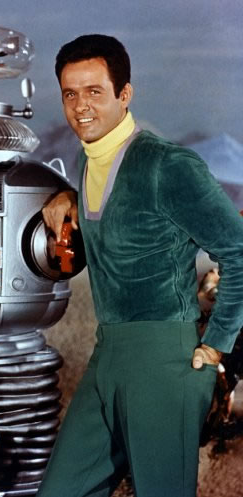
Later, once the show was in syndication and I could see it more often, my favorite characters shifted. It was so easy to laugh at the cowardly antics of Dr. Smith and the long-suffering Robot. Then empathize with poor Will Robinson who more often than the adults had to rescue Dr. Smith from whatever predicament he found himself in. I think I started to develop a crush on the season two and season three versions of Will (when the actor portraying him, Bill Mumy, was 12 and 13 years old, respectively) around the time I was 10 or 11 years old myself. Though I also have distinct memories of becoming disturbingly fascinated with Major West’s tight pants around the same time. (Don’t judge me! I dare you to check out any Firefly fan forum and not find many, many references to Nathan Frillon’s character by such nicknames as “Captain Tightpants.”)
During this phase I loved seeing the extremely foolish schemes that Dr. Smith hatched again and again. Even more, I loved the interaction between Smith and the Robot. Harris claimed that most of the alliterative insults the Smith character hurled at the robot (computerized clod, blithering bag of bolts, bubble-headed booby, et cetera) were made up by Harris himself, rather than the screenwriters. Who knows, but the whacky interactions between Smith and the robot, and the many ways that Will was drawn into Smith’s schemes, dominated the show for the last two seasons. While it wasn’t serious science fiction by any means, it wasn’t really very different than the kinds of shenanigans characters got up to on other TV shows of the time.
Later still, as I began reading more serious science fiction myself, the inherent silliness of many of the episodes began to grate on me. And then I realized that just about everyone watching was convinced that Dr. Smith was gay. And the fact that he was gay was the explanation, in most people’s minds, for Smith’s extreme cowardice, selfishness (to the point of endangering the others many times for dubious opportunities for personal gain), and his general ineffectualness. It became harder for me to watch the show. Even people who didn’t think that Smith was supposed to be gay were convinced that the actor was.
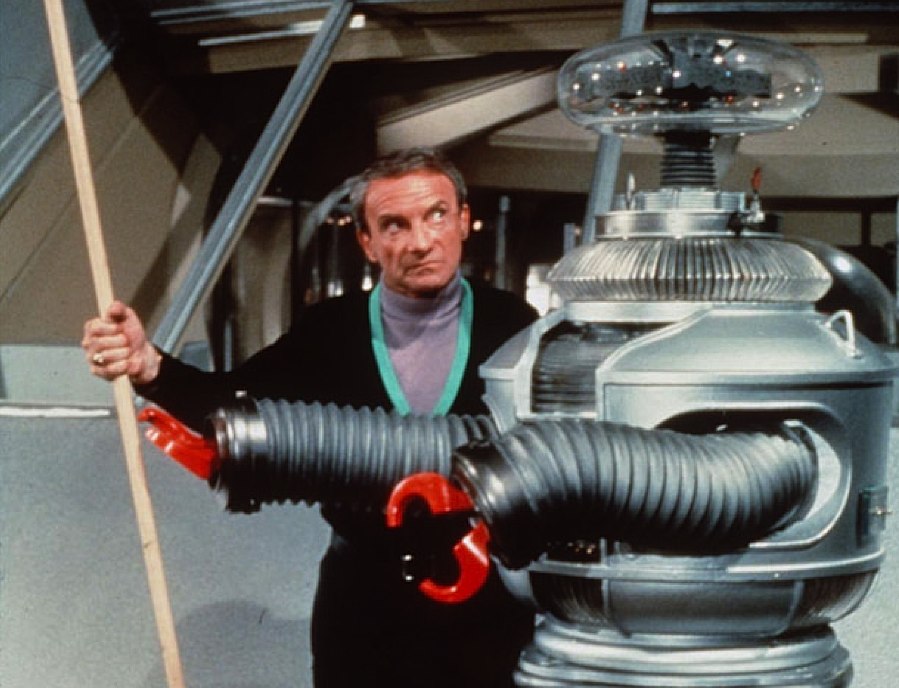
In any case, for a lot of queer kids, Dr. Smith was a gay icon. Not necessarily a hero, but like the stock sissy character in many movies and televisions shows before the 70s, he was a character you liked to laugh both at and with, even while you hated is pusillanimous ways. His cutting tongue was only a slightly more effective weapon than his wit, but while he wasn’t as intelligent as Will or Prof Robinson, and certainly not as brave and tough as Major West, somehow he managed to survive. And he often proved to be less evil than some of the antagonists they encountered. You might not admire him, but there was something about the over-the-top cowardly drama queen that you loved to hate, so you wanted him to survive so you could see him next week.

 Font Folly
1 thought on “Computerized Clods and Squeamish Scoundrels: more of why I love sf/f”