Category Archives: culture

Invisible? Refusing to see what’s already there…

Kissing otters
Ah, love!
I was having a discussion about a movie with some friends on line, and two of us were commenting upon the possible romantic relationships between some of the characters. Because one of the pairs under consideration were two male characters who had not explicitly been portrayed as non-heterosexual, another friend in the conversation commented that he never understood why people do that.

At the time, I decided to keep the conversation light, and simply said that we saw it because it was obvious. The real answer is a lot more complicated and serious than that. I didn’t feel up to explaining the unconscious homophobia underlyng the very question, and sometimes, frankly, I’m just tired of being disappointed in people.

But the problem persists, far beyond the people involved in that conversation. And yes, it is a problem, a very real and serious problem. What is the problem, you ask? Some people say the problem is invisibility or cluelessness, but…

In this way the writer can present his cowardice, laziness, and lack of imagination, as artistic integrity. “I couldn’t write gay characters; I didn’t have any.” Hand-to-forehead; the tortured auteur.
—Andrew Wheeler, writing for Comics Alliance

It’s actually about erasure and willful blindness. As I’ll explain further…

Continue reading Invisible? Refusing to see what’s already there…

Oppressed oppressors, part 3

CBbs1thUsAALYOrMat Staver is the head of the anti-gay Liberty Counsel, featured speaker at several Values Voter Summits over the years, a man who has gone to court many times defending laws that discriminate against gay people, and someone who as recently as June has testified to congress about why gay, lesbian, bisexual, or transgendered people shouldn’t be included in anti-discrimination law, and has many times on his radio show praised laws in places like Russia and Uganda that criminalize gay people and even talking about gay people. For example, last year he was on another radio show, ranting about those Christians who have said that gay rights and marriage equality are losing battles. “To assume that you can go against the created order is hubris, it’s arrogance, it’s dangerous and it is not something in which we can simply say, ‘the battle’s over, we need to figure out how to coexist.’ There is no coexistence.”

“There is no coexistence.” If he insists that his side can’t co-exist with us, that’s another way of saying either we have to cease to exist or he does, right? And I’m pretty sure he isn’t suggesting that all true believers (his side) should commit mass suicide.

When Staver says “there is no coexistence” that means he’s ultimately willing to kill. The reason Staver’s organization encourages things like Uganda’s kill-the-gays laws, and talks up the rhetoric of how dangerous we are to society is because he believes we should not be allowed to exist. Which means killing us. Or at least, scaring us with a credible enough threat of death that we all go back into the closet.

Just like the people who regularly go to Seattle’s old gayborhood (Police investigating weekend hate crimes on Capitol Hill) every weekend (‘Not one more’ — March strikes back at anti-queer violence on Capitol Hill), the aim isn’t to kill each and every queer person, it’s to scare the rest of us back into the closet. When rightwing Texas preacher Rick Scarborough announces that he’s willing to be burned to death to oppose gay marriage, he doesn’t mean that he’s going to set himself on fire; he wants to whip up fear and anger so that people who agree with him will do horrible things to some of us to frighten us into silence.

It’s the same tactics used by the hate leaders who radicalized Dylann Roof into shooting nine innocent people in a church in Charleston: making members of the majority believe that a historically oppressed minority somehow has all the power. Roof told the lone adult survivor of his shooting, “I have to do it. You’re raping our women and overrunning our country.” In a country where white police officers gun down unarmed black children in the street without facing murder charges, he believes that black people are the ones threatening the existence of white people.

Similarly, in a country where:

  • 1500 queer children are bullied into committing suicide every year,
  • where thousands of queer children are thrown out onto the streets by so-called Christian parents whose religious leaders have told them they have to show tough love,
  • where the authorities don’t investigate those parents for child neglect,
  • where the numbers of homicides of LGBT people have climbed to record highs,
  • where more than half of hate-motivated murder victims are trans people of color,
  • where state legislators are rushing to enact religious-belief based “right to discriminate” laws,
  • where in most states it is perfectly legal for employers to fire someone simply because they think the person might be gay (and where landlords can evict gay tenants or refuse to rent to them, et cetera),
  • where queer people are 2.4 times more likely to be victims of hate crimes than jews, and 2.6 times more likely to be victims of hate crimes than muslims,
  • where the number of hate crimes against all groups except lesbian, gays, trans, and bi people is going down while all categories of anti-queer hate crimes remain the some or are rising,
  • where the overwhelming majority of elected officials at the federal, state, and local level are Christian (far out of proportion to their percentage of the population),
  • where state and federal tax dollars are funneled into “faith-based” charity organizations that are often allowed to discriminate in how they administer those tax-funded activities,
  • where religious schools are often supported by tax dollars diverted from public schools,
  • where high school kids are threatened with expulsion for wearing “Gay OK” t-shirts to school after a bunch of Christian bullies beat a gay classmate (but the bullies weren’t punished),
  • where a public school teacher responding to an incident of anti-gay bullying read a book about acceptance to his class, then was forced to resign for “promoting homosexuality,”
  • where Christian organizations rally and raise money to combat anti-bullying policies unless said policies include exemptions that allow their kids to bully gay kids in the name of their faith,

…Christians are claiming that queers are persecuting them.

Seriously? Not being able to bully, discriminate against, and torment their gay neighbors is oppression?

Two very different coming out stories, and a reflection on mine

Tragic Coming Out Story:

(If embedding doesn’t work, click here.)

Coming Out to Grandma:

(If embedding doesn’t work, click here.)

No one’s coming out goes exactly the same as any other. The fear that the guy talks about in the first video (and the anxiety you can see on the young woman’s face in the first part of the second) is very real. Even in 2015, 40% of homeless teen-agers are homeless because they have been kicked out of their homes by parents because they are gay.

I tried to come out to my best friend—a guy I loved like a brother—dozens or more times. Because we were both attending fundamentalist evangelical churches, I tried to ease us into the conversation. But every single time that even a hint of the topic of non-heterosexuality came up, he would instantly go into “Gross! Sinful! All homos go to hell!” mode with such vehemence, it’s amazing I wasn’t physically hurled from the room by the strength of his condemnation.

Ironically, when I finally did come out years later, he insisted that the reason he was ending our friendship was not because I was “an unrepentant homosexual” (his words), but rather because I told someone else before I told him. He was also one of the people who insisted emphatically that he had never, ever, ever suspected at all that I was gay before I came out.

I don’t believe that statement, either.

Several relatives and close friends from back then made equally insistent denials of ever suspecting. Of course, one of those people was my Mom. And when one of my aunts found out Mom was claiming she had never suspected, that’s when the aunt informed me that beginning when I was about 14 years old, she and my mom and several ladies from church had begun meeting once a week to pray my gay away. I also was informed by one of the former board members of the evangelical touring teen choir I had been involved with as a teen-ager that it had been explicitly known that one reason I wasn’t given solos or put into one of the small ensembles for the first many years I was active in the group was because the leadership was certain I was “struggling with the sin of homosexuality.”

They were correct in that I was struggling mightily to stop feeling attracted to other guys. But unlike a lot of the guys who they did put into leadership positions and gave solos to, I wasn’t acting on my feelings. I wrote about one of those cases, but he wasn’t the only queer boy in the group fooling around with other guys back then.

I’m glad that more people are getting reactions like the second video: “I always knew. Were you afraid to tell me?” But far too many queer people have plenty of reasons to fear rejection (and worse) from their own families and friends if they admit who they are. And that’s just wrong.

Colors of the rainbow so pretty in the sky, also on the faces of people passing by

The original Pride flag designed by Gilbert Baker in 1978 has 8-stripes. Colors were removed, changed, and added due to fabric availability.
The original Pride flag designed by Gilbert Baker in 1978 has 8-stripes. Colors were removed and changed originally due to fabric availability.
I don’t remember when I first learned that the Rainbow flag was a symbol for LGBTQ pride. I do remember in high school finding out that a particular representation of a labrys (double-headed symmetric ax associated with several goddesses from Greek mythology) had been adopted by some lesbians. However, since the information came first from the same sorts of church people who saw Satanic symbols everywhere, I wasn’t completely certain it was true.

The next symbol I learned about was the pink triangle. Since it was an emblem used by the Nazis to mark prisoners sent to the concentration camps with the excuse that they were sexual deviants, and since the Allies had then re-imprisoned all of the gay men who managed to survive the camps, the emblem was more of an assertion of “never again!” than a pure statement of pride.

Of course, since Gilbert Baker designed the very first Rainbow Pride flag during my junior year in high school, it’s not surprising that I didn’t learn about the emblem until some time later… Continue reading Colors of the rainbow so pretty in the sky, also on the faces of people passing by

Pot shots from the troll gallery

Copyright Whitney Phillips.
Quote from Whitney Phillips’ excellent essay, “Don’t Feed the Trolls? It’s Not That Simple.”
I was in High School the first time that something I wrote prompted threats of bodily harm. I was a regular contributor to the editorial page of the student newspaper and wrote on a variety of topics—usually political—but the one that pushed my fellow students over the edge was a critique of stagecraft of the music department’s regular concerts. And I was critiquing it as an insider. I played bassoon in the orchestra and symphonic band (and occasionally other instruments as needed), trombone in the jazz band, and sang baritone in the men’s a cappella group (marching band and the pep band never participated in the formal concerts, but I was in those groups, too).

I was tired of playing concerts to a nearly empty theatre. I had recently seen the fall concert of the music department of the other high school across town, and their auditorium was not only packed, they actually charged an admission fee! And their shows were fun.

Anyway, my opinion column did not go over well with some of my fellow music students. But at least none of them felt the need to be anonymous with the threats of maiming and murder.

The first anonymous threats happened when I wrote about abortion and sex education—in the same high school newspaper in the late 70s. And again at community college (and later at university).

But the most vicious, virulent, and disturbing threats came when I started reviewing exhibits in the small free art gallery at the community college. Express an opinion about art, and people completely lose all sense of proportion. Remember that the next time someone tells you that art (or music, or literature, or movies, television, et cetera) doesn’t matter.So, by the time I was active on QueerNet and such in the early 90s, getting homophobic death threats and the like on the internet seemed like old hat.

Anyway, since the whole Sad Puppies thing has happened, I’ve been getting a few more comments here than usual. Okay, sometimes more than a few. Though it isn’t a deluge. Besides having comments set to moderate (a comment doesn’t appear until approved, unless I’ve added the commenter to the whitelist), anonymous commenting is disabled. And the comment system records IP addresses (and alerts you that it will). So the number is high for my blog (since my average is less than one comment per post), but low by typical internet forum standards.

Although many of the comments have been angry, so far none have risen to a vitriolic level. Not being able to post wholly anonymously contributes to that (just the fact that one has to type into multiple fields is probably too much of a hurdle for many troll), I’m sure. I suspect that because there is simply so much being written about this particular topic, and my little blog isn’t exactly drowning in traffic, that there are too many other places for the trolls to go.

Anyone who has ever met me and talked with me for more than a millisecond knows that I do not shy away from debate. And I don’t believe that simply ignoring all trolls is an effective way to deal with the problem of vicious harassment. I’m not ignoring them. I’ve read the comments, and made a determination based on the contents of the comment of whether the person is here to discuss the issue or just wants to yell. I see no reason to approve the latter type of comments and subject any of my readers to an angry tirade that adds nothing to the discussion. I certainly don’t have the time to try to reason with someone who seems bent on nothing more than trying to shout down and insult dissenters.

Make an actual logical or reasonable argument. Indicate that you understand there is more than one side to the issue. Then we can talk.

The stories we have to tell

"Don't forget, no one else sees the world they way you do, so no one else can tell the stories that you have to tell." - Charles de Lint“Researcher Dale Spender in Australia used audio and video tape to independently evaluate who talked the most in mixed-gender university classroom discussions. Regardless of the gender ratio of the students, whether the instructor was deliberately trying to encourage female participation or not, men always talked more—whether the metric was minutes of talking or number of words spoken.

“Moreover, men literally have no clue how much they talk. When Spencer asked students to evaluate their perception of who talked more in a given discussion, women were pretty accurate; but men perceived the discussion as being “equal” when women talked only 15% of the time, and the discussion as being dominated by women if they talked only 30% of the time.”

My conclusion: men think women talk too much because they think women should be silent.

This perception problem isn’t limited to gender issues. Any person in a position of power or privilege thinks that any time someone outside their group talks or is recognized more than a tiny fraction of the time that the others are dominating the situation.

  • It is part of the reason that someone like Senator Cotton of Arizona can go on a national news program and say, with a straight face, that lesbians and gay men should stop demanding full equality and simply be grateful that we aren’t being publicly executed by the government.
  • It’s part of the reason the GamerGate goons start screaming that women are taking away their fun simply by suggesting that maybe a few games might be made that don’t treat woman as objects to be destroyed and avenged or taken as a prize.
  • It’s the reason that rightwing politicians and the like can claim that Christians are being oppressed despite the fact that: Christian holy days are observed as both state and federal holidays; two-thirds of the justices on the Supreme Court are Catholic; the President, Vice-President, Speaker of the House, Senate Majority Leader, Senate Minority Leader, House Minority Leader (heck, 92 percent of the members of Congress) are Christian; where many states have laws that explicitly exempt Christians from anti-bullying laws and policies at schools (in other words, Christians can bully anyone they want, as long as they claim it is due to their sincerely held belief); and where not one single state has enacted laws banning Christians from getting married, or adopting children, or being teachers.
  • And yes, it’s part of the reason that someone like Larry Correia and his cohorts—Brad Torgerson, Theodore Beale (aka Vox Day), and John C. Wright—can see more than one or two women or people of color nominated in a single category for the Hugo Awards and start screaming that science fiction is being taken away from people like them.

A bit over a year ago, Laurie Penny wrote Whose wankfest is this anyway? The BBC’s Sherlock doesn’t just engage with fan fiction – it is fan fiction for The New Statesmen which included this brilliant observation:

“What is significant about fan fiction is that it often spins the kind of stories that showrunners wouldn’t think to tell, because fanficcers often come from a different demographic. The discomfort seems to be not that the shows are being reinterpreted by fans, but that they are being reinterpreted by the wrong sorts of fans – women, people of colour, queer kids, horny teenagers, people who are not professional writers, people who actually care about continuity (sorry). The proper way for cultural mythmaking to progress, it is implied, is for privileged men to recreate the works of privileged men from previous generations whilst everyone else listens quietly.”

Laurie Penny is talking about the BBC series, Sherlock, and quite rightly pointing out that the series itself is fan fiction. It is being produced and broadcast on a prestigious network, and very few people would say that it isn’t real story telling, but the series is a re-imagining of stories written more than a hundred years ago by Arthur Conan Doyle. It isn’t sneered upon the same way that Buffy fanfic or ElfQuest fanfic or Teen Wolf fanfic or Supernatural fanfic is in part because the source material for Sherlock is in the public domain, but also in no small part because the people writing it are a pair of middle-aged University-educated white male British citizens.

Her insight doesn’t apply only to fan fiction.

Stories—whether they be fiction or the narrative of our existence or history—shouldn’t come from only privileged voices. They need to come from all voices, including women, people of color, queers, young people, old people, prudes, libertines, people who aren’t (yet) professional, and most definitely people who actually care about continuity. That’s why those of us who aren’t part of the dominant demographic need to tell our stories. And we need to make room for others to tell theirs.

Talent doesn’t mean what you think it means

My uncle Joe was a metal-smoothing wizard. Most of the men on Mom’s side of the family were car mechanics of one sort or another, and Joe was good at troubleshooting engines and fast at replacing various engine components, but where he really shined was body work. He took it as a personal affront if someone suggested filling in mangled, crumpled fender with Bond-o. Joe didn’t just believe in pounding a metal fender out, he wanted to take the time to smooth the metal back into the shape it had been. He rolled and tapped it until you couldn’t tell there had ever been anything amiss, before saying it was ready for primer and painting. Watching him work on a car’s quarter panel was like watching true magic.

Joe is my mom’s baby brother and only four years older than me. As a teen-ager working in a body shop, he did a better job coaxing the crumpled car body parts back into shape than men who had been doing the job for decades. But people outside the body shop didn’t seem to value it as a talent. It was something he had a knack for, they might say. Or it was a skill you could make a decent living at. But it wasn’t really talent.

A lot of those same people insisted that I had Talent, with a capital-t. Because I was clever with words. I could think quickly on my feet, recalls enormous amount of data, construct compelling arguments, and paint vivid pictures with words. They were certain that god had given me these gifts and intended me for great things.

I wasn’t so sure… Continue reading Talent doesn’t mean what you think it means

Logic is the beginning of wisdom, not the end

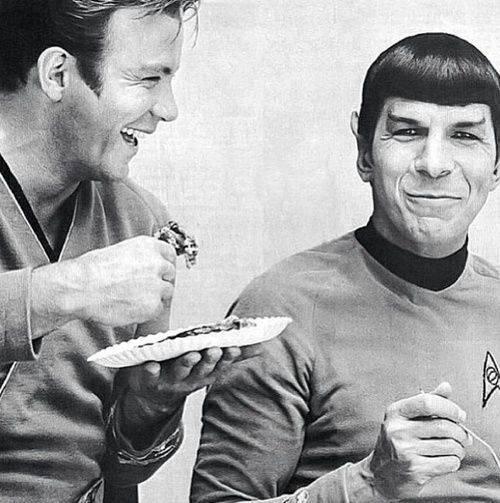
Publicity photo of William Shatner and Leonard Nimoy on the set of the original Star Trek series.
There are a lot of thoughts and emotions bouncing around in my head since learning that Leonard Nimoy—who portrayed the logical yet humane Spock on the original Star Trek series, the enigmatic and sometimes villainous William Bell on Fringe, and many, many roles in between—passed away on Friday. Before I was able to compose something that made sense of my feelings to post, my beloved husband wrote on twitter:

RIP @TheRealNimoy you showed us how to become whole people even when we felt like we were a mix of random parts.

Or, as writer and Manga Editor Stacy King put it:

Spock was the “it gets better” symbol for 70s nerd kids: a brilliant alien caught between cultures who still managed to find home & friends.

Some people say that we’re conflating a character with the actor that played him. Yes, Gene Roddenberry should get the credit for creating Spock—and when the network executives wanting to dump the “guy with the ears” after seeing the first pilot, for fighting fiercely to keep the half-alien/half-human character on the show. Similarly, credit is due to all of the writers who wrote him (especially Dorothy Fontana). But while characters in movies, television shows, and plays are the product of the creative work of writers, directors, costume designers, or so on, you can’t completely dismiss the contribution of the person who spoke those lines, wore the costume, and actually played the part.

Nimoy could communicate volumes in a cocked eyebrow or the tilt of his head. He’s the one who made us believe that this character that was a hybrid of a cold, emotionless alien and a much less logical human was a real person.

It doesn’t hurt that the man himself seemed quite likable. Whether he was playing Sherlock Holmes on stage, recording some truly awful music, directing movies, voicing parodies of himself in various animated (and not) shows, or being interviewed about any of his work, he always seemed to be having a good time. He took his craft quite seriously, but didn’t seem to take himself too seriously.

If George Takei is everyone’s favorite gay uncle, Nimoy became every nerd’s favorite grandpa. One of my friends retweeted one of Nimoy’s tweets from 2013 where he said that anyone who wanted him to be their honorary grandfather, should consider it done.

When he was diagnosed with chronic obstructive pulmonary disease, which may have been the result of his smoking in his younger days, he started campaigning against smoking, by posting statements like: “I quit smoking 30 yrs ago. Not soon enough. I have COPD. Grandpa says, quit now!! Live Long and Prosper.”

Given his age and the illness, I thought I was prepared for this news. But I wasn’t. By the time I heard the news last week that he was hospitalized, he had already been released and gone home. I heaved a sigh of relief. He even posted to twitter afterward, so everything must be okay, right?

In retrospect, when you read the tweet, it’s obvious he knew. I guess I just wanted to be in denial. I know I cry easily, but I didn’t expect it to hit me quite like this.

I just posted the text of his final tweet yesterday, but it’s a good thought, and worth re-reading:

“A life is like a garden. Perfect moments can be had, but not preserved, except in memory. [Live Long And Prosper]”

Leonard Nimoy, 1931-2015

About waiting…

andy-warhol-waitingI get reminded in weird ways how old I am, sometimes. For instance, there was a discussion happening between some of my online acquaintances about Star Wars, specifically about the original movies (where young Luke Skywalker is the protagonist). I made a comment about what a freak I was considered to be by classmates because I had seen the show more than 13 times. And the comment made no sense to the people in the discussion.

So I had to explain that I was talking about when it first came out, and was only available in theatres. This was in 1977, when I was a teenager. Worse than that, it didn’t play in any of the theatres in the smallish town where I lived until about four or five months after it first came out. The closest place that had a big screen and a decent sound system where the movie was playing was more than an hour drive away—not only not in the same town were I lived, but not in the same state!

When you’re a high school student you don’t have a lot of disposable income, so the gas money and cost of tickets wasn’t a trivial expense. I carpooled (either using my old beater car or letting one of my friends drive) twelve times over the course of the first summer the film was out in order to see it. And then in the fall I went once to the truly crappy local theatre that finally got it, dragging a few friends I had never been able to talk into taking the longer trip.

Also at that time period, while home VCRs technically existed, they cost thousands of dollars and were huge, heavy things. Video rental stores didn’t become a common type of business for a few more years, when the technology got a little cheaper. And even then, the players were expensive enough that many people would rent both some movies and a machine from the store in order to have a movie night at home.

Cable television existed only in cities and larger towns. When cable first came to our small town, I was 19 or 20 years old, and it consisted of 15 regular channels, plus the premium channels of HBO or Showtime (Cinemax, Stars, and the like didn’t exist, yet). I write “or” because while very few people I knew had cable at all, most of those who did had only the 15 basic channels, and no one splurged on more than one movie channel. No one.

And, of course, DVDs literally didn’t exist, yet. Let alone the internet.

I had to wait three years before The Empire Strikes Back came out—by which time I was a freshmen in college. Then another three years after that before any of us got to see Return of the Jedi.

I saw all three of those movies, during their respective opening weeks, in the same big theatre in Beaverton, Oregon. It was like a religious pilgrimage for me, by then. I’d been hooked at 17 years old, and the passion still burned with the intensity of a billion suns when I was 23.

This is one of the reasons that, when I hear some of my friends complaining about how many months it will be before the new season of My Little Pony comes out, I don’t always give them as much sympathy as I probably ought.

On the other hand, I’m just as bad. The last episode of Justified season five aired eight months ago, in April, and I’ve been dying while waiting for season six to begin… which it will in January 2015. That’s less than 30 days from now. Inside, 23-year-old me is laughing so very hard at current me because I’m agonizing over having to wait merely months for the next chapter in a saga. And this is hardly the only series or movie that I have such lamentations about.

So, while part of me rolls my eyes at younger fans, another part of me is rolling my eyes at me, too.

Of course, we should remember that 173 years ago, back in 1841, people are said to have lined up for blocks in London waiting for a new edition of a weekly magazine called Master Humphrey’s Clock so they could read the next chapter of Charles Dickens’s The Old Curiosity Shop. Even more fun were the stories of people meeting English travelers disembarking from ocean liners in New York at the time, to ask whether Little Nell lived, since American publication of the stories was several weeks behind the British chapters.

As they say, times change, but human nature doesn’t.

Sunday Funnies, part 4

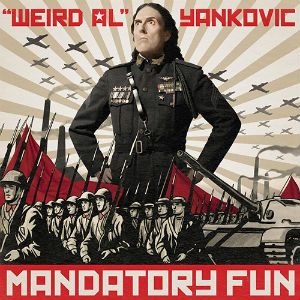
Copyright Sony Music Entertainment, Inc.Usually my Sunday Funnies post is all about web comics, but this week is going to branch out. Weird Al Yankovich has released a new album this week, Mandatory Fun. And to promote the album, he has made eight music videos of songs from the album, and is releasing one video a day for the first week the album is available.

As Weird Al himself has explained in several interviews this week, he first became famous during the MTV era, when music videos on that network were the way to promote a new album. Now viral videos on the internet has replaced all that. His thinking is that a video that becomes famous on the internet enough to “go viral” is only really famous for a day or two, so the only way to promote something like an album is to release several videos over the course of several days.

The other thing he explains is that this album finally concludes the deal he signed with Sony 30-some years ago. So now he will be free to produce music the way you need to in the internet era: singles for digital download. “My songs are often topical. By the time I have made enough songs to release an album, most of the songs aren’t topical any more.”

Back in those MTV days, Weird Al’s songs were sometimes hit or miss, but the music videos for even his misses were comedic gems. I bought the album this week, and have listened to it, and I have to say that Weird Al is at the top of his game on this one. There were a few of the songs that I rated less than five stars… and the video for one of those came out after I listened to the song, and I have to say the video is fantastically funny.

So, I definitely recommend the album, and if you need some convincing, here are the videos he’s released thus far this week:

.

Tacky

.
.

Word Crimes

.
.

Foil

.
.

Handy

.
.

Sports Song

.
.

First World Problem

.
.

And if you haven’t already, please check out these previously recommended comic strips:

mr_cow_logo
I’ve long been a fan of: “Mr. Cow,” by Chuck Melville… and not just because the artist is a friend! A clueless cow with Walter Cronkite dreams presides over a barnyard of a newsroom.

dm100x80I’m also a big fan of “Deer Me,” by Sheryl Schopfer. This artist is also a friend. I have previously described this strip as: “Three roommates who couldn’t be more dissimilar while being surprisingly compatible.” Except in a recent story line Thomas has moved out! Eeek!

title
And I love this impish girl thief with a tail and her reluctant undead sorcerer/bodyguard: “Unsounded,” by Ashley Cope.

The_Young_Protectors_HALF_BANNER_OUTSIDE_234x601The Young Protectors begins when a young, closeted teen-age superhero who has just snuck into a gay bar for the first time is seen exiting said bar by a not-so-young, very experienced, very powerful, super-villain. Trouble, of course, ensues.