Category Archives: history

The first openly queer person to run for U.S. public office and win was not who you think

“This is the first time in the history of the United States that someone has run openly as a gay person and been elected to public office.” – Kathy Kozachenko, Ann Arbor, Michigan, April 2, 1974
On April 2, 1974, forty-three years ago, University of Michigan student and Human Rights Party candidate Kathy Kozachenko was elected to the city council of Ann Arbor, Michigan, making her the first openly gay or lesbian person to run successfully for political office in the United States. Notably, Kozachenko was not the first gay or lesbian person to serve openly in public office; in fact, her predecessors on Ann Arbor’s city council, Nancy Weschler and Jerry DeGrieck, came out during their first and only terms, making them the first openly queer officeholders in the United States. (To be clear: the distinction is that Kozachenko was openly gay as a candidate, whereas Weschler and DeGrieck did not come out until after their elections.)

After serving one term, Kozachenko stepped out of the public eye, though not out of the activist life entirely. After meeting her life partner, Mary Ann Geiger, and having a son, Kozachenko retreated more fully into private life and her place in queer history went virtually ignored for decades.

In “The First Openly Gay Person to Win an Election in America Was Not Harvey Milk,” a 2015 piece for Bloomberg politics, Steve Friess explored the factors that contributed to Kozachenko’s diminished place in the history of gay liberation: geography, misogyny, timing, messaging. When asked why the groundbreaking gay journalist Randy Shilts referred to Harvey Milk as “the first openly gay elected official in the nation,” for example, Kozachenko “figures there was little fuss at the time because it was just liberal, small-city Ann Arbor.”

“I don’t think I was brave,” Kozachenko told Friess, “because I was in a college town where it was cool to be who I was. On the other hand, I stepped up and did what I felt needed to be done at the time. Maybe that’s the whole story, that ordinary people can do something that then other people later can look back on and feel really good that they did this.” #HavePrideInHistory #KathyKozachenko (at Ann Arbor, Michigan)

(Reposted from LGBT HISTORY ARCHIVES IG: @lgbt_history.)

Is it weird for me to think this is a cool coincidence one day after I write about a much more recent openly gay person at the University of Michigan?

Wishing on 9/13…

Cover of the Sept 21, 2001 edition of the Village Voice.
Cover of the Sept 25, 2001 edition of the Village Voice. (click to embiggen)
Jim Wright, an author who is also a navy veteran, posted some comments about the 15th anniversary of 9/11 on Facebook on Sunday which upset a lot of people. They called him a traitor and other nasty names, and reported him to Facebook for violating community standards (which the post didn’t). Subsequently Facebook (as they always do) gave in to the loud voices of rightwing people who claim to love Freedom and Liberty, but only for people who agree with them. These folks also often yell a lot about how much they love Jesus, and then they call people like me faggots, lead prayers saying we deserve death, and call for people who have committed no crimes to be executed. So they neither understand what freedom means, nor do they understand any of the teachings of Jesus.

Mr. Wright’s post was blunt, and not at all a feel-good statement. But it also contained a lot of truth:

“You’re expecting some kind of obligatory 9-11 post, aren’t you?

Here it is, but you’re not gonna like it.

15 years ago today 19 shitheads attacked America.

They killed 3000 of us.

And then … America got its revenge for 9-11.

Yes we did. Many times over. We killed them. We killed them all. We killed their families. We killed their wives and their kids and all their neighbors. We killed whole nations that weren’t even involved just to make goddamned sure. We bombed their cities into rubble. We burned down their countries.

They killed 3000 of us, we killed 300,000 of them or more.

8000 of us came home in body bags, but we got our revenge. Yes we did.

We’re still here. They aren’t.

We win. USA! USA! USA!

Right?

You goddamned right. We. Win.

Except…

Every year on this day we bathe in the blood of that day yet again. We watch the towers fall over and over. It’s been 15 goddamned years, but we just can’t get enough. We’ve just got to watch it again and again.

It’s funny how we never show those videos of the bombs falling on Baghdad today. Or the dead in the streets of Afghanistan. We got our revenge, but we never talk about that today. No, we just sit and watch the towers fall yet again.

Somewhere out there on the bottom of the sea are the rotting remains of the evil son of bitch who masterminded the attack. It took a decade, but we hunted him down and put a bullet in his brain. Sure. We got him. Right? That’s what we wanted. that’s what our leaders promised us, 15 years ago today.

And today those howling the loudest for revenge shrug and say, well, yeah, that. That doesn’t matter, because, um, yeah, the guy in the White House, um, see, well, he’s not an American, he’s the enemy see? He’s not doing enough. So, whatever. What about that over there? And that? And…

Yeah.

15 years ago our leaders, left and right, stood on the steps of the Capitol and gave us their solemn promise to work together, to stand as one, for all Americans.

How’d that promise work out?

How much are their words worth? Today, 15 years later?

It’s 15 years later and we’re STILL afraid. We’re still terrorized. Still wallowing in conspiracy theories and peering suspiciously out of our bunkers at our neighbors. Sure we won. Sure we did. We became a nation that tortures our enemies — and our own citizens for that matter. We’re a nation of warrantless wiretaps and rendition and we’ve gotten used to being strip searched in our own airports. And how is the world a better place for it all?

And now we’re talking about more war, more blood.

But, yeah, we won. Sure. You bet.

Frankly, I have had enough of 9-11. Fuck 9-11. I’m not going to watch the shows. I’m not going to any of the memorials. I’m not going to the 9-11 sales at Wal-Mart. I don’t want to hear about 9-11. I for damned sure am not interested in watching politicians of either party try to out 9-11 each other. I’m tired of this national 9-11 PTSD. I did my bit for revenge, I went to war, I’ll remember the dead in my own time in my own way.

I’m not going to shed a damned tear today.

We got our revenge. Many times over, for whatever good it did us.

I’m going to go to a picnic and enjoy my day. Enjoy this victory we’ve won.

I suggest you do the same.”

—Jim Wright, Stonekettle Station

I almost never write about 9/11. On the first anniversary, I made a post on my old blog called “Living for 9/12.” And I reposted it on this blog around the eleventh anniversary. I didn’t express the same sentiment as Wright either of those times, but I’m getting to a similar emotional space.

It’s not that I think we should forget the deaths that happened that day. But could we try using that grief to accomplish some good in the world? I mean, my goodness, it took us 14 years to pass a bill to help the fireman and paramedics and police who responded that day, survived, but have suffered longer term health issues. And yes, we killed the mastermind of that plot, but along the way we’ve bombed countries that weren’t involved, and have used the original tragedy to justify all sorts of violations of our own civil liberties, assassinating at least one of our own citizens without due process, not to mention developing a disturbing habit of killing civilians with drones!

Every year about 11,000 U.S. citizens are murdered with firearms, sometimes in mass shootings like Orlando or Sandy Hook, most in incidents that barely make it to the local news. That’s nearly four 9/11s every single year. Maybe we should actually do something to prevent some of those? Or at least let the National Institutes of Health research into whether we could do anything to reduce that number?

Why are we unable to work up any determination over any of the tens of thousands of deaths that have happened since that day?

I need to stop ranting. There was one other 9/11 post I saw on the day that I think is worth looking at. It isn’t like Wright’s at all, but it also doesn’t wrap itself in the flag to push an agenda. Tricia Romano is currently the Editor in Chief of a Seattle weekly newspaper, the Stranger. But in 2001 she worked in New York City, writing for another weekly newspaper, the Village Voice: I Was In New York City During 9/11. I’ll Never Forget.

Sausage making: my history with presidential nominees

party-imagePresidential campaigns in the U.S. are weird. Okay, let’s be honest, politics everywhere is weird, but the way Americans choose candidates has a particularly amazing number of eccentricities. We choose candidates through a patchwork systems of caucuses and primaries, which also generate the delegates who will eventually write state and national party platforms through an arcane series of district, county, and state meetings and conventions. And sometimes the arcane becomes literal (such as the time our state’s Republican party platform had multiple planks condemning witchcraft). Politics is supposed to be about compromise and finding solutions that a majority of people can get behind, which makes things very difficult for people who expect a candidate to agree with them on absolutely everything in order to get their support. The more voters involved, the less likely it is that you’re going to get your first choice. Which isn’t a pleasant realization. As I well know… Continue reading Sausage making: my history with presidential nominees

The 11th hour of the 11th day of the 11th month…

sj8qohs2yc6xbxpx1bmm

From the President Obama’s official proclamation for Veteran’s Day 2015:

The United States military is the strongest, most capable fighting force the world has ever known. The brave men and women of our Army, Navy, Air Force, Marine Corps, and Coast Guard demonstrate a resolute spirit and unmatched selflessness, and their service reminds us there are few things more American than giving of ourselves to make a difference in the lives of others. On Veterans Day, we reflect on the immeasurable burdens borne by so few in the name of so many, and we rededicate ourselves to supporting those who have worn America’s uniform and the families who stand alongside them.

Our true strength as a Nation is measured by how we take care of our veterans when they return home, and my Administration is committed to ensuring our heroes and their loved ones have every chance to share in the promise they risked their lives to defend. We have made it easier for veterans to convert their military skills to the civilian workforce, enabled more veterans and their family members to attain Federal education benefits, and expanded access to timely, quality health care for all veterans. Just as every veteran deserves the support and benefits they have earned, those who have given everything to defend our homeland deserve a place of their own to call home…

Our veterans left everything they knew and loved and served with exemplary dedication and courage so we could all know a safer America and a more just world. They have been tested in ways the rest of us may never fully understand, and it is our duty to fulfill our sacred obligation to our veterans and their families. On Veterans Day, and every day, let us show them the extraordinary gratitude they so rightly deserve, and let us recommit to pledging our full support for them in all they do.

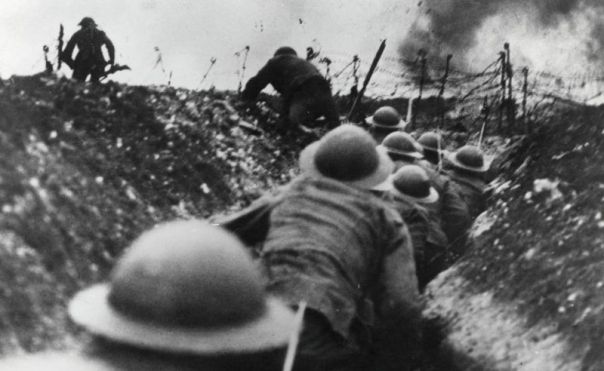
Our allies still refer to this holiday by its original name: Armistice Day: Nation remembers war dead. We barely study World War I in public school history classes, and when we do, it seldom includes the whole story: How did the first world war actually end?

Regardless, if you want to show support for those who served, may I humbly suggest donating to National Coalition for Homeless Veterans. There are, of course, many other fine charities that serve veterans and their families. You can find more of them here: Charity Navigator: Support Our Troops

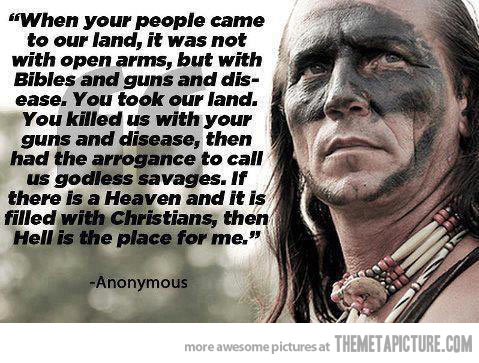
Indigenous Peoples Day

native-american-quote-indianSeattle, where I have lived for thirty years, is one of many cities in the U.S. that have declared October 12 Indigenous Peoples Day. In Seattle the ordinance declaring the new name for the holiday was signed into law 364 days ago, which means that today is the first time we’re officially celebrating it here. There are a lot of good reasons we should consider getting rid of Columbus Day: Christopher Columbus was a lost sadist. There shouldn’t be a holiday in his name and Columbus a problematic historical character: unreliable navigator, relentless self-publicist, chaotic colonial administrator, and probable mass murderer. Which makes many ask Why is Columbus Day still a U.S. federal holiday?

When I was a kid, I don’t remember any of the school districts I attended giving us the day off. Columbus Day was a day we talked about the very white-washed version of his “discovery” of the Americas. I used to work with a man who was born on Columbus Day, and what he loved most about it was that where he went to school it was a day off, so he and his friends always got to go to the movies or something similar on his birthday.

94842cae33908dd208ad90a2a0b1df5fAny problematic figure can represent a teaching opportunity, of course: Ángel González: I’ll be raising a glass to the adventurer whose legacy shows how Hispanic culture and the United States are inseparable, in glory and in shame. And it must be noted that simply changing a holiday’s name doesn’t necessarily solve real problems: It’s been a year, but improvements for Native American services are off to a slow start.

And of course some people wonder Why Do We Celebrate Columbus Day and Not Leif Erikson Day?

I have neither a clever nor wise conclusion to this. I think it is sad that there are people who defend Columbus Day, and not at all surprising that many of them are the same ones who bitch about so-called illegal immigration with absolutely no self-awareness of the irony of what Columbus and other European colonists did to Native Americans. But I do believe that names matter, just as truth and understanding matter. So, count me as one of the people who thinks the federal holiday’s name, at the least, should be changed.

“…that mountain top is sure to blow!”

http://volcanoes.usgs.gov/volcanoes/st_helens/st_helens_gallery_23.html
Public domain photo from the USGS of the big eruption on May 18, 1980.

“The year was 1980,
May 18th, you’ll recall,
When daytime turned to nighttime,
In the town of Yakima…”

I never lived in Yakima, but Longview, were I was living and attending school in 1980, was in one of the flood plains that was in danger of major flooding when Mt. St. Helens began erupting in 1980. The Oregonian recently acquired some photos that were taken by a pilot that day, that have never before been published. They’re pretty awesome. Go take a look.

We were lucky on May 18, because the wind was blowing away from us. So while three of the rivers that converge there at the towns of Longview and Kelso rose so high that they almost overtopped the dikes, daytime did not turn to nighttime for us, and our houses, cars, and yards weren’t covered with muddy ash.

Than happened exactly one week later, on May 25, when the mountain had another really big eruption and the wind was blowing our way.

She had lots of little eruptions before and after. I took some really eery pictures one sunny afternoon of the mushroom-cloud shaped plume of ash rising up behind our house. I should find those pictures and scan them in. It did look scary having our house in the foreground and that cloud rising behind it.

Some time after that big eruptions, I heard one of many songs entitled “The Ballad of Harry Truman” that were written that year. The opening lines to one of them I’ve quote above. I’ve found a recording of that version, but there are several other good ones.

They are not about the former U.S. President, but about a cantankerous old man who refused to be evacuated from his home on the mountain. He had various responses to people asking him why he wouldn’t move. Usually he mentioned his secret cave, where he had a barrel of whisky stashed to “sit out the trouble.” He had other more colorful replies, including skepticism that it would be that dangerous.

Of course, not only was Harry’s home destroyed, but the entire lake it was near and hundreds of acres around it was disintegrated. Not just buried in mud, or lava, blown out as thousands of particles of gunk.

I understood, even though I agreed he was crazy. He’d buried a lot of friends and his wife on that mountain. He was 84 years old and had lived on the mountain most of his life. He didn’t want to live or die anywhere else.

Every year at this time I spent a while searching the net hoping to find a copy of the song whose opening lines I always remember. That version’s chorus called for us to raise a glass for Harry, and hope that he’s got his cats and whisky, still hiding in his cave. As I said, a lot of folk singers wrote songs about him. Of the ones I have found, I think Neal Woodall’s may be my second favorite:

When people ask, ‘Why don’t you go?
That mountaintop is sure to blow,’
And Harry says, ‘That may be so,
But it sure as hell beats dyin’ slow…'”

14 beats 11

A taxidermied raccoon
Raccoon eating Cracker Jacks.
Legal argie bargie can be fun. But sometimes, it’s just sad.

During the American Revolutionary War (1775-83), the government of the state of Georgia had purchased a large amount of goods on credit from a merchant who lived in South Carolina by the name of Captain Robert Farquhar. At the end of the war, Georgia refused to pay the amount owed Captain Farquhar on the grounds that Farquhar had been a British Loyalist—not on the grounds that the supplies they received had been defective in any way, or that he had otherwise failed to deliver what he promised. It seemed to be nothing more than spite…

Continue reading 14 beats 11

The limits of dreaming

It’s really easy to get caught up in our disappointments.

For instance, I’m one of the people who is very sad that the health care reform that is going into effect this October is not a real socialized medicine plan. I want a single-payer system, just like every industrialized country other than us. And saying that everyone can go to an emergency room regardless of ability to pay isn’t providing health care! I never want to read again a news story about a 12-year-old child dying of complications of a toothache because emergency rooms don’t treat ordinary toothache, and by the time the complications become life-threatening, it’s too late. I don’t want people to have to hold bake sales and kickstarters to pay for cancer treatments. We spend way more money on our medical system than any other country in the world and we have the worst coverage.

I’m disappointed that only 13 states (plus the District of Columbia and a couple of counties in other states) currently have marriage equality. I’m disappointed that we’re more than a decade into the 21st Century and there is controversy about the fact that courts say that the law ought to treat gay people the same as straight people. I’m disappointed that only two states have banned so-called “gay reparative therapy” for children. Further, I’m disappointed that kicking one’s children out of the house for saying they think they’re gay isn’t considered felony child abuse, subject to arrest, imprisonment, and having the rest of one’s children taken away.

I’m disappointed that I’ll never get to read that new Dirk Gently book (and whatever other books might have been written) because Douglas Adams died at age 49. And while we’re on the subject, I’m disappointed that Charles Dickens died before he finished the Mystery of Edwin Drood, and that Mark Twain died before he finished the Mysterious Stranger.

I’m disappointed that Doris Day has never won an Academy Award.

Not all my disappointments are big, societal problems, obviously.

My point is that it is easy to get lost in the weeds of disappointment. While some of our disappointments can be quite serious issues, even life-and-death issues, it’s good to take several steps back from those weeds to remind ourselves that there’s an awful lot of good and lovely stuff in the garden of life.

When I was a deeply closeted teen-ager, the very best future I could hope for was that maybe I could hide my non-heterosexuality and possibly find a woman who found me tolerable. I thought it much more likely that I would live out my life alone and unloved. I never dreamed I would meet and fall in love with a man who loved me enough to promise to stay with me the rest of my life (and did). Or that, after his death, I would meet and fall in love with another man who loved me as I was, and that we would not only be able to live together, but do so openly, and eventually stand in front of an assemblage of our friends and loved ones, exchange vows, and legally be pronounced married.

When I was in high school, two classmates who were accused (in separate incidents) of being gay were threatened with expulsion, kicked out of their homes by their parents, and wound up living with relatives in other cities. While many families still kick out their kids (or send them to therapy) if they admit to being gay, we also read stories of kids coming out in high school, junior high, and even elementary school with the full support of their parents. Many schools have straight-gay alliances and policies supportive of non-heterosexual kids.

When I was in my 20s, I was working on a science fiction story in which the President of the United States was an openly gay man, but I set it rather late in the 21st century, and even then, he had only become President because he’d been appointed a second-tier cabinet member, and in the course of a cataclysmic disaster, he was the only person in the line of succession left alive. We don’t have a gay president (and we don’t have any gay cabinet members), but we did have an openly gay man seeking the Republican nomination for President last time around. He appeared on the primary ballot in six states, and in some of them got more votes that candidates who got a lot more media coverage. More importantly, this last election cycle sent six openly gay candidates to the U.S. House of Representatives, an openly lesbian candidate was elected to the U.S. Senate (winning a statewide election), plus 74 openly gay, lesbian, or bisexual candidates were elected to state legislatures, and dozens were elected to city councils, school boards, and other government posts across the nation.

To sum up:

Just 40 years ago, the best future for myself I could imagine was I would be good enough at hiding my true feelings so no one would ever suspect I was gay. It was inconceivable to me that I could actually marry the man I love!

Just 35 years ago, it was inconceivable to me that ordinary schools would allow gay kids to attend openly.

Just 30 years ago, it was inconceivable to me that an openly gay or lesbian person could win elected office other than representing a “gay neighborhood.”

So, which thing that we thought was impossible years ago is going to happen next?

Incepting ourselves

When I wrote about the inaccuracy of the “You weren’t promised flying cars, you were promised an oppressive cyberpunk dystopia” meme, I elided over a few things. One of which is our collective tendency to misremember and oversimplify.

The flying cars vs cyberpunk dystopia dichotomy is a great example. Given how many friends felt the need to point out to me that Blade Runner, clearly depicting a cyberpunk dystopia, also had flying cars, I’m not the only one to notice this oversimplification. Flying cars and dystopias are not mutually exclusive.

I chose to into interpret “flying cars” as short hand for “utopian future which includes flying cars,” which is why I kept referring to a “flying car utopia” throughout the post. Since “oppresive cyberpunk dystopia” was clearly presented in the original meme as a contrast, I didn’t think it was much of a stretch to assume they meant the two choices as mutually exclusive notions of the future.

The issue I focused on was the age which the meme asserted one must be to have been “promised” the one over the other. I didn’t talk about what prompted so many people to think that the age assertion was reasonable.

The clear implication of choosing 60 as the cut-off was that all that optimisim about the future was only happening in the 1950s. Clearly, such shiny hope couldn’t have existed during the 1960s, when everyone was either protesting the Vietnam war, or rioting over civil rights, or dropping out and tuning in, right?

If that’s what you think the entire 1960s was like, you’ve fallen prey to a massive rewrite of the collective memory.

For instance, the first protest march against our presence in Vietnam was in 1964, but the anti-war movement didn’t become a large scale phenomenon until 1966. Even then, it wasn’t until 1969 that a majority of college campuses had seen protests.

On the other hand, major civil rights events were happening from the mid-50s. Rosa Parks and the Montgomery bus boycott were in 1955, not during the 60s. The lunch counter sit-ins and boycotts got underway in 1958 and had given way to other activities by 1960. Yes, the Freedom Rides, Selma, the March on Washington, and the horrors of Freedom Summer in Mississippi (where local authorities teamed up with the KKK using arrests, beatings, arson, murder, and more to drive out the civil rights volunteers and prevents blacks from registering to vote) all happened during the first half of the 1960s, that’s true. But there was plenty of racial civil rights unrest in the 50s, as well.

A lot of the popular culture trends that people ascribe to the 60s didn’t really become widespread until the very end of the decade. As late as 1974, for instance, most public high schools still forbade boys from having long hair. A lot of the clothing styles people think of as 60s is really early 70s.

And what about those 70s? It was all disco fever, with people snorting cocaine between dances, or popping quaaludes while organizing their omnisexual orgies, right? Well, briefly. There is a lot of proto-disco music running from the mid- and late-60s, but the first indisputably disco songs to chart in the U.S. were in 1974. It wasn’t until ’75 that disco music really starting holding its own in popularity, and not really until ’77 that it and the associated styles were dominant. And by that point, the “Disco Sucks” movement was gaining steam, culminating in an anti-disco event that was organized at a baseball double-header, but turned into a riot in 1979. Disco’s time as a defining characteristic of pop culture was only about three-and-a-half years.

Club drugs had always included both cocaine and pills such as Quaaludes, but they definitely were most strongly associated with disco for a while. And while it was true that the enormous gay dance clubs came into being—and straight people going to those gay clubs hit its peak when disco was king—New Wave was the music scene that was most accepting of bi and gay people, not disco.

Another way to look at it: it was no accident when the creators of That 70s Show began their nostalgic recreation of what being a teen-ager in the 70s was like with the week that Star Wars was released (May 25, 1977).

My point is that the entire 1950s wasn’t an idyllic, innocent Pleasantville time. The 1960s wasn’t all strife and discord and a clash of cultures. And the 70s wasn’t all a decadent time of dancing and drugs and hedonism as a reaction to all that seriousness in the 60s. A bit of each was true throughout all three decades.

The Last Founding Father

Unlike certain former governors I could name, I can name my favorite Founding Father: Thomas Jefferson. Not only do I have a favorite, I have gotten into debates with friends about why he was the best of the Founders.

But not only do I have a favorite, I also have a second favorite: James Madison. And while I have written about Jefferson many times, Madison deserves some praise.

Madison was the son of a tobacco plantation owner in the colony of Virginia. As the eldest son of a wealthy landowner, he had been tutored in the classics, mathematics, geography, and so on. In college he continued his interest in the classics, also studying Hebrew, philosophy, and law.

It was during this time that his letters to friends began to mention his discomfort with the persecution of Baptists. In Virginia at the time it was illegal to preach without a license from the Church of England (a law that continued after independence, when the Church changed its name to the Episcopal Church, and continued as the official church of Virginia). Madison’s family leaned toward Presbyterianism, though several of his cousins were clergymen in the Church of England, and one became a Bishop. Madison never experienced the sting of this religious persecution personally, but he felt that it was wrong for the law to impose one church upon everyone.

Madison was still a young man when he was elected to the Virginia Colonial legislature. It was as a delegate that he met Thomas Jefferson, with whom he formed a friendly working relationship. Madison remained in the legislature through the war of independence.

After the war, Madison became acquainted with Elijah Craig, a wealthy distiller and a Baptist who had been jailed numerous times for preaching without a license. Madison began working with Craig to introduce laws in the Virginia assembly to protect churches other than the official state church. Jefferson was keen on the idea, but thought Madison was going about it too timidly. When Jefferson began to champion the cause of disestablishing an official state church altogether, Madison threw his support behind it, and eventually the Statute of Virginia for Religious Freedom was passed.

In 1787, when it became clear to everyone that the weak central government that had been established after the revolution was not working, Madison was one of the delegates to what became the Constitutional Convention. Madison arrived at the convention with an outline for a new government, and it became the starting point. Although the final constitution drafted hardly resembled Madison’s outline at all by the time they were finished, the entire debate had consisted of amending and expanding on Madison’s idea, prompting many to start calling him the Father of the Constitution.

Madison was the source of one of the most brilliant ideas in the Constitution: the notion that two sovereigns meant more liberty, not less. Each citizen is answerable to both their state and the federal government, but each state is answerable to its citizens and to the rest of the states through the agency of the federal government. Similarly the federal government is answerable both to the states and the citizens. If a citizen feels wronged by his state, he can appeal to the federal government, for instance.

Madison was one of the key authors of the Federalist Papers, which were a series of essays explaining why the new Constitution was necessary.

After the Constitution was ratified, Madison was elected to the House or Representatives. Many people repeat the myth that several states ratified the Constitution on the condition that a Bill of Rights (listing specific rights that citizens could never be deprived of) would be added. That’s simply not true. Several delegates of the original Constitutional Convention thought there ought to be a Bill of Rights, but not a majority. During the debates throughout the states during ratification, many of the Anti-Federalists raised the lack of a Bill of Rights as an argument against ratification. In several of the states there were attempts to add a requirement for a Bill of Rights, but not one state actually passed such a requirement.

Madison had been of a mixed mind on the matter. He feared that if a specific list was drafted, future generations might argue that those would be the only rights people had (I’m looking at you, Justice Scalia), but he also worried about what would happen without an explicit list. He worried a lot about the “tyranny of the majority”—the fact that people in the majority could force their views on others, such as the laws that made it a crime to preach one’s religion if one wasn’t certified by the official church.

So, he arrived at Congress with a list, and introduced a bill to amend the new constitution.

Eventually, his list, rearranged and revised slightly, became 12 separate clauses that were passed by Congress and sent to the states. Ten of them were adopted within a few years, the First granting freedom of speech, freedom of religion, freedom of assembly, freedom of the press, and the right of all citizens to petition the government. The second protected the right to keep and bear arms (though not for the reasons most people think). The third guaranteed that citizens could not be compelled to provide free room and board to soldiers (a source of painful memories shortly after the revolution, which seems a bit odd to us now). The fourth protects against unreasonable search and seizure, requiring warrants with probable cause. And so on, until the tenth, which covered Madison’s big worry by explicitly saying that any power not specifically mentioned in the constitution as belonging to the federal government belongs to the states and to individual citizens.

One other of Mr Madison’s original 12 wasn’t ratified until just over 200 years later, becoming the Twenty-seventh Amendment, limiting changes in salary of members of congress (and in certain circumstances, other officials) from taking effect until a new election of the House of Representatives has taken place.

Madison didn’t like it when people referred to him as Father of the Constitution (even his friend, Thomas Jefferson insisted on calling the document itself, “Mr Madison’s Constitution” for the rest of his life), but he was proud when they called him Father of the Bill of Rights.

Madison later served as Secretary of State when Jefferson was President, and was subsequently elected the fourth President of the United States. He was President during the War of 1812, the prosecution of which changed his mind about the need for the country to have a standing army, as well as a national banking system.

After leaving the Presidency, he retired to the family plantation, which had entered into financial difficulties while being managed by Madison’s stepson.

His last work in government was as a delegate, at the age of 78, to a constitutional convention for the State of Virginia. The primary accomplishment of the convention was to remove the requirement that a man had to own property in order to vote (yes, that was still happening in 1829), but the convention failed to resolve the equal apportionment of delegates in the legislature, which Madison had championed.

Madison’s most famous accomplishment may be the Bill of Rights, but what I admired about him was his passion for increasing liberty and improving the ways government served the people. And I love that he always came prepared with a proposal, but was also always ready to accept revisions in service of the greater goal. He had strong opinions, and spoke both eloquently and passionately for them, but he wasn’t afraid to admit when he had been wrong, and to sincerely change course when necessary.

His philosophy might be best summed up by something he wrote in the Federalist Papers:

It is of great importance in a republic not only to guard the society against the oppression of its rulers, but to guard one part of the society against the injustice of the other part… In a society under the forms of which the stronger faction can readily unite and oppress the weaker, anarchy may as truly be said to reign as in a state of nature, where the weaker individual is not secured against the violence of the stronger.

By the time he died on June 28, 1836, every other man who is considered a Founding Father of the U.S. had died before him. He was the last Founding Father, but no one could say that he was the least.