Category Archives: science fiction

Marooned off Vesta: more of why I love sf/f

125aMy dad’s idea of a vacation was to go camping and catch fish. Unfortunately, these trips not only never involved a camper, they also never included tents. We slept in sleeping bags under the stars gathered around the dying embers of the fire we’d cooked dinner on. If it was raining, the whole family would crowd inside the cab of Dad’s pickup and try to sleep sitting up all squeezed together.

I wasn’t terribly good at any “outdoorsman” sorts of skills, and Dad never missed an opportunity to tell me just what a clumsy, stupid, sissy I was whenever I did anything incorrectly. Though, for the record, he never called me anything as nice as “sissy.”

So I didn’t much enjoy those vacations.

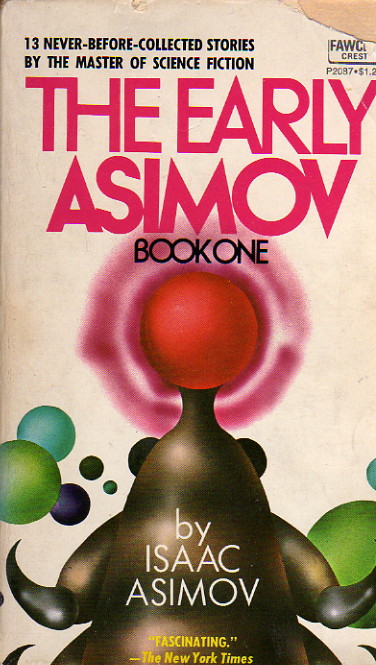
The last one we took, before my parents’ marriage took its final turn for the worse, was when I was 13 or 14 years old. Shortly before we had left on the trip, I had acquired a paperback copy of The Early Asimov, Volume 1, and had packed it along. I’m not sure why that particular book had jumped out at me in the small bookstore that we had visited with my Great-grandma on a weekend trip to a nearby town that was large enough to have an actual bookstore. My best guess is that, since Asimov was at that time the author of a monthly science essay that appeared in each issue of The Magazine of Fantasy & Science Fiction that I had recognized his name.

I remember waking up early in the morning several times on that camping trip, my parents and sister still asleep, and going to the pickup to retrieve the paperback book from my bag. Then I sat and read until Dad woke up. Just looking at the cover of my worn old copy of the book brings back memories of the early morning light, the sounds of wind in the leaves overhead, and the nearby creek.

The Early Asimov was first released as a hardcover, single volume book a couple of years before I found the paperback. It is a collection of a bunch of Isaac Asimov’s short stories from the first nine or ten years of his career; specifically stories that had not already been included in any other anthologies. But the book isn’t merely an anthology—in between each story, Asimov wrote about how he came to write the story, along with describing other stories he wrote at the time that either had never been published, or had been and were in other collections. These interludes were much more than mere introductions to the story, they amounted to an autobiography. And the story this autobiography told was how a Russian-Jewish kid from Brooklyn discovered science fiction in the magazine rack of his family’s candy store, and became a published professional sci if writer before he exited his teens.

Isaac’s personal story gave me at least as much hope and wonder about the possibilities of the future as his science fiction did. The stories themselves were entertaining and thought-provoking. Asimov clearly loved science, and he was perpetually optimistic that great things could be accomplished with the proper application of knowledge.

And he wrote good stories.

Not just a few stories. He published over 300 books. He wrote science fiction novels, of course, and collected his short stories into anthologies, but he also wrote science fact books, history books, books on literature, and so much more. I mentioned his monthly science column—he wrote 399 of those from 1958 until his death in 1992. About every year and a half he collected the last 15 to 17 of them into a book, wrote additional introductory information, and published them (Janet Todd Rubin gives a great explanation of the importance of Isaac’s science columns here: (Almost) Everything I learned about science I learned from Isaac Asimov). And then there were the many limerick collections…

But back to the sci fi:

His Foundation series, besides being the first collection of novels to be awarded a Hugo as a collection, established the concept of psychohistory: a science of applying mathematical formulas to the actions of large populations to predict various outcomes. His Robot stories were the first to posit artificial intelligences that did not turn on their masters, and he was the first person to coin the word “robotics” which has become the name of the real engineering discipline he described in the books.

And then there were his mysteries. Science fiction mysteries at first (including the Wendell Urth science fictional science mysteries), but also a series of mystery short stories set in contemporary setting (Tales of the Black Widowers, and sequels), and two straight murder novels. Though my favorite of those, Murder at the ABA which was set at a booksellers convention, isn’t entirely serious. One of the supporting characters in that one is Asimov himself, and he portrayed himself very self-deprecatingly, making his character the comic relief of an otherwise serious murder investigation.

I didn’t really know all of that at the time, but reading that book over the course of several mornings on that vacation, Isaac Asimov gave me hope that I could write science fiction and get it published, too. Hope not only that I could write and get published, but that there were people out there interested in the things I was interested in. I didn’t have to remain trapped, like the protagonists of “Marooned off Vesta” stuck with no propulsion, no radio, a limited amount of air, and a year’s supply of water. I could rig up a propulsion system from the things I had, and get to a safer place.

His writing style was described as unadorned. Some people complained that he very seldom described his characters or the settings. I think that was a strength. His stories focused on the plot. His characters were defined by their words and deeds. He described only those things that needed to be described to understand the story, leaving the rest to the reader’s imagination. Allowing the reader to imagine characters who weren’t always white, for instance.

He raised questions, and answered them with a mix of science and humor that made the future seem like a very inviting place. And his willingness in many anthologies and essays to share anecdotes of his encounters with other writers (not to mention the many stories of the times he was Toastmaster at a Hugo Award ceremony) made the world of science fiction writers and fandom seem an even more welcoming place.

He was quick to laugh, and quicker to make others laugh. Sometimes too quick. He had to have thyroid surgery at one point in his life, and when they gave him the tranquilizer before they move the patient into the operating room, he began singing and joking with everyone. When the surgeon came into the operating room, Isaac sat up, grabbed the doctor’s scrubs in both hands, and blurted out, “Doctor! Doctor! In green coat! Doctor, won’t you cut my throat? And when you’re finished, Doctor, then, Won’t you sew it up again?”

The nurses got him back down and the anesthesiologist put him under. The nurses later told Isaac’s wife that the doctor couldn’t stop laughing for nearly five minutes. When he included this story in one of his essays, he noted, “They say I’ll do anything for a laugh, but I think that making a surgeon about to take a scalpel to me laugh so hard he can’t hold an instrument may have been a step too far.”

I could easily ramble on and on about Asimov, the awards he won, the records he set, the serious science circles he moved in, and the many, many bookshelves in our house filled with his books. He loved knowledge and he loved explaining things (two traits that I know more than a little about), and he wrote in a way that encouraged you to think, to be curious, and to meet challenges with confidence and a smile.

Picnic on the Queer Side: more of why I love sf/f

We're queer, we're nerds, get used to it!
We’re queer, we’re nerds, get used to it!
I was 13 years old and had been a semi-faithful reader of the Magazine of Fantasy and Science Fiction for a few years. I think I found my first copy in a magazine rack in a drug store sometime during fourth grade. I had pleaded and begged for a subscription of my own, and one of my grandparents had bought me a subscription for my twelfth birthday—except they got me a subscription to Galaxy Science Fiction instead. Which wasn’t bad, it meant I got a magazine about the size of a paperbook every month filled with short stories, novelletes, and sometimes serialized novels. But my adventures in the pages of Galaxy magazine is a story for another blog post.

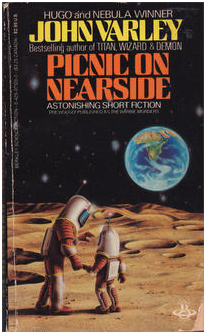
It was summer, just months before my 14th birthday, when I got hold of the new copy of the Magazine of Fantasy & Science Fiction and found inside it a story called “Picnic on the Nearside” written by John Varley. In it, the narrator, Fox, who was 12 years old and lived on a colony of the moon sometime in the future, had been in an epic argument with his mother, because he wanted a Change. He didn’t explain right away what the change was, but before that reveal, we learned that people in his society could easily alter their bodies (his mother exchanged her feet for peds/hands before going out to a party; and Fox mentioned a time he had assembled an eight-legged cat). Then Fox’s best friend, Halo, shows up as a nude woman, which finally explained what the change was. Fox and Halo had been best buds for years, and Fox worried that now that Halo was a woman, it would ruin their friendship.

Cover of the paperback edition of on of Varley's anthologies which included the story in question.
Cover of the paperback edition of one of Varley’s anthologies which included the story in question.
There are many other interesting things that happen in the story: Fox and Halo take Fox’s parents’ vehicle out on the surface without permission and get into a misadventure. But the really mind-bending part of the tale was the setting: a society where changing genders was only slightly more complicated than changing one’s clothes, and where everyone was okay with it. That was just mind-boggling!

I have to make a couple of digressions here. The first is that not all queer people are transgender, transsexual, nor transvestite. Gay boys don’t want to become women, we’re guys who are attracted to and fall in love with other guys. The proper answer to the clueless question, “Which one is the woman” is “Neither, that’s the point!” But one of the reasons young gay boys often idolize female characters in their favorite movies, books, and so forth is because the female characters are the objects of desire of the male characters. Similarly, young lesbian girls often idolize male characters in works of fiction. Young bisexuals may find themselves idolizing both, and so on.

Because there were no openly gay characters in any of movies, TV shows, books, short stories, et cetera which made up our cultural landscape growing up, one of the only ways to imagine ourselves in the worlds we longed to live in was to identify with the female characters. So on one level, “Picnic on the Nearside” offered me a more explicit way of projecting myself into that world. It was as if one of my subconscious coping mechanisms had been made manifest in the plot! Therefore, this story so intrigued me not because its imagined future would afford me an opportunity to change genders (which wasn’t what I wanted), but because it offered an escape from the expectations that boys were only allowed to do boy things, and only allowed to be friends with other boys, and only allowed to be boyfriends with girls.

The other digression is about the difference between a gender fluid milieu and a gay/lesbian culture. Varley has written a lot of stories set in the same world as “Picnic on the Nearside,” including several with the same character, Fox, as the protagonist (though the stories starring Detective Anna-Louise Bach {for example, “The Barbie Murders”} may be a bit more famous). Many of his characters change genders and have love affairs with people who have also swapped genders, but many times his imaginary gender fluid society is still very heterosexual. Fox never thinks of Halo as a potential sexual partner until they are opposite gender, for instance. Some of the couples who appear in the various stories seem to be just friends when they happen to be the same gender, then become lovers only when they happen to be opposite.

Many psychologists and sociologists now theorize that men who like to dress up as women and have sex with other men while thus dressed up are actually exploring an exaggerated heterosexuality. Having, in the online world, been sometimes emphatically propositioned by guys like that, and found myself turned off by their “flirting” that consists of trying to get me to say I will treat them the way an extremely selfish chauvinist man might treat a “slut,” I see their point. The men pursuing those scenarios are so into their fantasy of what heterosex could be that sometimes they want to experience it from the girls’ side. They aren’t turned on by the other man as a man, they are turned on by the situation of a woman submitting to a man in very specific ways.

Looking back on some of Varley’s stories, they can feel more like a mostly hetero exploration of gender roles, rather than a pan-gender exploration of sexual orientations.

There’s nothing wrong with that, and there’s a lot right with it.

A lot of the pain, fear, and bigotry directed toward LGBTQ people is grounded in very narrow and strict views of gender. It’s why homophobic men are almost always also misogynist (or at least very chauvinist). So anything that makes us question those assumptions about intrinsic differences between men and women, what roles men and women are each allowed to take in society, and the morality of those gender binaries is a good thing. And there’s no question that Varley’s tales exposed many of hypocrisies at the heart of all those assumptions.

I became a Varley fan that summer. Even more so, I became a fan of the protagonist, Fox, who went on to appear in the short story “The Phantom of Kansas” and the novel Steel Beach. Questions of gender and sexuality are at most a minor consideration in most of his stories, and I’ve come to appreciate his ability to take seemingly any speculative notion (no matter how weird) to its logical conclusion, and still tell a cracking good yarn along the way. What grabbed me that summer, while re-reading Fox and Halo’s misadventure again and again, was that there was at least one writer willing to tell stories that didn’t exclude a queer viewpoint. And there were editors who would print it, and by implication, readers other than me who wanted to read it.

And that was an amazing epiphany for a 13-year-old gay boy in the rural and very redneck Rocky Mountains.

We skipped NorWesCon

Some of my bestest friends hanging out at the convention this year. I didn't take this picture, because I wasn't there.
Some of my bestest friends hanging out at the convention this year. I didn’t take this picture, because I wasn’t there.
So we didn’t go to the Northwest Science Fiction (NorWesCon) again this year. Quick background: I started attending the convention back in 1987, after being envious of friends who attended the previous few years, and I didn’t miss a single one for the next 25 years. Michael and I met at a NorWesCon. For years he has referred to NorWesCon as our anniversary, since neither of us can ever remember the date of our Commitment Ceremony (of course, both have been superseded since we were able to finally legally marry on December 9, 2012). For a couple of decades it was my habit to buy our memberships for the next year before we left the convention.

Since NorWesCon has been on Easter weekend since 1989, I have kept track of Easter by remembering when NorWesCon is going to be. I have habits built around NorWesCon. For many years, now, I spent a lot of time during the rest of the year plotting what new cocktail I will buy Keith on Saturday night at the con, because Keith almost never drinks, and it amuses all of us, including his wife, to watch him react to alcohol (and it’s tricky to find ones he will actually agree to drink more of). During the weeks leading up to the convention I start longing for the evening I’ll sit in the bar or restaurant with Juli-sans-e (not to be confused with Julie-with-an-e, who might join us with the wings, but is more likely to find ways to trick us into saying “nipple” at inappropriate times) eating plate after plate of hot wings and exchanging stories.

I could go on and on.

But, for a variety of reasons, the last few NorWesCons we attended were not much fun for either Michael or myself. And when I realized that four out of the last five we attended, I had found virtually none of the programming interesting (except for Auntie’s costuming panels). I had found it so unappealing, that I had wound up spending all of the time I wasn’t sitting in a bar or restaurant with our friends, sitting at my laptop writing.

To be fair, I got a lot of writing done each of those conventions. More than I usually get done on an ordinary weekend. But it seemed a little silly to both of us the spend all that money on a hotel room, memberships, and all of those meals at hotel restaurants, if all I was going to do was sit in a hotel room tapping away on my computer keyboard.

The one exception out of that span was the year that both Jim Butcher and Patricia McKillip were guests of honor. It’s pretty difficult for me not to enjoy hearing either of them talk about their writing.

So we skipped last year. We gave a few other local conventions we haven’t attended in a long time a try, and we enjoyed those. We would have enjoyed them more if our usual gang had been in attendance. I did miss hot wings with Juli. I really missed hanging out with the gang.

We were leaning toward coming back this year, but when we weren’t able to get certain answers we needed before the hotel room block filled up, we decided to skip again.

As it happens, another friend that I’ve been trying to get to attend finally went for the first time this year. So not only didn’t I hang out with our usual crowd and do our usual things, I didn’t get to hang out with Sheryl at the con.

I also regret missing this year because Michael Moorcock was Guest of Honor. I really like his writing, and given his age and the distance to travel to a west coast con, it’s highly unlikely I’ll get another chance to see him.

NorWesCon is almost always the same weekend as SakuraCon. My dear sweet husband was actually one of the founding SakuraCon committee members many many years ago. It’s been several years since we’ve attended it. So we had talked about the possibility of getting memberships to SakuraCon for this year, though by the time we had decided not to do NorWesCon, neither of us was feeling enthusiastic about anything. We had a couple of conversations this weekend about next year attending either SakuraCon or NorWesCon. I know we could both have fun at either. Most of our friends will be at NorWesCon, but we’ll have a few friends at SakuraCon.

A lot of people seem to be excited because George R.R. Martin is going to be the Guest of Honor at NorWesCon next year. Frankly, that makes me slightly less likely to attend. Not that I have anything against Mr Martin, it’s just that I suspect a lot of people who don’t normally attend fan-run conventions will decide to attend this one because of the television version of Game of Thrones, and the atmosphere may be more like a corporate con than a fan con. Yes, sometimes I am a fan-snob.

We need to decide soon enough that we can get the hotel rooms and everything else in order either way.

In related news, thanks to some suggestions from friends, since we were already planning to attend EverfreeNW again this summer, but we’ll stay at the hotel next door that many of us like a lot better, and since that same weekend a gaming convention, PaizoCon will be happening in that next door hotel, Michael and I now have memberships for both conventions, the same weekend. And several of our friends are doing the same. So, we’re going to be two-fisted congoers (or dual-weilding badge-holders, or something) this July.

So even though we’ve skipped NorWesCon two years in a row, I think we’re holding onto our geek/nerd/fanboy cred.

Why do you care?

Jon in cloak and jacket pointing into the camera.
Jon Pertwee was the Third Doctor (1970-74).
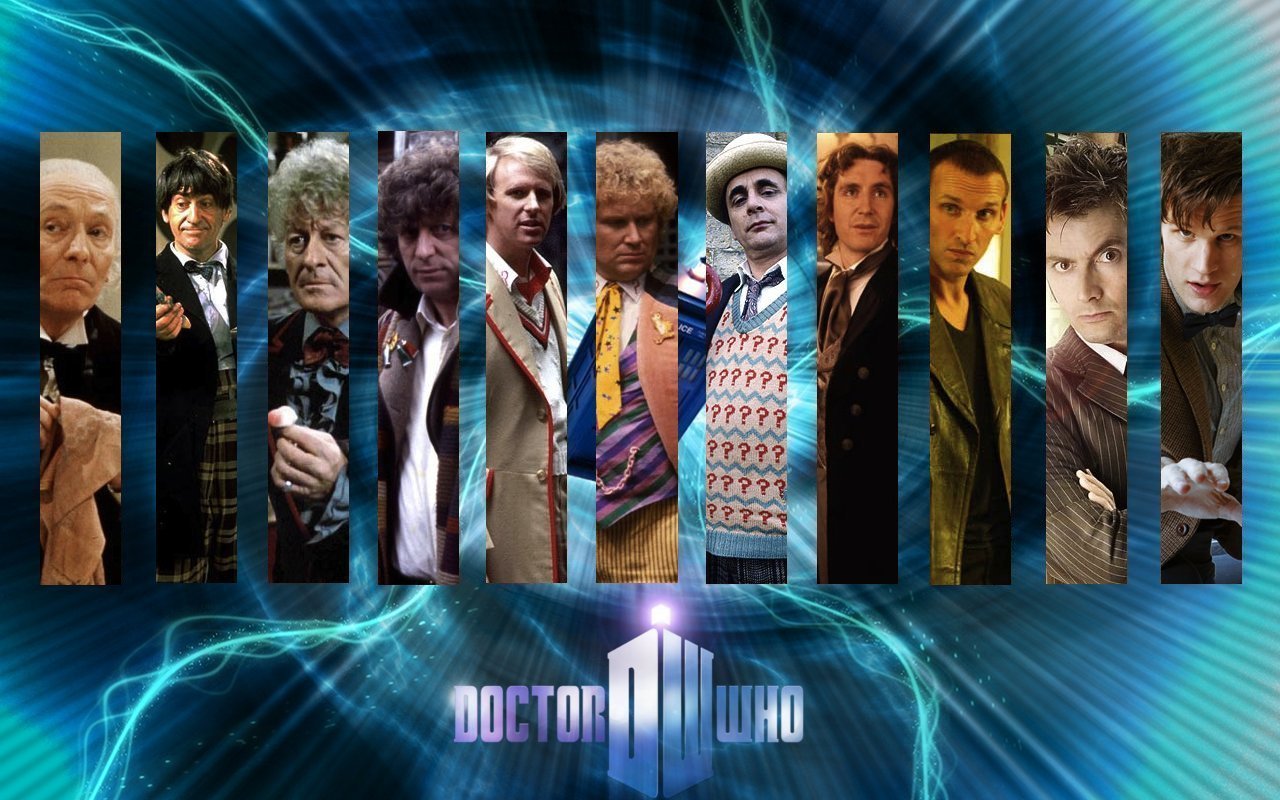
I’m a big nerd and long-time Doctor Who fan. For years my favorite was Jon Pertwee, and not just because he totally rocked a velvet jacket, ruffled shirt, and opera cloak. I was watching years before the BBC revived the show with Christopher Eccleston playing a decidedly dark and delicious doctor. I’ve got piles of DVDs with at least some of the adventures of all the doctors (William Hartwell, Patrick Troughton, Jon Pertwee, Tom Baker, Peter Davidson, Colin Baker, Sylvester McCoy, Paul McGann, Christopher Eccleston, David Tenant, Matt Smith, and even both of the 60s movies starring Peter Cushing as a Doctor Who that was not a time lord, but traveled in a Tardis and fought Daleks).

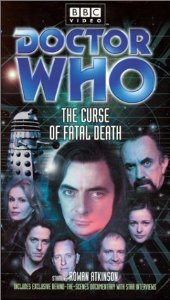
Okay, that’s still not complete. I don’t have a DVD of Doctor Who and the Curse of the Fatal Death,in which the Doctor was protrayed by Rowan Atkinson, Richard E. Grant, Jim Broadbent, Hugh Grant, and Joanna Lumley. I’ve seen it, they’ve just never released this parody special for charity on DVD.

I am an enormous Doctor Who fanboy. In the years since many of the old adventures have become available on disc, I have reached the point where I now frequently say that my favorite Doctor is whichever one I happen to be watching right now.

Despite that, I don’t think every episode or serial has been awesome. There has been more than once that I thought the new actor cast to play the Doctor was a terrible mistake. There have been companions that I wanted to strangle, stories that made me embarrassed on behalf of the actors, endings that made me want to drown the writers (or at least shake them by the throat and yell, “That really insipid, self-indulgent pile of refuse you spewed out there could have been saved with just two lines of dialog!”).

A picture of the cover of the VHS release of the special.
Doctor Who and the Curse of the Fatal Death.
So I’m a super fan, but not a blindly-love-anything-they-put-out fan.

I understand why I watched the announcement of the new actor who will take over the role at the end of the 50th anniversary Christmas special. I understand why I, and many other fans, may have been disappointed, or are feeling apprehensive about the new actor chosen.

What I don’t get are the people (and there was more than one being re-tweeted around the internet yesterday) who say they have never watched a single episode, and that they are angry about the actor who was cast.

Images of each actor who has played the doctor, over the current show's logo.
The eleven official Doctors.(Click to embiggen)
“Why do you care?” isn’t really the question, because they have an answer to that. They are upset that the actor cast was a white man. They wanted either an actor of color or an actress cast as the next Doctor. And I understand that, boy do I understand not feeling included when you don’t see actors who look like you in lead roles or even recurring roles.

I was not terribly happy when Matthew Smith’s casting was first announced specifically because I really wanted to see a comedienne cast. Someone like Jennifer Saunders was what I had in mind. I didn’t see any reason the Doctor couldn’t regenerate as a gal instead of a guy. Smith won me over, and I’ve been very sad since learning that he is leaving the show.

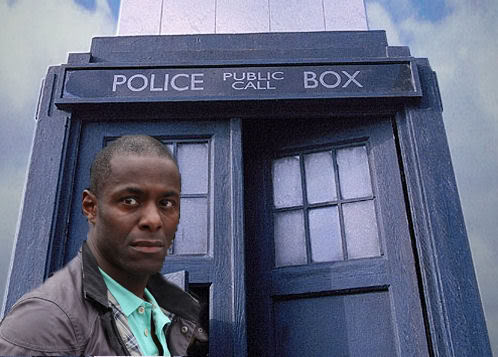
I’ve also wanted to see someone like Idris Elba or Adrian Lester or Paterson Joseph play him, because I like their work in other shows, and I don’t see why, even if the Doctor does regenerate as a dude, he has to be white.

I really do understand the diversity/inclusivity issue. For instance, even though at the time I was amazed that they let Eccleston flirt with and eventually kiss John Barrowman, I’ve grumped a bit since then at how little non-heterosexuality has been allowed (other than as a joke or misunderstanding) in the main Doctor Who show unless Captain Jack is visiting.

Acto Paterson Joseph standing in front of the Tardis.
Seriously, why couldn’t Paterson Joseph play the Doctor? (Click to embiggen)
So while I agree with the point that it’s disappointing that they haven’t gone outside the white dude box in the casting, I don’t understand why someone who has never, ever watched a single episode out of the 798 that have been made during its 50 year run, feels the need to express a public opinion on this casting decision.

What fuels your sense of entitlement? Seriously. I have plenty of friends and acquaintances who share your disappointment or outrage for exactly the same reason, and I sympathize with them. I share, to a lesser extent, their disappointment (not really the outrage, but I understand the outrage). I have absolutely no objection to them posting long screeds about it, tweeting about it, re-tweeting other disappointed fans comment about it, and so on.

But why expend time, effort, and bandwidth (not a lot of bandwidth to post, I know, but every one of your followers and the followers of your re-tweeters have also had to use bandwidth for this) for a show that you have never, ever watched? If you can’t be bothered to watch the show, even once, then please don’t bother those of us who have with your “opinion.”

Someone’s going to respond to this either accusing me of censorship or at the least harassing someone just for expressing an opinion. I’m not in a position to silence them, so the censorship argument doesn’t apply as a matter of definition. This is nothing to do with whether you have a legal right to express yourself. It does have to do with whether you ought to be commenting on something you’ve never seen.

Freedom of expression does not mean freedom from disagreement or from other people expressing the opinion that you are a complete and utter git.

Future events such as these

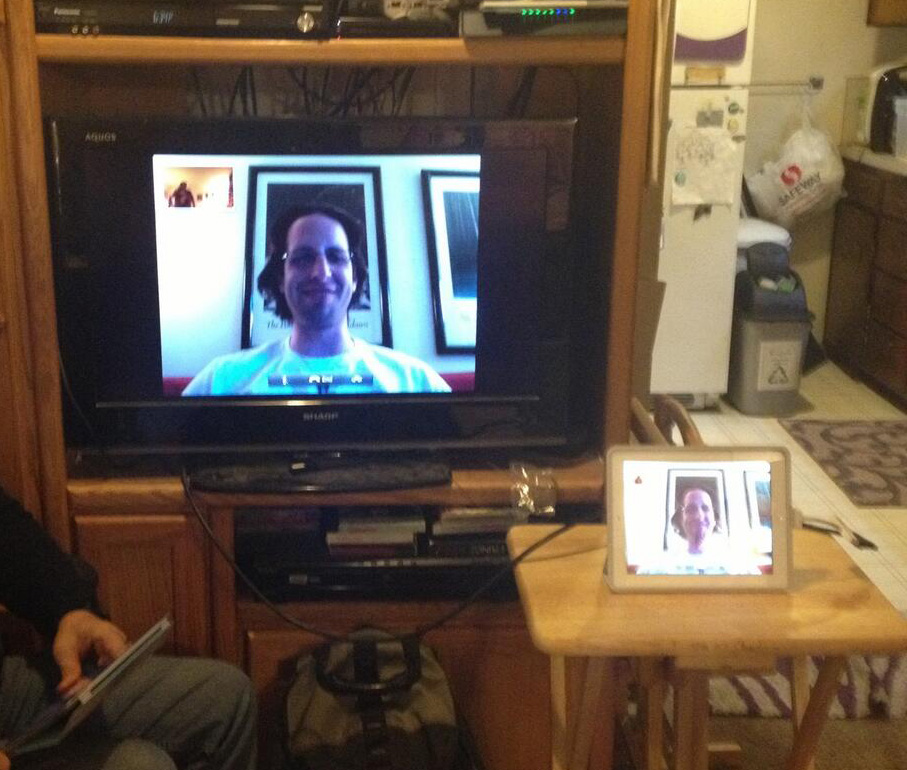
iPad connected to TV to show facetime on large screen.
Jared attending an editorial meeting via FaceTime. (Click to embiggen)
I like living in the future.

We had an editorial board meeting last night, and it being busy, crazy summertime, we almost didn’t have quorum. Fortunately, Jared was able to join us via FaceTime. We’ve done it a couple of times before, propping up my iPad so the person could see most of us. Chuck thought we should do it on the big screen, and I almost never hook the iPad up to the TV, so we did.

Now the future hasn’t quite turned out as we were promised. If I mention “flying cars” certain people will snarkily repeat a meme that’s been going around lately. The first variant I saw was, “Unless you’re 60 or older, you weren’t promised flying cars. You were promised an oppressive cyberpunk dystopia.”

That’s simply wrong, on many, many levels. The “we were promised {fill in the blank} in the future!” is a reference to things we learned during our childhood from popular culture about what the future would be like. The first appearance of cyberpunk, in any way, shape, or form, was the 1980 novel Web of Angels, by John M. Ford. Therefore, a person who is 59 now, would have been 26 years old when the first hint of a cyberpunk dystopia could have appeared in any popular culture. Twenty-six is not childhood.

The Jetsons, broadcast Sunday nights from 1962-63, reruns Saturday mornings from 1964-73.
I’m still a half-dozen years below 59, and I can assure you that my childhood pop culture did, indeed, promise me flying cars.

The Jetsons was the first show to be broadcast in color on ABC-TV. A cartoon set 100 years in the future, the show ran during primetime beginning in 1962. That’s right, it was not meant to be a children’s show. After it complete its primetime run, the existing episodes were re-run as a Saturday morning cartoon for nearly 10 years. The screen shot is a frame from the opening seconds of the opening theme song of the show. Right there, flying cars. The show depicted a fairly utopian future, with robot maids, devices that could create an entire new outfit, on your body, in seconds, and so forth.

If your childhood included any of the years from 1962-1974, you were, indeed promised flying cars. If we assume one needs to be a minimum of four years old to recall a television series, that means anyone 43 or older can legitimately claim that The Jetsons, at least, promised them a utopian flying cars future.

Jonny Quest floats in midair wearing a jet backpack.
Jonny Quest flying in a jet pack (some of his villains had flying cars).
That time period also included the iconic TV series Lost in Space, the original Star Trek, and Johnny Quest. Not to mention such films as 2001: A Space Odyssey. They didn’t all have flying cars (some had transporters—even better!), but their futures are each the opposite of an oppressive cyberpunk dystopia.

But let’s loop back to that first cyberpunk book. How many people who know what cyberpunk is have even heard of Web of Angels? Most people think of cyberpunk as beginning with either Blade Runner (1982) or Neuromancer (1984). And while Blade Runner is the greatest movie ever made, bar none, the sad truth is it didn’t do well in theaters the first time, and didn’t start developing a cult following until it started appearing on cable in late 1983. So I’m going to say that the beginning of the switch-over to cyberpunk dystopias becoming dominant in pop culture was 1984.

That means 1983 is the last year in which the flying car utopia was promised as a future to kids, so anyone who was at least four in 1983 would be the actual cut-off age, rather than 60, so that means the meme should state: “Unless you’re 34 or older, you weren’t promised flying cars. You were promised an oppressive cyberpunk dystopia.”

Movie poster from 1985's Back to the Future.
Marty McFly, trying to get back to the future…
But wait! That calculation assumes a very simple binary situation. Cyberpunk dystopias became one possible future in 1984, but it wasn’t the only one. Because in 1985 we got Back to the Future! While the movie primarily follows the adventures of our young hero, Marty McFly, trapped in the 1950s in a time traveling car, trying not to screw up his own future before getting back to his own time. At the end of the movie, Doc Brown goes 30 years into the future, and then comes back, showing off a much upgraded version of the time-traveling car. So, as my friend, Matt, pointed out, if your formative years include Back to the Future, then not only were you promised flying cars, you were promised time-traveling fusion-powered flying cars fueled by household garbage!

So, no, we were promised flying cars!


I’ve had more than one person bring up the fact that Blade Runner had flying cars. I know that. When I said that Blade Runner was the greatest movie ever? Implicit in that statement is the fact that I owned several different cuts on VHS back in the day, and I watched at least two of the tapes so many times that they wore out. I am well aware of the flying cars in Blade Runner. But as I explained on Twitter, the invalidity of the assertion of a dichotomy between flying cars and cyberpunk dystopias is worthy of a posting of its own.

Not according to the script

One of the best times I ever had as a panelist at a sci fi con was a few years ago at Foolscap when I was sitting between Peter David and Jay Lake discussing Archetypes and Stock Characters (Quick side note: one of the things I love about the sci fi con community in general and Foolscap in particular is that extremely small-time writers like myself get to work with award-winning authors like Peter and Jay).

I had been on panels with Jay before. He was great at pulling the audience into the conversation. He always seemed to know obscure but interesting information about the topic at hand. And he always made you laugh.

I had seen Peter on panels. His enthusiasm and insanely fast wit were invigorating.

Being on a panel with both of them? It was as if one moment I was attending my favorite relaxicon, then I blinked and found myself waterskiing in the middle of the ocean, except it wasn’t a boat pulling me, it was a pair of fighter jets.

Fortunately it was a topic I was passionate about, so I jumped in and tried to keep up. And as I said, it was one of my favorite hours ever at a con.

Unfortunately, currently, both Peter and Jay are struggling against serious medical conditions.

Jay has been fighting cancer for nearly five years. He’s survived multiple surgeries and is undergoing his fourth round of chemotherapy. Doctors have nearly exhausted all conventional treatment options, and now Jay’s only hope of living long enough to see his daughter graduate from high school is an experimental one. Click here for details about the experimental procedure. You may also donate to help with Jay’s medical treatment at that page.

Peter suffered a stroke in December while on vacation with his family. While he has medical insurance, there are always co-pays and other uncovered expenses. His family is not asking for donations, but rather suggest that people who want to help can purchase some of his (very reasonably priced) ebooks. Read this post for more information on how to help.

Happy endings are never guaranteed, but that doesn’t mean we shouldn’t try for them.

Flying my nerd flag high

On one of the news blogs I follow, the resident comics nerd felt compelled to post a correction/explanation to a post by another contributor reporting that DC Comics’ character, Green Lantern, who was revealed as gay this week. The correction noted that the Green Lantern in question (Alan Scott) is not the same DC Comics Green Lantern character (Hal Jordan) portrayed in the awful movie last year starring Ryan Reynolds. At the end of the explanation, he lamented that the fact that such an explanation was needed proved comics will never be accessible to casual readers.

I think he was being too generous. As a comics nerd of many decades standing—a comics nerd who marked corrections in my copy of the excellent Facts on File Encyclopedia of Super Heroes shortly after I bought mine in 1985—let me say that superhero comics are fast becoming inaccessible to the devoted reader, as well.

Continue reading Flying my nerd flag high

Writing and drawing

I spent most of my second day at NorWesCon in my hotel room, writing. Sky was also here doing some drawing, and even did a livestream of some vectoring of one of his sketches.

How I wound up spending the day in the room instead out out in the con begins with parts of the first evening I didn’t cover.

I bought a few things in the dealer’s den. Then several of us snagged a booth in the bar. Sky had just texted that he was leaving Bellingham and would not be stopping for dinner, so I only ordered an appetizer and beer while we sat, chatted, and waited for Sky. After he arrived we had dinner, and then retired to the room where we played at least four games of Give Me the Brain. One went exceptionally long. Juli won twice, Mark and I each won once, and Keith never one. Juli only did the “I win! I win!” dance after her second win, however.

Every body headed back to their own rooms. Sky, Michael, and I chatted for a while. Then they both crashed. I did not feel the least bit sleepy. I had composed yesterday’s blog post, then I tried to write. I couldn’t compose a decent sentence in any of the stories I tried. I would write a sentence, hate it, delete it. Or I would write a few words into a sentence, and already see that it would just end in tears, so I deleted what I had and started over. I tried reading for a bit since, as mentioned already, I was not in the slightest bit sleepy. But I couldn’t seem to concentrate on anything for more than a few paragraphs.

Finally, at 3:30, I shut down the computer, put the remaining light out, and crawled into bed. I lay there, in the dark, still not sleepy. After an eternity, I rolled over to check to clock. 3:32. I grumbled silently to myself, and rolled back over, trying some meditating. After another very long time, I checked the clock again. 3:35.

The last time I remember checking the clock was at 4:31, so I think I finally drifted off to sleep then. I woke up briefly sometime later to see Sky quietly getting dressed. I think I talked to him. But it is possible I just dreamed it. A bit after that I woke up again and went to the bathroom, then collapsed back into bed.

At about a quarter after nine, Julie called to see if we were up and interested in breakfast. Michael and Sky were both up doing things on their computers. I thought it might be a good idea to get moving. I think I even got up and talked about it with Sky and Michael. The phone rang again, at nearly 10 (oops), and it was Keith and Juli (not Julie, but Juli, they are different people), who were thinking about breakfast.

Eventually we got out of the room and headed down to the little breakfast restaurant. Everyone else we knew was not there, so we got a table. We hadn’t yet ordered when Darrell showed up and asked to join us. Had a nice breakfast. Then, since Michael hadn’t been in the dealer’s room, we went with him and wandered around there. While Michael checked out the art show, Sky and I chatted with Jeri Lynn and Jeff. Soon we were joined by Keith and Juli and Mark and Darrell. We had a large crowd there for a bit. Julie joined us briefly, then some people went to get food, others to panels, and we retired to the room.

The novel that I have finished, but is now in revision, had a plot problem. There are these two supporting character, both monks, who die during the course of the story. One originally died in a scene that I had removed after the first draft (because the scene was redundant both in terms of the action, and what happened with the emotional arcs of the characters involved). But because I had removed the scene, that meant that one monk had simply vanished from the story sometime between chapter 5 and 8 without any explanation. The other problem was that somehow the monk who had been elderly and thoughtful changed into the middle-aged bombastic one.

So I went through finding all references to all of the characters until I found the scene in chapter five where I seemed to have switched their names. I went through all the subsequent scenes fixing the names until I reached chapter eight. I rewrote the ambush in that chapter so that both monks appear and both die in that scene. So that’s one problem fixed. I also fixed a couple other bits so there is a better foundation laid for some things that happen later.

Having gotten all that sorted, I got back to work on the novel currently in progress. I have been stuck trying to get Chapter 8 going for a while, now. Today I finally got a scene written, and have a much better idea of the the shape of this chapter and the next. It is quite a bit clearer what needs to happen next and how all the arcs are moving toward the narrative climax. So that’s good.

Michael had gone out wandering for a bit, then decided to lay down for a nap. That sounded really good, so I did, too. Sky apparently couldn’t resist the idea, because just after I dozed off when my phone started chiming as people texted me, me was out cold in his bed, too.

Folks were trying to coordinate dinner. I didn’t feel up to playing relay, so I shared a bunch of contacts with Julie and went back to sleep until Keith called to see if we wanted to join them for dinner at a big table they had snagged.

We wound up with 12 people at a long table. Things got a bit chaotic. Some food for another table was delivered to ours, the upshot of which was that a couple people in our group wound up with two dinners. And my order was messed up, so I didn’t get my dinner until after everyone else had eaten. Kehf and Auntie joined us as some of us were having dessert (most people don’t think buffalo wings are dessert, but it’s one of my convention traditions).

Some of us retreated back to our room, theoretically to play some games, but some people had sewing, other people had other projects, and we just wound up doing a lot of chatting. Oh, and a few pony episodes were played for those what were interested.

This is not the first convention I’ve gone to where I spent much of it in my room instead of going to events. Some years all I want to do is see as much as I can. Other times I prefer to dip my toes in the convention only a little bit here and there, while doing other things. It’s one reason staffing a club table ofter works for me, since I can do all the people watching and have random conversations during much of the day, while either writing in-between that, or scanning the schedule to find interesting panels and events to go to.

I’m happy with the writing progress I made today. While it might be argued that I could have just stayed home to do this, there is something about getting out into busy places with odd juxtapositions of genres and themes and notions and people that can clear logjams in the mind.

And I think I know what happens next, so I should go write it.

Let me get this straight…

We got the car packed earlier than usual and were on the road to the convention before noon. We also lucked out at checkin, even though we are early, a room very close to all the events was ready. And then we found a perfect parking spot very close to the hotel.

I should have known something big was going to go wrong.

I ran into our friends, Keith and Juli, while standing in line to pick up my badge. We had a fun conversation as the line moved quickly. I wanted to go find our club table so we could start setting up, but Juli saw a t-shirt she wanted to check out.

While we were browsing the t-shirt table, the lady selling shirts noticed my Doctor Who shirt and showed me an awesome polo shirt with an embroidered Tardis. I agreed that it was a very tempting shirt, but noted that just last week, while we were cleaning up in the bedroom, my husband had pointed out we both had way too many t-shirts and such.

A kid, about seven or eight years old, I think, standing nearby said, “What? You have a husband?”

And I said yes.

“But… but… you’re a man.”

“Yes.”

“You’re a man… and you have a man?”

“Yes, I do.”

“You’re a man who has a husband?!?”

“Yes.”

“You have a husband.”

I held up my left hand and pointed at my wedding band. “Yes, I have a husband.”

By this point his mother, who had been some distance away looking at another part of the t-shirt display, had made her way through the crowd to grab her son. “<name>! Don’t be rude!”

“But he’s a man who has a husband!”

“Yes, he is. That happens.”

“But—”

“Come over here and stop bothering people!” And she drags him away, never making eye contact with me.

I was merely amused by this, and turned back to find Keith and Juli. I then noticed a t-shirt whose design I really liked. I decided I wanted the shirts, so I grabbed that shirt, and went back to get the polo. The saleslady says, “If you buy a third, we pay the sales tax.”

By this time I’ve noticed a few more shirts that quite tempt me, so I start looking some more (having totally succumbed to the superior jedi mind trick of the salesperson). I had narrowed my choices down to three, when suddenly I feel a tug on my shirt. I look down, and the kid is back.

“Now, let me get this straight, you’re a man and you have a husband.”

“Yes, I am.”

“Where’s your husband at?”

“He’s back in our room, unpacking.”

“Do you really have a husband?”

“Yes, I do.”

“Where is he?”

“He’s back in our hotel room.”

“What’s his name?”

“Michael.”

“What?”

“His name is Michael.”

“Michael? Really? But—”

And his mother appeared from out of the crowd, looking quite flustered. “I told you to stay with me and stop bothering people!” Again, without making any eye contact or otherwise acknowledging my actual existence, she grabbed him and dragged him away.

We went looking for our table. Almost all of the club tables were labeled, but none said “Tai-Pan” on them. After checking several times, we wind up in the con office, where multiple attempts are made to get the person in charge of the club tables on the line. Eventually another staff member (one I’ve known for a long time) comes to help us. He takes my cell phone number and promises to find out where our table is.

Eventually the table person calls me, and tells me that we don’t have a table because she has no record that we ever requested one. I tell her that I applied for the table and received an email confirmation a few months ago. She says no I didn’t. If I had, she would have a record of it. She not only has no record, she has no outgoing messages in her email program going to me.

I asked her which address she was looking for to see if she had any to me, since I hadn’t told her my address, and I wasn’t sure if she even knew anything but my first name, but she talked over me and said that she had nothing about us in any email. I started to describe the form I had filled out and tried to remember the date I sent it. She interrupts me to explain that they have a new process with a form, so if I didn’t fill out the form… so I interrupted her to say that I was just describing the form, and the new policies, and so on.

Michael says I remained calm and polite, but I was feeling more than a bit irritated.

She said, “Well, if you can show me the email I… um, well, I don’t know what I could do at this point, because we don’t have any tables.”

My problem is that I did all of this from the editor@taipan-etcerata account. Which is hosted on a service that doesn’t support IMAP, so I have it set up as a POP3 that downloads all the mail to my desktop computer.

My desktop at home.

I am very, very certain that I have three emails from them regarding this year’s table process. The first replying to my inquiry about when we could apply for tables, telling me that there is a new process and a form would be sent, soon. The second containing the form. The third acknowledging receipt of my completed form. However, I can’t prove that without driving back to Seattle and checking my files there. And they have pretty much said that they can’t give us a table even if I find the emails.

One of the problems with this convention is that it outgrew this hotel many years ago. If you take your car out of the parking lot once the convention gets going, you might wander for an hour or more trying to find a place to park when you get back. So I don’t see the point of the aggravation I’d have of leaving, finding a spot, only to not get a table, anyway.

I’m fairly certain that this is just a mistake. I had been pestering the club table people asking about table applications before they had announced (because usually the information is available on the web site earlier), and it was clear from the early communications I got that they were still working on the process. So  maybe this is just an honest mistake.

But I keep finding myself wondering how she can be so certain there was no outgoing message to me in her Sent box when she didn’t know my email address…

A slurry of crazy before vacation

I am now officially on vacation for a few days. Michael and I are going to NorWesCon where we will get to goof off, browse the dealer’s den, hang out with some of our friends, and geek out. This is my 25th year in a row to attend this convention. I almost always have a great time. Though I find I spend less of the con actually going to convention events lately. So we have been discussing the possibility of giving it a pass one year. But not this year.

Because of the change in my work schedule while my boss has been on maternity leave, my last day of work before vacation was also a work-from-home day. Which is nice if for no other reason than not having to spend part of the evening getting home from work. On the other hand, it was a little frustrating because I kept seeing things that I should be packing or cleaning or otherwise dealing with, because we’re leaving tomorrow, but I couldn’t really take the time to do. Michael had taken the day off work, ostensibly to spend some of the day getting ready, but mostly so he could sleep in and get some more mental space away from work before the busy-ness of the convention got in the way.

Problem was, we both woke up feeling very run down. It is a rather high pollen count day, so most of mine could be hay fever, but it’s hard to say. I was feeling so out of it at the beginning of the day, that I thought it would be the least productive day of the year.

But several unexpected things came up, including some good news about some of the problems I’ve been wrestling with on the new content management system. It was a little weird. A bunch of things we had been waiting on (some for a long time), suddenly came in today. Often with things like, “can we meet tomorrow to discuss this?” Except that no, I can’t, because I’m going to be on vacation. I guess it’s an instance of Finagle’s Law. But they were all good developments. And after a few hours of work, some conversation with people, and a few big mugs of coffee, I was feeling much better than I had when I’d started the day.

The weather was awesome, and I had worked a bit over the last couple of days, so I was quite amenable to a longer-than-usual lunch. Michael needed to shower and get the rest of the way awake, first, but then we walked up to a local diner. This particular place we almost never get to because they are only open until 2:30 in the afternoon. They just do breakfast and lunch. Until sometime very recently, they also only took cash—no credit or debit cards. Michael wound up having a big breakfast, while I had a salmon burger and salad. It was nice to walk around out in the sun.

Michael napped the rest of the afternoon, while I finished things up on my work day.

Now I need to pack and otherwise get ready for the con. I’m going to attempt not to stay up all night long getting ready for it. I say that every year. Will it finally happen?