Tag Archives: genre

Robots Aren’t People, Are They? – more of why I love sf/f

Cover for the first edition hardback of <em>The Bicentennial Man and Other Stories</em> by Isaac Asimov.
Cover for the first edition hardback of The Bicentennial Man and Other Stories by Isaac Asimov. (Click to embiggen)
I first heard of “The Bicentennial Man” by Isaac Asimov when I saw the anthology, The Bicentennial Man and Other Stories offered as a selection in the Science Fiction Book Club. I was 16, and still technically a member of the club, but most months I checked off the “Send nothing at this time” box on the card, because even the cheaper prices of the book club were a bit much for my budget. It a bit over a year later when I found a paperback copy of The 1977 Annual World’s Best SF edited by Donald Wolheim in the local used book store when I finally got a chance to read the story.

Asimov wrote a lot of short stories about robots. Most of the stories collected in his anthologies I, Robot and The Rest of the Robots dealt with various logical contradictions that robots would be placed in by various circumstances, and how the robots (and the humans working with them) would work out those conflicts between the Three Laws of Robotics, their other programming, and the situation at hand. Even in his longer novels where robots figured prominently, such as the two sci fi murder mysteries, The Caves of Steel and The Naked Sun, the robots were always motivated by pure logic. The fact that the world is not a purely logical place, and that humans are seldom covered by rationality alone, formed the framework for the conflict in the stories.

“The Bicentennial Man” centered on a single robot, dubbed Andrew by the daughter of its first owner (a Mr. Martin, identified in the story which is told from Andrew’s point of view as simply Sir). Andrew demonstrates an unusual talent with wood carving—his works of art fetching high prices when offered for sale—and develops a desire to became human. Andrew is part of a new series of robots with what Asimov describes “more open-ended architecture” in his positronic brain, which the experts believe is where his apparent artistic talent comes from. Andrew’s stubborn insistence that he can become a human worries the scientists at the world’s largest robotics company, causing them to try to buy Andrew back.

In part because of the pleading of the owner’s daughter (whom Andrew calls Little Miss), Sir refuses to sell Andrew back to the company. Later, Sir helps Andrew gain some form of legal independence as a “free robot” with the legal name of Andrew Martin.

From there the story follows Andrew’s physical and legal journey through several generations of the original family, as Little Miss grows up, grows old, and dies, and her son and grandson found a legal firm which, among other things, fights to secure Andrew’s legal rights. Andrew designs new kinds of prosthetics, which are almost indistinguishable from natural body parts. Andrew’s body is slowly ungraded to first being a more human-looking android body, to an organic one. The proceeds from the patents on the various processes to create the prosthetics (which are used medically to improve the lives of disabled, maimed, and diseased people) providing Andrew’s income and funding the legal fight.

One of his important legal victories happens when he is 150 years old, where at a dinner in his honor (celebrating his medical inventions), he is toasted as the Sesquicentennial Robot.

Eventually, as Andrew realizes that he will never persuade a human legislature to pass a law declaring him, or any robot, a human because the key difference will always be his positronic brain. Which leads Andrew to compel a robotic surgeon to perform an operation on his brain that will cause the brain to slowly decay and die. Andrew’s reasoning is that it’s the immortality that forms the final barrier between him being accepted as a human.

The story really resonated with me. And it was interesting to see Asimov explore the nature of emotions and creativity from the point of view of artificial intelligence. But more interesting was the series of legal barriers that Andrew has to go through. Laws have to be changed to allow a robot to own property, for instance. Laws must be changed to make harming a robot a crime, at another point.

The legal progression to personhood that Asimov takes us through is based on the historical legal fights for woman’s rights and racial equality. For millenia, the legal system treated women as property. Assaulting a woman was a crime, yes, but the penalties imposed always included paying a fine to the woman’s father (if she were unmarried) or her husband, because the man in her life was deemed to have been harmed by the degradation of his property.

Similarly, Andrew discovers, once he is a free robot, that since there is no owner to whom damages would be owed, the legal system doesn’t consider anyone assaulting and damaging him a crime as assault. Vandalism, perhaps, but then, who is the owner who should be compensated for the damage?

It seems ridiculous to us now that some people, simply because of their gender or the color of their skin, had once been in a similar situation: harming them wasn’t inherently a crime, it was only a crime if it caused their “owner” to suffer a loss. And especially frightening to realize that in the matter of sexual assault laws in the U.S., for instance, that as recently as the 1970s the law was still structured this way. A woman couldn’t file rape charges against her husband or sometimes even her ex-husband, because once married her consent was no longer hers to give or withold, in that regard.

Andrew’s struggle for human rights parallels, thus, every oppressed groups struggle for equality. Something that I came to appreciate more some years later, when I finally bought my own hardcover copy of The Bicentennial Man and Other Stories and re-read this particular short story again. There is even a point, during the discussion about the assault laws, where another character makes the same argument at homophobes current make against hate crime laws: they aren’t needed, because the action is already a (minor) crime under existing laws.

Asimov’s story about a robot who wants to be a human might seem, on the surface, to be little more than a retelling of Pinocchio, but we see here one of the Grandmasters of Science Fiction—a sci fi writer who first reached prominence during the “golden age” of sci fi—turning a civil rights argument into a rattling good tale of old-fashioned science fiction. Who would have thought an old, white (okay, jewish, but still) male sci fi writer who made his first professional sale in 1939 would be a social justice warrior? Don’t tell the melancholy canines!

When I read “The Bicentennial Man” I was a very closeted high school student, terrified that people would find out I was queer because I knew that strangers, friends, and even family members would see me as an abomination if they knew. So the story of Andrew, who wanted to be seen and accepted as a person certainly struck a chord. Even if his ultimate solution, dying, seemed like a terrible way to achieve his goal.

A World Full of Sisters – more of why I love sf/f

Cover of the paperback edition of the 1977 Annual World's Best Science Fiction, edited by Donald Wolheim
Cover of the paperback edition of the 1977 Annual World’s Best Science Fiction, edited by Donald Wolheim (click to embiggen)
When I was a junior in high school there was one comic book shop in the town I lived in. It was also a used book store, so I visited there a lot. I didn’t have much money, and I was still reading several comics regularly which took up most of my discretionary spending, so I spent a lot more time there browsing—trying to find the cheapest books—than actually buying.

One day at the store I happened upon a paperback copy of The 1977 Annual World’s Best SF edited by Donald Wolheim. I owned several of his earlier annual anthologies, having gotten several of them as part of my introductory new member shipment from the Science Fiction Book Club a few years previously. The paperback was in pretty good shape, having only been published about six months previous, so it was probably marked at half cover price, which meant it wasn’t in my usual price range, but I had enjoyed the earlier collections, and there was more than one author in the table of contents whose work I really loved, so I bought it.

One of the stories in this particular collection was a novella, “Houston, Houston, Do You Read?” by James Tiptree, Jr. I didn’t know, at the time, that Tiptree was a pseudonym of Alice Sheldon (I think the year I read this was the year that her true identity was revealed, after ten years of being published under the name).

I believe I had read a few of Tiptree’s earlier short stories in the various SF magazines that I followed semi-regularly. I recognized the name, at least, but didn’t have a strong recollection of what kind of stories Tiptree had written before or whether I liked them. So I wasn’t prepared for just how good this story was.

The tale concerns the three-man crew of a NASA mission sent on a polar circuit of the sun. The ship is hit by an unexpectedly strong solar flare and is severely damaged. The crew survives and eventually gets their radio repaired, but are unable to reach Earth. At first it’s because Earth isn’t where they expect it to be in relationship to their position. They eventually figure out that they are further off course than they thought, and start transmitting their distress signal in the correct direction. No answer comes.

Eventually, as they scan more frequencies, they start picking up signals, many of them conversations in English with Australian accents. This is confusing, particularly since many of the signals are coming from various parts of the solar system, indicating a rather large number of space ships. Plus Australia, as far as they knew, didn’t have much of a space program. Also, almost all of the voices on the radio sound like women.

They establish contact with one ship which detected them and has diverted from its course to rescue them. During the radio exchanges before the rescue ship reaches them, they learn that it has been hundreds of years since their mission went up. The world is anxious to meet them, they are told, because they had long been assumed to be dead.

They also learn that there has been some sort of catastrophe on Earth in the intervening years which greatly reduced the population. When the rescue ship finally arrives, the men are surprised that there is only one man in the crew of the ship. Lots of other things surprise them, too. Two of the crewmembers seem to be twins, and both named Judy, but one seems to be several years older than the other. There are several other anomalies and slips of the tongue during the weeks that the ship is returning them to Earth that make the astronauts more suspicious.

Eventually they learn that the catastrophe was even worse than they imagined: it was a plague which only 11,000 women survived; not one single man survived it. The remaining people have been reproducing for several generations by cloning. Children are raised in a communal setting. Some are chosen to receive hormone treatments to give them the musculature and size of men. The story seems to imply that the only reason this is done is for the physical benefits of the muscles and such, and it is unclear if these children choose to became essentially transmen, or if it is imposed by some sort of societal system.

The three astronauts react in very different ways to the discovery. One becomes convinced that god threw them through a wormhole so that they can “rescue” this society and bring men back in charge. Another assumes that since there’s a whole planet of women who have never had sex with a “real man” that he will become sort of a sex god to them all. The last simply hopes that they will be allowed to rejoin society and help repopulate the species (since there are some health problems due to the of lack of genetic diversity).

It turns out, of course, that none of that is to be. The actions of the three men have been being recorded and sent back home. The men were slipped drugs which supposedly made them act out their true natures. The leaders of the world agree that men are simply too dangerous to introduce back into the species. There’s a particularly moving conversation between the captain of the rescue ship and the one man who has remained rational where she points out that most of the heroic behavior the man has tried to cite as proof that men can be good was simply men protecting their own women and children from other men.

The men’s genes are going to be used. Before the three are euthanized, sperm is collected, to diversify the gene pool, but only female babies will be taken to term. Since the entire story is told from the point of view of the one man, the reader never finds out what happens after he and his companions are put to sleep.

I wasn’t the only one who thought the story was good. It won both the Nebula and Hugo award for best novella the year it was published. The story did not kick off much in the way of controversy at the time, in part because people believed Tiptree was simply a feminist-minded man. A man could write a science fiction story decrying generations of misogyny and patriarchal violence and be thought of as open-minded, and a forward thinker. A woman, on the other hand, would (and still often is) branded as a radical man-hater.

I simply thought it was an intriguing story. I was still struggling to accept my own sexual orientation at the time, and I was intimately familiar with how the cruelty of boys toward boys who weren’t manly enough was overlooked, approved, and often encouraged by a sexist society. So the notion that culture might be a better place without all that hypermasculinity was appealing, even if I felt sorry for the reasonable male viewpoint character who was going to be exterminated along with his more brutish companions.

I want to emphasize that Tiptree made the male character sympathetic. She laid out the case for both sides convincingly, and seemed to be inviting the reader to consider (and maybe fight for) solutions to the problems of toxic chauvinism other than simply wiping the men out.

It was another mind-blowing story. Another time that sci fi helped me (as a very closeted queer teen living in a small town among Christian fundamentalists) imagine a better life, particularly the notion of romantic relationships other than opposite-sex pairings. After that story, whenever I saw Tiptree’s name on an anthology or magazine cover, I knew I wanted to read it.

Adventure awaits: more of why I love sf/f

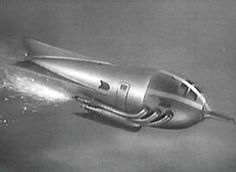
A silver rocket from the classic Flash Gordon serials.
It’s that time of year, again, where I’m waiting for the Hugo Packet to arrive so I can start reading things that have been nominated for the award. And while several categories have again been piddled by the Rabid Puppies, I am still looking forward to the experience. Particularly since I learned an important lesson last time: the point of the awards is to recognize excellence. I’m not obligated to read stories to the end—as I always have as a small-press editor, where part of my mission is to help the writer improve the story if necessary. These stories have been nominated because, allegedly, they are great stories. So, this year I’ll give each story three pages to hook me. If by that point I’m not feeling interested enough to keep reading—regardless of whether the story was on anyone’s slate—then it goes under No Award on my ballot.

If I am enjoying it, I’ll keep reading. The only stories that will go above No Award will be the ones that kept me hooked until the end. Then I’ll rank those and move on to the next category.

It may be a very busy few months, since only one of the novels that were nominated is one I’ve already read. It’s easy enough to read five each of short stories, novellas, and novelletes in the time frame, and graphic novels usually go relatively quickly, but the novels take a bit more time!

With this new rule, I suspect that I’m going to enjoy the process this year a bit more than last year. Because the reason I care about any of the awards is because I love science fiction and fantasy. I don’t just love it, I frikkin’ love it. I have written before about how I can’t remember a time when sf/f was part of my life, because even when I was a small baby my mom read aloud to me from whatever book she was reading at the time, and she is one of the world’s geekiest Agatha Christie and Robert Heinlein fans.

Thanks to her, my childhood was full of a lot of science fiction. For a few years we faithfully watched episodes of Flash Gordon on channel two every morning, for instance. And our regular trips to the library (and used book store, when we lived in towns big enough to have one) usually resulted in several fantasy or science fiction books coming home with us.

It was one of those used bookstore runs when Mom found a copy of Dune in paperback. That book always sticks out in my memory because it was the first time that Mom was reluctant to tell me details about the book while she was reading it. It was also the first book that Mom told me I would have to wait until I was older. I know she really liked it, because it never once went into the pile of books she was thinking of trading in when we were preparing to visit a used book store. The fact that it was forbidden but also apparently really good instilled more than a bit of longing.

But it was rare for her to restrict my access to books. She never seemed to worry that I might not understand most books. If I asked to read one of her books, she’d let me, and she was always willing to discuss the story. There were times when I would try one of her books and I’d call it boring, though sometimes it was probably more because I actually was a bit too young to be tackling that particular book.

I loved browsing in the science fiction sections of the library or bookstores. Looking at the cover art, which was sometimes a bit weird and confusing, but always otherworldly. Each one seemed to beckon, promising strange and wondrous adventures if I would brave those pages.

Science fiction was always about possibilities, to me. I never felt that some sci fi wasn’t for me. I always felt welcome. Science fiction, particularly the way Mom enthused about it, was about making the world a better place. About going to new worlds, or creating new inventions, or learning what it would be like to live with aliens—or elves, or dragons. Do I wish more of the sf/f available in the 60s and early 70s had been more inclusive? Yes. Just as I wish more of present day sf/f was inclusive of people of color, queer people, et cetera. We’re getting better, but still have a ways to go before the representation matches the real world.

Whenever I pick up a new science fiction book, especially if it’s one that’s been recommended by a friend, I get a flash of that feeling of wonder and anticipation; the sense of strange adventures beckoning. For a moment, I’m that little boy in the bookstore, clutching a story, and about to plunge into something wondrous!

Stark raving nerd

I didn't manage to collect many badge ribbons this year, alas. But then, I forgot to bring my ribbons to hand out, and trading is where I usually get half my ribbons!
I didn’t manage to collect many badge ribbons this year, alas. But then, I forgot to bring my ribbons to hand out, and trading is where I usually get half my ribbons!
My previous NorWesCon post covered Thursday and most of Friday, but there was a lot more to the convention. My husband had had to work the first two days of the con, and didn’t get to the hotel until Friday evening just before we gathered for dinner. He hasn’t been feeling well since his trip to Missouri last week, so he wound up back in the room trying to sleep while I hung out in the bar with Matt kibbitzing on writing until it was time to meet Sheryl and Jon for the Burlesque show. It’s been several years. The last time I attended one at NorWesCon, a friend of mine was friends with several of the performers and had been the seamstress for at least one performers’ costume. I think that might have been more than 10 years ago.

The burlesque show is essentially a series of strip tease acts, often with sci fi/fantasy themes. And usually most of the performers are women, so you might understand why I, as a queer man, don’t attend often.

But they are fun shows, and more about performance and comedy than sex, so I probably ought to go more often. Matt was carded at the door, which was amusing. Jared, who was not attending, happened to text me having just realized I was at NorWesCon and asked me to take pictures. So I teased him about the fact that I was about to watch a strip show where they didn’t allow photography and too bad he wasn’t with us. There was more teasing, of course.

After that I headed back to the room to collapse into bed. Michael was asleep when I got there, but a few hours later when I woke up with a painfully stuffed head because of allergies he was awake. Not voluntarily, by any means. He was feeling even less well. He took another shower, and we commiserated about our various symptoms. After letting some fresh air into the room and waiting for more meds to kick in, I was able to get back to sleep, but apparently Michael didn’t. Before going to breakfast we discussed how to proceed since he was feeling so sick, couldn’t get comfortable in the hotel bed, and the small shower stall wasn’t conducive to soaking (which would have helped his knee which is still recovering for the recent injury).

The upshot was that he headed back home on the train. I tracked him until he was home. He had planned, when he left, to do a long soak in the tub, but he said by the time he was back he just collapsed into bed and sleep the rest of the day.

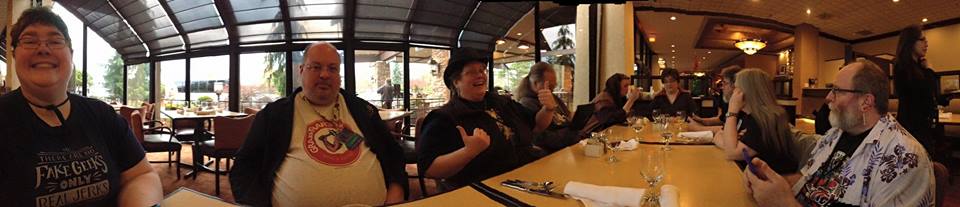
Auntie, Kehf (as Aunt Baru), Keith, Juli-sans-e, me, Jeff, and Geojlc at dinner.
l to r: Auntie, Kehf (as Aunt Baru), Keith, Juli-sans-e, me, Jeff, and Geojlc at dinner. (Click to embiggen)
So he wasn’t there when a big bunch of us had dinner and Julie and Jeff teamed up to take these panaramic pictures of us.

Geojlc, Mike M, Julie avec e, Mark trying to hide behind his hand, Auntie dressed as a Tatoinne Animal Control Officer, Kehf (still as Aunt Baru), Keith, Juli-san-e, and me again.
l to r: Geojlc, Mike M, Julie avec e, Mark trying to hide behind his hand, Auntie dressed as a Tatoinne Animal Control Officer, Kehf (still as Aunt Baru), Keith, Juli-san-e, and me again. (Click to embiggen)

After thoroughly confusing the wait staff multiple times with our orders and requests, I was sent off to my room to get my box of games and meet up and Juli and Keith’s room. We wound up playing four games of Give Me the Brain, none of which I won before deciding to call it a night.

Sunday morning I was a little slow getting up. I always have a hard time packing up the room on my own. It’s not just that two of us pack faster and can carry more per trip, it’s mostly that my husband is really efficient at this sort of thing, and keeps me focused. I have a number of friends who describe their distractabiliy as a super-power (to the point of at least one calling herself Distract-a-Girl!), but I think my brain is an entire horde of distract-a-minions. So even though I had a lot fewer things to pack than usual, it took me about three times as long to get everything out into the car and confirm I hadn’t left anything in the room.

Which made me a couple minutes late for the Why Representation Matters panel. But I’m glad I made it, not just because it was the third or fourth excellent panel that I got to see the fabulous Lisa Bolekaja in, but also because Paul Constant, whose book reviews I have been reading for many, many years was on it, and I finally got to hear his voice to place to the reviews. And it was an excellent panel.

I went to a lot of good panels, and really enjoyed all of them. Our last NorWesCon, a couple of years ago, had been less than fabulous for a variety of reasons, one of them being that, other than Auntie’s Seattle Opera Costume Department Trunk Show panel, none of the panels I went to felt worth my time (which is why I walked out of a couple). This year there were many hours where I had to choose between several panels that looked really interesting. I know the concom has been making efforts the last few years to shake thing up in programming, bring in some new blood, and so on. So that seems to have paid off. It also doesn’t hurt my perspective that I skipped two years. And this year I wasn’t a panelist, I wasn’t running a fan table, nor helping run someone else’s fan table, and otherwise had no obligations at all.

I didn’t even do my usual trick of stealth covering a volunteer shift or two in a department that is run by one of my friends.

I did hang out with my friends, though some of them less often than I would have liked. I introduced Keith to a new cocktail. I had buffalo wings just about every night. I got nicely squiffy at least one night. I did a pretty good job on my blood sugar all weekend. I picked up a pony plush, a set of pony key right charms, a sonic screwdriver earring, an Ash vs Evil Dead t-shirt, and birthday presents for two friends. I was given a Grumpy Cat as Dungeon Master t-shirt.

I met some cool new people, wrote down a lot of links to interesting web sites and have added a bunch of books to my “need to get this” list. Not to mention several new authors to follow.

For many, many years I would always buy our memberships for the next convention before we left. Three years ago, at the end of the con neither of us was certain we wanted to attend the next year, which is what led to us skipping in 2014 and ’15. I had a good time this year, but I had forgotten to ask Michael before he left Saturday what he thought. So Sunday morning I sent him a text (not certain whether he was awake or not). He replied about 20 minutes later that yes, we want to come back next year. So I’ve purchased our memberships for NorWesCon 40, and look forward to attending next year!

This, by the way, was the most awesome thing shown at the Movies and Previews panel Friday morning at the con:

It's a Mad Mad Mad Max Fury Road – Trailer from Monkey Blood on Vimeo.

(If embedding doesn’t work, click here.)

It’s a nerd, nerd, nerd, nerd world!

NorWesCon 39
NorWesCon 39
So I’m at NorWesCon. I really missed this con last year.

My plan had been to pack Wednesday night so I could load the car and leave relatively early in the morning. But I was so tired when I got home from work that I had to take a nap. I slept for several hours, woke up with a nightmare (a really nasty one, too; I was frankly surprised that I hadn’t woken my husband, since it was the sort where I often start talking loudly in my sleep). So I got up and tried to write for a bit, then went back to sleep. And had another nightmare. Then woke up to hear my husband in the shower (he’s working Thursday and Friday and isn’t joining me at the con until Friday evening). I said goodbye to him as he left for work at his usual oh-god-o-clock in the morning, fell asleep, and had yet another nightmare.

All different nightmares, none of them anything to do with anything that I can think of. The important part is that while technically I was mostly asleep for a total of about 13 hours, I didn’t really feel fully rested. So I hadn’t packed and I wasn’t at my best, mentally.

Then I had a weird problem with backing trying to back up the laptop before I left. The upshot was, I didn’t leave the house to head to the convention until almost noon. Still, I got to the con hotel while there were still parking spots available. I managed to get one very close to the wing where my room turned out to be totally by luck.

I found Kehf fairly quickly, got the room keys squared away, then went to get in line to pick up my badge and only when I got up to the cashier did I learn of the new-ish (since I haven’t been here for two years) policy about bringing your signed statement with a bar code, so I had to go get in another line to get that printed out, then get back in the original line. And I wouldn’t have been grousing when I got to the second line if I hadn’t gotten to witness a con staffer essentially yelling at another attendee for the horrible sin of having not seen the email telling them to bring the signed statement.

Having been a con staff member at several different-sized conventions, who once unloaded on a particularly bothersome attendee, I know that I live in a glass house–and therefore should not hurl stones. (In my defense, that incident happened when I came down very sick at the con, and it turned out I was running around doing my programming director job while running a 104º fever, but it still means I was less than professional while being staff, so I get it.)

Anyway, Matt and Sheryl commiserated in line with me, and invited me to meet them for some lunch when I got out of line. I think my grousing was at least as much due to a less-than perfect blood sugar situation as anything.

We ate, then went off to panels. Sheryl and I had picked the same panel at 5, while Matt and I had picked the same one at 6. One was on “Any Tool Can Be a Weapon” which was a good discussion. The other was a writing panel, specifically ways to figure out your own methods to be productive. Also a good panel.

I had accidentally said yes to two different people for dinner (I thought I was agreeing to Friday night in one). I wound up hanging in the bar with Keith, Juli sans-e, and Mark. We saw Edd and waved him over, then saw Kehf and Auntie and waved them over. I also got to visit with Julie avec-e and Mike. Amy dropped over for a bit and introduced me to “Adult Wednesday Addams” and how did I not know about this before!

After we had hung out for a while, I went back to the room intending to get some writing done, but mostly wound up catching up on social media and taking care of some of the Camp NaNoWriMo prep. Speaking of which, if you have a creative project that you would like to work on in April, you should look into Camp NaNoWriMo. It’s a little bit more low key than National Novel Writing Month. Unless you want it to be a competition. In which case, we can do that, too.

Friday was mostly about running to panels, though I did wander the dealer’s den with Mark. I picked up some cool sonic screwdriver earrings and also found birthday presents for two friends. Woo!

Most of the panels I went to during the day were writing related. I still think the most interesting new thing I learned was at the weapons panel Thursday afternoon. But I got useful and intriguing stuff at all of Friday’s panels, too.

My husband took the train from Seattle after he got off work Friday, so I feel a bit less disjointed. It is weird; we’ve only spent a few minutes alone at the con, but knowing he’s here at the hotel with me makes me feel less incomplete. It is weird being one of two introverts (who are learned extroverts) in a relationship. There’s probably several blog posts in there, now that I think about it.

The upshot is, I am really glad to be back at NorWesCon after skipping a few years. And there are still two days of awesomeness to go!

Uniques and Reborns, Computers and Telepaths – more of why I love sf/f

Cover of Arthur C. Clarke's -The City and the Stars- (Click to embiggen)
Cover of Arthur C. Clarke’s -The City and the Stars- (Click to embiggen)
I think I was 16 when I found a battered paperback copy of Arthur C. Clarke’s The City and the Stars in a used bookstore. This was not my first Clarke novel. That had been 2001: A Space Odyssey, which I had found in a library a few years before. I wouldn’t see the movie until many years later. I had also read many of Clarke’s short stories, so I was familiar with his work and his reputation as one of the best.

I had never heard of this particular novel, but the description on the back cover was intriguing, and since he had such a reputation, I felt almost obligated to read more of his work.

The story is set a billion years in the future, in the city of Diaspar, which is the last home of mankind. Humans are effectively immortal. Individuals are “born” nearly full grown in essentially replicators, and they live in the perfect unchanging city creating art and exploring philosophy or literature or poetry for hundreds or even thousands of years, until they decide to rest, at which point their memories are transferred back to the central memory banks and their bodies un-replicated. Until some random interval later when the computer will determine they need to be reborn again.

Into this world is born our protagonist, Alvin, who has no memory of a past life… Continue reading Uniques and Reborns, Computers and Telepaths – more of why I love sf/f

Trigger Warning: misogyny, racism, Frank Miller (but I repeat myself)

Five years ago when Miller compared Occupy protestors to terrorists and filthy lazy hippies, Ty Templeton responded with a comic that included these panels. https://tytempletonart.wordpress.com/2011/11/13/special-bonus-frank-miller-bun-toons-extra-yay-yay/
I had somehow missed that fact that we’re at the 30 year anniversary of The Dark Knight Returns, a comic story by Frank Miller that told of a dystopian future Gotham City where various events cause Batman to come out of retirement. It was a big deal, everyone who had any interest in comics read it. There were rave reviews. And it changed the course of Batman comics for years afterward.

I was 25 years old when The Dark Knight Returns miniseries came out, and although my comic reading had entered the long decline from the days when I would visit a comic book store as regular as clock work to pick up my weekly latest issues, I read the series and generally loved it. Generally. There were things about it that bothered me. But then, there had been things about Frank Miller’s writing and artwork that both compelled me and repulsed me for years.

He revived Daredevil, taking over as penciller and writer in 1979. By the time he left the series in 1983, he had definitively transformed a character that had been a B-list hero at best in Marvel’s pantheon, into a top tier character. But he had transformed the character through one of the most brutal acts of senseless murder of a female character apparently created for the sole purpose of becoming the hero’s mysterious love interest to be then brutally murdered to imbue the hero with the necessary man-pain to justify a lot more brutal gore-splattered comic frames later.

I could go on, but Susanna Polo has a great article about this whole thing up at Polygon.com, and you really ought to go read it: THE WRITER WHO MADE ME LOVE COMICS TAUGHT ME TO HATE THEM.

I found the article thanks to a tweet that came through my timeline, which included the tag line, “TW: misogyny, racism, Frank Miller.” Even before I clicked on the link to read the article, I thought, “But you repeat yourself. ‘Trigger Warning: Frank Miller’ already tells us about the misogyny and racism. And you left out the homophobia!”

I mean, Miller is the guy who told the story of the Spartans by completely removing every hint of their well-documented homosexuality—it wasn’t just that such relationships were tolerated, it was considered tactically vital that soldiers be lovers! And Miller turned their enemy into a sissy villain straight out of a bad 1950s story!

And don’t get me started on what he did to the Joker in The Dark Knight Returns! It makes the portrayal of Baron Harkonnen in Lynch’s Dune look like a nuanced macho, misunderstood anti-hero!

As the final panel in Ty Templeton’s comic about Frank from a few years ago notes: I used to love his work. In my case, when I was still closeted and so deeply in denial about myself that I had no clue about just how deeply messed up and hateful some of those recurring tropes that Miller used again and again were.

Contagion from space – more of why I love sf/f

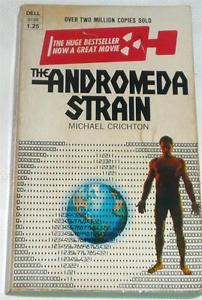
Cover of the first paperback edition of The Andromeda Strain, by Michael Crichton.
Cover of the first paperback edition of The Andromeda Strain, by Michael Crichton. (Click to embiggen)
The first time I remember hearing about The Andromeda Strain was while reading a movie theatre calendar. We were living in a small town in Utah which didn’t have a movie theatre of its own, but we were about an hour drive away from the small Colorado town where I had been born and my grandparents still lived. And often when we visited I would look at the monthly theatre calendar which was distributed free with the local weekly paper. Sometimes I would attempt to talk my parents into letting me come back on a particular weekend to go to the movie.

I think it was the fall of 1971 (I would have been eleven) when I saw the listing, and the name and very short description had me intrigued. Unfortunately, I wasn’t able to convince my parents to let me have the movie trip.

About a year later The Andromeda Strain was broadcast on network TV, probably as a movie of the week (that was a thing back then), and for whatever reason, we didn’t watch the first part of the movie. Probably it conflicted with a show my dad liked, so we watched the other show, first, then switched channels and watched the last half of the movie. So I was a bit confused, but it was still pretty exciting. The last part of the film was very tense and entertaining, even without the beginning.

The following week in school, everyone was talking about the movie. It was one of the few times that I remember kids who usually didn’t know a thing about science fiction talking about a sci fi plot.

Not long afterward, I happened across a battered paperback copy of Michael Crichton’s novel upon which the movie was based. I read it in a single sitting. One of the things that amazed me when I finished was how closely the half of the movie I saw followed the latter portion of the book. My previous experience of comparing movies to the books they were based on was that the movie often bore virtually no resemblance to the book.

The story of the Andromeda Strain is that a space probe is sent into low earth orbit and brought back down. It lands in a small, isolated town, and by the time the retrieval team arrives to pick it up, it seems that every inhabitant of the town has been killed. The retrieval team dies will communicating with their government superiors, and a Wildfire alert is activated. Wildfire is a codename for protocol government scientists have put together to respond to a biological threat from space. A team of scientists are pulled from their regular jobs and rushed to a secret underground facility. Two of the scientists go into the town in hazmat suits, find the satellite, and also find two survivors, an old man and a crying infant. The bulk of the story deals with how the scientists figure out what the infection is, and why those two very different characters are immune.

Before they have quite figured everything out, the extraterrestrial organism (which is neither a virus nor a bacterium) mutates and starts eating the plastics and rubber seals throughout the lab. This sets off an alarm and starts an automatic countdown on a nuclear self-destruct device. One of the things the scientists have determined about the organism is that it is not only immune to radiation, but will actually thrive in the explosion, and probably destroy all life on the planet. Thus we get to the tense ending where the characters are trying to stop the self-destruct and find a way to neutralize the infection.

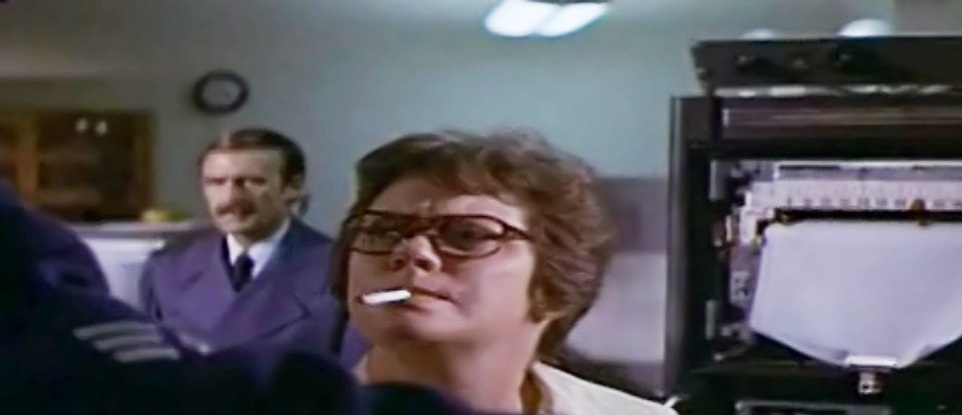
One of the things that disappointed me about the book was that one of the most interesting characters in the movie, Dr. Ruth Leavitt, was a much less interesting man, Dr. Paul Leavitt, in the novel. I’m not sure if the character in the movie was more interesting because the actress, Kate Reid, played a very believable character, or if the character was just less interesting in the original.

Kate Reid playing clinical microbiologist, Dr. Ruth Leavitt in the Andromeda Strain © Universal Pictures
Some time later, when I got to watch the movie all the way through for the first time, I was even more impressed with Reid’s character and the way the filmmakers used her. It was far more common for the token female character in either thrillers or sci fi films to be played by a young, glamorous actress, who was there more as eye-candy than to actually participate in the story. Leavitt wasn’t like that. There are some, I’m sure, who will argue that the filmmakers went overboard, putting Reid in those large unflattering glasses, and generally looking dowdy. But the filmmakers didn’t dress up any of the male scientists any differently. Even the casual way she smoked her cigarettes, never doing any of those delicate movie star poses that were more common when actresses were shown smoking at the time, just fit with the character’s personality.

I re-read The Andromeda Strain at least once more after seeing the movie all the way through, and I still found Reid’s version of the Leavitt character more interesting. And this was decades before I’d ever heard of the Bechdel Test!

The Andromeda Strain was a bestseller, and set Michael Crichton on the path of future success that would lead to, among other things, Jurassic Park. The movie was only a moderate success, which is too bad, because it was really well done. The science included was, for the most part, plausible at time. In fact, nothing in the film required any sort of advancement of technology beyond what we had available. Exactly how the life form could convert energy to matter was the only bit of dubious handwaving to speak of. It wasn’t the only time that the movie version of a science fiction story was better than the book, but I think it might have been the first time that I noticed it.

He wants to believe – more of why I love sf/f

THE X-FILES: L-R: Mitch Pileggi, David Duchovny, Gillian Anderson and William B. Davis.
THE X-FILES: L-R: Mitch Pileggi, David Duchovny, Gillian Anderson and William B. Davis. ©2015 Fox Broadcasting Co. Cr: Frank Ockenfels/FOX
In September of 1993 I tuned in with some hope, but also some trepidation, to the first episode of The X-Files. A show that was going to be about FBI agents looking into mysterious, unexplained, possibly paranormal happenings. The first episode was framed around Special Agent Dana Scully, who was a medical doctor as well as an FBI agent, who was being assigned as much to investigate Special Agent Fox “Spooky” Mulder as to assist him in handling the strange cases—the so-called X Files.

I enjoyed the show. So did my (now late) husband, Ray. We tuned in faithfully each week, chatting about various aspects of the show as we watched. I’d been such a big fan of Kolchak: The Night Stalker that of course I was interested in this show. Ray, on the other hand, barely remembered the other series (and he wasn’t sure if it was because he was a few years younger than I, or if maybe his family simply hadn’t watched it), but he was a fan of mysteries and sci fi and “spooky stuff” so was just as interested in the concept of the show before we had even seen it.

The show’s mysteries were interesting. Sometimes very creepy, sometimes sad. There was just the right amount of human and pathos in the most serious shows to keep you hooked. And then occasionally there were episodes that were primarily funny.

They avoiding the obvious “she’s always a cold-hearted skeptic”/”he’s a passionate true believer” dynamic that he seemed implied from the beginning. Mulder wasn’t a true believer. He frequently repeated the line, “I want to believe.” As we learned about the childhood disappearance of his sister, and the mysterious circumstances surrounding it, we understood why he needed to believe that there were things happening beyond the simple, rational explanations with which so many mysteries are dismissed. And Scully, of course, wasn’t cold-hearted, and while she remained skeptical, she wasn’t close-minded.

The show did a really good job of portraying different ways that a sense of wonder (and sometimes dread) could manifest when we are confronted with situations that don’t have an obvious, simple, and safe explanation.

I really loved the show in the early seasons. I recall especially being on the edge of my seat at the end of the season two finale, barely able to contain myself waiting to learn what the answer to the cliffhanger would be the next fall. Things started to go awry, for me, during the third season, and by the fifth or sixth I was finding myself irritated by the show more often then entertained. I might have given up if not for a friend who suggested this way of looking at it: “I’ve decided to think of it as two completely separate shows happening in parallel universes. They happen to have identically named characters played by the same actors, but they are other wise unconnected. One is the quirky, cool ‘there are more things than are dreamt of in your philosophy’ mystery of the week show that I adore; and the other is the awful, poorly written, contradictory, batshit alien conspiracy/maybe we’re all crazy show that I hate—and I have to put up with the latter in order to keep watching the former.”

And that helped a lot. Don’t get me wrong, the conspiracy related to aliens was there from the very beginning, and I was onboard with watching them confront and explore that. The problem, from my perspective, was that unlike their monster of the week kinds of episodes, they never seemed to have a clear idea of what was actually happening with the conspiracy. Years later we might call their problem the “Lost syndrome,” because like that more recent show, the writers seemed to be throwing contradictory and confusingly cryptic clues at us without a clear idea of what the “real” explanation was.

I think that the show’s original creator did have an idea of what the explanation was, but either he allowed other writers who didn’t know to go off on misleading tangents that couldn’t be reconciled as simply red herrings, or perhaps he didn’t know how to keep the series going if he ever revealed the answer.

So it was with a bit of trepidation that I watched the first episode of the new mini series a few weeks ago. And I have to admit, that opener left me with a lot more dread than hope. Then the second episode was a bit better, like one of the typical mystery of the week shows I used to love.

And then we got to the third episode, “Scully & Mulder Meet the Were-monster” and I was in heaven. It was funny. And with a lot of Easter Eggs that weren’t annoying. Two actors who played stoned teen-agers who witnessed a mysterious event back in the very first season, returned to play the same characters, no longer teens, who are out in the woods huffing spray paint when they witness another event. There was a homage the Kolchak in the story, an incredible amount of humor, yet it was an incredibly dark commentary on real life at the same time. It was really, really good, and included everything I had loved about the best of the earliest episodes. And I was incredibly happy to see, online over the next several days, the number of review sites and sci fi/fantasy enthusiasts who had enjoyed the episode the same as I had.

At its best, the X-Files was about things in life—sometimes awful, tragic things—that don’t fit neatly into our preconceptions of how the world can be. More importantly, it is about the way we try to understand those things—how we confront mystery, tragedy, disappointment, horror, and betrayal—and how we cling to meaning and hope in spite of it. It’s about finding the human connection, finding the reasons to hope, finding the things to cherish, and never losing our curiosity.

And it’s also, sometimes, about really creepy monsters.

“This nut thinks he’s a vampire!” – more of why I love sf/f

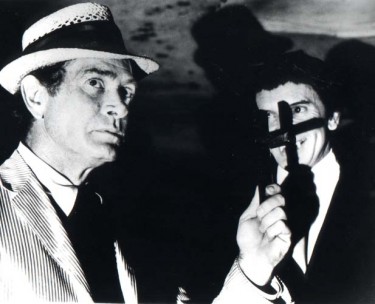
Darren McGavin and Barry Atwater in a still from The Night Stalker television movie © 1972 American Broadcasting Company
Darren McGavin and Barry Atwater in a still from The Night Stalker television movie © 1972 American Broadcasting Company (Click to embiggen)
It was January, 1972 when I first saw Darren McGavin playing reporter Carl Kolchak, dressed in that hat and cheap suit, ranting to his editor and the police about a serial killer. I was in the fifth grade and Dad’s nomadic employment in the petroleum industry had sent us to a small town in Utah. We had been there the just over a year, which was longer than we had stayed in any one town in several years1.

In the movie, The Night Stalker, Darren McGavin plays Kolchak, a reporter working in Las Vegas, dating a showgirl, and covering typical news stories. Until he began being suspicious about a series of deaths that seemed very similar, but which the police insisted were unrelated. First Kolchak was convinced that it was simply a serial killer who was draining all the blood from his victims’ bodies because he was insane and believed he was a vampire. As Kolchak finds more and more evidence of similar crimes going back decades, he begins to worry that the killer really is a vampire.

Which, of course, turns out to be the case. Kolchak witnesses a couple of attempts by the police to capture the killer. The second attempt is such an epic failure, with multiple cops killed and dozens of bullets striking the killer (played creepily by Barry Atwater) to no avail. This convinces at least one FBI agent that it is a vampire. Kolchak and his FBI buddy track down and kill the vampire.

Kolchak writes the full account of the vampire’s long career of murder and eventual destruction, proposes to his girlfriend, and prepares to move to New York City where he expects to be able to write his own ticket. Except the FBI and local police don’t want anyone to know about vampires. They kill the story (getting Kolchak’s boss fired, I believe). They substitute a more mundane tale of a serial killer with Kolchak’s byline. Then they inform him that his girlfriend has already been convinced to leave town, and tell him he’s no longer welcome in Vegas.

The story ends with Kolchak re-dictating the entire tale into his portable tape recorder while sitting alone in a sleazy motel room. He explains how all the evidence is destroyed, and that he’s exhausted his savings trying to find his fiancée, so far to no avail.

It was a sad and creepy end to a film.

The Night Stalker was a made-for-TV movie based on an unsold novel by Jeff Rice, originally titled The Kolchak Papers. Rice’s agent had more luck selling the novel idea to ABC as a movie idea than he’d had selling it to a book publisher. The movie was a surprise hit, drawing in unheard of ratings when it ran. It was so successful that the network commissioned Richard Matheson, who had adapted Rice’s book into script from, to write a sequel. A book publisher was suddenly interested in Rice’s novel, but only if they could also get a deal on the sequel. So Rice wrote a novelization of Matheson’s sequel script, and in 1973 two Kolchak books, along with the sequel TV movie, The Night Strangler were all released.

The Night Strangler came out almost exactly a year after the first movie. In it Kolchak had relocated to Seattle where he stumbled upon an immortal who was living in Underground Seattle2 who every 21 years has to kill several women in order to harvest their blood in a very specific fashion to manufacture his “elixer of life.” The sequel did well enough again that work began on a third movie. Until the network put that all aside and decided to turn Kolchak’s story into a regular weekly TV series, which debuted in September of 1974 and ran for one season.

McGavin returned to play Kolchak. In the series Kolchak, along with his editor from both movies (played by Simon Oakland), have been relocated to Chicago where they work for the Independent News Service. Each week Kolchak stumbles upon a new monster or mystery that winds up having a fantastic explanation. Unlike the original movie, Kolchak never has any credible witnesses survive to corroborate his stories, so no one ever believes.

After the two wildly successful TV movies, the network had high hopes, but the initial ratings weren’t terribly exciting. After four episodes of The Night Stalker had aired, the series went on hiatus for a bit over a month. It came back, re-titled Kolchak: the Night Stalker! with new theme music, though not any changes to the tone, setting, or cast.

Ratings continued a slow, steady decline, causing the network to pull the plug at episode 20, cutting short the original order of 26 episodes.

The series ran during my 7th grade year. We had moved by the Colorado, this time returning to the small town where I’d been born, and where one set of grandparents and one set of great-grandparents still lived. Puberty had hit the year before, and I suddenly knew exactly why I’d always felt out-of-place to the point of wondering if I was a changeling left in place of my parent’s real child by evil elves, or maybe an alien sent to study humans—I was gay. It was during this same period that I started fooling around regularly with one other gay classmate (while having a completely unrequited crush on a different classmate that as far as I know was straight). I lived in a constant state of fear of being found out, terrified of what family, friends, and the rest of the town would do if they had proof I was a fag.

I threw myself even more fervently into reading science fiction and fantasy, so of course I was a faithful viewer tuning in each week to see what Kolchak would uncover next. Kolchak was appealing in part because these incredible, usually awful, things kept happening around him, but no one ever believed him. He was in sort of a reverse closet. He wanted people to know the truth, but everyone else did everything they could to ignore, explain away, and ridicule that truth.

While I did tune in faithfully each week, I have to confess that as the series went on, each episode was a little bit less satisfying. I can’t be certain why, having not re-watched it in years, but something about seeing Kolchak not be believed week after week was much less interesting than seeing it in two movies separated by a year. Maybe it was because Kolchak was seldom heroic. He had a determination to learn the truth, yes, but clearly he would have much rather interviewed people after the fight with the monster, rather than take on the creatures himself. He was always a bit rumbled and always seemed to stumble and fumble his way into a lot of the stories and events in the series, rather than get there through dogged determination. Maybe the series just didn’t know how to walk the tightrope between mystery/horror and comedy.

Some years later Chris Carter would have more success with The X-Files, a series he admitted was inspired by Kolchak. So the week-to-week mysteries the world doesn’t want to admit exist notion could be spun into a successful show. I don’t know what about the collective consciousness of 1974 made Kolchak less appealing than the audience of the 90s would find Scully and Mulder4.

I still look back on The Night Stalker with a lot of fondness. I empathized so much with they guy who knew and believed things no one else would credit. It wasn’t just the parallels to my own queer secret, though. I was also having an ever more difficult time reconciling my love of science and history with the fundamentalist evangelical beliefs of our church and the vast majority of our neighbors. I felt as if people were constantly belittling scientific facts and scientists, blatantly ignoring evidence right in front of them and insisting on a worldview that just didn’t square up with not just my lived experience, but theirs.

Kolchak kept chasing that truth, kept examining the evidence, never letting the naysayers or conventional wisdom stop him. And that was a role model I desperately needed.


Notes:

1. I wound up completing the entirety of 5th and 6th grade, in addition to the half of 4th in that same school. This tied my previous record of Kindergarten, 1st, and part of 2nd in the Ft. Collins, Colorado school district. By contrast, 3rd grade was split between three schools, each in a different state (and if the brief sojourn in Kansas had begun a few weeks earlier than in did, 3rd grade would have been four schools in four states).

2. This movie makes the mistake of most pop culture representations of Underground Seattle do. It portrays it as if some sort of disaster buried part of the city in a single night and the survivors rebuilt on top. A dining room underground that still has dishes, silverware, and petrified food figures in the story, for instance. In actuality, Seattle decided it was tired of the routine flooding and sewer backups that happened in the part of downtown built on swamp land, and they razed a hill at the north end of town to redistribute the dirt to raise the streets in the south end. It took many months. During the transition some of the taller buildings had new doors built into the existing second or third floors at the new street level. Other buildings had additional stories built atop them. Spaces that had originally been ground floors became basements. In only a very small number of cases have any of those old spaces been kept in anything close to their original state3.

3. Many, many years ago a software company I worked for that had offices downtown rented storage space in the basement of the building next door. The basement had originally been a dance hall before the streets were raised. The solid wood dance floor was still there, and some of the fancy woodwork on the walls was still visible, but the building owners and subdivided the space into a bunch of 10 foot by 10 foot cubes with cheep plywood, and rented each out for storage. It wasn’t terribly exotic any longer. And you just walked down ordinary stairs to get to it.

4. A subject I’ll go into much more detail about next week, I think!