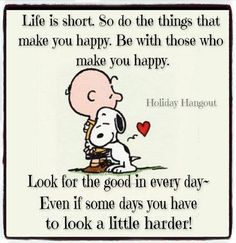
“Life is short. So do the things that make you happy. Be with those that make you happy. Look for the good in every day—even if some days you have to look a little harder!”There is a lot of baggage on the notion of New Year’s Resolutions. I don’t want to rehash all the arguments. And I really don’t want to get into a pedantic semantics argument about the arbitrariness of the calendar and so forth. Trust me, I know. But I also know from personal experience that when I set goals and also set up some sort of mechanism for reporting on them, I actually make major progress toward them. So, I’m going to set some goals for the year. I’m publishing them on my personal blog and on my Patreon. I am currently planning to post monthly updates about my progress on my Patreon, rather than at the blog. But I also may do some sort of cross-post.
Some years ago a friend suggested the analogy of how one trains a dog: you can’t get rid of a bad behavior without replacing it with something else that fulfills the same need for the pup. In other words, replace a habit you don’t like with a new one that you do. This has helped me make a number of changes in my own behavior over the years since.
For various reasons, when I started setting my annual goals using this method, I kept setting four goals. And other than 2017, when two of those goals were related to external forces (specifically, our involuntary relocation from our home of 20+ years and a surgery my husband required) I have never managed to make progress on all four. So this year, I’m going to cut the goals back to three, and see if that works a little bit better.
My goals for 2019:
Don’t get mad, keep focused. It has always been the case that I find it easy to rant and get outraged about injustices and the like in the world. And this outrage burns up a lot of energy. That’s why for several years I’ve had a goal related to reducing or controlling my outrage. The last two years we’ve all had a lot of anxiety and outrage fatigue. I think I’ve done a reasonably good job of paying enough attention to try to protect myself and my family, while not getting overwhelmed. So I’m going to get try this year to keep (and in some areas increase) my focus on things I can control. My tasks are: write about about things I love, including more book reviews and the like on my blog; continuing listening to music and audiobooks more than news podcasts and the like; carve out some time to paint of make music each month.
Take care of business. There are a number of things that I’ve procrastinated on. It’s been easy to let my insane work schedule derail plans. I’ve made a list of 10 tasks that I just need to finish. The plan is to knock off a minimum of one a month. Some of the tasks have confidentiality issues, so I’m going to remain vague on this..
Revise and finish. I’ve been in an unending iterative loop of proofing/editing one novel for an embarrassingly long time. I tried to balance that by looking at calls for submissions and writing to those. That has not worked out. I don’t seem to ever meet the expectations of those calls. And the time spent writing those stories should have gone to finishing the books I have and just self-publishing them So, that’s what I’m doing this year. My task is: set specific monthly writing/editing goals each month.
Wish me luck!
And I hope everyone (well, everyone except the alleged president of the United States and any of his enablers) has a joyous and blessed 2019.
Never forget: you are amazing. You are worthy of love. There have been times when you were the moment of light in someone else’s day—and you never knew. Believe that.
It doesn’t require a hero and a pulse-pounding battle to change the world. Each of us can change the world if we just remember to show up. To be kind when it’s needed. To be resolute, even if we’re scared.
“Merry Christmas! Shabbat shalom! Blessed Yul! Joyous Kwanza! Festive Festivus! Happy Christmas! Happy Hogswatch! Feliz Navidad! God Jul! Mele Kalikimaka me ka Hauʻoli Makahiki Hou! Beannachtaí na Nollag! Buon Natale! Priecīgus Ziemassvētkus un laimīgu Jauno gadu! Felix Dies Nativitatus!”
Slice the pecan pie,
And don’t be stingy with the homemade whipping cream,
Crank up the music,
We’re gonna sing and laugh to drive the darkness away!
‘Cause we need a rainbow Christmas,
Right this very minute!
Egg nog at the brunch bar
With rum and brandy in it!
Yes we need a rainbow Christmas,
Right this very minute!
My lyrics may be getting slurry,
But Santa dear, we’re in a hurry!
So fling ’round the glitter!
Put up more twinkling lights than the whole Vegas strip!
No need for fruitcake,
We’ve got a great big table of deliciousness, here!
Cause we’ve grown a little rounder,
Grown a little bolder,
Grown a little prouder,
Grown a little wiser,
And I need a toasty lover,
Snuggling by the fire,
I need a rainbow Christmas now!
Happy Christmas! Shabbat shalom! Blessed Yul! Happy Hogswatch! Joyous Kwanza! Festive Festivus! Feliz Navidad! God Jul! Mele Kalikimaka me ka Hauʻoli Makahiki Hou! Beannachtaí na Nollag! Buon Natale! Priecīgus Ziemassvētkus un laimīgu Jauno gadu! Felix Dies Nativitatus!So people have been sharing some memes about Christmas movies and Christmas songs and so forth, at least one media outfit going so far as to conduct a poll on whether a particular film is a Christmas movie or not. And I generally thought it was all fun and silly, but I made the mistake of commenting to one old acquaintance on another social media platform and oh, boy, did it escalate quickly. For which I will take all the blame, because I was being a smart ass, and just because we might mean something as a joke doesn’t guarantee the other person hears it like one, right? But, here’s the more serious point: If you think it’s a Christmas movie, then it is a Christmas movie for you. If you don’t think it’s a Christmas movie, then it isn’t for you. If you think it’s a Christmas song, it is a Christmas song for you. If you don’t think it’s a Christmas song, then it isn’t for you.
I don’t need to justify why I think a particular song is a Christmas song. As a matter of fact, you can’t justify such a thing, because we aren’t really talking about thinking here, but rather feeling. And no matter how much logic you pile up, that doesn’t change the way another person feels.
Just as an example: the exact same logical case that certain other people are making that a specific song isn’t a Christmas song applies to “Jingle Bells.” Seriously. “Jingle Bells” doesn’t mention the manger, nor the angels, nor the shepherds. Absolutely nothing in the lyrics at all about the arrival of Jesus, so not a religious Christmas song, clearly. There is also no mention of Christmas, nor a Christmas tree, nor holly, no mistletoe, not even chestnuts roasting on a fire. Yes, it mentions snow, and a sleigh is mentioned a lot of times, and then there’s all those jingling bells. But first, it’s a one horse open sleigh, not a reindeer drawn sleigh. Snow doesn’t just happen at Christmas. Bells were put on sleighs and carriages and the horses that pulled them at night and particularly in winter time as a precaution to avoid collisions in dark intersections.
In fact, the original author of the song back in 1822, wrote it as a party song. We’re so used to children singing the song that we don’t notice how racy the song is. A couple being out in a one horse sleigh meant no chaperone, after all, and that means all sorts of naughty things could occur. The word jingle, by the way, is meant to be a verb, not an adjective. Jingle those bells, because you’re driving fast! And there’s also some innuendo that.
And then there’s that line “He got into a drifted bank And then we got upsot.” Most people assume it’s away to make “upset” as in overturned or fallen over, to rhyme with lot. Not so fast! The word appears in a number of 18th and 19th Century songs, where it does seem to refer to something fallen over and such, but not just fallen, but in fallen in a drunken manner. Yes, other uses of the word seem to be referring to a more stumbling and raucous situation amplified by the liberal application of alcohol.
So not only isn’t “Jingle Bells” not a Christmas song, it’s not a wholesome children’s song either.
Except, of course, that for most of its history, Christmas hasn’t been a wholesome children’s holiday either. There are reasons the puritans banned the celebration of Christmas entirely in the old Massachusetts colony, and not because Christmas trees were pagan symbols. In point of fact the decorated evergreen tree wasn’t associated with Christmas in English-speaking countries at the time of the Puritans. But untangling the tree’s origin is way more complicated than I want to be here.
But, everybody knows that “Jingle Bells” is a Christmas song. And I think a case could be made that other Christmas songs mention sleigh rides and jingling bells at least as much because the modern celebration of Christmas appropriated “Jingle Bells” in the 1860s as the fact that those things are associated with winter.
I’m a Christmas music addict. And yes, there are some Christmas songs that I absolutely hate. I have walked out of people’s houses when certain songs come up. So I understand that someone can have strong negative feelings about a song or a movie. Let me like my songs and movies, and I’ll let you like yours.
And if you happen to stop by my place, I will offer you some eggnog. With the rum and brandy if you like, or without. Let’s just all have a cheery, jingly, non-judgmental holiday!
Don we now…. (click to embiggen)One: Different families have different Christmas traditions. Some of the traditions are really strict. My ex-wife’s family, for instance, was really really really invested in Christmas Eve. You simply must attend the Christmas Eve thing, or you might as well just skip Christmas. This caused a little bit of an issue, since attending my then Mother-in-law’s Christmas Eve in Oregon meant missing my Nice Grandma’s Christmas Eve in southwest Washington. And that’s symbolic of a conflict many couples have: there are at least two family traditions and sets of extended relatives that you want to try to accommodate at major holidays. And it just gets worse if there has been divorces and re-marrying and children now have to contend with even more sets of grandparents and step-grandparents and cousins and step-cousins and so on.
My childhood Christmas memories are divided into several sections. There were about six years where Christmas consisted of Dad, Mom, my sister, and I cramming into either the four-wheel-drive pickup (because the roads would be icy at some point of the journey) either early morning Christmas Eve or sometimes at the end of Dad’s work-shift, and drive hundreds of miles from wherever we were living at the time to my paternal Grandparents’ house. My maternal grandmother (aka Nice Grandma) and one set of great-grandparents on that side happened to live in the same small town as my paternal grandparents (aka Grandpa and Evil Grandma), so we would get to see them at least briefly during the trip, but it was always clear that we were there to spend Christmas with Evil Grandma, and everyone else was secondary.
I was aware, during this time, that Mom’s side of the family liked to get together on Christmas Eve, and again for Christmas dinner the next afternoon, but Christmas morning was generally for each family unit at home. Because we often were arriving at Evil Grandma’s house late in the evening, I very seldom got to attend the other family Christmas Eve.
Then there was a period of three Christmases in a row where we lived just an hour’s drive from Evil Grandma, which meant getting to see everyone for a bit longer at the holiday. That is, until Nice Grandma re-married my Mom’s adoptive father, and she moved out to Washington state to live with him.
Then there were three Christmases we lived in the same small town as my paternal grandparents and my maternal great-grandparents (and only a couple hours drive from a bunch of other relatives). The tradition then became that we would spent a chunk of Christmas Eve with my Great-grandparents, then Christmas morning and Christmas dinner at Evil Grandma’s.
Then after my parents divorced, Mom, my full sister, and I moved up to the same town in Washington state where Grandpa and Nice Grandma lived, and that first Christmas Eve was a revelation. When Grandma lived in Colorado, Christmas Eve involved my Great-grandparents and a few of Grandma’s friends, because there weren’t many of her non-in-law relatives there. In Washington, there were Grandpa’s siblings and their children and grandchildren, my Mom’s six half-brothers (and for some of them wives and children), plus a bewildering number of cousins, demi-cousins, shirt-tail relatives of many other sorts, plus the people that Nice Grandma always seemed to adopt.
Not every single one of that vast constellation of Grandma’s “folks” made it every year, but a lot of them managed to drop in for at least a little bit. As my Aunt Theresa (who was the ex-wife of one of my Mom’s brothers) was fond of saying, “You never knew who you would see at Gert’s Christmas Eve!”
Aunt Theresa was a great example. She had only been married to my Uncle Randy for three years. They divorced when I was about 14 years old. Theresa and Grandma had got along really well from the first time they met, so she was the one who came to Grandma the tell her thag she was divorcing Randy. Theresa told the story later that, “Gert looked me right in the eye and said, ‘You can divorce my son, if that’s what you have to do, but you are not divorcing me! You’re part of my family forever, you understand?’”
And for the next 30-some years of Grandma’s life, Aunt Theresa came by frequently to visit, check on Grandma, and keep her up-to-date on the well-being of Theresa’s relatives—because Grandma still considered them all in-laws.
Two: I only got to see another one of my Mom’s half-brothers at a couple of those Christmas Eves, once I was living nearby and able to attend. Uncle Brad never quite got his life together. He spent a lot of time in jail. He was never convicted of anything serious—I think the longest sentence he ever got was six months—but, between being addicted to a couple of illegal substances, and having to sell said substances to support himself at times, he just couldn’t stay out of trouble. So sometimes Uncle Brad missed Christmas Eve because he was in jail, and sometimes because he was in some other trouble.
And then he got sick. Everytime Grandma called him, he said he hadn’t been coming to visit because he was sick again, and figured he was contagious with whichever illness he thought he had.
Christmas Eve 1982 was the first time we had seen him in months, and he looked awful. Of Mom’s brothers, Brad had been the shortest, and he had never been what anyone would call fat, but that night, he looked like he hadn’t eaten in weeks. Grandma thought that he was using more serious drugs, and confronted him a few times. He insisted that he wasn’t, that he’d just kept catching things that he couldn’t seem to shake.
Then one day a few months later, Aunt Theresa showed up at Grandma’s and said, “I have some very bad news. Have you heard of this new disease they call AIDS? Well, Brad has it. He thinks he got in it one of the times he was in jail…”
My Uncle Brad wasn’t a really early case, but when he was diagnosed in early 1983 it was only months after the Center for Disease Control gave the illness that name, Acquired Immune Deficiency Syndrome.
Uncle Brad didn’t live to see Christmas Eve of 1983.
My Uncle Brad was hardly the only person that I knew that would be taken by AIDS. I’ve written before of the winter when so many friends and acquaintances of Ray and I died in the same six-week period that we couldn’t attend some of the memorial services because they were happening at the same time.
The disease didn’t get its name until September of 1982, but it had been recognized as an epidemic that ought to be taken seriously since 1981. Unfortunately, no one in either party on the national level was willing to even talk about it, let alone allocate funds to the CDC and other agencies to address it properly. The very first politician at a national level to call for the government to address the crisis was a woman from California who was elected to Congress in a special election in June of 1987 to fill a seat that was vacated with the previous Congresswoman died due to cancer.
That new Congresswoman, after being sworn in, was allowed to make a short introductory address to Congress as was traditional. Usually these comments are a brief thank you to family and supporters. And the new Congresswoman did that, but she ended her remarks with this statement that surprised her colleagues, “Now we must take leadership, of course, in the crisis of AIDS. And I look forward to working with you on that.”
The Congresswoman was Nancy Pelosi. And Pelosi became a tireless campaigner on the issue, bucking both her own party’s leadership, as well as taking on the Reagan administration’s (and subsequent Bush admin’s) bigoted opposition. During those early years, reporters and others kept asking how could she, as a Catholic, support what was perceived as a gay cause. Her answer was simple and consistent: “We are all God’s children, and that includes gay people.”
While people think of her as part of the establishment and middle-of-the-road, that is a gross mischaracterization. Not just then, but now. So in case it isn’t clear: I frequently describe myself as being far more liberal and progressive (radically so on many topics) than the Democratic Party, but this is one queer man who considers Minority Leader Pelosi’s current trajectory to become Speaker of the House as a big Christmas present to the forces of justice, mercy, and compassion.
Third: My Nice Grandma didn’t always live up to my idealized vision of her. Because of how negatively she (and other relatives) reacted to my coming out of the closet in 1991, I had to boycott all family events for six years. Not just Christmas Eve: everything. If my husband wasn’t welcome as my husband, then I wasn’t. It was years later that I would first read Dan Savage’s version of the same epiphany I’d had which led to the boycott: “The only leverage adult queer people have over parents and other family members is our presence in their lives. We shouldn’t fear losing them, they should fear losing us.” Because of the many times over a couple of months I had been told by multiple relatives that I was going to hell and deserved it, that sure I could live my life as I chose but any time I was in there home… I had had to tell them I would not visit them, ever, but if they liked they could come visit me. Though, any time they were in my home…
(Those ellipses can imply so much, no?)
After six years, it was Grandma who reached out shortly before my birthday in 1997 and asked if she and my step-grandpa could drive Mom (who doesn’t do freeways) to see me on my birthday. I said of course. It was awkward for about an hour, but the ice finally melted, and the next thing we know they were inviting us to come down to a picnic and the meet my sister’s new daughter (my sister and her now-fifth-ex-husband were coming for a visit), and suddenly they started treating Ray like a person, instead of a symbol of whatever their feelings about my queerness were.
The change in attitude (including apologies) was topped off by a request that we come visit for Christmas, where, yes, Ray was welcome, and none of the weird conditions previously alluded to were expected.
I really wish I could end this by talking about Ray’s first Christmas Eve at Grandma’s. The problem was, Ray was very sick (he did not, by the way, have AIDS; that picnic had been a bit difficult for us to juggle because Ray’s second round of chemotherapy was underway, but we managed). In November he had a seizure, went into a coma for several days, and then died.
Michael’s first Christmas Eve with Grandma happened in 1999. It wasn’t the first time he and Grandma met. That had been at a different trip, where I decided it would be better not to have the first meeting tied to a major holiday. We had been on our way to Mom’s (she lived an hour south of Grandma back then), and we stopped in for what was supposed to be a short visit (just in case). Michael had hardly spoken a couple of sentences when Grandma gave him a look and asked, “Is that a Missouri accent I hear?”
Soon the two of them were talking about all these places in Missouri and Oklahoma where Michael had grown up, and where coincidentally Grandma had lived for a number of years. You want to talk about coincidences? The hospital listed on Michael’s birth certificate, is the same hospital listed on Mom’s birth certificate.
Anyway, they just kept talking. At one point, my step-grandpa leaned over and said quietly to me, “If you wanna get a burger or something, I think the two of us could slip out and they wouldn’t even notice.”
I was very happy. Grandma liked Michael. That meant if anyone else in the family didn’t, well, they have to keep it to themselves.
Despite the warm fuzzies of that encounter, all of the things I said yesterday about why we avoid the big family gathering apply. This Christmas Eve, it will just be Michael and I. We usually cook a sort of romantic dinner. I’ll watch some Christmas movies. We’ll probably stay up until midnight to say “Merry Christmas” and have a kiss under the mistletoe. But we have to get to bed soon after, because first thing in the morning, we always check our stockings to see what Santa brought.
A lot of the decorations my family had when I was young came in boxes a lot like this…I mentioned yesterday some glass ball ornaments that belonged to my great-grandmother. I’ve only owned those three ornaments for about ten years, even though Great-grandma passed away back in the 1970s. And until Mom showed them to me one Thanksgiving a year or two after Grandma died I had forgotten completely about them. But as soon as I saw them I could picture Great-grandma’s little tree set up on top of her TV set with these bright colored ornaments on it.
I have mentioned many times that I am a packrat from a long line of packrats. Other people might refer to us as hoarders, and certainly some family members leaned more toward that end of the spectrum than others. After Grandma died, for instance, my mom and her older sister found at least five “spare” microwave ovens squirreled away among the thousands of boxed up things stuffed in every closet of Grandma’s home. One of those microwaves my Aunt recognized immediately, and not just because of the scorch marks, as one that my Aunt had thrown away when it suffered a major electrical problem.
For years after Grandma’s death, mom and her sister have been ocassionally producing weird things that were packed up at Grandma’s that they hope that one of us will take and use.
My maternal-maternal great-grandfather (who insisted all of us kids call him ‘Shorty’ rather than Great-grandpa) died when I was 14 years old. At the time he and Great-grandma lived in a little house that was about a three minute bicycle ride from our home. Grandma and all of her brothers and a huge number of the grandchildren (Mom’s first cousins) and great-grandchildren (my second cousins) came to the small Colorado town for the funeral and to help with the arrangements. Great-grandma went back to southwest Washington to live with Grandma, then she died a year later.
Because of a couple of photographs, we know that during the first Christmas after Shorty’s death, that Grandma and Great-grandma decorated a tree in Grandma’s house with a combination of Great-grandma’s ornaments and Grandma’s. As far as any of us know, Great-grandma’s ornaments then stayed boxed up and unused for the next 32 years. When Mom found them, they were still in the original box packed inside a bigger box with other things of Great-grandma’s. There was a note attached to the outside of the box in Grandma’s handwriting that said, “Mother’s decorations.” Inside the box Mom found a handwritten retail receipt from the little “five-and-dime” store that had once been in the tiny Colorado town where I was born (And where Shorty and Great-grandma lived for a bit over 20 years). It had a date: December 1956, and noted that the ornaments were being sold at half price because two of the glass ornaments broke during shipping.
Mom split them up, with myself and one of my cousins getting three each. Mom kept four for herself.
I suspect that the reason they sat unused in that box for all that time was three-fold. The first Christmas after Great-grandma died, I suspect Grandma was just too sad about them to use them. The next dozens of years if Grandma thought about them at all, she probably decided not to use them because she was afraid they would get broken, and then she wouldn’t have these things of her mother’s any longer. And I think the third reason is that the longer they stayed boxed up, the less often Grandma even remembered they existed.
The last phenomenon is one I became accutely aware of during the move 20 months ago, as I kept finding boxes of things squirreled away in the old house that I had forgotten we had.
This is one of the reasons I insist, no matter what colors and theme we’re doing on any Christmas, that Great-grandma’s three ornaments always go on our tree. As kitschy and ordinary as they are, they represent my Great-grandma and make me remember happy times with her whenever I look at them. But the other part is that I don’t want them to sit in a box unseen for years. There is no point keeping them if they aren’t going to be seen and used. Their only value is in being seen.
Yeah, if one ever got broken, I would be upset. But I would also remind myself that for 19 years they gave Great-grandma (and anyone who visited her during the season) a bit of holiday cheer, and for 10 years and counting they have contributed to my Christmas cheer. That’s a pretty good return on G-grandma’s original investment of less than a dollar.
Different people have different traditions—by which I mean a long established or generally accepted practice or custom. Now, if I were to be pedantic, I would have to point out that in order to qualify as “generally accepted” the practice or custom can’t be individual. Fortunately, most dictionaries put that “or” in there to bail us out. Anyone that has met me knows I can be extremely pedantic, so I don’t blame other people being that way, even if I may try to give them a different perspective. For instance, Christmas is, technically, a religious holiday, and many churches that observe Christmas has a tradition of calling the time period from the first Sunday in December up to December 23 as Advent, rather than Christmas. In such Churches, the Christmas season does not begin until December 24, and it continues on through Twelfth Night (sometimes also called Epiphany or Three Kings’ Day).
I was not raised in that kind of church.
I was raised in Southern Baptists churches: a good ol’ boy, redneck denomination (with an extremely racist origin) that took particular pride in eschewing liturgical traditions. And not just pride, it was an article of faith within the church culture that the more tightly another denomination clung to traditions and rituals and so on, the least likely they were to be part of the “true” church. This was a communal act of both projection and denial (otherwise known as gatekeeping). We had just as many rituals and traditions as anyone else, we just didn’t publish them in a liturgical calendar or give them high-falutin’ names.
I often describe myself as a Recovering Baptist, or Ex-Evangelical, or even Ex-Christian, so I rejected the notion that they (or any other institution) has a monopoly on truth or grace, but I am also self-aware enough to know that part of me always assumes that I’m right, and people who disagree with me are not. In any case, there are certain traditions around the Advent/Christmas season from my childhood that I adhere to:
I don’t listen to Christmas music until after Thanksgiving dinner.
I try to start decorating for Christmas the day after Thanksgiving.
There are always lights on the tree and around the house.
Presents should start appearing under the tree shortly after it goes up, and people are allowed to pick up presents tagged for them and shake/listen to/weigh in their hands/et cetera to their heart’s content trying to guess what is inside but must never try to peek under the wrapping.
Any member of the household may move any ornament except the treetopper from one point on the tree to another if they think they see a bare spot; but also each member of the family may declare one ornament as theirs and not to be moved by anyone else.
If you have reached the age where you realize that the truth about Santa is that Santa is all of us, it becomes your duty to help make sure everyone younger experiences the wonders of receiving a gift from the jolly old elf and if they realize it actually came from you you have failed at being a good Santa’s helper.
There will be olives and a relish tray on Christmas Eve and Christmas Day.
Just to name a few.
Other traditions are more personal that have evolved over the years, many of them at least partially caused by the six or seven years where I and my “friend” (there are some relatives even more than 20 years later who refused to call my husband anything other than “Gene’s friend”) were not welcome at family events.
A biggie is, that the height of the Christmas Season, the day that I consider my real Christmas, is the annual Holiday Party which I and friends have been having, almost always on the third Saturday of the month, here, and not with relatives. It’s the time that I get together with people I love (among Christmas decorations) to laugh, to share food, to exchange gifts—to fill our little corner of the world with light and love. Which just happened day before yesterday. This feeling that that event is my Christmas is so strong, that for many years now I have to be careful on the Monday after the party not to start asking co-workers how their Christmas went.
Since 1995 this event has also included the Christmas Ghost Story Challenge: I write and perform an original Christmas Ghost Story, and challenge other people to have something similar to share.
For many years we had a tiny plastic nativity like this, which sometimes Mom would hang on the tree as an ornament.
There are still several of my personal traditions that are related to my family. Every Christmas among the presents I give my mom, one is a box of that type of candy I have been giving her since I was about 14 years old. I keep an eye peeled for decorations or albums or other things that Mom loved to bring out during the holidays that have subsequently been lost or broken. This is why, even though I as a taoist married to a wiccan no longer celebrate this season as sweet-baby-jesus time, that I have purchased for Mom more than one Nativity scene, and when I can, additional figurines for the larger one.
Part of the reason is because, yes, I want my mom to be happy. Another part is because those things represent moments that we found something to be happy about in spite of living with an abuser. Things like the glitter on the Christmas angel or the Christmas albums we loved to sing along to were moments of light and love in a world of darkness.
And while I take great delight in unpacking and setting up the plastic Santa & Sleigh that for years graced my Great-grandparents’ home every Christmas, or hang up the three kitchsy glass ball ornaments that were on their tree every year, or hang up the embroidered Christmas tree that hung in Grandma’s home, these things also remind me of our mortality. There are people I loved who are no longer with us. We can never be sure how many happy times together we will have in the future with our loved ones that are still here.
So we should enjoy and be thankful for whatever bits of happiness we can give each other.
My friend, Krisin, wrote a nice essay that touches on similar themes that you might enjoy: Expectations.
A friend told me that one of her friends was looking for people’s favorite sweet potato pie recipe, and asked if I could share mine. The problem for me is that sweet potato pie is one of those things I learned how to make by helping one of my great-grandmothers and one thing all three of my great-grandmothers had in common is that measuring cups were at best guidelines. They eyeballed a lot of ingredients in recipes and then adjusted as they went along. So when I make one of those recipes I tend to do it the same way. If I make biscuits from scratch, for instance, I pour some flour and butter and salt and milk (buttermilk if I have it) together and start kneading—then, depending on the texture I might add more flour, or more butter, or more milk and so on until it feels right (you add the baking powder last so it doesn’t start doing its thing while you’re still mixing).
So, I’m going to describe how I make it, taking my best guess as to the relative quantities of the ingredients.
1 pie crust
2 large sweet potatoes
2 eggs plus 1 egg (or the equivalent egg whites)
1 can of evaporated milk
1/2 stick of butter, melted
3/4 cup brown sugar
1-3 tablespoons molasses
1-3 teaspoons vanilla extract
1/2 teaspoon salt
1/2 teaspoon cinnamon*
1/8 teaspoon ground nutmeg*
1/8 teaspoon ground cloves*
1/8 teaspoon ginger*
*if you have pre-mixed pumpkin pie spice, just do a teaspoon of that
1. Lightly rinse the sweet potatoes, then put them in a large pot with enough water to fully immerse them. Add a pinch of salt to the water and put over medium heat. Let it come to a boil, then let it boil for at least 20 minutes. Test for doneness by sticking a fork in one of the sweet potatoes. Try to push it in the full length of the tines. If the fork goes in real easy, they’re done. If it goes in a little ways easy then you feel resistance, let it keep boiling another 10 minutes, then check again.
2. Once they are done, turn off the burner and position a colander in the sink. Pour the pot out through the colander. While the potatoes are still hot turn on the cold water. Let the cold hit one of the potatoes for no more than half a minute, then move the faucet over so the water is still flowing, but not flowing on the potatoes. Pick the partially cooled one up and put it and your hands immediately under the cold water. Now start rubbing with your thumbs. The skin (and a thin, slightly darker colored layer of the potato) will simply rub off. This is infinitely easier than trying to peel them before you boil them, I assure you. Drop the peeled potato into a large mixing bowl. Pick up the second potato and do it again.
3. This is usually when I turn on the oven so it will be preheated by the time we are done with the rest.
4. With a potato masher, start mushing the potatoes. Pour in the evaporated milk, mash/stir some more, then the butter, then the sugar, then the molasses and spices.
5. Note that I have listed variable amounts of vanilla and molasses. Unfortunately, this is one of those places where I adjust. What I do at this point, is pour in (eyeballing it, not measuring) a little bit of molasses, then mix, and once it’s mixed in, if the color isn’t right, I add more. Similarly with the vanilla, I pour in about a teaspoon, then stir it around, and if it smells right, I don’t add more, but if not, I add more.
So I will suggest that you add a bit of molasses and vanilla, stir it in, and take a taste. If it tastes like sweet pie filling, then you’re good. If you think you want a little more of the molasses bite, add some. If you want more of the vanilla mellowness, add some.
6. Now, the eggs. If you’re using actual eggs, crack two of them and dump them into the filling. Then crack the third and separate the yolk from the white, and add the third yolk to the pie. Put the third egg white in a small container for later. The white will be used with the crust in a minute. If you’re using egg beaters or packaged egg whites, measure out whatever they say is the equivalent of two eggs and put that the filling, then stir up.
7. Once all of those ingredients are in, set the filling aside for a few minutes to breathe. I honestly don’t know if the filling actually breathes, but that’s what Great-grandma said is happening.
8. The oven should be pre-heated by now. I usually just buy frozen pie crusts. I used to always make my own crusts from scratch (another recipe I learned from my grandmas), but honestly, I can’t taste the difference, so I don’t do that any more. Whether you made the crust yourself or are using frozen, coat the crust in its pan with the egg white reserved back at step 6 using a pastry brush (or just more eggbeaters/white from the package). With a fork, punch a bunch of holes in the bottom of the crust (if you’re using one of those aluminum pans, don’t poke through the foil!). Stick the crust in the oven for at least five minutes. You want it to dry out a little, but not to fully cook, yet.
9. Take the dried crust out of the oven, pour in the pie filling. you may have too much from your crust/pan, depending on the size of the potatoes. I like to put the excess in ramkins and cook them separately as little tarts.
10. Put the pie into the oven and cook for at least 2 hours. Check for doneness by sticking a tooth pick in. If the toothpick come clean, it’s done. If you see any of the filling clinging to the toothpick let it bake some more. I usually check at 15 minute intervals starting at the 2 hour mark.
Once it’s done, let it cool. Later, serve with whipped cream. Lots, and lots of whipped cream.
We don’t pose together often, so here is us last Christmas Day.Today is the six-year anniversary of the day we stood in front of many of our loved ones and exchanged vows. We were pronounced husband and husband and I cried. We didn’t pick this date. The voters of Washington State picked our wedding date. Because we’d been together for more than 14 years when our state approved marriage equality by a vote of the people—by a wider margin than any of the other states who approved it that year. And because sometimes this things get taken away (see the entire Proposition 8 nonsense in California in 2008), we went in on the very first day same sex couples could pick up a marriage license, waited the required three days, and then had a ceremony at the home of some of our friends.
Not that we weren’t both deliriously happy to be doing it, and while we weren’t like some of those couples who had been together for more than 50 years and were finally getting to tie the knot, it wasn’t a date we had picked.
That’s just another thing that is awkward about our society’s history with queer rights. Michael mentioned that he was just recently trying to explain to a co-worker that we have several anniversaries: the anniversary of our first date (Michael and been a friend to Ray and I for more than a couple years when Ray died, so our first date was not the first time we met), the anniversary of when we moved in together, the anniversary of when we registered or domestic partnership (and we had a small party with friends), and then the wedding anniversary.
Due to cultural conditioning, the wedding date was the one that felt most dramatic. And I know that all couples have significant milestones before they officially tie the knot. But it is a very common thing, when one is meeting a new straight couple, to ask how long they’ve been married. And even if you phrase it differently, 90-some percent of the time they will respond with, “we’ve been married X-years.”
Even though marriage equality has only been existent in this state for six years (and nationwide only three), I’ve still found myself being asked by people, “How long have you been married?” And the first few times when I just said the number of years, yes, people were shocked that we had only been together such a short time. So I’ve started automatically answered, “We’ve only legally been married X years, but we were together for nearly 15 before we could get married.” And sometimes people respond to that with confusion, and then incredulity when I tell them that same sex couples couldn’t legally marry before then. Even some people who think of themselves as open-minded and supportive of gay rights don’t understand that marriage equality is a very recent thing.
Which, given all the media attention and the millions of dollars worth of anti-gay political advertising put up in each state when votes about domestic partnerships or marriage were in the works, seems a little weird. How could they miss all that Sturm und Drang?
Oh, well.
And so, while today is our sixth anniversary, and just thinking about it and looking at all the pictures our friends took that day makes me cry, we’ve actually been together for 20 years and 10 months, or 250 months, which may explain why we finish each other’s sentences and so forth.
He’s the most wonderful man I know. I really, seriously can’t quite understand why he puts up with me, let alone loves me. But I’m eternally grateful that he does.
(click to embiggen)In the U.S. it’s Thanksgiving, a day which most of us were taught in school was to commemorate a peaceful feast between the the Pilgrims and their neighboring Native Americans. Of course, we are also taught in school the equally false notion that the pilgrims came to the America from England looking for religious freedom, when in fact what they came to do was establish a theocracy—they fled England because the folks back home wouldn’t let them persecute neighbors who worshipped very slightly differently than they did. So while the Native Americans whose land the Pilgrims were squatting on did occasionally meet and break bread with the colonists—and have to teach them how to farm since most didn’t know how and so forth—the traditional Thanksgiving story is a myth.
Being raised in evangelical fundamentalist churches, I was also taught that it was a religious holiday (after all, who would we be saying “thanks” to, right?), though there isn’t really anything very holy about what the European colonists did to either the Native Americans nor the environment we found here.
Anyway as Anya observed in that one episode of Buffy the Vampire Slayer: “To commemorate a past event you kill and eat an animal. A ritual sacrifice… with pie.” And I have to admit that the past events I am commemorating are the holidays spent with extended family back when all my grandparents and most of the great-grandparents were still alive. Which is why one of the dishes I’m cooking and serving today in sweet potatoes with heavy cream, molasses, and pepper… as close to how Great-grandma used to make it as I can get.
Since a lot of my bookmarked stories this week don’t really make sense to include in tomorrow’s Friday Five, in case you need something to read today, here are some Thanksgiving Links:








 Font Folly