Tag Archives: science fiction

We Have the 2021 Hugo Ballot… and a really looooooooooong time to fill our our ballots!

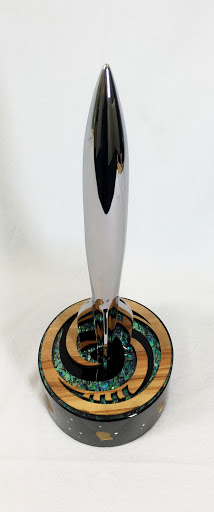
This year's trophy, base designed by John Flower.
The 2020 trophy, base designed by John Flower. More pictures and an explanation of the design of the base are here: http://www.thehugoawards.org/hugo-trophies/2020-hugo-award-trophy/ (or click on the picture)

Hugo 2021 List

The Hugo finalists were announced on Tuesday on the DisCon III YouTube channel, and it is a really good ballot, again. I’ll first just give the list, then follow up with my comments.

Best Novel

  • Piranesi, Susanna Clarke (Bloomsbury US; Bloomsbury UK)
  • The City We Became, N.K. Jemisin (Orbit US; Orbit UK)
  • The Relentless Moon, Mary Robinette Kowal (Tor; Solaris)
  • Harrow the Ninth, Tamsyn Muir (Tordotcom)
  • Black Sun, Rebecca Roanhorse (Saga; Solaris)
  • Network Effect, Martha Wells (Tordotcom)

Best Novella

  • Finna, Nino Cipri (Tordotcom)
  • Ring Shout, P. Djèlí Clark (Tordotcom)
  • Upright Women Wanted, Sarah Gailey (Tordotcom)
  • Come Tumbling Down, Seanan McGuire (Tordotcom)
  • Riot Baby, Tochi Onyebuchi (Tordotcom)
  • The Empress of Salt and Fortune, Nghi Vo (Tordotcom)

Best Novelette

  • “The Inaccessibility of Heaven”, Aliette de Bodard (Uncanny 7-8/20)
  • “The Pill”, Meg Elison (Big Girl)
  • Helicopter Story, Isabel Fall (Wyrm)
  • “Burn or the Episodic Life of Sam Wells as a Super”, A.T. Greenblatt (Uncanny 5-6/20)
  • “Monster”, Naomi Kritzer (Clarkesworld 1/20)
  • “Two Truths and a Lie”, Sarah Pinsker (Tor.com 6/17/20)

Best Short Story

  • “Badass Moms in the Zombie Apocalypse”, Rae Carson (Uncanny 1-2/20)
  • “Metal Like Blood in the Dark”, T. Kingfisher (Uncanny 9-10/20)
  • “Little Free Library”, Naomi Kritzer (Tor.com 4/8/20)
  • “The Mermaid Astronaut”, Yoon Ha Lee (Beneath Ceaseless Skies 2/27/20)
  • “A Guide for Working Breeds”, Vina Jie-Min Prasad (Made to Order)
  • “Open House on Haunted Hill”, John Wiswell (Diabolical Plots 6/15/20)

Best Series

  • The Daevabad Trilogy, S.A. Chakraborty (Harper Voyager)
  • The Lady Astronaut, Mary Robinette Kowal (Tor; Solaris; Audible; F&SF)
  • The Poppy War, R.F. Kuang (Harper Voyager)
  • October Daye, Seanan McGuire (DAW)
  • The Interdependency, John Scalzi (Tor; Tor UK)
  • The Murderbot Diaries, Martha Wells (Tordotcom)

Best Related Work

  • A Handful of Earth, A Handful of Sky: The World of Octavia E. Butler, Lynell George (Angel City)
  • Beowulf, Maria Dahvana Headley (MCD x FSG Originals)
  • FIYAHCON, L.D. Lewis, Brent Lambert, Iori Kusano & Vida Cruz
  • “George R.R. Martin Can Fuck Off Into the Sun, or: The 2020 Hugo Awards Ceremony (Rageblog Edition)”, Natalie Luhrs (Pretty Terrible 8/20)
  • The Last Bronycon: a fandom autopsy, Jenny Nicholson (YouTube)
  • CoNZealand Fringe, Claire Rousseau, C, Cassie Hart, Adri Joy, Marguerite Kenner, Cheryl Morgan & Alasdair Stuart

Best Graphic Story or Comic

  • Parable of the Sower: A Graphic Novel Adaptation, Octavia E. Butler, adapted by Damian Duffy, illustrated by John Jennings (Abrams ComicArts)
  • Die, Volume 2: Split the Party, Kieron Gillen, illustrated by Stephanie Hans (Image)
  • Once & Future, Volume 1: The King Is Undead, Kieron Gillen, illustrated by Dan Mora (BOOM!)
  • Monstress, Volume 5: Warchild, Marjorie Liu, illustrated by Sana Takeda (Image)
  • Ghost-Spider, Volume 1: Dog Days Are Over, Seanan McGuire, illustrated by Takeshi Miyazawa, Rosie Kämpe, and Ig Guara (Marvel)
  • Invisible Kingdom, Volume 2: Edge of Everything, G. Willow Wilson, illustrated by Christian Ward (Berger)

Best Dramatic Presentation, Long Form

  • Birds of Prey: And the Fantabulous Emancipation of One Harley Quinn
  • Eurovision Song Contest: The Story of Fire Saga
  • The Old Guard
  • Palm Springs
  • Soul
  • Tenet

Best Dramatic Presentation, Short Form

  • Doctor Who: “Fugitive of the Judoon”
  • The Expanse: “Gaugamela”
  • The Good Place: “Whenever You’re Ready”
  • The Mandalorian: “The Jedi”
  • The Mandalorian: “The Rescue”
  • She-Ra and the Princesses of Power: “Heart” (parts 1 and 2)

Best Editor, Short Form

  • Neil Clarke
  • Ellen Datlow
  • C.C. Finlay
  • Mur Lafferty & S.B. Divya
  • Jonathan Strahan
  • Sheila Williams

Best Editor, Long Form

  • Nivia Evans
  • Sheila E. Gilbert
  • Sarah Guan
  • Brit Hvide
  • Diana M. Pho
  • Navah Wolfe

Best Professional Artist

  • Tommy Arnold
  • Rovina Cai
  • Galen Dara
  • Maurizio Manzieri
  • John Picacio
  • Alyssa Winans

Best Semiprozine

  • Beneath Ceaseless Skies
  • Escape Pod
  • Fiyah
  • PodCastle
  • Uncanny
  • Strange Horizons

Best Fanzine

  • The Full Lid
  • Journey Planet
  • Lady Business
  • nerds of a feather, flock together
  • Quick Sip Reviews
  • Unofficial Hugo Book Club Blog

Best Fancast

  • Be the Serpent
  • The Coode Street Podcast
  • Kalanadi
  • Claire Rousseau’s YouTube channel
  • The Skiffy and Fanty Show
  • Worldbuilding for Masochists

Best Fan Writer

  • Cora Buhlert
  • Charles Payseur
  • Jason Sanford
  • Elsa Sjunneson
  • Alasdair Stuart
  • Paul Weimer

Best Fan Artist

  • Iain J. Clark
  • Cyan Daly
  • Sara Felix
  • Grace P. Fong
  • Maya Hahto
  • Laya Rose

Best Video Game

  • Animal Crossing: New Horizons
  • Blaseball
  • Final Fantasy VII Remake
  • Hades
  • The Last of Us: Part II
  • Spiritfarer

Lodestar Award for Best Young Adult Book (Not a Hugo)

  • Legendborn, Tracy Deonn (McElderry; Simon & Schuster UK)
  • Elatsoe, Darcie Little Badger (Levine Querido)
  • Raybearer, Jordan Ifueko (Amulet)
  • A Wizard’s Guide to Defensive Baking, T. Kingfisher (Argyll)
  • A Deadly Education, Naomi Novik (Del Rey; Del Rey UK)
  • Cemetery Boys, Aiden Thomas (Swoon Reads)

Astounding Award for Best New Writer

  • Lindsay Ellis
  • Simon Jimenez
  • Micaiah Johnson
  • A.K. Larkwood
  • Jenn Lyons
  • Emily Tesh

In every category other than the Artist, Video Game, and Editor – Long Form, at least one item from my nominating ballot made it to the final ballot. And in eleven categories two or more items I nominated made the final list.

On the one hand, I suppose this means I have similar enough tastes to much of the regular Hugo nominating community. On the other hand, this means that in a whole bunch of categories I have a lot of reading/watching to do. On the gripping hand, well, that means I have to read a bunch of stuff for the next few months! Which, as a bibliophile, that’s a good thing.

Let’s get a little specific: in the novel category, two books I nominated made it. All four of the other titles that made it to the ballot were already on my radar to read. In fact, two of those four I’ve already bought, I just hadn’t started reading them, yet.

I should mention that four of the six people who made it to the ballot in Fan Writer are people I nominated. And honestly, the other two are people whose works I’ve read and if I could have nominated more than five people they very well might have made it to my nomination list. Which means that much like last year, this is going to be a very painful category to rank. Some of these I read some much that they basically feel like extended members of my family, so I want to put them all at position number 1 on my ballot. Dang it!

I feel like one particular entry in the Best Short Story list requires an entire post or more on its own — and it already got a post on this blog 13 months or so ago! So I’m not going there.

The only book that I nominated for the Lodestar Award, A Wizard’s Guide to Defensive Baking is a book I loved so much last year that I bought many copies of it to give to various friends and family members for Christmas and birthday presents. I also wasn’t absolutely certain it belong in the Young Adult category, so I nominated it for both Best Novel and Beat Young Adult Novel. In addition to how awesome I think the book is, full disclosure, I should mention that while I don’t expect the author to remember me, the two of us have had dealer’s den tables across from each other at certain conventions, so I may have an extra level of bias in regard to her work.

Finally, thanks to the uncertainties of the pandemic, the committee running this year’s WorldCan has decided to reschedule to convention for a date when they are certain they can host an in-person convention. So instead of being in the latter half of August or the first bit of September as has been tradition for a number of years, this year’s WorldCon will begin on December 18 in Washington, D.C. Way too close to Christmas and in the middle of Advent season for a lot of people.
Bucky and Sam are reminded that “The Whole World is Watching”

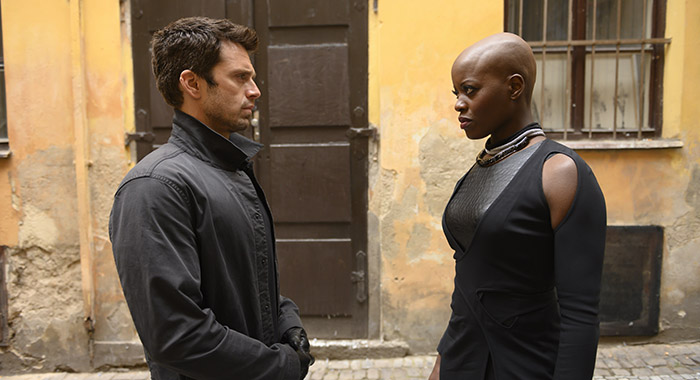
(L-R): Winter Soldier/Bucky Barnes (Sebastian Stan) and Ayo (Florence Kasumba) in Marvel Studios’ THE FALCON AND THE WINTER SOLDIER exclusively on Disney+. Photo by Julie Vrabelová. ©Marvel Studios 2021. All Rights Reserved.

I’ve started, scrapped, and re-started my review of The Falcon and the Winter Soldier episode four, “The Whole World is Watching” several times. The episode is a big improvement over episode three, but the basic story still appears to have more than a few major flaws. I think the way to stop myself from digressing down a lot of rabbit holes is to focus on what I think the source of the flaws is, before talking about the plot.

Before I get into that, I have neglected to mention that this show is on Disney+, and the parent company, Disney, continues to refuse to pay royalties owed to Alan Dean Foster and others for novelizations and similar work.

I can’t really talk about the episode without spoilers, so:


Warning: Spoilers Below!


Television shows and movies and the like have always had problems when trying to incorporate the real world and real history into their narratives. Sometimes it is mostly an annoyance, such as all the times that shows are supposedly set in the City of Seattle, where I live, but are very obviously being filmed in Vancouver, Canada (which means most of the world doesn’t even notice). This particular shows shares a sin with lots of American shows in that the Prague, capital of the Czech Republic, is being used as a stand-in for several different European locations, much of which bear little resemblance to Prague.

That kind of muddle doesn’t usually create plotholes, so those of use that do recognize the difference can still enjoy the story.

Unfortunately, The Falcon and the Winter Soldier is also suffering from another kind of dissonance with the real world. For example, the villain, Zemo — who is still belng played deliciously well by Daniel Brühl — makes several references to his family’s legacy and his own childhood that just make absolutely no sense for a person who is supposed to have grown up in a fictional country which is, according to previous films in the MCU, sandwiched inbetween the real nations of the Czech Republic and Slovokia. Nor does another of his references to a childhood visit to the real world city of Riga, capital of Latvia.

At least they don’t make sense if you assume that these stories are taking place in the year 2021, which they appear to be. I should pause here to point out that Cora Buhlert goes into much more detail about these discrepancies in her reviews.

Rather than retell this information, I want to present my theory for why the writers or The Falcon and the Winter Soldier and other MCU properties are making this mess. I think it comes down to two things. First, Americans (by which I means inhabitants of the U.S., not to disparage our Canadian or Mexican neighbors) or embarrassingly ignorant of both history and geography. Second, the comic book origins of the Marvel Universe have a particular time warp baked into the origins and themes of most of the classi villains and heroes.

To the first point, I want to hasten to point out the most of my fellow citizens are woefully ignorant of the geographic of Europe, Asia, Africa, and so one. But they’re also extremely ill-informed about our own country. I spent my late teens and early twenties traveling around the country in a touring choir, and do not exaggerate when I say I met thousands of people who did not know that Washington State, where we were from, is not the same as the city of Washington, D.C., and that the two Washingtons are literally on opposite sides of the continent. More recently there was that viral meme about how many millions of people were shocked and sometimes angry to learn that Alaska isn’t an island. And let’s not forget the Trumpers from the U.S. state of Georgia who were running around the capitol waving not the flag of their home state, but the flag of the Eastern European Nation of Georgia (because they search for Georgia flag on Amazon–I kid you not!)!

So, Americans, including most of the writers and show runners of any series you can name, literally do not know the difference between Albania, Austria, Latvia, Serbia, or Romania; let alone have any idea of their relative histories. Similarly, if they’ve even heard of events like the Turkish Invasion of Cyprus, the Kosovo War, the First or Second Chechen Wars, the Romanian Revolution, the Hungarian Revolution, or any of the Albania Civil Wars, they have no idea what the conflicts were about nor which ones came before and which after the Dissolution of the Soviet Union.

So fictional European characters written by Americans are going to have backstories that make no sense and contradict history at every turn.

Then there is the Marvel timeline problem. Most of the classic Marvel heroes and villains have their origins in the 1960s and 1970s. Things about American culture and which parts of recent history were important to Americans during that time are baked deeply into the DNA of the fictional lives, themes, and backstories of those characters.

One of the concepts that ghosts along just under the surface of the very essence of a huge number of Marvel characters is that World War II was only 20 or 30 years ago. Trying to translate those origins into modern times means that writers wind up half-heartedly tying major turning points in the lives of both heroes and villains to a more recent conflict, which likely has little culture or economic similarities to WWII as perceived by Americas during the Viet Nam War era. This results in some very confusing elements to the personalities, motivations, and backstories of those characters in a modern setting.

Enough explanation of why most of the socio-politico motivations of any of the villains in this series makes absolutely no sense. Let’s get the the actual episode. “The Whole World Is Watching” is a significantly better entry than episode three. The action sequences (particularly the one involve the Wakandan Dora Milaje) are much more exciting, engaging, and have a lot of emotional heft.

In a completely different arena, we see Sam using his skills as a PTSD counsellor to try to get through to Karli, the leader of the flag smashers. I should note that Cora Buhlert has pointed out the Sam’s true superpower is empathy, and I have to agree that this comes through really strong in this episode.

Karli cross the line from activist to terrorist last episode, and in this episode we see that even some of her most loyal followers are uneasy with this shift. Even so, Sam does seem to reach a moment of understanding. And it is during the conversation with Sam that Karli herself acknowledges that her philosophy, goals, and tactics have some contradictions.

During Karli’s conversations with her followers and with Sam, we get a lot more details of what happened to at least some of the people who didn’t vanish in the blip, and a slightly better explanation of why Karli and her followers are doing what they’re doing. It would have really made episodes two and three make a lot more sense if the writers had found a way to include some of the information in episode one. For example, some of it could have logically been brought up during the scene where Sam and his sister try to take out a small business loan. Just sayin’.

Sam isn’t able to talk Karli down, however, because USAgent, aka Captain Nationalism aka the new Captain America, is too impatient to give Sam the ten minutes he asked for. Zemo uses the ensuing fight to shoot Karli and destroy most of her vials of super soldier serum. Unfortunately, New Cap finds what might be the last surviving vial, and later in the episode we learn he’s injected himself with it.

It is during the second fight with the Flag Smashers that we see that New Cap has super strength. When his loyal friend seems to be killed in said fight (I’m not convinced he’s dead, because the camera cut back to his motionless body at a really odd moment after all of the rest of the characters left the building, chasing the Flag-smashers), New Cap gets even more reckless, leading up to the extremely bloody and shocking final scene.

I’m going to put a stake in the ground here and say that if the rest of the series doesn’t use that final scene, where an unarmed man who is trying to surrender it brutally murdered with the entire event caught on the cameras of hundreds of smart phones as a metaphor for real live incidents of police brutality, than the whole series has missed the boat.

Despite a lot of improvements, we don’t get anything as enjoyable as the banter between Bucky and Sam in episode two. Which is a shame.

While this episode did a lot to salvage the mess of episode three, there are still a heaping pile of details to wrap-up with only two episodes to go. I suspect it’s going to be a wild ride, whether they succeed in tying everything up or not.


These reviews might be of interest:

“The Whole World Is Watching” The Falcon and the Winter Soldier

Falcon, the Winter Soldier & the MCU’s Original Sin

Bad Guys and Good Guys in The Falcon and the Winter Soldier‘s “The Whole World is Watching”

TEMPERS FLARE IN THE FALCON AND THE WINTER SOLDIER EPISODE 4


Note: When I mentioned above how poorly Americans know geography and history, I am including myself. I literally used to read Encylopedias cover to cover for fun, and I love reading reference books of all kinds, but I also know I have some big and occasionally embarrassing holes in my knowledge. I can draw, from memory, a fairly accurate map or the borders of European countries circa 1914, for instance, but give me a blank modern map of Europe and tell me to fill in names and I know I’ll get several of them wrong.

Sam and Bucky: the 80s Want Their Plot Cliches Back

I didn’t write a review of the second episode of The Falcon and the Winter Soldier because the review would have just been: Not as exciting as the first episode. The action scene was lackluster and the scenes with the new Captain America were not very compelling. Even when the new Cap and his buddy are arguing with Sam and Bucky the scene didn’t have any bite. On the other hand, the bantering scenes between Bucky and Sam were awesome. I would gladly watch an entire series of the two of them just snarking.


Spoilers below!


If episode two was a let down after the opening, episode three may be a full-fledged crash and burn. The biggest problem is one that Cora Buhlert called out in her review of the first episode:

> the villain Flag-Smasher is a problematic and I would have preferred, if Marvel had not used him. In the comics, Flag-Smasher is just one guy (apparently, the main Flag-Smasher in The Falcon and the Winter Soldier is a woman, which is progress, I guess), not a whole organisation (though he later is part of one), and his reasons for wanting to abolish nations and borders are both understandable and actually make sense. The fact that this character was portrayed as a villain tells you a lot about what Captain America comics were like in the 1980s and 1990s, when I used to call Captain America “Captain Nationalism” and flat out hated the character. The Marvel movies did a lot to move Captain America away from the old “Captain Nationalism” model and turned him more into what he was intended to be, namely the positive side of America given form. Hell, the Marvel movies actually made me like Captain America.

This problem was more than hinted at in the first episode, in that the only thing we were told about the so-called terrorist organization is that they want open borders and for people to be able to move freely between nations. Most people living in the European Union have had that ability within the union for decades, and it has generally been viewed as beneficial economically, culturally, and socially.

American conservatives are horrified by the idea of open borders, which makes this show’s narrative lean into that Captain Nationalism idea. The new Cap being both a jerk and someone more than happy to promulgate the jingoistic propaganda is fine for a character who clearly is supposed to be one of our antagonists, but when the two protagonists also immediately assume that open borders are bad, that’s more problematic.

I had hoped that the Flag-Smashers would turn out to be a worthy exploration of some kind of justice issue, but the third episode just muddles it up even more. The leader, Karli, is also angry that people who were dusted in the blip but then came back are getting aid and resources to reintegrate with society. That sort of resentment is something that happens in the real world in relationship to refugee crises, it’s true, however the people who feel that sort of resentment are also almost always the same people who vehemently opposed open borders.

The two beliefs just don’t go together.

Later she talks about another goal: destroying industries. As if destroying some people’s livelihoods and interrupting the production of necessary goods wouldn’t make the other issues she laments substantially worse.

The main plot developments of episode two were the revelation that some of the Flag Smashers are super soldiers (and that someone somewhere has re-invented a serum like the ones that gave Captain America and Bucky their powers), and that there were African-American soldiers experimented upon during the Korean War era, one of whom developed powers like Captain America, was used for some covert missions, and then locked up in prison for years afterward.

The main action of episode three has to do with getting Baron Zemo (introduced in Avengers: Civil War) out of prison on the grounds that his connections to Hydra will help them find whoever has made the new super soldier serum. Which leads them to the fictional city of Madripoor looking for the villain called the Power Broker.

Madripoor is a cliche lawless city/state. Such settings are cliches precisely because they serve certain kinds of stories well. The similar city/planet that appeared in the Star Trek: Picard episode "Star Dust City Rag" is an example of how it can be used to move both and action and comedy plot forward. Here it’s just portrayed as a generic Asian Cyberpunk town… that doesn’t seem to have any asian inhabitants. At all. Not one. And it is supposed to be in or near Indonesia!

I could keep going on and on about the logistic and plothole problems with this episode. It’s just mind-boggling how bad it got. (Shipping containers do not work that way!)

Now, one difference in episode three is that the action scenes are generally more exciting than what we got in episode two. It’s only when you think about the plot or logic that things fall apart. We also didn’t get much fun banter between Sam and Bucky. On the other hand, Zemo is quite fun, and the actor does a really good job dancing between being charming and menacing. It was nice to see them doing something with Sharon Carter; making her be really angry about taking all of the consequences for actions in Captain America Civil War without any of the praise and certainly not a pardon, unlike some of the other characters (Bucky and Sam, specifically). It was also really fun surprise to see the character of Ayo (one of the Wakandan Dora Milaje) at the end of the episode.

I enjoyed parts of this episode. But the way the plot, motivations, and logistics keep crashing through my willing suspension of disbelief leaves me worrying that I’m not going to enjoy the series at the end.

Because I like the MCU versions of Bucky and Sam so much, I will undoubtedly stick it out. I just hope I don’t regret it.


You may find these other reviews useful:

Marvel’s “New World Order” – Some Thoughts on The Falcon and the Winter Soldier

Falcon & The Winter Soldier is probably bad actually

The Falcon and the Winter Soldier meet “The Star Sprangled Man”

Why we love to hate the MCU’s new Captain America, John Walker

"Hydra" is Code for "We Don’t Want to Talk About White Supremacy"

‘Falcon and the Winter Soldier’ Uncovers Marvel’s Original Sin

The Falcon and the Winter Soldier tangle with the “Power Broker”


Edited to Add: Episode Four: "The Whole World Is Watching" is a considerable improvement, answering some of my plothole questions and moving character arcs forward. Full review soonish.

Bucky and Sam try to find their place in the “New World Order”

© Disney+

I’m going to try to give a review of episode one of The Falcon and the Winter Soldier without doing a recap and avoiding plot spoilers until the end. This episode is a good opening act, establishing where are characters are emotionally and situationally since the end of Avengers: Edngame. The trailers I had seen had made this seem mostly like a action adventure not unlike one of the theatrical Avengers movies, with more than a bit of the buddy cop vibe that some of the solo MCU movies pulled off. That isn’t quite what we get in the first episode.

I have to admit, while I have been looking forward to this show, I was wondering really what the writers had in mind for these two characters. What do they have in common other than they were each, at different stages of Captain America’s life his best buddy and sidekick. Which doesn’t seem like enough to build a good character repartee.

The first episode acknowledges this by showing us that the two characters are not interacting with each other at all. Bucky his working with a psychiatrist to try to recover both from years of being a brainwashed assassin, and the trauma of being one of the people snapped out of existence by Thanos, only to suddenly come back into existence five years later, to find a world that has moved on.

Which is another thing that he and Falcon/Sam Wilson have in common. In Sam’s case, he’s come back from the blip to find his parents dead, and his sister struggling to keep the fishing business that has been in their family for generations afloat, on top of being a single mother.

Before I talk about any of more of the set up, I should pause here to talk about the opening. On certain parts of the fannish internet a lot of women are losing their minds over the very opening where Sam is seen using and iron and an ironing board to iron a button-down dress shirt. There are memes out there already about how sexy women find it when a man knows how to iron his own shirt. As a man who owns an iron and an ironing board and has been known to iron dress shirts and slacks and such before going to certain important social events where one is expected to dress up, the scene didn’t quite have that effect on me. It seemed, to me, perfectly in character based on how self-sufficient Sam had been shown to be in the first MCU we ever saw him in, Captain America: Winter Soldier.

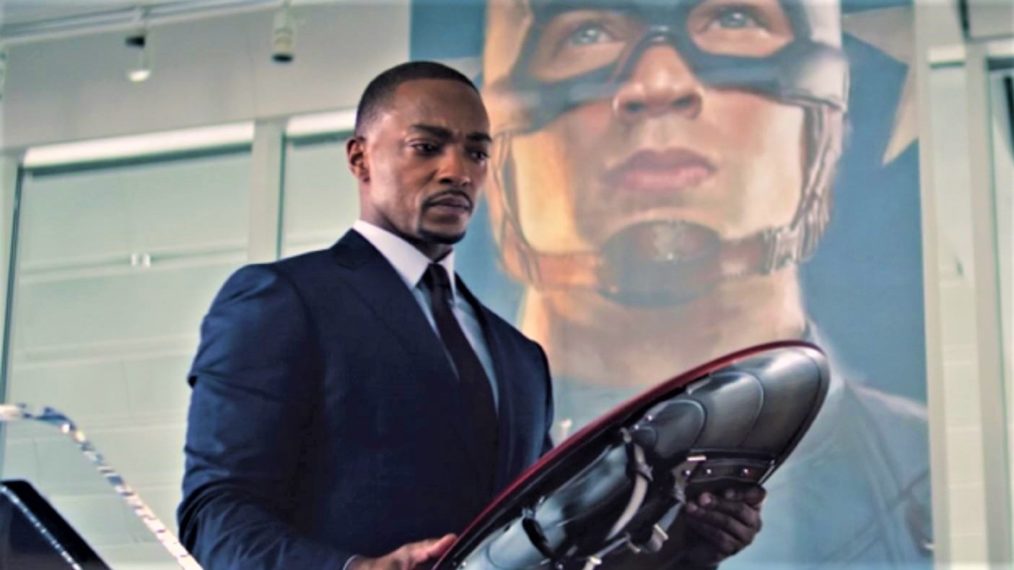
Sam was ironing the shirt because he was attending a ceremony at the Smithsonian related to the Captain America exhibit there. The scene’s purpose in the story is to establish that, despite having Cap himself hand over his shield at the end of Avengers Endgame and telling Sam to take over the role of Captain America, Sam doesn’t believe that he—or anyone else—should take up that mantle.

We next see Sam in an incredible aerial battle, where he is working with U.S. government forces to try to rescue an US Air Force officer from terrorists. It is an incredible scene that looks good enough to appear in one of the theatrical MCU releases. It clearly establishes that despite his misgivings, Sam is more than capable of stepping into Captain America’s shoes. The sequence will remind you a lot of the opening of Winter Soldier, and not just because the leader of the badguys is Batroc, who was the leader of the bad guys in that fight, as well.

Bucky’s sequences with his psychiatrist and some people he has tried to befriend do a great job of showing you how much of a struggle it is for him to try to lead an ordinary life. He’s trying to make amends for as many of the bad things he did during the years he was brainwashed by Hydra as he can. And his scene include a couple of particular heart wrenching moments in that regard. While Sam is working for the government as a contract operative, Bucky is apparently just working under conditions of a pardon. Regularly meeting with his psychiatrist is one of those conditions.

The first episode also sets us up with at a terrorist organization and at least one antagonist that we can assume will be the source of conflict for the rest of the series.

I was a bit worried when we reached the end of the episode, because I had assumed this series was going to be eight to ten episodes long, and they had done a good enough job putting pieces on the board in this one that I was worried the middle episodes would drag. I have since learned that the series is only six episode long, and presuming more of them with be about 43-minutes long as the first episode was, that probably is just enough to tell the story without needing any filler.

I do have a few spoilery comments on this one, which will be behind the cut-tag below. Before we get into that: may I remind you that this show appears on Disney+, and the Disney corporation is refusing to pay Alan Dean Foster and other authors money they are owed for media tie-in novels.

Spoliers ahead!

.

.

.

Seriously, every single sentence below is full of spoilers…

.

.

.

Seriously, turn back now!!!

.

.

.

I warned you!!!

.

.

.

Seriously, spoilers ahead!

.

.

.

Continue reading Bucky and Sam try to find their place in the “New World Order”

WandaVisions Wraps Things Up in the Awesome “The Series Finale”

© Disney+

Having now seen the entire series1, I can sum up my feelings quite succinctly: It’s f-ing awesome2!

It did not end the way I thought it would. Thank goodness it didn’t end the many weird ways that some fans, fancasts, and so-called leakers were predicting. The show ended much, much better than any of those predictions.

The last episode took the meta of all the earlier episode titles all the way to 11: “The Series Finale.” It was fun, it didn’t have plotholes, it didn’t introduce wild twists (but it had more than one surprise3). Most importantly: it is a complete story. It did not feel as if it was just setting us up for the next show4.

It also is exactly the kind of story I, for one, needed right now. But I can’t explain why without spoilers. But before I warn you not to click through or otherwise read further, may I remind you that the Disney corporation is still refusing to pay Alan Dean Foster and other authors money they are owed for media tie-in novels.

Anyway…

Spoliers ahead!

.

.

.

Seriously, every single sentence below is full of spoilers…

.

.

.

Seriously, turn back now!!!

.

.

.

I warned you!!!

.

.

.

Seriously, spoilers ahead!

.

.

.

Continue reading WandaVisions Wraps Things Up in the Awesome “The Series Finale”

WandaVision gives us some answers and fills in Wanda’s backstory

© Disney+

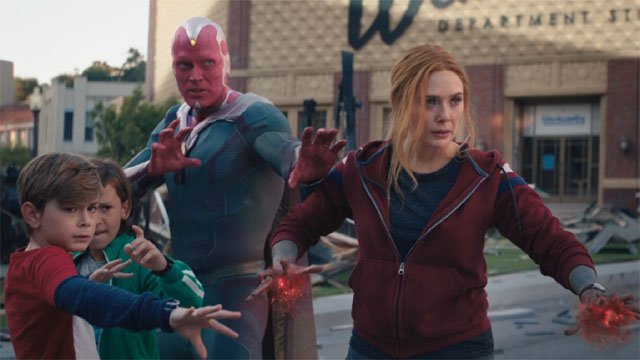
The penultimate episode of WandaVision gave us a lot of answers, revealed a lie or two, and set the stage for a big battle. I think it also showed us that this show should not be thought of as a spin-off. It has leaned into the things that television does well, telling a story more nuanced that any of the big movies are able to with their set pieces and epic battles. Not that next episode won’t have a battle, because that seems inevitable at this point.

Episode eight, “Previously On” is not as delightful as episode seven, nor as fun as episodes one through six, but we’ve reached the point where answers must be forthcoming, and since the show centers around Wanda’s trauma, that means things have to be a bit more serious, at least for no. I can’t say more without spoilers, so the rest of the review will be behind a cut-tag

Before I get into it: this show appears on Disney+, and may I remind you that Disney corporation is refusing to pay Alan Dean Foster and other authors money they are owed for media tie-in novels.

Spoliers ahead!

.

.

.

Seriously, every single sentence below is full of spoilers…

.

.

.

Seriously, turn back now!!!

.

.

.

I warned you!!!

.

.

.

Seriously, spoilers ahead!

.

.

.

Continue reading WandaVision gives us some answers and fills in Wanda’s backstory

WandaVision goes Modern while really breaking all the walls

© Disney+

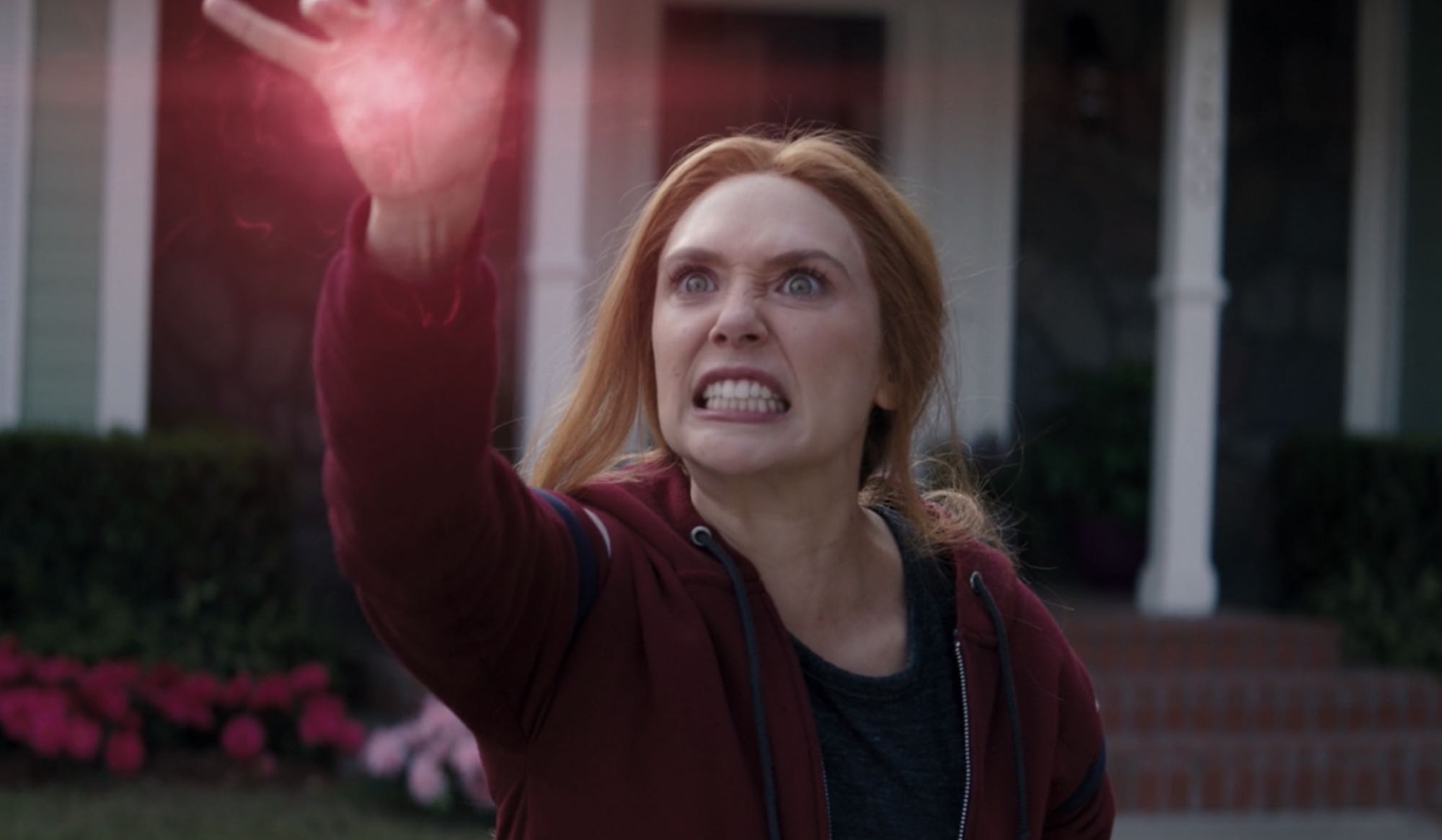
Things really got moving in this episode, “Breaking the Fourth Wall.” I think we may have learned enough that it’s possible to start making some judgement calls on some of the plot and delivery decisions made in earlier episodes. Despite the fact that there was a lot of wailing and gnashing of teeth during the first about hour after the episode became available for streaming. Disney+ was experiencing problems. For some people the service crashed completely and didn’t come back for a while. A lot of others experience multiple long pauses in the middle of the action. Many are inferring that a lot more fans of the show are waiting up on Thursday night until the episode becomes available, and simply overwhelmed the system.

This episode gave us a couple of answers to questions swirling around the underlying mystery and hinted at more to come. I’ve seen a few people already claiming that the reveal near the end of this episode completely eliminates a few other fan theories, and I think those people are jumping the gun. Which I will get to below. But before I get into any spoilers, I think it is worth mentioning that for the first time in the series there is a post-credits scene. I won’t tell you what it is above the break, but just in case you’re one of those people who stop playing or skip to another show once the credits start, you might want to stick around this time.

One more thing before I get into it: this show appears on Disney+, and may I remind you that Disney corporation is refusing to pay Alan Dean Foster and other authors money they are owed for media tie-in novels.

I can’t say more without spoilers, so…

.

.

.

Seriously, every single sentence below is full of spoilers…

.

.

.

Seriously, turn back now!!!

.

.

.

I warned you!!!

.

.

.

Seriously, spoilers ahead!

.

.

.

Continue reading WandaVision goes Modern while really breaking all the walls

WandaVision Goes Even More Meta in “A Very Special Episode…”

© Disney+

Time for a review of the latest episode of WandaVision: “A Very Special Episode…” Since I keep taking too long to finish these, I’m going to try to do a bit less verbose in my recapping and focus on reviewing. And before we get into that, I want to mention up front that while I thus far love this show playing on Disney+, it is still unfortunate that the Disney corporation is refusing to pay Alan Dean Foster and other authors money they are owed for media tie-in novels.

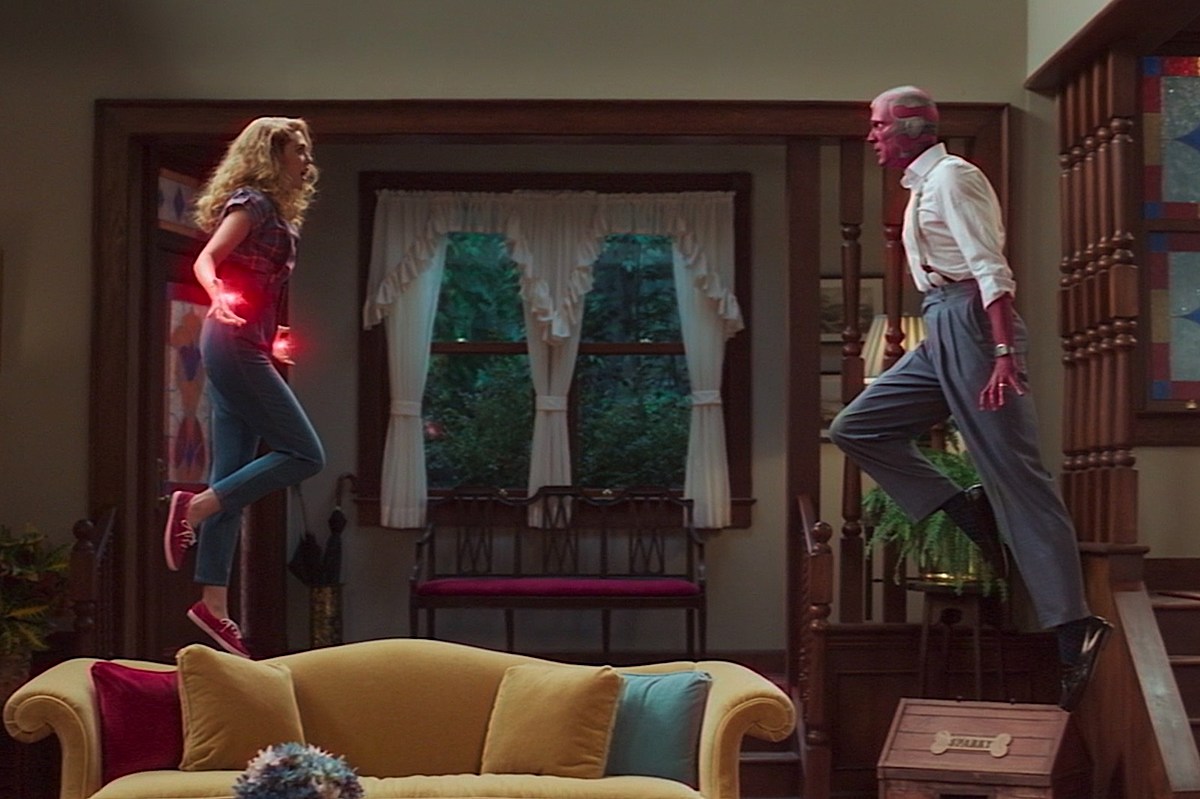
This week’s episode continues the trend seen in the first three where Wanda, Vision, and the town of Westview moves through the decades with styles, decor, and so forth evoking sitcoms of a particular era. This episode has moved into the 80s, and while i recognized the styles and at least the homages during the opening sequence to Family Ties, but I have to confess that while I am familiar with a lot of the sitcoms of the 50s, 60s, and 70s, I didn’t watch much TV during the 1980s1. So I probably missed a bunch of subtle stuff in this one.

This episode moved back and forth between the viewpoint of Wanda and Vision inside the reality bubble, and the scientists and agents outside. With some direct interaction that did not go very well. It was interesting, it was intense in places, and the mystery managed to deepen some more. I don’t think I can say more without spoilers, so if you don’t want to read those, stop now!

.

.

.

Seriously, spoilers ahead!

.

.

.

Continue reading WandaVision Goes Even More Meta in “A Very Special Episode…”

WandaVision Interrupts the Program to Give Some Answers, and Raise More Questions

© Disney +

Time for the next installment in my weekly WandaVision episode review. I reviewed the first three episodes here. I’ll try to to stick to one episode at a time going forward.

This week’s episode, entitled “We Interrupt This Program” gave us a lot of answers while raising many more questions. It is also chock-full of connections to and characters from other parts of the Marvel universe. Which is cool for nerds such as myself. But I want to stress that you don’t have to be familiar with all of those other things to understand. The show is still doing a fairly good job of framing this story in a way that people who aren’t familiar with the other properties can follow and be just as perplexed about what’s going on as the rest of us. There is one bit at the beginning of this episode that might need a bit of extra explaining for someone who isn’t Marvel obsessed, but even then they gave some explanation that I think might have been enough for those not familiar.

So, I’m going to limit the body of this review to only what happens on screen, and if I feel the need to squee about any of the bonus things along the way, I’ll toss that into footnotes.

The only non-spoilery thing I can say is that this episode tells us what was happening from the point of view of government agents and scientists who are outside of Westview. Which is way the viewers (us!) gets some answers, obviously.

I can’t really say anything more without spoilers, so, if you don’t want to be spoiled, stop reading now.

.

.

.

Seriously, spoilers ahead!

.

.

.

Continue reading WandaVision Interrupts the Program to Give Some Answers, and Raise More Questions

What do you call a fourth wall that’s entirely inside the production, or, Let’s talk about WandaVision

© Disney+

The new series from Marvel, WandaVision dropped on Disney+ a couple of weeks ago, and I was thinking of doing an episode-by-episode set of reviews, as I’d previously done for Star Trek: Picard, but I didn’t get the first one done within a week. Anyway, we’ve now had three episodes (“Filmed Before a Live Studio Audience”, “Don’t Touch That Dial”, and “Now in Color”) which gets us far enough along that I feel I can comment on what I suspected the main themes of the show will be as well as just talk about how those episodes work.

First I wanna make a few unspoilery comments: this show is not a typical superhero adventure. It has a lot more in common with Twins Peaks than shows such as Arrow or Daredevil. You also don’t have to have watched any of the Marvel movies to understand what’s going on. Within the opening minutes the show tells you most of what you need to know to understand the framing mechanism: she has some sort of magickal powers, he’s not human, they are in love and they are trying to fit into a stereotypical suburban family neighborhood without any of the neighbors realizing who or what they are.

To me, it also became clear very early on that this show is more likely a horror-type mystery than a thrilling adventure/action story. A number of other reviewers I’ve read didn’t pick up the horror-vibe until episode three, so your mileage my vary.

I don’t think I can say anything more without spoilers, so if you don’t want to be spoiled, turn back now.

.

.

.

Seriously, spoilers ahead!

.

.

.

Continue reading What do you call a fourth wall that’s entirely inside the production, or, Let’s talk about WandaVision