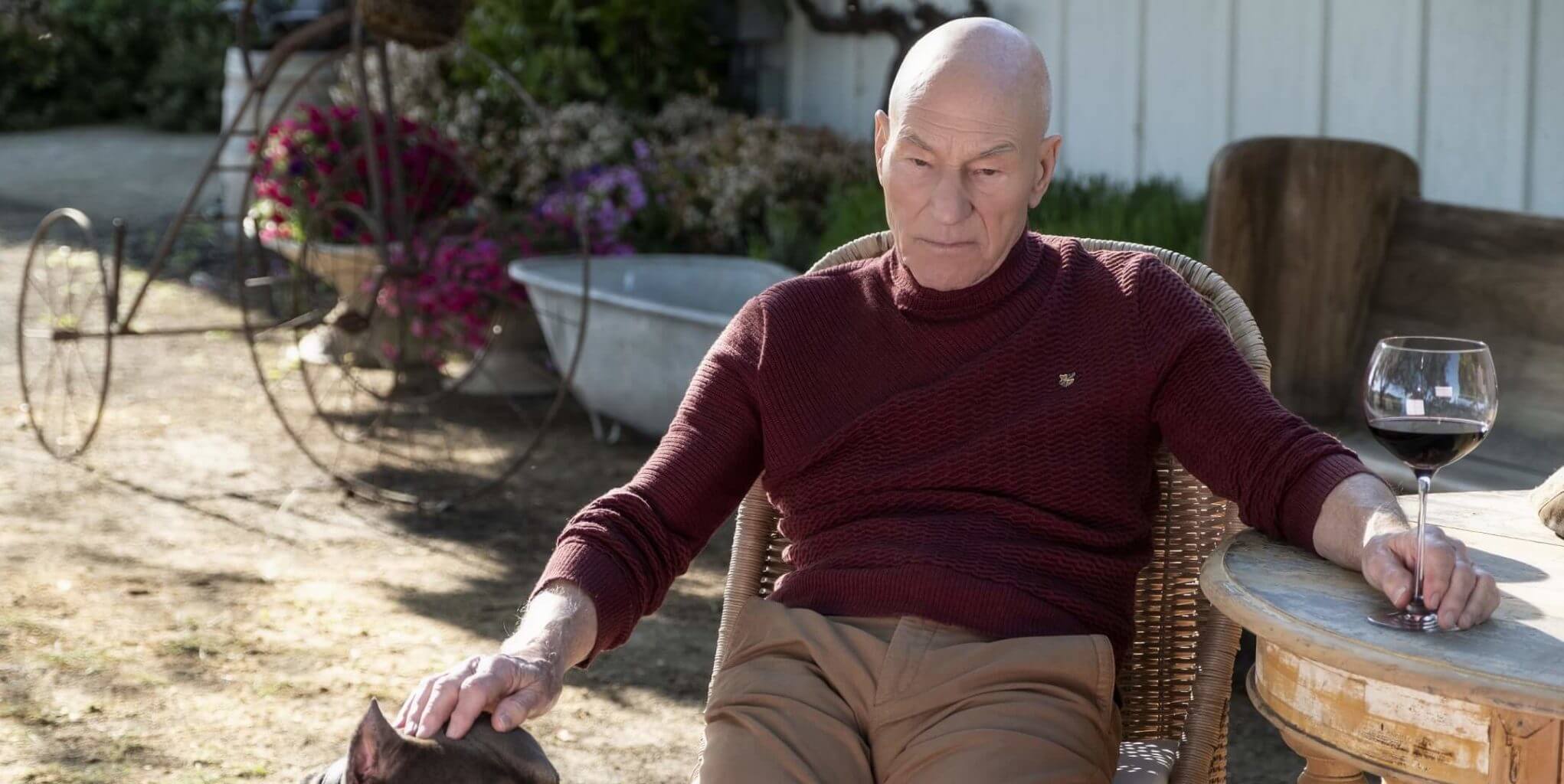
Continuing my reviews of Star Trek: Picard with episode 4, “Absolute Candor.” And this week I even managed to write the basic review before reading anyone else’s! I do link to two three I read after scheduling this post at the end, though. Anyway, back to my review: I enjoyed the episode. I’ve been enjoying all of them, thus far. But there is a bit of a caveat, this time. I’ve seen some reviewers complaining about how slowly the series plot was progressing, which I didn’t agree with. The first three episodes did, in my opinion, a very entertaining job of introducing us to a lot of new characters, filling in on events that have happened during the 20 years since the last film featuring Jean-Luc Picard, and setting up a lot of possibilities for ways the story could go. I thought the pace was just about perfect for all the stuff those three episodes had to do.
The first three episodes were directed by Hanelle Culpepper, who has an impressive resume directing a lot of different genres of television, including some Star Trek: Discovery. This episode was the first directed by Jonathan Frakes, who played Commander Will Riker on the the Next Generation, and has directed at least two Trek films and a lot of television episodes, including several Trek related shows. So, given how the last episode ended with the new crew warping away from Earth, I expected this episode to pick up the pace.
That’s not what happened. Very little movement occurs on the main plot. What we see is all interesting and introduces another new character—with some action and excitement including some explosions in space—but it didn’t really advance Jean-Luc’s plot that much. Soji’s part of the story got a little more depth, so there is that.
Despite this criticism, I did enjoy the episode, but it definitely is not competing for the spot of my favorite of the season.
Past this point there be plot spoilers. So if you don’t want to be spoiled, don’t read on.
One of the times that a character on screen claimed that the Federation doesn’t use money.Since I’ve been obsessively reading reviews and such of the new Star Trek: Picard series, I’ve seen many people commenting on parts of the plot that clearly contradict the claim Jean-Luc himself made in one of the TV episodes of Star Trek: the Next Generation:
“The economics of the future is somewhat different. You see, money doesn’t exist in the 24th Century. The acquisition of wealth is no longer the driving force of our lives. We work to better ourselves and the rest of humanity.”
—Captain Jean-Luc Picard
Many other times in the various series and the movies, statements have been made to the effect that they don’t use money in the Federation.
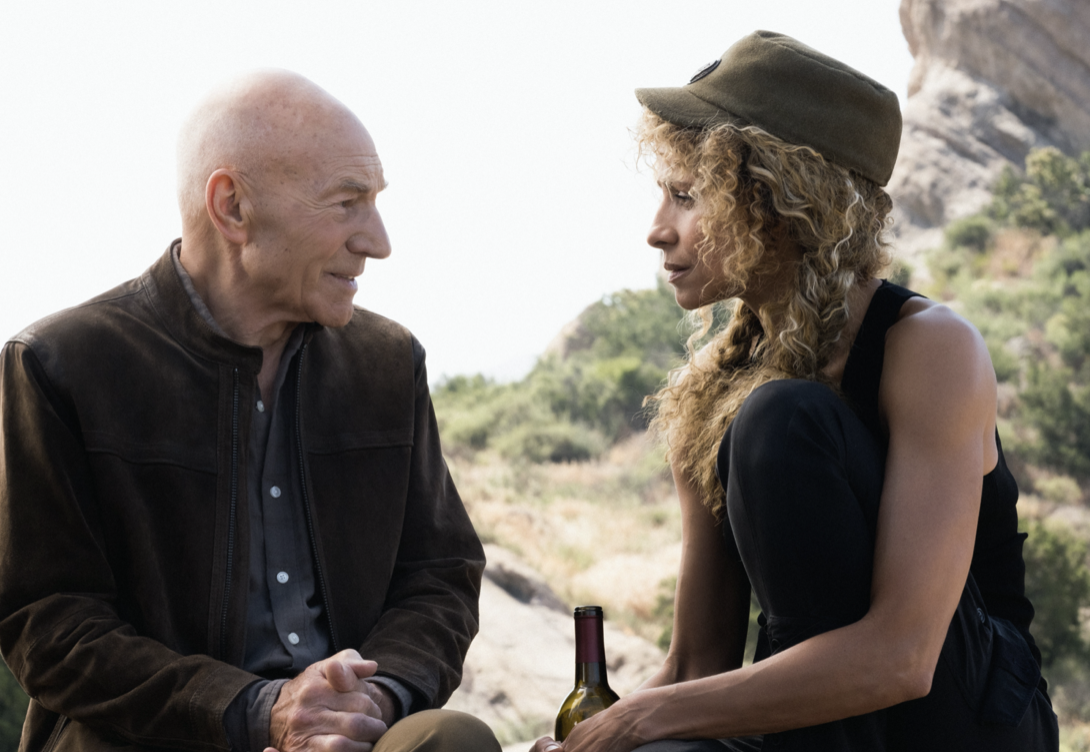
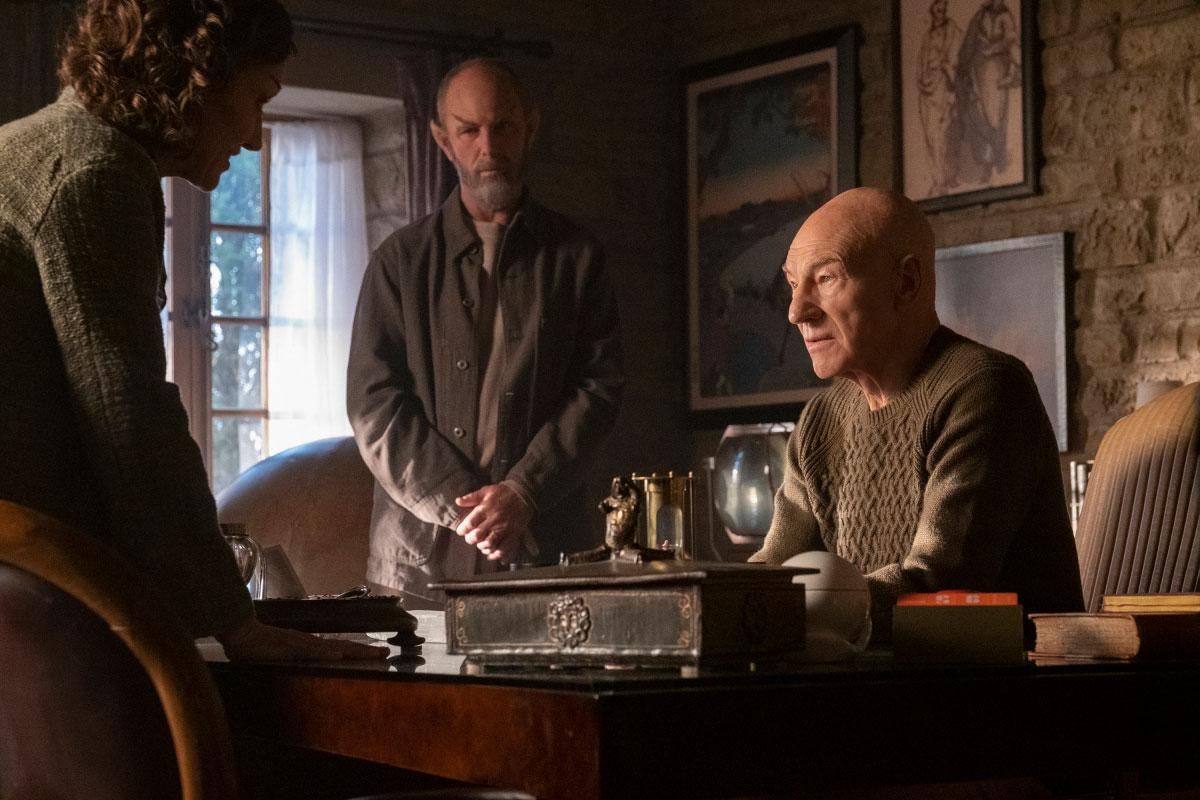
In the latest series, one source of tension between Jean-Luc and his former aide, Raffi, is that when they both left Star Fleet after the Utopia Planitia shipyards disaster, Jean-Luc was able to retire to his fabulous chateau and vineyards and live among wonderful antique furniture and the like, while Raffi ended up in what is essentially a mobile home parked in the desert.
If they really don’t use money in the 24th Century, and the accumulation of wealth is meaningless, how does such a thing happen?
That’s not all. Captain Rios, the pilot with the unlicensed ship that Raffi finds for Jean-Luc is being hired. We don’t know the terms, but Rios does comment at one point that he is expensive.
This is hardly the first time that important plot points in stories of the Star Trek universe have contradicted the assertion that money doesn’t exist in the beautiful future of the Federation.
Let’s turn back in time to the 13th of October in the year 1966, when the Original Series episode, “Mudd’s Women” was first broadcast. The Enterprise responded to a distress call and beams four survivors from a ship that is about to crash into an asteroid. One man and three unnaturally beautiful women. The man claims he was escorting the women to a distant colony to get married. It quickly transpires that the man has given a false name, and that he is Harcourt Fenton Mudd, a con-man with an extensive criminal record.
Now, if there really is no concept of money or wealth, what, exactly does a con-man do to get convicted of Grand Theft and Grand Larceny (among other things)?
Rather than the episode just ending with the discovery of Mudd’s identity, there is a complication. The ship’s dilithium crystals (the power source of the ship) are failing, so they must divert to a nearby mining colony to get replacements. But Mudd contacts the miners secretly and strikes a deal to provide the miners with the three brides instead in exchange for them demanding the ship release Mudd before they’ll provide the crystals, right?
So this is another thing. One of the explanations that is often given (on screen and not) to why money and economic disparity has ceased to exist is that replicator technology means that the Federation is no longer a scarcity economy. But then, why do we need mean living on dangerous worlds mining dilithium? The usual answer is creating dilithium crystals takes more energy that an equal amount of dilithium can supply.
But it’s not just dilithium. In another first season episode of the series, “The Devil in the Dark” the Enterprise goes to a pergium mining colony because of a mysterious creature killing engineers. Eventually Kirk and Spock determine that the lone creature is a Horta, set to guard thousands of eggs until the next generation hatches, but because the Horta are silicon-based lifeforms, the miners mistook the eggs for geological anomalies. Anyway, again, if replicators can make anything, why are the miners so delighted, after making peace with the Horta, at all the “other valuable minerals” the newly hatched creatures help them find?
Then there’s an episode from season 2 of the original series, “The Trouble with Tribbles” in which Cyrano Jones, an intersteller trader, is selling adorable purring critters called Tribbles (among other things), and the creatures’ incredible fertility issues cause various problems (and solve one). But he’s selling the Tribbles early in the episode, then at another point a bar owner is unwilling to extend him any more credit and certainly doesn’t want more Tribbles since the Tribbles he already bought have multiplied so much…
Again, selling and bar credit clearly imply some sort of money system, right?
The Next Generation introduced a new alien race, the Ferengi, who were fleshed out significantly in the series, Star Trek: Deep Space Nine. Ferengi society is built all around the Rules of Acquisition (the first of which, “Once you have their money… you never give it back,” I quote in the title of this post). Now the Ferengi and their obsession with business and acquiring wealth were usually hand-waved with the point that the Ferengi were not part of the Federation, and yet one is able to operate on a Federation Station for 7 seasons of Deep Space Nine without any problems.
And there’s that hilarious scene from the movie, The Search for Spock where McCoy is trying to hire a criminal pilot to take him to the Mutara system. “Mutara system is forbidden. Need permits many, which means money, more.”
I could keep pulling out examples. I understand that the real explanation is that script writers are creating stories that will appeal and be understood by contemporary humans who live in societies where money and the acquisition of health are extremely important. These are story situations and character types that the audience will understand without a lot of explanation.
For an in-universe explanation, I’m going to have to get a little cynical. I think that the various statements about not using money and such are ideals that the Federation official aspires to, and tries to make reality by providing needed services, housing, and so forth, to everyone. In other words, it’s not the money doesn’t exist, it’s that in theory you don’t need it to survive. Some sort of exchange system where credits are tracked or whatever exists, and clearly the concept of private property still exists. But most everyone has bought into the myth that it’s not needed.
If it seems unreasonable to believe that people would buy into this myth, consider this: how many millions of Americans (including a lot of very serious and highly educated pundits and such) insist that racism is all in the past, because we eliminated slavery! And then passed civil rights laws! And isn’t just Americans, of course, who go along with and repeat things that aren’t quite true.
If anyone has a better explanation, I would love to hear it!
I had explicitly planned to write my review of the third episode of Star Trek: Picard before I read any reviews by other people. But the night after the new episode dropped, during a wind storm (after five weeks of record-breaking rain here north of Seattle), several large trees went down about a block from our house. And those enormous evergreen trees took out a bunch of power lines. The upshot was that literally while I was writing the first sentence of what was to be my not-influenced-by-others review, suddenly the lights (and most everything else electronic) went dead here. By the time I had shut down the devices plugged into Uninterruptable Power Supplies in our house, reviewing the latest episode was the last thing on my mind. Our power wasn’t restored for about 16 hours, by which time we were off at a social event with a bunch of friends… so I have once again read a couple of other people’s reviews of the episode before I completed mine.
First, the non-spoilery review: Another good episode. The story continues to grow more interesting. We get a lot of good character development. We see more ways that the intervening years have changed Jean-Luc. There was an exciting fight. We see a new starship. And at the very end of the episode, Jean-Luc and his new motley crew go to warp speed.
Past this point there be plot spoilers. So if you don’t want to be spoiled, don’t read on.
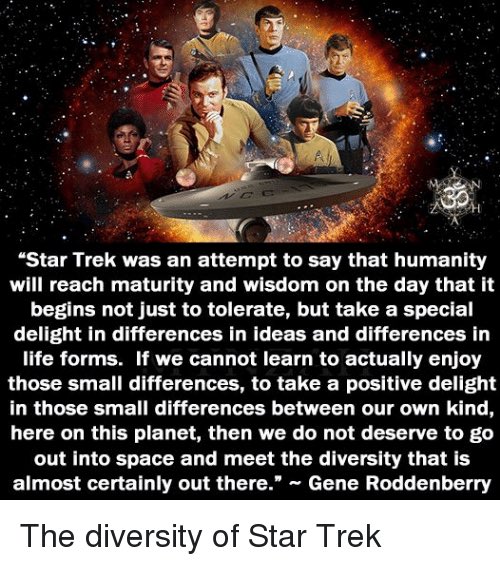
“Star Trek was an attempt to say that humanity will reach maturity and wisdom on the day that it begins not just to tolerate, but take a special delight in the differences in ideas and differences in life forms. It we cannot learn to actually enjoy those small differences, to take a positive delight in those small differences between our own kinds, here on this planet, then we do not deserve to go out into space and meet the diversity that is almost certainly out there.” — Gene Roddenberry
I get really tired of hearing certain fans yell about politics in science fiction. There are multiple reasons I find it annoying. The most important reason is that all of the sf/f that those people hold up as examples of politics-free sci fi is actually loaded with politics — usually white supremacist, misogynist, colonialist, homophobic politics — which they don’t notice because all that racism, sexism, xenophobia, and heterosexism reinforceses their own beliefs.
The next reason is that these same people inevitably hold up older sci fi works as examples of so-call non-political writing, which was sometimes even more loaded down with a lot of politics than the newer stuff they are decrying — but unlike the other example, the reason they don’t notice this time is not so much because the politics are favorable to them, but because they are ignorant of the social-economic-political landscape that was prevalent in the world at the time those things were created.
For instance, let’s look at Star Trek: the Original Series which broadcast from September 8, 1966 through June 3, 1969. That was a total of 79 episodes while the U.S. was in the midst of the Vietnam War (and protests against it), the Civil Rights movement (including a fight for racial equality, a separate fight for equal rights for women, a separate fight over any rights at all for gay people, and the fight for religious equality for such a distant dream it was laughable).
I mentioned last week that the original Star Trek series had episodes that commented (sometimes ham-fistedly, yes) on the civil rights issues playing out in the real world at the time. For example, the original draft of “The Enterprise Incident” (September 27, 1968) was such a scathing indictment of the real world Gulf of Tonkin events (America’s excuse for invading Vietnam), that the network censors pressed for rewrites that watered it down… but even watered down it was still recognizable as a commentary on the Cold War with the Soviets and China in general, and how that Cold War was playing out in Vietnam in particular.
For another example, the sixth episode of the series ever broadcast, “Mudd’s Women” (October 13, 1966) delved into many issues related to the social and economic disparities between men and women and related topics.
The “Balance of Terror” (December 15, 1966) was an extemely obvious commentary on the Cold War in which the U.S. and allies were deeply embroiled with against the Soviet Union and allies at the time. There were also more than a few bits of the story that commented on the racial aspects of World War II.
And then there was “Plato’s Stepchildren” (November 22, 1968) which involved a lot of arguments with the network censors because Captain Kirk and Lieutenant Uhura kiss! Oh, em, gee! A white man kisses a black woman! How will civilization survive such a thing?
And let’s not forget “I, Mudd” (November 3, 1967) which includes the scene where Uhura appears to be acting out the expected sexist trope of elevating her own vanity above other issues, but instead it is a trick she and the captain worked out in advance, and more importantly, not of the stereotypical sexist tropes related to the notion of a woman doing the right thing instead of the expected thing played out, either. That couple of minutes in the middle of that episode was an incredibly radical political statement for the time, believe me!
I could keep going, but it just becomes a pile on at this point.
Politics isn’t just about squabbles between elected officials. Politics is about public policies the govern the way the ordinary people are allowed to live within the society. That does far more than cause an occasional inconvenience. Politics can and does have profound impacts on quality of life including our health. It quite often has life and death consequences for several groups within the population.
Science fiction has sometimes been described as the literature of change. And changes made in societal attitudes, policies, and laws are certainly a legitimate topic for sf/f stories. The very oldest tales we have the people classify as the roots of sf/f do precisely that. It’s part of the genre from the beginning. And there is nothing wrong with keeping that tradition going.
I don’t know if I really want to do an episode-by-episode review of Star Trek: Picard in part because more than one fan writer that I admire are already doing that, and I’m not sure I’m adding much to the conversation. On the other hand, I have been a Star Trek fan since at least 1966, when the original series was being broadcast for the very first time on NBC.
For a bit of context: my sixth birthday happened between the airing of the third episode of the original series (“Where No Man Has Gone Before”) and the fourth episode (“The Naked Time”). I don’t know how regularly we watched the first season. My very vague recollection is that Dad insisted that we watch “Daniel Boone” on Thursday nights, and if the promo for “Star Trek” came on before Mom realized the “Bewitched” was happening over on ABC, then she might feel conflicted about whether to switch over (because both she and I loved Bewitched, but also loved sci fi). I also know that between Star Trek and Bewitched in the 1966-67 TV season is the reason that I remember the first half of every Batman two-parter (which for two years aired on Wednesday, then the second half on Thursday), but often never caught the second half until years later in syndication.
The point is, I have been a Star Trek fan for more that 53 years (and I started reading only-available-through-obscure-snail-mail-subscriptions fanfic 47 years ago) and sometimes I feel as if I’m not holding up my end of the fandom elder bargain by not weighing in more often.
This is complicated by the current streaming environment. A lot of people who would love to sample the new Trek series are reluctant to sign up for yet another streaming service—and I really understand! It irritates me that all the people who love Trek can’t easily access this series.
Side Note: if you happen to be in a position to come visit my husband and I in the suburb where we live just north of Seattle, we are more than willing to host a viewing party. You can come over and watch episodes on our 4K TV and (older) surround-sound set up, because I love sharing this sort of thing… and as many of our friends will attest, we love cooking for large groups, so… I guess I should keep posting at least some sort of review.
Okay, so first, once again, I start with the non-spoilery review: I don’t just like this show, after seeing episode 2 I can safely say that I love it. This episode takes several interesting turns away from Standard Plot Points and continues to allow the actors a lot of room to flex their acting muscles. There is a particularly awesome use of an editing trick where we keep cutting back and forth between three characters discussing an issue, and another place where two of those characters are actually gathering evidence at a distant location that works really well.
This is a really good episode. The series continues to be extremely engaging. Before I more into spoiler territory I want to mention one more thing. While in the first episode it was unclear whether the main thrust of the series would be the mystery or action/adventure, if this episode is indicative, the series is diving deep into epsionage/intrigue. I have a really strong suspicion that the overall arc is going to be more heist/capter/espionage-flavored, aka Leverage/Ocean’s Eleven than space battles. But I might be wrong. Still, this episode is much moreAlias/Leverage/Mission: Impossible than any variant of Battlestar Galactica.
And I think that’s a good thing.
Past this point there be plot spoilers. So if you don’t want to be spoiled, don’t read on. Don’t read any reviews I link below, either, because they also have spoilers.
A new Star Trek series premiered last week on CBS’s streaming service. It is called Star Trek: Picard and focuses on the character of Jean-Luc Picard, former captain of the Enterprise during the series Star Trek: the Next Generation portrayed by Patrick Stewart. It has been just over 20 years since the last movie using the TNG cast, and this series is set about 20 years after those events, letting Patrick Stewart play the character without any awkward de-aging.
Before I get to any spoilers, here is my quick review: it is good. The story is about a man not entirely happy in his retirement, haunted by regrets. There is some action, though one of my favorite moments in the show was when a group of bad guys beam in and a younger person is trying to hustle Picard to safety, he is acting like an 80-year-old. That look on his face, panting, at the long set of stairs was a bit heart-breaking, but also heartening. This story isn’t going to pretend that he’s super human.
You don’t have to been a megafan to follow the story. In one of the early scenes features an FNN (Federation News Network, I presume) reporter interviews Picard about the anniversary of a major event which happened ten years after the last TNG movie, and the course of the interview gives you the information needed to follow the rest of the tale (and explain why Jean-Luc is not happy in retirement).
It does help to be familiar (but not to have watched) the last TNG cast movie: Star Trek: Nemesis, but fortunately Camestros Felapton had posted a nice summary here:
And if you never watched the reboot movies, there is one other detail that will help you follow this series (which is not a sequel to the reboots, but…) the internal justification of the re-boots (and the reason that in the first of the reboots Spock was played by original series actor Leonard Nimoy and Zachary Quinto), is that when a supernova threatened to destroy the Romulan homeworld, Ambassador Spock took an experimental craft out to try to stop the supernova, but instead his ship and a Romulan ship were thrown back in time (literally to the day the Captain Kirk was born), and thus changed history. So the reboot movies exist in a different time line than any of the TV series.
Anyway, the aftermath of that stellar disaster also figures into Picard’s situation. But again, none of the events of the reboot movies are part of this series’ history. (Cue timey-whimey music)
One final thing that you might need to know if you aren’t a diehard Trekkie but are interested in the show: Romulans and Vulcans look virtually identical. In the first episode, at least, all the pointy-eared characters you meet are Romulans, who are not cold master of logic like the Vulcans. In other Trek series if you see what appears to be a human with pointy ears, you can assume it’s probably a Vulcan and will be something like Spock. Given other things we learn during the first episode, it is probably safer in this series to presume that any pointy-eared character is a Romulan, rather than a Vulcan.
Past this point there be many plot spoilers. So if you don’t want to be spoiled, don’t read on. Don’t read the two reviews I link below, either, because they also have spoilers.
Infinite diversity in infinite combinations.So the new Star Trek movie opens in general release in less than ten days, and word is out that the film includes a brief appearance of Sulu’s husband and their adopted child. George Takei (who originated the role of Sulu way back in 1966 when the episode “The Man Trap” first introduced audiences to the voyages of the starship Enterprise) has said this is unfortunate, because it violates the original vision of the character. George has become, over the last few years, America’s favorite gay (metaphorical) uncle, and frequently his comments on pop culture, queer rights, homophobia, and related topics are spot on. But he’s completely wrong here.
Make no mistake, George isn’t saying that Roddenberry didn’t want queer people in the future. George has spoken before about the conversations he had in the sixties with Roddenberry about addressing sexual orientation in the story. Roddenberry thought it would be a bridge too far for the networks. Roddenberry had already fought tooth and nail to get an African-American woman and a Japanese-American man on the regular cast in prominent roles—and he felt he was already skating on thin ice. Also, if you look at some of the writing Roddenberry did in the notes to other writers working on the series and on the first motion picture, you’ll find references to Kirk, at least, having had affairs with men at least at one point in his past. So it isn’t that George thinks Roddenberry and the original vision of Star Trek without queers, it’s that George thinks that Sulu was obviously straight in the original, and that a better option would be to introduce a new character.
There are more than a few problems with this line of reasoning. The most important is simply this: if the first unambiguously queer character introduced into the Star Trek universe is a minor character that no one has ever heard of before, that leads to automatic tokenism. The audience will, regardless of their own feelings about queer people in real life, naturally see this new character as the gay crewman. He won’t be seen as an integral part of the universe who just happens to be gay, he’ll be seen as the character being added for no other purpose than to check off a list. If, on the other hand, a character who is clearly integral to the story is revealed to have been queer all along, that his or her colleagues have known about the same sex spouse all along and none thought anything was odd or remarkable about it, that shows that Star Trek is the future Roddenberry envisioned: where people are accepted on the merits of their character above all else.
The less philosophical problem with George’s argument is the assertion that this is a radical re-imagining of the character of Sulu that throws out everything we already knew about him. I’m sorry, George, I love you, but there is nothing in the way that you played Mr. Sulu in the original series, nor in the scenes, dialog, and actions that we ever saw on-screen, that precludes him being queer. Sure, that’s that one deleted scene from Star Trek: the Motion Picture where Sulu tried to awkwardly come on to Lieutenant Ilia—but first, it’s a deleted scene, so isn’t really canon, and second, a bisexual or pansexual Sulu is still a queer Sulu who might well end up falling in love with a man and deciding to settle down.
I’m not trying to knock George Takei’s acting skills, here. I’m just saying that queer people and straight people often don’t act any differently in the vast majority of day-to-day situations. There are many reasons that a metric ton of Chekov/Sulu fanfic was written long before the motion pictures or the reboot movies existed, for instance.
Finally, if you think that Roddenberry’s original vision is the only way the story of the Star Trek universe should move forward, we should circle back to those odd notes of Roddenberry’s about Kirk’s sexual past. Roddenberry was an adherent of a belief that was prevalent among some liberal thinkers in the sixties that sexual orientation was merely a social construct. That every human was really, deep down, bisexual or pansexual, and any proclivities otherwise were merely the result of social conditioning. That view isn’t accepted any longer; medical science indicates something those of us who have grown up queer in a homophobic society have been saying for a long time, the sexual orientation is an innate quality. Some people are innately hetero, some innately bisexual or pansexual, et cetera.
But if we must rigorously adhere to Roddenberry’s original vision, then having Sulu in one timeline prefer men, and in another be ambiguous is perfectly fine.
Ultimately, I think that Simon Pegg and the current producers are right: the original series is silent on Sulu’s orientation. This isn’t a change or contradiction of anything we knew about the character before. And having a major character who is already part of the canon revealed to have a same sex spouse is the better way for Star Trek to embody a bit of Vulcan philosophy: that the universe is made up of infinite diversity in infinite combinations.
 Continuing my reviews of Star Trek: Picard with episode 4, “Absolute Candor.” And this week I even managed to write the basic review before reading anyone else’s! I do link to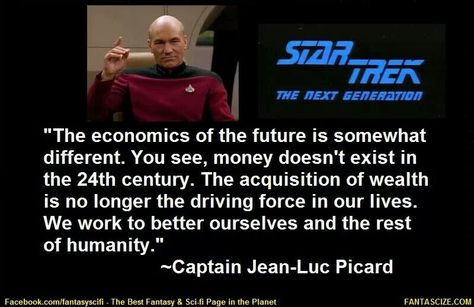
 Font Folly