Tag Archives: tbt

He wants to believe – more of why I love sf/f

THE X-FILES: L-R: Mitch Pileggi, David Duchovny, Gillian Anderson and William B. Davis.
THE X-FILES: L-R: Mitch Pileggi, David Duchovny, Gillian Anderson and William B. Davis. ©2015 Fox Broadcasting Co. Cr: Frank Ockenfels/FOX
In September of 1993 I tuned in with some hope, but also some trepidation, to the first episode of The X-Files. A show that was going to be about FBI agents looking into mysterious, unexplained, possibly paranormal happenings. The first episode was framed around Special Agent Dana Scully, who was a medical doctor as well as an FBI agent, who was being assigned as much to investigate Special Agent Fox “Spooky” Mulder as to assist him in handling the strange cases—the so-called X Files.

I enjoyed the show. So did my (now late) husband, Ray. We tuned in faithfully each week, chatting about various aspects of the show as we watched. I’d been such a big fan of Kolchak: The Night Stalker that of course I was interested in this show. Ray, on the other hand, barely remembered the other series (and he wasn’t sure if it was because he was a few years younger than I, or if maybe his family simply hadn’t watched it), but he was a fan of mysteries and sci fi and “spooky stuff” so was just as interested in the concept of the show before we had even seen it.

The show’s mysteries were interesting. Sometimes very creepy, sometimes sad. There was just the right amount of human and pathos in the most serious shows to keep you hooked. And then occasionally there were episodes that were primarily funny.

They avoiding the obvious “she’s always a cold-hearted skeptic”/”he’s a passionate true believer” dynamic that he seemed implied from the beginning. Mulder wasn’t a true believer. He frequently repeated the line, “I want to believe.” As we learned about the childhood disappearance of his sister, and the mysterious circumstances surrounding it, we understood why he needed to believe that there were things happening beyond the simple, rational explanations with which so many mysteries are dismissed. And Scully, of course, wasn’t cold-hearted, and while she remained skeptical, she wasn’t close-minded.

The show did a really good job of portraying different ways that a sense of wonder (and sometimes dread) could manifest when we are confronted with situations that don’t have an obvious, simple, and safe explanation.

I really loved the show in the early seasons. I recall especially being on the edge of my seat at the end of the season two finale, barely able to contain myself waiting to learn what the answer to the cliffhanger would be the next fall. Things started to go awry, for me, during the third season, and by the fifth or sixth I was finding myself irritated by the show more often then entertained. I might have given up if not for a friend who suggested this way of looking at it: “I’ve decided to think of it as two completely separate shows happening in parallel universes. They happen to have identically named characters played by the same actors, but they are other wise unconnected. One is the quirky, cool ‘there are more things than are dreamt of in your philosophy’ mystery of the week show that I adore; and the other is the awful, poorly written, contradictory, batshit alien conspiracy/maybe we’re all crazy show that I hate—and I have to put up with the latter in order to keep watching the former.”

And that helped a lot. Don’t get me wrong, the conspiracy related to aliens was there from the very beginning, and I was onboard with watching them confront and explore that. The problem, from my perspective, was that unlike their monster of the week kinds of episodes, they never seemed to have a clear idea of what was actually happening with the conspiracy. Years later we might call their problem the “Lost syndrome,” because like that more recent show, the writers seemed to be throwing contradictory and confusingly cryptic clues at us without a clear idea of what the “real” explanation was.

I think that the show’s original creator did have an idea of what the explanation was, but either he allowed other writers who didn’t know to go off on misleading tangents that couldn’t be reconciled as simply red herrings, or perhaps he didn’t know how to keep the series going if he ever revealed the answer.

So it was with a bit of trepidation that I watched the first episode of the new mini series a few weeks ago. And I have to admit, that opener left me with a lot more dread than hope. Then the second episode was a bit better, like one of the typical mystery of the week shows I used to love.

And then we got to the third episode, “Scully & Mulder Meet the Were-monster” and I was in heaven. It was funny. And with a lot of Easter Eggs that weren’t annoying. Two actors who played stoned teen-agers who witnessed a mysterious event back in the very first season, returned to play the same characters, no longer teens, who are out in the woods huffing spray paint when they witness another event. There was a homage the Kolchak in the story, an incredible amount of humor, yet it was an incredibly dark commentary on real life at the same time. It was really, really good, and included everything I had loved about the best of the earliest episodes. And I was incredibly happy to see, online over the next several days, the number of review sites and sci fi/fantasy enthusiasts who had enjoyed the episode the same as I had.

At its best, the X-Files was about things in life—sometimes awful, tragic things—that don’t fit neatly into our preconceptions of how the world can be. More importantly, it is about the way we try to understand those things—how we confront mystery, tragedy, disappointment, horror, and betrayal—and how we cling to meaning and hope in spite of it. It’s about finding the human connection, finding the reasons to hope, finding the things to cherish, and never losing our curiosity.

And it’s also, sometimes, about really creepy monsters.
“This nut thinks he’s a vampire!” – more of why I love sf/f

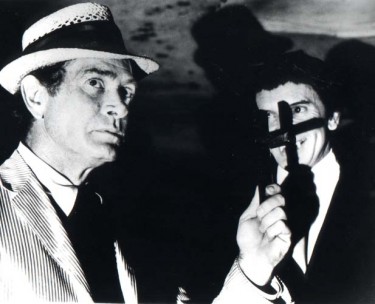
Darren McGavin and Barry Atwater in a still from The Night Stalker television movie © 1972 American Broadcasting Company
Darren McGavin and Barry Atwater in a still from The Night Stalker television movie © 1972 American Broadcasting Company (Click to embiggen)
It was January, 1972 when I first saw Darren McGavin playing reporter Carl Kolchak, dressed in that hat and cheap suit, ranting to his editor and the police about a serial killer. I was in the fifth grade and Dad’s nomadic employment in the petroleum industry had sent us to a small town in Utah. We had been there the just over a year, which was longer than we had stayed in any one town in several years1.

In the movie, The Night Stalker, Darren McGavin plays Kolchak, a reporter working in Las Vegas, dating a showgirl, and covering typical news stories. Until he began being suspicious about a series of deaths that seemed very similar, but which the police insisted were unrelated. First Kolchak was convinced that it was simply a serial killer who was draining all the blood from his victims’ bodies because he was insane and believed he was a vampire. As Kolchak finds more and more evidence of similar crimes going back decades, he begins to worry that the killer really is a vampire.

Which, of course, turns out to be the case. Kolchak witnesses a couple of attempts by the police to capture the killer. The second attempt is such an epic failure, with multiple cops killed and dozens of bullets striking the killer (played creepily by Barry Atwater) to no avail. This convinces at least one FBI agent that it is a vampire. Kolchak and his FBI buddy track down and kill the vampire.

Kolchak writes the full account of the vampire’s long career of murder and eventual destruction, proposes to his girlfriend, and prepares to move to New York City where he expects to be able to write his own ticket. Except the FBI and local police don’t want anyone to know about vampires. They kill the story (getting Kolchak’s boss fired, I believe). They substitute a more mundane tale of a serial killer with Kolchak’s byline. Then they inform him that his girlfriend has already been convinced to leave town, and tell him he’s no longer welcome in Vegas.

The story ends with Kolchak re-dictating the entire tale into his portable tape recorder while sitting alone in a sleazy motel room. He explains how all the evidence is destroyed, and that he’s exhausted his savings trying to find his fiancée, so far to no avail.

It was a sad and creepy end to a film.

The Night Stalker was a made-for-TV movie based on an unsold novel by Jeff Rice, originally titled The Kolchak Papers. Rice’s agent had more luck selling the novel idea to ABC as a movie idea than he’d had selling it to a book publisher. The movie was a surprise hit, drawing in unheard of ratings when it ran. It was so successful that the network commissioned Richard Matheson, who had adapted Rice’s book into script from, to write a sequel. A book publisher was suddenly interested in Rice’s novel, but only if they could also get a deal on the sequel. So Rice wrote a novelization of Matheson’s sequel script, and in 1973 two Kolchak books, along with the sequel TV movie, The Night Strangler were all released.

The Night Strangler came out almost exactly a year after the first movie. In it Kolchak had relocated to Seattle where he stumbled upon an immortal who was living in Underground Seattle2 who every 21 years has to kill several women in order to harvest their blood in a very specific fashion to manufacture his “elixer of life.” The sequel did well enough again that work began on a third movie. Until the network put that all aside and decided to turn Kolchak’s story into a regular weekly TV series, which debuted in September of 1974 and ran for one season.

McGavin returned to play Kolchak. In the series Kolchak, along with his editor from both movies (played by Simon Oakland), have been relocated to Chicago where they work for the Independent News Service. Each week Kolchak stumbles upon a new monster or mystery that winds up having a fantastic explanation. Unlike the original movie, Kolchak never has any credible witnesses survive to corroborate his stories, so no one ever believes.

After the two wildly successful TV movies, the network had high hopes, but the initial ratings weren’t terribly exciting. After four episodes of The Night Stalker had aired, the series went on hiatus for a bit over a month. It came back, re-titled Kolchak: the Night Stalker! with new theme music, though not any changes to the tone, setting, or cast.

Ratings continued a slow, steady decline, causing the network to pull the plug at episode 20, cutting short the original order of 26 episodes.

The series ran during my 7th grade year. We had moved by the Colorado, this time returning to the small town where I’d been born, and where one set of grandparents and one set of great-grandparents still lived. Puberty had hit the year before, and I suddenly knew exactly why I’d always felt out-of-place to the point of wondering if I was a changeling left in place of my parent’s real child by evil elves, or maybe an alien sent to study humans—I was gay. It was during this same period that I started fooling around regularly with one other gay classmate (while having a completely unrequited crush on a different classmate that as far as I know was straight). I lived in a constant state of fear of being found out, terrified of what family, friends, and the rest of the town would do if they had proof I was a fag.

I threw myself even more fervently into reading science fiction and fantasy, so of course I was a faithful viewer tuning in each week to see what Kolchak would uncover next. Kolchak was appealing in part because these incredible, usually awful, things kept happening around him, but no one ever believed him. He was in sort of a reverse closet. He wanted people to know the truth, but everyone else did everything they could to ignore, explain away, and ridicule that truth.

While I did tune in faithfully each week, I have to confess that as the series went on, each episode was a little bit less satisfying. I can’t be certain why, having not re-watched it in years, but something about seeing Kolchak not be believed week after week was much less interesting than seeing it in two movies separated by a year. Maybe it was because Kolchak was seldom heroic. He had a determination to learn the truth, yes, but clearly he would have much rather interviewed people after the fight with the monster, rather than take on the creatures himself. He was always a bit rumbled and always seemed to stumble and fumble his way into a lot of the stories and events in the series, rather than get there through dogged determination. Maybe the series just didn’t know how to walk the tightrope between mystery/horror and comedy.

Some years later Chris Carter would have more success with The X-Files, a series he admitted was inspired by Kolchak. So the week-to-week mysteries the world doesn’t want to admit exist notion could be spun into a successful show. I don’t know what about the collective consciousness of 1974 made Kolchak less appealing than the audience of the 90s would find Scully and Mulder4.

I still look back on The Night Stalker with a lot of fondness. I empathized so much with they guy who knew and believed things no one else would credit. It wasn’t just the parallels to my own queer secret, though. I was also having an ever more difficult time reconciling my love of science and history with the fundamentalist evangelical beliefs of our church and the vast majority of our neighbors. I felt as if people were constantly belittling scientific facts and scientists, blatantly ignoring evidence right in front of them and insisting on a worldview that just didn’t square up with not just my lived experience, but theirs.

Kolchak kept chasing that truth, kept examining the evidence, never letting the naysayers or conventional wisdom stop him. And that was a role model I desperately needed.


Notes:

1. I wound up completing the entirety of 5th and 6th grade, in addition to the half of 4th in that same school. This tied my previous record of Kindergarten, 1st, and part of 2nd in the Ft. Collins, Colorado school district. By contrast, 3rd grade was split between three schools, each in a different state (and if the brief sojourn in Kansas had begun a few weeks earlier than in did, 3rd grade would have been four schools in four states).

2. This movie makes the mistake of most pop culture representations of Underground Seattle do. It portrays it as if some sort of disaster buried part of the city in a single night and the survivors rebuilt on top. A dining room underground that still has dishes, silverware, and petrified food figures in the story, for instance. In actuality, Seattle decided it was tired of the routine flooding and sewer backups that happened in the part of downtown built on swamp land, and they razed a hill at the north end of town to redistribute the dirt to raise the streets in the south end. It took many months. During the transition some of the taller buildings had new doors built into the existing second or third floors at the new street level. Other buildings had additional stories built atop them. Spaces that had originally been ground floors became basements. In only a very small number of cases have any of those old spaces been kept in anything close to their original state3.

3. Many, many years ago a software company I worked for that had offices downtown rented storage space in the basement of the building next door. The basement had originally been a dance hall before the streets were raised. The solid wood dance floor was still there, and some of the fancy woodwork on the walls was still visible, but the building owners and subdivided the space into a bunch of 10 foot by 10 foot cubes with cheep plywood, and rented each out for storage. It wasn’t terribly exotic any longer. And you just walked down ordinary stairs to get to it.

4. A subject I’ll go into much more detail about next week, I think!

I is for Imagination – more of why I love sf/f

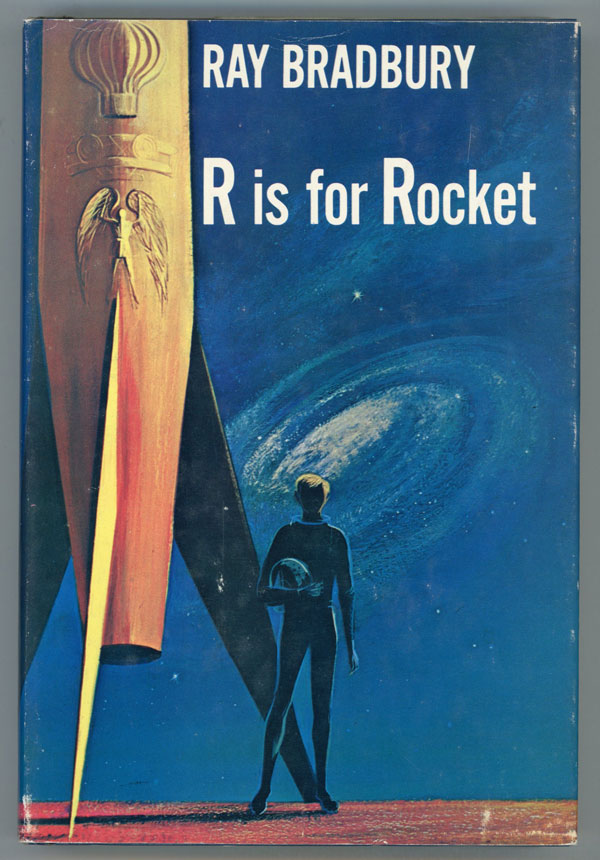
Dust jacker of the first edition of Bradbury's collection, R is for rocket.
Dust jacker of the first edition of Bradbury’s collection, R is for rocket.
I don’t remember when I first read a story by Ray Bradbury.

That’s not quite right. The sentence is true, but it doesn’t convey the full meaning. It’s equally true that I cannot remember a time when I didn’t know about Ray Bradbury’s incredible stories. He isn’t the only author who falls into the category. Since my Mom read to me from her favorite two authors: Agatha Christie and Robert Heinlein, since I was a baby as part of her plan to make sure I learned to talk correctly, I can’t remember a time when I didn’t know about Heinlein or Christie. And it’s more than slightly likely that Mom read some Bradbury in there at one point, so that might account for it… Continue reading I is for Imagination – more of why I love sf/f

The Man Who Fell to Earth

I was watching a recording of a football game Sunday night after a day spent with friends role-playing in 19th Century Scotland when I saw the first “Oh, no! Not Bowie” go by on twitter. So at least I didn’t hear the news of David Bowie’s death while I was laying half-asleep while the clock radio played news before I had to get up for work. Which is, unfortunately, how I heard about Alan Rickman. This hasn’t been a great week, obviously. But I saw one reaction this morning that helped:

https://twitter.com/DelilahSDawson/status/687618388332527617

Yes, let’s all be bold and creative and weird as hell.

It wouldn’t be correct to say the David Bowie was my hero, though in many important ways he was. He was also so much more. I wish that I had been bold enough during the height of his Glam Rock period to have been a Bowie fan. Make no mistake, I liked his work a lot. The first song I remember liking by Bowie was “Starman” which didn’t become much of a hit in the U.S. in 1972, but how could I not like it, since it seemed to have a sci fi theme?

Then I saw him on TV. Back the the 70s there were a lot of musical/comedy variety shows on prime time, and Bowie appeared on one of those. I don’t remember what song he sang. What I do remember was that he was dressed in something that flashed and glittered, and that his hair was in a style I had never seen on any human before, and he had face paint. When I try to visualize it, the colors keep changing, which means this was before we got out first color TV (which happened when I was 15 years old).

I was mesmerized. I had no idea a man could look like that, dress like that, and move like that while singing. I had seen men in movies and TV in weird costumes, and even in certain kinds of drag, but nothing like this. And then my dad growled, “Who is that cocksucking freak? What are you watching?”

Throughout my childhood, any time that my dad was really, really angry at me—angry enough that he’d grab something club-like to beat me with rather than just slap or punch me around—one of the things he called me was “cocksucker.” And for most of those years I had no idea what the word meant. From his tone of voice and actions while calling me that, I knew that it was a horrible, awful, vile thing—but that was it. By the time of this TV incident, I knew what the word meant, and I knew that literally it was true about me. But I also knew that my dad wasn’t the only person who thought it was the most awful thing a boy could be. I knew with absolute certainty that if any family member, or any of the people at church or school found out it was true about me, that my life would be over. Probably literally.

And Dad had just called this singer on TV (that I was finding so fascinating) a cocksucker. I knew, immediately, that I could never, ever let dad know that I thought David Bowie’s music was good—let alone admit to my fascination with how he looked! I don’t know exactly what I said in answer to Dad. I probably said the name of the variety show we were watching, and I know I said something about not liking the freaky guy at all, and hoped they got to someone else, soon.

A couple of years later, I saw a story in a magazine about a new movie coming soon, The Man Who Fell to Earth, based on a sci fi novel by the same name, starring David Bowie. I owned a paperback copy of the book, and had read it and enjoyed it. Immediately, seeing some photos of Bowie in makeup for the film as an alien who comes to Earth, I realized he was perfect for the role. I dug out the book and re-read it, imagining the alien looking and talking like Bowie. I went from simply liking the book to loving it.

The movie wasn’t a big hit, so never made it to the theatre in the small town where we lived. But I kept imagining it, based on the novel and those pictures, for years.

In the 80s, when I was in my twenties, Bowie’s music videos were among my favorites. And then the movie Labyrinth came out, and I and a bunch of my sci fi nerd friends went to see it in the theatre. I bought the soundtrack album. It was around the time, some months later, when I bought my own copy of  Labyrinth on videotape when I realized that I could safely purchase regular Bowie albums. I hadn’t lived with or even near my dad since just before my 16th birthday, but that initial fear of being recognized as queer if I bought any Bowie music lingered. It didn’t help when Bowie described himself as gay in an interview in 1978 (something he later didn’t exactly renounce, but did say wasn’t accurate). Ironically, I owned lots of Queen and Elton John music in my teens, and it never occurred to me that anyone would infer anything about my sexuality from those.

Anyway, I picked of Ziggy Stardust and the Spiders from Mars and listened to it so often, I wore out the cassette tape. I started acquiring some of his other albums on disc, both the older ones and the albums from the 80s.

Eventually I also finally saw The Man Who Fell to Earth. Although by that time, I had been imagining how the movie went so vividly, that I thought I had managed to see it somehow. The actual film didn’t live up to my imagination in many ways. Except Bowie himself. He was magical and ethereal and totally believable as the alien trying to pass as a human.

And by the time I was buying Bowie and admitting I liked him, I was also in the process of coming out. Which is appropriate. Knowing Bowie existed—both the singer who gave me “The Width of a Circle,” “Moonage Daydream,” “Starman,” “Space Oddity,” and “Suffragette City” and the actor who played the Man Who Fell to Earth—kept alive the idea that maybe a freak like me could have a happy and full life during those dark closeted years. He was one of people who saved my life.

Alan Rickman didn’t come into my awareness until my late twenties, when I saw Die Hard for the first time in theatres. He was awesome, of course, as he was in every role I saw him in, afterward. So he didn’t have the same impact on my formative years as Bowie did. But his work touched my adult life in profound ways, as well.

I don’t like thinking of the world without either of them.

Hokey Religions and Ancient Weapons – more of why I love sf/f

"Hokey religions and ancient weapons are no match for a good blaster at your side, kid." Harrison Ford as Han Solo in the original Star Wars.
Harrison Ford as Han Solo in the original Star Wars. (Click to embiggen)
I was a high school student in the small town of Longview when Star Wars first came out. I saw it on opening night, thanks to a couple of older friends who were even bigger science fiction fans. They drove me down to Beaverton, Oregon, (which was the closest place with a full-sized wide screen and Dolby sound at the time) on opening night, insisting that I’d love this film I had never heard of.

They were right. A lot of people loved it.

It wasn’t really original. The movie was a loving homage to the pulp magazine adventure stories and serial movies of the 30s and 40s. It didn’t have anything profoundly new philosophically to say. The special effects were better than we were used to seeing, but otherwise it just told an old-fashioned story. You knew who the good guys and the bad guys were. The heroes were confronted with a series of obstacles to overcome, and they worked hard to win the day.

In that way, it was an oasis in the desert. Over a decade before the movie came out, “legitimate literature” had embraced the modernist school. Narrative (storytelling) was considered “unrealistic” and “naïve.” Modernist writers abandoned plot and character development for style and grand themes. Resolution was replaced with ambiguity.

That listless ambiguity had infected a lot of pop culture. To be fair, in the U.S. at least we had good reason to be despondent. The economy had tanked. Inflation was out of control, lots of people were out of work, and even more were under-employed. We had finally admitted what a pointless quagmire the war in Viet Nam had become, so closely on the heels of the national embarrassment of the Watergate scandal and the ouster of President Nixon (itself following not the long after Vice President Agnew had resigned and pled guilty to tax evasion charges). And victories of the civil rights movement seemed to have produced more backlash than noticeable improvements in the lives of ordinary people.

By 1977 most of popular culture had been tainted by modernist angst. Many of the films and novels of the day accentuated style, mood, and setting, and had endings that left the audience wondering what had happened.
Star Wars brought plot, heroes, and villains back in style. And none too soon, in my opinion. There’s something comforting and satisfying about a story that begins with a problem, builds to a climax, and resolves things in the end.

Not to say that some of the other types of stories aren’t fun from time to time.

Star Wars was the perfect combination of fun, adventure, struggle against a seemingly unbeatable foe, and triumph. With space ships and blasters and energy swords thrown in for good measure. It’s not really science fiction, because the attempts it makes at science are laughably wrong. It follows the conventions of 30s science fiction in that regard. It’s space opera, following the rules of epic fantasy with the accoutrements of science fiction. And there’s nothing wrong with that.

The Empire Strikes Back was a much darker story, and as a middle chapter in a continuing tale, its ending wasn’t triumphant. But it still told a really good tale. There were resolution of some issues, character arcs advanced, and the open issues were daunting problems, but with a hope that they could be resolved. It was a superior movie to Star Wars in every way, but was still firmly built from the foundation laid by the previous movie. Return of the Jedi was fun—flawed, but fun. It wasn’t as good a move as Empire, but it still worked, and it paid off in at least an acceptable way on all of the cliffhangers of the previous films. Don’t get me wrong, some of the pay-offs were fantastic, I’m just admitting that not all were perfect.

Star Wars (which I hate referring to as “Episode IV – A New Hope”) still remains an especially bright shining beacon in my personal firmament. It made me love the idea of science fiction and fantasy in movies, again. It gave me a new celebrity crush (if you were a queer boy watching the first film and didn’t swoon for Han Solo I don’t know what’s wrong with you!). It gave me characters to aspire to be like: Obi Wan, Luke, Leia (yes, Leia! Seriously! Go watch those scenes with Leia and Darth, or the moment she takes the blaster away from one of the men, shoots open a vent cover, and says, “Someone has to save our skins. Into the garbage chute, fly boy!” and tell me she isn’t bad ass!)…

I love Star Wars. I loved it so much that the first summer it was in theatres, I drove to a theatre in another state 13 times to re-watch it. Not to mention seeing it at a local theatre, later watching it on cable, and eventually on tape again and again. It was a life changing experience.

But I must admit that the modernists were right in some ways. The traditional narrative form is seldom the way real life works out. The difference between real life and fiction is that fiction has to make sense. In real life, we don’t always get the clear-cut endings where the heroes defeat the villains and go on to live happily ever after:

  • The friend who drove that night when I first saw Star Wars, 38 years ago, is dead. James Curtis Bruce died from complications of AIDS at the age of 36.
  • Another friend, who drove us down to see the opening of Empire, has also passed away. Lawrence Lee Church died of an anueurysm at the age of 34.

I had admired and looked up to both of them as “big brothers” during a very important part of my life. Jim was a lot like the character of Han Solo, while Larry had more in common with Yoda.

I miss them both.

Sometimes we all wish that life was more like a good, fun movie.

Storms, Brains, and Reanimated Flesh – more of why I love sf/f

The creature meets the innocent girl... © Universal Pictures
The creature meets the innocent girl… © Universal Pictures (Click to embiggen)

I don’t remember when I first saw the 1931 film Frankenstein, directed by James Whale. I also can’t remember a time when I didn’t know the basic story of Frankenstein. I don’t know for sure what my first exposure was to the myth. I remember watching more than one of the Universal Studios Frankenstein movies with my mom when I was young. I remember one particular time watching it with my mom and my sister, my sister was maybe four or five years old and kept asking questions. I was getting impatient, and Mom told me I had been exactly the same way when I had been my sister’s age.

What I do remember, very clearly, is that I always felt sorry for the monster… Continue reading Storms, Brains, and Reanimated Flesh – more of why I love sf/f

Monsters Are People, Too – more of why I love sf/f

Promotional photo for the Munsters,
Promotional photo for the Munsters, © Universal Studios and CBS.
The Munsters premiered on CBS the night before my fourth birthday. I don’t remember if we watched it from the beginning. I’m fairly certain we didn’t watch it the first season because the first few months it was up against the Flintstones, and then Jonny Quest moved to that time slot. I suspect we did watch it a few times, and for a while during season two, until Batman! premiered with its twice-a-week format one of which was against the Munsters.

Like a lot of other genre-related shows, The Munsters went into syndication fairly quickly after being canceled, and promptly gained loyal audiences outside of primetime. I suspect most of my memories of the show are from this era… Continue reading Monsters Are People, Too – more of why I love sf/f

Nuclear Dinosaurs and Tragic Heroes – more of why I love sf/f

Image from the 1954 Gojira (click to embiggen)
I don’t remember precisely when I saw my first Godzilla movie. I was probably four or five years old. When we were living in the parts of Colorado where all the TV stations we received came from Denver, one of those channels had a Saturday afternoon movie called Science Fiction Theatre (or something like that) which seemed to almost exclusively show Japanese sci fi films. So there were a lot of Godzilla, Mothra, and other kaiju films that I saw during this time.

Often when there were parts of the plot that didn’t make sense to me, Mom would explain it away as the problems with translation. She had already explained about how the movies were originally filmed in Japanese, then dubbed into English. So anything else that seemed odd or illogical was because of that. It didn’t occur to me until later that part of the process of translating it for an American audience also sometimes involved editing the film, taking out scenes or cutting them short.

Godzilla was, of course, my favorite… Continue reading Nuclear Dinosaurs and Tragic Heroes – more of why I love sf/f

Infinity In Your Mailbox – more of why I love sf/f

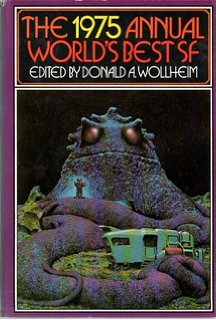
Cover of the Science Fiction Book Club edition of the 1975 edition of the Annual World's Best SF series edited by Donald Wolheim.
Cover of the Science Fiction Book Club edition of the 1975 edition of the Annual World’s Best SF series edited by Donald Wolheim.
I joined the science fiction book club at three different points in my life. The first time was when I was about 13 or 14 years old, and had no idea what I was getting myself into. My mom was not very happy when the first package of books arrived. Fortunately, my paternal grandmother found out about it before my dad did and was able to run some interference for me. So this wasn’t one of the incidents that led to a beating, but it was a close thing.

I wound up doing extra chores at my grandparents’ house to earn the money to cover it. Dad let me remain a member for a year, strictly limiting what I was allowed to order until I’d met the obligation so I could quit the club. I wound up with a bunch of books. And they were hardcover—they were cheap hardcover, but still more sturdy than the paperbacks that most of my collection consisted of before then.

The second time was the summer just before I turned 18, and at least I had a job and was earning my own money.

The book club reeled you in with the introductory packet: for a token payment of two cents, you could choose something like six books from a list. There was a little asterisk statement about paying shipping and handling, which was always more expensive than you thought it would be. But compared to paying full price for the hardcover version when they first came out, it was still a bargain. After that you received a monthly mailing, and if you forgot to return the card that said, “send nothing at this time,” you’d get whatever that month’s book was. You could choose other books out of the mini catalog that came in each month’s mailing. And again, the prices weren’t bad, even with the shipping and handling.

The killer was if you didn’t return the card in time. Because you’d receive books you didn’t want, and usually wound up paying for them because returning them was more of a hassle.

The other downsides were that generally the books were a few years old. They usually didn’t become available to the book club until the original bookstore sales had dropped off for the hard cover, and then the paperback release. The amount of money the authors received was less than for bookstore sales, though most writers who have been willing to talk about it seem to take the attitude that a sale is better than no sale.

When I was living in redneck rural communities, back before the existence of the Internet, a book club was a means to get books that you otherwise might not ever know existed.

The second time I joined, I picked every anthology that was on the list for my initial package. Which included two different years of Donald Wolheim’s Annual World’s Best Science Fiction collections. I loved those kinds of anthologies, because I got a bunch of different stories by different authors. One tale might be a space adventure, another a dark exploration of the nature or identity, another a humorous examination of the future of crime, and the next might have a wizard outwitting a god. Anything could be between those pages!

And I didn’t even have to order one of the books to get a bit of that thrilling sense of wonder. Half the fun of the book club, for me, was reading the catalog each month. Because books and authors I had not heard of—even after I had moved to a slightly larger town that actually had a book store, and not only that more than one!—each received a paragraph or two of description, along with a picture of the cover. So even if I didn’t order the book at the time, later if I saw a copy in a used bookstore, or saw other books by the author, I had a better idea of what the book would be like than I would get just from reading the cover blurbs.

Every month I received a colorful display of dozens of imagined worlds, ranging from high fantasy to gritty near future sci fi thrillers to epic space battles between empires to individual journies of discovery. And all I had to do was, every now and then, buy one of those wondrous books. It was really a small price to pay for infinity.

No wonder 14-year-old me had thought nothing of the consequences when I taped two shiny pennies to a piece of card stock, scribbled my name and address on one side, then swiped an envelope and stamp from Mom’s desk. An infinity of wonder would be mine!

Changelings on Distant Worlds – more of why I love sf/f

Cover of the 1980 paperback re-release of Dread Companion.
I can’t narrow it down more than to say that I found Andre Norton’s Dread Companion on a library shelf during middle school. The cover blurb told me it was a tale of a woman living on another planet far in the future who was hired to take care of two children who had an “imaginary” friend that was something far more sinister.

I didn’t expect that it would be about faeries in space.

The blurb was a fairly accurate description of the set-up: Kilda is a young woman trying to find her place in the world. Her father was a spacer who had no interest in settling down with the woman who got pregnant during their brief political marriage. And her mother didn’t want to be saddled with a child like Kilda who was more interested in exploring and learning science and so forth than she was in being pretty and having babies of her own… Continue reading Changelings on Distant Worlds – more of why I love sf/f