Tag Archives: television

Sam and Bucky Face the “Truth”


Episode five of The Falcon and the Winter Soldier was very enjoyable. The storyline made some progress on a portion of the plot that has been muddled in previous episode. They also finally made a few specific mentions of racism, rather than relying on Hydra as a stand in for white supremacy/white nationalism. They dipped a toe in, at least. It’s still unclear whether the whole story is going to hold together, and there is only one episode after this.

I can’t be more specific without some major spoilers. So if you haven’t seen the episode and don’t want to be spoiler, don’t scroll past the warning below.

Before I get into that, this show is on Disney+, and the parent company, I should remind you that the parent company, Disney, continues to refuse to pay royalties owed to Alan Dean Foster and others for novelizations and similar work.

Okay, so, let’s get into it:


Warning: Spoilers Below!


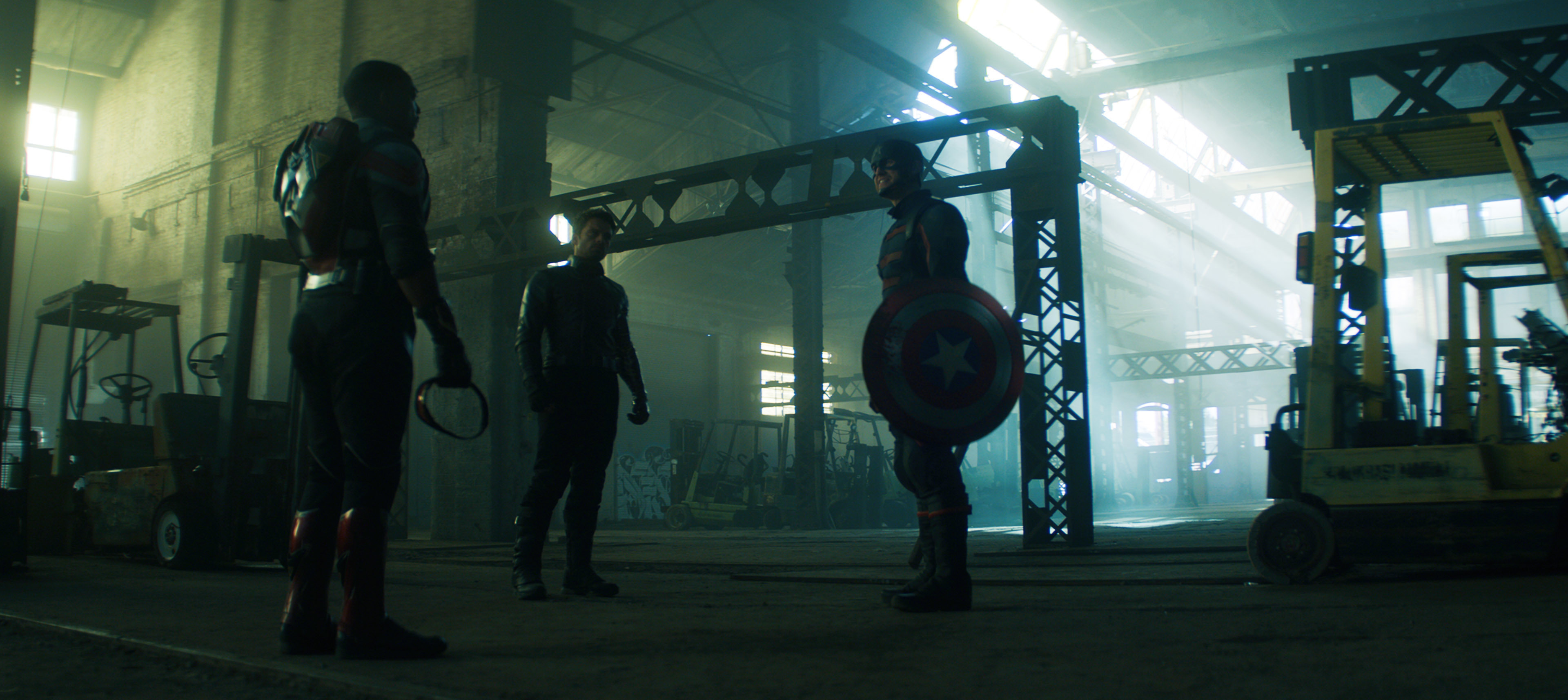
The episode picks up apparently only minutes after the end of the previous episode. USAgent, aka the new Captain America, aka Captain Nationalism has fled the scene of his street execution of an unarmed member of the Flag-Smashers. Bucky and Sam are hot on his tail.

They try to talk him into surrendering, which of course he won’t do, so we get a fight. It’s a superhero series, there has to be a fight, but I have to say I was a bit impatient for it to be over.

See, in Captain America: the Winter Soldier Bucky, as the Winter Soldier, was able to give the real Captain America quite a run for his money in combat when Cap had Black Widow and Falcon assisting. And later when Cap had to go up against the Winter Soldier alone, he lost the fight (though he won the war). So, I’m sorry, Captain Nationalism, even with the super soldier serum, is no Steve Rogers. Bucky should have been able to take him down, by himself, in half the time that the showrunners stretched out the fight against Bucky and Sam.

Okay, that’s my fanboy nerdy moment over.

It was very poignant after the fight seeing Sam try to wipe the blood of the murdered man off Cap’s shield.

I found my suspension of disbelief stretching later in the episode when we find out that, Captain Nationalism murdered an unarmed man while literally hundreds of bystanders recorded it and uploaded to the internet, that instead of being turned over to the authorities in Latvia to face charges, he apparently got back to the U.S. only to face a disciplinary hearing. If the government whisked him away, surely they would have already known that he no longer had the shield right?

Whisking him away would be a violation of international law… but in the real world the U.S. military is notorious for violating those laws and treaties when service members commit crimes in allied countries where we have military bases. We are particularly guilty of doing it when white American G.I. commits sexual assault against a person of color. So it isn’t unbelievable that we would do it. I would just feel a whole lot better had the writers made some acknowledgement that that’s what happened.

Before I get back to Sam and Bucky, I just want to say what a wonderful surprise was the cameo of Julia Louis-Dreyfus as Contessa Valentina Allegra de Fontaine. That’s a character who is a bit of a deep-dive. She was original introduced in the late 60s in the super-spy version of the Nick Fury comic books. She was much later revealed to be a sleeper agent all along and became a villain. There are several possibilities for how Marvel plans to use her later, but I think it is particularly telling that she shows up right after Captain Nationalism’s trial to offer him a job.

It was a very short scene, but she was awesome in it. And I look forward to seeing her interact with other characters–dare we hope she gets significant screen time with Daniel Brühl’s Zemo in a future show?

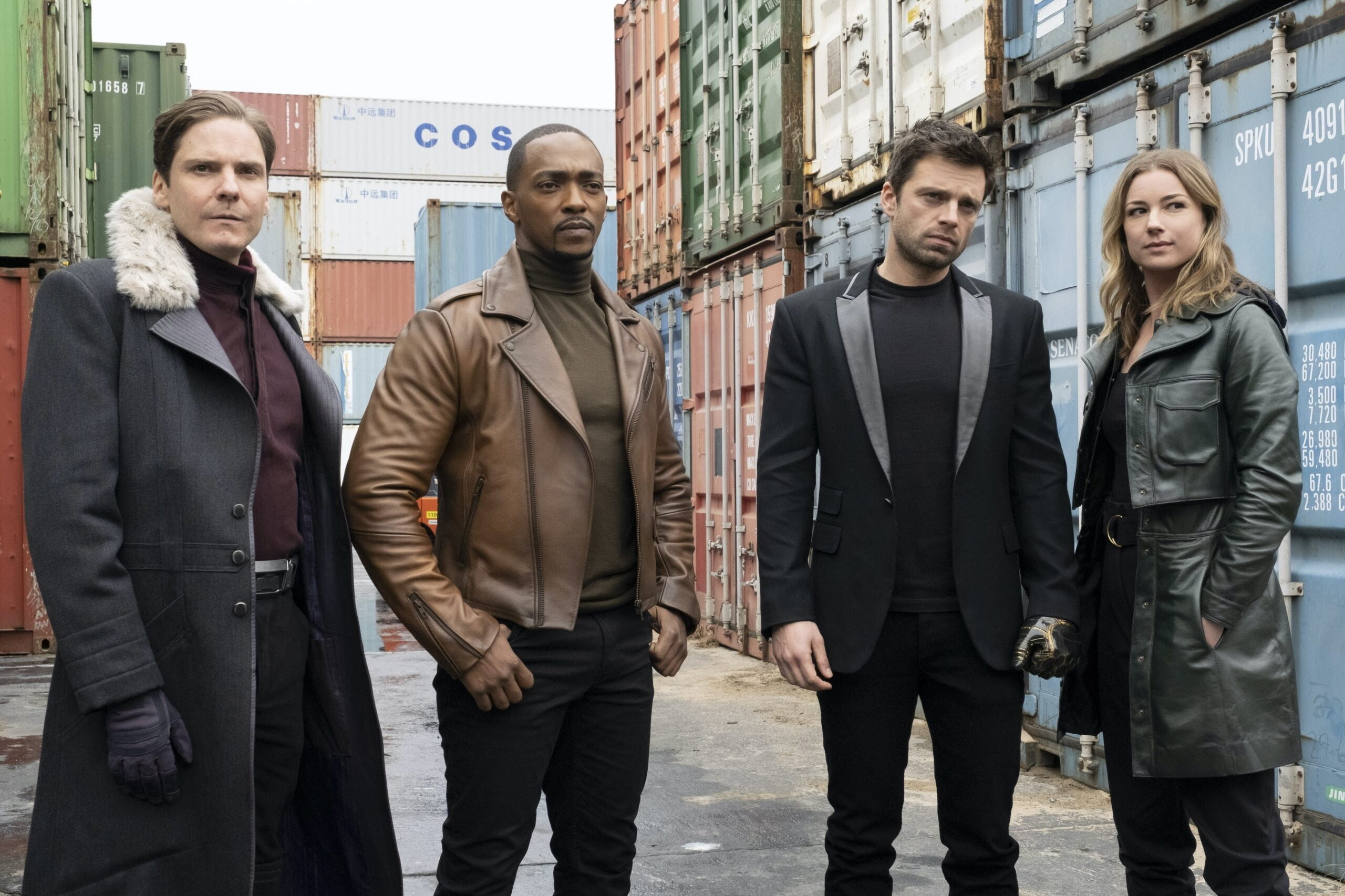
Speaking of Brühl, we get a very satisfying scene with Bucky confronting him at the Sokovia Monument before he is arrested by the Dora Milaje and taken away to that floating super prison which I believe we last saw in Captain America_ Civil War.

Sam, meanwhile, returns to the U.S. and meet with Isaiah Bradly, the black super soldier buried from history that Bucky introduced Sam to earlier. They have a couple of moving scenes. Not surprising that it is moving because Carl Lumbly is a talented actor. This is the scene where the writer’s finally stop used code, allowing Bradley to talk about the racism inherent in how he and his former comrades were chosen to test the early attempts to duplicate the last super soldier serum. Anyone familiar with the Tuskegee Experiment will not be surprised at some of the horrible things Bradley reveals.

He makes an impassioned argument that, first, certain people will not stand by and let a black man take up the name Captain America. And second that, because of the way America treats its minorities, no black man should want to wear those stars and stripes.

The action then moves back to Louisiana. Sam calls in favors from the community and starts working to fix the family’s fishing boat so his sister can sell it to save the family home. Bucky shows up obstensibly to deliver a “favor” he cashed in with the Wakandas (perhaps a new flight suit, since Sam’s was destroyed during the fight with Captain Nationalism).

Anyway, this leads to the best parts of the episode. I have mentioned so many times how episode two was so awesome because if you just let Bucky and Sam interact, wonderful things happen. There is less snark between them in their scenes here. And the scenes do a good job of dealing with the the family legacy subplot while showing realistically Sam and Bucky bonding, and trying to move past being two guys who happened to both love the same man. Er, that is, I mean, both were extremely close friends with and worked as sidekicks to.

Heh.

While it may be a bit formulaic, even the superhero trains himself montage they gave Sam felt earned and meaningful. If one of the purposes of this series is to convince fans of the Captain America and Avengers movies that Sam is ready to become the new Captain America, it seems to be accomplishing that.

The political plot still seems to be a mess. The mulit-government council the Karli and the Flag-Smashers are fighting is proposing things that are blatantly bad. So the viewer ought to be cheering for the Flag-Smashers. I can’t tell if that writers simply don’t realize this is what they are doing, or if they trying so hard to to cast what are clearly alt-right/white nationalist ideas as objectively immoral because they don’t want to offend American conservatives.

We get more clues implying the Sharon Carter is the mysterious villain known as the Power Broker. The fact that she hires the international terrorist, Batroc, who has fought both Captain America and Falcon earlier certainly doesn’t bode well for her not being a villain.

It’s still too soon to tell. In the comics the two roles that Sharon Carter played in most storylines was to be Captain America’s modern era girlfriend, or to be a spy usually working for S.H.I.E.L.D. In the latter role she often was working in what could at best be termed morally grey areas (which often caused tension between her and Cap). So it is still possible that it’s going to turn out that these clues hinting at her being the Power Broker are red herrings.

The show ends with the Flag-Smasher’s taking the members of the Global Repatriation Commission captive. Sam seems read to be a hero again. We presume he will take up Bucky’s offer to call when he needs back-up. So expect a big fight next episode.

And then, of course, there is the post-credits scene. Nothing is going to be simple.

I can’t tell, yet, if this is a series that aimed at a very difficult goal and isn’t quite pulling it off, or if it is going to completely crash and burn.

I guess we’ll find out on Friday!


You may find these reviews useful:

Review: The Falcon & The Winter Soldier episode 5 (sort of)

The Falcon and the Winter Soldier Face the “Truth”

Also, this is being reported now:

Disney and Alan Dean Foster approaching settlement on royalties
Bucky and Sam are reminded that “The Whole World is Watching”

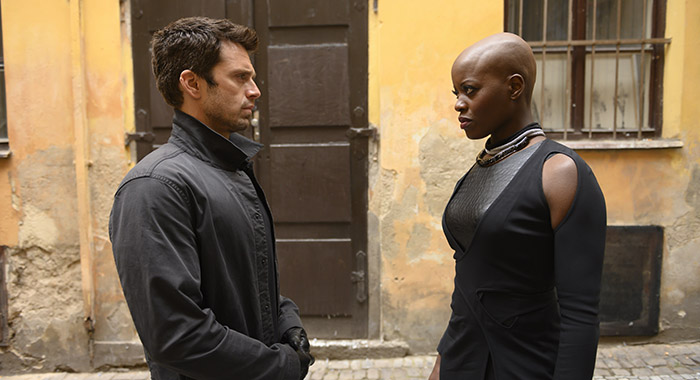
(L-R): Winter Soldier/Bucky Barnes (Sebastian Stan) and Ayo (Florence Kasumba) in Marvel Studios’ THE FALCON AND THE WINTER SOLDIER exclusively on Disney+. Photo by Julie Vrabelová. ©Marvel Studios 2021. All Rights Reserved.

I’ve started, scrapped, and re-started my review of The Falcon and the Winter Soldier episode four, “The Whole World is Watching” several times. The episode is a big improvement over episode three, but the basic story still appears to have more than a few major flaws. I think the way to stop myself from digressing down a lot of rabbit holes is to focus on what I think the source of the flaws is, before talking about the plot.

Before I get into that, I have neglected to mention that this show is on Disney+, and the parent company, Disney, continues to refuse to pay royalties owed to Alan Dean Foster and others for novelizations and similar work.

I can’t really talk about the episode without spoilers, so:


Warning: Spoilers Below!


Television shows and movies and the like have always had problems when trying to incorporate the real world and real history into their narratives. Sometimes it is mostly an annoyance, such as all the times that shows are supposedly set in the City of Seattle, where I live, but are very obviously being filmed in Vancouver, Canada (which means most of the world doesn’t even notice). This particular shows shares a sin with lots of American shows in that the Prague, capital of the Czech Republic, is being used as a stand-in for several different European locations, much of which bear little resemblance to Prague.

That kind of muddle doesn’t usually create plotholes, so those of use that do recognize the difference can still enjoy the story.

Unfortunately, The Falcon and the Winter Soldier is also suffering from another kind of dissonance with the real world. For example, the villain, Zemo — who is still belng played deliciously well by Daniel Brühl — makes several references to his family’s legacy and his own childhood that just make absolutely no sense for a person who is supposed to have grown up in a fictional country which is, according to previous films in the MCU, sandwiched inbetween the real nations of the Czech Republic and Slovokia. Nor does another of his references to a childhood visit to the real world city of Riga, capital of Latvia.

At least they don’t make sense if you assume that these stories are taking place in the year 2021, which they appear to be. I should pause here to point out that Cora Buhlert goes into much more detail about these discrepancies in her reviews.

Rather than retell this information, I want to present my theory for why the writers or The Falcon and the Winter Soldier and other MCU properties are making this mess. I think it comes down to two things. First, Americans (by which I means inhabitants of the U.S., not to disparage our Canadian or Mexican neighbors) or embarrassingly ignorant of both history and geography. Second, the comic book origins of the Marvel Universe have a particular time warp baked into the origins and themes of most of the classi villains and heroes.

To the first point, I want to hasten to point out the most of my fellow citizens are woefully ignorant of the geographic of Europe, Asia, Africa, and so one. But they’re also extremely ill-informed about our own country. I spent my late teens and early twenties traveling around the country in a touring choir, and do not exaggerate when I say I met thousands of people who did not know that Washington State, where we were from, is not the same as the city of Washington, D.C., and that the two Washingtons are literally on opposite sides of the continent. More recently there was that viral meme about how many millions of people were shocked and sometimes angry to learn that Alaska isn’t an island. And let’s not forget the Trumpers from the U.S. state of Georgia who were running around the capitol waving not the flag of their home state, but the flag of the Eastern European Nation of Georgia (because they search for Georgia flag on Amazon–I kid you not!)!

So, Americans, including most of the writers and show runners of any series you can name, literally do not know the difference between Albania, Austria, Latvia, Serbia, or Romania; let alone have any idea of their relative histories. Similarly, if they’ve even heard of events like the Turkish Invasion of Cyprus, the Kosovo War, the First or Second Chechen Wars, the Romanian Revolution, the Hungarian Revolution, or any of the Albania Civil Wars, they have no idea what the conflicts were about nor which ones came before and which after the Dissolution of the Soviet Union.

So fictional European characters written by Americans are going to have backstories that make no sense and contradict history at every turn.

Then there is the Marvel timeline problem. Most of the classic Marvel heroes and villains have their origins in the 1960s and 1970s. Things about American culture and which parts of recent history were important to Americans during that time are baked deeply into the DNA of the fictional lives, themes, and backstories of those characters.

One of the concepts that ghosts along just under the surface of the very essence of a huge number of Marvel characters is that World War II was only 20 or 30 years ago. Trying to translate those origins into modern times means that writers wind up half-heartedly tying major turning points in the lives of both heroes and villains to a more recent conflict, which likely has little culture or economic similarities to WWII as perceived by Americas during the Viet Nam War era. This results in some very confusing elements to the personalities, motivations, and backstories of those characters in a modern setting.

Enough explanation of why most of the socio-politico motivations of any of the villains in this series makes absolutely no sense. Let’s get the the actual episode. “The Whole World Is Watching” is a significantly better entry than episode three. The action sequences (particularly the one involve the Wakandan Dora Milaje) are much more exciting, engaging, and have a lot of emotional heft.

In a completely different arena, we see Sam using his skills as a PTSD counsellor to try to get through to Karli, the leader of the flag smashers. I should note that Cora Buhlert has pointed out the Sam’s true superpower is empathy, and I have to agree that this comes through really strong in this episode.

Karli cross the line from activist to terrorist last episode, and in this episode we see that even some of her most loyal followers are uneasy with this shift. Even so, Sam does seem to reach a moment of understanding. And it is during the conversation with Sam that Karli herself acknowledges that her philosophy, goals, and tactics have some contradictions.

During Karli’s conversations with her followers and with Sam, we get a lot more details of what happened to at least some of the people who didn’t vanish in the blip, and a slightly better explanation of why Karli and her followers are doing what they’re doing. It would have really made episodes two and three make a lot more sense if the writers had found a way to include some of the information in episode one. For example, some of it could have logically been brought up during the scene where Sam and his sister try to take out a small business loan. Just sayin’.

Sam isn’t able to talk Karli down, however, because USAgent, aka Captain Nationalism aka the new Captain America, is too impatient to give Sam the ten minutes he asked for. Zemo uses the ensuing fight to shoot Karli and destroy most of her vials of super soldier serum. Unfortunately, New Cap finds what might be the last surviving vial, and later in the episode we learn he’s injected himself with it.

It is during the second fight with the Flag Smashers that we see that New Cap has super strength. When his loyal friend seems to be killed in said fight (I’m not convinced he’s dead, because the camera cut back to his motionless body at a really odd moment after all of the rest of the characters left the building, chasing the Flag-smashers), New Cap gets even more reckless, leading up to the extremely bloody and shocking final scene.

I’m going to put a stake in the ground here and say that if the rest of the series doesn’t use that final scene, where an unarmed man who is trying to surrender it brutally murdered with the entire event caught on the cameras of hundreds of smart phones as a metaphor for real live incidents of police brutality, than the whole series has missed the boat.

Despite a lot of improvements, we don’t get anything as enjoyable as the banter between Bucky and Sam in episode two. Which is a shame.

While this episode did a lot to salvage the mess of episode three, there are still a heaping pile of details to wrap-up with only two episodes to go. I suspect it’s going to be a wild ride, whether they succeed in tying everything up or not.


These reviews might be of interest:

“The Whole World Is Watching” The Falcon and the Winter Soldier

Falcon, the Winter Soldier & the MCU’s Original Sin

Bad Guys and Good Guys in The Falcon and the Winter Soldier‘s “The Whole World is Watching”

TEMPERS FLARE IN THE FALCON AND THE WINTER SOLDIER EPISODE 4


Note: When I mentioned above how poorly Americans know geography and history, I am including myself. I literally used to read Encylopedias cover to cover for fun, and I love reading reference books of all kinds, but I also know I have some big and occasionally embarrassing holes in my knowledge. I can draw, from memory, a fairly accurate map or the borders of European countries circa 1914, for instance, but give me a blank modern map of Europe and tell me to fill in names and I know I’ll get several of them wrong.

Sam and Bucky: the 80s Want Their Plot Cliches Back

I didn’t write a review of the second episode of The Falcon and the Winter Soldier because the review would have just been: Not as exciting as the first episode. The action scene was lackluster and the scenes with the new Captain America were not very compelling. Even when the new Cap and his buddy are arguing with Sam and Bucky the scene didn’t have any bite. On the other hand, the bantering scenes between Bucky and Sam were awesome. I would gladly watch an entire series of the two of them just snarking.


Spoilers below!


If episode two was a let down after the opening, episode three may be a full-fledged crash and burn. The biggest problem is one that Cora Buhlert called out in her review of the first episode:

> the villain Flag-Smasher is a problematic and I would have preferred, if Marvel had not used him. In the comics, Flag-Smasher is just one guy (apparently, the main Flag-Smasher in The Falcon and the Winter Soldier is a woman, which is progress, I guess), not a whole organisation (though he later is part of one), and his reasons for wanting to abolish nations and borders are both understandable and actually make sense. The fact that this character was portrayed as a villain tells you a lot about what Captain America comics were like in the 1980s and 1990s, when I used to call Captain America “Captain Nationalism” and flat out hated the character. The Marvel movies did a lot to move Captain America away from the old “Captain Nationalism” model and turned him more into what he was intended to be, namely the positive side of America given form. Hell, the Marvel movies actually made me like Captain America.

This problem was more than hinted at in the first episode, in that the only thing we were told about the so-called terrorist organization is that they want open borders and for people to be able to move freely between nations. Most people living in the European Union have had that ability within the union for decades, and it has generally been viewed as beneficial economically, culturally, and socially.

American conservatives are horrified by the idea of open borders, which makes this show’s narrative lean into that Captain Nationalism idea. The new Cap being both a jerk and someone more than happy to promulgate the jingoistic propaganda is fine for a character who clearly is supposed to be one of our antagonists, but when the two protagonists also immediately assume that open borders are bad, that’s more problematic.

I had hoped that the Flag-Smashers would turn out to be a worthy exploration of some kind of justice issue, but the third episode just muddles it up even more. The leader, Karli, is also angry that people who were dusted in the blip but then came back are getting aid and resources to reintegrate with society. That sort of resentment is something that happens in the real world in relationship to refugee crises, it’s true, however the people who feel that sort of resentment are also almost always the same people who vehemently opposed open borders.

The two beliefs just don’t go together.

Later she talks about another goal: destroying industries. As if destroying some people’s livelihoods and interrupting the production of necessary goods wouldn’t make the other issues she laments substantially worse.

The main plot developments of episode two were the revelation that some of the Flag Smashers are super soldiers (and that someone somewhere has re-invented a serum like the ones that gave Captain America and Bucky their powers), and that there were African-American soldiers experimented upon during the Korean War era, one of whom developed powers like Captain America, was used for some covert missions, and then locked up in prison for years afterward.

The main action of episode three has to do with getting Baron Zemo (introduced in Avengers: Civil War) out of prison on the grounds that his connections to Hydra will help them find whoever has made the new super soldier serum. Which leads them to the fictional city of Madripoor looking for the villain called the Power Broker.

Madripoor is a cliche lawless city/state. Such settings are cliches precisely because they serve certain kinds of stories well. The similar city/planet that appeared in the Star Trek: Picard episode "Star Dust City Rag" is an example of how it can be used to move both and action and comedy plot forward. Here it’s just portrayed as a generic Asian Cyberpunk town… that doesn’t seem to have any asian inhabitants. At all. Not one. And it is supposed to be in or near Indonesia!

I could keep going on and on about the logistic and plothole problems with this episode. It’s just mind-boggling how bad it got. (Shipping containers do not work that way!)

Now, one difference in episode three is that the action scenes are generally more exciting than what we got in episode two. It’s only when you think about the plot or logic that things fall apart. We also didn’t get much fun banter between Sam and Bucky. On the other hand, Zemo is quite fun, and the actor does a really good job dancing between being charming and menacing. It was nice to see them doing something with Sharon Carter; making her be really angry about taking all of the consequences for actions in Captain America Civil War without any of the praise and certainly not a pardon, unlike some of the other characters (Bucky and Sam, specifically). It was also really fun surprise to see the character of Ayo (one of the Wakandan Dora Milaje) at the end of the episode.

I enjoyed parts of this episode. But the way the plot, motivations, and logistics keep crashing through my willing suspension of disbelief leaves me worrying that I’m not going to enjoy the series at the end.

Because I like the MCU versions of Bucky and Sam so much, I will undoubtedly stick it out. I just hope I don’t regret it.


You may find these other reviews useful:

Marvel’s “New World Order” – Some Thoughts on The Falcon and the Winter Soldier

Falcon & The Winter Soldier is probably bad actually

The Falcon and the Winter Soldier meet “The Star Sprangled Man”

Why we love to hate the MCU’s new Captain America, John Walker

"Hydra" is Code for "We Don’t Want to Talk About White Supremacy"

‘Falcon and the Winter Soldier’ Uncovers Marvel’s Original Sin

The Falcon and the Winter Soldier tangle with the “Power Broker”


Edited to Add: Episode Four: "The Whole World Is Watching" is a considerable improvement, answering some of my plothole questions and moving character arcs forward. Full review soonish.

WandaVisions Wraps Things Up in the Awesome “The Series Finale”

© Disney+

Having now seen the entire series1, I can sum up my feelings quite succinctly: It’s f-ing awesome2!

It did not end the way I thought it would. Thank goodness it didn’t end the many weird ways that some fans, fancasts, and so-called leakers were predicting. The show ended much, much better than any of those predictions.

The last episode took the meta of all the earlier episode titles all the way to 11: “The Series Finale.” It was fun, it didn’t have plotholes, it didn’t introduce wild twists (but it had more than one surprise3). Most importantly: it is a complete story. It did not feel as if it was just setting us up for the next show4.

It also is exactly the kind of story I, for one, needed right now. But I can’t explain why without spoilers. But before I warn you not to click through or otherwise read further, may I remind you that the Disney corporation is still refusing to pay Alan Dean Foster and other authors money they are owed for media tie-in novels.

Anyway…

Spoliers ahead!

.

.

.

Seriously, every single sentence below is full of spoilers…

.

.

.

Seriously, turn back now!!!

.

.

.

I warned you!!!

.

.

.

Seriously, spoilers ahead!

.

.

.

Continue reading WandaVisions Wraps Things Up in the Awesome “The Series Finale”

WandaVision gives us some answers and fills in Wanda’s backstory

© Disney+

The penultimate episode of WandaVision gave us a lot of answers, revealed a lie or two, and set the stage for a big battle. I think it also showed us that this show should not be thought of as a spin-off. It has leaned into the things that television does well, telling a story more nuanced that any of the big movies are able to with their set pieces and epic battles. Not that next episode won’t have a battle, because that seems inevitable at this point.

Episode eight, “Previously On” is not as delightful as episode seven, nor as fun as episodes one through six, but we’ve reached the point where answers must be forthcoming, and since the show centers around Wanda’s trauma, that means things have to be a bit more serious, at least for no. I can’t say more without spoilers, so the rest of the review will be behind a cut-tag

Before I get into it: this show appears on Disney+, and may I remind you that Disney corporation is refusing to pay Alan Dean Foster and other authors money they are owed for media tie-in novels.

Spoliers ahead!

.

.

.

Seriously, every single sentence below is full of spoilers…

.

.

.

Seriously, turn back now!!!

.

.

.

I warned you!!!

.

.

.

Seriously, spoilers ahead!

.

.

.

Continue reading WandaVision gives us some answers and fills in Wanda’s backstory

WandaVision goes Modern while really breaking all the walls

© Disney+

Things really got moving in this episode, “Breaking the Fourth Wall.” I think we may have learned enough that it’s possible to start making some judgement calls on some of the plot and delivery decisions made in earlier episodes. Despite the fact that there was a lot of wailing and gnashing of teeth during the first about hour after the episode became available for streaming. Disney+ was experiencing problems. For some people the service crashed completely and didn’t come back for a while. A lot of others experience multiple long pauses in the middle of the action. Many are inferring that a lot more fans of the show are waiting up on Thursday night until the episode becomes available, and simply overwhelmed the system.

This episode gave us a couple of answers to questions swirling around the underlying mystery and hinted at more to come. I’ve seen a few people already claiming that the reveal near the end of this episode completely eliminates a few other fan theories, and I think those people are jumping the gun. Which I will get to below. But before I get into any spoilers, I think it is worth mentioning that for the first time in the series there is a post-credits scene. I won’t tell you what it is above the break, but just in case you’re one of those people who stop playing or skip to another show once the credits start, you might want to stick around this time.

One more thing before I get into it: this show appears on Disney+, and may I remind you that Disney corporation is refusing to pay Alan Dean Foster and other authors money they are owed for media tie-in novels.

I can’t say more without spoilers, so…

.

.

.

Seriously, every single sentence below is full of spoilers…

.

.

.

Seriously, turn back now!!!

.

.

.

I warned you!!!

.

.

.

Seriously, spoilers ahead!

.

.

.

Continue reading WandaVision goes Modern while really breaking all the walls

WandaVision Brings Tricks, Treats, and a Growing Menace

© Disney +

Last week brought us the 6th episode out of 9 of WandaVisiom, entitled “All-New Halloween Spooktacular!” I’m still enjoying the series a lot. But I realized after I finished my review last week, that if the answers to the various mysteries they are aiming to aren’t close to my guesses, the series may have gone completely off the rails. Two of my favorite fan writers have commented that it’s nearly impossible to review this series because you can’t tell whether things make sense if you don’t know the ending. So maybe it’s okay that I’m somewhat conflicted. This review is so late because I kept trying to write it without it being a long recap of the episode.

Before I begin my spoiler-heavy review, because this show appears on Disney+, I am morally obligated to tell you that the Disney corporation is refusing to pay Alan Dean Foster and other authors money they are owed for media tie-in novels.

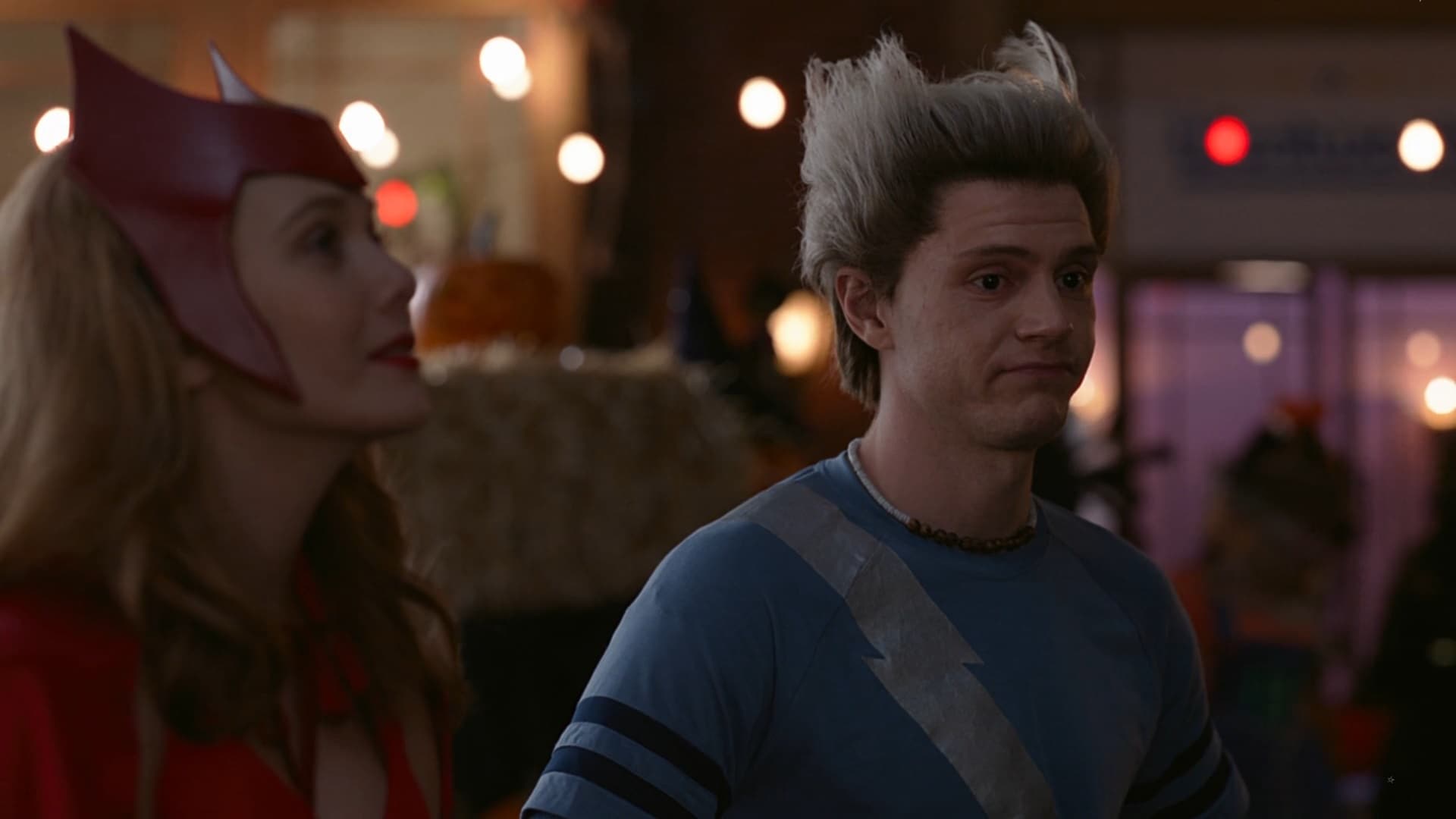
This is the first episode where I was completely clueless as to who they were doing an homage to during the opening credits. I mentioned previously that due to various life events I watched virtually no television in the 1980s, right? So, due to very different life events1, I wound up missing a lot of television and other pop culture events in the 1990s.

Other viewers, more knowledgeable than myself tell me that the show skipped over the 1990s entirely to make a full-throated embrace of Malcolm in the Middle which aired from 2000 until 2006. And I’ll take their word for it.

The rest of my review/partial recap is rife with spoilers, so don’t scroll down or click below if you don’t want to be spoiled!

I can’t say more without spoilers, so…

.

.

.

Seriously, every single sentence below is so full of spoilers you need a vomit bag…

.

.

.

Seriously, turn back now!!!

.

.

.

I warned you!!!

.

.

.

Seriously, spoilers ahead!

.

.

.

Continue reading WandaVision Brings Tricks, Treats, and a Growing Menace

WandaVision Goes Even More Meta in “A Very Special Episode…”

© Disney+

Time for a review of the latest episode of WandaVision: “A Very Special Episode…” Since I keep taking too long to finish these, I’m going to try to do a bit less verbose in my recapping and focus on reviewing. And before we get into that, I want to mention up front that while I thus far love this show playing on Disney+, it is still unfortunate that the Disney corporation is refusing to pay Alan Dean Foster and other authors money they are owed for media tie-in novels.

This week’s episode continues the trend seen in the first three where Wanda, Vision, and the town of Westview moves through the decades with styles, decor, and so forth evoking sitcoms of a particular era. This episode has moved into the 80s, and while i recognized the styles and at least the homages during the opening sequence to Family Ties, but I have to confess that while I am familiar with a lot of the sitcoms of the 50s, 60s, and 70s, I didn’t watch much TV during the 1980s1. So I probably missed a bunch of subtle stuff in this one.

This episode moved back and forth between the viewpoint of Wanda and Vision inside the reality bubble, and the scientists and agents outside. With some direct interaction that did not go very well. It was interesting, it was intense in places, and the mystery managed to deepen some more. I don’t think I can say more without spoilers, so if you don’t want to read those, stop now!

.

.

.

Seriously, spoilers ahead!

.

.

.

Continue reading WandaVision Goes Even More Meta in “A Very Special Episode…”

WandaVision Interrupts the Program to Give Some Answers, and Raise More Questions

© Disney +

Time for the next installment in my weekly WandaVision episode review. I reviewed the first three episodes here. I’ll try to to stick to one episode at a time going forward.

This week’s episode, entitled “We Interrupt This Program” gave us a lot of answers while raising many more questions. It is also chock-full of connections to and characters from other parts of the Marvel universe. Which is cool for nerds such as myself. But I want to stress that you don’t have to be familiar with all of those other things to understand. The show is still doing a fairly good job of framing this story in a way that people who aren’t familiar with the other properties can follow and be just as perplexed about what’s going on as the rest of us. There is one bit at the beginning of this episode that might need a bit of extra explaining for someone who isn’t Marvel obsessed, but even then they gave some explanation that I think might have been enough for those not familiar.

So, I’m going to limit the body of this review to only what happens on screen, and if I feel the need to squee about any of the bonus things along the way, I’ll toss that into footnotes.

The only non-spoilery thing I can say is that this episode tells us what was happening from the point of view of government agents and scientists who are outside of Westview. Which is way the viewers (us!) gets some answers, obviously.

I can’t really say anything more without spoilers, so, if you don’t want to be spoiled, stop reading now.

.

.

.

Seriously, spoilers ahead!

.

.

.

Continue reading WandaVision Interrupts the Program to Give Some Answers, and Raise More Questions

What do you call a fourth wall that’s entirely inside the production, or, Let’s talk about WandaVision

© Disney+

The new series from Marvel, WandaVision dropped on Disney+ a couple of weeks ago, and I was thinking of doing an episode-by-episode set of reviews, as I’d previously done for Star Trek: Picard, but I didn’t get the first one done within a week. Anyway, we’ve now had three episodes (“Filmed Before a Live Studio Audience”, “Don’t Touch That Dial”, and “Now in Color”) which gets us far enough along that I feel I can comment on what I suspected the main themes of the show will be as well as just talk about how those episodes work.

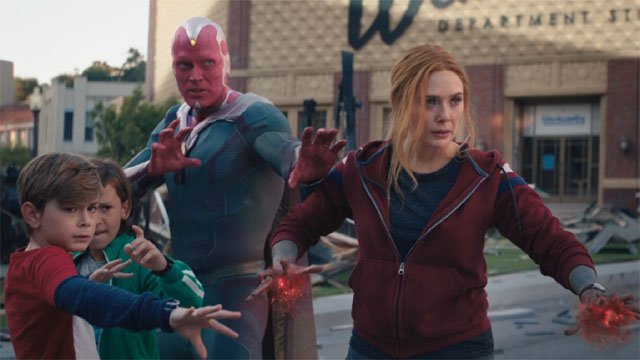
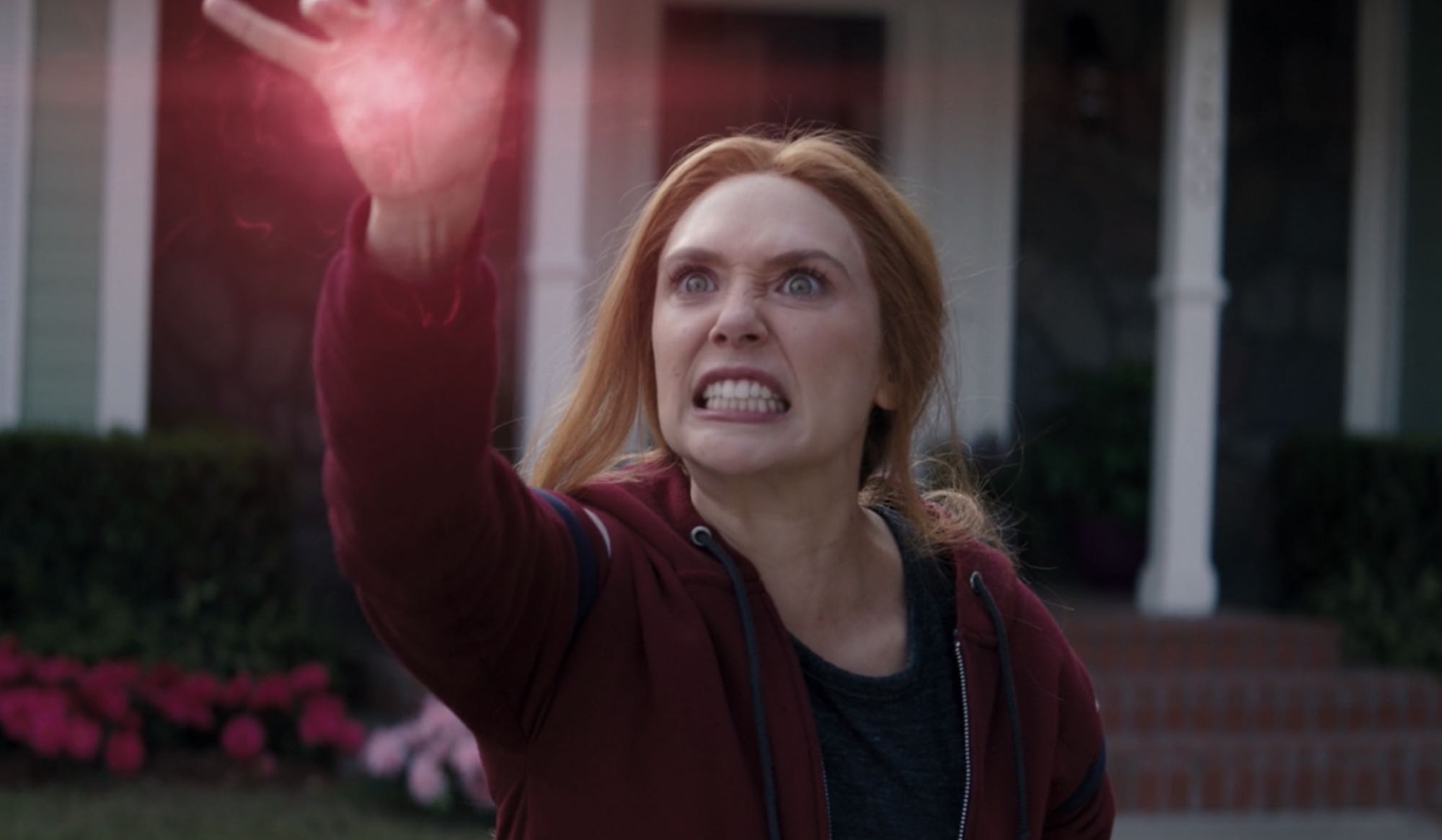
First I wanna make a few unspoilery comments: this show is not a typical superhero adventure. It has a lot more in common with Twins Peaks than shows such as Arrow or Daredevil. You also don’t have to have watched any of the Marvel movies to understand what’s going on. Within the opening minutes the show tells you most of what you need to know to understand the framing mechanism: she has some sort of magickal powers, he’s not human, they are in love and they are trying to fit into a stereotypical suburban family neighborhood without any of the neighbors realizing who or what they are.

To me, it also became clear very early on that this show is more likely a horror-type mystery than a thrilling adventure/action story. A number of other reviewers I’ve read didn’t pick up the horror-vibe until episode three, so your mileage my vary.

I don’t think I can say anything more without spoilers, so if you don’t want to be spoiled, turn back now.

.

.

.

Seriously, spoilers ahead!

.

.

.

Continue reading What do you call a fourth wall that’s entirely inside the production, or, Let’s talk about WandaVision