Tag Archives: things I like

Hokey Religions and Ancient Weapons – more of why I love sf/f

"Hokey religions and ancient weapons are no match for a good blaster at your side, kid." Harrison Ford as Han Solo in the original Star Wars.
Harrison Ford as Han Solo in the original Star Wars. (Click to embiggen)
I was a high school student in the small town of Longview when Star Wars first came out. I saw it on opening night, thanks to a couple of older friends who were even bigger science fiction fans. They drove me down to Beaverton, Oregon, (which was the closest place with a full-sized wide screen and Dolby sound at the time) on opening night, insisting that I’d love this film I had never heard of.

They were right. A lot of people loved it.

It wasn’t really original. The movie was a loving homage to the pulp magazine adventure stories and serial movies of the 30s and 40s. It didn’t have anything profoundly new philosophically to say. The special effects were better than we were used to seeing, but otherwise it just told an old-fashioned story. You knew who the good guys and the bad guys were. The heroes were confronted with a series of obstacles to overcome, and they worked hard to win the day.

In that way, it was an oasis in the desert. Over a decade before the movie came out, “legitimate literature” had embraced the modernist school. Narrative (storytelling) was considered “unrealistic” and “naïve.” Modernist writers abandoned plot and character development for style and grand themes. Resolution was replaced with ambiguity.

That listless ambiguity had infected a lot of pop culture. To be fair, in the U.S. at least we had good reason to be despondent. The economy had tanked. Inflation was out of control, lots of people were out of work, and even more were under-employed. We had finally admitted what a pointless quagmire the war in Viet Nam had become, so closely on the heels of the national embarrassment of the Watergate scandal and the ouster of President Nixon (itself following not the long after Vice President Agnew had resigned and pled guilty to tax evasion charges). And victories of the civil rights movement seemed to have produced more backlash than noticeable improvements in the lives of ordinary people.

By 1977 most of popular culture had been tainted by modernist angst. Many of the films and novels of the day accentuated style, mood, and setting, and had endings that left the audience wondering what had happened.
Star Wars brought plot, heroes, and villains back in style. And none too soon, in my opinion. There’s something comforting and satisfying about a story that begins with a problem, builds to a climax, and resolves things in the end.

Not to say that some of the other types of stories aren’t fun from time to time.

Star Wars was the perfect combination of fun, adventure, struggle against a seemingly unbeatable foe, and triumph. With space ships and blasters and energy swords thrown in for good measure. It’s not really science fiction, because the attempts it makes at science are laughably wrong. It follows the conventions of 30s science fiction in that regard. It’s space opera, following the rules of epic fantasy with the accoutrements of science fiction. And there’s nothing wrong with that.

The Empire Strikes Back was a much darker story, and as a middle chapter in a continuing tale, its ending wasn’t triumphant. But it still told a really good tale. There were resolution of some issues, character arcs advanced, and the open issues were daunting problems, but with a hope that they could be resolved. It was a superior movie to Star Wars in every way, but was still firmly built from the foundation laid by the previous movie. Return of the Jedi was fun—flawed, but fun. It wasn’t as good a move as Empire, but it still worked, and it paid off in at least an acceptable way on all of the cliffhangers of the previous films. Don’t get me wrong, some of the pay-offs were fantastic, I’m just admitting that not all were perfect.

Star Wars (which I hate referring to as “Episode IV – A New Hope”) still remains an especially bright shining beacon in my personal firmament. It made me love the idea of science fiction and fantasy in movies, again. It gave me a new celebrity crush (if you were a queer boy watching the first film and didn’t swoon for Han Solo I don’t know what’s wrong with you!). It gave me characters to aspire to be like: Obi Wan, Luke, Leia (yes, Leia! Seriously! Go watch those scenes with Leia and Darth, or the moment she takes the blaster away from one of the men, shoots open a vent cover, and says, “Someone has to save our skins. Into the garbage chute, fly boy!” and tell me she isn’t bad ass!)…

I love Star Wars. I loved it so much that the first summer it was in theatres, I drove to a theatre in another state 13 times to re-watch it. Not to mention seeing it at a local theatre, later watching it on cable, and eventually on tape again and again. It was a life changing experience.

But I must admit that the modernists were right in some ways. The traditional narrative form is seldom the way real life works out. The difference between real life and fiction is that fiction has to make sense. In real life, we don’t always get the clear-cut endings where the heroes defeat the villains and go on to live happily ever after:

  • The friend who drove that night when I first saw Star Wars, 38 years ago, is dead. James Curtis Bruce died from complications of AIDS at the age of 36.
  • Another friend, who drove us down to see the opening of Empire, has also passed away. Lawrence Lee Church died of an anueurysm at the age of 34.

I had admired and looked up to both of them as “big brothers” during a very important part of my life. Jim was a lot like the character of Han Solo, while Larry had more in common with Yoda.

I miss them both.

Sometimes we all wish that life was more like a good, fun movie.

Meta-labels and Sub-genres – loving sf/f in all its forms

https://thehopefulheroine.wordpress.com/2014/01/02/dont-judge-a-book-by-its-genre-an-intro/ (Click to embiggen)
I had two different ideas for this week’s “Why I love sf/f” post. Unfortunately, the one I had gotten furthest along in was turning into a mash-up of last week’s and the one before. The other one showed a bit more promise, and then I saw this post on the Over The Effing Rainbow blog: [Sci-Fi Month] Guest post: Aliette de Bodard – Science-fiction, fantasy, and all the things in between.

Go read it, because she says what I wanted to say, only better!

I went through a long phase where I preferred science fiction over fantasy with a bit of self-delusion along the lines that somehow fantasy was “just making any old thing up” while science fiction required an understanding of science! Likewise, I often expounded the notion that hard sci fi was superior to all others because you were constructing your what-if scenarios inside even more demanding parameters. Somehow I was able to express those beliefs at the same time that I would read and re-read any Andre Norton book I could get my hands on because I always loved them. I’m not sure why it took so long for me to recognize the cognitive dissonance between the kinds of stories that moved me most, and the sorts of stories which didn’t but which I claimed were superior.

Some of it is pure stubbornness: you express an opinion at one point, and then you feel obligated to keep justifying your original statement. But when I finally started to recognize this particular contradiction, that didn’t seem a sufficient explanation. Until I had an epiphany.

The epiphany came from an unusual source. I was watching a recording of a question-and-answer session that sex advice columnist and gay rights activist Dan Savage was having after giving a talk at a university. A young woman had a question about why guys her age would be friendly and sometimes flirty with her and other woman she knew who weren’t “model thin,” but always distancing themselves before things got beyond friendship. Yet she found older men pursuing her. She feared that the older men were desperate because of some other flaw she hadn’t uncovered, and that younger guys were merely shallow.

Dan pointed out a couple of things. One was that every week since he’d become an advice columnist he received at least a couple of letters from straight guys who confessed that they were really attracted to bigger women, but terrified to admit it because they thought it meant something was wrong with them. In an aside, he said that he got similar messages from some gay guys about their attraction to big guys. He said the thing nearly all the letters had in common was that the letter writer was either in their teens or their twenties. At that age, Dan said, guys are still very focused on winning the approval of other guys. So they are much more concerned with appearing to be interested in the things they think others expect them to be interested in.

His conclusion was that a lot of the guys she thought were sending mixed signals were doing just that. They were genuinely attracted to her, but when they recognized what was happening, they bailed because they thought they weren’t supposed to be attracted to that kind of body. So his advice was to go ahead and take men who did express interest at their word, and if they didn’t otherwise set of alarm bells, there was nothing wrong with dating them. But also, she would find when she got a bit older, that there were plenty of guys who always had found her attractive, they just had to grow up enough to stop worrying about the approval of their friends.

I realized that I had started espousing those opinions about sci fi vs fantasty, and hard sci fi vs so-called soft science sci fi, and very cerebral sci fi vs action/adventure sci fi when I was in my teens, and I hardened those opinions in my early twenties. At the time it seemed that the fans I most admired all held that opinion. And the way that libraries often classified various books seemed to reinforce that. All of the “soft” sci fi and fantasy was filed in the young adult section or the children’s section of libraries that divided things up that way. Only the hard sci fi and certain kinds of action/adventure sci fi was over in the adult sections. Clearly fantasy and so forth was for less mature, and therefore less sophisticated, readers.

Bull.

“If you’re going to break a rule, break it good and hard. My personal motto!”
—Aliette de Bodard

Especially since science fiction is supposed to be not just exploring limits, but pushing beyond frontiers into the unknown, we shouldn’t look down on things that vary from the familiar. That’s the whole point, right? It’s timid to worry about whether a story is supposed to go this way, or whether we’re supposed to like a particular kind of story, et cetera.

Isn’t science fiction and fantasy supposed to be about boldly going where no one has gone before?

Cosmic Cringing – lovable sf/f made by less-than-lovable people

xlarge_edgetopI’m hardly the first person to write about the challenges of being a fan of problematic material. And I have written a lot about at what point a particular writer’s or artist’s beliefs and actions in real life make it difficult to enjoy their creations. Because of events at the World Fantasy Awards ceremony earlier this week, a lot of people are talking about this topic right now. Plenty of people are weighing in on the specifics there–I’m not going to talk about that.

Instead, I want to talk about how this topic came up in relationship to one of my own posts earlier this year about some of the science fiction and fantasy I love.

I had specifically written about Isaac Asimov, a Grandmaster of Science Fiction who wrote a lot of both sci fi and science fact. One of my readers correctly pointed out that while Asimov’s writing was award-worthy, his personal behavior quite often wasn’t. A self-described “dirty old man,” Asimov was known for getting handsy with women and making sexual suggestions or “jokes” in public settings. This has been excused by some by saying that he was a product of his time. Yet both Mister Rogers and Charles Schulz were born in the same decade and were therefore products of the same time, and they knew not to grope strangers without permission!

The only thing that “a product of his time” really means here is that women who complained about that kind unwanted attention got even less support and sympathy from society at that time than they do now.

So, he was a problematic person. I don’t find his writing to be particularly misogynist nor exploitive. Yes, it was mostly as sexist as any other fiction written in the 1930s-1980s. One of the most common critiques leveled against his writing in that regard is that he tended to avoid any romance in his stories altogether; which means at least wasn’t making the women prizes for the men all the time. On the other hand, he did occasionally write stories with women as protagonists, which is more than you can say about many of his male contemporaries in the genre.

Just because I’m not offended by his writing doesn’t mean that others can’t be, nor does it mean that anyone is under an obligation to like his writing.

His groping and inappropriate comments were not the only issues the previous commenter mentioned. Isaac Asimov got married when he was 20 to a woman of whom his parents approved. Isaac cheated on his wife, Gertrude, frequently, eventually causing them to separate. At which point Asimov immediately began living with one of the women he’d been having an affair with. Three years later Gertrude and Isaac finally divorced, and two weeks later Isaac married Janet O. Jeppson, the women with whom he’d been living since separating from Gertrude.

There are people who say that Isaac continued to cheat on Janet just as he had with Gertrude. There is a very big problem with this claim: no one but Janet and Isaac knows whether his flings and dalliances after the marriage to Janet were cheating. They may have had an open relationship (which most non-monogamous couples don’t admit to, because society is even less accepting of polyamory and monogamishness than they are of philanderers).

We know that Gertrude did not agree to an open relationship, because she made that very clear on more than one occasion. Asimov was definitely in the wrong during his first marriage. So he was definitely a cheater as well as a sexual harasser during that time. But if Janet agreed to an open relationship, then it wasn’t cheating. Period.

That doesn’t negate his other failings, but we can’t presume to know what agreement Isaac and his second wife had or didn’t have, absent word directly from her.

Human relationships are messy. Society makes the mess worse, because people are expected to figure out their sexual needs and relationships with inadequate information while weighed down by gigantic amounts of societal baggage, a great deal of which is false. Thanks to myths such as the Relationship Escalator, the One True Soulmate Fairytale, and the Marriage=Adulthood Fallacy, people get married when they aren’t ready to other unprepared people who are not compatible (in many ways).

In my experience that often goes double for the kind of person who has the temperament to be a writer of any kind, and triple for those who are drawn to sf/f. Where a social awkwardness and arrested development is all too common.

People are imperfect. All people are imperfect. That means each and every one of us it imperfect. Sometimes we like things that contradict some of our own ideals. Sometimes we like people who don’t live up to all of our ideals.

Everyone is aware that their friends and loved ones are imperfect. The part we tend to overlook is: everyone who likes us does so in spite of our flaws. None of us live up to all of our own ideals all of the time, let alone live up to the ideals of our loved ones. In a relationship, we cut each other slack because we feel that other things outweigh the imperfections.

Which is where I come back to the original question. When you discover that the person who created something you love wasn’t very lovable, how much does it color your evaluation of the art or story? That’s going to vary from person to person. For me, the incredible sense of wonder I got the first time I read Asimov’s “The Last Question” is simply too big to dismiss. The sheer volume of science and history of science and a love for science that he packs into each essay in collections such as Only a Trillion, The Tragedy of the Moon, Of Time and Space and Other Things, or Quasar, Quasar Burning Bright will always make me glad we live in such an amazing universe. Whether I’m reminded of the hilarity and humanity of his mysteries, such as Murder at the ABA, or the understandability of his in-depth science books such as The Collapsing Universe and The Genetic Code, I keep thinking that if any other person had written one-tenth of what he did, they would be considered one of the greatest.

I cringe when I think of how he behaved toward women. I wish that the same brilliance which illuminated his writing had also informed his treatment of some of the people he met.

But I remain a fan of his work. And I understand if other people decide to give it a pass.

Ancient Tomes and Living Fossils – how I love sf/f isn’t the only way

“Kids these days will never know the joys of oil lamps and chamber pots”Jason Sanford set off small internet firestorm with a series of Twitter comments that he then collected on his blog as: The fossilization of science fiction and fantasy literature. Some people were upset because they thought he was implying that the classics of sci fi were garbage, when all he actually said was that younger people are reading, watching, and playing newer works and there’s nothing wrong with that. He’s since added a follow-up to clarify his point which included this important bit of context:

A few years ago I was on a SF/F panel about bringing new readers into the genre. I mentioned that SF needed more gateway novels, at which point the other author on the panel snorted and said we don’t need new gateway novels … the Heinlein juveniles are still perfect.

That is the type of attitude which people should fear because it will kill our genre. But new readers not discovering SF/F through the classic authors you grew up on — that’s nothing to worry about.

His critique was not aimed at the classics themselves, but rather at older fans and pros who belittle younger people who first learned to love science fiction and fantasy by encountering newer works, or who lecture people who aren’t familiar with many works published 70 or more years ago, or gripe that “real” fandom is greying and dying off.

Reading the original post and some of the fallout left me feeling a bit guilty for ways that I have no doubt come across that way myself. I do react with great incredulity when a friend, regardless of age, isn’t familiar with a book, series of books, or movie that I consider a classic, for instance. I try to get people to watch some of the old movies or read the old books that I loved.

It also made me wonder about the series of posts I’ve been doing for Throwback Thursday the last 6+ months, the “more of why I love sf/f” posts. I started those posts as a personal antidote to the sturm und drang over the affair of the melancholy canines. Because I read a lot of sci fi blogs, and because I was determined to read all the Hugo-nominated works before filling out my ballot, I knew I was likely to spend a lot of time being outraged and otherwise upset about things people were saying about some types of sci fi. So I decided it would be a good idea to write a weekly post in which I would only talk about something I loved from the genre. Since I like having a regular deadline, I needed to pick a day, and it occurred to me that if I focused on works that were influential in my formative years, then I could post them on Thursdays and tag them as Throwback Thursdays.

So I gave myself that assignment.

These posts have been about things I loved in science fiction and fantasy. I’ve written about works that spoke to me in important ways when I was a kid. Many times I’ve mentioned how a particular story or movie or series gave me hints that someday, when I wasn’t a closeted queer kid living among anti-science and anti-gay evangelicals, life would get better. None of which is meant to imply that people who aren’t familiar with or don’t like any of the things I’ve written about are any less real fans than I am, nor that there is anything wrong with treasuring different authors or works.

Not that anyone probably has, but I think it’s important to acknowledge that I’m an old white guy, and what I experienced growing up is going to be very different for fans who aren’t guys, or white… or whose teen-age years are much more recent than mine.

It’s also important to realize that a lot of things that we loved when we were younger don’t always hold up when we’re older. Before I started the “more of why I love sf/f” posts, I’d written about reading some books by a favorite author from my teens and early twenties, and how difficult some of her books were for me to read, now. Some are fine, but some of them have definitely not aged well. And I felt really bad for not liking some of them as much as I did when I was younger.

Because I’m doing National Novel Writing Month (my project is to finish the revision on two of my fantasy novels) there will be a lot fewer blog posts of any kind from me. And those “more of why I love sf/f” posts take more time than others of similar length, because I research the work and author in question. Yes, I’m writing about things I loved, but in some of the cases they are books or shows I encountered before my teens, so I want to make certain I’m remembering them correctly.

I will resume the posts after November. And I will probably continue to focus on books and stories from my younger days. I mean, I averaged reading more than seven novels a week through most of middle school, for goodness sake! There is a lot of potential material to write about!

Storms, Brains, and Reanimated Flesh – more of why I love sf/f

The creature meets the innocent girl... © Universal Pictures
The creature meets the innocent girl… © Universal Pictures (Click to embiggen)

I don’t remember when I first saw the 1931 film Frankenstein, directed by James Whale. I also can’t remember a time when I didn’t know the basic story of Frankenstein. I don’t know for sure what my first exposure was to the myth. I remember watching more than one of the Universal Studios Frankenstein movies with my mom when I was young. I remember one particular time watching it with my mom and my sister, my sister was maybe four or five years old and kept asking questions. I was getting impatient, and Mom told me I had been exactly the same way when I had been my sister’s age.

What I do remember, very clearly, is that I always felt sorry for the monster… Continue reading Storms, Brains, and Reanimated Flesh – more of why I love sf/f

If you never get started…

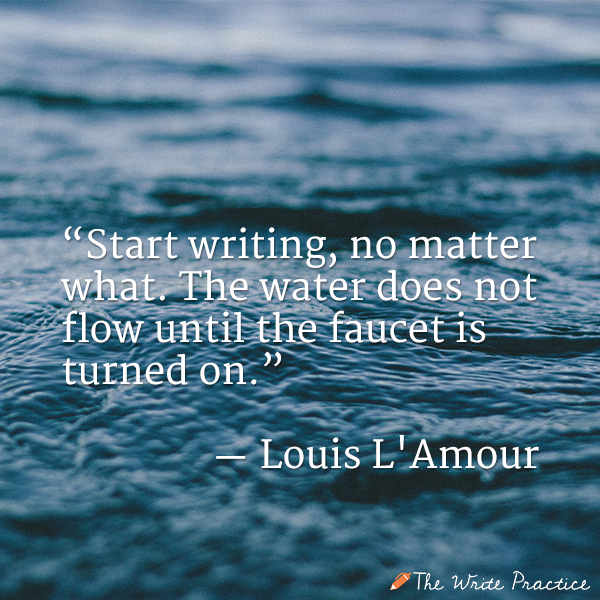
Start writing, no matter what . The water does not flow until the faucet is turned on. Louis L'Amour
“Start writing, no matter what…” (Click to embiggen)
I’m getting ready to do National Novel Writing Month (NaNoWriMo) again, which means that I’m also attempting to recruit people to join in the challenge. I was one of those people who for years encouraged other people to do it without doing it myself. I would refer to the time that I wrote a 75,000 word technical manual from scratch, all the actually writing done in only a couple of weeks, and point out that I already knew that I could rack up a big word count. And I’ve had fiction published, lots of short stories, novelettes, novellas, and novel-length pieces.

But word count isn’t what it’s all about. It’s also about setting some goals (maybe very crazy goals) and pushing yourself through it. There’s something kinda magickal about getting to the end of the month after having written so much, commiserating with others trying the same thing.

My last couple of pep talks have been about just making yourself sit down and plow through, learning not to get paralyzed by the need for perfection, or fear that it isn’t good enough, and so on. A big part of writing is, indeed, a matter if putting down the next word, and the next, and the next, until you reach the end. In fact, for a project like NaNoWriMo, that’s what most of the month will be about.

But even though lots of famous writers say the same thing: all that matters is the next word, that isn’t really all that matters.

Before there can be a next word, there has to be a first word, doesn’t there? Getting started is more than just typing a word. If you are doing a novel, or a play, or writing a script for a comic, or writing a memoir, you need to have some definition of the story, and you need to have a starting point.

Novels don’t necessarily need the same sort of quick hook opening sentence that a short story does. Because the reader knows they’re going into a longer story, they will probably give you more than just the opening sentence to grab their attention. But the opening does still need to be a hook. And not just for the reader. It needs to hook you. Before you can hook yourself, you need to have an idea what the story is.

While I have listed myself on the NaNoWriMo web page as a Planner rather than a Pantser (someone who jumps in and writes “by the seat of their pants”), I’m not big on elaborate plans and outlines before I write. My novel, The Trickster Apocalypse started as an opening scene that just came to me when I was supposed to be writing a story I had promised another ‘zine editor. Even when I’d finished writing a 3,000 word beginning that night, I didn’t think it was a novel. It was after I’d written a few more chunks that big that I figured out what it was.

Other times I’ve started with something like this: “Cheating death and the consequences thereof. M and J each seek ancient artifacts and forbidden tomes for very different purposes. L dies.”

Occasionally I put together much more elaborate outlines or charts. My charts have gotten a bit easier to make and edit since I bought Scapple, a program made by the fine folks responsible for Scrivener. But usually I don’t do that until I’ve gotten a few tens of thousands of words into the story.

M. Harold Page has a post up on the Black Gate website linking to a whole bunch of writing advice posts. This one, Find the Conflict: Unblocking (or Actually Planning!) your NaNoWriMo Novel is a nice overview of how to plan without making an elaborate outline. He includes some screenshots of some of his charts. Also, Ryland J.K. Lee has a nice post about some of the same tools and some others: Software and tools for planning a first draft: colored pencils, Scrivener, and more.

If you have a basic conflict: something your protagonist wants but there’s something in her way, you can take the classic reversal of fortune approach. Two steps forward, then one step back. As in: 1) A woman wants to be a concert pianist, 2) then she loses an arm, 3) luckily she meets another aspiring pianist with only one arm, 4) but it’s the same arm… It’s really easy to do, though it can get a little tiresome if you keep it only internal. Which is why it helps if you have supporting characters with their own thwarted desires.

But the important thing is to have a beginning in mind, even if it is a beginning that you know you will have to revise later. Once you are started, there are millions of ways to find the means to put down the next word, and the next.

But you have to start!

Start writing, no matter what . The water does not flow until the faucet is turned on.
—Louis L’Amour

Just call me Mr. Chicken

31I love Halloween. Seriously, I do. I love a well-done vampire story. Or a good fantasy tale with interesting witches and/or monsters.

But I’m not good with scary movies. Now I should qualify that: I’m not good with a lot of horror films, particularly the gory and/or very intense ones. I wind up having nightmares. The kind of nightmares where I wake up other people in the house because I either wake up talking very loudly, or worse: I sleepwalk around the house, intentionally waking anyone I can find, and explaining very emphatically how we’re in danger and we have to do something to defend ourselves/thwart the monster, et cetera. The more intense the movie, the more likely I am to do this for several nights in a row.

There are exceptions. I do better when it’s a movie I’ve seen before. I also do better if I watch the movie on a TV or computer instead of going to see it in the theatre. Being able to look away at familiar surroundings whenever I want without the overwhelming presences of the enormous screen and THX sound seems to help a lot. Watching it with someone I know and trust helps. I have been known to physically cling to friends (not just people I am romantically involved with) at particularly scary parts of some films.

I own a lot of movies that I classify as Halloween/horror films. And every year, I select some to watch on Halloween (and sometimes nights leading up to it). But my collection isn’t full of things many people would think of as scary. Movies that appear in my Halloween fests a lot include:

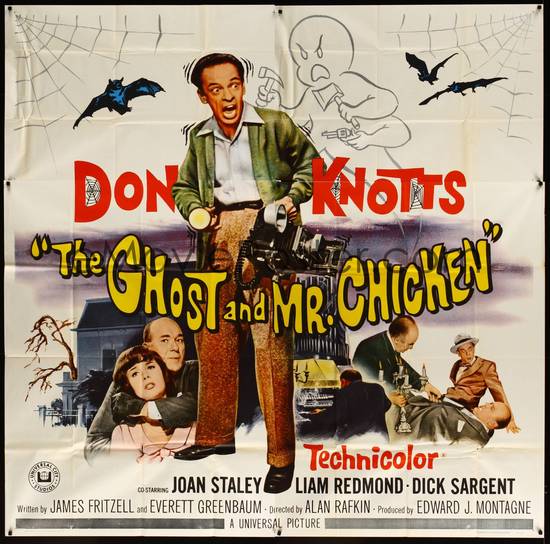
  • The Ghost and Mr Chicken
  • Elvira, Mistress of the Dark
  • The Addams Family
  • Abbot and Costello Meet the Mummy
  • Monster Squad
  • Frankenstein (the 1931 version starring Boris Karloff)
  • Bride of Frankenstein
  • Dracula (the 1931 version starring Bela Lugosi)
  • Young Frankenstein
  • The Lost Boys
  • Tremors
  • Queen of the Damned
  • Fright Night (the 1985 version with Roddy McDowell and Chris Sarandan)
  • Haunted Honeymoon
  • The Rocky Horror Picture Show
  • Arsenic and Old Lace
  • Teen Wolf (the original with Michael J. Fox)
  • Hocus Pocus
  • Edward Scissorshands
  • Ghostbusters
  • Little Shop of Horrors
  • The Man with Two Brains
  • Hellboy
  • Godzilla
  • Forbidden Planet

I could go on. A friend posted a similar list on her blog yesterday. I’m glad to see I’m not the only person who likes this kind of less-than-nightmare-inducing spooky movie.

I have all of the “Abbot and Costello meet…” cross-overs with the Universal Monsters, as well as the Universal box sets of their classic horror franchises: Frankenstein, the Mummy, Dracula, the Wolf Man. And a bunch of the Simpsons “Treehouse of Horror” episodes on disc. I only recently acquired Munster, Go Home on disc, and it was a candidate for this year’s Halloween fest.

3265dcb92ac0b5575bed9a0e0d047927Since my husband has spent so much time converting the rest of our (nearly a thousand) DVDs and Blurays into the media computer and database, I spent a while scrolling through the list looking for films that maybe we haven’t watched in a while because they were on a different shelf than the other Halloween movies. I noticed, while scrolling through the sci fi section, The Black Hole (the 1979 version with Maximilian Schell), which I haven’t watched in many years. When I said that, Michael said that he’s never seen it.

My husband has never seen it!

So I said, “Well, that’s one of the Halloween movies this year, definitely!”

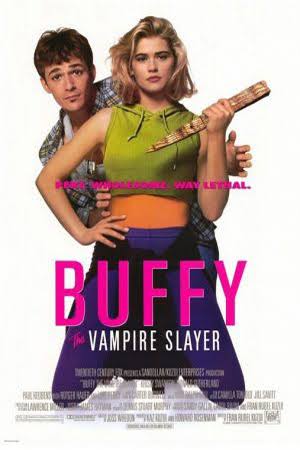
Then he asked me if I could remember when I last watched the Buffy the Vampire Slayer movie (with Kristy Swanson, Luke Perry, and Donald Sutherland), and I couldn’t remember, so we both said, “Guess that one’s on this year’s list, too!”

images (2)And, of course, the premiere of the new series starring Bruce Campbell, Ashe vs the Evil Dead is happening on Starz on Halloween. And Starz is a channel I have in our line-up, so I’d been planning all along to watch it that night.

I should mention that the Evil Dead movies are one of those cases where the gore is enough that normally I wouldn’t watch them, but I love work that Bruce Campbell does elsewhere (and was so, so, so happy when he was cast in the major supporting role in Burn Notice which went on for several seasons without getting canceled or jumping the shark before they ended it in a really good way). Plus, after being enthused at about it many, many times by our friend, Sky (who is one of those people who I know really well), in some ways I felt as if I had already seen them. So I finally watched The Army of Darkness and one of the earlier ones.

Sky was sitting on one side of me and my husband on the other. (I spent most of bloody-cabin-in-the-woods movie with my eyes covered, even then!).

I… will not be surprised if Campbell’s new series gives me nightmares. But I’ll probably watch the whole thing, regardless.

Because I love the mix of comedy and horror tropes! And did I mention that I love Halloween?

Monsters Are People, Too – more of why I love sf/f

Promotional photo for the Munsters,
Promotional photo for the Munsters, © Universal Studios and CBS.
The Munsters premiered on CBS the night before my fourth birthday. I don’t remember if we watched it from the beginning. I’m fairly certain we didn’t watch it the first season because the first few months it was up against the Flintstones, and then Jonny Quest moved to that time slot. I suspect we did watch it a few times, and for a while during season two, until Batman! premiered with its twice-a-week format one of which was against the Munsters.

Like a lot of other genre-related shows, The Munsters went into syndication fairly quickly after being canceled, and promptly gained loyal audiences outside of primetime. I suspect most of my memories of the show are from this era… Continue reading Monsters Are People, Too – more of why I love sf/f

Learning how to write what you want to write

UrsulaKLeGuinLearningQuoteIt’s nearly time for National Novel Writing Month (NaNoWriMo), which I’m participating in again. That means that I am encouraging (read: recruiting, nagging, pleading, conniving…) anyone that I can to take a shot at it. Last week I riffed on a quotation from Ray Bradbury, Overthinking is the enemy of creativity to talk about some of the most common ways we can self-sabotage creative efforts.

I dismissed one of the usual excuses, that what you write isn’t good enough, by pointing out that no first draft is perfect. Which is true, but incomplete. The only way that anyone can learn to be a better writer is to write. That means writing badly. A lot. Just like the only way a baby can learn to walk is to try, and fall down, then try again. It is a slow process of slowly getting less bad until we reach a point where we literally don’t remember what it was like not knowing how to walk.

When I said last time that humans are natural storytellers, that was also true and also incomplete. Yes, humans tell stories to ourselves and each other in order to make sense of the world, to communicate, to persuade, and to commiserate. You have years of experience doing that. But if you are a typical person, most of your experience is storytelling through the spoken word—usually face-to-face. Your narrative depends on a lot of nonverbal supplementary material. You sit down with friends and explain about your day, for instance. You may imitate the voice of one of the other people involved in your tale. You might gesture with your hands. Your facial expression changes to convey emotional context. Your tone of voice varies. You slow down at some points and speed up at others in order to draw out suspense of convey a sense of urgency. You will pause dramatically.

And you have none of those tricks available when you write.

What many people never fully grasp is that, while written language is based upon spoken language, they aren’t actually the same language. It’s because spoken language has all that non-verbal stuff going along with it. It has all those non-verbal communication tricks that we learned the same way a baby learns to walk: by observation followed by trial and error. Which means we do it without thinking. But we don’t know how to convey all that with words on screen or on paper.

That’s one of the things we have to learn in order to become a writer. How do we tell our story compellingly without those non-verbal bits? How does sentence length correspond to verbal pacing? Are compound-complex sentences the equivalent of a long aside, building up dramatic tension while providing hints of what is to come so that the listener anticipates where it it going, yet does not become impatient? And what of fragments?

All of that is hardly scratching the surface. It isn’t just about technique. It isn’t just about vocabulary. It isn’t just about structure, or theme, or scene setting, or characterization. It is all of those things, yes, but the whole is also more than merely the sum of the parts.

The only way to learn how to do that is the same as any other skill: observation followed by trial and error. That’s why you need to read as well as write. You can’t simply think about your story ideas. Or talk about them with other people. You have to sit down, just you and the blank page (and it doesn’t matter whether the page is paper or pixels), and write it. Then later, read what you wrote. And let someone else read what you wrote to see how they react to it. And read other stuff by other people. Then sit down again and write again. Revise, rewrite from scratch, write something else for a while to take your mind off of it. All of those things are part of the learning process.

What isn’t part of the learning process is explaining to other people why you don’t have time. What isn’t part of the learning process is playing video games because you aren’t feeling it just now (except when it is, but that’s another post for another time). What isn’t part of the learning process is whining to your friends that you don’t have any ideas.

It’s tough. I know. Though, full disclosure, I don’t really remember just how tough it is. I literally tried to write my first book when I was six years old. Which was 49 years ago. By the time I was ten I was in the habit, every month, of reading the new issue of The Writer magazine at the public library from cover to cover. I checked out books about writing. I copied out whole sections of the books and articles that made the most sense to me so I could re-read the bits later after I turned the books back in to the library. From the fourth grade on I spent so much time in my bedroom banging away on the typewriter writing short stories, attempting novels, and so on, that sometimes my father threatened to burn all my books and take the typewriter and all writing implements away so I would be forced to go be a “normal boy.”

Now I routinely sit down at the keyboard with only a vague notion of what I’d like to write about, and an hour or so later I have over 1,000 words of a relatively decent essay on learning to write by trial and error (that includes the time it took to find the Le Guin quote, open Affinity Designer, and create the graphic to go with this post). Or I sit down at the keyboard looking at a big hole in my plot, click the plus icon in Scrivener, and a few hours later I’ve written a new scene or three which have at least pushed the story forward. Yet, I still can’t write quite as well as I’d like. But I know I write better today than I did last week. And better last week than I did a year ago. A better last year than I did five years ago, and so on.

I got here the same way every writer does: I wrote, it wasn’t as good as I wanted it to be, so I wrote again.

You can do it, too. Don’t give in to the excuses or self-doubt. Don’t compare yourself to other writers. Just sit down, look at that blank page, and then fill it up!

All I can say is, it took me about ten years to learn how to write a story I knew was something like what I wanted to write. In the sixty years since then I’ve learned how to do some more of what I’d like to do. But never all.
—Ursula K. Le Guin

Nuclear Dinosaurs and Tragic Heroes – more of why I love sf/f

Image from the 1954 Gojira (click to embiggen)
I don’t remember precisely when I saw my first Godzilla movie. I was probably four or five years old. When we were living in the parts of Colorado where all the TV stations we received came from Denver, one of those channels had a Saturday afternoon movie called Science Fiction Theatre (or something like that) which seemed to almost exclusively show Japanese sci fi films. So there were a lot of Godzilla, Mothra, and other kaiju films that I saw during this time.

Often when there were parts of the plot that didn’t make sense to me, Mom would explain it away as the problems with translation. She had already explained about how the movies were originally filmed in Japanese, then dubbed into English. So anything else that seemed odd or illogical was because of that. It didn’t occur to me until later that part of the process of translating it for an American audience also sometimes involved editing the film, taking out scenes or cutting them short.

Godzilla was, of course, my favorite… Continue reading Nuclear Dinosaurs and Tragic Heroes – more of why I love sf/f