The cover of the 1973 paperback edition, as the drivel became a blockbuster.
I posted a bit of a ramble about how I first encountered the book Chariots of the Gods? back in 1971 and how by 1972 the book had infected the collective consciousness enough that multiple evangelical pastors were feeling the need to preach sermons against it. The first U.S. paperback edition was published either just before or during my fourth grade in elementary school. At that point, in the U.S., the book had not yet become a bestseller. So the ancient alien ideas, and specific references to Erich von Däniken’s hack history theories about how aliens had influenced the course of human history were just trickling into my life.
Cover of the 1970 first American published paperback edition. Click to embiggen.It’s all Solarbird’s fault. In the linked post, she plots possible family tree of the original Battlestar Galactica mythology, including a reference to Chariots of the Gods?, and in the course of typing a short comment about when Chariots… the book came out, and the weird in-roads it made into pop culture, I realized there’s at least one weird section of my evangelical fundamentalist Southern Baptist childhood I’ve never written about: the years that evangelical revival preachers felt compelled to make regular sermons deconstructing Chariots of the Gods.
It’s a strange tale involving a hack writer’s bad grasp of history and half-baked sci fi sensibilites, rural American evangelicals’ even shakier grasp of history and science, a Mormon community invaded by mostly southern oil worker families, the tent revival epidemic of the 1800s, black lights and phosphorescent chalk, one queer sci fi nerd, and a three-piece suit the color of lime sherbet. It’s a bit convoluted…Continue reading Chariots of the Who? – part one→
“When a person did his best, do not scold him for his failure” —George WashingtonI know I start to sound like Sheldon Cooper from Big Bang Theory when I say this sort of thing, but the holiday we’re celebrating today is not named “Presidents’ Day,” it is “Washington’s Birthday Observance.” I’ve written before about how the myth that the holiday is President’s Day got started and why it is so persistent. I’ve also written about the reasons why there has never been a federal holiday dedicated to Lincoln.
But especially because of those racist reasons that have prevented a Federal holiday recognizing Lincoln, I think it’s important to remember that this holiday is not Presidents’ Day, unless you’re in one of the 10 states that have a state holiday this day which is called President’s Day (my state isn’t one of them). Five states still recognize a state holiday for Lincoln (Illinois, California, Connecticut, Missouri, and New York), though schools and state offices often remain open on that day.
And don’t get me started on the fact that because Washington’s Birthday Observance happens on the third Monday of February, George’s actual birthday, February 22, never lands on his Federal holiday. For shame!
“It’s not that I can’t fall in love. It’s really that I can’t help falling in love with too many things all at once. So, you must understand why I can’t distinguish between what’s platonic and what isn’t, because it’s all too much and not enough at the same time.” – Jack KerouacI tried to put together some new thoughts on Valentine’s Day, the way people react to it, including how some people are hurt by it, but found that I’ve already said it before, and not sure anything is gained by rehashing it. Besides, a friend said most of it much more concisely:
“For those alone today, I didn’t find my one until I was 30. She was 50. There’s no ticking clock on finding the right partner.”
—Deep Triviality
I’ll just add that there are many kinds of love. That you can love and be loved without being in a relationship. That you can find love and be loved by more than one person. That a lot of love is discarded or missed by some people because they assume that the relationship escalator is true and that all relationships have to ride that thing to the exact same destination.
And don’t believe the myth that you can’t love others until you learn to love yourself. Sometimes, it works the other way around. Sometimes, letting someone you love into your life is what helps you find the lovable in yourself. Love isn’t always symmetrical and mutual. And it doesn’t have to be.
We’re celebrating a friend’s birthday with a group of mutual friends today. Because love is love.
“The very idea of the power and right of the people to establish government presupposes the duty of every individual to obey established government.” George Washington, Farewell Address, September 17, 1796I had several links queued up related to the final holdouts of the Oregon Militia for yesterday’s Friday links, since the last militia members were finally arrested this week, but none of them conveyed anything useful except the fact that they were arrested. And I decided that wasn’t enough of interest to include with all the other links. Then Friday afternoon I saw this article: Dear Oregon Militia, Here’s why no one feels sorry for you and rejects your mission built on conservative Christian rage. Take it away:
The more the occupiers talked, the more obvious it became that they were not fierce warriors ready to die for a noble cause, but a bunch of fantasists who, bitter because white Christian conservatives don’t get the social deference they believe they deserve, have turned to conspiracy theories and other right wing argle-bargle in order to justify their sense that not being catered to is the same thing as being oppressed.
And:
…Slate’s Jacob Brogan live-tweeted the stream, and what struck him right away was “the combination of ideological incoherence and aggressive uncertainty.” They refused to recognize the authority of federal agents on federal land, as if wishing hard enough would make it go away. Their chatter suggested they “are intellectually and ideologically incommensurable even to one another”.
“All they seem to share are abstract reference points: guns, liberty, tyranny. No collective notion of how those things connect,” Brogan added. No big surprise, really. It seems at least a couple of them, possibly all, are deeply troubled people, drawn to this out of a sense of drama and not because they have a coherent or principled belief system to stand up for.
We’re not supposed to speak ill of the dead, no matter how hateful, odious, or bigoted they were. As one person pointed out on twitter, I’m sure when Emperor Palpatine died at the end of Return of the Jedi there was an army of white dudes at the celebrations like, “A man is dead. Show some respect.”
Maybe I should show some respect. But it’s hard to respect someone who argued so vehemently in favor of torture, and not just argued, but legally enabled it. A man who compared homosexuality to murder, polygamy, and cruelty to animals and used those arguments and his vote on the Supreme Court to thwart the rights of gay people for many years doesn’t deserve any respect. A man who said (less than three months ago) that granting civil rights to gay people made as little sense as doing so to child molesters does not deserve any respect.
I prefer the advice of Charles Finch, “If you want to feel sad, go ahead and think about all the gay people who died alone because their spouses didn’t have visitation rights.”
If you want to feel sad, go ahead and think about all the gay people who died alone because their spouses didn't have visitation rights.
Thank goodness it’s Friday. Real life is not terribly pleasant, right now, though work has been slightly less stressful this week. Maybe it only seemed that way since going to work was a distraction from thinking about the relatives who died last week.
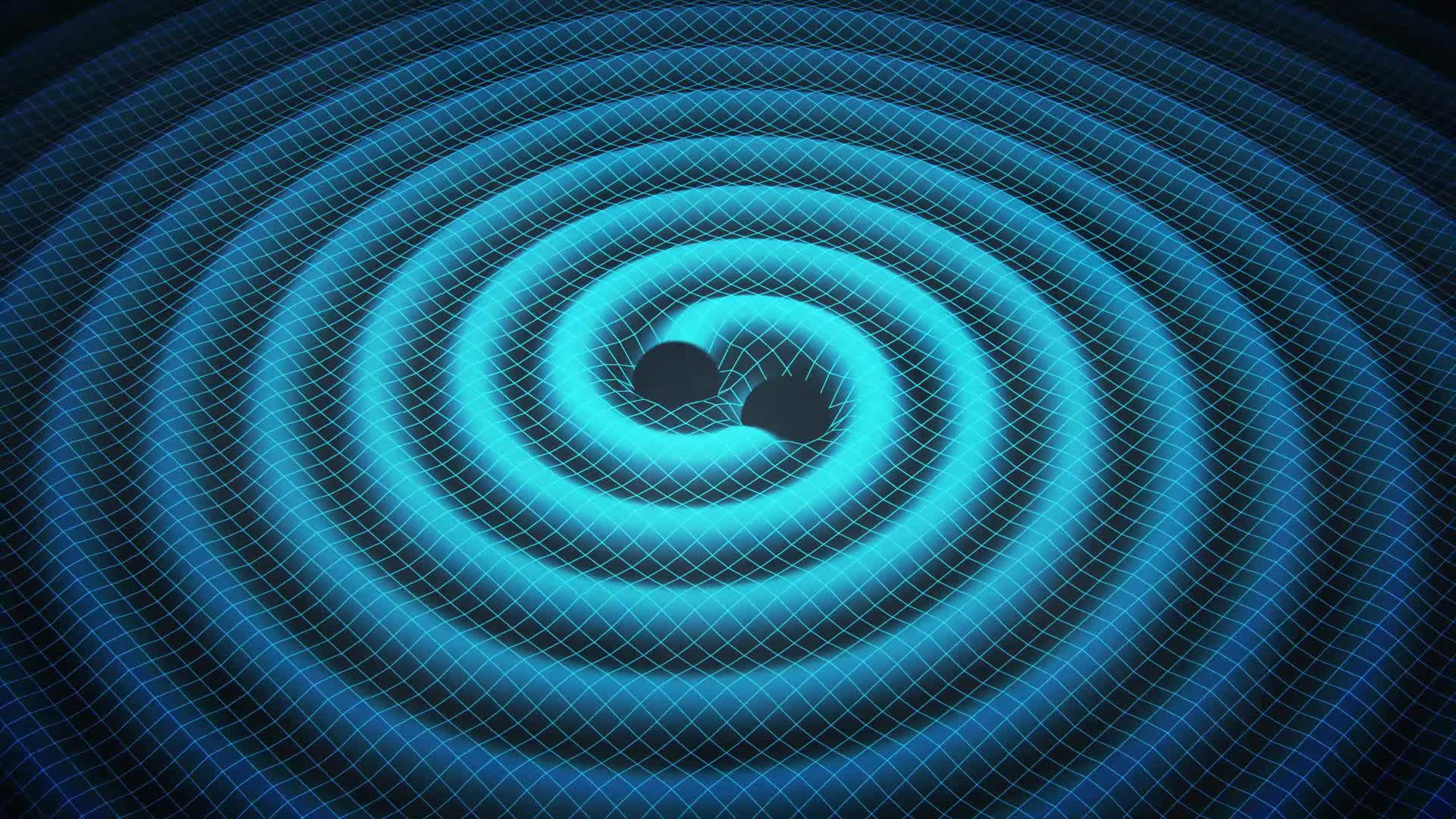
There’s a lot of interesting things that happened in the world: the idiot Oregon militia people are all finally in custody; the Ali Forney Center raised more the $200,000 toward their attempt to buy the hate church at the foreclosure auction; the New Hampshire primaries happened and a few more of the hateful idiots running for the Republican nomination have dropped out; and we’ve finally detected gravitational waves. That last bit is incredibly cool, which is why there are several stories and two videos about it included below. It is yet another thing that Einstein’s General Relativity predicted that has turned out to be true (a lot of the headlines are written as if this is the first bit of evidence to prove it–no, it is simply another). It’s especially fun that the signal could so easily be turned into a sound we could actually hear. It’s kind of amazing to realize that we measure a vibration in the very fabric of the universe, it self, and at least some of the signal was in a frequency that, when transmitter as just air vibrations, was a sound in human audible range.
Anyway, here are links to some of the interesting things I read on the web this week.
Progressive. “We’re a progressive site,” the man across the table begins, “And our readership, as with most progressive sites, is mostly men. You’ve focused a lot on women’s issues. Would you be comfortable writing something that men would be able to read?”
Guest Editorial: Young Women Don’t Owe Clinton. I’m a feminist of a certain age. I earned degrees in math and computer science before STEM was a term, and I have made my career in technology. During the years when feminism was a dirty word, I used it frequently…
I enjoyed the show. So did my (now late) husband, Ray. We tuned in faithfully each week, chatting about various aspects of the show as we watched. I’d been such a big fan of Kolchak: The Night Stalker that of course I was interested in this show. Ray, on the other hand, barely remembered the other series (and he wasn’t sure if it was because he was a few years younger than I, or if maybe his family simply hadn’t watched it), but he was a fan of mysteries and sci fi and “spooky stuff” so was just as interested in the concept of the show before we had even seen it.
The show’s mysteries were interesting. Sometimes very creepy, sometimes sad. There was just the right amount of human and pathos in the most serious shows to keep you hooked. And then occasionally there were episodes that were primarily funny.
They avoiding the obvious “she’s always a cold-hearted skeptic”/”he’s a passionate true believer” dynamic that he seemed implied from the beginning. Mulder wasn’t a true believer. He frequently repeated the line, “I want to believe.” As we learned about the childhood disappearance of his sister, and the mysterious circumstances surrounding it, we understood why he needed to believe that there were things happening beyond the simple, rational explanations with which so many mysteries are dismissed. And Scully, of course, wasn’t cold-hearted, and while she remained skeptical, she wasn’t close-minded.
The show did a really good job of portraying different ways that a sense of wonder (and sometimes dread) could manifest when we are confronted with situations that don’t have an obvious, simple, and safe explanation.
I really loved the show in the early seasons. I recall especially being on the edge of my seat at the end of the season two finale, barely able to contain myself waiting to learn what the answer to the cliffhanger would be the next fall. Things started to go awry, for me, during the third season, and by the fifth or sixth I was finding myself irritated by the show more often then entertained. I might have given up if not for a friend who suggested this way of looking at it: “I’ve decided to think of it as two completely separate shows happening in parallel universes. They happen to have identically named characters played by the same actors, but they are other wise unconnected. One is the quirky, cool ‘there are more things than are dreamt of in your philosophy’ mystery of the week show that I adore; and the other is the awful, poorly written, contradictory, batshit alien conspiracy/maybe we’re all crazy show that I hate—and I have to put up with the latter in order to keep watching the former.”
And that helped a lot. Don’t get me wrong, the conspiracy related to aliens was there from the very beginning, and I was onboard with watching them confront and explore that. The problem, from my perspective, was that unlike their monster of the week kinds of episodes, they never seemed to have a clear idea of what was actually happening with the conspiracy. Years later we might call their problem the “Lost syndrome,” because like that more recent show, the writers seemed to be throwing contradictory and confusingly cryptic clues at us without a clear idea of what the “real” explanation was.
I think that the show’s original creator did have an idea of what the explanation was, but either he allowed other writers who didn’t know to go off on misleading tangents that couldn’t be reconciled as simply red herrings, or perhaps he didn’t know how to keep the series going if he ever revealed the answer.
So it was with a bit of trepidation that I watched the first episode of the new mini series a few weeks ago. And I have to admit, that opener left me with a lot more dread than hope. Then the second episode was a bit better, like one of the typical mystery of the week shows I used to love.
And then we got to the third episode, “Scully & Mulder Meet the Were-monster” and I was in heaven. It was funny. And with a lot of Easter Eggs that weren’t annoying. Two actors who played stoned teen-agers who witnessed a mysterious event back in the very first season, returned to play the same characters, no longer teens, who are out in the woods huffing spray paint when they witness another event. There was a homage the Kolchak in the story, an incredible amount of humor, yet it was an incredibly dark commentary on real life at the same time. It was really, really good, and included everything I had loved about the best of the earliest episodes. And I was incredibly happy to see, online over the next several days, the number of review sites and sci fi/fantasy enthusiasts who had enjoyed the episode the same as I had.
At its best, the X-Files was about things in life—sometimes awful, tragic things—that don’t fit neatly into our preconceptions of how the world can be. More importantly, it is about the way we try to understand those things—how we confront mystery, tragedy, disappointment, horror, and betrayal—and how we cling to meaning and hope in spite of it. It’s about finding the human connection, finding the reasons to hope, finding the things to cherish, and never losing our curiosity.
And it’s also, sometimes, about really creepy monsters.
Clickbait is everywhere. It could be argued, of course, that anything posted by any of us who blog or tweet or comment is clickbait. We post it because we want it to be read, right? But when I say “clickbait” I mean headlines that are intentionally provocative and sensational, usually misleading, or at least failing to deliver what is promised. Neil Gaiman tweeted a particularly amusing clickbait headline that uses both him and George R.R. Martin to lure you to the web site: Is Neil Gaiman in town to help GRRM with edits on THE WINDS OF WINTER? And the opening paragraph of the story (which absolutely does not tell you anything about either Neil, George, nor the next Game of Thrones book) even admits that the story is nothing but clickbait. As Neil’s tweet observed, “At least it’s a clickbait headline that has the decency to squirm and grin and admit it…”
Other clickbait is less honest. Such as just about any headline about Apple. A lot of people have been griping about how underhanded Apple is being, or how they’re punishing users for going to cheaper alternatives with the “Error 53” stories. Some of the headlines cram entire editorials and a half dozen inaccuracies in the one headline, such as “Apple remotely bricks phones to punish customers for getting independent repairs.” Only one word in that headline is not an outright lie. Yes, only one.
But why are phones from Apple giving some users an Error 53 and refusing to work? What could possibly be the cause? Oh, if only there was some explanation… oh wait, there is:
“We protect fingerprint data using a Secure Enclave, which is uniquely paired to the Touch ID sensor,” said an Apple spokesperson in response to complaints from users. “When [an] iPhone is serviced by an authorized Apple service provider or Apple retail store for changes that affect the Touch ID sensor, the pairing is re-validated. This check ensures the device and the iOS features related to Touch ID remain secure. Without this unique pairing, a malicious Touch ID sensor could be substituted, thereby gaining access to the secure enclave. When iOS detects that the pairing fails, Touch ID, including Apple Pay, is disabled so the device remains secure.”
I tracked down this information, but I didn’t have to, because I already knew the answer as soon as I saw the first headline. I knew because I actually read about the new features of my phone when they added Touch ID two years ago. They described the security feature, and how the Touch ID sensor was paired with the security chip. And this information wasn’t buried in fine print somewhere. They actually talked about it in the keynote speech where they introduced the iPhone 5s, for goodness sake! Plus it is on the iPhone section of the Apple web site. They have videos about the Touch ID feature up that include all of that information.
It was obvious immediately when I read the first Error 53 story what was going on: if you change the home button, it isn’t the same one that was paired with the security chip, so it will stop working.
This is not Apple punishing third party vendors or being underhanded. Even iFixIt, a site infamous (and very disliked by Apple Corporate) for putting up detailed instructions on how to fix things yourself without going to Apple says it makes sense that the phone’s operating system should try to detect tampering and react in some way to protect the users’ data. They don’t think completely disabling the phone is the best outcome, but admit that something along this line should happen.
I do agree with the suggestions some have made that what the phone should do is simply disable Apple Pay and the TouchID features when this mismatch is detected, rather than disable the whole phone.
To get back to that sample headline, here are the inaccuracies: Apple isn’t remotely bricking any phones. One of the events that will trigger the phone to do a self-diagnostic is upgrading the iOS software, which is why some of the phones aren’t getting the error right away. It’s all happening internally, not a remote command being issued by Apple. The error isn’t just happening when unauthorized dealers do the work. iFixIt reports a couple of cases of this happening after authorized dealers made the repair, and in some of those cases it was subsequently fixed by the authorized repair place re-doing the repair. There is a very clear and understandable security reason why the system should check for any tampering related to Touch ID in general (since most users use that to protect all their personal data on their phone), and Apple Pay in particular (since the user’s money and banking information are involved).
What would deserve outrage was if the iPhone didn’t do anything in these circumstances. Not the other way around.
But writing accurate headlines about Apple doesn’t generate the clicks.
@CuteCatPicturesI was asleep when I heard the buzzing. It took a while for me to realize that it was a phone. Specifically my husband’s phone. My phone usually spends the night in the computer room, plugged into my Mac Pro tower to recharge and sync and so forth. Michael’s phone usually in on a charger on a shelf in one of the bookcases in another room. Anyway, by the time I woke up enough to realize it was my husband’s phone, it had stopped.
I looked at the nearby clock. It was just a bit after 3 a.m. I could hear Michael still awake up in the computer room. For a second I debated whether the phone had actually been ringing. Then it started buzzing again. I scrambled to my feet, grabbed the phone, and saw the name of his oldest sister. I knew it had to be bad news.
It was. There was a house fire not long after midnight at Michael’s mother’s house back in Oklahoma. The fire had completely engulfed the house. At that point, no one knew where his mom was, nor whether Michael’s youngest brother (who had moved back in with their mom a while back) had been home. Worse: one of our nieces (age 14) and one of our nephews (age 12), the children of Michael’s youngest sister, were supposed to be staying with their grandma for the weekend.
The firefighters were still trying to get the blaze under control so they could safely start looking for bodies.
A few hours later we got the news that all four of them had been home, and none of them had survived the fire.
Definitely bad news.
When you hear news like that, you want to be able to help. We feel like we should be able to do something. Everything we can do feels inadequate. We wonder how it could have been prevented. If we were directly involved in the lives of the people, we wonder what we did wrong. What we could have done differently.
I’m in a weird position on this. I never met any of the four people who died. I exchanged some messages with this brother-in-law on Facebook. I’ve had similar exchanges and a phone conversation or two with the mother of the niece and nephew. While I have met and love my husband’s other siblings and his father, the others have remained acquaintances—not helped by the fact that we’ve never gone back to visit. Just to be clear that it’s through no fault of theirs.
Except his mother… well, we’re not supposed to speak ill of the dead, so I’ll just say the one and only communication I ever received from her was enough to make me glad we live 2000 miles away. My husband’s family has a bit more dysfunction than most, to be honest. And every time that I assert my family is just as messed up, he always manages to come up with a story that is hard to top.
As my husband said to some friends offering condolences last night, to say that feelings are conflicted right now is putting it mildly.
It’s a sad situation. Powerless to avert all tragedies, the best we can do sometimes is love and support the survivors.
Can’t you just feel the Christian love oozing from the sign?I’ve been talking about it and linking to the stories about it all week. The infamous Harlem church with its even more infamous hate-spewing church sign has been ordered into a foreclosure auction due to over a million dollars in unpaid utility bills, plus ten of thousands in unpaid building permit-related fines, and hundreds of thousands in tax-related liens. And the Ali Forney Center, a charity that provides support, shelter, and nourishment to homeless youth and a safe place for LGBTQ youth, is trying to raise the money to make a bid on the building and turn it into a shelter and a retail operation to raise funds and provide job training to homeless queer kids: So close: Ali Forney Center has already raised $186,073 towards buying antigay ‘Harlem hate church’ I just checked this morning, and they’re over $190,000!
I really like this story about it: GAY GROUPS SEEK TO BUY NYC CHURCH KNOWN FOR HATEFUL MESSAGES because of the quotes from the neighbors of the church, including the lady who lives across the street who started fundraising for the Ali Forney’s bid as soon as she heard about it.
Meanwhile, just a few days after Donald Trump had vowed yet again to overturn the Supreme Court’s marriage equality ruling if elected, he’s suddenly claiming that he would be a champion of gay rights. Seriously. Not surprising, since New Hampshire republicans actually boo-ed Republican candidates at debates as far back as 2008 when they started making anti-gay statements. New Hampshire only had civil unions back then, but those had passed with overwhelming Republican and Democratic voter support. New Hampshire Republican voters have been far less anti-gay than Republicans elsewhere for a long time.
I don’t know if he thinks the pro gay voters in New Hampshire are stupid enough to fall for it, not to mention how his current supporters will react to this sudden flip-flop. Maybe he just assumes that the majority of his angry hateful supporters won’t care? I don’t know.
I had an old friend from High School scold me this week for posting a link to a story critical of Trump. Not that he’s not critical of Trump; he was angry about the characterization that Trump is a Republican front-runner, because he believes that real Republicans aren’t fooled by Trump’s hatred.
The bottom line, for me, is that it doesn’t matter which clown gets the Republican nomination: they’re all anti-gay, anti-immigrant, anti-woman, anti-poor… it will be a disaster if any of them when the White House.






 Font Folly