I mentioned last week how my hay fever was kicking up. This week it got much worse. There was one day that the sinus headache was so bad I had to take a break in the middle of the work day to lie in a dark room for a couple of hours.
Meanwhile, we have the Friday Five. This week I bring you: the top five stories of the week, five stories of interest to queers and our allies, five stories about restoring the nation, five stories about the pandemic, five stories about haters and other deplorables, and five videas (plus things I wrote and some notable obituaries).
“When Joe Biden gives his first address to Congress, it will be the first time in US history that both seats directly behind the president will be filled by women.”So apparently one of the straws that some QAnon followers are grasping at now in their delusion that somehow Donald is still secretly president and the Biden presidency is some fifth-dimensional chess ruse is that Biden didn’t deliver a State of the Union address by February 20. People grasping at this straw are under the mistaken impression that the Constitution demands that the address be given no later than that date each year. I suppose we ought to ignore these ignorant theories, but since debunking this one allows me to be pedantic, talk about the Constitution, and talk about history—I can’t just let it go.
Let’s begin with what the Constitution says on the topic. It’s nice and short: “The President shall from time to time give to Congress information of the State of the Union and recommend to their Consideration such measures as he shall judge necessary and expedient.” That’s it. There is no other mention of the term State of the Union in the Constitution. There are several things to note about this. First, it doesn’t specify any date, merely that he will do this “from time to time.” So the President can deliver the State of the Union as often or as seldom as he or she chooses. There is no requirement that it must take place before February 20 or any other date.
Second, the Constitution does not call it either a speech or an address, just that the President shall give Congress information about the State of the Union and recommend measures that the President thinks ought to be enacted. George Washington, our first President, started the tradition of delivering a speech to a joint session of Congress. John Adams, who had been Washington’s V.P. and became our second President also delivered the State of the Union as speeches. But Thomas Jefferson, our third President, thought that the spectacle of the President arriving at Congress and so forth was too kingly. So he chose to deliver it in writing. For the next 112 years, every President followed Jefferson’s model of sending a written report on the State of the Union and recommending laws that Congress should consider enacting.
In 1913 Woodrow Wilson became the first President since Adams to deliver the State of the Union as a speech before a joint session of Congress rather than as a written report. Calvin Coolidge’s address in 1923 was the first that was broadcast on radio (prior to that, the public had to read about the message to Congress in newspapers).
Another fun fact: even though that phrase “State of the Union” is right there in the Constitution, the message wasn’t called by that name until after President Franklin Roosevelt became the first President to include the phrase in the speech itself. Before then it was called either “The President’s Message to Congress” or “The Annual Message.” And that latter name continued to be the official name used in the Joint Resolution that Congress passed inviting the President to address Congress. The 1947 Joint Resolution was the first time that the event was officially referred to as the State of the Union Address. President Harry Truman’s 1947 State of the Union Address was also the first one to be broadcast on television.
One other important detail: the President is never invited to deliver the State of the Union Address in the first year of his or her term. They usually are invited to address a Joint Session in February shortly after being inaugurated, but that speech is not officially called a State of the Union Address.
And, because of the doctrine of the Separation of Powers (and the Founder’s notion that it is Congress that runs the government—not the President), the invitation to make the address must come from Congress, and it is Congress who determines the date of the address. On the other hand, the President can choose to simply send his or her message in writing, instead.
The fact that it didn’t happen by a particular date in February has absolutely no legal meaning, at all. I don’t know what plans, if any, are being discussed about a possible speech, but it seems to me unlikely we would have a typical Presidential Address to a Joint Session before next year. Because even though a whole lot of government officials have received at least one dose of Covid vaccine, it just does not seem like a good idea to cram the entire House, Senate, Supreme Court, most of the Cabinet, and a host of the usual family and dignitaries into a single room while we’re still in the middle of a deadly pandemic.
Having now seen the entire series1, I can sum up my feelings quite succinctly: It’s f-ing awesome2!
It did not end the way I thought it would. Thank goodness it didn’t end the many weird ways that some fans, fancasts, and so-called leakers were predicting. The show ended much, much better than any of those predictions.
The last episode took the meta of all the earlier episode titles all the way to 11: “The Series Finale.” It was fun, it didn’t have plotholes, it didn’t introduce wild twists (but it had more than one surprise3). Most importantly: it is a complete story. It did not feel as if it was just setting us up for the next show4.
It also is exactly the kind of story I, for one, needed right now. But I can’t explain why without spoilers. But before I warn you not to click through or otherwise read further, may I remind you that the Disney corporation is stillrefusing to pay Alan Dean Foster and other authors money they are owed for media tie-in novels.
Anyway…
Spoliers ahead!
.
.
.
Seriously, every single sentence below is full of spoilers…
Welcome to the first Friday in March! It’s March! That means that I have been in quarantine for one year and 12 days!
Truly it is spring! My hay fever is worse, we’ve had a few days of sunny weather but still cold nights, and then it went back to buckets of rain. Don’t get me wrong, I love the rain. It’s just that the switching back and forth as quickly as it did a few times this weeks makes it difficult to plan anything.
Meanwhile, we have the Friday Five. This week I bring you: the top five stories of the week, five stories of interest to queers and our allies, five stories about the pandemic, five stories about haters and other deplorables, and five videas (plus things I wrote and some notable obituaries).
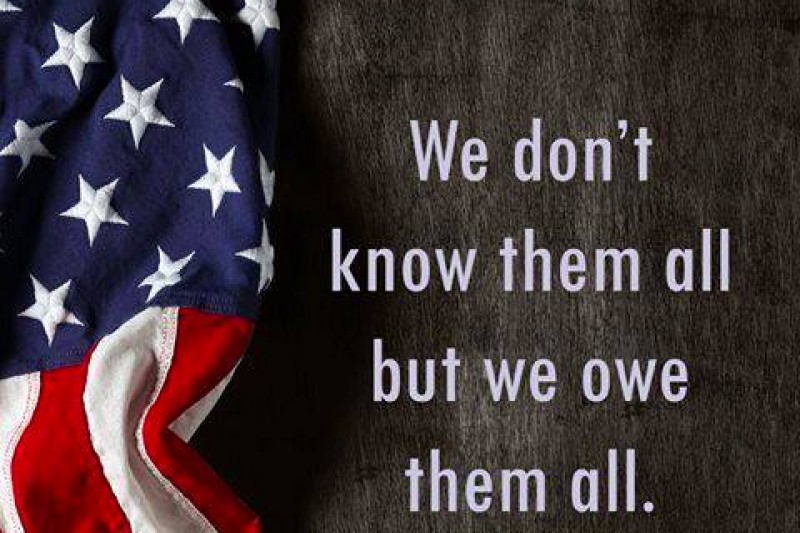
“We don’t know them all but we owe them all.”I’ve written before about an acquaintance in college who was shocked that I’d never heard the pun about this day: March Forth! It’s a date! It’s a command! It’s a date and a command!
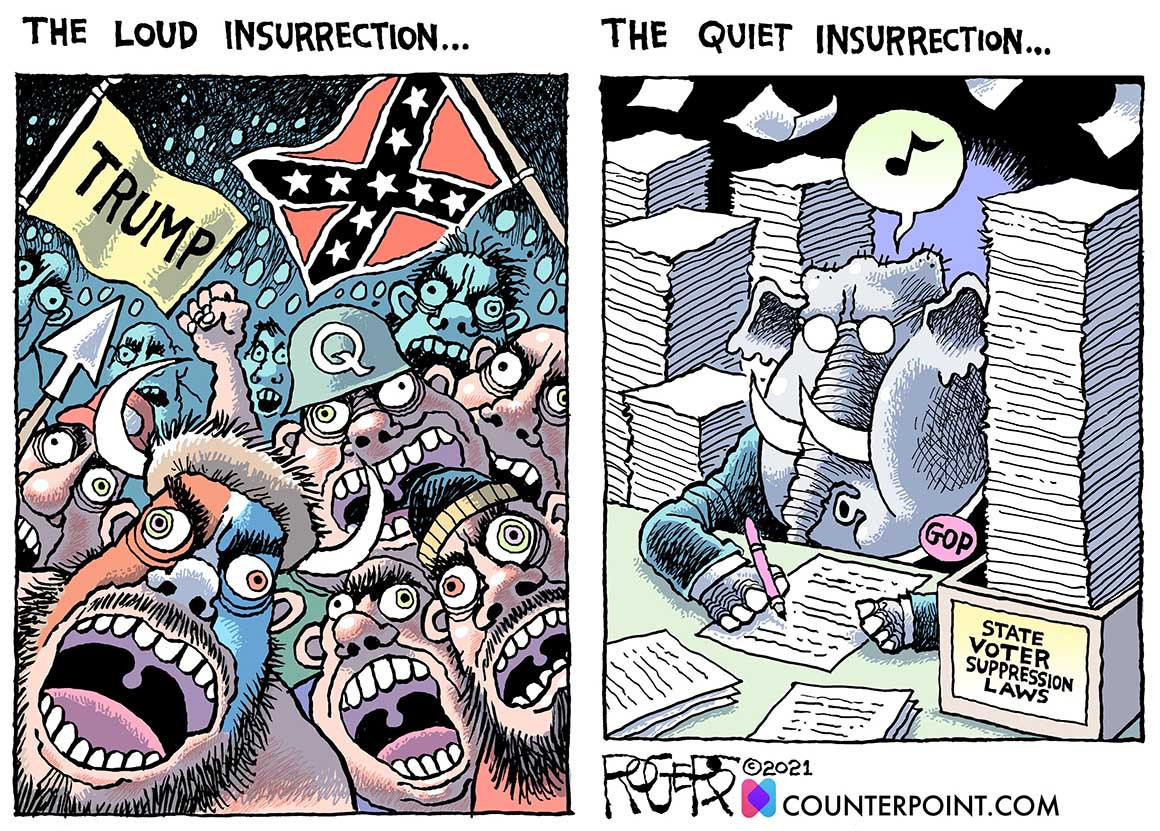
I hesitated to post this, because the QAnon fuckwits think that today is a magical day when the former Traitor in Chief will be sworn in as president because original constitutional inauguration date and a mythical law in 1871 and blah blah blah.
But I can’t let fuckwits make my life decisions for me. So I’m going to continue to observe my personal March Forth tradition. I urge you all on this March Forth, to go please donate to The National Coalition for Homeless Veterans.
You can also go to this page on the NCHV website, click on the name of your state, and find a list of organizations helping the homeless in general and homeless veterans in particular in your community. Donate or volunteer.
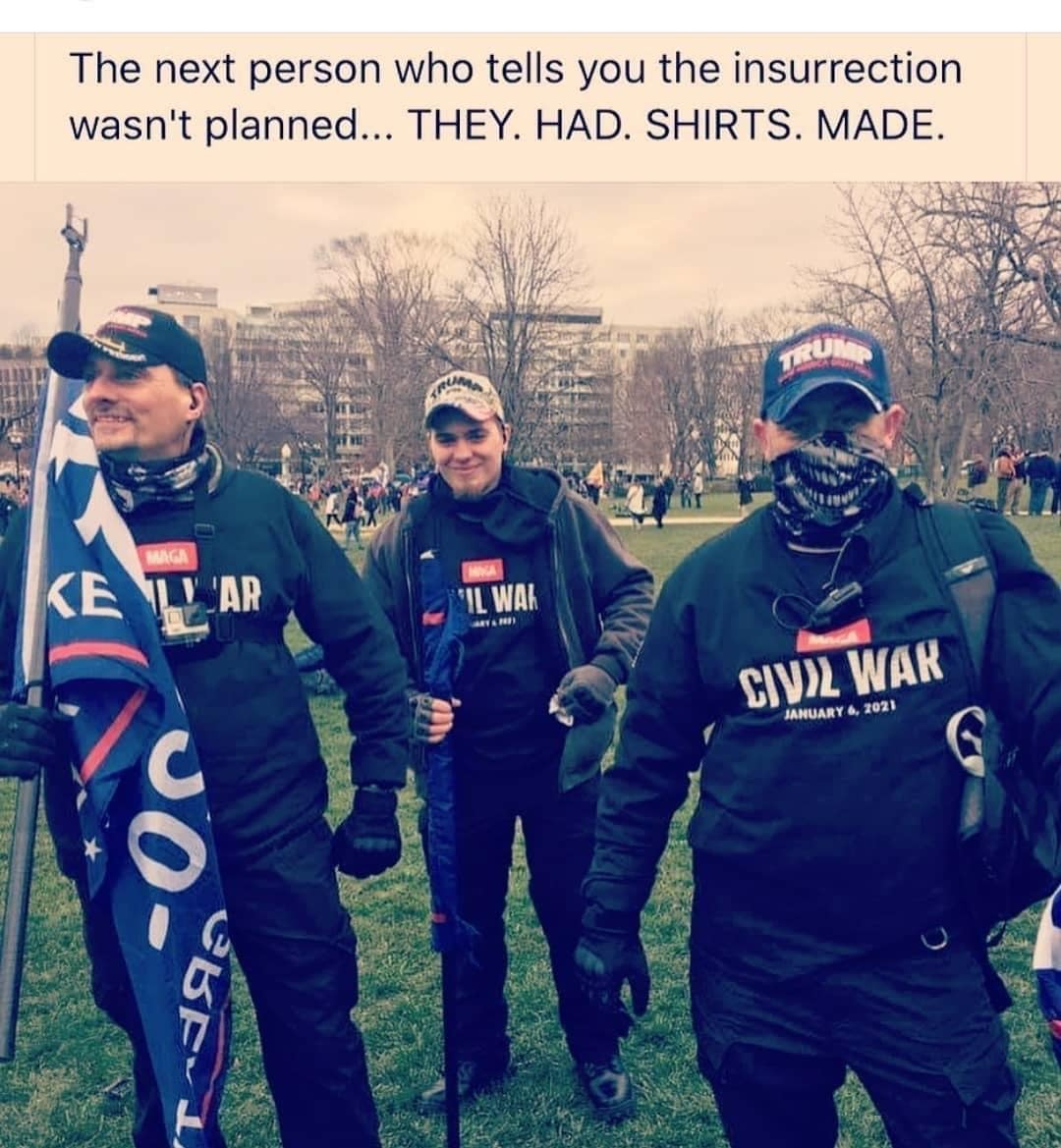
“The next person who tells you the insurrection wasn’t planned… THEY. HAD. SHIRTS. MADE. ”
How Pro-Trump Forces Pushed a Lie About Antifa at the Capitol Riot. “On social media, on cable networks and even in the halls of Congress, supporters of Donald J. Trump tried to rewrite history in real time, pushing the fiction that left-wing agitators were to blame for the violence on Jan. 6.”
Progressives push to squash Senate filibuster after minimum wage defeat – The left is channeling its frustration after a setback in their push for a $15 hourly wage.
“The Republican Party does not want unity. If they did they wouldn’t still defend the man who orchestrated the coup & refuse to punish those persons involved. Democrats need to ram every bill through the next 2 years. Stop being polite. Being polite got us the insurrection.”
“Republican argument in a nutshell: Sure, Marjorie Taylor Greene called for Nancy Pelosi to be executed, harassed a school shooting survivor, claimed no airplane hit the Pentagon on 9/11, and insisted Jewish lasers start wildfires, but, by comparison, Ilhan Omar is a brown woman.”
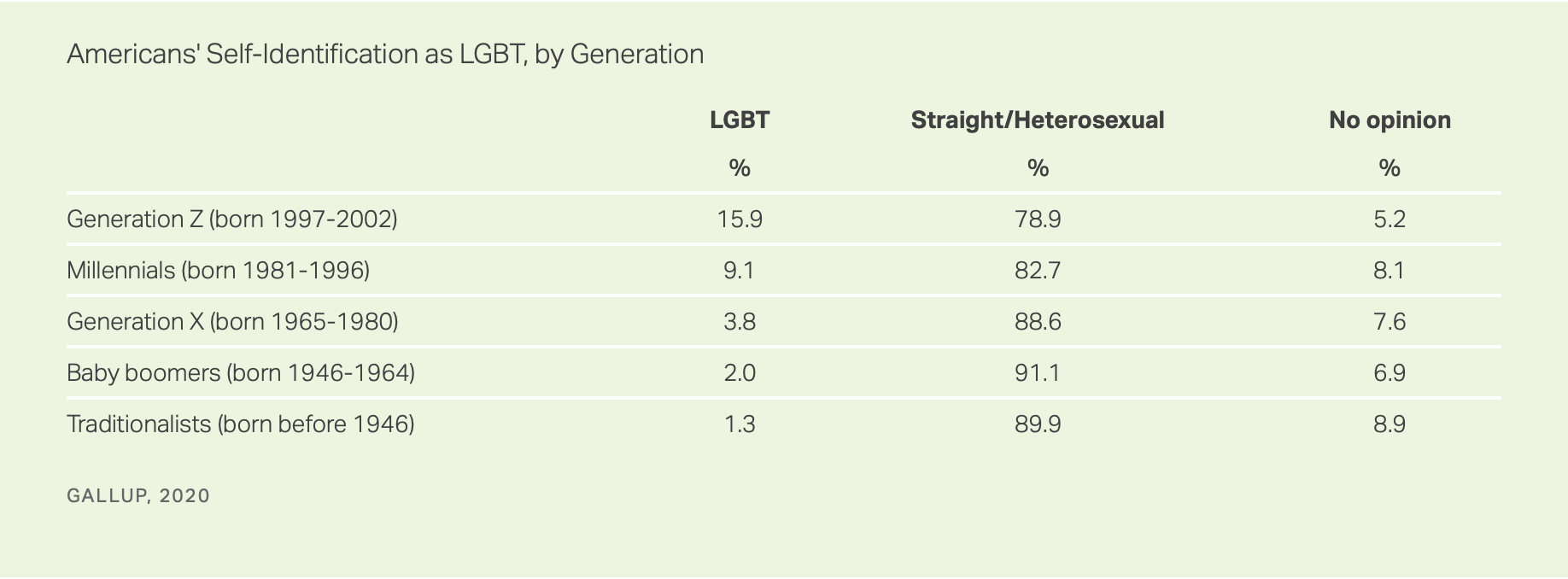
The story was published early in the week and I kept seeing various hot takes on the results. I was a little surprised at just how many people were willing to leap to the conclusion that younger people are only saying that they are queer to be cool.
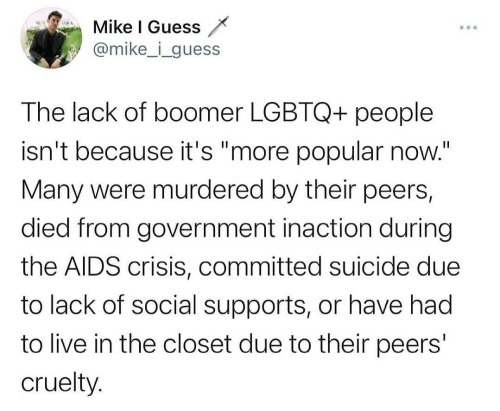
(click to embiggen)This ignores several facts that would disproportionately reduce the number of queer people in those less-young generations responding to this survey. Not the least of which is that many of them are literally not alive to respond. Twitter user @mike_i_guess sums up much of what I’d like to say on the matter, though I would use the term “contemporaries” rather than peers:
“The lack of boomer LGBTQ+ people isn’t because it’s ‘more popular now.’ Many were murdered by they peers, died from government inaction during the AIDS crisis, committed suicide due to lack of social supports, or have had to live in the closet due to their peers’ cruelty.”
—@mike_i_guess
I want to unpack that a bit. We don’t really have statistics on hate crimes before the passage of the federal Hate Crime Statistics Act of 1990, and even then crimes against trans people (or those perceived to be trans) weren’t counted until the Matthew Shepard and James Byrd Jr. Hate Crimes Prevention Act of 2010 was signed into law. But queer people have been subject to bashings and murder for decades. The longer one lives, the more opportunities there are to fall victim to such crime.
It’s been known for a long time that queer people, particularly queer children and teens, are far more likely to attempt suicide than their straight contemporaries, and the statistical analysis is that the disparity is entirely due to the stress of homophobic abuse and related issues. Preliminary studies show a slight decrease in those numbers for teens and children since about 2012, as growing acceptance of queer adults in society has given more of them hope of a happy future.
Then there are health care issues. Numerous studies show that queer people are more likely to experience interruptions in health care coverage, are less likely to be forthcoming with their health care providers, and less likely to receive the same quality of health care as their straight contemporaries. It’s a complicated result of both systemic and direct homophobia. Lots of people operate under the mistaken notions that bigotry only exists in a small number of people who actively hate others because of their race, religion, sexual orientation, et cetera, but it’s a lot more subtle than that.
For instance, let’s talk about the bit about interruptions in health care coverage. For years in the U.S. one’s health insurance (if you have it) is provided by your employer. Most people don’t get to choose their coverage, they have to take what’s offered by their employer. Which means if you get laid off or otherwise lose your job, your health coverage goes away. Queer people are disproportionately likely to be let go when a Reduction In Force hits a workplace. They are also less likely to get promotions and more likely to earn less than their straight co-workers who received similar job performance reviews and have similar experience. This is not because most managers are actively homophobic. It is a combination of a lot of unconscious processes.
For example, if a queer person doesn’t feel safe being out in the workplace, they will police themselves constantly to make sure they don’t let telling details of their personal life slip. While straight co-workers will be sharing stories about things they did with the children over the weekend, or a project they worked on with their spouse, or even issues with an ex-spouse or in-laws they don’t get along with, the closeted co-worker remains mum. The closeted working can’t talk about their partner freely or in detail. So they limit themselves to very vague generalities are just politely comment on the other person’s remarks. This is perceived as being unfriendly. Not sharing personal details after another person shares some of theirs is considered anti-social. So the closeted queer employee is perceived as being less of a team player, aloof, and so forth. This has a deleterious effect on every aspect of employment, including as mentioned above an increased likelihood of being one of the people let go if there are lay-offs.
Even more dangerous is the tendency of some health care professionals not to take as seriously symptoms reported by a queer person. I have a very personal example of this. In the very early 1990s I had a series of weird health events. It took over a year for my doctor and two specialists to figure out what the underlying problem was. Before that diagnosis, I had a number of incidents that required me going to an emergency room.
One time, I had been unable to keep any food down. Soon I was running a fever and it reach the point that even trying to sip plain wanter sent me running to the bathroom and left me curled up with horrible pain in my stomach after I threw up the water. Eventually, Ray (my now late-husband) convinced me to let him take me to the hospital.
We had one bit of good luck. As we were checking in, a nurse who just happened to be coming to the front to give the admin person some information related to another patient, noticed how bad I looked. She asked a couple of questions, then pinched my forearm, before telling the admin person, “He’s extremely dehydrated and need to be put on an IV right away.”
I was whisked off, put on an IV, had my vitals taken. Not long after another nurse came in and drew a bunch of blood, asked questions, and finished filling out the admission form. Some time later the initial nurse dropped by to say her shift was ending, but before she left she wanted to see for herself if the fluids they were pumping into me were helping. My fever was down, I felt a lot better, and apparently I looked a lot better.
Then we just waited. I don’t know how long I laid there. Ray got very impatient and went to ask when someone was going to check on us. I think I was on my third unit of fluid at that point. A doctor showed up, asked a bunch of questions, checked a few things, and told us they were still waiting for a couple of the blood tests to come in. Some time after that the doctor reappeared, alone with a nurse who changed out the fluid bag again. The doctor explained that the blood tests were inconclusive, but he suspected I had a rare form of ulcer that his caused by a particular kind of infection of the stomach lining, so he was prescribing some pills that would help with that. He said that as soon as I was rehydrated enough that I had to go to the bathroom, I’d been discharged. I should keep taking the pills for the rest of the weekend (it was a Saturday night), and see my regular doctor on Monday.
I fell asleep on the drive home. And pretty much slept through all of Sunday. I was able to keep broth, plain water, and tea down, so I thought the pills were helping.
The next morning, I left a message with my boss saying I was sick and hoping to see my doctor that day. I had just hung up and was going to look up my doctor’s phone number when the doctor’s office called us. They’d gotten the information from the hospital and my regular doctor was not happy. They wanted me to come right away, bring all of the paperwork the hospital had given me, “And if you haven’t taken any of those pills today, don’t take any more!”
My doctor wasn’t just unhappy, he was royally pissed. The pills I had been given had nothing to do with ulcers or infections of any kind. They were tranquilizers. Among the notes from the ER doctor was the phrase, “Gay male patient claims he doesn’t have AIDS.” His diagnosis was that I was probably just overreacting to “unremarkable symptoms.”
My doctor wanted to know why I had gone to that hospital instead of one that was much closer to my home (where he happened to be a resident, and would have been called as soon as I was admitted, instead of him finding it out when they pulled faxes off the machine Monday morning). I explained that my employer had recently changed our insurance plan and there was exactly one ER in the city that was considered in network. He explained that the particular hospital I had gone to had a number of doctors like this one guy who 1) assumed every gay male patient was infected with the virus that causes AIDS, and 2) there isn’t anything you can do for AIDS patients, anyway, so don’t waste a lot of time on them.
The blood tests that came back before they admitted me clearly indicated that in addition to the fever and other symptoms I did have some kind of serious infection. But the medicine prescribed wouldn’t treat any infections. Tests results that had come back after they let me go gave my doctor a good guess as to what kind of infection I did have, and he prescribed something that actually would work against. Then my doctor walked me through the process of filing a formal complaint. Which he was also doing.
The upshot was that I received a partial refund from the hospital of my out-of-pocket for the ER visit. My doctor pried a letter out of my insurance company saying that the hospital close to my house would be covered as in-network. But just to be sure, my doctor also got a letter from that hospital saying that if my insurance billed me as out-of-network they would cover the cost of the difference in out-of-pocket.
The initial incident happened in the city of Seattle, which most people think of as an extremely liberal city where virtually no one is homophobic. I was lucky that I had as my primary physician a guy who was ready to fight for his patients. Who know what would have happened if I hadn’t had him in my corner? And the doctor who sent me home with tranquilizers was simply appalled that anyone would think that he had allowed any sort of prejudice guide his decision to lie to me about his diagnosis and send me home with medicine that would just make sure I was too sleepy to do anything for a few days.
I bet to this day he would swear that he doesn’t have a homophobic bone in his body. Homophobia isn’t limited to people scream slurs while they beat you.
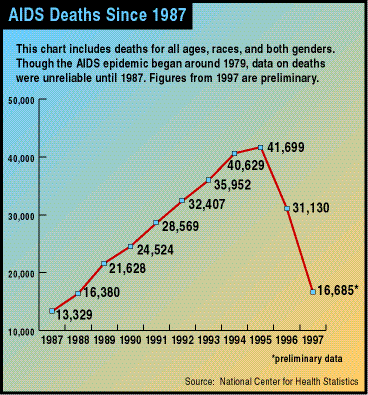
“…Though the AIDS epidemic began around 1979, data on deaths were unreliable until 1987.” (click to embiggen)The takeaway: for many reasons queers are less likely to get consistent, quality health care. They are disproportionately less likely to experience good health care outcomes. Therefore, more likely to die younger than their straight contemporaries. And that doesn’t even include the hundreds of thousands of queer men in the U.S. who died starting in 1979 due to the AIDS epidemic (which is still ongoing, but the availability of multi-drug anti-viral cocktails beginning in the mid-1990s have met it is no long a death sentence, even though there is still no cure).
Then there is the phenomenon of people so deeply afraid of being outed that even on an anonymous survey they will not identify as anything other than straight. Any reasonably friendly out gay man who has ever logged into a hookup app, a gay chat site, or similar forum will have many stories of getting hit up on by men who are married to women (usually with kids), and desperately want to have sex with other men, but only if you can be discreet and guarantee that no one will ever know. If you can get them to talk about it, they will admit that they have wanted to have sex with other men since they were teens (or even earlier), but have always been afraid to be out, and they are convinced that their lives will end if their wife and family ever found out they were anything but 100 percent straight.
I remember one particularly heart-wrenching conversation with a guy who felt he was super lucky precisely because his first (and only) child was a son, so that his super conservative and religious parents and in-laws were all happy, and he was able to just stop having sex with his wife at all after the arrival of the first baby. And significantly, his wife was perfectly happy that he supposedly hadn’t been interested in sex at all for the next about 30 years (at the time I talked to him). He had been having lots and lots and lots of sex for all those years—it was just furtive, downlow sex with other men. And I have little doubt that if he happened to be surveyed by Gallup, that without hesitation he would describe himself as straight
Now while I have met a few younger men like him, the vast majority of these downlow closet cases I run into online now are middle aged or older.
It’s more accurate to conclude from Gallup’s generational information that younger people currently feel less fear to admit their orientation. We hope that, going forward, they will also experience fewer of the issues that have caused earlier generations of queers to die before their time.
 And here we are at the second Friday in March!




 Font Folly