Category Archives: life

Wanting a better world, or, confessions of a queer nerdy survivor

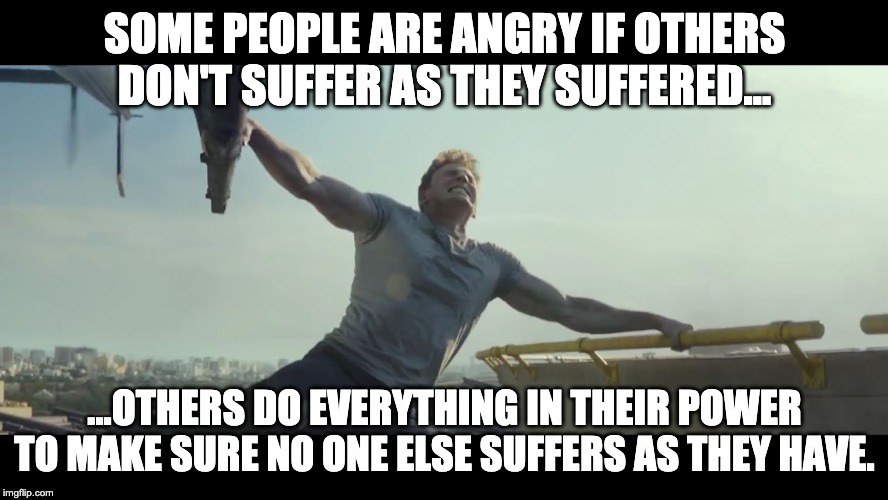
“Some people are angry if others don't suffer as they suffered... ...others do everything in their power to make sure no one else suffers as they have.”
(Click to embiggen)

It’s really hard to remain respectful in some arguments. For instance, I fully support the proposals of several progressive politicians that we make university education free. Every other industrialized country in the world does it, so why can’t we? Well, one argument that comes up again and again is, “But won’t that make all the people who had to pay off huge college debts angry?” My first response is, speaking as someone who spent many years trying to pay off his education loans, and only managed it because he was lucky enough to be an early employee of a tech start up that succeeded (so guess where 90% of my stock option earnings went?), “No, I would not be the slightest bit angry if no one else had to go through what I went through!”

My middle school wrestling coach (who was also my 8th grade math teacher) was old enough that he nearly died of polio as a child. He had to wear a leg brace the rest of his life, among other negative health issues left over from that ordeal. And while the anti-vax movement hadn’t reached its current level of penetration in society, back when I was in school the early stirrings of the movement existed. There was a story in the news about someone urging parents not to get their kids vaccinated for reasons that indicated they didn’t understand how vaccines or the immune system worked while I was his student, and so one day before we had our math lesson, we were treated to an impassioned talk from Coach about how 1) he wished the vaccine had existed when he was a child, and 2) how could any parent be so irresponsible as to not want to spare their child the pain and suffering or a preventable illness?

Almost every year during Pride Month I wind up writing at least one blog post where I say I am proud of myself and my fellow queer survivors because we survived the bullying, gaslighting, abuse, and oppression and have managed to create beautiful meaningful lives. But while I’m proud of having survived that, I don’t think any less of anyone who didn’t get bullied as much as me. What kind of psychopathic monster would wish that kind of pain on another person?

Part of the answer, I know, is that most of us have been taught from a very early age that misery builds character—that we become a better person by enduring these experiences. It’s reasonable to infer that I believe that from my comments such as that in the previous paragraph. But that isn’t quite what I mean. Misery doesn’t build anything.

It’s like exercise: you’re probably familiar with the notion that engaging in exercise which stresses the muscles will stimulate the body to increase muscle mass. That’s true enough, as far as it goes. But it isn’t the exercise which is building the muscles. It’s your body that is building extra muscle mass, and it can only do that if your diet includes enough protein, and if it has time to rest in between periods of exercise. Exercise is a specific type of stress placed on your muscles. It isn’t random. Beating a person will also stress the muscles, but that kind of stress doesn’t elicit the muscle-building activity at a bio-chemical level.

Similarly, it isn’t the bullying to built character, it’s several other things. One factor is how the person experiencing the suffering responds to it. Some survivors of abuse become abusers themselves later in life. That isn’t what people usually mean by “building character” even though it is a perfectly predictable response to being abused. Another factor is whether the person had other positive things in their life. Were they getting emotional support? Did that have someone in their life who loved them unconditionally? Were the places or times when they could escape the abuse?

I’m proud of people I know who survived bullying and worse not because of the bullying, but because they have embraced kindness and compassion despite the bad times. It’s what they did with it that matters.

Life will always have challenges. But some challenges are artificial. People forget that the very notion of money and private property are things humans just made up. They aren’t like laws of physics. We can change how the system works. And it isn’t that hard, because we do it all the time. Every time we change a tax (whether an increase or a decrease), we’re changing how the financial system works.

We live in a world where nearly 40% of the food we produce each year is just wasted. Yet there are people who can’t get enough food (or enough nutritious food) to survive. We’ve reached the point where large financial institutions are starting to panic a bit because of the sheer volume of wealth that is being hoarded in non-productive ways by the billionaire class. People are finally beginning to realize that the old truism (usually attributed to Henry Ford—hardly a progressive icon) that if workers are not paid enough to afford whatever products industries are producing, those industries will collapse.

I want the world to be a better place. I want people who are small children now to grow up and not have to struggle against problems that are entirely arbitrary and artificial—problems that we know how to fix—even though I had to fight those problems. I’m perfectly okay with them growing up in a better world than I did.

Don’t you agree?

It’s good to be prime again—birthday thoughts from a homo devil

Today is my birthday. If you want to know which birthday, let’s just say that I am the only prime number less than 60 and greater than 54, okay? When I was a kid, my birthday was early enough in the school year that I often seemed to catch teachers by surprise. It was late enough in September that, under the rules of the school district we lived in when I turned five years old, I wasn’t allowed to be enrolled until the next year. So I was usually older than the rest of the kids in my class. There were some downsides to that, but also a few upsides.

The other thing that used to be more of an annoyance when I was younger was how crowded the birthdays were among my extended family. I was born 39 days after my Mom’s 17th birthday, and only 6 days before my Dad’s 18th birthday (yes, my parents were 16 years old when they got married!). I was also born 8 days after one of my cousins (the one that has been called my almost twin since we were infants, because when Grandma was babysitting both of us strangers would think we were twins). I was born two weeks before one grandmother’s 38th birthday and ten days after one grandfather’s 40th birthday. Also within a few weeks of my birthday were the birthdays or two uncles, and a whole bunch of other cousins (and demi-cousins, and step-cousins, and cousins-once-removed and so on).

During my teen years, when we lived in the same community as most of my mom’s siblings and other extended family members on her side, from the middle of August through Christmas there were one or two birthdays every single week. And my grandmother on that side (who was emphatically the ruling matriarch of the clan) insisted that everyone needed to show up and celebrate everyone else’s special day. Which didn’t really feel all that special when it was the 6th or 9th extended family get-together of that month, you know? Not that I have a right to complain. My one cousin whose birthday is two days after Christmas would be the first to point out that there are worse times to have one’s birthday than late September.

Which is sort of a convoluted way to say that while I have always enjoyed those times that we have gotten together with a bunch of friends to have a blow-out birthday, I’m also perfectly happy to spend the day lazing around the house, reading, and enjoying the well-wishes from friends; and then celebrating with a dinner with my husband.

But to get back to the cluster of family birthdays and why I mention being a homo in the title of this post: one of the step-cousins I mentioned in passing above had his birthday just a couple of days before mine. He was the step-son of one of my dad’s siblings, and therefore didn’t join the family until I was about 11 years old. When I was in middle school he was in college, and whenever we were visiting his family, or if his family came to visit the grandparents (and therefore we all had to show up for at least part of the visit), he always found a way to tell me that I was a freak.

By which I mean he would literally say, “You are such a freak!” or “God, you really are an over-educated freak, aren’t you?” He only called me a faggot to my face once that I recall, but years later I learned that my aunt (his step-mother at the time) was constantly admonishing him for calling me a faggot while talking about me with other family members. And I want to emphasize here, he was 20 years old and when I was 13—so this wasn’t a child being cruel to another child, but rather someone who supposedly was an adult being cruel to a child. Anyway, it should come as no surprise that I didn’t shed any tears when said aunt divorced his father when I was in high school. I thought I would never have to deal with his nonsense for the rest of my life, right?

Well, now we live in a world that includes Facebook. I typically log in to Facebook no more than about once or twice a month, and only then because for some family members I care about, Facebook is the only way to reliably get news about what’s happening in their lives. And so a couple weeks back when I logged in to ping some of my fellow Seahawks fans, what did I find but a friend request from this jerk…

Now, to be fair, he wasn’t the only person during my childhood who found ways to point out that I didn’t conform to societal expectations. I spent most of my childhood trying to figure out why so many of my classmates, public school teachers, Sunday School teachers, and pastors thought that there was something wrong with me. Specifically, why so many classmates, teachers, adult relatives, and at least one pastor kept calling me a “pussy,” “sissy,” “homo,” “faggot,” “weirdo,” et al. Once puberty hit in full force, I finally knew and all of that energy was redirected to trying to convince myself that I wasn’t gay, but that somehow I could thread the needle between my sexual orientation and the expectations of both society at large and the evangelical church in specific.

So, he wasn’t really that much of an outlier among the folks I had to deal with back then, but still, I look at that friend request and have to ask, “Why?” Because when I look at his timeline, it is all pro-NRA and pro-Trump memes. Therefore I can’t imagine that he is reaching out to apologize and say that he wishes he had been more supportive of my non-conformities when I was a kid. Maybe he is, but even looking at his current photos all that comes to mind is all of those times he called me a freak and how he used to disparage me to other family members. So, no, I am not going to accept his friend request.

I spent too much time as a child, teen, and young adult trying to accommodate haters like him. As an adult, I’ve forged a life with friends who love me and accept me (even though I am far from perfect) for who I am. I don’t feel any need to make time for people who couldn’t do that when they had the chance.

I usually end my birthday posts with some words of wisdom about some lesson I have learned. This year I’ve going to paraphrase/mangle Harvey Fierstein:

There is nothing you need more from other people than love and respect. Anyone who couldn’t give you that when they had a chance, doesn’t deserve a place in your life.

Hey, y’all, it’s fall!

Yesterday was the autumnal equinox, which means that in the northern hemisphere summer is over, and fall is here! I love fall. I sometimes have described fall as my favorite season. Though I have also said that here in western Washington state we have only two seasons—Rainy and Road Construction. And I’ve also joked about Decorating Season. Regardless, I really enjoy the fall. I don’t deal well with hot weather, so even when we have a slightly milder summer as we did this year, I’m always super happy when the weather people start saying things like we aren’t likely to break 80º F this year. Besides the cooler temperatures, this also means that it starts raining more regularly, and I love the rain.

Fall means more than just a change in the weather. Until well into my twenties, fall also meant the beginning of a new school year. And while as a child the restarting of school meant dealing with bullies, it also meant new text books and new teachers. And I’m a big book-loving nerd who enjoys learning new things. So the arrival of autumn makes me think about new project, or gives me inspiration to work harder on unfinished stories and the like.

Fall is also the kick-off of Decorating Season, as mentioned above. I don’t do quite as much elaborate decorations for the various holidays as I used to, but I have hung up a glittery Happy Harvest thing on the front door, and I have a bunch of window clings of autumn leaves and pumpkins and jack-o-lanterns and black cats. So spooky things will be going up in the next few days. Then after Halloween I’ll swap out for more generic harvest and Thanksgiving stuff.

Which means that Christmas isn’t far around the corner. Which means I need to start doing a better job finding presents for people on my list!

But for now, I’m just happy that it’s finally Fall!

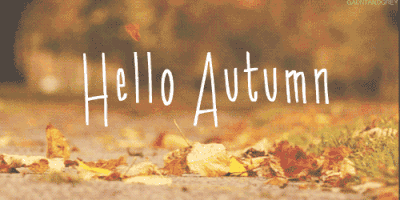
“Hello Autumn”
“Hello Autumn”

Here comes the rain again… and I couldn’t be happier!

This picture is actually from a thunderstorm in 1999 (c) Patrick Haggerty/Associated Press
I don’t deal well with warm weather. I have sometimes phrased this as, “I melt at 80 degrees or higher.” For most of the 43 years that I’ve lived in western Washington state, that hasn’t been a big problem, because we usually only get a week or so of weather in the high-80s and up most summers. The previous few years (as the average temperature of the atmosphere has been climbing), have been a different story. Last summer and the summer before we had several weeks of the high weather accompanied by smoke from wild fires in Eastern Washington and British Columbia. Smoke so severe that health officials weren’t just recommending that some people might want to wear masks, but urged everyone to wear particular masks for days on end.

It was awful! The sky was a sick yellow color, the sun was a hellish red color, everything stank of smoke, my sinuses were swollen as if the worst hay fever day was coinciding with a sinus infection, and it was so hot I just wanted to curl up in a deep freeze somewhere.

And the two things — higher average temperatures and smoke — were related. Because wild fires are both more likely and harder to contain because of the heat and how dry all the plantlike growing in the wilderness was.

This summer we had something that was more like the summers of old (which are going to continue to be less likely as we go). We had a week of really hot weather, then a few days of cool weather, a week or too of kinda hot weather, a few days of cool, and then another week of really hot weather, with a bit of a cool down to only sort-of hot weather, and so on.

Then, Saturday night, this happened: Hundreds of ‘insane’ lightning strikes bring chaos to Seatte. And while the actual storm was a bit disturbing, it was part of a big shift in the weather pattern, as we move out of the summer pattern and more toward fall. The long-term forecast is we won’t hit 80 degrees Fahrenheit
again this year, which has me cheering. And the short-term forecast is periods of occasional rain today and tomorrow, partly sunny Wednesday, and then back to rain.

I love the rain. Really. I like listening to it coming down. I like hearing the sound of tires on the wet roads. I like to go outside and stand in it for a while… I’m just really happy.

Another upside to the slightly closer to normal weather over the summer is that I didn’t have as many awful hay fever days. I still had a lot of bad hay fever days and I was taking extra meds a lot, but it wasn’t nearly as bad as the last several summers.

Of course, I’m not out of the woods there, yet. A lot of flowering plants, some trees, and many grasses will keep pollinated for the rest of this month and into October. And when the pollen starts to subside, all the ferns (which grow all over the place in our damp client) will start sporing. And then some time in November as the ferns stop filling the air with their spores we’ll have mushrooms and toadstools popping up everywhere and the air will be filled with fungal spores and molds until (if) we get a hard freeze.

But it’s a lot easier to deal with hay fever when I’m not also feeling like the air is baking my body as a walk around.

I much prefer to rain.

Set our hearts at liberty — more confessions of a queer ex-evangelical

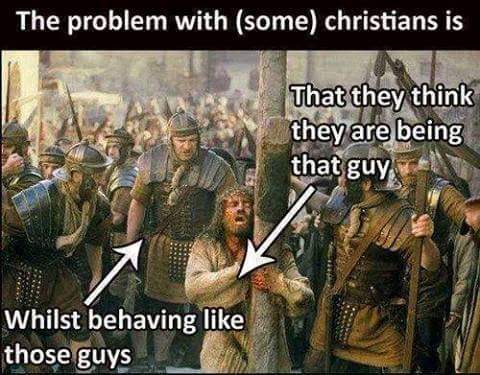
“The problem with (some) christians: That they think they are bing that guy (points to Jesus being lashed and tortured) whilst behaving like those guys (points to the roman soldiers beating Jesus).”
“The problem with (some) christians: That they think they are being that guy (points to Jesus being lashed and tortured) whilst behaving like those guys (points to the roman soldiers beating Jesus).”
Marriage, as we know, is a blessed arrangement. We also know that it’s an ancient tradition. Except, of course, exactly what that arrangement was and how it was arranged has been a constantly changing thing for all of human history. For instance, in some of the Ancient Greek city-states the tradition of male line inheritance required that if a man of property died without a son, a surviving daughter or granddaughter of child-bearing age would be forced to marry her closest male relative and that husband would then become the heir. Many societies didn’t merely allow a man to hve more than one wife—it was expected! There were fewer societies that allowed a woman to have more than one husband, but those existed, too. Even if we restrict ourselves to the Judeo-Christian traditions, remember that the Biblical King Solomon had 700 wives and 300 concubines.

Most European traditions didn’t assume monogamy was part of marriage until something between the 6th and 9th Centuries AD. Christian teachings didn’t start treating marriage as a sacrament until the 16th Century AD (despite that oft-quoted verse about “what god has joined together”). The same sort of people who quote that verse while demanding that secular law follow their tradition ignore the parts of the New Testament where the Apostle Paul condemned marriage as a waste of time, and only grudgingly said that if a man found himself so burning with lust it distracted from evangelizing should he marry.

The modern notion of marriage being about two people who fall in love and decided to pledge themselves to each other didn’t really become common until the 1700s. Now, it’s true that songs and poems and such from the 12th Century on waxed rhapsodic about courtly love, but it was considered the exception, rather than the rule.

All of these facts contradict what I was told about marriage growing up in Southern Baptist churches. Marriage, according to them, was a sacred institution that had existed unchanged since the beginning of time. And it had always been about a man and a woman who love each other and commit to a lifetime together. And once married, no matter what the circumstances, the two are bound together in love and divine grace, et cetera.

And they really did mean no matter the circumstance. I sat through more than one sermon where the pastor said that even if you make a mistake and marry the person god didn’t want you to, once you exchange your vows before god, that person is now the right person.

Despite the above, as far as I know, every single Baptist church we had ever been a member of had at least one married couple in which at least one member had been married to someone else before, been divorced, and had now re-married. And most people in the church treated the second marriage as just as sacred and eternal as the ideal they kept talking about. The usual hand-waving was the god forgives everyone who repents, and therefore if someone has committed the sin of divorce, but now has sincerely repented and pledged to make it work this time, well, god’s going to bless that.

Of course, before many members of a congregation were willing to go to that step, the divorced person would have to suffer for a while. They had to have a moving tale of the pain and heartache and regret they went through to show the sincerity, you see. Because someone had to be to blame, right? And if someone is to blame, then they must be punished. Like the women in this story: For Evangelical Women, Getting a Divorce Often Means Taking All the Blame.

That idea, that divorce is always wrong, doesn’t just hurt women who are in bad marriages. It also hurts children. I’ve written more than once about how my father was physically and emotionally abusive. When my mom shared her pain and fear with people at church, the answer was always the same: if she had enough faith, god would change dad.

No matter what evidence was presented.

When I was 10, my dad beat me on a Sunday afternoon with a broom handle while calling me the worst names imaginable. By the time he was done not only was I covered in bruises and contusions and worse, I had a broken collar bone. I had to be taken to the emergency room. Later that week—while my arm was still in a sling, I was bruised everywhere, and stitches visible on my face—our pastor looked me in the eyes and told me that if I would just be obedient and act the way my father wanted, Dad wouldn’t have to be so strict. Keep in mind, Dad had sworn off religion a few months before I was born. He refused to set foot in church and wasn’t the slightest bit friendly or welcoming when the pastor visited our home. Yet still, because of their theology about marriage and the husband’s role as master of the home, anything bad that happened to the rest of us was our fault.

I don’t know everything the pastor said to Mom, because I was taken away by one of the church ladies (who scolded me some more for upsetting my father so much he did this to me) while the pastor talked to Mom in private. But Mom came out of the meeting convinced that it was her fault. If she just had enough faith and loved Dad enough he wouldn’t be this way.

Somehow that doesn’t seem like the wise plan of a loving god, you know?

What brought all of this to mind today is this odd little bit of news I came across: Hate Group NOM Allows Web Domain To Expire. The National Organization for Marriage was at the forefront of the battle against gay civil unions, marriage equality, gay adoption rights, and several related fights for years. They poured millions of dollars into ad campaigns to defeat gay rights initiatives and so forth. They have insisted again and again that they don’t hate gay people—they are just defending traditional marriage.

The kind of traditional marriage that says a woman must stick to her husband even if he beats her and their children severely, for instance.

The organization still exists, and its president, Brian Brown, is still sending out fear-mongering email blasts to supporters begging for money. The last time the IRS got them to partially disclose their donors (they have been under investigate for many years because they never file complete paperwork or comply with court orders to disclose campaign spending) their donations (and the number of donors) had dropped off significantly. NOM used to be an umbrella organization for at least 8 different “education and advocacy” funds and a bunch of Political Action Committees, now all but two of those have been shut down. Apparently last year each of those two remaining entities reported income of less than $50,000.

I’m hoping that the website lapsing is a sign this hate group is gasping out its dying breaths. Joe Jervis, who runs the Joe.My.God gay news blog, reports: “I’ve put in the required whopping $12 bid to snap up the domain, which will redirect to JMG if I’m successful.”

If you can’t muster the empathy to tell an abused child or an abused spouse that being a victim isn’t their fault, you don’t know what “love they neighbor” means. And you can’t claim to be following a loving god while doing and saying hateful things about whole categories of people.


The title comes from the hymn, “Love Divine, All Loves Excelling” by Charles Wesley, #2 in the 1956 Baptist Hymnal. All of the Baptist Churches I was ever a member of used the 1956 edition of the Baptist Hymnal. The next major update didn’t happen until 1991, by which point I was out of the closet and officially declared myself a former Baptist.

He has no sock(puppet)s, and he must cry wolf*—bullied bullies are everywhere

April, 1958 issue of Amazing Science Fiction. Cover art by Ed Valigursky
This cover art by Ed Valigursky for the April, 1958 issue of Amazing Science Fiction shows a completely different kind of sci fi puppy than we’ll be talking about today.
I started to assemble this post about an aggrieved conservative sci-fi writer last week, but other things kept coming up, and since the kerfuffle seems to have blown over, I wasn’t sure there was much value in throwing in my two cents. But then a couple of the most recent developments in some national news stories made certain similarities between the actions of certain distressed pups and other angry white men. I decided that with so angry white men claiming to be victims, and maybe it was worth looking at a fairly inconsequential example that played out over a handful of days to get some insight into the motivations of the others. So, first, the meltdown of one of the fringe members of the melancholy canines.

Note: At no point in the following will I link directly to the angry, profanity-laden posts of the bullied bully. All links are to others talking about the situation. Some of them link to the rants, if you really need to read them.

So, a writer who markets himself** to a particular subset of science fiction fans—conservative, pro-gun rights—got really upset when some editor at Wikipedia tagged his wikipedia page to discuss possible deletion. The original article looked like it was lifted almost entirely from his own web page, and the only citations it had was to his blog and webpage. Under various editorial guidelines of Wikipedia the article certainly didn’t appear to meet the minimal criteria for keeping. I mean, come on: a bunch of the links on the first author’s page were places where you could buy his merchandise and his custom knives!

Of course, this happens all the time. Articles get flagged. There is one author’s article (that got referenced in some of the rants) that was tagged over seven years ago… and it has never actually been deleted. Part of the purpose of tagging such articles is to try to get some attention to them so that people will clean them up, add citations, and so forth.

Anyway, because of the angry screed, dozens of people went to Wikipedia and screamed at the editors, accusing them of being angry libtards targeting conservative writers. Which, given the fairly well-documents conservative bias of Wikipedia editors, is more than slightly hilarious. Said wikipedia editors quickly determined that a certain number of the angry attack accounts were sock-puppet accounts belonging to the aggrieved author, and banned his account (though the discussion continued).

Equally of note is that a large number of identifiable actual liberal members (or not-so-liberal but still despised by the aggrieved author and is allies) of the sci-fi community logged in to argue against deleting the conservative author’s page, arguing that his long publishing history, award nominations, and so forth qualified him as notable. They also helped clean up the article and added a lot of third party citations (to places like Publisher’s Weekly, Locus Magazine, Wall Street Journal, Stars and Stripes, et cetera). In other words, the people he always claims are out to get him were actually helping.

But that wasn’t enough! No, being an angry little white puppy he was absolutely certain that there is a conspiracy to bully people like him, so he started predicting specific conservative writers would have their articles flagged next. Then, lo and behold, a few hours after each time he went online to make such a prediction, the authors he named had a deletion tag added to their Wikipedia page by a mysteriously recently-created wiki account. Many of those were very quickly untagged by the administrators.

It should be noted that, in addition to the sock puppet activities that got his account banned during this kerfuffle, the author has a history of getting accounts suspended on other social media platforms for setting up sock puppet accounts to follow him and agree with him. So, applying Occam’s Razor, we can assume that his predictions are not proof he is an oracle, but rather a troll.

The upshot of all this is not only was the aggrieved author’s page spared, but so were all the others that supposedly had been targeted.

The aggrieved author and his allies are so defensive that they don’t notice who is willing to help them. I also think contributing to the problem is how incredibly insular they are. The old version of his wikipedia page and a couple of the others that were briefly flagged only had links to pages controlled by the people who were the subjects of the articles. Yeah, some of the pages had a lot of self-promotion, but I think it doesn’t even occur to them to search for mentions outside their own favorite web portals. It didn’t take long for other people to find dozens of articles outside that insular bubble that mentioned the author or his work.

But despite overwhelming evidence that the content of the articles was the issue rather than any politics, and that people they insist are enemies are more than willing to help out if they see a problem, they insist that they are victims. It’s a classic persecution complex: a delusion that they are constantly being tormented, stalked, tricked, or ridiculed.

Except I think it goes beyond delusion. Being despised is their life blood. One commenter said on one of the blog posts: “Nobody hates them as much as they seem to need to think someone hates them and that is just a miserable way to go through life.” They feel miserable because they aren’t receiving the adoration or acclaim or praise they feel entitled to. But, they can’t admit that they are to blame for how other people perceive them. They need scapegoats. If other people hate them and are conspiring against them, then their misery isn’t their fault. Yes, it is a miserable way to live, but to them it seems less miserable than holding themselves accountable.

And that brings us to other, more serious ways this need to be hated can effect all of us. It begins yesterday when Senator Mitch McConnell took to the senate floor to whine about American citizens pointing out that his actions in blocking election reform again and again despite overwhelming evidence of foreign interference in our elections isn’t in the best interest of Americans. How dare we, the citizens who of the country whose Constitution he has sworn to uphold, express an opinion about his actions! How dare we present the evidence that of actions that at least border*** on treasonous!

His actions aren’t the problem, he insists. No! The real problem is all of us haters. Oh, and any of us citing this evidence are being just like McCarthy—you know, the angry Senator who in the fifties destroyed a bunch of people’s careers and lives without ever actually presenting any evidence that they were enemies of the nation. This is an interesting twist on crying wolf, I must say.

Similarly, the alleged president is still screaming at congresspeople and people of color who disagree with some of his policies, in between is constant stream of insults hurled at various US cities, territories, states, and even people who call him ‘Mr. President’—while at the same time pushing a narrative that people who criticize the US should leave.

Again, the problem isn’t him attacking anyone and everyone, the problem is all those mean haters. And if you think I’m stretching things to compare the alleged president to the aggrieved author: remember the many times that Trump has called into various radio shows and the like, claiming to be someone else praising Trump.

So, I guess a fondness for sockpuppets is another way to spot these angry bullies who think they’re victims.

They claim to be defenders of free speech, yet they are always throwing tantrums when other people say things they don’t like.


Footnotes:

* The title is a riff on Harlon Ellison’s Nebula- and Hugo-winning short story from 1966, I Have No Mouth, and I Must Scream. In no way should this be read to infer that the late Mr. Ellison is involved in any way.

** When describing this situation to some friends I mentioned that all of the author photos available for him feature him holding a gun. And in at least one I saw, holding it incorrectly. I must state for the record that that characterization was wrong: there are also biographical pictures of him holding various hunting knives, swords, or wearing bandoliers of shotgun shells.

*** Personally I think he went way past the border when he blocked the release of the information about Russian interference just before the 2016 election. Everything since has just been him going deeper and deeper into treason.

Stop claiming that being called a bigot is worse than the actual bigotry

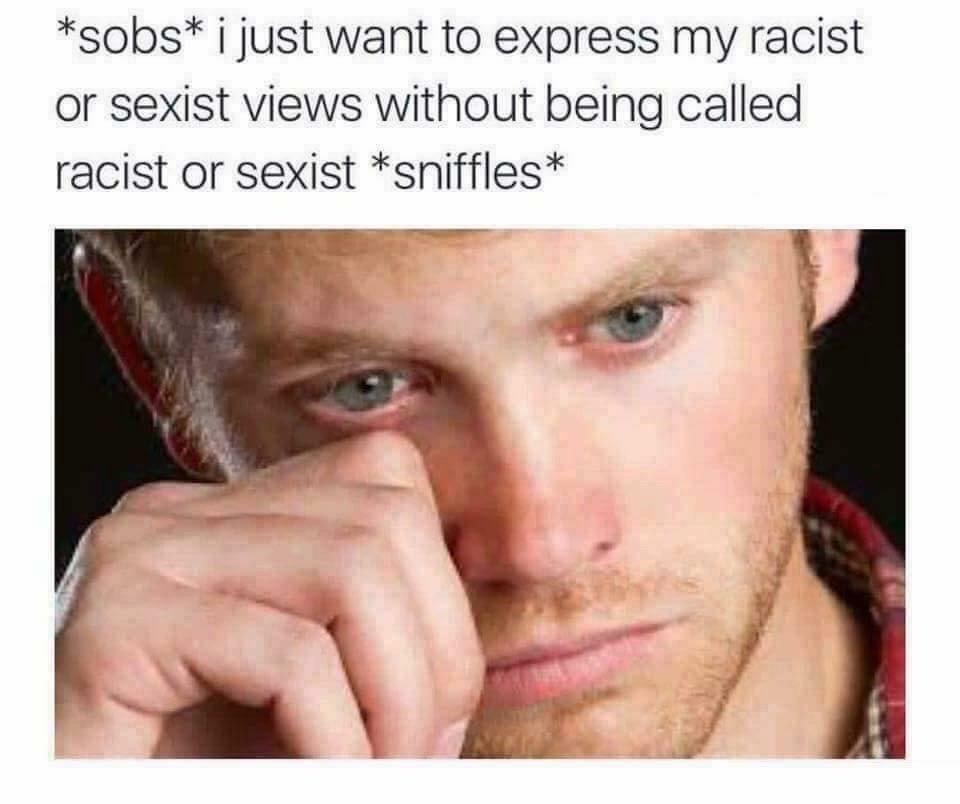
“*sobs* I just want to express my racist and sexist views without being called racist of sexist! *sniffle*”
(click to embiggen)

If you are somehow unaware of the racist thing Trump tweeted this last weekend, and the doulbing-down and defending of the words that has happened, I’m not going to sum them up. The salient facts are here: Congresswomen say Trump’s ‘openly racist’ attack is a distraction. And I agree with U.S. Rep. Rashida Tlaib that the purpose of those tweets is not really to attack the congresswomen in question, but rather to get all the news sites to stop talking about the illegal inhuman camps that our government is packing children and adults into at the border: Migrant children report sex assault, retaliation for protests at border facility and Mike Pence Toured a ‘Horrendous’-Smelling Detention Center Where Migrants Were Packed in Cages.

And what comes to the top of many of the google searches I did looking for recent stories on the camp situation were people arguing about terminology. It doesn’t matter whether you think that the camps meet a particularly carefully cherry-picked definition of concentration camp: the conditions in the camps violate U.S. law and international treaties; locking people who present themselves at a border and ask for sanctuary is illegal; it is not illegal for people to present themself at a border and ask for sanctuary; the treatment of the children in particular is immoral, unethical, illegal, and appalling.

Call them Detention Centers if you must, but they are still illegal, they are as immoral as any historical Concentration Camp, and you should be ashamed of yourself for not caring what happens to any fellow human beings, but especially children.

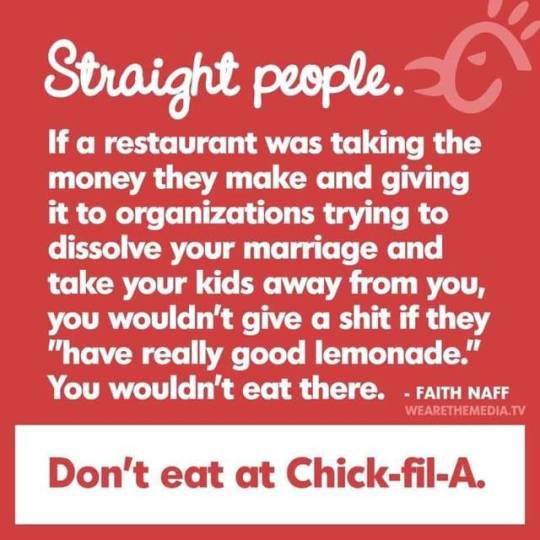
“Straight people. If a restaurant was taking the money they make and giving it to organizations trying to dissolve your marriage and take your kids away from you, you wouldn't give a if they have really good leamonade.” —Faith Naff
Do not eat at Chik-Fil-A (click to embiggen)
People who want to discriminate against others get really angry when you call what they are doing discriminate, despite that fact that a couple of years ago some of them made this argument at the Supreme Court: White House: We’d Be Fine With Bakers Hanging “No Gays” Signs In Their Windows. The weird part is, that in many states they can do just that. They are free to both discriminate against queer people and even put up signs in their shop windows saying so, and yet, virtually none of them do. And here’s why:

They want to quietly and discreetly refuse to serve individual customers who happen to be gay without their other customers finding out. They wanna hate on the down low because they know that customers who may not be gay themselves—people who know and love LGBT people, customers who don’t approve of discrimination on principal, other minorities who worry that they could be next—will take their business elsewhere.
Dan Savage

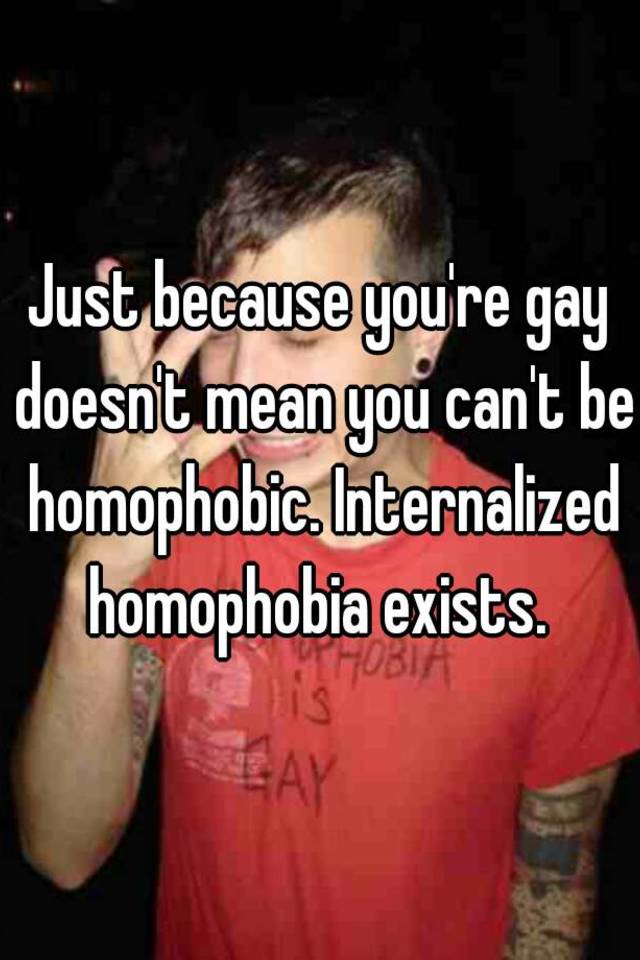
“Just because you're gay doesn't mean you can't be homophobic. Internalized homophobia exists.”
And that internalized homophobia is often turned outward at your fellow gays, particularly if they don’t conform to your idea of what gay means…
I commented on the weekend about the poorly written, nasty, inappropriate op-ed that The New Republic published about presidential hopeful Mayor Pete Buttigieg, and then removed for the site while listing a lame apology. While it was roundly condemned by straight people and queer people alike—and even some publications that no one would describe as gay-friendly—we have now reached the point where certain queer journalists are falling all over themselves to defend it. They are really leaning into the fact that several of the critics of the original piece saying that portions of it come off as homophobic. The counter argument is that, since the author of the piece, Dale Peck, is himself gay, the thing he wrote can’t possibly be homophobic. One particular op-ed that lots of people are linking to agrees that the piece was rude, and that it demonstrates a part of gay culture that many queer people are uncomfortable with, but insists it isn’t at all reasonable to describe it as homophobic because not only is Peck a gay man, but he was a gay man who was active in Act Up back in the day (which apparently means he can’t be homophobic), and the piece is simply a case of “reading” which has a long tradition in queer culture. The author of the defense piece also made the assertion that it was only straight people who were objecting, and clearly as straight people they don’t have a right to call out homophobia(?).

In case you don’t know, reading in this context is usually defined as the act of pointing out a flaw in someone else (usually publicly and addressed directly to them) and exaggerating it in a humorous way. It’s that last bit—that the exaggeration needs to be funny that I first complain about—because I didn’t find it any of it funny. And while, yes, reading is a tradition in parts of the queer community, it still is an ad hominem attack, which only belongs in political analysis if one is offering proof of several character flaws or harmful ideologies. In other words, if the piece had called Mayor Pete a bigot of some sort and offered up some evidence to back it up, then maybe doing so in the reading-style would have been appropriate. But that isn’t what happened.

So, since these folks think that only straight people object, let me be clear: I’m a gay man. I see Peck’s Act Up crendentials and raise my own Queer Nation involvement. I found the use of phrase “Mary Pete” over and over homophobic. The rest of the essay is a mess—badly written, the opposite of persuasive, and one long ad hominem attack—and The New Republic was right to pull it (and shouldn’t have published it in the first place).

Dan Savage has said many times that queer people have the right to throw slurs back and forth at each other so long as they meet this criteria: “so long as it’s used affectionately and ironically and so long as the term is embraced by the user and so long as it isn’t tossed around in front of strangers and so long as it isn’t used as an insult…”

  • Peck was not using the term Mary Pete affectionately nor ironically,
  • There is no indication Mayor Pete embraces the term “mary,”
  • This use of the slur wasn’t just tossed around in front of strangers, it was written specifically to be published in a publication whose target audience is the general public,
  • It was definitely intended as an insult.

So this queer man has absolutely no problem calling b.s. on these attempts to spin one bitter gay man’s homophobic attempt to read (and if this was reading, oh, it so missed the mark) another gay man for not being the right kind of gay as anything other than it was.

There is an argument to be made that some of Mayor Pete’s policy proposals are further to the right of center than both most Democratic voters and the country as a whole. One can legitimately critique the tepid response he had to a recent incident of a person of color being killed by police in the town of which he is mayor. And I want to point out that even Peck’s defenders aren’t certain if these were the sorts of things he was trying to imply in his essay.

But vulgar speculation about his sexual desires and practices (which was what most of the so-called “reading” was about) doesn’t belong in a opinion piece published on a serious political news site. Yeah, if you’re sitting with your friends in the local queer bar tossing back drinks and gossiping about people, that sort of commentary may get you some laughs. But it isn’t how you educate voters about issues you disagree with him about.

Why I hate hay fever reason #6508

It is that time of year…
I’ve written before (many, many times) about the frustration at being unable to distinguish a really bad hay fever day from the early stages of a head cold. For a couple weeks the pollen count has been high or very high, so my hay fever has been pretty bad all of that time. By the middle of last week, in addition to the usual hay fever symptoms, I got two new ones the usually indicate more than just allergies are wrong: my blood sugar was suddenly all over the place, and I felt so thirsty that I couldn’t seem to get enough cold water in me. Either of those usually means that my immune system is fighting an actual bug, so I figured that I’d caught a cold, right?

Friday night/Saturday morning I could not stay asleep. I would wake up because I felt too hot and kicking off blankets hadn’t helped. Then after dozing for a while I wake up and felt like I was freezing. So Saturday morning I checked my blood sugar, took my morning meds, and laid back down to try to get some sleep. By late afternoon I felt a lot better. We showered and walked to a nearby restaurant where a friend’s band was playing and had a good time. I thought that if it had been a cold, I was actually getting over it.

Again, I had trouble sleeping the next night, but Sunday went a lot better.

Sometime in the wee hours of the morning Monday I woke up with a much worse sinus headache than I had had in a long time. I was so out of it that I stood in the bathroom for a while staring at the clock and trying to remember when I had taken the last set of anti-histamines and such and whether I could take some more.

The upshot is that when my alarm went off in the morning, I did my blood sugar, took my prescription meds, took the over-the-counter allergy meds, called in sick, and crawled back into bed.

Today was the first time in nearly a week that my blood sugar was behaving. If it goes out of kilter because of a cold or flu (a very common problem for people with diabetes), it going back to normal usually means that the virus has run its course.

Today headache, congestion, and red itchy eyes are all usual hay fever symptoms, just much, much worse than normal.

So I don’t know what’s going on? Did I have a cold on top of the allergies? And then by random chance as the cold was subsidying something new bloomed and my sinuses had a melt down?

I don’t know. But please pass me another kleenex. Thanks.

It’s Pride Day, 2019 — Happy Pride!

“Love is Beautiful!”

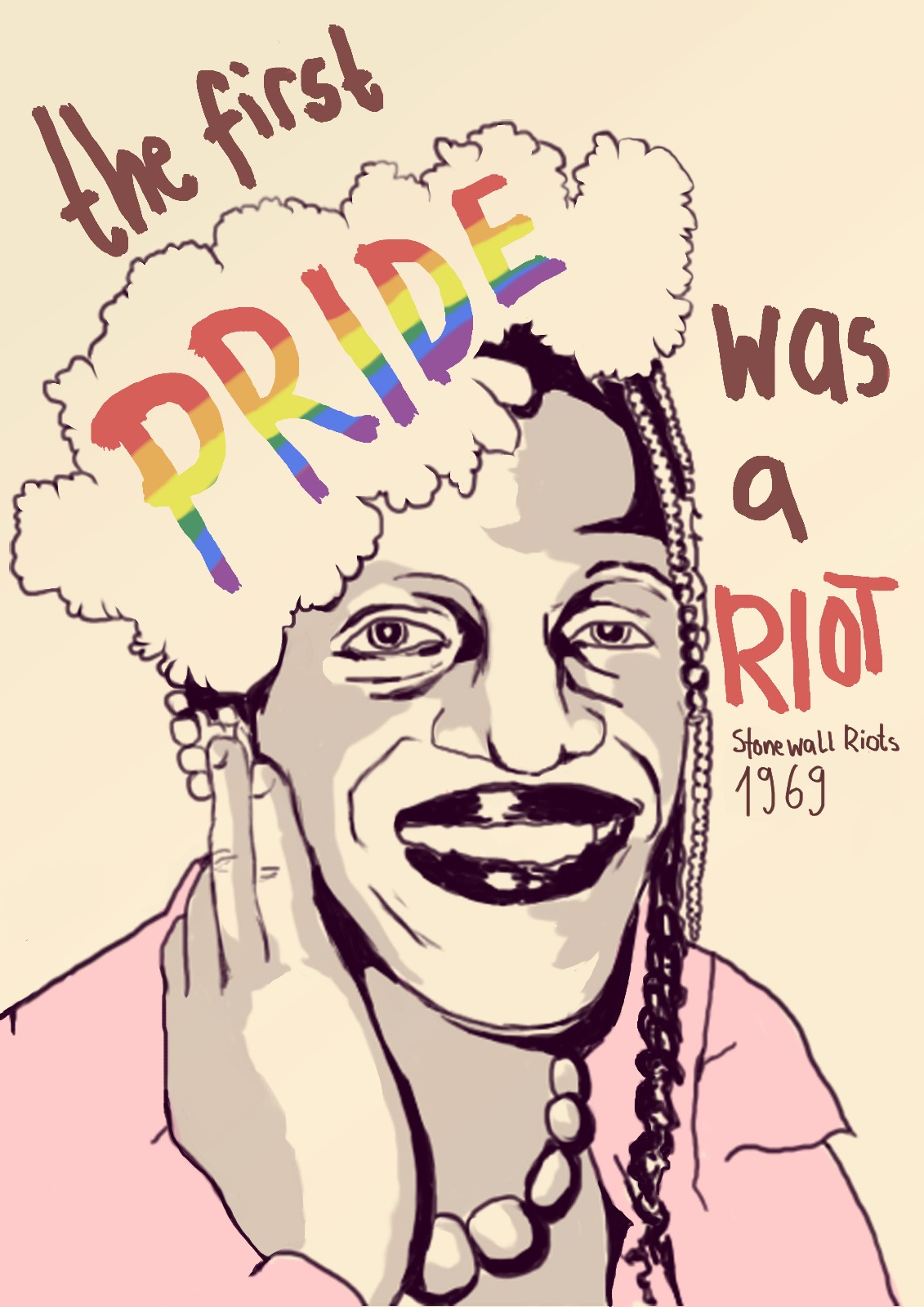
“The first PRIDE was a riot.” And a mice caricature of Marsha P. Johnson, the street queen often credited with throwing the first brick at Stonewall. (Click to embiggen)
“If your family isn't supportive of you, guess what? You're my family now. Congratulations. Drink plenty of water. Get enough sleep. Love whoever the hell completes you.”
“If your family isn’t supportive of you, guess what? You’re my family now. Congratulations. Drink plenty of water. Get enough sleep. Love whoever the hell completes you.”
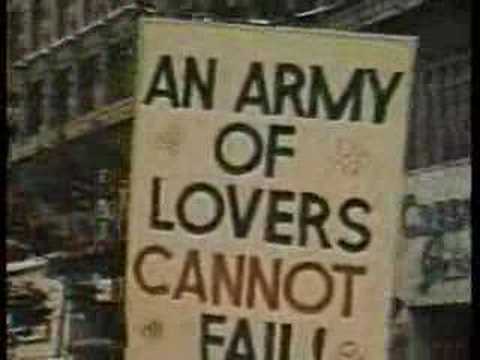
Protest sign from a photo of an early Pride march: “An army of lovers cannot fail.”
“An army of lovers cannot fail.” (Click to embiggen)
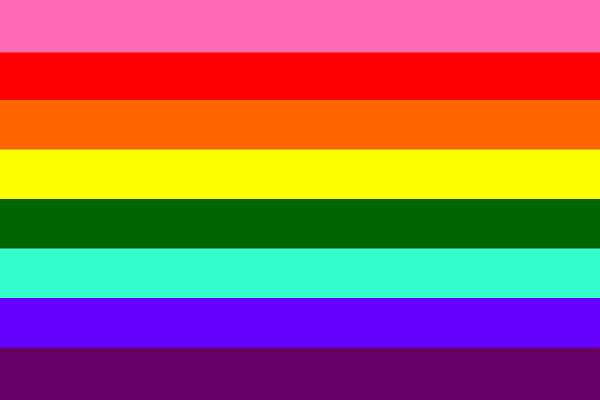
The original Pride flag designed by Gilbert Baker in 1978 has 8-stripes. Colors were removed, changed, and added due to fabric availability.
The original Pride flag designed by Gilbert Baker in 1978 has 8-stripes. Colors were removed and changed originally due to fabric availability.

“Pride equals power”

(click to embiggen)

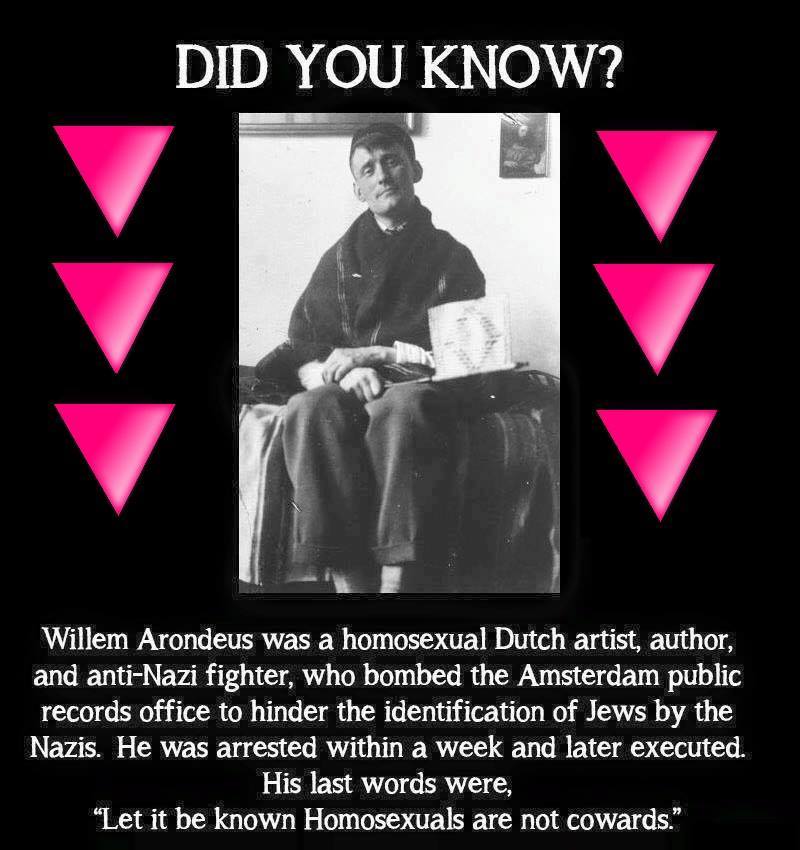
“Did you know? Willeem Arondeus was a homosexual Dutch artist, author, and anti-Nazi fighter, who bombed thee Amsterdam public records office to hinder the identification of Jews by the Nazis. He was arrested within a weeek and later executed. His last words were, 'Let it be known Homosexuals are not cowards.'”
“Did you know? Willeem Arondeus was a homosexual Dutch artist, author, and anti-Nazi fighter, who bombed thee Amsterdam public records office to hinder the identification of Jews by the Nazis. He was arrested within a weeek and later executed. His last words were, ‘Let it be known Homosexuals are not cowards.’”
“Queer & lovin' it!”
“Queer & lovin’ it!”

“United We Resist!”
“United We Resist!”
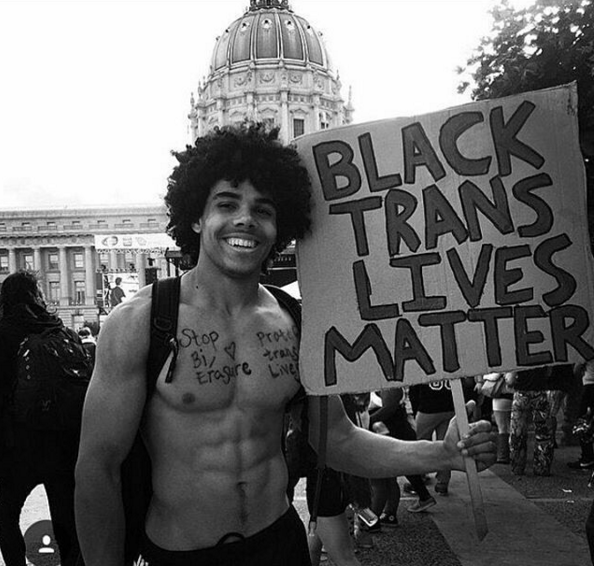
“Black Trans Lives Matter”

“Queer Pride”
“Queer Pride”
“Have a rainbow day!”
“Pride equals Power”
“The only choice I made was to be myself.”
We're all part of the queer resistance. More colors more pride.
We’re all part of the queer resistance. More colors more pride.
Happy Pride Month!

When did you know you were queer, or more confessions of an ex-evangelical homo devil

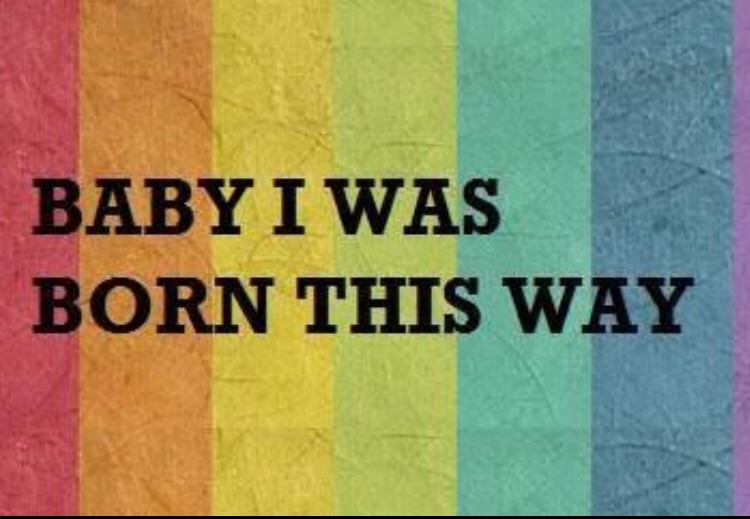
A weathered rainbow wit the phrase “Baby I was born this way” superimposed.
(click to embiiggen)

So it started with a long-time fandom friend quote-tweeting a request for those of us who are queer to tell him what age we were when we realized we weren’t straight. The simple question kicked off thousands of likes and hundreds of replies. Skimming through the many stories people tell while answering the question is both interesting and occasionally moving.

“for the queer folks out there: out of curiousity, at what age did you realize you weren't straight?” “i definitely knew really, really young that i was different but didn't know the name for it until i was watching jerry springer during a sick day from school while in 1st grade and went 'oh, that's what it's called'” “Was not expecting so many replies to this, it’s really incredible seeing the diversity of experiences in here.”
The very long thread with many replies is here: https://twitter.com/calvinstowell/status/1143168326836916225
I gave a simple reply: “Spring at the end of fifth grade-puberty hit like a freight train. I was just four months shy of my 12th birthday.” That answer is both true, and incomplete. Like many people, I knew that I was different from an extremely early age. As long as I can remember people were calling me various slurs for homosexual. I could never figure out why I was unable to act like a “normal boy,” but most of the people I knew made it very clear that something was wrong with me.

When I was four years old I made the mistake of describing a neighbor friend as my “boyfriend”—not because I had a crush on him, but because I mistakenly thought that a boyfriend was a friend who happens to be a boy, while a girlfriend was a friend who happened to be a girl. My grandmother had a hissy fit, and went on a bit of a tirade about how little boys could have girlfriends, and when we got older we would find a special girlfriend and marry them and have children and spend the rest of our lives with them. And I knew down to the bone that she was wrong, but I didn’t have to conceptual framework to explain it even to myself.

Unlike a lot of people in the replies to the original question, I knew homosexuals existed. Growing up in Southern Baptist churches I had heard many a sermon about the sexual perversions of the homosexuals. So I knew that when all of those people were calling me those names what they meant. I didn’t connect that certainty I had had when grandma was talking about my future with the evil beings described in the sermons. While I knew, in theory, what romance and sex were, I didn’t recognize the feelings I was having. I know now, for instance, that I had crushes on certain fictional male characters and actors from a very early age, but I didn’t know that the reason I so admired Mark Goddard or Robert Conrad was that I had a crush.

And I also was certain I couldn’t be gay because for most of grade school my best friend (at each of the towns we moved to) was usually a girl. Heck, some of the adults in my life referred to those best friends as my girlfriend (of which I knew the correct meaning by then). So, clearly, I liked girls, right? So I couldn’t be any of those things people called me.

And since I had been taught at church and Sunday School that homosexuals were evil and going to hell—that homosexual people were so evil that god destroyed two whole cities of them in the old testament—I desperately wanted not to be a homosexual.

Fifth grade was when everything changed. I had a growth spurt that involved literal growing pains. I was crying at night from the aches, particularly in the knees, often enough that my parents took me to the doctor. The doctor noticed my “high water” pants right away, and noted that I’d grown 4 or 5 inches in height (according to the chart) since my previous visit. During the exam he also commented on hair that was growing on parts of my body, and made some comments about other changes that might happen soon, which mostly just embarrassed me at the time.

A few months after that I woke up in the middle of the night again, though this time no pain was involved. I had a dream about kissing a boy i knew from school, and simultaneously experienced my first orgasm. I spent the rest of the night silently praying, begging god not to let me be a homo.

The next day at school was when I realized that I had a bit of an obsession with how the same boy’s butt looked in the Levi jeans he always wore. And I couldn’t stop thinking about him. I couldn’t stop looking at him.

He wasn’t one of my friends. He wasn’t one of the guys at school that I actively disliked, either. But once I had recognized the effect he was having on me, I started actively trying to avoid him. Which seemed to make the obsession worse. That was a pattern for most of the next 14 years: I would get a crush on some guy, I’d pray that god would take the feelings away and I’d try to avoid contact with them, which would only make it worse and I’d wind up crying and praying even more fervently late into the night.

I want to emphasize that I was never sexually molested as a child. I had had no sexual experiences of any kind with anyone before the night of the dream when I was eleven years old. I later had some experiences with guys my age starting around the age of 14. They were always furtive and scary and left me more convinced I was going to burn in hell for eternity.

After my parents divorced, Mom, my full sister, and I moved 1200 miles away to a town that was large enough that there was more than one high school. And I got involved with an interdenominational teen choir—where I still more than occasionally got called those slurs, but I also made a lot more friends than I had ever had before. And I didn’t have sex with any guys for three years. I even dated some girls. Okay, so two of them came out as lesbian years later, but I was trying!

The feelings, including developing crushes on guys, never stopped during that time. Despite my prayers (and the weekly special prayer meetings Mom, my aunt, and some of the church ladies were having to try to pray my gay away that I didn’t know about at the time). I would also learn later that one of the reasons that I wasn’t given leadership or musical positions I tried for in the choir was because the director was also convinced I was gay. Which just got worse when a couple of guys in the group got caught having sex. I’ve written about the hypocritical response to that previously.

It wasn’t until I was 24 years old that I was able to say, “I think I might be gay” to a close friend. The truth was, I didn’t merely think I might be, I was quite certain. But even then, I internalized enough of the self-loathing and fear that I couldn’t quite admit it, and grasped at the slimmest of straws that it might not be so. It was more than 6 years after that before I would publicly come out.

I never decided to be gay. The only decision I made was to stop hiding who I was. I didn’t always know that I was gay, but for as long as I can remember I have been. I didn’t have the context or role models as a child to know what those feelings meant, and the strong and constant condemnation from family and church gave me plenty of incentive to ignore the implications until they became undeniable.

One of the reasons I talk up the importance of Pride is because we need to be seen. There are children out there who feel the way I did when I was four years old and grandma was emphatically explaining her vision of my future. They need to know they aren’t alone. They need to know that kids like them can grow up and find love. They need to know that kids like them can grow up to be old white-haired fogeys like me and have a job, a home, a spouse, and a host of friends who love and support them.

The need to know that if they aren’t straight, they are still worthy of love.