Normally, this would be another post about news that broke after I posted this week’s Friday Five, or didn’t come to my attention until afterward, or that didn’t quite make the cut, or about a previously linked story which has new developments.
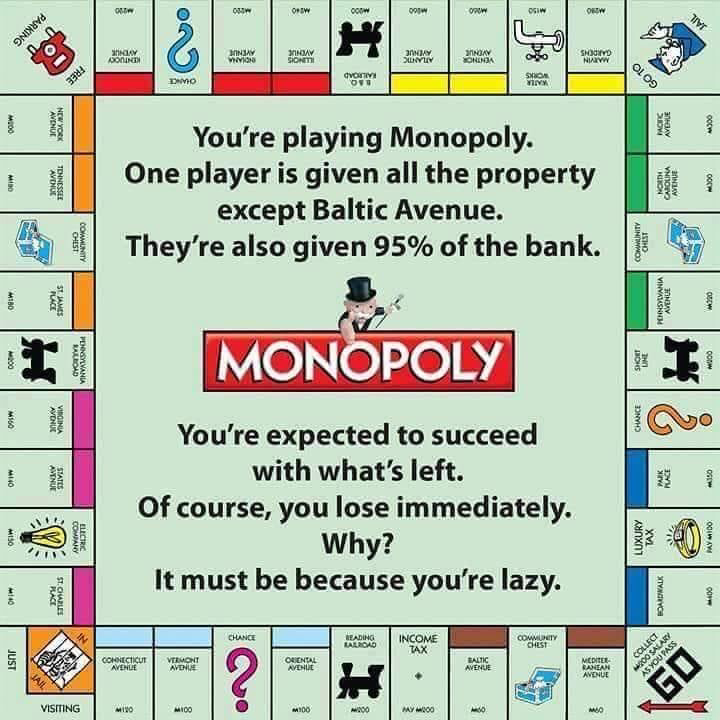
This week I’m starting with something else. A story I very emphatically did not bookmark last week after reading it, because I knew no matter how sparse my list of possible stories were by the end of the week, I didn’t want to link to it. It was yet another “Millenials Kill…” story, this one about so-called “power lunches” at swanky Manhattan eateries. I admit I only clicked on the headline when I saw because I thought that surely this was from the Onion, so I was expecting to read something funny.
No, it was dead serious. While the article did admit that part of the “problem” for these famous restaurants in downtown New York City aren’t raking in the weekday cash like they used to is because many corporations have moved large portions of their workforce to cheaper locations outside the city. But otherwise it was all about how office workers eat lunch at their desks instead of going out.
Now, to be clear, I classified as a Baby Boomer under the currently most prevalent definition of the generation. And this Baby Boomer eats lunch at his desk, it isn’t a Millenial thing. And the reason I do it is the same reason that hundreds of thousands of other office workers out there do it: our employers keep demanding more and more productivity from a smaller work force. That’s it. If I take the time to leave the office, walk to a nearby restaurant, order food, wait for my meal and eat it there before sauntering back to the office, that means I have to stay even later that I already do to meet my deadlines.
Also, like most Americans in the workforce for the past three decades, while I do occasionally get a raise, the raises don’t ever seem to get ahead of the increase in the cost of living. And because the length of time between raises keeps getting longer, well, I can make my own lunch a whole lot cheaper than it will cost me to got out at lunch.
The other issue is that these “traditional power lunches” were never attended by rank and file office workers. Older white male executives and younger ambitious white men who wanted to become executives were the vast majority of people at those three-martini lunches.
I’m just going to start ranting angrily if I keep going, so instead here are two stories (one from nearly a year ago that I’m pretty sure I included in one of the Friday Five posts then) which cover things quite well:
Usually I have a lot to say about the other stories I include in a Weekend Update, but I’m doing NaNoWriMo at the moment, so here are a few quickies:
Beto O’Rourke Packing Up His Air-Drumsticks And Your Diner’s Countertops And Going Home. Don’t get me wrong, I liked Beto as a Senate candidate. And clearly, after the mass shooting in his home district when he found his voice and demonstrated a lot of spine in the gun control topic, I became more fond of him in the Democratic debates. But I think the three-term Congressman could serve the country better as, say, a Senator from Texas (the climate is going to be more favorable to Blue candidates this next time against John Cornyn that it was last time against Ted Cruz). He’d probably make a decent cabinet secretary, and he’d look lovely standing beside President Warren or President Harris as veep. I’m just sayin’.
It continues to be winter-cold, without any rain. Which means the spore counts keep climbing. Having hay fever when it’s cold is never fun.
Anyway, welcome to the Friday Five. This week I bring you: the top five stories of the week, five stories about deplorable people, five stories about the impeachable one, and five videos (plus a thing I wrote).
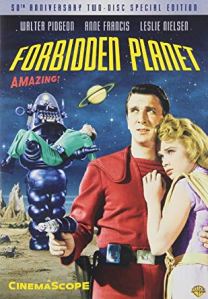
Forbidden Planet!I have written many times about my problematic relationship with scary movies. They give me nightmares, and I’m the kind of person who, while having a nightmare, climbs out of bed, running around waking up everyone I can find, frantically trying to explain the horrific danger we’re facing and how we have to come up with a plan to deal with the threat now. The very first movie that caused that reaction in me is a movie that many people don’t think of as a scary movie: the 1956 science fiction film, Forbidden Planet. Many people think of Forbidden Planet as the ultimate science fiction movie. Nearly every sci fi movie and series since its release has, whether consciously or not, copied its template. Which isn’t a bad thing, in my opinion. And most people don’t think of Forbidden Planet as a horror film, but…
So, in 1971 Forbidden Planet was shown on U.S. network television for the first time. I’ve mentioned many times before that my mom was a sci fi fan from way back. My dad was more of a spy and western fan, but he also liked some science fiction, so he didn’t object when Mom wanted to watch this show. The broadcast was a few months before my 11th birthday. The whole family watched the show together, though I think than my sister, who was 6 years old at the time, fell asleep before it was over.
I really liked the show while we were watching it.
But several hours later, I was standing in the hallway, very confused, because my mom had thrown a glass of water in my face because I had gone to sleep, and then got out of bed and found my parents and started jabbering about the monster that was trying to kill us. This was, as far as my family and I know, the first time I sleepwalked.
So, let’s get back to the movie…
The movie starts on the bridge of a spaceship where Commander John J. Adams is in charge. The movie is careful never to mention any nationality for the military organization in which the crew serves, though at a later point in the film they send a report back to Earth and await further instructions. They’ve been sent to a planet called Altair IV where a scientific expedition was sent many years before, but lost contact.
As Adam’s ship approached the planet, the make radio contact with one of the scientists from the expedition, Dr. Morbius. Morbius warns them not to land, saying he is the only survivor, that the planet is very dangerous, and he can’t guarantee their safety. Adams has his orders, and lands anyway.
They learn that there are two humans on the planet: Morbius and his daughter (named Altaira) who was born after the original expedition landed. Morbius explains that after the discovered the remains of an advanced civilization of aliens called the Krell, members of the original expedition had been killed off mysteriously by some planetary force, until the a small group tried to flee the planet to return to Earth, but the ship was vaporized. Morbius and his daughter have been living alone with their very helpful robot, Robbie, peacefully ever since.
As far as I have been able to tell, Robbie was the first robot in any film to be portrayed with an actual personality, rather than being a walking tin can that mindlessly followed his instructions. One of my favorite scenes with Robbie is when, later, Altaira wants Robbie to make her a dress covered with star sapphires, and Robbie explains that all of those sapphires will take many weeks to synthesize, whereas he could make her a dress covered with diamonds in a few hours.
Back to the main plot: Dr. Morbius is very evasive with the Commander and his crew. He does show them some of the remains of the Krell civilization, including thousands of underground nuclear reactors that are still generating unimaginable amounts of energy for no known purpose, an education machine, and other devices that Morbius still doesn’t understand. But because Morbius’s translation of the Krell records reveal that every last member of the race was destroyed by a mysterious force they couldn’t understand, and Morbius’s shipmates were destroyed by a similarly mysterious force, he keeps urging the commander and his crew to leave. And the first night the ship is on the planet, and invisible monster sneaks into the ship, kills a crewman, and disables the hyperspace communicator, making it impossible for the next several days for the ship to contact Earth.
And let me tell you, the way the showed impact of the invisible monster, who was so heavy his feet bent the metal of the stairway into the ship, was very, very creepy!
The plot continues, with one crewman flirting with (and clearly hoping to take advantage of) the very naive Altaira. The commander intervenes and sends the crewman back to the ship, but he also scolds Altaira for wearing revealing clothing around men. Which confuses her.
When Morbius is no help with explaining the monster, the commander orders his crew to take additional precautions. Each night the ship remains on the planet, the invisible monster attacks again, and each day the ship erects more elaborate defenses, including building a huge blaster. When the monster is trying to get through the force fields and being fired on my many weapons, we get a sort of aura-like outline of the creature, the only time it isn’t invisible. But all of the tech of the starship is unable to defeat the creature.
Eventually, the commander and his closest friend on the crew (who everyone calls “Doc” though it is never clear whether he is the medical officer or if the nickname is because of some other scientific expertise) have become convinced that the monster isn’t some ineffable planetary force. They decide that one of them needs to use the alien “education machine” which Morbius has warned them away from. Morbius has explained that several members of the original expedition has tried to use the machine, and all who had tried died, except Morbius. The commander winds up distracting Morbius while Doc get to the machine.
The machine does kill Doc, but as he is dying, he is able to tell the commander enough to solve the mystery.
There is a dramatic final confrontation, in which it appears that the mysterious force no longer thinks of Altaira, Robbie, or Morbius as beings to protect rather than destroy. And again, the way supposedly impenetrable Krell metal walls were being battered in by the monster was intensely scary! Commander Adams forces Morbius to face the truth. Which results in Morbius’ death. The ship is able to leave the planet, carrying Altaira and Robbie back to Earth, and the entire planet self-destructs after they leave.
Most modern analyses of the movie, if they acknowledge any problematic content at all will note the one and only woman in the cast is less than a full-fledged adult and the only agency she is granted in the plot is whether to remain loyal to her father or switch allegiance to her new romantic interest, Commander Adams. And this is problematic enough. However… all of the men in the story view Altaira as little more than an object that one of them will possess. It is precisely because Morbius perceives that he is “losing” his daughter to the commander that sets the final battle in motion. All of the other characters in the story are vying for the attention of the one and only woman.
I should say, all of the other characters except Robbie the Robot.
I’ve never seen any critic acknowledge that, in some ways, Robbie the Robot is Altaira’s Sassy Gay Friend. He’s clever, he is devoted to Altaira but not interested in her in a romantic way. He cleans the house, prepares meals, and takes care of all the domestic tasks in the Morbius household that would traditionally be fulfilled by a woman in a non-science fiction film of the era, right? One of the roles of the asexual or effeminate man who was the witty friend of the heroine in movies of the 40s and 50s was to have insight into the motives and character of other people that the protagonists did not. So it should be no surprise that in the climactic battle, Cammander Adams uses Robbie’ perceptions of the situation to convince Altaira and Morbius of the true nature of the invisible monster.
It was many, many years later before this queer geeky nerdy child realized that at least part of the reason my favorite character out of this classic sci-fi movie was Robbie the Robot was precisely because he was the only character who wasn’t vying for the attention of a woman. And while many other aspects of the story resonated with me, none of the other characters rose to the level of identification as the robot. So this queer child, who had nightmares because of the main plot, still found models for my possible futures among the supporting cast of this movie.
Several years ago I was on a writing panel at a convention. I don’t remember the exact title of the panel, but it was about what happens when you’re stuck or otherwise can’t seem to get a story moving. I was supposed to have a co-panelist, but they had to cancel at the last minute. The crowd in the room wasn’t really big, so I suggested we do something a bit more interactive. I briefly explained who I was and that most of my writing advice came from (at the time) about 12 years of reading the slush pile for a semi-prozine I was involved with. Then, rather than throw it open for any question, I asked for examples of times they had been stuck, and gave every in the room an opportunity to respond to it if they wanted.
This got a nice back and forth going.
One guy described how he’d had this story he’d been working on for a long time where he kept writing a few sentences or paragraphs about his main character getting the news of a death in the family, which was supposed to kick the plot off where the character would meet another character and they would both get involved in looking into what had happened. His problem he said, was he never knew how to get the main character from getting the news to meeting the other character.
I (rather flippantly) ask, “Why not just hit return and then type, ‘Later that day…’ or ‘A week later…’?”
And he looked stunned. “But don’t I have to explain how he got there?”
“You only have to show the reader things that move the plot forward. You can skip the boring stuff. You can jump past interesting things that happen to the character but aren’t important to the plot. Just jump ahead. Particularly in a first draft. During the second draft if you realize there is something important that you skipped you can add it then. But don’t do stuff like that until you get to the end of your first draft.”
Someone else in the room asked a question about the plot which made it clear that they thought plot was merely a list of everything that happens to the character. So I explained that plot is a problem, mystery, or challenge which confronts the protagonist at the beginning of the story, is resolved at the climax by the protagonist’s own actions, and is the thread the ties everything that you write about between those events together. It isn’t that every single thing the character does is part of the story, right? How many action movies show the characters going to the bathroom, for instance?
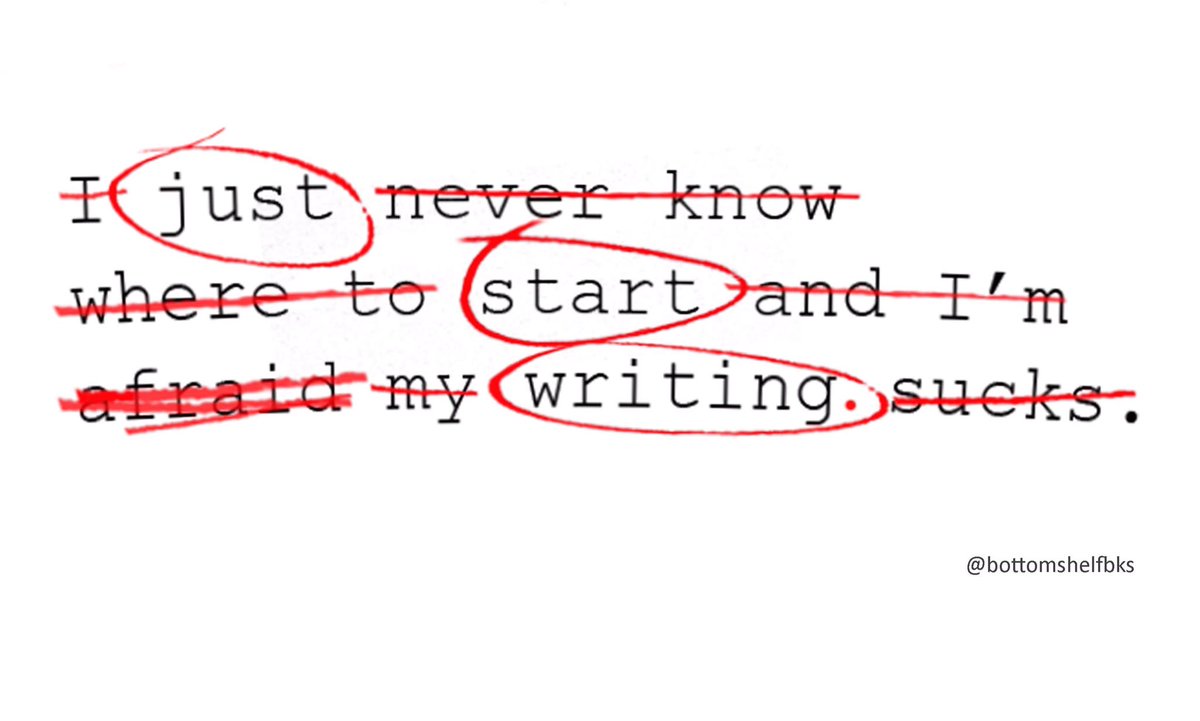
What a lot of people call writers’ block is a combination of indecision born out of the fear that what you write isn’t going to be perfect. So the first thing you need to do when you find yourself stuck is to realize that nothing anyone writes is ever perfect. Especially in the first draft. Your favorite book in the whole world was almost certainly a terrible mess in the first draft. It isn’t a great book because the author wrote exactly the perfect opening line, and then wrote every single sentence and scene that followed perfectly.
It’s great because the writer blundered along through the first draft until they had the skeleton of the story laid out before them—but not with all of the bones in exactly the right place. Then, during rewrite, the author got the bones arranged properly, added flesh to the bones, and eventually they had a living, breathing story that was ready to grab some readers and say, “Come one! Let’s have an adventure!”
Don’t let that fear of the imperfect prevent you from plunging in. Just start writing. And then keep writing until you reach the end.
Shakira – Try Everything (From “Zootopia”) [Official Music Video]:
I’m participating in National Novel Writing Month (NaNoWriMo) once more. If you don’t know what that means… well, in the past I have quoted from the NaNoWriMo website to describe what the event is, but during the last year they migrated their old site and forums to a new host (and in the process did a re-design), and there is no nice way to say this: they have really messed up their web site. It took me a very long time poking around the website to find where they have moved the “What is NaNoWriMo” information to… don’t get me wrong, there are links called that in their menus, but if you don’t already have an account set up, those links don’t take you to pages that actually answer the question. The closest I could come to the old information is this:
…each year on November 1, hundreds of thousands of people around the world begin to write, determined to end the month with 50,000 words of a brand-new novel. You may know this mass creative explosion by the name National Novel Writing Month, or NaNoWriMo
The basic idea is that thousands of us all over the world will, starting on November 1, attempt to write 50,000 words of either a brand new novel, or to continue one started previously, or to revise one started previously. People who sign up for accounts can join regional forums, set up NaNoWriMo buddies to encourage (or compete with) each other, attend in-person or virtual write-ins, and so forth. It can be a lot of fun, particularly if you jump in with the notion that you’re just trying to get the first draft—no matter who bad it is—down so that you can edit and rewrite later.
Another thing about the migration is that everyone’s Buddies have disappeared. I went through the archive site and sent invitations to people I used to be buddies with to try to re-establish my old network. But a lot of folks haven’t logged in, yet, this year.
Anyway, I have set up my project for this year. If you are doing NaNoWriMo this year and want to add me as a writing buddy, please do so! My username on NaNoWriMo is “fontfolly” just as it is here at my blog and on twitter.
A lot of people have linked to the comments by people like Martin Scorsese, Francis Ford Coppola and so forth denigrating the modern superhero movie as not being “real cinema”, not being narrative, having more in common with an amusement park ride than a “proper movie” and so forth. And many other people have posted counter arguments, but most of the counter arguments I was thinking were being a bit too timid in their defense. And then Cora Buhlert weighed in: Old Directors Yell at Clouds – Pardon, Superheroes. And she nailed it:
My initial reaction to Martin Scorsese’s remarks was, “I could say the exact same thing about his films. I tried to watch them, I really tried, and I’ll never get the hours I spent sitting through Taxi Driver or Gangs of New York back. But I’m sorry, I just cannot connect with the kind of white dude arseholes who are the protagonists of Scorsese’s movies.” I may never have been a superhero, but I find Iron Man, Thor, Hulk, Black Widow and the rest of the gang much more relatable than anybody in Taxi Driver or The King of Comedy or Goodfellas or Casino.
I mean, really, it’s quite rich for a guy like Scorsese to accuse any other filmmaker of not being able to create a narrative. I had immediately gone to Gangs of New York myself as the perfect example of the kind of failed storytelling usually defended with “but that’s what happens in real life!” The difference between fiction and real life is that fiction has to make sense. That’s what narrative actually means: making sense out of events by tying them to a thread of meaning. Gangs of New York (and every other Scorsese film I’ve sat through) set up all sorts of narrative threads, places metaphorical guns on mantlepieces, that are simply ignored or forgotten in an ending that can be boiled down to: “Life is unfair and meaningless and you, the audience, are stupid for not realizing it.”
Buhlert makes some other points that I was thinking while reading the various screeds:
Because for all their flaws, today’s superhero movies are a lot more diverse in front and behind the camera, then the highly touted movies of the New Hollywood era, which were made by and for a very narrow slice of people. It’s no accident that directors, actors and characters of those movies are all white and male and either Italian-American or members of some other immigrant group (the characters in The Deer Hunter are all descendants of Russian immigrants). There are a lot of people who never saw themselves reflected in those movies – women, people of colour, LGBTQ people, people who are not American – and who likely never much cared for those movies either, because the big Scorsese or Coppola fanboys are mostly white dudes themselves.
Not all superhero movies are diverse. I mean, I was hardly the first person to point out that several of the franchises featured blond-haired, blue-eyed protagonists who were playing by and white actor named Chris, for goodness sake! But just as one example, the best Captain America comics (And the movie moments) have been the ones created by writers who never forget that inside that supersoldier body, deep down, Steve Rogers is still the not-able-bodied asthmatic kid who understands what it means to be powerless and to be bullied, and who has the empathy and hope necessary to fight for the powerless.
And…
Now I am a comic fan of old and like superhero movies. And so the current golden age of superhero movies is a dream come true for me, where I finally get to see plenty of characters on the big screen that I never expected to see there, in well made movies with excellent actors, great production values and stories that capture what made the comics so compelling. However, I also realise that not everybody likes superhero movies and I know the pain of cinemas being full of some genre of movies you don’t like. After all, I felt the same during the glut of westerns (and anybody who hates superhero movies should remember that the glut of westerns lasted from the silent era into the 1970s, i.e. almost fifty years), the glut of Vietnam war movies in the 1980s (and WWII movies in the 1960s), the glut of gangster movies in the 1970s/80s (and the 1930s) or the glut of romantic comedies in the 1990s. Oddly enough, however, I never hear the usual suspects complaining about too many westerns or war movies or gangster movies, though romantic comedies, Star Wars knock-off space operas and even the mini-trend of YA novel adpatations approx. ten years ago all got dinged. Gee, I wonder why that is.
It’s another example of that phenomenon that I called “applause from the wrong crowd.” Movies that are aimed at that narrow slice of cishet, white, male, able-bodied people are “proper cinema” and anyone in the audience who isn’t a member of that demographic is expected to watch with quiet admiration. We’re not supposed to expect to see our own stories on the screen. We’re not supposed to expect to see our issues addressed in the tales on screen. And if somehow something slips through that does include us, or tell our stories, we’re not supposed to cheer it loudly and enthusiastically.
If I keep going, I’m just going to devolve into ranting on my own. Buhlert makes a lot of other good points about the kinds of stories that superhero comics and films tackle well, the kinds of movies that are being squeezed out by the current focus on blockbusters, and other topics along the way. You should really go read the whole thing.
It is time for another post about news that broke after I posted this week’s Friday Five, or didn’t come to my attention until afterward, or that didn’t quite make the cut, or about a previously linked story which has new developments. As usual I have some opinions that I wish to expound upon regarding this stories.
First: New Poll Finds Voters Strongly Oppose Employer Insurance. This is something I was complaining about during the first couple of Democratic Presidential Candidate Debates: there is a myth perpetrated by conservatives and so-called moderates that the American people absolutely love their employer-provided insurance. And it’s not just the politicians: the moderators at the first couple of debates, for instance, kept framing questions with that assumption as if it were a fact. I was so happy when finally one of the candidates emphatically asserted that almost no voter they have talked to likes their insurance.
What is true is that fear-mongering paid for by the for-profit insurance & pharmaceutical industries (and amplified by the politicians in their pocket) has a lot of people fearing that universal health care will be even worse than what they have now. That’s not the same thing as being happy with their current plans.
Second, this should come as no surprise: New polling suggests that Trump’s evangelical base is totally unified behind the president, no matter what investigations might reveal. I continue to be irritated that people who want to take aqay my legal rights because of some badly translated and cherry-picked parts of the Bible also support a politician whose policies run explicitly counter to every single thing that Jesus is actually quoted as saying in that same holy book. Although it is worthwhile to look closely at the statistics, here. Some people having been crowing about how 99% of evangelical Christians support the president and oppose impeachment. Except that isn’t what these polls show. The 99% is only true of white people who also identify specifically as evangelical AND Republican. When you step out of that demographic and look at other evangelicals, well, the numbers change. And that 99% was from polls taken a few weeks ago. Other polling shows an across-the-board shift in all demographics of more support for impeachment as more information comes out.
I don’t expect the white evangelicals who were chanting “Build the wall” are ever going to abandon Trump, but they’ve also clearly shown that their bigotry drives their decisions more than the actual words in the Bible.
While we’re on the topic of people who quote the Bible but don’t actually follow it: Falwell preparing legal battle against reporter after “smear campaign”. I’ve written so many times about the real estate that he has purchased for the former pool boy who spent a lot of time under questionable conditions hanging out with Falwell and his wife. And about the real estate he ordered Liberty University to essentially give to another former pool boy and personal trainer, one who we know that Falwell was texting pictures of Mrs Falwell in kinky sex gear (we know this because he accidentally group-sent one of the sexts to nearly all of the employees of the non-for-profit ministry of which he is head). And about the blackmailer who had compromising photos of Mrs. Falwell (and perhaps others) who was paid off my Trump’s lawyer conveniently a few weeks before Falwell shocked everyone by endorsing Trump instead of fellow evangelical Ted Cruz. And so on and so on.
So Falwell tried to get the FBI to investigate some of the former employees who spilled the beans about this questionable behavior (which, remember, is being subsidized by tax-payer money because of the tax-exempt status of the ministry and the university and so on). Now he’s trying to scare some reporters and news outlets for reporting on his scandal parts of which may constitute financial crimes. So far, both reporters and the publications say they are standing by their reporting.
And I do think it’s true that part of the problem is that Zuck and his yes-men don’t understand significant parts of the problem Timothy Egan: Facebook’s Zuckerberg still doesn’t get the big picture. But I also think that Zuck and his yes-men are douche-bags who have an almost pathological lack of empathy and an inability to even recognize their own prejudices.
West Virginia shines a spotlight on absurdities of tariff bailout program. “…the real issue is not about farmers, it’s about a government $22 trillion in debt handing out six-figure checks as part of a carrot-and-stick game in which $28 billion in bailouts serve as a political Band-Aid for the injury caused by flawed trade policies.”
China isn’t paying the tariffs, American consumers are. China isn’t really being hurt by the trade war, American farmers and workers are. Paying out billions to try to offset some of the harm to U.S. industries just means that tax-payers are paying for the tariffs twice
Fox News analyst: Republicans are protesting their own impeachment inquiry rules. The republicans set up these rules as part of the Clinton impeachment, and the last time the rules were updated it was when the Republicans had a majority in the House and John Boehner was the Speaker. And here’s the thing: the impeachment inquiry isn’t a trial. The trial happens if the House votes in favor of impeachment, and then that happens in the Senate. So the people screaming about due process either don’t understand the situation or are lying to keep their base hyped up and ready to cause trouble.
While we are on the subject, the Democrats are not conduction impeachment inquiries, the U.S. House of Representatives is. There are Republicans on each of those committees. Those Republicans are at the closed-door sessions as well as the public hearings. Those Republicans get equal time to ask questions and so forth during the committee deliberations.
Both houses of Congress sometimes hold closed-door hearings. When Nixon was under the gun, committees in the House conducted some of their hearings behind closed doors. When Clinton was impeached, committees in the House conducted some of their hearings behind closed doors. One of the reasons you question witnesses behind closed doors during an investigation (which is what this is—it isn’t a trial yet) is so those witnesses can’t get their stories straight. You can catch some of the lies that witnesses tell if they don’t know what the other guys have said.
Samantha Bee Exposes Man Who Invented The Ukraine-Biden Conspiracy Theory:
I believe I’ve figured out what I’m going to work on for NaNoWriMo next month. We’ve had a short break in the very rainy weather, but I’m not sure anything is going to dry out before the rain returns.
Anyway, welcome to the Friday Five. This week I bring you: the top five stories of the week, five stories of interest to queers and our allies, five stories about science fiction, five stores about science, five stories about injustice and justice, and five videos (plus a thing I wrote).
Police Seize High-Ranking Atomwaffen Division Member’s Guns. The stripping happened earlier this month. Kaleb J. Cole, the strippee, is a leader of the Atomwaffen Division’s Washington State cell. The Seattle Police Department filed an “Extreme Risk Protection Order” petition against him late last month.
Back in 1954 writer Sylvia Wright proposed a new word: mondegreen, meaning a mishearing or misinterpretation of a word or phrase in a poem or a song. Her idea for the name came about because when she was a child her mother frequently read to her from a book of poetry, and one of her favorites was a specific Scottish ballad that referred to the murder of an Earl by his enemies “and they laid him on the green” — in other words, put his body on display as a warning to other enemies. But Wright had always thought the line was “and the Lady Mondegreen.” So she had always thought that two people had been murdered.
One of my oldest friends used to tell how back in the day her Mother had thought that the Bee Gee’s hit from 1977, “More Than a Woman,” was actually “Bald-headed Woman.” And I’ve written before about how I had completely misunderstood a lot of the lyrics of the song Doris Day was most famous for singing.
I listen to music a lot. I have literally thousands of playlists, and I like to have background music when I’m writing, or working, or doing just about anything. Particularly in my writing playlists, some songs appear again and again. There are some songs that I think of as themes for some of my characters, for instance. Others just really go well with certain kinds of subplots. And the song is one that is currently in my draft NaNoWriMo 2019 playlist, which I’ve been fiddling with for a bit over a week.
Sometimes I like a song really well, but there are a few of the lyrics I’m not sure of. You can’t hear some words as clearly as the others for various reasons. For instance, there is a song that has been in a bunch of playlists for two or three years, now, “Dancin’ with the Devil” by Lindsay Perry. And I like the song quite a bit, but there is one line that I’m slightly unsure of. In the chorus there’s this sentence, “Cause there’s nothing much more for me to do, but go dancin’ with the devil in these old soled shoes.” Or at least that’s what it sounds like to me.
Except, I’m not sure what “old soled shoes” means, exactly. I mean, all styles of shoes have soles, and it the soles are old, one presumes the entire shoe is old, right? It’s just a weird phrase. There is a brand of children’s shoes called “Old Soles” but they are children’s shoes (and expensive), so not really in keeping with the rest of the song where the character portrayed in the lyrics is at the end of their rope because they made a deal with the devil that has turned sour as those deals always do.
I kept thinking that I must be misunderstanding her, so I finally decided to see if lyrics to the song were posted anywhere.
They are. But it soon becomes clear that every site hosting them is copying them from a single site where a fan with really bad hearing has made a guess at the lyrics. I say this because there are lines that are quite clear and unmistakeable earlier in the song that this attempt at transcription gets wrong. For instance, the line in the song “It was the devil in disguise with his hazy eyes, I should’ve known better from all his lies.” But the web lyrics render it as “He was the devil in disguise with his eyes of ice. Should I know better from how is last” Which makes absolutely no sense at all.
Plus there are other, worse mondegreens later.
The line I am slightly uncertain of they render as “go dancin’ with the devil in its handsome shoes” which I know is wrong, because, for one, everywhere else in the song the devil is referred to as he/his, not it. And frankly, I can’t imagine how anyone could get handsome out of the phonemes there.
Except…
Well, I’m not completely sure I’m right about that one bit of lyric, so do I really have a right to judge someone else who thinks it’s something that, to me, makes no sense at all?
Maybe you can hear it better than me.
Lindsay Perry on Sonny’s Porch / Dancing With The Devil:
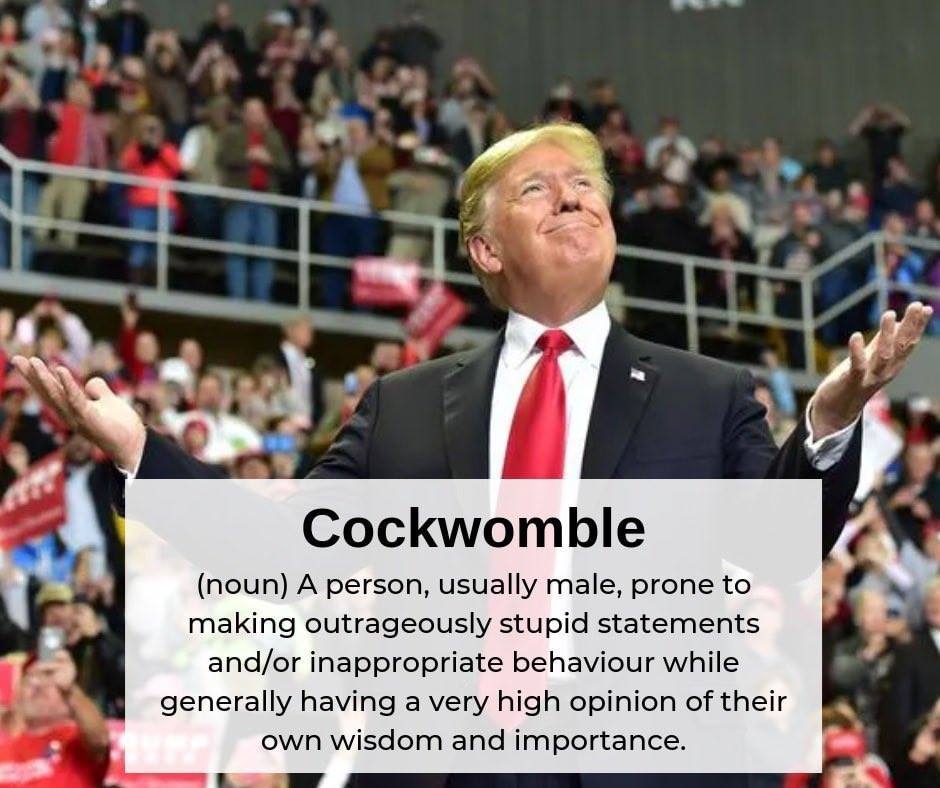
It’s been non-stop rain for several days and is expected to continue through the weekend, so I’m happy. Also, it was nice to be reminded this week of the word cockwomble, meaning: “A person, usually male, prone to making outrageously stupid statements and/or inappropriate behaviour while generally having a very high opinion of their own wisdom and importance.”
Anyway, welcome to the Friday Five. This week I bring you: the top five stories of the week, five stories og interest to queers and our allies, five stores about science, five stories about deplorable people, five stories about the Impeachable One, and five videos (plus things I wrote and notable obituaries).

 I’m participating in National Novel Writing Month (
 A lot of people have linked to the comments by people like Martin Scorsese, Francis Ford Coppola and so forth denigrating the modern superhero movie as not being “real cinema”, not being narrative, having more in common with an amusement park ride than a “proper movie” and so forth. And many other people have posted counter arguments, but most of the counter arguments I was thinking were being a bit too timid in their defense. And then Cora Buhlert weighed in:


 Font Folly