
I don’t want to give anything away, but one reason it’s been a few weeks since I posted any more reviews was because the next categories were at least as difficult to slough through…
Continue reading Hugo Ballot Reviews: Novelette
I don’t want to give anything away, but one reason it’s been a few weeks since I posted any more reviews was because the next categories were at least as difficult to slough through…
Continue reading Hugo Ballot Reviews: Novelette
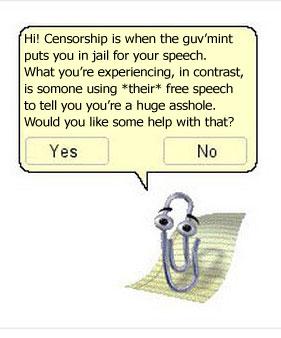 A Sad Puppy/Rabid Puppy supporter posted an op-ed on the men’s rights site Return of the Kings (he links to and heavily paraphrases one of the Sad Puppy podcasts), “How Female-Dominated Publishing Houses Are Censoring Male Authors” that is a great example of several of the issues that I believe underpin the Sad Puppy position. Never mind that the statistics show that men make up more than 65% of the annual publishing lists of most of the publishing houses, and male-authored books comprise more the 80% of books reviewed in the major publications, this guy is here to tell us that men are being censored!
His proof is an anecdote told to him by a veteran who had written a book about his experiences while serving in Iraq and Afghanistan who claimed to have gotten his book through several phases of the publishing process, only to be rejected at the last step because a senior editor who happened to be a woman was offended by one line in the book and said, “he’s an asshole, we don’t want to work with him.” I have a hard time swallowing the story as stated. But even if we take it at face value, the story boils down to an editor deciding that someone who is difficult to work with wasn’t worth the time, effort, and stress required to work with them.
He’s a first-time author, never been published before, has no name recognition, no proven track record. I don’t believe for a moment that it was a single line in the book that set anything off. I suspect that the author had behaved abominably to several people in the process up to that point and the book itself was of only middling quality. An important part of an editor’s job is to recognize which stories their readers will enjoy reading. Another important job is to weigh the costs and benefits of working with a specific story and author. If a particular book does not look like a blockbuster that will sell zillions of copies, it isn’t worth the time and effort to put up with a lot of assholery through the process of re-writes, galley proofs, et cetera.
That isn’t anti-male prejudice, that’s good business practice.
The fact that this anecdote is swallowed without examination—without considering the possibility that one could try to figure out what behaviors led to the characterization of asshole and try changing those behaviors—shows just how big the privilege blinders are on these guys. Imagine! If you’re nice to people they’re willing to help you. If you aren’t, they have no motivation to stick their necks out for you. And deciding to expend your employer’s money and the time of yourself and other employees on turning a manuscript into a published book and then distributing it is sticking your neck out.
This is one of the fundamental blind spots of the various puppies: they are convinced that the only reason their stories aren’t bestsellers and award winners and the only reason that they aren’t met at every convention by crowds of screaming fans must be the result of a conspiracy. It isn’t possible that their writing is mediocre. It isn’t possible that their subject matter isn’t of interest to anyone but angry misogynist racist homophobic men such as themselves. It isn’t possible that their predilection for making outrageous statements comparing gay people to termites in need of extermination might make anyone who knows or loves a gay person less than thrilled to hear more of what they have to say. It isn’t possible that characterizing some woman’s clothing as an all-day slut walk might be off-putting to anyone who is or loves a woman. It isn’t possible that characterizing people of color as half-savages might make people of any ethnicity less than enthusiastic about cheering everything you say.
Instead of exercising our own judgement about what works to read and who to be fans of, apparently we should all feel grateful that they would deign to allow us to bask in the glow of their wit and wisdom.

The awards are supposed to be about the artistic merits of the nominated pieces, right?
The WorldCon committee hosting each year’s awards traditionally assembles packets of either electronic copies of the nominated works, or excerpts (whichever the publisher will allow) to send to all voters. The Hugo Packets have not been sent out yet (but may show up any moment) so I’ve been locating the short stories that are available on-line to read (Much thanks to the Adventures in Reading blog for gathering all the links in one place; I wish I’d found this list much earlier). Other folks have been posting reviews as they read the stories.
So in this post, I write a short review of each of the short stories available on-line… Continue reading Hugo Ballot Reviews: Short Stories
Some parts of this post may fall too far into the “what I had for breakfast” zone for some of you, but it helps me to stick to plans if I share them with people. Not that I get nagged often by my readers, I just am more motivated to do things I have said I would do than to follow through on plans that I keep to myself.
So I’ve been making some changes to my routines in an attempt to improve my writing productivity, and I’m thinking about some changes for this blog…
Continue reading Assessments, plans, and implementations: a metapost
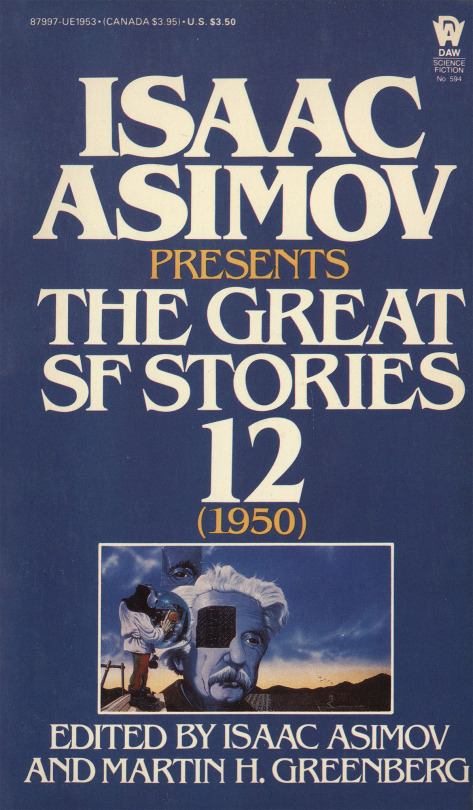 I don’t remember a time when I wasn’t a fan of fantasy and science fiction. Which is not surprising, since my mother accidentally taught me how to read at an early age by reading to me from her favorite authors (Agathe Christie and Robert Heinlein) and making me repeat back entire sentences. Tales of the fantastic by Heinlein, Andre Norton, J. R. R. Tolkien, Edgar Eager, Edith Nesbit, Isaac Asimov, Ursula K. Le Guin, Leigh Brackett, Gordon R. Dickson, Lin Carter, and so many others fed my imagination, encouraged my curiosity, fueled my thirst for science and math, and provided a refuge from the cruelties and contradictions of life.
One might wonder how cruel an existence growing up as a white boy in mid-twentieth century America could be. When you have a physically abusive alcoholic father heading up your working class rural evangelical fundamentalist family, real life can be quite unpleasant—especially for a gay, nerdy kid who talked to himself and was more comfortable with books than kids his own age. Science fiction and fantasy promised worlds where all you needed to defeat evil was a bit of courage, a lot of cleverness, and people you could count on. Every time my dad’s job transferred us to a new town, I would quickly ingratiate myself with the local librarians and proceed to devour every science fiction and fantasy book I could find on the shelves. Not to mention mysteries and science non-fiction books.
It wasn’t just the imaginary worlds of the various stories I read that provided a refuge, but from the introductions and interstitial texts of anthologies such as The Hugo Winners, Volume n, Best Science Fiction of the Year XXXX, and so forth, I also learned of conventions, where the creators and fans of these fantastic worlds gathered to talk about their favorite books and stories, encourage each other to write more stories, collaborate in various ways, and maybe even have a fun party or banquet where awards were handed out. And that sounded so amazing. Before middle school I knew about the Nebula Awards and the Hugo Awards. I knew that the Nebulas were voted on by members of the Science Fiction Writers of America, and that you had to be a professionally published SF writer to get in. But the Hugos were voted on by the attendees of WorldCon—by fans and professionals alike. So in theory, at least, I didn’t have to wait until I’d been published to participate in those.
I’d decided to become a writer sometime around the age of five or six. I’d been making my own books out of whatever notebooks or paper I could get my hands on since before I could write. I started writing my own stories as soon as I could assemble my sloppily-drawn letters into words. I was determined to be a writer. And I hoped that someday I might be a member of that community of writers vying for a Hugo.
As an adult, I’ve been attending sci fi conventions for decades. I’ve even been a staff member at a few. I’ve had some of my own tales of the fantastic published, even though most of my published stories have been in fanzines and other small semi-pro publications. I’ve had the good fortune to be the editor of a fanzine with a not insignificant subscriber base. I count among my friends and friendly acquaintances people who have been published in more professional venues, people who have run those conventions, people who have won awards for their sf/f stories and art, even people who have designed some of the trophies. Not to mention many, many fans. I have even occasionally referred to that conglomeration of fans, writers, artists, editors, and so forth as my tribe.
All of that only begins to scratch the surface of why I find the entire Sad Puppies/Rabid Puppies mess so heart-wrenching. Yes, part of the reason the situation infuriates me is because the perpetrators are all so unabashedly anti-queer. For this queer kid, sf/f and its promise of better worlds and a better future was how I survived the bullying, bashing, hatred, and rejection of my childhood. To find out that there are fans and writers who so despise people like me that they have orchestrated a scheme whose ultimate goal is to erase us goes beyond infuriating.
But it’s worse and so much more than a bloc-voting scheme.
This is hardly the first time I’ve encountered homophobia, misogyny, and racism in the fandom. It’s certainly not the first time I’ve encountered it among the professionals! While it’s disheartening to have people sneer and make denigrating comments; and it’s chilling to be told people like me deserve extermination. The worst part is to be told that even putting characters that are like me into stories about space battles or post-apocalyptic worlds or bio-engineered futures makes those stores cease to be “real science fiction.”
If your imagination is so small that you can’t conceive of a future where gay people and women and non-white people actually exist and do interesting things—that those people can sometimes be the heroes of the tale—then I just don’t see how your speculative fiction can be very creative. If you can’t conceive of a world with gays and straights, women and men (trans* or cis), and people of all races, living and working together, you’re hardly a visionary. If you’re so afraid to share imaginary worlds with such people, you’re the exact opposite of an intrepid adventurer.
Update: Some of the Sad Puppy supporters have decided to send me messages, accusing me of blindly believing propaganda. The implication seems to be that the various organizers of the Sad Puppies have never said the things alluded to here.
Let me be clear: I’ve been reading the blogs and other postings of John C. Wright, Brad R. Torgersen, Larry Correia, and Vox Day/Theodore Beale for years, because they’ve been on their anti-SJW and anti-gay kick for a while. Everything I’ve mentioned in this post and previously I have seen myself, from their own words. That they have deleted and revised many of their old posts to obfuscate that doesn’t change anything. They can claim they didn’t say what they said, but we have screen captures and Google caches and Wayback Machine caches that say otherwise.
And even the revised posts are still clearly anti-gay: [The unraveling of an unreliable field | Brad R. Torgersen]
 I get reminded in weird ways how old I am, sometimes. For instance, there was a discussion happening between some of my online acquaintances about Star Wars, specifically about the original movies (where young Luke Skywalker is the protagonist). I made a comment about what a freak I was considered to be by classmates because I had seen the show more than 13 times. And the comment made no sense to the people in the discussion.
So I had to explain that I was talking about when it first came out, and was only available in theatres. This was in 1977, when I was a teenager. Worse than that, it didn’t play in any of the theatres in the smallish town where I lived until about four or five months after it first came out. The closest place that had a big screen and a decent sound system where the movie was playing was more than an hour drive away—not only not in the same town were I lived, but not in the same state!
When you’re a high school student you don’t have a lot of disposable income, so the gas money and cost of tickets wasn’t a trivial expense. I carpooled (either using my old beater car or letting one of my friends drive) twelve times over the course of the first summer the film was out in order to see it. And then in the fall I went once to the truly crappy local theatre that finally got it, dragging a few friends I had never been able to talk into taking the longer trip.
Also at that time period, while home VCRs technically existed, they cost thousands of dollars and were huge, heavy things. Video rental stores didn’t become a common type of business for a few more years, when the technology got a little cheaper. And even then, the players were expensive enough that many people would rent both some movies and a machine from the store in order to have a movie night at home.
Cable television existed only in cities and larger towns. When cable first came to our small town, I was 19 or 20 years old, and it consisted of 15 regular channels, plus the premium channels of HBO or Showtime (Cinemax, Stars, and the like didn’t exist, yet). I write “or” because while very few people I knew had cable at all, most of those who did had only the 15 basic channels, and no one splurged on more than one movie channel. No one.
And, of course, DVDs literally didn’t exist, yet. Let alone the internet.
I had to wait three years before The Empire Strikes Back came out—by which time I was a freshmen in college. Then another three years after that before any of us got to see Return of the Jedi.
I saw all three of those movies, during their respective opening weeks, in the same big theatre in Beaverton, Oregon. It was like a religious pilgrimage for me, by then. I’d been hooked at 17 years old, and the passion still burned with the intensity of a billion suns when I was 23.
This is one of the reasons that, when I hear some of my friends complaining about how many months it will be before the new season of My Little Pony comes out, I don’t always give them as much sympathy as I probably ought.
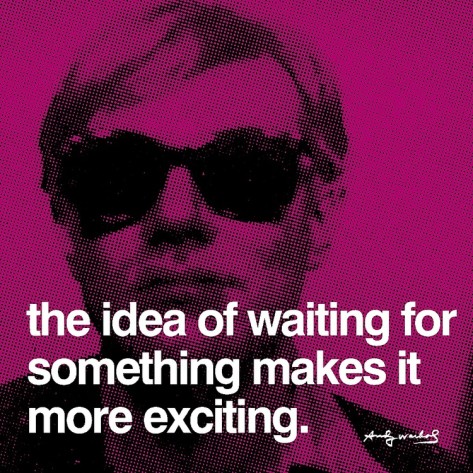
On the other hand, I’m just as bad. The last episode of Justified season five aired eight months ago, in April, and I’ve been dying while waiting for season six to begin… which it will in January 2015. That’s less than 30 days from now. Inside, 23-year-old me is laughing so very hard at current me because I’m agonizing over having to wait merely months for the next chapter in a saga. And this is hardly the only series or movie that I have such lamentations about.
So, while part of me rolls my eyes at younger fans, another part of me is rolling my eyes at me, too.
Of course, we should remember that 173 years ago, back in 1841, people are said to have lined up for blocks in London waiting for a new edition of a weekly magazine called Master Humphrey’s Clock so they could read the next chapter of Charles Dickens’s The Old Curiosity Shop. Even more fun were the stories of people meeting English travelers disembarking from ocean liners in New York at the time, to ask whether Little Nell lived, since American publication of the stories was several weeks behind the British chapters.
As they say, times change, but human nature doesn’t.
It’s a lot of fun.
It’s especially fun when our involvement in a particular enthusiasm is new. One of the reasons why is that when we first discover a new book or series or band that we really like, often most of our existing friends have never heard of it. And we may try to get them interested, and it doesn’t grab them quite the way it does us. And we may think that maybe this new thing isn’t as cool as we think it is, or maybe worry that we’re boring our friends. So if we then find some people who are as enthusiastic as we are about the new thing, we suddenly feel validated. “Yes! I’m not alone!”
But the sweet spot is where we have found a new thing, found new people who seem nice and like this new thing as much as we do, and where at least some of our closest friends also like this new thing as much as us. That’s a win-win-win!
Sometimes that triple-win can be misleading. Let me explain… Continue reading Somepony Else’s Friends
I belong to a lot of tribes that don’t always get along. And I continue to be naively surprised when I discover new evidence of this. I still feel more than a bit of shock when I meet a homophobic sci fi fan, for instance. How can you be an enthusiast for science, the triumph of knowledge over ignorance, and the hope of a better tomorrow while clinging to such small-minded backwards thinking?
When I’ve used this particular example in the past, I’ve been told that I’m assuming that these folks are into science fiction for the same reasons that I am; but I’m not talking about their reasons for becoming sci fi fans. I’m talking about what science fiction is. You can’t claim to be a fan of science fiction yet reject the entire premise of science fiction. Rejecting the fundamental premise makes you the opposite of a fan.
The other argument I’ve heard is that being an enthusiast for sci fi is a choice to read or watch certain types of stories and to embrace other cultural aspects of those kinds of stories, whereas being gay is merely a sexual preference. So it is as irrelevant to anyone’s participation in sci fi as another person’s dislike of chocolate. But again, this argument misses the point. My point is if you’re an enthusiast for sci fi stories, you should be knowledgeable enough to recognize that despising someone for their sexual orientation is illogical. Besides, even under the reasoning of this argument, rejecting a gay person is the equivalent of saying that a person who doesn’t like chocolate can never be an astrophysicist.
And not to make it seem one-sided, there are plenty of gay guys who absolutely loathe sci fi nerds.
Similarly, a lot of science geeks look at the sci fi fans within their own ranks with a bit of suspicion or condescension. Just as some Star Wars fans dislike Babylon-5, and some Lord of the Rings fans can’t understand why anyone likes Star Trek, and so on.
I’m always going to be nerd, and not just a nerd, but a geeky nerd. I love physics and engineering and mathematics. I can’t help but see just about everything I observe in terms of causes and effects. So science and science fiction will always intrigue me.
And I love to explore “what if” questions and take them to their ultimate logical conclusion, so all kinds of fantasy—whether it’s about elves and wizards or talking rabbits and conniving ducks or flying heroes and scheming masterminds—is also going to fascinate me.
And I’m a gay man, living in a world where masculinity and femininity are mistakenly believed to correlate with all sorts of personality traits. For instance, there are people who are surprised that I’m a Seahawks football fan, because gay men supposedly aren’t into sports (tell that to all the athletes competing in the Ninth Gay Games this week). Of course they’re probably at least as surprised because science geeks and sci fi nerds aren’t supposed to be into sports, either. I certainly can attest, having worked with engineers and computer geeks for nearly three decades, that there are considerably fewer sports fan in those offices than in other kinds of workplaces.
It is true that I have had a very ambivalent relationship with sports my whole life. In middle school I participated in basketball, wrestling, and track, and in the first year in high school I did cross country and track. But I was never terribly good in any of those sports. One way that was made clear when I moved to a larger town was that I wasn’t good enough to make any of the sports teams (I did intramural soccer for a while, but that was it). And, of course, the best athletes in my schools tended to be the same guys who were most likely to bully me (which didn’t get any better once I became a debate and drama nerd).

And while generally I try not to worry about it, sometimes it feels like the kind of reaction I used to get when I was still trying to be active in church whenever the subject of gay people came up. Or when certain political topics used to come up around my conservative relatives.
I know what full-fledged rejection feels like, and don’t want to go through it again. Try to think about that the next time you’re hanging with a group of friends who share one of your enthusiasms when another group comes up. No matter how horrible of an experience you may have had with that other group, don’t go on and on about how horrible those people were. You’re probably sitting next to one.

Since NorWesCon has been on Easter weekend since 1989, I have kept track of Easter by remembering when NorWesCon is going to be. I have habits built around NorWesCon. For many years, now, I spent a lot of time during the rest of the year plotting what new cocktail I will buy Keith on Saturday night at the con, because Keith almost never drinks, and it amuses all of us, including his wife, to watch him react to alcohol (and it’s tricky to find ones he will actually agree to drink more of). During the weeks leading up to the convention I start longing for the evening I’ll sit in the bar or restaurant with Juli-sans-e (not to be confused with Julie-with-an-e, who might join us with the wings, but is more likely to find ways to trick us into saying “nipple” at inappropriate times) eating plate after plate of hot wings and exchanging stories.
I could go on and on.
But, for a variety of reasons, the last few NorWesCons we attended were not much fun for either Michael or myself. And when I realized that four out of the last five we attended, I had found virtually none of the programming interesting (except for Auntie’s costuming panels). I had found it so unappealing, that I had wound up spending all of the time I wasn’t sitting in a bar or restaurant with our friends, sitting at my laptop writing.
To be fair, I got a lot of writing done each of those conventions. More than I usually get done on an ordinary weekend. But it seemed a little silly to both of us the spend all that money on a hotel room, memberships, and all of those meals at hotel restaurants, if all I was going to do was sit in a hotel room tapping away on my computer keyboard.
The one exception out of that span was the year that both Jim Butcher and Patricia McKillip were guests of honor. It’s pretty difficult for me not to enjoy hearing either of them talk about their writing.
So we skipped last year. We gave a few other local conventions we haven’t attended in a long time a try, and we enjoyed those. We would have enjoyed them more if our usual gang had been in attendance. I did miss hot wings with Juli. I really missed hanging out with the gang.
We were leaning toward coming back this year, but when we weren’t able to get certain answers we needed before the hotel room block filled up, we decided to skip again.
As it happens, another friend that I’ve been trying to get to attend finally went for the first time this year. So not only didn’t I hang out with our usual crowd and do our usual things, I didn’t get to hang out with Sheryl at the con.
I also regret missing this year because Michael Moorcock was Guest of Honor. I really like his writing, and given his age and the distance to travel to a west coast con, it’s highly unlikely I’ll get another chance to see him.
NorWesCon is almost always the same weekend as SakuraCon. My dear sweet husband was actually one of the founding SakuraCon committee members many many years ago. It’s been several years since we’ve attended it. So we had talked about the possibility of getting memberships to SakuraCon for this year, though by the time we had decided not to do NorWesCon, neither of us was feeling enthusiastic about anything. We had a couple of conversations this weekend about next year attending either SakuraCon or NorWesCon. I know we could both have fun at either. Most of our friends will be at NorWesCon, but we’ll have a few friends at SakuraCon.
A lot of people seem to be excited because George R.R. Martin is going to be the Guest of Honor at NorWesCon next year. Frankly, that makes me slightly less likely to attend. Not that I have anything against Mr Martin, it’s just that I suspect a lot of people who don’t normally attend fan-run conventions will decide to attend this one because of the television version of Game of Thrones, and the atmosphere may be more like a corporate con than a fan con. Yes, sometimes I am a fan-snob.
We need to decide soon enough that we can get the hotel rooms and everything else in order either way.
In related news, thanks to some suggestions from friends, since we were already planning to attend EverfreeNW again this summer, but we’ll stay at the hotel next door that many of us like a lot better, and since that same weekend a gaming convention, PaizoCon will be happening in that next door hotel, Michael and I now have memberships for both conventions, the same weekend. And several of our friends are doing the same. So, we’re going to be two-fisted congoers (or dual-weilding badge-holders, or something) this July.
So even though we’ve skipped NorWesCon two years in a row, I think we’re holding onto our geek/nerd/fanboy cred.
 Font Folly