The original Pride flag designed by Gilbert Baker in 1978 has 8-stripes. Colors were removed and changed originally due to fabric availability.I don’t remember when I first learned that the Rainbow flag was a symbol for LGBTQ pride. I do remember in high school finding out that a particular representation of a labrys (double-headed symmetric ax associated with several goddesses from Greek mythology) had been adopted by some lesbians. However, since the information came first from the same sorts of church people who saw Satanic symbols everywhere, I wasn’t completely certain it was true.
The next symbol I learned about was the pink triangle. Since it was an emblem used by the Nazis to mark prisoners sent to the concentration camps with the excuse that they were sexual deviants, and since the Allies had then re-imprisoned all of the gay men who managed to survive the camps, the emblem was more of an assertion of “never again!” than a pure statement of pride.
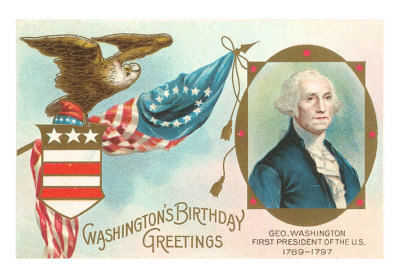
usafederalholidays.comI’ve written before about the fact that President’s Day is a myth, the official name of the holiday is Washington’s Birthday Observance. Click the link to read about the history of the holiday, the few states that do observe a holiday called President’s Day (though some observe it in completely different months), and so on. Today, I want to talk a little bit about why there has never been a Federal holiday honoring Lincoln’s birthday, and how that contributes to people thinking that today’s holiday is about anyone other than Washington…Continue reading That’s not the name of the holiday→
I get reminded in weird ways how old I am, sometimes. For instance, there was a discussion happening between some of my online acquaintances about Star Wars, specifically about the original movies (where young Luke Skywalker is the protagonist). I made a comment about what a freak I was considered to be by classmates because I had seen the show more than 13 times. And the comment made no sense to the people in the discussion.
So I had to explain that I was talking about when it first came out, and was only available in theatres. This was in 1977, when I was a teenager. Worse than that, it didn’t play in any of the theatres in the smallish town where I lived until about four or five months after it first came out. The closest place that had a big screen and a decent sound system where the movie was playing was more than an hour drive away—not only not in the same town were I lived, but not in the same state!
When you’re a high school student you don’t have a lot of disposable income, so the gas money and cost of tickets wasn’t a trivial expense. I carpooled (either using my old beater car or letting one of my friends drive) twelve times over the course of the first summer the film was out in order to see it. And then in the fall I went once to the truly crappy local theatre that finally got it, dragging a few friends I had never been able to talk into taking the longer trip.
Also at that time period, while home VCRs technically existed, they cost thousands of dollars and were huge, heavy things. Video rental stores didn’t become a common type of business for a few more years, when the technology got a little cheaper. And even then, the players were expensive enough that many people would rent both some movies and a machine from the store in order to have a movie night at home.
Cable television existed only in cities and larger towns. When cable first came to our small town, I was 19 or 20 years old, and it consisted of 15 regular channels, plus the premium channels of HBO or Showtime (Cinemax, Stars, and the like didn’t exist, yet). I write “or” because while very few people I knew had cable at all, most of those who did had only the 15 basic channels, and no one splurged on more than one movie channel. No one.
And, of course, DVDs literally didn’t exist, yet. Let alone the internet.
I had to wait three years before The Empire Strikes Back came out—by which time I was a freshmen in college. Then another three years after that before any of us got to see Return of the Jedi.
I saw all three of those movies, during their respective opening weeks, in the same big theatre in Beaverton, Oregon. It was like a religious pilgrimage for me, by then. I’d been hooked at 17 years old, and the passion still burned with the intensity of a billion suns when I was 23.
This is one of the reasons that, when I hear some of my friends complaining about how many months it will be before the new season of My Little Pony comes out, I don’t always give them as much sympathy as I probably ought.
On the other hand, I’m just as bad. The last episode of Justified season five aired eight months ago, in April, and I’ve been dying while waiting for season six to begin… which it will in January 2015. That’s less than 30 days from now. Inside, 23-year-old me is laughing so very hard at current me because I’m agonizing over having to wait merely months for the next chapter in a saga. And this is hardly the only series or movie that I have such lamentations about.
So, while part of me rolls my eyes at younger fans, another part of me is rolling my eyes at me, too.
Of course, we should remember that 173 years ago, back in 1841, people are said to have lined up for blocks in London waiting for a new edition of a weekly magazine called Master Humphrey’s Clock so they could read the next chapter of Charles Dickens’s The Old Curiosity Shop. Even more fun were the stories of people meeting English travelers disembarking from ocean liners in New York at the time, to ask whether Little Nell lived, since American publication of the stories was several weeks behind the British chapters.
As they say, times change, but human nature doesn’t.
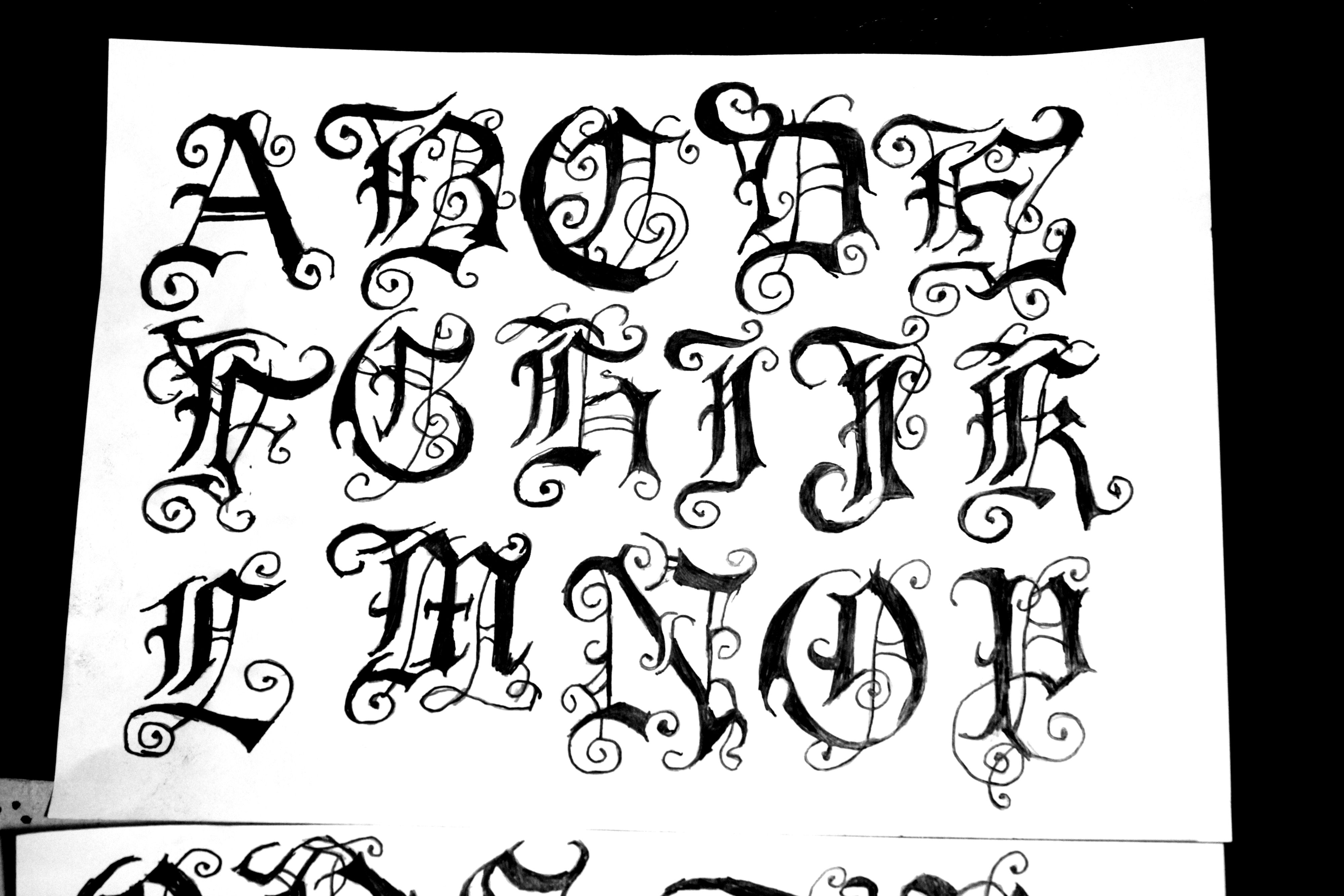
Font names can be very misleading. Say the word ‘gothic’ to most people, and they think of large, imposing old houses with lots of gables, or people dressed all in black with lots of skulls and other symbols of death and horror on their jewelry. And if you search on Gothic Fonts you will be pointed to a lot of fonts that look like this:
What most people think a gothic font looks like.But a typographer or design person will look at that font and say, “That isn’t gothic at all! That’a a blackletter font!” To be fair, Blackletter fonts were originally designed to match the handwritten script of medieval scribes, and that style of handwriting was called “gothic script” to distinguish it from other medieval writing styles, such as Carolingian miniscule, but that style of font is known as blackletter. If you are going to call those sorts of letters gothic, you should say “gothic script.”
expreacherman.comTwo leaders of Southern Baptist Churches have recently justified their opposition to gay rights with misleading allusions to the struggle for racial equality. In April, Pastor J.D. Grear, speaking at the Southern Baptist Convention Ethics and Religious Liberty Commission’s Leadership Summit, said, “Preaching against homosexuality in our day is about as popular as preaching against slavery and racism in Charleston, South Carolina, in 1861.” A month later, Pastor David Price posted a commentary on the Southern Bapatist Ethics and Religious Liberty Commission website which explained that anyone comparing the first openly gay NFL draftee, Michael Sam, to the first black major league baseball player, Jackie Robinson, has been deceived by Satan. Prince’s commentary goes on at length to describe how much hatred and opposition Robinson faced from the public at large.
Why these statements are so weird is because both preachers are clearly implying that Baptists are and always have been in favor of racial equality. Grear’s comments are the most explicit in that regard, but Price’s aren’t far behind. The problem is that those implications are absolute, unequivocal lies…
Public domain photo from the USGS of the big eruption on May 18, 1980.
“The year was 1980,
May 18th, you’ll recall,
When daytime turned to nighttime,
In the town of Yakima…”
I never lived in Yakima, but Longview, were I was living and attending school in 1980, was in one of the flood plains that was in danger of major flooding when Mt. St. Helens began erupting in 1980. The Oregonian recently acquired some photos that were taken by a pilot that day, that have never before been published. They’re pretty awesome. Go take a look.
We were lucky on May 18, because the wind was blowing away from us. So while three of the rivers that converge there at the towns of Longview and Kelso rose so high that they almost overtopped the dikes, daytime did not turn to nighttime for us, and our houses, cars, and yards weren’t covered with muddy ash.
Than happened exactly one week later, on May 25, when the mountain had another really big eruption and the wind was blowing our way.
She had lots of little eruptions before and after. I took some really eery pictures one sunny afternoon of the mushroom-cloud shaped plume of ash rising up behind our house. I should find those pictures and scan them in. It did look scary having our house in the foreground and that cloud rising behind it.
Some time after that big eruptions, I heard one of many songs entitled “The Ballad of Harry Truman” that were written that year. The opening lines to one of them I’ve quote above. I’ve found a recording of that version, but there are several other good ones.
They are not about the former U.S. President, but about a cantankerous old man who refused to be evacuated from his home on the mountain. He had various responses to people asking him why he wouldn’t move. Usually he mentioned his secret cave, where he had a barrel of whisky stashed to “sit out the trouble.” He had other more colorful replies, including skepticism that it would be that dangerous.
Of course, not only was Harry’s home destroyed, but the entire lake it was near and hundreds of acres around it was disintegrated. Not just buried in mud, or lava, blown out as thousands of particles of gunk.
I understood, even though I agreed he was crazy. He’d buried a lot of friends and his wife on that mountain. He was 84 years old and had lived on the mountain most of his life. He didn’t want to live or die anywhere else.
Every year at this time I spent a while searching the net hoping to find a copy of the song whose opening lines I always remember. That version’s chorus called for us to raise a glass for Harry, and hope that he’s got his cats and whisky, still hiding in his cave. As I said, a lot of folk singers wrote songs about him. Of the ones I have found, I think Neal Woodall’s may be my second favorite:
When people ask, ‘Why don’t you go?
That mountaintop is sure to blow,’
And Harry says, ‘That may be so,
But it sure as hell beats dyin’ slow…'”
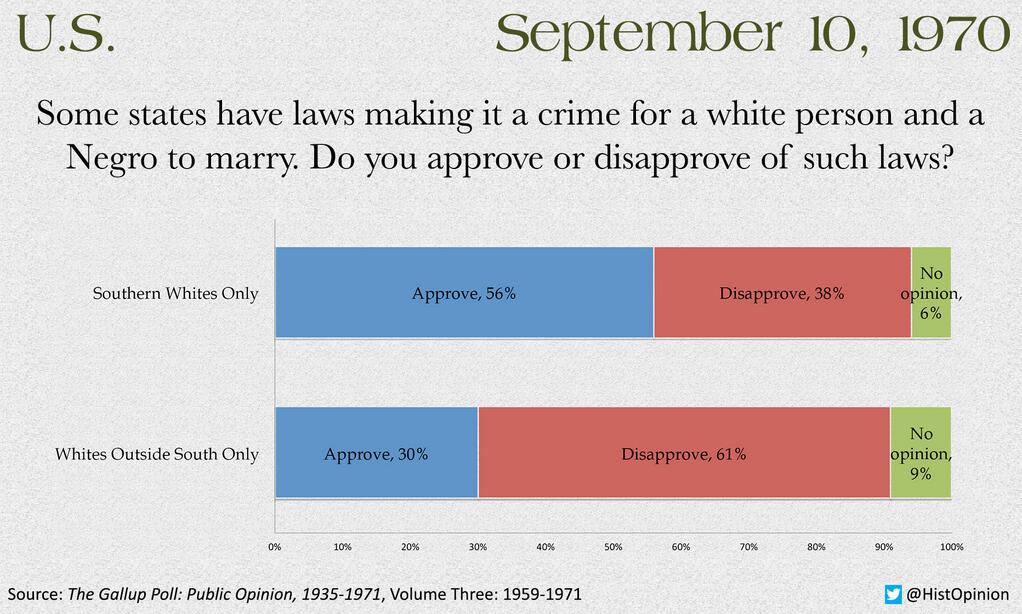
I keep telling people it wasn’t that long ago that opposition to interracial marriage was stronger than the current opposition to same sex marriage.A common point of contention in discussions of gay rights is whether it is appropriate, logical, or even accurate to compare the struggle for equal rights for gay people with the struggle for racial equality. There are a wide variety of rationalizations given for saying they are not comparable. Rather than pick each of those apart, I’m more concerned with two undeniable ways in which they are similar:
The arguments that opponents to gay rights use are identical to arguments that the opponents of racial equality use or have used in the past.
The demographics of the people who most adamantly opposed racial equality are nearly the same as those people most opposed to gay rights.
A friend shared the graphic I’ve included above from @HistOpinion on twitter recently, and I was most amused by the people who were shocked to learn two things: as recently as 1970 there were still several states with laws against interracial marriage, and as recently as 1970 a lot of people approved of those laws.
I was alive in 1970, but even more important to this discussion, I was alive in 1967, the year that the U.S. Supreme Court unanimously ruled that those laws against interracial marriage were unconstitutional. It is true that I was only in grade school when that ruling came down, but I remember the time clearly. Suddenly, it seemed as if every adult in my life was talking about interracial marriage. None of them—not my parents, not my parents’ friends, not my Sunday School teacher, not my friends’ parents, not the pastor at church, not any of the adults at the monthly church potluck, not my grandparents—bothered to tell me why they were talking about it, but they were all talking about it.
Why aren’t you up?I wrote last year about how the time change was messing with me worse than usual. This year I can at least blame the frickin’ high pollen counts that have coincided with it. I prefer to blame the pollen, rather than think about the possibility that it might simply be because I’m getting old, and bouncing back from things, even a simple time change isn’t going to be as quick as it was when I was younger…
What’s a hater to do?The song, “America, the Beautiful” got an entire day’s lesson in the Colorado State History class I had to pass in ninth grade. Katherine Lee Bates, an English professor from Wellesley College, came to Colorado Springs in 1893 to teach a summer class at Colorado College. As her train rolled across the plains of eastern Colorado, drawing closer to the dramatic front line of the Rocky Mountains spread across the horizon, she wrote in her journal about the landscape she was passing. Colorado Springs is near the base of Pike’s Peak, one of the taller mountains in the Rockies, and one day Bates took an excursion by train and then mule to the peak of the mountain, where she later said she felt as if all the beauty of America was laid before her, and inspired a poem to form in her mind. She eventually submitted the poem, entitled “Pike’s Peak” to a publication called The Congregationalist. When it was published in the July 4th edition in 1895, appeared under the title, “America the Beautiful.”
We learned that and other facts about the subsequent versions of the poem Bates re-published, and how it was eventually set to music by Samuel A. Ward, in class. What the textbook failed to mention is that Katherine Lee Bates was almost certainly lesbian…Continue reading …with brotherhood?→
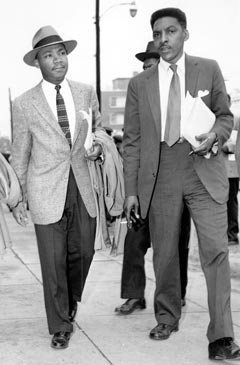
Dr. Martin Luther King, Jr. and Bayard Rustin in a file photo from 1956.Not wanting to co-opt another community’s struggle, I don’t usually write anything about Martin Luther King, Jr. Day. But since certain other people with far less right than I do have, and have done so as a way to shore up their own anti-gay agenda, I feel an obligation to make a couple of observations.
Bayard Rustin is probably most famous as the man who handled all the organizational details of Dr. King’s 1963 March On Washington. Rustin took care of everything from the transportation, to making sure there were enough porta potties for the crowd, to insuring that no one brought weapons and the march stayed nonviolent, to convincing Dr. King that King’s speech should the be at the very end of the program. Rustin was convinced that the “I Have a Dream” message that King had been writing and rehearsing would work best as the dramatic crescendo at the end of the day, rather than as an opening whose sentiment might be overshadowed and diluted by other speakers and performances afterward.
And Bayard Rustin was gay. He was not closeted and secretly gay—Bayard Rustin was openly gay in an era far more homophobic than today. Despite having been arrested, beaten, and several times fired for being homosexual, Rustin remained open and candid about his sexuality. Throughout the years of their association, Dr. King was frequently urged (and begged and ordered) to push Rustin out of the Southern Christian Leadership Conference, to distance himself from Rustin and denounce him as a “pervert” and “immoral influence.” Again and again, Dr. King refused to do that, and continued to rely on both Rustin’s organizational and debate skills.
Dr. King was assassinated before the Stonewall Riots, therefore before the modern gay rights movement began to be noticed by the press and the public at large. We don’t know what he might have said or done at that time. We do know that he fought as much against factionalism within his own movement as the enemies without, trying to keep everyone focused on the cause of racial equality and economic equality. As more than one historian or political scientists have pointed out, if he had been anti-gay, there would surely have been a sermon delivered on the topic, or some negative comments about Rustin or other homosexuals he met among the hours and hours of FBI wiretap tapes.
And there isn’t.
Nor is there any indication he ever asked Rustin to try to hide his sexuality.
Rustin had deep religious convictions about the importance of nonviolently fighting against racial and economic equality. While he was open about his sexuality, he didn’t start publicly fighting for gay rights until the 1970s, when he referred to the treatment of gays and lesbians as the new barometer for measuring social justice.
And he wasn’t the only one.
“If you are gay, lesbian, bisexual or transgender, you do not have the same rights as other Americans, you cannot marry, …you still face discrimination in the workplace, and in our armed forces. For a nation that prides itself on liberty, justice and equality for all, this is totally unacceptable.” — Yolanda Denise King, Dr. King’s eldest daughter.
Today, several white leaders of anti-gay organizations have tried to wrap their hatred in King’s legacy. They do this by quoting King’s niece, Dr. Alveda King, a rabid anti-abortion and anti-gay rights activist. I suppose it is petty of me to point out that the supposedly pro-traditional marriage, pro-life Alveda King has been divorced three times, had two abortions, and the only reason she didn’t have a third abortion is that she could not convince her father or grandfather to pay for it, and that she didn’t appear to become anti-abortion until she started being a paid speaker for various archconservative groups.
But I think Dr. King’s widow might have more accurate insight into Dr. King’s beliefs:
“I still hear people say that I should not be talking about the rights of lesbian and gay people. … But I hasten to remind them that Martin Luther King Jr. said, ‘Injustice anywhere is a threat to justice everywhere.’ I appeal to everyone who believes in Martin Luther King Jr.’s dream, to make room at the table of brotherhood and sisterhood for lesbian and gay people.” — Coretta Scott King, Dr. King’s widow.
Bayard Rustin and his long time partner, Walter Naegle.To me, the real answer comes back to Bayard Rustin. Dr. King was pressured to distance himself from Rustin, to disavow him, to remove him from leadership positions within King’s organizations. When, before the March On Washington, a U.S. Senator read the full police report about Rustin’s arrest in 1953 into the Congressional Record, including Rustin’s guilty plea to the sodomy charge, along with statements from Rustin’s FBI file in admitting several times to being a homosexual, virtually no one would have faulted Dr. King if he had removed Rustin from his position. In fact, the then-president of the NAACP begged Dr. King to, at the very least, not publicly acknowledge Rustin’s role in organizing the march.
Dr. King did none of those things. When Life magazine interviewed King about the March, Dr. King credited Rustin and A. Philip Randolph as the organizers, which led to Ruston and Randolph appearing on the cover photograph of the magazine.
I could include many more quotes from members of Dr. King’s family and other leaders of the movement, but I think Dr. King’s actions toward Rustin tell the story.




 Font Folly