Tag Archives: life

Not forgotten

Nineteen years ago today I had to sign some papers.

Then a couple of nurses turned off the monitors, removed the respirator tubes, and turned off the rest of the machines.

I held Ray’s hand, and said “Good-bye.”

I’d been crying off and on for hours—days, technically (though I’d only slept a couple hours out of the previous 59-ish, so it seemed like one really long, horrible day).

I don’t remember if I cried again. My last chronologically-in-order memory is taking hold of his hand that one last time. My memories for the next few months are like the shards of a thoroughly shattered stained glass window.

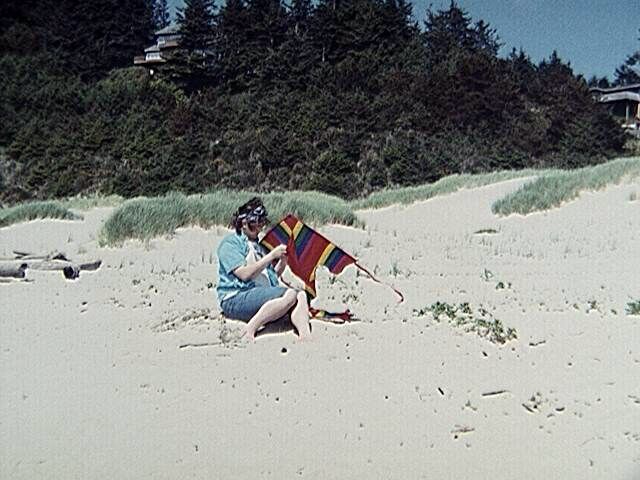
My friend Kristin recently sent me this picture saying, “How I like to remember Ray.” This was a trip we all took to the beach. He's prepping his kite for launch.
My friend Kristin recently sent me this picture saying, “How I like to remember Ray.” This was a trip we all took to the beach. He’s prepping his kite for launch.
He promised me he would stay with me for the rest of his life.

And he did.

Why I hate hay fever reason #6312

*Achoo*
*Achoo*
A couple of weeks ago I came down sick rather suddenly. For part of the day I just felt a little off, and then I started violently shivering just before the usual time I leave for work. By the time I dragged myself home I wound up in layers of sweats, my big fuzzy robe, a heating pad, and a blanket and then passed out on the recliner for a few hours. When I logged in to work the next day to send the message that I was staying home sick, there were already four other messages from people in my department saying the same thing. Later that day I called in to one of our meetings to get at least a bit of work done, and one co-worker who hadn’t called in sick had to sign out because he was suddenly hit with the shivers and fever.

I felt much less awful after a couple of days, but didn’t begin to feel actually well until this last weekend – about eleven days after it all started.

And now, I’m just dealing with hay fever. I’ve written (many, many times) before of my frustration at being unable to distinguish a really bad hay fever day from the early stages of a head cold. This is a slightly different frustration. I’m just finally feeling well, except I’m not feeling great because my head is stuff up, I get random sneeze attacks, my eyes are watery… you know the drill.

Yes, it’s fall. Yes, it’s getting cold and most of the trees are losing their leaves and there are very few flowers in sight anywhere. And the pollen count is pretty low. But the pollen count never seems to include fern spores. And here in the Pacific Northwest we have ferns growing naturally everywhere. They’re a more primitive plant and they don’t pollinate, they spore. So every year this time, when the pollen count is dropping to almost non-existence, I get a round of bad hay fever symptoms while the ferns are going crazy.

And next month is mushroom season!

Pass me another box of tissues, please?

…on my mind…

Just a bit over 26 years ago I met a boy…

He was 25 years old, so not really a boy, but then I was only 29. I wasn’t completely out of the closet, yet. I regularly went dancing at a gay country bar, and I had just started singing with a newly formed lesbian & gay chorus, so I wasn’t deeply closeted, either. But as far as I knew at the time, other than one cousin none of my family knew I was gay. And only a few of my long-term friends knew.

Ray and I met online on a gay BBS system, and after lots of chatting over several weeks, had finally agreed to meet at a restaurant. I had trouble finding him, because he forgot to tell me that he’d recently dyed his hair. I wasn’t looking for a redhead.

I suspected he was a keeper when I saw the small bookcase beside his bed. I knew he was a keeper when we talked about one particular worn hardback. Not because of which book it was, but because he had a favorite book that he re-read several times a year. And talking about it made him start talking very animatedly about a lot of his other favorite books.

We’d been officially dating for a few months when he first told me that he liked to write. He hadn’t mentioned it before because I earned my living as a technical writer, and while my fiction had mostly been published in small, non-paying ‘zines, he was a little nervous about showing me his work. Turned out he’d never shown anyone his writing before. He had a bit of an inferiority complex about his education: he’d dropped out of high school after his father died to go to work to help his mom support his younger siblings. He had since gotten his GED and taken some community college classes, but he wasn’t confident in his writing skills.

I asked him if he wanted my honest opinion. I admit I was a bit nervous, too. What if I hated his work and couldn’t hide it? Fortunately, the first story he showed me wasn’t bad. It needed work. But he was happy to receive critiques and borrow some of my books about the writing process.

He kept working at it. Revising, writing, reading. He started occasionally sharing his work with other people. He even managed to get a couple of stories published in small ‘zines.

Then he got sick. When the doctors first told us he had two years or less to live, I refused to believe it. I was certain we were going to beat this. For the next few years there were lots of tests, treatments, a few scary visits to the ER, and then chemotherapy.

One night just over three years after they had told us he had less than two years to live (seven years and three months after our first date) he had a seizure and fell into a coma. I spent the next several days sitting beside his bed in an intensive care unit, waiting for him to wake up. But it wasn’t to be.

During the weeks afterward I went through his things, with help from his mother and sister. In the cabinet under the night table on his side of the bed, inside an envelope that said, “No Peeking!” I found a small package wrapped with Christmas paper, with a gift tag that said, “To Gene, Love Ray.” I didn’t open it. But the package was the size of a paperback book. And in another envelope in the same cabinet were two identical copies of a paperback anthology, along with some correspondence from the editor of the anthology.

He had sold two short stories that were included in that anthology. He’d sold them the year before, and had received copies of the book nine months before he died. And he’d never said a word to me about it. He’d wanted it to be a surprise.

He had a deadline for another anthology with the same editor coming up. I couldn’t figure out which of the stories he had on his computer he had intended to submit. I wrote to the editor and explained that Ray had died. The editor sent a very thoughtful condolence note back.

Ray had made his first professional fiction sale—two stories! —a mere six years after shyly admitting he was afraid to show his work to other people, but didn’t tell me because he wanted to see the expression on my face when I opened the package Christmas morning. I wish I’d known. I wish I’d been able to tell him how proud I was of him. I wish I’d been able to grab a Sharpie, hold the book out to him, and ask for his autograph.

Make no mistake, I love my husband, Michael. Every time I see his smile, I feel like the luckiest man in world. But I loved Ray, too. I miss him. I wish he had lived to see the repeal of Don’t Ask, Don’t Tell, to see the citizens of our state vote to give same-sex couples the right to marry, to see the Supreme Court overturn the Defense of Marriage Act, and of course to see that same court make marriage equality the law of the land.

This week Michael and I are going through our things, hauling stuff to Goodwill and so forth. We’re both packrats from long lines of packrats, so we have to do these purges every year or so. I tend to hang onto things, and I get overly sentimental over a lot of those things. I had a couple of rough moments Monday. One was when I came across the book with Ray’s stories on a shelf. Another was when I was pulling plushies from another shelf and found a small, peach-colored Teddy Bear. Only a few weeks after we started dating, Ray had to fly to Georgia for a business obligation. He picked up the teddy bear for me and a coffee mug for himself in a souvenir shop. Yes, 26 years later, I still have the “Georgia On My Mind” mug, and I still think of it as Ray’s mug.

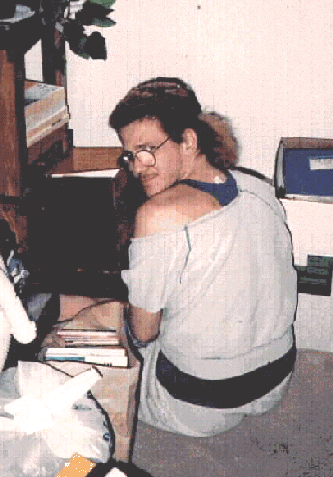
Ray unpacking after we moved into our second apartment.
If he’d lived, today would have been Ray’s 52nd birthday. That’s right, our birthdays were only two days apart. We usually wound up celebrating both birthdays together with his family, and then would celebrate just the two of us on our actual birthdays. I assume that that is the reason that I start getting a bit depressed and moody every September. I can’t think about my birthday coming up without thinking about his birthday that we don’t get to celebrate.

I would love to see his goofy grin over a cake covered with candles at least one more time.

Zoinks! Trying to break some verbal habits

“You keep using that word. I do not think it means what you think it means.”
I don’t remember when I first heard “duuuuuude!” As a word intended to communicate anything from, “Hello, friend!” to “I agree!” to “Don’t panic” to “I can’t believe you just said/did that! What were you thinking?” and a million things in-between. Before I looked up the linquistic history of the word, I had hazarded a guess that it was late in high school, which would put it roughly in the year 1978-79. And while that particular sense of the word seems to have arisen in several different American subcultures in the 50s and 60s, it didn’t really begin the move into pop culture until the early 80s, so it was more likely in college (which began as several years of attending community college part-time while working to save up for university, before three more years there) where I acquired the habit.

I know in the 90s I used the word with friends and acquaintances of both genders. One butch lesbian friend was very fond of using “Dude!” to mean, “You can’t be serious!” for instance. So even though I knew that the word originally meant (back in the 1800s) a foppish young man who dressed in overly-fashion-conscious clothes and affected a sophisticated manner, and then later had morphed to describe a man from the city visiting the western countryside who was unfamiliar with physical labor and the necessities of life on the range, I thought of it as a gender-neutral term.

But it’s not… Continue reading Zoinks! Trying to break some verbal habits

You need to pick your dragons…

“Complaining about political correctness: It's just inoculating the public to get used to, and feel reluctant to call out, more racism, sexism, and homophobia.” BettyBowers.Com
“Complaining about political correctness: It’s just inoculating the public to get used to, and feel reluctant to call out, more racism, sexism, and homophobia.” BettyBowers.Com (click to embiggen)
In the game of chess, it is traditional at the end of the game for the loser, upon realizing that the other player has placed their king in checkmate, to tip the king over and concede the game. The point of the game is to protect your king and take the other player’s king. If the other player has maneuvered you into a place where no matter what move you make, your king will be taken, you’ve been defeated.

I never liked that bit about tipping my own king over and conceding the game. I’m not merely saying that I don’t like to lose (because no one does), what I had was a visceral revulsion to the idea of surrendering. I think when I see that I’m in checkmate, I should move my king, and then the other person should be the one who moves one of their pieces in and takes the king. And technically you can do that, but a lot of chess players consider it gauche to do so. You’re supposed to be civilized and logical and recognize that you have been beaten. When I was in my teens I once had a much older chess player lecture me about what an insult it was to insist on taking my last move and make him take the king. Another told me that taking my final move signaled that I wasn’t smart enough to recognize my loss, and therefore not being smart, I was not an opponent anyone would care to play against.

I don’t think that guy was terribly happy when I replied,“If you can’t tell until the very last move how good a player I am, I’m not sure I’m the one whose intelligence is in question, here.” (For the record, I beat that guy the first time we played, it was our second game where he discovered my idiosyncrasy, so, having beaten him once, I don’t think he could say I didn’t understand the game).

I was never great at chess, and I suspect my inability to dispassionately end the game without one player actually taking out the other player’s king is a symptom of why. And it’s all probably related to why my single favorite moment in all of cinematic history, is the second time Captain Kirk says, “I don’t like to lose” in The Wrath of Khan.

So I have a lot of sympathy for my fellow Bernie Sanders supporters who have been angry that one media outlet explicitly called the Democratic nomination one day before California, Montana, New Jersey, New Mexico, North Dakota, and South Dakota weighed in. I get it. Really, I do. But it isn’t the evidence of either corruption or incompetence that many of my fellow Sanders supporters are trying to make it out to be… Continue reading You need to pick your dragons…

Who is excluding who, now?

images (3)When I was a child, none of the words I knew to describe being a non-heterosexual were good words. Pussy, sissy, fag, queer, dyke, homo—they were all insults. Homosexual was both clinical and pejorative, at least the way everyone I ever heard use it said it. It was clinical, all right, and it was clear the people saying it thought it described a terrible sickness. The least insulting was gay. Which isn’t to say that it wasn’t hurled as an insult, it’s just we were also told it was what those people preferred to be called. Though even the people who admitted that much were pretty angry about it. I actually had more than one teacher in school talk about how terrible it was that those perverts had stolen a word that used to mean not just happy, but a particularly carefree and whimsical kind of happy, and then used it to describe their sad, loveless, deviant lives.

And a lot of those words got used on me.

Throughout grade school I didn’t think that the sexual part applied to me. I knew that I said the wrong things and acted the wrong way, so that’s why everyone (except the nicer teachers and nicer church leaders) called me a sissy and a crybaby and so on. I wasn’t tough enough or whatever, but there was nothing sexual going on.

By the time I was in middle school and puberty had come roaring into my life I realized that all of those people had been on to something. And it terrified me. The worst thing I could imagine happening to me was for someone to get proof that the words fag, queer, homo, and gay described me in more than merely a metaphorical way.

So in my mid-twenties, the fact that I was finally able to say aloud to a friend, “I think I might be gay” was a giant leap. Overcoming the aversion that I felt to all of those words, equally, had been a titanic struggle lasting more than a decade. Over the next few years I was able to say I was “gay” a bit more confidently. I didn’t cringe inside if someone called me “gay,” at least if it wasn’t in an angry tone of voice.

I was actually starting to feel all right with the label by my thirties.

Which was when I started getting yelled at about it, again—but not by straight bigots. No, the people who were angry about my use of the word were lesbians. “How dare you call me that word!” and even more viciously, “How dare you assume that you can use that word as an umbrella term to include all non-heterosexual people!”

I was literally yelled at a few times, before I developed the habit of saying “lesbian and gay.” And almost right away people started growling at me not to leave out the bisexuals or the trans people!

I’m not exaggerating when I say that some of my fellow non-heterosexual got angry and yelled. It was clearly very important to them.

So I just about died laughing a few days ago when I saw some trans activists in my twitter stream angrily assert that it was people like me—cisgender, white, gay, and male—who were the ones that had excluded lesbian, trans, and bi people from the “clearly superior umbrella term, gay.”

No.

We didn’t exclude them. They were the ones who angrily and emphatically told us that we couldn’t use “gay” to describe them. During the late 80s and 90s, just as I was starting to get mostly all right describing myself as gay, I was being told that doing so was exclusionary. I was the bad guy for wanting to have a simple term than encompassed all of us.

It was during that time that Queer Nation came into being. Queer Nation was one of many groups formed to make a more aggressive push against homophobia and specifically homophobic violence at the time when both the violence and the media’s negative portrayal of homosexual people was escalating. The AIDS crisis wasn’t just killing us in vast numbers, it was fueling even more hatred than we’d experienced before (which is saying something!) Just one of Queer Nation’s goals was to take back the word “queer”; to make it a label we embraced with pride instead of an insult.

I was, at the time, ambivalent about that. So were a lot of the gay, lesbian, and bi people I knew. At the time, I was only slightly acquainted with a couple of trans people (or so I thought, but that’s a story for another post), so I wasn’t sure how they felt about it. I certainly understood why some folks were leery of the notion…

Then I decided I needed to participate in a National Coming Out Day march. And I only discovered after I had arrived at the assembly point (and made arrangements to meet friends on the Hill near the end point) that it was sponsored by Queer Nation. It was later, while being teased by some of those friends, that I moved out of the ambivalent stage to being vehemently in favor or taking back the word queer.

I’m queer. I’m a cisgendered white man who sleeps with other men. I’m also a queer nerd who loves Star Trek and Star Wars (and I bet I can still beat anyone who cares to challenge me on a trivia contest based on the original Star Wars: A New Hope) and Lord of the Rings (alas, I am no longer fluent in Quenya and Sindarin, Tolkien’s fictional elvish languages). I’m a queer geek who majored in Mathematics at University and have worked for decades in the telecommunication software industry. I’m a queer Taoist who is a both a recovering Baptist and recovering atheist. I’m a queer man very happily married to a bi man. I’m a queer writer who is still dismayed at how many of my earlier published works didn’t pass the Bechtdel test (but hope I’ve gotten better). I’m a queer godparent and uncle who squees over baby pictures and keeps cheering on the mostly straight romances on my favorite shows. I’m a queer man who watches football as faithfully as my favorite sci fi and mystery series.

I’m a queer, fat, old, white-bearded guy who welcomes any gay, lesbian, bisexual, trans, asexual, non-binary, poly, straight ally, pansexual, aromantic, and any other kind of human who thinks all of us deserve equal dignity and rights regardless of gender, orientation, and so on, to join me under this umbrella term. And if you prefer another label, that’s fine, but please don’t try to claim that I have ever excluded you. Okay?
A rose, some memories, and a goofy grin

A bud from a branch I had to trim off one of our roses late last week has finally started to bloom (© Gene Breshears)
When Ray and I moved to Ballard 20 years ago, I’m not sure I would have believed you if you’d told me I’d still live here two decades later. We had stayed in our previous two apartments less than three years each, for one thing. And Ray had been given an estimate of two years left to live about 19 months prior to the move. Not that I believed it, mind you. I refused to accept that he wasn’t going to get better, somehow. For one thing, I was older. I was the one who had chronic medical conditions when we met. So I was convinced that it would be him who outlived me.

The previous two places we had lived had not had any sort of yard. They were like the archetypical city apartment, in that regard. So when we’d found a place with a small lawn and a couple of flower beds that would be ours, Ray had been ecstatic. Particularly since there was already a rose bush in one of the beds.

The rose had clearly been there a for many years, with the thickest canes being nearly three inches thick. When we moved in in February, the rose was just leafing out, with no sign of buds, yet. But it wasn’t long before enormous red roses were appearing on it. We took some pictures and shared with friends who knew a bit more about roses. More than one person guessed it was a Mr. Lincoln, a fairly well-known red rose. Later that summer, when I was digging down deep around the roots of the red rose (we were trying to excise wild deadly nightshade, which grows as a weed up here), that I found the original stamped metal tag that had come with the rose whenever it had been planted, which identified it as a Patrician. It’s a red rose that was specifically bred to emulate a Mr. Lincoln, though it is supposed to be a bit hardier.

That same spring Ray came home from a shopping trip one day with a new rose to plant at the other end of the same bed. It was labeled a Maid of Honor, which was not a rose I had heard of. I learned much later that the name Maid of Honor does not represent a recognized cultivar of a rose, but is rather a name that sounds like it ought to be a real rose breed which gets slapped on various pink or yellow roses sold by, shall we say, less than scrupulous distributors.

We didn’t know that, at the time. We planted it, took care of it, and we were both a little shocked at just how quickly it sent canes shooting up for the sky. We would get these enormous pink blooms, often in clusters above the eaves. The next spring I remember quite clearly one Friday finding a new cane that had grown to about 8 inches in length. By the next Friday, that same cane was more than 6 feet tall.

To say that it was an aggressive climbing rose might be an understatement.

So I have learned that I have to be a bit aggressive in trimming our pink rose. Not just in the fall, but throughout the growing season, as side branches soon block off the walkway, and the tall branches hang down into the driveway.

Ray died before our Maid of Honor reached its third spring. Another rose that we found that same year, a pale lavender rose whose labeled breed I have forgotten, lived only a couple more years after Ray did. But the Maid of Honor, and the original Patrician, continued to go strong.

A couple of years ago, I apparently got too aggressive at trimming the Maid of Honor, because the root stock started sending even more rapidly growing canes up. Roses don’t breed true via seed, so when you buy one at a nursery, what you get are several canes grafted off of an original (or more likely, a graft of a graft of a graft… et cetera… of an original) and onto a hardier breed of rose. Usually a wild rose or tea rose. So if you get new shoots from the root ball, they are a different kind of rose, altogether.

The root’s flowers on mine are very tiny white blossoms that almost don’t look like roses once they open all the way. It’s branches grow even fast than the pink ones, but they never get quite as thick as a pencil, so while they are very long, they droop and wind around the thicker, stronger pink branches (and anything else they can reach).

Our building is getting painted right now, and I’ve been having to trim both the white and pink branches multiple times because the rose keeps getting up around the eaves or into the porch railing. Late last week I trimmed a new tall branch, and it had a single bud near the end. So I trimmed it some more and stuck in in the vase where I had some flowers (some that I had bought myself, and some that friends brought over when they heard the news about my dad).

Sometime while I was sleeping last night, the bud began to open. So I took a picture.

Every time I stop and look at any of the buds from the Maid of Honor, I think about of Ray. Who loved to smell those pink blooms, give me a goofy grin, and ask me if I agreed that it was pretty.

What’s wrong with some encouragement every now and then?

Believe in yourself (click to embiggen)
I made a disparaging remark about myself the other day, and my friend, Jeri Lynn declared, “Stop making fun of my friend Gene!” Which turned into a brief discussion of the differences between the way we treat other people, the things we will put up with other people saying about our friends and loved ones, and the ways we treat ourselves.

It also made me think of a conversation I had a week or so earlier where one of my friends made a comment about people who never seem to like anything. It’s a phenomenon I see all the time: someone claims to be a Doctor Who fan, let’s say, but they never, ever seem to have anything good to say about any episode of the show we discuss. Never. It makes one wonder why they keep watching, right?

I know I criticize all sorts of things. Particularly real world things, such as the current spate of laws trying to ban trans people from public bathrooms. And I can go on a bit of a rant about the poor storytelling choices that certain studios seem to be making because they completely misunderstand why some of their rivals are making money hand-over-fist with a similar type of movie.

It’s easy, sometimes, to rant about things that aren’t working or to raise awareness on things that are causing problems for people we care about. In the course of all that advocacy against various injustices and heartaches, it can be hard to remember that there’s a lot of good in our lives. And sometimes that good is entangled in the bad.

This is the whole reason I set myself a goal a while back about decreasing my outrage. And then gave myself the specific task of setting myself a minimum number of posts each month that will just be about things I like. Most months I made that goal. I missed it last month. I will place some of the blame on Camp NaNoWriMo and some of the blame on the unexpected death in the family (and the fallout therefrom) and let it go. Just as it isn’t good to rant about bad things all the time, it isn’t good to berate myself for missing an arbitrary goal every now and then.

There are a lot of really cool people in my life. I’ve had the joy of reading and watching a lot of good storytelling during the last year or so. I’m looking forward to quite a bit more. This Friday we’re going to see the new Captain America movie with some friends. The week after that we’re attending EverfreeNW, where I expect to see a lot of wonderful and happy people enthusing about a kids’ cartoon series. The same weekend I’m attending a musical (The Mystery of Edwin Drood) with a couple of friends, and watching a very talented and awesome teen-ager of my acquaintance playing one of the roles. Next month we’re attending the Locus Awards weekend (my first time) which I expect will be fun (it includes a banquet where one of my favorite authors will be MC-ing, a bunch of books and stories will receive awards, and there’s an Aloha Shirt competition! What could be sillier and cooler than that?).

Flowers are blooming all over my neighborhood. People are writing interesting stories, drawing cute and wonderful art—and we get to read and look at a bunch of it!

I’ve been trying to remind myself, whenever I look at a web comic, or a posted story, or even just a cute observation on someone’s tumblr, to click the “Like” or “♡” (heart) or “✩” (star) or whatever option the particular web service gives us for telling the person who posted it that we appreciated it. Because posting things takes time and effort. And if it made us chuckle, or nod in agreement, or smile, or just feel a little less worried about things even for a moment, we should let the person know.

Because it isn’t easy for some people to believe in themselves. And they don’t always have a friend sitting nearby to come to their defense when they feel discouraged.

Confessions of an absent-minded misplacer

"Oh no! I forgot something, but what?"
“Oh no! I forgot something, but what?”
Many years ago, after we had been living together for a few years, someone at a social function asked what the first thing we had ever argued about had been. We looked at each other for a few seconds, and one of us said, “I can’t think of anything,” while the other asked more-or-less simultaneously, “Have we ever had an argument?” And the person who asked the question didn’t believe us. One of the other people argued that we couldn’t possibly be a real couple if we’d never had an argument. Which is what prompted me to say, “Well, he does get aggravated at me when I lose my keys. Or my wallet. Or my glasses—” And he interrupted to say, “That’s not an argument! You’re never angry at me when you lose stuff. You’re always angry at yourself.”

And one of the others said, “There we go! See, now you’re disagreeing about whether that was an argument! I knew it wasn’t possible for people to live together and never disagree!”

Which caused both of us to explain that a disagreement isn’t an argument. An argument is a usually heated or angry exchange of opposing views with the intent to prove the other person wrong. We disagree about all sorts of things, but we discuss things amiably. And usually we wind up, as we explain our thoughts to each other: either talking ourselves into agreeing, or both realizing we already agree about the big topic and only have a niggle on a side issue, or both coming to the conclusion that either position is a valid one, and each of us have picked one side mostly for reasons of emotion or as a matter of preference.

One of the people at the table shook his head and said, “You guys have no frickin’ idea how a relationship is supposed to work!” And walked away. I think that since we just passed the 19th anniversary of our first date, still living together, and both seem to still be pretty happy about it, that maybe we have at least a notion.

I do get very, very upset when I lose things. And my poor husband has to put up with it while I’m rushing around the house, looking underneath things while I mutter and grumble ever more angrily. Then he tries to calmly work around me, methodically checking more carefully all of places where I might have set my keys down while I was fetching the travel mug I wanted to take with me… Continue reading Confessions of an absent-minded misplacer

Confessions of a bad son

Myths about violence, #3: "Children need their father even if he is abusive. Fact: Children need a safe, non-violent environment in order to feel secure and thrive. They are often relieved when the violent relationship ends."
Myths about violence, #3: “Children need their father even if he is abusive. Fact: Children need a safe, non-violent environment in order to feel secure and thrive. They are often relieved when the violent relationship ends.” (Click to embiggen)
One of my earlier childhood memories is being scolded by my mother and grandmother for not being excited about going with my dad to do some errands. I was 3 or 4 years old. The thrust of both scoldings was that I should be grateful that Dad wanted to spend some time with me at all, and didn’t I realize that being nice to Dad might make him less likely to be mean to me? I hadn’t wanted to go with him because I could never remember a time that I wasn’t afraid to be alone with him. I reluctantly agreed to pretend to be excited to spend time with him, but only because I was afraid of what he might do if I didn’t please him. Nothing terrible happened on that particular trip.

Contrast this with my first memory of a hospital emergency room. It was about a year later and I was 4 or 5 years old. I had lost consciousness after Dad smacked me around because I had cried when one of his friends that were attending a barbecue in our back yard had scared me. Later, after I woke up, one of the other adults (I think it was one of the wives who was refraining from alcohol so my mother, who was very pregnant at the time, wouldn’t be the only one sober) had realized that I wasn’t kidding when I said there was something wrong with my eyes. The others were eventually convinced that I needed to be taken to a hospital. During the ride to the emergency room, Dad drilled me with the story that I had been running around in the dark playing hide and seek and had climbed somewhere I shouldn’t have, I had been surprised when someone shone a bright light in my eyes, so I fell down and landed on my head. It was made very clear that if I did not stick to this story, not only would I get an even more severe beating when I got home, but that my mother would also suffer… Continue reading Confessions of a bad son