Tag Archives: people

A good day to die

Readers can be like addicts. Once they fall in love with a fictional character, they want to read more, and more, and more about the character. A good-selling series of books can set a writer for life.

But it can be something of a gilded cage.

When Arthur Conan Doyle was a struggling young physician, he found himself sitting for rather long stretches between patients. So he started writing stories during his down time, and would sell them to various magazines of the time. He soon found that he had a knack for mysteries, not always crime stories, but stories in which there was a puzzle for the characters (and the readers) to solve. One day Conan Doyle started writing a long story about an independent detective. He based this detective on one of his medical school teachers, Dr Joseph Bell.

Bell was an early advocate of what would now be called forensic diagnosis. He told his students to pay more attention to physical clues about a patient’s illness. Close observation and deduction he said, were more important that what the patient told you. To demonstrate his method, he would have people pick out strangers in a crowd or on the street, and just by looking at the person (how they were dressed, wear patterns on their clothing, the presence or absence of callouses on various portions of hands, and so forth) deduce their occupation and recent activities.

Sherlock Holmes was a man who used Bell’s methods to solve crimes. A Study in Scarlet was published first as part of a Christmas Special (though it has no Christmas theme) in 1887. It was republished as a standalone book the next year. Sales were good enough to justify a second edition, more expensively bound, to be produced the next year. Conan Doyle was commissioned to write a second novel, The Sign of the Four (he was republished the next year in various journals throughout the empire, often with the slightly modified title The Sign of Four), which became an even bigger hit.

Conan Doyle was commissioned to write a series of short stories starring Sherlock Holmes for The Strand magazine, and they were published monthly from June 1891 through July 1892. As he neared the end of the series of 12 tales, Conan Doyle was finding himself growing tired of Sherlock. So he planned to kill him in the twelfth tale. Conan Doyle made the mistake of mentioning this fact at a dinner party at his mother’s home. His mother was upset, not so much about her son killing the character, but she felt the way he planned for Holmes to die (mauled to death by a vicious guard dog as Holmes and Watson rescued a young woman from a particularly disturbed couple) was entirely too ignoble for such a hero. She made him promise that Holmes would not die in the story. So, Conan Doyle changed the ending of the “The Adventure of the Copper Beeches.”

The stories were so popular, that people were literally lining up outside the offices of the Strand on publication day to get a copy. Holmes was not the first literary character to evoke this response. Many years earlier (1841) people had lined up in anticipation of the final chapters of Dickens’ The Old Curiosity Shop. The Strand commissioned more stories. Conan Doyle couldn’t really turn down the money, but he was getting even more tired of Holmes. So he kept completely mum about “The Final Problem,” in which Holmes is killed by Moriarty. Moriarty dies along with him.

“The Final Problem” has a lot of problems. Its internal logic is laughable (Holmes must disguise himself lest the killers find him, but he travels with Watson who is completely undisguised, and Watson booked their train, boat, and second train passages in his own name). Moriarty had never appeared in any story before this one, and there is absolutely no hint of his existence. That later prompted the producers of at least one television series that tried to follow the stories faithfully to insert Moriarty as the mastermind who supplied the plan to the robber in “The Red-Headed League,” just to get the character on the scene and in the viewers’ minds.

Conan Doyle never thought of his Holmes stories as serious literature, or of much importance. Which is why at different times he has Dr Watson refer to himself as “James” instead of “John.” In the original Moriarty story, the Professor’s first name is not mentioned, though the Professor’s brother, Colonel James Moriarty is mentioned by name. Later stories to feature Moriarty refer to him as James Moriarty. There are many other contradictions.

When Holmes was killed, the public was shocked. Some people dressed in full mourning clothes. People wrote Conan Doyle, pleading with him to bring back Holmes, and so on.

For years Conan Doyle ignored the pleas. Then, while visiting friends in the country, when one friend told about a local legend of a ghostly dog, Conan Doyle said it would make a wonderful basis of a Holmes story, but he could never write it since he’d killed Holmes. One of the other friends suggested the idea that the story could begin with Watson explaining that he had sworn never to tell this tale while certain innocent persons were alive, but now he could. So the story would be set before Holmes’ death in 1892, but could be published in 1902. And thus The Hound of the Baskervilles came to be.

The pressure to bring back Holmes increased (and the amount of money both American and British publishers were willing to offer for new Holmes stories skyrocketed), so in 1905 he relented. In “The Adventure of the Empty House” Watson is shocked (in 1894) to discover that Holmes is alive, having faked his own death in order to lure Moriarty’s confederates into mistakes so that the rest of the criminal organization can be dismantled. Thirteen stories are included along with “The Adventure of the Empty House” in The Return of Sherlock Holmes, featuring adventures that supposedly occurred after the time of Holmes’ faked death, but before the publication of his return.

Conan Doyle wrote a fourth Holmes novel, which marked the return of Moriarty, though this story is set in time before “The Final Problem.” Conan Doyle remained adamant that Moriarty’s death in “The Final Problem” was not faked. He wrote another 26 short stories about Holmes until his death in 1930.

Readers always wanted more.

So I wasn’t terribly surprised to read that the author of the Sookie Sackhouse/True Blood series is getting a lot of grief for announcing that the next novel is the finale, ending the series once and for all. I have never read the stories, nor seen the insanely popular HBO series. So I wasn’t aware that she had originally planned to kill one of the main characters and end the series in the ninth book some years ago.

Sometimes a story has run its course. Sometimes it’s time to tell a beloved character good-bye.

Even though I sympathize with her fans, I hope Charlaine Harris is happy with how she’s ended things, and goes on to tell whatever other stories she likes.
Is it worth the outrage, part 2

Saturday was the 43rd anniversary of Kent State Massacre, when members of the Ohio National Guard fired 67 rounds into a crowd of student protestors, killing four and wounding nine others.

May 4 for some years now has been recognized in some circles as Star Wars Day, because of the silly pun, “May the fourth be with you.”

On Saturday the hashtag #StarWarsDay was trending much higher than #RememberKentState and other variants on Twitter. Some people were upset about this. They were so upset, that by midday all sorts of people were posting apologies, some of them rather abject, for desecrating the memory of the four students killed at Kent State.

I was flabbergasted. So I took to twitter myself and posted the following:

How dare you people talk about either Star Wars or Kent State while totally ignoring the assassination of Engelbrekt Engelbrektsson! Not to mention the deaths of the Haymarket Square Riot. Or those twenty sailors killed on HMS Sheffield! (In other words, can we please tone down the outrage? Please?)

If you aren’t familiar, HMS Sheffield was a British warship involved in the Falklands War, which was struck by missiles fired by the Argentineans on May 4, 1983. The initial strike disabled several ship systems, including fire suppression systems. The excess rocket fuel in each missile ignited, and the ship’s diesel stores burned for days after the crew had been evacuated. The ship sank while it was being towed in for repairs. And as I mentioned above, 20 members of the crew died in service to their country.

The Haymarket Square Riot broke out near the end of a long labor demonstration in Chicago on May 4, 1886, when police marched in on demonstrators, someone threw a bomb, the police started shooting indiscriminately. Seven police officers were killed (almost all by bullets fired by other policemen, by the way), four demonstrators were killed, well over a hundred people were wounded by either gunfire or shrapnel from the bomb. The demonstration itself had been called to support an ongoing strike at the McCormick Harvesting Machine Company, which had escalated to the point on May 3 of police and Pinkerton guards firing into the crowd of striking workers, killing two, and wounding many more. Eight anarchists were later arrested and convicted of throwing the bomb, though everyone agrees now that none of them actually threw the bomb, and only one of them was probably involved in the making of bombs. Reaction to the incident kicked off a renewed series of police repression of labor activists and anarchists that many historians refer to as the first Red Scare. While May Day parades and demonstrations by labor had been occurring for a few years before this occurred, this event is often credited as solidifying the significance of May Day as a Worker’s Rights commemoration.

Engelbrekt Engelbrektsson was a Swedish nobleman who led a rebellion against the King of the Kalmar Union, an event which eventually led to Sweden becoming a kingdom of its own. Englebrektsson was assassinated on May 4, 1436 by a rival. Englebrektsson is considered a national hero of Sweden because his actions gave peasants a voice in government for the first time, creating a Riksdag (a deliberative assembly or parliament) structured so that peasants and laborers would have a number of representatives equal to the number of nobles. The Riksdag continued in the form Engelbrektsson instigated for nearly 400 years.

Some will argue that it is unfair for me to compare the assassination of a Swedish rebel leader from the 15th Century with a massacre of peace demonstrators in modern times. One seems lost in the mists of time, while Kent State is a current event, right?

Except Kent State isn’t a current event. It occurred 43 years ago. I personally think that the Guantanamo Bay detention camp is a much more relevant (and shameful) example of the abuse of power by the U.S. government than Kent State, yet when was the last time #GuantanamoBay was trending at all on Twitter?

And let’s be brutally honest here. Less than half of the Americans living today were even alive when Kent State happened. The median age of people living in the U.S. is 37 years old. That means more than half of the people alive today in the U.S. were born at some time after Kent State. Yes, it was a tragedy. Yes, we should remember instances where our own government has used its power to harm citizens rather than to protect them. But it is ludicrous to demand people treat its anniversary as a day so sacrosanct that no non-serious topics can be discussed.

Not only that, “May the fourth be with you” is a pun that is understandable by the vast majority of the English speaking world, whereas Kent State was an American tragedy. If you quizzed an Englishman less than middle aged living about Kent State, they’re likely to think you’re talking about something happening in the county of Kent in Southeast England, rather than a Vietnam Era event at an American University.

Two friends who saw my posting on Twitter spoke up to agree. By very odd coincidence, both of them are children of sets of parents who both were students at Kent State when the Kent State Massacre occurred. Yes, both parents of both of these unrelated friends were there. Each of them expressed surprise that anyone thought you couldn’t keep both meanings of May 4 in the same mind at the same time.

I get outraged about things all the time. Outrage over something like a troops firing on unarmed civilians is certainly justified. Outrage over people sharing a completely unrelated joke on the forty-third anniversary of merely one such event which is hardly the worst that this government has ever perpetrated?

That’s just silly!

Regret is the mind killer

I read this great post, “The Reading Police of the Young,” and found myself remembering the weirdly inconsistent way my reading habits were monitored when I was a kid.

For example, I remember longing to read my mom’s copy of Dune, the paperback sitting squeezed between a bunch of her Agathe Christies and Robert Heinleins. Mom had told me I wasn’t old enough after she finished it. When she realized I kept looking at the book–not reading it, not even opening it, just looking at the cover–she moved it to the small shelf in the bedroom, the one that had Dad’s books that I wasn’t allowed to read (mostly Matt Helm and James Bond books, whose sexual situations were considered pornographic back in the day, but are rather quaint and downright prudish when compared to modern prime time fare).

And so I wondered what forbidden topics were hidden within. When I finally did read it, some time in my teens, I was a bit disappointed. Not at the book, I found the story quite interesting. I was disappointed because there didn’t seem to be anything in it that should have been forbidden.

I mean, yes, it is clear that the Baron has a thing for pretty young men, but there is nothing about the way it is described that anyone could call erotic. And Herbert’s unconcealed homophobia, manifested primarily with the old cliche that the more gay a character is, the more evil they are, should have resonated quite nicely with Mom’s evangelical sensibilities.

Those evangelical sensibilities waxed and waned throughout my childhood. At one point she was encouraging me to read Asimov (both his fiction and nonfiction), Tolkein, LeGuin, and Bradbury. At another point we had the first book-burning incident–when under the influence of a new pastor, she decided that the astronomy books I’d checked out from the library were astrology books, and since astrology is the same as satanism, the books needed to be destroyed.

(I still occasionally have bad dreams that include a reenactment of my tearful explanation to the librarians about why I couldn’t bring the books back. When they called Mom to ask for the books, she harangued them for letting children check out satanic books. The library set up a special spot for my books from then on. I could check out books and read them in the library, but couldn’t take them home.)

The second book-burning had been Dad. Dad’s reasons weren’t overtly religious, my dad is the kind of atheist who is angry at god for not existing (think about that for a bit). No, he decided that I was getting bullied at school so much because I spent too much time “living in a fantasy world.” His book burning was worse because he forced me to pile up the books, pour the accellerant on, light the match, and watch it burn. With random slaps and punches because I was crying while doing it.

Then a year or so later, he bought me an encyclopedia set and told me that I was going to go to college and “make something of yourself” or else.

For the longest time I attributed those mixed messages to the ebb and flow of Dad’s alcoholism and abusive behavior. The worse Dad got, the more intense Mom’s fundamentalism got. When Dad appeared to be changing for the better, Mom loosened up and re-embraced her inner sci fi and comics fangirl.

Those were definitely major factors in the dysfunction in our family, but I wonder how much of the inconsistency was also due to their youth. My parents were both 16 years old when they married, then I was born 6 days before my dad’s 18th birthday. Current brain research indicates that the prefontal cortext (the part of the brain responsible for impulse control, foreseeing consequences, emotional modulation, et cetera) doesn’t fully develop until around the age of 25.

That couldn’t have helped.

While both of them were readers who believed in the value of education, I know both of them felt they hadn’t done as much with their own lives as they could have or ought to have. So while hope for their kids drove some of their decisions, regret played a very big role, as well. Regret drove them to push me to do better in school, which is a good goal. But regret also drove them to micromanage my behavior on all levels, which isn’t just impractical, but if they had been successful would have had the opposite of the desired effect.

We can’t learn how to do anything correctly without learning from our mistakes as well as our successes. That’s just as true for thinking and imagining as it is for basketball or playing the piano. And while there is value in studying what other people have done, it isn’t sufficient. You have to try, fail, and improve on your own. Avoiding someone else’s mistake is no guarantee you won’t make new mistakes. Trying to duplicate someone else’s success may help you find a good way to do something, but it should also lead you to new directions they couldn’t explore.

And when you are buried in your own frustrations and regrets, you’re least likely to possess the objectivitely required to identity just which if your own past actions were mistakes, and which weren’t.

Regret, in that case, becomes both the mind-killer and dream-destroyer. You can’t wallow in the regret. Face it, yes. Let it serve its purpose of motivating you to do better. But then, let go. And become the better you.

Rough, manly sport, part 3

“I’m a 34-year-old NBA center. I’m black and I’m gay.”

Jason Collins isn’t the first professional athlete to come out of the closet. But he is the first male member of one of the “major league” sports to come out while he is still playing in that league. For many reasons it shouldn’t matter. But as Martina Navratilova (who came out as lesbian while still competing in professional tennis years ago) asked, “How many LGBT kids, once closeted, are now more likely to pursue a team sport and won’t be scared away by a straight culture?”

The Atlantic has a great article about why sports journalist haven’t reacted much to any of the WNBA players who have come out over the years, while Jason’s coming out has prompted reactions ranging from publications congratulating him to a reporter insisting that God doesn’t approve.

The thing I found most interesting and troubling in the Atlantic’s article is a quote from a spokesperson for the gay student sports advocacy group, You Can Play. He talks about how incredibly hard it is for them to find straight female professional athletes who will join any of their campaigns. Straight women athletes spend so much energy battling the assumption that they are lesbian, that they don’t want to do anything that might imply they are.

And the reason people assume that woman playing basketball, softball, soccer and the like “must be” lesbian is because basketball, baseball, football, and hockey are considered the epitome of masculinity and machismo. Which is why so many people are threatened by the notion of a gay man playing those sports. And it is threatening. You wouldn’t have players issuing statements that “they wouldn’t be welcome” if they weren’t threatened.

Even the mild, “don’t they realize sex is private?” reaction is a sign of feeling threatened. If sex is private, why do straight athletes introduce people to their wife and kids? And before you say that marriage isn’t about sex, I want to point out that the group fighting most viciously to keep gays and lesbians from getting the right to marry argued in front of the U.S. Supreme Court just last month that the primary reason marriage needs to remain a heterosexual right is because only heterosexuals can unintentionally procreate. The argument doesn’t make any logical sense, but all of their arguments insist that the sole purpose of marriage is procreation, in other words, sex. And if you’re okay with straight male athletes being seen in clubs with women, dating women, living with women, getting married to women and have children with them, then you don’t sincerely believe that sexuality is private.

And then there’s the football player who was tweeting about how immoral and against god’s law gays are, which is why he doesn’t want any on his team. Because that player has been living with a woman to whom he is not married for a few years—a woman who he has been arrested for battering, and who has kicked him out of the house more than once for fooling around with another women. And why is he worrying about other people’s morality, again?

Those bad reactions should really be the only answer anyone needs to the question of why such announcements are needed. People shouldn’t have to lie about who they are. People shouldn’t feel afraid to be who they are with their own teammates. Everyone should be equally free to talk about their girlfriends, boyfriends, spouses, et cetera.

Since we aren’t there yet, you do have to consider who’s really the more courageous: the one gay guy on the team who finally is tired of living the lie, or straight guy surrounded by other straight guys who is threatened to the point of anger at the notion of having a gay teammate?

Is it worth the outrage?

Another corner of the internet is boiling over. Linking to it serves no purpose. I already wasted too much time trying to figure out what everyone is so upset about—because the guess I made when I read the first outraged post seems to be the only one that makes sense.

Resentment is an ugly thing. As the oft-quoted proverb says, “Resentment is like drinking poison and then waiting for the other person to die.” It’s toxic and self-destruction and does no good to anyone.

This goes doubly true when one is an artist of any type who spends any time at all ranting and raging about how shallow, fake, and undeserving another (more well-known) artist is. The only people who don’t see right through your jealousy are other resentful people.

Every minute you spend seething is a minute you aren’t spending on your own art. You’re never going to get any of those minutes back. So stop trying to explain how untalented that person is. Stop pointing to examples of how bad their work is. Stop thinking up clever ways to insult the people who like the other person’s work.

None of that does anyone any good, least of all you.

If you don’t like someone’s work, don’t look at/read/listen to/share it. If you think there’s too much crap in the world, stop griping and make something that isn’t crap.

There are things worth getting outraged over. I do it all the time. It’s okay to be angry about discrimination, or greed, or oppression. Those things cause actual harm to other people. Pointing out the problem may get some help to those who have been hurt. Pointing out the problem may persuade some people to change their minds and reduce the amount of bigotry and hatred and suffering in the world.

No one is harmed by a bad poem. To what little extent bad art can diminish joy or entice people to do bad things (often a very dubious claim), ranting about it just spreads the bad stuff to more people. The exact opposite of making the world a better place.

Let it go.

Go make something better. Go live something better. Go be something better.

My week to complain about news coverage

I thought it was bad enough when a New York Times article asserted that authorities are looking into connections between the Boston Marathon Bomber and Al Qaeda because the bombs used a design which was once posted on an Al Qaeda website.

That is bad reporting. Or at least bad thinking. Spectacularly bad. The design was posted on line several years ago. That alone means that anyone in the world could have the design. They don’t need to have any connection to the people who posted it. Because it was posted online. But that isn’t the half of it. Pressure cooker bomb designs were being published long, long before Al Qaeda existed. A version is in the Anarchist’s Cookbook, for instance, published back in 1971 (and reprinted again and again).

But no, CNN couldn’t let NYT out-do them in thoughtless reporting. They had to report an unconfirmed rumor as if it were an absolute fact, spending well over an hour repeating the rumor, finding pundits who knew absolutely nothing about what was actually happening to speculate on what sort of person the allegedly identified suspect might be.

As sources such as CBS and NBC reported that the FBI was saying these reports were false, CNN just got more insistent, announcing that the FBI had already arrested the suspect, describing the suspect as “a dark-skinned male” and reporting other details which supposedly came from anonymous law enforcement sources who allegedly claimed that they had triple-checked the facts.

The FBI finally had to issue a very specific (and rather scolding) statement that there had been no arrest, reminding news media that reporting unconfirmed reports sometimes has rather devastating unintended consequences, and strongly suggesting that media personnel should confirm rumors themselves in the future.

In a less serious example, a South Florida gay newspaper published an editorial some call scathing (the word they are actually looking for is ‘petulant’) about pop singer Adam Lambert. The editorial isn’t really scathing about Lambert, rather, the editor turns his venom on his own associate editor for running a story on the pop singer while the chief editor was on vacation. The editor thinks that people who are interested in pop stars are shallow. Though he seems particularly angry at this specific pop star. Not only that, the editor is pissed off because his associate editor got the scoop that Lambert had broken up with his boyfriend, causing so many people to come to their web site to read the story, that it crashed their server.

Okay, let me get this straight: you make money selling ads on your web site and in your paper. You make more money the more people come to read your web site. You’re angry that your underling got an entertainment scoop that brought millions more readers to your web site than usual. Have I got that right? And your underling got that scoop because this pop star you don’t like was in your city performing as the headliner at the community’s Gay Pride Festival.

You’re a Gay Newspaper, and you’re upset that your employee wrote a story about the headliner for the city’s big annual Gay Festival?

I get it. He’s just a pop star. But sometimes people want to read about the people whose music they like. And sometimes they want to read about people whose music they dislike. And if a musician draws a really big crowd to a local event, people expect to read something about the event and the musician in the local paper, particularly when the event is thrown by the very community your publication claims to serve.

When I was editor at two different college newspapers, I often published stories about things that I was not the slightest interested in myself, because I knew some of the readers would be interested. That’s your job when you’re publishing a community paper.

Just like it should be your job, when reporting on a national network, to actually try to confirm your rumor with someone other than the original person who told you the rumor.

Just like it should be your job, when reporting about a specific news event, to apply a little bit of intelligence and logic.

Should be.

Things out of our control, part 3

A couple weeks ago I was refilling my coffee mug at work when a co-worker asked if I had heard the news about a former co-worker. I said “no,” expecting to hear something about a new job. Instead he told me that the guy’s 24-year-old daughter had committed suicide just a few days before.

“Oh, no!”

I had never met the daughter. I vaguely remembered pictures of a wife and a couple of kids at different ages on the guy’s desk. But the news immediately dissipated my good mood and left me feeling as if there ought to be something I could do to help. I immediately tried to remember the faces in those pictures on his desk.

But there wasn’t, really, anything I could do beyond offering condolences. When tragedy strikes in the family of someone you know well, you can offer to help run errands, offer emotional support, or maybe drop off a casserole. When I was a kid living in small towns, whenever tragedy struck anyone, you made a casserole and delivered it to the family, so they could eat without someone having to go to the trouble of making a meal. If you didn’t feel you knew the people well enough to deliver it yourself, you might get a group together from the church and a couple of people who knew the family better would be deputized to deliver the food.

It’s a bit different now in the city. People don’t expect that sort of thing, and if it’s a co-worker rather than a personal friend, you often don’t know where they live. I know which suburb this guy lived in, but that was it. And we were co-workers for only a bit over a year, he left for a job at another company almost three years ago. We never had any contact outside of the office. If I did track his address down and showed up with a dish of food, it would be weird and awkward.

Plus, now you have to worry about whether people eat meat, and if they don’t are they ovo lacto vegetarians, pescatarians, or full-on vegan? Maybe his wife had to have only gluten-free food. Or maybe someone has a food allergy.

It still leaves you feeling as if you ought to be able to do something to help.

That same impulse is what most of us feel when we see news such as the bombing at the Boston Marathon, or the shooting at the school in Newton, and so forth. We feel powerless, and if we don’t know anyone directly affected, we can’t even offer condolences or emotional support.

I saw a lot of people on various media and forums admonishing anyone who seemed to be obsessing about the news. To be fair, it was usually admonishing people for repeating unsubstantiated rumor and speculation, but a lot of those admonishments certainly implied that there was something wrong with being anxious to learn more. In those discussions there were lots of references to fear: you want more information because at least subconsciously you want to assess the risk of how likely more people might be in danger, et cetera.

But I think another thing that fuels the need for more information is that feeling of wanting to help. When I heard about the suicide of the former co-worker’s daughter, during my urge to make a casserole, I tried to remember whether he had ever mentioned which neighborhood he lived in. Maybe we had enough information between several of us to at least have flowers sent, you know?

After the bombing in Boston, it was heartening to hear the news of how many people turned out to donate blood, to give money to a couple of funds to help with people who were stranded, and the set up a way for locals to offer places to stay for the stranded folks.

If feeling about this event leave you wanting to help, remember that you can always donate to the Red Cross. Even donating or volunteering at your local Red Cross can help make sure that resources will be available to help in the next disaster or crisis.

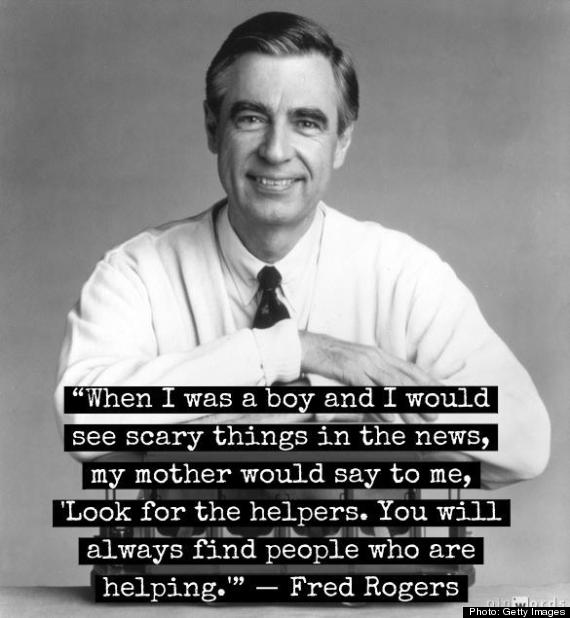
Mr. Rogers says to look for the helpers.

A beach, a blanket, and a song

I’m not quite old enough to remember the original Mickey Mouse Club. It was cancelled almost exactly a year before I was born. Three years after cancellation, the original hour-log recordings were edited down to half-hour segments that were shown in syndication for a few years, and my Mom said I watched it fairly faithfully. I don’t know how much of my memories of the show are from that exposure, because those edited episodes was re-re-released into syndication around the time I was in middle school. I watched some of those episodes, though if my friends caught me, I claimed that I was just watching it to humor my younger sister.

I was already an Annette Funicello fan before. I remember her most from the Beach Party movies co-starring her and Frankie Avalon. When I was in grade school, before modern cable systems, when most places had only three or four stations, there always seemed to be one of those stations that ran movies in the afternoons. Silly comedies were a staple of those afternoon movies, so Beach Party, Muscle Beach Party, Bikini Beach, Pajama Beach, Beach Blanket Bingo, and How to Stuff a Wild Bikini made frequent appearances.

The movies were extremely silly, with outlandish plots. Despite being movies about kids spending a summer at the beach and the ensuing romantic soap opera, a lot of them had at least one sci fi/fantasy element (the professor’s ability to paralyze someone by touching a “nerve-cluster” at the temple, the “improved” chimpanzee that could surf and dance better than a human, a Martian teen-ager sent to the beach as an advance scout for an interplanetary invasion, a mermaid falls in love with one of the surfers, and Frankie hires a witch doctor is to send a sea nymph to the beach to keep the other guys away from Annette while he’s in the Navy).

Not exactly high-concept, but probably a big part of the appeal to grade-school-aged me.

She was in a few of the sillier Disney films of the sixties, as well (The Shaggy Dog, The Misadventures of Merlin Jones, and The Monkey’s Uncle).

In all of those movies she played the wholesome good girl. The girl any boy would be lucky to have. Setting aside all the levels of sexism in that, it meant when I was a kid, I wanted to be her. I didn’t consciously admit it. I’m sure that to some of the adults in my life they assumed that I learned all the lyrics to all of her songs, et cetera, because I had a crush on her. (And for the record, I didn’t have a crush on Frankie; his pretty boy persona was totally not my type.)

So I’ve always had very fond memories of Annette and was sad to read that she died. I’m a bit miffed that news of her death has been overshadowed by reporting about the death of a certain former British Prime Minister. I certainly understand why the latter is considered more newsworthy.

Good-bye, Annette. I hope that somewhere you’re strolling along a beautiful beach, surrounded by love and music.

Damage control

A few years back a church bought a recently vacated big box retail building about 8 or 9 blocks from my house and converted it to a worship center. The church was a regional megachurch, not affiliated with an existing denomination. I had heard a little bit about it, but wasn’t terribly familiar at the time. I’ve since learned a bit more.

Although they try to wrap their message in language that sounds hip and liberal, and they clearly aim their marketing at a younger demographic, it is anti-gay, anti-women’s rights, and anti-all-the-other-usuals. The head pastor drives a couple of Mercedes-Benzes. His sermons each week are broadcast on giant screens in the neighborhood worship centers. Dissenters in the congregation are kicked out and all church members who wish to remain in good standing (included the kicked-out person’s spouse, if applicable) are instructed to shun the person.

There is a beautiful historic church building in downtown Seattle, with a gorgeous doomed main building. The building is on the eastern edge of downtown, close to Capitol Hill, which has long been known as the city’s gay neighborhood. Years ago the Seattle Lesbian & Gay Chorus (of which I was a member) was one of about a dozen community musical groups that rented space in the church for weekly rehearsals. Every year they asked all the groups that rehearsed to participate in a Christmas concert. It was wonderful to sing under that big beautiful dome. But also sad to see how small the audience was. The congregation had been shrinking for decades, finding it increasingly difficult to even keep the lights on, let alone maintain the structure. The big beautiful building is on a prime piece of downtown property, and it seemed inevitable that the building would be torn down.

A few months ago, the megachurch announced that it would be leasing the property, moving its downtown neighborhood worship center from a converted warehouse space to the building. Their announcement included the statement, “being closer to Capitol Hill is a blessing as we are serving and ministering to those who are infected with AIDS on the hill.”

There were so many things wrong with that sentence. I’m not sure where to begin.

First, it is literally not possible to be infected with AIDS; you can be infected with HIV, the virus that causes AIDS, but not AIDS itself. AIDS is a specific constellation of symptoms which are a late-term manifestation of an HIV-infection. It is a common misperception, but no one who was actively involved in any serious program to serve or care for HIV-positive people would not be aware of the distinction.

Second, it isn’t the 1980s. AIDS has not been cured, but thanks to the various new drugs, most people in the U.S. who are infected with the HIV virus do not have AIDS. Further, thanks to the drugs, a person can live thirty or more years without experiencing any symptoms. People do still die from the disease, and being on the drugs for decades is no picnic, but there are no longer thousands of people in every gay neighborhood living in near-hospice-care situations counting down the days (and T-cells) until they move into an actual hospice. Some studies, in fact, are beginning to indicate that a person infected with the virus living in a first world country, who begins treatment early, doesn’t even have a statistically significantly shortened lifespan because of it.

Third, while a higher proportion of white people infected with HIV are gay or bisexual than are straight, it is by no means a majority of gay people who are infected. Most gay people, like most straight people, don’t have the virus. In many places in the U.S., one’s ethnicity is a better predictor of HIV infection than whether one is gay and out of the closet.

Fourth, this specific church is anti-gay. Gay members are not allowed. Anyone is welcome to attend, but gay people are not allowed to become members until they become ex-Gay. No one wants to be “ministered to” by someone who thinks you are an abomination. And in the year 2013 if you are the kind of person who thinks that a gay neighborhood is filled with AIDS patients, you are the kind of person who thinks gay people are an abomination. You may not say it aloud, and you may deny it if confronted, but that level of ignorance is only achieved by assiduous avoidance.

Fifth, the statement is in the present tense. In other words, the church claimed to already be involved in some sort of service ministry to people with the disease. The fact that they are obviously unaware of my first, second, and third points shows the statement was a lie. Furthermore, not one single news article or press release in which the church had touted its various charity activities which mentioned anything about AIDS or HIV service could be found before this one statement. Not one.

Sixth, while that building is located close to one part of Capitol Hill, to the extent that the hill remains a gay neighborhood (more on that in a bit), most of the gayborhood is centered on the Broadway business corridor, about a mile walk (most of it uphill), from the church’s location. The church is not really conveniently located close to most of the homos on the Hill. And the Hill isn’t quite the great gay village it once was. The majority of queer people living in the Seattle metropolitan area live outside the Hill. The Hill is still very queer, don’t get me wrong, but one of the reasons the Pride Parade had to move off the Hill is because the neighborhood literally can’t hold all the gay people who want to attend the parade. I don’t live on the Hill, and I almost never go there, for instance.

Seventh, during my years of observation of their worship center in my neighborhood, the attendees drive in from somewhere else, attend the events on their property, and then leave. They aren’t part of the local community. They don’t seem to make the slightest effort to even get to know the local community. This last point may not be entirely fair. I’m a flaming homo, after all, and I don’t really want to get into any meaningful conversation with them. But from what I’ve read on other neighborhood blogs, it seems to be the case there, too. So I don’t see how moving the downtown meeting place a few blocks closer to Homo Hill is going to foster much in the way of interaction, constructive or otherwise, with the locals.

When the news broke, a lot of neighborhood blogs and the snarky, ultra-liberal alternate weekly newspaper raised similar points.

When contacted to explain at least in what way the church was “serving and ministering to those infected with AIDS” the church spokesperson became flustered and said someone would have to get back to the news people. They then issued a statement that claimed they were in “beginning stages of volunteering with the Lifelong AIDS Alliance.” Except the Lifelong AIDS Alliance has policies against proselytizing, which the church stated explicitly as its intention in its answer. Also, the Lifelong AIDS Alliance had received only one phone call from the church months before with no follow-up, and a second one less than an hour after the newspeople started asking questions. Volunteer applications had never been submitted from anyone identifying themselves as a church member.

When this was pointed out, the church backtracked. They made excuses. They bobbed and weaved, saying that they intend to help and repeating that bit about being in the beginning stages.

It’s not nice to laugh, but really, the sheer transparency of the lies, let alone the ludicrous depth of ignorance, demands it. I know, they don’t think they were lying. Someone had made a phone call, right? They planned to do something, right? I bet some of their members have even donated money to the charity. Or, at least went out to dinner at one of the restaurants participating in the annual Dining Out for Life fundraiser. That’s the same thing as serving and ministering to those poor AIDS victims, right?

It has been months, now, and there has been no further talk of any such ministry by the church. I’m not sure whether they were embarrassed about the whole thing, or just realized that there was nothing to gain from any effort. I know that people will say that at least some of them had their hearts in the right place. Jesus said to take care of the sick, right? But see, when the first thing that springs to mind when you find out your church is moving closer to a gay neighborhood is AIDS, that right there says all that needs to be said about how ignorant, bigoted, and self-deluded you are. If you feel god calling you to minister to people suffering and dying from AIDS, don’t move around an affluent city on the west coast, go to Africa, or south/southeast Asia.

This megachurch isn’t the only institution having a hard time grappling with its own ignorance and bigotry, as Stephen Colbert explained in this clip (click on Stephen’s name to watch):

A real pink-neck sensibility

It happens to the best of us: trying to write is a complete bust, and when you try to read your brain just can’t seem to hold the thought from the beginning of a paragraph to the end. You can’t concentrate, but you’re not sleepy, and so you wind up either surfing the internet or surfing channels.

A few years ago I was doing that one late weekend night and I came across a comedian doing standup. He was a big guy with a shaved head and wearing a football jersey telling a joke about why he loves the series, Cops. Cops happens to be one of my least favorite shows, for exactly the reasons he was joking about it, but he made me laugh, so I kept watching.

A few minutes later he mentions that he’s gay, and then makes a bunch of self-depracating jokes about how difficult it is for a gay guy who looks like him to get a date. Which made me laugh a bit more—and not just because my equally non-stereotypical look had made dating unpleasant back in the day. He made some more jokes about growing up in Texas in a Baptist family, then summed up the routine with a comment, “Folks look at me and think I’m a real redneck, but I’m really a pinkneck, which isn’t all that different.”

I had to do a little on-line sleuthing to find out who he was, since I had missed his introduction, and the show went to a commercial break and moved on to the next comedian without repeating his name. Scott Kennedy, it was a name I hoped I would remember.

Sometime after that I read a story online somewhere about how Scott had formed a group to entertain troops. He had worked with the USO a few times, being the son of a veteran and a military school graduate himself, he felt strongly about supporting the men and women serving their country. He called it, “Giving them a piece of home.”

But the USO organizers didn’t like to take the entertainers into dangerous places. Scott thought those were the troops that needed it most, so working with some officers he’d met during his USO tours and some comedians back home, he formed Comics Ready to Entertain (CR2E) in 2007, and started doing tours.

The last time I’d heard anything about CR2E was a short video interview after his (I think it was) 47th tour, talking about how he’d gotten his father to go along with him on the tour, which included some comments from his 70-some-year-old dad talking about what it was like to see his son entertaining troops from the same unit he had served in (back in the 50s), now somewhere deep in Afghanistan.

I’ve caught Scott’s act a few times since on cable. It wasn’t that he made me laugh so hard my sides hurt—maybe I watch too many comedians, because that seldom happens any more—but his act reassured me that it was okay that I was a gay man who occasionally watches football, likes some country music (in between the glam pop, dance, musicals, and all my other weird music tastes), doesn’t like RuPaul’s Drag Race, and will never, ever look like a gym bunny.

Scott Kennedy died a bit over a week ago. I’d seen no mention of it on any of the many gay-related news blogs I read before one blog post today. I would have rather been reading tributes to him than some of the news I did read (and amplified and ranted about on my own blog).

Scott was a funny man who did what he could to make people laugh. We need more laughter. And we need to spend more time recognizing heroes such as Scott: