Tag Archives: personal

Why queer clubs and gay bars are more than just places to dance and drink

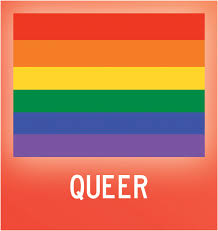
Rainbow flag saying, “Is it Queer in here, or is it just me?”
“Is it Queer in here, or is it just me?” (click to embiggen)

In the immediate aftermath of the Orlando shooting, President Obama’s remarks were met with criticism from many corners, as they do, but there was a particular comment that seemed to really upset a lot of straight people on social media. This bit really got some folks’ panties in a bunch:

The shooter targeted a nightclub where people came together to be with friends, to dance and to sing, and to live. The place where they were attacked was more than a nightclub—it is a place of solidarity and empowerment…
—Barack Obama

Some people had a real difficult time understanding why anyone would refer to a gay bar as a place of empowerment. It’s really hard for most straight people to understand just how isolated and alienated queer kids feel their entire lives. We take a lot of flack, particularly white male queer people, from people of color whenever we draw parallels between our struggle for acceptance and equality with the struggles that racial minorities face. There are more similarities than some people want to admit, but they are correct that there are differences. And one of those differences is that isolation.

A member of a racial or ethnic minority growing up in a racist society is never told that other people like him or her do not exist. At all. Usually a person of color is aware of the existence of other people of color if for no other reason than the rest of their family is also a member of that racial or ethnic minority. They may live in a neighborhood where other members of the minority are neighbors, classmates, and so on.

Not queer kids. Until very recently, queer kids were pretty much guaranteed to grow up being told and shown again and again that every human is straight. Little boys are teased about having a crush on any girl or woman other than a close relative that they get along with. Little girls get told they will be a mommy some day. Every book, movie, television show, family anecdote, et cetera shows us again and again that every boy grows up to have a girlfriend, eventually a wife, and will become a daddy. And they tell every girl that she will grow up to be some boy’s girlfriend, then some man’s wife, and eventually will have that man’s babies.

And anyone who doesn’t do those things? Well, there’s something wrong with them! Unattached characters of either gender appearing in stories and shows are usually treated as the comic relief or as tragically alone. Lonely spinsters that everyone feels sorry for or eccentric bachelors that no one takes seriously are the least horrible futures that society tells us await us if we don’t fall in love with a person of the opposite gender and settle down.

That’s the initial indoctrination. The first level of lying, if you will.

As we get older, we start noticing other fates for men and women who don’t fit into the coupled hetero ideal. They aren’t just taken seriously and pitied, it’s worse than that. Some of those oddballs may indeed have special friendships with another person of the same gender, but that always ends in death for at least one of them. If one survives, it is as a broken creature, forever haunted by guilt and despair because of it.

The lies that we are told is that queer people don’t exist, or at least they don’t exist naturally, and those few queer people that do come about however that happens, will live lives that are filled with loneliness, despair, pain, suffering, and death. But it is a pain, suffering and death that they deserve because they are monsters.

When you are told those lies again and again; when you are made to feel like a freak any time you behave or feel anything other than what is expected; when you are not allowed to see any examples of queer people who aren’t object lessons who deserve pain and suffering—you believe it. Your parents, your teachers, your church, your neighbors, your classmates, and your siblings have all told you the same thing again and again your entire life. It must be true! There must be something deeply wrong with you, and that wrongness means that you can never be happy, never be loved, never know joy, never be accepted.

And you’ve been made to feel miserable any time that any hint of your difference has manifested. You have probably developed crushes on members of your own gender, but realized that the other person didn’t feel the same way. Or if the affection was returned, you both lived in terror of what would happen if anyone found out. If anyone has found out, there were some sort of bad consequences. One or both of your were beaten. You were forbidden to see each other. One or both of you might have been sent away or simply kicked out of your home by your parents.

So, the first time that we walk into a gay bar is usually a revelation. There are other people like you there! More importantly, you find people like you there who seem to be happy. The first visit may be a short one because you’re nervous and not sure what to expect. Or it might be that the atmosphere or theme of the place is catering to a different subset of the community than you identify with. But when you find a place that you can feel comfortable in, you see that there are people there who are living lives other than lonely and tragic. There aren’t just sexual or romantic relationships, there are friendships. People share drinks and a laugh when their life is going well, they share drinks and hugs and commiserations in times of sorrow.

And while you may not be a person who particularly fits in at the bar scene, there is still a sense of community and belonging that you can find there. One that many queer people never experienced before that.

My first few experiences in gay bars didn’t go terribly well. The first place I went to was more of a leather bar and I felt as if I’d stepped into a foreign country. My bright colored nerdy t-shirt didn’t help me fit in, but more importantly, I didn’t understand any of the non-verbal signals that were going on all around me. My second gay bar was filled with loud music that I had never heard before, and everyone was dressed in far more fashionable clothes than I could pull off. I felt like a very ugly duckling surrounded by a sea fashion models and body builders.

For me, the bar that clicked was the old Timberline. It was a mix of lesbians and queer men—a lot of people wearing cowboy boots and blue jeans. Country music was played there, and twice a week there were classes in line-dancing and two-stepping. Same-sex couples danced arm in arm, circling around the dance floor to the kind of music that I had grown up with. It wasn’t every queer person’s dream, but to those of us who are came to Seattle from the south or from rural communities just about anywhere, there were enough cultural touchstones to our childhood to make being an openly queer man dancing with another man feel like a magic transformation where the impossible suddenly seemed within reach.

That’s another reason the shooting hurts so much. Even though I haven’t been inside a gay bar in something like 14 years, the images of wounded people being carried out of the club not by paramedics, but by other people who were clearly part of the bar crowd was worse than a punch in the gut. One of our places was no longer ours.

I’ve rambled enough about this. We grew up being told we were monsters who should either not exist or be invisible. We grew up believing we would never have friends who would accept us for who we really were. We grew up believing that not only would we never find love, but that we didn’t deserve any form of happiness at all. For many of us, a queer club was one of the first places that we learned that all of those things were lies.

And it wasn’t just me who experienced that:
I Found A Home In Clubs Like Pulse In Cities Like Orlando: As a gay Latino man I know there are few safe spaces for me, but Latin night always felt like a solace

How Queer Spaces Gave Me Superpowers

What We Find in Gay Bars and Queer Clubs

Why do you think god hates anyone?

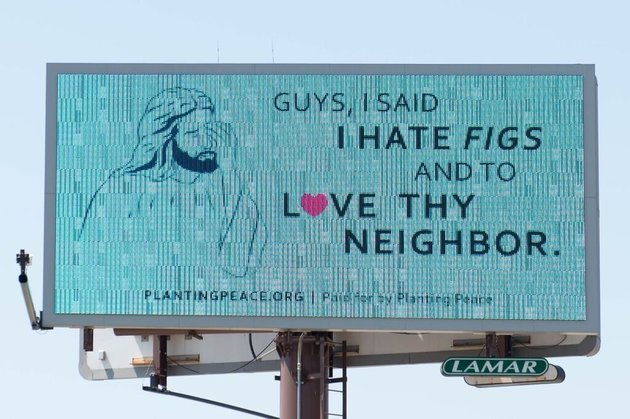
Billboard that went up in Jacksonville, Mississippi this week after the new anti-LGBT law was signed. “Guys, I said I hate figs and to love thy neighbor.”
Billboard that went up in Jacksonville, Mississippi in April after the new anti-LGBT law was signed. “Guys, I said I hate figs and to love thy neighbor.” (click to embiggen)
I was twenty-three years old, sitting in a pew in a church with my head bowed and my eyes closed when the pastor leading the prayer thanked god for sending the plague of AIDS to the world to eliminate the scourge of homosexuality. He went on at some length during his prayer about how the devil has deceived many and led them into a life of sin. And he went further, talking about how the devil also deceives people who think they are righteous, making some people believe that homosexuality is just a choice, like buying a different brand of car than your neighbor, and that we can be friends with depraved sinners such as homosexuals, and still be good Christians. But that notion, he said, was a lie from the depths of hell itself.

It was hardly the first time I had heard condemnation of homosexuality coming from the pulpit, but the hostility of these pronouncements was much worse than usual. It was also a bit unusual for a prayer to have such a long expository lump. Not completely unheard of, but enough to make several people in the congregation shift nervously. The prayer was going on and on for quite some time.

The subject of the prayer was also at odds with the sermon we had just heard. The sermon had been delivered by a visiting preacher. The church was having a revival week, which meant that a pastor from out of town presiding of the services, and the church was having a service every night of the week, rather than just the usual Sunday morning and evening worship service and Wednesday prayer meeting. And the visiting preacher had just delivered a sermon about the unity of the church. Nothing about sexual immorality or the like.

The preacher leading the prayer was not the same man who had delivered the sermon. He was the lead pastor of the church. And the tone of his prayer sounded more like an argument than a supplication for divine favor.

I was trying not to have a panic attack. If the church had been my home church I would have been in even more distress. But this wasn’t my church. I was at this service because I was the assistant director of an interdenominational teen touring choir, and we had been asked to have our smaller ensembles take a turn each night providing special music for the service. The ensemble I led within the choir had sang two songs earlier in the service, and we were scheduled to sing one more for the altar call at the end.

Anyway, among the reasons that I was upset at this unusually aggressive prayer was that I had been, to use the evangelical terminology of the time, “struggling with homosexual temptation” for years. Not that I had ever told anyone. I was too afraid of what would happen if I actually admitted to anyone in my church or family that I even thought about homosexuality.

And I had done more than dipped my toe into the waters of temptation. There had been a several occasions during the previous ten years during which I had taken the plunge right into the deep end.

At the time of this prayer, it had been at least two years since my last plunge. And that had been with a stranger not just in another town, but an entire different country. No one I knew knew the guy—and truth be told, I couldn’t even remember his name. So I didn’t think anyone knew. But still, it seemed that the pastor was aiming all this anti-gay contempt at someone, and as far as I knew at the time, I was the only homosexual in the room.

It was not the first time (nor would it be the last) that, while sitting in a house of worship I would hear people like me described as depraved sinners and tools of the devil. But this time was the most vehement had yet heard.

Looking back on it, years later, I realize that there probably was an argument going on. The visiting pastor’s sermon about unity could be interpreted as a call for factions of the Christian faith to set aside their differences, while the local pastor clearly thought that some of those factions weren’t really faithful. But I couldn’t be objective enough at the time to work that out. I half expected someone to take me aside to stage an intervention.

Except the intervention would have involved people laying hands on me and praying fervently for god to cast the demons out of me. Which had been something I had been fearing since at least the age of eleven. And that didn’t preclude the possibility that other members of the community might waylay me and just beat me up. That very thing had happened to one of my classmates several years earlier. There had also been classmates kicked out of their homes by their families and sent “away” to stay with some distant relatives or other vague described living arrangements.

CkxNItoUYAADQocThe fear of being kicked out of your home, rejected by your parents, siblings, classmates, and neighbors is something that every queer kid growing up in conservative Christian churches live with. A lot of other queer kids know that fear, as well, don’t get me wrong. But when you’re raised to believe that you are among god’s chosen, that anyone who is not a part of this community of faith means that you are destined to drown in hatred and sin, without ever knowing love and eventually spending an eternity in agony, well, it’s traumatic.

It is a bit astonishing that any of us survive it, to be honest. We’ve known for a long time that queer teens are much more likely to attempt suicide than their straight peers, and we know that teens who come from queer-rejecting families are eight times more likely to attempt suicide queer peers who reported no or low levels of family rejection.

It’s not just that the haters are trying to take away the rights of adults, such as myself, who have the means to fight back. They spend years telling some of their own children that god hates them. So there was one bit of that prayer that was correct. This isn’t just a difference of opinion. This isn’t about them saying they want to drive gas-guzzling SUVs, while some of us prefer more fuel efficient cars. They are literally bullying children, sometimes bullying those children to death. And they want the rest of us dead, too: GOP Congressman Who Prayed Gays ‘Worthy of Death’ Weeks Before Orlando Still Has No Apologies.

This is why queer people need to be out of the closet. This is why we need to have Pride parades and festivals and all the rest. This is why it isn’t enough to say “to each their own.” As long as there are kids growing up being taught that god hates them, we need to call out the bigotry for what it is, and stand up for those who aren’t yet able to stand up for themselves.

Why Does God Hate Me? – Gay Short film (LGBT):

(If embedding doesn’t work, click here.)

Nostalgia for a Time that Never Was – more of why I love sf/f

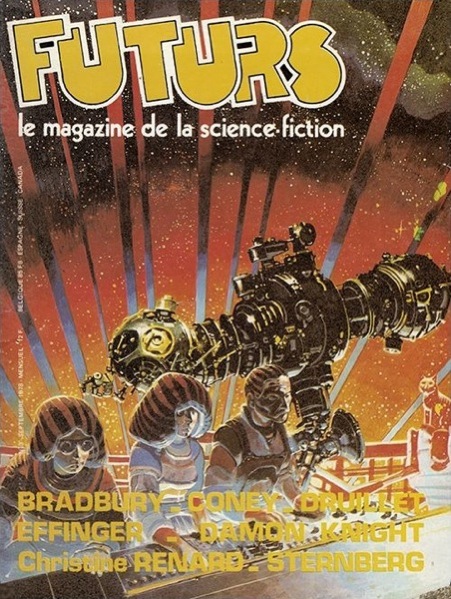
The cover of Futurs No 3, an anthology of translated science fiction published in Paris, September, 1978.
The cover of Futurs No 3, an anthology of translated science fiction published in Paris, September, 1978. (Click to embiggen)
One day, back when I was in high school, I found a paperback copy of The 1977 Annual World’s Best SF edited by Donald Wolheim in the used bookstore I frequented. I already owned several of Wolheim’s earlier annual anthologies, so I knew they usually the contained a lot of good stories. The table of contents of this issue featured several authors I loved, including at least a couple of titles that I remembered reading elsewhere and liking. So, of course, I picked it up.

The third story in that anthology, “Those Good Old Days of Liquid Fuel” by Michael G. Coney did not wow me on the first reading. Honestly, the thing that I found most interesting in the first paragraph was the revelation that it was apparently set in Western Washington state. The story is told by a first person narrator, who is taking a ferry to go to a port to meet a shipment of some sort of alien creature. We never learn much about them, other than that he raises them for their pelts, which he can sell for a profit. Though the way he describes his farm, he is mostly just getting by in this endeavor.

Most of the first two pages of the stories consists of the character describing his ferry trip in such a way that we learn that Earth is part of some kind of Galactic society, that only recently have they replaced rockets with antigrav for vessels that move from ground to orbit, and so on. The hook of the first paragraph is him noticing on his “newspocket” that all the old shuttles at the abandoned Pacific Northwest spaceport are to be scrapped, finally.

He arrives at his destination early, finding himself with five or six hours to kill, and decides to drive up to the old space port. During the drive he rambles some more, dropping hints about what his life was life before, and telling us more about how things have changed since then. It isn’t until halfway through the fifth page that he gets to what appears to be the meat of the story, as he flashes back to junior high school, when he and his best friend used to sneak onto the grounds of the spaceport to watch shuttles land and take off.

The narrator, as a young man, loved everything about the shuttles: the roar of the engines, the sleek shapes of the ships themselves, et cetera. His friends was obsessed with identifying and checking off the shuttles from a book he had of every registers craft that ever landed on Earth. There are a few anecdotes about the mild misadventures the narrator, his friend, and a few other people who liked to sneak onto the grounds of the space port had watching the shuttles land and take off.

Then everything is ruined when his friend gets a crush on a girl. Who just happens to be the same girl that the narrator once got into an altercation with in grade school and of course they hate each other. To say the friendship is strained is an understatement. Then there is a disaster involving the girl’s pet, with is a cat-like animal imported from across the galaxy, which happens to be telepathic, but only with members of its own species.

After the disaster, we flash back to the present, and then the narrator—who has lamented about five dozen times so far in the story how much he misses his old friend, and how astonished his middle-school-aged self would be to know that he doesn’t even know where the friend lives any longer—sees said old friend. The friend, it turns out, owns the wrecking company that is going to tear down the spaceport. But the narrator, of course, doesn’t say hello. He skulks away.

There are a lot of things not to like about this tale. The rambling expository lumps. The lack of characterization. The clichéd use of flashback to tell most of the story. The extremely dated boy vs girl dynamic of the tale. The ludicrous ways that chauvinism pops up and is even defended at one point.

Then in the category of merely cringeworthy, there is the fact that the only female characters who appear in the story all dress and act as if they are characters out of the 1950s. Remember, this was written in 1975—women’s lib had been a thing for many years by then! Even in 1978, when I read this story, that section seemed terribly dated!

I read the story one more time, when I found it in another anthology years later. I didn’t recognize the title, or I might not have read it. The second time I didn’t remember the story until fairly late into it, just about the time of the disaster near the end of the tale. I read it to the end, hoping to have a bit more insight, but still wasn’t impressed.

When I re-read it again last week, I was having the same reaction as before all the way until the end. And then I finally had an epiphany about what the author may have been trying to do. It had never occurred to me during my earlier readings that the narrator was unreliable. The section early on where he defends men’s only clubs and no girls allowed spaces as not being sexist at all should have tipped me off. It was too over the top. And there were several other hints throughout the story where our narrator is being very defensive in describing the events.

That’s when I realized that the ending, where he decides he doesn’t have anything in common with the old friend anymore is supposed to be tragic or ironic (depending). The narrator drives many hours out of his way and spends the entire tale wallowing in a nostalgic lament for the good old days. He goes into inordinate details on fairly minor stuff, is very defensive of himself and goes to pains to describe every other character in the narrative as betraying him or at least not treating him right. He had these great dreams and aspirations, which have all come to naught because the world is just not fair to nice guys like him.

Meanwhile his old friend is now a successful businessman, and is literally in the business of tearing down the obsolete relics of the past so that something new can be built.

Now, finally, the story makes sense when I think of it as a critique of nostalgia and clinging so hard to the past that you can’t move forward. And those expository ramblings sound an awful lot like an old bad way that some sci fi stories in the 30s, 40s, and 50s would do their world building: by having two characters say such unnatural things (while riding a subway or something), “Thank goodness for modern convenience! Can you believe that our ancestors used to have to connect their appliances to receptacles in ways with physical cables to draw power! What a primitive nightmare!”

As an indictment of nostalgia, “Those Good Old Days of Liquid Fuel” isn’t quite so bad. I’m not sure I agree with Wolheim that it was one of the best story published that year, but it did make me think, even before my epiphany. Struggling with a story is good mental exercise.

And I have to admit that the descriptions of the shuttles taking off and landing and the sense of wonder the narrator had as a child was pretty good.

Very Big Questions and Very Small Epiphanies – more of why I love sf/f

A cover of a later paperback reprint of the 1977 Annual World's Best SF anthology edited by Donald A. Wolheim.
A cover of a later paperback reprint of the 1977 Annual World’s Best SF anthology edited by Donald A. Wolheim. (Click to embiggen)

Some opening lines are better than others. “Something very large, something very small: a galactic museum, a dead love affair. They came together under my gaze.” Those are the opening sentences of Brian W. Aldiss’ short story, “Appearance of Life” and they’re one of the better examples. The opening tells you, thematically, where the story is going, without giving anything away.

“Appearance of Life” by Brian W. Aldiss is another story that I first encountered in the pages of the 1977 Annual World’s Best SF anthology edited by Donald A. Wolheim. So I was a junior in high school, 17 or 18 years old, when I discovered it. The story is narrated in first person by a character who is on their way to a museum. The character never gives us their name, identifying them self only as a Seeker, which is either a job title or avocation.

The Seeker tells us first about a long lost alien race, the Korlevalulaw. We don’t know what they looked like and virtually nothing about their culture. Because they had vanished by the time humans reached the worlds they once colonized. And the aliens left behind only empty buildings. But they are vast empty buildings. Our narrator is traveling to one such building, which is a single structure that completely encircles a planet exactly on its equator. The building it over 1600 kilometers long, and at different parts of the equator, it is between 15 and 22 kilometers tall. It is called a museum because humans have decided to start filling the empty space with artifacts they have gathered from around the galaxy. Not artifacts left behind by the Korlevalulaw, but artifacts left behind by previous human civilizations.

The story slowly reveals that by the Seeker’s time humans have changed a lot. The Seeker makes references to both the First Galactic Era and Second Galactic Era as distinct long periods of interstellar civilization. He or she makes references to how much smaller humans were at the time, and to other limitations of human bodies. But the Seeker never describes what humans look like, now. The gender of the Seeker is never given… the narrator does refer to every android they interact with as she. And there is a point when a reference computer points out that current human engineered breeding produces a ratio of ten women to every man, which is why “modern humans” don’t understand the importance more primitive humans placed on being husbands and wives.

The Seeker has been commissioned by several academic institutions to explore the museum and look for evidence to shed light on various questions these academics have. The Seeker spends several days exploring the museum.

The Seeker finds a holocube in one of the exhibits which contains a recording of the personality of a long dead human woman. When activated, she informs him that she is only for use by her husband, and to please put her back on the shelf rightside up. A while later the Seeker finds more holocubes, and one of them contains a male memory recording that says he is only for his ex-wife.

The Seeker notices that the names are similar, and so tries an experiment. Placing the cubes next to each other, the Seeker activates them and observes as the two holograms have a discussion. During the exchange of messages, the Seeker has an epiphany about the place of humans in the galaxy, and what the ancient disappearance of the Korlevalulaw means about the fate of human society.

The Seeker is so disturbed by the epiphany, that they abandon their mission, flee the museum, and find a mostly uninhabited world to hide out on, lest they accidentally reveal the epiphany to others and hasten the end of current civilization.

I was a little bit disappointed in the ending. The epiphany as described by the Seeker didn’t seem that alarming or profound, to me. I had been enjoying the story up to that point. It was very interesting to recognize how my image of the narrator and the situation kept changing as certain details were casually revealed. In the beginning, I was imagining a person much like myself. By the end, my imaginary version of the Seeker was only vaguely humanoid, and neither male nor female. Similarly, at the beginning of the story I assumed the human civilization was a kind of standard space opera interstellar empire, or multiple competing federations, something like that. But by the end I was trying to imagine a civilization that barely understood the idea of nations and political systems and even the concept of ownership.

I don’t know if Aldiss meant for the reader to think the Seeker’s epiphany only made sense because we didn’t, still, fully understand the Seeker’s frame of reference, or something else. I thought the way Aldiss built up the idea of this very alien culture, and how they didn’t really understand us, and therefore how we likely don’t understand previous generations, either, was really well executed. I didn’t realize that’s what was happening until I reached the end and was trying to figure out if I misunderstood the ending.

The story is very cerebral, with the conflict being something that the narrator doesn’t even realize is happening until the end. The Seeker wants the answers to particular questions, and doesn’t realize that he/she lacks the frame of reference to understand most of the evidence being examined. So you could describe the plot as Man vs His Own Ignorance. And the resolution is that the Seeker gains just enough insight to realize that none of the answers are pleasant ones.

And though I have been reminded of this story from time to time while reading other sci fi tale, I never realized until I was writing this post that it has more in common with a classic Lovecraft horror story than a science fiction tale. The Seeker gets a glimpse of a much bigger truth about their place in the universe, and that glimpse destroys their sense of self. It’s just a bit less melodramatic than a typical Lovecraft tale would have been. I don’t know if Aldiss was doing that on purpose, but it’s an interesting question.

The story left me pondering and debating with myself how I might have tried to tell the story better. Except I think the best part of it isn’t the traditional form of a story. The best part of the tale is how the writer made me slowly deconstruct my own assumptions about who the narrator was and what his/her world was like and the way the story made me uncomfortable to give the narrator a gendered pronoun.

It didn’t translate as a big epiphany for me. But it did change the way I viewed many stories afterward. It affirmed my suspicions that much of what we thought we knew about our own history, and about ourselves, was way off. And reminded me that we should never be satisfied with the easy answers.

Memorials, reposting

I noticed this morning on the Washington Post web site that Valerie Strauss has republished the article she’s been publishing for a few years now on both Veteran’s Day and Memorial Day: Why Memorial Day is different from Veterans Day. And while I am all for any effort to prevent people from turning every single even moderately patriotic holiday into a variant of Veteran’s Day, I have a quibble.

She leaves out the fact that before the first official federal observation of a Memorial Day, at Arlington National Cemetery back in 1868, there was another holiday observed in many parts of the country—long before the Civil War—called Decoration Day, which was a day to have family reunions and celebrate the lives of all of our deceased family members. And my Grandmother was someone who observed that version faithfully her whole life, long before the official creation of the modern Memorial Day with the Uniform Monday Holiday Act of 1968.

I tried to simply reblog the earlier entry, but apparently because it has been reblogged by myself before, WordPress won’t let me. So I’ll republish the entire thing below. If you don’t want to read about me and my mom crying at Grandma’s grave, you can skip to my post about my absent-minded coffee cup issues from earlier today: A cup, a cup, a cup, a cup, a cup… boy! instead.

Anyway, for Grandma (originally posted on Memorial Day 2014):

Memorial, part 2

copyright 2014 Gene Breshears
Flowers for Grandma’s grave.
Grandma always called it by the older name, Decoration Day. As I’ve written before, the original holiday was celebrated in many states as a day to gather at the grave sites of your parents, grandparents, et cetera, to honor the memory of their lives. It was often a time of picnics and family reunions. At least as much a celebration of their lives as a time of mourning. The connection to military deaths didn’t happen until 1868, and particularly in the south, was often seen as a pro-Union, pro-war, anti-southern celebration.

I didn’t understand most of those nuances when I was a kid. The modern version of the holiday, celebrated on the last Monday in May, didn’t even exist until I was a fifth-grader, when the Uniform Monday Holiday Act went into effect.

Grandma observed it faithfully. Every year, as May rolled around, she would begin calling distant relatives and old family friends. Grandma knew where just about every person descended from her own grandparents was buried, and she made certain that someone who lived nearby was putting flowers on the graves of those relatives by Memorial Day. She took care of all the family members buried within a couple hours drive of her home in southwest Washington.

She was putting flowers on the grave of my Great-aunt Maud (Grandma’s sister-in-law) seven years ago on the Friday before Memorial Day when she died. My step-grandfather said he was getting in position to take a picture of her beside the grave and the flowers (there are hundreds and hundreds of photos of Grandma beside graves with flowers on them in her photo albums) when she suddenly looked up, said, “I don’t feel good!” and pitched over.

One weekend she had blown out the candles on the cake celebrating her 84th birthday. The following Friday, while putting flowers on Great-aunt Maud’s grave, she died. And one week after that a bunch of us were standing at her graveside. It was just down to a few family members, and we were at that stage where you’re commenting on how pretty the flowers that so-and-so that no one had heard from in years were, when someone asked, “Isn’t grandpa’s grave nearby?”

Grandpa had died 23 years earlier, and was buried in one of a pair of plots he and Grandma had bought many years before. And after Grandma re-married, she and our step-grandfather had bought two more plots close by.

Anyway, as soon as someone asked that, my step-grandfather’s eyes bugged out, he went white as a sheet, and said, “Oh, no!” He was obviously very distressed as he hurried toward his car. Several of us followed, worried that he was having some sort of medical issue.

Nope. He and Grandma had been driving to various cemeteries all week long before her death, putting silk-bouquets that Grandma had made on each relative’s grave. Aunt Maud’s was meant to be the next-to-the-last stop on their journey. Grandpa’s silk flower bouquet was still in the trunk of the car. My step-grandfather was beside himself. He’d cried so much that week, you wouldn’t have thought he could cry any more, but there he was, apologizing to Grandma’s spirit for forgetting about the last batch of flowers, and not finishing her chore—for not getting flowers on Grandpa George’s grave by Memorial Day.

The next year, several of us had the realization that without Grandma around, none of us knew who to call to get flowers put on Great-grandma and Great-grandpa’s graves back in Colorado. None of us were sure in which Missouri town Great-great-aunt Pearl was buried, let alone who Grandma called every year to arrange for the flowers. Just as we weren’t certain whether Great-great-aunt Lou was buried in Kansas or was it Missouri? And so on, and so on. One of my cousins had to track down the incident report filed by the paramedics who responded to our step-grandfather’s 9-1-1 call just to find out which cemetery Great-aunt Maud was in.

copyright 2014 Gene Breshears
Flowers from us, Mom, and my Aunt Silly on Grandpa’s grave.
Mom and her sister have been putting flowers on Grandma’s and Grandpa’s graves since. Our step-grandfather passed away three years after Grandma, and he was buried beside her.

Some years before her death, Grandma had transferred the ownership of the plot next to Grandpa to Mom. So Mom’s going to be buried beside her dad. Mom mentions it whenever we visit the graves, and I don’t know if she realizes how much it chokes me up to think about it.

We had put the flowers in place. We had both taken pictures. Mom always worries that she won’t remember where Grandpa’s grave is (it’s seared in my head: two rows down from Grandma, four stones to the south). Michael helped Mom take a wide shot picture that has both Grandma’s and Grandpa’s spots in it.

I thought we were going to get away with both of us only getting a little teary-eyeed a few times, but as we were getting back into the car, Mom started crying. Which meant that I lost it.

Grandma’s been gone for seven years, now. But every time we drive down to visit Mom, there is a moment on the drive when my mind is wandering, and I’ll wonder what Grandma will be doing when we get there. And then I remember I won’t be seeing her. It took me about a dozen years to stop having those lapses about Grandpa. I suspect it will be longer for Grandma. After all, she’s the one who taught me the importance of Those Who Matter

A cup, a cup, a cup, a cup, a cup… boy!

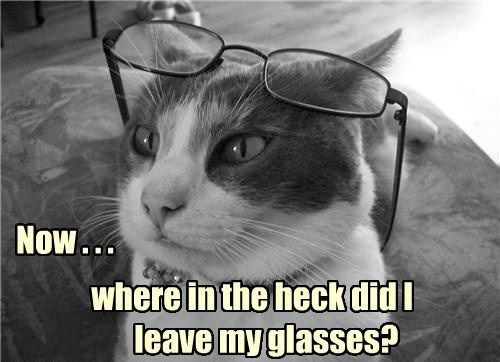
"Now, where in the heck did I leave my glasses?" This is a frightening accurate representation of the author.
“Now, where in the heck did I leave my glasses?” This is a frightening accurate representation of the author.
Absent-mindedness manifests in many ways. For instance, my coffee cup. When I was younger, I would often lose track of my current cup. I would spend time looking for it, and then conclude that maybe I was simply mis-remembering having poured a cup at all. I’d grab a mug from the cabinet, fill it up, head back to whatever I was working on. About a third of the time I’d sit down with the cup and hear a clink as I tried to set the second on top of the first mug, which I was absolutely certain hadn’t been in that spot on the desk just five minutes before. But there is was, half full.

Other times I would work for a while, then get up to retrieve a book from another room, or run to the bathroom, or something similar, and I’d find the first mug, sitting in an odd location, half full and gone completely cold. Some days I’d wind up with three or more mugs scattered around the house.

I was only able to reduce the occurrence of that problem by adopting the practice of using only my favorite mug for coffee. If I couldn’t find the coffee near me where I expected it, I’d keep searching until I found that mug.

Of course, it isn’t always coffee. I currently have a second favorite mug, and I use it for tea. If I decide to make tea, I go find my Queen of Everything mug, pick out a tea bag from my rather frightening collection, turn of the electric kettle portion of my coffee maker, and then make a cup.

Sometimes I get in the mood for tea and forget that I still have a half a cup of coffee sitting around somewhere. I usually find it a bit later, and half the time I don’t even realize it until I pick up the mug, take a sip expecting tea, and I get room temperature coffee instead. Never mind that my favorite coffee mug is mug bigger, is a different shape, and a completely different color from the tea mug. When I’m in the middle of something, I don’t notice any of that.

But that isn’t the end of it. Some afternoons or evenings, I’ll have a craving for some soda. So I’ll grab a can of La Croix, or a bottle of Dry Soda, or some other low- or no-sugar sparkling drink, open it, and drink half of it before I realize that I already have a half-finished mug of tea or coffee… and sometimes half a mug of each.

And then there are the evenings I decide to make myself a cocktail, or have a glass of wine. Yes, some times I have had the embarrassing moment when I reach for my beverage, and realize that within reach of me there is a half-full cocktail glass, a half can of soda, a half bottle of iced tea, a half mug of coffee, and a half mug of tea. Not often, but some nights…

“The Java Jive” (Ink Spots, 1940):

(If embedding doesn’t work, click here.)

Out of Body Vacations – more of why I love sf/f

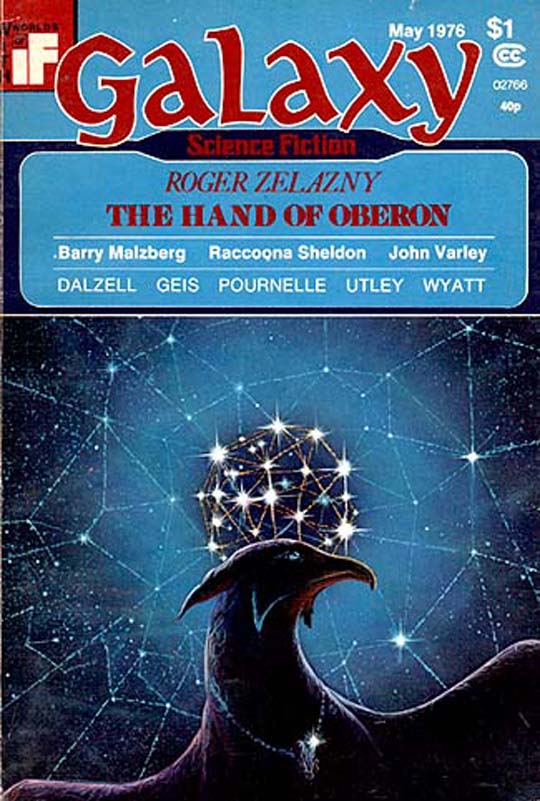
Cover of the May 1976 edition of Galaxy Magazine, which is where I probably first read Varley's “Overdrawn at the Memory Bank.”
Cover of the May 1976 edition of Galaxy Magazine, which is where I probably first read Varley’s “Overdrawn at the Memory Bank.” (Click to embiggen)
In the spring of 1976 I still had a subscription to Galaxy magazine, thanks to my grandparents, though things were not going terrible well in my life at that time, so I didn’t always get all the way through one issue before the next came in. So I might not have read it until some months, after my parents’ divorce was final, and Mom, my sister, and I moved 1200 miles away. I definitely remember owning the magazine with this cover. This issue contained the story, “Overdrawn at the Memory Bank” by John Varley.

Varley was the author of “Picnic on the Near Side” which I wrote about before, and which made quite an impression on me. This story is set in a similar world, with extensive colonies on the moon. It concerns a man named Fingal how has purchased a vacation at one of the “disneylands” which was large lunar caves that have been made to duplicate long lost environments on earth, complete with cloned wildlife. Fingal’s memory and personality are transferred from his brain into a cube, which is then implanted in a lioness so that Fingal can experience the life of a predator on the savannah.

Something goes wrong, and Fingal finds himself back in his own life sooner than expected, and strange things keep happening, such as books rewriting themselves before his eyes to become messages to him. He eventually learns that his body has someone been misplaced, so the memory cube has been put into a safety mode, interfacing with a computer which is creating a simulation of his real life. Messages come to him from a technician named Apollonia Joachim who explains that the simulation is necessary to keep his memories and personality intact until it can be returned to his body.

As the days stretch into weeks, Fingal starts taking classes in the simulation to teach himself new skills to get a better job when he does get back. Strange things happen, as the technician tries to keep him focused. In one incident, Fingal notices strange patterns in the floor tiles in his bathroom, and starts tracing them with his toe, suddenly the bathroom fills up with money. Fingal’s consciousness had somehow gotten into someone’s financial records. Apollonia warns him about losing himself again and again.

Over the months that follow, Fingal finds himself falling in love with Apollonia, and making plans for a future together.

Eventually Fingal is reunited with his body, and then learns that what felt like years to him in the simulation was only six hours, because his thoughts were moving at computer speed while connected. Ms Joachim has only been interfacing with him for a few hours, and doesn’t share his feelings.

The simulated classes he took did result in real learning, so he does have new skills and can pursue a more interesting job. Plus, of course, he gets a refund on the vacation and a lump sum settlement from the company. He’s informed that other people who suffered similar accidents have not always fared so well, and he’s the first person two survive six hours outside the memory cube’s normal limit.

Varley didn’t win an award for this particular story. He did win a Special Locus award the year this was published for having four novelettes, including this story, voted in the top ten in the Locus Reader Awards.

The story was adapted badly into a movie that changed a lot of things for no particular reason. Avoid the movie. The story isn’t action packed, but is more focused on the internal conflicts of a man unhappy with his life who is forced to stay there even if it is simulated. The notion being that if they allow his fantasies to run wild while his personality is in the memory cube, he will go mad and forget who he really is.

I enjoyed the story a lot. The notion that it’s the boring and repetitive parts of our lives that anchor our identities wasn’t terribly revolutionary, but it was interesting to see how this sort of technology might play out without any world-threatening peril giving it at artificial sense of danger. Really, who needs a bigger threat than literally losing your mind to provide a sense of dramatic tension?

One odd side note: I always get this story mixed up with another Varley tale, “The Phantom of Kansas.” They’re both set in the same fictional future world (the Kansas in the title of the second story is an artificial recreation of the midwestern plains of North America in another Lunar cave), and both stories involve stored personalities, but otherwise the plots have nothing to do with each other. The simple fact is that I think the title “Overdrawn at the Memory Bank” would have been better for the second story as it evokes a metaphor for the central plot better than the notion of a phantom. So there has been more than one occasion when I’ve pulled out an anthology, such as my hardcover copy of Wolheim’s 1977 World’s Annual Best Science Fiction, see the title of Varley’s story, turn to it expecting to read the other story, and then as I read the opening paragraphs remember that I always get them mixed up.

Oddly, I own more than one anthology that includes “Overdrawn at the Memory Bank,” but absolutely none that include the other story. I need to fix that.

A cup, a cup, and a cup…

My favorite coffee mug in it's natural habitat: a bookshelf within reach of my favorite chair.
My favorite coffee mug in it’s natural habitat: a bookshelf within reach of my favorite chair.
So I drink a lot of coffee. And when I’m at home on a work-from-home day or a weekend, I typically make a pot in the morning, fill up my mug, drink only some of it before I decide it needs a warmup, so I top it off. How many cups of coffee do I drink, then? Is it one long cup, or is it twelve? Except my cup is rather large, so how do we count by the cup or by the cup?

It has long amused me that coffee pots still measure the amount of coffee in the carafe by a measuring cup. One cup of liquid equals half a pint, which means 1/16th of a gallon. But at no time when I have own a coffee maker, have I ever drank coffee from a drinking cup that holds just one measuring cup’s worth of coffee. Most people drink from a coffee mug that holds nearly two measuring cup’s worth of coffee in a single serving.

l to r: A coffee mug of the size most people seem to use, a classic teacup, and then my favorite coffee mug.
l to r: A coffee mug of the size most people seem to use, a classic teacup, and then my favorite coffee mug. (Click to embiggen)
My current favorite home mug is bigger still. It’s the purple one in this picture. The little teacup in the middle is the kind of cup that the coffee pot manufacturers seem to think that people still use for drinking coffee. The mug on the left is one of my old favorites. At one time it was my office mug. I brought it home because a co-worker was weirded out that a man liked to drink coffee from a mug that said “The Queen of Everything.” Never mind that I was an openly gay man, it still freaked at least one person out. So it was a mug I often drank coffee or tea from at home for years after that. Until I found the large purple one.

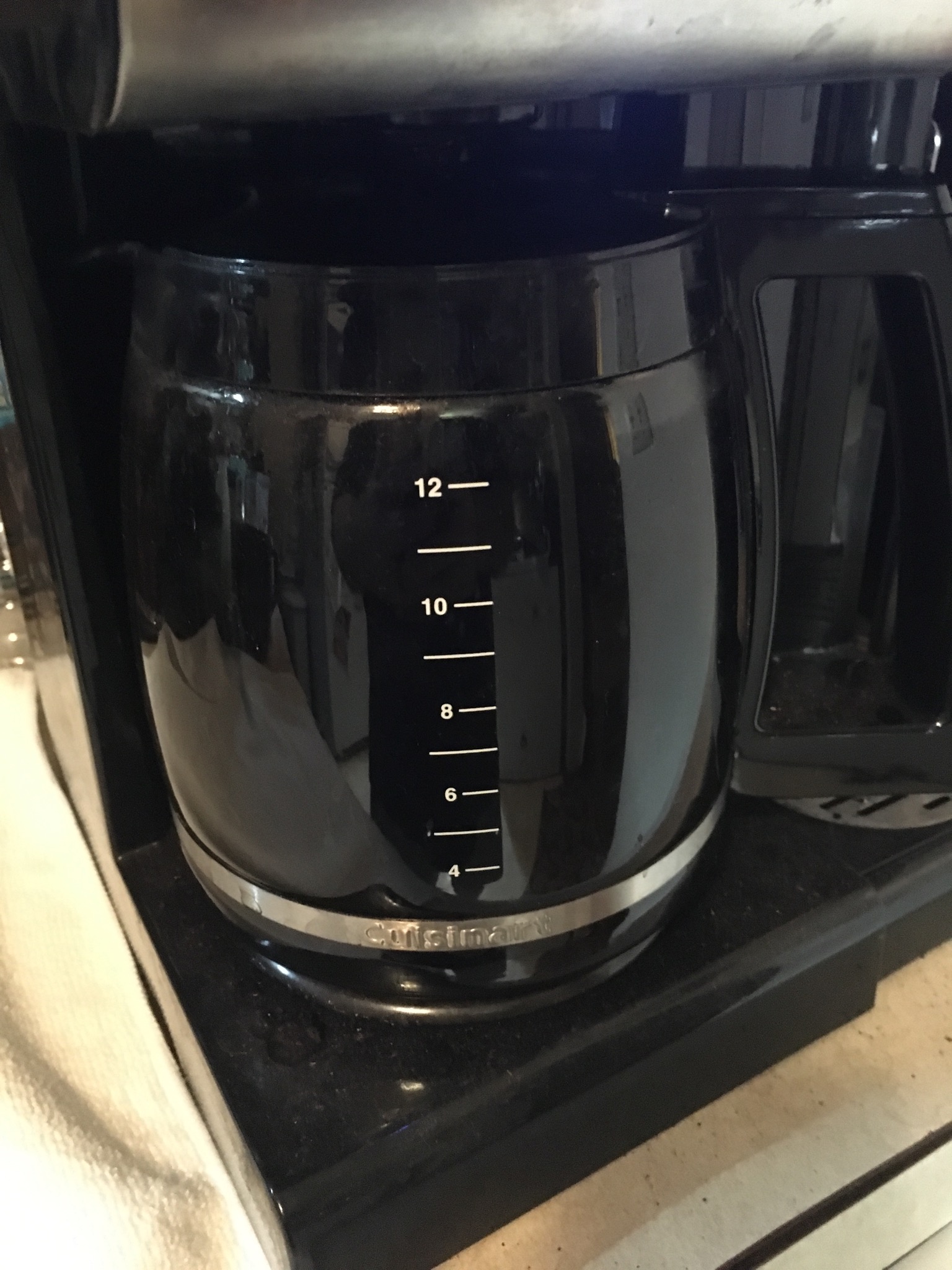
The coffee pot right after making a full put. Not that the liquid goes up the the 12 mark.
My current coffee maker includes a carafe which claims to hold 12 cups of liquid. And it certainly looks like a huge amount of coffee when I first make a pot in the morning. Twelve measuring cups is three quarts, and three quarts of coffee seems like a lot. Right?

You would expect that anyone who would drink 12 cups of coffee in a single day would be vibrating, I suppose. Maybe even vibrate so fast that I open a portal to an alternate universe and pass right through. All that caffeine in one person is bound to make one at least a bit manic. I remember a historian once mentioning that one of the prominent figures of the Enlightenment recorded in his journals (in which among other things he kept careful account of his household expenditures) of some weeks drinking 40 cups of tea a day. The historian said, “No wonder all those guys wrote so much and discovered so much. You try drinking 40 cups of tea and see whether you’re up all night having all sorts of exiting ideas bouncing around your head!”

I filled up my favorite mug exactly once, and look how the coffee level has dropped!
However, when I pour coffee out of the carafe to fill my favorite mug, note that the coffee level has dropped down to just below the 9 mark. So my favorite coffee cup holds three cups of coffee. Which means that if I drink the whole pot, while one could say that I drank 12 measuring cups of coffee, it’s only actually four refills of my coffee mug. So, do I drink 12 or 4 cups in a single day?

Well, there’s at least one more complication I haven’t told you. Periodically over the course of the day, whenever I notice that the carafe is less than half full, I pour about three cups of water (using an aluminum pitcher I keep nearby for reasons) into the reservoir and kick-off a new percolation cycle, letting the machine top off the pot. I confess that when I do this, I don’t grind fresh coffee beans, I just let the new hot water go through the grounds that I put in in the morning. This probably makes me a freak or a loon in the opinions of some hard-care coffee fanatics. I usually only do this twice in a day.

So, that would indicate that I actually drink about 18 measuring cup’s worth of coffee a day, right?

Well… the truth is, I usually stop in the early evening, and there is usually still coffee in the pot at least up to the 4 cup line when I do. So let’s call it 14 measuring cups again. That’s enough to completely fill my bit mug four times, and nearly a fifth afterward.

I’ve left out one more wrinkle that applies to work-from-home days. When I first get up on a work-from-home day, I do my meds and some of the other morning routines quickly, including making coffee, so I can drive my husband in to his place of work. As a treat for myself, I grab a small can of coffee drink, either a Starbucks Double-shot Lite, or there’s another brand that has a Salted Caramel flavored coffee drink in a small aluminum can. Both types claim to have the equivalent of two shots of espresso in the drink.

I pour one of these cans into a travel mug, which fills it a bit over half full, then top it off with coffee from the pot. That’s my “latte” for the drive in. I usually drink about half of it in the trip. When I get back home, I pour the remainder into my big purple mug, and top it off with hot coffee. The Starbucks’ can holds 6.5 ounces. The other brand’s can holds 7 ounces. Let’s just call it one more cup. Except it’s supposed to be two shots of espresso, so should we call it two cups?

Just how much coffee do I actually drink?


P.S. Please don’t chime it to say that coffee isn’t good for your health. The studies that most people think showed that were all conducted over 50 years ago, and newer studies show no correlation between coffee drinking and any of the health effects people attribute to them. None. Deeper analysis of the raw data from the earlier studies has revealed that the researchers completely failed to notice that there was an extremely strong correlation between being a heavy coffee drinker and being a heavy smoker. There was also a very strong statistical tendency for men to drink more coffee per day than women. And oddly enough, all the health issues that people now blame on coffee because of these badly quoted studies are also illnesses that one is more likely to have if one is either male or a smoker.

When the data from the old studies is re-analyzed to compare only smokers to smokers, non-smokers to non-smokers, men to men, and women to women, all statistical correlation between the amount of coffee someone drinks and any negative health effects vanished.

It ain’t the coffee that you need to be worrying about.

Robots Aren’t People, Are They? – more of why I love sf/f

Cover for the first edition hardback of <em>The Bicentennial Man and Other Stories</em> by Isaac Asimov.
Cover for the first edition hardback of The Bicentennial Man and Other Stories by Isaac Asimov. (Click to embiggen)
I first heard of “The Bicentennial Man” by Isaac Asimov when I saw the anthology, The Bicentennial Man and Other Stories offered as a selection in the Science Fiction Book Club. I was 16, and still technically a member of the club, but most months I checked off the “Send nothing at this time” box on the card, because even the cheaper prices of the book club were a bit much for my budget. It a bit over a year later when I found a paperback copy of The 1977 Annual World’s Best SF edited by Donald Wolheim in the local used book store when I finally got a chance to read the story.

Asimov wrote a lot of short stories about robots. Most of the stories collected in his anthologies I, Robot and The Rest of the Robots dealt with various logical contradictions that robots would be placed in by various circumstances, and how the robots (and the humans working with them) would work out those conflicts between the Three Laws of Robotics, their other programming, and the situation at hand. Even in his longer novels where robots figured prominently, such as the two sci fi murder mysteries, The Caves of Steel and The Naked Sun, the robots were always motivated by pure logic. The fact that the world is not a purely logical place, and that humans are seldom covered by rationality alone, formed the framework for the conflict in the stories.

“The Bicentennial Man” centered on a single robot, dubbed Andrew by the daughter of its first owner (a Mr. Martin, identified in the story which is told from Andrew’s point of view as simply Sir). Andrew demonstrates an unusual talent with wood carving—his works of art fetching high prices when offered for sale—and develops a desire to became human. Andrew is part of a new series of robots with what Asimov describes “more open-ended architecture” in his positronic brain, which the experts believe is where his apparent artistic talent comes from. Andrew’s stubborn insistence that he can become a human worries the scientists at the world’s largest robotics company, causing them to try to buy Andrew back.

In part because of the pleading of the owner’s daughter (whom Andrew calls Little Miss), Sir refuses to sell Andrew back to the company. Later, Sir helps Andrew gain some form of legal independence as a “free robot” with the legal name of Andrew Martin.

From there the story follows Andrew’s physical and legal journey through several generations of the original family, as Little Miss grows up, grows old, and dies, and her son and grandson found a legal firm which, among other things, fights to secure Andrew’s legal rights. Andrew designs new kinds of prosthetics, which are almost indistinguishable from natural body parts. Andrew’s body is slowly ungraded to first being a more human-looking android body, to an organic one. The proceeds from the patents on the various processes to create the prosthetics (which are used medically to improve the lives of disabled, maimed, and diseased people) providing Andrew’s income and funding the legal fight.

One of his important legal victories happens when he is 150 years old, where at a dinner in his honor (celebrating his medical inventions), he is toasted as the Sesquicentennial Robot.

Eventually, as Andrew realizes that he will never persuade a human legislature to pass a law declaring him, or any robot, a human because the key difference will always be his positronic brain. Which leads Andrew to compel a robotic surgeon to perform an operation on his brain that will cause the brain to slowly decay and die. Andrew’s reasoning is that it’s the immortality that forms the final barrier between him being accepted as a human.

The story really resonated with me. And it was interesting to see Asimov explore the nature of emotions and creativity from the point of view of artificial intelligence. But more interesting was the series of legal barriers that Andrew has to go through. Laws have to be changed to allow a robot to own property, for instance. Laws must be changed to make harming a robot a crime, at another point.

The legal progression to personhood that Asimov takes us through is based on the historical legal fights for woman’s rights and racial equality. For millenia, the legal system treated women as property. Assaulting a woman was a crime, yes, but the penalties imposed always included paying a fine to the woman’s father (if she were unmarried) or her husband, because the man in her life was deemed to have been harmed by the degradation of his property.

Similarly, Andrew discovers, once he is a free robot, that since there is no owner to whom damages would be owed, the legal system doesn’t consider anyone assaulting and damaging him a crime as assault. Vandalism, perhaps, but then, who is the owner who should be compensated for the damage?

It seems ridiculous to us now that some people, simply because of their gender or the color of their skin, had once been in a similar situation: harming them wasn’t inherently a crime, it was only a crime if it caused their “owner” to suffer a loss. And especially frightening to realize that in the matter of sexual assault laws in the U.S., for instance, that as recently as the 1970s the law was still structured this way. A woman couldn’t file rape charges against her husband or sometimes even her ex-husband, because once married her consent was no longer hers to give or withold, in that regard.

Andrew’s struggle for human rights parallels, thus, every oppressed groups struggle for equality. Something that I came to appreciate more some years later, when I finally bought my own hardcover copy of The Bicentennial Man and Other Stories and re-read this particular short story again. There is even a point, during the discussion about the assault laws, where another character makes the same argument at homophobes current make against hate crime laws: they aren’t needed, because the action is already a (minor) crime under existing laws.

Asimov’s story about a robot who wants to be a human might seem, on the surface, to be little more than a retelling of Pinocchio, but we see here one of the Grandmasters of Science Fiction—a sci fi writer who first reached prominence during the “golden age” of sci fi—turning a civil rights argument into a rattling good tale of old-fashioned science fiction. Who would have thought an old, white (okay, jewish, but still) male sci fi writer who made his first professional sale in 1939 would be a social justice warrior? Don’t tell the melancholy canines!

When I read “The Bicentennial Man” I was a very closeted high school student, terrified that people would find out I was queer because I knew that strangers, friends, and even family members would see me as an abomination if they knew. So the story of Andrew, who wanted to be seen and accepted as a person certainly struck a chord. Even if his ultimate solution, dying, seemed like a terrible way to achieve his goal.

Who is excluding who, now?

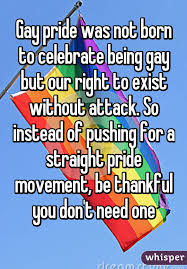
images (3)When I was a child, none of the words I knew to describe being a non-heterosexual were good words. Pussy, sissy, fag, queer, dyke, homo—they were all insults. Homosexual was both clinical and pejorative, at least the way everyone I ever heard use it said it. It was clinical, all right, and it was clear the people saying it thought it described a terrible sickness. The least insulting was gay. Which isn’t to say that it wasn’t hurled as an insult, it’s just we were also told it was what those people preferred to be called. Though even the people who admitted that much were pretty angry about it. I actually had more than one teacher in school talk about how terrible it was that those perverts had stolen a word that used to mean not just happy, but a particularly carefree and whimsical kind of happy, and then used it to describe their sad, loveless, deviant lives.

And a lot of those words got used on me.

Throughout grade school I didn’t think that the sexual part applied to me. I knew that I said the wrong things and acted the wrong way, so that’s why everyone (except the nicer teachers and nicer church leaders) called me a sissy and a crybaby and so on. I wasn’t tough enough or whatever, but there was nothing sexual going on.

By the time I was in middle school and puberty had come roaring into my life I realized that all of those people had been on to something. And it terrified me. The worst thing I could imagine happening to me was for someone to get proof that the words fag, queer, homo, and gay described me in more than merely a metaphorical way.

So in my mid-twenties, the fact that I was finally able to say aloud to a friend, “I think I might be gay” was a giant leap. Overcoming the aversion that I felt to all of those words, equally, had been a titanic struggle lasting more than a decade. Over the next few years I was able to say I was “gay” a bit more confidently. I didn’t cringe inside if someone called me “gay,” at least if it wasn’t in an angry tone of voice.

I was actually starting to feel all right with the label by my thirties.

Which was when I started getting yelled at about it, again—but not by straight bigots. No, the people who were angry about my use of the word were lesbians. “How dare you call me that word!” and even more viciously, “How dare you assume that you can use that word as an umbrella term to include all non-heterosexual people!”

I was literally yelled at a few times, before I developed the habit of saying “lesbian and gay.” And almost right away people started growling at me not to leave out the bisexuals or the trans people!

I’m not exaggerating when I say that some of my fellow non-heterosexual got angry and yelled. It was clearly very important to them.

So I just about died laughing a few days ago when I saw some trans activists in my twitter stream angrily assert that it was people like me—cisgender, white, gay, and male—who were the ones that had excluded lesbian, trans, and bi people from the “clearly superior umbrella term, gay.”

No.

We didn’t exclude them. They were the ones who angrily and emphatically told us that we couldn’t use “gay” to describe them. During the late 80s and 90s, just as I was starting to get mostly all right describing myself as gay, I was being told that doing so was exclusionary. I was the bad guy for wanting to have a simple term than encompassed all of us.

It was during that time that Queer Nation came into being. Queer Nation was one of many groups formed to make a more aggressive push against homophobia and specifically homophobic violence at the time when both the violence and the media’s negative portrayal of homosexual people was escalating. The AIDS crisis wasn’t just killing us in vast numbers, it was fueling even more hatred than we’d experienced before (which is saying something!) Just one of Queer Nation’s goals was to take back the word “queer”; to make it a label we embraced with pride instead of an insult.

I was, at the time, ambivalent about that. So were a lot of the gay, lesbian, and bi people I knew. At the time, I was only slightly acquainted with a couple of trans people (or so I thought, but that’s a story for another post), so I wasn’t sure how they felt about it. I certainly understood why some folks were leery of the notion…

Then I decided I needed to participate in a National Coming Out Day march. And I only discovered after I had arrived at the assembly point (and made arrangements to meet friends on the Hill near the end point) that it was sponsored by Queer Nation. It was later, while being teased by some of those friends, that I moved out of the ambivalent stage to being vehemently in favor or taking back the word queer.

I’m queer. I’m a cisgendered white man who sleeps with other men. I’m also a queer nerd who loves Star Trek and Star Wars (and I bet I can still beat anyone who cares to challenge me on a trivia contest based on the original Star Wars: A New Hope) and Lord of the Rings (alas, I am no longer fluent in Quenya and Sindarin, Tolkien’s fictional elvish languages). I’m a queer geek who majored in Mathematics at University and have worked for decades in the telecommunication software industry. I’m a queer Taoist who is a both a recovering Baptist and recovering atheist. I’m a queer man very happily married to a bi man. I’m a queer writer who is still dismayed at how many of my earlier published works didn’t pass the Bechtdel test (but hope I’ve gotten better). I’m a queer godparent and uncle who squees over baby pictures and keeps cheering on the mostly straight romances on my favorite shows. I’m a queer man who watches football as faithfully as my favorite sci fi and mystery series.

I’m a queer, fat, old, white-bearded guy who welcomes any gay, lesbian, bisexual, trans, asexual, non-binary, poly, straight ally, pansexual, aromantic, and any other kind of human who thinks all of us deserve equal dignity and rights regardless of gender, orientation, and so on, to join me under this umbrella term. And if you prefer another label, that’s fine, but please don’t try to claim that I have ever excluded you. Okay?