“You only gave us rights because we gave you riots. Queer Power” (Click to embiggen)I’ve had three partially-written blog posts about Pride sitting here in the queue for a few weeks, but kept changing my mind about which direction I wanted to go with it. Then over the last few days I’ve seen several more iterations of a question that drives me crazy, and some related stuff appeared on a couple of my usual news sits, which made the three ideas I had coalesce into one. First: never forget that the first Pride was a riot. And it wasn’t just one riot—the rioting continued for several nights. The quick summary: because (among other things) it was illegal for a bar to knowingly serve more the one openly gay person at a time, most of the places where gay, lesbian, trans, and other queer people were able to congregate were illegal bars, usually operated by the mafia. The cops occasionally raided those bars, just to remind the people operating them that they needed to keep bribing cops and other officials. Because it was also illegal for a man to wear clothing traditionally thought as a woman’s, and it was equally illegal for a woman to wear men’s clothes (stop and think about that a moment: it was a crime for a woman to wear slacks of a pantsuit in many states in 1969), in addition to shutting down the bar and confiscating the alcohol, the cops would always arrest everyone who was gender-non-conforming.
So, forget the lies that certain so-called religious people have started spouting lately: the cops were not rescuing underaged people who were being sex trafficked. The purpose of the raid was to insure that the mob paid it’s bribes on time, and to give the cops a chance to rough up some trans people, masculine-looking women, and effeminate men. That was it.
And for some unkown reason, part of the crowd started fighting back on that night. The cops were so overwhelmed that they had to barricade themselves inside the now-emptied Stonewall Inn and wait for reinforcements. Over the next six days, news spread and people gathered, rioting on at least two more nights. The people who led the fights were the outcasts: the street queens, the people of color, the homeless queer teens—the people least likely to blend in at some white middle-class event.
The New York Daily News, a bit over a week after the first riot.To the extent that the press covered the event, most of it was very condescending. Joe Jervis has been posting the full text of the New York Daily News’ story every June for a few years. If you want to see just how the so-called liberal press felt about gay people, go give it a read. To the extent that the media covered it at all, most of the coverage was either as disdainful and mocking as the New York Daily News, or they focused on the police version of the story.
The Village Voice put the phrase “Gay Power” in the front page!Technically, the riots didn’t start the gay rights movement. There had been several organizations staging the occasional picket lines (with the men in suits and ties and the women in skirts), or other orderly protests for a couple of decades. In fact, some of the organizations that had been lobbying for gay rights for years issued condemnations of the riots. Second: But the riots did have a several important effects. while the mainstream press either ignored them or made fun of queer people, some of the alternative papers tried to show both sides. And these papers were read outside of the neighborhoods they served, especially papers like the Village Voice which was read by many professional journalists and academics far outside New York. Third, the news of the riots spread through social grapevines, and within weeks younger, less affluent queer people who had never ever heard of organizations like the Mattachine Society were gathering and forming groups like the Gay Liberation Front, the Gay Activists Alliance, or the Street Transvestite Action Revolutionaries.
Fourth, by the fall of 1969 chapters of the Gay Liberation Front were being formed on college campuses all over the U.S. I know, because I happened to know a man who was a freshman at the University of Washington that year, who was not only a founder of the UW chapter of the Gay Liberation Front, he served as an officer for the next few years.
Fifth: Commemoration led to recognition. The next year, June 1970, on the anniversary of the first riot, a small group met to march in what was then called Christopher Street Liberation Day, but by the time the group reached Central Park, the march had swelled to thousands. And, interestingly enough, the same papers that had been so condescending a year ago were at least less disdainful: “There was little open animosity, and some bystanders applauded when a tall, pretty girl carrying a sign “I am a Lesbian” walked by.”
I mentioned the organizations that had been fighting for gay rights for years. There were enough of them that they had been holding regular conferences for some years before the riots. Several months after the riots the Eastern Regional Conference of Homophile Organizations passed a resolution supporting the Christopher Street Liberation Day, though several groups abstained. And the only reason the resolution was under consideration was because a group called Homophile Youth Movement in Neighborhoods had started working with the Gay Liberation Front, and brought some GLF members to the convention as guests. The New York Mattachine Society (the people who had been doing that staid picketing for years with no significant changes in the law or attitudes) was one of the organizations that opposed commemorating the riots. But that parade, and others held in other cities all over the country, happened anyway, and they have been growing ever since.
The Mattachine Society had been lobbying for gay rights since 1950 to virtually no avail. The more radical queers who organized after Stonewall made more of a splash: by the 1972 presidential election campaign, there were national Democratic candidates advocating for anti-discrimination laws to include queer people.
Since that first march in 1970, there have been people within the community who call for the parades to be less outrageous. Specifically, they ask people not to wear kink gear, or sexually provocative clothing. Every year I hear someone saying that such-and-such or so-and-so doesn’t belong at Pride. They argue that only if we show the world that we aren’t freaks will we get rights.
Bull.
I have a few more verbose responses:
First: if we all showed up with the men wearing suits and ties and the women in skirts, and walked calmly down the street the same bigots who claim we are sick and going to hell would still be screaming those lies. Because they did it for the two decades that groups like the Mattachine Society were playing the assimilationship card.
Stop ignoring the blatant sexuality of every day straight culture.Second: have you ever been to a straight parade or festival? Because let me tell you, the first time I ever attended Seattle’s Torchlight Family Seafair Parade I was shocked at how just how many skimpy bikinis were being worn by women on the floats and how many sexual innuendoes other floats were designed to embody. The only reason why LGBT Pride Parades appear to be outrageous and not-family-friendly to people is because none of the sexuality on display is aimed at white straight men. There is no less sexuality being flaunted at most non-gay festivals, parades, sporting events, et cetera, than there is at Queer Pride Parades. None.
(click to embiggen)Third: the whole point of liberation and equality is that everyone should be free to be themselves. No one should have to hide who they are to be treated equally before the law. If you’re trying to keep the kinksters, the dykes on bikes, the drag queens, the scantily-clad go-go boys out of the Parade, you’re on the same side of this battle as the anti-gay bigots. You’re helping our enemies, not us. And I’m not the only person who feels this way. Take it away Amanda Kerri, writing for The Advocate:
“I’m frankly too worn out from this stuff at this point to be nice about it anymore. Saying that kink has no place at Pride is a bad opinion and you should feel bad. First of all, kink was at Pride long before upper middle-class queers decided to take their kids to Pride…. As for those of you arguing about how a bunch of queers running around in collars, harnesses, and body tape over their nipples makes us look bad in front of the straights and supports their arguments that we’re all perverts, well you might want to sit down for this: the ones who think we’re perverts don’t care how we’re dressed.”
Fourth: Pride isn’t a celebration of being gay, it’s an assertion of our right to exist without persecution. What is being celebrated is the fact that we have survived and even thrived despite the oppression. What is being celebrated is the rights of each and every one of us to be who we are without shame.
Fifth: Have you been to a Pride Parade lately? Because most of the groups marching in Pride Parades of late are corporate employee groups. They are queer people usually dressed in matching t-shirts approved by some corporate flunky, along with shorts and sensible shoes. Yes, I think there is a lot we need to think about with the corporations who pretend to be gay friendly for marketing purposes while actively supporting our oppressors. And I would frankly have more respect for the people trying to exclude the kinksters if they also talked about the corporate coopting, but they don’t usually seem to be the same people. Regardless, my point here is that just as straight public events aren’t really any more family-friendly than most Pride events, the Pride events aren’t nearly as outrageous as some of you seem to think.
Bottom Line: Everyone who is there to celebrate Pride is welcome, including straight allies. I’m not saying that you have to show up in a g-string with rainbow glitter on your nibbles to participate. I’m going to be wearing a t-shirt and shorts and sensible shoes, carrying my bright rainbow parasol and looking every bit the short, old, queer, nerdy bear that I am. But not only are the street queens, the freaks, the kinksters, the butch dykes, and all of the other “outrageous” or non-conforming people welcome, they were our founders—and they sure as hell belong.
What doesn’t belong at Pride are oppressive attitudes.
Another in my series of posts recommending web comics that I think more people should read.
What QQ by Carlisle Robinson. This is one of several comics created by Carlisle Robinson, a deaf trans masculine queer artist. What QQ consists of various autobiographic observations on being a profoundly deaf person who also happens to be trans. I find the strips both funny and educational. How I started reading this comic involves a story: someone reblogged one of Carlisle’s cartoons, and it included the title, and because of my background with the TTY terminals, I wondered if the two Q’s in the name meant Question Mark. Back in my college days I found myself involved, because of my frequenting of old BBS systems, in helping fundraise for the purchase of dumb TTY (teletype) terminals that were used by deaf people to communicate with each other over the phone. That was how I found out about text relay services that allowed hearing people to call a phone number and communicate with a deaf friend by telling the person working at the service what you wanted to say, they call the deaf person’s number and would type whatever you said into a TTY terminal, and then read back the reply. The teletypes all used only capital letters, and some units didn’t have punctuation keys, so there were all the two- and three-letter codes for punctuation and various common phrases. Anyway, yes, that’s what the QQ means, and the banner picture from the comic above shots a teen-age version of the artist have a conversation with a friend using a TTY unit. Most of the comic has nothing to do with that old technology, but is just focused on things going on in Carlisle’s life.
If you like Carlisle’s work, consider supporting the Patreon
Comics I’ve previously recommended: Some of these have stopped publishing new episodes. Some have been on hiatus for a while. I’ve culled from the list those that seem to have gone away entirely.
Check, Please! by Ngozi Ukazu is the story of Eric “Bitty” Bittle, a former junior figure skating champion from a southern state who is attending fictitious Samwell College in Massachusetts, where he plays on the men’s hockey team. Bitty is the smallest guy on the team, and in the early comics is dealing with a phobia of being body-checked in the games. He’s an enthusiastic baker, and a die hard Beyoncé fan.
“Manic Pixie Nightmare Girls” by Jessica Udischas is a hilarious web comic that tells of the adventures of Jesska Nightmare, a trans woman trying to make her way in our transphobic world. The comics are funny, insightful, and adorably drawn. The sheer cuteness of the drawing style is a rather sharp contrast to the sometimes weighty topics the comic covers, and I think makes it a little easier to keep from getting bummed out to contemplate that the strips aren’t exaggerations. If you like the strip, consider supporting the artist through her patreon.
Life of Bria by Sabrina Symington is a transgender themed comic that ranges from commentary to slice of life jokes and everything in between. Even when commenting on very serious stuff it remains funny—sharp, but funny. It’s one of the comics that I would see being reblogged on tumblr and lot and I’d think, “I ought to track down the artist so I can read more of these.” And I finally did. And they’re great! If you like Symington’s work, you can sponsor her on Patreon and she has a graphic novel for sale.
Nerd and Jock by Marko Raassina This is a silly webcomic about a Nerd and Jock who are good friends and like to have fun together. Frequently the joke of the strip is to take a cliché about jocks and nerds and twist it in some way. It’s cute. I happen to really like cute and low-conflict stories sometimes. If you like this comic, consider supporting the artist on Patreon.
Assigned Male by Sophie Labelle is a cute story about a transgirl (we meet her at age 11) and goes from there. Some of the strips are more informational or editorial than pushing the narrative forward, but they are in the voice of the main character, so it’s fun. The artist also has a Facebook page of the site, and is in the process of moving to a domain of her own (though currently it still doesn’t have the actual comic strips available). I mention this so you will not be put off by the words “old website” she’s added to the banner. If you like her comic and would like to support her, she has an Etsy shop were four book collections of the comics and other things are for sale.
Stereophonic by C.J.P.“Stereophonic” by C.J.P. is a “queer historical drama that follows the lives of two young men living in 1960s London.” It’s a very sweet and slow-build story, with good art and an interesting supporting cast. But I want to warn you that the story comes to a hiatus just as a couple of the subplots are getting very interesting. The artist had a serious health issue which was complicated by family problems, but has since started posting updates to his blog and Patreon page, assuring us that the story will resume soon. If you like the 300+ pages published thus far and would like to support the artist, C.J. has a Patreon page, plus t-shirts and other merchandise available at his store.
Phoebe and Her Unicorn by Dana Simpson concerns the adventures of 9-year-old Phoebe Howell. One day, Phoebe skipped a rock across a pond, and the skipping rock hit a unicorn named Marigold Heavenly Nostrils in the face. This happened to free the unicorn from her own reflection, so she granted Phoebe one wish. Phoebe wisely wished that Marigold would become her best friend. If you like the comic, you can buy the books here and enamel pins and other stuff here.
The Young Protectors: Engaging the Enemy by Alex Wolfson begins when a young, closeted teen-age superhero who has just snuck into a gay bar for the first time is seen exiting said bar by a not-so-young, very experienced, very powerful, super-villain. Trouble, of course, ensues.
“Deer Me,” by Sheryl Schopfer tells the tales from the lives of three friends (and former roommates) who couldn’t be more dissimilar while being surprisingly compatible. If you enjoy Deer Me, you can support the artist by going to her Patreon Page!
Madeline McGrane is a cartoonist and illustrator who is from Wisconsin and lives in Minneapolis. She posts vampire-themed comics and other art on her tumblr blog. My favorites are the vampire comics about three child vampires. They’re just silly. Her black and white comics are minimalist and really work well with her style of humor. Her color work is a bit more complex. If you like her work and want to support her, she has a ko-fi.
The Junior Science Power Hour by Abby Howard. is frequently autobiographical take on the artist’s journey to creating the crazy strip about science, science nerds, why girls are just as good at being science nerds as boys, and so much more. It will definitely appeal to dinosaur nerds, anyone who has ever been enthusiastic about any science topic, and especially to people who has ever felt like a square peg being forced into round holes by society.
Scurry by Mac Smith is the story of a colony of mice trying to survive a long, strange winter in a world where humans have mysteriously vanished, and food is becoming ever more scarce.
And I love this impish girl thief with a tail and her reluctant undead sorcerer/bodyguard: “Unsounded,” by Ashley Cope.
Fowl Language by Brian Gordon is a fun strip about parenting, tech, science, and other geeky things. The strips are funny, and he also has a bonus panel link to click on under the day’s strip.
The Last Halloween by Abby Howard is the creepy story of 10-year-old Mona who is reluctantly drafted to save the world on Halloween night. This is by the same artist who does the Junior Science Power Hour. She created this strip as her pitch in the final round of Penny Arcade’s Strip Search, which was a reality game show where web cartoonists competed for a cash prize and other assistance to get their strip launched. Though Abby didn’t win, she started writing the strip anyway. If you like the comic, you can support Abby in a couple of ways: she has some cool stuff related to both of her strips in her store, and she also has a Patreon.
Last Kiss® by John Lustig Mr. Lustig bought the publishing rights to a romance comic book series from the 50’s and 60’s, and started rewriting the stories for fun. The redrawn and re-dialogued panels (which take irreverent shots at gender and sexuality issues, among other things) are syndicated, and available on a bunch of merchandise.
Sharpclaw by Sheryl Schopfer. The author describes as “fantasy comic that blends various fairy tales into an adventure story.” The first story is about twin sisters who both have the potential to be sorceresses. One pursues magic power, the other does not. If you enjoy her work, you can support the artist by going to her Patreon Page!
“Champion of Katara” by Chuck Melville tells the tale of a the greatest sorcerer of Katara, Flagstaff (Flagstaff’s foster sister may disagree…), and his adventures in a humorous sword & sorcery world. If you enjoy the adventures of Flagstaff, you might also enjoy another awesome fantasy series set in the same universe (and starring the aforementioned foster sister): and Felicia, Sorceress of Katara, or Chuck’s weekly gag strip, Mr. Cow, which was on a hiatus for a while but is now back. If you like Mr. Cow, Felicia, or Flagstaff (the hero of Champions of Katara) you can support the artist by going to his Patreon Page. Also, can I interest you in a Mr. Cow Mug?
Private I, by Emily Willis and Ann Uland is a comic set in 1942 Pittsburgh in which queer gumshoe Howard Graves is trying to sort out a collection of bewildering clues and infuriating eccentric suspects. It’s an interesting take on a lot of noir tropes. It handles the queer elements well—being outed or caught by the wrong people can spell the end of not just one’s career, but possibly life–without being all grim-dark. If you like the comic and want to support the creators, check out their Ko-fi.
The Comics of Shan Murphy As far as I can tell, Shannon Murphy doesn’t post a regular comic on the web. But among the categories of illustration on her site are comics. Her art styles (multiple) are really expressive. And she just writes really good stuff. If you like her work, considered leaving a tip at her ko-fi page.
The Young Protectors: Legendary by Alex Woolfson. This is just a new story arc for the Young Protectors comic recommended above. However, Alex is changing up the artists he’s working with in this arc, and the focus is decidedly different. This new arc begins by exploring the changed relationship between our protagonist, Kyle (aka Red Hot) and one of his teammates, Spooky Jones. The story is NSFW, although unless you are a patron of Alex’s Patreon, you see a lot less of the explicit artwork. It isn’t porn, per se, and it isn’t a romance. If you check out the page, you’ll see that Alex has written several other comics, some of which are available to purchase in hard copy. And, as I mentioned, he’s got a Patreon account.
If you want to read a nice, long graphic-novel style story which recently published its conclusion, check-out the not quite accurately named, The Less Than Epic Adventures of T.J. and Amal by E.K. Weaver. I say inaccurate because I found their story quite epic (not to mention engaging, moving, surprising, fulfilling… I could go on). Some sections of the tale are Not Safe For Work, as they say, though she marks them clearly. The complete graphic novels are available for sale in both ebook and paper versions, by the way.
Note: Usually when I do one of these posts, I include the slightly shorter reviews of all the comics I’ve recommended previously. I do periodically go through those lists and remove comics that have vanished entirely. For now, I’m leaving in those that have stopped publishing new episodes but still have a web site.
But the list is getting awfully long, and I’m not sure how useful the older links are. I’m still thinking about it. Feel free to comment if you have strong thoughts on the topic.
Another in my series of posts recommending web comics that I think more people should read.
Kyle’s B&B by Greg Fox is hard to describe. The main character, Kyle, is a gay Canadian who owns a bed and breakfast that seems to be constantly occupied by hot queer guests. Many, many hot queer guests! There is some romance, and a lot of jokes about things ranging for sub-cultures in the queer community, to gardening and pop culture and… well, a lot of stuff.
If you like Greg Fox’s work, you can purchase his books here
Comics I’ve previously recommended: Some of these have stopped publishing new episodes. Some have been on hiatus for a while. I’ve culled from the list those that seem to have gone away entirely. Note: I only last week figured out what I had been doing wrong in trying to make the thumbnail images in each mini review below take you to the actual web comic. The bolded and underlined name of the comic and artist always worked as a link, but the images weren’t. I have finally fixed it (though I have only propagated the fix to the last three Sunday Funnies posts. It will take a while to get all the others fixed.
Check, Please! by Ngozi Ukazu is the story of Eric “Bitty” Bittle, a former junior figure skating champion from a southern state who is attending fictitious Samwell College in Massachusetts, where he plays on the men’s hockey team. Bitty is the smallest guy on the team, and in the early comics is dealing with a phobia of being body-checked in the games. He’s an enthusiastic baker, and a die hard Beyoncé fan.
“Manic Pixie Nightmare Girls” by Jessica Udischas is a hilarious web comic that tells of the adventures of Jesska Nightmare, a trans woman trying to make her way in our transphobic world. The comics are funny, insightful, and adorably drawn. The sheer cuteness of the drawing style is a rather sharp contrast to the sometimes weighty topics the comic covers, and I think makes it a little easier to keep from getting bummed out to contemplate that the strips aren’t exaggerations. If you like the strip, consider supporting the artist through her patreon.
Life of Bria by Sabrina Symington is a transgender themed comic that ranges from commentary to slice of life jokes and everything in between. Even when commenting on very serious stuff it remains funny—sharp, but funny. It’s one of the comics that I would see being reblogged on tumblr and lot and I’d think, “I ought to track down the artist so I can read more of these.” And I finally did. And they’re great! If you like Symington’s work, you can sponsor her on Patreon and she has a graphic novel for sale.
Nerd and Jock by Marko Raassina This is a silly webcomic about a Nerd and Jock who are good friends and like to have fun together. Frequently the joke of the strip is to take a cliché about jocks and nerds and twist it in some way. It’s cute. I happen to really like cute and low-conflict stories sometimes. If you like this comic, consider supporting the artist on Patreon.
Assigned Male by Sophie Labelle is a cute story about a transgirl (we meet her at age 11) and goes from there. Some of the strips are more informational or editorial than pushing the narrative forward, but they are in the voice of the main character, so it’s fun. The artist also has a Facebook page of the site, and is in the process of moving to a domain of her own (though currently it still doesn’t have the actual comic strips available). I mention this so you will not be put off by the words “old website” she’s added to the banner. If you like her comic and would like to support her, she has an Etsy shop were four book collections of the comics and other things are for sale.
Stereophonic by C.J.P.“Stereophonic” by C.J.P. is a “queer historical drama that follows the lives of two young men living in 1960s London.” It’s a very sweet and slow-build story, with good art and an interesting supporting cast. But I want to warn you that the story comes to a hiatus just as a couple of the subplots are getting very interesting. The artist had a serious health issue which was complicated by family problems, but has since started posting updates to his blog and Patreon page, assuring us that the story will resume soon. If you like the 300+ pages published thus far and would like to support the artist, C.J. has a Patreon page, plus t-shirts and other merchandise available at his store.
Phoebe and Her Unicorn by Dana Simpson concerns the adventures of 9-year-old Phoebe Howell. One day, Phoebe skipped a rock across a pond, and the skipping rock hit a unicorn named Marigold Heavenly Nostrils in the face. This happened to free the unicorn from her own reflection, so she granted Phoebe one wish. Phoebe wisely wished that Marigold would become her best friend. If you like the comic, you can buy the books here and enamel pins and other stuff here.
The Young Protectors: Engaging the Enemy by Alex Wolfson begins when a young, closeted teen-age superhero who has just snuck into a gay bar for the first time is seen exiting said bar by a not-so-young, very experienced, very powerful, super-villain. Trouble, of course, ensues.
“Deer Me,” by Sheryl Schopfer tells the tales from the lives of three friends (and former roommates) who couldn’t be more dissimilar while being surprisingly compatible. If you enjoy Deer Me, you can support the artist by going to her Patreon Page!
Madeline McGrane is a cartoonist and illustrator who is from Wisconsin and lives in Minneapolis. She posts vampire-themed comics and other art on her tumblr blog. My favorites are the vampire comics about three child vampires. They’re just silly. Her black and white comics are minimalist and really work well with her style of humor. Her color work is a bit more complex. If you like her work and want to support her, she has a ko-fi.
The Junior Science Power Hour by Abby Howard. is frequently autobiographical take on the artist’s journey to creating the crazy strip about science, science nerds, why girls are just as good at being science nerds as boys, and so much more. It will definitely appeal to dinosaur nerds, anyone who has ever been enthusiastic about any science topic, and especially to people who has ever felt like a square peg being forced into round holes by society.
Scurry by Mac Smith is the story of a colony of mice trying to survive a long, strange winter in a world where humans have mysteriously vanished, and food is becoming ever more scarce.
And I love this impish girl thief with a tail and her reluctant undead sorcerer/bodyguard: “Unsounded,” by Ashley Cope.
Fowl Language by Brian Gordon is a fun strip about parenting, tech, science, and other geeky things. The strips are funny, and he also has a bonus panel link to click on under the day’s strip.
The Last Halloween by Abby Howard is the creepy story of 10-year-old Mona who is reluctantly drafted to save the world on Halloween night. This is by the same artist who does the Junior Science Power Hour. She created this strip as her pitch in the final round of Penny Arcade’s Strip Search, which was a reality game show where web cartoonists competed for a cash prize and other assistance to get their strip launched. Though Abby didn’t win, she started writing the strip anyway. If you like the comic, you can support Abby in a couple of ways: she has some cool stuff related to both of her strips in her store, and she also has a Patreon.
Last Kiss® by John Lustig Mr. Lustig bought the publishing rights to a romance comic book series from the 50’s and 60’s, and started rewriting the stories for fun. The redrawn and re-dialogued panels (which take irreverent shots at gender and sexuality issues, among other things) are syndicated, and available on a bunch of merchandise.
Sharpclaw by Sheryl Schopfer. The author describes as “fantasy comic that blends various fairy tales into an adventure story.” The first story is about twin sisters who both have the potential to be sorceresses. One pursues magic power, the other does not. If you enjoy her work, you can support the artist by going to her Patreon Page!
“Champion of Katara” by Chuck Melville tells the tale of a the greatest sorcerer of Katara, Flagstaff (Flagstaff’s foster sister may disagree…), and his adventures in a humorous sword & sorcery world. If you enjoy the adventures of Flagstaff, you might also enjoy another awesome fantasy series set in the same universe (and starring the aforementioned foster sister): and Felicia, Sorceress of Katara, or Chuck’s weekly gag strip, Mr. Cow, which was on a hiatus for a while but is now back. If you like Mr. Cow, Felicia, or Flagstaff (the hero of Champions of Katara) you can support the artist by going to his Patreon Page. Also, can I interest you in a Mr. Cow Mug?
Private I, by Emily Willis and Ann Uland is a comic set in 1942 Pittsburgh in which queer gumshoe Howard Graves is trying to sort out a collection of bewildering clues and infuriating eccentric suspects. It’s an interesting take on a lot of noir tropes. It handles the queer elements well—being outed or caught by the wrong people can spell the end of not just one’s career, but possibly life–without being all grim-dark. If you like the comic and want to support the creators, check out their Ko-fi.
The Comics of Shan Murphy As far as I can tell, Shannon Murphy doesn’t post a regular comic on the web. But among the categories of illustration on her site are comics. Her art styles (multiple) are really expressive. And she just writes really good stuff. If you like her work, considered leaving a tip at her ko-fi page.
The Young Protectors: Legendary by Alex Woolfson. This is just a new story arc for the Young Protectors comic recommended above. However, Alex is changing up the artists he’s working with in this arc, and the focus is decidedly different. This new arc begins by exploring the changed relationship between our protagonist, Kyle (aka Red Hot) and one of his teammates, Spooky Jones. The story is NSFW, although unless you are a patron of Alex’s Patreon, you see a lot less of the explicit artwork. It isn’t porn, per se, and it isn’t a romance. If you check out the page, you’ll see that Alex has written several other comics, some of which are available to purchase in hard copy. And, as I mentioned, he’s got a Patreon account.
If you want to read a nice, long graphic-novel style story which recently published its conclusion, check-out the not quite accurately named, The Less Than Epic Adventures of T.J. and Amal by E.K. Weaver. I say inaccurate because I found their story quite epic (not to mention engaging, moving, surprising, fulfilling… I could go on). Some sections of the tale are Not Safe For Work, as they say, though she marks them clearly. The complete graphic novels are available for sale in both ebook and paper versions, by the way.
Note: Usually when I do one of these posts, I include the slightly shorter reviews of all the comics I’ve recommended previously. I do periodically go through those lists and remove comics that have vanished entirely. For now, I’m leaving in those that have stopped publishing new episodes but still have a web site.
But the list is getting awfully long, and I’m not sure how useful the older links are. I’m still thinking about it. Feel free to comment if you have strong thoughts on the topic.
Another in my series of posts recommending web comics that I think more people should read.
Casey at the Bat by Bob Glasscock. 20-something Casey was dumped by the man he thought was the love of his life, then a friend convinced him to try out for a local gay softball league as a way to meet new people. And thus begins the comic. Casey At the Bat describes itself as a lighthearted slice-of-live romantic comedy, that just happens to start a young gay man. The strip is entertaining and does mostly stick to the less serious topics. Bob Glasscock, the creator of the comic, also often blogs on the site. If you enjoy this comic (which is more about romance and friendships than it is about sports—though there is some of that, too) you can purchase collection of the comics here.
Comics I’ve previously recommended: Some of these have stopped publishing new episodes. Some have been on hiatus for a while. I’ve culled from the list those that seem to have gone away entirely.
Check, Please! by Ngozi Ukazu is the story of Eric “Bitty” Bittle, a former junior figure skating champion from a southern state who is attending fictitious Samwell College in Massachusetts, where he plays on the men’s hockey team. Bitty is the smallest guy on the team, and in the early comics is dealing with a phobia of being body-checked in the games. He’s an enthusiastic baker, and a die hard Beyoncé fan.
“Manic Pixie Nightmare Girls” by Jessica Udischas is a hilarious web comic that tells of the adventures of Jesska Nightmare, a trans woman trying to make her way in our transphobic world. The comics are funny, insightful, and adorably drawn. The sheer cuteness of the drawing style is a rather sharp contrast to the sometimes weighty topics the comic covers, and I think makes it a little easier to keep from getting bummed out to contemplate that the strips aren’t exaggerations. If you like the strip, consider supporting the artist through her patreon.
Life of Bria by Sabrina Symington is a transgender themed comic that ranges from commentary to slice of life jokes and everything in between. Even when commenting on very serious stuff it remains funny—sharp, but funny. It’s one of the comics that I would see being reblogged on tumblr and lot and I’d think, “I ought to track down the artist so I can read more of these.” And I finally did. And they’re great! If you like Symington’s work, you can sponsor her on Patreon and she has a graphic novel for sale.
Nerd and Jock by Marko Raassina This is a silly webcomic about a Nerd and Jock who are good friends and like to have fun together. Frequently the joke of the strip is to take a cliché about jocks and nerds and twist it in some way. It’s cute. I happen to really like cute and low-conflict stories sometimes. If you like this comic, consider supporting the artist on Patreon.
Assigned Male by Sophie Labelle is a cute story about a transgirl (we meet her at age 11) and goes from there. Some of the strips are more informational or editorial than pushing the narrative forward, but they are in the voice of the main character, so it’s fun. The artist also has a Facebook page of the site, and is in the process of moving to a domain of her own (though currently it still doesn’t have the actual comic strips available). I mention this so you will not be put off by the words “old website” she’s added to the banner. If you like her comic and would like to support her, she has an Etsy shop were four book collections of the comics and other things are for sale.
Stereophonic by C.J.P.“Stereophonic” by C.J.P. is a “queer historical drama that follows the lives of two young men living in 1960s London.” It’s a very sweet and slow-build story, with good art and an interesting supporting cast. But I want to warn you that the story comes to a hiatus just as a couple of the subplots are getting very interesting. The artist had a serious health issue which was complicated by family problems, but has since started posting updates to his blog and Patreon page, assuring us that the story will resume soon. If you like the 300+ pages published thus far and would like to support the artist, C.J. has a Patreon page, plus t-shirts and other merchandise available at his store.
Phoebe and Her Unicorn by Dana Simpson concerns the adventures of 9-year-old Phoebe Howell. One day, Phoebe skipped a rock across a pond, and the skipping rock hit a unicorn named Marigold Heavenly Nostrils in the face. This happened to free the unicorn from her own reflection, so she granted Phoebe one wish. Phoebe wisely wished that Marigold would become her best friend. If you like the comic, you can buy the books here and enamel pins and other stuff here.
The Young Protectors: Engaging the Enemy by Alex Wolfson begins when a young, closeted teen-age superhero who has just snuck into a gay bar for the first time is seen exiting said bar by a not-so-young, very experienced, very powerful, super-villain. Trouble, of course, ensues.
“Deer Me,” by Sheryl Schopfer tells the tales from the lives of three friends (and former roommates) who couldn’t be more dissimilar while being surprisingly compatible. If you enjoy Deer Me, you can support the artist by going to her Patreon Page!
Madeline McGrane is a cartoonist and illustrator who is from Wisconsin and lives in Minneapolis. She posts vampire-themed comics and other art on her tumblr blog. My favorites are the vampire comics about three child vampires. They’re just silly. Her black and white comics are minimalist and really work well with her style of humor. Her color work is a bit more complex. If you like her work and want to support her, she has a ko-fi.
The Junior Science Power Hour by Abby Howard. is frequently autobiographical take on the artist’s journey to creating the crazy strip about science, science nerds, why girls are just as good at being science nerds as boys, and so much more. It will definitely appeal to dinosaur nerds, anyone who has ever been enthusiastic about any science topic, and especially to people who has ever felt like a square peg being forced into round holes by society.
Scurry by Mac Smith is the story of a colony of mice trying to survive a long, strange winter in a world where humans have mysteriously vanished, and food is becoming ever more scarce.
And I love this impish girl thief with a tail and her reluctant undead sorcerer/bodyguard: “Unsounded,” by Ashley Cope.
Fowl Language by Brian Gordon is a fun strip about parenting, tech, science, and other geeky things. The strips are funny, and he also has a bonus panel link to click on under the day’s strip.
The Last Halloween by Abby Howard is the creepy story of 10-year-old Mona who is reluctantly drafted to save the world on Halloween night. This is by the same artist who does the Junior Science Power Hour. She created this strip as her pitch in the final round of Penny Arcade’s Strip Search, which was a reality game show where web cartoonists competed for a cash prize and other assistance to get their strip launched. Though Abby didn’t win, she started writing the strip anyway. If you like the comic, you can support Abby in a couple of ways: she has some cool stuff related to both of her strips in her store, and she also has a Patreon.
Last Kiss® by John Lustig Mr. Lustig bought the publishing rights to a romance comic book series from the 50’s and 60’s, and started rewriting the stories for fun. The redrawn and re-dialogued panels (which take irreverent shots at gender and sexuality issues, among other things) are syndicated, and available on a bunch of merchandise.
Sharpclaw by Sheryl Schopfer. The author describes as “fantasy comic that blends various fairy tales into an adventure story.” The first story is about twin sisters who both have the potential to be sorceresses. One pursues magic power, the other does not. If you enjoy her work, you can support the artist by going to her Patreon Page!
“Champion of Katara” by Chuck Melville tells the tale of a the greatest sorcerer of Katara, Flagstaff (Flagstaff’s foster sister may disagree…), and his adventures in a humorous sword & sorcery world. If you enjoy the adventures of Flagstaff, you might also enjoy another awesome fantasy series set in the same universe (and starring the aforementioned foster sister): and Felicia, Sorceress of Katara, or Chuck’s weekly gag strip, Mr. Cow, which was on a hiatus for a while but is now back. If you like Mr. Cow, Felicia, or Flagstaff (the hero of Champions of Katara) you can support the artist by going to his Patreon Page. Also, can I interest you in a Mr. Cow Mug?
Private I, by Emily Willis and Ann Uland is a comic set in 1942 Pittsburgh in which queer gumshoe Howard Graves is trying to sort out a collection of bewildering clues and infuriating eccentric suspects. It’s an interesting take on a lot of noir tropes. It handles the queer elements well—being outed or caught by the wrong people can spell the end of not just one’s career, but possibly life–without being all grim-dark. If you like the comic and want to support the creators, check out their Ko-fi.
The Comics of Shan Murphy As far as I can tell, Shannon Murphy doesn’t post a regular comic on the web. But among the categories of illustration on her site are comics. Her art styles (multiple) are really expressive. And she just writes really good stuff. If you like her work, considered leaving a tip at her ko-fi page.
The Young Protectors: Legendary by Alex Woolfson. This is just a new story arc for the Young Protectors comic recommended above. However, Alex is changing up the artists he’s working with in this arc, and the focus is decidedly different. This new arc begins by exploring the changed relationship between our protagonist, Kyle (aka Red Hot) and one of his teammates, Spooky Jones. The story is NSFW, although unless you are a patron of Alex’s Patreon, you see a lot less of the explicit artwork. It isn’t porn, per se, and it isn’t a romance. If you check out the page, you’ll see that Alex has written several other comics, some of which are available to purchase in hard copy. And, as I mentioned, he’s got a Patreon account.
If you want to read a nice, long graphic-novel style story which recently published its conclusion, check-out the not quite accurately named, The Less Than Epic Adventures of T.J. and Amal by E.K. Weaver. I say inaccurate because I found their story quite epic (not to mention engaging, moving, surprising, fulfilling… I could go on). Some sections of the tale are Not Safe For Work, as they say, though she marks them clearly. The complete graphic novels are available for sale in both ebook and paper versions, by the way.
Note: Usually when I do one of these posts, I include the slightly shorter reviews of all the comics I’ve recommended previously. I do periodically go through those lists and remove comics that have vanished entirely. For now, I’m leaving in those that have stopped publishing new episodes but still have a web site.
But the list is getting awfully long, and I’m not sure how useful the older links are. I’m still thinking about it. Feel free to comment if you have strong thoughts on the topic.
What-about-isms and false equivalencies abound. (Click to embiggen)When I first saw people referring to straight pride this week, I didn’t think much about it. It’s one of the least intellectually-sound critiques that is ever leveled at Pride or Queer rights in general. And I’ve already written about why LGBTQ Pride is still needed more than once. Since the day before I saw these first mentions, I also saw a huge number of clicks on one of those posts I wrote years ago, I thought, “Okay, some idiot somewhere has written about straight pride, it made the news, and people are googling related terms.” Turned out it wasn’t just that someone had written about it. In case you didn’t hear, the leader of an alt-right group has strong-armed the city of Boston into giving him a permit to hold a so-called Straight Pride Parade.
That’s correct! (click to embiggen)Given that the parade organizer has previously organized or been featured prominently in alt-right/neo-Nazi rallies that have turned violent before, I guess we can’t treat this as a joke. No matter how tempting it is. The truth is that nothing makes a certain kind of straight white man more angry than when they aren’t the center of the conversation. They are outraged someone they perceive as “other” gets treated equally.
And it isn’t even fair to say equally. There have been studies that show when women talk for more than 15% of a class or presentation or similar activity that the men perceive that the woman are dominating the conversation. Only 15%, the men describe it as “equal time.” I haven’t found similar studies about their perception of people of color or queers, but I have a life time of personal observation to say the participation of other marginalized people are perceived the same way. If queer characters exist in a story or movie or whatever in more than a restricted token manner, they scream “why are the gays ruining everything?!” And when it comes to people of color, well, a black actor was featured prominently in the first trailer for The Force Awakens and they lost their collective minds, calling for boycotts (and worse).
And I know it isn’t just angry straight white men. There are angry straight white women who make the same “why don’t we get a straight pride day?” arguments, too. Believe me, I know. I’ve had that one thrown at me by relatives at family get-togethers.
There are two different, completely true answers to the question of why there isn’t a straight pride day.
The first answer is: every day is straight pride day! Every day day society and strangers celebrate and cheer straight marriages. Every day society recognizes and approves of the existence of straight people. Every day thousands of television episodes are broadcast in which the straight characters are the protagonists and their stories and concerns are recognized, accepted, and celebrated. Every day little boys are described as future lady’s men, and little girls are called heart-breakers, and no one screams at the people who say it that the children are too young for that. 99% of all movies, books, songs, plays, and TV shows center straight people and their concerns.
(click to embiggen)The second answer is: there is no systemic bigotry against straight people. There are no laws, and never have been, baring straight people from teaching or adopting children. There have never been laws against straight people getting married. No straight child has been thrown out on the streets by their family because they are straight. Straight people have never been barred from the military for being straight. No one has ever claimed that programs to stop bullying of straight children in schools is a violation of freedom of religion. No child or teen-ager has ever been forced into ex-straight therapy. People aren’t bashed and murdered for being straight. Straight couples holding hands in public have never been attacked by a mob and beaten for being straight. When a straight couple is depicted kissing in a movie no one organizes boycotts to stop straight sexuality being shoved down the public’s throat. No authorities have ever said that they don’t hate straight people, they just disapprove of their lifestyle. No medical associations or governments have ever officially defined being straight as a dangerous mental disease.
All that has happened is that when some straight people express bigoted opinions about queer people, society as a whole no longer chimes in to agree. Worse than that, some people actually point out the homophobia. In some circumstances the law doesn’t penalize queer people the way it used to. In some circumstances the law no longer privileges straight people to the detriment of queer people.
That isn’t the same as being oppressed. It isn’t the same as being bashed. It isn’t the same as being murdered. It isn’t the same as being forced into homelessness. You did not have to overcome adversity, bigotry, threats of violence, actual violence, family rejection, and more just to live as an openly straight person.
“Gay pride was not born out of a need to celebrate being gay, but our right to exist without persecution. So instead of wondering why there isn’t a straight pride movement, be thankful you don’t need one.”
Another in my series of posts recommending web comics that I think more people should read. Except this entry isn’t really about a web comic.
Murphy’s Manor: The 30-year Wedding by Kurt Erichsen. I first encountered Murphy’s Manor in an anthology of queer-themed comic strips that I picked up at one of two gay bookstores in the Capitol Hill neighborhood of Seattle, when I was only just starting to come out of the closet. As I got slightly more comfortable with people knowing that I wasn’t straight, I started hanging out (and learning to dance at) a (no longer existent) gay country bar called Timberline. And then led to me occasionally being at other gay bars semi-regularly. And one of the things most of those bars had in common was that there were piles of free papers somewhere in the bar. Seattle had one officially gay weekly newspaper at the time, and at least three or four other alternate weekly papers that were all at least somewhat gay friendly (a second explicitly queer weekly newspaper joined the line up a couple years later). One of those papers carried the Murphy’s Manor strips and so I started reading it more regularly.
Murphy’s Manor was a slice-of-life gay comic about Murphy (Murf) who owns a large house in the Black Swamp, Ohio, and the various people who rent rooms in his house, and their friends, significant others, et cetera. Erichsen drew the first six strips in early 1981 after a friend showed him an advertisement in a gay magazine called International Justice Monthly. Someone was trying to form a gay/lesbian comics syndicate. Kurt had one of his stories (published under a pseudonym) accepted for publication in a zine called Gay Comix, so he was interested. He sent in the six strips, but the syndicate idea fell apart. It occurred to him that he could try to syndicate his strip himself. As he explains:
“Nearly every city in North America had gay bars, each with a cigarette machine. On top of the cigarettes: local gay newspapers. It was the beginning of community infrastructure. There were two kinds of newspapers: ‘bar guides’ that advertised gay bars, published photos, listed social and political activities, and which bars had 2-4-` well drinks. They had minimal news. Larger cities had gay newspapers that were more journalistically ambitious. Remember, no internet at that time. Both types of paper were usually free, selling advertising space for bars, baths, and classifieds.”
Erichsen sent his sample strips to every one of these papers with the offer: they could run the samples he sent for free, and if they wanted to continue after that, he would sell the weekly strips. About 70 of the papers subscribed to his service, and his strip was suddenly appearing in a bunch of papers.
Over the next few decades Erichsen drew more than 1100 weekly strips. Murf, the title character, started dating Mark fairly early in the strip’s history.
In 2003, the fight for marriage equality his an interesting stage: various government officials starting decided that the ban on same sex marriage didn’t make sense. Various city, county, and state governments or officials would start issuing marriage licenses to same-sex couples. Other officials would intervene and stop the licenses after a while. Or, if it was an entire state, other states and the feds (thanks to the Defense of Marriage Act which had been passed years before) would simply refuse to honor the licenses. Every time one of those jurisdictions started handing out licenses, Erichsen drew a series of strips where Mark and Murf would run off to whereever it was and get married, having various funny misadventures along the way. This plot line continued off and on for the next few years.
In 2008, many of the papers where Erichsen had been selling his comic had either gone out of business, or moved most of their publication to the web, and it no longer made sense for them to pay for a comic strip that readers might be able to read elsewhere. So Erichsen discontinued the strip. Since then, marriage equality has become legal (at least until the Trump-appointed Supreme Court justices take it away, and that is definitely their plan). Erichsen decided he needed to finish Mark and Murf’s story. So he drew 22 new strips, set in the present, in which they decide that the 17 marriage licenses that were subsequently nullified that they collected between 2004 and 2008 needed to be replaced with a real one.
Which brings us to the book I am reviewing (the picture above is my copy). Erichsen went through those 1100+ weekly strips and pulled out a bunch to show the story of Mark and Murf’s relationship, with the final chapter being the 22 new strips about them finally getting hitched for real.
Throughout the book he adds some commentary to explain things in the strips that younger readers may not know where going on in the real world at the time, or just to explain why he went with that particular topic. He also comments on the fact that for the origin 27 year run (1981-2008) of the comic, while he did update the hair and clothes styles of the characters, he never actually drew them as aging. But he decided for the final 22 strips, that the sheer length of time that Mark and Murf had to wait for the marriage to be recognized under the law required him to show that aging. So the characters (with one exception) are all drawn to show the passage of time in the last chapter.
This collection tells a coherent story tackling some important issues, but because it was a weekly comedic strip, it is also funny. I think Erichsen did a great job of pulling together a novel-style tale out of the strips. And you may need a kleenix near the end–or maybe that’s just me.
Comics I’ve previously recommended: Some of these have stopped publishing new episodes. Some have been on hiatus for a while. I’ve culled from the list those that seem to have gone away entirely.
Check, Please! by Ngozi Ukazu is the story of Eric “Bitty” Bittle, a former junior figure skating champion from a southern state who is attending fictitious Samwell College in Massachusetts, where he plays on the men’s hockey team. Bitty is the smallest guy on the team, and in the early comics is dealing with a phobia of being body-checked in the games. He’s an enthusiastic baker, and a die hard Beyoncé fan.
“Manic Pixie Nightmare Girls” by Jessica Udischas is a hilarious web comic that tells of the adventures of Jesska Nightmare, a trans woman trying to make her way in our transphobic world. The comics are funny, insightful, and adorably drawn. The sheer cuteness of the drawing style is a rather sharp contrast to the sometimes weighty topics the comic covers, and I think makes it a little easier to keep from getting bummed out to contemplate that the strips aren’t exaggerations. If you like the strip, consider supporting the artist through her patreon.
Life of Bria by Sabrina Symington is a transgender themed comic that ranges from commentary to slice of life jokes and everything in between. Even when commenting on very serious stuff it remains funny—sharp, but funny. It’s one of the comics that I would see being reblogged on tumblr and lot and I’d think, “I ought to track down the artist so I can read more of these.” And I finally did. And they’re great! If you like Symington’s work, you can sponsor her on Patreon and she has a graphic novel for sale.
Nerd and Jock by Marko Raassina This is a silly webcomic about a Nerd and Jock who are good friends and like to have fun together. Frequently the joke of the strip is to take a cliché about jocks and nerds and twist it in some way. It’s cute. I happen to really like cute and low-conflict stories sometimes. If you like this comic, consider supporting the artist on Patreon.
Assigned Male by Sophie Labelle is a cute story about a transgirl (we meet her at age 11) and goes from there. Some of the strips are more informational or editorial than pushing the narrative forward, but they are in the voice of the main character, so it’s fun. The artist also has a Facebook page of the site, and is in the process of moving to a domain of her own (though currently it still doesn’t have the actual comic strips available). I mention this so you will not be put off by the words “old website” she’s added to the banner. If you like her comic and would like to support her, she has an Etsy shop were four book collections of the comics and other things are for sale.
Stereophonic by C.J.P.“Stereophonic” by C.J.P. is a “queer historical drama that follows the lives of two young men living in 1960s London.” It’s a very sweet and slow-build story, with good art and an interesting supporting cast. But I want to warn you that the story comes to a hiatus just as a couple of the subplots are getting very interesting. The artist had a serious health issue which was complicated by family problems, but has since started posting updates to his blog and Patreon page, assuring us that the story will resume soon. If you like the 300+ pages published thus far and would like to support the artist, C.J. has a Patreon page, plus t-shirts and other merchandise available at his store.
Phoebe and Her Unicorn by Dana Simpson concerns the adventures of 9-year-old Phoebe Howell. One day, Phoebe skipped a rock across a pond, and the skipping rock hit a unicorn named Marigold Heavenly Nostrils in the face. This happened to free the unicorn from her own reflection, so she granted Phoebe one wish. Phoebe wisely wished that Marigold would become her best friend. If you like the comic, you can buy the books here and enamel pins and other stuff here.
The Young Protectors: Engaging the Enemy by Alex Wolfson begins when a young, closeted teen-age superhero who has just snuck into a gay bar for the first time is seen exiting said bar by a not-so-young, very experienced, very powerful, super-villain. Trouble, of course, ensues.
“Deer Me,” by Sheryl Schopfer tells the tales from the lives of three friends (and former roommates) who couldn’t be more dissimilar while being surprisingly compatible. If you enjoy Deer Me, you can support the artist by going to her Patreon Page!
Madeline McGrane is a cartoonist and illustrator who is from Wisconsin and lives in Minneapolis. She posts vampire-themed comics and other art on her tumblr blog. My favorites are the vampire comics about three child vampires. They’re just silly. Her black and white comics are minimalist and really work well with her style of humor. Her color work is a bit more complex. If you like her work and want to support her, she has a ko-fi.
The Junior Science Power Hour by Abby Howard. is frequently autobiographical take on the artist’s journey to creating the crazy strip about science, science nerds, why girls are just as good at being science nerds as boys, and so much more. It will definitely appeal to dinosaur nerds, anyone who has ever been enthusiastic about any science topic, and especially to people who has ever felt like a square peg being forced into round holes by society.
Scurry by Mac Smith is the story of a colony of mice trying to survive a long, strange winter in a world where humans have mysteriously vanished, and food is becoming ever more scarce.
And I love this impish girl thief with a tail and her reluctant undead sorcerer/bodyguard: “Unsounded,” by Ashley Cope.
Fowl Language by Brian Gordon is a fun strip about parenting, tech, science, and other geeky things. The strips are funny, and he also has a bonus panel link to click on under the day’s strip.
The Last Halloween by Abby Howard is the creepy story of 10-year-old Mona who is reluctantly drafted to save the world on Halloween night. This is by the same artist who does the Junior Science Power Hour. She created this strip as her pitch in the final round of Penny Arcade’s Strip Search, which was a reality game show where web cartoonists competed for a cash prize and other assistance to get their strip launched. Though Abby didn’t win, she started writing the strip anyway. If you like the comic, you can support Abby in a couple of ways: she has some cool stuff related to both of her strips in her store, and she also has a Patreon.
Last Kiss® by John Lustig Mr. Lustig bought the publishing rights to a romance comic book series from the 50’s and 60’s, and started rewriting the stories for fun. The redrawn and re-dialogued panels (which take irreverent shots at gender and sexuality issues, among other things) are syndicated, and available on a bunch of merchandise.
Sharpclaw by Sheryl Schopfer. The author describes as “fantasy comic that blends various fairy tales into an adventure story.” The first story is about twin sisters who both have the potential to be sorceresses. One pursues magic power, the other does not. If you enjoy her work, you can support the artist by going to her Patreon Page!
“Champion of Katara” by Chuck Melville tells the tale of a the greatest sorcerer of Katara, Flagstaff (Flagstaff’s foster sister may disagree…), and his adventures in a humorous sword & sorcery world. If you enjoy the adventures of Flagstaff, you might also enjoy another awesome fantasy series set in the same universe (and starring the aforementioned foster sister): and Felicia, Sorceress of Katara, or Chuck’s weekly gag strip, Mr. Cow, which was on a hiatus for a while but is now back. If you like Mr. Cow, Felicia, or Flagstaff (the hero of Champions of Katara) you can support the artist by going to his Patreon Page. Also, can I interest you in a Mr. Cow Mug?
Private I, by Emily Willis and Ann Uland is a comic set in 1942 Pittsburgh in which queer gumshoe Howard Graves is trying to sort out a collection of bewildering clues and infuriating eccentric suspects. It’s an interesting take on a lot of noir tropes. It handles the queer elements well—being outed or caught by the wrong people can spell the end of not just one’s career, but possibly life–without being all grim-dark. If you like the comic and want to support the creators, check out their Ko-fi.
The Comics of Shan Murphy As far as I can tell, Shannon Murphy doesn’t post a regular comic on the web. But among the categories of illustration on her site are comics. Her art styles (multiple) are really expressive. And she just writes really good stuff. If you like her work, considered leaving a tip at her ko-fi page.
The Young Protectors: Legendary by Alex Woolfson. This is just a new story arc for the Young Protectors comic recommended above. However, Alex is changing up the artists he’s working with in this arc, and the focus is decidedly different. This new arc begins by exploring the changed relationship between our protagonist, Kyle (aka Red Hot) and one of his teammates, Spooky Jones. The story is NSFW, although unless you are a patron of Alex’s Patreon, you see a lot less of the explicit artwork. It isn’t porn, per se, and it isn’t a romance. If you check out the page, you’ll see that Alex has written several other comics, some of which are available to purchase in hard copy. And, as I mentioned, he’s got a Patreon account.
If you want to read a nice, long graphic-novel style story which recently published its conclusion, check-out the not quite accurately named, The Less Than Epic Adventures of T.J. and Amal by E.K. Weaver. I say inaccurate because I found their story quite epic (not to mention engaging, moving, surprising, fulfilling… I could go on). Some sections of the tale are Not Safe For Work, as they say, though she marks them clearly. The complete graphic novels are available for sale in both ebook and paper versions, by the way.
Note: Usually when I do one of these posts, I include the slightly shorter reviews of all the comics I’ve recommended previously. I do periodically go through those lists and remove comics that have vanished entirely. For now, I’m leaving in those that have stopped publishing new episodes but still have a web site.
But the list is getting awfully long, and I’m not sure how useful the older links are. I’m still thinking about it. Feel free to comment if you have strong thoughts on the topic.
Where are you on the Gay Spectrum? (click to embiggen)It’s the forth weekend of Pride Month, and this weekend there are three Pride parades or marches happening in Seattle (and lots of other cities also now have several parades).
My husband and I are, for the third year in a row, attending Locus Awards Weekend. And it just so happens that the con hotel is conveniently close to the part of the parade route and the Seattle Center where the big festival happens. So we’re going to have a fun few days of books and sci fi and fantasy and funny shirts and rainbows and lots of other fun.
Here I present this week’s Friday Five: the top five (IMHO) stories of the week of interest to queer people, five stories that made me go “What the f–k?”, top five general interest stories, and top five videos (plus a recap of my blog posts).
(click to embiggen)I’ve been to a lot of Pride parades and festivals since attending my first in 1990. One year I participated in the San Francisco Pride Parade one weekend, flew back home to Seattle where I marched in our parade the following week, and then in August I found myself in Vancouver, British Columbia where I hadn’t realized it was going to be their Pride Parade. San Francisco’s was like so gigantically larger and brasher than any other I had ever seen, while Vancouver’s was small but very enthusiastic.
The reason for the parade, ultimately, is to declare our existence–our survival in a society that is less than welcoming. We’re here. We’re your daughters, your neighbors, your sons, your co-workers, your friends, your siblings, or your parents. We’re not mysterious creatures lurking in seedy clubs–we’re the guy sitting across from you on the bus reading a book, or the two gals sitting in that next pew at church, or the pair of guys in the grocery store discussing how many hot dogs to buy for the cookout, or the grey-haired guy trying to read a label on a bottle of cold tablets in the pharmacy, or that kid on the skateboard going past your bus stop, or that guy sipping a coffee at Starbucks, or that gal a couple table over at the same coffee shop laughing at something on her computer.
We’re real, we’re everywhere, and we have hopes and dreams and worries just like you. We’re not asking for special rights, we’re asking for the same rights you take for granted. We’re asking to live our lives as openly as you live yours.
I enjoy watching the parade to acknowledge that survival. I cheer while watching the parade to express my admiration, support, and love for all of these survivors.
I cheer for people who are being brave and marching in their first parade; we see you and welcome you to the tribe.
I cheer and applaud so that those whose families rejected them and told them never to come back will know they have another family, and we’re clapping for them right now.
I cheer so that group of teen-agers (half of them straight and there to support their bi, gay, lesbian, and trans friends) will get the recognition they deserve.
I cheer so the couple in their matching sequined costumes will know someone appreciates the work they spent (perhaps being up all night gluing those sequins on).
I cheer the older couples walking together holding hands; we see your love and we celebrate how long you and your love had endured.
I cheer the younger couples walking hand in hand; I wish I had felt free to do that at their age, but I hope they have a bright future.
(click to embiggen)I applaud and cheer so that the trans* gals and trans* men know they are seen for who they are and we think they’re beautiful, wonderful, and I am proud to call them brothers and sisters.
I cry when I see those who are carrying a photo or wearing the name of a deceased loved one; we see your loved one and share your grief.
I cheer for PFLAG so that straight parents who have spent countless hours explaining to friends and relatives that their queer kids have nothing to be ashamed of, and yes they are very happy, and no those things you’ve heard or read about their health and lifespan are all myths will know their efforts are appreciated by the whole community.
I clap and cheer and laugh and cry as the parade goes on and on showing how big and wonderful and diverse and amazing our community is.
(click to embiggen)The very first Liberation Day Parade in New York City, was a protest march on the first anniversary of the Stonewall Riots (the first Pride was a riot). People were afraid of what would happen at the first march. Only a couple dozen people showed up at the starting point, with their protest signs. But they marched. And all along the announced route of the march, the sidewalks were lined with people. Street queens, and trans people, and gay men and lesbians and queers of many other stripes.
(click to embiggen)And then completely unplanned thing happened. As the small group of marchers went be, queer people and supporters started stepping off the curb and joining. By the time the marchers reached the Sheep’s Meadow in Central Park, the crowd numbered in the thousands.
It has been a tradition of Pride Parades ever since, that spectators step off the curb and join the march.
So when I march, there comes a point where I do that. I have cheered and applauded and made sure that others were seen. I have witnessed their love and courage and unique style. Until it is my turn to join the march. To be visible. To declare by my presence in that throng that I am queer. I’m here. And I will never go back into the closet.
(click to embiggen)I’ve written many times about the first time I watched a Pride Parade. Because of the lurid press coverage I had seen before that, and even some of the critical things I heard from certain queer acquaintances, I was expecting something very different that what I actually saw. So what did I see? Mostly a lot of very ordinary looking people. There was a group of people in shorts and t-shirts who were marching with their dogs on leashes. There was the group of people driving a particular small foreign car. The drivers were wearing matching t-shirts, and I suspect shorts, though it was hard to tell. There were many, many groups where most of the people were wearing matching t-shirts and shorts and walking behind a banner that declared they were with one non-profit organization or another. A lot of them.
There were a lot of pink triangles. There were also rainbows, some lambdas, and some labryses. A lot of people had pink or purple hair. Most of the groups had at least some members who had their children marching along beside them.
There were people dressed very scantily. There were banners and floats that had some sort of sexual innuendo as part of the theme. There wasn’t any actual nudity, but there were a few costumes that were very close to it. But the thing is, not quite a year before my first Pride Parade, I had attend my first Seattle Torchlight Family Seafair Parade with a bunch of co-workers. And at that parade—an official city parade with the word “family” in its title—I had seen a whole lot more near nudity, many more sexual innuendos as themes for floats, and a whole lot of drunken participants in the parade.
I should mention that there didn’t seem to be many queers in the pride parade who were under the influence. Certainly nowhere near as many as I saw at the Seafair Parade.
The difference was, that all of the sexual content and near nudity in the Seafair Parade was clearly aimed at the heterosexual male gaze. Just as I see a lot more sex in the typical set of Super Bowl commercials that I have ever seen at a Pride Parade. And that’s the thing: straight people are so used to straight male sexual desire used to sell everything from cupcakes to beer to automobiles, that they don’t even notice it any more.
Heck, in Seattle we have another annual parade called the Fremont Solstice Parade, and it is famous for have scores of nude bicyclists in it every year. Under Washington state law, if you have body paint on, it counts as not being nude. And it was a community parade put on by mostly straight people who was doing it for years before the queers in Seattle started doing it in our Pride Parade.
(click to embiggen)So if you’re one of those people who objects to Pride Parades because you think they’re too wild or sexy or whatever, I am just going to laugh at your cluelessness. I’ve written a few times about the people from within the community who hate it, and I have yet to meet one whose arguments didn’t boil down to being equivalent of the bigots. So if you’re one of those people you don’t get my laughter, you get my pity and a hope that someday you will stop being a self-loathing hater.
If you’re one of those people who think Pride isn’t needed because bigotry is somehow far behind us, please take this does of reality:
Finally, if you’re one of those people who asks, “If you’re born this way, what’s to be proud of?” First, look up at that list. Remember that that is barely scratching the surface of the hate, bullying, and oppression that every queer person has survived. So, what do we have to be proud of? Some people want us dead, but we’ve survived. Some people wish we were invisible, and we have stepped out into the light and shared our beautiful glittery freaky selves. We have been told we aren’t worthy of love, but we have found loving friends and chosen families and yes, even someone to call husband or wife. People have tried to bury us in hate, and we have shown the world our love. They have knocked us down again and again, and we have gotten back up, fiercer than ever. They have tried to force us into the shadows, and we have shown the world our light.
I’ve quoted before the old Jewish joke that the meaning of all Jewish holidays is, “They tried to kill us. We’re still alive. Let’s eat.” In the spirit of that sentiment:
They wish we were dead or invisible. We refuse to hide.
(click to embiggen)I was astonished, after I had been out of the closet for a bit, to look back on my previous life and realize how much of time and energy had been spent living in fear. Fear of being found out. Fear of being rejected by family and friends. Fear of being physically assaulted. Fear of living a life without love. Fear of dying alone. Fear of what would happen if the preachers were correct and a lake of eternal fire awaited me.
“You only gave us rights because we gave you riots. Queer Power” (Click to embiggen)All of those fears were based on real experiences. My dad’s most angry beatings were all accompanied with him calling me worthless, a faggot, and a cocksucker. And for several years I didn’t know what those last two words meant. The kids at school who bullied me (which often involved physical attacks) always called me a sissy or pussy while doing it. The teachers who verbally bullied me called me a sissy or faggot while doing so. In high school, a classmate I knew well was jumped by a group of jocks who were convinced he was gay (he wasn’t—years later he’s married to a great woman and they have two wonderful kids and we still chat online) and was in the process of being beaten up until a group of us found them and broke it up. Another classmate who I didn’t know very well was beaten so badly he was kept in the hospital for a few days. Again, it was because a group of guys at school thought he was gay (he was—last I heard, he and his partner of several years were living in Boston). A couple of other classmates who were outed in embarrassing ways were kicked out of their homes by their parents, and wound up living with relatives far away. One of my uncles (the same one who insisted that I was such a sissy because my parents let me own an action figure) said he would kill any of his sons if they turned gay.
So it wasn’t just anxiety. It wasn’t all in my head. The danger was real.
(click to embiggen)And because I’d been raised Southern Baptist, and I was the kind of nerdy kid who read the Bible all the way through on my own at least twice, I spent many, many hours begging god to take these feelings away from me. I spent a lot of time studying the guys that never got called out like I did, trying to figure out how to act more like them.
And while for many queer kids the world is a more tolerant place than it was for me in the 60s and 70s, thousands of teens in the U.S. are still thrown out on the streets every year by parents whose religion teaches it is better to drive the kid out than to “encourage their lifestyle.” Hundreds of children and teens still commit suicide every year because of bullying by people who suspect they are queer.
All the bullying, anxiety about being rejected, and so forth affects us. Studies show that most adult queers bear at least some of the neurological markers of PTSD—just like domestic abuse survivors. Coming out and finding communities that accept us doesn’t make that go away. We are always on the lookout for the next potential threat.
This is another variant rainbow flag that’s been around longer than the More Colors Flag.There were always moments when I would get angry because of the way I was treated. But particularly when I was a young kid, anger was never useful. I was physically unable to stand up to the bullies (for instance, the middle school bully who was enough bigger than me that he held me upside down for many minutes while his buddies kicked and spit on me).
Over the course of several years anger began replacing fear. There are many moments I can point to, but one that sticks out came in my early 20s. I was sitting in a church pew in a church where the musical ensemble I was directed had performed several songs for to support a revival meeting. The visiting preacher had delivered an unusual message for a revival: he had talked about unity and finding common ground among fellow Christians who didn’t always agree with us on every detail. It was conciliatory, rather than a fiery call to fight evil, which was a much more typical revival tone.
“Gay pride was not born out of a need to celebrate being gay, but our right to exist without persecution. So instead of wondering why there isn’t a straight pride movement, be thankful you don’t need one.”And then one of the pastors from the local church gave the closing prayer. That how I found myself with head bowed and eyes closed and suddenly shaking in fear as the pastor thank god for sending the scourge of AIDS to wipe out the evil homosexuals from the face of the earth. Oh, he went on and on about it. And because as far as I knew I was the only homo (very closeted) in that room, I half expected people to pull me aside for an intervention afterward. Or maybe that I would be jumped and beaten to within an inch of my life somewhere.
I realized some time later that the pastor wasn’t targeting he was arguing with the visiting pastor, using the passive-aggressive platform of a public prayer. But over the following days and weeks, as I realized that no one was targetting me, I began to get angry. And the more I thought about how that pastor had used a prayer to spew such hate, the more angry I became at the entire system.
That may have been the final nail in the coffin of my membership in the Baptist denomination—if not all of Christianity together.
“The only choice I made was to be myself.”There are many people who will tell you not to become an angry, militant advocate for anything. They will urge you to try to find middle ground, to compromise, to make peace with those you disagree with you. The problem is that there isn’t an acceptable middle ground between the propositions: “I want to live” and “you deserve death.” And the people who thank god for AIDS, who tell parents to kick their queer children out on the street, who argue that transitioning treatments are not medically necessary, and who argue we shouldn’t have marriage rights (which legally include the right to make medical decisions for one another and so forth)—they are all implying, if not outright saying, that queers deserve death.
Seriously, the only middle ground is that some queers deserve death. How is that a morally acceptable position for anyone?
“Love is a terrible thing to hate.”So, yes, I am frequently an angry, militant queer. But all of the people on the other side are arguing in favor of murdering at least some queer people (or, I suppose you could argue that they are simply willing to allow some or most of us to die). That means that what I feel is righteous indignation. And if you don’t feel it at least a little bit on behalf of those kids bullied to death, the murdered trans people, and so on, well, I’m sorry to say, that means you’re on the side of the hateful murderers. I’m sure you have some rationalizations for why your position isn’t that, but you’re wrong. If you don’t believe our outrage is justified, then you’re not one of the good guys.
If that realization makes you unhappy, well, you have the power to fix it. Come over to the Light Side. Join the fight for justice, love, and life.
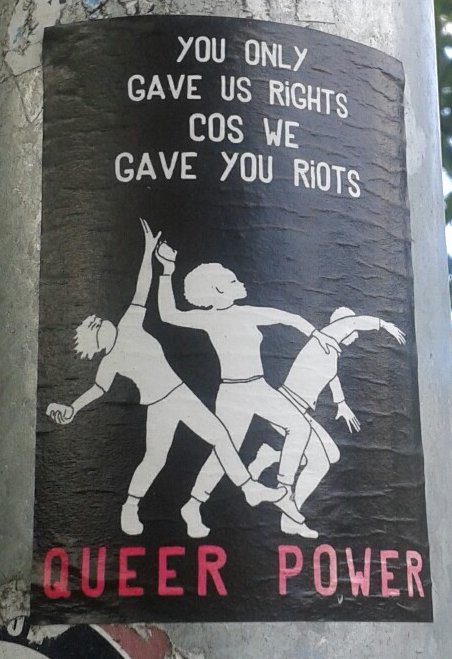


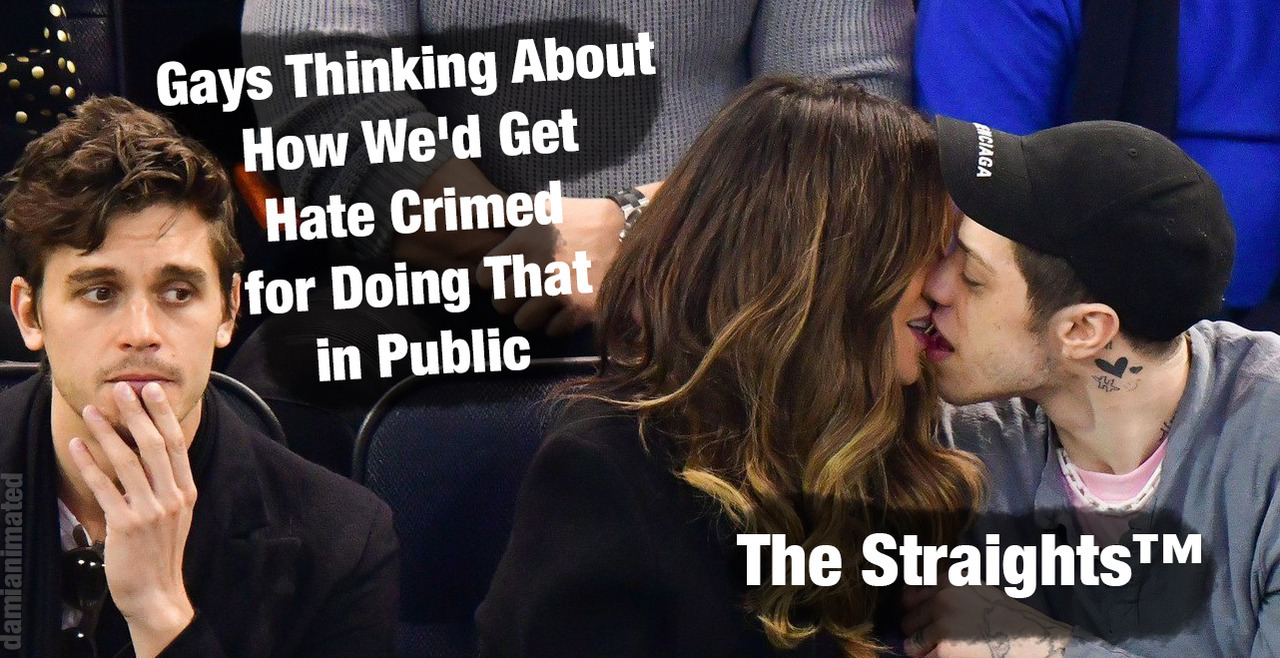

 Bottom Line: Everyone who is there to celebrate Pride is welcome, including straight allies. I’m not saying that you have to show up in a g-string with rainbow glitter on your nibbles to participate. I’m going to be wearing a t-shirt and shorts and sensible shoes, carrying my bright rainbow parasol and looking every bit the short, old, queer, nerdy bear that I am. But not only are the street queens, the freaks, the kinksters, the butch dykes, and all of the other “outrageous” or non-conforming people welcome, they were our founders—and they sure as hell belong.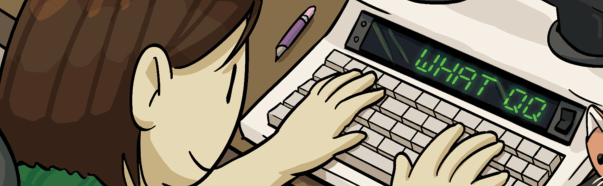

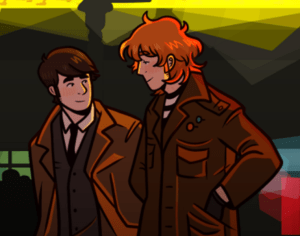
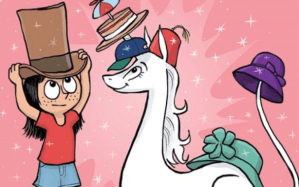








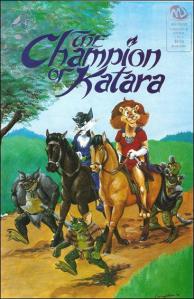

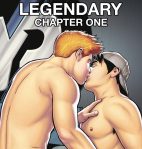
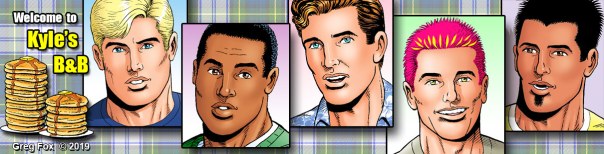
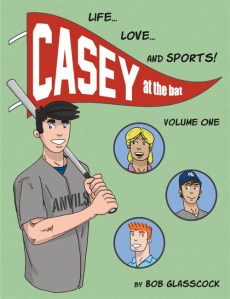
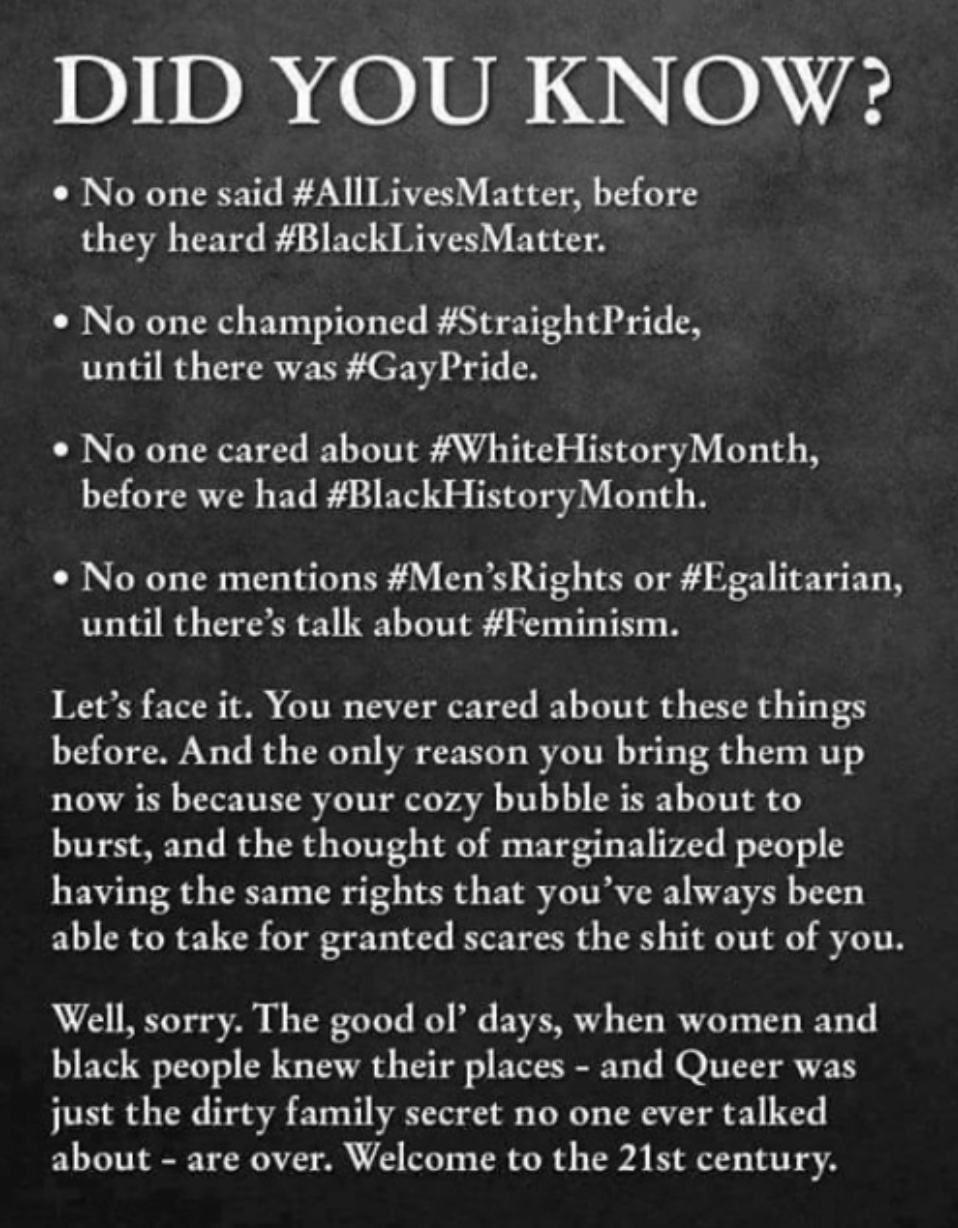
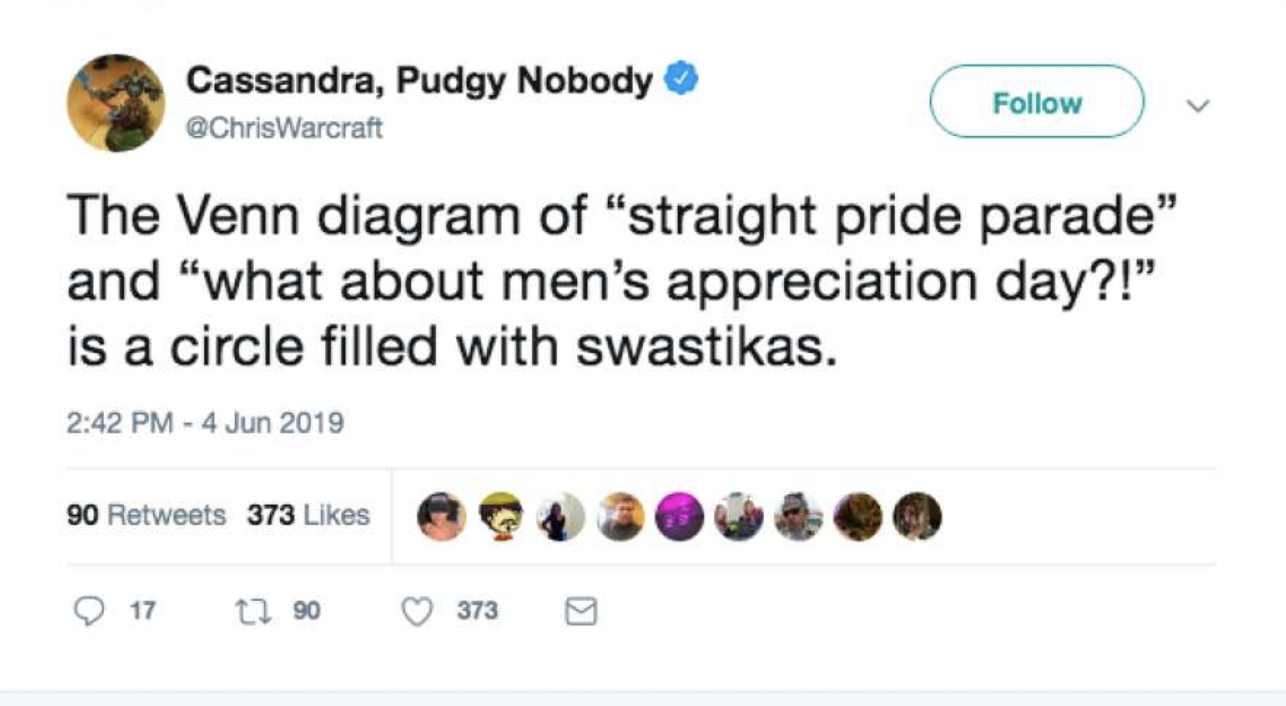
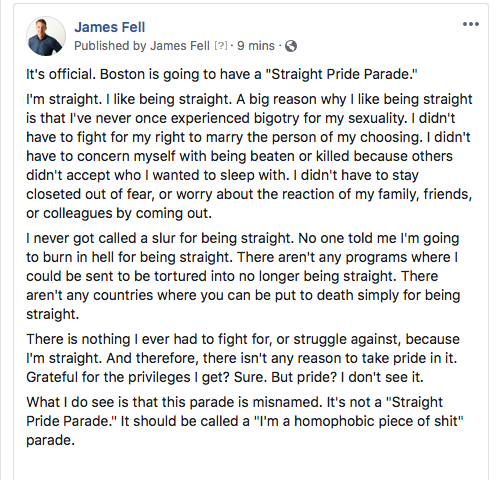
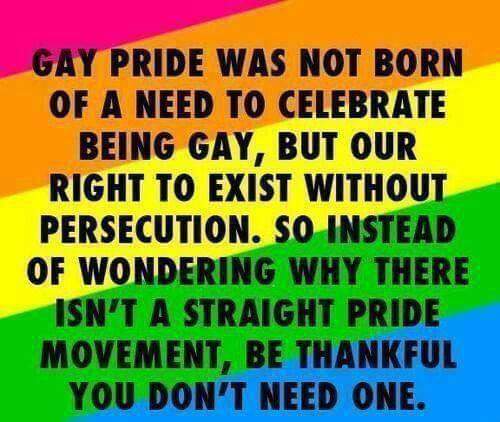
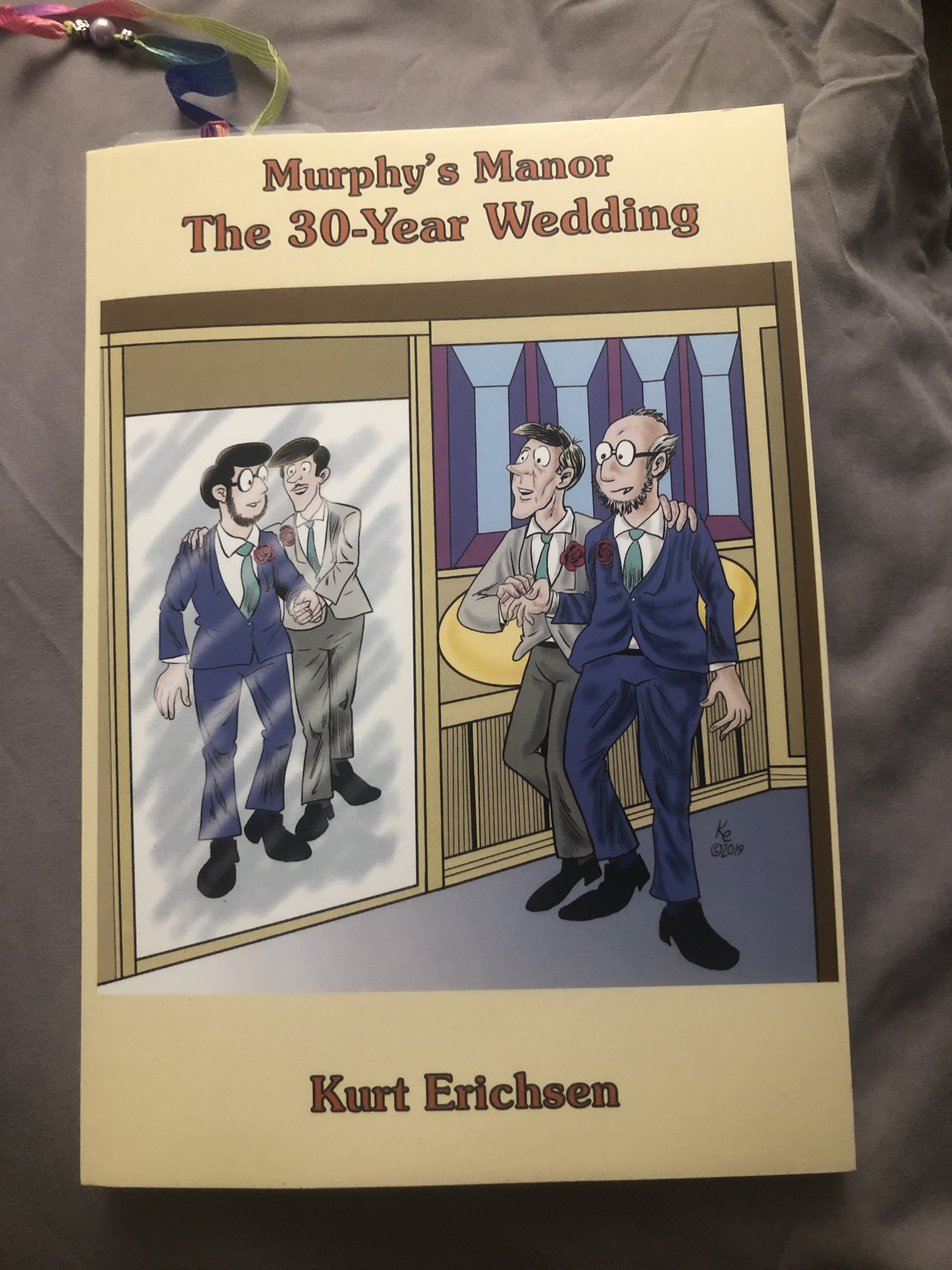


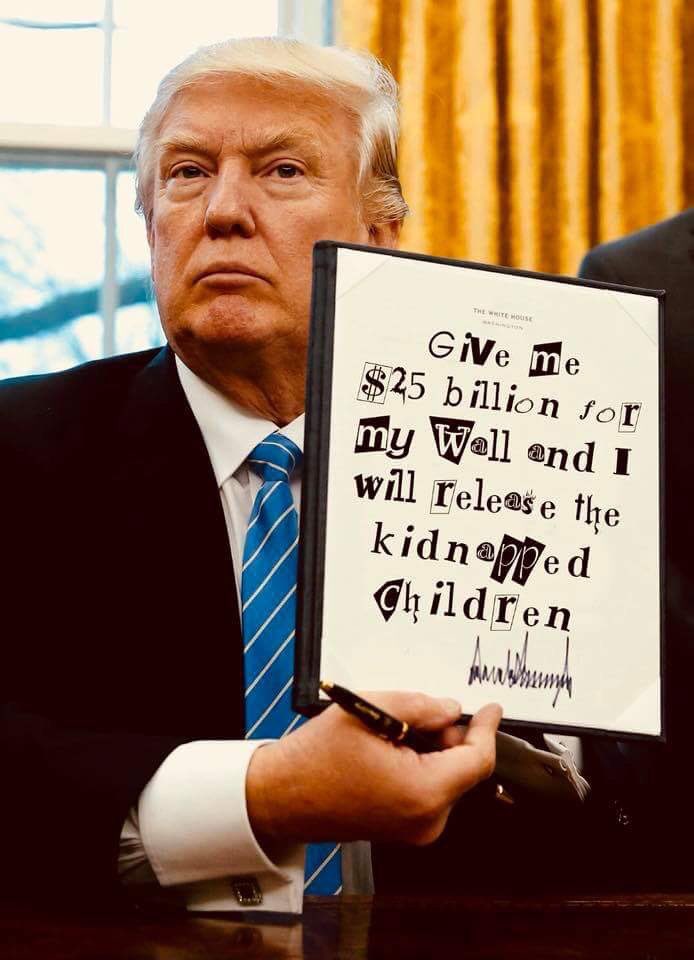


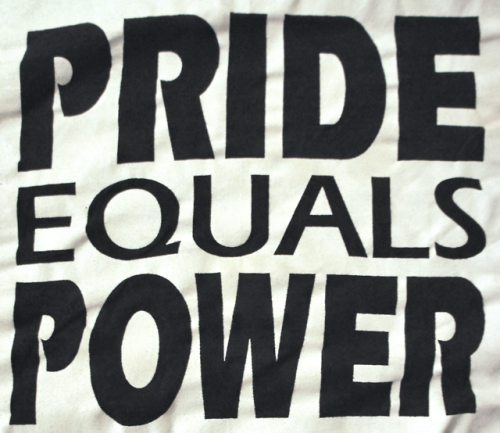
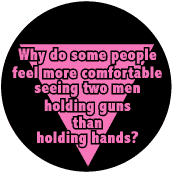
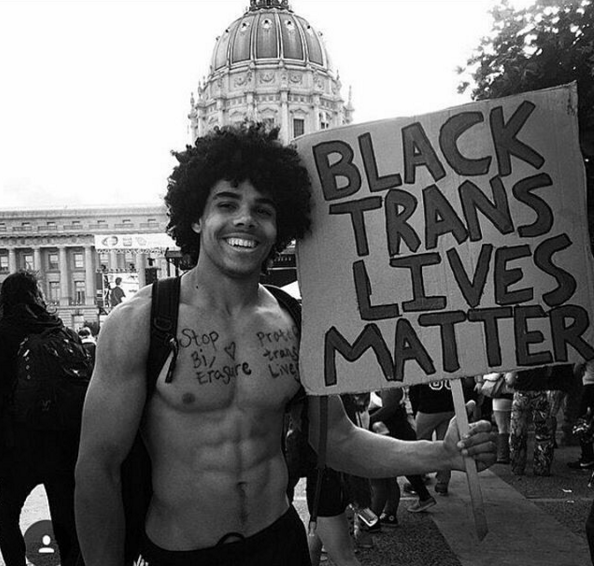
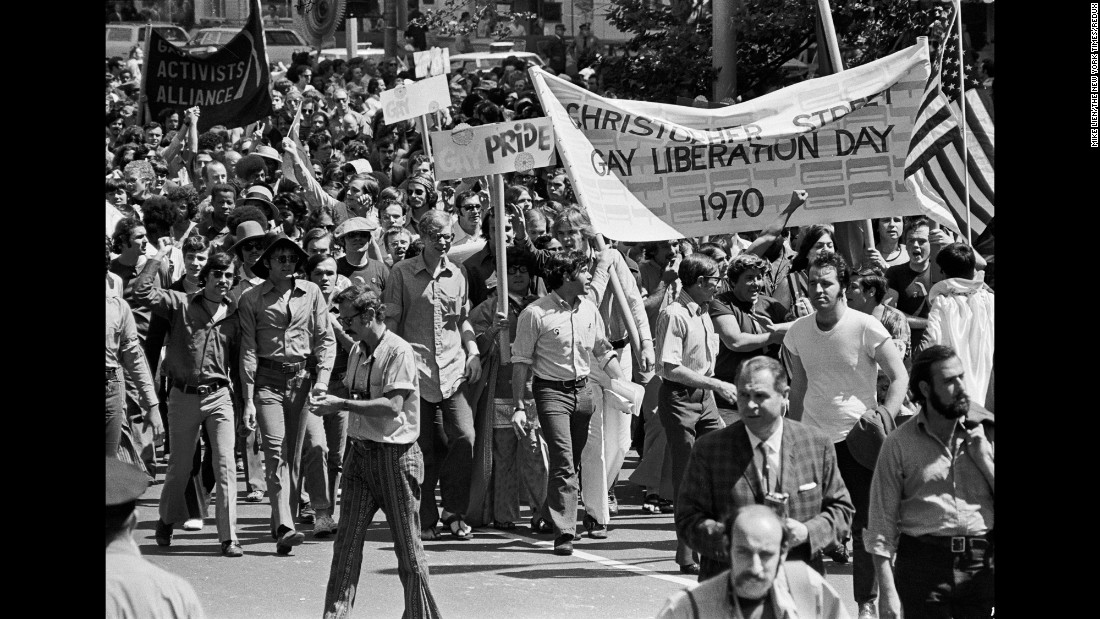
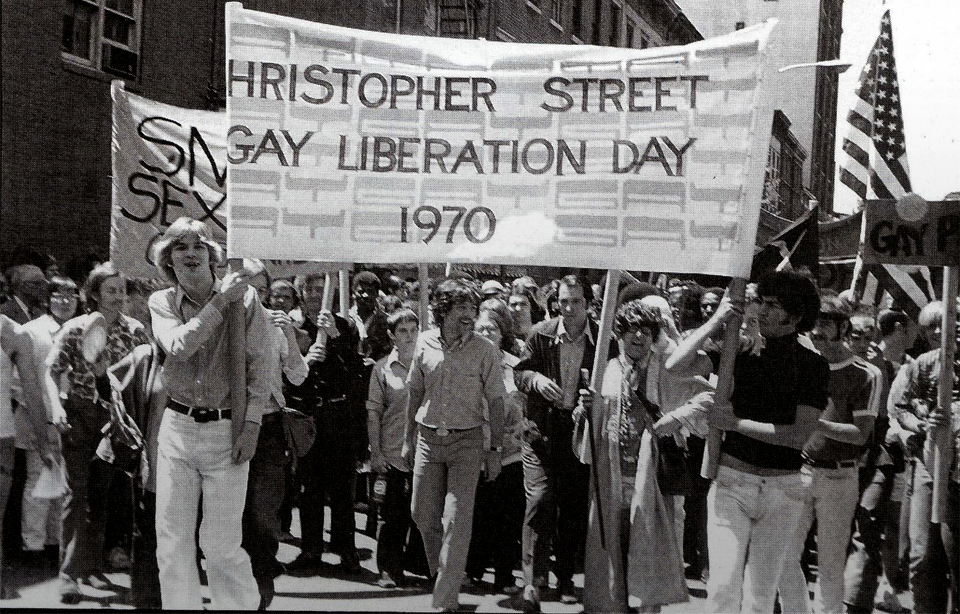
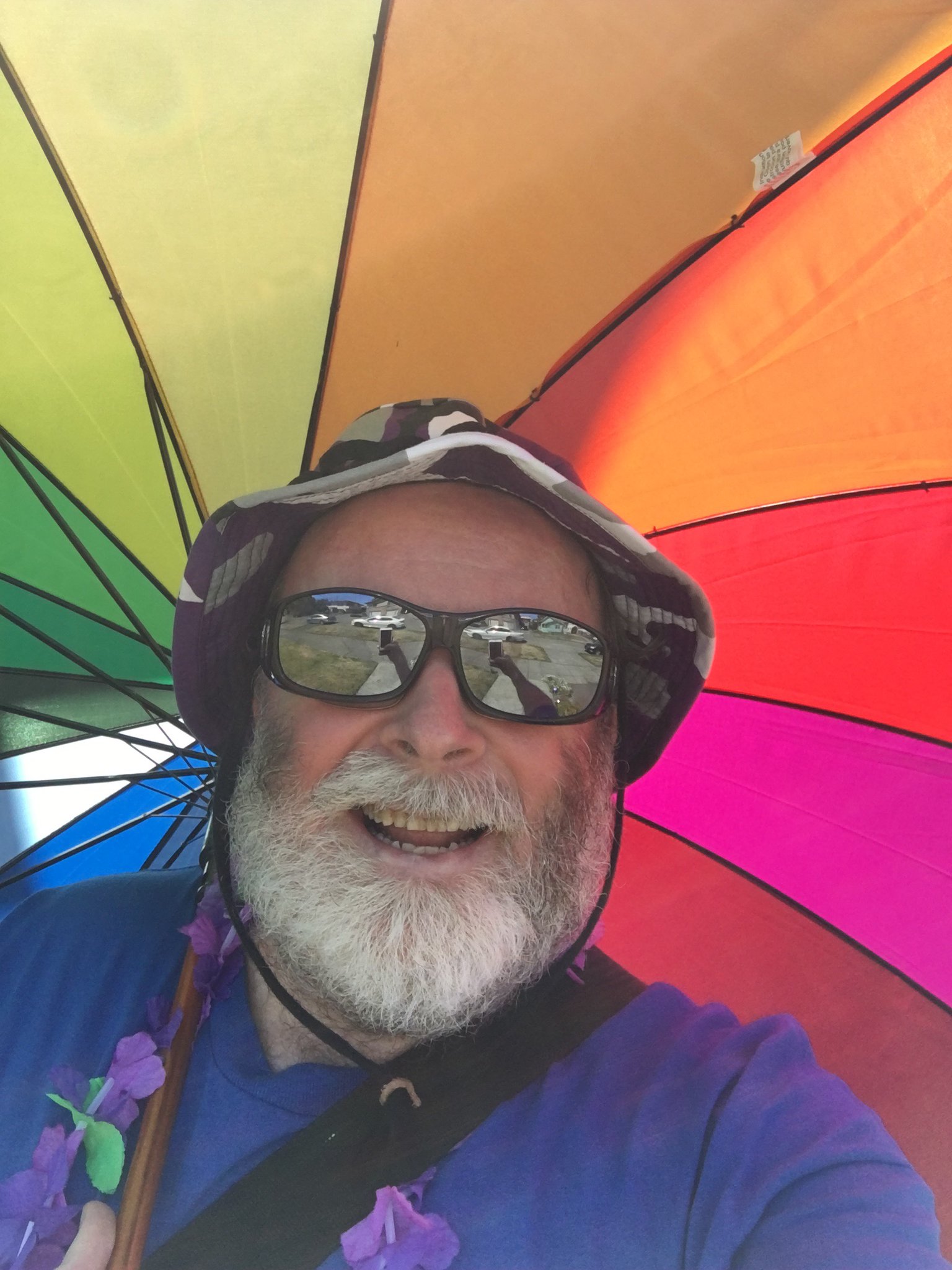

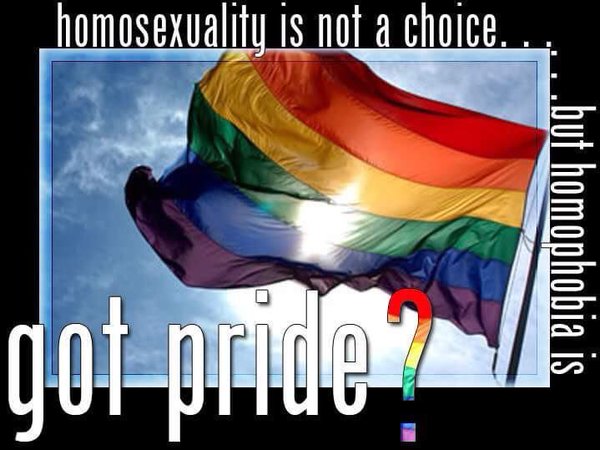

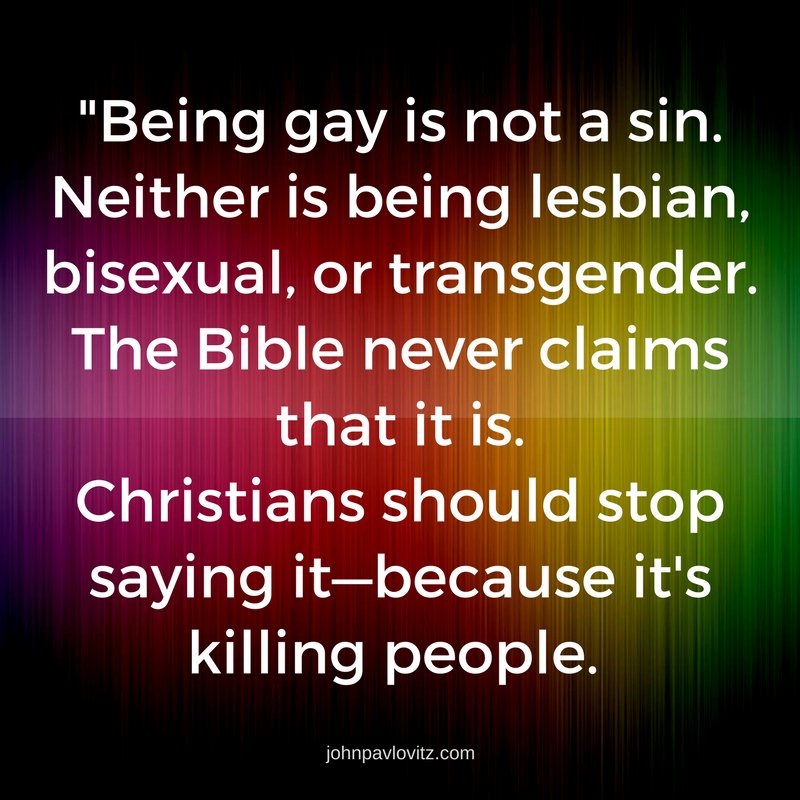


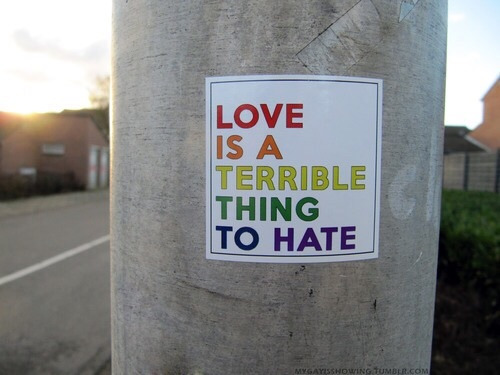
 Font Folly