
Tag Archives: sci fi
Homemade Rockets and Invisible Moons: more of why I love sf/f

It was during one of those rotations that I first found a copy of Eleanor Cameron’s Mr. Bass’s Planetoid. Of course I had to check out right away because it had “planetoid” in the title! It was clear from nearly the first page that this was a sequel. Two best friends, Chuck and David, are friends with an eccentric scientist, Mr. Tyco Bass, who helped them with their homemade rocket previously. Another scientist, Prewytt Brumblydge, has stolen a sample of a mysterious metal Mr. Bass had discovered in a meteorite, and soon he is using this metal to power a machine with which he hopes to solve two of the world’s problems: the lack of safe drinking water in some parts of the world, and the need for electricity. Unfortunately, the machine has dangerous side effects that could destroy the entire planet. The boy’s learn this part from yet another scientist who happens to be Brumblydge’s former teacher, who is convinced the student is looking for the source of Mr. Bass’s mysterious metal.
The problem is that Mr. Bass is nowhere to be found… Continue reading Homemade Rockets and Invisible Moons: more of why I love sf/f
Semi-Precious Stone, Helical or Otherwise: more of why I love sf/f

Once I got the book home, I read through the titles in the table of contents again, and one jumped out at me: “Time Considered as a Helix of Semi-Precious Stones.” It was just an interesting image: a helix of gemstones and the like as some sort of analogy or metaphor for time. And the author’s name, Samuel R. Delaney, seemed familiar, though I couldn’t think of any stories I had read by him.
So I jumped right to that story… Continue reading Semi-Precious Stone, Helical or Otherwise: more of why I love sf/f
Mortality, Im- and Otherwise: more of why I love sf/f
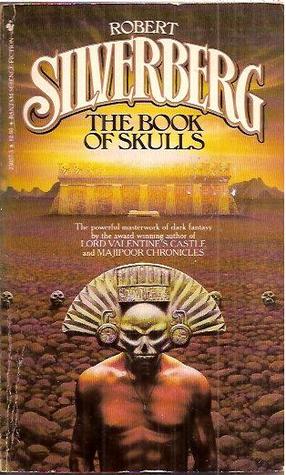
The novel is told in rotating first-person viewpoint from each of the four characters: Eli, the Jewish bookworm; Ned, the flaming homosexual; Timothy, the rich boy; and Oliver, the farmboy/jock. They are students at the same college who have formed somewhat unlikely friendships. Eli, who has a gift for languages, found and translated a book about the mysterious Brotherhood of the Skull and their secret of immortality. The book says that four people must present themselves together, and work together to endure the trials of the Brotherhood. Even if they succeed, only two will gain mortality. The other two lives are forfeit: one must willingly commit suicide, and the other must be sacrificed by his fellows… Continue reading Mortality, Im- and Otherwise: more of why I love sf/f
So many books, so little time…
 It used to be that I had a rough measure of how busy I’d been by looking at the pile of books beside the bed. For most of my life, going back well into childhood, there has always been a pile of books beside my bed. These are books that I intend to read soon. Sometimes the ones on top are books I am in the middle of reading. I am almost always in the middle of reading several books at the same time, which complicates things. The pile shrinks as I finish books (or, occasionally, as I get far enough into a book to realize that no, I don’t want to finish this one). And it grows whenever I go to a bookstore, or a convention, or browse piles of free books, or… well, you get the picture.
Certain things about the pile have changed over the years, of course. When I was middle school aged, for instance, much of the pile was made up of library books. The pile changed out a lot quicker, back then, as well. I went through a period of a couple of years where I read at least one entire novel nearly every day. So I would take books back to the library every few days and bring home more. In high school my pace slowed down a little bit, and a much larger proportion of the pile was paperback books, usually picked up at one of the used book stores. I did a lot of trading books back in to buy more back then. I also borrowed a lot of books from friends (and loaned a bunch).
I’d also been a member of the science fiction book club for a long time. I got suckered into it when I was about 13 years old. I say suckered mostly because I didn’t really have a concept of just how difficult it was to remember to mail back in the little card that said, “No, I don’t want the automatic selection this month.” Which I had to do most of the time if for no other reason that, as a kid, I didn’t have the money to pay for the book and the shipping. I did acquire about a shelf worth of books that way, though.
But most recently the pile by the bed has become a lot more static than it used to be. Mainly because I don’t read hardcopy books nearly as much. Most of my reading is ebooks, switching between reading on my phone or iPad. The apps do a decent job of keeping track of where I left off on the other device when I switch. It’s just so much easier, when I find myself stuck in line at the bank, let’s say, to pull out the phone and open either iBooks or the Kindle app.
It didn’t happen all at once. My gateway drug, as it were, to non-paper books was the audio book—for which I usually blame my husband. He loves to listen to audiobooks, mostly sci fi and fantasy, while he plays video games. Usually listening over the stereo in the computer room. Except in the summer, because the fans make it a little hard to hear clearly, so then he switches to headphones.
I don’t know how many times I went into the computer room to do something that should have taken 5 minutes or less, only to wind up sitting in there for a half hour or more listening to the book he was listening to. Of course, often if it was a book that we also owned in hardcopy, I’d head into the other room, find the paper book, and sit down to finish it off; because of course I can read it myself much faster than the reader can read it aloud.
Though I have to admit that the real culprits are a pair of Jims. James Marsters and Jim Butcher, to be exact. But they had some accomplices.
I was in my late thirties when, somehow, I deluded myself into the idea that signing up for a book club would be a good idea, again, so I was a member of the science fiction book club, again. At least by then you could do your ordering and/or declining to order on-line, so the number of times I got books I didn’t mean to was a lot lower. I’d been mostly declining, only buying a few books a year for quite some time. I bought my first Dresden Files books because I’d had a few friends recommend the books, (generally by expressing shock when we were discussing the short-lived TV series when they found out I’d never read the books). In early late 2007 or early 2008 the book club had a deal on a four-volume set that contained the first eight books in the series. So I bought them, and then they sat in the pile by the bed for a few months. After being laid-off from the place I’d worked at for more than 20 years, one night when I was between contract jobs, I picked up the first volume and started reading. I stayed up all night reading through the first two books. Over the course of the next week or so I read through the rest of the series.
While chatting about the series with another friend, she expressed surprise, given what a big fan I was of the character of Spike from Buffy the Vampire Slayer and Angel the Series, that I’d never gotten the Dresden audio books. “I can have Spike read bedtime stories to me?” I asked, in disbelief. The original distributor of the audiobooks even offered a free download of the first four or five chapters of the first book!
One of the first purchases I made once I landed a job as a “regular employee,” was the audio version of the first Dresden book. Which began my pattern of reading the paper copy of the book first, then buying the audiobook and listening to it again and again…
I have noticed lately that my book buying habits have made another change. There are books I still buy in hardcopy. I am easily lured into used book booths at conventions, for instance, and almost always buy something. But generally speaking, I get annoyed for new books if I can’t find an e-book version. In the last year or so, there are books that I’ve just decided not to get because they are only available in hardcopy. If I really like a book once I’ve read it digitally, I may well buy a paper copy to cuddle up with for re-reads, but the e-book has become my preferred format.
I don’t think that’s necessarily a good or bad thing. Though given how much energy we’ve spent, over the years, trying to keep the book shelves in order, occasionally going through the lot and pulling out books we know we’ll never look at again to give away or attempt to sell, I have to admit that letting books pile up on the computer is a whole lot less work.
But it’s also the convenience of always having a whole bunch of books in my pocket that wins the day. So the pile by the bed changes much more slowly, now. I don’t think it will ever go away entirely, but it is no longer an indicator of how much reading I’ve been doing.
We are all Hugo…

Since we now have the rest of the nomination results, it is possible to see what works would have been on the ballot if not for the slates. Here is one such guess: Alternate Timeline Hugo Awards. This list includes some very interesting things that I wish we had had a chance to vote on.
The next headline isn’t entirely accurate. While George disapproves of any slate voting scheme, the purpose of his reviving his Hugo Losers party and this year handing out his own awards was to try to protest the deep schism and animosity: George R.R. Martin Holds Additional Ceremony After the Hugo Awards to Protest ‘Sad Puppies’. Years ago Martin founded the original Hugo Losers party, where people who were up for a Hugo that year could get together and tell each other they should’ve won… to wallow a little, yes, but also to commiserate, laugh at themselves and each other, et cetera. He let other people take over organizing it for years, but this year because of all the animosity flying around from every direction, decided to take it back. He rented a bar, invited anyone who has ever lost to the party. This year’s winners were also invited, but had to wear a conehead if they stayed. George had a bunch of trophies made, which he called Alfies, in honor of the late great Alfred Bester, and handed them out to people who would have been on the ballot, based on the nominating numbers, if you remove the slates. He handed out a few additional ones of his own choosing. By all reports, people had a good time.
Why We Need Queer Escapist Lit. I get tired of having to defend wanting to see characters that are like me in my favorite genre. But we have to keep doing it.
The false narrative that a lot of people on both “sides” of this issue often fall into is the idea that people of color, women, and queer people have only recently begun reading and/or creating sci fi/fantasy. This helps explain a big part of why that’s wrong: We’ve Always Been Here in the Fandom. Why the WIRED article on the Hugos misses the mark.
Equally problematic is that the frame of reference of people on one side is so utterly disjoint from the frame of reference of people on the other side, that a lot of our attempts to debate have merely resulted in us talking past each other. Hugos & Puppies: Peeling The Onion.
“When it comes to debating strangers with radically different perspectives, you sometimes encounter what I refer to as Onion Arguments: seemingly simple questions that can’t possibly be answered to either your satisfaction or your interlocutor’s because their ignorance of concepts vital to whatever you might say is so lacking, so fundamentally incorrect, that there’s no way to answer the first point without first explaining eight other things in detail.”
There are other differences, of course: On the SF/F genre and a-holes.
“We all have conservative friends and acquaintances who aren’t a-holes, and we don’t seem to have a big problem with them unless they’re crazy bigots like [Vox Day]. We have a problem with a-holes.”
On the Hugo Awards controversy, Sad Puppies, and why there are no winners here.
“…I haven’t voted in several years, when I did I voted for stories that I loved (plus, to be honest, stories written by my friends)—as do most readers. If readers deliberately voted for stories about gay characters and people of color, perhaps it’s because [those stories] speak of “alienation,” which a great many readers of science fiction happen to have experienced (readers of science fiction tend to be natural outsiders).”
This may be my favorite read today: How the 2015 Hugos proved against all odds that SF is becoming more international and more diverse. There is just so much here to like. She links to some of the same posts I have above, but also to a whole lot of others. She pulls long quotes from people and does some analysis and rebuttal. One of my favorites is in response to a Sad Puppy supporter who agreed to be interviewed for one of the news site’s stories, but didn’t want his name used:
“In many ways this quote by the unknown puppy clearly illustrates the attitudes that already became obvious in Brad Torgersen’s infamous “Nutty Nuggets” post. A lot of puppies don’t just want works they don’t like to be excluded from the Hugos, they deny works they don’t like the right to exist period. They don’t want these works to be published, they don’t even want them to be written at all.”
She segues away from the Puppies and spends most of her post talking about the works that did win. I especially like this point:
[B]oth Hugos in the two fiction categories that actually were awarded went to translated works by non-anglophone writers, which is a first in Hugo history. Coincidentally, both are also the first Hugo wins for their respective countries of origin… I’m happy that they won, because their wins show that the Hugos are becoming a more truly international award. And yes, it’s problematic that a white Dutchman and a Chinese man, two writers who have nothing in common apart from the fact that English is not their first language, are both subsumed under the header “international SF”. But given how Anglo-American dominated the Hugos and WorldCon have traditionally been, it’s still a great step forward.
I’m skipping a lot. Her full post is really worth that read. I hope you give it a look.
Those of us who love science fiction and fantasy are going to be talking about this a lot over the course of the next year. Both the Sad and Rabid Puppies are vowing to be back. Vox Day, leader of the Rabids, is specifically threatening to leave a “smoking hole” where the Hugos once were. So the rest of us are going to have to make sure we participate in both the nomination portion and voting portion of the process next year.
Because the avalanche may have already started, but contrary to the Vorlon proverb, in this landslide, each pebble has a vote, and we can make them count.
It isn’t that complicated…
 Many years ago the fanzine I edit won an award. It was not anything as prestigious or as well-known as the Hugos. It was an Ursa Major Award, a fan-nominated and fan-voted award which was consciously set up to be an anthropomorphics-fandom version of the Hugos. And because I also write stories that are published in those sorts of ‘zines, I have had one or two of my tales receive enough nominations to make it onto the ballot some years. I didn’t win, but it was an honor just to be nominated. And that isn’t just something I say to be polite, it really was an honor.
I would have been much more excited to win, obviously. I certainly was very pleased when the fanzine won the award. But, the two years my ‘zine won, there were other publications on the ballot who didn’t win, which was a disappointment for their editors, I’m sure. That’s what happens with any kind of award. Someone wins, and a bunch of people don’t.
It so happens that when you make it on the ballot but don’t win, you often find yourself receiving a lot of condolences from friends, acquaintances, and random fans on the internet which include some variant of the statement: “I can’t believe you didn’t win! I voted for you, and know several other people who did, too!”
And that is flattering. It makes you feel at least a bit better about not winning. Obviously, you received enough nominations to make it onto the ballot, so you already knew that there were people who liked your work. But something about having a person tell you directly is even more of an ego boo.
It so happens that one of the years that I didn’t have any story make the ballot, I received a lot of those sorts of condolence messages. After the award winners were announced months later, the committee that administers the award published voting and nomination statistics. Foolishly, I looked at them, only to discover that the only one of my stories published that year which was nominated received a grand total of exactly 3 nominations. I confess, that when I nominated that year I had voted for my own story (and I was fairly certain my husband had, as well). Which meant that only one person other than myself or my husband had nominated me.
But far more than just one person had seemingly sincerely told me—they had volunteered the information without any prompting from me—that they had nominated me. Which means that most of those fans told a little white lie. It wasn’t malicious. In some of the cases, the person probably had meant to participate in the nominating process but put it off until it was too late. A few of them may have been misremembering: they had nominated me, but it was the year before. Others simply were trying to be nice, having noticed that I didn’t make the ballot and assuming that I was disappointed.
When you realize something like that has happened, what can you do but laugh, shrug it off, and try to move on?
Some people are not so philosophical… Continue reading It isn’t that complicated…
And the Hugo goes to…
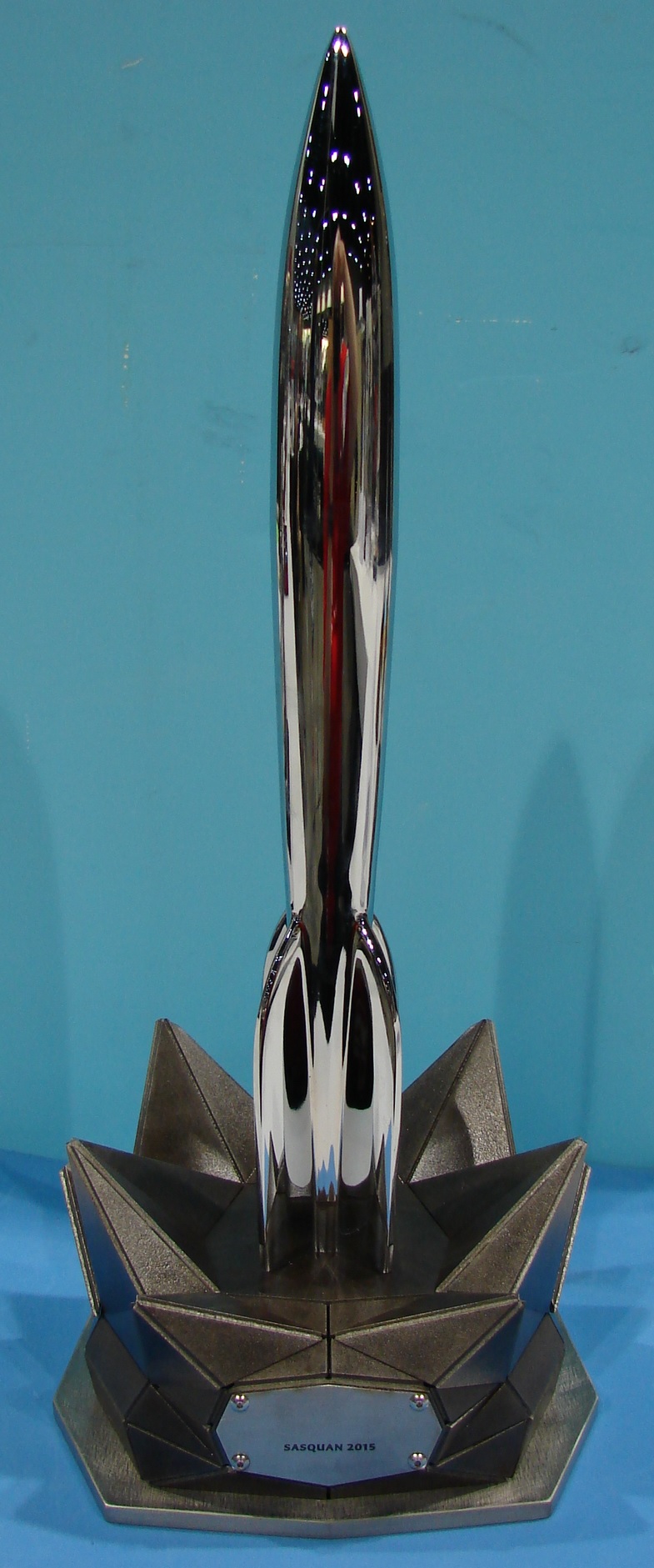
And the Hugos went to: Continue reading And the Hugo goes to…
Weekend Update (8/21/2015): Bad Statistics and Hugos Tonight!
 First, congratulations to the Helsinki Worldcon Bid Committee! They’re hosting WorldCon 2017 in Helsinki! So at least one of the votes being counted at WorldCon this weekend went the way I voted. Woo hoo! Onneksi olkoon! Congratulations!
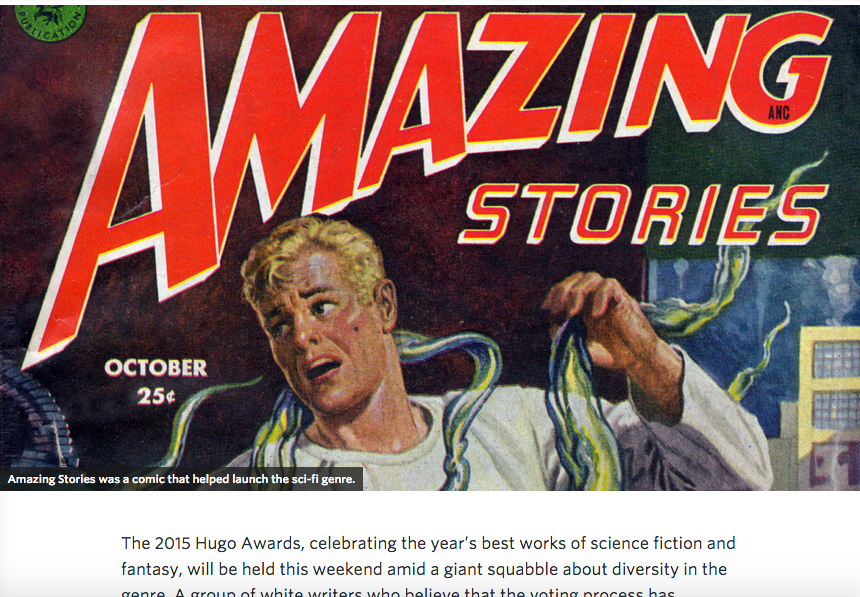
In other updates to things that I’ve included in recent Friday Links posts, a lot of people I follow have been posting a link to a Vocativ post about how very, very white the winners of the Hugo Awards have been over the years: Science Fiction Is Really, Really White. The article has graphs and some statistics and seems legit, right?

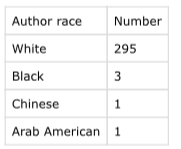
This may seem really petty and nitpicky, but here’s the thing: if you are trying to make a statistical argument to back up a claim, you have to get every fact right. And you have to give us confidence that you are likely to get every fact right. There is a big argument to be had about what we mean by race. Race is a social construct with no basis in biological science, so there will be lots of people who will want to nitpick the data if we did have a big spreadsheet that listed all 300 nominees. I suspect that the graph now is close enough to correct to still illustrate the point that the Hugo Awards have hardly been a paragon of diversity. Even more importantly, the ludicrous charge that the Hugos have been being somehow secretly controlled by a liberal cabal that has imposed political correctness onto the ballot for many years is demolished by facts such as this.
But to the next person who wants to compile something like this: quadruple check your results before publishing!
Hugo Awards Announced Tonight!
The award are tonight! From the official Hugos website:
The 2015 Hugo Awards Ceremony is scheduled for Saturday, August 22, 2015 at 8 PM Pacific Daylight Time in the INB Performing Arts Center in Spokane, Washington. The Hugo Awards web site will once again offer text-based coverage of the 2015 Hugo Awards ceremony via CoverItLive, suitable for people with bandwidth restrictions. For those with the bandwidth for it, Sasquan will also offer live video streaming of the 2015 Hugo Awards ceremony via UStream. In addition, Sasquan will present “The Road to the Hugos”, a livestreamed Internet pre-and-post Hugo broadcast featuring hosts Stephen Schapansky and Warren Frey of Radio Free Skaro, as part of the coverage, starting one hour before and ending one hour after the ceremony.
Here’s the link for the text coverage of the ceremony.
And the link for the live video stream of same.
And the link for the Radio Free Skero livestream pre- and post-shows.
I predict:
- No Award will take maybe two categories, causing cheering from some and more threats from the Überpuppy,
- At least two nominees from one of the Puppy slates will walk home with a Hugo,
- Some people on both sides will claim victory,
- Some people on both sides will claim it is a defeat for all that is right and just in the world,
- Regardless, science fiction will survive!
I plan to have a mini Hugo Watching Party here tonight.
Now matter what happens, please offer congratulations to the winners and please console any nominee (and I mean anyone) who does not get a trophy. Similarly, offer condolences to anyone you know who is disappointed that their favorite in any category didn’t win.
And for the future: if you are a fan, read and watch good science fiction and fantasy (however you define it) and support the writers and artists who make it. If you are one of those writers or artists: in the immortal words of Neil Gaiman, I urge you to make good art.
Ad Astra!
Computerized Clods and Squeamish Scoundrels: more of why I love sf/f

Lost In Space is not remembered as being serious science fiction, or even as a serious series. Though this is primarily because of the second and third season. The first season was intended as a serious action adventure series giving a science fictional spin to the early 19th Century novel, The Swiss Family Robinson, which had itself been inspired by the 18th Century novel, Robinson Crusoe. Like those novels, the early episodes focused on the crew as castaways trying to survive in a hostile environment. Some of the sci fi notions of some first season episodes were pretty silly by modern standards, but mostly because they were attempts to adapt the sort of complications that might appear in a western series or a contemporary slice-of-life series and put a spacey spin on it… Continue reading Computerized Clods and Squeamish Scoundrels: more of why I love sf/f
 Font Folly