Tag Archives: sci fi

We skipped NorWesCon

Some of my bestest friends hanging out at the convention this year. I didn't take this picture, because I wasn't there.
Some of my bestest friends hanging out at the convention this year. I didn’t take this picture, because I wasn’t there.
So we didn’t go to the Northwest Science Fiction (NorWesCon) again this year. Quick background: I started attending the convention back in 1987, after being envious of friends who attended the previous few years, and I didn’t miss a single one for the next 25 years. Michael and I met at a NorWesCon. For years he has referred to NorWesCon as our anniversary, since neither of us can ever remember the date of our Commitment Ceremony (of course, both have been superseded since we were able to finally legally marry on December 9, 2012). For a couple of decades it was my habit to buy our memberships for the next year before we left the convention.

Since NorWesCon has been on Easter weekend since 1989, I have kept track of Easter by remembering when NorWesCon is going to be. I have habits built around NorWesCon. For many years, now, I spent a lot of time during the rest of the year plotting what new cocktail I will buy Keith on Saturday night at the con, because Keith almost never drinks, and it amuses all of us, including his wife, to watch him react to alcohol (and it’s tricky to find ones he will actually agree to drink more of). During the weeks leading up to the convention I start longing for the evening I’ll sit in the bar or restaurant with Juli-sans-e (not to be confused with Julie-with-an-e, who might join us with the wings, but is more likely to find ways to trick us into saying “nipple” at inappropriate times) eating plate after plate of hot wings and exchanging stories.

I could go on and on.

But, for a variety of reasons, the last few NorWesCons we attended were not much fun for either Michael or myself. And when I realized that four out of the last five we attended, I had found virtually none of the programming interesting (except for Auntie’s costuming panels). I had found it so unappealing, that I had wound up spending all of the time I wasn’t sitting in a bar or restaurant with our friends, sitting at my laptop writing.

To be fair, I got a lot of writing done each of those conventions. More than I usually get done on an ordinary weekend. But it seemed a little silly to both of us the spend all that money on a hotel room, memberships, and all of those meals at hotel restaurants, if all I was going to do was sit in a hotel room tapping away on my computer keyboard.

The one exception out of that span was the year that both Jim Butcher and Patricia McKillip were guests of honor. It’s pretty difficult for me not to enjoy hearing either of them talk about their writing.

So we skipped last year. We gave a few other local conventions we haven’t attended in a long time a try, and we enjoyed those. We would have enjoyed them more if our usual gang had been in attendance. I did miss hot wings with Juli. I really missed hanging out with the gang.

We were leaning toward coming back this year, but when we weren’t able to get certain answers we needed before the hotel room block filled up, we decided to skip again.

As it happens, another friend that I’ve been trying to get to attend finally went for the first time this year. So not only didn’t I hang out with our usual crowd and do our usual things, I didn’t get to hang out with Sheryl at the con.

I also regret missing this year because Michael Moorcock was Guest of Honor. I really like his writing, and given his age and the distance to travel to a west coast con, it’s highly unlikely I’ll get another chance to see him.

NorWesCon is almost always the same weekend as SakuraCon. My dear sweet husband was actually one of the founding SakuraCon committee members many many years ago. It’s been several years since we’ve attended it. So we had talked about the possibility of getting memberships to SakuraCon for this year, though by the time we had decided not to do NorWesCon, neither of us was feeling enthusiastic about anything. We had a couple of conversations this weekend about next year attending either SakuraCon or NorWesCon. I know we could both have fun at either. Most of our friends will be at NorWesCon, but we’ll have a few friends at SakuraCon.

A lot of people seem to be excited because George R.R. Martin is going to be the Guest of Honor at NorWesCon next year. Frankly, that makes me slightly less likely to attend. Not that I have anything against Mr Martin, it’s just that I suspect a lot of people who don’t normally attend fan-run conventions will decide to attend this one because of the television version of Game of Thrones, and the atmosphere may be more like a corporate con than a fan con. Yes, sometimes I am a fan-snob.

We need to decide soon enough that we can get the hotel rooms and everything else in order either way.

In related news, thanks to some suggestions from friends, since we were already planning to attend EverfreeNW again this summer, but we’ll stay at the hotel next door that many of us like a lot better, and since that same weekend a gaming convention, PaizoCon will be happening in that next door hotel, Michael and I now have memberships for both conventions, the same weekend. And several of our friends are doing the same. So, we’re going to be two-fisted congoers (or dual-weilding badge-holders, or something) this July.

So even though we’ve skipped NorWesCon two years in a row, I think we’re holding onto our geek/nerd/fanboy cred.

What’s your favorite End-of-the-World movie?

REM disc art.
“It’s the end of the world as we know it… and I feel fine!
I finally watched Iron Sky, which is a very silly movie about a secret colony of Nazis hidden on the dark side of the moon, that has been plotting the “liberation” of earth for 70-some years. It’s got some nice, diesel-punk (that’s like steampunk, except moved forward about 40 years) sets and devices. It has some nice homages to a couple of movies (Dr. Strangelove, Downfall, just to name two) without beating you over the head with it. It was fun.

I especially liked the song that played over the end credits, “Under the Iron Sky”—not just because its chorus line, “We will meet again, under the Iron Sky,” was a nice nod to Kubrick’s choice to play “We’ll Meet Again,” over the end credits of Dr. Strangelove. While I was checking to see if the song was available to buy online (it is, along with an entire album of music inspired by the movie released by the Finnish band, Kaiti Kink Ensemble), I got thinking about other end-of-the-world movies and why I like them.

I wound up polling my twitter followers for more suggestions of end-of-the-world movies. That spawned a side conversation about the difference between a post-apocalyptic story versus a story about an apocalypse. For me, not all post-apocalyptic stories are end-of-the-world stories. And though I’ve been thinking about it for a whole week, I still haven’t been able to clearly articulate why I think of Mad Max as an end-of-the-world story, but Road Warrior and Beyond Thunderdome are post-apocalyptic but not end-of-the-world in my head.

However, since I polled my twitter followers, I’m going to poll you! Note that you can choose Other and type in the name of your favorite if it isn’t listed.

Also, please feel free to add a comment with your own thoughts on the subject. I want to post a follow-up on the subject. Maybe by then I’ll have a better idea of how to explain my definition of end-of-the-world movie!

Mirror, mirror…

Can with a TV remote.
Obviously not actually me, as there is only one remote in the picture…
Several years ago I was reading about the new shows coming out the next season, and one, The Big Bang Theory, sounded like exactly the sort of show that I would hate. So I didn’t make any attempt to watch any episodes. Not very long after the season started, I heard from a few different acquaintances that it was not a good show. The specific comments were that it made fun of nerds by portraying them in completely exaggerated, stereotypical, and unrealistic ways. So I continued to ignore it for all of the first season.

And then another nerdy/geek/fannish friend happened to mention, midway through the second season, that he was strangely addicted to the show. I mentioned the reasons I had assumed I wouldn’t like it, and he said, “Oh, me too!” Then he explained how his wife (a person who has been even more immersed in fannish culture than either her hubby or me) had watched the first season on Netflix. “I tried to ignore, and work on stuff on my computer. But it kept making me laugh… and it usually made me laugh because the characters acted exactly like some of our friends.”

Continue reading Mirror, mirror…

Book Review: Countdown City

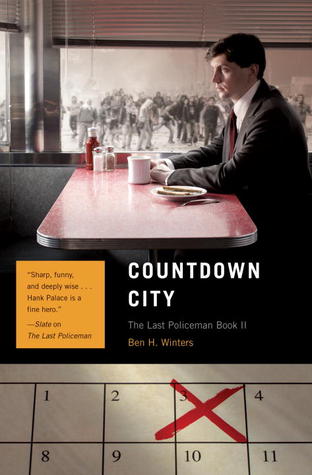
Cover are for Countdown City.
Countdown City, by Ben H. Winters (book 2 of the Last Policeman trilogy).
Countdown City is a mid-apocalyptic noir. When I reviewed The Last Policeman, I mentioned that I was a teeny bit disappointed, after reading it and loving it so much, to find out the author was working on not one, but two sequels, because I thought the ending of the first book was perfect.

I’m no longer disappointed.

The quick set-up: we’re just 70-some days away from the earth being struck my an asteroid that’s too big and was discovered too late for us to do anything about it. Society has been crumbling for some months, and our hero, Henry Palace, a former police detective in Concord, New Hampshire, is now out of work and living in a world without electricity or much of anything else, where a very militarized police force is in charge of distributing the small amount of food and goods still available.

And the woman who babysat Hank and his sister back in the days after their parents’ death while they were living with an inattentive grandparent, is begging him to find her missing husband. In a world where people are running away to do crazy things before the end, and other people are willing to kill for a stash of coffee beans, she wants him to find a missing person.

The author described the first book as existential detective novel. I continue to prefer my description as a mid-apocalyptic noir. The first book asked the question, what’s the point of solving a murder when the world is about to end. This book poses the question, what do promises and commitment mean when there is no tomorrow?

The answers this book gives, like the answers before, may not surprise you, but by the time you reach those answers, having watched what Hank does to find those answers, you believe them.

If you don’t want the slightest hint about the ending, stop now. Other wise, click the Read More below:

Continue reading Book Review: Countdown City

Running off to a con

The car is very nearly packed. I still need to pack the computer, make a final run through the house to get everything turned off, et cetera, and I may hop in the shower one more time before I go.

I go to conventions because I enjoy hanging and goofing off with my friends, enjoy seeing people I don’t see except at fannish events, also to people watch, get some writing done, and (it is hoped) sell some books and things. It’s my version of a vacation.

There is a point (or, to be honest, several points) before I get on the road where I’m stressed out about almost everything: Have I packed everything? Is the inventory ready and in an order where I can find everything? Are my display materials ready? Did I remember to back up my computer before I left? Do I have my medications? Did I remember this, that, and the other?

Then during the drive and/or flight at least half of those questions keep coming up again, along with a lot of others: Did I double-check that the stove was turned off? Did we get the windows locked? Did I start the dishwasher before we left? Did I take the trash out? Did I let the responsible neighbors know we would be gone for a few days? Did I make sure no leftovers that won’t last are sitting in the fridge? Am I sure I locked the door?

When I write them out, it sounds like I’m a complete mess. Which is usually a slight exaggeration. Don’t get me wrong, each question wells up from my subconscious delivered in a voice of utter panic (usually sounding like Don Knotts’ character, Luther Heggs, in the movie The Ghost and Mr. Chicken). But the more rational part of my brain will sigh and say, “Yes, yes we took care of that.”

On trips where I’m experiencing a bit more of the worry than usual (such as, say, during times near the anniversary of Ray’s death, or his birthday, when I’m been working a lot of extra hours at work…), Michael has to intervene and remind me that if something is wrong or missing or forgotten, we’ll deal with it, “We always do.”

Which is great when he’s with me.

Unfortunately, he forgot that this was a Thursday through Sunday con, so he didn’t arrange to take today off from work. He helped did most of the loading of the car before he left. He’s going to come home after work, change, grab a few things, then take the train down to the hotel to join me this evening. As he reminded me just before he left, I can call him if I realize I forgot something, and he’ll check the house once before I go.

He’s always so calm, and capable, and endures my worry attacks with the patience of a saint.

I don’t deserve him.

Anyway, time for me to do those last few things and hit the road. If you happen to be attending RainFurrest, come to the dealer’s den, find the Tai-Pan table, and say “howdy!”

You might get a free badge ribbon or something out of it!

Nightmare Theatre!

When I was a kid, just about every metropolitan area in the U.S. had at least one local TV station showing some sort of monster/mystery/sci-fi/horror movie program every week. Many of them ran on Friday nights, after the local evening news ended. A few ran on Saturday evenings, and fewer still on Saturday afternoons. And something that a lot of those shows had in common is that there was a host: a person who usually was dressed up as some sort of monster or other stock character, who would introduce the show, possibly banter with a sidekick, or otherwise provide a bit of color commentary to the proceedings.

Some people operate under the impression that the first horror host was Elvira, Mistress of the Dark (no, she didn’t begin hosting until 1981). Slightly more informed people point to Bob Wilkins, who hosted Creature Features on a couple of different Bay Area channels from 1971 to 1984.

Well-informed people aware that all of them were preceded by some years by Vampira (1954-56), who later tried to sue Elvira for stealing her schtick. [Given that the actress who played Vampira had been working with the station in ’81 and was to be an executive producer of the show that became Elvira’s show, and she left in a dispute over the casting of the host, you can understand.]

A few years after Vampira’s show went off the air (it was aired live, and virtually no footage remains), Screen Gems put together a package of 52 horror films and made them available for syndication. Stations all over the country began showing their own weekly horror shows under titles such as Shock Theatre, Nightmare Theatre, Sinister Cinema, Saturday Chiller, and so on. The shows were usually broadcast on either Friday or Saturday night, after the evening news.

One reason that every station that carried the show had its own host was simply technological. In the late 50s (and for some time after), the way non-network syndication worked involved physically shipping cannisters of film (and later videotape) back and forth. It worked a lot like the non-streaming version of Netflix. A station would subscribe to the show, the syndicator would ship movies out to the subscribing stations. After the station showed the film(s), they would ship them back to the syndicator, who would ship them to another station.

My understanding is that they shipped out four or five movies at a time, and that as long as the station paid their subscription fees, they didn’t wait until the last set had been shipped back before sending the next.

In this case, Screen Gems just provided the movies themselves. Some location stations just ran them with, at most, a voice-over announcer. Other stations came up with their own shows, inspired originally by Vampira.

During the years I was old enough to be allowed to stay up and watch such things, we were living in various small towns in Utah and northwestern Colorado, and one of the stations we got was KCPX channel 4 out of Salt Lake City, where each Friday night brought us Nightmare Theatre.

For a few years it went by the name of The 10:20 Double Nightmare, because it was a double feature and it started at 10:20pm as soon as the evening news ended. I remember that phase only because sometimes my parents would let me stay up late enough to watch the first movie, but I wasn’t supposed to watch the second. By the time I was allowed to stay up as late as I wanted on Fridays, the local evening news went all the way until 10:30, and the show had reverted by to a single movie.

Nightmare Theatre was hosted, during that period, by Dr. Volapuk. Which is to say that a man wearing a vaguely Dracula-like suit and cape, and a really awful rubber ghoul mask, would come out of the shadows, introduce the movie, and make a lot of bad jokes. He would make more bad jokes at the commercial breaks. Occasionally he would impart a bit of trivia related to the movies. At the end of the show, he would give a preview of the next week’s movie, and then end with his traditional sign-off, “I, Dr. Volapuk, have been happy to be your host tonight. Remember, Volapuk spelled backwards is cup-of-love. So in your nightmares tonight, dream of me…” and then he would laugh maniacally.

No, I have no idea what all that cup-of-love business was supposed to mean.

I didn’t know, at the time, that the actor in the mask was also the guy who dressed up as Fireman Frank every morning to host the cartoon show on the same station.

Nightmare Theatre showed a lot of the old Universal Monster movies (Frankenstein Meets the Wolf Man, Son of Dracula, Werewolf of London, The Mummy’s Hand, and so on), but also a lot of the Japanese kaiju genre of moves (Mothra, Godzilla Raids Again, War of the Gargantuas).

A lot of the nerdy interest in such shows got re-focused on newer things when Star Wars came out and kicked off a bunch of higher quality films of the fantastic. Relatively cheap high quality satellite feeds and other cable television technologies replaced the old model of shipping film around, so shows such as Elvira’s Movie Macabre, Mystery Science Theater 3000, or Cinema Insomnia could be produced in one place and seen in the niche of each market. Which has put stake through the heart of most of the local horror hosts.

All those Friday nights that I stayed up to watch those movies is probably why I often still get a hankering on Fridays for some cheesy sci fi or similar films.

Wanna join me?

Why do you care?

Jon in cloak and jacket pointing into the camera.
Jon Pertwee was the Third Doctor (1970-74).
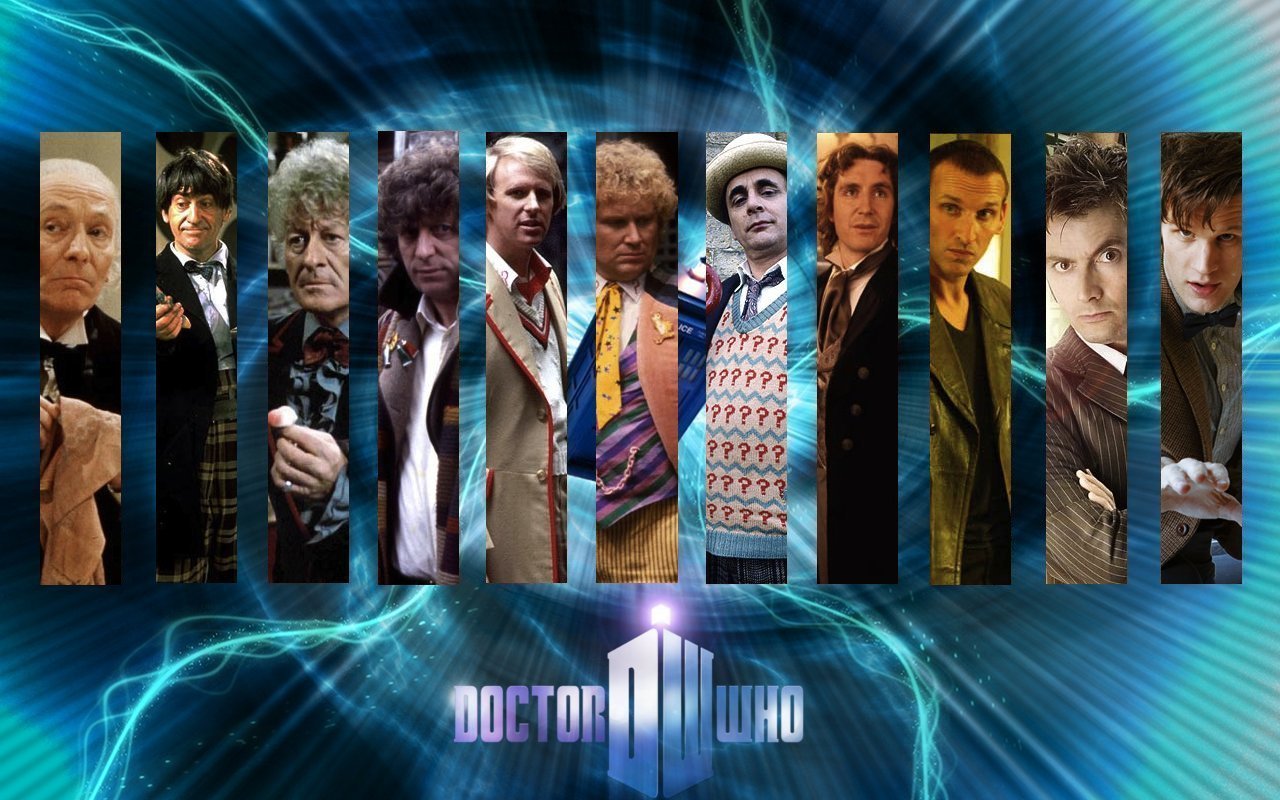
I’m a big nerd and long-time Doctor Who fan. For years my favorite was Jon Pertwee, and not just because he totally rocked a velvet jacket, ruffled shirt, and opera cloak. I was watching years before the BBC revived the show with Christopher Eccleston playing a decidedly dark and delicious doctor. I’ve got piles of DVDs with at least some of the adventures of all the doctors (William Hartwell, Patrick Troughton, Jon Pertwee, Tom Baker, Peter Davidson, Colin Baker, Sylvester McCoy, Paul McGann, Christopher Eccleston, David Tenant, Matt Smith, and even both of the 60s movies starring Peter Cushing as a Doctor Who that was not a time lord, but traveled in a Tardis and fought Daleks).

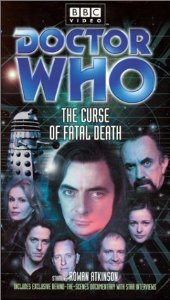
Okay, that’s still not complete. I don’t have a DVD of Doctor Who and the Curse of the Fatal Death,in which the Doctor was protrayed by Rowan Atkinson, Richard E. Grant, Jim Broadbent, Hugh Grant, and Joanna Lumley. I’ve seen it, they’ve just never released this parody special for charity on DVD.

I am an enormous Doctor Who fanboy. In the years since many of the old adventures have become available on disc, I have reached the point where I now frequently say that my favorite Doctor is whichever one I happen to be watching right now.

Despite that, I don’t think every episode or serial has been awesome. There has been more than once that I thought the new actor cast to play the Doctor was a terrible mistake. There have been companions that I wanted to strangle, stories that made me embarrassed on behalf of the actors, endings that made me want to drown the writers (or at least shake them by the throat and yell, “That really insipid, self-indulgent pile of refuse you spewed out there could have been saved with just two lines of dialog!”).

A picture of the cover of the VHS release of the special.
Doctor Who and the Curse of the Fatal Death.
So I’m a super fan, but not a blindly-love-anything-they-put-out fan.

I understand why I watched the announcement of the new actor who will take over the role at the end of the 50th anniversary Christmas special. I understand why I, and many other fans, may have been disappointed, or are feeling apprehensive about the new actor chosen.

What I don’t get are the people (and there was more than one being re-tweeted around the internet yesterday) who say they have never watched a single episode, and that they are angry about the actor who was cast.

Images of each actor who has played the doctor, over the current show's logo.
The eleven official Doctors.(Click to embiggen)
“Why do you care?” isn’t really the question, because they have an answer to that. They are upset that the actor cast was a white man. They wanted either an actor of color or an actress cast as the next Doctor. And I understand that, boy do I understand not feeling included when you don’t see actors who look like you in lead roles or even recurring roles.

I was not terribly happy when Matthew Smith’s casting was first announced specifically because I really wanted to see a comedienne cast. Someone like Jennifer Saunders was what I had in mind. I didn’t see any reason the Doctor couldn’t regenerate as a gal instead of a guy. Smith won me over, and I’ve been very sad since learning that he is leaving the show.

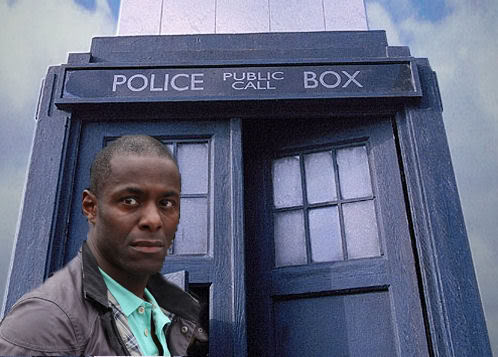
I’ve also wanted to see someone like Idris Elba or Adrian Lester or Paterson Joseph play him, because I like their work in other shows, and I don’t see why, even if the Doctor does regenerate as a dude, he has to be white.

I really do understand the diversity/inclusivity issue. For instance, even though at the time I was amazed that they let Eccleston flirt with and eventually kiss John Barrowman, I’ve grumped a bit since then at how little non-heterosexuality has been allowed (other than as a joke or misunderstanding) in the main Doctor Who show unless Captain Jack is visiting.

Acto Paterson Joseph standing in front of the Tardis.
Seriously, why couldn’t Paterson Joseph play the Doctor? (Click to embiggen)
So while I agree with the point that it’s disappointing that they haven’t gone outside the white dude box in the casting, I don’t understand why someone who has never, ever watched a single episode out of the 798 that have been made during its 50 year run, feels the need to express a public opinion on this casting decision.

What fuels your sense of entitlement? Seriously. I have plenty of friends and acquaintances who share your disappointment or outrage for exactly the same reason, and I sympathize with them. I share, to a lesser extent, their disappointment (not really the outrage, but I understand the outrage). I have absolutely no objection to them posting long screeds about it, tweeting about it, re-tweeting other disappointed fans comment about it, and so on.

But why expend time, effort, and bandwidth (not a lot of bandwidth to post, I know, but every one of your followers and the followers of your re-tweeters have also had to use bandwidth for this) for a show that you have never, ever watched? If you can’t be bothered to watch the show, even once, then please don’t bother those of us who have with your “opinion.”

Someone’s going to respond to this either accusing me of censorship or at the least harassing someone just for expressing an opinion. I’m not in a position to silence them, so the censorship argument doesn’t apply as a matter of definition. This is nothing to do with whether you have a legal right to express yourself. It does have to do with whether you ought to be commenting on something you’ve never seen.

Freedom of expression does not mean freedom from disagreement or from other people expressing the opinion that you are a complete and utter git.

Future events such as these

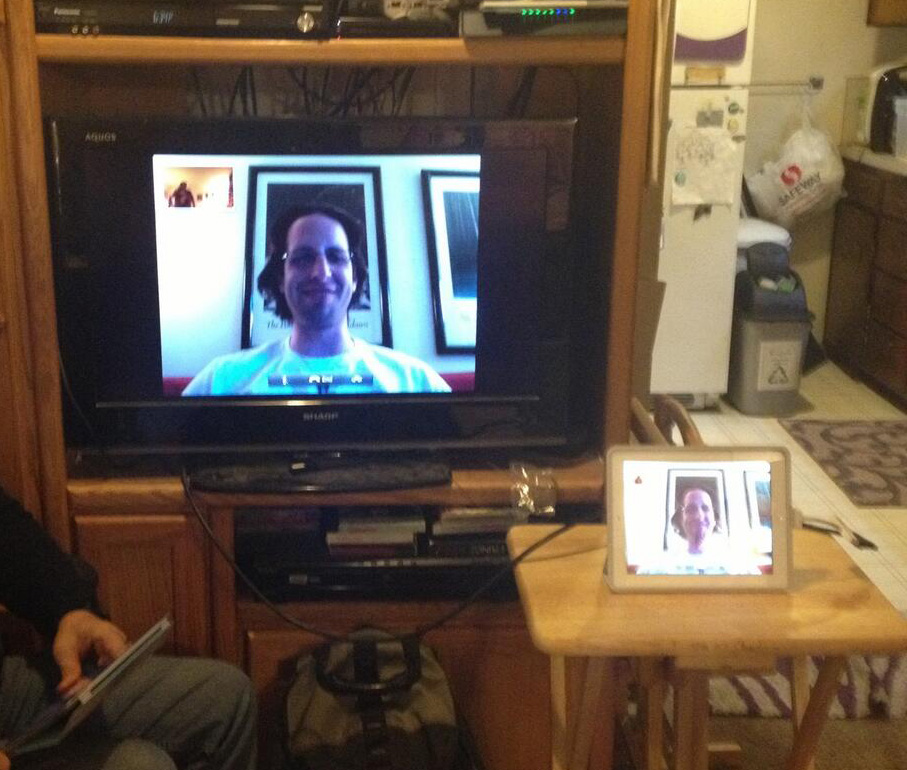
iPad connected to TV to show facetime on large screen.
Jared attending an editorial meeting via FaceTime. (Click to embiggen)
I like living in the future.

We had an editorial board meeting last night, and it being busy, crazy summertime, we almost didn’t have quorum. Fortunately, Jared was able to join us via FaceTime. We’ve done it a couple of times before, propping up my iPad so the person could see most of us. Chuck thought we should do it on the big screen, and I almost never hook the iPad up to the TV, so we did.

Now the future hasn’t quite turned out as we were promised. If I mention “flying cars” certain people will snarkily repeat a meme that’s been going around lately. The first variant I saw was, “Unless you’re 60 or older, you weren’t promised flying cars. You were promised an oppressive cyberpunk dystopia.”

That’s simply wrong, on many, many levels. The “we were promised {fill in the blank} in the future!” is a reference to things we learned during our childhood from popular culture about what the future would be like. The first appearance of cyberpunk, in any way, shape, or form, was the 1980 novel Web of Angels, by John M. Ford. Therefore, a person who is 59 now, would have been 26 years old when the first hint of a cyberpunk dystopia could have appeared in any popular culture. Twenty-six is not childhood.

The Jetsons, broadcast Sunday nights from 1962-63, reruns Saturday mornings from 1964-73.
I’m still a half-dozen years below 59, and I can assure you that my childhood pop culture did, indeed, promise me flying cars.

The Jetsons was the first show to be broadcast in color on ABC-TV. A cartoon set 100 years in the future, the show ran during primetime beginning in 1962. That’s right, it was not meant to be a children’s show. After it complete its primetime run, the existing episodes were re-run as a Saturday morning cartoon for nearly 10 years. The screen shot is a frame from the opening seconds of the opening theme song of the show. Right there, flying cars. The show depicted a fairly utopian future, with robot maids, devices that could create an entire new outfit, on your body, in seconds, and so forth.

If your childhood included any of the years from 1962-1974, you were, indeed promised flying cars. If we assume one needs to be a minimum of four years old to recall a television series, that means anyone 43 or older can legitimately claim that The Jetsons, at least, promised them a utopian flying cars future.

Jonny Quest floats in midair wearing a jet backpack.
Jonny Quest flying in a jet pack (some of his villains had flying cars).
That time period also included the iconic TV series Lost in Space, the original Star Trek, and Johnny Quest. Not to mention such films as 2001: A Space Odyssey. They didn’t all have flying cars (some had transporters—even better!), but their futures are each the opposite of an oppressive cyberpunk dystopia.

But let’s loop back to that first cyberpunk book. How many people who know what cyberpunk is have even heard of Web of Angels? Most people think of cyberpunk as beginning with either Blade Runner (1982) or Neuromancer (1984). And while Blade Runner is the greatest movie ever made, bar none, the sad truth is it didn’t do well in theaters the first time, and didn’t start developing a cult following until it started appearing on cable in late 1983. So I’m going to say that the beginning of the switch-over to cyberpunk dystopias becoming dominant in pop culture was 1984.

That means 1983 is the last year in which the flying car utopia was promised as a future to kids, so anyone who was at least four in 1983 would be the actual cut-off age, rather than 60, so that means the meme should state: “Unless you’re 34 or older, you weren’t promised flying cars. You were promised an oppressive cyberpunk dystopia.”

Movie poster from 1985's Back to the Future.
Marty McFly, trying to get back to the future…
But wait! That calculation assumes a very simple binary situation. Cyberpunk dystopias became one possible future in 1984, but it wasn’t the only one. Because in 1985 we got Back to the Future! While the movie primarily follows the adventures of our young hero, Marty McFly, trapped in the 1950s in a time traveling car, trying not to screw up his own future before getting back to his own time. At the end of the movie, Doc Brown goes 30 years into the future, and then comes back, showing off a much upgraded version of the time-traveling car. So, as my friend, Matt, pointed out, if your formative years include Back to the Future, then not only were you promised flying cars, you were promised time-traveling fusion-powered flying cars fueled by household garbage!

So, no, we were promised flying cars!


I’ve had more than one person bring up the fact that Blade Runner had flying cars. I know that. When I said that Blade Runner was the greatest movie ever? Implicit in that statement is the fact that I owned several different cuts on VHS back in the day, and I watched at least two of the tapes so many times that they wore out. I am well aware of the flying cars in Blade Runner. But as I explained on Twitter, the invalidity of the assertion of a dichotomy between flying cars and cyberpunk dystopias is worthy of a posting of its own.

Speaker for the Abyss

I thought I had said all I would say about the Orson Scott Card stuff in “Abyss Gazing” and “The Abyss’ Game“, unfortunately some people who I would have hoped knew better have decided that any gay people who have chosen or are contemplating choosing to withhold our patronage from anything that will put money in the pocket of that hateful homophobe, simply don’t understand the situation properly.

So they’ve decided to explain it to us…

Continue reading Speaker for the Abyss

The co-opting of the Nerds

The Great Nerd Summit (also known as San Diego Comic-Con International, or SDCC) of 2013 has just happened.

I have only attended once, back in the mid-80s when attendance was a mere 6000 people. Yes, I said “mere.” Last year’s attendance was more than 130,000 people. I don’t believe that official figures are out, yet, for this year. While the convention (called the Golden State Comic Book Convention when it was founded in 1970) originally was about Comics, and the word “comic” is still in its name, it had expanded far beyond that realm to embrace sci fi/fantasy books, movies with any sci fi or superhero connection what-so-ever, and gaming back when I was there.

Of course, comics is a style or medium of storytelling. I grew up reading both Donald Duck/Uncle Scrooge comics and X-men and the like, so even I knew that as a child. Yes, I said grew up. My mom was an X-men fan in the mid-sixties. I have mentioned before that I’m a second generation fan, right? My point being that you can conceivably tell any kind of story in comic form. And there have been the extremely interesting and well done examples of memoirs, biographies, and other kinds of story that don’t fit the comic book stereotype.

That said, SDCC has gotten to the point where it is the trade show for just about the entire entertainment industry. I understand why there are events highlighting upcoming movies such as sequels to The Avengers, Captain America, and Thor, as they’re all based on comics. And I understand why there are events rolling out teasers for My Little Pony: Friendship is Magic. It’s a cartoon, not a graphic story (there are comics, but those are spin-offs, and the official MLP events were all about the cartoon), but animated cartoons are an allied artform of comics. I even understand all the video game stuff that happens at the con.

But, much as I love Benedict Cumberbatch and the current BBC Sherlock series, I think that Sherlock events at SDCC is stretching the definition a bit. Whereas the fact that there were events for How I Met Your Mother, Veronica Mars, and Community is just insane.

The official SDCC award (as opposed to Awards sponsored by other organization which are simply presented at SDCC), the Inkpot, is given out for “outstanding achievement in the Popular Arts industry.” Which makes me think the event should more properly be called the San Diego Popular Arts Con.

I’ve gotten into arguments with fellow nerds about why Sherlock Holmes, as in the original character and stories by Arthur Conan Doyle, has often been included in science fiction events. I have defended the inclusion because Holmes could be argued to be an archetype of a particular kind of nerd: hyper observant, possessed of encyclopedic knowledge of a vast range of topics, an uncanny ability to find relationships between the most minute details, and infamously incapable of relating to people empathically. Serious articles have been published in psychological journals debating (pro and con) whether the fictional Holmes had Aspergers syndrome, for goodness sake! The Holmes stories may not be sci fi, but both the character and the methodology by which he solves his mysteries are highly identifiable to a significant portion of the fan community.

While I have made that argument, and will continue to do so, I’m also the first to admit that all it provides is a reasonable rationale for stretching the envelope to include Holmes as an allied creation. It’s a stretch, and I admit it.

A sort of similar argument can be made for the specific television show, Community, because its ensemble includes some nerds. But it’s a much more tenuous connection to make based on a couple of supporting characters, as opposed to the main character and his primary activity.

I can think of even more tenuous (and ludicrous) arguments that might be made for shows such as How I Met Your Mother, but all of them would be a smoke screen. The truth is that, as I mentioned, SDCC is a trade show, not a fan convention. Its purpose is to advertise, generate buzz, and fan the flames of enthusiasm for any popular art property that can shoehorn itself into the convention. That isn’t a bad thing, per se. Certainly no one is forcing fans to get online at a particular time on the final day of the convention so that the entirety of the next year’s memberships can be sold out in less than two hours. No one is forcing people such as myself to track down stories and videos of the events to get some ideas of what movies and shows I should be looking for in the future.

If you want to fan the flames of enthusiasm, there is no better place than the heart or mind of a nerd or geek. We’re more politely called fans, which is short for fanatic. The one trait that most distinguishes us from the mundanes is how incredibly, obsessively enthusiastic we get about the things we like. So even though some of us are primarily enthusiastic about science and science fiction, if you can get us interested in your show— even one that doesn’t have any discernible science-y aspects—we’ll talk about it. We’ll set our DVRs to catch your premiere. We’ll mention that it’s coming out to our less nerdy friends. We’ll make and post fan art or create and share silly memes based on photos from your show.

We will be your viral marketing campaign. And because tens of thousands of us are willing to buy memberships at SDCC each year, that means some of us are paying for the privilege.

Apart from other branding considerations, I think that’s why for the foreseeable future they won’t be replacing the “Comic” part of the name.