Tag Archives: science fiction

What’s your favorite End-of-the-World movie?

REM disc art.
“It’s the end of the world as we know it… and I feel fine!
I finally watched Iron Sky, which is a very silly movie about a secret colony of Nazis hidden on the dark side of the moon, that has been plotting the “liberation” of earth for 70-some years. It’s got some nice, diesel-punk (that’s like steampunk, except moved forward about 40 years) sets and devices. It has some nice homages to a couple of movies (Dr. Strangelove, Downfall, just to name two) without beating you over the head with it. It was fun.

I especially liked the song that played over the end credits, “Under the Iron Sky”—not just because its chorus line, “We will meet again, under the Iron Sky,” was a nice nod to Kubrick’s choice to play “We’ll Meet Again,” over the end credits of Dr. Strangelove. While I was checking to see if the song was available to buy online (it is, along with an entire album of music inspired by the movie released by the Finnish band, Kaiti Kink Ensemble), I got thinking about other end-of-the-world movies and why I like them.

I wound up polling my twitter followers for more suggestions of end-of-the-world movies. That spawned a side conversation about the difference between a post-apocalyptic story versus a story about an apocalypse. For me, not all post-apocalyptic stories are end-of-the-world stories. And though I’ve been thinking about it for a whole week, I still haven’t been able to clearly articulate why I think of Mad Max as an end-of-the-world story, but Road Warrior and Beyond Thunderdome are post-apocalyptic but not end-of-the-world in my head.

However, since I polled my twitter followers, I’m going to poll you! Note that you can choose Other and type in the name of your favorite if it isn’t listed.

Also, please feel free to add a comment with your own thoughts on the subject. I want to post a follow-up on the subject. Maybe by then I’ll have a better idea of how to explain my definition of end-of-the-world movie!

Mirror, mirror…

Can with a TV remote.
Obviously not actually me, as there is only one remote in the picture…
Several years ago I was reading about the new shows coming out the next season, and one, The Big Bang Theory, sounded like exactly the sort of show that I would hate. So I didn’t make any attempt to watch any episodes. Not very long after the season started, I heard from a few different acquaintances that it was not a good show. The specific comments were that it made fun of nerds by portraying them in completely exaggerated, stereotypical, and unrealistic ways. So I continued to ignore it for all of the first season.

And then another nerdy/geek/fannish friend happened to mention, midway through the second season, that he was strangely addicted to the show. I mentioned the reasons I had assumed I wouldn’t like it, and he said, “Oh, me too!” Then he explained how his wife (a person who has been even more immersed in fannish culture than either her hubby or me) had watched the first season on Netflix. “I tried to ignore, and work on stuff on my computer. But it kept making me laugh… and it usually made me laugh because the characters acted exactly like some of our friends.”

Continue reading Mirror, mirror…

Running off to a con

The car is very nearly packed. I still need to pack the computer, make a final run through the house to get everything turned off, et cetera, and I may hop in the shower one more time before I go.

I go to conventions because I enjoy hanging and goofing off with my friends, enjoy seeing people I don’t see except at fannish events, also to people watch, get some writing done, and (it is hoped) sell some books and things. It’s my version of a vacation.

There is a point (or, to be honest, several points) before I get on the road where I’m stressed out about almost everything: Have I packed everything? Is the inventory ready and in an order where I can find everything? Are my display materials ready? Did I remember to back up my computer before I left? Do I have my medications? Did I remember this, that, and the other?

Then during the drive and/or flight at least half of those questions keep coming up again, along with a lot of others: Did I double-check that the stove was turned off? Did we get the windows locked? Did I start the dishwasher before we left? Did I take the trash out? Did I let the responsible neighbors know we would be gone for a few days? Did I make sure no leftovers that won’t last are sitting in the fridge? Am I sure I locked the door?

When I write them out, it sounds like I’m a complete mess. Which is usually a slight exaggeration. Don’t get me wrong, each question wells up from my subconscious delivered in a voice of utter panic (usually sounding like Don Knotts’ character, Luther Heggs, in the movie The Ghost and Mr. Chicken). But the more rational part of my brain will sigh and say, “Yes, yes we took care of that.”

On trips where I’m experiencing a bit more of the worry than usual (such as, say, during times near the anniversary of Ray’s death, or his birthday, when I’m been working a lot of extra hours at work…), Michael has to intervene and remind me that if something is wrong or missing or forgotten, we’ll deal with it, “We always do.”

Which is great when he’s with me.

Unfortunately, he forgot that this was a Thursday through Sunday con, so he didn’t arrange to take today off from work. He helped did most of the loading of the car before he left. He’s going to come home after work, change, grab a few things, then take the train down to the hotel to join me this evening. As he reminded me just before he left, I can call him if I realize I forgot something, and he’ll check the house once before I go.

He’s always so calm, and capable, and endures my worry attacks with the patience of a saint.

I don’t deserve him.

Anyway, time for me to do those last few things and hit the road. If you happen to be attending RainFurrest, come to the dealer’s den, find the Tai-Pan table, and say “howdy!”

You might get a free badge ribbon or something out of it!

Why do you care?

Jon in cloak and jacket pointing into the camera.
Jon Pertwee was the Third Doctor (1970-74).
I’m a big nerd and long-time Doctor Who fan. For years my favorite was Jon Pertwee, and not just because he totally rocked a velvet jacket, ruffled shirt, and opera cloak. I was watching years before the BBC revived the show with Christopher Eccleston playing a decidedly dark and delicious doctor. I’ve got piles of DVDs with at least some of the adventures of all the doctors (William Hartwell, Patrick Troughton, Jon Pertwee, Tom Baker, Peter Davidson, Colin Baker, Sylvester McCoy, Paul McGann, Christopher Eccleston, David Tenant, Matt Smith, and even both of the 60s movies starring Peter Cushing as a Doctor Who that was not a time lord, but traveled in a Tardis and fought Daleks).

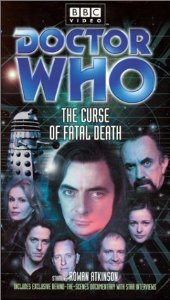
Okay, that’s still not complete. I don’t have a DVD of Doctor Who and the Curse of the Fatal Death,in which the Doctor was protrayed by Rowan Atkinson, Richard E. Grant, Jim Broadbent, Hugh Grant, and Joanna Lumley. I’ve seen it, they’ve just never released this parody special for charity on DVD.

I am an enormous Doctor Who fanboy. In the years since many of the old adventures have become available on disc, I have reached the point where I now frequently say that my favorite Doctor is whichever one I happen to be watching right now.

Despite that, I don’t think every episode or serial has been awesome. There has been more than once that I thought the new actor cast to play the Doctor was a terrible mistake. There have been companions that I wanted to strangle, stories that made me embarrassed on behalf of the actors, endings that made me want to drown the writers (or at least shake them by the throat and yell, “That really insipid, self-indulgent pile of refuse you spewed out there could have been saved with just two lines of dialog!”).

A picture of the cover of the VHS release of the special.
Doctor Who and the Curse of the Fatal Death.
So I’m a super fan, but not a blindly-love-anything-they-put-out fan.

I understand why I watched the announcement of the new actor who will take over the role at the end of the 50th anniversary Christmas special. I understand why I, and many other fans, may have been disappointed, or are feeling apprehensive about the new actor chosen.

What I don’t get are the people (and there was more than one being re-tweeted around the internet yesterday) who say they have never watched a single episode, and that they are angry about the actor who was cast.

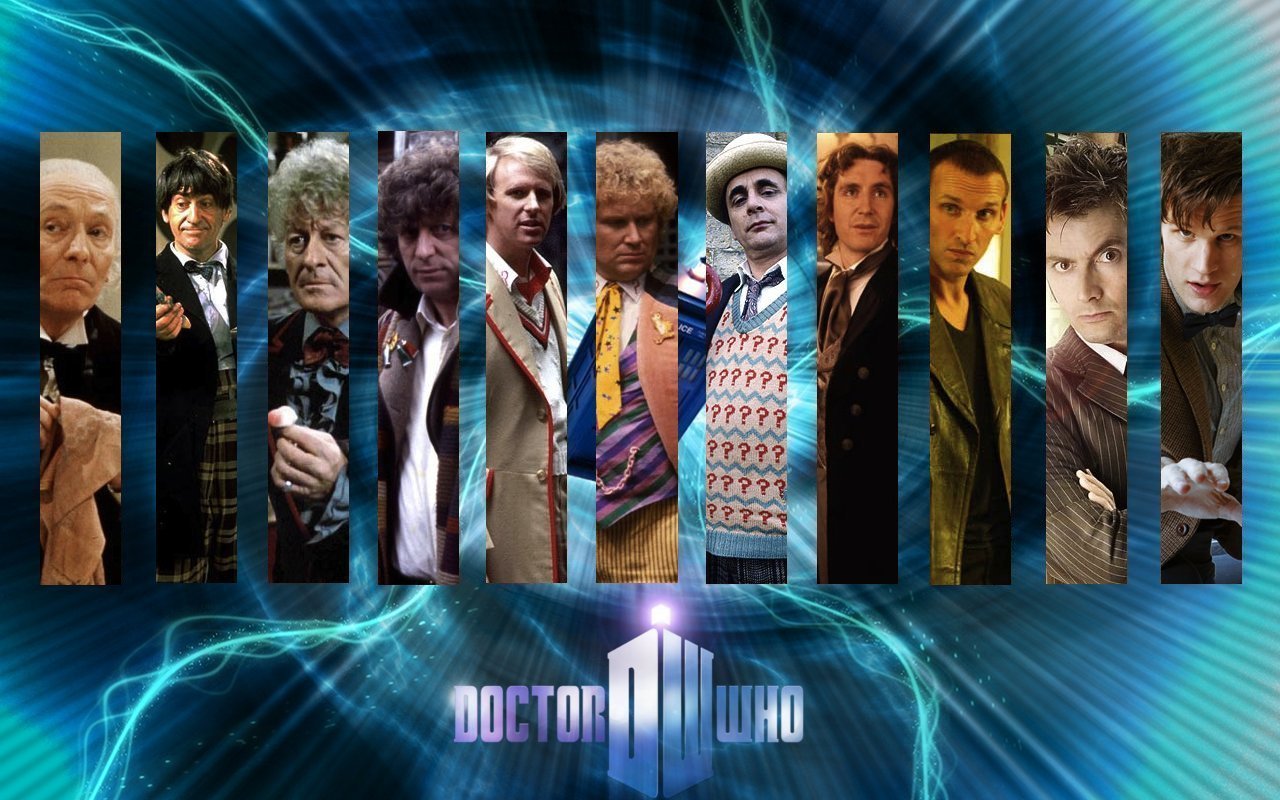
Images of each actor who has played the doctor, over the current show's logo.
The eleven official Doctors.(Click to embiggen)
“Why do you care?” isn’t really the question, because they have an answer to that. They are upset that the actor cast was a white man. They wanted either an actor of color or an actress cast as the next Doctor. And I understand that, boy do I understand not feeling included when you don’t see actors who look like you in lead roles or even recurring roles.

I was not terribly happy when Matthew Smith’s casting was first announced specifically because I really wanted to see a comedienne cast. Someone like Jennifer Saunders was what I had in mind. I didn’t see any reason the Doctor couldn’t regenerate as a gal instead of a guy. Smith won me over, and I’ve been very sad since learning that he is leaving the show.

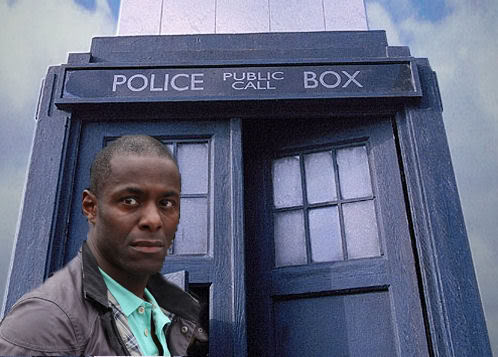
I’ve also wanted to see someone like Idris Elba or Adrian Lester or Paterson Joseph play him, because I like their work in other shows, and I don’t see why, even if the Doctor does regenerate as a dude, he has to be white.

I really do understand the diversity/inclusivity issue. For instance, even though at the time I was amazed that they let Eccleston flirt with and eventually kiss John Barrowman, I’ve grumped a bit since then at how little non-heterosexuality has been allowed (other than as a joke or misunderstanding) in the main Doctor Who show unless Captain Jack is visiting.

Acto Paterson Joseph standing in front of the Tardis.
Seriously, why couldn’t Paterson Joseph play the Doctor? (Click to embiggen)
So while I agree with the point that it’s disappointing that they haven’t gone outside the white dude box in the casting, I don’t understand why someone who has never, ever watched a single episode out of the 798 that have been made during its 50 year run, feels the need to express a public opinion on this casting decision.

What fuels your sense of entitlement? Seriously. I have plenty of friends and acquaintances who share your disappointment or outrage for exactly the same reason, and I sympathize with them. I share, to a lesser extent, their disappointment (not really the outrage, but I understand the outrage). I have absolutely no objection to them posting long screeds about it, tweeting about it, re-tweeting other disappointed fans comment about it, and so on.

But why expend time, effort, and bandwidth (not a lot of bandwidth to post, I know, but every one of your followers and the followers of your re-tweeters have also had to use bandwidth for this) for a show that you have never, ever watched? If you can’t be bothered to watch the show, even once, then please don’t bother those of us who have with your “opinion.”

Someone’s going to respond to this either accusing me of censorship or at the least harassing someone just for expressing an opinion. I’m not in a position to silence them, so the censorship argument doesn’t apply as a matter of definition. This is nothing to do with whether you have a legal right to express yourself. It does have to do with whether you ought to be commenting on something you’ve never seen.

Freedom of expression does not mean freedom from disagreement or from other people expressing the opinion that you are a complete and utter git.

Future events such as these

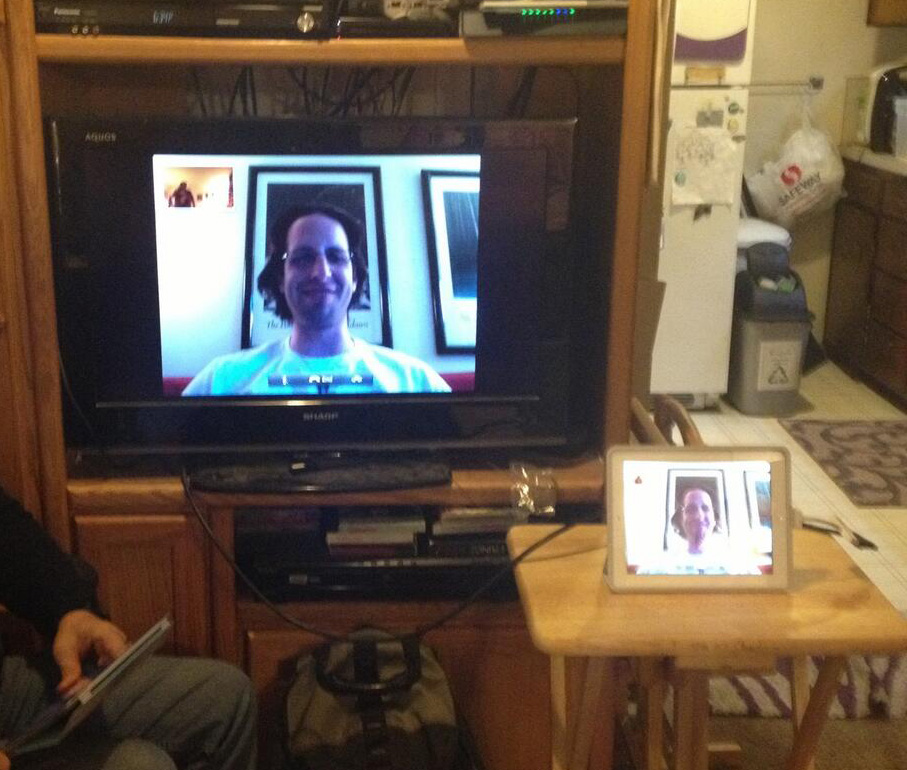
iPad connected to TV to show facetime on large screen.
Jared attending an editorial meeting via FaceTime. (Click to embiggen)
I like living in the future.

We had an editorial board meeting last night, and it being busy, crazy summertime, we almost didn’t have quorum. Fortunately, Jared was able to join us via FaceTime. We’ve done it a couple of times before, propping up my iPad so the person could see most of us. Chuck thought we should do it on the big screen, and I almost never hook the iPad up to the TV, so we did.

Now the future hasn’t quite turned out as we were promised. If I mention “flying cars” certain people will snarkily repeat a meme that’s been going around lately. The first variant I saw was, “Unless you’re 60 or older, you weren’t promised flying cars. You were promised an oppressive cyberpunk dystopia.”

That’s simply wrong, on many, many levels. The “we were promised {fill in the blank} in the future!” is a reference to things we learned during our childhood from popular culture about what the future would be like. The first appearance of cyberpunk, in any way, shape, or form, was the 1980 novel Web of Angels, by John M. Ford. Therefore, a person who is 59 now, would have been 26 years old when the first hint of a cyberpunk dystopia could have appeared in any popular culture. Twenty-six is not childhood.

The Jetsons, broadcast Sunday nights from 1962-63, reruns Saturday mornings from 1964-73.
I’m still a half-dozen years below 59, and I can assure you that my childhood pop culture did, indeed, promise me flying cars.

The Jetsons was the first show to be broadcast in color on ABC-TV. A cartoon set 100 years in the future, the show ran during primetime beginning in 1962. That’s right, it was not meant to be a children’s show. After it complete its primetime run, the existing episodes were re-run as a Saturday morning cartoon for nearly 10 years. The screen shot is a frame from the opening seconds of the opening theme song of the show. Right there, flying cars. The show depicted a fairly utopian future, with robot maids, devices that could create an entire new outfit, on your body, in seconds, and so forth.

If your childhood included any of the years from 1962-1974, you were, indeed promised flying cars. If we assume one needs to be a minimum of four years old to recall a television series, that means anyone 43 or older can legitimately claim that The Jetsons, at least, promised them a utopian flying cars future.

Jonny Quest floats in midair wearing a jet backpack.
Jonny Quest flying in a jet pack (some of his villains had flying cars).
That time period also included the iconic TV series Lost in Space, the original Star Trek, and Johnny Quest. Not to mention such films as 2001: A Space Odyssey. They didn’t all have flying cars (some had transporters—even better!), but their futures are each the opposite of an oppressive cyberpunk dystopia.

But let’s loop back to that first cyberpunk book. How many people who know what cyberpunk is have even heard of Web of Angels? Most people think of cyberpunk as beginning with either Blade Runner (1982) or Neuromancer (1984). And while Blade Runner is the greatest movie ever made, bar none, the sad truth is it didn’t do well in theaters the first time, and didn’t start developing a cult following until it started appearing on cable in late 1983. So I’m going to say that the beginning of the switch-over to cyberpunk dystopias becoming dominant in pop culture was 1984.

That means 1983 is the last year in which the flying car utopia was promised as a future to kids, so anyone who was at least four in 1983 would be the actual cut-off age, rather than 60, so that means the meme should state: “Unless you’re 34 or older, you weren’t promised flying cars. You were promised an oppressive cyberpunk dystopia.”

Movie poster from 1985's Back to the Future.
Marty McFly, trying to get back to the future…
But wait! That calculation assumes a very simple binary situation. Cyberpunk dystopias became one possible future in 1984, but it wasn’t the only one. Because in 1985 we got Back to the Future! While the movie primarily follows the adventures of our young hero, Marty McFly, trapped in the 1950s in a time traveling car, trying not to screw up his own future before getting back to his own time. At the end of the movie, Doc Brown goes 30 years into the future, and then comes back, showing off a much upgraded version of the time-traveling car. So, as my friend, Matt, pointed out, if your formative years include Back to the Future, then not only were you promised flying cars, you were promised time-traveling fusion-powered flying cars fueled by household garbage!

So, no, we were promised flying cars!


I’ve had more than one person bring up the fact that Blade Runner had flying cars. I know that. When I said that Blade Runner was the greatest movie ever? Implicit in that statement is the fact that I owned several different cuts on VHS back in the day, and I watched at least two of the tapes so many times that they wore out. I am well aware of the flying cars in Blade Runner. But as I explained on Twitter, the invalidity of the assertion of a dichotomy between flying cars and cyberpunk dystopias is worthy of a posting of its own.

Speaker for the Abyss

I thought I had said all I would say about the Orson Scott Card stuff in “Abyss Gazing” and “The Abyss’ Game“, unfortunately some people who I would have hoped knew better have decided that any gay people who have chosen or are contemplating choosing to withhold our patronage from anything that will put money in the pocket of that hateful homophobe, simply don’t understand the situation properly.

So they’ve decided to explain it to us…

Continue reading Speaker for the Abyss

The co-opting of the Nerds

The Great Nerd Summit (also known as San Diego Comic-Con International, or SDCC) of 2013 has just happened.

I have only attended once, back in the mid-80s when attendance was a mere 6000 people. Yes, I said “mere.” Last year’s attendance was more than 130,000 people. I don’t believe that official figures are out, yet, for this year. While the convention (called the Golden State Comic Book Convention when it was founded in 1970) originally was about Comics, and the word “comic” is still in its name, it had expanded far beyond that realm to embrace sci fi/fantasy books, movies with any sci fi or superhero connection what-so-ever, and gaming back when I was there.

Of course, comics is a style or medium of storytelling. I grew up reading both Donald Duck/Uncle Scrooge comics and X-men and the like, so even I knew that as a child. Yes, I said grew up. My mom was an X-men fan in the mid-sixties. I have mentioned before that I’m a second generation fan, right? My point being that you can conceivably tell any kind of story in comic form. And there have been the extremely interesting and well done examples of memoirs, biographies, and other kinds of story that don’t fit the comic book stereotype.

That said, SDCC has gotten to the point where it is the trade show for just about the entire entertainment industry. I understand why there are events highlighting upcoming movies such as sequels to The Avengers, Captain America, and Thor, as they’re all based on comics. And I understand why there are events rolling out teasers for My Little Pony: Friendship is Magic. It’s a cartoon, not a graphic story (there are comics, but those are spin-offs, and the official MLP events were all about the cartoon), but animated cartoons are an allied artform of comics. I even understand all the video game stuff that happens at the con.

But, much as I love Benedict Cumberbatch and the current BBC Sherlock series, I think that Sherlock events at SDCC is stretching the definition a bit. Whereas the fact that there were events for How I Met Your Mother, Veronica Mars, and Community is just insane.

The official SDCC award (as opposed to Awards sponsored by other organization which are simply presented at SDCC), the Inkpot, is given out for “outstanding achievement in the Popular Arts industry.” Which makes me think the event should more properly be called the San Diego Popular Arts Con.

I’ve gotten into arguments with fellow nerds about why Sherlock Holmes, as in the original character and stories by Arthur Conan Doyle, has often been included in science fiction events. I have defended the inclusion because Holmes could be argued to be an archetype of a particular kind of nerd: hyper observant, possessed of encyclopedic knowledge of a vast range of topics, an uncanny ability to find relationships between the most minute details, and infamously incapable of relating to people empathically. Serious articles have been published in psychological journals debating (pro and con) whether the fictional Holmes had Aspergers syndrome, for goodness sake! The Holmes stories may not be sci fi, but both the character and the methodology by which he solves his mysteries are highly identifiable to a significant portion of the fan community.

While I have made that argument, and will continue to do so, I’m also the first to admit that all it provides is a reasonable rationale for stretching the envelope to include Holmes as an allied creation. It’s a stretch, and I admit it.

A sort of similar argument can be made for the specific television show, Community, because its ensemble includes some nerds. But it’s a much more tenuous connection to make based on a couple of supporting characters, as opposed to the main character and his primary activity.

I can think of even more tenuous (and ludicrous) arguments that might be made for shows such as How I Met Your Mother, but all of them would be a smoke screen. The truth is that, as I mentioned, SDCC is a trade show, not a fan convention. Its purpose is to advertise, generate buzz, and fan the flames of enthusiasm for any popular art property that can shoehorn itself into the convention. That isn’t a bad thing, per se. Certainly no one is forcing fans to get online at a particular time on the final day of the convention so that the entirety of the next year’s memberships can be sold out in less than two hours. No one is forcing people such as myself to track down stories and videos of the events to get some ideas of what movies and shows I should be looking for in the future.

If you want to fan the flames of enthusiasm, there is no better place than the heart or mind of a nerd or geek. We’re more politely called fans, which is short for fanatic. The one trait that most distinguishes us from the mundanes is how incredibly, obsessively enthusiastic we get about the things we like. So even though some of us are primarily enthusiastic about science and science fiction, if you can get us interested in your show— even one that doesn’t have any discernible science-y aspects—we’ll talk about it. We’ll set our DVRs to catch your premiere. We’ll mention that it’s coming out to our less nerdy friends. We’ll make and post fan art or create and share silly memes based on photos from your show.

We will be your viral marketing campaign. And because tens of thousands of us are willing to buy memberships at SDCC each year, that means some of us are paying for the privilege.

Apart from other branding considerations, I think that’s why for the foreseeable future they won’t be replacing the “Comic” part of the name.

The abyss’s game

A few months ago I wrote about my decades long struggle with a specific incident of separating the art from the artist. A writer some of whose work I had enjoyed back in the eighties, removed all doubt about the hints of his extreme homophobia in 1990 when he published a long essay explaining how he didn’t hate anyone, but homosexuals deserved death and worse punishments, which god would mete out upon them some day.

At the time of my earlier post, DC Comics was facing a boycott by comic book stores and fans for having hired Orson Scott Card to write a Superman series. That deal has since been indefinitely suspended. Now, as news of a boycott of the movie adaptation of Card’s most famous work has surfaced, Mr Card is pleading for tolerance, because it’s a policy decision that has now been settled, and it would be unfair for people to punish a book written before this topic was even a political issue.

Card is doing what several of the anti-gay organizations and politicians have been doing the last year, trying to claim that they simply have a disagreement on this one tiny area of policy, and that now they are being punished for holding this reasonable opinion. The truth is, that Card, the National Organization for Marriage (of which he is a board member), and all the others oppose all gay rights, as well as opposing the laws allowing adults (straight and gay) to make a whole slew of decisions about their own sexual and reproductive behavior.

Orson Scott Card is a hateful homophobe who has actively campaigned for (and given money to) efforts to criminalize such behaviors. And it’s something that he has been doing for a lot longer than he would like you to believe.

At the time he wrote Ender’s Game and its sequel, Speaker for the Dead, he stated multiple times that he believed his writing was god’s work. He believed in moral absolutes, he said. He thought any society that didn’t enforce his moral absolutes would collapse, and he wanted to write fiction that demonstrated those ideas. He wrote more than once disparaging the moral relativism of much of science fiction, particularly the original Star Wars movies and novels of Iain Banks.

In that 1990 essay I mentioned above, Card wrote:

Laws against homosexual behavior should remain on the books, not to be indiscriminately enforced against anyone who happens to be caught violating them, but to be used when necessary to send a clear message that those who flagrantly violate society’s regulation of sexual behavior cannot be permitted to remain as acceptable, equal citizens within that society.

The 1990 essay was written as the culmination of years of defending comments he had made shortly after the publication of Speaker for the Dead to the effect that homosexuality is all about domination and control of others, so of course he had to include homosexual villains in his world, even though he thought homosexuality was a sin and that homosexuals who didn’t repent would deserve whatever bad things that happened to them. Or, as he put in in that essay:

True kindness is to be ever courteous and warm toward individuals, while confronting them always with our rejection of any argument justifying their self-gratification. That will earn us their love and gratitude in the day of their repentance, even if during the time they still embrace their sins they lash out at us as if we were their enemies.. And if it happens that they never repent, then in the day of their grief they cannot blame us for helping them deceive and destroy themselves. That is how we keep ourselves unspotted by the blood of this generation…

In 2003 Mr Card was really angry at the Supreme Court for saying that laws which criminalized private sexual behavior between consenting adults were unconstitutional, and among other things he wrote:

There is no such thing on this earth as a human society that does not closely regulate the sexual and reproductive behavior of its members, to one degree or another.

In 2004 Mr Card wrote in The Rhinoceros Times:

However emotionally bonded a pair of homosexual lovers may feel themselves to be, what they are doing is not marriage. Nor does society benefit in any way from treating it as if it were… In fact, it will do harm. Nowhere near as much harm as we have already done through divorce and out-of-wedlock childbearing. But it’s another nail in the coffin.

In 2008 Mr Card wrote in an op-ed piece for the Mormon Times:

Regardless of law, marriage has only one definition, and any government that attempts to change it is my mortal enemy. I will act to destroy that government and bring it down, so it can be replaced with a government that will respect and support marriage, and help me raise my children in a society where they will expect to marry in their turn.

In 2012, again writing for the Rhinoceros Times, he said:

Heterosexual pair-bonding has been at the heart of human evolution from the time we divided off from the chimps. Normalizing a dysfunction will only make ours into a society that corrodes any loyalty to it, as parents see that our laws and institutions now work against the reproductive success (not to mention happiness) of the next generation.

You can read a whole lot of this on his own site, because he reposts most of his essays. He has disavowed some of his previous positions, but he’s also demonstrated a remarkable ability to change his tune back and forth as seems appropriate. Back in 2004, for instance, in an interview he disavowed some of the lies about gay people he had previously spouted in his editorial writings, and said that he no longer supported reinstating sodomy laws. Then he turned right around and as a Board Member for NOM voted to use those same lies and tactics in campaign commercials against the repeal of Don’t Ask, Don’t tell, and the passage of civil unions and marriage equality laws. As recently as the 2012 election, he’s authorized the same arguments for restoring sodomy laws as part of those campaigns supposedly defending traditional marriage.

On his web site he appeals to democracy a lot, decrying most of the civil rights progress (not just gay rights — he opposes divorce, access to birth control, and thinks that unmarried woman who have babies should face substantial penalties from society) because he thinks it is largely imposed by the courts.

Which I find particularly hilarious since a deep loathing for the notion of allowing people to make their own choices is obvious in every piece of fiction Card wrote, especially Ender’s Game. If you don’t remember that theme, and feel an urge to tell me how I fail to appreciate the brilliance of his work, go back and read your old copy of Ender’s Game, paying especial attention to the story arc of Peter, who eventually becomes a “benevolent dictator.”

Then we can talk.

Orson Scott Card is a hypocrite and a bigot who has used distortions and outright lies to hurt innocent people. He has renounced those lies and distortions when it is politically convenient, and then gone right back to using them as soon as possible. Now, he’s just a sore loser who hopes to make some decent money in Hollywood. And how much would you like to bet that he’s going to keep pouring part of his money into groups like NOM, and go right back to spreading the lies and distortions?

It’s time to stop giving him a pass. It’s time to stop giving him money, no matter how indirectly.

Abyss gazing

It was 1986 and I was twenty-six years old, attending a regional science fiction convention with a bunch of my friends. One of the guests of honor was an author (we’ll call him Mr. C) that two of my friends were very fond of. I had read a couple of his short stories and thought they were good, but he hadn’t really wowed me.

But hearing Mr. C talk about the writing process, his influences, and so forth, made me much more intrigued. It didn’t hurt that when another panelist made a disparaging joke about my favorite science fiction author (who was not in attendance), Mr. C rather emphatically jumped to the defense of my favorite author.

After that panel, one of my friends commented that Mr. C’s takedown of the other panelist had been mean. It was true. Mr. C had ended the rebuttal with something along the lines, “…and it infuriates me when writers who don’t have a fraction of his understanding of how to write or a sliver of his talent make thoughtless critiques.” But, she had called my favorite author a fossil, I pointed out. Once one makes an ad hominem attack, you invite something similar in return. Since it was my favorite author being defended, I was more than a bit prejudiced.

So I wound up standing in line with one of my friends, clutching a pair of just-purchased books of Mr. C’s work, waiting for his autograph. That is the one and only time I have met Mr. C in person. He was pleasant enough, despite having had to smile, listen, and sign however hundreds of times.

After the convention, I tried to read one of the books. It was a collection of his short stories, which included the couple I had read before. They weren’t bad by any means, but after reading a few in a row, an unsatisfying feeling was developing. I sat the book down, not quite sure why I wasn’t enjoying the reading.

A few weeks later, I picked it up again and started on the next story. Again, the story itself was well written and interesting. I read another, then started on the next after that and, well, a few paragraphs in I realized that same feeling of wrongness was building up.

I did eventually finish the collection, but it took a few months, reading only a few stories at a time. And by the end I couldn’t really say that I’d enjoyed them all, but I also couldn’t put my finger on their shortcomings.

The other book was a novel. A novel for which he had won a lot of awards. It was based on one of the short stories in the previous collection. And the short story in question had been one of those I had enjoyed more than the others. Plus, I had friends who swore this book was a masterpiece. And it had garnered all those awards, so it had to be good, right?

I couldn’t finish it. I don’t think I’d even gotten a quarter of the way through before I found myself intensely disliking it.

I tried explaining what I didn’t like about it to one of my friends who loved it. As we were talking, I kept finding myself talking about abstract concepts, rather than actual events in the story. My friend said it sounded more like my baggage than the story. So I started explaining how a similar philosophical assumption underpinned one of the short stories. And that’s when I finally managed to connect the dots and say what was bothering me about all of the stories.

There was a fundamental notion forming the foundation of all the tales: if you don’t know your place and stay in it, horrible things will happen to you. A corrollary was that if you prevented someone else from achieving what was “rightfully” theirs, even more horrible things would happen to you.

When I articulated that, my friend began to argue. That wasn’t what was going on at all, he said. So then I made a guess at how the book I hadn’t finished would end. Specifically what would happen to certain characters.

My friend blinked. “How did you know?”

“Because, if you don’t know your place and stay there, forces, whether they be social, cultural, or fate, will strike you down. And if you stand in the way of someone else’s destiny—”

My friend grinned and interrupted. “Oh, wow! You’re right! That’s so messed up, because it’s like the opposite of what the main character says, but it’s really what happens!”

“Mr. C believes in hierarchical, patriarchic societies in which you behave according to societal expectations, and people who have the temerity to want to choose their own way of living are evil,” I said.

My friend shrugged and said, “You’re probably right. But I still love the stories.”

“Whoever fights monsters should see to it that in the process he does not become a monster. And when you gaze long into an abyss the abyss also gazes into you” — Friedrich Nietzsche

Just a few years later, a controversy erupted in a forum dedicated to Mr C on the (now long defunct) Prodigy network. The controversy was about a protagonist in another of Mr. C’s novels who experimented with gay sex midway through the book. Some people were angry Mr. C had included an “abomination” as a sympathetic character. Others thought people who thought gay people were abominations were bigots.

As the arguments raged, Mr. C waded in with a rather long discussion about the sin of homosexuality, why he felt he had to include it in the book (his reasoning, as I recall, was that in any community where people amass power there will be people who must dominate, possess, and destroy others, and of course homosexuality is all about dominating and destroying each other), and then had the gall to claim that anyone who called him homophobic were themselves bigots. Because he didn’t hate any gay people. They were just sinners, and if they refused to repent and stop being gay, well, they would face consequences.

His comments were quoted far and wide. And he got angrier and angrier as people “mischaracterized” his comments. He repeated, again and again, that he didn’t hate gay people. He wound up writing (in 1990) a long essay and getting it published in a magazine that catered to the members of the church Mr. C had been raised in, in order to explain his side in context.

While the essay repeatedly said that he did not condone violence against sinful people, it talked about how just as children must be punished in order to learn right from wrong, then adults will face greater penalties when they continue to act outside the bounds of propriety. He talked abstractly about the “day of grief” that each homosexual would eventually experience if they did not repent. He talked about the horrible consequences homosexuals face if they refuse to adhere to propriety. But he was not advocating violence even then, he said. If the faithful, such as himself, had been compassionate but firm in condemning the sin, they would “keep ourselves unspotted by the blood of this generation.”

It’s an old lie that bigots of a religious persuasion tell themselves all the time. They don’t advocate or condone violence, it’s just that god’s law causes these things. And when it happens, they pretend that the people who did resort to violence never took all the words of condemnation as permission to commit violence.

Think about it: if it’s god’s will that homosexuals should experience a “day of grief”; if god’s law demands that “blood of this generation” must be shed, then the person who inflicts the violence is doing god’s will. They are a special tool of god!

Heck, it isn’t just permission to commit violence: it’s encouragement!

I had already guessed most of this about Mr. C before he began writing publicly about his reasons for opposing the decriminalization of gay sex and other topics back in 1990. And so I had already made my decision not to buy any more of his books. I didn’t post rants about him, nor try to organize boycotts of his work. If I was asked, I would say that I disagreed with what I perceived to be the underlying philosophy espoused by his work.

Once he did make his very public statements, I felt it was appropriate to go a step further and point out that Mr. C was a hypocrite and a bigot who advocated against the rights of myself and others. I would suggest that perhaps there were other writers whose works were more deserving of people’s money, but wouldn’t go further.

In the years since, he has continued to write and speak out against gay rights of all sorts, eventually becoming an officer for a large organization that says it is out to protect “traditional marriage.” They try to portray themselves as narrowly focused on marriage, but anyone paying attention to their rhetoric and some of the other causes they support, can see that they want to roll back the few rights gay people have won. He donates his own money to the cause, he has organized efforts that have raised millions of dollars for the cause. He has claimed victory for every anti-gay amendment, law, proposition, or initiative that has been passed in the last ten years.

He has, now, gone far beyond the point of simply stating his opinion and trying to persuade others to it. He has gone beyond that disingenuous tactic of saying he was opposed to violence while providing double-speak that actually encouraged it. He has helped spread distortions and outright lies about all gay, lesbian, bisexual, and transgender persons. His organization has refused to obey public disclosure laws regarding their election activities in several states. He continues to fight to prevent gays, lesbians, trans people, and bisexuals full equality before the law. He continues to put forward arguments to take away what rights have been extended.

So, for that reason, yes, I agree with the people who have been disappointed that DC Comics hired him to write a prominent new Superman series. Yes, I support the comic book shop owners who have said they will not sell comics written by him. I support the artist who decided not to illustrate his stories after learning of Mr C’s views and activities. I urge everyone I know not to buy things he writes, not to go see the movie that is being made of his most famous novel.

I re-iterate: this isn’t just about a difference of opinion regarding marriage equality. For over 20 years he has advocated for restoring laws that made it a crime for consenting adults to have gay sex in the privacy of their own homes, and against laws that protect people from being fired, evicted, or denied medical care just because they are gay. And he has done more than just advocate those things, he has taken action to make them happen. It is not hypocritical of us to advocate a voluntary boycott of his work, it is hypocritical of him and his apologists to decry a voluntary boycott while they are campaigning for laws that will take away jobs, housing, health care, and more from entire classes of people.

Orson Scott Card is a hypocrite and a bigot who uses distortions and outright lies to hurt innocent people. Those are the facts.

What’s it about?

A friend recently asked our monthly writing group for advice about a novel idea that he had been struggling with. His specific question was whether the story was worth finishing. I asked him what the story was about.

He began explaining about the story’s setting, the history of the planet, and a number of complications. If I reproduced it here, it would have gone on for several paragraphs.

At a point when he paused for breath, I interrupted to say, “You haven’t told me what the story is, yet. All you’ve given me are complications. Who is your protagonist? And what problem is he struggling with?”

Another friend participating in the conversation put my same question a different way. Referring to a story we had just finished critiquing. “That story, even though it was only 10,000 words, had a lot of complications and subplots, right? But what the story is about is, ‘Ian gets suckered into delivering a stranger’s ashes to a temple.'”

That summary evokes a story. You don’t have to know who Ian is. You don’t have to know exactly what culture he lives in. You don’t have to know what sort of temple it is. “Character gets suckered into delivering someone’s mortal remains somewhere,” sets up a dramatic situation.

What will make the story interesting and uniquely yours are, indeed, all those background details—the character’s personal history, the importance his society places on funeral rites, the character’s acceptance or rejection of those expectations, any difficulty or surprises he or she encounters on the way, and so on—that make the tale an entertaining or enlightening experience.

But the spine that holds it all together is that central dilemma. In that particular example, the word “suckered” tells you that he is at least somewhat reluctant to be doing it. It also tells you that the person who tricked him into it must have had reasons they were even more reluctant to undertake the journey. The fact that it is someone’s mortal remains and there is a temple involved hint at some of the kinds of difficulties the character may face along the way.

When I asked the original question, this is what I was really looking for: did the author know what the spine of his story was? Exactly what the spine is doesn’t matter when asking whether the story was worth finishing. Neither do all of those other details, background information, and complications tell us whether the story is worth finishing.

What tells us whether this is a story that you need to tell, is if that central nugget is at the forefront of your mind when thinking of what the story is about.

From all the information he gave us, I could come up with such a central, one sentence, summary of what that story might be about: John receives a message from the heavens that reveals his whole life is a lie.

But that’s the conflict I pulled out of it. If that isn’t the story which my friend wants to tell—nay, needs to tell—then it isn’t his story.

And even after all that, the original question of whether the story is worth pursuing has to be answered by the author. Does re-evaluating the unfinished work he has now make some sort of central dilemma jump out at him? Perhaps a completely different central dilemma: maybe the story he needs to tell is the story of John’s sister, who is dealing with her brother’s sudden onset of insanity, then begins to wonder if he really is insane; or perhaps it is the story of a city elder who has to deal with this fanatic, John, who is trying to destroy civilization.

If such a dilemma jumps out at him, if he feels the need to tell that story, then yes, absolutely, it’s worth finishing. Otherwise, it’s probably time to set it aside to work on something else.