A close up of the Hugo award won by Archive of Our Own this week.I watched the livestream of the Hugo Awards ceremony broadcast from DublinCon yesterday. When the feed wasn’t glitching or having other problems, it was great. And I got to squee live on twitter about some of the wins. The ceremony flowed well, the setting was nice. The music choices were good, and the co-presenters Afua Richardson and Michael Scott did a lovely job. More than a couple of moments brought tears to my eyes. There was also a lot of laughter. So, good ceremony, and as I indicated when I talked about trying to finalize my ballot, we had so, so many excellent nominees in every category that no matter who won I was going to be happy.
Before I comment further (just in case you haven’t seen the list elsewhere), here are the winners.
2019 Hugo Award Winners:
Best Novel: The Calculating Stars, by Mary Robinette Kowal
Best Novella: Artificial Condition, by Martha Wells
Best Novelette: “If at First You Don’t Succeed, Try, Try Again,” by Zen Cho
Best Short Story: “A Witch’s Guide to Escape: A Practical Compendium of Portal Fantasies,” by Alix E. Harrow
Best Series: Wayfarers, by Becky Chambers
Best Related Work: Archive of Our Own, a project of the Organization for Transformative Works
Best Graphic Story: Monstress, Volume 3: Haven, written by Marjorie Liu, art by Sana Takeda
Best Dramatic Presentation, Long Form: Spider-Man: Into the Spider-Verse
Best Dramatic Presentation, Short Form: The Good Place: “Janet(s)”
Best Professional Editor, Long Form: Navah Wolfe
Best Professional Editor, Short Form: Gardner Dozois
Best Professional Artist: Charles Vess
Best Art Book: The Books of Earthsea: The Complete Illustrated Edition, illustrated by Charles Vess, written by Ursula K. Le Guin
Best Semiprozine: Uncanny Magazine
Best Fanzine: Lady Business
Best Fancast: Our Opinions Are Correct
Best Fan Writer: Foz Meadows
Best Fan Artist: Likhain (Mia Sereno)
John W. Campbell Award for Best New Writer: Jeannette Ng
Lodestar Award for Best Young Adult Book: Children of Blood and Bone, by Tomi Adeyemi
The full voting statistics have also been posted and can be read here.
In seven of the categories this year, the nominee I had at number one on my own ballot got the Hugo. So that was fun! In three of the categories my second choice won.
I’m particularly pleased the Archive of Our Own, which is an enormous fanfiction repository, won in the Related Works category. I do have one quibble with some of my fellow members of AO3 (as we call it): you are not a Hugo Award-winner author. No matter how many of thousands of words of your fiction is in the Archive. Just as authors whose work was published in Uncanny Magazine this last year aren’t Hugo winners by dent of Uncanny winning the award; they are authors who have been published in an award-winning zine. Another way to look at it: Camestros Felapton compared the AO3 entity to a library: “It’s the library that’s being nominated, which includes its contents but which is not the same as its contents.” (emphasis added).
Yes, all of us who support, use, and contribute to Archive of Our Own should take pride in this win. But don’t go slapping a Hugo logo on your fanfic, all right?
I haven’t yet seen anyone grousing about AO3 winning. I saw a bit of that “Ew! Fanfic! ICKY!” when it was nominated. I saw more people trying to disguise their fear of fanfic cooties with arguments about why the Archive itself is not a “Work” in the sense necessary for the award. I think a number of us have already shown that it meets the definition.
One thing that I thought was more than slightly amusing elseweb was that one of the same people I saw arguing that AO3 wasn’t a “related work” was also upset about the Fan Writer category including people who get paid for some of their writing. There seems to be some sort of cognitive dissonance going on there.
Anyway, not only did AO3 win, but it won by a huge margin! Which means that a heck of a lot of Hugo voters thought it deserved the award.
What the AO3 win means to me is that a lot of fans value fanfic and the fanfic community. Which probably oughtn’t to surprise is, since the Hugos are a fan-voted award and this is a category that frequently goes to fannish writing. But because people who dislike fanfic are so very vocal and persistent in their criticism, it’s easy to get the impression that fanfic isn’t popular. Just as the many critics of certain sci fi movies we could name makes us forget that millions of people had to buy tickets to said movie in order for it to make the amount of money it did.
It’s a variant of the True Fan Fallacy. The argument is that the wrong kind of fans like it. And to them I say, “Shove off!” The rest of us are here to talk about what we love and to, you know, actually love this stuff that we all claim to love. Because we’re fans—a noun derived from the word fanatic, because we are filled with sometimes excessive enthusiasm.
I am so happy for all the winners. I am even more happy that we had so many awesome stories to choose from this year. I really do wish we could give a rocket to all of them.
The May 14, 1921 cover of Argosy All-Story Weekly, illustration by P. J. MonahanOnce again while I was merrily surfing to some of my favorite web sites (when I should have been writing), I came across a link to a ridiculous and judgmental comment on the state of science fiction. More specifically, it was intended as an indictment of the reading tastes of “fans these days” while nostalgically lamenting that the genre is no longer defined solely by Heinlein’s juvenile novels and Niven’s hard SF novels. This is a complaint that I’ve written about more than a few times, but these guys keep finding new ways to make their really bad arguments, and I just can’t sit idly by while the misrepresent both the genre that I love, and the people who love it. This particular person, unlike some of the folks who have inspired me to write on this topic before is not my age or older. He’s young enough that all of those Heinlein juveniles were written more than a decade before his birth, and the Niven books he thinks are definitive were written when he was in diapers and such.
I realize that this means he’s still old enough to look down his nose at fans in their 20s and dismiss them as clueless kids.
Anyway, I’m not linking to the diatribe for reasons. I do think that it is very telling that he cites Hidden Figures as an example of what’s wrong with modern sci fi (never mind that it is historical non-fiction). When I first saw the screen cap of what he said, I had to do some research to figure out who he was. I’d never heard of him. And in the course of doing that, I found that this is a topic he has ranted about many times. And in those longer rants, he asserts again and again not just that he thinks the writings of Heinlein and Niven are the best (which he is perfectly free to believe), but that they defined science fiction—and specifically that Heinlein is the origin of the genre.
Mary Shelly, H.G. Wells, Jules Verne (and others) may have a bone to pick with that assertion.
He also talks a lot about how the perfect protagonist for science fiction stories in Heinlein’s “competent man.”
I get it. I literally grew up on Heinlein. I’ve mentioned that my mom is one of the biggest fans of Heinlein’s stories from the 50s who as ever walked the earth. From the time I was an infant until I was old enough to read myself, Mom would read to me from whatever book she had checked out from the library or picked up at the used bookstore. I read every Heinlein book I could get my hands on during the late 60s, 70s, and into the 80s. And yeah, as a teen-ager in the 1970s, I started reading Larry Niven’s books—not as enthusiastically; I admit I was a bit more taken with Asimov, LeGuin, Pournelle, L’Engle, and Bradbury during those years. But I still liked Niven.
It’s true that Heinlein and Niven were very influential writers who inspired many fans to become writers themselves, and so on. But science fiction wasn’t just those two authors even at that time, and there was a lot of science fiction that existed before either of them wrote their first story.
Also, a lot of their stories haven’t aged particularly well. It happens. It’s called the passage of time. The text may be the same, but we, as people, change over time. Society changes. Our understanding of what certain things about society mean changes.
The image I included above is an illustration for a novel called The Blind Spot, written by Austin Hall and Homer Eon Flint. It was serialized in a number of issues of Argosy All-Story Weekly beginning in May of 1921. It was eventually published in book form in 1951 (it took so long because one of the authors died shortly after publication, and it just took a long time to sort out who had legal right to agree to a re-print), at which point the Forward was written by Forrest J Ackerman, who had been at one time the literary agent of such classic sci fi luminaries as Ray Bradbury, Isaac Asimov, and A.E. Van Vogt. At the second ever Worldcon (Chicon I, 1940) at the very first Masquerade ever held at a Worldcon, the second place costume was a person dressed as one of the characters from The Blind Spot. As late as the 1950s, sci fi writers, editors, and reviewers were referring to The Blind Spot as one of the honored classics of science fiction.
By the 1990s, the opinion had changed considerably. The Blind Spot is available on Project Gutenberg. I gave it a whirl. I mean, all those famous sci fi writers of the 1940s and 50s said it was fabulous, right?
Writing styles have changed over the years, so part of why it is difficult to slog through it is just how slow the action is and how dense some parts of the prose are. But, first, it isn’t science fiction. The titular Blind Spot is a place where periodically a magic hole opens to another world. Now, a lot of science fiction does include portals or gateways that aren’t always explained, but the other side of the portal is a temple in this other world, and various people, some of them immortal, hang out in this temple because of prophecies about the opening of the temple and how people who go through it will ascend to god-like powers and so forth. The plot involves necromancy, spirit writing, an immortal queen, the transmutation of people into spirits, and a mystical intelligent flame that enforces the sacred law.
In the pulp era they didn’t have the same kind of rigid genre definitions we’re used to today, so a weird tale like this with elements of magic and psychic powers and a hint at Lovecraftian horror was common. But that’s the thing. This is a story that for several decades was held up as a defining example of the genre. Yet by the 1990s it was being described as a “beloved book devoid of all merit.”
Because we changed. What we are willing to suspend our disbelief for in 2019 is considerably different than the expectations of readers in 1921. Their are spots in the opening chapters of this book when many paragraphs are spent describing how a couple of characters take a train through San Francisco, cross the bay in a ferry, take another train in Oakland, then hire a cab. Modern readers expect if you’re spending that many paragraphs talking about transit that it will eventually figure into the plot, right?
I sincerely doubt that the guy who is upset that the sci fi field doesn’t look like the way he remembers those Heinlein juveniles would think that The Blind Spot is fabulous. Although, given some of his comments about what he perceives as being wrong in what modern fans like, he might like some of the casual racism.
Even in the 50s, science fiction protagonists weren’t confined solely to blond-haired, blue-eyed lantern-jawed Anglo-Saxon Protestant heroes who always beat the bad guys and got the girl. Certainly by the time Niven was writing his most famous books, the genre was more diverse than that.
It’s okay to have personal preferences, but science fiction is supposed to be about leaping into the future. You can’t do that if you have fossilized your brain in the past.
My copy of The Dragon and the George, which I never realized was a fist edition until I was researching for this blog post.I’ve mentioned before that I joined the Science Fiction Book Club when I was in middle school. Now, the problem was that I didn’t have a steady source of income, and I did my first order without consulting any adults in my life1, and so I had not realized that the cheap price on the advertisement did not include shipping, so this mysterious box arrived in the mail with postage due and my parents were not pleased. Anyway, for the next several years I had to remember to send the post cards back in saying “Do not send this month’s selection!” except on those occasions that I had some money or that my parents agreed I could have the particular book and they would pay for it. Anyway, from about October 1975 until July 1976 I got to order one book every month because my parents were going through a messy divorce and my paternal grandfather declared he would pay for the books4. And one of the books I got during that interval was The Dragon and the George by Gordon R. Dickson.
The premise of the book is a weird hybrid of sci fi and fantasy—both portal fantasy and epic fantasy by the time the book is through. Our protagonist, Jim Eckart, holds a PhD in Medieval History and is hoping to become a full-time instructor at the university. His fiancé, Angie, is working on her own doctorate degree in English literature5, and is also working as an assistant to a professor who, in Jim’s opinion, is always tricking Angie into working more than she ought to. One day, when she isn’t ready to be picked up by Jim, he rushes to the professor’s lab, arriving just in time to see Angie in a contraption that looks as if it is from a bad sci fi movie—and then she vanishes before Jim can say a word.
The professor’s machine is supposed to boost latent psychic abilities, and he was trying to get Angie to astral project into another dimension. He never expected her to physically teleport there. The professor has to explain that he can’t simply pull Angie back—it is her own psychic talent that did the trick, after all. But he is certain that if she could be hypnotized in the other realm to return home, she would pull it off. So he convinces Jim to get into the machine, and at a lower power setting, has high hopes6 that Jim will project into the body of a native of this other dimension near Angie and be able to convince her to return herself home.
That’s the set up.
Jim agrees, and he wakes up not inside the body of any person close to Angie. Instead, he wakes up inside the body of a dragon named Gorbash, and trouble ensues from there.
The body Jim is in isn’t anywhere close to Angie’s location. He spends a few chapters trying to sort out the world he is in, which seems to be very similar to 14th Century England… except that are multiple species of dragons, and there are wizards, and some wolfs can talk. Also, humans in this world are all called Georges (at least by dragons and the talking wolves) because of the legend of St. George and the Dragon. Hence the title.
Jim eventually figures out that Angie has been captured by two dragons. He meets with them, and attempts to hypnotize Angie so that she will return to earth, but she refused to leave without Jim. While they are trying to think of an alternative way for both to get back, one of the dragons whisks Angie away, and she is imprisoned by an evil knight and the dragon who was in an alliance with the forces of Darkness.
Jim meets a wizard named Carolinus who sets him the task to collect a series of companions (which includes a knight, a woman archer of extraordinary talent, a talking wolf who was a friend of the dragon Jim’s consciousness is trapped in, a very elderly and no longer robust dragon who is a relative of the body Jim is trapped in, and a small dragon from a subspecies that is ridiculed by normal dragons) before he can make an assault7 on the keep where Angie is being held prisoner.
The whole point of this book was to invert the idea of who we should be rooting for when knights battle dragons, so it should be no surprise that the part I found most interesting was the complex society of dragons that was partially explored in this book. Two of my three favorite characters in the book are dragons (the elderly dragon and the smaller one). I read this book about a year before my social group discovered original Dungeons & Dragons8, which was only shortly before the first printing the Advanced D&D’s Player’s Handbook, which we all bought, and tried to produce better adventures with as slowly, every so slowly, the Monster Manual and other books needed to make AD&D a real game were published.
And mention all of that because when I was designing campaigns, I tried to play the dragons more like the characters in this book. Which was easier to do before the official Monster Manual came out and was filled with, frankly, a poorly-designed set of monsters.
But to get back to The Dragon and the George, eventually the evil knight and dragon and their many monster companions are defeated, though at great cost, and Angie is rescued. Angie and Jim decide that they don’t want to go back to earth for various reasons, and Carolinus separates Jim for Gorbash, giving him a human body identical to his one from earth. Which set things up for the characters to return for a sequel, that that wouldn’t be published for 14 years. Dickson eventually completed a total of 9 books in the series before his death in 2001.
I only read three of the sequels. I didn’t find them as compelling as the original. Sometime in the mid-nineties, after being disappointed in one of said sequels, I decided to re-read the first book, and was quite happy to find it still enjoyable. Do I wish the damsel in distress had been a more fleshed out and active character in the story? Yes. But the story held up a lot better than some of my other old favorites from my teen years and before.
And besides, the dragons, at least, got to be something more than cliches.
Footnotes
1. As I recall the offer that I found inside a copy of Galaxy Science Fiction magazine, which was itself the result of one of my grandmothers buying me a subscription for my birthday and renewing it each year after2, had said that you would receive 6 books for just one nickel3!
2. The other grandmother, by the way, upon hearing me explain to a friend that I’d actually wanted a subscription to the Magazine of Fantasy & Science Fiction purchased me a couple years of subscription to that ‘zine, as well my next birthday.
3. The order card had a place for you to tape a nickel to the card before placing it in an envelope. I complete missed the small print about the shipping.
4. I did not intentionally manipulate anyone’s sense of guilt. The month that all we found out about my dad having had a long-running affair with another woman and having fathered two children with her and so on and so forth was, well, it was hectic. And I didn’t mail the card in on time that month, and the book showed up a few weeks later, and things just happened5.
4. Not that I didn’t recognize it was a gift horse into whose mouth I was not looking, but…
5. I can’t decide whether I should be irritated at the cliché of the woman who is the romantic interest of the male protagonist being into English Literature. On the other hand, I suppose that we ought to be grateful that Jim isn’t a science major, right?
6. I distinctly remember being a bit put out at this point the first time I read it, because it seemed to me that the professor had no evidence to back up any of this theories.
7. I said it would move into Epic Fantasy territory!
8. The precursor the Advanced Dungeons & Dragons9 published first in 1974 and came as a set of small books and very cheaply-made dice in a white box.
9. Which began being published as hardbound rulebooks in 1977.
The 2018 trophy, designed by Sara Felix and Vincent Villafranca. (Photo by Vincent Villafranca)The final deadline for this year’s voting is upon us (midnight tonight in my timezone), and I think that I’m finished fiddling with my ballot. Maybe. I may give in to temptation and login to move a couple around. Once again, I’m happy to report that all of the categories have plenty of excellent entries. Which isn’t to say that I absolutely loved everything nominated. But even those stories that weren’t particularly my favorite, I can appreciate how well they were crafted and understood why someone nominated them. This is, again, a vast improvement over the situation a few years ago. I think we can see that the rules changes instituted to limit the effects of block voting have been a success. And we should keep them.
I mentioned the temptation to move things around, and I should explain that a bit. The Hugos use a ranking system, so you pick which entry is your first choice, your second, and so on. Along with the option to placing No Award in the ranking. And one of the recently adopted rules adds a kind of instant run-off along with the ranking. It’s all well and good that the system has a way to break ties, but that doesn’t help the individual voter when you sincerely feel too or more nominees in a given category are equally excellent.
So one place where I had that dilemma this year was Best Novel. Three of the novels I nominated during the nomination phase made it to the final ballot. When I first saw the ballot announcement I was over the moon. Yay! I loved three of those books! And other people liked them, too! But then I started trying to decide how to rank them… and see in the nomination phase you just list five books things in a category without regard to whether any of them are better than the others. They are all five my favorites! Yay!
But now… now I have to pick. I can’t just say, “they’re all wonderful!” I have to rank them.
It was easy to procrastinate, because while three of the books were ones I’d already read and thought was great, the other three were ones I hadn’t read, yet. One of those other three was a book I had purchased and was in my to-read pile (because my husband had enthused about the audiobook), but I hadn’t read it yet. Obviously I couldn’t rank the category until I had read all the books. Similarly, there were at least two stories in each of the other fiction category that I hadn’t yet read, either.
Anyway, while several of the categories were ranked on my ballot weeks ago, I hadn’t touched the novels until Monday night. Because I finally finished the last novel that day. And I’d gotten through everything else. So I didn’t have any excuse.
It was so hard. I like them all. I want to give a Hugo rocket to each of them. I made a choice. I ranked them.
There is another category that I think is giving everyone problems. It’s the relatively new category of Best Series. To be eligible the series has to consist of a minimum of three works totaling a minimum of 240,000 words.
When the new category was being debated, one of the arguments that swayed my opinion was the the category would allow us to recognize the excellence of a whole that is greater than the sum of its parts. A long-running series might consist of a bunch of merely good books, one or two mediocre entries, and only a couple of truly stand-out stories—yet the overall story, the long arcs that play out of the course of the individual tales, is award-worthy. The category offers a way to recognize the skill of spinning a larger tale, of keeping the reader coming back for more, in a different way that the individual book and short fiction awards.
Implicit in that idea, to me, was that Best Series should go to a group of books that had otherwise been overlooked by the Hugos.
But then, the very first year it went, the award went to a series which had won two Nebula awards, two Locus awards, and four Hugo awards. Now, it happens to be a series that I loved, and okay, I admit, I put it at the top of my ballot that year. But not without some trepidation about whether the award might better to another series. I rationalized this by reminding myself that the six most recent books in the series had not won awards, even then three of those were my favorites of the whole series, two of which I thought were absolutely robbed by not getting an award.
The next year the winner was a different series written by the same author. The first book of the series had won a Mythopoeic award; the second book won the Hugo, Nebula, and Locus awards. While the total number of awards the series had won was smaller, it was also a shorter series (only three books and a bunch of short stories). Again, it didn’t feel as if it was a series that had been overlooked previously.
On the other hand, both of those wins went to series that had been going from many years, and since one of the objections that other people raise to the category is to ask, “Can you really judge a series that isn’t complete?” Since the speed at which new entries in both series as considerably slowed, and each have had a book published that feels like an ending to a saga, it can be argued that they meet that objection as close as you can meet it without making a rule that the award is only allowed to awarded posthumously.
And I don’t like that for several reasons. To the extent that awards are recognition, I prefer recognizing excellent work while the author or artist is alive to feel the love, you know?
A few nominees each of the three years the award has existed thus far as series that seem quite clearly to still be in the middle. So I have some issue putting them at the top of the ballot. And I remain uncertain what criteria we ought to be using to decide which is best. Is the idea to look for qualities of the series that span multiple books, or is it okay if a series just has a bunch of great entries?
I don’t know.
I figured out how I picked my number one in this category this time. And I know since the only rules the Hugos have ever had is to define eligibility, I don’t think anyone is going to make it clearer how we ought to be judging them.
Jason fights the Children of the Hydra’s Teeth.I’m not sure how old I was the first time I saw Columbia Pictures’ Jason and the Argonauts. I used to believe that I saw it in a movie theatre on the big screen for the first time as part of one of the series of kid-friendly matinees that I got to attend from the age of about 6 through 10… but after doing some research I discovered that the film wasn’t made available in theatres at that time. Because the film’s box office take from the first theatrical run in 1963 (just a few months before my third birthday) was underwhelming, it wasn’t re-released into the theatres until much later, after spending years as a staple in syndicated television, which is where it became a hit, prompting the studio to re-release it to a much more successful run in 1978.
This post runs a bit longer than usual, because I wrote much of it while re-watching the film for the first time in many years. And I watched it because after reading this review of a Ray Bradbury story that was clearly inspired by Ray Harryhausen (the special effects genius) I just had to. If you don’t need the detailed commentary, you might want to scroll on down to my Conclusion.
Jason and the Argonauts is based on the Greek tale of Jason and the Golden Fleece. Jason was the son of the king of Thessaly. His parents and at least one of his sisters was killed by the usurper Pelias. Pelias misunderstands the prophecies of his soothsayer, and tries to eliminate all of the heirs of the king of Thessaly. Just before he murders the eldest daughter of the king in the temple of Hera, a shadowy figure who he believes is a priestess (though she is actually the goddess Hera herself) tries to warn him away from this path. When he kills the king’s eldest daughter anyway, Hera tells him that one day a man with only one sandal will usurp him. She also warns him that if he kills Jason, the son of the king himself, that he will also be destroyed. Then she vanishes, along with the the third child, another daughter of the king.
Before I summarize the rest of the plot, there are a whole lot of subplots that were left dangling in this movie implying that there would be a sequel, and I’m just a little bit annoyed that no one has done anything with that.
Anyway, the story that follows is frequently intercut with scenes of Zeus and Hera (and a couple of other Olympian gods) discussing the happenings on Earth. In some of those scenes human history is portrayed as a board game between the gods. It is an interesting conceit that is used in a lot of other mythological-based movies in later years. I think this one happens to play out better than many of the others.
Back to Jason’s story. Twenty years after the bloody coup, King Pelias is riding his horse near a river, is thrown from said horse, and a passing stranger jumps into the water to save him. The stranger loses his shoe in the process of saving the man, and quickly identifies himself as the long lost son of the previous king on his way to take back his throne. Perlias realizes who Jason is before he introduces himself, because he has spent twenty years waiting for the man with only one sandal. Jason, on the other hand, never asks the name of the man he rescues. And never becomes the slightest bit suspicious that the man he rescues has a camp staffed with a lot of guards in royal armor and a rather large number of scantily clad entertainers. Nor does Jason, who is sworn to kill the man who killed his father and has been king of Thessaly for 20 years, recognize the only son of said king when he is introduced to him by name.
Despite all of this obliviousness, we are still rooting for Jason who wants to pursue another prophecy that Pelias ignored: that at the end of the world there is a tree, and hanging from the branches of that tree are the skull and skin of a golden ram with magickal powers that will ensure a long and successful rule to the man who captures it. Jason holds a contest, and several characters from Greek myth win a spot on his crew. Because the shipwright Argos builds his ship, he names it the Argo, and with a figurehead that looks like the goddess Hera, they set out looking for the Golden Fleece.
Hera is only allowed to help Jason five times, and Jason manages to burn through those five helps in less than half the movie. This gets into one of those infuriating questions, because part of the set up of Jason’s life from back when he is a baby is Zeus decrees that Jason will kill Pelias and take back his father’s kingdom. So why the heck does Zeus tell Hera she can only help Jason the five times?
I need to be honest here: those questions didn’t occur to me during the dozens and more times I watched this show on various local TV stations from the mid-60s through the 70s. The incredible battles with the giant bronze statue of Talos, the harpies, the seven-headed hydra, and the skeletal warriors all loomed much larger than any plot inconsistencies. Special effects master Ray Harryhausen owned this movie, and many of his special effects still stand up 56 years later.
One of the men who competes in Jason’s ad hoc Olympics and gets a berth in the crew is Pelias’ son, Acastus. Once again, it’s unclear why, when all the greatest athletes and warriors of Greece come to compete in the games, no one recognizes Acastus as King Pelias’ son and happen to mention that fact? Anyway, Jason now has a large crew of bronze-skinned manly men. About half are dressed in tunics with extremely short skirts, like Jason. The other half in loincloths that look kind of like baggie briefs.
The Argo sets sail, without a clear idea of where they are going, and their provisions run low. Hera directs Jason to the Isle of Bronze and warns them to take only food and water. Hercules and Hylas (who had become friends during the games when Hylas defeated Hercules at a discus challenge using a bit of cleverness) find a valley filled with giant bronze statues, in the base of which are hidden giant pieces of jewelry. Hercules decides to take a giant brooch pin because he thinks it will make a fine javelin, and the statue Talos comes to life and starts chasing them. The giant looms and menaces the entire Argo crew. When they try to flee, he intercepts the boat at the harbor mouth, shaking all of the men out of the boat and braking the ships mast and the figurehead of Hera.
Hera tells Jason to look to Talos’s ankle for his weakness. In the next fight, while the other Argonauts yell and scream and run around distracting the giant, Jason sees a stopcock in the ankle of the giant, runs forward and unscrews it. Even when I was a kid, I never understood why Talos simply stands there, staring down at the Argonauts and sort of swiping at them with his sword. Why didn’t he just start stomping on them like ants? Anyway, magical fluid pours out of Talos’ ankle, the bronze statue goes stiff and falls over, apparently dead. Also, clearly crushing Hylas.
But somehow the rest of the crew never saw that, so we are given to understand that during whatever length of time the subsequent shipbuilding montage takes place, Hercules wanders around yelling out Hylas’ name. Once the ship is repaired, Hercules refuses to leave without Hylas. The rest of the crew refuses to leave without Hercules, so Jason has to call on Hera again. She warns him that this is the last time she can help, but he insists, so she addresses the crew directly, explains that Hylas is dead and that Hercules now has another destiny to pursue, and that they must sail to another island and consult the blind prophet Phineus.
So off they go. We see Phineus (played by Patrick Troughton, the second Doctor) living a sad existence in a ruined temple. People from a nearby village bring him food every day, but harpies attack him each day, eating the food themselves and leaving him only scraps. This is how Jason and his crew find him. They are all, by the way, now dressed in matching white tunics (still with extremely short skirts) and matching armor. I have no idea where they were keeping this change of clothes, because the ship, as depicted, is barely big enough to hold the crew sitting at the oar seats. There aren’t any cabins below decks or anything. No wonder they ran out of supplies!
Anyway, Phineus explains that he misused his gift of prophecy and Zeus cursed him with the harpies. Phineus will only help Jason if he frees him of the harpies. So the crew arrange a trap, then build a cage for the harpies. Now that Phineus can eat in piece (and torment the harpies), he tells Jason that the fleece is on the Island of Colchis, which can only be reached by sailing between the clashing rocks (which destroy any ship that sails through). Phineus’ vision doesn’t tell them how they can survive, but he gives him an amulet that he says is the only other help he can provide.
They sail again, find the clashing rocks. They aren’t sure what to do, then see another boat sailing between the rocks, and then see boulders start falling down and destroy the ship. Jason insists the gods want them to sail through, so the Argonauts start rowing. The boulders start falling all around them. There are a lot of frightened reaction shots. Jason gets angry and throws Phineus’ amulet into the sea.
Up on Olympus, Zeus is smugly watching the ship in danger and says something to Hera about it being too bad that she can’t intervene any more. Hera moves a piece on their game board, a sort of merman figure that looks suspiciously like the amulet Jason just threw into the sea. Triton, son of Poseidon, rises up out of the sea and holds the rocks back. The Argo sails under one of Triton’s armpits, and all is well. I think we’re supposed to assume that Triton’s arrival doesn’t violate the rule that Hera could only intervene five times because Phineus’ amulet was involved. It’s not clear.
Anyway, they find the wreckage of the other boat, and clinging to the wreckage is a woman. And thus we meet the third female character out of the entire film who has lines of dialog! Medea tells Jason she was sailing from Colchis (though not why) and tells him that the King of Colchis is Aeëtes. When they make shore, Medea tells them which way to go to reach the city, then walks off in a different direction, telling them she must go a different way.
After Jason meets Aeëtes, the king invites him and the Argonauts to a feast, and we see Medea again and learn that she is the high priestess of Hecate. Midway through the feast, Aeëtes reveals that he knows Jason has come to steal the fleece, because Acastus has betrayed them. This is when Jason finally learns that Acastus is the son of Pelias. So the Argonauts are locked up and sentenced to die. Medea goes to the idol of Hecate, her goddess, and asks what to do. The statue doesn’t answer.
This is another place that as a kid I was trying to figure out why we don’t see Hecate. Why isn’t she up there with Zeus and Hera and Hermes and the other gods watching all of this?
Medea decides that she can’t betray her heart, so she drugs the guards, steals the keys to the jail cells, and lets Jason and his crew out. I have to pause here to say that as a kid I had no problem believing that Medea had fallen in love with Jason during the voyage. As an adult I have some questions, though. I mean, yes, Jason looks really hot in that mini skirt, but there was an entire crew of men, most of which are all equally hot and just as sexily going about their nautical duties in equally revealing tiny skirts.
Doesn’t matter. While Medea was arranging the jailbreak, Acastus has snuck out of the palace and gone to the sacred tree to steal the fleece himself. I guess he was planning to take the Argo and sail it all by his lonesome back home to dad? We never learn the details of his plan. Medea leads Jason and his crew to the tree, where they are confronted by the 7-headed hydra. And this is when we see that Acastus has already been killed by the hydra. Jason manages to stab the hyrda in the heart. They take the fleece and flee.
Aeëtes and a bunch of soldiers are closing in. One soldier shoots Medea with an arrow. Jason uses the fleece to heal her. And all of the enemy soldiers apparently just stand around waiting to see what the fleece does? It isn’t clear. Jason picks two of his crew to face Aeëtes and send Medea with the others to fetch the boat. I don’t know if Aeëtes never thought to seize the ship, or if we’re expected to assume that the Argonauts have to fight to get it back.
Anyway, Aeëtes had called on Hecate when he found the dead hydra and saw that the fleece was no longer there, and fire had come down from heaven and burned the hyrda. Aeëtes had his soldiers gather the teeth of the hydra. Now that he has confronted Jason, who is accompanied by only two of his crew, does Aeëtes have his larger group of soldiers attack? No, he monologues for a moment, then throws the teeth onto the ground. From the ground seven skeletal soldiers armed with swords and shields rise, and they attack.
This fight scene seems to be everyone’s favorite part of the movie. And it is fun. As far as it goes. Jason’s two companions get killed. So far as we know only one skeleton is taken out when its skull is chopped off. But the way Jason “defeats” the remaining six is to leap off a convenient cliff into the sea. He survives the dive, and the Argo is conveniently nearby. The skeletons jumped off the cliff chasing Jason, and apparently despite being magical skeletons, they don’t float.
Jason has reached the ship. He and Medea kiss, and we cut to Olympus where Zeus tells Hera to let them enjoy this victory while they can. There is a bit of philosophizing, then the end credits roll.
Conclusion
The film follows the myths rather more faithfully than one would expect from Hollywood. The section with Pheneus and the harpies comes straight from the original Greek saga. Traditionally the Golden Fleece was guarded by a dragon whose teeth would transform into skeletal warriors. Talos (who in the original isn’t encountered until after Jason has obtained the fleece and is sailing home) is killed by the removal of a plug in his ankle. The Greek Tragedy trope that the more you try to fight destiny or prophecy, the worse things go for you is illustrated in some of the character arcs. It could be argued that Medea’s inexplicable quick fall for Jason comes from the myths, too, since in the saga, Hera persuades Aphrodite to send Eros to make Medea fall for Jason, and much later when Medea finds Jason plotting to marry another woman, Jason reveals that he knew Medea was acting under the spell from Eros the whole time.
Even without knowing the myth, viewers saw many, many hints for a sequel in the script. I mean, it ends with Zeus literally saying that the rest of the adventure is yet to come.
It’s clear the studio was hoping this would be a hit and they could have some sequels. And clearly they would have had to bend the myths further to do so. In actual Greek myth Jason never becomes king. He and Medea try, but things don’t work out. Medea tricks Pelias’ daughters into killing their father, but Acastus becomes the King of Thessaly (because he doesn’t die on his voyage with Jason in the myths). Jason and Medea have a falling out that gets even bloodier than the murder of Pelias. Eventually Jason and his new allies do kill Acastus, but Jason’s son is the one who ends up king. And it’s all very messy.
Alas, the show, while not being a flop, exactly, didn’t do that well in theaters, as I mentioned above. But the film influenced other mythic films to follow. The much later film, Clash of the Titans depicted the gods of Olympus moving mortals, monsters, and other gods around a map of the world as chess pieces on a board precisely the same way this film did.
The film’s big cultural impact derives from being played so frequently on television during the 60s and 70s. Back in the day when most people had access to only three or four channels, it was possible for a movie like this to be put in heavy rotation and get seen by a large segment of the population. So there are a lot of people, maybe 40 years old and up, who have very fond nostalgic feelings for this film. While watching it this week I found it still a fun popcorn movie, though it requires a pretty big dose of credulity to overlook some plot details. To be fair, those inconsistencies aren’t worse than many other movies—particularly those made in that era. the fight scenes with the stop motion monsters are a bit cheesy—in many of the shots the harpies and the hydra look like they are made out of brightly colored modeling clay. The bronze giant and the skeletal warriors stand up a lot better.
Manly men.I made more than a few comments above about the skimpy costumes the men wear throughout the film. And I have to confess that that part contributed to the film’s appeal to me, even if I didn’t realize why when I was very young. I do quite clearly remember thinking it interesting how many of the men were shown with hairy chests. In other movies and TV shows at the time, if men were shown shirtless, their chests were almost always completely hairless. It is worth pointing out that while Medea is often dressed in a flimsy diaphanous gown that doesn’t conceal much, most of the men in the movie are showing a whole lot more leg than any of the women ever do.
The film had a big impact on my conception of mythic stories and epic fantasy. Until I re-watched it this week, I didn’t realize how much of what Zeus and Hera had to say about the nature of the relationship between the gods and humans had soaked into my own feelings on those topics. Just as the way prophecy is treated in the story has continued to inform my own fantasy writing on the topic. And the fact that most guys my age at the time loved the film, it was one of the few bits of fantasy I could talk about at school without invoking the teasing and bullying. Thank goodness I never mentioned those hairy chests, though!
The film was released in a time before Best Dramatic Presentation had become a regular category of the Hugos. Also during an era when any work published in the 12-ish months prior to the actual WorldCon was eligible. And because of its release dates, it would have technically been eligible in either 1963 or 1964. It didn’t make the short list in ’63 (and the category was No Awarded that year). And the category wasn’t offered the next year. Given that the film didn’t become popular until later, that isn’t a surprise. Which is too bad, really. I think many would agree with me that the skeleton fight alone would have deserved all the awards.
Astounding Science Fiction, March 1951 issue, cover art by Paul Orban.Camestros Felapton has been doing a fascinating series of posts reviewing sci-fi stories about dinosaurs—it started out specifically stories about dinosaurs that had been nominated for a Hugo, but he expanded as he realized that looking at stories that didn’t get nominated (and analyzing possible reasons why) is also a useful way to look at the science fiction/fantasy field.
In one of those posts he reviews a story that isn’t technically a sf/f story, though it is about the making of a sf/f film and is written by Ray Bradbury. And there was a fascinating conversation that occurred in the comments about edge cases, and the notion of sf-adjacent things. In the post he made a list of topics that sf-fans are sufficiently enthusiastic about that stories (even non-fiction ones) with that element might be considered part of the sf category:
Space travel
Rockets
Robots and Artificial Intelligence
Dinosaurs
I don’t, by the way, disagree with him at all in his definition of things that can be considered sf-adjacent. The list is great, as far as it goes. I would rephrase it a bit:
Manned space travel/astronomical phenomenon
Rockets and satellites and unmanned spacecraft
Robots and Artificial Intelligence (modern readers)
Dinosaurs and extinct mega-fauna
It could be argued that I’m just being pedantically specific with a couple of these. But, stay with me: I very seldom met a fellow dinosaur enthusiast who wasn’t also equally excited to talk about Mammoths, Smilodons, giant Sloths, Dire Wolves, giant Tortoises, and other extinct non-dinosaurs of the Pleistocene. A news blog I follow used to have a contributor who regularly posted stories about new fossil finds, paleontology, and such, with the tag “dinosaur news” and there would always be at least one comment from someone whenever the extinct animal in quest wasn’t actually a dinosaur. And they were usually of the “well actually” type of comment. So she started including a note to the effect that she knew this thing wasn’t a dinosaur, but that people who were interested in such paleontological news stories often found them with “dinosaur” as a search term.
And this gets to why I expanded the first two bullets to be more explicit: there is a significantly large fraction of science fiction fans who are almost pathologically pedantic. Such a person might insist that the term “space travel” should only refer to people moving through outer space, for instance. Of course, another person might object to rockets being a separate category. And anyone might ask why manned space travel is separate from rockets and satellites. To me, space travel is about the experience of traveling in space, while rockets is about the technological and engineering problems of the vehicles and such themselves. Similarly, things that we learn about distant objects in the universe through telescopes and other sensors are a different topic than the sensors themselves and how they are made.
I added the “modern reader” qualifier to the third bullet because I think for sf/f fans who were alive in the 50s and 60s and actively reading sf/f published at that time (so, maybe people born before 1948-ish) that the third category would have been “Robots and computers” which could be argued subsumed AI, but any computer topic seemed futuristic at the time, whereas just plain computers have been humdrum for a while. Further, I suspect that the Robots and AI section will morph again when the young children of today become active consumers of sf/f, because a lot of us have AIs on our pockets, now. And many of us have robots in our homes. Robots and AI are swiftly becoming mundane phenomena. I’m not sure what it will morph into, but it will morph.
In the essay in question, Cam clearly says that his list isn’t intended to be exhaustive. And since he wrote the list while in the middle of tracking down, reading, and reviewing stories published between 1952 and 1971, it makes sense that those are the topics that would first come to mind. I think a more exhaustive list could easily include topics from medical and biological sciences, for instance.
Not all science fiction fans are nerdily into engineering and hard science. Many of us are just as interested in the so-called soft sciences (dinosaurs!). For a lot of fans, the appeal is less about how technology works, and more about how technology changes us and society. Most people don’t know how smart phones work, for instance, but everyone has opinions about how our social habits and expectations have changed now that nearly everyone has a magic hunk of glass in their pockets that allows them to communicate with the world. And it’s not just luddites. During one of the panels at Locus Awards Weekend, a panelist commented that you have to keep telephones out of certain kinds of stories. Mary Robinette Kowal (current president of Science Fiction and Fantasy Writers of America) agreed: “Right, they are just too dangerous to plots. Pfft! Letting people talk to each other?”
Speculating about what other inventions might change our behavior (collective and otherwise) is a component of sf which is just as importance as how those inventions work. And one of the ways we think about that is to look at how historical inventions and discoveries changed society. You don’t have to know who an automated loom works to be interested in how the cheap manufacture of textiles changed how we live and even how we think about clothes, for instance.
So there are probably fans who would ask why Mechanization isn’t on the list. I might point out that a mechanized loom is a type of robot, so maybe mechanization belonged on the list a few generations ago? Or am I just spinning out of control with all these fuzzy boudnaries?
Because now I’m wondering, if sf-fandom had existed in the early 19th century, before Sir Richard Owen first coined the word “dinosaur,” what might the list have looked like?
A rainbow stars & stripes flag next to a Seahawks Nation flag… both are to the right of an Independence Day Fireworks banner and traditional Red, White & Blue bunting on the rail of our third-story veranda.
On the first day of July I took down the Pride flags that were mounted on the rail of our deck and put up my Independence Day banners. Our deck, which I usually refer to as The Veranda is a 38-foot long, 5-foot wide lanai or balcony on the back side of our apartment building, where it is three stories up from the ground (even though our apartment is only a second floor unit from the front of the building).
The picture above is only half of my current display. The Fireworks banner I’ve owned for years, the Red-White-Blue bunting is new, the new variant on the Rainbow Stars and Stripes my hubby found at the Pride Festival, and I bought a replacement of my old very faded Seahawks Nation flag this spring.
Just before Independence Day I saw a lot of posts on twitter and tumblr (from people who think they are patriots) very angry that rainbow Stars and Stripes flags exist, and insisting that any of us flying them are disrespecting our country (and veterans and so forth). For the last several years I have been careful to make sure that my rainbow Stars and Stripes flag always appeared next to my Seahawks Nation flag precisely because I have never seen anyone claim that a football-team-logo-themeed-variant of the U.S. flag was disrespectful.
NEVER.
And the Seattle Seahawks are not the only professional sports team, by any means, to license such a flag:
The Oakland Raiders have issues a variant of the U.S. flag and NO ONE has objected…The NFL team known as the Raiders has licensed and sold this flag while they were the Oakland, California francise, and while they were one of several Los Angeles, California teams, during the season they were in Berkeley, when they returned to Oakland, and even now while they are transferring to Las Vegas. And at no time in all those years has anyone suggested they are disrespecting the U.S. flag by selling this variant.
The Denver Broncos have also “made a mockery” of the U.S. flag without anyone protesting…Similarly the Denver Broncos franchise within the Nation Football League has been selling (for profit!) this flag similarly inspired by the U.S. flag, yet none of the people who get angry about the Pride flag or the Rainbow Stars and Stripes flag have ever said a word about this blatant instance of sport team enthusiasts making a travesty of the flag of the United States of America.
The Miami Dolphins have also dishonored the flag without drawing the ire of ANY ONE…Not even the Miami Dolphins are immune, because once again we see the blatant disrespect and abuse heaped upon Old Glory and every soldier and sailor and marine and airman who has ever served under the legitimate flag of this nation. Yet, once again, despite the National Football League committing this heinous act of debasement, not one single person has ever objected.
Many, many, many times over the last 28 years, I have run into people who get very angry about any variant of the U.S. flag that incorporates the rainbow; with much wailing and gnashing of the teeth about people who have died in wars for that flag. Yet I have never seen anyone get similarly exorcised about various sports teams (and the four I have included above are hardly the only ones) who similarly riff on the U.S. flag. Also, almost every single person who has ever confronted me about the rainbow stars and stripes, or the regular pride flag, or has passively-aggressively commented on the same, has felt absolutely no shame for posting images of the Confederate Flag, even though that was blatantly the flag of the traitors trying to overthrow the Union AND the flag of pro-slavery and white-supremacist movements.
Yet, somehow, we are the ones disrespecting the flag???
When I posted the pictures of all four of the banners on my balcony: a red, white & blue fireworks banner; a traditional red, white & blue bunting; a rainbow stars & stripes flag; and a Seahawks nations flag—a few people asked why I didn’t also fly an actual U.S. flag? The answer is simple. Because I am a former Boy Scout, and I still adhere to the traditional Flag Code: do not leave a U.S. flag out in the rain unless it is an All Weather flag, and NEVER leave a U.S. flag out after sunset unless it is illuminated with spotlights.
During the last two decades, I have met nearly zero people who think of themselves as patriots who also understand that under old U.S. laws the way many people treat the flag would be considered the same as burning a flag in anger. Specifically: if you have a flag displayed say on the antenae of your car 24-hours a day but it isn’t an all-weather flag nor do you have spotlights illuminating it at night? Well, guess what, you have desecrated that flag! Good on you, MAGA-hat wearing hypocrit! You are the exact opposite of a patriot. But then, most of us knew that already.
I have owned a couple of actual U.S. flags, but because I actually understand the flag code, I have only flown them at times when I was sure I would be at home to take them back in before sundown.
I’m the kind of patriot who gets teary-eyeed when I listen to recordings of people singing the Star-Spangled Banner, so yes, I would love to fly my regular flag on at the very least Flag Day and Independence Day, but I have refrained on those years when I wasn’t sure I would be home before sundown.
Because I was talking about this earlier this year, the other day I heard my husband drop a hint or two that he is plotting a way for me to put out the flag at a spot against the wall and with spotlights next year. So next year may be slightly different. Though the rainbow flag and the Seahawks flag will ALSO be on display.
A while ago I was chatting with an acquaintance online, who had asked me what kinds of science fiction I liked. I tried not to ramble too much, so I listed off some sub-genres along with a comment that I like a lot of different things. Though the person I was chatting with described themself as a sci fi fan, they had never heard the term “space opera” before, and asked me if it was a kind of sci fi musical. So I had to explain that the opera in space opera was related more to the type of stories that a lay person might associate with opera, and how the term was a derivative of the term “soap opera.” The stories are colorful, dramatic, often having sweeping epic feel to the plot (think pirates, or wars, or the succession of thrones), and where most of the action happens in space.
Turns out that this guy’s idea of science fiction was a bit different than most, because when I asked his favorites, he listed Game of Thrones, the Sookie Stackhouse books, and the Darkover series—which I think of as fantasy, rather than science fiction.
Clearly, as with any label, there is going to be some dispute about whether a particular work of art fits into the category, and whether the category itself makes sense. And sometimes part of the issue is like the confusion of this guy: the term “space opera” is more closely related to the old Latin meaning of “opera” as a plural of “opus” than the modern meaning of a type of musical performance. So a modern English speaker misunderstands the term. A similar kind of confusions is probably why there don’t seem to be any books being labeled “planetary romance” lately. For full explanation of this, take a look at this post by Cora Buhlert: The Gradual Vanishing of the Planetary Romance.
The term “romance” in this case refers to a literary term from the 17th century, which can be defined as: “a fictitious narrative depicting a setting and adventures remote from everyday life.” Which is why, by the way, a lot of what we would think of as science fiction of the late 19th Century and very early 20th Century was sometimes labeled “scientific romance.” It had nothing to do with two people falling in love, but rather an adventure with either circumstances, setting, or characters that no one would describe as mundane.
If you haven’t read Buhlert’s blog post (which you should do, because it’s good), let me quickly explain that a planetary romance is generally a science fiction adventure story set on a single world. And more specifically, where the culture, geography, and/or history of the world play a prominent role in the story. There is more than a bit of overlap between planetary romance and space opera, which Buhlert details better than I could.
Ambitious Ambiguity
Thinking about labels always sends me down multiple rabbit holes. I have very strong feelings about the difference between science fiction and fantasy, yet I once freaked out a friend at my strong insistence that Babylon Five was techno-fantasy, not science fiction. My argument was that just because it is using science fiction tropes, settings, and accessories, the fundamental world-building (the origins of the Vorlons and the Shadows, and more importantly the ancient races all the way back to the First Ones) were mythological, not scientific. It’s one thing if a story was written at a time when we didn’t know the age of the universe, and we were still trying to figure out evolution. It Straczynski had written Babylon Five in the 19th Century rather than the late 20th, then yes, his world building would have been right in line with current scientific thought.
Now, I made that argument at a time in my life when I was feeling a particularly pedantic and was doing a much poorer job of repressing my inner asshole. I don’t begrudge anyone calling it science fiction, and there has never been a science fiction tale written that got every last bit of science right. More than one person has proposed a definition of science fiction thusly: “in which imaginary science is posited, and the subsequent story follows the imaginary science consistently.” Which is one way to avoid the critiques about faster-than-light travel, which appears ever more unlikely as our understanding of physics improves, for instance. But once we let the label get that flexible, we have to ask ourselves: just how much differently can the science in your imaginary world be?
Is Terry Pratchett’s Discworld series science fiction? In that story, the world is an enormous disc balanced on four elephants standing on the back of a turtle that is flying through interstellar space, with a tiny satellite sun orbiting the whole turtle-elephant-disc assembly (and planets such as our, orbiting much larger stars, are simply eggs that will one day hatch into baby turtles with elephants and discs upon them). Pratchett sets up rules about how magic flows from the central spire of the mountains at the center of the disc, and other things that he then tries to stay consistent as he tells his tales. So, could it be argued as an edge case science fiction tale? Well, we can certainly argue about it, but I want to go a little further out there.
Spoiler Alert: From here on, I will be talking about plot points of Good Omens. Proceed at your own risk.
I posit that the novel Good Omens by Terry Pratchett and Neil Gaiman is science fiction. It imagines that the entire universe (including the fossils that seem to be hundreds of millions of years old) was literally created a mere 6000 years ago, and that angels and demons are real, and that the creator has an ineffable plan for it all. It further imagines that at least some prophets really can see the future, and that the apocalypse described in the New Testament book of Revelations is a real thing that will happen once the anti-christ comes to power.
And everything that happens in the book tries to stay true to those assumptions. That being the case, one could argue that not only is it science fiction, but that is is a planetary romance. Why? Well:
It is set on only one world, Earth,
the central plot is driven by the fact that both the demon Crowley and the angel Aziraphale have become very fond of Earth, its the people and their cultural artifacts (food, fine wine, music),
and the forces that oppose them are the heaven vs hell apocalyptic stuff baked into the Earth at its creation
Planetary romance!
I recently wrote a review of the Good Omens mini-series, in which I confessed that I hadn’t read the book until earlier this year (and that I liked it so much that I read it again, then downloaded the BBC radio play version and listened to that). So I watched the mini-series the weekend it debuted, and this last week-end I rewatched the whole thing. There are lots of things I noticed the second time through that I missed the first, and I think it is definitely worth watching more than once!
Now, even though Neil Gaiman (who co-wrote with the late great Terry Pratchett the original novel published in 1990) wrote the script of the new series and served as the showrunner, I knew that there would be changes from the original. Some of those changes were necessary to update the story from 1990 (minor example: the home of the demon Crowley in the book is described in great detail, but the show’s version looks very different; the book’s version of the flat sounds very much like cutting-edge interior decorating of the late 1980s, while Crowley is always embracing the latest in cool, so his home decor will look very different in 2019, so the set designer changed it), others were to fill in gaps, or to even out emotional arcs that play differently on screen than on paper—those were all to be expected. Some of the differences fall into a different category.
Some of those differences jumped out at me during the re-watch, and I was trying to figure out how to put that type of change into words, when I found this blogpost on the Wisteria Lodge tumblr: Crowley & Aziraphale: Book vs. Miniseries. Before I jump into this, I want to steal a disclaimer from the Wisteria Lodge post:
(and just to be REALLY CLEAR, I love them both. But the differences are fascinating, since it’s the same author adapting his work after almost 30 years. And how often do you get to see *that*?)
How someone perceives the personalities of the characters in the series will vary from how they appear in the book if for no other reason than to see an actor embody the character, and infuse the character with their own understanding is going to be different than what any individual reader imagined while reading it, right? But as the author of the linked blog post points out (and you should go read the whole post yourself, it is really good!), the central characters of Crowley and Aziraphale are written differently.
The author of the blog post lays out differences in the characters they saw. For me, the thing I noticed was the series!Crowley became more cynical and more angry over the centuries. Tempting Eve to take the apple was just a bit of fun, and he never expected that god would throw the humans out of the idyllic garden and into the harsh world because of it. Meanwhile, book!Crowley’s level of cynicism doesn’t ever overwhelm his baseline facade of cool detachment.
Similarly, book!Aziraphale isn’t all sweetness and light. Yes, he’s the softie who gave the flaming sword to Adam and Eve so that they could protect themself, but in the book he also has no compunction with using his powers to frighten away mobsters. And he’s also the one who suggests killing the 11-year-old anti-Christ. In the book it is Aziraphale who sincerely makes the argument that it is for the greater good. In the series, those arguments were given to the Archangel Gabriel. Series!Aziraphale has been trying to stick to the divine plan for the last 6,000 years, and remains convinced until rather late that heaven will listen to reason if only things are explained to them. While book!Aziraphale knows that that will never happen.
The novel was definitely about questioning authority and questioning the roles society assigns you and questioning the definitions of morality. There was also a lot of commentary about the nature of power structures, the nature of ignorance, and the power of denial. And all of that is still in the series, but the subtle shift, most evident in the slightly different characterizations of Aziraphale and Crowley, and how their arcs play out, shifts more of the emphasis onto not just questioning authority, but holding authority accountable. It’s not just questioning roles assigned to you, but asking why those roles never allow for vulnerability. And it doesn’t just question the definitions of morality, by the time the show is over it demonstrates that the traditional picture of the forces of heaven isn’t different in any important way from the forces of hell.
Love plays a much more overt role in the themes of the series than in the book. Adam’s love for the part of the country where he grew up, his love for his friends, his love of the idea of what his dog should be, and so forth all play a big role in averting the apocalypse. Then there is the mutual love and respect of Aziraphale and Crowley (and you can’t just call it friendship: Aziraphale threatens to never speak to him again if he doesn’t think of something, and Crowley stops time itself and then gives the 11-year-old anti-Christ the pep talk he needs to avert the apocalypse; that’s love). And of course, it’s Adam’s realization about the importance of his earthly parents loving and caring for him, and how it trumps his Satanic heritage is the heart of the resolution.
Over all, I think while I still love the book immensely, the mini-series gives a more mature and nuanced take on the serious topics which are being tackled with all this silliness and cheek.
[Swiped from an educational slideshow about Mary Shelley’s most famous novel: https://www.slideshare.net/mrsallen/frankenstein-the-modern-prometheus )I’ve written about Frankenstein as a pair of classic movies, as an award-winning parody, as the basis of a whacky sixties comedy, and I’ve mentioned it many times while talking about the history of science fiction, but I’ve never written a post just about the original novel published in 1818. I’m obviously long overdue, and since something I saw on line earlier this week almost made me type a twitter storm of irritated commentary, I figure that now is as good a time as any to remedy the situation.
The full title of the novel is Frankenstein, or The Modern Prometheus, and Mary Shelley famously wrote the short “ghost story” that would eventually become the novel in 1816 while she and the man who would later become her husband were at Lake Geneva, Switzerland, spending a lot of time with Lord Byron. The novel was published in 1818 in a limited run as a tthree-volumn set without the author’s name. After a successful run of a play based on the novel, a second edition, listing Mary as the author, was published in 1823. Finally, in 1831 a heavily revised edition was published, and for the first time made available at a “popular edition” price.
Most people think they know the story of Frankenstein, but few have actually read the book. And as a fairly typical novel of its time, the very slow burn of the story, not to mention the surfeit of complex sentences and frequently mini-monologues of all the characters can make it a difficult read for modern readers. Even the structure of the novel is different than typical modern books.
The novel is told in the first person, but from three different viewpoints. It begins from the viewpoint of the captain of a sea vessel that has been trapped in the Arctic ice, who finds a half-dead man similarly marooned. The man identifies himself as Victor Frankenstein, and then tells the captain how he came to transform a body assembled from corpses into a living being, then horrified at how hideous is looked (not anything it actually did), that he rejected it, drove it away, fervently hoping it was die in the forest since it had no skills, couldn’t talk, et cetera, and then tried to go back to his life. The middle of the book is from the creature’s point of view (though still filtered, because the creature eventually found Victor and told him the story, which Victor is now telling to the captain who is writing all of this down for us).
The creature did not die. He took shelter new the cottage of a family that lived in the woods, and by watching them learned to speak, eventually learned to read, and came to hope that he might not die alone in the world. The grandfather of the family was blind, and the creature struck up a friendship with him, carefully only coming around when the old man was alone (since every person who had laid eyes on the creature up to that point had been so horrified by his appearances as to scream and chase him away). Alas, the rest of the family catches him once, and they have the usual reaction, sending the creature fleeing deeper into the woods. The creature finds Victor, explains all of this, and then asks Victor to create a second person like himself, to be his companion and mate. Victor agrees.
The next part is back to Victor’s point of view, and Victor begins assembling body parts in secret again, but he suddenly becomes afraid of what will happen if the creature and his mate can actually reproduce. I emphasize at this point that here at more than two thirds of the way through the novel the creature hasn’t harmed anyone, hasn’t threatened anyone, has not behaved in any way other than as frightened child. But Victor suddenly decides that he can’t let the creature have a companion, he destroys the body parts, tells the creature he will not help him after all. The creature loses it, and eventually decides the best way to get his revenge on Victor is to start killing people Victor loves. Victor tries and fails to kill the creature, and they wind up chasing each other across northern Europe and into the Arctic.
Finally, we return to the viewpoint of the sea captain, as Victor gives a last monologue and dies. The creature find the ship, has a conversation with the captain in which he agrees that he has done terrible things, and explains that his intention had been to lure Victor to a spot where the creature could kill him, and then not just kill himself, but set himself on fire in a place where no one would be able to study his body and figure out how Victor did it.
And that’s where it ends.
Like any work of art, everyone interprets the story differently. A little over a year ago there was a bit of a kerfluffle when one newspaper ran a story about how modern readers feel sympathy for the creature with a headline that referred to such students as “snowflakes.” There seemed to be an assumption that having sympathy for the creature—seeing him as misunderstood and a victim—was some sort of modern politically correct reaction.
There’s a big problem with that: the original novel actually does portray the creature as a victim and as being misunderstood. And that’s not interpretation, it is literally what happens in the story. Not to say the story makes him a blameless victim, and certainly how the creature takes his revenge by killing innocent people beloved by Victor is an evil act.
But it is an act of revenge. And the book frames it that way.
Lots of people assume that the theme of the book is that there are some things which mortals are not meant to know, and that if mere humans try to play god horrible things will happen. But that isn’t really Victor’s sin. We get a hint of that in the title itself: Frankenstein, or The Modern Prometheus. Prometheus was not a mortal who stole from the gods, Prometheus was one of the gods (yes technically a Titan, but that was just the name in Greek mythology for the first generation of gods). And what Prometheus was ultimately punished for was giving humans the gift of fire, then not making sure they would use it responsibly.
Victor’s sin, then, is that he gave life to a creature, and then abandoned it, rather than caring for it. As the creatures creator, he had a responsibility to teach it how to get along in the world, to know right from wrong, and so on. He didn’t do that. And he drove the creature away not because of anything the creature did, but simply because of the creature’s hideous appearance.
The middle narrative, when the creature tries to teach himself how to be a good person, is the next big clue as to the real them. The creature naturally craves love and the comfort of companionship, and he tries to learn how to be a member of society. He befriends the blind man and earns his trust. It is only when once again people see him and assume because of his looks that he must be a dangerous, evil thing, that he abandons his plan to try to become part of the human community.
Then there is this admission from Victor himself, in the final deathbed monologue:
“In a fit of enthusiastic madness I created a rational creature, and was bound towards him, to assure, as far as was in my power, his happiness and well-being. This was my duty”
Victor goes on, unfortunately, in that monologue to insist that he was right to abandon the creature, but his rationalization only works by assuming that somehow he knew how the creature would react to yet another betrayal.
Finally, we have the creature’s final plan: he had already destroyed the remaining records of Victor’s experiments (those that Victor hadn’t destroyed himself), then set out to kill both Victor and himself so that no one could have create another creature like himself. Before Victor died, he had admitted to the captain that the creature had been leaving clues to make sure that Victor was still pursuing him. The creature had thought it out: Victor was the only one who knew how he had reanimated dead flesh, but it was possible that another could study the creature’s corpse and figure it out, so the creature needed to kill Victor, and then he needed to destroy himself. He planned to set himself on fire somewhere on the arctic ice precisely because any remains would eventually wind up lost in the sea.
In other words, he was cleaning up Victor’s mess.
There are plenty of quotes one can pull from Victor’s and the creature’s monologues to support the usual interpretation that this was all about an arrogant scientist treading into areas best left alone. But those are all perspectives of characters within the narrative. Just because a character says something, that doesn’t mean it is what the author believes—it’s something the author thinks the character must believe in order for their actions to make sense.
I’ve said many times that an author’s values and beliefs manifest not necessarily in the words of the characters, but in the consequences of the actions of characters, and how the way the narrative portrays them shows you whether the author thinks those consequences are deserved. It’s very clear from that perspective that yes, both Victor and his creation have done deplorable, immoral things. But it is also clear which of them realizes it and takes personal responsibility for it.
Victor blames the creature for everything, including his own actions, up to his dying breath. The creature blames both Victor and himself for the various atrocities, and in taking the blame, pronounces (and then carries out) his own death sentence.
Which means that ultimately, it isn’t the creature who is the monster.
The actual quote, according to Lewis’ Letters to Children (in aanswer to a letter from a child named Denise) was: “I am delighted to hear that you liked the Narnian books, and it was nice of you to write and tell me. There is a map at the end of some of them in some editions. But why not do one yourself! And why not write stories for yourself to fill up the gaps in Narnian history? I’ve left you plenty of hints—especially where Lucy and the Unicorn are talking in The Last Battle. I feel I have done all I can!”
The Hugo Awards Ballot was released a bit ago (and I linked to at least one post about it at the time), and one of the more interesting items to make it to the ballot was the fanfiction web site, Archive Of Our Own (known to many of us as AO3) in the Best Related Work category. This nomination is, of course, not without some controversy. Best Related Work is usually awarded to works of non-fiction, such as biographies of authors and editors from the field, or collections of non-fiction essays and/or reviews, and so forth, but the definition of the category allows for other things, which bothers some people. This is hardly the first time that something which isn’t clearly a non-fiction book or collection or non-fiction essays has been nominated, and it won’t be the last.
Cam expanded the official definition of the category into a bullet list and then answered most of the issues. I’m just going to blatantly steal most of it here, then proceed:
Related to the field or fandom. Lots of SF/F in there and by its nature what gets written is out of fanishness. Check.
Either non-fiction or, if fictional, is noteworthy primarily for aspects other than the fictional text. The contents of the archive are fiction but what is being nominated is the thing as an entity. Consider the difference between lots of science fiction novels and a library of science fiction novels. It’s the library that’s being nominated, which includes its contents but which is not the same as its contents. Check.
Not eligible in any other category. Obviously. Check.
Which has been substantially modified during the previous calendar year. I think this is the only weak point in an eligibility argument…
On the last part of the category definition, the archive itself, as a platform, has some significant expansions to the search and filter options. There are a number of other feature improvement during the 2018 calendar year, including: support for several new character sets (which means the works originally written in languages the previously couldn’t be uploaded and read can—it isn’t just emojis!), importing several other fandom archives that were in danger of being lost due to various issues through the Open Doors Project (which isn’t just about importing the contents, but also the relational data and ownership controls), and a change log.
If the argument is that the platform itself and the way it enables fannish activity is what has been nominated, then I think those clearly qualify as significant changes in how the platform worked before.
A related controversy to the questions of whether it is really eligible under the current definition is whether the category definition itself is the problem. One form this argument has taken is that a win for AO3 will open up the floodgates of other weird things being nominated and soon non-fiction books and the like will never be honored again.
Bull!
That’s a slippery slope argument, and there are many reasons logicians consider the slippery slope assertion a logical fallacy. And I’m not wasting any more pixels on a logical fallacy.
An actually debatable aspect to this argument is whether or not non-fiction book-length works deserve specific category of their own, while a separate and more explicitly Miscellaneous category could exist beside it. I think the answer at this time is that we just don’t know if it would make sense to split this into two categories.
One reason I lean against splitting them is that, as it is now, the down ballot categories get the attention of fewer nominators and voters as it is, and I think that added another category isn’t going to help that situation. Whether there are enough items that aren’t non-fiction books at this time to give us more than 6 candidates a year is simply not clear.
Another reason I lean against it is that no matter how categories are defined, there going to be works that don’t clearly belong in them. Books, stories, dramatic works, et al, are works of art. And art is supposed to be creative. Humans are tool-making animals that constantly improve existing tools and invent new ones. There are going to be emerging forms of artistic expression that don’t clearly fit into an existing category. For that reason I’m very comfortable with having at least one of the categories have a flexible enough definition to allow for those unexpected things.
I mean, seriously, if sci fi fandom can’t accommodate novel means of expression, then what is the point of its existence?
And a third reason I lean against splitting the category is that well, some years there aren’t that many excellent non-fiction works of book length concerning sf/f or the fandom published. At least not IMHO. If, when the nominating data is released after the awards ceremony, it turns out that some book-length non-fiction just barely missed making the ballot, that might indicate that we need to rethink the categories. Which is why I said we can’t know, just yet.
Let’s move on to the next controversy: what exactly has been nominated here? Most everyone is going with the argument that it is the platform and the manner in which it promotes and facilitates the creation, collection, and discovery of fanfiction and related information. And I totally understand that interpretation and that is certainly what many of the people who were arguing in favor of nominating it said.
But I want to point you to item number two in Cam’s list above. I really like his analogy of thinking of this as a library that has been nominated. The library as a whole is more than just the sum of its parts, but it also includes those parts. And further, without those parts, it is meaningless. A library with no books at all is just a building with shelves, right?
Well, sort of.
A library is also a system for collection, collating, relating, and distributing books. And that is not an insignificant thing. Which is why a lot of people are pushing the nomination of the platform. But a library is also a system for stimulating imaginations. In that way, a good library is, itself, a work of art.
A library is also a system for education, and more than just as a repository of information. Sufficient exposure to books has the effect of inspiring some people to write books of their own, and so a library is also a system for creating writers, and ultimately, a system for creating more books. Again, the library can’t do that if it doesn’t contain the books that inspire.
AO3 fulfills that phenomenon, too. There are many professional writers working today who started out writing fan fic. And I don’t just mean younger writers reading fanfic online. The internet didn’t exist when I was six years old, and I hadn’t yet discovered the existence of mimeographed-then-sent-through-snail-mail fanzines, yet. But I was writing my own versions of stories I loved at that age. Sometimes my motivation was to tell more stories because I had reached the end. Other times I was unhappy with how a story had turned out, so I decided to write my own version.
All of that is how I got into writing. It’s why I started faithfully reading The Writer and Writer’s Digest in the local libraries. It’s why I started mailing my (at the time very derivative) stories to magazines when I was 12 or 13 years old. It’s why I kept working at it until I started actually getting published (even if it was almost always in very small circulation ‘zines).
The creation and consumption of fan fiction is, in itself, a fannish activity. The conversation, both implied and overt, that happen between the fans and creators of fanfic constitute commentary on the original works that inspired the fan fiction, as well as the phenomena of how people receive and react to narratives and other works of art. Creating fan fiction, for some, is a training ground for going on to create original fiction.
And sometimes, when either the original works have gone into public domain, or when a clever writer changes things just enough that they don’t infringe on trademarks, fan fiction wins Hugo Awards.
So, a platform that facilitates the creation and discovery of hundreds of thousands of works of fan fiction certainly deserves to be in the running for a Hugo itself. And everyone who contributes to it, not just the administrators and programmers, should be proud.

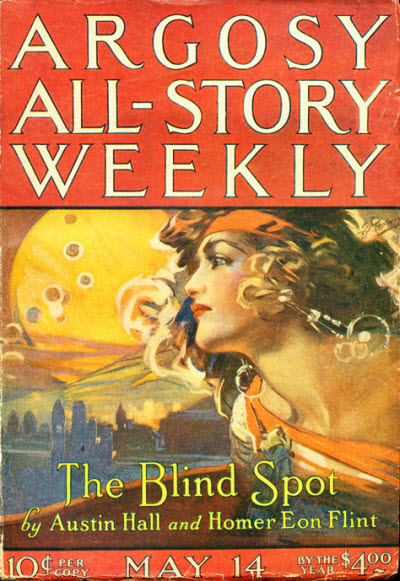
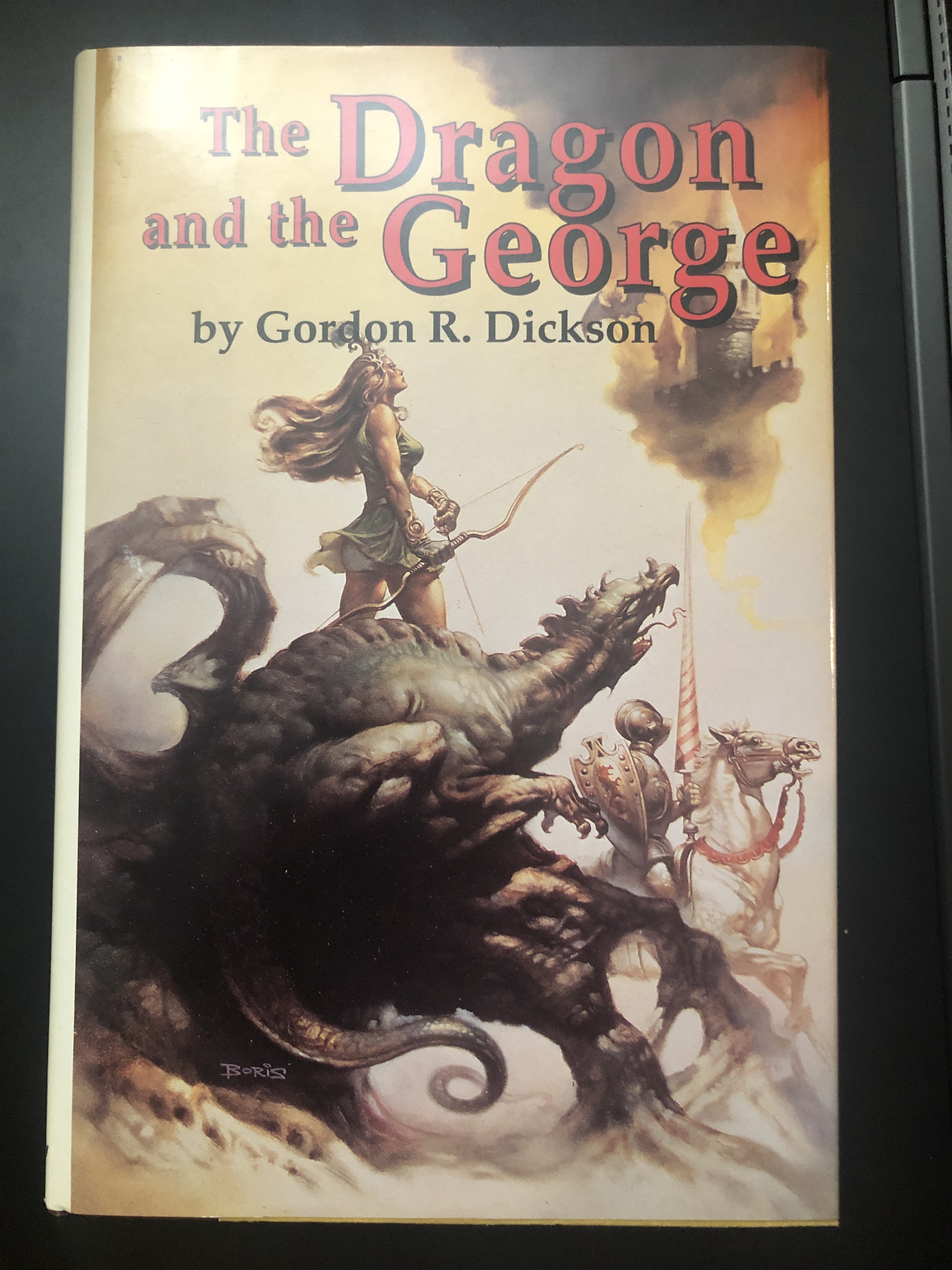


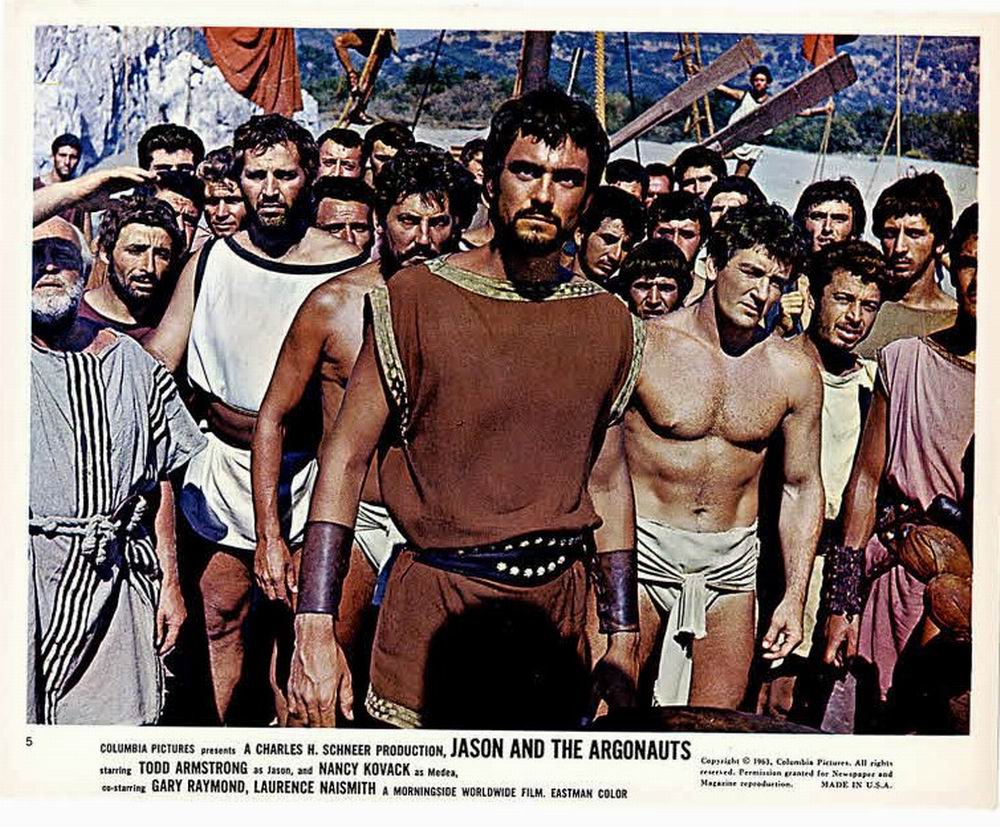
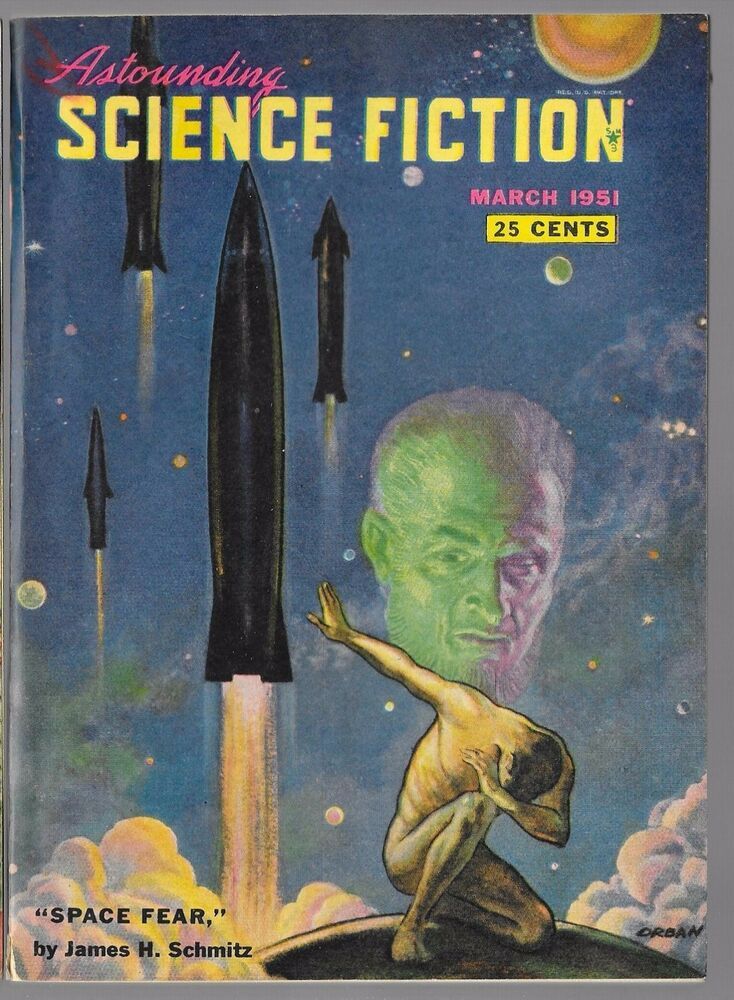


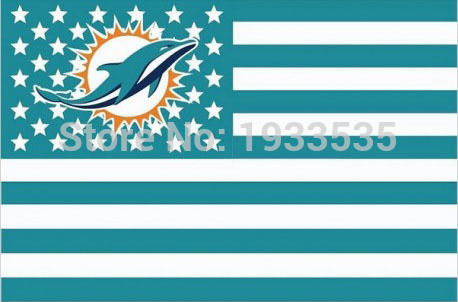

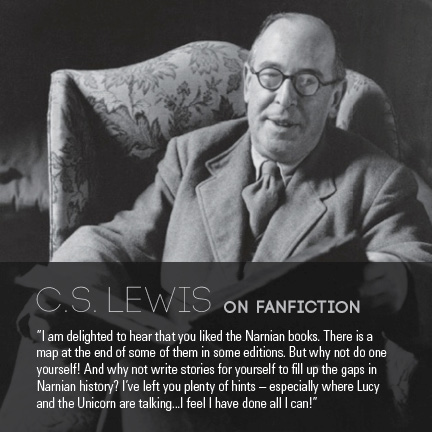
 Font Folly