Tag Archives: society

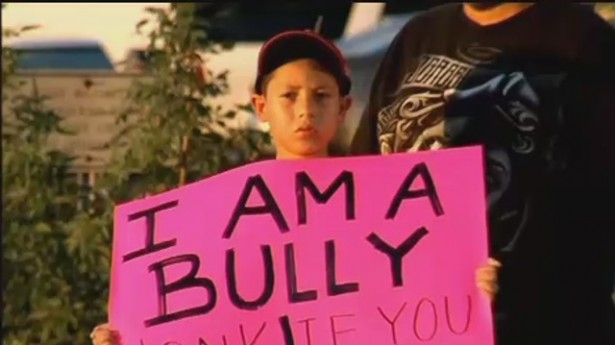
No one likes a bully (except just about everyone)

Kid holding I am a Bully sign.
Father forces son to hold pink ‘I am a bully’ sign on Texas highway.
In most action movies there’s a scene that everyone in the theatre cheers. One of the bad guys—one who has been portrayed earlier on the movie as being particularly cruel, heartless, otherwise repulsive—meets an especially grisly death, usually at the hands of the hero.

Of course we cheer, you say. He wasn’t just the bad guy, he was an extremely bad bad guy! No matter how egregious or overly cruel his final moments were, he had it coming! We’re just cheering the concept of justice.

I get it, truly I do. And I have certainly cheered many such scenes, myself.

However…

Continue reading No one likes a bully (except just about everyone)

Why would you even want…

Whenever a story is published about some horribly racist, or sexist, or homophobic law or outrageously bigoted action by a government official in certain parts of the country (usually, but not always, a southern state), some a**hole will ask, “Why would you even want to live in __________?”

Similarly, when a story is making the rounds about someone being fired or expelled because they are gay/lesbian/bi/et cetera, the same a**holes will ask, “Why would you want to work for someone who felt that way?”

But when a teacher at a conservative religious school gets fired for being gay, or a student at a conservative religious school is expelled for the same reason, it takes an uber-a**hole to ask, “Why should I feel sorry for them?”

I’d like to deal with each question:

Why would you want to live there? Despite how mobile our society has become, our geographic location is seldom a matter of pure, unadulterated choice. We don’t get to choose where we are born or grow up, to begin with. Not all young adults have the means to pull up stakes and move to wherever they want. There is a constellation of complex social and economic reasons for why we live where we do.

It is easier to land a job with a company where you know someone who is already employed there or has been employed there, for instance. And particularly when you’re just starting out, who you know is largely going to be determined by proximity. You know people because you have lived near them. It’s just easier to get jobs in the area where you already live.

People usually have relatives to whom they feel obligations, as well. Census data shows that the majority of adults in the U.S. live within 30 miles of one their parents, for example. (Interesting side note: if a person’s parents are divorced, 80 percent of the time the parent who is geographically closest is the mother.) Sometimes it isn’t just a feeling of an obligation. There is an extremely strong correlation between how anti-gay a state’s laws and social climate are, and the likelihood that a gay or lesbian person married someone of the opposite sex while relatively young, had children, then came out to themselves and their community and got divorced. In many cases, the only way to maintain custody or visitation rights is to remain in the state.

Not to mention that every place has beautiful places, and at least some wonderful people. So often the reasons a gay person lives in a state that doesn’t have gay-friendly laws are quite valid, if not optimal.

Why would you want to work for someone like that? No matter how good the economy is, we often end up in jobs that are less than our dream job. Sometimes you take the job that is offered, and hope things work out. Sometimes you start out with a very tolerant, professional boss, but because of promotions, re-orgs, transfers, and the like, you suddenly find yourself reporting to the jerk who keeps making fag jokes. And it isn’t always one’s boss that is the problem. A hostile co-worker can create situations that lead to you getting the blame, et cetera.

And most of these situations don’t come from those obvious situations. I’ve written before about a past co-worker who made a big stink because I had a single picture of my late husband tucked on a part of my desk where most people couldn’t even see it. None of my conversations or interactions with him ever gave me the slightest clue that he felt that way.

I suspect a lot of these people were in a similar situation.

And except when I was working in a very tiny office, I have never been the only non-heterosexual person working there. And I’ve seen plenty of examples of gay employees in one department being free to be open about the gender of their partners, et cetera, when people reporting to a different set of managers quickly learn that if they don’t keep “that stuff” to themselves, there will be problems.

Finding another job takes time and energy a person may not have, even when they know the employer is not accepting. And if you aren’t a well-connected person socially both within your industry and community, finding a new job is not a matter of simply picking somewhere to apply, sitting back, and waiting for the offer letter. Depending on how specialized your skill set is, finding a comparable job, that pays enough to meet your current financial obligations and provides the benefits you need, can be more difficult.

And no matter how much research you do in advance, there is no guarantee that the new employer won’t have a similar issue with your sexuality under some circumstances in the future.

Why should I feel sorry for them? They should have known what would happen! So a lesbian is a teacher at a conservative religious school. See everything I said about about jobs. Then add in the following factors: when she began her career, had she even come out to herself, yet? Are there as many jobs in her specific field of teaching at secular schools? Does her church have a fairly large population of congregants who are far more supportive of gay rights than the leadership? How did all of that contribute to her feeling about how safe it was to admit who she is?

The one that really ticks me off is blaming the student at a conservative Christian college for not knowing what would happen. First, they’re college age, and by definition not experienced enough to be sure how people might handle their coming out. It’s also even more likely that she hadn’t even admitted to herself at the time she first enrolled at the school that she wasn’t straight. Second, maybe a Christian school was the only option that her parents would support. There are so many reasons that we pick which college to apply to, and getting accepted is not under our control.

The process of coming out, more specifically, coming to terms with your identity when you aren’t heterosexual, and then reaching the point of sharing that understanding, isn’t a simple issue of weighing all the pros and cons, checking one’s calendar, and thinking about how this announcement will affect your other plans. There is usually an incredible amount of frustration, fear, and weariness boiling up inside the mind of the closeted person like steam in an overheated pressure cooker.

The need to stop lying about who you are overwhelms the fear, let alone any caution someone has about what effect the truth might have on one’s next performance review. And being raised in (and working in) a deeply religious community makes all that pressure even worse.

Maybe the question these critics ought to be answering is, “Why don’t you have enough empathy to realize your questions are backwards?”
Getting it right

I sat down to gripe a bit about news coverage, beating dead horses, and about being annoyed at people worrying about the wrong thing. That last one deserves a more thoughtful post than I would write today, seeing as I’m a little cranky—having forgotten to stop at the store to pick up my allergy meds last night, which I ran out of the day before.

I was trying to find a particular old story to link to, and instead happened across another one that I hadn’t read in a while. An acquaintance in one of the fan communities I’m active in was working as a reporter years ago, and had been assigned to do a story about the anniversary of a news event that had happened before she was born. She thought it was going to be a simple assignment, until… well, you need to go read it.

No, really, you do: I Remember Townsend….

The only other thing I have worth saying today: two good friends of mine happen to have fathers whose birthday is today. Lots of people have a birthday or wedding anniversary today, of course. To all of them I just want to say, “I’m sorry that we as a society have stolen your special day, and spend so much energy re-processing and politicizing that one event. Happy birthday/anniversary.”

Tomboys, pink boys, sissies, and amazons

Lots of people have been talking about a couple of recent op-ed/blog posts about the recent faddish attention in the media and on social networks focused on gender non-conforming kids. Since as a kid one of the nicest words regularly used by my bullies was “sissy” it shouldn’t surprise any one that I have some thoughts on this matter.

The latest commentary asks us not to treat these kids and the parents who are allowing them to be themselves as if they are celebrities. No child is really equipped to be at the center of a media circus, and all the attention, even if all of it were positive (and it isn’t, as internet trolls quickly fill any comments sections or Facebook page with hateful attacks on both the kids and their parents).

I agree.

However, visibility is a crucial component of any attempt to diffuse hate. We wouldn’t have any schools that allowed these kids to dress as they wish, or policies to allow the transgender kids to express their gender, et cetera, if the existence of kids similar to them were unknown. We certainly wouldn’t have California passing a law to protect transgender kids in public schools.

We want the kids to be safe to be themselves. The act of being themselves means not hiding. So there is going to be attention, no matter what. When people like myself share links to blog posts of, say, a mom explaining why she let her son dress up as Daphne from Scooby Doo, we’re expressing joy that one kid has supportive parents. We’re telling people we know that we think it’s a good idea that this kid has supportive parents. We’re telling people we know that we think everyone should be accepting of kids like that kid, and parents like that mom.

And those are good things.

We need to admit to ourselves that we have other reasons. I know one of the feelings I have whenever I find one of these stories—whether it be the incredibly cool note a father left his teen-age son saying he’s known he was gay since the age of six and he’s loved him since the day he was born, or the mom whose son wanted to be Daphne, or the mom who was okay when her six-year-old developed a crush on a boy on TV—is envy. I wish that my parents had been as accepting of my non-conformities as a child. The subtext of my sharing of those stories is always going to include a bit of that wistful longing.

Similarly when I read the blog post of the dad who is appalled at news of some other father kicking his gay child out of the family home. As I feel the fierce feeling of protectiveness coming through the dad’s words, I can’t help a few tears coming to my eyes as envy (again) mixed with sorrow and more than a bit of anger at my own father well up. My dad didn’t have that overwhelming drive to protect me from the cruelties of the world—for much of my childhood he was one of the worst cruelties I faced.

So my reasons for sharing these stories is not entirely altruistic. I’m not trying to be exploitive of their stories. Maybe that’s the best we can hope for, that most of us aren’t intentionally sharing the tales for selfish reasons.

Not every boy who likes pink is gay. Not every girl who prefers sports over playing pretty princess is lesbian. Not all of the children who vary from society’s strict gender silos is transgender. No matter how much some of us may see ourselves in each of these kids, no matter how many stories we read or pictures we see or videos we watch, we don’t really know these kids. We don’t know their futures.

But to the extent that we empathize with how they feel, we need to put our attention and energy into making the world a more welcoming place for all of them, no matter who they grow up to be.

Rejoice, spouse and spouse

I had a post about other things scheduled for today, but then I got caught up watching the live feed from city hall in Minneapolis, where same sex marriage became legal today. And I think it would be better if we all just rejoiced with these couples:

Photo gallery: Gays marry in Minnesota

Photo gallery: Weddings at Como Conservatory in St. Paul

Gay couples rush to wed as Minnesota, Rhode Island legalize same-sex marriage

I think my favorite from the live blogs is the tweet from sometime in the early morning from a person watching at City Hall: “I’ve got this down: cheer, clap, cry, repeat.”

Speaker for the Abyss

I thought I had said all I would say about the Orson Scott Card stuff in “Abyss Gazing” and “The Abyss’ Game“, unfortunately some people who I would have hoped knew better have decided that any gay people who have chosen or are contemplating choosing to withhold our patronage from anything that will put money in the pocket of that hateful homophobe, simply don’t understand the situation properly.

So they’ve decided to explain it to us…

Continue reading Speaker for the Abyss

Premiere Imagined Injury Firm

I was going to write about all the people wailing about the harm that marriage equality is causing the world, such as an email from the National Organization for Marriage which asked for donations eight times. Eight pleas (each with a link to the donate button back on their web page!) in a single email message!

But then Mark Fiore posted this funny video that says it better than I could:

And while I’m linking, PolitiFact takes a look at the other claim being thrown around by the anti-gay folks: Wedding vendors have been forced to participate in same-sex marriages under threat or even jail, Family Research Council president says.

The concept of businesses as public accommodations which cannot discriminate against customers has been around for a lot longer than the gay marriage debate—the 1964 Civil Rights Act, for instance. If you are open to the public and offering goods and services for sale, you can’t discriminate. To a lot of people this sounds odd, until you frame it this way:

Imagine a grocery store owner in a small rural community, it’s the only grocery store for miles. Should that grocery store owner be able to refuse to sell food to someone because of his personal beliefs? “No Lutherans Allowed,” for instance?

You buy a business license, you hang your sign out, you open your doors (accessed by public roads and public sidewalks), and you say, “Come in and buy!” Then you have to open those doors to everyone who will pay, behave civilly, and so on. It doesn’t matter if you’re a grocery store, or a restaurant, or a bakery, or a flower shop. You have offered your merchandise to the general public, you have to allow the general public to buy them.

It’s really that simple.

Why I’m proud

“If it’s just who you are, why be proud about it?”

It seems like a reasonable question, right? I mean, if we’re born this way, what is there to be proud of? It’s not like we did it, right?

If you’ve ever asked that question, or been tempted to ask it (especially if you think it’s a clever question) here’s what I need you to do: imagine one of the really big St Patrick’s day parades. Imagine a very big, bearded, slightly inebriated Irish American in that parde. Now imagine yourself wearing a t-shirt with a British flag printed on it, and some slogan such as “The Irish are all terrorists!” in really large print. Now imagine yourself confronting the inebriated Irishman in the middle of the St. Patrick’s Day parade and demanding that he explain just what it is he has to be proud of, anyway, just because he was born Irish?

If you are a straight or straight-identified person living in our society, having grown up going to schools that encouraged your childhood crushes, that held dances that celebrated your teen age boyfriend/girlfriend relationships, watching movies where 99.9% of the plots include at least an element of either boy-meets-girl or boy-rescues-girl or woman-gets-her-man, et cetera, much of your existence is the result of a system of privilege which is the equivalent of that t-shirt.

So that’s the first thing I have to be proud of: I haven’t been crushed by the forces of homophobia, I didn’t commit suicide in my teens, I survived all the beatings, I managed to avoid being driven into addiction or a life of loneliness by all of those people, assumptions, and cultural expectations that said I couldn’t love, and if even I could my love didn’t matter, my very self was false.

I survived all of that and became a productive member of society. I found a man who promised to love me and stay with me the rest of his life—and he did! And after he died, I was lucky enough to be found by another wonderful man who somehow isn’t put off by all my obnoxious personality traits and has the audacity to love me!

We have a circle of friends who run the spectrum from straight through bi and gay, and contrary to what I was told again and again throughout my childhood, how lovable or worthwhile any of them are has absolutely nothing to do with their orientation.

I’m proud not just because I’m still here and I’ve survived, but because all of those people marching in Pride Parades all around the world have survived. From the freaks to the wallflowers, from the lesbian moms and gay dads to the queer aunties and uncles, from the straight parents of lesbian & gays to the straight kids of gays & lesbians, from the queer soccer players to the queer sci fi nerds (and there are a lot more of us than you think!), from the drag queens to muscle daddies and gym bunnies, from the dykes on bikes to the queer corgi owners club (sometimes one of the largest groups in the parade), from the go-go boys to the clog-dancing lesbians, from the queer quakers to the gay service members, from the cyber sluts to the snap queens, from house spouses to the queer executives… in short, every bi, gay, trans, lesbian, gender-non-conformist, queer, homo, fairy, butch, femme, st8-acting person or ally who has survived another year and is still ready to stand up, be counted, and throw a fabulous party.

I’m proud because we have endured hate, which has taught us how to love better. I’m proud because we have fled the shadows, and showed the world our light. I’m proud because no matter how many times we’ve been knocked down, we have gotten back up.

I’m proud because we’re all here, and we’re beautiful!

Why I watch the parade

First, because it’s a parade, and people do some pretty astounding things when they march.

I watched my first Pride Parade before I marched in one. I was barely out to anyone at the time, and I wasn’t even sure what the parade was. I had seen (usually lurid and shocking) pictures in the papers and during the very brief coverage that would appear on the evening news.

I suspected those representations were highly inaccurate, but I had heard a few conflicting descriptions from gay people I knew.

What struck me most about that first parade was how unexceptional most of the people looked. Oh, yes there were some outrageous costumes, and some people bared a bit more skin than you would normally see on a summer sidewalk, but the vast majority were far more fully clothed than a typical beach crowd.

I understand why a lot of people think there’s a lot more nudity at Pride Parades than other events. It’s mostly because of the men. Our society is so heavily patriarchal that we don’t notice all those women in revealing clothes, provocative poses, and suggestive angles used in advertising, television shows, and the like. Women are allowed to show off their legs, a little cleavage, and much more, to show just how beautiful their bodies are. No one blinks at all the near nudity of women on floats in the Seattle Seafair Family Torchlight Parade, for instance, or the Tournament of Roses Parade, or the Macy’s Thanksgiving Parade—it’s there! We don’t consciously think about how much of the world is geared around appealing to the sexual desires of straight men.

We are not used to men putting themselves on display in the same way. So when the float covered in go-go boys goes by, instead of realizing that it’s no more nudity or sex appeal than what you might see on, say, the Miss America float in the Tournament of Roses Parade, we’re too busy freaking out at the Naked Boys (who aren’t actually naked)!

But what really struck me that first time, was how ordinary so many of the people looked. The various hobby-based clubs marching by in their matching t-shirts, throwing candy. The men and women, mostly in shorts and short-sleeved shirts, walking in a group with their dogs on leashes. The political groups with matching t-shirts chanting their slogans. The groups with kids—lots of the queer couples and their kids—marching with whichever group they were with. Plus lots of church or other religiously affiliated groups and lots of amateur sports leagues.

There were a multitude of costumes, many feathers, copious amounts of glitter, and a lot of rainbows. The outrageous costumes sometimes had some sort of political message. But often they were just things like big crazy headdresses that you weren’t sure what they were meant to signify, but it was rainbow colored!

Then after all the groups with their banners and fliers and sometimes matching t-shirts had passed, the parade just kept going, just lots and lots of random people. It took a few minutes for us to figure out what was happening. I learned later that it’s a tradition that’s gone from the very first Pride March in 1970 on the anniversary of the Stonewall Riots. After the parade passes you, you step off the curb and join it.

And that’s why some years I watch. The reason for the parade, ultimately, is simple visibility. We’re here. We’re your daughters, your neighbors, your sons, your co-workers, your friends, your siblings, or your parents. We’re not mysterious monsters lurking in seedy clubs, we’re the person in front of you at the check-out line in the grocery store, or the two gals sitting in that next pew at church, or the grey-haired guy trying to read a label on a bottle of cold tablets in the pharmacy, or that kid on the skateboard going past your bus stop, or that guy sipping a coffee at Starbucks while laughing at something on his computer.

We’re here, we’re everywhere, we’re real, and we have lives just like you.

I watch so that the people who are being brave and marching in their first parade will be seen and cheered for. I watch so that group of teen-agers (half of them straight and there to support their bi, gay, and lesbian friends) will get the applause that their costumes deserve. I watch so the guy who was up all night gluing sequins on his and his boyfriend’s costume will get the cheering that work deserves. I watch so that the older couple walking together holding hands will be seen and their love acknowledged.

I watch so that the ones whose families rejected them and told them never to come back will know they have another family, and we’re clapping for them right now. I watch and applaud so that the trans* gals and trans* men know they are seen for who they are and we think they’re beautiful, wonderful, and I am proud to call them brothers and sisters. I watch so that the ones who are carrying a photo or wearing the name of a deceased loved one will know that we see their grief and share it. I watch so that the straight parents who have spent countless hours explaining to friends and relatives that their queer kids have nothing to be ashamed of, and yes they are very happy, and no those things you’ve heard or read about their health and lifespan are all myths will know their efforts are appreciated by the whole community.

I watch so I can see and be reminded of just how big and wonderful and diverse and amazing our community is.

And finally, I watch so that as the last official entry goes by, I can see all the people who aren’t part of a club or organization who, just like me, stood on the sidewalk cheering and applauding.

And I cheer and applaud for all of them until finally it’s my turn to step off the curb and say to the world, “Me too.”

Why I marched the other times

Oh, the many reasons one continues to march in Pride Parades after that first exhilarating time…

One reason I marched in so many parades was because I was a founding member of the (now defunct) Seattle Lesbian and Gay Chorus. Every year we marched together with our banner. Some years we had candy to hand out. Some years we had fliers. Some years we just waved. People always shouted at us to sing, but you can’t do big choral singing in the middle of a loud street. If you try, no one can hear you over the ambient noise unless you scream. You can’t hear each other well enough to stay in key or in rhythm. We tried, a few times, to get a good mobile sound system to play recordings of us singing, but that doesn’t work well, either.

So one reason I was there in the parade year after year was to march with my fellow choristers. To show people we were there, maybe get a few more people coming to our concerts. Maybe find a few new recruits. It was always a fun group to march with.

I was also there for the same reason I marched the first time. Saying to the world that I’m here, I won’t be invisible, I’m not going away.

I was there to see all the people standing on the sidewalk. Some in couples. Some in family groups. Some were there specifically waiting to cheer for a friend, family member, or significant other who was marching with one of the groups. Some were just there to cheer everyone. Some of the folks watching together had gone to more trouble dressing up than some of the people marching. There always seemed to be at least one group like that watching from a big balcony or deck overlooking some part of the parade route.

I was there, yes, so that I’d have the satisfaction each year of either glaring at or blowing kisses at that one guy who was always there at one corner with his big sign with a bible verse on it telling us how much he thought god hated us all. I never yelled at him. One year, Ray and I stopped right in front of him, french kissed, then turned and blew kisses to him. Ray kept turning around, waving, and making yoo-hoo sounds as our group marched on. Which was hardly original, but it was fun. I don’t know if it was literally the same guy year after year. It seemed like it was. He always seemed to be alone. He was very grim-faced but always silent. At least when I saw him. I like to imagine that he eventually came out, got some therapy, and settled down with a nice leather daddy in Palm Springs.

I marched to smile and wave at the people watching. To accept the applause and return it. “Hey! We all made it another year!”

I marched to show that we’re not all cute fashion-conscious young men—some of us are chubby, grey-bearded, sci fi nerds in t-shirts and tacky Hawaiian shirts.

I marched for the friends and loved ones who are no longer with us: for Ray, who promised to stay with me for the rest of his life, who loved Disney movies and old books, who danced with an abandon I envied, who even made jokes about the chemo, and whose last words on this earth were “I love you” spoken to me; for Jim, a friend from high school who didn’t come out of the closet until he was dying of AIDS, and I don’t think ever marched at Pride; for Chet, a cousin who was sent away when he came out, who vanished for years until one day his mother got a call from a hospice, and whose immediate family continued to reject him even refusing list his name in his grandfather’s (my great-uncle) obituary; for Stacy who sang like a TV version of an opera singer and loved a good joke; for Frank who didn’t sing so well, but never missed a rehearsal; for Mikey who was as tall as a pro basketball player but would rather play Dungeons and Dragons; for Scott, who was so sure that if we prayed harder we’d both turn straight, but died in a car accident before graduation; for Kerry who was always defensive about his Vespa; for David who played even the impossible accompaniments written by Mr M and made the piano dance; for Tim who sang like an angel and loved David so much it took your breath away when you caught him smiling in David’s direction; for Todd who was diagnosed with the disorder that would become AIDS before it had a name, who made the most morbid jokes about the disease, and never allowed anyone but his partner see him cry each time he saw another funeral notice for someone he knew; for Phil who was kicked out by his parents before graduation, but put himself through college despite them; for the other Todd who moved in with one boyfriend after the next, never able to keep a relationship going for more than a couple of months until he met Jack; for Glen who had problems with labels; for Mike who had problems with middle C… and for so many others who I only knew briefly.

I marched because someone needs to and I could.