Tag Archives: things I like

Crime Does Not Pay (but the hours are good)!

This is one of the covers I made for the gaming binders to help me remember what was in which binder.
Back in 1981 I decided that what the world needed was a superhero roleplaying game. At the time, there wasn’t much on the market, and the few games that existed barely qualified as a full-fledged gaming system. But I’d been playing in various roleplaying games for a few years, and had been a superhero comic fan for as long as I could remember (my mom was a comics as well as sci fi/fantasy fan before I was born, so I’m a second generation fan). Since the few games I could find weren’t adequate to my needs for playing at superhero, I invented my own game. I originally called in, unimaginatively, Superheroes. And after about a week of writing up some tables and power descriptions, I talked several members of my gaming group into putting together characters. It wasn’t long before I had enough people playing it, that they started recruiting acquaintances. I made changes and improvements to the rules. Over the course of a few months, I typed a couple hundred pages of rules.

By that time I was running three different groups of players on three different nights of every week.

I ran the last game using the system, and set in the same world and continuity, in the year 2000. I want you to think about that for a moment: I ran a roleplaying campaign, a single campaign setting, with a single history, et al, for 19 years. So when people find out that I’ve got a Victorian Steampunk roleplaying campaign that has been running (with the same core players, same core characters, and in the same continuity) for 16 years and they freak out, I have to point out that it isn’t the longest campaign I’ve run.

There was a point where I re-typed all of the rules for my superhero game into a word processor. And I made more updates and changes to the rules, refining things as we ran into situations that within the game. In the early 90s I was thinking that I might still try to publish the system, and I had changed the name to Crime Does Not Pay (but the hours are good)! The problem was that by then, there were several other superhero based role-playing games on the market, and while I still think there are aspects of mine that were superior to those others, there were also aspects that weren’t.

I should mention that I did get the rules well-defined enough that three of my friends who loved to run games set up their own campaigns. So I got to play in my own system and see how it worked from that point of view.

I’m writing about this now because this last weekend I went through some of the shelves in the computer room, and I emptied out all of the three ring binders, pulled out all the spiral notebooks, and so forth that were full of notes and characters and scenario descriptions and so forth, and put them all into recycle. The scary part as I was going emptying all of those binders was how many of the thousands and thousands of pages of material that was in there was handwritten. In my atrocious printing. But usually in pretty colors, because I love unusual ink colors and I had a tendency to color code my notes as I created villains and supporting characters and scenarios. Or wrote up the fictitious history of small countries or crime fighting organizations, and so on.

Several years ago I made a comment to some friends that, since I hadn’t run a game in the system in years, I should toss all those gaming notes. These friends had been players in the game for years. And one of them was horrified at the idea that I would toss all of that history. So I decided not to tell anyone other than my husband before I went through the shelves.

Usually my inner packrat balks at this sort of thing. I expected it to be more of an emotional trial than it was. But the fact that I haven’t actually run a game, nor seriously looked through any of those notes for this campaign, in more than a decade seems to have given me enough emotional distance to just be amused as I recognized some notes in passing.
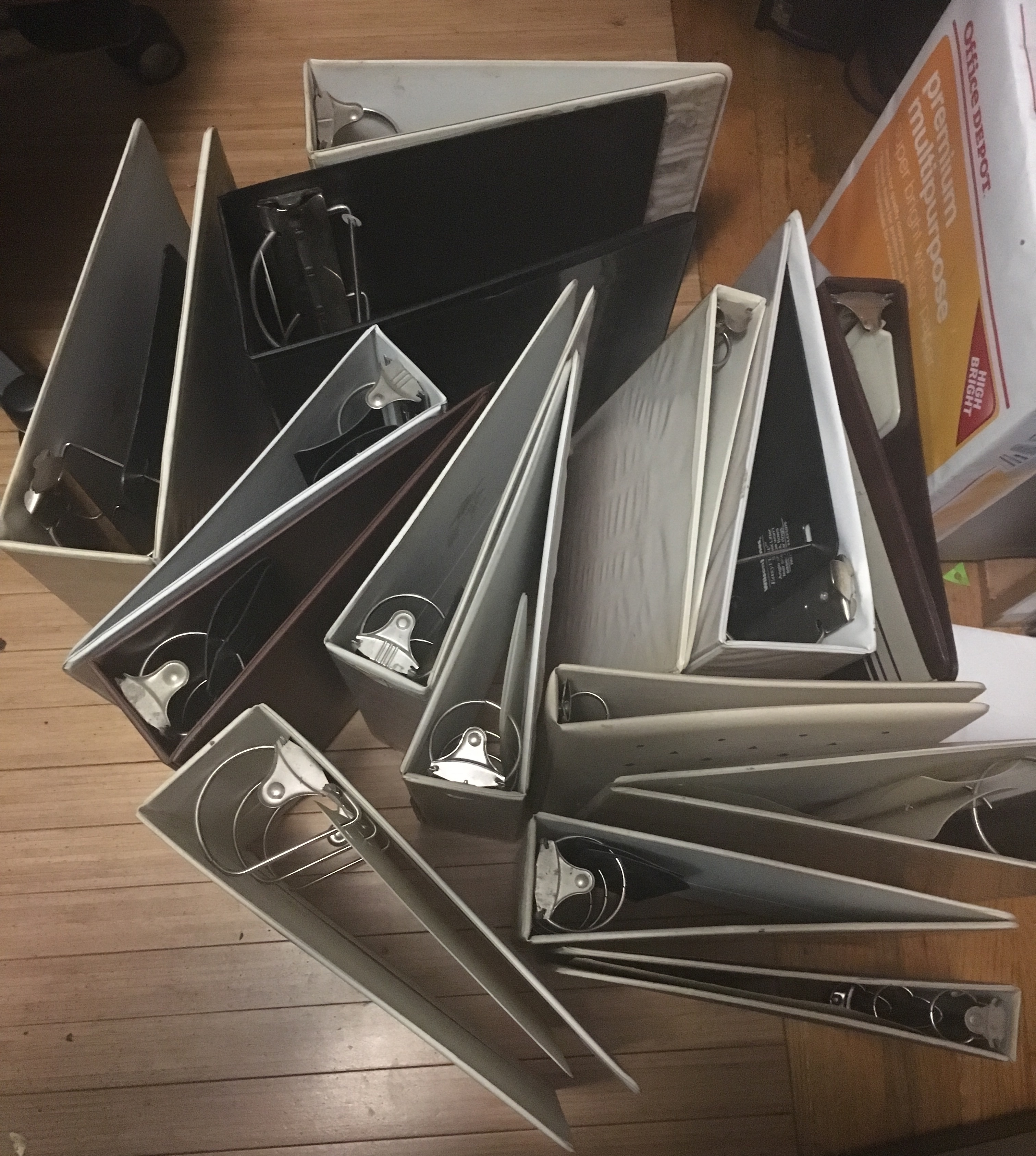
The collection of empty three-ring binders left over after I recycled the gaming notes. Please notice that several of more the 4-inch thick binders.
As you can see from the photo, there were a lot of binders. Several of those were 4-inch binders, which hold about 800 pages each, and at least two were 5-inch binders, which hold 1000 pages each, plus a bunch of 3-inchers, which since they usually have O-rings usually only hold about 570 pages each. When I said thousands and thousands of pages I wasn’t kidding. Keeping the notes organized in binders was always a bit of a challenge. Many years ago I got in the habit of making a title page for the binders, so I could remember that this binder was full of villains, while this one had notes on our never quite completed magic system, and another had notes for older games, while another had the notes for the most recent games and things I was planning.

And there were about a dozen spiral notebooks and several notepads all filled with even more notes. I generated a lot of material running that game for 19 years.

The notebook names were often based on Far Side comics. At least two were based on Calvin and Hobbes strips. As the pages of notes and characters and scenarios piled up, I’d have to make new binders, while older binders would become part of the archives, rather than something I’d get out all of the time.

It’s a little scary to think about how much fictional history we created during all of those games. I should add that when I said it was a single campaign, that’s slightly misleading. As I said I had at one point several groups playing at once, and I kept them separate mostly by basing their characters in different cities. But it was one fictional world, and we did cross-overs. Plus, since it is comic book superheroes, there were occasional adventures where the entire world was in danger. I also set some of the player groups in different time periods. at one point I had two side groups adventuring during the World War II time period, while original three sets had been playing in “the present” so basically the 80s and 90s. Then I had another side group playing in the 70s for. But all of the groups were set in the same world. And yeah, since I had player characters in different time periods occasionally involved in big global events and so forth, the continuity of my fictitious world got nearly as convoluted as that of the big comic book publishers.

Of the six friends who created characters for my first couple of weeks of playing, three have passed away. Of the others, I still have some contact with two on Facebook. I last ran into the sixth player at a science fiction convention around the year 2000, and he had an absolute melt down when he found out I was gay. My friend, Mark, moved to the town where I lived before moving to Seattle in 1983, I think it was, and joined the campaign. He played various characters for nearly 10 years, I think, with some interruptions since he moved to Seattle about a year before I did. And we’re still friends, now. Maybe I should make him a certificate, because I think he might hold the record of the longest player in that game.

I had a lot of fun, and as far as I know the players did, too.
Card-carrying member of the ACLU, and proud of it!

screen-shot-2017-01-29-at-3-25-17-pmIt’s George H.W. Bush’s fault. During the 1988 Presidential Debates, then-Vice President Bush sneered at his opponent, Gov. Mike Dukakis, for being a card-carrying member of the American Civil Liberties Union. Mr. Bush claimed that the ACLU was out to make child pornography legal as well as make it legal for children to see X-rated movies. Both of those claims were, at best, distortions of actual ACLU goals (the ACLU has long opposed a rating system used in the U.S. because the system is secretive, favors large studios over independent ones, and sometimes serves as a form of de facto censorship, for example), but it almost certainly shored up support from Republican-leaning voters. But the other thing that happened was that, in the days after the debate, tens of thousands of people called the ACLU and asked what it took to become a card-carrying member.

And then they donated and joined.

I wish I could say I was one of them. I didn’t become a member for a few more months. I was in the process of transitioning from college to working full time, and my wife was still a full-time university student (yes, I used to be married to a member of the opposite sex; it’s a long story). And in 1988 you couldn’t just google the ACLU and in a few clicks sign up. It was after the election, and after I got a better job, so it was sometime in the spring of 1989 that we signed up as members.

I’ve been a proud member ever since.

When school districts try to discriminate against queer students, it’s the ACLU that sends lawyers to sue the school and get kids their rights. When peaceful protesters are arrested, it’s the ACLU that sends in lawyers to get the protestors out of jail, to defend against the bogus charges, and sue the appropriate government officials to try to prevent future violations. When high school students are unconstitutionally strip searched by school officials, it’s the ACLU that sues the school district. When states enact unconstitutional voter suppression laws, it’s the ACLU that sues and often gets the measures overturned. When federal authorities tried to hide documents about torture progams, it was the ACLU that sued to get the documents brought to light so that citizens and legislators could demand changes. When states fail to provide required medical and mental health treatments to people in state custody, it’s the ACLI that sues to get people the basic care they are guaranteed under the law. And as everyone saw this weekend, when a narcissistic megalomaniac issues an unconstitutional executive order resulting in people being illegally detained or deported, it’s the ACLU that goes to court for stays to try to halt the illegal actions, and send lawyers to try to meet with detainees to help them.

I could go on and on.

If you believe in liberty; if you believe the Constitution guarantees that everyone is equal before the law; if you believe that everyone deserves legal representation and the full protection of the law; then the ACLU deserves your support.

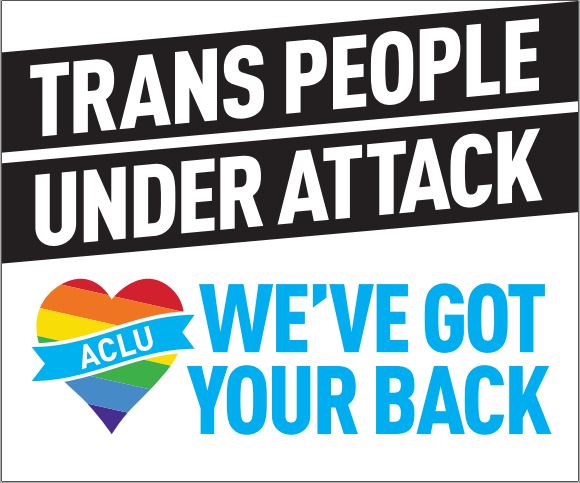
gotyourbackOh, and if you’d like one of those spiffy blue pocket Constitutions to keep on your person in case you need to assert your rights (or just correct a douche bro who doesn’t understand what the Constitution actually says), the ACLU sells them in very affordable 10-packs. Because you want to pass out extras to your friends and loved ones. And if, like me, you have a lot of freedom-loving friends who are also bibliophiles, you might want to pick up some Bill of Rights bookmarks. Not to mention stickers and other things.

If you can, support the ACLU!

One person’s fave is another’s wtf – more of why I love sf/f

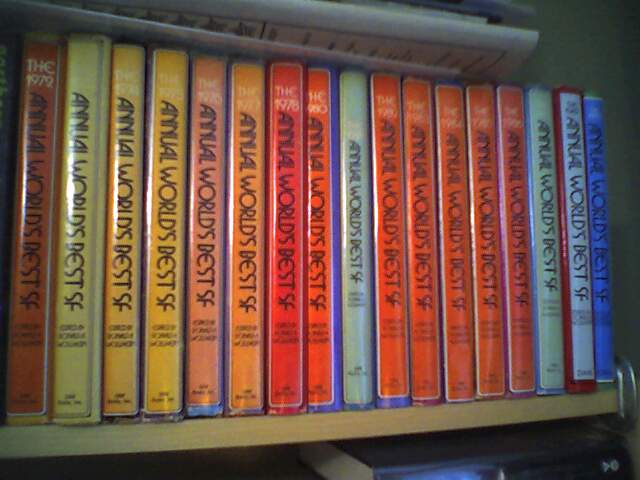
5thI don’t remember the first time I found a copy of an anthology that proclaimed itself to contain the best science fiction of a particular year. I am also not sure how many of them I had seen and read before I realized that there were multiple publishing houses putting out those annual collections. It was difficult to tell because they had such similar names: “[YEAR]: the World’s Best SF,” or “[YEAR]: the Annual World’s Best Science Fiction,” or “The World’s Best Science Fiction the Year: [YEAR]” or “The Annual [NUMBER] Edition Year’s Best S-F” and so on. And let’s not even get into the fact that 90-some percent of the stories included were written by authors in the U.S., with only a small number of authors from the UK, Canada, Australia, or another English-speaking country getting in.

I was 18 when I went on a buying binge picking up as many editions of the series edited by Donald Wolheim as I could, as I had read a few of his previous collections and found they more often contained several stories I liked than some of the others. Wolheim’s taste was close enough to mine that I could count on several good ones in each collection. And it was good to know an editor I could count on to find good ones. I’d been a little shocked at just how many stories I had disliked in some of the other similarly named collections. When I was younger, I assumed that if the name of the book included “The Best…” that it ought to be true, and thus had a few unpleasant surprises.

picture056_15jul06Of course now it seems obvious that any list of The Best of anything is going to be subjective. When you also understand that in order for a story to be included in one of these collections, the editors have to contact the author or representative and get permission to include their story. For a few decades, every publisher that had a science fiction/fantasy imprint seemed to be publishing one of these annual collections, so they were competing against each other. So if, say 12 stories wound up in one editor’s collection, that doesn’t necessarily mean they were the top (in the editor’s opinion) 12 stories published that year, but rather were the 12 out of a longer list which the editor was able to negotiate a deal.

One upside was that the various annual Best of anthologies usually didn’t have any overlap.

I love them, even though there were always at least a few stories that I didn’t like. There was always a story that I did like written by an author whose name I didn’t recognize, giving me someone knew to look for. Another nice thing was the variety of type of story. Even though they were all picked by the same editor, the stories seldom had anything in common. Themed anthologies can be cool, but sometimes they’re a bit hard to get through because when the stories all fall into a single theme and are all picked by the same editor, some can feel a bit repititious.

Another thing I love about all of those competing Best Of book series is that there are thousands and thousands of copies of the books in hardcover and paperback out there in used book stores. So if, like me, you love to browse all the bookseller booths or tables at sci fi cons, or can easily spend hours wondering in a used book store, you are likely to run across some of these little treasure troves at a reasonable price.

The last few years I’ve read lots of blog posts—and listened to some spirited discussions—about the idea of a science fiction/fantasy canon. Books that every fan or every aspiring right should have read. Unfortunately a lot of books from days gone by that were important to the development of the genre, and/or were beloved by many fans over a span many years, don’t hold up so well for younger readers. Heck, sometimes they don’t old up for us old fogies! I still remember the utter horror I felt when I found a copy of a fantasy book that I had absolutely loved when I was 10 or so, only to find some really blatant anti-semitism and problematic treatment of native peoples when I found a copy again as an adult. As a kid, that stuff had sailed right over my head, but I can’t in good conscience recommend that book now without at least a warning.

So I don’t think it’s right to insist that someone isn’t a true fan or doesn’t understand the genre if they haven’t read specific books. But I do think that we benefit from being familiar with the roots of our favorite genres. And I think that all writers benefit from reading broadly and occasionally reading things outside their comfort zones. Which brings us to another thing I like about these old Best Of collections. Select any one at random and you will get a number of short stories written by a bunch of different people. It’s a lot easier to get through a short story that challenges you in one way or another, than to get all the way through a novel. It’s one way to get samples of some of the roots of the genre without amassing a pile of old books many of which not only will you never be interested in reading again, but that you can’t force yourself to get all the way through.

And odds are, you will find at least one story you like a lot. Which may send you looking for more stories by an author you’d never heard of before. That’s always fun.

Not to mention the possibility that a bad story can serve a good purpose, even if it is only an example of the kind of writing you never want to do yourself.

Uplifting, heartbreaking, and enormous

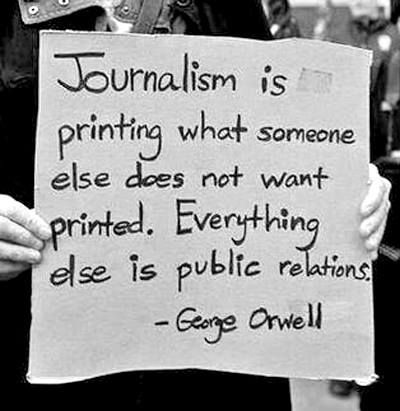
“Journalism is printing what someone else does not want printed. Everything else is public relations.” — George Orwell
After several years attending community college part time (for reasons), I attended a Free Methodist university. The upsides were: the student-to-teacher ratios in all my classes were small, the campus was beautiful, and I got to know some wonderful people. The downsides are best summed up by pointing out that then Vice President George H.W. Bush was considered a dangerous liberal by much of the student body, while President Reagan was practically the second coming. Don’t believe me? I was one of only three people on the entire student newspaper staff who was not a Republican. Usually people expect the student newspaper to be one of the centers of radical left-wing ideology on a campus, right?

Well… comparatively, we were.

The editor-in-chief my first year there had a photo above his desk of himself presenting to President Reagan a model of Mount Rushmore he had made with Reagan’s face added. He once told me the story of a Christian conservative college prep camp he had attended in high school, where he had signed up for classes in journalism. The people running the camp pitched the journalism classes as a way to encourage Christians to take back the news industry from the evils of secularism. Anyway, at his first class he had gotten in trouble because the first assignment was a faux press conference where someone the teacher had brought in would pretend to be the spokesperson for a company that had just rolled out a new product, and the members of the class would be reporters who had been assigned to write stories promoting the new product. “I got in trouble,” he said, “because I objected right away. Reporters aren’t assigned to write stories promoting something. That’s marketing, not journalism.”

Over the course of the next several classes, he said, it became clear the teacher had no idea what news reporting was. And he eventually got the teacher to admit that he had a degree in Business Administration with a minor in Pastoral Studies, and had never taken a journalism course in his life.

I had to tell him that it didn’t surprise me. A lot of people think that journalism’s job is to promote things—never critique, never present unflattering facts, et cetera.

Unfortunately, for the last many years, a lot of those people have been journalists.

I used to subscribe to a daily newspaper as well as several news magazines. One reason I cut back was because the piles of partially read publications would accumulate around the house faster than I would read them. But another reason was that it became harder and harder for me to ignore the conservative bias of most publications. They still got accused of being the “lib-ruhl media” by a lot of people, but after I came out of the closet, learned to check my own white male privilege, and became in general more aware of how things worked in the world, I came to realize that society at large had a lot more in common with that conservative Christian campus that I had realized. The Democrats only looked liberal in comparison the the arch conservatives who held a deathgrip on the Republican party. The news media only looked liberal if you accepted that the middle ground, politically, law somewhere between those archconservatives and the Democrats.

So I haven’t subscribed to a magazine other than science fiction and fantasy ‘zines for some years.

Until now. After watching the incredibly poor job most professional news sites and publications did covering this election, I now subscribe to two publications that consistently did real journalism, asked the hard questions, and ran hard-hitting questions: Teen Vogue and Mother Jones. I’m particularly proud to now be a paid supporter of Teen Vogue, because I’m convinced, now, that if anyone can save us from this authoritarian nightmare, it will be the Millenials and Generation Z.

To be fair, since the troompa loompa had his so-called press conference where he shouted about fake news and filled the room with his own staff to applaud his ridiculing of some reporters, much of the rest of journalism has begun to remember that their job is to inform the public, not cater to the whims of people in power in hopes of retaining access. Let’s hope it isn’t too late.

I have other hopes, particularly after seeing the incredible turn-out all around the country on Saturday:

Uplifting, Heartbreaking, Enormous Crowds at Women’s Marches Around The World.

Women’s Marchers Drove the ‘Trump Unity Bridge’ Out of Town.

The Woke Men of the Women’s March Good-Naturedly Answer Our Questions.

The Women’s March on Washington in pictures.

Here’s What The Women’s March Organizers Want To Happen Next.

Crowd Scientists Say Women’s March in Washington Had 3 Times More People Than Trump’s Inauguration.

Women’s March, Phoenix, Arizona, January 21 2017.

Just A Few Of The LGBT Signs Seen At The Women’s March.

Trump’s Inauguration vs. Obama’s: Comparing the Crowds.

Sorry Sean Spicer, Trump’s Inauguration Garners 7 Million Fewer Viewers Than Obama’s.

Trump And White House Press Secretary Attack Accurate Media Reports On Inauguration Crowds.

Trump Melts Down During CIA Speech And Whines About Inaugural Crowd Size.

Welcome to the Resistance!

If you want thousands, you have to fight for one — more of why I love sf/f

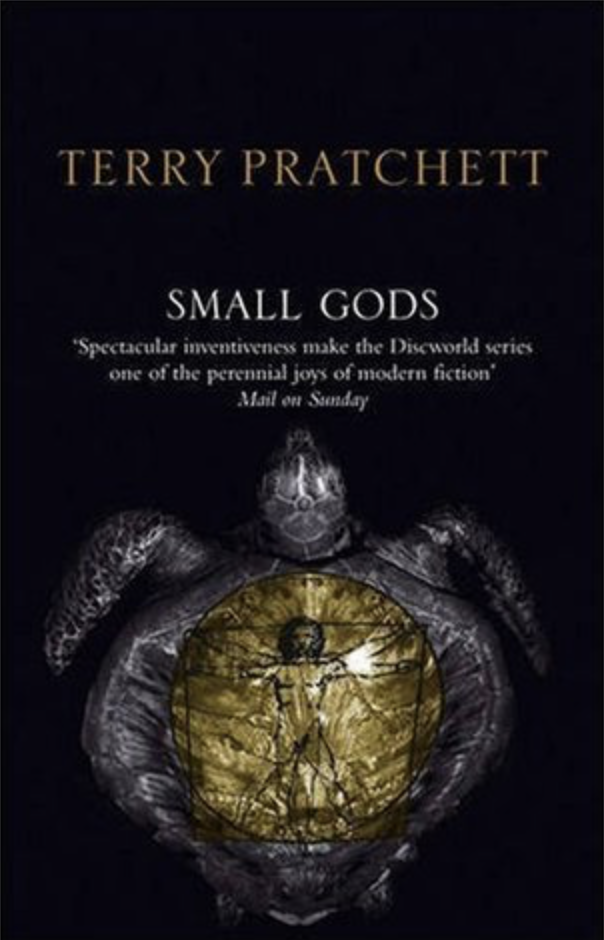
One of the many covers of various editions of Terry Pratchett's _Small Gods_.
One of the many covers of various editions of Terry Pratchett’s _Small Gods_.
It took me a while to understand Terry Pratchett. Several friends had enthusiastically proclaimed their love for his works. They had waxed eloquently about the hilarity of Guards! Guards, the wondrousness of The Luggage, and the ludicrous fun of the cowardly wizard Rincewind. But when I tried to read the books they recommended, I just didn’t find them engaging. They came across as parodies of fantasy and sword & sorcery, and I just couldn’t get into them. I didn’t understand what my friends saw in them, at all. And one of the books I tried to read back then was Small Gods.The back cover blurb sounded interesting, but I just couldn’t get through the first several pages. It made no sense to me. I didn’t understand how the description of a turtle trying to avoid being eaten by an eagle had anything to do with the the simple novice, Brutha, who only wants to tend his melon patch until he hears the voice of a god calling his name–a small god, but a bossy one. I put the book back down. I was at a friend’s house for something, and waiting, and there was the book sitting on a table.

My friend joined me just as I was setting it down, and asked if I’d ever read the book. So I explained about my previous encounters with Pratchett, and we went off on a long digressive conversation about books we loved, books we tried to get other people to love, books we realized were problematic but still liked, and so forth.

A couple months later, my first husband died. And not long after that I was preparing to head off to spend my Christmas vacation at my Mom’s (which was going to be interesting for many reasons). And a couple days before I left, the same friend stopped by. She was one of many of my friends who had taken to regularly checking on me following Ray’s death, so I thought she was just checking in. She had an additional mission. She had spent a lot of time thinking about what I had said about why I had disliked all of Pratchett’s Discworld novels I had tried to read, thus far, and she was bringing me one book to get me to try again. The book was Wyrd Sisters, which focuses on the witches of the tiny kingdom of Lancre. She explained why she thought I would like it (fairy tale themes given various twists, a lot of Shakespeare references, unconventional characters with deeply-rooted senses of ethics independent of religion), and asked me to give it a try. She cryptically said, “There’s one character in here who I think you’ll really love, but I don’t want to say who, because they need to grow on you.”

The second night of my vacation, I accidentally stayed up all night reading all the way to the end, and was so disappointed that I didn’t have any more Pratchett books to read next, that I started over at the beginning.

I finally understood. Pratchett wasn’t writing parodies, he was writing satire. Going by dictionary definitions of those two words, they may seem to be nearly the same thing. But they aren’t. A parody imitates a specific work or body of work, and makes use of deliberate exaggeration for comic effect. A satire, on the other hand, uses humor, irony, exaggeration or ridicule to critique and analyse human nature. It just so happened the Pratchett did this in many of the Discworld books through the lense of various tropes of fantasy literature.

Once I had found the book that spoke to me, and bonded with characters such as Granny Weatherwax and Nanny Ogg, suddenly, the rest of Pratchett’s work made sense. I saw now that the purpose of the jokes was not to poke fun at books and stories I loved, but to make me laugh in such a way that I got new insights into people (and incidentally why we tell some of the stories we tell)1.

Which brings me to Small Gods, one of my favorite books from the entire series2.

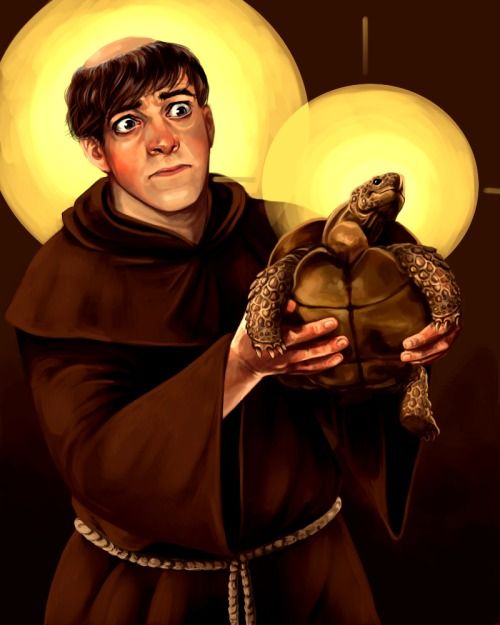
cf1f15f34ab9745dfcdd810a6a4e9701Small Gods is built around the notion that in a magical world such as Discworld, believe is what gives gods their power. The Great God Om has been worshipped for centuries in Omnia, because at intervals he returns to earth, manifests in some way, picks a new prophet, does a little smiting, and so forth. When our story begins in Omnia, people are waiting for the god to return and select his Eighth Prophet. Many think he’s overdue. Others are much more concerned with Omnia’s relations with neighboring countries, such as Ephebe. And then there is Brutha, a humble novice that everyone knows isn’t very bright because it’s been impossible to teach him to read, but he’s got a good memory and works hard and never complains as he’s tending garden in one corner of the Citadel in the capitol city. Brutha has a problem: he can hear a voice in his head, and the voice, he is convinced, is coming from a tortoise inexplicably in his garden, and the tortoise insists that he is the Great God Om.

We eventually learn that Om returned to the mortal world three years ago, quite surprised to find himself trapped in the body of a tortoise and almost completely lacking all divine powers. The problem is, you see, that over the last many years, belief—genuine faith in the existence of Om—has dwindled, having been replaced by fear of the Quisition. So now Om is in danger of losing the last of his power and becoming nothing more than a voice in the desert, along with all the small gods that have never had a believer. So he has to find a way, using only the abilities of a tortoise and his one last believer, to make a comeback.

Meanwhile, Deacon Vorbis, the head of the Quisition, is plotting to conquer Ephebe, while simultaneously root out a new underground heretic movement within Omnia. Brutha gets caught up in Vorbis’ plans when Vorbis realizes that Brutha’s memory isn’t just good, it is eidetic. Brutha has no idea why Vorbis has suddenly become interested him him, partially because Brutha has never really questioned anything his whole life. He was raised by a cruel and overzealous grandmother, and believed everything she told him. It isn’t until he meets his god face-to-face that he learns to start thinking for himself. Om, meanwhile, also has some learning to do before the story is over.

Pratchett has a lot of fun in this book with the idea of philosophers. Brutha meets philosophers in Ephebe, including Didactylos, the blind author of a scroll about the physical nature of the Discworld (a vast disc rotating on the back of four giant elephants standing on the back of a great turtle swimming through space), which has become the inspiration of the heretic movement back in Om. The holy books of Om teach that the world is a sphere floating in space on it’s one, revolving around a sun. So believing that the world isn’t flat is heretical.

Over the course of the story we see several aspects of faith and its misapplication. By the end of the story Brutha and Om have enduring various trials (Brutha nearly being burned to death as a heretic himself in the dramatic climax) before Om returns to power, and then finds himself forced to bargain with his new prophet and help transform his religion into one that is less violent. Before they can do that, they have to deal with the small matter of the war Vorbis has started. One of my favorite quotes from this book happens during this part, as Brutha is trying to stop everyone from fighting, and some of his would-be allies are proclaiming their willingness to die for the truth: “The truth is too precious to die for!”

It is easy to look at the book as an indictment of organized religion and blind faith. But I think the people who do that are making the same sort of mistake I did when I was trying to read the earlier books in the series the first time: they’re looking at this is a parody, rather than paying attention to Pratchett’s deeper commentary on human nature. The book skewers blind atheism at least as much as it does empty faith, because Pratchett turns his satirist’s eye on everyone. Characters you would expect to be allied heroes in the book have their flaws examined just as closely as the characters who are primarily villains.

There’s one other plot thread I should mention: The History Monks. Pratchett will use these guys a few more times, most interestingly in Thief of Time. They are a group of monks charged with keeping history on track, running around the world trying to make sure that things happen as they ought. Of course, who gets to decide “ought”?

I like to re-read Small Gods regularly, to remind myself where morals and ethics should come from. To remind myself that there are things worth having faith in (truth, yes, but also people, and compassion, and empathy). To remind myself that evil people are evil, yes, but they’re people, too—and that all of us have the potential to be evil, no matter how well-intentioned we may be. And most importantly to remind myself that forgiveness isn’t something you earn, it’s something you give.


1. One important note: another problem is that Pratchett himself didn’t find his voice in the series right away. In my opinion, Pratchett didn’t find the proper voice for this series until about the fifth book in the series. Some of his characters took a couple books on their own before they gelled, as well.

2. So many favorites. I read a lot of them out of order after finally having my breakthrough. As I mentioned, some of the earlier books are a lot weaker than the later ones. But they’re easier to enjoy once you know where the series is going.

Shiny new toy: my new Macbook Pro

I was trying to take a picture that showed the Touch Bar the first night after my laptop arrived.
I replaced my 5 1/2 year old Macbook Pro with the sparkly new Macbook Pro with Touch Bar. I’ve been using it for about a month and a half and thought I’d share my impressions. Note: I’m just a queer sf/f writer (who happens to have worked in the tech industry for more that a quarter of a century); I’m not a professional technology reporter, I’m not making any money from this blog and certainly not any money from Apple. But I own and use a lot of Apple products and have been using computers for over thirty years. So take this review accordingly…

Continue reading Shiny new toy: my new Macbook Pro

Sunday Funnies, part 21

Another in my series of posts recommending web comics that I think more people should read:

lasthalloweenThe Last Halloween by Abby Howard is the creepy story of 10-year-old Mona who is reluctantly drafted to save the world when, one Halloween night, the monsters find a way to escape the shadow realm and start killing humanity. Since there is at least one monster for every human (all seven billion of us), the odds are stacked against our unlikely hero even more than usual for these sorts of things. Abby Howard is also the creator of The Junior Science Power Hour which I’ve recommended previously. Abby created this strip as her pitch in the final round of Penny Arcade’s Strip Search, which was a reality game show where web cartoonists competed for a cash prize and other assistance to get their strip launched. Though Abby didn’t win, she started writing the strip anyway.

I like it a lot. It’s one of the strips that I binge read in chunks. It’s a bit darker than I usually like, but also very compelling. And the story keeps going in different directions that I expect. It’s very nightmarish. I think more so precisely because Abby works only in black and white. If you like the comic, you can support Abby in a couple of ways: she has some cool stuff related to both of her strips in her store, and she also has a Patreon.


Some of the comics I’ve previously recommended: Some of these have stopped publishing new episodes. Some have been on hiatus for a while. I’ve culled from the list those that have gone away entirely.

dm100x80“Deer Me,” by Sheryl Schopfer tells the tales from the lives of three friends (and former roommates) who couldn’t be more dissimilar while being surprisingly compatible. If you enjoy Deer Me, you can support the artist by going to her Patreon Page!

The logo for Scurry, a web comic by Mac SmithScurry by Mac Smith is the story of a colony of mice trying to survive a long, strange winter in a world where humans have mysteriously vanished, and food is becoming ever more scarce.

title
And I love this impish girl thief with a tail and her reluctant undead sorcerer/bodyguard: “Unsounded,” by Ashley Cope.

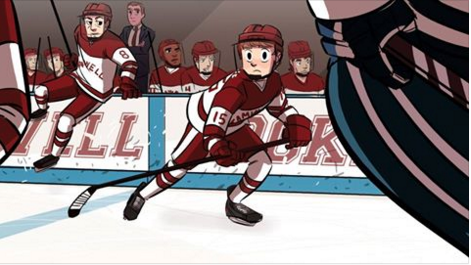
Screen Shot 2016-03-12 at 3.18.45 PMCheck, Please! by Ngozi Ukazu is the story of Eric “Bitty” Bittle, a former junior figure skating champion from a southern state who is attending fictitious Samwell College in Massachusetts, where he plays on the men’s hockey team. Bitty is the smallest guy on the team, and in the early comics is dealing with a phobia of being body-checked in the games. He’s an enthusiastic baker, and a die hard Beyoncé fan.

Screen Shot 2015-08-02 at 5.36.43 PMMuddler’s Beat by Tony Breed is the fun, expanded cast sequel to Finn and Charlie Are Hitched.

The_Young_Protectors_HALF_BANNER_OUTSIDE_234x601The Young Protectors by Alex Wolfson begins when a young, closeted teen-age superhero who has just snuck into a gay bar for the first time is seen exiting said bar by a not-so-young, very experienced, very powerful, super-villain. Trouble, of course, ensues.

logo-1Fowl Language by Brian Gordon is a fun strip about parenting, tech, science, and other geeky things. The strips are funny, and he also has a bonus panel link to click on under the day’s strip.

3Tripping Over You by Suzana Harcum and Owen White is a strip about a pair of friends in school who just happen to fall in love… which eventually necessitates one of them coming out of the closet. Tripping Over You has several books, comics, and prints available for purchase.

The Junior Science Power Hour by Abby Howard logo.The Junior Science Power Hour by Abby Howard. is frequently autobiographical take on the artist’s journey to creating the crazy strip about science, science nerds, why girls are just as good at being science nerds as boys, and so much more. It will definitely appeal to dinosaur nerds, anyone who has ever been enthusiastic about any science topic, and especially to people who has ever felt like a square peg being forced into round holes by society.

12191040If you want to read a nice, long graphic-novel style story which recently published its conclusion, check-out the not quite accurately named, The Less Than Epic Adventures of T.J. and Amal by E.K. Weaver. I say inaccurate because I found their story quite epic (not to mention engaging, moving, surprising, fulfilling… I could go on). Some sections of the tale are Not Safe For Work, as they say, though she marks them clearly. The complete graphic novels are available for sale in both ebook and paper versions, by the way.

NsfwOglaf, by Trudy Cooper and Doug Bayne is a Not Safe For Work web comic about… well, it’s sort a generic “medieval” high fantasy universe, but with adult themes, often sexual. Jokes are based on fantasy story and movie clichés, gaming tropes, and the like. And let me repeat, since I got a startled message from someone in response to a previous posting of this recommendation: Oglaf is Not Safe For Work (NSFW)!

mr_cow_logo
“Mr. Cow,” by Chuck Melville tells the tale of a clueless cow with Walter Cronkite dreams. If the twice-weekly gags about a barnyard of a newsroom aren’t enough excitement for you the same artist also writes and draws (and colors!) some awesome fantasy series: Champions of Katara and Felicia, Sorceress of Katara. If you like Mr. Cow, Felicia, or Flagstaff (the hero of Champions of Katara) you can support the artist by going to his Patreon Page. Also, can I interest you in a Mr. Cow Mug?

What’s wrong with enjoying sleep?

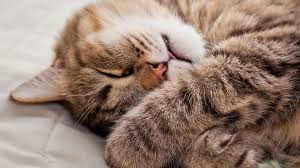
I'm fine here, thanks. CatsAnimals.com
I’m fine here, thanks. CatsAnimals.com
“There are two kinds of people in the world…” is a setup for a number of jokes. One of the conceits behind that particular setup is that there exist certain almost unbridgeable gaps between people: those who like mayonnaise and those who don’t, for instance. Some years ago I realized that one of those vast chasms of that divided humans are those who are morning people, and then the non-freaks. And I learned this the first time I mentioned just what a wonderful feeling of joy it is to wake up in the morning, roll over to squint at the alarm clock, and see that it’s going to be at least ten more minutes before the alarm goes off.

It really is almost a transcendent joy—that moment when you know that you can safely roll back over and go back to sleep. Even those mornings when I wake up, look at the time, shuffle to the bathroom, then hurry back to the bed to collapse back in it and fall asleep for just eight or nine more minutes is so profoundly delightful as to leave me grinning an hour later.

Years ago, as I alluded to above, I happened to mention my enjoyment of such moments during a conversation with a friend, and her reaction was less than accepting. She could not understand why in the world I would roll over and go back to sleep. “If you get up, you have more time to get ready. You could have a fun, leisurely start to the morning instead of rushing around in a panic.” I pointed out that when I get out of bed when the alarm goes off, I don’t rush around in a panic. Going back to sleep until the alarm sounds is not the same thing as oversleeping. The bliss I was describing is that moment of knowing that I’ve still go time to sleep.

She also expressed a lot of skepticism about whether I actually slept during those few minutes. “You’re just laying there awake with your eyes closed! What’s the point?”

I knew, then, that the chasm between morning people and non-morning people is truly vast, and possibly insurmountable.

She was by no means the last person I found myself in this argument with. And it is an argument. She wasn’t just perplexed at the difference in our perception, she got more than a bit irritated. It really seemed to anger her that I would want to sleep for a bit longer, that I would go back to sleep for as little as a few minutes, that I would enjoy it, and that I would describe it as a wonderful thing. I think she felt that I ought to be ashamed of myself for not leaping out of bed the moment I realized that I had woken up before the alarm went off.

Since finding myself in this particular discrepancy of viewpoint on a number of occasions over the years with various people, I’ve developed my own definition of a true morning person which includes that intense belief that a proper response to waking up early is to embrace the wakefulness and leap into action.

When I say that I fall back to sleep for a few minutes, I mean it. I don’t always fall all the way back to sleep, of course. Sometimes I do lay there with my eyes closed, just enjoying the feel of the blankets. Other mornings I sort of doze, drifting along the edge of wakefulness, not really asleep, but definitely not awake either. But many mornings I do fall back into sleep. I’ve looked at the clock, saw that I had less than four minutes before the alarm goes off, and then fell back into sleep deeply enough that I started dreaming again before the alarm sounds.

Now, not everyone who doesn’t feel as I do about enjoying every last second of my allotted sleep time is a morning person. I’ve met plenty of people who don’t get that same thrill of satisfaction from falling back into bed for a bit longer in the morning who also don’t insist that the only normal or natural reaction to waking up a few minutes before the alarm goes off is to jump up and get an early start on the day.

So I know that there aren’t merely two kinds of people in the world on this particular topic. As with most things, people fall on a spectrum, and we probably all slide up and down that spectrum over time. While there is some science out there about chronotypes (a technical term for classifying people based on their natural circadian rhythm), it’s a mixed bag. A lot of the articles one finds talking about the “science” of morning people vs night owls are simply citing surveys, which isn’t very rigorous. Most of the more scientifically rigorous information is actually from studies of people with insomnia and sleep apnea and the like, which yields a lot of information that may be useful for treating sleep disorders, but doesn’t actually tell us much about healthy sleep patterns. All we can reliably infer from the science we do have is that people do have natural sleep patterns that vary from person to person.

It’s just as natural to be a night owl as not. And it isn’t productive to try to talk someone into being the other sort of person.

Don’t get me wrong: I’m not claiming that I’m physically incapable of getting up early. Some mornings I wake up before the alarm goes off, and I decide to get up rather than roll over and get a little more sleep. Some mornings I sleep like a log right up until the alarm goes off. And yes, some mornings I hit the snooze alarm a time or two (snooze alarms are another source of bewilderment to a True Morning Person).

I like sleep. Even more, I like it when I get enough sleep that I feel rested and ready to work in the morning. As part of my taking-care-of-myself routine for some years, I keep track of bed times and make efforts to keep my sleep schedule from getting too far out of whack on weekends or on vacations. And part of that routine is letting myself enjoy, from time to time, those moments of voluntary sleep before the alarm.

Freaks — caffeinated or not

“You know how you just wake up some mornings and you feel so refreshed and cheerful, you’re like ‘I don’t even need coffee’? Me, either. And I don’t trust anyone who says they do. Uncaffeinated freaks.”—Nanea Hoffman, SweatpantsAndCoffee.com
“You know how you just wake up some mornings and you feel so refreshed and cheerful, you’re like ‘I don’t even need coffee’? Me, either. And I don’t trust anyone who says they do. Uncaffeinated freaks.” — Nanea Hoffman, SweatpantsAndCoffee.com
One time my husband and I were discussing sleep schedules, and specifically how I much I regret it if I stay up too late on weekends, because it is so difficult to get up and going on time come Monday morning. He didn’t quite understand what I was getting at, and made a comment along the lines of, “Maybe since you don’t drink coffee during the work week, you shouldn’t drink coffee in the weekends.”

I stared at him open-mouth for a moment then asked, “What make you think I don’t drink coffee during the work week?”

“I’ve never heard you say you’re going on a coffee break.”

So I had to explain to him that in the software industry (at least the places I’ve worked) people don’t take official coffee breaks. You get to the office, you hang up your jacket and so forth, boot up your workstation, grab your coffee mug and head to the kitchen. You then bring your full coffee cup back to your desk and sip it while you work. And you go back to the kitchen and refill your coffee cup whenever the heck you want to, and bring it back to your desk.

Yeah, sometimes you wind up hanging in the kitchen chatting with co-workers. And some folks prefer to have a specific time they leave their desks for a break, but most of us take a lot of mini-breaks throughout the day. And, of course, folks whose jobs involve answering the phone (tech support, customer service, sales) don’t have the flexibility to get up and go refill coffee whenever. But for the rest of us, particularly since most of us aren’t hourly and wind up putting in more than 40 hours a week anyway, don’t really worry about rigid break times.

I do block off lunch time. I used to not do that, and work while eating at my desk like a lot of my co-workers. But some years ago I had a boss who really believed that one of your responsibilities is to take care of yourself so you can do a good job. I still eat at my desk, but my work computer is logged out, and I spend the time writing on my iPad or catching up on the news.

At the time we had this conversation, I was drinking on a typical workday at least six mugs of coffee a day.

The other reason he thought I didn’t drink coffee during the week is that I seldom made pots of coffee at home during the week. I’m a cheapskate, son of cheapskate, grandson of penny-pinchers, et cetera. Of course I’m not going to make extra coffee for myself if I can get it free at work! Which proves that I’m nowhere near the caffeine fiend that I sometimes talk like, because I can muddle through the morning get ready for work routine without several cups of coffee.

Note, however, that I didn’t say without caffeine. See, on a typical Monday morning, for instance, there is coffee in the pot left over from Sunday. And yes, I will stick a mug of that in the microwave and heat it up on Mondays. And other days, well, before I had the fancy electric teakettle thing, I would fill a mug with water, drop a teabag in it, and stick it in the microwave. Just a little caffeine to start the day, right?

On a typical work day, then, I have a mug of some caffeinated beverage early in the morning, then a couple of mugs of office coffee once I get to the office, and then four or so cups of tea in the afternoon. I betray my cheapskate heritage on that, because the office tea selection is often pretty boring, so I have a few of my favorites (double bergamot earl grey, aged earl grey, jasmine green, lavender earl grey, blackberry oolong, green & black earl grey… that sort of thing) in a drawer at the office.

So, yes, I need my caffeine. It gets me through the day. And some of it is in the form of coffee. And I sometimes make disparaging remarks about people who don’t indulge. And I know that I shouldn’t. Some folks have medical reasons to avoid caffeine. Some people have religious objections. And some people just don’t like coffee or tea. I am boggled at the last, but try to remind myself that lots of people are completely baffled at just how much I hate the taste of raisins.

So I try to live in peace with the decaffeinated freaks around me, even the ones who actually like the satanic fruit in muffins or cookies or whatever new kind of food someone has decided to ruin with raisins. And I hope that they will be equally accepting of what a weird caffeinated freak I am. Because on the whole, all people are strange. If there’s someone who doesn’t appear to be weird in some way, that just means you don’t know them well enough.


It’s December, and that means I’m trying to write yet another original Christmas Ghost Story to read at our annual holiday get together. But as is often the case, I have too many plots and can’t quite settle on which one to write.

Which is where you can help!

If you haven’t already, go to Which Christmas Ghost should I write? and take the poll. Seeing which things interests people does help. I may not wind up finishing the story more people vote for this time around, but just seeing people voting gives me at least a bit more motivation.

Thanks!

Longing, Loathing, and Locution — how you love in sf/f isn’t the only way

Cora Buhlert argued very convincingly this week that there are Three Fractions of Speculative Fiction. She identifies them as the Traditionalists, the Anti-Nostalgics, and the Character Driven1.

Traditionalist fans want sci fi that is heavy on the engineering and explosions and light on the characterization. Rightwing politics in space is all right, but they’d prefer the stories not focus on issues that matter to women, people of colour, or LGBT people. Literary fiction is right out.

Anti-Nostalgic fans want speculative fiction that is sophisticated, literary, and eschews old paradigms. They vehemently reject anything nostalgic. They think the only worthwhile stories are the ones which break new ground and redefine the genre. Many of them give lip service to wanting diversity, but they heap condescension on all non-white, non-male, non-straight writers except one or two favored tokens.

Character Driven fans want sf/f that is heavy on characterization. They aren’t opposed to Big Ideas, but emotional arcs, moral dilemmas, and the effects of technology on human lives should drive the plot, to the point that sci fi tropes can exist as mere set dressing. They are especially fond of protagonists and settings which have previously been neglected in classic sf (women, characters of color, LGBT characters, disabled characters, non-western european settings, non-Anglo cultures).

I think these are fairly good definitions of three of the big categories of science fiction and fantasy enthusiasts. Though there will be some overlap, and of course no classification system is going to neatly encompass everyone. For instance, I have emphatically argued that Babylon Five (which I loved) is not science fiction at all, but rather techno-fantasy. It is an epic fantasy which wraps itself in all of the trappings of space opera, but gets some extremely basic science that is fundamental to its main plot laughably and embarrassingly wrong. When I was in the heat of such an argument, I’m sure that I looked to all outside observers like a pure Traditionalist there. Whereas anyone who has read my fiction would likely place me in the Character Driven group.

I also agree with Buhlert that the struggle between the Traditionalist and Anti-Nostalgics has been raging in various incarnations since at least the 1930s. Her examples are: the Campbellian SF versus Pulp Adventure SF, the exclusion of the Futurians from the ’39 WorldCon, the New Wave versus the Campbellians (which had become the old guard by then), the rise of and resistance to Cyberpunk. With each wave, elements that had been new and different and championed by the Anti-Nostalgics were co-opted by the Traditionalist (along with some of their fans), until some other upstarts came along.

There are at least two other fan wars that were primarily Traditionalist vs Anti-Nostalgics that I’d like to throw into the mix. In the early 70s fans who had subscribed to (and later contributed to) magazines for years looked with disdain on fans who never read the monthly ‘zines, and only read novels and anthologies (which were reprints of selected works from the ‘zines). In the later 70s, when comic book fans started coming to sci fi conventions, there was another backlash against these newbies and their “picture books.”2

But not all of the upstarts have been Anti-Nostalgics. When Star Trek fandom blossomed spontaneously, rather than from within existing sf/f fandom, there was a strong backlash, with elements of both the Traditionalist and Anti-Nostalgics looking down on these Trekkies, who weren’t just newbies unfamiliar with classic sf and traditional fandom, but were far more likely to be women! Trek was just the first of many waves of Media Fans (new fans brought into the fold primarily by movies and television)—Doctor Who, Star Wars, Battlestar Galactica3, anime, Buffy the Vampire Slayer, Twilight—that have each faced resistance and rejection from established fandom when they first arrived.

A lot of these Media Fans fall into the Character Driven category. And just like the Anti-Nostalgic waves before them, most of them have, after being resisted by Traditionalists, su sequently been at least partially assimilated—to the point that the stereotypical attacker of a Fake Geek Girl is a guy who speaks Klingon, has a collection of Star Wars figurines, and will attempt to exclude the girl by asking super obscure comic book questions.

But even more than that, each new wave of the Media Fans tends to have more women, particularly young women and girls, more people of color, more queers, and other marginalized groups than the existing fandom as a whole. I believe the reasons for that is that movies, television, and hit young adult books4 are readily available to more demographic segments of society, and find enthusiasts from all of those walks of life. Established fandom isn’t very welcoming of the newbies, especially non-male, non-white, non-straight newbies. The subsets of the previous waves that have assimilated into existing fandom winds up skewing male, straight, and white. Which perpetuates the problem.

The queers, women, and people of color continue to be fans of sf/f, but more and more they find welcoming communities on the web and outside the established fandom, some times creating their own conventions and meet-ups.

And it’s not just because the existing fandom is all actively racist, misogynist, and homophobic. It’s a combination of lots of subtle things. When the vast majority of the staff of a convention is white, and you’re not, you don’t feel welcome. When the vast majority of existing fans keep telling you that you must read certain classics, which are full of straight white male protagonists, with plots that are full of misogynist and colonial subtext, you don’t feel that this fandom is for you. Heck, when the existing fans won’t talk about anything published less than thirty years ago, and you’re younger than the books they keep talking about, you don’t feel invited7.

The most recent fannish dust-up, the Affair of the Melancholy Canines, is mostly a subset of the Traditionalist reacting to the kind of fiction the Character Driven fans like getting more than token representation in certain awards short lists, as well as the inclusion of non-white, non-male, non-straight writers and editors on those lists in more than small token numbers. The Melancholy Canines also claim that they’re pushing back against the sort of literary fiction the Anti-Nostalgics want, but the funny thing is that the Anti-Nostalgics hate all the same books and authors as the Canines. And if you read some of the posts that Buhlert links to, you’ll notice that they heap rather a lot of condescension on the writers who happen to be women or people of color.

I’m hopeful that this time, maybe, the section of fandom that welcomes (and is eager to both create and consume) sf/f that’s inclusive of all genders, gender identities, races, abilities, et cetera continues to grow and make inroads throughout fandom. It isn’t guaranteed. Previous waves haven’t been successful in changing the complexion of established fandom, after all.

But I’m not giving up. This queer fan is staying right here. I’m going to keep writing the kinds of characters and stories I like. I’m going to keep reading the good stuff I can find. I’m going to try to do a better job of promoting all of the interesting newer stuff I’m reading, as well.

“I want to write about people I love, and put them into a fictional world spun out of my own mind, not the world we actually have, because the world we actually have does not meet my standards. In my writing I even question the universe; I wonder out loud if it is real, and I wonder out loud if all of us are real.”
― Philip K. Dick


Footnotes:

1. I am attempting to paraphrase Buhlert here, but my own perceptions may be skewing her point. If you don’t like anything I say here, blame me.

2. The current incarnation of the Anti-Nostalgics is very snobbish and literary, whereas the primary argument against both the non-magazine subscribers and the comic book fans were that they weren’t perceived as reading as broadly nor as seriously as the Traditional fans. Both sides have been snobbish in various ways. The comic fans argued that graphic stories (even though comics had been around for decades) were a new and more experimental art form than the unillustrated word on paper, for instance.

3. Original series. By the time the reboot series had happened, enough fans of the old series had been incorporated into the fandom community that the new series was embraced by most, and their fans tolerated by the rest.

4. It seems to me that Young Adult series have become the new gateway books. Back in the 50s and even still in the 60s5, the Heinlein juveniles were the introduction to sf for many. Though certain older fogies6 still insist on panels at conventions that Heinlein’s works are great gateways, the truth is most of his work (the juveniles in particular) have not aged well.

5. Which is when I was a child finding Heinlein books in school libraries.

6. By which I mean, older than me.

7. I’ve published on this blog a series of “why I love sf/f” posts that focus on books, short stories, shows, writers, and magazines I read as a kid and teen-ager and how they influenced me as a fan (and a writer). So I’m not saying that nothing printed more then a decade ago is worth anyone’s time. I haven’t written about everything I read back then, because not all of it was good. Even for the works I really loved, sometimes had problems I didn’t recognize back then, which I’ve commented on (the children’s book that had two antisemitic scenes which flew right over my head as a child, and shocked the heck out of me when I rediscovered the book in my thirties, for instance). The issue is that when established members of the community tell you (explicitly or not) that only people who love those particular books can be part of the community, well, when the young fan finds themselves cringing at the blatant homophobia, the racism, the misogyny (or at least total lack of any portrayal of many types of people who live in the real world), the message seems clear that we aren’t welcome in the community.