Tag Archives: writing

A Writer Writes: Subplots and subtexts are not the same thing

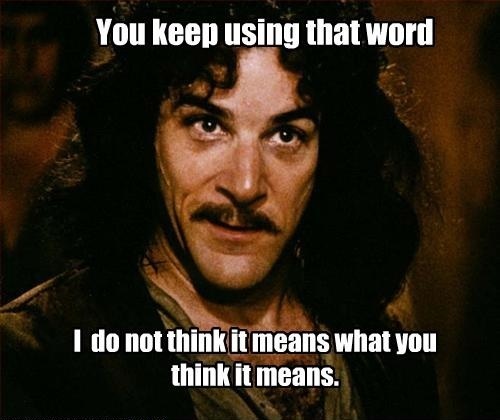
“You keep using that word. I do not think it means what you think it means.”

I was reading a discussion between several fans of a book that I have read, and was finding myself very confused. They kept talking about a subplot that I didn’t remember, and the conversation went in a weird direction where several people in the discussion were arguing about what the subplot actually was. And I finally realized that none of the people in the discussion knew what the word “subplot” means. They seemed to have confused “subplot” with “subtext” and were actually arguing about the underlying metaphors that they thought the author was portraying.

So first, let’s get some definitions.

subplot – a part of the story of a book or play that develops separately from the main story; a secondary strand of the plot that is a supporting side story for any story or the main plot; a subordinate part of a story distinguished from the main plot by taking up less of the action, having fewer significant events occur, with less impact on the “world” of the work, and occurring to less important characters.

Subtext, on the other hand, is an underlying, implied theme in a creative work. It is never announced explicitly by the characters or author, but is implicit or becomes something understood by the observer of the work as the production unfolds.

So a subplot consists of explicit actions that occur in the story: the characters of Merry and Pippin getting separated from the rest of the Fellowship of the Ring and having separate adventures before eventually rejoining the other characters is a subplot. The events actually happen on screen/page. On the other hand, postulating that the entire story is ultimately a commentary about death and obsession, those are discussions of subtext. If you are talking about the meaning of the story, you’re talking about subtext.

If you’re still not sure what a subplot is, it might be helpful to think about a typical television show. The primary plot (often called the A plot) of an episode of a workplace comedy might be about the annual staff review. The subplot (usually called the B plot) might be exploring a relationship between two of the characters. Another subplot (usually called the C plot) might be that one of the characters has started shaving at his desk and it is really annoying two other characters. Quite often in television shows the C plot is a running gag that resurfaces again and again. In my example, the character who shaves at his desk in that episode may have a lot of weird annoying habits, for instance.

Subplots serve various purposes in a story:

  • Add depth to your characters
  • Foreshadow things in later stories when you’re doing a series
  • Provides a sense of reality by showing other things happening in parallel to the main plot
  • Control the rising and falling sense of urgency as the main plot progresses
  • Reinforce the theme or show contrasts to the theme

Please note that I didn’t say anything about increasing the word count of your story. A lot of people think that’s the purpose of subplots in a novel, and I realize that I’ve perpetuated that misapprehension myself when I’ve said that “subplots help fill out a novel.” But what I was actually referring to was that subplots buttress your plot by doing each of the things listed above. Specifically:

Add depth to your characters. The main plot might be about preventing a supernatural disaster that could kill millions, while the subplot about one character not wanting to be betrothed to the person his parents have chosen gives insight into that character’s life and priorities. This gives the reader a stronger sense of the character and more ways to care about how the main plot affects him.

Foreshadow things in later stories. If you already know you want to write sequels to this tale, whether it is a short story, novella, or a novel, a subplot in this story can lead to the primary plot of the next.

Provides a sense of reality. Real life is messy. People have multiple things going on in their lives at the same time. Showing some of the other things happening at the same time as the main plot adds depth and breadth to your fictional world, solidifying your setting. The subplots still need to tie into or support the main plot, which can take many forms. The subplot may explain why a crucial supporting character is unavailable at a crisis point, for instance.

Control the rising and falling sense of urgency. This is one of the most common reasons subplots are employed in TV shows, movies, and the like: it gives the director something to cut to when they want to leave the main plot of a minor cliffhanger or to give the viewer a breather from a particularly intense scene. The same thing happens in prose stories. You can have a scene that shows your main character(s) attempting to sneak into the dark overlord’s stronghold, for instance, and bring them right up to the point where they are surprised by a guard. Then you end the scene on the cliffhanger, and jump to another location where two of the supporting characters who have become lost in the woods then follow them until a moment where they meet a stranger. Then you leave that scene and jump to another location where one of the minions of the dark lord is preparing an ambush of yet another group of supporting characters, and so forth. If first two scene were particularly intense, instead of having the minion setting up an ambush, you might show them failing to accomplish something in a humorous way, to provide a bit of comic relief.

Reinforce or contrast the theme. Suppose the theme of your story is how people react to the possibility of death. You might have one subplot involve a set of supporting characters dealing with another type of loss—perhaps their business is failing or their marriage is on the rocks. You can then have this subplot progress along with the main plot. It might not be resolved until the end when the main plot is resolved. Or you might decide to have it resolve at about the same time that the main plot takes a particularly emotional turn. And/or you may have a subplot that, instead of dealing with the loss or ending of something, is about the beginning of something in the life of another supporting character.

Please note that a single sub-plot can do several or all of these things for your story. The subplot about the supporting characters’ failing business will surely give depth to those particular characters as the reader sees how they react to the fear of the loss to begin with, and how they deal with each stage. Such a subplot also shows that there is more to the life of the characters than just the events of your main plot, providing a sense of reality.

I began this post by talking about people who had confused a subplot with subtext. While a subplot is a different thing than subtext, a subplot can contain subtext. Just as the main plot can have subtext. To sum up: the plot is the explicit primary problem that the protagonist struggles with from the beginning of the story all the way until the end. A subplot is a smaller or less important problem that one or more characters struggle with explicitly for some portion of the story, but not necessarily the entire tale. Subtext is an implicit (or inferred) theme or meaning which the reader understands without the author ever explicitly mentioning it.

Another important different is that plots and subplots are always things that author put in the story intentionally. Subtext can exist completely divorced from the author’s intent. But that’s a topic for another day.
Singular They Isn’t New — more adventures in dictionaries

“Fake Rule: The generic pronoun in English is he.
Violation: “Each one in turn reads their piece aloud.”

This is wrong, say the grammar bullies, because each one, each person is a singular noun and their is a plural pronoun. But Shakespeare used their with words such as everybody, anybody, a person, and so we all do when we’re talking. (“It’s enough to drive anyone out of their senses,” said George Bernard Shaw.) The grammarians started telling us it was incorrect along in the sixteenth or seventeenth century. That was when they also declared that the pronoun he includes both sexes, as in “If a person needs an abortion, he should be required to tell his parents.” My use of their is socially motivated and, if you like, politically correct: a deliberate response to the socially and politically significant banning of our genderless pronoun by language legislators enforcing the notion that the male sex is the only one that counts. I consistently break a rule I consider to be not only fake but pernicious. I know what I’m doing and why.”
Ursula K. Le Guin, Steering the Craft: A Twenty-First-Century Guide to Sailing the Sea of Story

I included the above quote from Ursula K. Le Guin’s excellent book on writing in my tribute to Le Guin last week. It’s a quote I’ve been meaning to use in a blog post about fake grammar rules for a while, and now seems like a good time.

There are rules of grammar and learning them is important. However, it is also important to recognize that not everything someone tells you is a rule actually is. There are a number of so-called grammar rules that people have been passing down from generation to generation in schools, writers’ groups, and so on that simply are wrong. Some of them are due to a misunderstanding that has become common enough that people adopt it as a rule. Others have been the result of a small group of Latin scholars attempting to force a convention from the Latin language on to English out of a belief that Latin is somehow a purer language.

Others are a bit more complicated.

English pronouns are such a case. It wasn’t that many centuries ago that people had to keep track of more pronouns. The King James Version of the Bible was translated during a time when English speakers used thee, thou, you, ye, they, thine, their, and so forth. There were circumstances where it was incorrect to address someone as you rather than thou, and it generally came down to your social relationship. You use thou when addressing someone who was socially inferior, and you the other way around. This wasn’t just about class. Parents would use thou when talking to their children, for example, and children would use you when addressing parents and so forth. One also used thou for people with whom you were intimate—and I’m not talking about sex, this would be with close friends and so forth (though also one’s fiance or spouse would be appropriate, obviously).

Thee was the objective form of thou—this is parallel to the distinction between me and I which still exists in the language today. Ye was the plural form of you.

So what happened to all of those extra pronouns? We slowly stopped using them. Thou starting going away in the 17th and 18th Century in London as changing socio-economical norms started making it harder to tell which social class people were in. You didn’t want to offend someone who ought to be addressed as you by saying thou! I mention London specifically because etymologists have tracked where and when thou fell out of usage. There are regional dialects in England today where thou is still used, and they all occur in corners of the nation furthest from London.

Now let’s look at they. Lots of people object to using the singular they. It comes up frequently now because as transgender, genderfluid, and nonbinary people embrace their identities some ask us to use different pronouns. A transgender person who was assigned male at birth may ask their friends, family, and acquaintances to stop using he/him/his and start using she/her/hers, for instance. And some people aren’t comfortable with either of those and ask us to they/them/their. This makes some other people uncomfortable.

It makes some people so uncomfortable that they post rants about it on their academic blogs, railing against the singular they in one paragraph, and hilariously using a singular they in another.

The truth is, they has been both singular and plural for at least 675 years. That’s how long ago dictionaries have found samples of they being used in both the singular and the plural. Merriam-Webster cites examples from Chaucer (14th Century), Shakespeare (17th Century), Jane Austen (18th Century), Lord Byron (18th and 19th Century), and the King James Bible (17th Century) of the singular they.

So the first answer to people citing this rule is to inform them it isn’t a rule of English grammar and never has been.

The second is to point to that history of the decline of thou in favor of you. An entire language shifted because people didn’t want to accidentally offend each other. In other words, there is a precedent for adapting English usage to accommodate our mutual sensibilities.

And finally, the third answer is that after being informed of the above two facts, anyone who continues to raise a fuss about using the singular they to refer to someone after being asked to use it is doing so out of a feeling of discomfort due to bigotry. And none of the rest of us are under any obligation to put up with bigoted jerks.

Or, as someone else put it:

This modern world is full of quandaries and conundra, isn’t it? On the one hand, you have human people with human feelings, and on the other hand, you have an entirely insentient entity, the English language, which is wholly incapable of being hurt or offended in any way. Obviously you don’t want to upset either camp, but which do you prioritize? Living, breathing people — members of a systemically and institutionally marginalized minority — who have specifically identified the pronouns that people like you are to use for them so as to avoid causing the exact kind of offense that you profess to be concerned about committing? Or a theoretical concept that not only has no way of knowing whether you’ve used it incorrectly but in fact changes so rapidly that the notion of “correct” is functionally moot anyway, not to mention that being preoccupied with particular grammatical usages signals not a deep concern for linguistic propriety but is instead a probably classist and very likely racist and almost certainly ableist approach to human communication? You’re in a mighty fucking pickle, here!
—Bad Advice On Grammar-Policing Gender-Neutral Pronouns via The Establishment

Confessions of a musical junkie (or, a crazy writer and his crazier playlists)

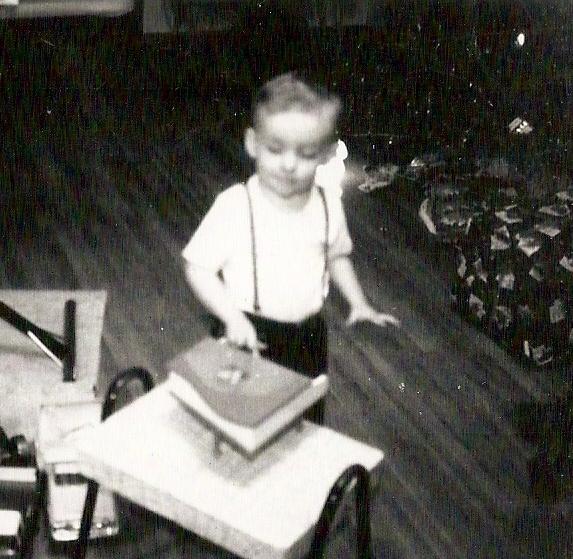
Three-year-old me at Christmas with my toy piano.

I am, indeed, one of those people who think there is a song from a musical for every situation. Some people consider this a stereotypical gay thing, but I know way more gay people who never liked theatre (musical or otherwise) than do (and there are plenty of straight people writing, performing, or buying tickets to Broadway musicals and the like). Oh, yes, there are arguments made about the kind of misfit who is drawn to the exaggerated and colorful worlds portrayed in musical theatre, and that’s why there are enough queer people into it to create the stereotype. But I think there’s more than a little bit of a chicken-and-egg aspect to that.

Regardless, I have a lot of musical soundtracks in my music collection, along with orchestral scores for my favorite movies and TV shows. And I have been known to surf to TuneFind.com while watching something when a particularly good piece of music is used to accompany a scene in one of my favorite shows, so I can buy a copy of the song for myself. And I’ve blogged before about how I create playlists specifically for certain writing projects.

I’ve had more than one friend comment, upon seeing the list of songs in one of my play lists, “How can you write while listening to songs with lyrics?” First, if a song has wound up in one of my playlists, it’s usually a song I’m already familiar enough with that I don’t have to pay attention to the lyrics to parse the meaning of the song. Even with very voice-forward songs, while I’m writing I’m not processing the music as words, but as mood music.

Second, if a song is fairly new to me—I heard it for the first time, liked it a lot, bought it, and added it to my current writing playlist—I may pause while writing the next time it comes up. Far more likely, I will have heard the song a few more times before I’m next writing because I listen to the playlists at least as often when I’m not writing as when I am. While riding the bus to work, while working at my desk at my day job, while walking in the evening before heading home I’ll be listening to the current writing playlist, in part to get my subconscious working on the story while I’m dong these other things. I’m more likely to be in the mood to be productive on a personal writing project after a long workday if I’ve been listening to a playlist that I associate with the personal writing..

I need to make a small digression about my longer bus commute. I have tried several times to write on this bus route as I used to back on the Route D—the ride’s longer; I should be able to get more writing done! Unfortunately, the other difference is that the physical road seems to have a lot more potholes and irregularities. It’s really annoying, because the bouncing and dipping is pretty much constant. So there I am, holding my phone in my hand with one of my writing apps up but we’re constantly bouncing, so my thumbs keep hitting the wrong part of the screen. I get half a word typed and then get five incorrect letters in a cluster because of a particularly bad bounce, so I try to delete and there’s a bunch of smaller bounces and half my attempts to tap the backspace hit another key near it instead.

I can read (though sometimes that’s a little difficult). I can take notes. But when I’m writing, once my head is in the scene want to just get out this sentence and on to the next and the next. But I can’t get the flow going because of the dang bouncing. I tried to ignore the wrong letters and keep going one time, but I spent way more time correcting the gibberish once I got home and transferred it to the laptop that I realized bus writing is just not possible for most of the Route E.

Which has made the writing playlists take on a new importance. Since it is very difficult to write on the new bus route, what I do instead is listen to the current project’s playlist while either re-reading recently written scenes or going through my notes on the project.

One reason I have writing playlists is because music conveys emotion. It doesn’t just convey emotion, it generates emotion. When we hear a song we know well, it may remind us about a particular event, or a person, or just a time in our lives. And it doesn’t always have to be because we are remembering that song happening to accompany a particular memory. Sometimes a song that was written long after a particular event in your life manages, somehow, to evoke your memory of the experience.

Another reason I have writing playlists is going to sound strange to some. Dialog is, in my opinion, the heart of most stories. Dialog conveys information, and illustrates relationships of the people talking, and gives you a sense of the personalities of each speaker. A good dialog is like music. It isn’t just about the literal or contextual meaning of the words, but also the rhythm. Some phrases flow easily from one’s mouth, whereas badly written dialog will tie your tongue in a knot if you try to read it aloud. For me, listening to music while I write helps me find rhythms. The dialog just works better if I have a good set of songs going.

And another reason that I have writing lists is, I don’t like to write in silence. I can write in silence. But it’s difficult, sometimes. Maybe it’s because during my childhood, when I first started writing (I literally decided that I wanted to be a writer when I grew up at the age of six, and was regularly pounding out page after page of stories on my mom’s Easter Pink Smith-Corono Silent Super typewriter by the age of ten) there was alway a lot of noise. Other people in the house doing things of their own. Dad watching a ballgame in the living room, while my sister was playing in her room and Mom was doing something in the sewing room. And there were often neighbors outside making noise.

“Jazz Hands!” - ICanHasCheezeburger.Com
“Jazz Hands!”

And for a lot of those years I would be back in my room, with the door closed, tapping away on those keys with the radio playing as I tried to learn the magic of dialog that sounded like real people, and scenes that moved the story along. Sometimes, an especially good song would come up and I might have to stop typing to sing along. And yes, sometimes I got up and danced around my room as I did so. But when the song ended, I’d go back to the typewriter. Giddy with the joy of the dancing, and feeling renewed determination for my hero to save the day.

Songs never mean the same thing to other people. So sharing my playlists probably doesn’t help any of my friends write. Though I have had one or two of them say that they were glad I introduced them to a particular song or artist when I share a list. And I know I have found great new songs when other people share their own lists. But while it may be futile to expect that one of my playlists will effect you the way they do me, I’m going to share four songs from my current novel editing playlist. The full playlist is nearly 60 songs. These aren’t a representative sample, but they are particular favorites. Three of these songs I associate with a specific character in my fictional universe–evoking a particular aspect of their personality, or even expression something that character believes are feels. One of them describes the past relationship between a pair of characters.

Enjoy!

Darling Lili– Whistling Away The Dark (HD) – JULIE ANDREWS :

(If embedding doesn’t work, click here.)

Mame – Bosom Buddies – Angela Lansbury and Bea Arthur:

(If embedding doesn’t work, click here.)

Bad Influence – P!nk (Music Video):

(If embedding doesn’t work, click here.)

Shrek 2 – Holding Out For a Hero – Jennifer Saunders:

(If embedding doesn’t work, click here.)

Storytelling should not be preaching, part 3

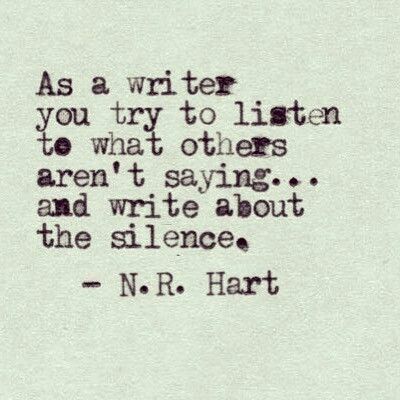
“As a writer you try to listen to what others aren't saying... and write about the silence.” —N.R. Hart
“As a writer you try to listen to what others aren’t saying… and write about the silence.” —N.R. Hart

A few months back James Palmer posted A Message About Message Fiction that hit several of the points that I have tried making before about writing, including the notion that from one perspective, all fiction is message fiction. Which isn’t to say that every story is meant to convey an ideology or convince the reader to accept a particular thesis. Writers, just like all other people, perceive the world via minds that have been molded by a lifetime of experiences; they craft narratives in frameworks built from their beliefs, memories, hopes, fears, and a plethora of thoughts and ideas encountered throughout their lifetime.

A story cannot exist without such a framework.

But seeing the world through the writer’s eyes is not—or should not be—the same as being indoctrinated with an ideology. I’ve seen many people try to make the distinction between message fiction and fiction which happens to have a message. I never found their arguments persuasive, coming to the conclusion that they were talking about a difference without a distinction. I thought I was through talking about this, but then a friend asked a question about metaphors and how you craft them. At the time, I was too busy explaining that that isn’t how my process works (I never plan a metaphor on purpose; other people have to point them out to me in my story afterward) to notice that while he was talking about metaphors, he also expressed the desire to craft a story that didn’t beat a notion over the reader’s head, but rather left them thinking about things afterward. It didn’t leap out to me until I was re-reading our text exchange later, while looking for a link he’d sent me earlier.

That seemed like an important distinction: preachy message fictions delivers an answer, whereas good stories raise questions.

Yes, the way the author poses the question may tilt toward a particular answer, but that isn’t the same thing as insisting on that answer.

I’m a little embarrassed that this particular means of drawing a distinction didn’t occur to me before, because my own writing process has always been about looking for answers to questions. Sometimes the question is, who are these two characters jabbering away in the back of my head? but it’s always a question. If the seventh son of a seventh son is fated to have great luck, what about the seventh daughter of a seventh daughter (or seventh son of seventh daughter, or seventh daughter of a seventh son)? What if a dragon sought redemption? What if a prophet/seer was always right–and she insists that freewill is real? What if a god retires? What if the foretold apocalypse literally can not be averted?

I start with questions like that and then write to try to find an answer. That’s my process, I really am writing to try to find out how the story ends. In longer stories, there is usually a point long before I reach the end where I realize what the ending will be, and then I spend time figuring out how I get from what I have to the end, but I almost never know how a story will end when I start it.

Just because that’s the way I work, I am not saying that that’s the way everyone else ought to write stories. A friend of mine who is also one of my favorite writers usually can’t start a story until he knows the ending. He spends a lot of time thinking about the situation until he figures out how everything will go. That process works for him and creates great tales. But when we’ve talked about his process, he doesn’t talk about metaphors or messages: he talks about actions and consequences, and whether the reader will enjoy the ride. So even then, the focus isn’t on trying to convince the reader to agree with something.

While working on earlier drafts of this blog post, I went back and re-read a lot of the articles and blog posts about message fiction that I had read when wrestling with this question previously. When I examined the specific examples cited in each one, I found that most of those articles that tried to draw a distinction between message fiction and fiction with a message really were just constructing rationalizations to commend messages they agreed with and condemn the messages with which they disagreed. So my earlier conclusion, that it was a difference without a distinction was completely wrong. There was a distinction, but it wasn’t being explicitly (or honestly) delineated.

Some of my favorite stories (whether novels, short stories, or movies) have been tales that blew my mind by making me see something I had never seen before. They made me question my own assumptions. And the ones that did that didn’t just push forward an agenda, they problematized assumptions. What I mean is, they took a set of assumptions—whether the author’s or those held by a significant proportion of society—and examined problematic implications of said assumptions. They created a situation where I could see more than one side of the issue; in other words, they made more than own perspective on the problem appear reasonable.

In other words, they are stories where, at some point in the process, the author was exploring. Which is, in my not-so-humble opinion, an essential part of art. Message fiction doesn’t explore, it dictates. And that isn’t art, at all.


For another take on some of the topics covered here, but not from the viewpoint of a sci fi fan, you might find this informative: The Sci-Fi Roots of the Far Right—From ‘Lucifer’s Hammer’ to Newt’s Moon Base to Donald’s Wall

Jingling, plotting, wrapping, rushing…

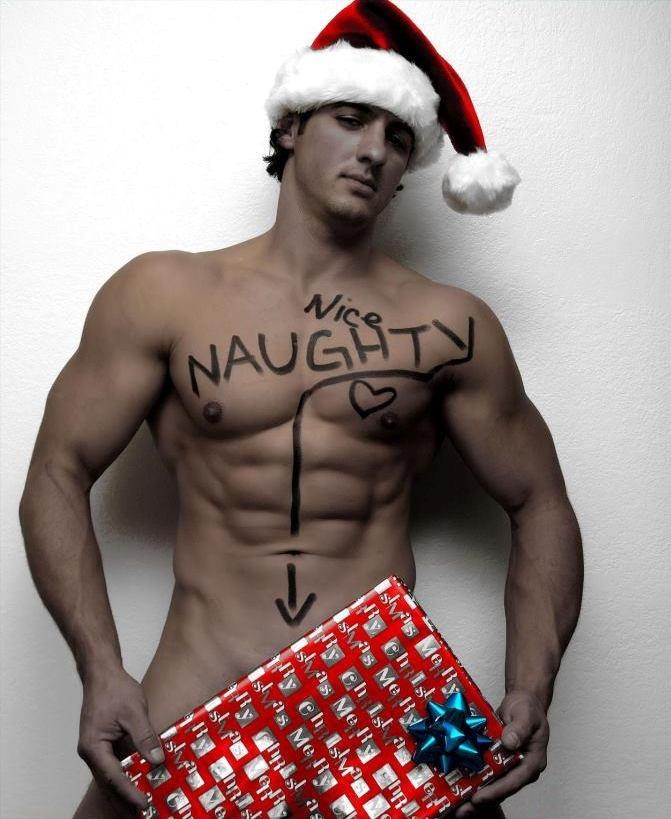
Nearly naked guy in Santa hat holds present. The words Nice and Naughty are written across his chest.
Nice or Naughty?

I’d really wanted to spend more of this month blogging about either fun holiday things or writing. Serious topics keep dominating, and while some of them have at least been holiday-related, it hasn’t exactly been Ho! Ho! Ho! time on this blog. That isn’t because I’m only thinking dark thinky thoughts, or even that I’ve been in a bad mood. Honestly, it’s mostly because I’m trying to get this year’s Christmas Ghost Story finished, as well as get everything else ready for the party, and finish Christmas shopping all while dealing with more than a few long days at work.

Which, admittedly, isn’t very different from any of the last 20-some Decembers.

This year’s Christmas Ghost Story had what I thought was a very straightforward plot. And it hasn’t been the plot that has been giving me trouble. But I keep writing dialog and then futzing with it because it’s wrong…

Why December is always bad in this way is because none of my usual methods of powering through a clogged story work. All of them are based on the philosophy that no matter how bad the first draft is, you can fix it in re-write. The Christmas Ghost Story is something that I will read to the attendees of our annual holiday party this Saturday. So I have to revise and fix as I go. At least, that’s how it feels.

Intellectually, I know that if I had just powered through and forced myself to write to the end two weekends ago, I would have had all this time to go through it and fix things. But that seldom works. I’m going to keep futzing until sometime Friday when the overwhelming knowled that I have to finish this now pushes me through to the end.

One thing that’s different this year than from previous: I didn’t make a new Ghost Story Playlist as the end of November. I know, I know, as if I need another playlist. I have so many (literally thousands).

I also haven’t been listening to as much of my usual Christmas music. Please note that I didn’t say as much Christmas music as usual, but rather as much OF my usual. Among my playlists are a bunch of holiday music lists that are usually my go-tos if I don’t have a craving to listen to a specific album. Playlists with names such as, A Caroling Caroling, A Class-ic Xmas, A Dame & Diva Christmas, Xmas Oddments, A Gay Yuletide, A Jazzy Christmas, A Quirk-y Christmas, A Silly Christmas, Last Bells for the Christmas Parade…

The problem when one has a Christmas collection as big as mine, is that it is easy to just listen to a few hundred favorites each year and ignore the 4500+ (I am not exaggerating) others. So, several years ago I made a Smart Playlist: all the songs tagged either Christmas or Holiday, and they have not been played in at least two years. I would listen to that list on shuffle for a while–usually only three or four days– and then start listening to other lists or specific albums most of the time. I would go back to the Smart List every now and then, usually when I couldn’t decide what I wanted to listen to.

The beauty of this list is that it shrinks as you listen to it. Once a song has played, it drops out of the list, because its Last Played Date is now, right? When I fired up the list a few days before the end of November, I was happy to see that it only had about 1600 songs–about a third of the collection. So I did a better job listening to a wider variety of my library that last couple of season, because usually it’s closer to half the collection. I started listening to the list, as usual, but instead of only listening to it for a few days, it was the primary source of my listening for nearly two weeks. Yeah, from time to time I’ve decided to listen to a specific album, but it wasn’t until this week that I started choosing some of my usual go-to lists. The upshot of all this is that the smart list only has a bit over 600 songs left in it. And that’s kind of amazing.

I’ve also been plugging away at wrapping presents. I got most of the presents for the relatives I was hand-delivering to finished before I drove down to Mom’s last Friday, and now I have about two-thirds of the presents for other people we’re giving stuff to, finished.

Just before Thanksgiving my husband found a 4-roll pack at Costco in which (as he described it when he texted me at the time) “all purple or penguins.” And since on the roll of cartoon penguins, some of the penguins have purple scarves, all of the wrap is purple. And it’s really good paper. Now I understand why I have heard people talk about the Costco paper (we didn’t get any of the reversible rolls). The paper is heavy enough to be sturdy, and it has the grid printed on the back so even I can cut nearly straight lines.

Now this is the first year in a long time that we needed to buy new paper. Not that not needing paper stopped us before! But we both had this bad habit of buying cute wrapping paper when we saw it in stores, and winding up with more gift wrap than we wound up using. So our stash of wrapping paper kept growing and growing. During the move, I looked at the stash (only half of it would fit in the special plastic wrap-storage thingie that my late husband bought 22-23 years ago) and realized that there were still some rolls in my collection that were also 22-23 years old. One of them was a particular design that Ray had gushed about when he bought, and for all the years since he died, I only used any paper off of it a few times–specifically when wrapping a present for his mother. Other years I will pull it out, think about how much Ray liked it and then decide not to use it because then I wouldn’t have it any more.

This is, by the way, extreme packrat pathology. I recognize it.

But it gets worse!

The other roll that had been hung onto that long was a design that I thought was really ugly–but Ray had bought it and thought it was beautiful and therefore while I never wanted to use it, I also wouldn’t get rid of it.

Which is packrat sociopathy or something!

I decided the storage container was aiding and abetting our worst packrat tendencies. It’s also kind of difficult to store, because all of this parts are rounded, and it has handles that stick out awkwardly, and the lid for the section where you’re supposed to store tape would pop open if you sneezed near it. So the storage thing and every roll of wrapping paper (and bags of bows and so forth) were all taken to Value Village.

The hope is that maybe we’ll be less likely to hang onto excess wrapping paper now that we’ve learned our lesson. Wish us luck!

I need to get back to my story…

Tea and books and maintaining an even keel

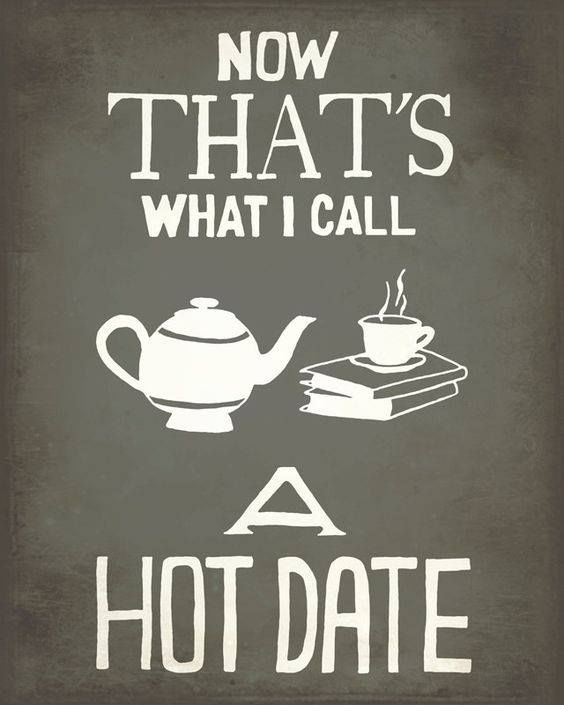
A picture of a teapot, a steaming teacup and a pile of books: “Now that's what I call a hot date!”
“Now that’s what I call a hot date!”

There is something very relaxing about making a cup of tea, then sitting down with a book (or my Kindle or the iBook app on my iPad) and reading. It was especially nice to do that out on the veranda when the weather was warmer. I still go out there with a mug of tea, but I wind up drinking the tea faster because it’s getting cold (and I’m chilled). So I come back inside once the tea is done. Besides, now that we get frequent visitors to the bird feeder, I feel guilty being out there and scaring the little guys off.

I do sometimes sit in front of the window and watch them. Which means I don’t always get much reading done. But it’s all good.

It has only been a few weeks since I changed the format of my Friday round up of links, and I have to say that the much shorter list has made Thursday night feel much more relaxing. I wish that I had been self-aware to realize that the old long form version was such a stressful chore, but that’s okay.

I’ve mentioned that I began questioning how much effort was going into the process because the number of people reading the round up had gone way down. What I didn’t mention was the timeline. If I look at the stats on my blog, I can point to a very specific time when the readership dropped: the first Friday after the Inauguration. They didn’t drop all the way to the recent lows right away, but the drop off was noticeable.

Now, long before then, the round up had always included a stories about unpleasant topics. And I dare say the ratio of bad news to good news was about the same. But I totally understand how exhausting it is to be reminded about this bad stuff since there is now so much of it, and it’s hurting everyone, and it feels as if there’s nothing we can do about.

So, that’s another motive for the change: I don’t want to contribute to other people’s sense of exhaustion or hopelessness, and I don’t need to wear myself out, either.

This doesn’t mean I’m not still reading as much news as before. Nor does it mean that I’ll stop calling my congresscritters and adding my voice to the throng. I’m just not spending as much time aggregating the news for other people.

There are other habits I’m trying to get into to try to limit how often I’m having to think about unpleasant topics. That’s part of the reason there is a lot less activity from me on Twitter, for instance. I still find reading my friends, acquaintances, et al on Twitter useful, I’m just limiting how much time I spend on it.

I’m behind on my writing goals (NaNoWriMo notwithstanding; there are things that I meant to have done before November that I didn’t get done). But there’s a lot of stuff going on, and I just have to accept that some of my energy is going to go into other things. And some of those other things are about taking care of myself and my husband.

Like curling up with a good book and a nice warm cup of tea.

One of those things we’re doing this week specifically along that line is we are not going to drive down to see family for Thanksgiving. I don’t need the stress of the drive each way. Neither of us needs the stress of constantly biting our tongues around my Trump-voting, Bible-thumping relatives. It will do wonders for the blood pressures of several of my relatives, too, truth be told.

Which means that instead of figuring out what dishes I can make in advance and transport down there, we’re doing a whole dinner! So far it’s just the two of us; which will be fine. And since I love talking about food, here’s our current menu:

  • Relish tray (many many olives, pickles, pickled carrots, pickled green beans, pickled asparagus so far…)
  • Turkey (my hubby found a 10-pound one, so not too big!)
  • Stuffing
  • Green bean casserole
  • Creamy sweet potatoes
  • Gravy
  • Sweet potato pie

There will likely be other things added before we’re done.

Also, the official cocktail of our holiday will be a Spicy Manhattan. Based on the recipe suggested at Central Market, this weekend, but after trying it, I have to change it so:

2 oz of your favorite bourbon or rye
1.5 oz of sweet vermouth
Several dashes of orange bitters
Tillen Farms Fire & Spice Organic Maraschino Cherries

Chill your glasses. In a cocktail shaker with ice, mix the vermouth and bourbon, stir at least 45 seconds. Shake a generous number of dashes of bitters into the cocktail glass, strain the contents of the shaker into the glass (turn the glass while he do so to mix the bitters better). Garnish with two of the spicy cherries.

Cheers! And happy holidays!

(Also, feel free to leave your menu or your favorite holiday food in the comments!)

You’re a storyteller, so tell me a story…

A while back I posted about why I dislike large expository dumps in fiction (Trust the reader to keep up). I still stand by what I wrote there, but thanks to a great essay by Cecilia Tan, Let Me Tell You, I realize that advice like that feeds into a misperception that all exposition is inherently bad. At best, it ignores the fact that there is a big difference between expository dumps and quality exposition. I’ve linked to Tan’s essay before, and it is well worth the read, but the crux of her argument is here:

These are the do’s and don’ts of MFA programs everywhere. They rely on a shared pool of knowledge and cultural assumptions so that the words left unsaid are powerfully communicated. I am not saying this is not a worthwhile experience as reader or writer, but I am saying anointing it the pinnacle of “craft” leaves out any voice, genre, or experience that falls outside the status quo. The inverse is also true, then: writing about any experience that is “foreign” to that body of shared knowledge is too often deemed less worthy because to make it understandable to the mainstream takes a lot of explanation. Which we’ve been taught is bad writing!

“Thanks to ‘show don’t tell’ I find writers in my workshops who think exposition is wicked. They’re afraid to describe the world they’re invented.” –Ursula K Le Guin
Tan is hardly the first person to point out that the cliched advice to ‘show, don’t tell‘ is problematic: Why “Show, Don’t Tell” Is the Great Lie of Writing Workshops or 5 REASONS ‘SHOW DON’T TELL’ IS BAD ADVICE. But the easiest way to see that it is at best an oversimplification is simply to remember that writers are story tellers. You can’t tell a story without, well, telling some things.

From the point of view of teaching people how to write, ‘show don’t tell’ is part of an entire tool kit which is used for gatekeeping. See, if you do not understand enough of the cultural touchstones being alluded to (but not actually told about) in the so-called literary novels, you can’t understand the novel. In other words, the less that your upbringing resembled a white, male, cis het, upper middle class childbood, the less likely that those novels will be understood by you, and therefore less likely they will appeal to you. And if you admit that you didn’t like them and didn’t understand them, that is used by some people to label you as unsophisticated, unintelligent, and tasteless. You can get past those gatekeepers if you don’t fall into all of those categories (there are a number of works by gay male authors, for instance, that are routinely accepted into the category because those authors understood the culture and learned all the tricks), but the entire toolkit of the literary elite created a situation where you must learn the secret codes in order to understand the stories.

Several science fiction and fantasy authors have pointed out that it is impossible to tell a good sf/f tale following the ‘show don’t tell’ stricture because in order to put the reader into a world that differs from ours, you have to at least occasionally tell the reader some things.

But you don’t have to do that by placing large chunks of your world-building as a lecture or debate about history that goes on for pages and pages. You certainly don’t have to make your viewpoint character an outsider who doesn’t know anything about this world, so has to constantly have things explained to them by others. You can explain things without slowing down the plot. You can tell the reader about the setting in small sips. You can do that in context along the way.

Trust the reader to understand, yes, but trust the story, too. You’re a story teller, so tell your story.

NaNoWriMo 2017: there will be sentences, so many sentences…

And so it begins!
I was really bad this year and didn’t even start the new Scrivener project file for NaNoWriMo until nearly 11:30. Yes, once again I am participating in National Novel Writing Month. If you aren’t familiar, I’ve written about it a few times, most recently here. If past NaNo’s are any indication, I will be blogging a bit less all month because of all the writing on the novel. If you’ve never done it, there is still time to jump in and give it a try. And if you’re already doing it, feel free to add me as a writing buddy.

Let’s tell some stories!

The Night Was Sultry, part 5 — closing the circle, openings and endings

“The night was <del>humid, moist, hot, foggy</del> <u>sultry</u>”
“The night was humid, moist, hot, foggy sultry” (click to embiggen)
The title of this series of blog posts comes from a running gag in the movie, Throw Momma from the Train, which begins with the protagonist fighting with the opening line of his novel. He goes through many variants: “The night is hot.” “The night is moist.” “The night was humid.” “The night was foggy.” “The night was hot and moist.” Et cetera, et cetera, et cetera, as the King of Siam might say…

The frustration about the opening line is a symptom of the character’s internal conflicts, but as the story goes on and the external conflicts snowball into ever more ridiculous issues (not to mention the very real issue that the protagonist becomes wanted for the suspicious disappearance of his ex-wife), the opening line becomes a symbol of all the conflicts, internal and external. And so, when the possibly senile Momma interrupts the main character while talking about the word choices (while they are fleeing the police on a train to Mexico), to tell him the word he’s been looking for is “sultry” it forces the crisis point of the plot.

What I love about that surprise (besides being funny) is that it doesn’t just come out of left field. It had been established earlier in the movie—more than once—that Momma is a crossword enthusiast. One of her son’s daily routines is to fold the newspaper to the crossword and lay it out for her with a cup of tea. We see it several times. The son mentions “Momma’s crossword” at least once in the dialogue.

It was foreshadowed.

But subtly. And because of what happens next (and the epiphany that follows from it) we see that the opening where the character struggled to find just one word eventually leads to the character finding his voice again.

So the opening led to the ending.

I don’t know the process that Stu Silver (the screen writer of Throw Momma from the Train) went through to produce this specific script, and movie making is a different kind of storytelling than prose writing, but we can take some educated guesses. First, I wouldn’t be at all surprised if originally the movie started with a very different opening. It is quite possible that the discussion about opening lines was originally something written in the middle of the story, and it was only when the writer was trying to come up with a reason for the protagonist to snap that the whole “Sultry! The word you’re looking for is sultry!” came up.

I’m guessing this because most first drafts don’t begin with the same opening that will ultimately be used in the final draft. Quite often we don’t know how the thing ought to begin until we’ve finished the first draft and we’re looking at the ending. Which is why my first rule I mentioned in the first post in this series was: Don’t get hung up on the first line. Just get the story going, knowing that anything can be fixed in rewrite. Once you have finished the first draft, if you’re happy with the overall shape of the tale, then figuring out the beginning is a matter of looking at the ending and how the character got there, and figuring out which kind of beginning works best with the tale, and try writing several.

If you aren’t happy with the overall shape, ask yourself why. And if you can’t write down specific problems, if all you’ve got is “I don’t like it” or “It doesn’t work,” then there may be nothing wrong with the basic structure of the story, just that you’re feeling doubt. But to be certain, remember to do each of the following:

  1. Read it aloud in a room by yourself. All sorts of problems in stories become crystal clear when we do this.
  2. Show the story to someone you trust to give you honest feedback. If they say the story isn’t working, they’re probably right. But remember that when a reader tells specifically what is wrong and how to fix it, they’re usually wrong. If they say they lost interest at a particularly point, yes, by all means, try to figure out what you did wrong there, but take the reader’s reaction as a general observation of overall soundness, not for detailed diagnosis.
  3. If your current draft has an Into Pot, Already Boiling beginning, try rewriting it as an Opening Statement to the Jury, and then as a Calm Before the Storm. Neither of those may be a better beginning, but comparing them may give you a clue as to what you need to fix elsewhere before the story structure is sound.
  4. Confirm that you have an emotional hook and have given the reader a reason to sympathize with the character.

If after all of that you still think the beginning is wrong, go pick up a favorite book that you know really well. Read the first two pages of this other person’s book. What kind of beginning is it? Write your own, using one of the other types. Do this a few more times until you’ve managed to create three alternate beginnings for this other person’s novel that you believe might work to hook the reader. Now go back and re-read your story. Having made yourself write several openings for another story, you should have some fresh insight into openings. If anything comes to mind now, give it a go.

Finally, it is vitally important to remember this: there is no such thing as a perfect opening line. But there are hundreds if not thousands of good enough opening lines. There are slightly fewer good, maybe great opening lines. It won’t be the end of the world if you wind up putting a story out there into the world with a good enough opening line. And chances are, after you’ve done all this work, your opening might be closer to greatness than merely good.

And you should never feel ashamed of writing that is “merely” good.

Writer’s write: don’t let perfection be the enemy of the good

“If the pen fits, write it.”
Sometimes my posts grow out of a personal rant in response to something I read elsewhere, such as this one disagreeing with someone’s definition of what constitutes a writer. The definition I gave of a writer that time was someone who writes, specifically someone who tells stories in the form of sentences strung together into a narrative. And while I made a distinction between the act of writing background information and the like rather than the actual sentences comprising the story, I was focusing on the act of writing, and not talking about quality or merit. Which isn’t to say that quality isn’t an issue in writing. Anyone creating art of any kind hopes that what they create is good, right?

All too often, that wish for the artwork to be good becomes the greatest obstacle to finish the story. It’s like the proverb, “Don’t let perfect be the enemy of good.” It is easy to fall into the trap of rewriting and revising a story (or a single scene) again and again because it isn’t perfect. We may scrap what we’ve written already altogether and start over from scratch because we don’t think it’s good enough. We may refuse to ever show our work to anyone because we don’t think it’s good enough.

If you are caught in that kind of a cycle, it isn’t easy to get out. As frustrating as it is to be in that situation, let me tell you it is at least as frustrating for your friends and loved ones to watch you spin in circles. I don’t have a magic solution, but I have a suggestion. You need to let it go. Show the imperfect draft to someone you trust. Think of it as tearing a bandaid off all at once, so the pain is over quickly. If you can survive showing it to someone, that should tell you you can survive moving forward.

It’s okay if the person you show it to doesn’t like it. But it is even more important to make yourself believe this: it’s also okay if they like it. Don’t listen to the voices in your head telling you that they are just saying it to be nice—listen to this person (who you chose to show it to because you respect and trust them, right?) who is telling you they like it.

And if you’re having trouble believing someone who tells you they like something you wrote or drew or made, think about this: when you don’t believe them, you aren’t being self-deprecating, you are insulting them. You’re saying that your friend has poor taste or is too unsophisticated to judge quality.

Maybe one of the ways I’ve lucked out in life is that I never had people who told me everything I made was wonderful. My mom has absolutely no problem telling me which parts of my published works she wishes I had done differently, for example. Back when my nice Grandma was alive, she similarly had no trouble saying, “I don’t understand it, and didn’t really like it, but if you’re happy…” And don’t get me started on my evil grandmother!

Which gets me to the other part: if people don’t like it, that doesn’t mean it is awful. It may mean the story (or painting or whatever) simply isn’t for them. I think every author that I have ever said I loved, has written at least one book or short story that left me cold. I absolutely adore many other things they’ve made, but for one reason or another that one either put me off, or bounced me out, and left me unsatisfied. And that’s okay. It doesn’t mean that book or story was bad. It just means that story wasn’t for me.

Let go of the doubt. Let go of the fear. Rip off that band aid and let the art speak for itself. Don’t apologize. Don’t tell people it isn’t very good. And don’t reject any compliments you may get.

If you decide to shelve it after showing it to someone, fine. As long as you move on to the next story. Because a writer writes… and keeps writing!