Monthly Archives: August 2016

Skillful Men of the Medical and Chirurgical Profession – more of why I love sf/f

Nathaniel Hawthorne wrote The Scarlet Letter in 1850.
Occasionally I find myself in the position of having to defend labeling some books or movies or television shows as being part of the science fiction/fantasy genre. For instance, a few years ago, during the early seasons of Person of Interest, someone said I shouldn’t call it sf because it was just an action adventure with a computer. But the Machine (which is the only name they ever give it) isn’t a computer, it is an artificial intelligent program that runs on many machines and is able to correlation data from many feeds and accurately predict people who are going to be victims or perpetrators of serious crime. That’s science fiction. Particularly when it is discovered the Machine has found ways to bypass some limits imposed on it by it’s designers, and even arranges to have a new cluster of computers set up in a new location and transmits itself there, and then has its old location dismantled so that people who know about it can’t destroy it—well that’s exhibiting freewill and more! (Things get really interesting in later seasons when a second, less benevolent AI is introduced)

Similarly, I’ve seen people argue that The Green Glass Sea by Ellen Klages isn’t really science fiction because it’s a historical novel set in 1943 telling a coming-of-age story of an 11-year-old girl growing up in Los Alamos where her father works on the secret project to build an atomic bomb. Whereas I think the nerdiness of a girl in the 1940s who is building her own radio from parts salvaged at the junk yard, combined with the way the novel explores how the government’s pursuit of this new technological advantage uproots children and disrupts their lives (exploring how new technologies impact society and people in nonmaterial ways has long been a significant part of sf), more than qualifies it.

But the granddaddy of all sf/f novels that people don’t realize is science fiction has got to be Nathaniel Hawthorne’s The Scarlet Letter.

I can hear you protesting, “But the Scarlet Letter is a Gothic morality tale about Puritan scandal and consequences and forgiveness set in the Massachusetts Bay Colony that they made us read in school. It can’t possibly be science fiction!” That just means you aren’t looking at it from the perspective on 1850, when it was written. Your argument that it isn’t sci fi is similar to someone saying, “Twenty-Thousand Leagues Under the Sea isn’t sci fi because supermarines are real!” Submarines didn’t exist when Verne wrote his story of Captain Nemo and his fantastic undersea ship powered by a mysterious electric force.

Similarly, in the Scarlet Letter the character of Chillingsworth (who is secretly the long lost husband of poor Hester Prynne who is saddled with the shame of having had a baby born too long after the presumed death of her husband to be legitimate) is a great example of a science fictional mad scientist. His methods of subtle torture as he secretly experiments on Reverent Dimmesdale (while pretending to be trying to cure his illness) was very science fictional. There are no herbs known that will “corrupt the soul” as the text colorfully describes it. Certainly nothing that would force a man’s greatest fears and secrets to manifest as physical scars that spell out his greatest sins on his flesh!

When described that way, people think of Chillingsworth’s “dark medicine” as some kind of magic, like B-movie depictions of voodoo or the like (complete with colonial cultural misappropriation, but I’ll get to that). But when Hawthorne wrote it, he meant it as what we would today call science fiction. He and many other educated people at the time believed that the sorts of effects he described could be accomplished by the proper application of chemistry and biology, we just didn’t know how, yet!

Just as many scholars refer to Mary Shelley as the either the mother or grandmother of science fiction (never forget: the author of Frankenstein was a teen-age girl who wrote a story which invented sci fi on a dare in 1818), they also sometimes refer to Hawthorne as the grandfather of sci fi. Hawthorne’s more obviously sci fi type stories, such as “Rappacinni’s Daughter,” “The Artist of the Beautiful,” or “Dr Heidegger’s Experiment” usually featured a mad scientist type character, rushing in to the dark corners of the universe where angels and sensible people hesitate to tread. But his more famous bits of gothic tragedy also have these elements. The House of Seven Gables has a hypnotist and posits a notion of inherited sin—that committing particularly heinous acts will warp you in ways that will somehow be passed on to your children. If science had known of the mechanism of DNA at the time when Hawthorne wrote, he surely would have had some learnéd person in the narrative talk about the theory of corrupted chromosomes, for instance.

Which brings us back to The Scarlet Letter, and the medical experiments that Chillingsworth secretly subjects Dimmesdale to as part of a plan to exact revenge on the man.

The Scarlet Letter was unusual in Hawthorne’s time for feature a female protagonist. And even more, for portraying the fallen woman as a sympathetic character, more worthy of the reader’s love and respect than any of those who stand judgment over her (and her child). Especially more worthy that her long missing husband, who instead of proclaiming his identity upon returning, forgiving his wife Hester for doing what she had to do to survive while he was off studying herbs and potions with vaguely described Native Americans, and raising Pearl as his own child, embarked on a truly mad plan to exact revenge on the father of Hester’s child.

I saw movie adaptations of The Scarlet Letter before I read the book. A copy of the book was part of a set of classics that a relative had given me for a Christmas present, but I didn’t try to read it until after watching one of the movies on TV. When I did, I found a lot of the contents had been glossed over in the movie. The movie made Chillingsworth’s actions seem more like just some slow acting poison, whereas the book made it clear Chillingsworth was doing something far more subtle and medically revolutionary.

Meanwhile, Hester refused to give in to the public shaming, but to sew her own scarlet letter A on her clothing and support herself by sewing. She also tends to the sick and destitute in the community, so much so that many begin to say that the A she wears doesn’t stand for Adulterer, but Angel and Able. That was a revolutionary idea: that a woman could take her destiny in her own hands and assert her independence. It was radical in 1850 when Hawthorne wrote it, and it would have been even more revolutionary in the mid-seventeenth century when the action of the novel is set.

The Scarlet Letter painted a portrait of how someone shunned and ostracized by their community–even someone condemned by the religious leaders–could be a noble and good person, contributing to society and ultimately rising above the false morality of that community. That was an important lesson for this queer kid growing up among Baptists and rednecks.
Don’t waste the reader’s time: avoiding the one-way street

“It is a little out of touch to presume that someone wants to follow your every observation and insight over the course of hundreds of pages without any sort of payoff. That's why writing isn't a one-way street. You have to give something back: an interesting plot, a surprise, a laugh, a moment of tenderness, a mystery for the reader to put together.” — Christopher Bollen
Christopher Bollen explains that writing isn’t a one-way street (click to embiggen)
There was a lot of talk on social media this week because a group of jerks harassed the writer of an episode of a television show about said episode until the writer deleted their social media accounts. And it was harassment, not critique. You can be unhappy with a story, you can dislike it, you can even tell other people you don’t like it; but that doesn’t mean you can make ad hominem attacks on the writer, threaten the writer and their family, hurl bigoted slurs, and so forth.

Similarly, you can be unhappy with a story because you feel the story is reinforcing sexist, or homophobic, or racist, or ableist myths. You can call out the problem when a story pushes that agenda. You can express your disappointment. You can organize a boycott. But again, pointing out problems in a narrative should not turn into harassment of the people involved.

In this case it was actually two hordes of idiots harassing the writer. One group were angry because they thought the writer was pushing a relationship between two characters they didn’t want together. The other group were angry because the relationship wasn’t going where it had “clearly” been implied it was going.

Readers aren’t the only ones who can be jerks. Writers can disrespect their audience; they can make mistakes, abuse the reader’s trust, they can cheat and exploit their audience. Which isn’t to say that the writer owes any reader or group of readers a specific outcome, or a particular plot resolution. But as writers we must always remember Niven’s Law for Writers: It is a sin to waste the reader’s time.

In the simplest sense that means that as writers we owe the reader our best professional effort. We tell the story as best we can. No story and no draft will ever be perfect, so we can’t get hung up on revising until it is, but we don’t turn in a half-assed effort.

I want to make a brief digression here. Most of my fiction writing and publishing has been in small press and amateur publications. Occasionally, when as an editor I have given writers aspiring to those publications feedback and requests for re-writes, a writer has pushed back. “You can’t hold me to professional standards, I’m not getting paid!” I didn’t quibble over the fact that technically, because we were giving them free copies of the publication if we used their story it meant they were getting paid, instead I said, “I’m publishing to professional readers. They pay for the privilege of reading my zine. And even though what they pay barely covers the costs of printing, and doesn’t provide any monetary compensation to you, or me, or the copy editors, or the layout specialist, the reader is still paying.” Of course they didn’t have to make re-writes if they didn’t want to. But if they didn’t, I wasn’t going to publish the story, because I wasn’t going to ask my readers to spend their time or money on a story I didn’t think was ready.

To get back to what we mean when we say it is a sin to waste the reader’s time, in a deeper sense that means playing fair. If there are mysteries for the reader to try to solve, you can’t withhold information. Obscure it amongst a bunch of other description? Sure. Distract the reader by dangling a red herring in the same scene? Also perfectly reasonable, but you can’t simply not show the reader vital information.

Also, don’t spring surprises on the reader merely for the sake of shock. It’s easy to think that surprises and shocks and twists are the only way to create suspense, but that’s wrong. Suspense happens when the reader cares about your character. If you create characters the reader identifies with and cares about, you can create suspense out of anything that the character cares about. You create that caring by treating the reader with respect and showing the reader the hearts of your characters.

Don’t lead the reader down a painful emotional path without giving them a pay-off. If you make the reader care about the protagonist and then allow the reader to see a horrible thing happen to the protagonist, don’t skip past the messy emotional fallout. You don’t have to show blood and gore—often graphic descriptions of violence are more boring than engaging—but show us how the bad thing affected the characters. Let the reader experience their sorrow or anger or triumph. Don’t skip that to get to the next plot twist.

When you tell a story, you are asking the reader to give you their time and attention. Make sure that the journey your tale takes them on is worth it.

“It is a little out of touch to presume that someone wants to follow your every observation and insight over the course of hundreds of pages without any sort of payoff. That’s why writing isn’t a one-way street. You have to give something back: an interesting plot, a surprise, a laugh, a moment of tenderness, a mystery for the reader to put together.” — Christopher Bollen

Bullied Bullies: Shifting blame and whipping up the troops

“Another dark ploy is that narcissists contact your relatives, in-laws, friends and anyone who will listen to broadcast blatant lies about your character. This doesn’t happen in all instances but it is remarkable the lengths these malicious individuals exceed to trash you, put you at fault and lead others to believe that you are “crazy”; you need immediate psychiatric help; you have always been unstable, etc. ” Linda Martinez-Lewi, Ph.D. Narcissistic Personality Clinical Expert
“Another dark ploy is that narcissists contact your relatives, in-laws, friends and anyone who will listen to broadcast blatant lies about your character. This doesn’t happen in all instances but it is remarkable the lengths these malicious individuals exceed to trash you, put you at fault and lead others to believe that you are “crazy”; you need immediate psychiatric help; you have always been unstable, etc. ” Linda Martinez-Lewi, Ph.D. Narcissistic Personality Clinical Expert (click to embiggen)
I friend recently asked me, “What is going on with Trump?” He was specifically being exasperated that no matter what crazy thing that man says, there were still people supporting him. One answer is to look at the roots of middle-class fear and anxieties, and particularly the way that moneyed interests have (for more than two centuries) pitted various groups of the poor against each other, usually on racial and religious divides. But another way to understand Trump, his success, his reactions to adversity, and so forth, is to look at abusive men in general, and understand how they operate.

Having been raised by a physically and verbally abusive man, myself—and having been victimized by other abusers throughout my childhood and teens—I have a little bit of insight. Among the common tactics of abusers—particularly narcissistic abusers—are scapegoating and gaslighting.

When scapegoating, they blame other people for their own failures, no matter how improbable it is for the named person to have done that thing:

When gaslighting, they try to convince everyone that their victim is crazy, or the actual abuser, or is otherwise mentally or morally deficient. This is often combined with projection—accusing their victim of having motives that are actually the abuser’s:

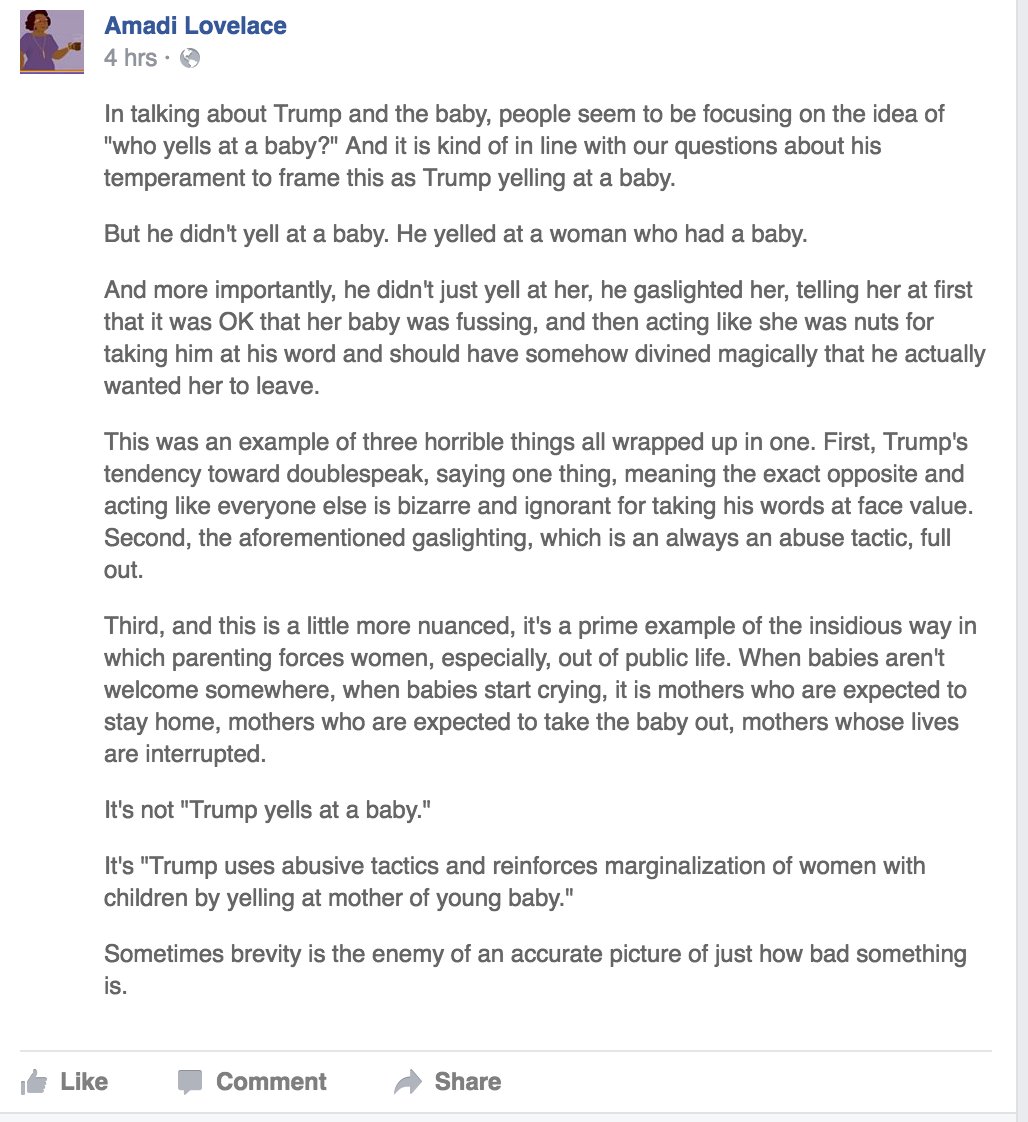
Unpacking the baby incident (click to embiggen)
One of the best examples of these two tactics together was the incident that was widely reported, at the time, of Trump yelling at a baby. Someone had brought a baby to one of his rallies, and the child started crying loudly. First Trump said that it’s okay, he likes babies and could keep talking. Then, as the baby would not quiet down, he became irritated and explained that he had only been kidding when he said it was okay. He told the crowd that she must be crazy to think it was okay to be there with a crying baby. How could she not realize that she needed to leave as soon as the baby began making noise, he asked, when made some of the crowd laugh. Of course it’s the mother’s fault for taking him at his word and not somehow divining that he meant the opposite of what he said. Of course it is the mother’s fault for not controlling the baby or immediately leaving when the baby became a problem. And of course it is the mother’s fault for even thinking that she could participate in democracy or public life in any way while she had a baby.

As Amadi Lovelace sums it up in the screenshot: “Trump uses abusive tactics and reinforces marginalization of women with children by yelling at mother with baby.”

At this point you might be saying, “Fine, Gene, you’ve made a good case that Trump is not just a narcissist and a liar, but that he is specifically an abusive narcissist. But how does that explain the people who support him?” That’s simple: abusers are extremely good at manipulation and are especially good at finding people who are ripe for manipulation. The reason an abuser can get away with outrageous blame shifting in the face of overwhelming evidence to the contrary is because there are always people looking to hurl some blame around, themselves.

It’s like all those messages of condolence that I received from certain relatives a few months back when my abusive father died. One person said, “I remember when your parents found out they were going to have a baby, how excited he was and how much he was looking forward to being a father. He loved your mother so much. He was so happy the day you were born! I hope that you can focus on memories of those good times, before the troubles began. Don’t dwell on the bad times.” It’s subtle, but the clear implication is that it’s my fault that I don’t feel love and admiration for my father, because I focus on the bad times. But look at the most ridiculous part of that argument: it’s wrong of me to even think about his bad behavior which was going on for as long as I can remember instead of remembering his alleged good and loving actions which occurred before I was born. (Also, the first time my father beat me badly enough I had to be taken to an emergency room, I was four years old; so the bad times were well underway by then; how much of your life to you remember–really remember–before the age of four?)

To be clear, most of the relatives who made comments like this, are the same ones who during previous discussions of my dad’s issues, always pointed to an incident that happened to him about three months before I was born as the beginning of “the troubles.” It’s hard to get more ridiculous than blaming a person for not remembering things that happened before they were born. They don’t see that contradiction because reality doesn’t match their narrative that he was a good man who simply made some mistakes. Admitting that he was a bad father especially during the years I and my siblings were young and most vulnerable would mean admitting that they didn’t do anything to protect us.

People aren’t rational. They will ignore facts that contradict their chosen narrative. Trump’s appeals repel a lot of people who recognize the falsehoods and inconsistencies of his statements. But the exact some statements appeal to people who want to buy into parts of his narrative. Whether that narrative is that immigrants from south of the border are the cause of the stagnation of middle class earnings, or that muslims are the cause of every mass shooting, or that thug culture is to blame for the perceived (but fictional) increase in violent crimes, and so on. People who are afraid for their future and are angry at their perceived loss of privilege are looking for someone to blame. Even more, they are looking for someone who will assure them that there is someone else to blame. They are looking for someone to tell them that they aren’t wrong to hate people who have different skin colors, or different religions, et cetera.

Trump gives them that. He gives them targets for the anxieties and fear. He fans the flames of that fear into outrage and tells them that it is all right to blame other people. He tells them it is all right to resort to violence (“I’ll pay your legal fees” or “the second amendment people could stop her”). He tells them that anyone who disagrees is crazy, sleazy, immoral, and the enemy.

Abusers are good at finding victims. But they’re also good at finding others willing to hate those victims. And that’s what is “going on” with support of Trump.

Weekend Update 8/13/2016: Bigotry comes in many forms

“There are worse things in the world than a boy who likes to kiss other boys.”
“There are worse things in the world than a boy who likes to kiss other boys.” (click to embiggen)
We’re another step closer to seeing the end of the so-called National Organization for Marriage. Over the last two days alone, Brian Brown, the current head of this anti-gay organization, has sent out follow-up emails to the organization’s usual begs for donations lamenting the lack of response. Except lamenting isn’t quite the right word: Brian Brown To Supporters: Thanks For Nothing, Losers.

Thursday’s email from Brown began with calling his donors pathetic: “We’re only 17% toward our goal of receiving 1,500 membership contributions of at least $35. That is pathetic.” And when that tactic failed to get the desired response, he followed up by called his donors quitters: “I really don’t believe — I just can’t imagine the thought — that NOM’s members have quit fighting for God’s institution of marriage. And yet, only 256 of you have responded with an urgently needed membership contribution during this critical period.”

Three years ago I wrote about how the organization was going in the red and only surviving by taking “loans” of several millions of dollars from a related religious education non-profit: In the hole, still digging. The money from the religious non-profit was raised under rules that forbid it being used for political advocacy purposes, which means that an outright transfer is illegal. However, as long as they call them loans they can. I wish that the IRS would investigate them over this, but we all know they won’t.

Not only are donations drying up, but they’ve been getting ever more pathetic turn-out for their March for Marriage events in Washington, DC, in 2014, then 2015, and earlier this year. I agree with Joe Jervis, who predicts that NOM will merge with the equally anti-gay World Congress Of Families, which just so happens to have hired Brian Brown as their new president. He’ll continue peddling hate, just mostly in countries where the message finds more sympathy.

Not that there aren’t still haters right here in America: Trump and Rubio Attend Florida Rally That Mocks LGBT Pain. Not only did they attend this anti-gay hatefest, but they did it two months to the day after the Orlanda gay nightclub massacre. Classy. Trump comes under fire for anti-lgbt conference Trump, of course, keeps claiming that he’s going to be great for gay rights. He also keeps promising evangelicals that he’ll appoint supreme court judges that will overturn marriage equality. Trump also wants the repeal the law that forbids religious non-profits from endorsing candidate: ORLANDO: Trump Tells Hate Group Meeting That Winning Presidency Will Get Him Into Heaven [VIDEO].

Of course, not all homophobia is as obvious and frothing as the people at NOM or the Liberty Council or similar organizations: Daily Beast’s Olympic Grindr Story Slammed as ‘Dangerous,’ ‘Homophobic’. I realize NBC is trying to appear unbiased, but they should have revised that headline to “Daily Beast’s Homophobic Olympic Grindr Story Slammed as ‘Dangerous’.” If you don’t understand why the Daily Beast’s story in which a straight editor created a fake profile on a gay hook-up app and tricked a bunch of Olympic athletes (many of them from countries where they can be put to death just for being accused of being gay) into meeting is inherently homophobic, read this: Grindr is not a gay sex peep show for straight people: If our dating rituals are weird to you it’s because you denied us the luxury of normality in public for so long. I could go on about it, but over at Slate openly gay Olympic athlete Amini Fonua said it best: Do you realize how many people’s lives you just ruined without any good reason but clickbait journalism?

And let’s not forget the self-loathing gay people who enable their own (and our) oppression: LGBT Rights Opponent Newt Gingrich To Address Log Cabin Republicans.

Fortunately, hate is a losing strategy. Love trumps hate. Let’s end this on a happy note and remember that love wins: These beautiful portraits of LGBT couples embracing will melt your heart.

Friday Links (otterly happy edition)

image (1)It’s Friday! Already the second in August. Wow! Work has been more chaotic than usual. My usual metaphor is juggling chainsaws, and this week the yanked about six of the 12 chainsaws I was juggling away and tossed in a dozen to replace them. I remain more than completely book for the next many months.

I did more reading this week and not much writing, again. That needs to change.

Anyway, here are links to some of the interesting things I read on the web this week, sorted into various topic areas.

Links of the Week

Slightly More Than 100 Exceptional Works of Journalism. I think only two of these links have been in a previous Friday Links… these are all extremely interesting!

America Votes with Cards Against Humanity. “Why can’t I buy a pack for Gary Johnson or Jill Stein? Just skip the middleman and vote for Trump.

Happy News!

Accidental Censorship Of Olympic Divers Makes Them All Look Like Porn Stars.

This week in evil people

This Daily Beast Grindr Stunt Is Sleazy, Dangerous, and Wildly Unethical.

News for queers and our allies:

Young Americans overwhelmingly favor LGBT rights.

‘No differences’ between children of same-sex and opposite-sex parents.

Eight People of Color Discuss the Challenges of Navigating Queer Spaces.

‘I’ll Go To My Grave With This’: Why Bi Men Still Fear Coming Out.

Science!

Albino Otter Proves to Be as Adorable as You’d Hope.

Stardust trapped deep within the ocean reveals a 2.6-million-year-old mystery.

The centre of our galaxy has an enormous void that surprisingly lacks young stars.

Breaking relativity: Celestial signals defy Einstein.

Mystery object in weird orbit beyond Neptune cannot be explained.

Cassini finds flooded canyons on Titan.

A cluster of hot stars shines blue in this new telescope photo.

Humans may have taken different path into Americas than thought.

The Seven Skeletons of Lydia Pyne: The local science historian debuts her new book about famous fossil hominids.

SeaWorld Returns Salty The Sea Turtle To The Ocean, Will They Do The Same Thing To Pregnant Orca’s Upcoming Calf?

Science Fiction, Fantasy and Speculation!

Neil Gaiman on Why We Read and What Books Do for the Human Experience.

5 Massive Space Operas to Read Between Marathon Sessions of No Man’s Sky.

This week in Writing

Stop the Goodreads bullies … stopped? In case you need some context, here’s a link from an earlier Friday Links: Bullying & Goodreads.

What SFWA Authors Need to Know about Archiving Their Literary Papers.

EVENTUALLY, YOU’LL CARE LESS (AND THAT’S A GOOD THING!).

This Week in Tech

Help! I’m getting emails meant for someone who has the same name as me.

Haters Gonna Hate — but They Better Stop Doing It on Twitter, or They Will Kill It.

This Week in Design

Top 10 least-loved emojis.

Milton Glaser Rated Every Olympics Logo Ever. This Was His Favorite.

This week in Health

Stephen Fry on Coping with Depression: It’s Raining, But the Sun Will Come Out Again.

This Week in Diversity

THE FIRESIDE FICTION REPORT: A READER/CRITIC’S PERSPECTIVE.

FX CEO John Landgraf on the ‘Racially Biased’ System and Taking Major Steps to Change His Network’s Director Rosters.

Goodbye to ‘Honeys’ in Court, by Vote of American Bar Association: new ethics rule forbids comments or actions that single out someone on the basis of race, religion, sex, disability and other factors.

The Problem with Female Protagonists.

University of California Davis is suggesting students say ‘y’all’ to avoid offending people.

committing to diversity when you’re white: a primer.

This Week in Police Problems

DeRay Mckesson Sues Louisiana Police for “Unconstitutional” Arrest.

VINDICATION FOR BALTIMORE POLICE CRITICS — BUT NO ACTION. “To Baltimore’s black residents, the findings were hardly news.”

This week in Topics Most People Can’t Be Rational About

BlackRock Targeted by Gay Activists for Investing in Firearms.

Culture war news:

Judge Refuses to Lift Injunction on Law Protecting Clerks Who Decline to Issue ‘Gay Marriage’ Licenses.

Iran executes gay teenager in violation of international law.

Yo, Texas: Protecting Transgender Rights Is Not Dangerous, but Discrimination Is.

DEA Ignores Science, Refuses To Loosen Restrictions On Marijuana.

Gun Extremists Have Been Coming After Women for Years — & We Aren’t Scared.

This Daily Beast Grindr Stunt Is Sleazy, Dangerous, and Wildly Unethical.

Gay couple lose legal battle for equal pension rights.

LGBTQ Rights Groups Ask Big 12 Not To Include BYU Over Discriminatory Policies.

Victim’s Father Gets Life in Prison for Brutal Murder of Houston Lesbian Couple in 2014.

Daily Mail thinks Olympic divers should celebrate wins with a ‘manly pat on the back’.

Lesbian, gay, and bisexual high school students are significantly more likely to be the victims of physical and sexual violence and bullying than other adolescents.

President of Anti-Gay Organization To Supporters: You People Are Pathetic.

Donald Trump is Dragging Evangelical Christians Into His Gutter.

Surprise! Ark Encounter Isn’t Providing the Economic Boost Local Communities Were Expecting.

This week in rape culture

What Happens When the Democratic National Convention Doesn’t Have a Sexual Assault Policy.

This Week Regarding the Lying Liars:

Text analysis of Trump’s tweets confirms he writes only the (angrier) Android half.

Donald Trump hints at assassination of Hillary Clinton by gun rights supporters.

From Trump’s controversial words, a pattern: Outrage, headlines and then denial.

NRA circles the wagons around Trump.

Trump’s Wink Wink to ‘Second Amendment People’.

There’s a Name for Trump’s Violent Incitement Against Hillary: Stochastic Terrorism.

Trump’s long dalliance with violent rhetoric.

This week in Politics:

What do we know about the independence of think tank research that we didn’t a week ago?

Who will win South Carolina?

Majority Of North Carolinians Say Anti-LGBT Bill HB2 Is Harming The State.

ORLANDO: DNC Denounces Trump And Rubio For Headlining Today’s Anti-LGBT Hate Group Convention.

Why Progressives Are Celebrating Hillary Clinton’s Populist Economic Speech.

SCOTUS: Senate Democrats Will Try To Force A Vote.

This Week in Racism

Christian Website Wrongly Removes Article About How to Handle a Black Man Marrying Into the Family.

Things I wrote:

Weekend Update 8/6/2016: Pulse shooting still a gut punch.

By request: Some citations.

Nostalgic Regret and Convenient Amnesia.

Nothing wrong with a flawed hero….

Lost Friends in the Dreamlands – more of why I love sf/f.

Videos!

Stephen Colbert Takes on Donald Trump’s Very, Very Bad Week:

(If embedding doesn’t work, click here.)

Unlimited Courage :

(If embedding doesn’t work, click here.)

Belle and Sebastian – Olympic Village, 6AM:

(If embedding doesn’t work, click here.)

Alabama Shakes – Don’t Wanna Fight (Live on SNL):

(If embedding doesn’t work, click here.)

Rogue One: A Star Wars Story Trailer (Official):

(If embedding doesn’t work, click here.)

Lost Friends in the Dreamlands – more of why I love sf/f

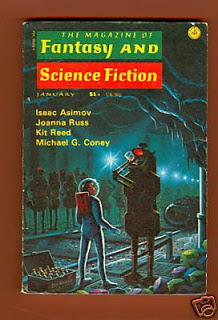
My Boat by Joanna Russ was published in Fantasy And Science Fiction Magazine, January 1976, cover by David Hardy.
“My Boat” by Joanna Russ was published in Fantasy And Science Fiction Magazine, January 1976, cover by David Hardy. (click to embiggen)
By January of 1976, I was midway through my freshman year in high school, living in a tiny town in northwestern Colorado. My parents had been separated for a few months and their divorce was underway. My physically and verbally abusive father wasn’t living with us any more, which was a plus, but everything from our finances to our daily routines were far less certain and predictable. I had had a big break-up of my own that no one knew about—because we were both extremely closeted boys in a very redneck town so of course we had been keeping it a secret. And another boy who had been one of my most consistent bullies throughout middle-school had recently coerced me into an even more covert non-consensual relationship. So to say my life at the time was a bit of a nightmare would not be inaccurate.

I still had a subscription to The Magazine of Fantasy and Science Fiction, thanks to my grandparents, and each time a new issue arrived in the mail, I would retreat to my room with it and stay up way past my bedtime devouring every page. These were the circumstances under which I first read the short story, “My Boat” by Joanna Russ… Continue reading Lost Friends in the Dreamlands – more of why I love sf/f

Nothing wrong with a flawed hero…

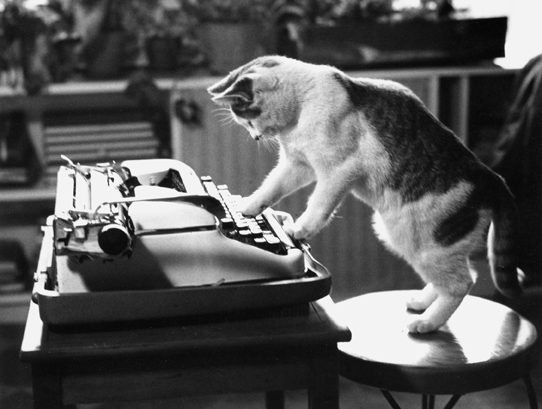
Cat with a manual typewriter.I’ve had several partially drafted blog posts about protagonists and heroes and characters I love reading/watching and characters I love to hate and characters that disappoint and how my feelings as a writer are sometimes different than my reactions as a reader. Which I never seem to be able to finish.

One reason I have trouble finishing any of them is that in many ways it’s one great big nuanced topic in my head, which is impossible to condense into a thousands words, but is just as difficult to break up into meaningful sub-parts without wanting to cross-reference all the other sub-parts. And while the crazy info architect inside me thinks it would be awesome to compose a dozen blog posts each with a dozen footnotes and cross-references to the other, the practical side of me knows that way lies madness.

And then Watts Martin quoted Glen Weldon from NPR’s Pop Culture Happy Hour podcast, and this quote covers one of the big concepts in my nuanced ball in far less than a thousand words:

“We tell ourselves we embrace the antihero because we think it’s more sophisticated. We recognize that the world isn’t black and white, and that moral ambiguity and ambivalence is ‘more real.’ We tell ourselves that, and we’re awfully smug about it, but the real reason we’re doing that—that we embrace the antihero—is because we just don’t have the guts to embrace the hero. We’re too cowardly, we’re too cynical to believe in heroes. We distrust ideals because they’re too hopeful and sincere. If we believed in the heroes that embodied them, it means we’d actually have to risk something, put ourselves out there, be hopeful and sincere and look hokey and uncool. The default reflexive cynicism risks nothing.”
—Glen Weldon

Weldon is talking about anti-heroes, which is a protagonist with the opposite of the usual attributes of a hero (idealism, courage, selflessness), but that doesn’t mean that there are only two types of protagonist possible: hero and anti-hero. An anti-hero is different than an imperfect person being heroic. People rationalize the reflexive cynicism Weldon describes by pointing out that no one is perfect, therefore heroes don’t exist. While it is true that no one is perfect, a person doesn’t have to be absolutely perfect in order to be good.

As a reader, I love rooting for a character who isn’t perfect but is trying to do the right thing, any way. Dan Savage likes to say that a successful relationship is a myth two people build together. You each pretend that the other person is their best self—that best-foot-forward version of yourself you presented on your first date. As time goes on, you each try to do a better job of being that better self. It’s not simply a matter of overlooking imperfections, there is also a process of real change, of transforming yourself into someone who deserves the love of the person you love.

That isn’t just true of romantic relationship. A successful friendship is a similar jointly-created myth. And yes, a good relationship between a reader and a beloved character has some elements of that as well.

As a writer, I want readers to identify with my characters. I want them to root for the characters when the characters struggle. I want them to be disappointed when a character makes a mistake. But just as in real life when a good friend disappoints us, I want my reader to still cheer the character on when the character struggles to make amends. I want my character to be that kind of a hero: an imperfect person striving to be their better self.

It’s sincere and it’s hokey and it’s uncool, yes. But that doesn’t make it unrealistic.

Nostalgic Regret and Convenient Amnesia

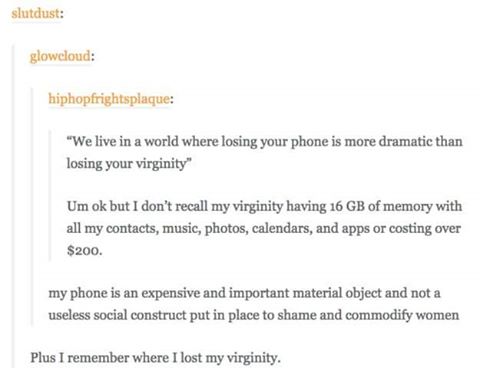
"We live in a world where losing your phone is more dramatic than losing your virginity" ... "My phone is an expensive and important material object and not a useless social construct put in place to shame and commodify women" (Click to embiggen)
“We live in a world where losing your phone is more dramatic than losing your virginity” … “My phone is an expensive and important material object and not a useless social construct put in place to shame and commodify women” (Click to embiggen)
Several years ago I listened to a Stephen Fry podcast in which he talked about one of the dangers of being a columnist/ essayist/ person who writes a lot: something he called The Milkman’s Cheery Whistle. It was how, after writing for a very long time, one might find oneself short of ideas with a deadline looming, and resort to writing a musing on some thing you remember fondly which is no longer around—a nostalgic regret. For example, a lament that early mornings in residential neighborhoods no longer include the sounds of a milkman cheerfully delivering dairy products to the front doors of customers. Isn’t it sad that everyone, including the author, buys their milk at a local supermarket by simply walking in and buying it when needed, rather than getting that personal touch of a horde of people employed to get up at ungodly hours in the morning and drive around neighborhoods leaving orders in little insulated boxes on your doorstep?

One of the reasons this is a danger is not just because it represents lazy writing and lazy thinking, but because it encourages regressive thinking in the readers. Focusing on the loss of the Milkman’s Cheery Whistle ignores the reasons things have changed. It’s more efficient and cost effective (and safer) to deliver perishable food in quantity to central distribution sites (stores), for instance. Focusing on such nostalgic regret also ignores the less cheerful truths about the past. Nostalgic regret is ultimately about ignorance.

The good old days weren’t simpler, and they certainly weren’t inherently better. For example, throughout most of history child abuse was not only legal, but condoned and even encouraged. In the U.S. it wasn’t until 1962 that the first law requiring health professionals to report suspicions of child abuse was passed in any state, and it wasn’t until the mid-70s that such laws were common. As one of my teachers told me, when he contacted me decades later feeling a need to apologize: a teacher was more likely to lose their job and become completely unemployable for reporting his or her suspicions than any parent was to suffer consequences in child abuse cases.

Nostalgic regret is sometimes about absolving oneself of any guilt from having benefited from societal systems of discrimination. For example, take people claiming now that no one was talking about racism “back in the day.” What they actually mean is that the law and society at large condoned and encouraged racism which benefited some at the expense of others. Laws required “colored people” to use separate drinking fountains, restrooms, and public schools. Lynchings weren’t mysterious events committed only by Klansmen in hoods—in the 1930s white Americans were still proudly posing for newspaper photographers beside the bodies of lynched African Americans, and not just in the south! Most people don’t realize that the NAACP was still campaigning to get anti-lynching laws passed in the 1950s.

So of course, if you were a white person living in the 40s or 50s, no black person would say anything about racism within your hearing. They didn’t want to be the next “uppity” person of color to be executed by a mob!

Nostalgic regret is also about a particular kind of need to feel superior to others. In the screenshot I’ve included at the top of this post, for instance, someone tried to make yet another comment about how kids these days are focused on trivial things instead of something the commenter thinks is more important. In this case, worrying about smart phones instead of protecting one’s virginity. Except what is virginity? It’s a social construct—an ill-defined line in the sand primarily used to define woman as property and prizes belonging to men. An arbitrary distinction purporting to measure innocence. A social contrivance to artificially define natural desires and natural acts as a set of magical experiences which are evil if they occur outside certain prescribed circumstances designed to shore up the hegemony of straight men, or a sacred revelation if they are performed within those prescribed boundaries.

I’ve been told that this isn’t merely an artificial distinction. But certain married men argue that just getting blowjobs isn’t sex (and by implications, isn’t cheating on any vows of fidelity they may have made to their spouse). Certain men who claim to be straight argue that all sorts of sex acts committed with other men aren’t actually sex, because if those acts were, then the men would have to admit they maybe they aren’t straight. And I have heard all sorts of sexual acts emphatically described as not “real sex” by those guys, believe me!

If we’re going to talk about virginity at all, we can call it what it actually is: inexperience. Far more rational to understand that a single action can’t take you from being an innocent person to a “man of the world” or whatever. Far more important than shaming people about a natural biological and social activity (don’t get me started on all the scientific proof that sex in humans and certain other species serves many useful and important other purposes besides reproduction), would be to teach people the importance of treating one another with respect, of setting boundaries about people who don’t treat you with respect, and how to deal with the emotional rollercoaster of relationships.

And as far as worrying about your smart phone: well, they are expensive pieces of equipment (and when they seem not to be expensive, that’s usually just a shell game for the even more expensive contract a phone company has gotten you locked in to), not toys. They are portable computers which usually contain a lot of valuable information—information which could be misused by unscrupulous people for many nefarious purposes. In modern society, they are a necessary tool to keeping one’s life, health, and employment intact. They are valuable in many ways, and often not just to the owner, but to people in the owner’s life. Not worrying about a lost phone would be a pretty irresponsible act.

And yes, may well have far more impact on someone than a single act of inexperienced intimate contact with someone probably nearly as inexperienced.

Perspective—fully-informed perspective and consent—is far more important than nostalgic regret.

By request: Some citations

On Saturday evening, while waiting to get seated for a thoroughly hilarious movie, I retweeted something about one of the presidential candidates. A friend replied that what I’d retweeted was B.S. I tried to figure out how to respond without coming across as dismissive or snarky. And I was not in a position to easily pull up links to back it up. And twitter isn’t a good place to try to have such conversations.

The friends asked me to send the links later. So the sole purpose of this post is to collect several links, most of which have already been posted on this blog. If you don’t want to read any more of my opinions on a particular presidential candidate, don’t click through on the Read More link below. Instead, may I suggest a happy link instead: This High School Cross-Country Team Takes Lonely Shelter Dogs On Their Morning Runs. That’s much more fun, no?

If you do want to read some citations supporting some things I’ve previously blogged about, click:
Continue reading By request: Some citations

Weekend Update 8/6/2016: Pulse shooting still a gut punch

d790a0602a60bb6dc97326d6fe8334a0They’ve begun releasing autopsy reports of the victims of the Pulse nightclub massacre in Orlando: Most Pulse victims shot multiple times, first autopsies show. It was nearly two months ago, on June 12, that the killer snuck a gun into a busy gay night club on Latino night and opened fire, killing 49 people and wounding many others. In that time we’ve had Republican politicians express false sympathy, then days later vote down gay rights protections. We’ve had people try to claim that the act wasn’t an anti-gay crime. We’ve had people gin up evidence (which has been thoroughly debunked) that the killer was secretly gay himself. We’ve had people and politicians try to claim the killer was part of an organized Islamic terrorist organization, and that has been thoroughly debunked as well.

And a lot of people have moved on.

Some of us can’t. As I wrote before, one reason it’s so difficult for me is because my whole life I’ve lived with the fear and knowledge that there are people who hate queers enough to attack me and kill me, but I haven’t often had to think of the hatred of me being a danger to those around me. The killer’s own father said that his son had become disproportionately angry about seeing two men kissing in public over a week before the incident. Others who knew the killer have talked about his increasingly angry outbursts about gay people. Seeing two men kiss made him go kill 49 people in a busy gay nightclub during Pride month.

It’s one thing to know that bigots hate me enough to kill me. It’s another to realize some hate me enough to commit a massacre.

And it’s upsetting to know that some people who claim to be friends, and relatives who have said they love me, are completely incapable of understanding that this killer’s actions are a symptom of society’s messed up attitudes about queer people and about guns. And that’s what people are saying when they claim this is just one lone nut. Or that this isn’t really about queer people. Or that there is nothing society can do that will make these events less likely to happen. So, yeah, it’s upsetting to be told to my face that someone else’s right to sell assault weapons to a person with a history of domestic violence (despite even a majority of NRA members expressing the opinion that people convicted of such crimes shouldn’t be able to legally purchase guns) is more important than protecting the lives of people like me.

One of the other things we don’t think about in our haste to move on after an event like this is just how long the aftermath is. It’s been nearly two months, and they’re still working on the autopsies. The reports just now released are only the first part of the analysis. Experts won’t be able to begin to do a thorough incident analysis until all of the rest of the autopsy reports are complete, and then the work of coordinating those with all the other evidence and reports begins of trying to understand what happened in there.

And there’s so much more. A lot of money has been raised to help the survivors and victims. And the hard work of figuring out how to distribute the money is just beginning: Pulse survivors seek answers from $23 million OneOrlando Fund. And it isn’t going to be easy: The Costs Of The Pulse Nightclub Shooting.

People are still trying to decide what to do about the location itself: Mayor and owner want to turn Orlando nightclub Pulse into a memorial for the 49 killed.

There is uplifting news related to this. Some of the more severely wounded survivors are getting better: Pulse victim dances for first time after being shot multiple times. Seriously, go watch the two videos. They will do your soul good.

And please, don’t forget the people who died: Read about the victims.