Monthly Archives: January 2017

Writing Concoctions: scenes, chapters, and other artifices

http://www.gdefon.com/download/kitten_computer_keyboard/465238/1920x1280
If only I were this adorable when using my Mac.
In the last two weeks I’ve noticed several writers either writing new posts about how they decide where to end a chapter, or re-posting a link to an older blog post where they’ve already talked about that. From which I infer that someone somewhere asked about how writers decide where to end chapters and they’re all responding to it. I originally started this post quite a while back, and never got around to finishing it. Seems like now would be a good time to pick it back up!

Whether you write your story in order or more free form, there is usually some form of modularity within the story. A very short story may consist of a single scene, but longer stories are usually broken up into multiple scenes, groups of which may be gathered into chapters (or acts), and so on.

These modules of narrative provide a means of packaging bits of your story into digestible chunks. How you structure them controls the rhythm of the story, providing a sense of movement through time and or space.

And they can be tricky.

Unfortunately, the way I do a lot of my own writing is intuitive, now. I’ve been writing fiction since grade school, and I started reading articles in magazines such as The Writer and Writer’s Digest also during grade school, so I’ve internalized a lot of processes to an extent that I do them without a lot of conscious thought. My honest first answer to the question, “How do you decide where a chapter ends?” is, “It ends when you get to the end.”

So let’s start with some definitions. These aren’t necessarily authoritative definitions. You’ll find a lot of writers with similar but still different definitions of these things.

A scene is a building block of the story. You can think of it as a single brick in a wall, or the next pearl on a necklace. A scene usually happens at a single location and for a short, continuous period of time. Every scene in your story should fulfill a purpose. Ideally they should serve several purposes. The sorts of purposes scenes can serve are:

  • Advance the plot
  • Introduce a new character, theme, or problem
  • Create suspense
  • Establish or develop the setting, a character, or a problem
  • Provide information the reader will need later to understand the action
  • Foreshadow coming events
  • Create atmosphere

These aren’t the only purposes scenes can fulfill. It can be argued that some of the purposes I have listed are subsets of others. Creating atmosphere could be thought of as a specific type of establishing the setting and problems facing the characters in it. I’ve seen other lists of possible purposes for scenes include as separate items things with which, to me, are simply subsets of the ones above. For instance, a lot of people list building sympathy or antipathy for a character as a separate purpose, whereas I think of that as just one type of establishing or developing the character. But those are quibbling details.

The important thing to remember is: a scene shouldn’t be in your story if it doesn’t serve one of the purposes for furthering the story.

I like to write scenes from a particular viewpoint character. Most of my stories are written in third-person subjective. That means I look at the scene from a particular character’s perspective. I’ll tell you what that person sees, hears, and feels, but without getting into the head of any of the other characters in that scene. So that means that if I need to get into another character’s head, I need to have a separate scene for the character.

So you can think of a scene as a single incident in the chain of your story. For instance, “When the lieutenant asked the maid about the abbey,” or “When the young noble spoke to his imprisoned mother,” or “When the princess argued with her husband about a family visit.”

A chapter is harder to define. Chapters are, largely, the result of tradition, rather than having a clearly defined purpose in a story. The usual explanation is that chapters were invented when scrolls were replaced by books. A single bound book would contain stories, records, or other information that had been in a scroll. The pages which represented a single scroll would be demarked as a chapter. During the 19th century, when many novels were serialized in magazines before being gathered into a book (if at all), chapters were often the monthly or weekly installment of the story. So, one answer to why books have chapters is because people expect books to have chapters. They don’t always, of course. Terry Pratchett’s Discworld books, for instance, seldom have chapters. There are breaks between scenes, but no marked chapters.

If a book has chapters, one of the purposes they fill is to break the story into bite-sized chunks. They can provide breaking points where your reader knows she can set the story down and come back easily. Of course, one of the secrets of an enthralling book is chapter endings that entice the reader to keep going, so you don’t want the break to feel like a finale.

Chapters can help organize the story in ways other than “this happened, then this, then this…” If your characters aren’t all in the same place, you can use a chapter to gather all of the scenes which happen at the same (or nearly the same) time but with different characters. Or you can gather a bunch of scenes which have some thematic parallels (though if they are happening at very different times, you may have to take extra pains to communicate to the reader when each scene occurs).

I like to think of chapters as episodes in a serial story. If my book were a television show, for instance, with each season having an overarching plot, each chapter would represent a single episode of the series. So each scene is an incident, then each chapter is a collection of related incidents.

For me, a chapter needs to convey something that feels like a satisfying episode. Which doesn’t necessarily mean it tells a complete story, but when the reader reaches the end of a chapter, it should feel as if they have completely an important step in the journey, with a clear feeling that there is more journey ahead.

People often, therefore, recommend ending chapters on cliffhangers. And I agree with the sentiment, but dislike the terminology. Don’t get me wrong, I end plenty of chapters on cliffhangers. But the term cliffhanger is often interpreted to mean that one or more of your characters are in physical peril, and not everyone’s story has a lot of moments where characters finds themselves looking down the barrel of an unexpected gun. Cliffhanger can be any form of unresolved character tension. If one of your characters is being question by the police, most of the scene can be revealing the character’s personality while revealing various details about the situation, and a perfectly acceptable cliffhanger is for the interrogator to reveal a piece of damning evidence that ties the character to the scene of a crime. Even better if the character thought they were being questioned about a robbery, and the revelation is that there is also a dead body at the scene–you’ve raised the stakes to murder! Any situation that makes the reader asked, “Oh, no! How’s he/she going to deal with this?” can be your chapter ending.

You don’t have to end the chapter at each moment that evokes that curiosity, of course. Sometimes I have a bunch of cliffhangers within a single chapter. In a fantasy novel I’m working on right now, there’s a battle in which a dragon and her ally (a witch) attack a carriage carrying three monks and a runaway prince. I depict the battle in a number of scenes, each from the point of view of a different person involved in the battle. Each scene in the story ends at a moment where the viewpoint character has just tried to do something, or finds themself confronted with something unexpected. Then I move to a different character and show what’s happening from that viewpoint. You can do this with the other sorts of cliffhangers, too. If your chapter is a collection of scenes happening at nearly the same to characters who are in different locations, you might end each scene with that character making a discovery or realization that gives them pause.

I tend to be a seat of my pants writer in so far as I seldom write up a formal outline until I’m in a revision stage. But I usually have an idea when I start a new chapter which incidents I want the cover next. I also tend to make the chapters close to the same length. So sometimes if I notice the word count is getting higher than I thought in a scene, I’ll decide to move one of the scenes into the next chapter… which means I’ll have to think about how to make the scenes that share the next chapter feel as if they belong together.

I don’t always make chapters exactly the same length. In one of my current projects, for various dramatic reasons, I have one chapter that is a single sentence, and another that is only eight sentences.

This is a rather long rambly way to get back to my original answer: I end chapters when they end.

Bubbles and misinformation (going way beyond confirmation bias)

A so-called American Patriot tries to explain to my Senator that repealing Obamacare has nothing to do with the Affordable Care Act.
A bunch of people are sharing a Facebook conversation from a guy cheering the repeal of Obamacare while a bunch of acquaintances and strangers try to explain to him that the Affordable Care Act, which is where the guy’s health insurance comes from, is Obamacare. And him not believing them. And many of those people sharing it are asking if this could possibly be real.

Let me answer that for you definitively: it is very real.

I have had the exact same argument with a number of my relatives for years. It doesn’t matter how many times I tell them that their ACA health care is Obamacare, and that if Obamacare is repealed they will lose their health insurance, they don’t believe me. It doesn’t matter how many articles I show them about it. It doesn’t matter if I get other people to explain it, they keep listening to the Obama-hate spewed by friends and acquaintances and Fox News and start talking about how Obamacare must be repealed because it’s a failure.

It’s like the whole birther thing. I don’t know how many times I have explained to my sister that 1) the Obamas aren’t muslim, they’re Methodist, 2) even if they were muslim, what part of religious freedom does she disagree with, 3) Obama was born in Hawaii, it has been settled and proven many times… she falls back into listening to the rantings of the Fox News echo chamber and feels the need to tell me again how much she is looking forward to the day that the Muslim pretender is out of the White House so real Americans can have their country back.

When people talk about how we all live in bubbles, what they’re usually referring to is either confirmation bias or the groupthink effect. We tend to hang out with people who agree with us on many things, we get our news from sources that tend to reinforce our beliefs, et cetera. Recently I linked to an article that showed even which shows we watch for entertainment have polarized: people who tend to vote conservative watch different comedies and dramas and such than people who tend to vote liberal. So our pop culture, presumably, subtly reinforces those worldviews. The notion is that these folks who are voting against their own self-interest are doing so because they never hear information that challenges or contradicts their beliefs, hence the term “low information voter.”

But it isn’t a lack of information.

Some of it is the backfire effect. If your deeply held beliefs are challenged with facts, you hold the beliefs tighter. You rationalize reasons to dismiss the new information. You talk about bias or lies. Just as confirmation bias shields you when you seek information, the backfire effect defends you when the information is given to you unsought, when it challenges you.

There’s a related phenomenon, sometimes referred to as “rumors are sticky” or a subset of the availability cascade effect. In order to debunk a misconception, you have to repeat the misconception as you explain whats wrong with it, right? The repetition of the falsehood actually reinforces it in the mind of the person you’re trying to enlighten. They heard the rumor from several sources, including you, the person who usually disagrees with those sources. Never mind that what you said was, “vaccines don’t cause autism, and here’s the proof” the part that sticks is the part that aligns with information the person already had “vaccines… cause autism.”

Then there’s something some people call the just world hypothesis, the belief that this world is fundamentally just (because, for instance, god is in control) and therefore anything which appears to be unjust that happens to someone must have been deserved. That same notion has a lot of corollary effects, particularly if the religious beliefs underlying the just world hypothesis are of a fundamentalist nature. Because then everything that happens in the real world is seen as proxies for the “true battle” between good and evil happening behind the scenes. And once you’ve gone down that rabbit hole things get really weird. To come back to our original question about Obamacare: they’ve been told again and again that Obama is a tool of the dark forces, so anything associated with him must be evil. Obamacare is obviously one of these bad things, otherwise it wouldn’t have his name on it, right? They don’t have to know what it actually is, so long as they know it’s his.

And that’s how they get people who depend on the Affordable Care Act to vote for and cheer for its repeal.

Living in a bubble–more thoughts on social media

“Broadcasting: The fastest, simplest way to stay close to everything you care about.”  (Vintage Social Media Twitter parody © 2010 6B Studio
“Broadcasting: The fastest, simplest way to stay close to everything you care about.” (Vintage Social Media Twitter parody © 2010 6B Studio)
Lots of people have been talking about bubbles, lately. People who lean left politically are accused of living in an elitest bubble out of touch with hardworking ordinary folks. People who lean the other way are accused to living in a faux news echo chamber devoid of information about the real world. I’m not going to argue that both of those perceptions are equally incorrect. I’m sorry, I can prove statistically that one side ignores more facts than the other. But it is true that everyone has blind spots, and everyone is susceptible to confirmation bias.

But there is a difference between an unconscious blindspot and willful ignorance.

For example, there’s a complaint I’ve heard a million times from many people, most recently it is usually directed at social media, but I remember as a kid hearing it directed at newspapers: “I already know the world is full of bad things, I don’t need to read/view/listen to {fill-in-the-blank} to be reminded.” Another popular variant is, “How can you look at {fill-in-the-blank}? It’s just a cesspool of hate and drama!”

So, for instance, not too long ago I was commenting about a really wonderful comic series that I had discovered thanks to Tumblr, and several acquaintences felt compelled to explain why I shouldn’t look at Tumblr because everything they saw there was inter-personal drama and hate and outrage. And they didn’t seem to understand when I said, “You must be following the wrong blogs, because I never see that?”

Okay, so never is a slight exaggeration. There have been a couple of blogs that I followed because the person running it posted several cool things that I really liked, and then later the blog devolved into the person posting angry rants about people I’d never heard of, but you know what happened next? I unfollowed that blog. Similarly on a lot of other internet services. I make liberal use of blocking, muting, and unfollowing functions.

On social media that is sometimes a tricky thing. But social interaction always has the potential for awkwardness. We meet someone in a particular setting, have a wonderful time chatting about something we’re both enthusiastic about, and everything seems wonderful. Then, after we’ve known them for awhile, sometimes an incident happens and we discover this person we thought was the life of the party is actually just another version of that awkward uncle that everyone tries to avoid getting stuck sitting next to at family gatherings because he’ll spout off his embarrassing racist or sexist or religious opinions, right? And just as you can’t simply tell Uncle Blowhard he’s not welcome at the next Christmas Eve get-together without upsetting a bunch of other family members, you can’t always block a social media contact without experiencing a little blowback. So sometimes there is a trade-off to be considered.

That’s not the only kind of trade-off you have to consider. While I am a firm believer in making choices about how you spend your time, I’ve always been frankly baffled at people who make the blanket decision to never pay any attention to the news. Sure, no one wants to hear about bad things all the time… but blocking all news altogether is like putting on a blindfold before you drive somewhere because you don’t want to see any of the bad drivers. You’re exponentially increasing your odds of having not just an unpleasant experience, but a disasterous one!

And before you say my analogy is flawed, remember: humans are social animals. Working together and taking care of each other is a survival trait of our species. Unless you’re living as a hermit in some distant part of the wilderness and not using any resources ever produced by another person, and never interacting with another person, you’re taking part in society. You’re on the road, behind the wheel.

Does this mean that I think you are an irresponsible member of society unless you pay attention to as much news as I do? No. A responsible driver doesn’t just watch the road, they also take pains to eliminate distractions. Just as I unfollow blogs that I don’t find valuable, I try to exercise some discretion in what news and politics and science and other types of information I do pay attention to. And I think other people should do that as well.

But I do know that it’s unwise to blindly ignore entire swaths of the world. And it’s a mistake to pretend that ignorance is a virtue.

More social media thoughts

© 2010 6B Studio
Vintage Social Media. © 2010 6B Studio
One of the things I listen to semi-regularly is The Blabbermouth podcast sponsored by Seattle’s own snarky weekly alternative paper, The Stranger. In my most recent Friday Links post I included an article from the Stranger about former Stranger contributor Lindy West’s decision to leave Twitter, as well as linking to Lindy’s article written for the Guardian explaining why she had decided to leave Twitter. Lindy’s writings for various publications have appeared in many editions of my Friday Links over the last few years. She’s funny and insightful and writes about topics I like.

She was on the Blabbermouth podcast after writing about her decision to leave Twitter, and one of her comments there hit on a topic I’ve found myself thinking about a lot. “One of the things that makes Twitter so useful is because it’s the place everyone is.” I made a similar observation about LiveJournal last week. It was so useful for many years because it was the place everyone was. To different degrees and Facebook and Twitter have supplanted that particular aspect, but they’ve done so in very different ways.

Facebook has become, for many of us, a place we’re obligated to be on if we want to have any hope of getting news from family members. Facebook in particular has some serious drawbacks in this regard. A few years ago I missed my niece’s wedding because rather than send out invitations of any sort, my niece mentioned the date on Facebook. And she expected everyone who she wanted to be there to see it and attend. When I tried to explain later that Facebook only shows some of the things you post to some of your friends, she didn’t understand, because other people saw it and showed up. One of the professional writers I follow on Twitter recently pointed out that her official Facebook author page has 8000+ followers, and those followers have lately been sending messages asking when a particular new book is coming out. But the announcement answering the question which she put up on that page was only shown, according to Facebook’s own states, to 136 of those 8000 followers. If she wants more of them to see it, she needs to pay Facebook to promote the announcement. And maybe for something you’re trying to sell that’s a not unreasonable expectation, but the same sort of distribution algorithms are applied to people’s announcements of deaths in the family, weddings, et cetera, et cetera, et cetera.

And both Twitter and Facebook have issues of mixing all of our communities together, so we wind up offending each other whether intentionally or not with various political and religious comments.

Not that this is something new because of social media. We have a tendency to blame the new technology for dysfunctional behavior that are simply manifestations of human nature. For instance, two times recently things have come up that reminded me of a particular instance of dysfunctional family communication:

Back in the late 80s, when I was still mostly closeted as a queer man, I was informed by at least three relatives (one of my grandmothers, an aunt, and my mom) that one of my cousins (specifically, a first-cousin-once-removed1) who I hadn’t seen in years (but we had spent a lot of time together as kids) had died. Which was a bit upsetting on its own, more so because we were the same age, so he was in his late 20s. But the other upsetting bit was that both mom and my grandma told me, in very hushed tones, that they had heard it was from complications of AIDS, which of course we weren’t supposed to mention to anyone outside the family2. My aunt went much further, telling the lurid tale of how the cousin had been incommunicado and secretive for a few years, and then how his mother (who lived in northern California) had gotten a call from a hospital in San Francisco, and she had barely made it to his death bed before he died, and isn’t that a horrible scandal?

As if I needed more reason to be worried about how my family might take the news that I thought I might be gay, right?

Over the years, any time I happened to mention a story from my childhood involving that particular cousin, various family members would either say what a tragedy it was he had died so young, or change the subject, or in at least one case act as if they didn’t remember his existence4.

Then a few years ago this same aunt posted an old photo on Facebook of a whole bunch of us cousins from a big family get-together that happened in the 70s, and she tagged all of us that were in it with our Facebook accounts. Including D–. To say I was confused is an understatement. So I sent a friend request to this person with the same name as my supposedly dead cousin. And he accepted and the next thing I know I’m looking at photos of him and his husband, along with recent pictures of a holiday get-together with some other members of that branch of the family, including a few who had talked to me personally about his tragic death years ago.

What actually happened? (You’ve probably already guessed.) He came out of the closet back when we were both in our 20s. His immediate family did not react well, at all. At least one of his parents begged him to essentially go back into the closet. When he refused, a decision was made to disown him and treat it as if he had died, and some of the family members went along. Others thought he really had died (and since many of us lived far away and hadn’t been in touch for a while, it was easy for us to believe). He lived his life maintaining contact with those few immediate family members who were supportive.

As time went on and attitudes shifted, less effort was made to maintain the ruse. Until now another form of denial has set in, where almost none of the family members (who are still alive, anyway) who went along with the original ruse wants to even admit it happened.

I came out of the closet in my early 30s, and so far as I know no one on this side of the family told people I had died5. But there was a period of about six years or so when I was estranged from most of my closer family members. The main parallel to my cousin’s situation is that a narrative has been adopted with a bunch of the family that I’m the one who cut everyone off for reasons none of them could fathom, and it was only after my first husband died and I became involved with Michael—who many of them now adore6—that I came back.

Cousin D– and I have had some interesting conversations since all this. It’s been particularly weird this last year during all the election hype where some family members have been saying and sharing extremely homophobic things, while expressing shock and dismay that we don’t feel loved or safe around them because of it8.

All of which is to say: it isn’t just social media algorithms that hide information. It isn’t social media that makes humans react irrationally to news or opinions or decisions we don’t agree with. It isn’t social media that makes some people gaslight others by insisting something we experienced together never happened, or didn’t happen the way we remember it. It isn’t merely because of social media that we put ourselves in bubbles where we never see information that challenges our assumptions. Social media and modern communication in general can make some of that happen faster and have further reach. But our tools have these sorts of functions (hiding information, proliferating misinformation, et cetera) because those are things that we humans sometime chose to do to ourselves and to each other.

And when I say “we” I am very intentionally including myself. There’s more to say on this topic, but I think I’ll try to tackle that in a separate post.


Footnotes:

1. I was lucky enough to have all four of my great-grandmothers live until I was at least in my teens (one actually lived until I was in my 30s!). And all of my great-grandparents had rather large families that tended to try to keep in communication. So I knew most of the siblings of all of my grandparents, as well as their kids and their grandchildren. Some family gatherings when I was a child were huge!

2. The reasoning being that because dying of AIDS meant that he was probably queer, and having a queer family member was something to be deeply ashamed of. There was also an uncle who died of complication of AIDS in this same time period, but anytime that Uncle B– was mentioned after that, someone was quick to point out that he had contracted the virus through intravenous drug use3, which was also a shame and a tragedy, but clearly, since we were allowed to talk about Uncle B–‘s death and the drug use, but not this cousin, not nearly as shameful.

3. At least that’s the family story. Uncle B– served time in prison more than once in his tragically short life, and he was a much smaller than average man, and if you know anything about prison rape culture, you know there was more than one probable vector for B–‘s infection.

4. There was one particularly weird moment about 15 years back when we were going through great-grandma’s photo albums that had been in storage for a long time. We happened upon a picture of the cousin and someone asked who that was, and I said, “so-and-so’s youngest son, D–” and my aunt listed off the names of all of the cousin’s siblings and said, “That’s the only kids they had! They never had a son named D–.”

5. On that side of the family. On my dad’s side of the family people weren’t allowed to mention my name within earshot of several family members. I had this confirmed by multiple sources, but mostly just ignored it for a variety of reasons, not the least being that I was already persona non grata long before I came out for the incredible betrayal of telling the judge overseeing my parents’ divorce that I didn’t want to live with my physically abusive father.

6. I honestly don’t understand why their brains don’t explode from the cognitive dissonance. They do genuinely seem to love my husband, and claim to love me, but they actively pray that we’ll somehow magically be cured of our queerness and leave each other to marry nice christian girls. They also mention us by name as proof they aren’t homophobic while explaining how we’re going going to burn in hell for eternity and deserve any hate crimes that might befall us7

7. That was literally the last post I saw on Facebook from one relative before I blocked her in November—not even being metaphorical.

8. I understand the concept that we can disagree about things and still be friends. But that depends entirely on the nature of the disagreement. When the disagreement is whether I get equal protection under the law, or whether I’m allowed to get health care or any other service, or whether it is okay for me to be the victim of hate crimes, or even whether I have a right to live9, then no, you aren’t my friend.

9. When you post or endorse statements that homosexuals are deserving of death, or if you claim that merely allowing us to live openly and enjoy some legal rights is going to cause god to destroy the nation, you are giving encouragement to gay-bashers to kill us. And then when juries refuse to convict our murderers (which happens a lot) on various flimsy grounds, that just proves my point.

Weekend Update 1/7/2017: Funeral for our favorite general and other stories…

I think we all could use a hug from Chewie...
I think we all could use a hug from Chewie…
As often happens, several stories came to my attention after I had posted this week’s Friday Links that I would have included if I could have. I don’t always do a weekend update post when they come along, but sometimes I don’t think a story should wait until next Friday. So here are a few:

Debbie Reynolds and Carrie Fisher were laid to rest this week. Carrie’s ashes were buried with her mother, in inimitable Carrie style: Carrie Fisher’s Ashes Placed in Giant Prozac Pill Urn. Yep, an urn designed to look like a giant anti-depressant. One of the other stories I saw (but now can’t track down) mentioned that in her home Carrie had some tiles on one kitchen wall that depicted prozac pills, as well. Carrie was outspoken about her mental illness and refused to be ashamed of it, so it seems fitting that she be laid to rest this way.

And while we’re remembering Carrie, here’s an article I wish I’d found earlier: The Tao of Carrie Fisher: 37 Great Quotes From the Actress and Author.


This next story requires a bit of context. So, every state has some members of the legislature who tend to embarrass and confound people, but I’m not sure anyone has a more eccentric legislator than Washington state Republican Senator Pam Roach. A recent story in our local Republican rag described her as “contentious, bipolar, unhinged, and crazy—and that’s by her fellow Republicans” and “a scheming, bumbling small-time villain in an early Coen brothers film. She’s a doting grandma and matriarch of a large family, but also a rage-fueled tyrant with a persecution complex and dozens of ongoing feuds.” She’s been banned from her own party’s meetings after many incidents of temper tantrums (including more than one in which she brandished guns in the faces of her own staffers).

She ran for a seat on a county council (which pays better than being a state senator) and narrowly won, so she’s stepping down from the Senate. Even though she is leaving, she is pre-filing a proposed law: ON HER WAY OUT OF THE WALEG, PAM ROACH AGAIN FOCUSES ON THE IMPORTANT STUFF: MANDATING CURSIVE IN SCHOOLS.

I don’t know if other states do this, but because the constitution mandates fairly short legislative sessions (which almost always get supplemented with special sessions because they never manage to finish the budget in the 60 days) our state has a process where legislators can file bills they want to be considered before they session begins. So this stupid proposal to force schools to teach children how to write in cursive will have to be assigned to a committee and given a hearing, even though the senator who filed it will no longer be a member of the legislature by the time the session begins.

This particular bill cracks me up because I’m a 56-year-old man who never learned how to write cursive. That’s correct. My mom taught me how to type when I was in grade school, right about the time that our school was just starting to have us practice making loops as the first stage of cursive writing. I can fake cursive writing. I visualize the letters and draw them, but it isn’t the same sort of process as printing. I can writing relatively fast, but it’s printing, not cursive. And I type at over 100 words per minute, so…

And yes, my signature is basically a scribble. But that’s also true of a lot of people who actually learned cursive in school.

So I guess this is the perfect farewell from a thoroughly unhinged legislator.


Meanwhile, it’s a Snowpocalypse: Snow, freeze-up to immobilize southern US before eyeing coastal Northeast and ‘Travel Nightmare’: Winter Storm Helena Wreaks Havoc on the South; Residents Told to Stay Home.

Here in Seattle we’ve been dealing with colder than usual temperatures for us, plus an intense flu epidemic, but rain and moderately warmer temps are on the horizon. So we don’t have to deal with horrible snow and ice making our roads impassible.

But I’m not allowed to critique other places having trouble with snow since we’re so bad at it here in Seattle.


I hate stories like this, but they’ve released the names of those killed in the tragic shooting yesterday: Victims identified after ‘crazy and cruel’ mass shooting at Fort Lauderdale Airport that killed five, wounded six. There’s a news video that start playing automatically when you get to the page. It was recorded shortly after the shooting, and contains several claims which have since been corrected in later reports. I’m linking because this story has pictures of the victims, and I think it’s important to remember and honor those murdered.

Friday Links (prepare for the resistance)

tomthunkitsmind_2016-dec-31It’s Friday! The first Friday in a new year. Are we supposed to be excited?

So much of the news was either too depressing. I mean, how do I pick among all the outrages that the rightwing is lining up? I know that part of what they’re counting on is making us feel overwhelmed, but there’ just so much they’re already doing! So this is going to be, once again, a shorter links post than usual.

Anyway, here are links to stories I found interesting, sorted by category.

Links of the Week

The Media’s Favorite ‘Millennial’ Is 55 Years Old – Dan Nainan is known as a 35-year-old former Intel engineer who now makes millions as a comedian. The fact that he’s 20 years older is the least weird part of his story.

Revenge. A poem.

This week in awful people

Milo Yiannopoulos’s book deal with Simon & Schuster, explained.

News for queers and our allies:

The Big Secret I’ve Been Keeping from My Skater Bro Friends: It’s Taken Me a Long Time to Say This.

Orlando City Soccer Club Unveils Permanent Seating Section Dedicated to Pulse Nightclub Victims: WATCH.

Dustin Lance Black has no patience for A-listers who lie about their sexuality.

the forgotten history of california’s queer hip hop scene.

FAVE FIVE: INTERRACIAL F/F ROMANCES IN SFF YA.

Science!

A Fantastic Optical Illusion: Just Another Brick in the Wall?

Oldest known orca believed dead.

Americans — especially but not exclusively Trump voters — believe crazy, wrong things.

Why bullshit is no laughing matter.

Science Fiction, Fantasy and Speculation!

Inferior Beasts. This review of fantastic beasts puts in excellent words what bothered several people I know about it.

Midweek there was a very badly written transphobic (among other things) review of Uncanny Magazine’s latest issue up, and I was trying to decide whether to do anything other than extend my subscription to Uncanny in response to it. Fortunately, Jim C. Hines came to me rescue: SF Crowsnest: For All Your Whiny, Cloud-Pissing Needs.

Lucasfilm had big plans for Princess Leia (spoilers).

This week in Writing

Writers Club: The Evils of Self Editing. This article is not about grammar or spelling…

Deciding Where to Put Chapter Breaks.

This week in Words

As society evolves, so do our curse words. Here’s how some of the most famous ones developed — and a few new ones.

This Week in Covering the News

Lindy West Quits Twitter: “It Is Unusable for Anyone But Trolls, Robots and Dictators”. I love Lindy’s writing; I’m linking to this article before getting to her op-ed, because of the some things this guy says about the way many of us use social media: “Twitter is my connection to what’s happening moment to moment in the world… Twitter is where I find a vast array of things I’m interested in reading—poems, essays, stories, reporting—that I would never find on my own…”

I’ve left Twitter. It is unusable for anyone but trolls, robots and dictators. “The white supremacist, anti-feminist, isolationist, transphobic “alt-right” movement has been beta-testing its propaganda and intimidation machine on marginalised Twitter communities for years now – how much hate speech will bystanders ignore? When will Twitter intervene and start protecting its users? – and discovered, to its leering delight, that the limit did not exist. No one cared. Twitter abuse was a grand-scale normalisation project… ”

This Week in Inclusion

Diversity in gaming, but with a happy ending.

Starting in 2019, if Your Film Isn’t Diverse, It Won’t Be Eligible for a BAFTA Award.

This week in Politics:

At least 50 Donald Trump electors were illegally seated as Electoral College members: report.

To Stop Trump, Democrats Can Learn From the Tea Party.

New Republican Congress reverses ethics move after outcry.

To Stop Trump, Democrats Can Learn From the Tea Party.

Farewells:

John Berger, Provocative Art Critic, Dies at 90.

William Christopher, 84; played Father Mulcahy on ‘M*A*S*H’. He was also pretty good as Private Lester Hummel in _Gomer Pyle, USMC_ many years earlier

George Kosana, played sheriff in ‘Night of the Living Dead’.

Things I wrote:

It’s The End Of The Year As We Know It.

My New Year’s Wish for You, 2017.

Unresolved resolution tension.

One last Chubby and Tubby Story.

What’s wrong with enjoying sleep?

Blogging sites of yore and related news.

Videos!

James Corden Reflects On George Michael and How He Inspired Carpool Karaoke:

(If embedding doesn’t work, click here.)

Stefan Alexander – Skeleton (Music Video):

(If embedding doesn’t work, click here.)

Ben Hazlewood – Drive On (Official Video):

(If embedding doesn’t work, click here.)

Roosevelt – Belong (Official Video):

(If embedding doesn’t work, click here.)

‘All I Want for Christmas’ Carpool Karaoke (Mariah Carrey, Elton John, Lady Gaga, Adele, and many, many many more join James):

(If embedding doesn’t work, click here.)

Blogging sites of yore and related news

Image from a 1944 US Navy Training Film.
In case you haven’t heard, the owners of LiveJournal have been moving the servers to Russia. A Russian company bought LiveJournal many years ago (because in those areas formerly part of the Soviet Union, blogging means writing on LiveJournal), but had left the servers in the U.S, which means that your data on those servers was covered by U.S. law. That is no longer the case. I know lots of people abandoned LiveJournal ages ago, but I still cross-post my blog there, and it is still the case that at least two long-term friends always read my posts by clicking over from LiveJournal. During the first couple of years that I was hosting my blog here at my own domain (FontFolly.Net), about half of the clicks to my blog each day were referred from LiveJournal.

I also want to point out that at least one prominent sci fi writer (George R.R. Martin) still does all of his blogging and otherwise communicating with fans over the internet through his LiveJournal. I know of several others who have domains of their own who still cross post to their LiveJournals, as well.

A lot of people are archiving their LJ posts so as not to lose those years of journaling. Since the owners have also removed HTTPS security on everything but the payment page your LJ password is slightly less secure. There are ways to mitigate that, but if you have a LiveJournal account you ever log into, you should make sure that the password used there isn’t used anywhere else. I’ve used a password manager for years, but not everyone does that. I highly recommend 1Password which is available for PC, Mac, iOS, and Android. I have friends who use and swear by LastPass. Both get stellar reviews.

Anyway, years ago (after the debacle where the previous LJ owners conspired with or were duped by some rightwing anti-gay groups into deleting hundreds of journals for bogus reasons; never mind that when it was brought to light LJ restored the journals and claimed it was all a misunderstanding) I migrated all my LiveJournal entries to DreamWidth, which is a much smaller company and doesn’t have an image hosting service. And now my actual blog is hosted at FontFolly.Net, with cross-posting to Dreamwidth, LiveJournal, and Tumblr. And I babble on Twitter.

Since I’m not the sort of person that the Russian government is out to shutdown, I think the main danger to me of the move of the LJ servers to Russian soil is that eventually the owners of LJ will decide that the U.S. journals aren’t generating enough revenue to justify keeping them. We’ll all get deleted at some point and I’ll lose contact with some people who only know me from there. So if you are someone who likes reading my rambles and rants and such, follow me on DreamWidth, at FontFolly.Net and/or Twitter. And ping me to let me know who you are so I can follow you back as appropriate.

Note: you don’t have to have a WordPress blog to follow FontFolly.Net. One of the options will just send you email updates when I post something. And it’s not me sending the emails, it’s an automatic WordPress thing, so you only get anything if I actually post a blog entry.

I may turn off comments on LiveJournal and/or delete older entries. I haven’t really decided.

There’s some features of LiveJournal (and Dreamwidth) that I really wish were easily available from my blog. The ability to post things that are only visible to a pre-defined list, for instance. There are ways to get something like that elsewhere, but only slightly similar functionality. And the main reason LJ’s worked so well is because it was not uncommon at the time, particularly if you were a geeky person, for the majority of your friends and trusted acquaintances to already have an account on LJ. Another thing I really liked was the ability to go look at journals being followed by someone you followed. I found some interesting writers I might not have ever even heard of otherwise that way.

This is related to another thing I’ve been thinking about/wrestling with recently. So I’ve been trying to motivate myself to work more diligently and methodically on finishing the galley edits to the first novel in my Trickster series and publish the darn thing. One thing I find that motivates me is to have a deadline that other people are expecting something from me. The more concrete the something is, the more likely I am to deliver. So I had been contemplating trying to use Patreon for that. Give myself a monthly task of posting a revised scene or similar, right?

My reason for considering Patreon is not about money, but rather the fact that Patreon has tools in place to restrict access of information. If I post a chapter on my blog, that puts it out there in a published format which may have implications for the later publication of the finished work, for instance. Lots of people publish excerpts and samples of works in progress, I know. I’m just not sure how much of that I want to do. So having an option to restrict it to only certain people (similar to when I bring excerpts to my writers’ group for comment) is appealing.

It’s been suggested that I just start a writing blog (whether it be a subset of my existing blog or separated) where I set myself deadlines, post reports, and maybe just ask people if they would be willing to look at something at give me feedback from time to time. And that might end up being what I do. As I mentioned when talking about my yearly goals, just giving myself the assignment to post once a month about my goals did seem to help me stick to them better the two years that I did that.

I’m still thinking about how to go about this. And I’m always open to ideas.

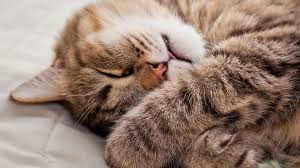
What’s wrong with enjoying sleep?

I'm fine here, thanks. CatsAnimals.com
I’m fine here, thanks. CatsAnimals.com
“There are two kinds of people in the world…” is a setup for a number of jokes. One of the conceits behind that particular setup is that there exist certain almost unbridgeable gaps between people: those who like mayonnaise and those who don’t, for instance. Some years ago I realized that one of those vast chasms of that divided humans are those who are morning people, and then the non-freaks. And I learned this the first time I mentioned just what a wonderful feeling of joy it is to wake up in the morning, roll over to squint at the alarm clock, and see that it’s going to be at least ten more minutes before the alarm goes off.

It really is almost a transcendent joy—that moment when you know that you can safely roll back over and go back to sleep. Even those mornings when I wake up, look at the time, shuffle to the bathroom, then hurry back to the bed to collapse back in it and fall asleep for just eight or nine more minutes is so profoundly delightful as to leave me grinning an hour later.

Years ago, as I alluded to above, I happened to mention my enjoyment of such moments during a conversation with a friend, and her reaction was less than accepting. She could not understand why in the world I would roll over and go back to sleep. “If you get up, you have more time to get ready. You could have a fun, leisurely start to the morning instead of rushing around in a panic.” I pointed out that when I get out of bed when the alarm goes off, I don’t rush around in a panic. Going back to sleep until the alarm sounds is not the same thing as oversleeping. The bliss I was describing is that moment of knowing that I’ve still go time to sleep.

She also expressed a lot of skepticism about whether I actually slept during those few minutes. “You’re just laying there awake with your eyes closed! What’s the point?”

I knew, then, that the chasm between morning people and non-morning people is truly vast, and possibly insurmountable.

She was by no means the last person I found myself in this argument with. And it is an argument. She wasn’t just perplexed at the difference in our perception, she got more than a bit irritated. It really seemed to anger her that I would want to sleep for a bit longer, that I would go back to sleep for as little as a few minutes, that I would enjoy it, and that I would describe it as a wonderful thing. I think she felt that I ought to be ashamed of myself for not leaping out of bed the moment I realized that I had woken up before the alarm went off.

Since finding myself in this particular discrepancy of viewpoint on a number of occasions over the years with various people, I’ve developed my own definition of a true morning person which includes that intense belief that a proper response to waking up early is to embrace the wakefulness and leap into action.

When I say that I fall back to sleep for a few minutes, I mean it. I don’t always fall all the way back to sleep, of course. Sometimes I do lay there with my eyes closed, just enjoying the feel of the blankets. Other mornings I sort of doze, drifting along the edge of wakefulness, not really asleep, but definitely not awake either. But many mornings I do fall back into sleep. I’ve looked at the clock, saw that I had less than four minutes before the alarm goes off, and then fell back into sleep deeply enough that I started dreaming again before the alarm sounds.

Now, not everyone who doesn’t feel as I do about enjoying every last second of my allotted sleep time is a morning person. I’ve met plenty of people who don’t get that same thrill of satisfaction from falling back into bed for a bit longer in the morning who also don’t insist that the only normal or natural reaction to waking up a few minutes before the alarm goes off is to jump up and get an early start on the day.

So I know that there aren’t merely two kinds of people in the world on this particular topic. As with most things, people fall on a spectrum, and we probably all slide up and down that spectrum over time. While there is some science out there about chronotypes (a technical term for classifying people based on their natural circadian rhythm), it’s a mixed bag. A lot of the articles one finds talking about the “science” of morning people vs night owls are simply citing surveys, which isn’t very rigorous. Most of the more scientifically rigorous information is actually from studies of people with insomnia and sleep apnea and the like, which yields a lot of information that may be useful for treating sleep disorders, but doesn’t actually tell us much about healthy sleep patterns. All we can reliably infer from the science we do have is that people do have natural sleep patterns that vary from person to person.

It’s just as natural to be a night owl as not. And it isn’t productive to try to talk someone into being the other sort of person.

Don’t get me wrong: I’m not claiming that I’m physically incapable of getting up early. Some mornings I wake up before the alarm goes off, and I decide to get up rather than roll over and get a little more sleep. Some mornings I sleep like a log right up until the alarm goes off. And yes, some mornings I hit the snooze alarm a time or two (snooze alarms are another source of bewilderment to a True Morning Person).

I like sleep. Even more, I like it when I get enough sleep that I feel rested and ready to work in the morning. As part of my taking-care-of-myself routine for some years, I keep track of bed times and make efforts to keep my sleep schedule from getting too far out of whack on weekends or on vacations. And part of that routine is letting myself enjoy, from time to time, those moments of voluntary sleep before the alarm.

One last Chubby and Tubby Story

In December 1991 Ray and I were spending our first Christmas living in our own place. It was a tiny studio apartment whose windows overlooked an alley behind a bar. I was in the middle of getting divorced. Ray had had a recent significant job change that was complicated by the involvement of one of his exes. So we were both broke and most of our personal property was at least temporarily in someone else’s custody.

His mom or his sister had given us a small artificial Christmas tree that had been boxed up in a garage for some time. Ray came up with a few old strings of Christmas lights somewhere. We had bought a single box of very cheap glass ball ornaments in multiple colors, and a similarly cheap tinsel star tree-topper with a cluster of lights. So we had the small tree perched on a chest of drawers. It’s the kind of first Christmas stories lots of couples tell. One of the things I really liked about that silly star treetopper is that it looked exactly like one my parents had bought when I was a baby, and had been my childhood treetopper until sometime in grade school when they replaced it with an angel.

One weekend a couple weeks before Christmas, we helped one of Ray’s friends, Miss Lee. She was an older woman that Ray had met when he had worked as a nursing aide a few years before. She had only recently moved from a nursing kind of facility to a sort of assisted living apartment. It was the first time in years that she had had more than a single room of her own, and she had recently gotten a bunch of her things that had been in storage at a relative’s house, including a box of Christmas ornaments. She had been told she could have a tree and that the maintenance staff would take care of disposing of cut trees after the holiday. So she needed someone with a car to take her to buy a tree, and then help her set it up.

Miss Lee lived in the south end of Seattle, not far from one location of the former Seattle institution known as Chubby and Tubby. Chubby and Tubby started as an army surplus store run out of a tin shed in the Rainier Valley neighborhood of Seattle by two friends after they came home from serving in WWII. They moved to a bigger location in Rainier Valley in the mid-50s, then opened at least two other stores (the one in north Seattle being the one I shopped at most often), before the owners passed away, then eventually their heirs sold the locations and closed down the stores in 2003. Chubby and Tubby was a strange store that’s really hard to describe. They sold blue jeans and tennis shoes and fishing poles and tools and gardening things and… well, just a whole lot of weird stuff. Always cheap.

And every December, each Chubby and Tubby store offered Christmas trees for sale, cheaper than you could find them anywhere else. In the 80s and 90s the price was alway $5 a tree, no matter what size. I’ve talked to people who remembered during the 70s when Chubby and Tubby trees were only $3. The owners sold the trees at a loss. They said they wanted to make sure that people who couldn’t afford a Christmas tree could have one. The trees were usually Douglas Firs, and they were… well, they were never very symmetrical. They were never as scraggly as the proverbial Charlie Brown Christmas tree, but they were always unique. I had purchased at least a couple of Chubby and Tubby trees in the years before this particular December. We hadn’t bought one ourselves that year in part because I didn’t think we’d be able to dispose of it easily afterward. Also, the loaned artificial tree was even cheaper.

Anyway, Miss Lee wanted a Chubby and Tubby tree, in part because she had fond memories of getting trees from Chubby and Tubby when she was younger, but also because you can’t beat the price. Before we’d gone to the store, we had untangled her strings of very old lights and determined that at least one of them was probably a fire hazard and shouldn’t be used. So she also hoped to find a cheap string of lights or two at Chubby and Tubby as well.

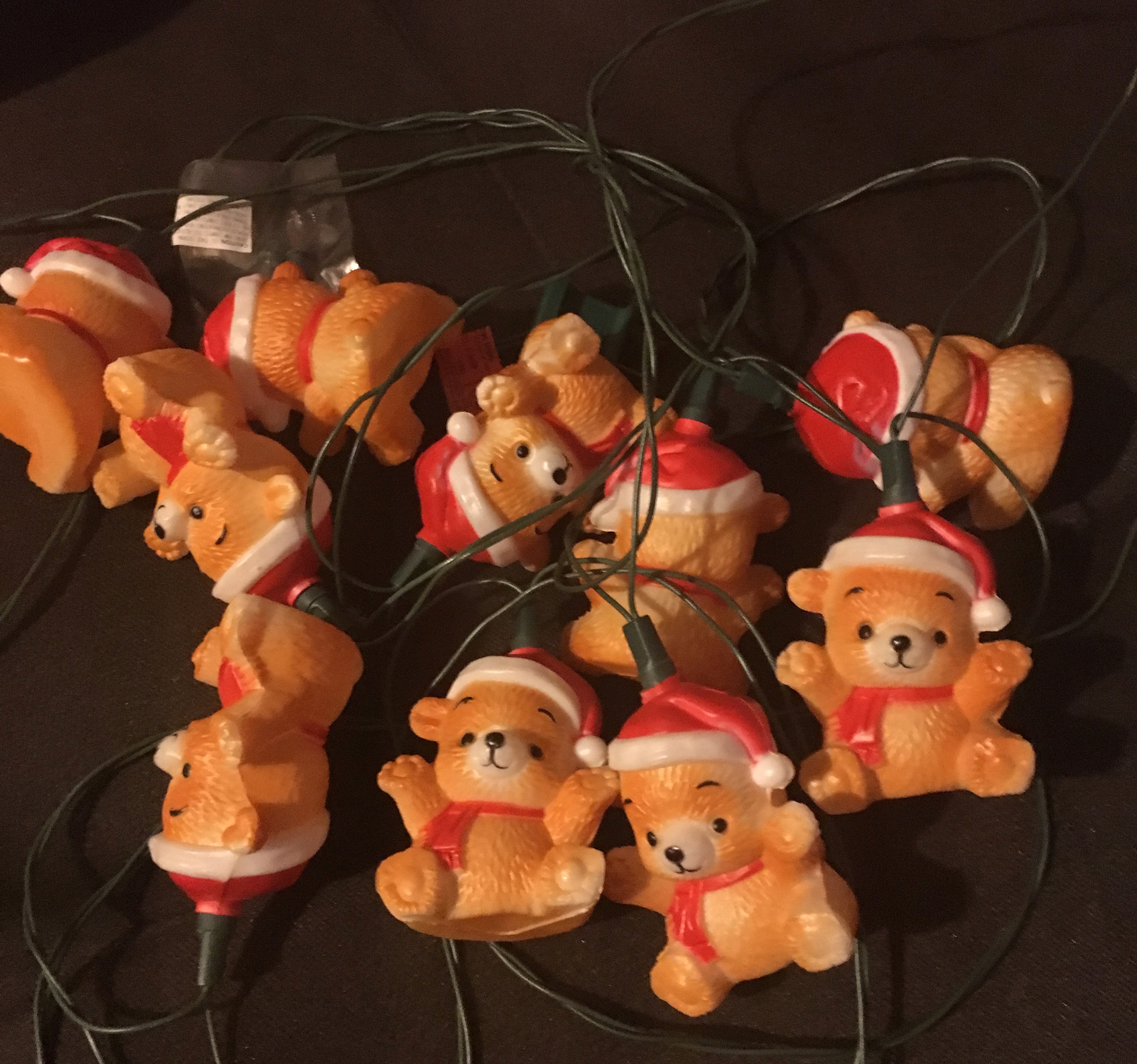
It was less than two weeks until Christmas, and Chubby and Tubby was absolutely packed. It took Miss Lee a while to pick out her tree, mostly because she wanted one small enough to fit in the spot she’d chosen in her living room. And then there were strings of lights and ornaments to look at. There was one particular string of Christmas lights that Ray was very taken with. A string of a couple dozen lights with plastic teddy bears wearing Santa hats. It was at Chubby and Tubby, so it was cheap, but even cheap was out of our own budget at the time. Miss Lee wanted something simpler, with multicolored lights for her own tree. She offered to buy Ray the string of Teddy Bears, but he told her very firmly no.

At each check-out line they had a bucket of odd little brass keys. There was a contest. Every customer could pick a key out of the bucket, and then try the key on this Treasure Chest at the front of the store. If the key opened the chest, you’d get a gift certificate good for certain items in the store. Miss Lee told Ray to pick a key and give it a try. The key he picked unlocked the chest. Ray asked her what she wanted to use the gift certificate for, and Miss Lee said, “It yours.”

My late husband won this string of teddy bear Santa Christmas lights 25 years ago. Photo © 2017 Gene Breshears.
My late husband won this string of teddy bear Santa Christmas lights 25 years ago.
And yes, the string of Teddy Bear lights was one of the things he could redeem the gift certificate for. So we took home the string of teddy bear lights.

We got the tree back to her place, got it set up, helped her put her lights on the tree and hang her ornaments. She told us little stories about each ornament as she unwrapped them. It was a fun day.

When we got home that night, Ray hung up the teddy bear lights in the window over our bed. That silly string of teddy bear lights hung either in windows or on our tree every Christmas for the rest of Ray’s life. Ray died mid-November of 1997, not quite six years after that first Christmas living together.

For Christmas 1997 I barely did any decorating. Ray had only been dead a few weeks at the time we would normally start pulling decorations from the basement. I knew if I started unpacking our ornaments and such I’d break down sobbing and I wasn’t sure I would stop. I barely felt brave enough to open the storage closet in the basement to pull out one of the smaller artificial trees that I knew I could get to without opening other boxes. I decorated using some ornaments and a string of lights Ray had purchased on sale somewhere a week or so before he died, thus they were already upstairs and they didn’t have a history of Christmases with him.

In 1998, as I unpacked boxes of ornaments, I broke down crying several times. Ray had loved Christmas so much, and so many of the ornaments evoked memories of when he had found that particular decoration and showed it to me in the store. Or times he had fussed with where to hang it to best show it off, et cetera.

Yes, one of the times I broke down was when I pulled the teddy bear santa lights from one of the boxes. I hung them in the bedroom window that year. The next several years I put the teddy bear lights up. At least once on the tree, but usually in one of the windows. The last few years I’ve gotten them out and looked at them, debating whether I should put them up. They’re more than 20 years old. At some point old electronics, even something as simple as strings of mini lights, break down and/or become fire hazards. So I would plug them in, look them over, and some years I’d decide to put them back in the box. But most years I have still hung them up.

Our building, which was the last home Ray lived in and has been my home for a bit over 20 years, has been sold and the new owners want to do major renovations. They’ve given us advance notice that everyone’s going to be evicted sometime before 2017 year is over. So this was my last Christmas in the place that was Ray’s last home. I’ve been… moodier than usual this holiday.

I put the teddy bear lights in the kitchen window. Every evening they turned on and shown their silly light until the wee hours of the morning. I checked them frequently, but they never showed signs of problems.

But when I took them down out of the window, I noticed that several stretches of the wire are stiffer than other sections. The plastic doesn’t actually crack when you bend it in those locations, but clearly 20-some years of use is taking its toll.

While we were packing things and taking the tree down, I was looking at all of our decorations with a critical eye. If we have to move, it would be silly to move old ornaments and lights we know we’re never going to use again. I now have a couple of big boxes of old light strings and the like to recycle, and a big pile of other decorations that I think are in good enough shape to donate, if I can find a place that will take them.

And those teddy bear lights (or at least the string itself) shouldn’t be used again. No one wants the lights to start a fire some December in the future. So its time to says good-bye to Ray’s teddy bear lights. 25 Christmases later, they’ve earned a rest.

Unresolved resolution tension

New Year’s Resolutions are a fraught topic. There is no shortage of posts and articles out there telling you not to make resolutions. Some say to set goals instead. Others talk about how no one ever succeeds at resolutions, so you shouldn’t set them. Others insist that getting out of the mindset of setting resolutions will somehow miraculously make you into the kind of person you want to be, and so on. Then, of course, there are the pedantic jerks who insist it’s all meaningless because the calendar is an arbitrary thing, anyway.

And while I get a good laugh out of the memes declaring that being technically correct is the best kind of correct, I’m also fully aware that one can be technically correct while being completely wrong. It doesn’t matter that it’s arbitrary if you find meaning in it. As Zen Master Unmon asked the monk, “The world is vast and wide. Why do you put on your robes at the sound of a bell?”

A few years back a friend shared her decision to take a lesson she’d learned from training pets and apply it to herself. She identified specific habits she wanted to change, and made her resolution to replace each with a better habit. Since then, that’s how I’ve been setting my annual goals. And for a couple years I also pledged to write monthly reports on this blog of how I was doing. The first year I made very solid progress on two of my four goals, while doing only so-so at the other two. So I set similar goals, one designed to further improve on the two which I had done well with, two slightly different ones to keep attacking the bad habits I had failed to change, and a fourth new goal. Once again, I made good progress on two of the goals, and not so much on the other two. Then last year, for a variety of reasons, I decided not to post my new goals publicly, and not to post the monthly reports.

I’m not going to do a recap of how the 2016 goals went, other than to say that not posting monthly reports led to a much worse success rate last year. I did keep track of my lack of progress, but I have to admit one reason why was each new month I would have the thought that I should make a post about how I was doing on my goals, and then I would remember the reasons I had decided not to do it this last year. I also have to confess that the insurgence of white nationalism and other forms of bigotry that were encouraged by the election did a lot to both distract me from the goals, and contributed to a lot of backsliding.

I have set some goals for the year. I’m going to post them here. I plan to post a monthly progress report. Some parts of this year’s goals are kind of continuations of some of the previous goals, but I’ve trying to change the focus to see if that might help. Each goal has some initial tasks I’m assigning myself to try to foster new habits.

My goals for 2017:

  • Don’t get mad, get busy. It has always been the case that I find it easier to rant and get outraged about injustices and the like in the world than to actually do something about them. It’s going to be really tempting to share links to outrageous news stories, or memes about the outrageous people, and so on during the next four years. Which isn’t going to fix anything. I don’t want to backslide any further from the progress I made with my Reduce the Outrage goal and its sequels, either. My tasks are: write about about things I love, including artwork and writing created by some of the fabulous people I follow; listen to music and audiobooks more and podcasts less; spend at least half of my lunch break writing; set specific monthly writing/editing goals in each check-in; write at least one blog post a month about organizations we can donate to that are fighting the good fight.
  • Reduce, pack, and prioritize. We now officially know that we have to find a new place to live this year. We have some parameters on the timing, though there is still some uncertainty on that front. Last year we did some clearing out of things we don’t use any more. We need to do that more aggressively for the next couple of months. The initial goal is to go through the book cases and filing cabinets and clear out unneeded stuff.
  • Take care of us. Not that I don’t do this, but we both have a tendency to let things slip. My initial tasks are related to some specific medical things that aren’t urgent, but need to be dealt with. I am going to remain vague on the details of this one.
  • Submit and publish. I’ve been in an unending iterative loop of proofing/editing one novel for an embarrassingly long time. I only submitted stories for three calls for submissions last year (and collected three rejections). I need to submit more. I haven’t been able to figure out a reasonable number of submissions to set as a goal, particularly with how much time and energy is likely to be sucked up with the move. So initial task is to organize how I’m going to find calls for submission and set reasonable targets for the novel revision/finalization.

Finally, my specific tasks for January are:

  • While packing away Christmas stuff, reduce the number of RoughTote™ containers full of old ornaments, et al, by at least two.
  • Figure out Writers’ Night schedule.
  • Write at least four blog posts about things I like.
  • Make a list of places that post calls for submissions.
  • Finish the current stage of the copy edit pass. There is a list of unfinished tasks with specific piles of pages of prioritized notes.
  • Finish going through the bookcases in the computer room, and get through at least one filing cabinet.