I recognize that most of my readers are just as troubled by this development as I am. And you’re probably all as tired of being outraged over it. So instead of including all of the following links in my usual Friday round-up, I’m doing separate posts. Behind the “Read More…” link below, you’ll find posts related to the new occupant of the White House and his enablers, the Congressional Republicans. On the other hand, if you want the mostly trump-free Friday Links, go there instead. Continue reading Resistance Report→
I’m already exhausted, and the corrupt reality TV star hasn’t even been sworn in, yet! I’ve decided to separate my usually Friday Links into two posts: a regular Friday Links posts with most of the usual topics, and a second Resistance Report post where I’ll put most of the links related to the corrupt one.
I don’t think I’ll do this every week, because assembling the Friday Links post is already a lot of work. But at least for now, below you will find many of the links I found interesting this week, with less outrage-inducing news.
Links of the Week
Millions in his firing squad. The Chicago Daily News published this column April 5, 1968, after the assassination of Dr. Martin Luther King, Jr.
The criminal neglect of detective fiction. I’m a bit skeptical when a review of academic papers looks at nothing published more recently than 40 years ago and claims to make conclusions about how academic look at the genre now.
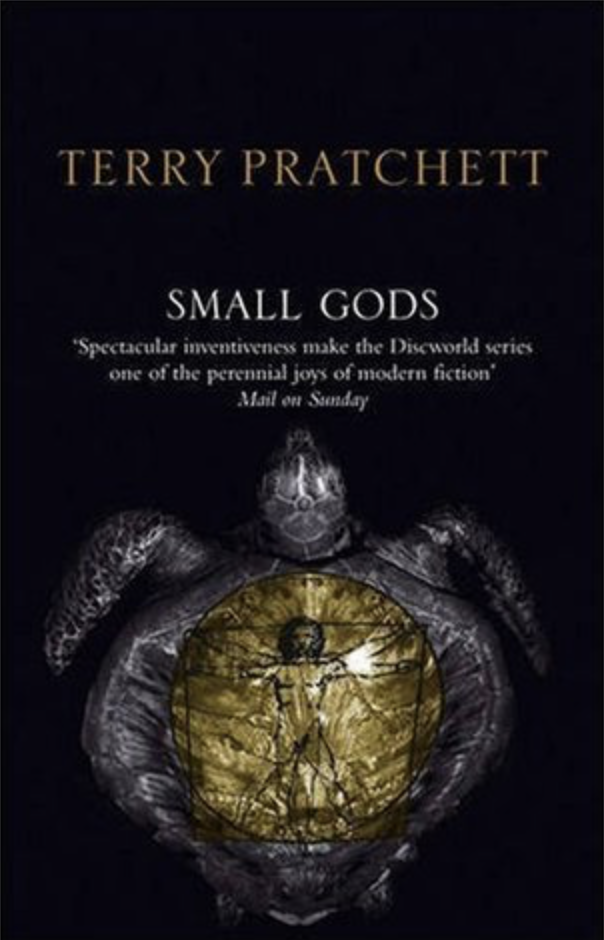
One of the many covers of various editions of Terry Pratchett’s _Small Gods_.It took me a while to understand Terry Pratchett. Several friends had enthusiastically proclaimed their love for his works. They had waxed eloquently about the hilarity of Guards! Guards, the wondrousness of The Luggage, and the ludicrous fun of the cowardly wizard Rincewind. But when I tried to read the books they recommended, I just didn’t find them engaging. They came across as parodies of fantasy and sword & sorcery, and I just couldn’t get into them. I didn’t understand what my friends saw in them, at all. And one of the books I tried to read back then was Small Gods.The back cover blurb sounded interesting, but I just couldn’t get through the first several pages. It made no sense to me. I didn’t understand how the description of a turtle trying to avoid being eaten by an eagle had anything to do with the the simple novice, Brutha, who only wants to tend his melon patch until he hears the voice of a god calling his name–a small god, but a bossy one. I put the book back down. I was at a friend’s house for something, and waiting, and there was the book sitting on a table.
My friend joined me just as I was setting it down, and asked if I’d ever read the book. So I explained about my previous encounters with Pratchett, and we went off on a long digressive conversation about books we loved, books we tried to get other people to love, books we realized were problematic but still liked, and so forth.
A couple months later, my first husband died. And not long after that I was preparing to head off to spend my Christmas vacation at my Mom’s (which was going to be interesting for many reasons). And a couple days before I left, the same friend stopped by. She was one of many of my friends who had taken to regularly checking on me following Ray’s death, so I thought she was just checking in. She had an additional mission. She had spent a lot of time thinking about what I had said about why I had disliked all of Pratchett’s Discworld novels I had tried to read, thus far, and she was bringing me one book to get me to try again. The book was Wyrd Sisters, which focuses on the witches of the tiny kingdom of Lancre. She explained why she thought I would like it (fairy tale themes given various twists, a lot of Shakespeare references, unconventional characters with deeply-rooted senses of ethics independent of religion), and asked me to give it a try. She cryptically said, “There’s one character in here who I think you’ll really love, but I don’t want to say who, because they need to grow on you.”
The second night of my vacation, I accidentally stayed up all night reading all the way to the end, and was so disappointed that I didn’t have any more Pratchett books to read next, that I started over at the beginning.
I finally understood. Pratchett wasn’t writing parodies, he was writing satire. Going by dictionary definitions of those two words, they may seem to be nearly the same thing. But they aren’t. A parody imitates a specific work or body of work, and makes use of deliberate exaggeration for comic effect. A satire, on the other hand, uses humor, irony, exaggeration or ridicule to critique and analyse human nature. It just so happened the Pratchett did this in many of the Discworld books through the lense of various tropes of fantasy literature.
Once I had found the book that spoke to me, and bonded with characters such as Granny Weatherwax and Nanny Ogg, suddenly, the rest of Pratchett’s work made sense. I saw now that the purpose of the jokes was not to poke fun at books and stories I loved, but to make me laugh in such a way that I got new insights into people (and incidentally why we tell some of the stories we tell)1.
Which brings me to Small Gods, one of my favorite books from the entire series2.
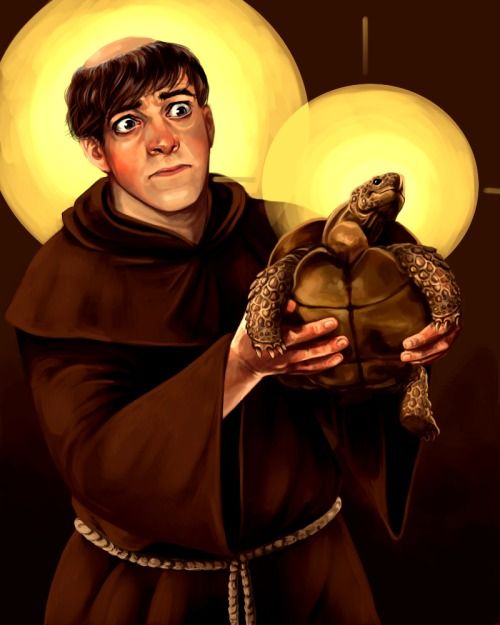
Small Gods is built around the notion that in a magical world such as Discworld, believe is what gives gods their power. The Great God Om has been worshipped for centuries in Omnia, because at intervals he returns to earth, manifests in some way, picks a new prophet, does a little smiting, and so forth. When our story begins in Omnia, people are waiting for the god to return and select his Eighth Prophet. Many think he’s overdue. Others are much more concerned with Omnia’s relations with neighboring countries, such as Ephebe. And then there is Brutha, a humble novice that everyone knows isn’t very bright because it’s been impossible to teach him to read, but he’s got a good memory and works hard and never complains as he’s tending garden in one corner of the Citadel in the capitol city. Brutha has a problem: he can hear a voice in his head, and the voice, he is convinced, is coming from a tortoise inexplicably in his garden, and the tortoise insists that he is the Great God Om.
We eventually learn that Om returned to the mortal world three years ago, quite surprised to find himself trapped in the body of a tortoise and almost completely lacking all divine powers. The problem is, you see, that over the last many years, belief—genuine faith in the existence of Om—has dwindled, having been replaced by fear of the Quisition. So now Om is in danger of losing the last of his power and becoming nothing more than a voice in the desert, along with all the small gods that have never had a believer. So he has to find a way, using only the abilities of a tortoise and his one last believer, to make a comeback.
Meanwhile, Deacon Vorbis, the head of the Quisition, is plotting to conquer Ephebe, while simultaneously root out a new underground heretic movement within Omnia. Brutha gets caught up in Vorbis’ plans when Vorbis realizes that Brutha’s memory isn’t just good, it is eidetic. Brutha has no idea why Vorbis has suddenly become interested him him, partially because Brutha has never really questioned anything his whole life. He was raised by a cruel and overzealous grandmother, and believed everything she told him. It isn’t until he meets his god face-to-face that he learns to start thinking for himself. Om, meanwhile, also has some learning to do before the story is over.
Pratchett has a lot of fun in this book with the idea of philosophers. Brutha meets philosophers in Ephebe, including Didactylos, the blind author of a scroll about the physical nature of the Discworld (a vast disc rotating on the back of four giant elephants standing on the back of a great turtle swimming through space), which has become the inspiration of the heretic movement back in Om. The holy books of Om teach that the world is a sphere floating in space on it’s one, revolving around a sun. So believing that the world isn’t flat is heretical.
Over the course of the story we see several aspects of faith and its misapplication. By the end of the story Brutha and Om have enduring various trials (Brutha nearly being burned to death as a heretic himself in the dramatic climax) before Om returns to power, and then finds himself forced to bargain with his new prophet and help transform his religion into one that is less violent. Before they can do that, they have to deal with the small matter of the war Vorbis has started. One of my favorite quotes from this book happens during this part, as Brutha is trying to stop everyone from fighting, and some of his would-be allies are proclaiming their willingness to die for the truth: “The truth is too precious to die for!”
It is easy to look at the book as an indictment of organized religion and blind faith. But I think the people who do that are making the same sort of mistake I did when I was trying to read the earlier books in the series the first time: they’re looking at this is a parody, rather than paying attention to Pratchett’s deeper commentary on human nature. The book skewers blind atheism at least as much as it does empty faith, because Pratchett turns his satirist’s eye on everyone. Characters you would expect to be allied heroes in the book have their flaws examined just as closely as the characters who are primarily villains.
There’s one other plot thread I should mention: The History Monks. Pratchett will use these guys a few more times, most interestingly in Thief of Time. They are a group of monks charged with keeping history on track, running around the world trying to make sure that things happen as they ought. Of course, who gets to decide “ought”?
I like to re-read Small Gods regularly, to remind myself where morals and ethics should come from. To remind myself that there are things worth having faith in (truth, yes, but also people, and compassion, and empathy). To remind myself that evil people are evil, yes, but they’re people, too—and that all of us have the potential to be evil, no matter how well-intentioned we may be. And most importantly to remind myself that forgiveness isn’t something you earn, it’s something you give.
1. One important note: another problem is that Pratchett himself didn’t find his voice in the series right away. In my opinion, Pratchett didn’t find the proper voice for this series until about the fifth book in the series. Some of his characters took a couple books on their own before they gelled, as well.
2. So many favorites. I read a lot of them out of order after finally having my breakthrough. As I mentioned, some of the earlier books are a lot weaker than the later ones. But they’re easier to enjoy once you know where the series is going.
I was trying to take a picture that showed the Touch Bar the first night after my laptop arrived.I replaced my 5 1/2 year old Macbook Pro with the sparkly new Macbook Pro with Touch Bar. I’ve been using it for about a month and a half and thought I’d share my impressions. Note: I’m just a queer sf/f writer (who happens to have worked in the tech industry for more that a quarter of a century); I’m not a professional technology reporter, I’m not making any money from this blog and certainly not any money from Apple. But I own and use a lot of Apple products and have been using computers for over thirty years. So take this review accordingly…
Someone at BBC One and/or STV has a wicked sense of humor (click to embiggen)I really had intended to write some more posts about things I like rather than delve into some of the horrid things going on in the world this week, but a few of these things can’t wait for Friday links:
There’s also been a lot of churn generated over the fact that several Democratic congresspeople are not attending the inauguration. I say churn because the truth is that every inauguration has been skipped by a bunch of the congresscritters. One of Washington state’s Democratic reps admitted this week that he’s only attended two during his 20 years in office. Many have announced that they’re not attending specifically as a boycott. And the person who has been getting the most criticism for that is Georgia Representative John Lewis.
Lewis had previously skipped George W. Bush’s first inauguration. It was particularly hilarious watching trump supporters calling Lewis out on Martin Luther King Jr Day. See, Lewis worked with King, back in the day. Way back in 1960 he was one of the original 13 Freedom Riders. By 1963 he was involved in the leadership of Student Nonviolent Coordinating Committee, an early African-American civil rights organization. He participated in King’s marches. He organized marches of his own. He endured beatings, survived firebombing, and more.
So to see clueless white people, particularly clueless white D-list celebrities, try to lecture him on what Martin Luther King would do or say if he were alive today (or to see them lecture Lewis of all people in what it takes to win civil rights battles) went beyond both hilarious and pathetic.
Of course, that’s only one of the dozens of fronts that the Republicans are hoping to roll back people’s rights, take money and benefits away from ordinary Americans, and give massive tax cuts to a very small number of people and corporations that are already mega-rich.
But, part of the fight is going to involve getting Trump riled up. We can’t use ordinary tactics to deal with him. He doesn’t respond to reason, to polls, or to the usual forms of political persuasion and leverage. A couple months ago when I was having a very difficult time finding any aspects of the election outcome to be hopeful about, I re-tweeted someone’s comment about impeachment, which started a conversation with a friend who made the assertion that Trump is a control freak who will resist being manipulated by the Republicans as much as he resists other things. I think that is a serious misunderstanding of Trump’s personality.
He is absolutely not a control freak.
Control freaks work hard. Yes, I am speaking for personal experience. Control freaks actually need to be in control. Control freaks need to micromanage every aspect of things in their lives. Abusive control freaks monitor the people under their control constantly, and yes get really angry if they feel they’re being manipulated by the people who they expect to obey them. Trump is not a control freak, because all that paying attention and monitoring and micromanaging takes time and effort that Trump doesn’t want to expend. It takes effort and attention that I think he is fundamentally unable to focus on.
Trump is an attention whore who takes credit for other people’s work.
That’s a very different dynamic. There’s a reason that Trump’s son approached the various vice presidential possibilities with an offer to be “the most power veep in history” because the vice president would be in charge of all domestic and foreign policy while the president was busy “being in charge of making America great again.” Trump will make pronouncements. He loves making pronouncements. He loves barking out orders and expecting other people to do the hard work to make it happen. He loves belittling people. He loves getting applause. He really loves it when people fear him. So he will make threats. He will fire people. He will try to turn the full power of the presidency on completely outmatched targets out of petty vindictiveness. He’ll be inconsistent. He’ll change his mind on something a half dozen times.
But he’ll sign off an anything and everything that he doesn’t perceive as interfering with his real goal: which is to get all the attention he can get, while looking for ways to enrich himself. He has no shame, no empathy, and no sense of decency. He is dangerous, as much for the kinds of people he enables and empowers as for his own capabilities. He will never take the high road.
So it’s okay to feel happy when things don’t go his way. We just can’t stop at the feeling.
Quote from Martin Luther King Jr, Letter From Birmingham City Jail, 1963 (click to embiggen)I always feel a little nervous posting anything on Martin Luther King Jr Day, as I don’t want to co-opt another marginalized community’s hero, day, or message. Especially after seeing several people of color on my various social media feeds caution against talking rather than listening. But during his life, King said more than once that “Injustice anywhere is a threat to justice everywhere,” and I believe we have entered a very dark time in our nation’s history where all of us who believe in equality for everyone need to stand together. So while I may be a white guy, as a queer person I have some experience with oppression and believe that I have a responsibility to use whatever gifts, privilege, and platform I have to promote justice.
A lot of people, not just the moderates that Dr. King talked about in that quote from Letter From Birmingham City Jail, rationalize and deny the existence of bigotry by making appeals to certain fallacies. Academically, we often state those myths as five fallacies:
Individualistic Fallacy: racism/homophobia/antisemiticism/etc is perceived as being only interpersonal, ignoring the systemic structural realities (such as underfunded schools)
Legalistic Fallacy: the belief that abolishing racist/homophobic/religious laws automatically ends the bigotry.
Tokenistic Fallacy: the inference that the presence of members of the marginalized class in influential positions in society proves that all bigotry has ended.
Ahistoric Fallacy: the belief that the denial of basic rights in the past has no lasting effect on subsequent generations (“but slavery is over!”).
Fixed Fallacy: assumes there is one and only one kind of discrimination, not recognizing new forms that emerge in context of societal and legal changes.
There’s an academic paper that explains all of this: WHAT IS RACIAL DOMINATION?, by Matthew Desmond & Mustafa Emirbayer of the University of Wisconsin—Madison, if you want to get into it. It’s rather long and involved, but if you open the PDF at the link and search for Five Fallacies you can jump right to their discussion of the fallacies. The paper is focused on racism, but the fallacies apply to all kinds of bigotry.
All of those fallacies contribute to that preference for an absence of tension rather than a passion for justice that Dr. King talked about. It’s the classic “Can’t You Get Past it/Live and Let Live Fallacy.” Or maybe another name could be the “Respectful Disagreement Fallacy.” It’s the belief that as long as a person isn’t physically attacking you right this moment, and is framing their critiques in polite-sounding language, than it can’t possibly be racist/homophobic/antisemitic/misogynist/etc.
So the bigot talks in dog whistles (coded language that doesn’t sound overtly like bigotry to people who don’t know the code), claims to respect or even feel love for the community targeted by their language, and if we point out that they are being racist or misogynist or antisemetic or homophobic, we’re the ones causing a problem. And people who think of themselves as moderate or enlightened turn on us. They don’t just look the other way from the bigotry and bigoted policies that the community is enduring, they actually enable it.
Which means they’re part of the problem. They’re not being neutral. They’re not seeing things from both sides. They’re not being nuanced. They’re oppressing other people.
I wish there was a simple solution. I wish I had some words of wisdom. Instead, I’m just stuck with this regrettable conclusion, having to try to educate people who don’t think they’re being an enemy.
“Over the past few years I have been gravely disappointed in the white moderate. I have almost reached the regrettable conclusion that the Negro’s great stumbling block in his stride toward freedom is not the White Citizen’s Counciler or the Ku Klux Klanner, but the white moderate, who is more devoted to ‘order’ than to justice: who prefers a negative peace which is the absence of tension to a positive peace which is the presence of justice.”
— Martin Luther King Jr, Letter From Birmingham City Jail (1963)
Another in my series of posts recommending web comics that I think more people should read:
The Last Halloween by Abby Howard is the creepy story of 10-year-old Mona who is reluctantly drafted to save the world when, one Halloween night, the monsters find a way to escape the shadow realm and start killing humanity. Since there is at least one monster for every human (all seven billion of us), the odds are stacked against our unlikely hero even more than usual for these sorts of things. Abby Howard is also the creator of The Junior Science Power Hour which I’ve recommended previously. Abby created this strip as her pitch in the final round of Penny Arcade’s Strip Search, which was a reality game show where web cartoonists competed for a cash prize and other assistance to get their strip launched. Though Abby didn’t win, she started writing the strip anyway.
I like it a lot. It’s one of the strips that I binge read in chunks. It’s a bit darker than I usually like, but also very compelling. And the story keeps going in different directions that I expect. It’s very nightmarish. I think more so precisely because Abby works only in black and white. If you like the comic, you can support Abby in a couple of ways: she has some cool stuff related to both of her strips in her store, and she also has a Patreon.
Some of the comics I’ve previously recommended: Some of these have stopped publishing new episodes. Some have been on hiatus for a while. I’ve culled from the list those that have gone away entirely.
“Deer Me,” by Sheryl Schopfer tells the tales from the lives of three friends (and former roommates) who couldn’t be more dissimilar while being surprisingly compatible. If you enjoy Deer Me, you can support the artist by going to her Patreon Page!
Scurry by Mac Smith is the story of a colony of mice trying to survive a long, strange winter in a world where humans have mysteriously vanished, and food is becoming ever more scarce.
And I love this impish girl thief with a tail and her reluctant undead sorcerer/bodyguard: “Unsounded,” by Ashley Cope.
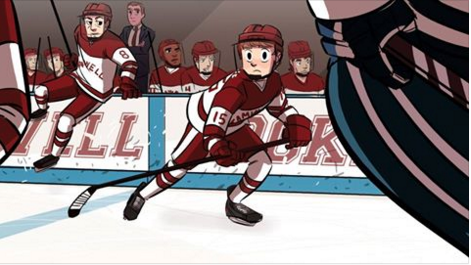
Check, Please! by Ngozi Ukazu is the story of Eric “Bitty” Bittle, a former junior figure skating champion from a southern state who is attending fictitious Samwell College in Massachusetts, where he plays on the men’s hockey team. Bitty is the smallest guy on the team, and in the early comics is dealing with a phobia of being body-checked in the games. He’s an enthusiastic baker, and a die hard Beyoncé fan.
The Young Protectors by Alex Wolfson begins when a young, closeted teen-age superhero who has just snuck into a gay bar for the first time is seen exiting said bar by a not-so-young, very experienced, very powerful, super-villain. Trouble, of course, ensues.
Fowl Language by Brian Gordon is a fun strip about parenting, tech, science, and other geeky things. The strips are funny, and he also has a bonus panel link to click on under the day’s strip.
The Junior Science Power Hour by Abby Howard. is frequently autobiographical take on the artist’s journey to creating the crazy strip about science, science nerds, why girls are just as good at being science nerds as boys, and so much more. It will definitely appeal to dinosaur nerds, anyone who has ever been enthusiastic about any science topic, and especially to people who has ever felt like a square peg being forced into round holes by society.
If you want to read a nice, long graphic-novel style story which recently published its conclusion, check-out the not quite accurately named, The Less Than Epic Adventures of T.J. and Amal by E.K. Weaver. I say inaccurate because I found their story quite epic (not to mention engaging, moving, surprising, fulfilling… I could go on). Some sections of the tale are Not Safe For Work, as they say, though she marks them clearly. The complete graphic novels are available for sale in both ebook and paper versions, by the way.
Oglaf, by Trudy Cooper and Doug Bayne is a Not Safe For Work web comic about… well, it’s sort a generic “medieval” high fantasy universe, but with adult themes, often sexual. Jokes are based on fantasy story and movie clichés, gaming tropes, and the like. And let me repeat, since I got a startled message from someone in response to a previous posting of this recommendation: Oglaf is Not Safe For Work (NSFW)!
“Mr. Cow,” by Chuck Melville tells the tale of a clueless cow with Walter Cronkite dreams. If the twice-weekly gags about a barnyard of a newsroom aren’t enough excitement for you the same artist also writes and draws (and colors!) some awesome fantasy series: Champions of Katara and Felicia, Sorceress of Katara. If you like Mr. Cow, Felicia, or Flagstaff (the hero of Champions of Katara) you can support the artist by going to his Patreon Page. Also, can I interest you in a Mr. Cow Mug?
thesecurityawarenesscompany.com/I’ve got a slightly different weekend update than usual, today. Neither of these are related to specific stories I posted yesterday, they’re all stories that I came across later in the day Friday that should be shared fairly quickly. The first one is not just your typical phishing attack story, though:
Wide Impact: Highly Effective Gmail Phishing Technique Being Exploited The tl;dr version: this particular hack involves the hackers sending emails from a hacked account, to people in that account’s contact list. So it starts with you getting an email from someone you already know. But it’s much more clever than that! They take text from previous messages that person has sent, and it isn’t random. They find messages where the person has sent attachments, and they construct the new message from it. So if it’s someone you know, the phrasing of the subject and the text sound like something that person would write. The attachment in the new message is merely a screen capture, and it hides a link to their fake Google login in page. So you click on the attachment from a friend, and you’re told to view the attachment you need to log in to Google, and they get your username and password. And within seconds, they’re going through your account and sending more hacked messages to your friends.
They’ve even constructed the login page so that if you take the precaution of looking at the address bar in your browser before you start to sign in, you see “https:accounts.google.com” so you think you’re at the real Google. You’re not.
Once they’ve got your password, they can read all your email and do other things to your account.
The linked article has screenshots and advice for how to recognize this kind of attack, as well as steps for what you can do to see if you’ve already been hacked. Check it out!
And this one is less about hackers: Security backdoor found in end-to-end encryption system used in WhatsApp. The Guardian reports that security experts have found that since buying WhatsApp, Facebook has added a back door. In updates, Facebook denies that his is a backdoor to government agencies and claim they will fight any attempts from governments to access accounts.
Which is meaningless.
The existence of the backdoor means that when Facebook loses that fight (because of court orders, for instance) that the backdoor will be used to read the supposedly secure communications. The original design of WhatsApp and similar end-to-end services didn’t have a backdoor because if one exists, it will be exploited eventually. Also, Facebook’s description of the service currently lies and says that they can never read the messages. With the backdoor there, yes they can.
Joy.
While we’re on the subject of cyber security: Cellebrite, a Major Dealer of Hacking Tools, Has Itself Been Hacked. This is one of the companies that makes tools that allow people to hack your phone. After indulging in a moment of schadenfreude that these hackers have been hacked, we then have to worry about what is in that 900GB of data that was stolen from them. Since the dump “contains what appears to be evidence files from seized mobile phones” among other things, who knows whose personal information has been stolen. Supposedly Cellebrite only sells their tools to law enforcement agencies and the like, but it has been previously shown that those agencies include some very shady regimes. And in the case of their mobile hacking devices, those things could be resold or stolen from those agencies and be in anyone’s hands.
ETA: Several people are questioning the Guardian story about Whatsapp: The backdoor that never was, and how to improve your security with WhatsApp. The argument seems to be that while there is a security problem, it isn’t technically a backdoor. The article I linked has information on things you can do to avoid your Whatsapp messages being compromised. I’m going to leave it to the security experts to argue this out.
I just want to stay under the covers.The only reason I even saw the doctor today was because I already had a follow-up appointment for another matter scheduled. If that appointment hadn’t been on the schedule, I would have just muddled through another day. But I’m getting ahead of myself. I should tell things in order. I’ll try not to let it turn into a “what I had for breakfast” post.
The true face of Senator McConnellIt’s Friday! The second Friday in a new year. And it’s hard to get excited when so much of the news is so outrageous
We’re having a worse than usual flu epidemic in our area. Several people I know either have pneumonia or had it over the holiday. And my husband and I are still trying to shake off the cold/flu or whatever it is we’ve been fighting for weeks.
Anyway, here are links to stories I found interesting, sorted by category.
The Future Alternative Past: this dystopian hope. Nisi Shawl, an author I greatly admire, is now doing a regular sf/f column for the Seattle Review of Books. Check out this, her third monthly column!












 Font Folly