It appears that the rains have come to an end, and now I have to brace myself for scorching weather.
Here I present this week’s Friday Five: the top five (IMHO) stories of the week of interest to queer people, top five general interest stories, and top five videos (plus a recap of my blog posts).
A quote from Gilbert Baker, the creator of the Rainbow flag. (click to embiggen)
“In 1978, when I thought of creating a flag for the gay movement, there ws no other international symbol for us than the pink triangle, which the Nazis had used to identify homosexuals in concentration camps. Even though the pink triangle was and still is a powerful symbol, it was very much forced upon us.
“I almost instantly thought of using the rainbow. To me, it was the only thing that could really express our diversity, beauty, and our joy. I was astounded nobody had thought of making a rainbow flag before because it seemed like such an obvious symbol for us.”
—Gilbert Baker, 1951-2017
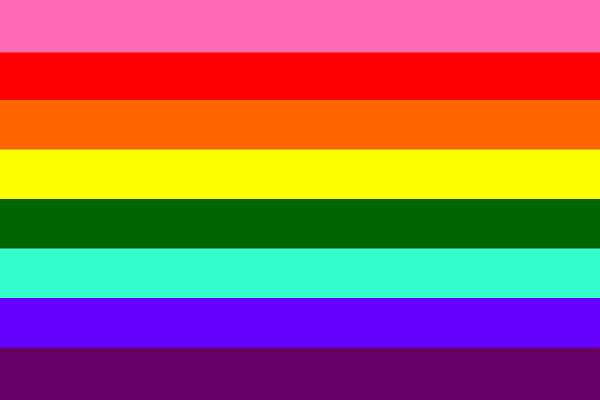
The original Pride flag designed by Gilbert Baker in 1978 has 8-stripes. Colors were removed and changed originally due to fabric availability.Gilbert Baker was born in Kansas in 1951. From an early age he was fascinated with fabrics and color. He attributed this early interest to the women’s clothing store which was owned by his grandmother. Even with that family connection, though, in small town Kansas in the 1950s no one thought a boy should learn to sew. In 1970 the 19-year-old Gilbert was drafted into the army, where he was trained as a medic and stationed in San Francisco, where he treated soldiers who had been wounded in Vietnam.
In 1970 there was a thriving queer community in San Francisco. Gilbert found other people like himself, and managed to serve out his tour as a medic without getting caught (being gay was a court martial offense), so he was honorably discharged. But having found a community, he chose to stay. He bought a sewing machine and taught himself to sew. He hung out with a lot of other artists. He designed fabulous drag costumes. And he also began designing pro-gay and anti-war protest banners for a variety of marches and rallies. Soon he was known as “the banner guy.”
When Harvey Milk was elected a city supervisor, becoming the first openly gay man elected to public office in the U.S., he had worked with Gilbert a few times in relationship to those rallies and protests. And so when Milk thought that the community needed a new symbol to unite around, he asked Gilbert to create it.
Note that Milk asked him to create a symbol, not necessarily a flag. But Gilbert said he settled on a flag very quickly, because a flag represents sovereignty. “A flag,” he said, “proclaims that gays are a people, a family, a tribe.” He chose the rainbow as the basis of the flag because it represented diversity—of race, gender, age. “Plus, it’s a natural flag — it’s from the sky!”
Recreation of the second version of Baker’s original rainbow flag for the ABC miniseries When We Rise. Photo Credit: Ron Koeberer via ABC.The Gay Freedom Day Committee provided money, and the Gay Community Center provided working space. Gilbert Baker and approximately 30 friends gathered together with over a thousand yards of cotton fabric and a lot of bottles of dye, and carefully created fabric in eight colors: hot pink, red, orange, yellow, green, turquoise and violet. Gilbert also worked with Fairy Argyle, who was known as the Queen of Tie-Day, to create a square of blue fabric that had tie-dyed stars on it, to evoke the field of stars on the U.S. flag. Gilbert sewed two different flag designs in 1978, the first was the 8-stripe rainbow, the second one looking like the American flag, but with the tie-dyed stars and rainbow stripes.
The two flags were first hoisted into the sky above San Francisco’s U.N. Plaza as part of the Gay Freedom Day Parade on June 25th, 1978. Gilbert’s longtime friend, Cleve Jones, described the day as having the perfect amount of wind to make the flag furl, but not be unpleasant on the ground: “It was just stunning.”
The 7-stripe version.Five months later, Harvey Milk was assassinated, and the community was thrown into mourning. Thousands gathered that night in the Castro, that marched to city hall where they held a candlelight vigil. In the following days, people began asking for rainbow flags. To meet the sudden demand, Gilbert worked with the Paramount Flag company to mass produce flags. They used a then stand available rainbow fabric with only seven stripes: red, orange, yellow, green, turquoise, blue, and violet. The Freedom Day committee wanted larger flags for the next Pride Parade, and Gilbert went to work, dropped the hot pink stripe from his larger hand-sewn flags in part because the dye was difficult to obtain, and no one was manufacturing stock hot pink fabric.
And the next year he dropped another stripe. Some say that the turquoise was dropped because when the flags were hung vertically from city light poles the middle stripe wasn’t visible from other angles. Gilbert said that turquoise and indigo fabric was difficult to obtain, so he switched to a navy blue stripe.
I’ve written before that the rainbow flag was not immediately embraced by everyone in the LGBT+ community. In fact, it was considered more a regional thing until a court case in 1989, when a West Hollywood man had to sue his landlord for the right to fly the rainbow flag from his apartment balcony.
In 1994 Gilbert supervised the creation of the first mile-long rainbow flag to commemorate the 25 anniversary of the Stonewall riots. The flag was cut up afterward to make smaller flags. Some sections were sold as a fundraiser, others were distributed to Pride Parade committees in other cities. In 2003, the 25th anniversary of the creation of the rainbow flag, Gilbert was commissioned to create another giant flag. This one was one and a quarter miles long and was carried in the Key West, Florida Pride event. It was eventually cut into 100 slightly less giant flags and again distributed to various cities around the world.
Gilbert often described himself as the Queer Betsy Ross and was sometimes asked to give his blessing to some variants designed by others (such as the Victory Over Aids Flag, which used a lighter violet and had a black stripe to symbolize our mourning for those who have died of complications of AIDS). It is worth noting that except when he was directly commissioned, Gilbert didn’t make money from his creation. In his later years he struggled financially. But the one interview I saw where someone asked him about it, he said it would have been wrong to try to trademark the design. How could it be a symbol of our tribe if it legally belonged to one person?
After 2003, Gilbert started lobbying for a return to the original 8-stripe version, so far to little avail. When Barack Obama was elected President, Gilbert hand sewed an 8-stripe version as a gift to Obama, and during the Obama administration that flag was displayed in the White House.
Shortly before his death, Gilbert Baker redesigned the rainbow flag yet again…Gilbert redesigned the flag one more time before he died. The election of Trump prompted him to add a 9th stripe, lavender for diversity or resistance. He sewed 39 by hand before his death, and they were used in the following San Francisco Pride Parade.
When I was first coming out of the closet in the late 80s, pink triangles were the symbol I saw around the Seattle queer community. You could find pink triangle buttons and key chains and bumper stickers and so forth in every store in the gayborhood. There were rainbows, as well, but the pink triangle outnumbered them. Then in the 90s, when suddenly there were rainbows everywhere, especially at pride, there was a bit of a backlash. I heard more than one person grumble about rainbows everywhere.
But I think Gilbert was on to something. The pink triangle was forced on us by oppressors; it was also most often used to identify gay men in the concentration camps—therefore many lesbians felt the reclaimed symbol didn’t include them. There is something joyful about the bright colors of the rainbow flag. The different colors side-by-side can signify that diversity Gilbert talked about: different races, different genders, different generations of queer people.
And I confess that as long as anti-gay religious wingnuts have conniption fits about us supposedly stealing the symbol from god, I’m going to take a bit of delight in raising my own rainbow flag. And it isn’t just about sticking it to the haters. Rainbows appear in the sky after a storm. They are beautiful and ephemeral and otherworldly. It’s difficult to look up at one in the sky after storm clouds have cleared and not feel at least a bit of wonder.
As queers we encounter a lot of storms in life. We may be bullied as kids. We may face discrimination and even physical assault as adults. We achieve a small victory, and then face a conservative backlash. In my lifetime there have been campaigns to pass laws to bar us from certain professions, even as courts and civil rights laws open some doors for us. The AIDS crisis killed tens of thousands, and it wasn’t just Republican politicians who laughed at our suffering during the 1980s. But every tempest and onslaught that we weather makes us a stronger. We have setbacks, but we fight on, moving ever forward.
Jesus literally never said anything about gay people. And in fact, the 6 Biblical passages that seem to say so now do not at all in the original languages. (click to embiggen)I saw this interesting article being shared this morning: The Southern Baptist Church is in a multi-decade decline and it is accelerating. That article is by Ed Stetzer, who is a statistics guy who has held a job with the Southern Baptist Convention with responsibility to study membership and so forth. This article is his farewell as he accepts a distinguished teaching position at Wheaton College. In the article, he tries to dispel the myths that some within the church keep bringing up as part of a mass denial of the fact that the denomination has been shrinking for many years and there is no sign that the bleeding of the membership is going to stop1.
He tries in the article to layout the problems that denomination is failing to address. And he makes a nice point that simply praying for something without doing the work to make it happen is not merely impractical, it’s actual contrary to the teachings of the Christ they claim to follow.
But he doesn’t come out and say what really needs to be said. I can’t tell for certain if he is being vague in his comments about how they need to engage with the culture and spend less time pursuing culture wars because he knows the article wouldn’t be published if he is blunt, or if he is afraid to say it, or if he’s in denial himself.
He tiptoes around it, saying things like “As of yet, we’ve not made it to the point where we have… become known for what we are for rather than what we are against.”
But the clue that leads me to believe he probably is still in a bit of denial is when he says, after implying that the church is waging battle on two many fronts of the culture war, “For many of our neighbors, our warring is interpreted as being against them.”
No, Mr. Stetzer, it is not an interpretation or perception that you are warring on us. Fundamentalist evangelical churches and affiliated organizations are literally attacking a whole lot of their neighbors.
The attacks on queer rights are the ones I most often link to or comment on, but that isn’t all of it. And even if they were, the way the fight is waged is a series of assaults on the lives and well-being of the queer people in question. At the same time that the church and related institutions keep cozying up to the special interests of big business and billionaires. So they are both ignoring Jesus’s teachings of “Let him who is without sin cast the first stone,” as well as “sell that you have, and give to the poor, and you shall have treasure in heaven: and come and follow me.”
Long before I reached a point where I could fearfully say outloud to a friend, “I think I might be gay3” I chafed at the church’s political choices. It wasn’t until my midteens (the early 1970s) that the SBC officially stopped opposing racial segregation. Even after that, a lot of churchs and affiliated organizations actively opposed civil rights laws, including the Voting Rights Act. That didn’t seem to line up with the command to Love Thy Neighbor.
I’m old enough to remember when official Baptist theology was not pro-life. In fact, among those Baptists willing to voice their anti-Catholic beliefs, the Catholic Church’s strong stand against abortion was used as an argument that Catholics were not a Biblical faith. Seriously! Southern Baptists used to look at the verse in the old testament which stated that a person who injured a pregnant woman such that she lost the baby was not the same as fatally injuring a child and was no worse than injuring a non-pregmant woman as proof that unborn babies were not yet people.
The shift in abortion doctrine was a calculated one by a number of evangelical leaders who met in the 70s to discuss what to do about fundraising now that segregation didn’t whip up the troops to donate. Again, that sudden about-face made no sense to teenaged me.
When Falwell’s so-called Moral Majority rose as a political force and allied itself strongly with the Republicans and doubled down on opposing women’s rights, gay rights, medical treatment for AIDS patients, and nondiscrimination laws in general, that was the final straw.
If there are people in the fundamentalist evangelical community in general–and Southern Baptists in particular–who want to turn around this downward spiral in membership, they have to change. They have organizations like Alliance Defending Freedom suing left and right to thwart gay and trans rights as well as lobbying politicians to pass anti-queer laws. Jesus never said a thing about queer people, but he commanded his followers take care of the poor, the sick, prisoners and even to welcome refugees4. Where is the evangelical organization suing government officials for withholding funds for the poor or the homeless or the disabled? Where is the evangelical organization lobbying politicians for more funding for the poor, the homeless, the sick, the disabled or resettlement of refugees?
Their usual argument is some BS about charity being a private duty, rather than a governmental one. But you can’t demand that government enforce your private religious beliefs about marriage and gender and so forth while claiming to believe that government shouldn’t do these other things your holy book actually demands.
Evangelicals got themselves into this ridiculous hypocrisy because of two things: leaders who are addicted to money or power of both; and the dearly held evangelical myth that they are always the persecuted. The nakedly greedy leaders like Joel Osteen and Franklin Graham harp on the culture war issues and characterize any gains for “other” people as an assault against “true Christians” and rake in the dough. More sincere leaders like the late Billy Graham become so blinded by the thrill of access to Presidents and Congresspeople and other leaders, that they let their proximity promote the fearmongering of unscrupulous politicians.
And too many of their congregants eat up the rhetoric, becoming so inflamed with the fervor to fight so-called evil, that they don’t see the real evil they are inflicting on others. Instead of looking at other people as the neighbors they are commanded to love and care for, they see them as armies of sin. And their advocacy, donations, and rhetoric constitute very real attacks on people, not sin.
If they want to stop this decline, it won’t come from a new emphasis on evangelizing, as Stetzer asserts in his article. That would be as meaningless as praying without working. Instead, they need to focus on things their Christ actually told them to do: love your neighbor, feed the hungry, take care of the sick, clothe those who have nothing, be kind to the meek and powerless.
Do good, and people will see those good works and will stop feeling like enemies under attack.
Notes:
0. The title of today’s post is a lyric from the hymn “The Kingdom is Coming” words by Mary B. Slade, music by Rigdon M. McIntosh, # 409 in the 1956 Baptist Hymnal.
1. When I first read his assessment that the church will cease to exist for all intents and purposes in decades, my only thought was, “Darn! Not sooner?”2
2. Don’t get me wrong, I was raised Southern Baptist and I have a lot of fond childhood memories of deep friendships there. But as I have said many times, I didn’t abandon the church, the church drove me away.
3. Which didn’t happen until I was 25.
4. Again, I learned my strong sense for social injustice by reading the Bible they claimed to follow.
(click to embiggen)It’s the second weekend of Pride Month. If you don’t celebrate Pride (or at least understand why we do), maybe you should re-read this post from earlier this week.
Anyway, here I am posting the Friday Five on Saturday. I’ve been sick at least Monday, though I didn’t recognize the signs until after waking up with the cover and fever Tuesday morning. I felt much better Thursday morning, thought I was getting over it, and went into the office after sleeping through two sick days. Then Thursday night I was very scattered and the Friday Five assembly (which usually takes about an hour) drug on and I started dozing off at the keyboard so I went to bed. I figured it would only take fifteen minutes or in the morning to finish it and post; since I was going to be working from home anyway, it would be a good thing to do for a break, right?
I got up when the alarm went off, feeling worse than the day before, got my meds, set up the work computer, was logging into the work network… and I fell asleep for two hours. My fever was back and my brain was just sluggish. I had unmovable end of the day deadlines that were already behind because of the two sick days, so I was scrambling the rest of the day.
So this week it’s a Saturday Five: This week you get the top five (IMHO) stories of the week of interest to queer people, top five stories about people who are less-than-wonderful, top five general interest stories, and top five videos (plus notable obituaries and a recap of my blog posts).
The Quiet Rage Of Mazie Hirono.
I have a new hero: Hawaii’s Mazie Hirono is the only U.S. Senator who asks every nominee if they have ever been accused of sexual misconduct and whether they have ever signed a non-disclosure agreement.
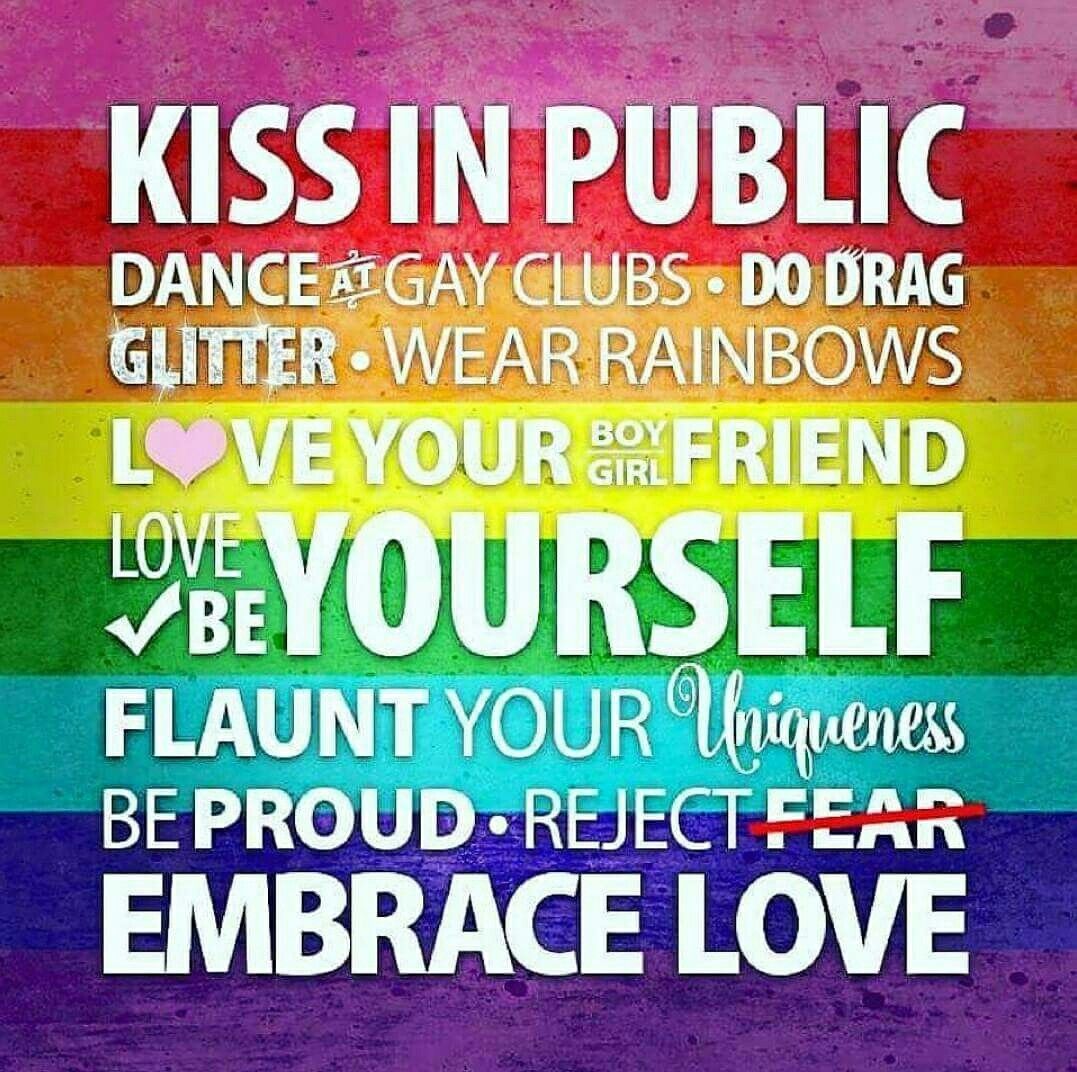
(click to embiggen)Pride Month hadn’t even started before complaints about why we even have Pride started crossing my various news and information streams. There are many, many reasons I can give, but the most important one is simply visibility. We still live in a society where queer kids are bullied by their own parents, thrown out on the streets at the encouragement of their churches, and told again and again that who they are and who they love is shameful and abnormal. And those messages don’t come just from overt bigots who spew anti-gay hate. That message also comes from so-called allies and even from other queer people who disparage those queers who dress outrageously or otherwise flaunt their uniqueness.
A couple months ago Newsweek used this picture to illustrate a story entitled, “The Street Skirmishes, Bar Brawls and Drunken Violence of American St. Patrick’s Day”The funny thing is that they never say such things about participants of St. Patrick’s Day parades. Even though a typical American Pride Parade is far less rowdy and has far less public drunkenness than the typical St. Patrick’s Day parade. Pride events have a whole lot less sexuality than typical Super Bowl commercials. Pride events have a lot less nudity than, say, Seattle’s annual Fremont Solstice Parade. But because the sexual innuendo and nudity in those other events are aimed at straight people, the outrageous costumes are being worn by straight people, and intoxicants are being publicly consumed by straight people, it seldom gets the same kind of coverage in the news, and certainly doesn’t provoke the public tut-tuting on social media that Pride events do. Remember that the original St. Patrick’s Day parades were political marches protesting discrimination against Irish people in America. When was the last time you heard of someone being fired for being Irish?
A person crossed my social media this week (I presume because I reblogged a bunch of pride comments and memes on my tumblr) to admonish me for provoking normal people by celebrating the freaks of the queer community. They claim that they aren’t at all homophobic, yet they use the same tactics and the same language as the rabid bigots. Just like the bigots, they say that being visible is flaunting our sex lives. They say we are freaks. As a certain famous man from Galilee once warned us to beware of people who claimed to be our friends: “by their fruits shall you know them.”
Since I promised that this would be an adventure in dictionaries, let’s look at that word, freak. I call your attention to the following excerpt from the Shorter Oxford Dictionary’s definition:
4 Something fanciful or extravagant; (more fully freak of nature) an abnormal or irregular occurrence, an abnormally developed person or thing, a monstrosity. b A person regarded as strange because of their unusual appearance or behaviour.
This so-called ally is hardly the first person to call me a freak. One of my uncles used to refer to me as an over-educated freak as early as age 9, for instance. It was one of the mildest insults my eighth grade Reading and Literature teacher called me. Other teachers and school administrators told my parents that the bullying I experienced was impossible to stop as long as I failed to act like a normal boy.
What was the behavior they were referring to? Was I showing up at school wearing bondage gear or dressed as a drag queen? No, of course not. The sorts of behavior that was called out were things like:
I would rather read a book by myself than play sports
In elementary school when most boys hated the girls in class, I got along great with them
I knew more about cooking than I did about horsepower and gear ratios
My favorite TV shows were things like The Carol Burnett Show or The Partridge Family or The Mary Tyler Moore Show instead of Gunsmoke or The Streets of San Francisco
My favorite books were mostly science fiction
In middle school I treated girls I talked with as friends, rather than as objects of desire (and didn’t understand for a long time what the difference was between the way I interacted with girls and the way most of the other boys did)
I liked to draw and write fiction
I laughed at the wrong things
I liked to wear clothes that were interesting colors
Some of that list will not strike many people as gender nonconforming, particularly the science fiction bullet. But you need to understand that before 1977 and the advent of the original Star Wars movie (when I was a junior in High School), normal boys did not like sci fi.
The first Freedom Day Marches didn’t happen until I was in fourth grade, and they were not being covered on news stations and the like until several years later. All the bullying and teasing I got for being a sissy or a freak or “not a normal boy” was deeply rooted in homophobia that was hateful and destructive long, long before the first Pride. So don’t tell me that Pride causes homophobia. Anti-gay hatred was around for centuries before Pride.
And kids like me—kids who could never figure out why the way we talked or the way we walked or the things we found interesting were wrong—were subjected to that hatred and bigotry without appearing in public in fishnet stockings or elaborate make-up. We were bullied and mocked and scorned and ridiculed because our behavior wasn’t the usual expected of our gender. I was bullied because I didn’t understand why it was unusual for a boy to think that a pair of burgundy pants was cooler to wear than plain blue jeans. I was bullied because I thought a girl’s ideas were more interesting than what was hidden by her clothes. I was bullied because I would rather sing along (and dance or pretend to be a member of the band) to the radio than play cops and robbers.
Not all queer kids are gender nonconforming (but studies show that at least 75 percent of boys who were consistently identified as “sissies” during childhood will come out as gay as adults), just as not all queer male adults are into show tunes. But the scant number of queer athletes who have come out of the closet, as well as the large numbers of “straight acting” and “non-scene” gays, have been free to do so because the nonconforming or freakish queers decided not to take the hate and loathing lying down. The freaks decided to stop being ashamed of who they were and who they loved. The freaks decided to stop pretending to be non-freaks.
I’m not a drag queen and I don’t wear fetish gear to Pride. I wear my purple hats and various rainbow or unicorn-adorned t-shirts year round. I’m unashamed of my fabulous rainbow parasol and my purple earrings. But I cheer and clap for the people who do dress in drag or other outrageous clothes at Pride. I support their right to be there and be out and dress however they want without being harassed. Just as a woman wearing certain clothes in public doesn’t make it all right for someone to harass or sexually assault her, neither do queer and trans people wearing whatever they’re comfortable in make it right to exclude or denigrate them.
If my love of bright colors, glittery earrings, and silly t-shirts makes me a freak, I’m proud to join that fanciful and extravagant legion of the out and proud. If you’re going to call me a freak, fine, but that’s Doctor Freak to you, and don’t you forget it!
This was the judge’s rationale for giving such an incredibly light sentence (click to embiggen)This is one of those news stories where I don’t want to wait until my Friday round-up of links to talk about it. Among the things voters did in the various states holding primaries on Tuesday, nearly 60% of the voters in one California district voters to recall (remove) a judge: Voters Recall Aaron Persky, Judge Who Sentenced Brock Turner.
The rest of this post is going to be about a sexual assault, including details that I found disturbing when reading earlier coverage of the case, and disturbing again while summarizing before stating my opinion about why the recall was justified. Don’t click through if you don’t want to read about such a crime…Continue reading Who will judge the judges?→
(Click to embiggen)This week is not going at all as expected. Midday Monday I noticed that my throat felt a little scratchy and I seemed to be more distractible than usual. I coughed a bit later in the day, but it didn’t feel like anything serious. When I clocked out and left the office I did my usual thing, which is to launch an open-ended walk on my workout app then walk semi-randomly until I’d logged a mile. Because of the geography of the part of town my office is in, it isn’t that random. First I go uphill three blocks (because it is a very steep hill between the office’s street and the street where the nearest bus stops are), then I start the semi-random bit. At most corners I choose which way to go based on which crosswalk shows “Walk” then continue down that block until the next corner. If I get too many blocks away from the bus stop, rather than cross the street, I turn the corner and walk 3/4s of the way around the block to get me headed back, then start crossing streets based on the cross-walk sign. Then, when my watch taps my wrist and dings to tell me I’ve gone a mile, I take the quickest route from that point to the bus stop.
I do this because for years one important source of exercise was that I would walk all the way home from downtown on most workdays. When I lived in Ballard, that meant walking for a bit over an hour four or five times a week, right. Now that I’m in Shoreline the walk is closer to 10 miles and much of it would not be along pedestrian-friendly routes. So I do this walking thing that usually gets me a bit over 25 minutes of walking each day.
Anyway, on Monday the first problem was that I was wheezing more than a bit on the steep uphill part and coughed for a while. Later, when my watch binged to indicate a mile I continued to the corner, stopped, looked around, and literally muttered, “Where the heck am I?”
Instead of looping back when I reached certain streets as I usually do, I had just let the random crosswalk signs guide me. And I wasn’t really anywhere that I didn’t know—it was just that I was at a part of downtown that I haven’t walked through in many years, back when I worked at a different workplace. And businesses have been replaced and some buildings have been torn down and I had to look at the street signs to figure out where I was, instead of recognizing my surroundings. So then I turned around and made as short a walk back to the bus stop as I could.
That should have been a sign. But even when I got home and my husband told me he was afraid he was coming down with something, and I confessed to being a bit worried about the scratchy throat and cough, I still clung to the notion that it was just worse than usual hay fever because we’d gotten a shift in the weather on Sunday.
A couple hours before my alarm went off Tuesday morning, I woke myself up having a coughing fit. There were other symptoms the made it clear I had caught something. Once my alarm did go off, I did my usual morning meds, then logged in to the work system to send my boss a message that I was sick and wasn’t sure I’d be up to working from home. There were already messages from co-workers who were sick and not coming in. I crawled back into bed and for all intents and purposes slept through the rest of the day. Yeah, I woke up a few times to eat, run to the bathroom, chat with my husband when he got home, and even make dinner (if heating two frozen prepared things from counts as making), but mostly I just slept.
I had hoped to wake up feeling better and only having to decide whether to try to go into the office or work from home (so as to decrease the chances of infecting other people). But I felt much worse when I woke up than I had yesterday.
Napping, cold tablets, and coffee seem to have alleviated the symptoms a bit. Since I’ve woken up enough to bang out a silly blog post, I think I might be able to be productive this afternoon, so guess it’s time to give that a go.
Heh, the text spells it both McGuffin and MacGuffin… (click to embiggen)I didn’t quite mean to go so long before continuing my series of blog posts about subplots; additionally I have also been meaning for years to do a post on some 3rd of June1 about the 1967 hit song, “Ode to Billie Joe” and its unusual singer/songwriter, Bobbie Gentry. Then, because another blogger who did remember on June three to write about the song and they linked to an excellent podcast about the singer, I realized there is a connection between the subjects of plotting and the song. So I’m a couple of days late, but let’s talk about a narrative device which is often intimately related to subplots: the MacGuffin!
First, let’s deal with the song a bit. If you aren’t familiar with the song (which knocked the Beattles off the top of the pop charts for 4 weeks in 1967, then went on to make it into the top twenty of the Blues chart, the Soul chart, and finally the Country chart), you must listen to it once before we talk about it. Even if you are familiar, you really should listen again, and try to listen to it as a short story, rather than just some song:
The song is often retro-activily classified as Country, but at the time it was more clearly pop with a heavy blues influence. I think people classify it country because the story of the song is set in the south and she lets her Mississippi accent through.
Anyway, as a short story, it’s pretty phenomenal. And part of appeal of the song, clearly, is the mystery at the center of the song: what did the narrator and Billie Joe throw off the bridge earlier in the week, and why did Billie Joe commit suicide?
Over the years, Bobbie gave a very consistent answer: she didn’t know and it didn’t matter2. Many times she explained to interviewer, “It’s a MacGuffin. Alfred Hitchcock called the object that moves the plot along but isn’t really important on its own a MacGuffin, and writers have been using that term since the 1930s.” The song wasn’t about what happened, rather it was about unconscious cruelty. The family is sitting around the table discussing the suicide of someone they all know as casually as they ask each other to pass the biscuits, completely unaware that the suicide victim’s girlfriend is a member of their family, sitting right there listening to them.
The something that the narrator and Billie Joe were seen “throwing off the Tallahatchie Bridge” is one type of MacGuffin. It is something another character saw, and a third character comments on, which draws a connection in the minds of the audience between other events in the story. But exactly what it was and why it was thrown off aren’t important to the tale that the writer is sharing.
You’ll find a few different definitions of MacGuffin out there (also spelled McGuffin and Maguffin). My definition is:
A story element that draws the reader’s attention to certain actions and/or,
Drives the plot of a work of fiction (usually because several characters are willing to do almost anything to obtain it), but,
The specific nature of the object may be ambigious, undefined, left open to interpretation, or otherwise completely unimportant to the plot.
Alfred Hitchcock once said that in a thriller the MacGuffin is often a necklace (a small object which can be worth a lot of money, but may also hold sentimental value or be coveted for its beauty), while in a spy stories the MacGuffin is usually some mysterious papers. The important thing (storytelling-wise) about the MacGuffin is what it motivates the characters to do, not what it actually is. In the example of “Ode to Billie Joe” the thing thrown off the bridge is important because apparently it contributes to Billie Joe MacAllister’s decision to commit suicide, probably motivates the preacher to come tell Mama the news of the suicide, and draws the audience’s attention to the connection between the narrator and Billie Joe.
One might wonder how MacGuffins relate to subplots. As I’ve discussed before, subplots are sequences of events with plot-like structures that happen within a larger story an are sometimes only tangentially related to the main plot. And sometimes a way you can connect subplots more closely to the main plot, or even connect subplots which aren’t otherwise related to each other is with the use of a MacGuffin.
For example, many years ago when I became the editor-in-chief of a small sci fi fanzine, I inherited a project started by the previous editor. She had come up with a framing tale to allow contributors to write a large group story together. This allowed contributors who had trouble coming with with plots an easy situation to write some scenes about their characters in, for instance, and encouraged contributors to work with each other. When I became the editor, there were about 40,000 words worth of writing from a whole bunch of people… and most of it did not fit together very well.
I went through the whole thing, taking notes and trying to come up with an outline that would fit all the disparate pieces into the original framing tale. One of the contributors (and an Associate Editor), Mark, regularly wrote a lot of the stories we published, and had written several sequences with different characters which could have been turned into interesting plots on their own. So we talked at length before bringing the proposal back to the rest of the editorial board. There would need to be a lot of new stuff written to tie the pieces we had together and push the whole thing to an ending, and I proposed two MacGuffins to help us out.
A lot of the existing sequences (and the framing tale) involved a criminal deal (worth the equivalent of hundreds of millions of dollars) gone wrong. While the initiating event for the non-criminal characters was an anniversary party to celebrate the original maiden voyage of a spaceship. So, one MacGuffin would be the 36th Century equivalent of a bearer bond: a physical object containing some kind of encryption key which could be presented to a particular financial institution and be exchanged for the hundreds of millions of dollars—that could be cashed by anyone. The other was an anniversary present which the pirate captain charged his first mate with making certain was delivered to the captain of the ship celebrating the anniversary.
This gave us two packages that were both in the possession of one of the criminal leaders early in the story and then became separated in the chaos of the shoot out and the inconveniently times major earthquake. Many of the criminal characters believed that either of the lost packages was the fabulously valuable bearer bond, but weren’t sure which one. Other characters had no idea when either package was.
A lot of the sequences which had no other connection to the established plots could thus be connected merely by adding a few sentences where one or another of the characters came into contact with a package that looked important, and then losing it. Other sequences got a more firm connection to the plot by adding a few sentences where one or more of the characters was trying to find one of the packages.
The two MacGuffins on their own didn’t solve all the problems. We spent a few months dividing various sequences and subplots to members of the editorial board to write additional bridging material5. And then Mark and I would each re-write these sequences to make them fit with the others. After a few months of this, I started sensing a bit of dread from the other members of the editorial board when we got to the standing item of this story6, so one meeting when we got to that point I immediately said, “I think we’ve reached the point where I should take over and finish weaving the rest of the tale together, and then Mark can do a clean-up pass.” At least two members of the board audibly sighed and said something like, “Thank goodness.”
We published the final tale as 24 chapters in consecutive issues of the ‘zine. The final word count was a bit shy of 250,000 words. And those two MacGuffins really helped. In the penultimate chapter, one MacGuffin finally ended its journey, and I managed to make the delivery of the lost bearer bond to the pirate captain into the punchline to a joke. The other MacGuffin never made it to where it was originally destined, but it served as the final punchline to the entire story.
The objects themselves were not really important, particularly in light of the number of characters who were killed in the course of the tale7. But the objects provided through-lines for may subplots and kept the reader guessing until the very end.
Footnotes:
1. The opening lyrics of the song are, “It was the third of June, another sleepy, dusty Delta day”
2. Please don’t ping me to tell me that the 1976 movie based on the song reveals the answers. It doesn’t. Through a series of events involving a later minor hit of Ms. Gentry’s that was the theme of another movie, a studio approached her with the idea of making a movie based on her first hit. Per the agreement, her only involvement with the movie was they would use an existing recording of her singing the song in the soundtrack, and she would have one meeting with the screenwriter. Only one. He reported afterwards that the first question he asked her was why did Billie Joe commit suicide. He said Gentry laughed and told him, “I have absolutely no idea. That’s not why I wrote the song.” Then he asked her what they threw off the bridge, and she repeated that she had no idea. Left with no information he could use, the screenwriter made up a rather convoluted plot, and named the previously unnamed narrator of the song Bobbie, so that audiences would believe that the song was autobiographical3.
3. Which it wasn’t4.
4. In a very early interview about the song, when the interviewer was not happy with Bobbie’s explanation that it was a MacGuffin and pressed her repeatedly for an answer, Bobbie said, “I really don’t know. Maybe it was a ring or a locket that represented an engagement or something?” But clearly at this point she admits that she is guessing, too.
5. A lot of the authors or co-authors of some of the sequences had left the project, but we had permission to use the material, without always knowing how the absent writer had intended to end their sequence.
6. Yes, we were technically a fan project, but we had regular meetings and I had agendas for the meetings and we took minutes and everything. I’m that kind of editor!
7. It was a natural disaster story and the story of a criminal deal gone wrong, with multiple shoot-outs—of course characters died!
8. Edited to add: I should have linked to the podcast. Cocaine & Rhinestones Season 1, episode 4, “Bobbie Gentry: Exit Stage Left”.
(click to embiggen)It’s the first Friday in June, and that means that it is now officially Pride Month! Wooooooo!
If you don’t celebrate Pride (or at least understand why we do), then I have no idea why you are reading my blog. But, it’s that time of year! Today I need to put out my rainbow flags to kick off a month a queer pride and remembrance.
It’s Friday! That means it’s time to present my Friday Five: This week you get the top five (IMHO) stories of the week of interest to queer people, top five stories about people who are less-than-wonderful, top five general interest stories, and top five videos (plus notable obituaries and a recap of my blog posts).
 It’s the third weekend of Pride Month.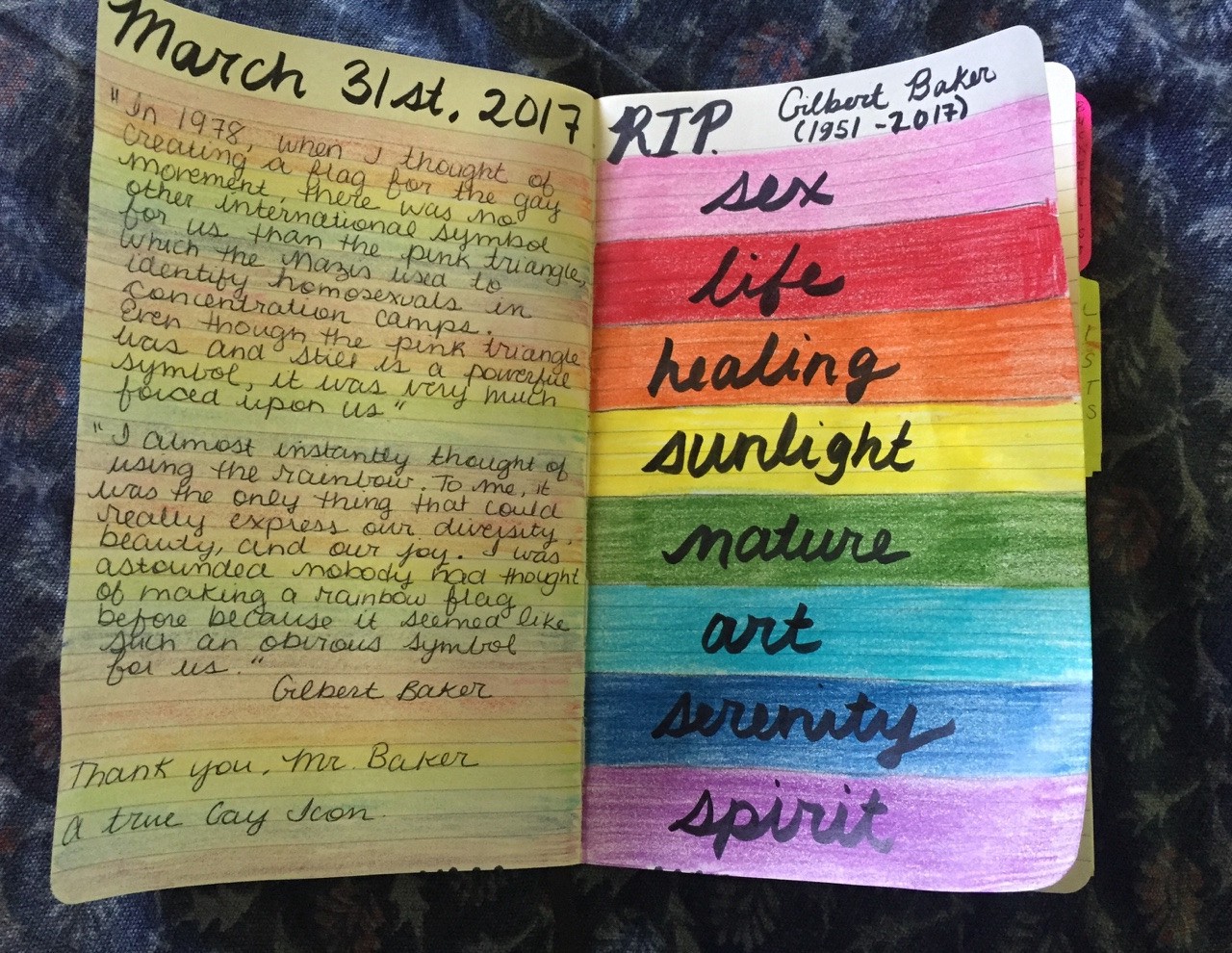






 Font Folly