I've loved reading for as long as I can remember. I write fantasy, science fiction, mystery, and nonfiction. For more than 20 years I edited and published an anthropomorphic sci-fi/space opera literary fanzine. I attend and work on the staff for several anthropormorphics, anime, and science fiction conventions. I live near Seattle with my wonderful husband, still completely amazed that he puts up with me at all.
View all posts by fontfolly →
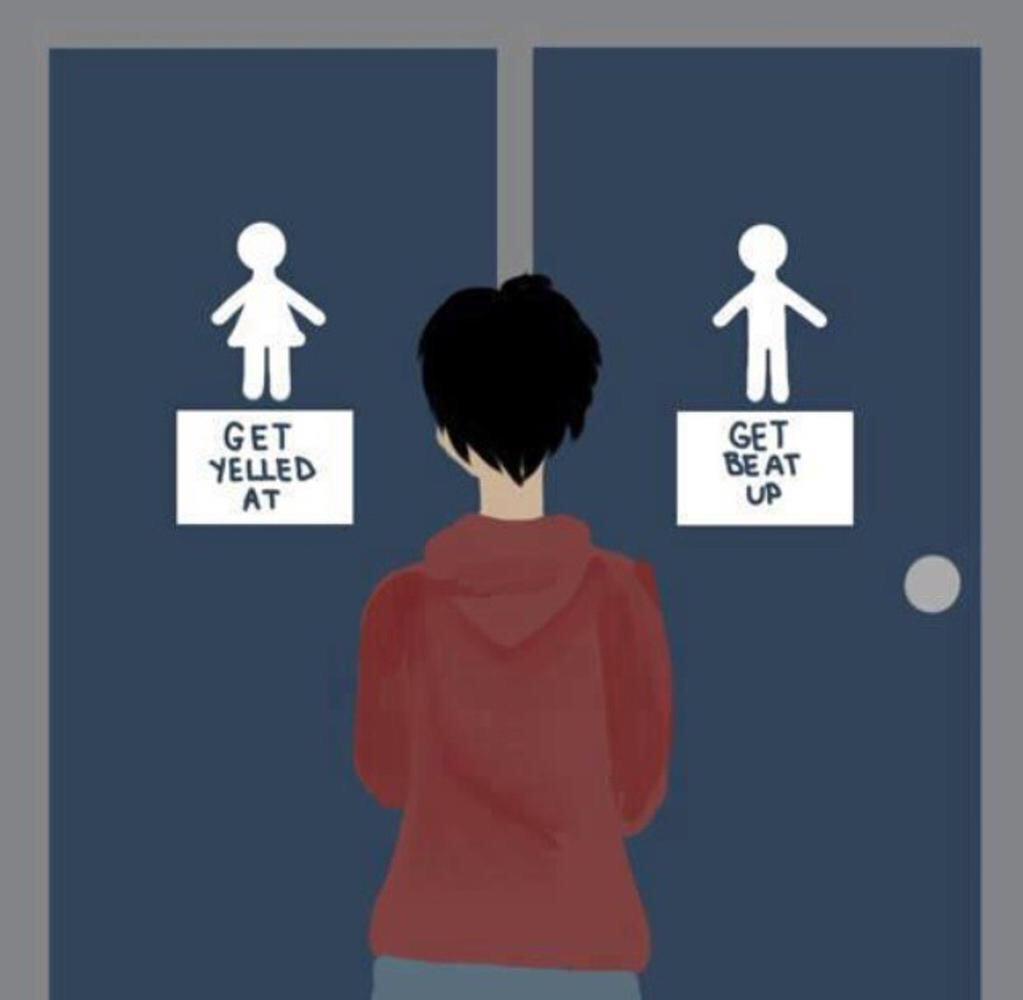
“The call volume for Trans Lifeline [suicide hotline] has doubled since HB2 was passed. This shitty law has a body count.” (Click to embiggen)Last week I skipped a bunch of links I’d gathered for my weekly Friday Links post because I was getting a little too outraged just reading some of the headlines. I wound up including four of them in the follow-up post, along with a bit of better news related to one of them.
This week wasn’t quite as bad, but I also made an effort to spend less time browsing certain news sites just to avoid a bit of that. And this time I missed a couple of links that I meant to include, but somehow omitted:
Why the conservative war against transgender rights is doomed to fail lays out nicely why demographics are already against them. Yes, they’re winning some victories and causing more than a bit of pain, but they also have less public support than they believe. Even in North Carolina, which is fighting hard to protect its anti-trans law, less than half the voters support said law.
But crazy people will continue to say crazy things: Louie Gohmert: No Gay Space Colonies! I wasn’t aware that anyone was proposing a queer space colony, but Texas Republican Louis Gohmert is ready to stand agains this imminent threat. He says if Earth is ever under threat of destruction by an asteroid, Congress needs to make sure we don’t waste any resources putting queer people or queer animals on the space ark. Never mind that Gohmert has voted the gut the space program time and again, so the likelihood that if we detected such a threat that we would be able to assemble and launch such an ark in the time we had is exceedingly low.
And for anyone who is trotting out the argument that queer folks aren’t oppressed in our society, or at least are much less so than other groups, let’s remember that this happened this week: U.S. House Republicans read ‘death to gays’ Bible verse before voting against LGBT rights law. He was actually leading the caucus in a prayer, and quoting from a translation of the Bible that converts some text that in the original greek does not explicitly reference homosexuality into rather explicit hate speech. So this congressman was actually publicly praying for the death of gay people. And while some Republicans walked out of the meeting in protest, most didn’t. And as noted in this article, when contacted for comments, not one single Republican has apologized.
But they don’t hate us. How can we possible think that?
It’s Friday! The final Friday in May already. Yeesh! I’m not quite ready for the year to be half over. It’s also nearly June, and my annual project of creating the perfect Pride Playlist for my iPhone is not going quite as well as it ought, in part because of a weird issue that has popped up with a small number of tracks in my library which has resulted in me filing very complicated trouble tickets with Apple. But the real problem is that I can’t quite figure out what mood to go for this year. This might be one of the years where I make two lists with very different, uh, textures.
Meanwhile, here are links to some of the interesting things I read on the web this week, sorted into various topic areas.
Peter Thiel, Gawker, and Freedom of Speech. “I, for one, don’t dispute Peter Thiel’s right to back Hogan’s case. I simply think he’s an asshole for doing it, and a coward for having attempted to do it in secret.”
On Peter Thiel and Gawker. “The notion that Thiel or any one percenter could wage a war of attrition against a media outlet with the intent of destroying it for slights real or perceived should be horrifying to anyone who believes that freedom of the press is a necessary condition for an open society…”
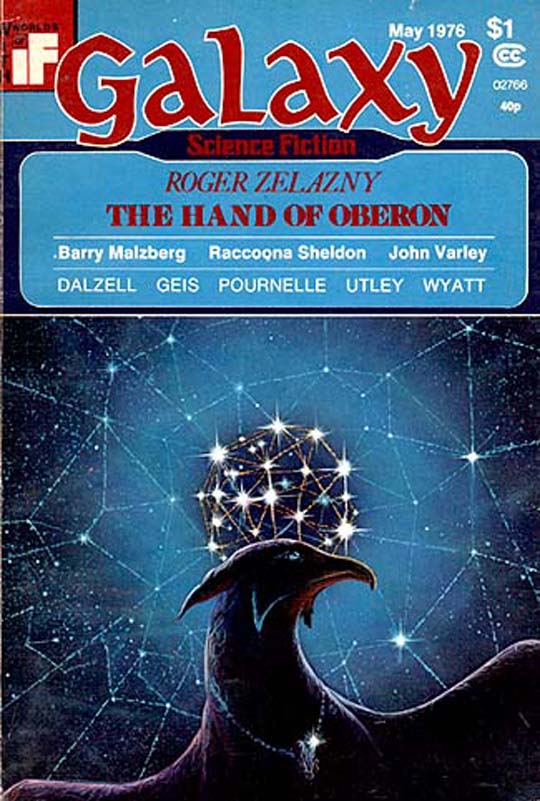
Cover of the May 1976 edition of Galaxy Magazine, which is where I probably first read Varley’s “Overdrawn at the Memory Bank.” (Click to embiggen)In the spring of 1976 I still had a subscription to Galaxy magazine, thanks to my grandparents, though things were not going terrible well in my life at that time, so I didn’t always get all the way through one issue before the next came in. So I might not have read it until some months, after my parents’ divorce was final, and Mom, my sister, and I moved 1200 miles away. I definitely remember owning the magazine with this cover. This issue contained the story, “Overdrawn at the Memory Bank” by John Varley.
Varley was the author of “Picnic on the Near Side” which I wrote about before, and which made quite an impression on me. This story is set in a similar world, with extensive colonies on the moon. It concerns a man named Fingal how has purchased a vacation at one of the “disneylands” which was large lunar caves that have been made to duplicate long lost environments on earth, complete with cloned wildlife. Fingal’s memory and personality are transferred from his brain into a cube, which is then implanted in a lioness so that Fingal can experience the life of a predator on the savannah.
Something goes wrong, and Fingal finds himself back in his own life sooner than expected, and strange things keep happening, such as books rewriting themselves before his eyes to become messages to him. He eventually learns that his body has someone been misplaced, so the memory cube has been put into a safety mode, interfacing with a computer which is creating a simulation of his real life. Messages come to him from a technician named Apollonia Joachim who explains that the simulation is necessary to keep his memories and personality intact until it can be returned to his body.
As the days stretch into weeks, Fingal starts taking classes in the simulation to teach himself new skills to get a better job when he does get back. Strange things happen, as the technician tries to keep him focused. In one incident, Fingal notices strange patterns in the floor tiles in his bathroom, and starts tracing them with his toe, suddenly the bathroom fills up with money. Fingal’s consciousness had somehow gotten into someone’s financial records. Apollonia warns him about losing himself again and again.
Over the months that follow, Fingal finds himself falling in love with Apollonia, and making plans for a future together.
Eventually Fingal is reunited with his body, and then learns that what felt like years to him in the simulation was only six hours, because his thoughts were moving at computer speed while connected. Ms Joachim has only been interfacing with him for a few hours, and doesn’t share his feelings.
The simulated classes he took did result in real learning, so he does have new skills and can pursue a more interesting job. Plus, of course, he gets a refund on the vacation and a lump sum settlement from the company. He’s informed that other people who suffered similar accidents have not always fared so well, and he’s the first person two survive six hours outside the memory cube’s normal limit.
Varley didn’t win an award for this particular story. He did win a Special Locus award the year this was published for having four novelettes, including this story, voted in the top ten in the Locus Reader Awards.
The story was adapted badly into a movie that changed a lot of things for no particular reason. Avoid the movie. The story isn’t action packed, but is more focused on the internal conflicts of a man unhappy with his life who is forced to stay there even if it is simulated. The notion being that if they allow his fantasies to run wild while his personality is in the memory cube, he will go mad and forget who he really is.
I enjoyed the story a lot. The notion that it’s the boring and repetitive parts of our lives that anchor our identities wasn’t terribly revolutionary, but it was interesting to see how this sort of technology might play out without any world-threatening peril giving it at artificial sense of danger. Really, who needs a bigger threat than literally losing your mind to provide a sense of dramatic tension?
One odd side note: I always get this story mixed up with another Varley tale, “The Phantom of Kansas.” They’re both set in the same fictional future world (the Kansas in the title of the second story is an artificial recreation of the midwestern plains of North America in another Lunar cave), and both stories involve stored personalities, but otherwise the plots have nothing to do with each other. The simple fact is that I think the title “Overdrawn at the Memory Bank” would have been better for the second story as it evokes a metaphor for the central plot better than the notion of a phantom. So there has been more than one occasion when I’ve pulled out an anthology, such as my hardcover copy of Wolheim’s 1977 World’s Annual Best Science Fiction, see the title of Varley’s story, turn to it expecting to read the other story, and then as I read the opening paragraphs remember that I always get them mixed up.
Oddly, I own more than one anthology that includes “Overdrawn at the Memory Bank,” but absolutely none that include the other story. I need to fix that.
My favorite coffee mug in it’s natural habitat: a bookshelf within reach of my favorite chair.So I drink a lot of coffee. And when I’m at home on a work-from-home day or a weekend, I typically make a pot in the morning, fill up my mug, drink only some of it before I decide it needs a warmup, so I top it off. How many cups of coffee do I drink, then? Is it one long cup, or is it twelve? Except my cup is rather large, so how do we count by the cup or by the cup?
It has long amused me that coffee pots still measure the amount of coffee in the carafe by a measuring cup. One cup of liquid equals half a pint, which means 1/16th of a gallon. But at no time when I have own a coffee maker, have I ever drank coffee from a drinking cup that holds just one measuring cup’s worth of coffee. Most people drink from a coffee mug that holds nearly two measuring cup’s worth of coffee in a single serving.
l to r: A coffee mug of the size most people seem to use, a classic teacup, and then my favorite coffee mug. (Click to embiggen)My current favorite home mug is bigger still. It’s the purple one in this picture. The little teacup in the middle is the kind of cup that the coffee pot manufacturers seem to think that people still use for drinking coffee. The mug on the left is one of my old favorites. At one time it was my office mug. I brought it home because a co-worker was weirded out that a man liked to drink coffee from a mug that said “The Queen of Everything.” Never mind that I was an openly gay man, it still freaked at least one person out. So it was a mug I often drank coffee or tea from at home for years after that. Until I found the large purple one.
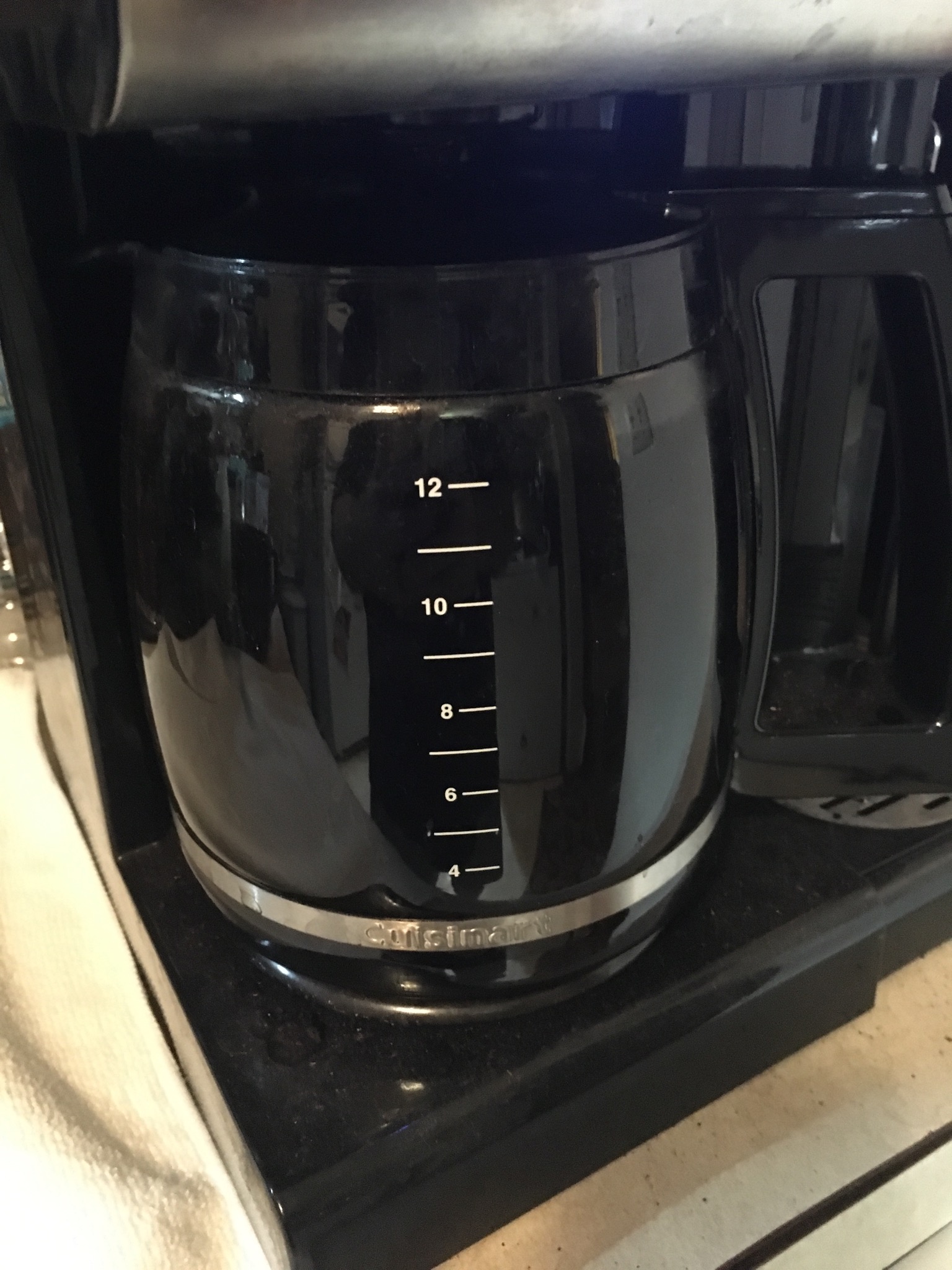
The coffee pot right after making a full put. Not that the liquid goes up the the 12 mark.My current coffee maker includes a carafe which claims to hold 12 cups of liquid. And it certainly looks like a huge amount of coffee when I first make a pot in the morning. Twelve measuring cups is three quarts, and three quarts of coffee seems like a lot. Right?
You would expect that anyone who would drink 12 cups of coffee in a single day would be vibrating, I suppose. Maybe even vibrate so fast that I open a portal to an alternate universe and pass right through. All that caffeine in one person is bound to make one at least a bit manic. I remember a historian once mentioning that one of the prominent figures of the Enlightenment recorded in his journals (in which among other things he kept careful account of his household expenditures) of some weeks drinking 40 cups of tea a day. The historian said, “No wonder all those guys wrote so much and discovered so much. You try drinking 40 cups of tea and see whether you’re up all night having all sorts of exiting ideas bouncing around your head!”
I filled up my favorite mug exactly once, and look how the coffee level has dropped!However, when I pour coffee out of the carafe to fill my favorite mug, note that the coffee level has dropped down to just below the 9 mark. So my favorite coffee cup holds three cups of coffee. Which means that if I drink the whole pot, while one could say that I drank 12 measuring cups of coffee, it’s only actually four refills of my coffee mug. So, do I drink 12 or 4 cups in a single day?
Well, there’s at least one more complication I haven’t told you. Periodically over the course of the day, whenever I notice that the carafe is less than half full, I pour about three cups of water (using an aluminum pitcher I keep nearby for reasons) into the reservoir and kick-off a new percolation cycle, letting the machine top off the pot. I confess that when I do this, I don’t grind fresh coffee beans, I just let the new hot water go through the grounds that I put in in the morning. This probably makes me a freak or a loon in the opinions of some hard-care coffee fanatics. I usually only do this twice in a day.
So, that would indicate that I actually drink about 18 measuring cup’s worth of coffee a day, right?
Well… the truth is, I usually stop in the early evening, and there is usually still coffee in the pot at least up to the 4 cup line when I do. So let’s call it 14 measuring cups again. That’s enough to completely fill my bit mug four times, and nearly a fifth afterward.
I’ve left out one more wrinkle that applies to work-from-home days. When I first get up on a work-from-home day, I do my meds and some of the other morning routines quickly, including making coffee, so I can drive my husband in to his place of work. As a treat for myself, I grab a small can of coffee drink, either a Starbucks Double-shot Lite, or there’s another brand that has a Salted Caramel flavored coffee drink in a small aluminum can. Both types claim to have the equivalent of two shots of espresso in the drink.
I pour one of these cans into a travel mug, which fills it a bit over half full, then top it off with coffee from the pot. That’s my “latte” for the drive in. I usually drink about half of it in the trip. When I get back home, I pour the remainder into my big purple mug, and top it off with hot coffee. The Starbucks’ can holds 6.5 ounces. The other brand’s can holds 7 ounces. Let’s just call it one more cup. Except it’s supposed to be two shots of espresso, so should we call it two cups?
Just how much coffee do I actually drink?
P.S. Please don’t chime it to say that coffee isn’t good for your health. The studies that most people think showed that were all conducted over 50 years ago, and newer studies show no correlation between coffee drinking and any of the health effects people attribute to them. None. Deeper analysis of the raw data from the earlier studies has revealed that the researchers completely failed to notice that there was an extremely strong correlation between being a heavy coffee drinker and being a heavy smoker. There was also a very strong statistical tendency for men to drink more coffee per day than women. And oddly enough, all the health issues that people now blame on coffee because of these badly quoted studies are also illnesses that one is more likely to have if one is either male or a smoker.
When the data from the old studies is re-analyzed to compare only smokers to smokers, non-smokers to non-smokers, men to men, and women to women, all statistical correlation between the amount of coffee someone drinks and any negative health effects vanished.
It ain’t the coffee that you need to be worrying about.
So years ago I was a faithful viewer of the comedy series “My Name Is Earl,” the story of a not terribly bright petty criminal who became convinced that because of all of the awful things he’d done in his life, he was destined to try to make up for them or karma was going to keep punishing him. So he made a list of all the bad things he’d done, and with the assistance of his brother, Randy, and Randy’s sometimes girlfriend Catalina set out to make amends. Earl and Randy are also frequently both helped and hindered in their quest by Earl’s ex-wife, Joy. Everyone is frequently helped and oddly rescued from various situations by Joy’s current husband, Darnell aka “the Crabman.”
The series was a silly look at life in the fictitious Camden County, which was inhabited by a strange assortment of characters. It wasn’t everyone’s cup of tea, though I was always amused by the fact that the one person I knew who most disliked it said he hated it because it was completely unbelievable, yet he himself is always telling stories about his ridiculous in-laws and the unbelievably stupid problems they got themselves into. Which made me decide that either a) he had a really big blind spot, or b) all those stories he liked to regale people with of his supposed true family misadventures might have been more than slightly exaggerated.
Regardless, I really enjoyed the not-cynical way that “My Name Is Earl” demonstrated in its storylines again and again that most humans are muddling along as best as they can, seldom realizing just how much our lives are interconnected, and how much we contribute (in both good and bad ways) to the lives of others.
Gizmodo brings us this little story of pianist Tony Ann who has created a short piano piece that incorporates the music of several popular ringtone, transforming them into brief melodic themes that are woven together into a song. It’s pretty cool!
Famous Cellphone Ringtones Played On The Piano (Tony Ann Arrangement):
Yesterday a friend asked why I didn’t include anything about Oklahoma Lawmakers Passing a Bill Criminalizing Performing Abortion among the rest of the Friday Links. As I explained in the comments, their was so much ridiculous and outrage-inducing news out of Oklahoma this week (and a few other places), that on Thursday night while I was assembling the Friday Links post I reached a stage where I was seething. I was literally shaking so hard with rage that I could not sit still at the keyboard. I kept getting up and angrily pacing back and forth, muttering about how ludicrous it was. So I skipped over a chunk of the links I had bookmarked for the week and tried to move on to calming news.
Oklahoma was not one of the states I lived in as a child, but both my dad’s and Mom’s side of the family came from there, and I had a lot of relatives living there back in the day. My husband grew up in communities in Missouri and Oklahoma, and many of his closest relatives still live there. The upshot is that I have emotional ties to Oklahoma and keep hoping that it will become a better place than I recall it being. (While I was telling Michael about this update, he said, “There are reasons I always say that Oklahoma is a great place to be from!”) So here are a few other links that I could have included about Oklahoma yesterday:
Since then, there is some slightly better news. Midday Friday, the governor of Oklahoma vetoed bill that would criminalize abortion. And that’s nice. Unfortunately, she didn’t veto it because the law is blatantly unconstitutional. Nor did she veto it because the decision whether to have an abortion should be a matter of conscience for the woman involved. She vetoed it because the law failed to identify the definition of “medically necessary to save the life of the mother” which is the one exception in the law. It probably didn’t hurt that every expert agreed that the law would make it impossible for any OB/GYN to practice in Oklahoma, since any miscarriages or any tubal pregnancies that a patience experienced could be charged under the law. The governor explicitly said that she hopes a president will soon appoint judges to the Supreme Court who will overturn Roe v Wade and make abortion illegal at a federal level.
So it isn’t great news, just less awful than it originally appeared.
While we’re on the topic of improving news, some months back when the first trailer for the next Star Trek movie went up, it was pretty cringe worthy. It was blatantly obvious that whoever edited it was thinking, “Guardians of the Galaxy was a goofy comedy action movie that was a blockbuster, so how can we edit this to make it look like it is also a goofy comedy action movie?” The new trailer just dropped, and thankfully it looks much, much better:
Transgender Candidate Danni Askini Drops Out of State House Race. I was very sad last week to get the email from Danni saying she was dropping out of the race. But since she’s doing so to work on the fight against the anti-trans initiative headed for our ballot, I can’t fault her.
This insane and hilarious flashback to the 80s popped up on more than one spot this week and I couldn’t resist posting: BOY TOWN GANG – Can’t Take My Eyes Off You:
Cover for the first edition hardback of The Bicentennial Man and Other Stories by Isaac Asimov. (Click to embiggen)I first heard of “The Bicentennial Man” by Isaac Asimov when I saw the anthology, The Bicentennial Man and Other Stories offered as a selection in the Science Fiction Book Club. I was 16, and still technically a member of the club, but most months I checked off the “Send nothing at this time” box on the card, because even the cheaper prices of the book club were a bit much for my budget. It a bit over a year later when I found a paperback copy of The 1977 Annual World’s Best SF edited by Donald Wolheim in the local used book store when I finally got a chance to read the story.
Asimov wrote a lot of short stories about robots. Most of the stories collected in his anthologies I, Robot and The Rest of the Robots dealt with various logical contradictions that robots would be placed in by various circumstances, and how the robots (and the humans working with them) would work out those conflicts between the Three Laws of Robotics, their other programming, and the situation at hand. Even in his longer novels where robots figured prominently, such as the two sci fi murder mysteries, The Caves of Steel and The Naked Sun, the robots were always motivated by pure logic. The fact that the world is not a purely logical place, and that humans are seldom covered by rationality alone, formed the framework for the conflict in the stories.
“The Bicentennial Man” centered on a single robot, dubbed Andrew by the daughter of its first owner (a Mr. Martin, identified in the story which is told from Andrew’s point of view as simply Sir). Andrew demonstrates an unusual talent with wood carving—his works of art fetching high prices when offered for sale—and develops a desire to became human. Andrew is part of a new series of robots with what Asimov describes “more open-ended architecture” in his positronic brain, which the experts believe is where his apparent artistic talent comes from. Andrew’s stubborn insistence that he can become a human worries the scientists at the world’s largest robotics company, causing them to try to buy Andrew back.
In part because of the pleading of the owner’s daughter (whom Andrew calls Little Miss), Sir refuses to sell Andrew back to the company. Later, Sir helps Andrew gain some form of legal independence as a “free robot” with the legal name of Andrew Martin.
From there the story follows Andrew’s physical and legal journey through several generations of the original family, as Little Miss grows up, grows old, and dies, and her son and grandson found a legal firm which, among other things, fights to secure Andrew’s legal rights. Andrew designs new kinds of prosthetics, which are almost indistinguishable from natural body parts. Andrew’s body is slowly ungraded to first being a more human-looking android body, to an organic one. The proceeds from the patents on the various processes to create the prosthetics (which are used medically to improve the lives of disabled, maimed, and diseased people) providing Andrew’s income and funding the legal fight.
One of his important legal victories happens when he is 150 years old, where at a dinner in his honor (celebrating his medical inventions), he is toasted as the Sesquicentennial Robot.
Eventually, as Andrew realizes that he will never persuade a human legislature to pass a law declaring him, or any robot, a human because the key difference will always be his positronic brain. Which leads Andrew to compel a robotic surgeon to perform an operation on his brain that will cause the brain to slowly decay and die. Andrew’s reasoning is that it’s the immortality that forms the final barrier between him being accepted as a human.
The story really resonated with me. And it was interesting to see Asimov explore the nature of emotions and creativity from the point of view of artificial intelligence. But more interesting was the series of legal barriers that Andrew has to go through. Laws have to be changed to allow a robot to own property, for instance. Laws must be changed to make harming a robot a crime, at another point.
The legal progression to personhood that Asimov takes us through is based on the historical legal fights for woman’s rights and racial equality. For millenia, the legal system treated women as property. Assaulting a woman was a crime, yes, but the penalties imposed always included paying a fine to the woman’s father (if she were unmarried) or her husband, because the man in her life was deemed to have been harmed by the degradation of his property.
Similarly, Andrew discovers, once he is a free robot, that since there is no owner to whom damages would be owed, the legal system doesn’t consider anyone assaulting and damaging him a crime as assault. Vandalism, perhaps, but then, who is the owner who should be compensated for the damage?
It seems ridiculous to us now that some people, simply because of their gender or the color of their skin, had once been in a similar situation: harming them wasn’t inherently a crime, it was only a crime if it caused their “owner” to suffer a loss. And especially frightening to realize that in the matter of sexual assault laws in the U.S., for instance, that as recently as the 1970s the law was still structured this way. A woman couldn’t file rape charges against her husband or sometimes even her ex-husband, because once married her consent was no longer hers to give or withold, in that regard.
Andrew’s struggle for human rights parallels, thus, every oppressed groups struggle for equality. Something that I came to appreciate more some years later, when I finally bought my own hardcover copy of The Bicentennial Man and Other Stories and re-read this particular short story again. There is even a point, during the discussion about the assault laws, where another character makes the same argument at homophobes current make against hate crime laws: they aren’t needed, because the action is already a (minor) crime under existing laws.
Asimov’s story about a robot who wants to be a human might seem, on the surface, to be little more than a retelling of Pinocchio, but we see here one of the Grandmasters of Science Fiction—a sci fi writer who first reached prominence during the “golden age” of sci fi—turning a civil rights argument into a rattling good tale of old-fashioned science fiction. Who would have thought an old, white (okay, jewish, but still) male sci fi writer who made his first professional sale in 1939 would be a social justice warrior? Don’t tell the melancholy canines!
When I read “The Bicentennial Man” I was a very closeted high school student, terrified that people would find out I was queer because I knew that strangers, friends, and even family members would see me as an abomination if they knew. So the story of Andrew, who wanted to be seen and accepted as a person certainly struck a chord. Even if his ultimate solution, dying, seemed like a terrible way to achieve his goal.
When I was a child, none of the words I knew to describe being a non-heterosexual were good words. Pussy, sissy, fag, queer, dyke, homo—they were all insults. Homosexual was both clinical and pejorative, at least the way everyone I ever heard use it said it. It was clinical, all right, and it was clear the people saying it thought it described a terrible sickness. The least insulting was gay. Which isn’t to say that it wasn’t hurled as an insult, it’s just we were also told it was what those people preferred to be called. Though even the people who admitted that much were pretty angry about it. I actually had more than one teacher in school talk about how terrible it was that those perverts had stolen a word that used to mean not just happy, but a particularly carefree and whimsical kind of happy, and then used it to describe their sad, loveless, deviant lives.
And a lot of those words got used on me.
Throughout grade school I didn’t think that the sexual part applied to me. I knew that I said the wrong things and acted the wrong way, so that’s why everyone (except the nicer teachers and nicer church leaders) called me a sissy and a crybaby and so on. I wasn’t tough enough or whatever, but there was nothing sexual going on.
By the time I was in middle school and puberty had come roaring into my life I realized that all of those people had been on to something. And it terrified me. The worst thing I could imagine happening to me was for someone to get proof that the words fag, queer, homo, and gay described me in more than merely a metaphorical way.
So in my mid-twenties, the fact that I was finally able to say aloud to a friend, “I think I might be gay” was a giant leap. Overcoming the aversion that I felt to all of those words, equally, had been a titanic struggle lasting more than a decade. Over the next few years I was able to say I was “gay” a bit more confidently. I didn’t cringe inside if someone called me “gay,” at least if it wasn’t in an angry tone of voice.
I was actually starting to feel all right with the label by my thirties.
Which was when I started getting yelled at about it, again—but not by straight bigots. No, the people who were angry about my use of the word were lesbians. “How dare you call me that word!” and even more viciously, “How dare you assume that you can use that word as an umbrella term to include all non-heterosexual people!”
I was literally yelled at a few times, before I developed the habit of saying “lesbian and gay.” And almost right away people started growling at me not to leave out the bisexuals or the trans people!
I’m not exaggerating when I say that some of my fellow non-heterosexual got angry and yelled. It was clearly very important to them.
So I just about died laughing a few days ago when I saw some trans activists in my twitter stream angrily assert that it was people like me—cisgender, white, gay, and male—who were the ones that had excluded lesbian, trans, and bi people from the “clearly superior umbrella term, gay.”
No.
We didn’t exclude them. They were the ones who angrily and emphatically told us that we couldn’t use “gay” to describe them. During the late 80s and 90s, just as I was starting to get mostly all right describing myself as gay, I was being told that doing so was exclusionary. I was the bad guy for wanting to have a simple term than encompassed all of us.
It was during that time that Queer Nation came into being. Queer Nation was one of many groups formed to make a more aggressive push against homophobia and specifically homophobic violence at the time when both the violence and the media’s negative portrayal of homosexual people was escalating. The AIDS crisis wasn’t just killing us in vast numbers, it was fueling even more hatred than we’d experienced before (which is saying something!) Just one of Queer Nation’s goals was to take back the word “queer”; to make it a label we embraced with pride instead of an insult.
I was, at the time, ambivalent about that. So were a lot of the gay, lesbian, and bi people I knew. At the time, I was only slightly acquainted with a couple of trans people (or so I thought, but that’s a story for another post), so I wasn’t sure how they felt about it. I certainly understood why some folks were leery of the notion…
Then I decided I needed to participate in a National Coming Out Day march. And I only discovered after I had arrived at the assembly point (and made arrangements to meet friends on the Hill near the end point) that it was sponsored by Queer Nation. It was later, while being teased by some of those friends, that I moved out of the ambivalent stage to being vehemently in favor or taking back the word queer.
I’m queer. I’m a cisgendered white man who sleeps with other men. I’m also a queer nerd who loves Star Trek and Star Wars (and I bet I can still beat anyone who cares to challenge me on a trivia contest based on the original Star Wars: A New Hope) and Lord of the Rings (alas, I am no longer fluent in Quenya and Sindarin, Tolkien’s fictional elvish languages). I’m a queer geek who majored in Mathematics at University and have worked for decades in the telecommunication software industry. I’m a queer Taoist who is a both a recovering Baptist and recovering atheist. I’m a queer man very happily married to a bi man. I’m a queer writer who is still dismayed at how many of my earlier published works didn’t pass the Bechtdel test (but hope I’ve gotten better). I’m a queer godparent and uncle who squees over baby pictures and keeps cheering on the mostly straight romances on my favorite shows. I’m a queer man who watches football as faithfully as my favorite sci fi and mystery series.
I’m a queer, fat, old, white-bearded guy who welcomes any gay, lesbian, bisexual, trans, asexual, non-binary, poly, straight ally, pansexual, aromantic, and any other kind of human who thinks all of us deserve equal dignity and rights regardless of gender, orientation, and so on, to join me under this umbrella term. And if you prefer another label, that’s fine, but please don’t try to claim that I have ever excluded you. Okay?
Click to embiggen. (I have found this image on dozens of articles and blog posts about trans issues, but never with an art credit. If you know who made this, please let me know so I can at least credit them!)So, professional bigot Travis Weber (spokesperson for the Family Research Council) was on Chris Matthews’ show on MSNBC last week to speak in favor of the North Carolina law that makes it a crime for trans people to use a public bathroom that doesn’t match the gender on their birth certificates. The other guest was Jennifer Boylan, an English professor and writer who happens to be trans.
No matter how hard Matthews tried, he couldn’t get Weber to say which bathroom Boylan should use. He’s there to defend this law that insists Boylan shouldn’t use the women’s room, but Weber can’t bring himself to say it while she’s sitting right there. It’s almost funny.
I was going to say a lot more about this, but another blogger already hits all the points I want to make:
…[he] can’t bring himself to answer the question. Not with Boylan sitting there—not with Boylan empowered to respond to him directly, personally, publicly, and immediately. Watch as Weber’s bigoted “convictions” and “sincerely held religious beliefs” wilt in the presence of one of the people he’s trying to stir up bigotry against.
And:
Those ridiculous lies [they told about same-sex marriage] won ’em some battles — they carried the day before the Washington State Supreme Court — but they didn’t win ’em the war. Because their lies couldn’t survive us. They couldn’t survive us getting out there and speaking for ourselves, they couldn’t survive the scrutiny of decent and reasonable people, they couldn’t survive our lawyers, and they couldn’t survive satire and ridicule…. The [anti-trans] haters are winning some battles right now, and that sucks, and their hateful rhetoric makes an already dangerous world for trans people even more dangerous. But their “wins” are putting trans people in the spotlight. Trans people are speaking for themselves, disproving the lies, and joining in or leading the joyful mocking of the haters — just as the fight against same-sex marriage put same-sex couples (some half or wholly trans) in the spotlight. We spoke for ourselves, we mocked the haters, we gathered supporters, and we won the war.
I’m not arguing for complacency—we won the fight for marriage equality because we got out there and fucking fought it. We’re gonna have to fight this fight too. And we are fighting it and we are going to win. We are winning.
I didn’t identify the blogger before the quote because a lot of trans people of my acquaintance believe (incorrectly) that Dan Savage is anti-trans.
Regardless of what you think of Dan, this time he is definitely right on this one. The anti-trans bigots are using exactly the same arguments they have used against queer people before to justify denying us marriage rights, to justify sodomy laws, and so on. They claim we are monsters and predators and a threat to children. They raise false alarms and generate panic over things that have never actually happened. And yes, they are winning some battles. North Caroline is one place they have won.
But at the same time, they are losing the war. This bills are bringing more trans people forward. And as the panicked cis-hets see and meet real trans people, see the stories of real trans kids and their families, they are realizing the rhetoric is all lies. A CNN/ORC poll published today found that 57% of Americans disapprove of the North Carolina anti-trans bill. But even more important, only 48% of Republicans support such bills. Now, only 48% disapprove, and somehow 4% aren’t sure, but think about that: less than half of all Republicans approve this latest Republican hot-button issue. Wow.
Oh, and the same poll found that only 49% of North Carolina residents support the law.
It reminds me of one of the most telling stories that happened during the marriage equality fight. Before the Supreme Court ruling, one of the states was debating a marriage equality bill. And the relevant committees of both the upper and lower house of the state legislature scheduled public hearings that same day. So many people showed up wanting to speak and both hearings, that the committee chairs decided it would best to combine the hearings. So they moved both committees to a bigger room.
One Republican legislator who had been staunchly opposed to the bill switched his vote after that hearing. He said because they were in a different auditorium, he wasn’t in his usual spot up near the center of the front, but was off to the side, where it was easy to become distracted by the crowd and not pay attention to the citizens speaking. He said watching the gay and lesbian couples who were waiting their turn to speak interacting with each other and their children was a revelation to him. His whole life, he said, he had thought of gay people not as people, but as sexual acts. He didn’t believe they were actually in love. Watching them, he finally realized that queer people are just people. And that the couples were in love just the same as he and his wife. That they weren’t asking for special privileges. They just wanted the same legal protections for their families that straight people take for granted.
Just from watching them interact with their partners and children in the audience seats of an auditorium. That’s all it took.
We must fight. Make no mistake. And those of us who happen to be cis have to fight just as hard for the rights, dignity, and visibility of our trans brothers and sisters as we fought those previous battles. We have to remember that no one is free until everyone is.

!["The call volume for Trans Lifeline [suicide hotline] has doubled since HB2 was passed. This shitty law has a body count."](https://fontfolly.net/wp-content/uploads/2016/05/tumblr_inline_o5ws1otzea1rict0a_540.jpg)




 Font Folly

