Category Archives: news

The cooing of turtledoves fills the air

Reporter Marissa Bodnar took this video of the first same-sex couple to be married in Maine stepping out of city hall a bit after midnight:

Crowds greet first same-sex married couple

That was a big crowd to be standing outside at midnight on a snowy night, waiting for a few hours to congratulate some of their fellow citizens. News reports indicated two protestors standing some distance away, singing religious songs. Apparently they kept fleeing the reporters and cameras. One talked briefly to a print reporter and said, “This is a wicked thing,” but wouldn’t say anything more.

I would be the first to defend the right of the protestors to make their beliefs known in a public space. But if you are going to do that, have enough strength of your convictions to stand up for those beliefs. If you don’t have the courage to be photographed protesting in public, why bother? It must be a very, very fragile world you live in if the thought of two women being in love will utterly destroy it. If two middle-aged men (who have been building such a life together for nine years) showing up at city hall (with their four grown children to cheer them on) to get a marriage certificate threatens your whole belief system, it can’t be a very robust faith. No wonder they’re so afraid of everything!

When people find love and build a life together, living and working within their community, that’s a good thing. Accepting your neighbors for who they are strengthens society, it doesn’t weaken it.

Shared fear erodes all that is good in us. Shared joy uplifts and strengthens.

So, share the joy.

Oh, lord, the leaping!

Within minutes of the news of the horrific shooting at an elementary school, the voices of inaction started spreading across the social networks:

  • “Even if you ban all the guns, people can still be killed with other things!”
  • “Why do people start talking about mental health care whenever there’s a violent event?”
  • “Now is not the time to talk about political action. People are just starting to mourn this senseless tragedy.”
  • “Why does the media put so much attention to these things? It only encourages other people to do this so they’ll become famous!”
  • “If only there were more armed citizens, this could be prevented.”

…and so on.

An internet meme is one of the least nuanced ways to discuss anything, but I have to admit that sometimes they raise a good point. Thanks to one failed clownish attempt to take out a jet with a shoe bomb, millions of us are forced to take off our shoes when we go through security at airports. Meanwhile, over 30,000 people are killed by gun violence every year in the U.S., but we can’t even talk about changing any gun regulations?

The air travel security processes that have been imposed on us are a horrific overreaction, don’t reduce the odds of a disaster by a significant amount, and are therefore a colossal waste of time and money. So we shouldn’t duplicate the thinking over there.

But doing nothing after decades of these mass shootings is an even more colossal waste.

The good news is, there are options between the extremes of overreacting and doing nothing.

Will banning assault weapons end violence? Of course not. But think about this: last week, a man went on a rampage and stabbed 22 school children in China, but no one died. Yes, it was a horribly traumatic event. Yes, it is certainly possible to kill someone with a knife, but it is much harder for a single person to inflict deadly wounds on a whole bunch of people in a short time with knives than with an assault rifle. So regulating the sale of certain types of weapons, offering gun buy-back programs, and so forth might save a few thousand lives a year.

Will better mental health options end all violence? No. And the usual argument people make on this point is that most mass shooters have fallen through the cracks of the mental health system. The problem with that argument is that currently, the mental health care system has cracks the size of the Grand Canyon. Nearly everyone falls through the cracks. Let’s get a functioning system together, first, shall we?

The variant on the mental health argument I was quite amused with recently is that, since so few of these shooters survive to be diagnosed, we can’t assume they are mentally ill. One person making this argument insisted that mentally ill people are no more likely than the non-ill to be violent. And as proof said, “Of the 61 mass shooters of the last five years, only 38 exhibited signs of mental illness before the crime, but none had been diagnosed.” Thirty-eight out of sixty-one is 62%. According to the National Institute of Mental Health, only 26% of the population suffer from a diagnosable mental or mood disorder at any time. So 62% seems at least a bit disproportionate.

The “now is not the time” argument is beyond infuriating. If anything, talking about it after a tragedy is too late, certainly not too soon. And silencing the discussion by saying we’re trying to politicize a tragedy? That is politicizing a tragedy. So, stop being a hippocrit, man up, and debate the issue.

The “media creates these events” argument is very tempting. And in more than a few of the cases there is evidence that the person was trying to make a statement, having left behind videos or notes. But you know who else does that sort of thing? Terrorists. And no sane person believes that the guys who flew those planes into the World Trade Center thinks that if only the news hadn’t revealed their names, that they would have never done it.

The “more guns argument” overlooks a few facts. First, there are already more privately owned guns in this country than there are people. We have no shortage of guns available for citizens to defend themselves. Second, one need look only at incidents such as the Lakewood shoot a couple years ago in my state: four armed cops, all experienced, all having been in shooting situations before hand, were at a cafe when an armed guy walked in and started shooting. He wasn’t even armed with an assault rifle, but none of the officers was able to draw and fire back in time to stop him from killing all four. There are dozens of similar cases, and statistics galore that indicate that just having responsible, trained, armed people there doesn’t put a stop to these crimes. In the majority of the cases, even after a large force of armed police arrive, it’s the shooter killing himself that ends the massacre, not the police killing him.

And all of these leaps to unsupportable conclusions are keeping us from tackling any of the sources of the problems that lead these guys (and they are almost all men, usually young men) to do these things. We aren’t willing to talk about our society’s toxic expectations of what masculinity means. We aren’t willing to discuss the correlations between the economic and romantic frustration that many of these mass murderers express before these things happen, and how many of them form alliances with gun-stockpiling, paranoid communities.

We have to stop leaping to conclusions, stop following our gut reactions, and look at the facts. We have to be willing to start seriously implementing multiple changes. We have to be willing to get past the bumper sticker/internet meme rhetoric and talk about the difficult problems.

Otherwise, the senseless deaths are going to just keep happening.

Drumming

I loved those Johnny Weismuller Tarzan movies, when I was a kid. I’m pretty sure it was in one of those silly black and white films that I first saw the jungle drums as communication trope. Supposedly all the tribes of the jungle, no matter their culture or language, participated in this form of long distance communication where the pounding of drums could warn the neighboring villages of some disaster, perhaps, or to call the tribes to war.

So when I later first heard a pundit or read an editorial that referred to people advocating an escalation in our military actions in Vietnam as “the drum-beat of war,” I thought of those jungle drums. And it seemed to fit the context of the editorials.

In the movies the drumming was always a bad portent. The drums always signaled something that would menace our heroes. Something savage, unpredictable, and utterly merciless (there was, of course, more than a little racism in this trope).

Since drums had been used in various European armies centuries before any of those Hollywood depictions of Africa came to exist, I’m certain that particular turn of phrase also predates the jungle drum trope. Still, whenever I hear the phrase “the drum-beat of” my imagination conjures up black and white images of people dressed in khaki and pith helmets, fearfully looking this way and that, but only able to see impenetrable leaves and vines.

So, when the leader of one of the groups trying to hide their homophobia and religious supremacism behind an innocuous sounding pro-marriage name starting referring to the shift public opinion has been undergoing regarding gay rights in general as “the drumbeat of gay entitlement” I started laughing. Many of the other haters have picked up the phrase, and when they say it on one of those news show, they get such a serious, worried look on their face. Often exactly the same expression from those old jungle movies that the one person who knew what the drums meant would have while he explained to the rest of the party.

They describe gay people and gay-friendly straight people as being on a crusade to destroy all that is right and good in this world. When they do, they have that wide-eyed look of someone who knows the menace is near, but can’t figure out from where the menace will strike.

There isn’t an evil, menacing army beating those drums and preparing to ambush them. The forces for tolerance and equality are not savage, unpredictable, nor merciless. There is a battle going on, but not that kind. And the people beating the drums aren’t at all like that.

A great example was a police raid on a gay bar in Atlanta three years ago. A SWAT-type team of cops from multiple agencies stormed into the bar without a warrant, made everyone lay face down on the floor, and proceeded to harass, threaten, search, and occasionally assault the customers for about 90 minutes. When the news first broke, city officials said the officers were following a lead in a perfectly legitimate investigation. Some veiled comments about “those kinds of people” were made, and they expected it to go away, just as tens of thousands of such raids have in cities everywhere for years.

They didn’t expect a protest march made up primarily of church ladies. For years people like those cops could count on at least two things to protect their bigotted actions from a serious investigation: virtually none of the men they harassed or assaulted would press charges (for fear of being outed), and families of the men harassed would be so ashamed of their gay children that they would never pressure any politician to look into the matter.

Neither of those things are universally true, any longer. A bunch of those men had parents who were not ashamed of their sons. Some of those parents stood up in their churches to describe the warrantless, unjustified police action. And a bunch of those church members—surprise, surprise—thought that “love your neighbor as you love yourself” didn’t include handcuffing innocent people, shouting at them, and kicking them in the head.

The church lady march was only the beginning. With the unexpected pressure from the community, the city had to conduct a real investigation. No evidence of any crime was ever found. No explanation of a legitimate case in progress was ever given. The review board ruled that two of the officers and some supervisors were provably guilty of misconduct, though the punishments at the time were minor, and to this day the city claims that other than those few “mistakes” nothing was wrong with the raid. Eventually, six of the officers involved in the raid were fired for lying about events in the raid, but the city tried to do it very quietly. A report was reluctantly released under a freedom of information request detailing how a total of 16 officers had lied or destroyed evidence to try to cover up the misconduct.

The drummers aren’t just bleeding hearts from liberal churches. Last year, while marriage equality was being debated in my state’s legislature, one legislator who was known not to be in favor of the bill hosted a townhall-style meeting in her district to let people from the community give her their thoughts. After a couple hours of person after person passionately speaking in favor of same-sex marriage, the surprised legislator said that she knew their had to be voices in the community who felt differently. She looked at a man in a police uniform who had been sitting in the front row, looking angrier and angrier the entire time. “This gentleman, for example, hasn’t said anything.”

The cop reluctantly rose to his feet. He explained that he hadn’t said anything because he hadn’t had time to change out of uniform before coming to the forum, so he didn’t want people to think he was speaking for his department. But if she insisted, well, he just wanted to say that as a father of four sons, he wanted all of his boys, including his gay son, to be able to marry the person they fell in love with.

She never found anyone at the meeting willing to speak against the bill. She eventually voted in favor of it.

Or the pair of grandparents I saw, speaking at a legislative hearing in another state, who said, “We want to dance at the weddings of all of our grandchildren, including our lesbian granddaughter.”

There is a drumbeat out there. But it isn’t calling us to march to war. It isn’t warning you of a slaughter or some other danger.

It’s inviting you to come dance at some weddings.
Mr Open-minded Seldom Is

As a gay man hoping to one day enjoy full equal rights under the law, I spend probably far too much time reading about people who are trying to prevent those rights from being granted. A surprising number of them describe themselves as open-minded, just before they start spewing their most bigoted talking points.

Which reminded me of a discussion I had with some friends a while back. We had all met people who had described themselves as open-minded, yet once we got to know them, they were quite the opposite. There are several reasons for this phenomenon:

The first is defensive: some of them have been accused often enough of being narrow-minded or intolerant that they are now trying to preempt more accusations. Like the professional spokespeople for various hate groups, they operate under a delusion that simply saying they are open-minded will somehow cause you not to notice their narrow-minded behavior or statements.

If they aren’t delusional, they’re simply trying really hard not to appear to be intolerant, because they’ve realized that if people think you’re intolerant, only intolerant people will hang out with you, and they aren’t usually good company. You would hope that realizing this would make them try to figure out how to actually be more open-minded. Maybe someday it will.

Some people are genuinely trying to be open-minded. In some cases, they recognized that their past narrow-minded behavior ruined a friendship, broke up a relationship, or simply hurt someone they cared about. Now they feel guilty and are trying to be open-minded. And there’s nothing wrong with trying, per se, but it is a little disingenuous to say they “are” open-minded when they’re only in the hoping-to-be stage.

There are others who aren’t at the trying stage, they simply misunderstand what open-minded means. For instance, for some open-minded means smiling condescendingly at people, ideas, or behaviors they disapprove of—sometimes even encouraging the behavior—only to ridicule and condemn it later when the person isn’t around. It’s a form of social entrapment: I’ll pretend I accept you as you are in order to get you to reveal more of yourself, then use what I learn against you.

Similarly, some think being open-minded means letting the other person have their say before telling them just how very wrong they are. Now, sometimes that’s how a debate can look to an outsider, but every interaction shouldn’t be a debate. And there’s a difference between gritting one’s teeth while waiting for the other person to finish spouting off their nonsense so you can tell them what they ought to think, and sincerely trying to understand why the other person feels that way. And consider whether maybe there might be room in your worldview for more than one opinion on the matter.

Along the same lines, some folks think that they have a nuanced position on some issues, because they are willing to be friends with the unfortunate people who are so wrong-thinking. “I’m not bigoted! I know that it’s not really your people’s fault that all of you are mentally ill and morally bankrupt. It’s like a sickness. And look at how big hearted I am, willing to be next to you and not at all afraid it might be catching!”

Most of these are just a subset of a bigger truth about human behavior: the more eager someone seems to be to describe themselves with a particularly positive treat, the more emphatically they insist that they do not feel a particular negative way, the more likely that the opposite of what they are saying is the truth.

As Hamlet’s mother famously observed, “The lady doth protest too much, methinks.”

Rough, manly sport, part 2

So there I was, hanging upside down, flailing ineffectively as the bigger kid shook me, called me names, and most of the other kids laughed.

Continue reading Rough, manly sport, part 2

Repost: Living for 9/12

On another blog, I posted this a few days before the first anniversary of the 9/11 terrorist attacks. I re-post now because, well, I haven’t come up with anything wiser in the years since:

Continue reading Repost: Living for 9/12

Who’s stifling what?

About a year and a half ago I found myself discussing phones with a friend of a friend. At the time, I didn’t own an iPhone. My phone was a Samsung Alias 2. It was a very clever design, that could open either like an old flip phone, or sideways and use a full Qwerty keypad.

It wasn’t a smart phone. It was a “feature phone” which meant I got a few poorly designed apps (seriously—the phone had e-ink keys, which could have displayed any character they wanted, but the calculator app still expected you to understand the plus was mapped to the ->; arrow key, and minus to and <;- arrow key, and multiply to the ^ arrow key, and so on), and if I wanted to pay about twice as much as a user with a real Smart phone would pay for a data plan, I could have email on the phone. And if I wanted to pay that much again, I could have a ridiculously low amount of web browsing.

I loved that phone. That design was innovative. I would have liked a better interface for the silly apps, but I understood going in that it wasn't a smart phone, and they weren't charging smart phone prices for the phone itself. It wasn't the manufacturer's fault that the carrier was being a dick about data pricing. It didn't cost them four times as much to give email and web access to this phone as it did to send it to an Android or Windows phone on the same network. It was a great phone, and I still highly recommend the model to people, if you can find it.

But I didn't need a smart phone, I argued then, because I owned an iPod Touch, and frequently had access to free wifi. When I didn't have access to wifi, I was usually with my husband, and he had a Droid with a data plan (from the same carrier, we were on a shared family plan). So he could look up things if we needed it.

The guy I was talking with explained how he had had a Blackberry for a few years, but had switched to the iPhone as soon as they came out with the iPhone Nano.

I thought he was joking. But he insisted that he had an iPhone Nano. "I told the salesman that I had loved the iPhone, but it was too expensive. And he asked me if I had seen the iPhone Nano, which was so much cheaper."

I told him there was no such thing as an iPhone Nano.

He said, "People keep telling me that. But I have one. Maybe Apple only released it for a little while then decided to discontinue it."

So I asked him to show it too me.

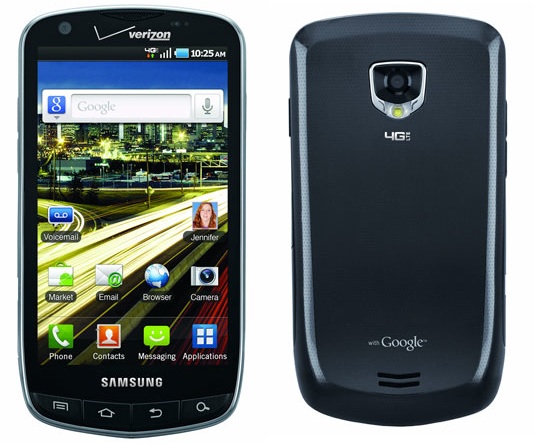
He pulled out his phone, and it looked something like this:
Samsung Android Phone
It wasn’t this exact model. I don’t think the model of Samsung phone pictured had been released, and his had had been from AT&T. After a quick search of images, this is the first one I found that looked like his.

But I pointed out the Samsung logo, rather hard to miss. And told him it wasn’t an Apple iPhone. That it was an Android phone.

He got a little huffy, and oddly enough accused me of being an Apple Hater. He showed me several things on the phone, specifically certain icons that did, indeed, look an awful lot like the icons for similar apps on my iPod Touch.

Now, it was a salesperson at an AT&T store who told him it was an iPhone Nano, and his own stubbornness (and perhaps a little bit of denial that he had been taken in by the salesperson) that was primarily to blame for his insistence that it was a cheap model of an iPhone. But the salesperson couldn’t have had a hope of getting away with it, and wouldn’t have succeeded in his deception if the phone itself, not just the general idea of a touch screen, but the specific icon set, the overall UI, and so on, had not been such a slavish knockoff of the iPhone.

I had played with several Android phones whose interfaces did not mimic iOS to the degree that this Samsung phone did. It’s not that difficult to make a touch screen user interface that looks and feels significantly different.

Copying is not competition, it’s deception. Copying is not innovation, it’s theft.

Telling someone they can’t sell a knock off is not stifling competition. You know what does stifle competition and innovation?

Encouraging or cheering on the people selling the knock-offs.

I do not think it means what you think it means

A few years ago an acquaintance discovered that a piece of artwork she had drawn, scanned, and posted on her own website had been taken by a clothing company and used on t-shirts, which they sold gazillions of. She spent a lot of time trying get them to stop using her art. She doubted she’d ever get them to pay her for it, she mostly wanted them to stop using her art without her permission.

She called them “thieves” and “lazy.” And she was correct.

So I was amused recently when some of her supporters called Apple a “patent troll” for suing Samsung over design theft.

“But wait,” you say, “It’s not the same thing! Apple is going after them just because they made something with a touch screen! They’re not going after them for copying a specific piece of artwork!”

Have you read the 300-page Apple multi-touch patent? It isn’t 300 pages of padding, it is a precise description of the heuristics underlying how the machine can tell the difference between an intentional two-fingered gesture and an inadvertent thumb from the other hand touching the screen at the same time the user’s index finger on the primary hand is touching the screen. Among a lot of other things. So that particular claim is not “it’s a screen that you touch” but rather, “it’s a touch screen which uses these precise algorithms in concert with these precise physical components to control the device in these precise ways.”

Whether or not algorithms and other software processes ought to be patentable (and there are valid arguments that they oughtn’t), under the current system they are. And if a touch device uses those precise algorithms and those precise components in that precise way, then it is copying, not inadvertently doing something superficially similar.

Some of the claims that Apple asserted in the lawsuit were much more of a stretch than that, and it appears that between the judge and the jury those were not upheld.

My other gripe is the now rampant misuse of the term “patent troll.” A patent troll is a person or “company” which does not produce any products of any sort, let alone anything that actually uses the patent under question. Instead, its sole economic activity is to sue people and companies who are making products which may or may not violate the patent, in order to force a financial settlement.

A recent classic example is a company that holds a patent, purchased many years ago from an “inventor” for an enhancement to a fax machine which would allow the owner of the fax machine to press a single button on the fax to send a message to the manufacturer in order to, among other things, purchase supplies for the machine. The inventor never built such a fax machine. He totally failed to convince any fax machine manufacturers to add such a feature to their machines.

Now a holding company which exists solely to sue people over patent violations has been using the patent to go after people who put a virtual button into their apps or web pages that users can click in order to buy stuff. The purpose of the lawsuits by this company is not to prevent people for having buttons you click to buy stuff, nor is the purpose to get people to think of some new way to buy stuff. The sole purpose of the lawsuit is to scare at least some of the people and companies to hand over money to make the lawsuit go away.

Apple did ask for money. They didn’t get as much as they asked for. And the amount they were awarded (we will see if they actually get even that much; even before an appeals process goes through, the trial judge may reduce the amount), while it would be enough to set you or me up for a life of incredible luxury, is actually not that big of a deal to either Samsung or Apple.

And the outcome Apple really wanted was accomplished long before the lawsuit went to the jury. The products the jury found in violation of the patents the jury upheld are almost all obsolete products. Once it was clear Apple was willing to sue, Samsung started changing the design of devices so it was less likely consumers would confuse their product with Apple’s.

And in the long run, I think that’s a good thing. No one is going to invent something better than what is currently on the market if everyone keeps copying each other. And while I think we have a lot of cool tools and toys to play with now—I love living in the future!—I want stuff that’s even cooler!

At least 20% cooler, if you please.

Personal isn’t always private

I was typing in various combinations of keywords into Google, trying to find a web page that I hadn’t visited in a long time. The summary of one of the pages it served up in answer to one search attempt mentioned the pseudonym of a fannish acquaintance I hadn’t talked to in a long time. It was a blog, with a date of just a year ago. So even though it wasn’t what I was searching for, I clicked on the link out of curiosity to find out what had happened to the acquaintance.

As I read the blog entry, I realized the author was another fan I hadn’t seen in many years. One who I would just as soon never have contact with again, since he was a troublemaker who had caused several people I care about a lot of grief. But, like a collision that you cannot turn away from, I had to read on. The post was a rant about a bunch of people (including the person whose name had attracted me to the link) who, years ago, had “violated his privacy” by reading his public posts on LiveJournal. These “despicable stalkers” even had the temerity to repeat some of the nasty, slanderous* things he had said about some other people.

Reading a publicly available blog, particularly on a service such as LiveJournal, is hardly invading your privacy. Especially not when, as this guy used to do, you have advertised said blog far and wide. Neither is it stalking to read said blog. When you say nasty things about people in public, there can be consequences. It is not unreasonable to expect that the people you have said nasty things about, as well as their friends, will take exception to your words.

Similarly, if you donate money to an initiative or referendum that aims to restrict someone’s legal rights, or strip those legal rights away, that is not a private act. That’s a public act. You are attempting to change the law to conform with your personal opinions. You’re trying to force people to live the way you think they ought. Thinking that they ought to live a particular way is a private opinion, so long as you just think it. But once you cross the line to signing petitions and donating money to get the law passed, you have crossed the line into public action.

People who would be harmed by that law are perfectly within their rights to boycott your business, to suggest to their friends that they boycott your business, or to suggest to strangers that they boycott your business. They are perfectly within their rights to tell you that they disagree with you. They are perfectly within their rights to refer to your opinions as bigoted or hateful.

It’s not right to threaten you, vandalize your property, physically harm you, or call you nasty names.

Pointing out that your arguments are illogical, or that statements you have made are untrue (even to call them lies) is not calling you a nasty name. Calling you a liar edges over the line, but pointing out that your statements are false does not.

Opinions are personal. Expressing them in a conversation with a friend in a location and under a context in which you can expect them to exercise their discretion is mostly private. Putting the opinion on a bumper sticker is not private. Paying for political ads that urge other people to act on your opinion is not private. Paying to enact laws that force your opinion on other people is not private.


* I am well aware of the legal distinction between slander (which in court refers only to spoken assaults on another’s character), and libel (which in court refers to printed or published assaults). However, slander also refers to any false, abusive, or malicious attack on another’s character, while libel generally has a narrower and more restrictive definition. As an adjective, slanderous, being less specific is clearly applicable as a means to characterize the nature of statements, no matter how they are delivered.

Surplus Population

In A Christmas Carol, when Scrooge is trying to get rid of the men soliciting charity donations, he declares, “If they would rather die, they had better do it and decrease the surplus population!” Later, the Ghost of Christmas Present hurls that line back at Scrooge, when Scrooge is worrying about Tiny Tim’s health. The notion of people’s lives being a surplus to be disposed of sounds harsh to us, but it was an accepted notion to many people at the time.

Long before Dickens wrote that line, in fact, before Dickens himself was born, the British Parliament passed the Chimney Sweepers Act 1788, which, among other things, forbid Chimney Sweeps from “hiring” apprentices less than eight years of age. Climbing boy (sometimes girls) where small children essentially sold by families too poor to feed all their kids to Chimney Sweeps. They climbed up through the elaborate and dirty ducts of industrial chimneys to clear and clean them. It was a hard and dangerous life. Most died before puberty. Virtually all that live past puberty died in their late teens from “a most noisome, painful and fatal disease” called Soot Wart, which was eventually identified as Chimney Sweep’s Cancer, the first identified industrial-caused cancer.

But a lot of them didn’t live long enough to succumb to the cancer, since the soot they literally lived in (one master chimney sweep once famously disparaged another because he actually allowed his climbing boys more than two baths a year) contains all sorts of nasty substances, including arsenic. Others got trapped in chimneys where if they were lucky they would die of asphyxiation before they were literally cooked to death.

Then there was the habit some bosses had of setting a fire once the boy was up to make sure he moved fast (if he didn’t work fast enough, he died from smoke inhalation).

Being a climbing boy wasn’t truly an apprenticeship. The only skill one learned was climbing chimneys, and that didn’t lead to better employment. They were never paid wages. And their room and board included a nightly routine of standing close to a fire and while having elbows and knees scrubbed with brine on a stiff brush (which toughened the skin into something that resembled an insect’s carapace). In Scotland Chimney Sweeps didn’t use climbing boys at all, but rather pulled sets of rags and specially designed brushes up through the chimneys one ropes. In 1803 a man named George Smarts invented a mechanical sweeping machine, but virtually no one in the U.S. or U.K. used it.

But the climbing boys system was cheaper. The 1788 act was never really enforced, neither were subsequent acts (1834, 1840) that set the age higher and called for various health and safety measures. One reason they weren’t enforced is because the enforcement mechanisms proposed in each bill were always amended out in order to get enough votes to pass. A very few Master Chimney Sweeps switched to the mechanical brush system. From time a politician or other somewhat prominent person would take up the cause, but sending boys up the chimneys was cheaper and mostly worked. The price of the suffering and death wasn’t factored in because, well, there were always more boys.

It wasn’t until 1875 when a Coroner’s Inquest first ruled the death of a boy in a chimney as manslaughter (rather than “death by misadventure”) that anything really changed.

Then there were the baby farming scandals of the 1870s, in which people who were supposed to be fostering children (many orphaned, but most were the children of unwed or widowed mothers who had to work in grueling factory conditions, and couldn’t care for their own children) were systematically murdering them.

Or people like H.H. Holmes, who’s “murder hotel” was shut down in 1894, but not before he murdered (then either dismembered and sold to medical schools, or incinerated) between 100 and 200 people (modern serial killers are amateurs by comparison).

We live in this delusion that our modern world is more brutal and uncaring than “the good old days.” An event like a theatre shooting happens, and we tut-tut about how much more dangerous our modern world is.

Never mind that murder rates have been going down for centuries. The murder rate, as a percentage of the population, is far, far lower in 2012 than it was in 1812. Never mind that in the 18th and 19th century the overwhelming majority of deaths were due to violence, accident, or illness that is now preventable. It is only in relatively recent times that most people can look forward to the probability of dying of old age, rather than any of those other things.

The times are not getting more brutal. People are not more uncaring than we used to be.

And the solution is definitely not to turn back the clock. We’ve been steadily decreasing the number of deaths suffered through violence, industrial accident, and so forth for a couple of hundred years by incrementally improving how we do things—and sometimes that means imposing regulations with real penalties.