Dinosaur Bellows to Stave Off the Future, or, that’s not how you should run a Hugo Awards ceremony

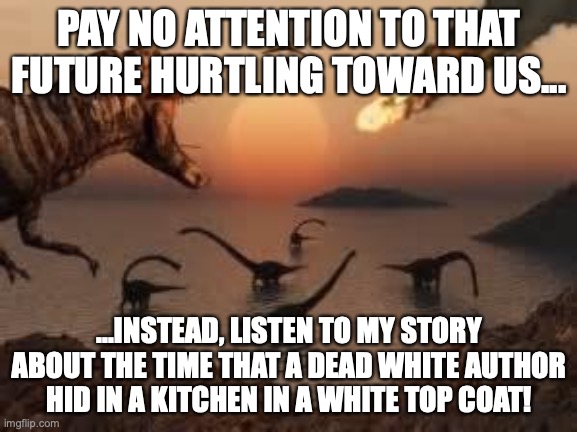
T-Rex screaming at other dinosaurs as a burning meteor streaks across the sky, “Pay no attention to that future hurtling toward us... instead, listen to my story of the time that a dead white author hid in a kitchen in a white top coat.”
It’s a mixed metaphor, I know…

I linked previously to Cora Buhlert’s excellent account from the viewpoint of a finalist nervously waiting to find out if they had to give an acceptance speech while George R.R. Martin went on and on. There are many other excellent posts about what it was like to sit through it: GEORGE R.R. MARTIN CAN FUCK OFF INTO THE SUN, OR: THE 2020 HUGO AWARDS CEREMONY (RAGEBLOG EDITION) is pretty cathartic. When Dinosaurs Roamed The Earth goes with sarcasm rather than rage, but also includes an excellent list (with sources) of why the people George wanted to talk about instead of the actual nominees (and also the full text of the Rebecca F. Kuang’s acceptance speech for the Astounding Award). Then there’s Jason Sanford’s post on Patreon (but available to non-supporters) in which he explains why he’s tired of modern SF/F and its creators being endlessly compared unfavorably to what the genre was like 50 years ago. He also has links to several good twitter threads on the topic. Robert J. Sawyer raises another issue about Martin’s remarks in the ceremony. Meanwhile, Doris V. Sutherland puts the issue in context with the themes of the winning works. And let’s not forget the every pithy and point Ursula Vernon managing to chastise him while remaining as respectful as can be.

And, of course, there’s Martin’s non-apology apology. Which he posted in the comments of someone else’s sci fi blog (File 770 is a fanzine/news site and I rely on it for news about the genre, yes, but it is still technically Mike Glyer’s blog). He hasn’t posted it on his one platform or anything.

I collected many, many, many more links to other people writing about their experiences as a nominee waiting to find out whether they won or lost, or from some of the presents, or as a former nominee watching, et cetera. But I think the collection above covers the majority of the issues (and lots of the linked posts include more links to other posts, so…)

I wanted to write about this not to repeat what others have said, but to comment on a couple aspects of it that I found personally astonishing. I listened to the livestream as it happened. I unfortunately was stuck in an interminable work day, so had the livestream playing on my personal laptop and listening on my airpods while I was working and occasionally looking over at the feed. So it took me at least 45 minutes before I thought, “My god, George, shut up!” because he hadn’t announced any nominees or any winners, yet!

In his non-apology Martin first justifies the extremely long walks down a very specific part of memory lane because New Zealand had never hosted a WorldCon before, therefore most of the local fans probably knew nothing about WorldCons, their history, of the history of the Hugo Awards.

My eyes bugged out. WorldCon didn’t come to New Zealand on its own like an alien invasion! Fans who live in New Zealand and host their own local science fiction conventions organized a bid committee, doing the years of work necessary to make a bid to host a WorldCon. They made a compelling enough case to garner enough votes and got it. They would not have organized a bid committee to try to host WorldCon if they didn’t bloody already know what WorldCon is! And even if somehow they didn’t know, I’m pretty sure all the sci fi fans in New Zealand know how to do a Google search.

What a baffling, patronizing, and condescending thing to say! But if he really thinks that way, that says more about his own hubris and lack of awareness than anything.

Moving on. He also says that all those anecdotes he told are tried and true stories that have always previously managed to get a laugh. I have a few issues with that…

Before I can explain my first objection, I need to give a little background. The purpose of this background is not to pile on GRRM even more, but to provide context. There have been a few times over the course of my life where I have decided that I wanted to have nothing to do with George or his writing. The first was in the mid-80s when I washed my hands of the Wild Cards series. A bit over a decade later some friends tried to get me to read A Song of Ice and Fire, and enough time had passed that I had actually forgotten the name of the guy who organized Wild Cards… but very quickly the same issues that had bounced me out before came up, and I noped-out again. Then there was last year’s Hugo Losers Party and his very tone deaf, whiny, defensive non-apology. The point is, that for 35 years I have actively avoided him. If he’s at conventions I’m attending, I don’t go to his panels. I only ever read his blog if someone I trust links to a specific entry and says it’s worth looking at, and so forth. Not because I hate him, but because I don’t care for his writing or his use of particularly objectionable tropes (and what that says about his personal values).

For 35 years I have actively avoided him, and yet, I have heard nearly every one of the anecdotes he shared at this ceremony several times. I’ve heard the one that includes his head being covered with whipped cream so many times, that I think I could recite it from memory—including all of his pauses and the points where for whatever reason he puts the emphasis on a different syllable than normal.

If I (who tries to avoid him) have heard most of these before, then I can’t help but think a lot of other people in sf/f circles have heard them before, too.

These anecdotes do contain interesting nuggets of information, and they would be appropriate in a panel about the history of sci fi fandom (or at least the part of fandom that attended WorldCons) in the 1970s and 1980s. The anecdotes about the earlier years of the Hugos and the banquet and such would be fine as part of a panel about the history of the awards. But they shouldn’t all be shared during an awards ceremony!

For my third objection, I need to mention that in college I competed in debate and speech competitions, and several times I won trophies in the Toastmaster/After Dinner Speaking Category. One year I was the Western U.S. Regional Champion in that category.

So as someone with some experience in this area, I have to say that all of Martin’s anecdotes are too long and plodding. There is a lot of filler material, so that the punchline, when it arrives, feels more like a band-aid being painfully and torturously peeled off a partially healed wound instead of a sharp delightful surprise. I’m not saying they aren’t completely unfunny at all, it’s just that they could really do with a bit of workshopping and trimming, okay?

The period of WorldCon and sf/f and fandom history he focused on was a fraction—less than 30 years out of the 81 years since the very first WorldCon. And the people he focuses on in those years were a very specific subset of all the authors, artists, and editors contributing to the genre during those years. Yes, he name-checked a couple of women of that era, but there were no stories that any of them figured in. How many times did he refer to Heinlein as the Dean of Science Fiction? Did he even once mention the Queen of Space Opera, Leigh Brackett?

No. He did not. Based on who appears in his anecdotes—and which of the past greats of the genre he feels compelled to lionize—we can safely infer that he thinks they are the only ones who mattered. It’s a very small circle that (to paraphrase Jeanette Ng) was mostly sterile, white, male, and heterosexual.

I’m only 11 years younger that George. I grew up reading all of those same stories by those very writers. They are what made me a fan. They are an important part of why I went on to write sf/f myself, to publish a zine, and to continue writing now. But they weren’t the only ones making science fiction and fantasy at the time, nor were they the only ones reading it.

And we are long past the time when we should be pretending they are the only ones that matter.


The Reading Outlaw has done a super-cut of the ceremony, removing the long rambling stories and including all of the wonderful, heartfelt acceptance speeches. You should take a look: When The Toastmaster Talks Less:

(If embedding doesn’t work, click here.)
Recognizing Who Should Have Been Seen All Along, or, Why the Retro Hugos Are Worth Saving

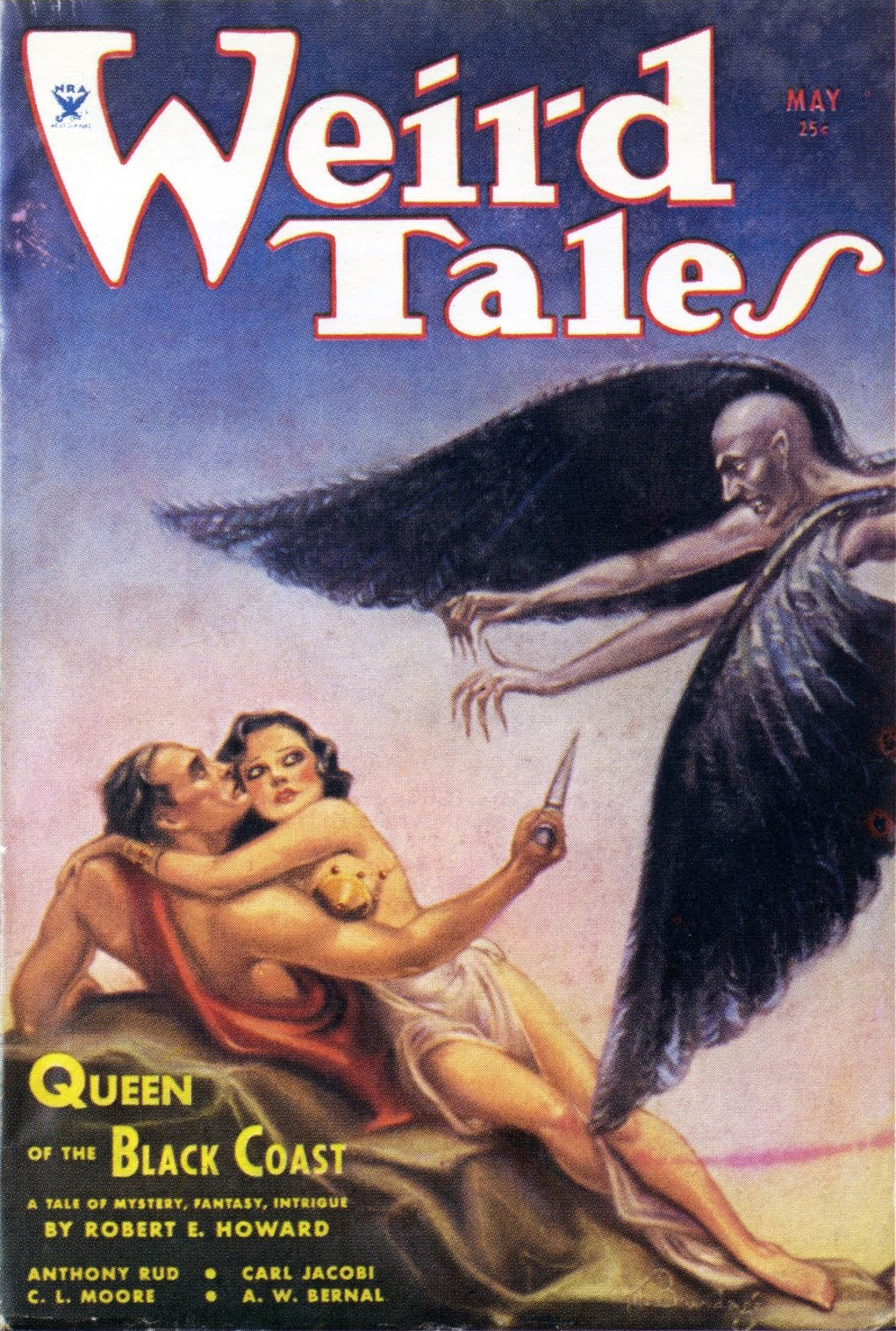
Cover for the May 1934 issue of Weird Tales. Cover story: "Queen of the Black Coast" by Robert E. Howard. Cover art by Margaret Brundage. The male character is Conan the Barbarian. Brundage was the first artist to draw Conan, and continued to do so as more storied appeared in Weird Tales, earning her the nickname much later, “The Frank Frazetta of the '30s and '40s.”
Cover for the May 1934 issue of Weird Tales. Cover story: “Queen of the Black Coast” by Robert E. Howard. Cover art by Margaret Brundage. The male character is Conan the Barbarian. Brundage was the first artist to draw Conan, and continued to do so as more of his storied appeared in Weird Tales, earning her the nickname much later, “The Frank Frazetta of the ’30s and ’40s.” (Click to embiggen)
Last week I wrote about some problems with the Retro Hugo awards and why it may be time to end them. I was a bit upset at not just the one winner who I thought was undeserving, but much more irritated by the justifications I saw people making for why he was deserving. Two of those justifications boiled down to people taking other people’s word for what was worth remembering and honoring from the past. Some very cringeworthy versions of both of those arguments comprise the subtext of the debacle of the Hugo Awards ceremony that happened just a couple of days later. Though that is a topic I’ll be posting about later.

But my previous blog post leans heavily to one side of an issue which I think needs more discussion—evenhanded discussion. As Cora Buhlert pointed out, many of us who complained about that one aspect of the Retro Hugos failed “to mention that Leigh Brackett and Margaret Brundage, two awesome women who went unrecognised in their lifetimes, also won Retro Hugos this year.” Those two wins were well-deserved and marked incredibly overdue recognition of creators who had contributed much to the genre. And they weren’t the only thing that the Retro Hugos got right.

First, a complete list of the 1945 Retro Hugo Award winners is here. Now, my thoughts:

I was really pleased that Leigh Brackett won Best Novel for “Shadow Over Mars.” It was the story I placed in slot number one on my ballot, but I didn’t have much hope, because even though her career as a science fiction writer spanned form the mind 1920s until the early 1980s, and despite having been described as “the Queen of the Space Opera” she isn’t talked about one one-hundredth as much as certain so-called great men of science fiction whose careers often were much shorter than hers. Before this Retro Hugo, the only Hugo she had won was awarded some months after her death, as one of the screen writers for The Empire Strikes Back. Only one of her novels, The Long Tomorrow, was nominated during her lifetime and that was 1956. I had been afraid that either the Olaf Stapledon novel (which wasn’t bad) or the one by E. Mayne Hull & A.E. van Vogt (which is quite bad) would win because Stapledon and van Vogt are talked about and their works are included in retrospective anthologies more regularly.

I was equally stoked by Margaret Brundage’s win in Best Professional Artist. For 15 years Brundage was the cover artist for Weird Tales, and she also did a lot of interior illustration. The covers at first glance will remind you of other lurid covers that always seem to have scantily clad damsels in distress on them, but Brundage’s were subtly different. The women on her covers were far less likely to be hysterical or fainting. If the scene called for the woman to be tortured or threatened, Brundage would show that, but she usually showed them fighting back. While there were people who suggest Weird Tales should be banned because some found the covers lewd, Robert E. Howard once admitted in an interview that letters from his fans always mentioned how much they loved Brundage’s art, and he claimed he started adding scenes to his stories which he thought might make Brundage more likely to select his story for a cover. Back to the outcries about the cover: the editors of Weird Tales revealed that M. Brundage was a woman to deflect some of the objections to the covers, and there were a rather large number of people who didn’t believe it was possible for a woman to draw that competently. She definitely is overdue for some recognition!

Theodore Sturgeon’s win in Best Novella for “Killdozer!” is not surprising. “Killdozer!” happens to be a pretty good story and Sturgeon is not a total unknown to modern voters. It was in second place on my ballot (behind Brackett’s “The Jewel of Bas”), which I liked quite a bit more. “A God Named Kroo” by Henry Kuttner (another quite good story) was in third place on my ballot, followed by “Intruders from the Stars” by Ross Rocklynne. So I wasn’t unhappy with this category, but it’s hard to know how many votes for “Killdozer!” were due to name recognition.

A similar problem happens in Best Novelette with Clifford D. Simak’s “City,” because Simak is well-known, and entire City series is popular enough that it is still in print. However, I don’t think this particular story was outstanding compared to the rest of the ballot. I thought “The Children’s Hour”, by Lawrence O’Donnell (pseudonym for C.L. Moore and Henry Kuttner), “No Woman Born”, by C.L. Moore, and “When the Bough Breaks”, by Lewis Padgett (C.L. Moore and Henry Kuttner) were all better stories. The one thing that gives me some hope that Simak didn’t win just because of name recognition is that Asimov was also in this list (with a mediocre story, IMHO), so if name recognition were the only driving force, he probably would have won.

Ray Bradbury’s win in Best Short Story for “I, Rocket” isn’t surprising on its own. I personally thought of the stories on this ballot that it was the third best (behind Simak’s “Desertion” and van Vogt’s “Far Centaurus”). Mind you, “I, Rocket” is a good story. But Bradbury had a few much better short stories published in 1944. I mean, I’m not complaining that much, because even a mediocre Bradbury is more interesting that a lot of other writer’s merely good tales. I just happen to think that Bradbury’s “The Jar” and “The Lake” and much better Bradbury stories.

Leigh Brackett’s win in Best Related Work for “The Science-Fiction Field” is a bit of surprise if for no other reason than that it was one of the nominees that wasn’t available anywhere online. I had forgotten it exists until I saw it in one of the Retro nomination suggestion lists. After reading a summary I had a vague memory of having read it, and had to go by that recollection and some reviews to decide where to put it on my ballot.

Jerry Siegel & Joe Shuster winning Best Graphic Story or Comic with Superman: “The Mysterious Mr. Mxyztplk” can only be explained as name recognition and the fondness for more recent Superman stories. I had this story at dead last on my ballot. Both Flash Gordons and the Donald Duck story were in the top three positions because, well, Alex Raymond and Carl Barks were among the best comic artists of that decade. Full disclosure: when I was a kid one of my Aunts bought me a collection of trade paperback sized collections of reprints of a whole bunch of old Donald Duck comics, and this story happened to be in there! I actually have a physical copy at that nominee in my house! I also thought (once I tracked it down) that the Spirit story was better than this particular Superman comic. It just is not a good example of the series.

Since The Canterville Ghost and The Curse of the Cat People were number 1 and 2 on my ballot, respectively, I’m quite happy that they tied for Best Dramatic Presentation. There isn’t more to say here, other than, even 13-year-old me (who was the biggest diehard fan of the Universal Frankenstein movies) was shocked that such a stinker as House of Frankenstein even made the ballot!

I think the most important thing I can say about the Best Fan Writer category is, that if it hadn’t been for such modern fan-created websites like The 1945 Retro Hugo Awards Spreadsheet, Retro Science Fiction Reviews, and the like, I would have had no idea who to nominate other than the same old white (sexual harasser) guy who tended to always when in this decade. Fritz Leiber won six Hugos in his lifetime for professional stories, but like many pros, he was also extremely active in unpaid fan work. So I’m not at all unhappy with this win.

In my previous post I talked about the Best Editor category, but I want to repeat here that from my reading of scans I could find of old issues of the various zines that were being edited by the nominees in this category, Amazing Stories and Weird Tales (Raymond A. Palmer and Dorothy McIlwraith) published more good stories than Astounding that year. Planet Stories (edited by W. Scott Peacock) seemed to be a tie with Astounding in the ratio of good stories to bad. And I should note that the winner of the Retro Hugo for Fan Writer, that essay by Leigh Brackett? According to that essay, at the time Planet Stories was considered hands-down the superior publisher of accurate science in its science fiction. So all those grouchy old white guys who keep insisting Astounding and Campbell were beloved and revered above all others at the time and were the undisputed champions of science—they can sit on something unpleasant and spin.

Now we come to another category that has a lot of people up in arms: the Cthulhu Mythos winning Best Series. Before I begin, I need to point out that for the last five years I have been running a homebrew Cthulhu-based rollplaying game with a bunch of my friends. I have written stories that were intentionally meant to evoke the Cthulhu Mythos. I own a lot of modern anthologies, novels, and novellas by various people set in that kind of universe.

Despite enjoying the concepts of the Mythos, I put it dead last on my ballot (and considered putting it below No Award) for a number of reasons. The first is that in 1944, when works must be published to be eligible for this award, most of what I consider well-written Cthulhu-mythos stories had not been written. Of the works published in 1944, Captain Future, the Shadow, and Doc Savage were infinitely better. Most of the Jules de Grandin stories were also superior (though the best, IMHO, were published between 1921 and 1930 and I was shocked when I saw it on the ballot because I didn’t realize an eligible entry had been printed in 1944) Burroughs’ Pellucidar series was more than a bit uneven, so kind of a tie, quality-wise in my opinion. And I should disclose that I was irritated that, so far as I could tell, the far superior Monsieur Zenith had no qualifying stories published that year. Another reason not related to Lovecraft’s blatant racism (that is the driving force of many of his stories in this cycle), is that the Mythos was listed as being created by Lovecraft, Derleth “and others.” And honestly, by far most of the good stuff in the series was created by those unnamed others. So even wording this nomination that way makes this an undesirable thing to vote for.

If you read nothing of this post except the previous paragraph, you should be able to infer that I am quite interested in and fond of a whole lot of sci fi, fantasy, weird tales, and mysterious fiction published many, many decades before I was born. I was born in the ’60s, but my mom was a sci fi fan before I was born. From my infancy, she read to me from the sci fi books she had most recently checked out from the library or bought from a used book store. Of course I am familiar with the works of all those problematic guys from the 40s and 50s (and beyond!)1. All those stories shaped my love and curiosity for more fiction of the fantastic. And I think that there is value, for those interested, in having some familiarity with some of those old stories.

But I also think that if those of us who have knowledge of those old stories are going to recommend things to modern fans, they need to be things we have double-checked to make sure they really are as good as we remember. During a previous Retro Hugos ballot, some old stories written by an author who for decades was my favorite were on the ballot. They were stories I had read many, many, many years ago and had very fond memories of. I decided the ballot was a great excuse to re-read these old beloved favorites.

The Suck Fairy had been extremely busy working on those stories. The Suck Fairy had been so busy on those stories, that when I saw more stories from the same series by the same author had been nominated for Retros this year, I decided to just put them in last place on my ballot without re-reading, because I would rather keep the happy, golden versions of those stories that exists in my imperfect memory than see that the tales were not as good as I thought.

Which brings us to some of the many discouraging issues that have embroiled the fandom on the fast few days. There are people who created great work 40, 50, or 60 years ago, who tend to be venerated now, and who are themselves living in the happy golden imperfectly remembered version of sci fi/fantasy stores that were written 70, 80, 90, or more years ago. They only remember the parts that resonated with them. They don’t remember the racism, the sexism, the colonialism, the homophobia, and other bigotries that were sometimes blatant, but almost always present to some degree in those works. So some of them genuinely do not understand why a lot of us are not as enamored with those days as they or in the same way that they are.

There are a lot of diamonds to be found among all that fool’s gold. And I think, if we can keep projects such as the Retro Hugo Awards Spreadsheet and the Retro Science Fiction Reviews up-to-date and available to modern fans, it is possible that through the mechanism of the Retro Hugos, we can bring recognition to many of those who deserve more credit for the foundations of the genre than the simple repeating of received wisdom has made available.


Notes:

1, I want to note, for the record, that while when I was a small child one of Mom’s favorite authors was Heinlein, her current obsession is the Lady Astronaut series by Mary Robinette Kowal2. If my Mom, who is in her late-70s, can evolve with the genre, than 71-year-old GRRM has no excuse.

2. Her next most recent obsession was the work of Ellen Klages, so you can see that Mom has excellent taste!

And the rockets have been awarded — let’s celebrate the Hugo winners

This year's trophy, base designed by John Flower.
This year’s trophy, base designed by John Flower. More pictures and an explanation of the design of the base are here: http://www.thehugoawards.org/hugo-trophies/2020-hugo-award-trophy/ (or click on the picture)

I have a long rambling rant about all of the horrible things that happened during the ceremony (nothing at all to do with any of nominees or winners), which I will condense down with links to other more coherent rants for posting later. More important than that, the winners of the 2020 Hugo Awards, which are nominated by and voted upon by the members of the World Science Fiction Society (aka, people who have a supporting or attending membership to WorldCon, this year held virtually but hosted in New Zealand). As I’ve mentioned before, the Hugo Awards are something I’ve followed since I was a teenage, when I got hold of an anthology called The Hugo Winners.

Since it is an award that is voted on by fans, for a lot of us (particularly those of us who aren’t just fans, but also creators of science fiction and fantasy works), the award carries a lot of emotional weight. If you’ve read my earlier posts about them, you know that once the ballot comes out, I spend a lot of time reading, viewing, or listening to the things nominated, and usually agonize over my ballot until the last minute.

The last two years it wasn’t exactly the last minute — I submitted my final ballot a bit over 24 hours before the deadline.

Anyway, here’s the full list, winners and runners-up. I’ll have comments below.

Best Novel

WINNER: A Memory Called Empire, Arkady Martine (Tor; Tor UK)

The City in the Middle of the Night, Charlie Jane Anders (Tor; Titan)
The Ten Thousand Doors of January, Alix E. Harrow (Redhook; Orbit UK)
The Light Brigade, Kameron Hurley (Saga; Angry Robot UK)
Middlegame, Seanan McGuire (Tor.com Publishing)
Gideon the Ninth, Tamsyn Muir (Tor.com Publishing)

Best Novella

WINNER: This Is How You Lose the Time War, Amal El-Mohtar & Max Gladstone (Saga)

To Be Taught, If Fortunate, Becky Chambers (Harper Voyager; Hodder & Stoughton)
“Anxiety Is the Dizziness of Freedom”, Ted Chiang (Exhalation)
The Haunting of Tram Car 015, P. Djèlí Clark (Tor.com Publishing)
In an Absent Dream, Seanan McGuire (Tor.com Publishing)
The Deep, Rivers Solomon, with Daveed Diggs, William Hutson & Jonathan Snipes (Saga)

Best Novelette

WINNER: “Emergency Skin”, N.K. Jemisin (Forward)

“For He Can Creep”, Siobhan Carroll (Tor.com 7/10/19)
“Omphalos”, Ted Chiang (Exhalation)
“Away with the Wolves”, Sarah Gailey (Uncanny 9-10/19)
“The Blur in the Corner of Your Eye”, Sarah Pinsker (Uncanny 7-8/19)
“The Archronology of Love”, Caroline M. Yoachim (Lightspeed 4/19)

Best Short Story

WINNER: “As the Last I May Know”, S.L. Huang (Tor.com 10/23/19)

“Do Not Look Back, My Lion”, Alix E. Harrow (Beneath Ceaseless Skies 1/31/19)
“And Now His Lordship Is Laughing”, Shiv Ramdas (Strange Horizons 9/9/19)
“Ten Excerpts from an Annotated Bibliography on the Cannibal Women of Ratnabar Island”, Nibedita Sen (Nightmare 5/19)
“Blood Is Another Word for Hunger”, Rivers Solomon (Tor.com 7/24/19)
“A Catalog of Storms”, Fran Wilde (Uncanny 1-2/19)

Best Series

WINNER: The Expanse, James S.A. Corey (Orbit US; Orbit UK)

Winternight, Katherine Arden (Del Rey; Del Rey UK)
Luna, Ian McDonald (Tor; Gollancz)
InCryptid, Seanan McGuire (DAW)
Planetfall, Emma Newman (Ace; Gollancz)
The Wormwood Trilogy, Tade Thompson (Orbit US; Orbit UK)

Best Related Work

WINNER: “2019 John W. Campbell Award Acceptance Speech”, Jeannette Ng (Dublin 2019 — An Irish Worldcon)

Joanna Russ, Gwyneth Jones (University of Illinois Press)
The Pleasant Profession of Robert A Heinlein, Farah Mendlesohn (Unbound)
The Lady from the Black Lagoon: Hollywood Monsters and the Lost Legacy of Milicent Patrick, Mallory O’Meara (Hanover Square)
Becoming Superman: My Journey From Poverty to Hollywood, J. Michael Straczynski (Harper Voyager US)
Worlds of Ursula K. Le Guin

Best Graphic Story or Comic

WINNER: LaGuardia, Nnedi Okorafor, illustrated by Tana Ford, colours by James Devlin (Berger Books/Dark Horse)

Die, Volume 1: Fantasy Heartbreaker, Kieron Gillen, illustrated by Stephanie Hans (Image)
The Wicked + The Divine, Volume 9: “Okay”, Kieron Gillen, illustrated by Jamie McKelvie & Matt Wilson (Image Comics)
Monstress, Volume 4: The Chosen, Marjorie Liu, illustrated by Sana Takeda (Image)
Paper Girls, Volume 6, Brian K. Vaughan, illustrated by Cliff Chiang & Matt Wilson (Image)
Mooncakes, Wendy Xu & Suzanne Walker (Oni Press; Lion Forge)

Best Dramatic Presentation, Long Form

WINNER: Good Omens

Avengers: Endgame
Captain Marvel
Russian Doll, Season One
Star Wars: The Rise of Skywalker
Us

Best Dramatic Presentation, Short Form

WINNER: The Good Place: “The Answer”

Doctor Who: “Resolution”
The Expanse: “Cibola Burn”
The Mandalorian: “Redemption”
Watchmen: “A God Walks into Abar”
Watchmen: “This Extraordinary Being”

Best Editor, Short Form

WINNER: Ellen Datlow

Neil Clarke
C.C. Finlay
Jonathan Strahan
Lynne M. Thomas & Michael Damian Thomas
Sheila Williams

Best Editor, Long Form

WINNER: Navah Wolfe

Sheila Gilbert
Brit Hvide
Diana M. Pho
Devi Pillai
Miriam Weinberg

Best Professional Artist

WINNER: John Picacio

Tommy Arnold
Rovina Cai
Galen Dara
Yuko Shimizu
Alyssa Winans

Best Semiprozine

WINNER: Uncanny

Beneath Ceaseless Skies
Escape Pod
Fireside
FIYAH
Strange Horizons

Best Fanzine

WINNER: The Book Smugglers

Galactic Journey
Journey Planet
nerds of a feather, flock together
Quick Sip Reviews
The Rec Center

Best Fancast

WINNER: Our Opinions Are Correct

Be the Serpent
The Coode Street Podcast
Galactic Suburbia
Claire Rousseau’s YouTube channel
The Skiffy and Fanty Show

Best Fan Writer

WINNER: Bogi Takács

Cora Buhlert
James Davis Nicoll
Alasdair Stuart
Paul Weimer
Adam Whitehead

Best Fan Artist

WINNER: Elise Matthesen

Iain Clark
Sara Felix
Grace P. Fong
Meg Frank
Ariela Housman

Lodestar for Best Young Adult Book (Not a Hugo)

WINNER: Catfishing on CatNet, Naomi Kritzer (Tor Teen)

The Wicked King, Holly Black (Little, Brown; Hot Key)
Deeplight, Frances Hardinge (Macmillan)
Minor Mage, T. Kingfisher (Argyll)
Dragon Pearl, Yoon Ha Lee (Disney/Hyperion)
Riverland, Fran Wilde (Amulet)

Astounding Award for Best New Writer (Not a Hugo)

WINNER: R.F. Kuang

Sam Hawke
Jenn Lyons
Nibedita Sen
Tasha Suri
Emily Tesh

Congratulations to all of the winners!

This year, seven of the winners were entries that I put in first place on my ballot, so obviously I’ve pretty pleased with the outcome. For the fourth year in a row, the Novel that won was in second place on my ballot, again, an outcome I like.

Like last year, Best Novel was a very difficult category for me. Two of the entries were books I nominated. One of the entries I hadn’t nominated was a book which I had purchased before the short list came out, but hadn’t read before the nomination phase. Another was a book that was already on my wishlist. All six were good, but it very different ways. So it was just agony trying to decide how to rank them.

Fan Writer was similar. When the short list was announced (in an online livestream that I watched as it was happening), I literally screamed in glee. Three of the nominees were people I had nominated, and the other three were fan writers whose work I followed and were in contention for my nomination while I was working on that ballot. They are all six wonderful people who write (and in some cases podcast) really helpful and interesting things. As more than one person observed, all six of them are people who spend a lot of time and effort recommending good things for fans to check out. (And the winner, Bogi Takács, used ems acceptance speech to recommend a bunch of other writers and project fans should check out!) And… well, two of those that I nominated are people with whom I regularly interact with on line. So I was sweating bullets ranking that category. I really wanted all six to win!

Neil Gaiman gave an incredibly touching acceptance speech for Best Dramatic Presentation (Long Form) winner Good Omens—informing us that the reason, some years ago, that Terry Pratchett (his co-author of the original book, and whose deathbed request led Neil to make the series) had declined a Discworld novel’s nomination wasn’t because he didn’t want a Hugo, but rather because he knew he couldn’t lose gracefully. He won a lot of other awards, and was sometimes nominated but didn’t win them, so it wasn’t that he was afraid of losing. As Neil said, the Hugos are the Sci Fi fans award, and it was the one award that mattered too much to him. Terry was certain that Hugo voters would never vote for a funny book as Best Novel, and Terry’s novels were always funny. Anyway, Neil closed by thanking everyone for giving Terry a Hugo. Good Omens the series was at number one on my ballot, and I have enthused about it to anyone that will sit still for it for a while.

R.F. Kuang’s speech was particularly good (and since the Astounding Award was early in the ceremony, set a get tone for the night). I thought Jeannette Ng’s speech accepting the Best Related Work Award for her other acceptance speech last year was incredible. And was such a sharp contrast of the shenanigans of the M.C. and one of his cronies. But again, that’s a post for later in the week.

Amal El-Mohtar & Max Gladstone gave an incredible joint acceptance speech (in parallel zoom windows). Their story, This Is How You Lose a Time War has been at the top of my list since June, 2019. I first heard Amal read an excerpt from in at a reading at Locus Awards Weekend that year, I bought a copy the next day and started reading it. And re-read it a few times over the next months. The same story one a Nebula Award and a Locus Award earlier this year, so I’m not the only person who loved the story.

I could keep going forever. I really am extremely pleased with the winners in every category but Dramatic Presentation (Short Form), but I also know a number of people whose opinions I respect who do like it. So I highly recommend all the winners but that one (if you ask my favorite TV series that were nominated this time that didn’t win in order: Watchmen, Mandolorian, Expanse, and Doctor Who). And except for a couple of the Dramatic Presentation entries, I adored, or admired, or at least thought all of the runners-up merited being above No Award. So I would have been quite happy if they had won the award. You should look into them and see if you think they might appeal to you.

This was a great slate of nominees. The winners all deserve a round of a applause, as do the runners up!

Congratulations!


I have a lot of links to stories and posts and threads about what went wrong at the ceremony that will be in that later post. If you don’t know but are curious, Cora Buhlert wrote a very nice explanation from the point of view of a nominee watching the ceremony with family members (and as a nominee, also being able to see the other nominees on the related zoom): Some Reflections on the 2020 Hugo Ceremony a.k.a. Reminiscing with George.

Weekend Update 8/1/2020: Like a puff of smoke — and not the good kind

“It appears we have some breaking news.” “Good lord, what the fuck now?”
And it is time, once again, for a post in which I share news stories that either didn’t make the cut for this week’s Friday Five, or broke after I composed said Friday Five post, or provide updated information to a story I’ve linked in a previous post. Along with a bit more commentary that I usually make in a Friday Five post. Buckle up, because at least one of this is quite a bumpy ride! Let’s get started, shall we?

First, this story really needed about ten uses of the word “finally” in its headline: Twitter finally permanently bans white supremacist David Duke – Duke’s Twitter account was “permanently suspended” for violating the company’s policy against hateful conduct, a spokesperson for the social network says. David Duke, Ku Klux Klan grand wizard, white supremacist politician, white nationalist, unapologetic misogynist and homophobe, et cetera, and ad nauseum, was violating Twitter’s policy before Twitter existed. He violated it on day one of his membership. He violated it hundreds if not thousands or tens of thousands of times during the ten f-ing years that he was on the platform before they banned him. He is just one of thousands of examples of why none of us believe that most of the social media networks actually believe the words in their own code of conduct.

Moving on…

So, remember how a few weeks ago hundreds of very prominent accounts on twitter were hacked and posted a Bitcoin scam? Well: Three people have been charged for Twitter’s huge hack, and a Florida teen is in jai. John Gruber (daringfireball) summed it up best: “It appears Twitter wasn’t the victim of anything vaguely approaching an expert caper. These kids are such dingbats they used Bitcoin accounts opened in their own names. Makes me wonder what actual expert hackers are getting away with on Twitter.”

And moving on…

How Jared Kushner’s Secret Testing Plan “Went Poof Into Thin Air” – This last spring, a team working under the president’s son-in-law produced a plan for an aggressive, coordinated national COVID-19 response that could have brought the pandemic under control. So why did the White House spike it in favor of a shambolic 50-state response?. Here’s the killer quote from the article:

Most troubling of all, perhaps, was a sentiment the expert said a member of Kushner’s team expressed: that because the virus had hit blue states hardest, a national plan was unnecessary and would not make sense politically. “The political folks believed that because it was going to be relegated to Democratic states, that they could blame those governors, and that would be an effective political strategy,” said the expert.

So here’s what derailed a national plan: one of the asshole white supremacist friends of Trump’s incompetent son-in-law notice that it appeared that the virus was sparing red states while spreading in blue states. Apparently not understanding how either people or viruses work, they thought this meant that only anti-Trump voters would get sick and die. The White House saw this difference as way out of the crisis that required very little effort with lots of potential political gains.

Instead of instituting a nation-wide testing plan, the White House started talking about reopening for business with the idea that the economy would be revived while the virus continued to ravish cities and states ruled by the enemy, the Dems. Jared Kushner and the other White House ghouls was behind this plan, because they didn’t understand how contagious diseases worked. They really thought that the virus would stay in the blue states because… um, well, there is no because…

So the orange idiot made fun of the governors on the blue states and eventually stopped hosting the White House briefings. He resumed having the briefings only when the virus started killing people in states and districts that polling indicated was the home of his base. Now he’s telling people to wear masks. The problem is, he’s already got all the attack dogs of his base screaming about how masks and other measures to stop the spread of the disease are a marxist plot—and once they get a notion like that in their heads, you can’t dislodge it.

And that is why we’re screwed.

Friday Five (moms standing tall edition)

And we have arrived at the final Friday in July!

My cough is still lingering. It has become much less frequent, which leads me even more to suspect that it’s a weird hay fever side effect, but still, no fun. And on Monday we set a record for heat, and the temperatures remain much higher than I am comfortable with.

Which brings us to the Friday Five. This week I bring you:the top five stories of the week, five stories of interest to queers and our alles, five stories about the pandemic, five stories about the alleged president of the republic, five stories about hate and injustice, and five videos (plus notable obituaries and some things I wrote).

Stories of the Week:

In Lewis eulogy, Obama issues forceful call to action on voting rights, racial equality – Barack Obama was one of three former presidents to pay tribute to the civil rights icon and longtime Democratic congressman as he was laid to rest in Atlanta and bonus link: Barack Obama’s Eulogy for John Lewis: Full Text.

‘Now it is your turn’: John Lewis issues call to action in posthumous op-ed.

Believe It Or Not, Forests Migrate — But Not Fast Enough For Climate Change.

Don’t Plant the Mystery Seeds That Have Been Appearing in Local Mailboxes.

10 products you may not realise are threatened by the CO2 shortage. Did you know there was a CO2 shortage? I just found out this week!

This Week in News for Queers and Allies:

Stop at Rainbow Crosswalks Honors John Lewis’s LGBTQ+ Rights Legacy.

Puberty blockers linked to lower suicide risk for transgender people – The finding suggests that a major — and politically controversial — aspect of trans health care for minors could help reduce the community’s disproportionate suicide risk.

Media keep misidentifying trans murder victims, police are to blame .

Family of gay officer who died of COVID-19 denied insurance benefits.

Beyond ‘he’ and ‘she’: 1 in 4 LGBTQ youths use nonbinary pronouns, survey find – They/them is the most popular nonbinary option, but 4 percent of those surveyed report using “neopronouns,” like xe/xim and ze/zir.

This Week in the Pandemic:

Six U.S. states see record COVID-19 deaths, Latinos hit hard in California.

Expert: Major League Baseball Showing Us How Impossible It Will Be To Contain Virus In Schools – “I’m actually terrified that that’s about to happen to our school systems,” William Haseltine said.

Trader Joe’s workers attacked at New York store after asking customers to wear face masks, police say.

Pro-Trump youth group TPUSA deleted a tweet mocking protective masks after its cofounder died of the coronavirus.

The congressional underclass erupts in fury after Gohmert gets Covid-19 – The men and women who make Capitol Hill run are anxious and angry about the risks they’ve been forced to take amid the pandemic.

This Week in the Deplorable Thug Occupying the White House:

Trump Admits He Didn’t Confront Putin On Bounties Russia Paid Taliban to Kill U.S. Soldiers.

In just one month, Trump commits a whole new set of potentially impeachable offenses.

Trump Rages About Demand By Reagan Foundation that He Stop Using Reagan’s Image and Name in Campaign Ads.

Trump Can’t Postpone the Election—But He’s Trying to Destroy Its Legitimacy – The president today suggested postponing the November balloting, a move he lacks the legal authority to carry ou.

Sen. Ben Sasse Slams Trump’s Germany Troop Withdrawal as ‘Weak’.

This Week in the Police Brutality, Bigotry, and Other Injustice:

Wall of Moms, Black Lives Matter sue Trump admin over Portland response.

Minneapolis Looting Was Spawned By White Supremacist Seeking To Incite Race War .

Plainclothes cops in an unmarked van abducted a trans teenager as she skateboarded down the street – The 18-year-old was participating in a Black Lives Matter march when the secret police swarmed in and NYPD officers began threatening everyone around her.

ISIS & militia members are raping gay men & transgender women because they’re “soft” – Militants “look at gestures. The way we sit and move our hands, body language. They target gay and trans people.”.

He held a BLM sign in what he called ‘America’s most racist town.’ The result? A viral video of abuse.

In Memoriam:

Gay Critical Care Doc Dies Of COVID In His Own ICU – “I keep thinking, ‘Now there is one less ICU doctor to care for pandemic patients in Baltimore,’” Dr. Joseph Costa’s husband said of his death.

John Saxon, ‘Enter the Dragon,’ ‘Nightmare on Elm Street’ Actor, Dies at 83 – The Brooklyn tough guy also starred in ‘The Appaloosa,’ ‘The Unguarded Moment’ and ‘Black Christmas’.

Regis Philbin, Iconic TV Host, Dead at 88.

Olivia de Havilland Dies at 104.

Hawaiian Airlines Flight Attendant Dies Of COVID After In-Person Training Event Linked To At Least 17 Cases – “We’ve lost an angel,” said Jeff Kurtzman’s close friend.

Things I wrote:

Do not get lost in a sea of despair — why this white homo mourns John Lewis.

Tuesday Tidbits 7/27/2020: Tear-gassed moms.

Vote like you’ve never voted before.

Received wisdom is the mind-killer, or, is it time to end the Retro Hugos?.

Videos!

Trump Praises “Demon Sperm” Doctor Who Pushed Hydroxychloroquine: A Closer Look:

(If embedding doesn’t work, click here.)

Bezos’s Ex Spreads the Wealth & Trump Shrugs Off Bounty Hunters | The Daily Social Distancing Show:

(If embedding doesn’t work, click here.)
Karen, Please Just Wear A Mask:

(If embedding doesn’t work, click here.)

GESS – Digital Romance (Official Video):

(If embedding doesn’t work, click here.)
BILL & TED FACE THE MUSIC Official Trailer #2 (2020):

(If embedding doesn’t work, click here.)
Received wisdom is the mind-killer, or, is it time to end the Retro Hugos?

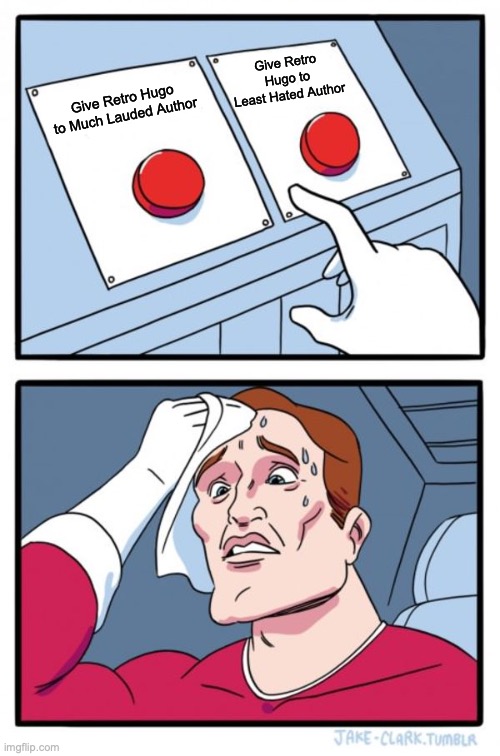
False dichotomies…
The Hugo Awards (though at the time they were called the Science Fiction Achievement Awards) were first awarded at the 1953 WorldCon (PhilCon II, which was the 11th World Science Fiction Convention) in a process much different than the way winners are selected today. The organizers of the 1954 WorldCon did not conduct any sort of award survey or ceremony, but the 1955 organizers did, as did the next few WorldCons. It wasn’t until 1961 that the rules for the awards were codified with the adoption of the World Science Fiction Society constitution, which also made the awards a permanent recurring part of the convention.

In 1994 the World Science Fiction Society approved the awarding of Retrospective Hugos for those years when there had been a WorldCon, but no Hugos. WorldCons aren’t required to award them. Also, Retro Hugos awards are allowed only for specific years: 50, 75, or 100 years before the current Worldcon, and only if another WorldCon hasn’t already awarded Retro Hugos for that year.

The original idea was that the Retro Hugos can only be given out 11 times—for the years 1939, 1940, 1941, 1946, 1947, 1948, 1949, 1950, 1951, 1952, and 1954. Because there was no WorldCon from 1942-1945, due to World War II. A recent rule change now allows for awards for those war years, as well, which is how we got to the ceremony earlier this week at CoNZealand where Retro Hugos for 1945 were handed out.

When I first heard about the idea, I thought it was a good one. People were creating and reading (or viewing) science fiction in those years, and it made sense that the organizations handing out awards for excellence in sf/f should look at award-worthy stuff during that time. It gives fans a chance to read stories with which they are unfamiliar and learn about the history of this genre we love, right? And if gives us, as a community, and opportunity to recognize some works and creators who are less famous today.

In practice, I’m not sure things have exactly worked out that way.

A lot of the Retro Hugos have gone to people who are still famous today (and who often had received plenty of awards while they were still alive). And it isn’t even because those are the best stories that made it to the ballot from that year. Several of the Retro Hugos have gone to rather mediocre stories from early in the careers of people who went on later to write much better stuff.

In other words, it seems that a lot of voters aren’t actually reading the nominated works, but rather picking works that are written by people they have heard of.

It it difficult to track down some of these old stories, I get it. Even though there are wonderful fan blogs out there publishing lists of links to where you can find these tales (since they have often fallen into the public domain many are available for free). As a voter myself, I admit that each time it has been a struggle to read everything nominated from both the regular Hugo ballot and the Retro Hugo ballot during the time between when the ballots are announced and when voting closes.

An even more difficult category is Best Editor, Short Form. Which is, in practical terms, an award for best magazine editor. So in order to do one’s due diligence this year, for instance, you would have to peruse all of the issues published in the eligibility year of the at least the magazines Astounding Stories, Weird Tales, Famous Fantastic Mysteries, Amazing Stories, Thrilling Wonder Stories, and Planet Stories.

That’s a lot of 75-year-old magazines to track down.

And if, like me, you track down scanned versions of the old zines at places like the Internet Archive, probably your first reaction will be a lot of “WTF?” because all the ‘zines from that era printed a lot of stuff which would never pass muster today. A month or so ago it shouldn’t have surprised me at how much WTF-material there was (because this is hardly my first time looking at stories and magazines from the time), yet it did a bit. It’s amazing how quickly we forget the weird stuff, the poorly written stories you couldn’t force yourself to finish, and so on. You remember the stories you thought weren’t bad (and sometimes even quite good) more than the other stuff.

If you aren’t willing to do that, you’re going to fall back (as the voters did this year), and the name you know: John f-ing Campbell, yet again.

I haven’t read every single issue of Astounding (later renamed Analog) Campbell ever edited, but I’ve read enough to draw an opinion of his skills as an editor overall. Looking at the stories he published in the year under questions, to the extent I could in the time frame, I found his selection of stories to be overall, mediocre. Yes, there was good stuff in there, but the was a lot more meh than wow.

I believe strong arguments can be made for at least two of the other nominees to be ranked above Campbell in this particular year. But if you point that out, people come back with basically three counter-arguments:

  • Everyone knows that Astounding was hands-down the best sci fi ‘zine of the time so who else could anyone vote for,
  • Campbell’s influence over the field dwarfs everyone else so who else could anyone vote for,
  • I liked more of the stories in the Astounding issues I sampled than in the others so…

The third of those arguments is the only one with any legitimacy. But let’s deal with the first two before I tackle the third.

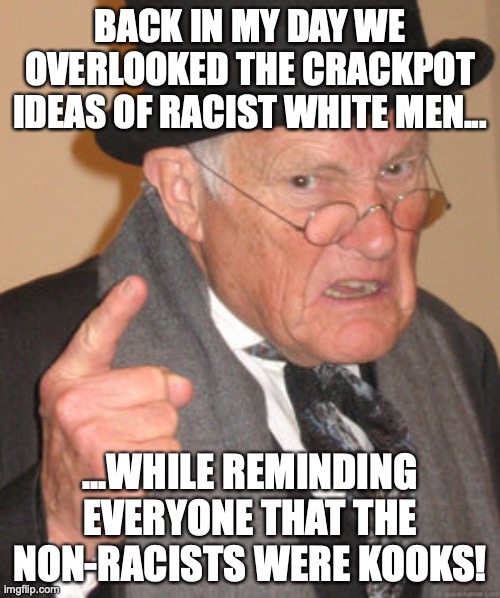
It’s amazing how many people still feel the need to defend the already much lauded racist, fascist misogynist…
“Everyone knows” is simply a really bad reason to make any decision. We’re talking about very subjective things here, for one. And for most people it’s all second-hand knowledge at best. Most contemporary fans weren’t alive 75 years ago, let alone comprehensibly reading everything that was published. And cultural artifacts don’t survive equally. Astounding appealed to a certain demographic who, for a variety of reasons, are much more likely to live and remain active in a particularly hobby for many years than some others. The demographic has also, historically, had its preferences elevated above other groups, whose preferences and activities are often erased from history.

Also, the Suck Fairy has had 75 years to visit those publications. You shouldn’t fall back on the received wisdom without verifying for yourself.

As to the second argument, well, Donald J. Trump’s influence over the United States right now dwarfs everyone else, but it hardly means historians should be handing him a “Best President” trophy. I know that metaphor is a stretch, but the point is that having a lot of influence isn’t the same thing as using that influence well. And again, how much of Campbell’s influence was due to him, and how much is it due to that ability of the demographic he most appealed to to have an outsized impact on how the time period is remembered?

That third argument is a reasonable reason to determine who you vote for, I agree. But at least some of the people I’ve seen making that argument don’t stop at “this is why I voted for him,” they went on and tacked on the “…so who else could anyone vote for?”

Judging the editor categories is always difficult. Most people approach it by voting for the nominee who published the stuff the individual voter liked most.

That’s not the only criteria one ought to consider, in my opinion. Full disclosure: for over twenty years I edited a very small ‘zine that printed science fiction. Our circulation was never over about 300, but we also knew we were aiming at a particular niche. Still, it means I judge editors by more than just whether I like every story they publish. I didn’t limit myself, as an editor, to publishing only stories I thought were award-worthy and would stand the test of time. I picked stories because I thought my readers would like them and were worth their time and attention. Another quality I judge editors on is how well they seem to know their audience. If I have information about how they treat the writers they work with and the staff of their publications, I let that influence me, too.

Because giving your audience things they will enjoy (which isn’t the same thing as fan service, but that’s another discussion), cultivating writers, and managing staff are all also part of the job of an editor.

If I only voted for the editors whose publications I loved (and only stories I loved, et cetera), there would have been a lot more No Awards on my Hugo ballots over the last five years. I can look at something that isn’t to my particular taste and say, “Well, I don’t like that, but I know a lot of people do, and this seems to be a competent execution/exploration of a topic I don’t care for” and go ahead and vote for it. It’ll just be lower on my ballot than other things.

None of this is to say that no one has a right to vote for Campbell in the Retros. The question I raise in the title of this blog post is about whether the Retro Hugos are actually recognizing things that are award-worthy, or merely handing out trophies to nominees based on received wisdom instead of merit.

Unfortunately, the jury is still out.


Edited to add: Not many minutes after this published, one reader pointed out a copy-and-paste blunder that ate one whole sentence and part of a word.

Then another pointed out that my question is sort rhetorical for at least the next year, since the 1946 Retros were given out at LA Con III back in 1996, so it won’t be until 2022 that the question will come up again. To which I say, an amendment to the WSF Constitution has to be passed at two WorldCons before taking effect, though we don’t need a rule change if the organizers of 2022 and later conventions can be convinced that maybe these aren’t a great idea…

ETA 2: As always, Cora Buhlert writes much more informatively and nicely than I do on a fannish subject: Some Thoughts on the 1945 Retro Hugo Winners.

ETA 3: I wrote a rebuttal to this a big later: It shouldn’t require a keymaster to have fun, or, canon and other forms of gatekeeping in sf/f.

And Cora Buhlert wrote more elequantly on the same topic and included a lot links to other people writing on the same topic: Why the Retro Hugos Have Value.

Vote like you’ve never voted before

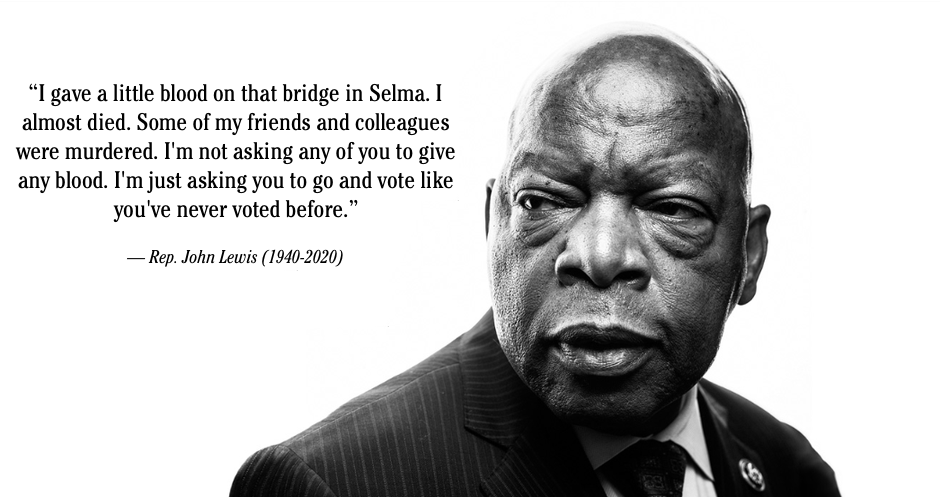
“I gave a little blood on that bridge in Selma. I almost died. Some of my friends and colleagues were murdered. I'm not asking any of you to give any blood. I'm just asking you to go and vote like you've never voted before."
“I gave a little blood on that bridge in Selma. I almost died. Some of my friends and colleagues were murdered. I’m not asking any of you to give any blood. I’m just asking you to go and vote like you’ve never voted before.”

Register to vote.

If you think you are already registered to vote, check to make sure. In many states voter suppression tactics include deregistering voters.

Vote.

Vote in every election and for every race.

Vote as if your life depends on it (it does). Vote as if your life, your community, and your country depends on it (they do).

Make sure you’re registered. Don’t let them prevent you from voting!

Tuesday Tidbits 7/27/2020: Tear-gassed moms

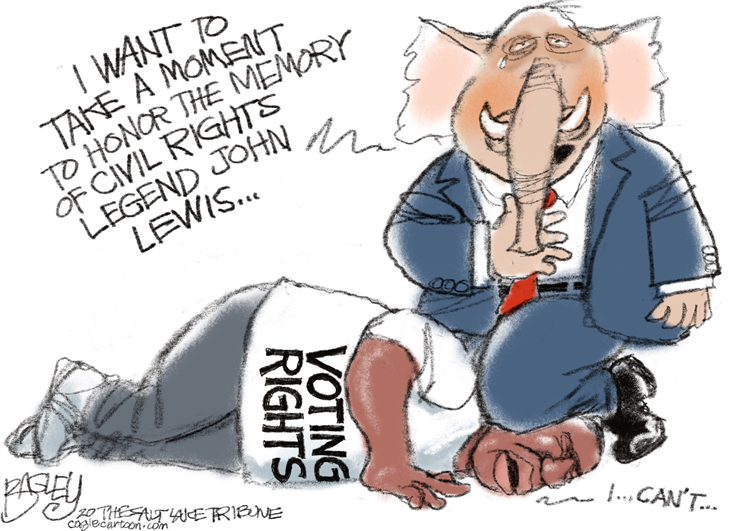
Republican elephant kneeling on the head of a Black man wearing a voting rights t-shirt. “I want to take a moment to honor the memory of civil rights legend, John Lewis...”
(click to embiggen)

48 senators call on McConnell to allow vote on bill restoring Voting Rights Act.

Picture of gun-toting trumpers protesting quarantine orders: “In Trump's America, these guys got zero repercussions for storming state capitols with guns because they wanted to go to Applebees.”  Then a picture of the Wall of Moms: “Yet these Moms got tear gassed & beat with clubs by Trump's secret police for standing up for Black lives?”
(click to embiggen)

Portland mom shot in the face during Black Lives Matter protest.

Wall of Moms, Black Lives Matter protesters sue Trump administration for use of tear gas, force in Portland.

A ‘Wall of Vets’ Joins the Front Lines of Portland Protests.

“NRA supporters have been claiming for decades that the reason they need their arsenals is to fight against authoritarian government overreach. Now that armed government agents in unmarked vans are snatching citizens off the streets without charges in the most glaringly obvious example of authoritarian government overreach imaginable, they are either twiddling their thumbs nonchalantly or screaming about how they want to get haircuts without taking any public safety precautions during a pandemic. It's almost as if it was never about fighting out of control authoritarian government at all. Funny, that.”
(click to embiggen)

From the Administration that Brought You Kids-in-Cages, It’s Tear-Gassed-Moms.

“Elect a clown, expect a circus.”
(click to embiggen)

Reich: Trump trying to shift attention away from his COVID-19 failures.

“If you love an LGBTQ+ person and you're planning on voting for Donald Trump in November, that's an act of violence against them.”
(Click to embiggen)

33 Ways Trump Has Harmed the Rights and Lives of LGBT People.

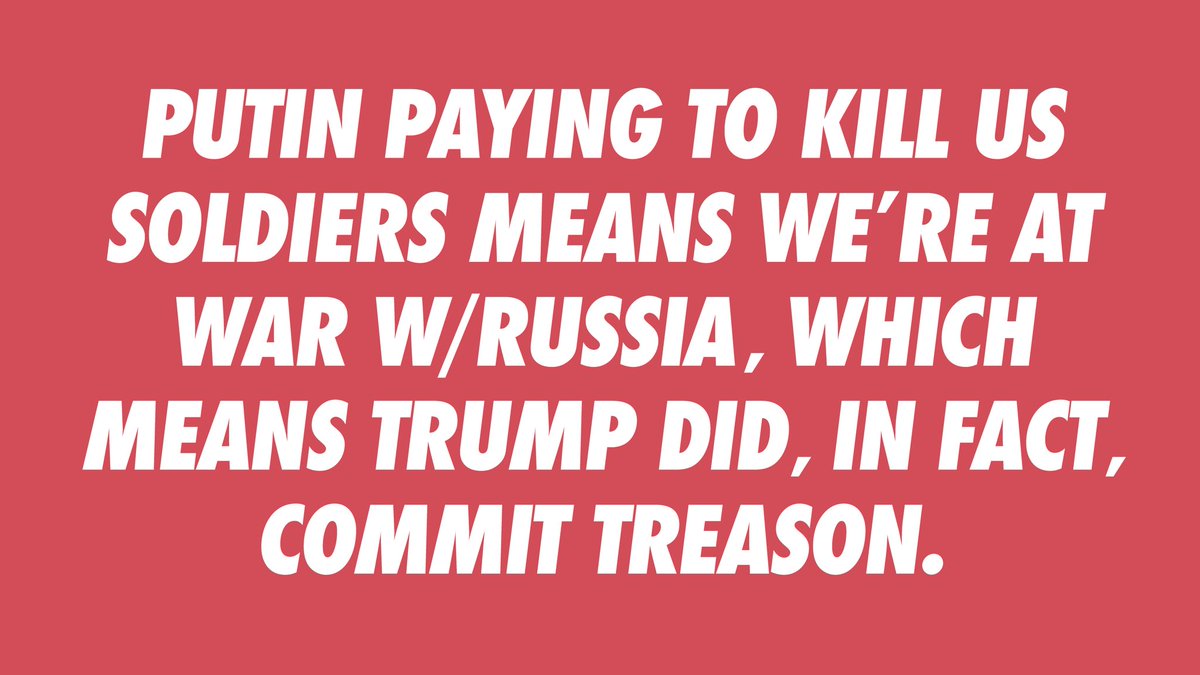
“Putin paying to kill U.S. soldiers means we're at ware with Russia, which means Trump did, in fact, commit treason.”
“Putin paying to kill U.S. soldiers means we’re at ware with Russia, which means Trump did, in fact, commit treason.”

Trump won’t say if Russian bounties came up in Putin call.

Trump won’t say if he’s confronted Putin over Russia’s reported bounties on US troops.

AP sources: White House aware of Russian bounties in 2019.

“America has once again proven that a pile of dead bodies is on cause for change and the fact that you're not sure which issue I'm talking about speaks to the depther of that problem.”
“America has once again proven that a pile of dead bodies is on cause for change and the fact that you’re not sure which issue I’m talking about speaks to the depther of that problem.”

Do not get lost in a sea of despair — why this white homo mourns John Lewis

Full quote: “Do not get lost in a sea of despair. Be hopeful, be optimistic. Our struggle is not the struggle of a day, a week, a month, or a year, it is the struggle of a lifetime. Never, ever be afraid to make some noise and get in good trouble, necessary trouble.”

John Lewis, ‘conscience of Congress,’ to lie in state at the Capitol
.

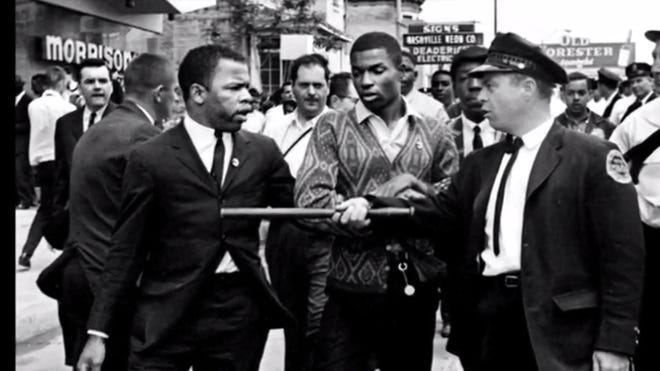
Lots of other people have written about U.S. Representative John Lewis. He was one of many fighting in the civil rights movement from the Nashville Student Movement in 1960, through the Freedom Rides and beyond. He was one of the “Big Six” organizers of the 1963 March On Washington (and until his death last week, he was the last survivor of the Big Six). He was beaten by police, arrested, had dog set on him, received countless death threats, but he never backed down. And eventually, he became not just an activist, but a member of Congress.

He was an American Hero from early on.

But he became one of my personal heroes in 1996. Bill Clinton had run for President on a promise to bring equal rights to the LGBT community, but instead he caved to pressure from the Republicans, conservative Democrats, and (even more problematic) timid Democrats. Instead of equality, he created the Don’t Ask, Don’t Tell policy for the armed services, which instead of making it easier for queer people to serve, significantly increased the number of discharges for being gay. And he also ultimately signed the so-called Defense of Marriage Act, which made it illegal for the federal government to recognized marriages of same-sex couples if states decided to extend those rights, and also exempted states from recognizing those marriages from other states (a clear violation of the Full Faith and Credit clause of the U.S. Constitution).

John Lewis was not one of the timid Democrats. He rose in opposition to the act. He spoke passionately about why he would vote against it.

“This bill is a slap in the face of the Declaration of Independence. It denies gay men and women the right to liberty and the pursuit of happiness. Marriage is a basic human right.”
—Rep. John Lewis, explaining why he was voting against the so-called Defense of Marriage Act in 1996

Unfortunately, the law passed. And we would have to wait for the Supreme Court to finally rule it unconstitutional in 2012.

That wasn’t the only time that John Lewis—a straight Black man, raised in the south, and an ordained Southern Baptist preacher—fought for LGBT rights.

“I have fought too hard and too long against discrimination based on race and color not to stand up against discrimination based on sexual orientation. I’ve heard the reasons for opposing civil marriage for same-sex couples. Cut through the distractions, and they stink of the same fear, hatred, and intolerance I have known in racism and in bigotry.”
—Rep. John Lewis, in an op-ed he wrote for the Boston Globe in 2003

“As a nation, we cannot say we are committed to equality, if we do not mandate equality for every citizen. You cannot have equality for some in America and not equality for all. This is another major step down a very long road toward the realization of a fair and just society. We should embrace the decision of the United States Supreme Court. It is now the law of the land.”
—Rep. John Lewis, commenting after the Supreme Court legalized Marriage Equality in 2015

I had really hoped that Rep. Lewis would live long enough to see us oust the fascist from the White House. I guess we’ll have to do in on our own.

Every time I see another headline about Lewis’s death, tears come to my eyes. We have lost a giant.

Rise in glory, John Lewis.

Rest in power, sir.

Friday Five (microbe economics edition)

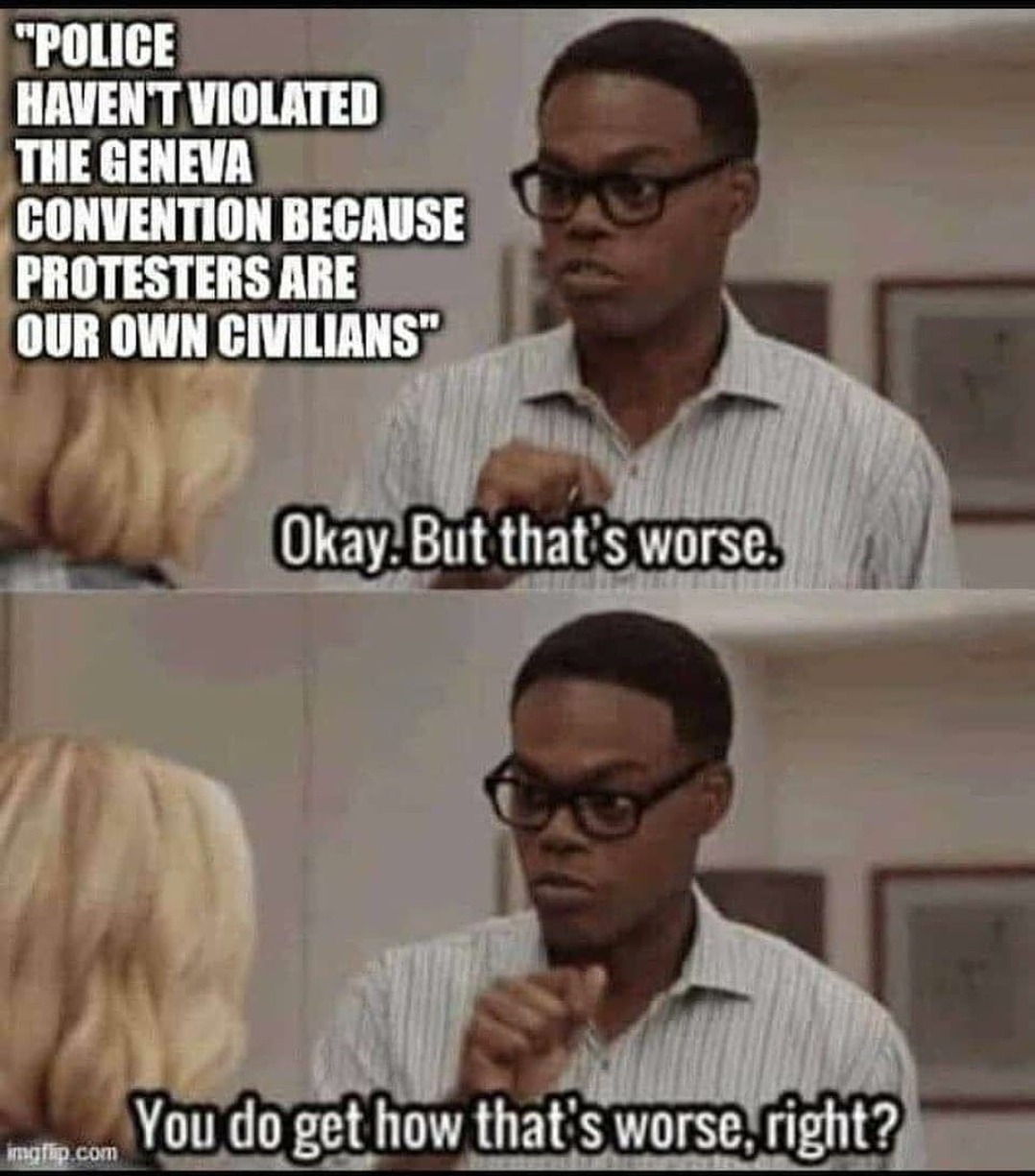
“Police haven't violated the Geneva Convention because protesters are our own civilians.” “Okay. But that's worse. You do get how that's worse, right?”
Meanwhile: “Portland Police Shoot Tear Gas at Group of Moms Protesting Police Brutality” https://popculture.com/trending/news/portland-police-shoot-tear-gas-group-moms-protesting/
Is it really the fourth Friday in July? Well, I guess it must be!

I’ve had a cough and sore throat since Saturday. The temperatures were scalding hot for a few days, and then we got a few days of overcast cooler days, though the forecast says that will soon pass. And, of course, the slow burn apocalypse of the real world drags on.

Which brings us to the Friday Five. This week I bring you:the top five stories of the week, five stories of interest to queers and our alles, five stories about the pandemic, five stories about the alleged president of the republic, five stories about science fact and fiction, and five videos (plus notable obituaries).

Stories of the Week:

How Portland Could Undermine Trump’s Urban Crackdown – The arrests in Portland now give courts a chance to expose the unconstitutionality of the president’s June executive order. The fight is already underway.

Steve Wozniak sues YouTube over ongoing bitcoin scams.

David Shor’s Unified Theory of American Politics. “In the postwar era, college-educated professionals were maybe 4 percent of the electorate. Which meant that basically no voters had remotely cosmopolitan values. But the flip side of this is that this educated 4 percent still ran the world. Both parties at this point were run by this highly educated, cosmopolitan minority that held a bunch of values that undergirded the postwar consensus, around democracy and rule of law, and all these things.”

Murder map: Deadliest U.S. cities. And the cities most people expect to be at the top of the list don’t even crack the top ten…

WWE Star Dave Bautista Calls Senator Ted Cruz an Ass-Sucking Nazi.

This Week in News for Queers and Allies:

Four Myths About Trans Athletes, Debunked.

Dem AGs sue Trump admin. to stop reversal of transgender health protections.

Number of Out U.S. Elected Officials Grows by 21 Percent in Past Year.

Transgender man named Michigan Teacher of the Year – He knows as a transgender man that “everything else takes a back seat” when you don’t feel safe in school.

COVID-19 is quietly ravaging the LGBTQ community.

This Week in the Pandemic:

Ex-FDA Chief Says US Could Hit 300K Deaths In 2020.

Known Coronavirus cases surpassed four million in the United States. The White House and Senate Republicans neared agreement on a proposal for the next round of virus relief.

173 new coronavirus deaths reported Thursday in Florida’s largest daily increase; over 10K cases added.

Republicans Keep Flunking Microbe Economics – Getting other people sick isn’t an “individual choice.”.

Fox Sports To Add Virtual Fans To Baseball Stadiums.

This Week in the Deplorable Thug Occupying the White House:

When Trump Is Gone the US Can Finally Grieve For the Pandemic Dead.

‘They Realize the Bully Is Just Kind of an Empty Suit’ .

US Attorney Demands DHS Investigation Into Arrests Of Protesters By “Secret Police”.

White House portraits of Bill Clinton and George W. Bush moved from prominent space to rarely used room.

Stephen Miller’s Grandmother Died of COVID-19. Her Son Blames the Trump Administration.

This Week in Science Fiction and Science Fact:

My Science Fiction Rabbi – How the prolific writer Barry N. Malzberg showed me my passion was just Judaism in a spacesuit.

The best science fiction and fantasy of the year so far — plus what we’re looking forward to next.

Humans settled in the Americas much earlier than previously thought, according to new finds from Mexico.

This is the first picture of a sunlike star with multiple exoplanets.

Study: Staring at Deep Red Light Can Improve Naturally Declining Vision.

In Memoriam:

Civil Rights Icon, American Hero, and Committed LGBTQ Ally John Lewis Dead at 80.

Obama on his ‘hero’ Rep. John Lewis: ‘I was only there because of the sacrifices he made’.

Rep. John Lewis, civil rights icon, original Freedom Rider, has died.

John Robert Lewis, the son of sharecroppers who survived a brutal beating by police during a landmark 1965 march in Selma, Alabama, to become a towering figure of the civil rights movement and a longtime US congressman, has died after a six-month battle with cancer.

Flossie Wong-Staal, Who Unlocked Mystery of H.I.V., Dies at 73 – A molecular biologist, she helped establish the virus as the cause of AIDS, then cloned it and took it apart to understand how it evades the immune system.

Manzanar survivor Yuki Llewellyn dies at 81.

Naya Rivera Confirmed Dead at 33 in Drowning Accident at Calif. Lake.

Videos!

A Socially Distanced Conversation: President Barack Obama and Vice President Joe Biden:

(If embedding doesn’t work, click here.)
A Desperate Trump Promises New Covid Strategy, Sends Bizarre Well Wishes To Ghislaine Maxwell:

(If embedding doesn’t work, click here.)
Trump’s Insane Chris Wallace Interview; Secret Police in Portland: A Closer Look:

(If embedding doesn’t work, click here.)

‘Unbelievable!!!!!’ Produced By Snoop Dogg Stars 40 Former ‘Star Trek’ Cast Members And A Puppet:

(If embedding doesn’t work, click here.)

GEE, ANTHONY FAUCI! – A Randy Rainbow Song Parody:

(If embedding doesn’t work, click here.)