We are at the penultimate episode of season one of Star Trek: Picard and it is a doozy! The official title is “Et in Arcadia Ego, part 1” and it ends on many more cliffhangers than any of the previous episodes.
Before we do anything else, I want to geek out a bit about the title of the episode, which I can do without any specific spoilers. The title is in Latin, and the phrase has been used as the title of a number of works of art over the years, most famously a painting by 17th Century French Baroque painter, Nicolas Poussin. The phrase is usually translated into English as, “Even in Arcadia, there am I” where the I in question is usually interpretted to be Death. The usual interpretation of the phrase is that Utopias are never perfect, or that Death is a universal fate everyone faces.
In another interpretation, the painting is used by certain conspiracy theorists (who say that the I in the title is Jesus, not Death) to be proof of their claim that a bunch of Kings of France in the Middle Ages were descendants of Christ.
There are other interpretations, of course. There is no way to know which meaning of the title really applies until we see the finale, which we all assume is entitled, “Et in Arcadia Ego, part 2.” Of course, given that Raffi within the show is a conspiracy theorist, while Commodore Oh, Narek, Narissa, and Ramda are all members of a secret conspiracy, we can’t rule anything out.
This was a fun episode. Lots of interesting things happened. We got answers to some outstanding questions. There were a couple of fun reveals, and some teasers for what might happen in the finale.
Which means we’ve reached the point were I can’t make any other comments without revealing major spoilers. So it is time for the cut-tag. Past this point there be plot spoilers. So if you don’t want to be spoiled, don’t read on.
But assuming you aren’t mixing things that oughtn’t to be consumed at the same time, this can be fun. My husband, who used to be a bartender, shared this post about one bartender’s version of a Quarantini: The Quarantini! which does look tasty (not surprising coming from a bartender) and at least has a nice story to go with it. I object to this one a bit because it hits two of my pet peeves regarding cocktails:
The first is that a good cocktail recipe should not be dependent on super-specific, branded ingredients. If you can’t make it without buying a specific brand of an uncommon alcohol, liqueur, or cordial, most people aren’t going to be able to make it.
A true martini is a three ingredient drink: gin, vermouth, and a garnish (olive or a twist of lemon, traditionally). It has been argued that a martini is actually a four ingredient drink, because they taste best if served very cold, so if you consider temperature an ingredient, that is that. Regardless, the above recipe has eight ingredients (and is also recommended to be served chilled, so nine counting temperature) and that just isn’t a martini!
An important caveat to my first point: while it is true that I have specific gins that I will recommend if one if making a martini, as well as a favorite dry vermouth, those are recommendations, but the actual recipe. I have a number of favorite bourbons and ryes for making Manhattans or Old Fashioneds with, as well, but the specific brand isn’t part of the recipe, right?
One part vermouth and 19 parts gin sounds insane, until you remember that a lot of people make their martinis by putting a little vermouth in the glass, swirling it around, then dumping it out and pouring the chilled gin into the glass. My typical recipe is closer to a 1 part vermouth, 9 parts gin, for example.
I’ll allow the vitamin C table garnish on the assumption that you are swallowing the tablet before you begin sipping the drink. If you want to get vitamin C into the cocktail itself, maybe a twist of lemon will be fine.
Edited to Add: It’s been pointed out to me that because Margaret and Helen often write in a distinctive style that one should not always take literally, that not everyone understands that when Helen says to serve this with hand sanitizer, she means that if you’re making a drink for someone else, you should use hand sanitizer since both you and the person you are making the drink for will be touching the surface of the glass. Not that you should put hand sanitizer into the drink.
(click to embiggen)Once again it is time for one of my Saturday posts where I talk about news stories that either broke after I finished this week’s Friday Five, or has had new developments since it was linked, or otherwise bears sharing now rather than later. Along with more commentary from me than usually accompanies the Friday Five posts. And oh, we have have some juicy news today! Let’s go!
Let’s begin with this: These Senators Sold Millions Worth of Stock After Private Briefings on the Impending Coronavirus Crisis . First, I want to point out that the original headline talks about Republican Senators, but even in the initial breaking story, there was one Democrat, as well. So I fixed the headline. So, Senators receive a number of classified briefings about the looming pandemic, and several of them, just coincidentally, sold off millions of dollars in stock in industries likely to take a hit. At least one of them doing so while simultaneously writing editorials and going on the various news shows to insist that the country was ready to handle any such emergency and that everything was going to be fine.
One of those Senators has been trying to defend herself by claiming that all the sales were done without her knowledge, but the problem is that her husband, who just so happens to be the chairman of the New York Stock Exchange, also unloaded a bunch of stock after the briefings. Most of the others are trying to defend themselves by claiming the sales conform to the law… And it is true that the law gives Congresspeople a lot of leeway to do this sort of thing: An Invitation to Corruption – As long as lawmakers are allowed to trade individual stocks, disaster profiteering is always a risk.
The short version is that members of congress are allowed to buy and sell stock based on public information that they learn during the course of their work so long as the transactions are reported within 30 days. Which is very lenient, because the definition of public information is broad. As congress people receiving briefings, the information they received is often contextualized in a way that the information isn’t available to the general public. In other words, they have taxpayer-funded help sorting out the signal from the noise, while the taxpayers are left with the noise…
Part of the reason it is so outrageous that the law is so lax on this is because not only do members of congress have access to information that the public doesn’t, but they write and vote on laws that funnel tax dollars into various efforts. In private business, insider trading laws recognize that employees of publicly-traded companies have information before the public does, and therefore are in a position to sell their own stock at times just before information that will greatly devalue that same stock once it is know. Such trades are effectively stealing money from the people who are buying those stocks. So it’s illegal for employees of private companies to buy or sell the stock when they are in possession of information the public doesn’t yet have. Executives, who not only have a lot more information than the average employee but can also change policies within the company that effect the value, are limited to very narrow windows, beginning a number of days after quarterly earning reports are published, and ending a short time later.
We’ve reached the third Friday in March and also the official beginning of spring (in the northern hemisphere).
More of the world is working from home this week. My husband’s place of work has cut down on hours, so he’s not having to leave the house as many days each week. That has a marginal decrease on my anxiety, and for now we’re trying really hard not to worry about economics.
Meanwhile, welcome to the Friday Five. This week I bring you: the top five (pandemic-free) stories of the week, five stories of interest to queers and our allies, five stories about responding to the pandemic, five stories about the pandemic, one story in a category of its own, and five videos (plus notable obituaries and some things I wrote).
Tulsi Gabbard ends White House bid, endorses Biden. It’s not that I want everyone to rally ’round Biden already, it’s just that I really wanted her out: “She had also become the subject of widespread skepticism among national Democrats, often rebuked for her past anti-LGBT rhetoric, isolationist brand of diplomacy and 2017 meeting with Syrian President Bashar Assad, whom she declined to label a war criminal despite the dictator’s use of chemical weapons to attack his own people.” There were only three candidates still in the running in last week’s mini-Tuesday… and still she came in sixth place. For good reason!
Every time I’ve sat down this week to try to compose a blog post that isn’t somehow related to the pandemic, I’ve found myself digressing into the topic, anyway. A comment about it crept into the draft of my Star Trek: Picard review, even. I think I need to just admit it’s a part of my life right now and deal with it.
I’ve seen a lot of people sharing tips about staying productive while working from home. I’ve been working from home at least one day a week for many years, now, but I still have been reading those posts and twitter threads because 1) it’s always interesting to see how other people handle things, 2) they may have some ideas I’ve never tried, and 3) it never hurts to brush-up a skill set.
Now, just like writing advice, what works for some people doesn’t work for everyone. And pitfalls that trip up some people don’t interfere with others. For instance, a lot of folks are advising against working in your pajamas or such. To which I say, “pffft!” I wear sweats or shorts (depending on the ambient temperature) with no problem of thinking of it as a work day. OTOH, I always grab a clean t-shirt and do a runs a comb through what little hair I still have before I log in to work. But I admit mostly that’s because I’m paranoid that I’ll accidentally turn on video conference while I’m in an on-line meeting.
I realized while I was reading the various posts that I haven’t been doing a very good job of sticking to at least one of my own rules about working from home lately. And it started before the semi-quarantine.
That rule is that there is a point in the middle of the day when I close the work laptop, go make my lunch (or pull it from the fridge, whatever), and sit somewhere away from the workspace to eat lunch and scroll through some news sites OR do some writing.
Since we’ve moved to Shoreline, that also almost always meant that I take a fresh mug of coffee, my food, and my iPad out on the veranda, so I’m technically outside. Even in cold weather, a few minutes outside with hot coffee was a great break. But this year we had a small version of the snowpocalypse, again, and I wound up working from home for at least one week. It was a bit too cold to sit outside that week. I did go out every morning and make sure the hummingbird feeder wasn’t frozen, and that the other feeders all had food, but that was in the morning before logging in.
Then I had another two week period not long after that where I had the flu so I didn’t go into the office my usual days. And I didn’t do my lunch outside during that time, either.
Since the current work-from-home stretch started a bit more than two weeks ago, I have occasionally thought, after finishing lunch inside (usually wolfing it down quickly, often at my desk) that I ought to have gone outside to eat. It occurred to me that maybe the reason my work days aren’t feeling as productive and I’m being more cranky late in the day might not be merely ambient anxiety because of the pandemic or all the network lag I’ve been experiencing since everyone is working from home.
So today, Thursday, is the second day in a row that I have made myself stop, close the laptop, get a fresh mug of coffee, and take my lunch and iPad outside to sit at my silly IKEA outdoor table, watch the birds at the feeder, listen to the nearby traffic, and have a real lunch break.
And I’m really glad I have. I think Wednesday afternoon went much better because of it!
So: tricks and tips to put your mind in the work-day mood are good. Just as important, though, are to take regular breaks and a little self-care.
My episode-by-episode reviews of Star Trek: Picard continue with the eighth episode, “Broken Pieces,” in which Raffi, Rios, and Jurati finally meet Soji, while Seven of Nine comes to Elnor’s rescue and is faced with a horrific situation.
This was another bloody episode, with a rather lot of deaths, some depicted less graphically than others. And the deaths were hardly the most disturbing things to happen! I think it was an excellent episode. Since we are nearly to the end of the season, most of all the diverse subplot all start to come together.
I can’t say anything more without major spoilers, which means it’s time for the cut-tag. Past this point there be plot spoilers. So if you don’t want to be spoiled, don’t read on.
.
You’re crossing into the former Neutral Zone without backup!
I’ve been trying not to get all ranty and also not to turn this blog into all-pandemic all-the-time, but… Here’s the thing. I know that all of us are anxious, and it feels as if washing our hands and avoiding crowded places, and wiping down the handle of our shopping cart, et cetera, et cetera, et cetera isn’t really doing anything. But the panicked buying and the profiteering isn’t actually helping, either.
Besides being an old fart, and therefore automatically in a higher risk group for getting severely sick, I am also diabetic (and before certain people chime in, it’s been identified as one of the genetic types, so no, there is absolutely no amount of exercise nor weight loss that could prevent it—I have long joked the diabetes doesn’t run in my dad’s family, it stampedes and now I have medical proof that it isn’t a joke). Besides putting me in yet another high risk category, what that also means is that a couple times a day I have to swab some part of my skin with alcohol, poke it with a lancing device, and place a drop of blood on a test strip to check my blood sugar (while pressing the alcohol swab to the pinprick to help stop the bleeding in a sterile way), and at least once a day I also have to inject myself with the medication that controls my condition and guess what—that also requires swabbing some spot of my skin with alcohol before stabbing myself with the needle (and afterward wiping again, as per medical recommendations).
Now, I come for a long, long, long line of penny-pinchers, so I worked out the routine a long time ago of doing the swab-lance-test-press-swab-stab-inject-swab-again routine in a short enough time frame that it only takes one alcohol wipe to get the test and inject job done. But, that’s the morning injection. I’m also supposed to check my blood sugar twice more during the day, and under certain circumstances, inject myself with a second medication at bedtime.
So when all the panic-buying started, I double-checked my wipe supply and confirmed that I had an unopened box in the cabinet in addition to the box I was using. And I had two. (Because it’s cheaper to order the three-pack). Then I reached the end of the current box, and I told myself, “That’s fine, I have a couple more boxes.” But then I saw enough comments about people having things back-ordered and I thought, “Okay, though this should last me a couple of months, maybe it’s okay to order a single box, knowing that it isn’t going to ship for many weeks.”
That was merely eight days ago. This morning I got the third update in that time advising me that the arrival date is being pushed back some more.
The problem is that some people will read this and think, “Oh, no! I need to buy more of blank just in case…” which is just going to make things worse.
Since we’re on the subject, let’s dive in:
Please Stop Treating Me Like I’m Disposable When You Talk About The Coronavirus . This one really hits several spots. I keep seeing people insisted that “only a few percent of people are at risk” and variants. First, a lot of people are at risk. High risk groups include older people, and if you are not old you may think that means it doesn’t matter to you—but what about your parents and other older relatives? Do you really not care about them?
But it’s more than just “old people” who are at risk, it is also people with pre-existing chronic health conditions (including high blood pressure [33% of adults in America], diabetes [9.4% of Americans], heart disease [6% of adults in America], and a wide variety of chronic illnesses and disabilities that compromise the immune system). The best guess is about 60% of the population has at least one such underlying health issue, and 40% have more than one.
So think of it this way: imagine yourself and your two best friends get infected. Out of just those three people, statistically, two of you are probably at higher risk to develop a severe case and require hospitalization and a ventilator/respirator to have any hope of surviving.
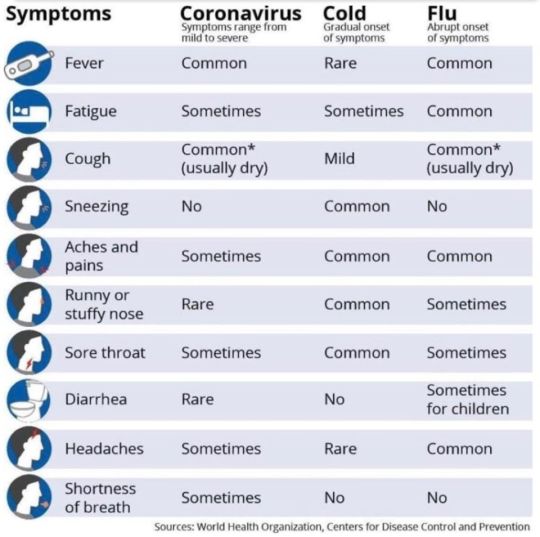
And no, I’m not making that up: What Will You Do If You Start Coughing? “Stay home” is not a sufficient plan. When health officials say most people will have mild symptoms, that word doesn’t mean what you think it means: “a “mild” case of COVID-19 is not equivalent to a mild cold. Expect it to be much worse: fever and coughing, sometimes pneumonia—anything short of requiring oxygen.”
But wait, there’s more: “Flattening the Curve” is a deadly delusion. “Once a person is on the ventilator, it often takes about 4 weeks for them to get out of intensive care again.”
And don’t get me started on all the lies and worse in the White House press briefings…
That’s enough of depressing news. Don’t forget to wash your hands (soap and water are fine). Also, moisturize! While the washing literally kills the virus (and other nanoparticals), it also damages the skin, which makes your hands more vulnerable. Your skin is your first defense, so use some lotion regularly, too!
Finally, Randy Rainbow has humorously summarized many related issues, while making a parody for a song from one of my favorite under-appreciated musicals (Guys and Dolls)—
The CORONAVIRUS Lament – A Randy Rainbow Song Parody:
Edited to add: Some comments indicated people don’t understand what kind of alcohol wipes I’m talking about in the opening two paragraphs. They are TINY little wipes intended for a single medical purpose. They aren’t big enough to effectively wipes door handles, cart handles, doorknobs, and other large objects in the real world that need to be disinfected.
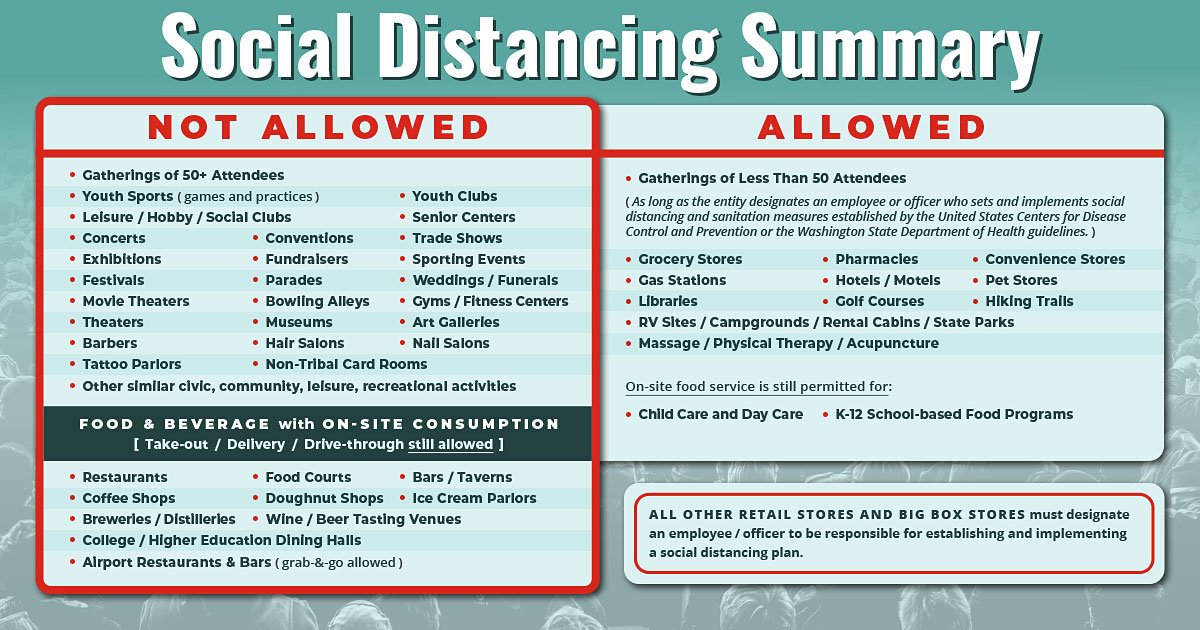
(Click to embiggen)We’ve reached the second Friday in March, and everyone is starting to learn about social distancing.
This is the second week that I (and my entire department) have been working from home at the direction of upper management. I am exceedingly lucky that my work can be done over the internet and that my employer is set up for that. It makes me feel extremely guilty that a lot of other people can’t. Including my husband. And I only have anxiety attacks about him (and many other friends and relatives) a dozen or so times a day.
Meanwhile, welcome to the Friday Five. This week I bring you: the top five stories of the week, five stories of interest to queers and our allies, five stories about deplorable things and the people fighting them, and five videos (plus notable obituaries and some things I wrote).
Stories of the Week:
Why Are Women Less Likely Than Men To Support Sanders? Data that backs up what I’ve been saying for over three years: “It’s hard to pin down a single reason why men seem to be more attracted to Sanders’s candidacy than women… But there is evidence, according to an analysis by Dan Cassino, a political science professor at Fairleigh Dickinson University, that while support for Biden increases among voters with more sexist views, those with the most sexist views were disproportionately likely to favor Sanders. And sexism was higher, in general, among men.”
Many years ago I was walking from the bus to my place of work, when I saw a woman holding a microphone standing with a guy with a TV camera on his shoulder up ahead, talking to another pedestrian. My workplace at the time happened to be across the street from the headquarters of one of the three local network affiliate TV stations, and two others were within a three or four block radius, so it hadn’t been the first time I saw a pair like that interviewing passers-by. By the time I got close, the young woman asked, “Excuse me, sir, can we ask you a couple of questions?”
I said, “Sure.”
Camera guy points the camera at us, the woman smiles and asks, “Are you aware that today is a primary election, and did you vote?”
“Oh, yes!”
Her smile got even broader. “Why did you vote? Is there something special on the ballot this time that compelled you to turn out?”
I think I blinked stupidly for a second before I said. “It’s an election. I always vote. That’s what you’re supposed to do if you’re a responsible citizen.”
I hadn’t finished before her face fell, she turned to the cameraman and made a slashing motion with her hand. The cameraman stopped filming. Then the young woman said, “Thank you, sir,” and started scanning the sidewalk looking for someone else.
I was telling a co-worker about it later that day, and he asked, “How often do you think you forget to vote?” And I explained that I had only ever missed one election—the very first primary that happened the year I moved to Seattle to attend University—and only then because I didn’t get my registration updated in time for the primary, but I did vote in the general that year.
He explained that he did a lot of volunteer work for several election campaigns over the years, including the get-out-the-vote stage of such campaigns and he said, “They have this term, a ‘perfect voter’ by which they mean a person who voted in every general, primary, and special campaign in the last four-year period. That’s you!”
My state is one of the six states holding a Presidential primary or caucus today. We have been an all-mail-in voting state for some years now, so that usually means my husband and I sitting down at the kitchen table with voter pamphlets and the like on the weekend before election day to fill ours out (and make a lot of snarky comments about some of the candidate statements in the pamphlet). When we lived in Ballard we would usually walk together the 10-ish blocks from our place to the local library branch to drop the ballots in the big drop box. Now that we’re in Shoreline, I drive to the nearest library (it’s about two and a half miles away, so I don’t walk) to drop them off.
Which I have already done.
Since the only thing on the Presidential Primary ballot is President, we didn’t need to actually read the pamphlet. I have had the Democratic nominees ranked in my head for some time. The only reason I didn’t fill out my ballot as soon as it arrived was because I was pretty sure a bunch of candidates would drop out after Super Tuesday last week. Which they did. So I wound up voting for the candidate that had started out around fifth or sixth place on my list back during the early debates. And not because my opinion of him has changed, but because every other candidate I liked more has since left the race.
I love the graphic at the top of this post because it so brilliantly illustrates the difference between people’s perception of the political spectrum, and the reality. The media loves to paint Bernie Sanders as a far left liberal, and Elizabeth Warren as nearly as far left, while the truth is that Bernie and Liz would barely be considered left of center in any European country, and when you look at policies most Americans support on various polls, they are pretty much smack dab in the middle compared to the voters.
And if my face was on that graphic, I would be very far to the left of Bernie.
As much as I loved Barack Obama, he wasn’t a liberal. He was right of center, by a bit. Most of his foreign policy was very similar to that of the George W. Bush admin during its second term, for goodness sake! When Bill Clinton was in office, he was actually further to the right than Obama would be. And yeah, the entire Republican party isn’t merely rightwing, it is extremely far rightwing (and quite a lot of it alt-right).
Anyway, I’ve voted for the least conservative option still in the race. Let’s see what happens!
Jean-Luc reunited with Riker and Troi in “Nepenthe” — CREDIT: CBSMy episode-by-episode reviews of Star Trek: Picard continue with the seventh episode, “Nepenthe,” in which Jean-Luc and Soji, having fled the Romulan-controlled Borg cube, meet up with Riker and Troi from The Next Generation while Elnor learns the limits of one sword against multiple opponents with disruptor pistols and knives, and the rest of the motley crew deal with a host of obstacles and riddles.
I predicted at the end of my last review that things were heating up, and this episode did not disappoint. Several of the plot threads moved forward. There was action and also more than a bit of bloodshed. There was also a boatload of character development. This series continues to be entertaining while also taking the Trek universe into interesting new directions.
I’m not quite willing to say it was a good episode, simply because bad things happened to characters that I think a lot of viewers liked. That doesn’t mean that the quality of the writing or production are bad. Sometimes stories have tragic turns. The quality of the series rises, yet again, in my opinion.
And I think I have now reached the point where it is impossible for me to say anything more without major spoilers. Past this point there be plot spoilers. So if you don’t want to be spoiled, don’t read on.
.
You’re crossing into the former Neutral Zone without backup!
 We are at the penultimate episode of season one of Star Trek: Picard and it is a doozy! The official title is “Et in Arcadia Ego, part 1” and it ends on many more cliffhangers than any of the previous episodes.




 Font Folly