I know I’ve mentioned the record-breaking rain three weeks in a row, now, but we have flooding and a state of emergency declared although the medical examiner has yet to release the official ruling, it appears to two teen-agers may have died due to the flooding earlier this week.
Meanwhile, welcome to the Friday Five. This week I bring you: the top five stories of the week, five of interest to queer people, five stories about science and technology, five stories about deplorable people, five stories about people who had it coming, and five videos (plus notable obituaries and things I wrote).
“And that was only January!”Last year the plan was to report on my goals progress on both my Patreon and this blog… and for reasons mostly having to do with both my procrastination, over-thinking, anxieties, and good ol’ brain hamsters, posts didn’t get posted either place. Of the three big goals I set for last year, I made great progress on two, and mostly borked the third. I had scaled back to three because my experience for several years before that, where I set four big goals, was that I made great progress on three of them, but one of them always seemed to be neglected. Cutting back to three didn’t help.
I strongly suspect if I cut back further that it would just mean that I only make progress on one goal. Anyway, this year I went back to four goals.
Whether you call them new year’s resolutions or goals, I like giving myself targets for improvement. Some years ago a friend suggested the analogy of how one trains a dog: you can’t get rid of a bad behavior without replacing it with something else that fulfills the same need for the pup. In other words, replace a habit you don’t like with a new one that you do. This has helped me make a number of changes in my own behavior over the years since.
My goals for 2020:
Tell my friends that I love them. Usually my goals are more broad than this, and then I give myself individual tasks from month-to-month under the umbrella. But especially how exhausted with all the outrage, existential threats, and general awfulness of the work the last few years, I’ve felt that I keep forgetting that each of us has the power to encourage each other. Also, it feels as if much of what is wrong with the world is a combination of toxic antipathy. So one of my goals for the year is to remember to tell my friends that I love them. Because I do. And there should be no shame in telling people who are important to you how youf feel.
Acknowledge Rage, but Stay on Target. It has always been the case that I find it easy to rant and get outraged about injustices and the like in the world. Ranting burns up a lot of energy, especially when so many people who actively want people like me to cease to exist are in power. I think I’ve done a reasonably good job of paying enough attention to try to protect myself and my family, while not getting overwhelmed. So I’m going to again try this year to keep (and in some areas increase) my focus on things I can control. My tasks are: write about about things I love on my blog; continuing listening to music and audiobooks more than news podcasts and the like; join my husband in his painting project; donate to candidates running against the haters.
Engage. I have fallen back into the habit of only getting together with friends for things related to projects. I need to spend more time hanging with friends just to hang. My task is: set specific goals each month related to re-connecting with friends.
Make It So. Various writing and publishing projects have all stalled out. I need to actually finish more things and put them out in the world. My task is: set specific monthly writing/editing/publishing goals each month.
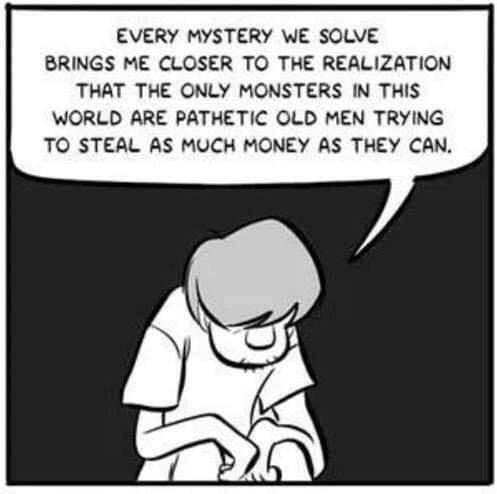
We’re barely into February and I already feel as if 2020 is a grueling year. My discussions with friends indicate that neither I nor the creator of the meme I link above or in the minority.
I’m tired of talking about infuriating stuff, however. So, let’s go in a different direction.
Last spring, on a whim, I picked up a hummingbird feeder at a nearby dollar store. Since we moved to this neighborhood almost three years ago, I had frequently seen hummingbirds in the summer months, through the fall, and well into winter, going from flower to flower on all my flower pots on the veranda. Our mild winters meant that we had at least some plants continuing to bloom throughout that period. So I figured a dedicated feeder would not go amiss.
Alas, throughout the summer and fall, though the feeder’s liquid level would steadily go down, I never once saw a hummingbird at the feeder. During last summer there were many days when I saw a bunch of bees clustered on the feeder, but the only times I saw hummingbirds on the veranda, they were visiting flowers. Still, given the difficulties bees are facing, I figured that it was fine if I was feeding bees.
Very late last fall, as some upgrades were being installed on our gutters and drain pipes, I took down the hummingbird feeder so it was out of the way of the workmen. That was on a weekend. A couple of days later, I was working from home, and I came out of the kitchen with my coffee mug, and found myself essentially face-to-face with a small brown-bodied hummingbird hovering at eye level just outside my sliding glass door. I stopped. She then flew to the spot where the hummingbird feeder used to hang, hovered there for a moment, and then she moved down the eave, stopped at each of the hooks in the eve… before flying back to the door and staring at me.
As one friend said when I was telling this story, the bird seemed to be saying, “Okay, monkey, what did you do with my food? Chop-chop!”
So I carried the hummingbird feeder inside, washed it out thoroughly, mixed up some more sugar water, then carried it out and hung it up. Since then, there are several points every day that I am home that I see at least one hummingbird at the feeder.
And then, we had our week of snow and ice. Every morning I went out and checked the feeder to see if it was liquid. It I had been a bit more proactive, I would have brought the feeder inside at night time so it wouldn’t freezer. But I didn’t. Anyway, there were only two mornings when the sugar water mix inside the feeder was frozen. Both times I whisked the feeder inside and used the microwave to thaw it out…
The problem was that the feeder felt as if it was about to collapse. It was extremely cheap plastic to begin with, and had spent nearly 10 months hanging outside exposed to sunlight and other elements before the freezing weather came in. Anyway, it felt as if it was going to disintegrate at any moment, so after a consultation with my husband, I ordered a higher end feeder, with the main reservoir made out of glass–and purple glass at that. The first day it was hanging up, hummingbirds were feeding at it, so it was a good purchase.
Since then, I have installed a dual-suet cage and after a couple of weeks many of the neighborhood birds have figured out that it is food. The squirrel feeder, on the other hand, kept getting very wet and food at the bottom of the feeder kept rotting… so I finally gave in and moved the feeder to a spot well under the eave of the building. Oddly enough, all of the squirrels come and get food from the feeder, but carry that food over to the edge of the deck near where the feeder used to be to eat it.
I have a few theories on why they do that, but no good way to test them. Oh, well.’
The important thing is that I’m feeding wild life in my neighborhood, AND I get to watch and listen to all these cool birds every day that I’m home. So, win-win-win, don’t you think?
Finally, my specific tasks for February are:
Schedule a painting day with my husband.
Host Writers’ Night.
Write at least four blog posts about things I like.
A few quickies to wind up this interesting Tuesday
The Iowa caucuses have always been bad. Now we know just how bad they are – With its error-prone process in a disproportionately white state, Iowa doesn’t deserve to be the state to have the first say in who the Democrats should nominate. Despite this, the problem isn’t about corruption, nor do the slow release of results prove any kind of conspiracy. Caucuses are in theory run by the state parties, who rely heavily on volunteers. These are not trained professionals. The volunteers seldom get much in the way of training beforehand. And volunteers at these things tend to skew older, exactly the demographic that you don’t want carrying out important tasks with a smart phone app. To be fair, primaries have a lot of the same problems—poll workers again are not paid professionals, they are volunteers who often are not well trained. And with either system, election night results are always, at best, estimates. The real results aren’t known until all the paperwork from the precincts are processed, sometimes weeks later. And yes, there were all the usual paper documents signed with the entire precinct witnessing and so forth. The app wasn’t meant to be the official results, but rather to facilitate announcing estimates sooner.
I am not going to watch the State of the Union. I don’t need to watch that buffoon lie while mangling the language for hours. If you do want to watch a good speech under 8 minutes, you might enjoy this:
LGBTQ State of the Union w/ Billy Porter | Logo TV:
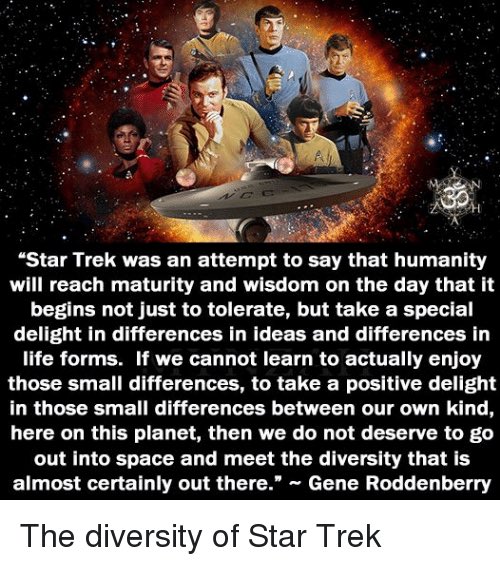
“Star Trek was an attempt to say that humanity will reach maturity and wisdom on the day that it begins not just to tolerate, but take a special delight in the differences in ideas and differences in life forms. It we cannot learn to actually enjoy those small differences, to take a positive delight in those small differences between our own kinds, here on this planet, then we do not deserve to go out into space and meet the diversity that is almost certainly out there.” — Gene Roddenberry
I get really tired of hearing certain fans yell about politics in science fiction. There are multiple reasons I find it annoying. The most important reason is that all of the sf/f that those people hold up as examples of politics-free sci fi is actually loaded with politics — usually white supremacist, misogynist, colonialist, homophobic politics — which they don’t notice because all that racism, sexism, xenophobia, and heterosexism reinforceses their own beliefs.
The next reason is that these same people inevitably hold up older sci fi works as examples of so-call non-political writing, which was sometimes even more loaded down with a lot of politics than the newer stuff they are decrying — but unlike the other example, the reason they don’t notice this time is not so much because the politics are favorable to them, but because they are ignorant of the social-economic-political landscape that was prevalent in the world at the time those things were created.
For instance, let’s look at Star Trek: the Original Series which broadcast from September 8, 1966 through June 3, 1969. That was a total of 79 episodes while the U.S. was in the midst of the Vietnam War (and protests against it), the Civil Rights movement (including a fight for racial equality, a separate fight for equal rights for women, a separate fight over any rights at all for gay people, and the fight for religious equality for such a distant dream it was laughable).
I mentioned last week that the original Star Trek series had episodes that commented (sometimes ham-fistedly, yes) on the civil rights issues playing out in the real world at the time. For example, the original draft of “The Enterprise Incident” (September 27, 1968) was such a scathing indictment of the real world Gulf of Tonkin events (America’s excuse for invading Vietnam), that the network censors pressed for rewrites that watered it down… but even watered down it was still recognizable as a commentary on the Cold War with the Soviets and China in general, and how that Cold War was playing out in Vietnam in particular.
For another example, the sixth episode of the series ever broadcast, “Mudd’s Women” (October 13, 1966) delved into many issues related to the social and economic disparities between men and women and related topics.
The “Balance of Terror” (December 15, 1966) was an extemely obvious commentary on the Cold War in which the U.S. and allies were deeply embroiled with against the Soviet Union and allies at the time. There were also more than a few bits of the story that commented on the racial aspects of World War II.
And then there was “Plato’s Stepchildren” (November 22, 1968) which involved a lot of arguments with the network censors because Captain Kirk and Lieutenant Uhura kiss! Oh, em, gee! A white man kisses a black woman! How will civilization survive such a thing?
And let’s not forget “I, Mudd” (November 3, 1967) which includes the scene where Uhura appears to be acting out the expected sexist trope of elevating her own vanity above other issues, but instead it is a trick she and the captain worked out in advance, and more importantly, not of the stereotypical sexist tropes related to the notion of a woman doing the right thing instead of the expected thing played out, either. That couple of minutes in the middle of that episode was an incredibly radical political statement for the time, believe me!
I could keep going, but it just becomes a pile on at this point.
Politics isn’t just about squabbles between elected officials. Politics is about public policies the govern the way the ordinary people are allowed to live within the society. That does far more than cause an occasional inconvenience. Politics can and does have profound impacts on quality of life including our health. It quite often has life and death consequences for several groups within the population.
Science fiction has sometimes been described as the literature of change. And changes made in societal attitudes, policies, and laws are certainly a legitimate topic for sf/f stories. The very oldest tales we have the people classify as the roots of sf/f do precisely that. It’s part of the genre from the beginning. And there is nothing wrong with keeping that tradition going.
I don’t know if I really want to do an episode-by-episode review of Star Trek: Picard in part because more than one fan writer that I admire are already doing that, and I’m not sure I’m adding much to the conversation. On the other hand, I have been a Star Trek fan since at least 1966, when the original series was being broadcast for the very first time on NBC.
For a bit of context: my sixth birthday happened between the airing of the third episode of the original series (“Where No Man Has Gone Before”) and the fourth episode (“The Naked Time”). I don’t know how regularly we watched the first season. My very vague recollection is that Dad insisted that we watch “Daniel Boone” on Thursday nights, and if the promo for “Star Trek” came on before Mom realized the “Bewitched” was happening over on ABC, then she might feel conflicted about whether to switch over (because both she and I loved Bewitched, but also loved sci fi). I also know that between Star Trek and Bewitched in the 1966-67 TV season is the reason that I remember the first half of every Batman two-parter (which for two years aired on Wednesday, then the second half on Thursday), but often never caught the second half until years later in syndication.
The point is, I have been a Star Trek fan for more that 53 years (and I started reading only-available-through-obscure-snail-mail-subscriptions fanfic 47 years ago) and sometimes I feel as if I’m not holding up my end of the fandom elder bargain by not weighing in more often.
This is complicated by the current streaming environment. A lot of people who would love to sample the new Trek series are reluctant to sign up for yet another streaming service—and I really understand! It irritates me that all the people who love Trek can’t easily access this series.
Side Note: if you happen to be in a position to come visit my husband and I in the suburb where we live just north of Seattle, we are more than willing to host a viewing party. You can come over and watch episodes on our 4K TV and (older) surround-sound set up, because I love sharing this sort of thing… and as many of our friends will attest, we love cooking for large groups, so… I guess I should keep posting at least some sort of review.
Okay, so first, once again, I start with the non-spoilery review: I don’t just like this show, after seeing episode 2 I can safely say that I love it. This episode takes several interesting turns away from Standard Plot Points and continues to allow the actors a lot of room to flex their acting muscles. There is a particularly awesome use of an editing trick where we keep cutting back and forth between three characters discussing an issue, and another place where two of those characters are actually gathering evidence at a distant location that works really well.
This is a really good episode. The series continues to be extremely engaging. Before I more into spoiler territory I want to mention one more thing. While in the first episode it was unclear whether the main thrust of the series would be the mystery or action/adventure, if this episode is indicative, the series is diving deep into epsionage/intrigue. I have a really strong suspicion that the overall arc is going to be more heist/capter/espionage-flavored, aka Leverage/Ocean’s Eleven than space battles. But I might be wrong. Still, this episode is much moreAlias/Leverage/Mission: Impossible than any variant of Battlestar Galactica.
And I think that’s a good thing.
Past this point there be plot spoilers. So if you don’t want to be spoiled, don’t read on. Don’t read any reviews I link below, either, because they also have spoilers.
(Click to embiggen)Wow! Five Fridays in January! And here we are.
The wet weather I mentioned last week has continued. Almost every day this month had rain in the Seattle area. Several of the official National Weather Service sites in our side of the state have already reported breaking of matching records for the month of January this year. It’s really been amazing.
Meanwhile, welcome to the Friday Five. This week I bring you: the top five stories of the week, five of interest to queer people, five stories about writing/reading/genre, five stories about science, five stories about deplorable people, and five videos (plus notable obituaries and things I wrote).
This picture of my dad was taken by my maternal grandmother the same year I was born.
Usually when I tell stories about my father, they aren’t pleasant. He was a physically and verbally abusive man for as long as I could remember. And I’ve often talked about the contrast between the man in whose home I grew up and stories that various relatives would tell about what he was like “before the bad times.” This is going to be one of those stories. While it is a story that was told with great warmth and fondness by more than one member of the family, I do feel obligated to offer a warning that the tale will include some discussion of near-fatal medical complications associated with childbirth, as well as the hunting and killing of animals many regard as cute, and related subjects.
The most entertaining version of this story was told by my maternal grandmother (aka Nice Grandma), who was Dad’s mother-in-law. The most disturbing version I ever heard was from my Dad. This retelling will adhere mostly to Grandma’s version, but a few details from all the versions contribute. Buckle up, mind the content warnings, and let’s begin… Continue reading Time to tell the Rabbit Story, or, what happened the day I was born→
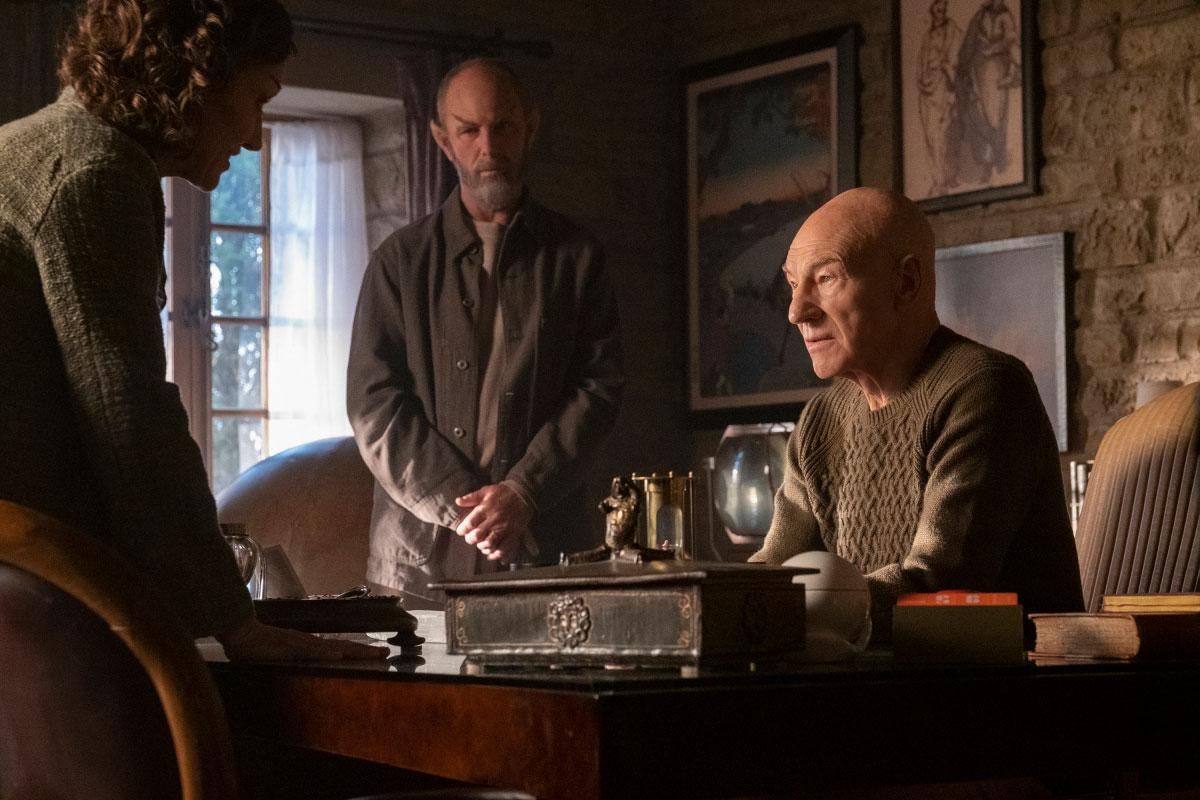
A new Star Trek series premiered last week on CBS’s streaming service. It is called Star Trek: Picard and focuses on the character of Jean-Luc Picard, former captain of the Enterprise during the series Star Trek: the Next Generation portrayed by Patrick Stewart. It has been just over 20 years since the last movie using the TNG cast, and this series is set about 20 years after those events, letting Patrick Stewart play the character without any awkward de-aging.
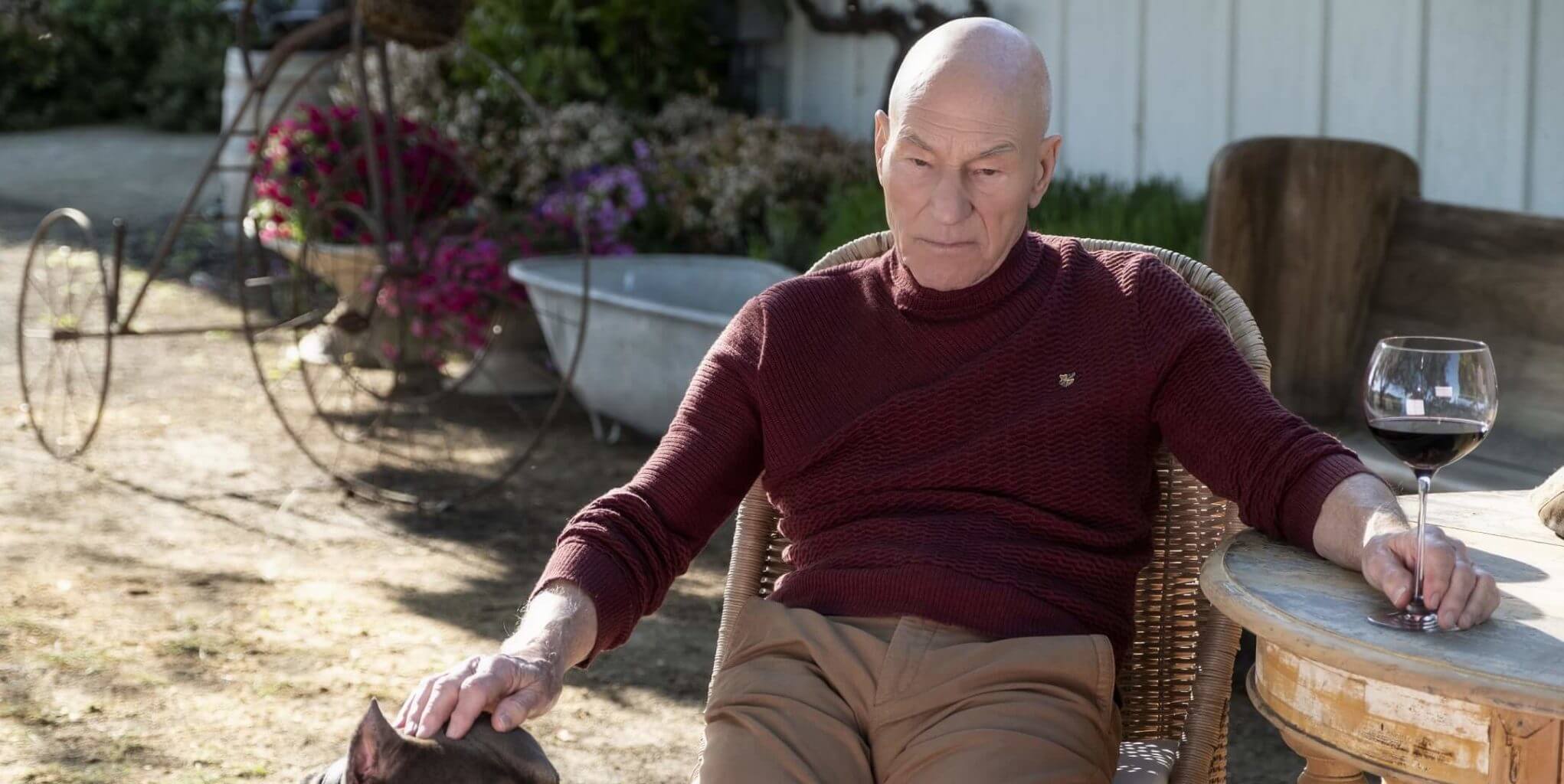
Before I get to any spoilers, here is my quick review: it is good. The story is about a man not entirely happy in his retirement, haunted by regrets. There is some action, though one of my favorite moments in the show was when a group of bad guys beam in and a younger person is trying to hustle Picard to safety, he is acting like an 80-year-old. That look on his face, panting, at the long set of stairs was a bit heart-breaking, but also heartening. This story isn’t going to pretend that he’s super human.
You don’t have to been a megafan to follow the story. In one of the early scenes features an FNN (Federation News Network, I presume) reporter interviews Picard about the anniversary of a major event which happened ten years after the last TNG movie, and the course of the interview gives you the information needed to follow the rest of the tale (and explain why Jean-Luc is not happy in retirement).
It does help to be familiar (but not to have watched) the last TNG cast movie: Star Trek: Nemesis, but fortunately Camestros Felapton had posted a nice summary here:
And if you never watched the reboot movies, there is one other detail that will help you follow this series (which is not a sequel to the reboots, but…) the internal justification of the re-boots (and the reason that in the first of the reboots Spock was played by original series actor Leonard Nimoy and Zachary Quinto), is that when a supernova threatened to destroy the Romulan homeworld, Ambassador Spock took an experimental craft out to try to stop the supernova, but instead his ship and a Romulan ship were thrown back in time (literally to the day the Captain Kirk was born), and thus changed history. So the reboot movies exist in a different time line than any of the TV series.
Anyway, the aftermath of that stellar disaster also figures into Picard’s situation. But again, none of the events of the reboot movies are part of this series’ history. (Cue timey-whimey music)
One final thing that you might need to know if you aren’t a diehard Trekkie but are interested in the show: Romulans and Vulcans look virtually identical. In the first episode, at least, all the pointy-eared characters you meet are Romulans, who are not cold master of logic like the Vulcans. In other Trek series if you see what appears to be a human with pointy ears, you can assume it’s probably a Vulcan and will be something like Spock. Given other things we learn during the first episode, it is probably safer in this series to presume that any pointy-eared character is a Romulan, rather than a Vulcan.
Past this point there be many plot spoilers. So if you don’t want to be spoiled, don’t read on. Don’t read the two reviews I link below, either, because they also have spoilers.
(Click to embiggen)Is it really already the fourth Friday in January? I guess it must be.
We have been having an exceptionally wet week. Really, record-breaking amounts of rain. It’s kind of scary.
Meanwhile, welcome to the Friday Five. This week I bring you: one story that gets its own category, then the top five stories of the week, five of interest to queer people, and five stories about deplorable people, and five videos (plus notable obituaries and things I wrote).
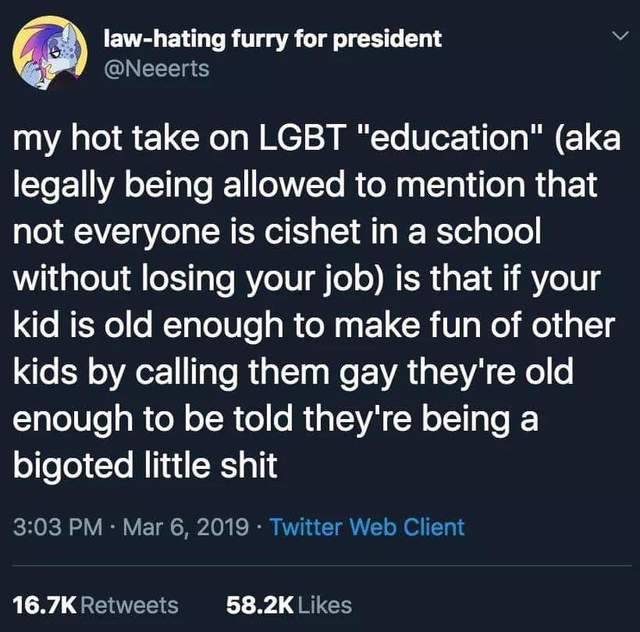
(Click to embiggen)I get extremely tired of hearing the lament, “But children will be confused!” thrown out any time anyone suggests that maybe it might be all right for movies or TV shows or books or just adults who happen to be near children to admit that queer people exist. It is not the existence of same sex married couples that confuses children. It is not the existence of transgender people that confuses children. It is not the existence of nonbinary people that confuses children. It is not the existence of asexual people that confuses children. What confuses children is when adults lie to them and then try to obfuscate it. And that includes lying by omission by trying to keep children from knowing that any of those things exist.
And the thing is, the people who most adhere to this idea of protecting children from even knowing that non-cisgender or non-heterosexual people exist all do a really poor job of that. Because I guarantee you that the children of those parents are the ones at school bullying any classmate who seems gender-nonconforming by calling them homo or sissies or some other slur. Kids may or may not understand the intricacies of adult relationships, but they glean and infer a whole lot about same aspects of sex and romance and related topics from the adults around them.
Some adults seem to completely forget what it was like when they were children. And that manifests in a couple of different ways. To illustrate, I’ll tell the story of two playdates.
Now, according to the Merriam-Webster Dictionary, the word “playdate” meaning “a play session for small children arranged in advance by their parents” didn’t come into the language until 1975, and these two stories from my childhood predate that (one happened in 1969, and other in 1971). And I’m not sure that 9-year-olds or 10-year-olds fall into the definition of small children, but the idea was mostly the same.
The first one happened early in the third grade. It was the first time I recall that my Mom took me to the home of one of my friends from school or church for the explicit purpose of letting us kids hang out. Mom also visited with my friend’s mother for a bit before taking my little sister to some other event, but I and my friend hanging out was the purpose of the trip. It was a fun evening, we spent most of the time in his room talking about comic books, as I recall. No big deal. Eventually Mom came back to pick me up. We went home. We had a few more similar get-togethers like that, usually with me being dropped off at his place, but it least one time his parents dropped him off at ours.
The second one happened in the middle of fourth grade. Because of my dad’s work in the petroleum industry, we had moved three times between these two playdates. Two of the moves involved crossing a state boundary. All three moves involved me being enrolled in a new school. At some of those intervening schools, we hadn’t remained in the area long enough for me to make much in the way for friends. At the third place, though, I quickly became very good friends with a classmate. Both of us were in orchestra (it was the first year I could join), and our mothers had met when they came to pick us up after practice.
So eventually, a plan was made when my classmate would be dropped off at our place for an evening. But the plan quickly became weird. Dad and a few other people made strange comments. I was getting teased about this friend.
Why? Because she wasn’t a boy.
When she was dropped off, her dad made some comments that made both Dad and Mom laugh, but just confused me. Most of the fathers of kids I’d known most of my life had owned guns. So why did her dad tell me about his gun and how handy it was to get to?
We spent most of the time sitting at the dining room table talking about our favorite books (she and I shared an adoration for The Hardy Boys and Nancy Drew). At the end of the evening, Mom drove my friend home and I rode along so we could keep talking. When we pulled up in front of her house, Mom told me that I was supposed to walk my friend to the door. I said, “Sure.” We both got out of the car and walked up to the front door. I remember that her family’s dog was barking really loud in the house, and she made a comment about how we needed to make sure the gate was latched, in case the dog got out of the house.
We walked up to the porch. She said, “Good night.” I said, “See you at school!” She opened the door and went inside. I walked back to the car. I spent at least half a minute making certain I had latched the gate correctly, then I got into the car.
And Mom was very angry at me. “When you walk a girl to the door, you don’t just leave her there and walk away! You’re supposed to go inside and thank her parents for letting her go out with you!”
“I didn’t know that.” All of those times the year before when the other friend and I had gotten together, neither of us had been sent in to thank the others’ parents for letting us hang out. Why was this different?
There was some additional fallout, including a lot of teasing at school the following week. The upshot was that my friend didn’t want me to talk to her any more in class or at orchestra rehearsal. I was very confused about the whole thing. Not because I didn’t know why the other kids were teasing us. I knew what “girlfriend” and “boyfriend” meant. But I also knew that those words didn’t describe our relationship—we really were just two orchestra nerds who liked reading! Once that teasing started, I at least had a slightly better idea of what some of the weird comments from adults beforehand had been about.
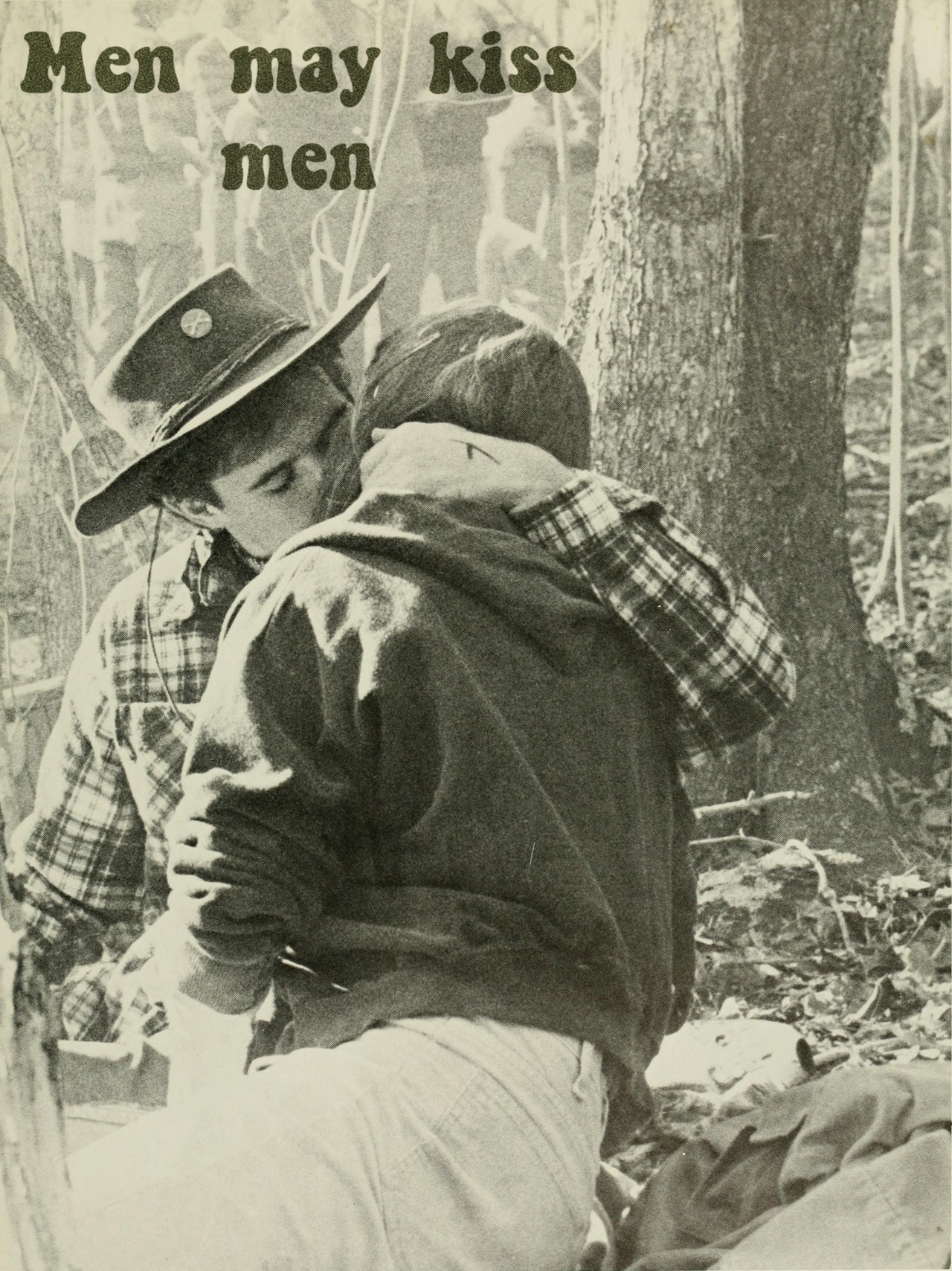
(Click to embiggen)I have no idea if the boy I was friends with during the first part of third grade was also queer. At the time I didn’t know that I was, for goodness sake! It is true that one of the reasons we got along so well is because we both tended to be frequent victims of the same playground bullies, so maybe he was. Or maybe we were both just 9-year-old comics nerds who happened to hit it off. But none of the adults around us ever worried about us both being in either his or my bedroom with the door closed for several hours. No one’s dad made shotgun jokes when we got together. At the time, I had no interest in kissing other boys (that would come up a couple years later, when puberty hit like a freight train), and certainly had never thought of kissing him. We were just two guys who thought Spiderman was cool.
But everyone, including apparently our own parents, assumed I and the second friend were romantically interested. I can’t speak for her, of course, but since I’m not merely gay, I’m really most sincerely gay, that was the furthest thing from my mind. And 10-year-old me was just happy to have found someone who liked reading some of the same books as I did.
To circle back to the opening topic: People who assume that grade school children are too young to know about romance and such are the same people who call small boys “lady killers” and cute baby girls “future heartbreakers.” They are the same people who assume any time a young boy is friendly with a girl that it’s a crush. They are the same people who make those stupid shotgun jokes.
If the kids are old enough to hear bullies calling other children “fags” or “homos” or “sissies”, they are old enough to know that actual LGBTQ+ people exist, that they are members of their community, and that they are humans who deserve respect and love just as much as anyone else. If kids are old enough for adults to tease them about their supposed girlfriends/boyfriends, they’re old enough to know that sometimes a guy can have a boyfriend or even a husband, that sometimes a gal can have a girlfriend or even a wife.




 Font Folly