I think it was January 2000. Michael and I were attending an anthropomorphics convention in the Bay area. As I was walking to our hotel room I passed a room that reeked of a strange smell. It was a scent I had encountered before, but I had never learned what it was.
When I got to the room, I told Michael about the smell. He described a part of the hallway and asked if that’s where it was.
When I confirmed, he smiled and shook his head in a manner that clearly indicated I was a silly person.
“Honey,” he said very gently, “that’s pot. Someone is getting extremely baked in a room there.”
“Oh!”
In other words, I didn’t learn how to recognize the smell of pot until I was 39 years old.
I wore this t-shirt, featuring camping unicorns (Campy-corns!) to this year’s Pride Parade and Festival.I often use the term “tribe” to refer to some of the groups or sections of society that people can be categorized into. According to anthropologists, a tribe is defined by traditions of common descent, language, culture, or ideology. It may seem like a stretch, but I think the term is somewhat useful. Science geeks may not all be related to each other, but we tend to talk in a specialized vocabulary which can seem like a foreign language to other people, for instance. Sci fi nerds will recognize certain quotes from Star Wars or allusions to events in episodes of Star Trek which can leave other people baffled. While My Little Pony fans will make completely different allusions and quotations that are as meaningless to many sci fi nerds as they are to non-fans in general.
I belong to a lot of tribes that don’t always get along. And I continue to be naively surprised when I discover new evidence of this. I still feel more than a bit of shock when I meet a homophobic sci fi fan, for instance. How can you be an enthusiast for science, the triumph of knowledge over ignorance, and the hope of a better tomorrow while clinging to such small-minded backwards thinking?
When I’ve used this particular example in the past, I’ve been told that I’m assuming that these folks are into science fiction for the same reasons that I am; but I’m not talking about their reasons for becoming sci fi fans. I’m talking about what science fiction is. You can’t claim to be a fan of science fiction yet reject the entire premise of science fiction. Rejecting the fundamental premise makes you the opposite of a fan.
The other argument I’ve heard is that being an enthusiast for sci fi is a choice to read or watch certain types of stories and to embrace other cultural aspects of those kinds of stories, whereas being gay is merely a sexual preference. So it is as irrelevant to anyone’s participation in sci fi as another person’s dislike of chocolate. But again, this argument misses the point. My point is if you’re an enthusiast for sci fi stories, you should be knowledgeable enough to recognize that despising someone for their sexual orientation is illogical. Besides, even under the reasoning of this argument, rejecting a gay person is the equivalent of saying that a person who doesn’t like chocolate can never be an astrophysicist.
And not to make it seem one-sided, there are plenty of gay guys who absolutely loathe sci fi nerds.
Similarly, a lot of science geeks look at the sci fi fans within their own ranks with a bit of suspicion or condescension. Just as some Star Wars fans dislike Babylon-5, and some Lord of the Rings fans can’t understand why anyone likes Star Trek, and so on.
I’m always going to be nerd, and not just a nerd, but a geeky nerd. I love physics and engineering and mathematics. I can’t help but see just about everything I observe in terms of causes and effects. So science and science fiction will always intrigue me.
And I love to explore “what if” questions and take them to their ultimate logical conclusion, so all kinds of fantasy—whether it’s about elves and wizards or talking rabbits and conniving ducks or flying heroes and scheming masterminds—is also going to fascinate me.
And I’m a gay man, living in a world where masculinity and femininity are mistakenly believed to correlate with all sorts of personality traits. For instance, there are people who are surprised that I’m a Seahawks football fan, because gay men supposedly aren’t into sports (tell that to all the athletes competing in the Ninth Gay Games this week). Of course they’re probably at least as surprised because science geeks and sci fi nerds aren’t supposed to be into sports, either. I certainly can attest, having worked with engineers and computer geeks for nearly three decades, that there are considerably fewer sports fan in those offices than in other kinds of workplaces.
It is true that I have had a very ambivalent relationship with sports my whole life. In middle school I participated in basketball, wrestling, and track, and in the first year in high school I did cross country and track. But I was never terribly good in any of those sports. One way that was made clear when I moved to a larger town was that I wasn’t good enough to make any of the sports teams (I did intramural soccer for a while, but that was it). And, of course, the best athletes in my schools tended to be the same guys who were most likely to bully me (which didn’t get any better once I became a debate and drama nerd).
I started to make an Euler Diagram, but it got out of hand…My point is that I’m forever finding myself on the defensive from my own tribemates. Science geeks and other skeptics are appalled if I describe myself as a believer (I believe in many intangible things that can’t be proven to exist in a lab, such as Compassion, Justice, Mercy, and Love). Hardcore sci fi nerds are freaked out to find out I’m a fan of My Little Pony. Serious readers and literary types are shocked when I praise the writing on a TV show such as Justified (and they completely lose it when they find out what a total fanboy I am for the MTV series Teen Wolf). Many gay people look at me with suspicion because I can quote Bible verses.
And while generally I try not to worry about it, sometimes it feels like the kind of reaction I used to get when I was still trying to be active in church whenever the subject of gay people came up. Or when certain political topics used to come up around my conservative relatives.
I know what full-fledged rejection feels like, and don’t want to go through it again. Try to think about that the next time you’re hanging with a group of friends who share one of your enthusiasms when another group comes up. No matter how horrible of an experience you may have had with that other group, don’t go on and on about how horrible those people were. You’re probably sitting next to one.
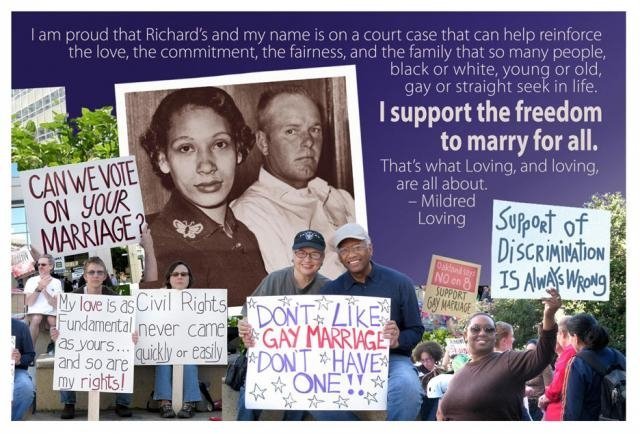
The argument they are pushing is: “allowing same sex couples to marry is exactly the same as prohibiting interracial couples to marry.” If you don’t read that closely, it sounds like they’re finally agreeing with one of our arguments, but look again (and go look at the confusing graphic that accompanies the meme they’re trying to get their people to post everywhere).
Because interracial marriage bans prevented people from marrying who they wanted to merely because the color of one half of the couple’s skin didn’t match the other was bad. Most everyone agrees the interracial marriage ban was bad. And the Ruth Institute agrees. But, they say, allowing same-sex couples to marry is just as bad because it prevents straight women from marrying gay men if they want to. And so forth.
That’s literally their argument.
Which is wrong on so, so many levels. Allowing my husband and I to legally marry does not prevent any gay person (closeted or not) from entering into a marriage with a straight person if they want. It doesn’t. If they want to do that, they can. I don’t know why they would want to, but they can.
Allowing someone to do something doesn’t prevent other people for doing it.
The closest you can get to any “logic” in this argument is that if marriage equality is not available anywhere, it increases the odds that people will be closeted, and it makes it slightly more likely that unsuspecting straight people will get married to closeted gay people, and probably suffer a lot of heartache later on.
I think Jeremy is right: desperation is making them lose their minds.
Their new sign says that individuals and churches that support “homos” will be cursed with cancer, HIV (the virus that causes AIDS), syphilis, stroke, madness, and itch, then references I Corinthians 6:9: “Know ye not that the unrighteous shall not inherit the kingdom of God? Be not deceived: neither fornicators, nor idolaters, nor adulterers, nor effeminate, nor abusers of themselves with mankind…” Interestingly they don’t reference the next verse, which is a continuation of the sentence, “nor thieves, nor covetous, nor drunkards, nor revilers, nor extortioners, shall inherit the kingdom of God.”
That’s important because Pastor Manning spent time in prison in both New York and Florida for burglary, robbery, larceny, criminal possession of a weapon, and other things. So verse 10 would seem to say that Pastor Manning may not be so welcome in the kingdom of God.
But less snarkily, look at another word there: “revilers.” A reviler is someone who insults or verbally abuses someone else, someone who criticizes abusively. Such as someone who calls people devils, or calls for whole classes of people to be stoned to death. That sort of thing.
I know that Pastor Manning is using one of the more hateful translations of the Bible. Since 1946 certain people have decided that the scriptures weren’t anti-gay enough, and they went through changing verses where it isn’t entirely clear what they are referring to to explicitly says “homosexual.” But the two words that used to be translated into english as “effeminate” and “abuses of themselves with mankind” are not so clearcut.
Scholars argue a lot about what the Apostle Paul meant there. Paul wrote in greek, which had a word for men who have sex with other men already, but Paul didn’t use that word. Greek also had a word for male temple prostitutes, and Paul didn’t use that word. Instead, he made up a word, arsenokoitai. That words has never appeared in any other Greek text at all. It appears to be a compound of the words “man” and “beds.” If Paul was condemning homosexual behavior, why would he make up a new word when words already existed for it? And also, it is important to note that he uses specifically male-gendered nouns, so if Paul was condemning homosexual behavior, it was only gay male homosexual behavior: so apparently lesbians are fine, as far as Paul is concerned.
My own guess, based on how much of a misogynist Paul appeared to be, and how much he despised sex of all kinds (the fundamentalists all ignore Paul’s other admonishments where he condemns marriage and having children as an anti-Christian waste of time that would better be spent preparing for Jesus’ return; yes, Paul was against people marrying and raising families), is that Paul was making a general condemnation of all kinds of sexual and romantic behavior, here. And he aimed it at men because Paul didn’t really believe that women mattered, or at the very least he didn’t believe that women made choices of their own, but rather simply did what men told them to do.
And there is nothing in 1 Corinthians at all about cancer, or the virus that causes AIDS, or itching.
But Manning sees lots of things that aren’t actually in the text. It’s very convenient for a man with as big an ego as his, and as long a history of abusing and using others as him.
The television version of the Doris Day Show was one of the most schizo programs ever.One day in middle school, in one of the boys-only classes1 one of the guys was going on about some actress he really had the hots for. Several of the other guys agreed. And then a general discussion of other actresses that guys thought were hot got rolling. I don’t remember any of the actresses in question. I remember that at least a couple of them were on shows that my family never watched, so I had only the slightest idea who they were.
Eventually one of the guys turned to me and asked which actress I thought was hot. It was asked in a fairly challenging tone of voice which clearly communicated that the topic of the conversation was shifting to What-stupid-thing-can-we-get-him-to-say. It’s one of the more subtle forms of bullying, asking the kid no one likes a question that to the ears of an adult who might be listening sounds like an attempt to include you in the conversation, but all the kids know that this is really just another test. Can you come up with an answer that isn’t going to result in derision and teasing?3
I knew where this was going, and I knew no matter what I said my answer would be wrong in some way. But ignoring the question could go even worse, so I quickly scoured my brain and said, “Doris Day.”
Even I was a little surprised when that name came out of my mouth.
Most of the color guard are Boy Scouts, plus troop 98, which recently left the boy scouts after the sponsoring church overwhelming voted not to fire the gay scoutmaster and force the BSA to kick the church out (they have since joined Baden-Powell Service Organization).It’s been more than a few years since Michael and I attended the Pride Parade or the Pride Festival. One friend, seeing the pics I was posting to twitter, commented, “I thought you didn’t like going to the parade any more!” And I had to explain that it wasn’t a matter of liking, but more a matter of trying to get both of us up and moving early enough on a Sunday to get there.
I like the parade.
It’s not zillions of blocks long, but we have a big rainbow flag!I like it so much, that one time I attended three in one year. San Francisco and Seattle weren’t on the same weekend that year (they’re usually both on the last Sunday in June), and the Seattle Lesbian & Gay Chorus (of which I was a member) sang a joint concert with the San Francisco Lesbian/Gay Chorus for Pride weekend. So Ray (my late husband) and I flew down to San Francisco, went to a lot of pride events, I sang in the concert, and we watched the gigantic parade. Then, back in Seattle, we marched with the chorus in Seattle’s not quite so big parade. Then, about a month later, we spent a long weekend in Vancouver, B.C., where we watched and cheered a much, much smaller (but extremely enthusiastic) Pride Parade.
The only picture I got of us together at the parade. I know, nostril shot. Sorry.When I started dating Michael (a few years later, after Ray died), he was a bartender at a lesbian bar down in Tacoma. Tacoma didn’t usually have a parade, though they had a pride festival a week or two after Seattle’s. For several years he had had to work on the day of Seattle’s Pride Parade (he said it was always a weird night, because half the usual crowd was up in Seattle at our parade and parties). After he stopped working at the bar in Tacoma (by which point we were living together), he got a job at a non-gay bar in Seattle. Working late Saturday night and having to work again Sunday made attending the parade less than fun for him, though he did let me drag up off to it a couple of times.
Then we hit this long period of either having too many other things going on, or one or the other of us being sick, or just not quite up to getting up and moving in time. So we missed a bunch.
They make George Takei, one of the original cast members of Star Trek grandmaster? Of course I have to be there!Watching most of the parade today (we only watched for three hours… there was still a bunch of parade to go, but we wanted to get to the festival in time to see George Takei on the main stage), the thing that struck me is that the parade has become even more ordinary. I’ve described my first pride parade before, noting that while there were outrageous costumes, more than a few near-naked people (though actually less than most non-gay parades I’ve attended), and so forth, the majority of people marching and riding floats looked pretty ordinary: people or all ages, shapes, and sizes in t-shirts and shorts or jeans. That’s decidedly more true now than it was when we last attended more than eight years ago.
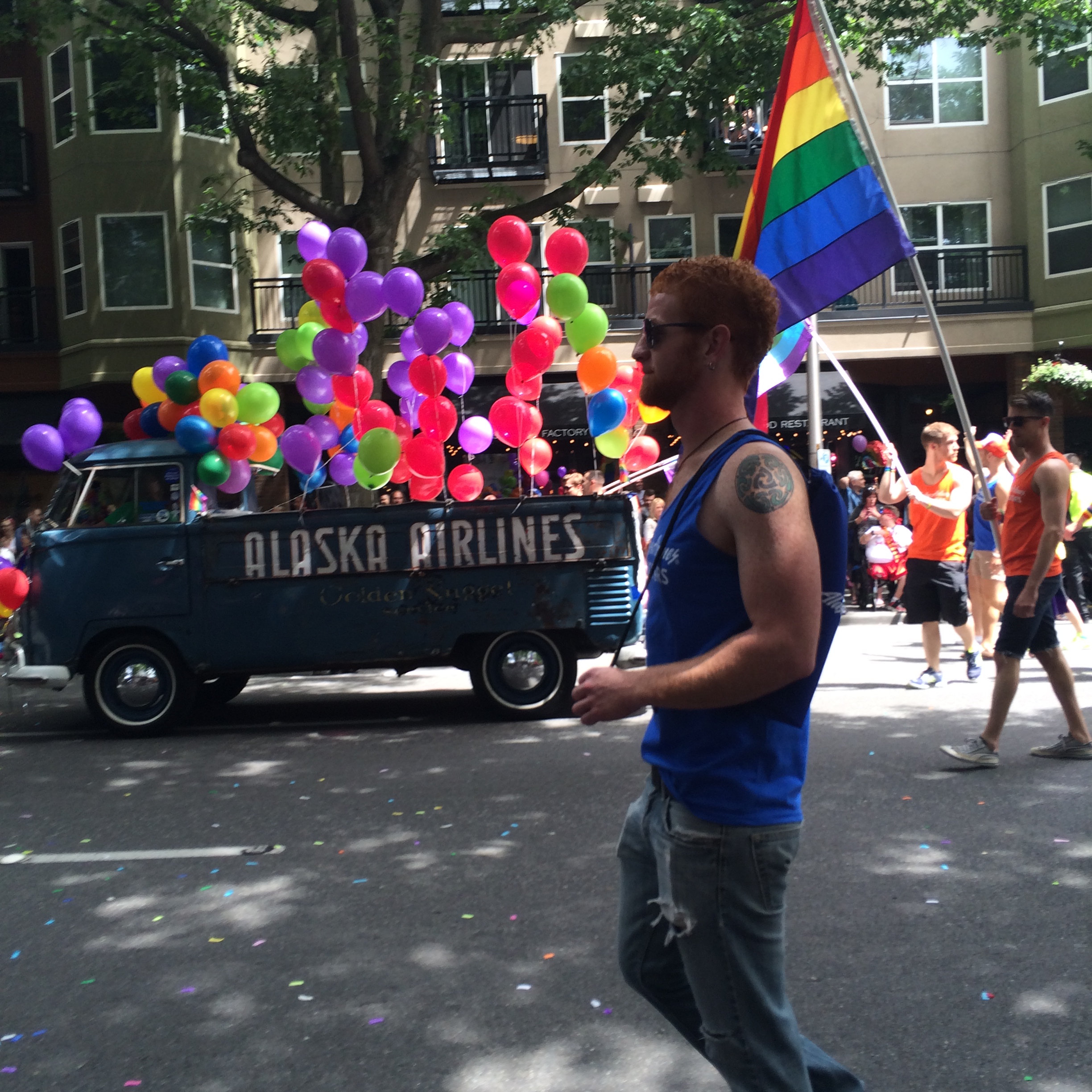
This was only part of the Alaska group, they had another vehicles and a crowd of employees on foot.I believe that is less about gays assimilating into mundane society (as some have suggested), as it is about corporations assimilating to the idea that inclusivity is good business. The first parade I attended had a few contingents of employees of some of the large employers in the area, but only a few. This year I saw groups of employees from several major banks, mobile phone companies, grocery stores, airlines, cruise lines, wineries, insurance agencies, restaurants, et cetera, et cetera. About half of the contingents, I would say, were groups of employees. And the standard ensemble for those groups is a t-shirt identifying their employer with pants or shorts.
Market Optical’s float said, “Look with your eyes, not your hands” and then had go-go boys with multi-colored handprints all over their bodies.There were still plenty of the non-profits and recreational groups, and those were where you most often saw the more outrageous costumes (though the Market Optical float was the one with the most scantily-clad go-go boys). There were scantily-clad people, including a large group of people on bicycles and roller skates wearing nothing but body paint. Most of the naked bikers were painted to look like characters from Star Trek. It didn’t occur to me while we were watching the parade that they had probably decided to do that because George Takei was the grand marshall.In the past it was the bars and dance clubs that would put a cage dancer in the float, not an optician!
I should mention the unpleasantness. Back when the Parade was on Cap Hill (aka, the Gayborhood) every parade I marched in had some “Repent sinners!” protestors. Except most years it was one grim-faced bearded guy holding up a sign at one corner, saying nothing. A couple times he had a small group, but that was it. Apparently now that we’re in downtown Seattle we now get an entire mini-parade of haters. According to the people standing next to us, last year or the year before there were some very angry confrontations. Now a couple of bicycle cops follow along. The haters walk the route before the parade officially starts. It looked like a lot of them, with a lot of signs and one guy with a bullhorn.
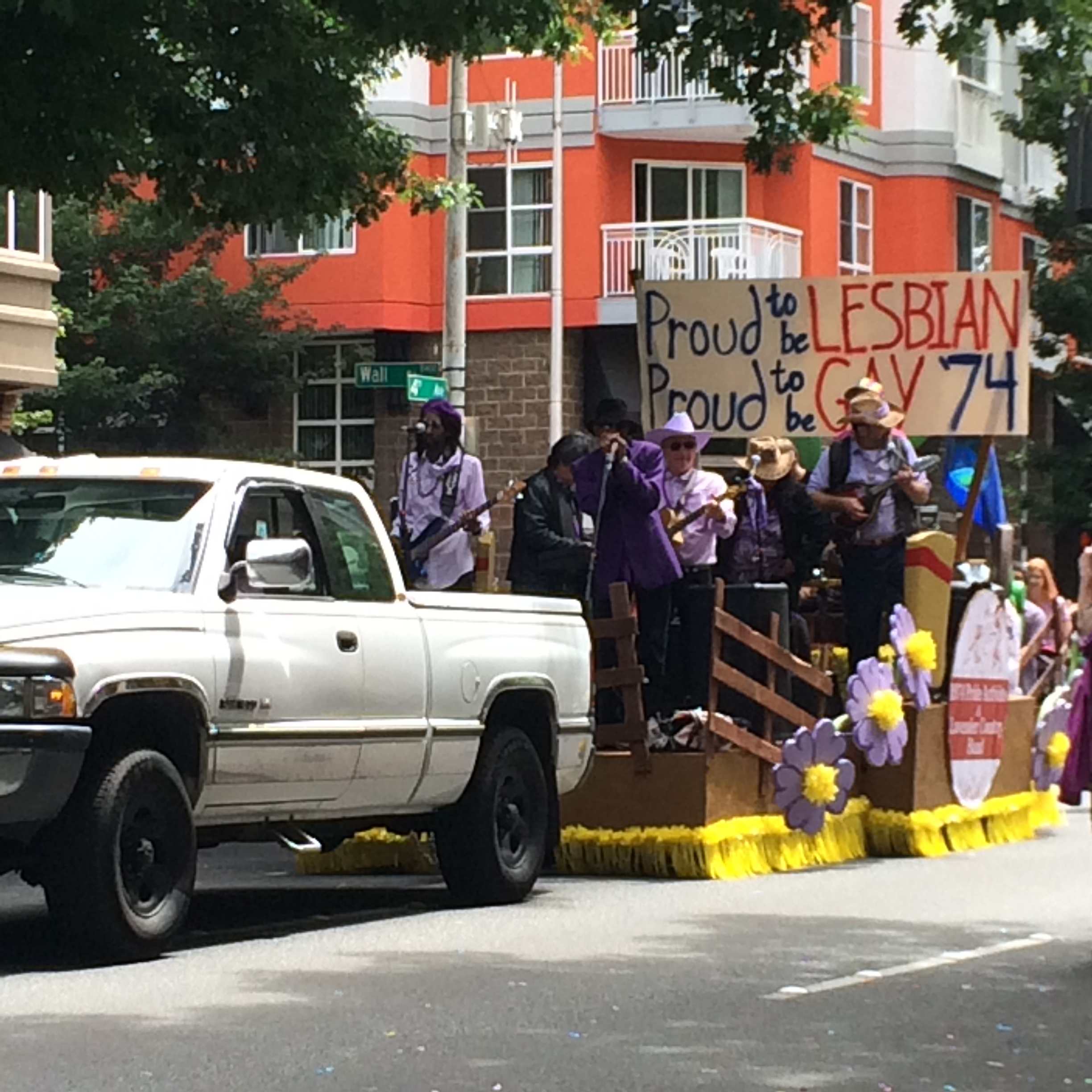
The parade committee invited a lot of people who participated in the first Seattle Pride, including a country band called Lavender Country.I say it looked like, because once I realized who they were, I simply turned my back on them, and refused to look at all. Michael did the same, except he glanced over when a lot of cheering broke out: two womyn ran out into the street and kissed in front of the bullhorn guy. Apparently it happened a lot along the route.
Now I feel a need to digress a moment, here. While I am a fierce advocate of free speech even for people I disagree with, here’s the thing: the Supreme Court has ruled that we have the right to exclude the ex-gay groups and the pedophile groups from marching in our parade, and the Boston St. Patrick’s Day parade has the right to exclude gay people from their parade. So, why is it, when the streets have been blocked off because we have a permit for a parade (and we are paying the city for the police to route traffic, and so forth) that we can’t exclude these people from the route that we’ve paid for for the duration? Instead of escorting them so angry faggots won’t attack them, shouldn’t the police arrest them?Two guys were walking along with one of the groups and had their Dalmatians with them–with rainbow spots!
I know all the reasons why we shouldn’t push for that: we should show more tolerance than they do, they’ll milk it for fundraising and propaganda purposes how they’re being oppressed, and so on. But you know darn well if we showed up at their church on a Sunday morning and starting reading a “How To Come Out To Your Parents” pamphlet over a bullhorn, they would call the cops.
That’s enough about the bad stuff.
I did manage to get one non-blurry picture of gay Batman, even if it is a silhouette.There’s so much more I could share. I kept trying to get a non-blurry picture of the guy skating as gay Batman. He was with two others, one was the joker, and the other had some Superman emblems mixed with other things. As far as I can tell the three were just skating up and down the full length of the parade, so they passed us several times. Then Batman crashed into a woman standing next to us. No one was hurt. It got a little funny, because she kept asking him if he was all right, and he said not to worry about him but was she all right? And that went back and forth several times.
Rainbow tie-dye overalls over rainbow tie-dye shirt!There was a very shy little kid who wanted candy, but would hide whenever anyone who was passing things out tried to give them to him. There were fun floats. There were several bands and drum and pipe corps, including the Police Department’s drum and pipe corps. There were several groups with pets. Lots of youth groups. Lots of trans* groups. There was a troop of librarians doing synchronized maneuvers with book carts. There were kids, lots of kids. And of course lots and lots of rainbows.
It was a great parade. And I’m so glad that we’re marching through downtown now, and filling the Seattle Center with hundreds of thousands of people, instead of cramming smaller crowds into the gay ghetto. I do want to support the businesses up there that have always been ready to answer the call of all the queer non-profits over the years. And since we have three parades now, we can! I think next year we need to make an effort to attend the Dyke March on Saturday and/or the Trans March on Friday.
Because it’s been a long, long time since I did three parades in a single year…
AFP PHOTO / FLORIDA KEYS NEWS BUREAU / Carol TEDESCO”When I was still active in the Seattle Lesbian & Gay Chorus, we would occasionally have group discussions about non-musical topics. Since the chorus was a non-profit organization with a mission affirm the positive aspects of lesbian, gay, and bisexual experience and unite communities1, we would sometimes talk about some serious topics about outreach, and making the world a better place. Many times in those discussions, people would talk about their dream of a day sometime in the future when it really wouldn’t matter to anyone whether you were queer or straight.
I was 25 years old the first time I told another human being that I thought I might be gay. As I mentioned yesterday, I had tried many times to broach the subject with my best friend, but his reaction to the mere mention of the topic of gay or bi people was always so negative, I kept chickening out. And I had begged, pleaded, and sometimes angrily argued with god about it for at least a dozen years. But even when I was praying for god to take those feelings away, I couldn’t say the words out loud. What if someone else heard me?
The person I ended up telling was a new friend I had met when I transferred to a university in Seattle to finish my degree. And because the university was a Free Methodist school, being honest about my sexual orientation could have gotten me kicked out. At that time in my closeted perspective, revealing the truth to just about anyone I knew would lead to devastating consequences, so the university’s policy didn’t seem any worse than what I was already dealing with.
Anyway, eventually a number of mutual friends informed me that people were wondering why I hadn’t asked Julie out on a date… including Julie. And it was clear that some of that wondering was making people speculate about what my reasons could possibly be. Which, from past experience, meant the gay rumors were not going to be far behind.Continue reading The first time…→
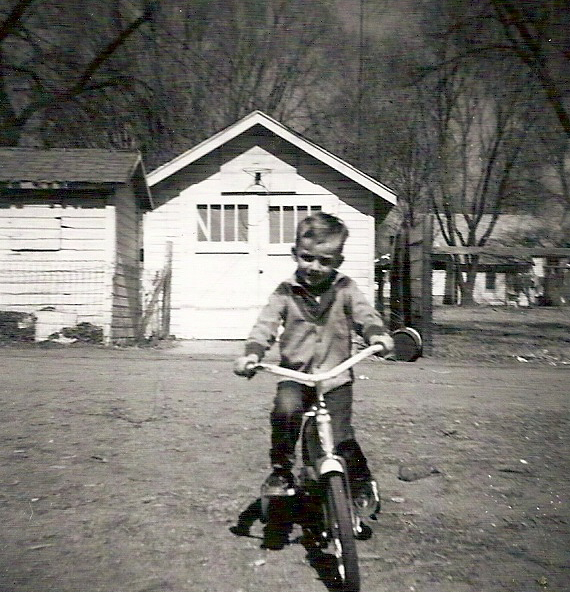
This picture was taken when I was four.I mentioned previously that one of my uncles declared, when I was a child, that the reason I was a sissy was because my parents let me play with G.I. Joe action figures. Except, of course that he didn’t call them action figures. He called them “dolls.” Again and again he repeated the word “doll” during his rant. And he said it in the same tone of voice that he said words like “sissy,” “pussy,” and “girlie.”
When I came out at the age of 31 (yep, it took a while), more than one relative on that side of the family repeated the theory that the reason I was a homo was because of those G.I. Joe dolls I had as a kid.
People who understand the medical science know that a person’s sexual orientation is determined sometime before the age of two (it is almost certainly earlier, but it’s much more difficult to measure before then), so toys I received as presents at the age of seven didn’t have anything to do with it. But the claim is wrong in another way.
I never owned a G.I. Joe action figure as a child.
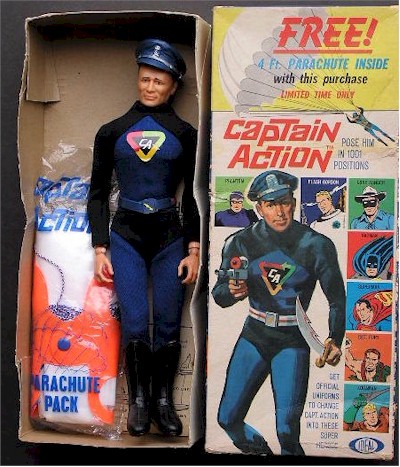
What I had, was Captain Action.
The original G.I. Joe was created by toy designer Stan Weston. He licensed the idea of his articulated action figure that could have a infinite number of costumes and accessories to Hasbro. The deal wasn’t an exclusive license, so Weston took Hasbro’s money and formed his own company.
Once he saw that Hasbro was going with only soldier accessories, he secured licensing deals with D.C. Comics, Marvel Comics, and King Feature Syndicate to produce a similar action figure, but one that was a something of a shape-shifter.
Captain Action’s exact shape differed from G.I. Joe in several ways, the most noticeable being that his head seemed a bit small for the body and the facial features are a little weird. The reason was that, thanks to all of those licensing deals, among the accessories you could buy for Captain Action were kits to transform him into characters such as Superman, Spiderman, Batman, Aquaman, Steve Canyon, Buck Rogers, the Lone Ranger, Flash Gordon, and so on. Each of those kits included a “mask” that completely covered Captain Action’s face, giving him the face of the character in question.
The Christmas that I received Captain Action, I also received the Superman kit. Note that there is no action figure in the box. That is a full-head face to go over the Captain Action figure’s head, a costume, and other accessories, but no action figure.
The thing I remember most about the Superman kit is that when I put the Captain Action clothes back on the figure, I often put the red Superman boots on him. I even remember explaining to someone why I thought the red boots looked better with the Captain Action costume. I also remember that another kid swiped my Krypto the Superdog toy. And I never got it back.
The following Christmas, several relatives got me G.I. Joe accessories, because they were easier to find (and probably most of them didn’t realize that Captain Action wasn’t a G.I. Joe). They only kind of worked. Captain Action’s chest was just enough bigger than G.I. Joe’s that I couldn’t fasten the shirts and jackets that came in the G.I. Joe kits. So when my Captain Action was dressed up as a marine or a sailor, he also had his shirt open, showing off his hyper-muscled chest. It made him look like a member of the Village People—except that the band didn’t exist until ten years later.
Now that I think about it, maybe that was part of the reason that one uncle was convinced the action figures were making me gay: my Captain Action was always baring his chest!
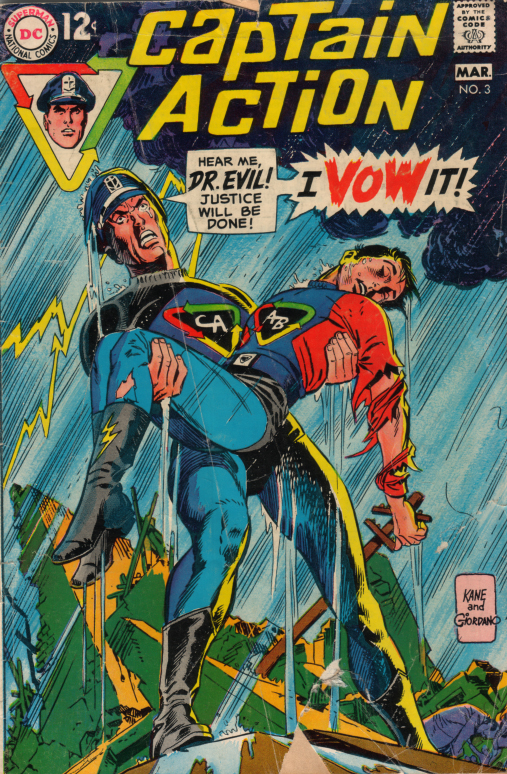
There was even a Captain Action comic book. I owned a copy of this exact issue, and it was still part of my comic collection years after my action figure had fallen apart.My uncle wasn’t the only person who had misgivings about boys playing with dolls. When Hasbro introduced the first G.I. Joe, they invented the term “action figure” to label and advertise it precisely because their marketing research indicated that a lot of parents were reluctant to buy a doll for a boy.
While I remember seeing figures for Dr. Evil, Captain Action’s nemesis, I don’t think I ever saw the Action Boy figure in stores. I know, from reading collectors’ web sites, that there were Action Boy figures and there were accessory kits to turn him into Robin (to go with Captain Action in the Batman kit) or Superboy.
It’s probably just as well. As I recall, my Captain Action was laying in my toy box completely naked most of the time. Whenever I wanted to play with him, I had to spend a while tracking down enough clothes and accessories to dress him up as someone. If there had been a naked Captain Action and a naked Action Boy lounging about in my toy box, that uncle would have probably had a stroke!
Marcus Bachmann is married to a vehemently anti-gay congresswoman, runs a cure-the-gays clinic, and calls himself “doctor” based on a degree from a diploma mill that didn’t even offer psychology degrees at the time he took classes.When I first came out to my family, nothing went smoothly. Mom went into full denial mode, even insisting she had never suspected I was gay (despite having regular prayer sessions with other family members and church friends begging god to turn me straight for at least a decade). One aunt sent me a 28-page handwritten letter outlining the words I wasn’t allowed to use in her presence, the topics that could not be mentioned in her house, and so forth. I lost track of the number of relatives who assured me I was still welcome to visit, but only if I promised not to act gay and certainly never accompanied with a boyfriend. One cousin-in-law—who happened to also be my best friend from college—got angry that some family members knew before he did, causing lots of drama. It has also been his excuse for 20-some years for ending our friendship (it’s not because I’m gay, see, it’s because I didn’t tell him first). Some relatives on Dad’s side blamed Mom. Some relatives on Mom’s side blamed Dad.
I could go on and on.
I think it was the first time in my life that I was unhappy that my parents and grandparents had so many siblings, and that many branches of our huge extended family had always been in regular communication with each other.
During one of the many melodramatic phone conversations I had during that first year after coming out, my Grandma was going on about why she didn’t understand how I could choose this. So I asked her to stop for a moment and think about that. Could she honestly say, I asked her, that she could choose to be gay? I had to rephrase it a few times before she understood what I was asking. Then she declared, very firmly, that of course there was absolutely no possibility that she could ever even imagine deciding to be gay herself. It was ridiculous to suggest it.
“In that case, Grandma, how can you keep accusing me of choosing this?”
She got flustered and started quoting the Bible at me. I quoted some verses back and pressed her again. If it’s a sin, then everyone is equally capable of being tempted by it. If she felt so strongly down to her bones that she couldn’t choose to do this, how could she believe that I could? She eventually admitted that maybe I was right about it not being a choice.
We were hardly the first people to have that conversation. For those of us queer people who were raised in exceptionally homophobic churches and families—who spent decades crying ourselves to sleep over feelings that would not go away; who begged god again and again in epic prayer sessions to make us “normal;” and who lived in constant fear of the being rejected by those we loved if they found out—the notion that this is all a matter of choice is so patently ridiculous that it defies reason.
Not to mention having watched people we know go through programs intended to “cure” homosexuality and seeing most of them come out not changed at all. Or seeing the ones who claimed to be changed so obviously projecting a facade that did nothing to hide how profoundly unhappy and unchanged they were. Or reading the statistics which show that literally 99.9% of them aren’t even able to resist their feelings for any length of time.
It’s deeply frustrating knowing that it was never a matter of choice for ourselves or anyone we’ve known, that the myth is still bandied about and still used to justify laws, policies, and practices that discriminate against us.
Then one day I read an op-ed piece by advice columnist and gay rights activist Dan Savage, in which he described the same frustration, but then explained an epiphany he had had. He had been reading yet another news story of a vehemently anti-gay minister or politician having been caught having had a number of same-sex affairs, and remembering all the times said anti-gay person had publicly insisted that being gay was a choice, when it hit him. The reason they believed it was a choice because in a twisted way it was true for them. Every single day they looked themselves in the mirror and convinced themselves one more time that they weren’t going to be gay that day.
We know from both the medical research and the statistics that some so-called ex-gay therapists were forced to admit in court, that no one who feels same-sex attraction ever stops feeling it. No one. When the advocates of such quackery have been pinned down in court under threat of perjury and faced with actual evidence, they even admit that by “cure” all they’ve ever meant was that a person could learn to resist the urge to act on their feelings. Which is a very twisted definition of cure.
Congressman Shock was raised Southern Baptist in a rural community, has a consistent anti-gay voting record, but posts pictures of himself to Instagram like these, has never married, and has lived with a string of young athletic male “roommates” for over a decade.Before I came out, back when I was still fighting the feelings and still trying desperately to convince myself that maybe I was bi, it always struck me as weird that the preachers I met who preached most virulently and obsessively against homosexuality were always the most effeminate men I had ever met. When a group of ex-gay activists came to the methodist university I was attending, I was again struck by how stereotypically sissified the ex-gay men were, and how unladylike the ex-lesbian women were. Back at the dorm, one of the other guys on my floor went on and on about it, getting big laughs when he asked why they couldn’t find at least one non-faggy person to represent the program.
Just to be clear: not all gay men are sissies. Sexual orientation is a complicated thing, obviously the result of a whole lot of different things going on in our brains and hormones. Some gay men are great at football and have no interest in musical theatre, while some straight men have no interest in sports and like to cook. Believe me, I know.
But there are actual studies which show that almost all sissies are gay.
And my own epiphany about these anti-gay or ex-gay guys that I can’t believe are fooling anyone is this: they are so desperate to believe there is a cure precisely because they have never been able to hide.
As bad as childhood may have been for me, being called sissy and pussy and far worse by classmates, coaches, some teachers, other kids at church, or my own father, I bet Aaron Shock had it worse. I’m absolutely certain that Marcus Bachmann had it far, far, far worse. Convincing themselves that they aren’t gay, or convincing themselves that they could hide it, was a matter of survival for them.
So, yeah, they deserve at least some pity.
But not so much that we don’t hold them responsible for the tens of thousands of queer and questioning kids thrown out on the street by homophobic parents and driven into high risk of drug abuse and prostitution. Neither should our pity stop us for placing some of the blame for the thousands and thousands of kids who commit suicide for fear their parents will find out they’re gay, and/or because the incessant bullying and rejection at school, church, and in their homes.
Because people like Bachmann and Shock and all the other ex-gay and anti-gay folks are perpetuating and enabling that cycle of hate. They need to stop faking it, and start making amends.
 I think it was January 2000. Michael and I were attending an anthropomorphics convention in the Bay area. As I was walking to our hotel room I passed a room that reeked of a strange smell. It was a scent I had encountered before, but I had never learned what it was.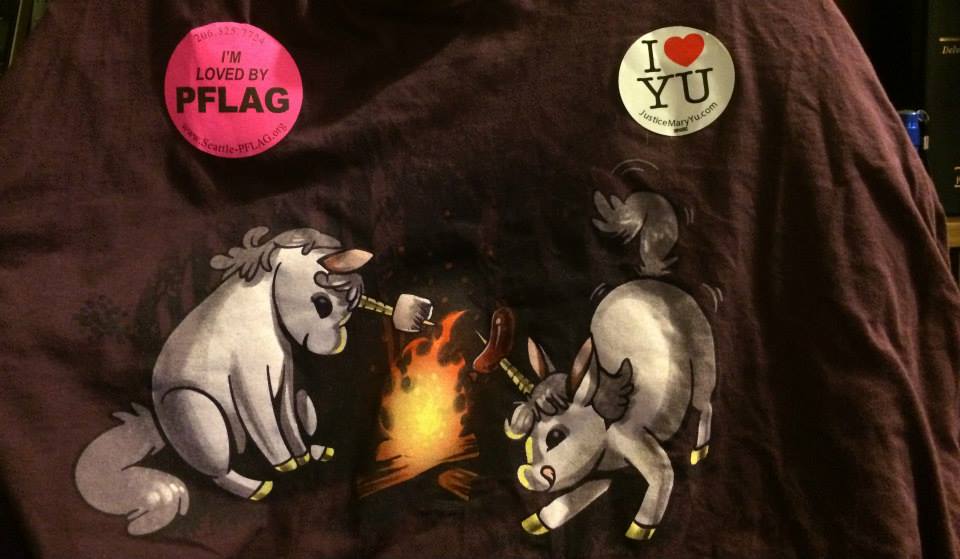











 Font Folly