I've loved reading for as long as I can remember. I write fantasy, science fiction, mystery, and nonfiction. For more than 20 years I edited and published an anthropomorphic sci-fi/space opera literary fanzine. I attend and work on the staff for several anthropormorphics, anime, and science fiction conventions. I live near Seattle with my wonderful husband, still completely amazed that he puts up with me at all.
View all posts by fontfolly →
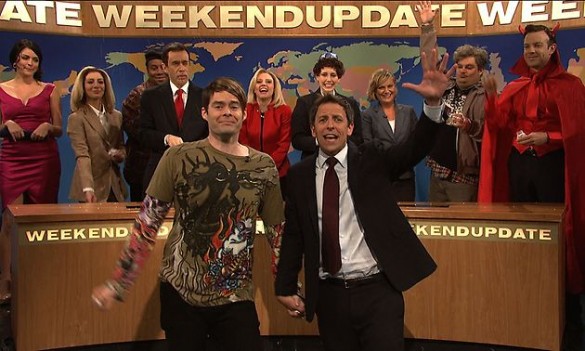
I’m sorry that I’m not going to be as funny as the Saturday Night Live crew, but I had to share a few updates on some of the things I linked to just yesterday:
The Washington Times (not to be confused with the award-winning, serious newspaper, the Post) is a regular donor to the anti-gay National Organization of Marriage, was the primary sponsor of yesterday’s anti-gay marriage march, and usually finds a way to spin every story about a step forward for gay rights as a victory for their side, concedes:
After rallying the troops for years, and even with one New York politician recruiting people for what he told them was “a free trip to Washington, D.C. to see the monuments” (that’s right, some bus loads of people didn’t even know what they were going to), they were only able to get “hundreds.” So my caption yesterday saying it was “tens” was slightly off.
But wait, there’s more!
The official hierarchy of the Morman Church is also a regular donor to any anti-gay political action committee or group you can name (even if they did try to tone it down and hide their involvement a bit in 2012; something several of us predicted would end once Mitt Romney’s run for the White House ended, and we were right), owns it’s own newspaper, the Deseret News, and it tried to put a slightly less defeatist spin in its headline:
Funny, neither site mentions the leader of a French neo-Nazi (remember, it isn’t hyperbole when they are literally members of a Nazi Party) organization wasn’t just at the event, she was one of the people leading the march!
The Wonkette’s piece shows some pictures of some hateful signs. It’s worth noting that the people who organize this thing, the National Organization for Marriage (NOM), keeps claiming that they are not anti-gay. They say we’re distorting their message when we call them anti-gay. They insist that they are simply defending traditional marriage, and not attacking anyone. But a quick perusal of the pictures at this article shows they are lying: Photos: Animus at #March4Marriage. You can see some more of the clearly anti-gay signs, read quotes from some of the speeches, and watch video interviews of some of the attendees to demonstrate the hate further: Inside NOM’s Second Failed “March For Marriage”. If you can stomach any more, the Daily Beast talked to a lot more of the attendees: Crucifixes, Gorillas, and Adult Diapers: My March Against Gay Marriage.
Just in case anyone ever tries to tell you that the people who oppose marriage equality aren’t anti-gay (and very ill-informed, too).
Tens of people showed up for the anti-gay “March For Marriage” yesterday. Despite their claims that they aren’t anti-gay, there were a lot of hateful anti-gay signs being bandied about. (Photo from CourageCampaign.Org)Thank the great flying spaghetti monster, it’s Friday! I don’t know about you, but I have had a grueling week. Here’s a collection of news and other things that struck me as worthy of being shared:
Captain America Isn’t Just Any Hero. “…given the era he was born in and his class and religious/ethnic background, there is no way in hell Steve Rogers didn’t grow up as a Democrat, and a New Deal Democrat at that, complete with a picture of FDR on the wall.”
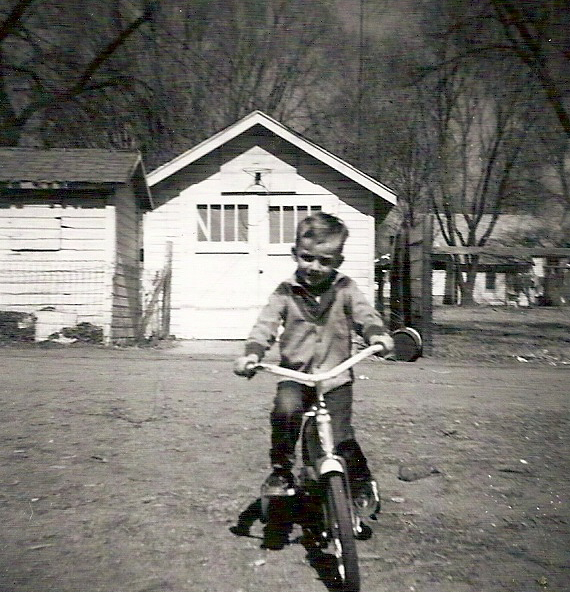
This picture was taken when I was four.I mentioned previously that one of my uncles declared, when I was a child, that the reason I was a sissy was because my parents let me play with G.I. Joe action figures. Except, of course that he didn’t call them action figures. He called them “dolls.” Again and again he repeated the word “doll” during his rant. And he said it in the same tone of voice that he said words like “sissy,” “pussy,” and “girlie.”
When I came out at the age of 31 (yep, it took a while), more than one relative on that side of the family repeated the theory that the reason I was a homo was because of those G.I. Joe dolls I had as a kid.
People who understand the medical science know that a person’s sexual orientation is determined sometime before the age of two (it is almost certainly earlier, but it’s much more difficult to measure before then), so toys I received as presents at the age of seven didn’t have anything to do with it. But the claim is wrong in another way.
I never owned a G.I. Joe action figure as a child.
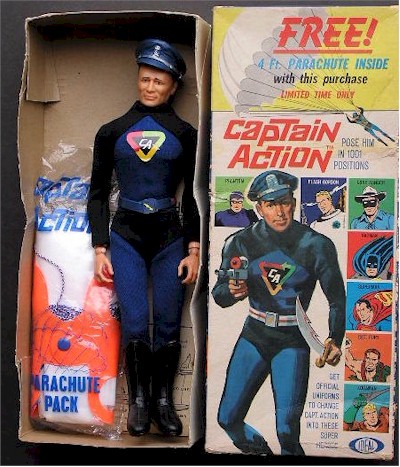
What I had, was Captain Action.
The original G.I. Joe was created by toy designer Stan Weston. He licensed the idea of his articulated action figure that could have a infinite number of costumes and accessories to Hasbro. The deal wasn’t an exclusive license, so Weston took Hasbro’s money and formed his own company.
Once he saw that Hasbro was going with only soldier accessories, he secured licensing deals with D.C. Comics, Marvel Comics, and King Feature Syndicate to produce a similar action figure, but one that was a something of a shape-shifter.
Captain Action’s exact shape differed from G.I. Joe in several ways, the most noticeable being that his head seemed a bit small for the body and the facial features are a little weird. The reason was that, thanks to all of those licensing deals, among the accessories you could buy for Captain Action were kits to transform him into characters such as Superman, Spiderman, Batman, Aquaman, Steve Canyon, Buck Rogers, the Lone Ranger, Flash Gordon, and so on. Each of those kits included a “mask” that completely covered Captain Action’s face, giving him the face of the character in question.
The Christmas that I received Captain Action, I also received the Superman kit. Note that there is no action figure in the box. That is a full-head face to go over the Captain Action figure’s head, a costume, and other accessories, but no action figure.
The thing I remember most about the Superman kit is that when I put the Captain Action clothes back on the figure, I often put the red Superman boots on him. I even remember explaining to someone why I thought the red boots looked better with the Captain Action costume. I also remember that another kid swiped my Krypto the Superdog toy. And I never got it back.
The following Christmas, several relatives got me G.I. Joe accessories, because they were easier to find (and probably most of them didn’t realize that Captain Action wasn’t a G.I. Joe). They only kind of worked. Captain Action’s chest was just enough bigger than G.I. Joe’s that I couldn’t fasten the shirts and jackets that came in the G.I. Joe kits. So when my Captain Action was dressed up as a marine or a sailor, he also had his shirt open, showing off his hyper-muscled chest. It made him look like a member of the Village People—except that the band didn’t exist until ten years later.
Now that I think about it, maybe that was part of the reason that one uncle was convinced the action figures were making me gay: my Captain Action was always baring his chest!
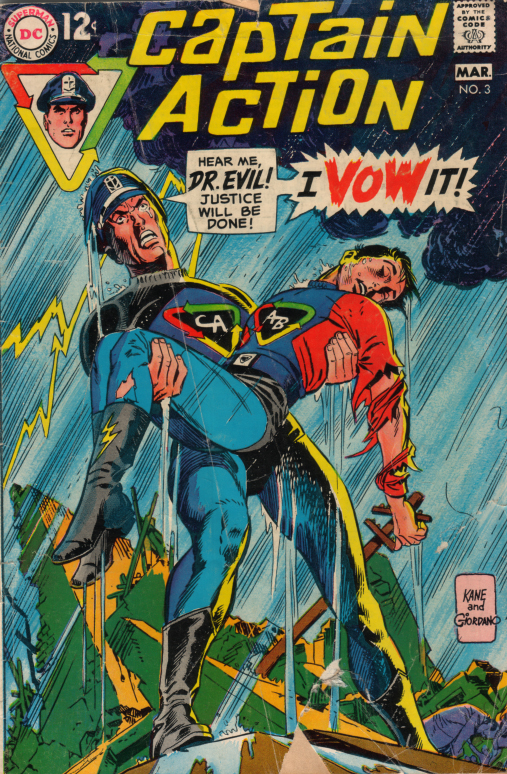
There was even a Captain Action comic book. I owned a copy of this exact issue, and it was still part of my comic collection years after my action figure had fallen apart.My uncle wasn’t the only person who had misgivings about boys playing with dolls. When Hasbro introduced the first G.I. Joe, they invented the term “action figure” to label and advertise it precisely because their marketing research indicated that a lot of parents were reluctant to buy a doll for a boy.
While I remember seeing figures for Dr. Evil, Captain Action’s nemesis, I don’t think I ever saw the Action Boy figure in stores. I know, from reading collectors’ web sites, that there were Action Boy figures and there were accessory kits to turn him into Robin (to go with Captain Action in the Batman kit) or Superboy.
It’s probably just as well. As I recall, my Captain Action was laying in my toy box completely naked most of the time. Whenever I wanted to play with him, I had to spend a while tracking down enough clothes and accessories to dress him up as someone. If there had been a naked Captain Action and a naked Action Boy lounging about in my toy box, that uncle would have probably had a stroke!
Marcus Bachmann is married to a vehemently anti-gay congresswoman, runs a cure-the-gays clinic, and calls himself “doctor” based on a degree from a diploma mill that didn’t even offer psychology degrees at the time he took classes.When I first came out to my family, nothing went smoothly. Mom went into full denial mode, even insisting she had never suspected I was gay (despite having regular prayer sessions with other family members and church friends begging god to turn me straight for at least a decade). One aunt sent me a 28-page handwritten letter outlining the words I wasn’t allowed to use in her presence, the topics that could not be mentioned in her house, and so forth. I lost track of the number of relatives who assured me I was still welcome to visit, but only if I promised not to act gay and certainly never accompanied with a boyfriend. One cousin-in-law—who happened to also be my best friend from college—got angry that some family members knew before he did, causing lots of drama. It has also been his excuse for 20-some years for ending our friendship (it’s not because I’m gay, see, it’s because I didn’t tell him first). Some relatives on Dad’s side blamed Mom. Some relatives on Mom’s side blamed Dad.
I could go on and on.
I think it was the first time in my life that I was unhappy that my parents and grandparents had so many siblings, and that many branches of our huge extended family had always been in regular communication with each other.
During one of the many melodramatic phone conversations I had during that first year after coming out, my Grandma was going on about why she didn’t understand how I could choose this. So I asked her to stop for a moment and think about that. Could she honestly say, I asked her, that she could choose to be gay? I had to rephrase it a few times before she understood what I was asking. Then she declared, very firmly, that of course there was absolutely no possibility that she could ever even imagine deciding to be gay herself. It was ridiculous to suggest it.
“In that case, Grandma, how can you keep accusing me of choosing this?”
She got flustered and started quoting the Bible at me. I quoted some verses back and pressed her again. If it’s a sin, then everyone is equally capable of being tempted by it. If she felt so strongly down to her bones that she couldn’t choose to do this, how could she believe that I could? She eventually admitted that maybe I was right about it not being a choice.
We were hardly the first people to have that conversation. For those of us queer people who were raised in exceptionally homophobic churches and families—who spent decades crying ourselves to sleep over feelings that would not go away; who begged god again and again in epic prayer sessions to make us “normal;” and who lived in constant fear of the being rejected by those we loved if they found out—the notion that this is all a matter of choice is so patently ridiculous that it defies reason.
Not to mention having watched people we know go through programs intended to “cure” homosexuality and seeing most of them come out not changed at all. Or seeing the ones who claimed to be changed so obviously projecting a facade that did nothing to hide how profoundly unhappy and unchanged they were. Or reading the statistics which show that literally 99.9% of them aren’t even able to resist their feelings for any length of time.
It’s deeply frustrating knowing that it was never a matter of choice for ourselves or anyone we’ve known, that the myth is still bandied about and still used to justify laws, policies, and practices that discriminate against us.
Then one day I read an op-ed piece by advice columnist and gay rights activist Dan Savage, in which he described the same frustration, but then explained an epiphany he had had. He had been reading yet another news story of a vehemently anti-gay minister or politician having been caught having had a number of same-sex affairs, and remembering all the times said anti-gay person had publicly insisted that being gay was a choice, when it hit him. The reason they believed it was a choice because in a twisted way it was true for them. Every single day they looked themselves in the mirror and convinced themselves one more time that they weren’t going to be gay that day.
We know from both the medical research and the statistics that some so-called ex-gay therapists were forced to admit in court, that no one who feels same-sex attraction ever stops feeling it. No one. When the advocates of such quackery have been pinned down in court under threat of perjury and faced with actual evidence, they even admit that by “cure” all they’ve ever meant was that a person could learn to resist the urge to act on their feelings. Which is a very twisted definition of cure.
Congressman Shock was raised Southern Baptist in a rural community, has a consistent anti-gay voting record, but posts pictures of himself to Instagram like these, has never married, and has lived with a string of young athletic male “roommates” for over a decade.Before I came out, back when I was still fighting the feelings and still trying desperately to convince myself that maybe I was bi, it always struck me as weird that the preachers I met who preached most virulently and obsessively against homosexuality were always the most effeminate men I had ever met. When a group of ex-gay activists came to the methodist university I was attending, I was again struck by how stereotypically sissified the ex-gay men were, and how unladylike the ex-lesbian women were. Back at the dorm, one of the other guys on my floor went on and on about it, getting big laughs when he asked why they couldn’t find at least one non-faggy person to represent the program.
Just to be clear: not all gay men are sissies. Sexual orientation is a complicated thing, obviously the result of a whole lot of different things going on in our brains and hormones. Some gay men are great at football and have no interest in musical theatre, while some straight men have no interest in sports and like to cook. Believe me, I know.
But there are actual studies which show that almost all sissies are gay.
And my own epiphany about these anti-gay or ex-gay guys that I can’t believe are fooling anyone is this: they are so desperate to believe there is a cure precisely because they have never been able to hide.
As bad as childhood may have been for me, being called sissy and pussy and far worse by classmates, coaches, some teachers, other kids at church, or my own father, I bet Aaron Shock had it worse. I’m absolutely certain that Marcus Bachmann had it far, far, far worse. Convincing themselves that they aren’t gay, or convincing themselves that they could hide it, was a matter of survival for them.
So, yeah, they deserve at least some pity.
But not so much that we don’t hold them responsible for the tens of thousands of queer and questioning kids thrown out on the street by homophobic parents and driven into high risk of drug abuse and prostitution. Neither should our pity stop us for placing some of the blame for the thousands and thousands of kids who commit suicide for fear their parents will find out they’re gay, and/or because the incessant bullying and rejection at school, church, and in their homes.
Because people like Bachmann and Shock and all the other ex-gay and anti-gay folks are perpetuating and enabling that cycle of hate. They need to stop faking it, and start making amends.
I’ve written before of my tendency to write stories with scores of characters—and not just in my long stories. As I was working on my most recent novel, and the one before, a frequent comment from my writers’ group has been the difficulty to keeping track of so many characters.
Two of the three people who agreed to read the entirety of the finished draft novel for me said that when they read the finished work, the number of characters didn’t seem excessive. They were able to keep track of who everyone was and what was happening to them. And I had compared my tale to some published books and found that I didn’t have any more characters than some of them.
So I figured it was a product of context. My writing group was hearing typically one chapter a month, which is not how most people read books.
But now that I have gotten editorial comments back on the finished book, as I’m trying to finish it, I have had an epiphany. Context and the length of time between hearing pieces of the story are contributing factors, yes. But the real problem is that I’ve written the story as if it were a comic series…
A while back I ran across a music video by a singer that I like. I own a few of his albums, and several of his singles are in some of my favorite playlists. I had never heard the song, but the title seemed familiar. As I watched this video scenes from what was clearly a movie kept appearing. I found out that the song was the theme song for the movie in question. Then I remembered that I had read about the movie, which was written and directed by a director whose previous works (a pair of gay romantic comedies) were movies with which I was familiar.
I really liked the theme song, and it was available in iTunes. I went to buy it, and saw that the entire soundtrack of this movie that I had never seen was available. And as I browsed the track list, I saw that several of the songs were recorded by other singers I knew and liked. I listened to samples of several of the tracks, and the next thing I knew I bought the whole album.Continue reading Sometimes you need to know→
It’s impossible to avoid all the memes, retweets, and sentimental odes to fatherhood being shared this time of year. And for everyone who is lucky enough to have had a great dad, I am very happy for you. Go, celebrate his wonderfulness. Tell him how great he is. Recognize that not every person who manages to make a baby is also a good, loving father. If yours is that kind of wonderful, he deserves a big “thank you.”
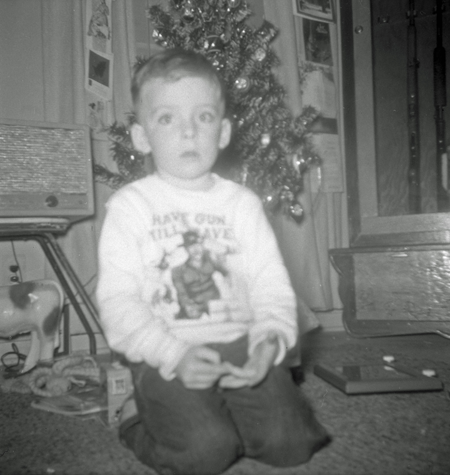
I’m 3 years old in this picture, taken at my maternal grandparents’ house.I mentioned earlier about one set of Christmas pictures showing me with cowboy toys, even though that was apparently the first year I started begging for an Easy Bake Oven. Several of the toys in the pictures are related to the television show, Have Gun, Will Travel, which I was told years later by my grandmother was my favorite show at the time. I don’t remember the program, at all. I only found one picture from that Christmas, which I’ve posted here. This is taken at my maternal grandparents’ house, so I suspect the only presents visible are from those grandparents.
My mom has a picture of me in the same “Have Gun Will Travel” shirt, along with a cap gun and a couple of other cowboy-related toys, taken in front of our Christmas tree in our own living room. But I don’t seem to have a copy of it.
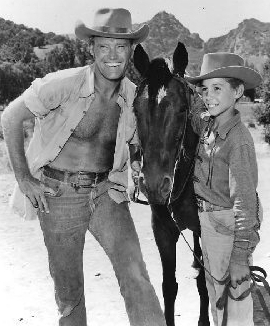
Chuck Connors as the Rifleman and Johnny Crawford as his son in a publicity photo. Chuck was shirtless in a lot of episodes.While I have no recollection of Have Gun Will Travel, the show I do remember, which was on the air those same years (both of them aired their final episode in April of ’63) was The Rifleman. I have a lot of very vivid memories of that show, even though I was only three when it went off the air. I don’t remember the plots of any episodes, but I have a lot of memories of the star, Chuck Connors, and the many times he appeared shirtless on the show.
While there is still some debate about how much genetics play in sexual orientation, the overwhelming evidence has shown for a long time that what arouses us emotionally and sexually is pretty much set in stone by the age of two.
Let me repeat that: by the age of two.
This seems weird and a little creepy, but it makes sense when you remember that we are fundamentally social creatures. We are definitely hard-wired to form various kinds of bonds with the people around us. When a little boy exhibits the signs of having a crush on a girl or woman in his life, we think it’s cute and adorable and a nature precursor to other feelings that will come along later in life. That’s all we’re talking about here, except the fact is that for some of us we developed crushes on males.
Congressman Shock has a great anti-gay voting record, but posts pictures of himself to Instagram like this, has never married, and has lived with a string of similar male “roommates” for over a decade.And if the adults around us noticed, they freaked out and tried in various ways to redirect those impulses. That redirection is doomed to failure. The closest anyone gets to success at that is that some non-heterosexual kids become fairly good at faking it later in life (though most seem to be pretty bad at it, cf Aaron Schock or Marcus Bachmann).
I have wondered why I don’t recall this show that my parents and grandparents all say was my favorite, while I do have memories of the other show. It’s possible that the adults around me noticed that my enthusiasm for Chuck Connors wasn’t the same as the way I talked about the other show, and so they were discouraging my interest. I suspect that it is more likely that Have Gun… was also the favorite show of one of my grandparents or parents, so the shared enthusiasm made it a stand out. I have some vague recollections of Dad commenting disparagingly about Chuck Connors when one of his movies came up on TV a few years later, so maybe I only got to watch the Rifleman occasionally, and it was safer not to talk about it around Dad.
I don’t know when my parents first began worrying that I was queer. The Easy Bake Oven wasn’t the only toy that I got told I couldn’t have because it was a girl’s toy… But I should point out that when I finally did get the oven, I quickly converted it to a device for amateur chemistry experiments. And the toys I most remember loving to play with in those early years were my Tonka trucks—especially my bright yellow steam shovel. So I wasn’t that gender non-conforming.
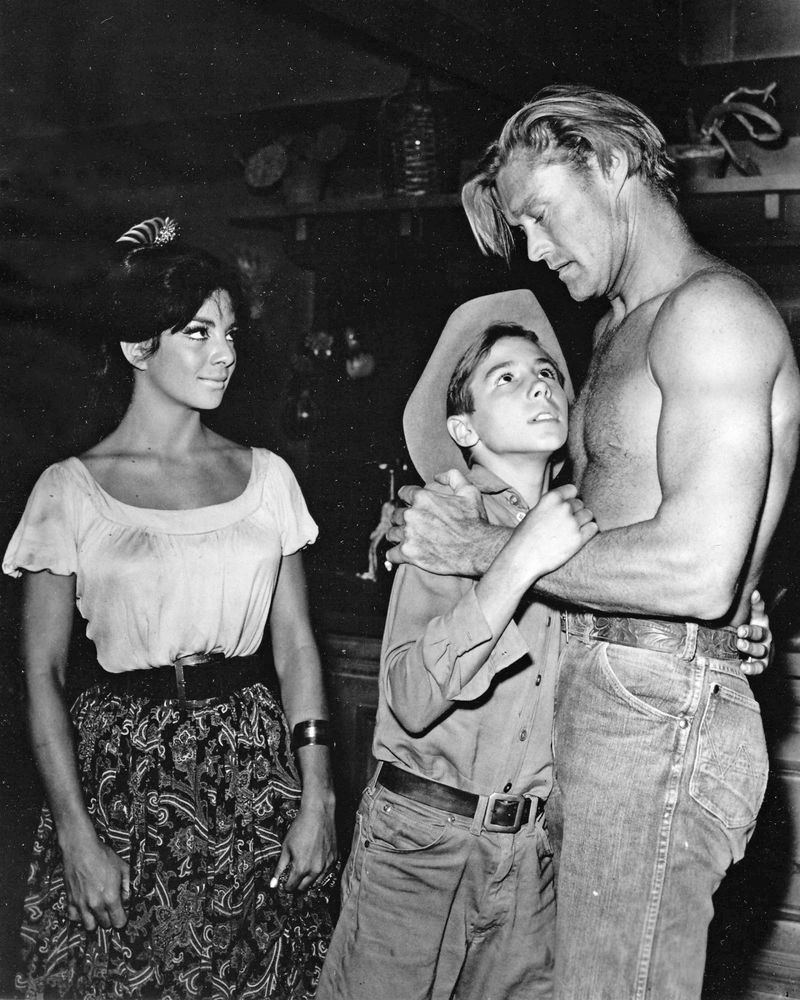
Publicity photo from the television show, the Rifleman.I have previously said that I think my first celebrity crush was Race Banon, a character from the cartoon series Jonny Quest. But I suspect that it was more likely Chuck Connors’ character in The Rifleman.

 I’m sorry that I’m not going to be as funny as the Saturday Night Live crew, but I had to share a few updates on some of the things I linked to just yesterday:





 Font Folly