Category Archives: life

Weather shifts, linguistic relativity, and the search for the perfect writing beverage

“Have you ever stopped to think that maybe coffee is addicted to me?”
According to the “Great Eskimo Vocabulary Hoax” a particular ethnic group had over 50 words for snow. Though I’ve also heard people misquote the same pseudo-factoid as 180 words for snow. You can follow the link to get some information on the faulty reasoning that led to the initial viral spread of the misunderstanding of an anthropologist’s book in the 1940s, but I always thought that if the myth were true, that the dialect of English spoken by inhabitants of Seattle would have developed at least 180 synonyms for drizzle. Not rain, drizzle.

Despite Seattle’s reputation for rain, we don’t get a lot of the heavy rainstorms that people who live in other parts of the world are used to. We don’t actually get that many rainy days at all. What we have are lots of overcast days. Many, many days of cool, damp weather that may include a little drizzle or mist here and there. Yeah, during some months (November, for instance) we get some deluges. This year we had literally the wettest winter since we started keeping records here 122 years ago, and last year was the second-wettest ever, so the pattern may be changing. We’ll see. In any case, much of our reputation for rain comes from all those cool, damp overcast days where it feels as if it must have just rained a bit ago, even though it may not have for several days.

Another reasons we have such a reputation is the sneaky prank Mother Nature likes to play on newcomers every spring. Every year, at some point in the month of May, we get a week or two of weather that seems like summer. It usually only gets into the low or middle seventies (Farenheit), but the thing is that after months of overcast days, drizzly days, and occasional rainstorms, a week or two of sunny weather with no rain at all and warm temperatures in the daytime fools people who think that summer is here. Never mind that most of those nights the temperatures drop back down to the 50s or 40s, in the middle of the day it was warm and sunny and dry, so summer must be here.

And then the June Gloom hits.

An upper atmosphere trough settles in causing almost constant on-shore flow. Cool, moist air from the ocean keeps coming inland. So every night we get overcast/foggy cool weather, and the clouds and fog may or may not burn off at all during the day time. And we get drizzles and light showers. Temperatures may get up into the low 70s for a little bit each day, but between the lack of sun, the damp, and the rain, it doesn’t feel that warm. Statistically, we have mostly June Gloom instead of summer until about July 12. And particularly in contrast to those couple of weeks of what seemed like summer, that long cool period breaks the spirit of people who aren’t from around here.

This last weekend was the end of our faux summer. And it was a lot warmer than our usual May foray into warmth. The temperatures got up into the 80s. But then the drizzle and rain came back. I happen to love the rain and the cooler days, but it this time it was a bit of a shock even to me. I couldn’t figure out last night—after I got home from work and ran my two errands, then peeled off my office drag and switched to shorts—why I was so cold! I actually had to pull a pair of sweat pants out of the drawer!

I’ve also heard a theory that the reason people who don’t live here long think it rains a lot is precisely because common English doesn’t have a single word that means “cool, overcast, with the impending feeling of rain.” Since the categories we sort things into are at least someone dictated by the language(s) we speak, the argument goes, people actually mentally perceive those days without rain as rainy. A friend once told me about the time she admonished her husband and son to go outside and get some activity in while the sun was out… it was late winter/early spring and the sun was not out at all, the sky was very overcast. But it wasn’t raining and it had been the day before. She said, “You live enough years in Seattle, and you start seeing any time when it isn’t raining and it isn’t so dark you need artificial light as sunny!”

We’d had enough warm days that I was starting to think that making a pot of ice tea might be a good idea. Of course, we tossed out a lot of redundant dishes and such during the packing, and when I looked in the cupboards, I couldn’t find a proper pitcher. We haven’t completely unpacked, yet, so I may well have something that would work in one of the boxes. So I didn’t want to run out and buy a pitcher. The other problem is that Michael will only drink tea if it is so saturated with sugar that you can’t get more to dissolve in. Ordinary sweet tea like my grandma’s used to make (where you dissolve several cups of sugar into the tea when the water is still boiling, because once you’ve iced it you can’t get them much sugar to dissolve into it) isn’t quite sweet enough for him. Meanwhile, I can’t drink that much sugar anymore, so I drink all my tea (hot or cold) or coffee without any sweetener.

If we had had one more day of hot weather, I would have broken down, made a mug of hot unsweetened tea with my electric kettle, then poured it into a big glass full of ice cubes. Which isn’t quite as good as having a whole pitcher of tea you can refill from, but tastes good. And now we’re going to cool weather for a while. So I’ve pulled my collection of tea bags out of the pantry. The tea bags had been out of sight since sometimes early in the move, so I haven’t been making tea at night. On days that I’m home all day, I wind up making a second pot of coffee and drinking coffee into the evening. Which is fine, except I think that tea in the afternoon and evening changes the way my brain works.

Maybe that’s why I haven’t been able to get back into the writing zone. Or maybe I’m just too tired from all the packing and unpacking. And it isn’t as if there isn’t still a lot of unpacking to do!

Maybe I should have a nice cup of tea before I tackle the next box.
Achievement unlocked: No Shuttling Weekend! (And we can haz library?)

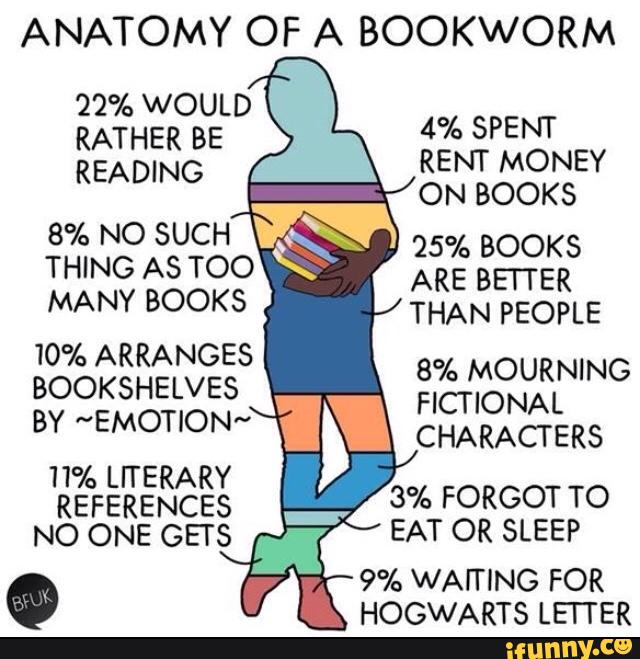
Anatomy of a Bookworm. Click to embiggen. Some of these statements do describe me...
Anatomy of a Bookworm. Click to embiggen. Some of these statements do describe me…
At some point a few weeks ago I made a promise to myself: “There will come a weekend where I don’t have to drive multiple times back and forth on that route from Ballard to Shoreline.” Back in April when I first checked the address on a map, I was delighted that it was so close to the home of good friends. I knew most of the route quite well! Driving up for the appointment to look at the place and decide whether to apply for it wasn’t just familiar, it was comfortable. Driving the route had usually meant we were on our way to spending time with good friends. It was merely 25 minutes each way! But after we signed the lease the route soon became something else. The first weekend we drove the route back and forth at least 9 times. And just about every work night the following week I made the trip at least once.

I’d come home from work, load up the car, drive to new place, unload the car, then possibly do a couple of small things before driving back. While I was out Michael would be packing more boxes. Once I got home I would usually start packing, too. Sometimes I would simply load up the car and drive up again. Then the next weekend it was multiple trips every day again. Until the day of the big move, and we started sleeping at the new place. Then my routine became come home from work, hop in the car and drive back to the old place to pack more little things and/or clean. And so on. Thus did the once familiar and happy-making route become a dreaded chore.

We managed to take at least one night off each week. One night where each of us came home from work and did virtually no packing and there was absolutely no driving back and forth. I didn’t always skip any and all moving activity on the night off. Just not having to spend that time—nearly on hour—in transit was quite a relief.

A couple of weekends ago, when I said to some friends how much I was looking forward to the weekend that I knew would arrive eventually when I didn’t have to drive that route again and again, one friend shuddered and said, “Oh! I know that feeling. Believe me!”

It isn’t fun… Continue reading Achievement unlocked: No Shuttling Weekend! (And we can haz library?)

While we’re on the subject of Memorial Day…

© Another Believer, Wikimedia Commons User

I’ve already said plenty about the day, but here are some other thoughts worth considering:

WE NEED MEMORIAL DAY TO OBSCURE THE UNBEARABLE TRUTH ABOUT WAR

“…nothing helps a country’s militaristic right-wing triumph over their domestic enemies more than a state of war.”

Let Us Remember Memorial Day by Waging Peace

“Let us reclaim our belief in the sanctity of human life. Let us turn swords into plowshares.”

It used to be called Decoration Day… (or, Memorial for Grandma)

I’ve written before about why Memorial Day shouldn’t be confused or conflated with Veteran’s Day — and I am hardly the only person to draw attention to that distinction (Washington Post: Why Memorial Day is different from Veterans Day, CNN: Get it straight: The difference between Memorial Day and Veterans Day, Washington Examiner: Why you shouldn’t confuse Memorial Day and Veterans Day NPR: Memorial Day Dos and Don’ts.

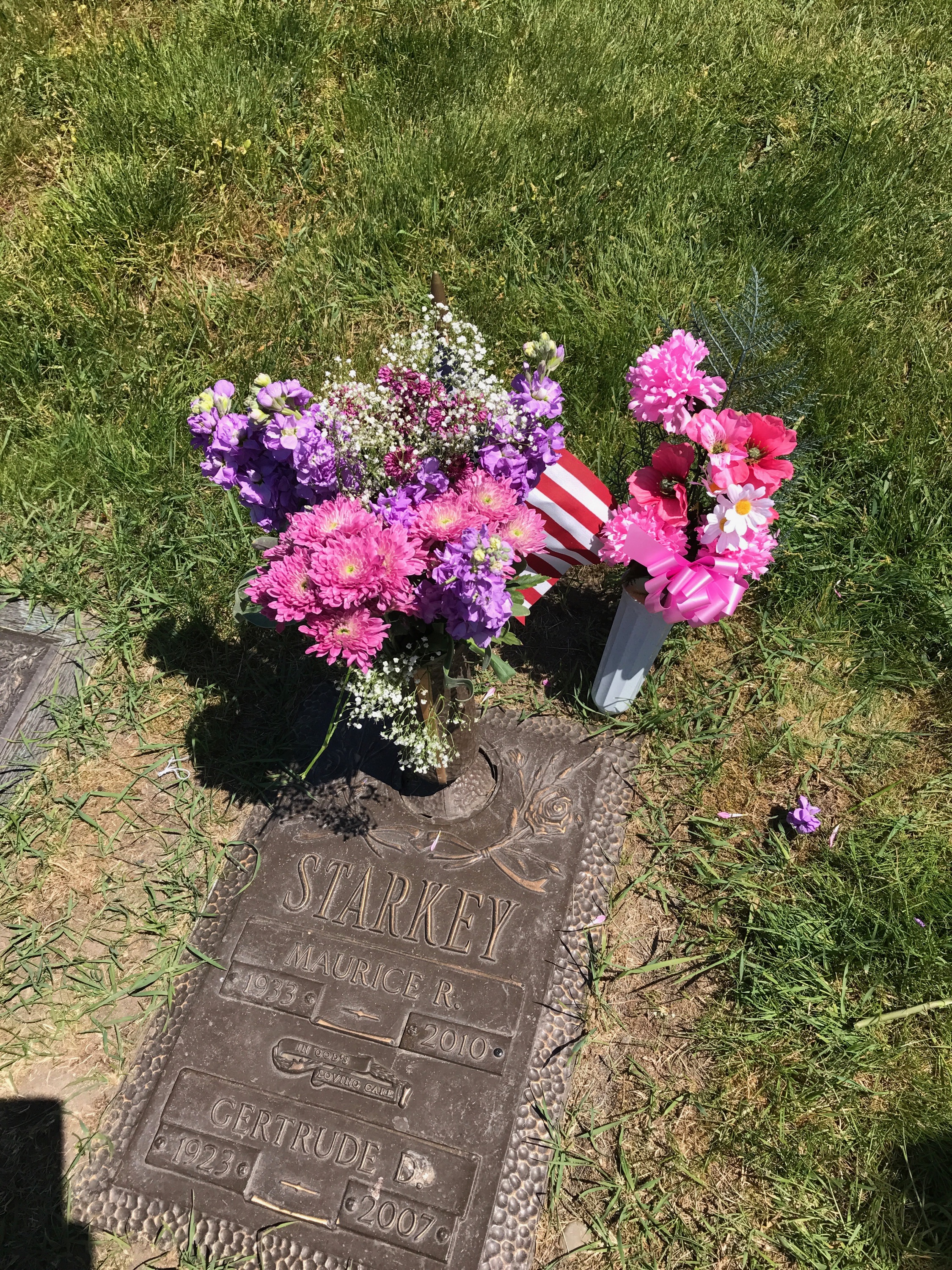
Flowers from Mom, my sister, and I  on the grave this year for Grandma and our step-grandpa.
Flowers from Mom, my sister, and I on the grave this year for Grandma and our step-grandpa.
Some of those articles mention the original holiday, but they get one bit wrong. Before the first official federal observation of a Memorial Day, at Arlington National Cemetery back in 1868, there was another holiday observed in many parts of the country—long before the Civil War—called Decoration Day, which was a day to have family reunions and celebrate the lives of all of our deceased family members. My Grandmother observed that version faithfully her whole life, long before the official creation of the modern Memorial Day with the Uniform Monday Holiday Act of 1968.

Grandma died exactly ten years ago last week, and it still hurts to think about. The fact that she was putting flowers on the grave of another beloved family member when she died just makes me even more of an adamant defender of the original, non-jingoistic, non-warmongering version of the holiday. But rather than rant about that, I should post about my grandmother, a wonderful woman who taught me so much.

So, for Grandma (originally posted on Memorial Day 2014):

Memorial, part 2

copyright 2014 Gene Breshears
Flowers for Grandma’s grave.
Grandma always called it by the older name, Decoration Day. As I’ve written before, the original holiday was celebrated in many states as a day to gather at the grave sites of your parents, grandparents, et cetera, to honor the memory of their lives. It was often a time of picnics and family reunions. At least as much a celebration of their lives as a time of mourning. The connection to military deaths didn’t happen until 1868, and particularly in the south, was often seen as a pro-Union, pro-war, anti-southern celebration.

I didn’t understand most of those nuances when I was a kid. The modern version of the holiday, celebrated on the last Monday in May, didn’t even exist until I was a fifth-grader, when the Uniform Monday Holiday Act went into effect.

Grandma observed it faithfully. Every year, as May rolled around, she would begin calling distant relatives and old family friends. Grandma knew where just about every person descended from her own grandparents was buried, and she made certain that someone who lived nearby was putting flowers on the graves of those relatives by Memorial Day. She took care of all the family members buried within a couple hours drive of her home in southwest Washington.

She was putting flowers on the grave of my Great-aunt Maud (Grandma’s sister-in-law) seven years ago on the Friday before Memorial Day when she died. My step-grandfather said he was getting in position to take a picture of her beside the grave and the flowers (there are hundreds and hundreds of photos of Grandma beside graves with flowers on them in her photo albums) when she suddenly looked up, said, “I don’t feel good!” and pitched over.

One weekend she had blown out the candles on the cake celebrating her 84th birthday. The following Friday, while putting flowers on Great-aunt Maud’s grave, she died. And one week after that a bunch of us were standing at her graveside. It was just down to a few family members, and we were at that stage where you’re commenting on how pretty the flowers that so-and-so that no one had heard from in years were, when someone asked, “Isn’t grandpa’s grave nearby?”

Grandpa had died 23 years earlier, and was buried in one of a pair of plots he and Grandma had bought many years before. And after Grandma re-married, she and our step-grandfather had bought two more plots close by.

Anyway, as soon as someone asked that, my step-grandfather’s eyes bugged out, he went white as a sheet, and said, “Oh, no!” He was obviously very distressed as he hurried toward his car. Several of us followed, worried that he was having some sort of medical issue.

Nope. He and Grandma had been driving to various cemeteries all week long before her death, putting silk-bouquets that Grandma had made on each relative’s grave. Aunt Maud’s was meant to be the next-to-the-last stop on their journey. Grandpa’s silk flower bouquet was still in the trunk of the car. My step-grandfather was beside himself. He’d cried so much that week, you wouldn’t have thought he could cry any more, but there he was, apologizing to Grandma’s spirit for forgetting about the last batch of flowers, and not finishing her chore—for not getting flowers on Grandpa George’s grave by Memorial Day.

The next year, several of us had the realization that without Grandma around, none of us knew who to call to get flowers put on Great-grandma and Great-grandpa’s graves back in Colorado. None of us were sure in which Missouri town Great-great-aunt Pearl was buried, let alone who Grandma called every year to arrange for the flowers. Just as we weren’t certain whether Great-great-aunt Lou was buried in Kansas or was it Missouri? And so on, and so on. One of my cousins had to track down the incident report filed by the paramedics who responded to our step-grandfather’s 9-1-1 call just to find out which cemetery Great-aunt Maud was in.

copyright 2014 Gene Breshears
Flowers from us, Mom, and my Aunt Silly on Grandpa’s grave.
Mom and her sister have been putting flowers on Grandma’s and Grandpa’s graves since. Our step-grandfather passed away three years after Grandma, and he was buried beside her.

Some years before her death, Grandma had transferred the ownership of the plot next to Grandpa to Mom. So Mom’s going to be buried beside her dad. Mom mentions it whenever we visit the graves, and I don’t know if she realizes how much it chokes me up to think about it.

We had put the flowers in place. We had both taken pictures. Mom always worries that she won’t remember where Grandpa’s grave is (it’s seared in my head: two rows down from Grandma, four stones to the south). Michael helped Mom take a wide shot picture that has both Grandma’s and Grandpa’s spots in it.

I thought we were going to get away with both of us only getting a little teary-eyeed a few times, but as we were getting back into the car, Mom started crying. Which meant that I lost it.

Grandma’s been gone for seven years, now. But every time we drive down to visit Mom, there is a moment on the drive when my mind is wandering, and I’ll wonder what Grandma will be doing when we get there. And then I remember I won’t be seeing her. It took me about a dozen years to stop having those lapses about Grandpa. I suspect it will be longer for Grandma. After all, she’s the one who taught me the importance of Those Who Matter


Flowers from Mom and I on Grandpa's grave this year.
Flowers from Mom and I on Grandpa’s grave this year.
And if you are one of those people offended if I don’t mention people who served our country in the armed forces on this day, please note that we also put flowers on my Grandpa’s grave. Grandpa served in WWII in Italy. He didn’t drive a tank, he drove the vehicle that towed tanks that couldn’t be repaired in the field, and one of the two medals he was awarded in the war was for doing a repair of a tank while under fire. After the war, he came back to the U.S., met Grandma (who was at that point working as a nurse and trying to support her two daughters), and eventually married Grandma and adopted my mom and my aunt. Many years later, he was the person who taught me how to rebuild a carburetor (among other things). He was a hero many times over. And this post is also dedicated to his memory.

And we’re out!

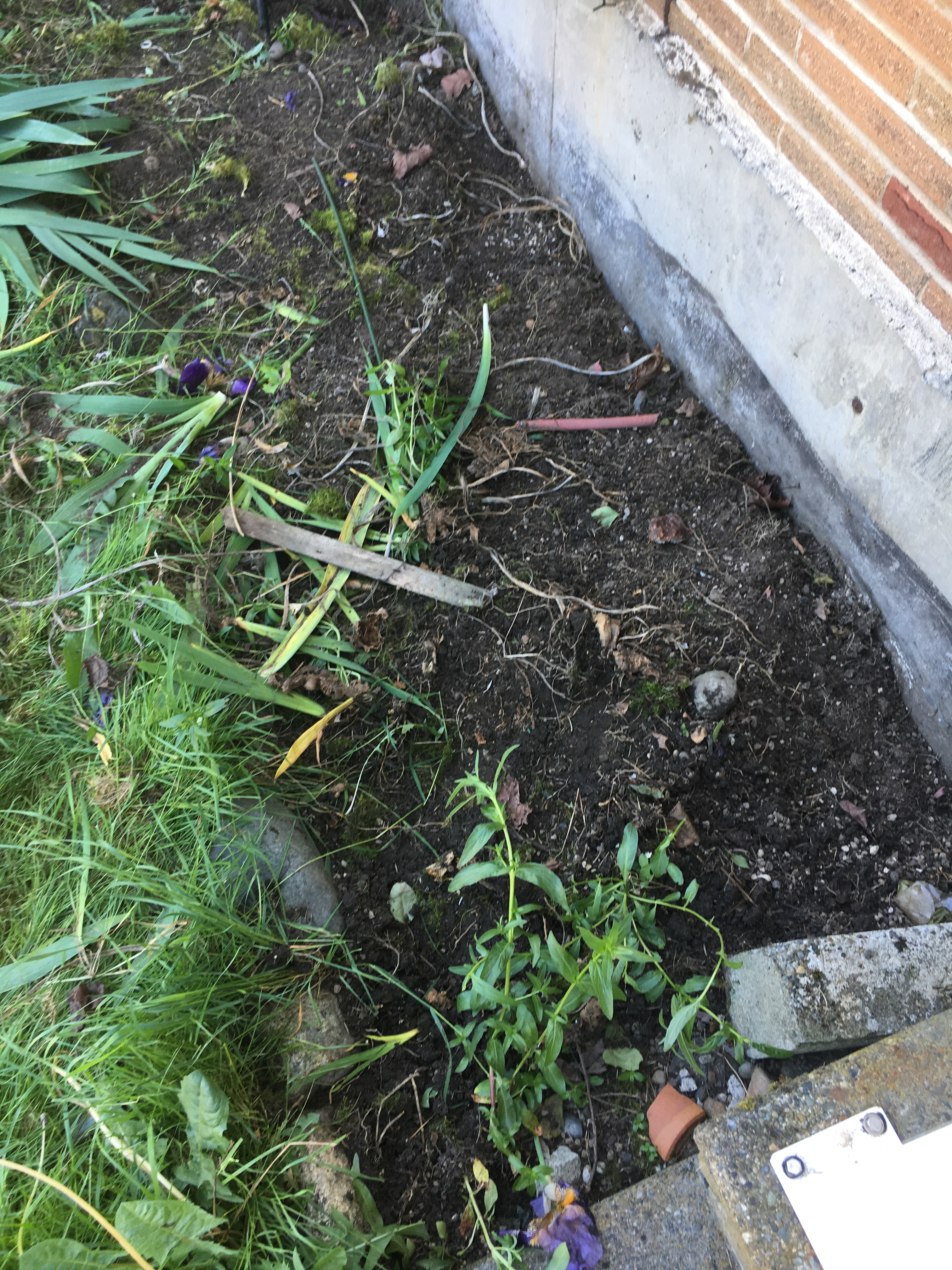
The flower bed after I dug up all the irises. Will be sharing rhizomes with people who offered to take some.
I had to be at the old place in the middle of the day Tuesday to meet the people who were going to haul away our second fridge. Or, since we don’t actually own the other fridge at the old place, I guess this one was our only fridge. How we (Ray & I originally) came to have a refrigerator of our own in addition to the appliances that came with the rental property before moving into the Ballard place 21 years ago, leading to some years later when said fridge died Michael & I buying a replacement so we still had two fridges is a tale for another day. Regardless, since someone needed to be there the meet the haulers and sign paperwork, and since we’d disconnected the internet service at the old place, and there wasn’t any real furniture (so I didn’t want to haul my laptop there and try to work from home the whole day), I took most of the day off and spent the time I was waiting digging up the irises.

As I mentioned in an earlier post, these irises are descending from a small bag of rhizomes my grandma gave me some years before she died. Every few years I’ve dug them up and thinned them, usually finding some people to take the excess off my hands. I’d mentioned on Facebook a few weeks ago that this might be the last time I’d see grandma’s irises blooming, since we don’t have a yard at the new place. And a bunch of people, including several of my in-laws, said if I did want to dig them up they would take some. And one former co-worker pointed out that she had kept some large irises when she lived in an apartment without a yard in a one of those large, half-barrel style containers for several years until she bought a house and could plant them.

So many people offered to take some, I figured that I’d try to dig up the whole bed. Fortunately, the part of the structure that is transplantable (sometimes people call them bulbs, sometimes corms or tubers; when I looked it up to see if I was using the correct term, I learned that anatomically the part in question on irises is a rhizome) tends to grow close to the surface and half the time above the surface (particularly if you’re a bit overdue on the thinning, because they start growing over each other), so there wasn’t a lot of actual digging. I had to use the tiller a lot to loosen the soil, but mostly it was a matter of just pulling them up, shaking off the dirt, and piling them. Then I went through the pile to cut off the flowers and leaves so that I only bagged up the part people will need to replant to get them growing again…

Continue reading And we’re out!

Confessions of a penny pinching packrat

Every single penny accounted for…
A recent Tumblr post reminded me of one of the reasons that people who aren’t packrats don’t understand packrat behavior. Packrat behavior is sometimes clinically defined in terms of controlling anxiety. The biggest anxiety in question, and the one we mention least often, is economic anxiety. And the thing about economic anxiety that is most misunderstood is that it is not irrational.

Tumblr user Ignescent explained it really well:

This really locked into my brain when I was reading one of the declutter your space things and it suggested getting rid of duplicate highlighters and pens. /Pens/. It suggested that you needed one or two working pens, so if you had extra you should get rid of them. That was when I realized minimalist living was /innately/ tied to having spare money, because the idea was, of course you just went out and bought the single replacement thing whenever the first thing broke. You obv. Had the time and money to only ever hold what you needed that moment, because you could always buy more later.
—ignesecent.tumblr.com

There were several years of my life when every single dime of every paycheck was already allocated before I got it. This wasn’t because I was bad at money management or because I was living above my means (at least not the way that people who like to throw that phrase around use it) or because I was lazy, it was because I made very little money, period. I was attending college part time and working three jobs (three jobs). My mom was working full time (when for health reasons she shouldn’t have been working at all), lived in another state, and was trying to support my younger sister. My parents had been divorced for years at that point and one of my dad’s least awful behaviors was that he absolutely refused to even fill out financial aid forms for any of his five children, let alone send any support that wasn’t ordered by a court.

In that situation, any unexpected expense—no matter how small—meant skipping at least one meal during that pay period. I’m not exaggerating. At least half of my meals at the time were things like cheap boxed macaroni and cheese. Not the “expensive” kind with a picture of orange sauce-slathered pasta on the box. I’m talking the plain white box with black block printing that sold for 20-cents a box (and about four or five times a year would go on sale for 10 boxes for a dollar, so you’d buy five bucks worth when it did because that meant you had a cushion in case of an unexpected expense later).

And a good portion of my childhood was spent with our family living like that. I talk about the bullying in school, but that wasn’t the only horror that school sometimes visited upon me. You don’t want to know the terror and humiliation that comes over a kid from a struggling family if you are informed that this next assignment requires your parent to buy something unexpected. Or that there is a $10 fee required for this class activity that is part of your grade.

So, yes, when Michael and I were loading the last of the Christmas decorations out of the storage space at our old apartment this weekend and I discovered yet another old monitor that we had wrapped up and stashed when we replaced it years ago, I felt a bit of embarrassment, because that meant we had a total of six old monitors to get rid of, instead of the two that we had thought just a week ago.

But another part of me knew why it was there. Because things break. You have the money now to buy that new monitor you’ve been pining after for months, and you’ve double-checked, triple-checked, and quadruple-checked your bank accounts and all of your bills for the next few months before spending the money (because you always do that before spending money), and it’s nice and pretty and so much better than this old thing you probably should have replaced a year ago.

But you do not, repeat, do not dispose of the old monitor. You don’t donate it to charity. You sure as heck don’t throw it away! You put it away, because if some disaster happens and your shiny new monitor gets fried when lightning strikes your building (it happened to my ex- years ago, one lightning storm and half of her electronics were fried) or whatever, you can pull that old monitor out of the basement and keep working for however long it takes to save up to buy a replacement.

Yes, sometimes when we replace an appliance or a computer part or accessory, we will pass it on to a friend we know needs it. But the reason we are able to do that? Is because we know that we still have the older one that we replaced four years ago in storage, so if something goes wrong for us, we have that back up.

It doesn’t matter that for years I’ve been lucky enough to have relatively stable employment and the wherewithal to cover my bills without worrying about skipping meals if a tiny unexpected expense comes up. It doesn’t matter because I know I’ve had to live that way before, and I know that it could happen again. It isn’t about an irrational fear or lack of planning.

It is planning.

There are checklists in the back of my mind all time: do we have enough food in the cupboard to make meals for the next couple of weeks? Do I know which bills I have to pay in the next two months and the approximate total to cover them? Is the gas tank on the car full? Did I pay up the Orca card so my bus pass will work for the next two weeks? If the microwave or stove break do I have an alternate/backup means to cook until we can get something replaced or repaired? And yes, if my pen runs dry when my rent is due, do I have backups so I don’t have to make time to go buy a replacement before I can write the rent check and hand it in on time?

Those aren’t silly, or paranoid, or stupid fears. My living spaces haven’t been cluttered my whole life because I have a sloppy mind.

I understand that there are hidden costs to the packrat behavior. I know that storing all these extra things is using up space that could be used for something else. Packing items super tight into every available nook and cranny means you have to spend more time later looking for something. It can mean that you aren’t aware of a physical problem with part of the house because you can’t see that back wall over there and don’t know that some water damage happened because the neighbor tried to fix a sink themselves rather than call a professional, and they cleaned up their side, but not before some seeped through to your wall.

And I right now I am hyper aware of how much extra time, effort, and money it takes to move (or sort through and dispose of) all that extra stuff that I’ve been storing all this time.

Knowing this makes it a little easier for a time to tamp down that chorus in the back of my head that speaks in the voices of my grandparents and great-grandparents about not getting rid of things that we might need some day.

The truth is that the chorus isn’t wrong. We might need that some day.

I say this because I don’t want my recent self-deprecating comments about my packrat tendencies to be taken as justification to upbraid anyone for being a packrat. It’s one thing for me to decry my own issues, but it’s important to remember that the “ideal” uncluttered minimalist lifestyle is a product of economic privilege that not everyone has. Scolding someone for not being able to achieve it is just as wrong-headed as blaming young people for not owning a house on the occasional purchase of avocado toast.

(Click to embiggen)

Cromulent is as cromulent does — adventures with dictionaries

Looking up daughter-in-law in my unabridged Oxford English Dictionary.
I am a collector of dictionaries. I love browsing dictionaries, thesauruses, encyclopedias, and other references. But while I can be very pedantic and love reading dictionaries (comparing the various definitions and variants from one to another, teasing out interesting bits of the history of the language in the process, and discovering new nuances of meaning and usage), I am not a Prescriptionist. I don’t insist that people must always use words only one particular way.

In fact, I get irritated at the kind of people who use phrases such as “That’s not a real word!” when someone uses a word that they don’t believe is in the dictionary. One reason they annoy me is that they are usually wrong. For example, “embiggen” is a word that has been used in print since at least 1884—one hundred and thirty-six years ago. Similarly, another word I’ve seen people sneer at others for using, “kitty-corner” (and its variants cater-corner and catty-corner) have been in the language for many centuries, since at least medieval times when it was spelled “catre-cornered.”

But another reason they irritate me is that the dictionary definition of the word “word” is “a sequence of sounds or morphemes intuitively recognized by native speakers as constituting a basic unit of meaningful speech used in the forming of sentences.” In other words, if the people listening understand it, it’s a word.

But sometimes I run across a word or turn of phrase that I understand, but wonder why it’s needed. The last few years I’ve noticed a bunch of my evangelical relatives and their friends referring to the wives of their sons as “my daughter in love” and the husbands of their daughters as “my son in love.” Now, the first time I saw it in a Facebook update or where ever I read the update, I thought maybe it was a bit of autocorrect weirdness.

But I started seeing it more and more, and realized it couldn’t be that many autocorrects. So for some reason a bunch of people had decided to abandon the perfectly understandable and long-standing words “son-in-law” and “daughter-in-law” with phrases that sound similar, and mostly mean the same, but also seem to be a kind of virtue signaling, you know? As in, “see what a great relationship I have with my son-in-law/daughter-in-law?”

I admit, one reason it felt like virtue signaling to me is that, because most of the people I saw using the term are folks I’ve known for many, many years, I couldn’t help notice that one person with a gay son who happened to be married to another man kept referring to the husband of her son as “his friend.” I suppose it could be worse—she’s not calling him her son in shame or anything like that.

The Oxford English Dictionary cites as the first use in writing of the term “daughter-in-law” in the year 1536, but traces the use if the suffix “-in-law” (though it was spelled “yn law”) a couple of centuries earlier to approximately the year 1300. Daughter-in-law usually refers to the wife of one’s son, though it was sometimes used also to refer to step-daughters. Brother-in-law is oldest form of the suffix, which can refer to the brother of one’s spouse, the husband of one’s sibling, or even the husband of the sibling of one’s own spouse.

The law in question, by the way, isn’t related to civil marriage laws. The original sense of the word comes from older religious and social prohibitions against marrying the widow of one’s own brother. The widow can’t marry her late husband’s brother, because in the eyes of Sammy the Supreme Being or whoever, her late husband’s brother is the equivalent of her own brother. Once the person has married into the family, they become the equivalent of a blood relative to the other members of the family.

I realize to modern ears the “in-law” suffix might imply the one is required by law to accept the person, whether you wish to or not, having forgotten that the original law in question wasn’t like the modern sense of legislative constraints

I did some google searches on “son in love” and “daughter in love” with and without hyphens, hoping to find something to give a clue as to when this particular construction came about. Most of my searches weren’t very useful, leading to blog posts and articles that were fairly recent and didn’t strike me as the sort of thing that would become part of the American Evangelical gestalt. I also kept finding references (mostly at wedding sites, and usually under the heading of Religious Service) a poem that began with the phrase “You came to me not after nine months of waiting…” and is suggested as something that the mother of the groom could read at some point in the ceremony to welcome the bride into the family. Most of the sites list it without attribution, but I eventually found a version of the poem posted without blanks for the mother-in-law to fill in with things like her age and so forth, attributed to Roberta Anne Hahn. And it includes this sentiment:

Here was not a person I could call
“Daughter-in-Law,”
because that sounds like a contract
and doesn’t begin to describe our relationship.
Law has nothing to do with it… but LOVE does.

It’s the kind of poem my grandmother would have described as “lovely.” Words I find more accurate are “cheesy,” “corny,” “cloying,” “schmaltz,” and “eye-rollingly bad,” It is also way, way too long for a reading at a wedding and I feel great sympathy for any people who have had to sit through a reading of it. Since variants of this thing have apparently been read (or at least considered for reading) at the weddings of people who turned to the internet rather than the Book of Common Prayer for guidance on their religious marriage ceremony, I could see how “daughter-in-love” as a preferred term for the wife of one’s son would catch on in certain evangelical circles.

I do find it ironic that the original meaning of the “in-law” suffix came from religious law, and now the same people who are always clamoring about how god’s law should override man’s law are trashing a bit of god’s law under the uninformed notion that this word has something to do with the legislative code. But then, those folks aren’t known for reading much of their own holy book, anyway. Why should I expect them to know how to use a good dictionary?

Confessions of a cluttering packrat, part 2

I'm not going to show you any of the clutter or piles of junk. Instead, here is a shot of the densely packed flower bed in front of the house full of irises descended from a dozen rhizomes my maternal grandmother gave me years before she died. Before we hand over the keys I'm going to dig a bunch of these up and share them around to friends.
I’m not going to show you any of the clutter or piles of junk. Instead, here is a shot of the densely packed flower bed in front of the house full of irises descended from a dozen rhizomes my maternal grandmother gave me years before she died. Before we hand over the keys I’m going to dig a bunch of these up and share them around to friends.
I often describe myself as a “packrat, son of packrats, grandson of packrats, great-grandson of packrats—as is my husband!” But the last few weeks as we went through the most intense part of the move, and even worse now in the downhill phase, I’ve been admonishing myself with the word “hoarder!” Scolding myself and actively trying to amp up the embarrassment I feel when I realize I’ve hung onto something that should have been gotten rid of long ago. Which may sound harsh, but is entirely deserved, I assure you.

For instance, this weekend while cleaning out one of the closes at the old place (a closet next to the bathroom that we have previously referred to as the supplemental medicine cabinet) from which we had packed all the essentials weeks ago, I found a basket shoved in the very back of one shelf that include a bunch of hair ties sorted by color. I stopped using hair ties sometime around 1992 when I decided that my balding had progressed to a point where I should stop putting the long hair in back into a ponytail. So far as I know, Michael has never used hair ties. I recognized the ties and the basket right away, of course. They belongs to Ray. While the chemo thinned his hair a bit, Ray had never been a balding man, and he loved wearing his hair long, dying it interesting colors, and often wore different sorts of hair ties/binders in complementary or contrasting colors, depending on his mood. But Ray died 20 years ago. Sure, in the immediate aftermath of his death, I hung onto all sorts of things that some time later I was able to be a bit more rational about, but this is ridiculous!

It gets worse.

Also way back in the back of that shelf? A good dozen old prescription bottles all with Ray’s name on them. Part of why this is worse is that right after he died, at the request of the coroner’s office, I had bagged up what I thought was every single one of his prescriptions and handed them over. So it has been my belief for 20 years that there were no bottles of his medicine in the house. So clearly I haven’t been paying attention to the things that have been pushed to the back of this closet. Maybe that’s understandable, but…

There’s another closet where we kept tools and some other things. Like the aforementioned closet, we’d already pulled things out we knew we needed to keep some time ago. I knew that most of what we left behind at this point needs to be donated or otherwise gotten rid of, but we need to go through it to determine which things go to an electronics recycler, and which can go to Value Village. I thought that I owned exactly three of those outside light timers. These are devices which are equipped with a light sensor that will turn lights on automatically when the sun sets, and keep them on for the amount of time that you have selected. I believed that I owned three because for several years I used two outside, and then I found a fancier one that had multiple outputs, and I have found a specialized outdoor extension cord with a nifty stake and a lid device. I knew I was being a packrat for holding onto the two that I was no longer using, but what I didn’t know is that I actually owned a total of five of these things, at least one of which looks so shiny and new, that I don’t think it has ever actually been used!

There was a more amusing manifestation last week. While unpacking boxes of things from the kitchen, my husband was sorting cooking tools into piles, then selecting only a few of the best of each category. At one point he said, “We own too many pie servers!” When I disagreed, he said, “The only way we would need this many pie servers is if we hosted an Insane Pie Night!”

Studies have been conducted exploring the roots of hoarding behavior. Most articles, reports, and documentaries focus how hanging onto things relieves anxiety for some people, or on how the behavior is reinforced any time something that the hoarder has kept turns out to be useful for either the hoarder or a loved one. I have tried to explain how guilty I feel any time that I discard something which I don’t really need any longer–how I always hear the voice of my grandmothers, great-grandmothers, great-grandfather, et cetera admonishing me, “You might need that someday!” or “It’s wasteful to throw that away!”

But I think not enough attention is paid to another couple of aspects of human perception that plays into this behavior.

Whatever circumstances we grew up with feel normal; other circumstances aren’t just unusual, but feel wrong. For example, growing up among packrats means that I’m acclimated to rooms being stuffed full of things–bookcases that are packed not just with books lined up neatly, but with lots of extra books and other things stuffed into the spaces above the books on each shelf, behind the books, et cetera. Shelves that are mostly empty, with a small number of figurines or something tastefully displayed look wrong to me. Too much empty space in a room actually grates on my nerves, that’s how accustomed I am to having nearly every space available in a room used for storing something.

When an object is expected, we don’t really perceive it as separate from the environment. One of my friends sums this up as, “Once something has been left somewhere that it doesn’t belong for a couple of days, it becomes invisible to my husband.” I’ve done it zillions of times. For example, I come home from a Christmas gathering with friends with several gifts. Some of the gifts are books or other objects where I already have an idea of where it belongs, so I put them into spots on existing shelves or in a cabinet or whatever. But then there is the cool little toy or gadget someone gave me. I wind up leaving it on on end table or on a spot on a shelf in front of things which belong there, with the sincere intention to figure out later where it belongs… and then it just sits there. I never get around to figuring out where it should go (or whether maybe I should pass it on to someone else). It sits there for weeks or months, until some time when it is in the way. I’ll then pick it up, wonder briefly why it is there, of all places, and then, most likely, set it down in another place it doesn’t belong, where the whole process starts over.

It’s not that I don’t understand the importance of things having a place. Nor that I don’t realize that there is a cost to storing all this stuff I don’t actually need or use. Nor am I ignorant of just how much energy and time I waste looking for things when I can’t remember where they were left. It’s that dealing with it right that moment isn’t a priority, and once the object, whatever it is, has entered the category of being invisible, it never occurs to me to do anything about it when it isn’t actively hindering something.

I don’t have a solution to this. It’s a long hard fight that I have been waging with myself for years. I have reached a point in this move where I’m irritated enough at myself over this, that anything that I feel the slightest hesitation about whether we need it is being chucked into the nearest “get rid of it” box. I’ve felt an enormous sense of relief every time I’ve carried another load of things to Value Village. But I know how this works. I know that while I may be better at it for the next few months, the old behaviors will start creeping in.

The fight goes on!

Who are you going to believe?

One night in the 90s my phone rang with the Caller ID showing a number I didn’t recognize. The area code of the number was for the region where my grandparents and several other relatives lived, so thinking that it was either one of my relatives or about them, I answered. The voice on the other end asked rather hesitantly to speak to me, by my old name (before I legally changed it). This made my heart race a bit, because if something awful had happened to my grandparents, I would expect anyone trying to contact next of kin would use that name.

I said, “Speaking. Who is this?”

“I don’t know if you remember be, but I’m —– ——-, I was one of your teachers at __________ Middle School?”

“COACH! What a surprise to hear from you!”

It is true that he had been one of my middle school teachers, but more importantly, he had been the coach of one of the team sports I mostly flailed at and specifically he was the coach who had taken time outside of school time to get me to a weight room and try to turn me into someone who wasn’t picked on so much at school. It was great to hear from him, but also a bit confusing. We hadn’t talked in decades.

He had gotten my phone number from my grandmother, and he’d been wanting to talk to some of his old students, specifically the ones he felt he hadn’t done enough for. I tried to argue that he had gone above and beyond for me, but he interrupted and told me to let him say his piece.

“We knew,” he said, “all of us knew which of the students were being mistreated at home. Some of you had the disturbing recurring bruises and such, others had less severe signs. We all knew, and we talked among ourselves about how we could help. But the law was different, then. If a teacher accused a parent of abuse, the teacher almost always lost their job, their career ended. It was our word against the parents’ and usually the kids would deny it, too, because they were too scared of the abusive parent…”

He went on for a bit, and I tried to assure him that I understood. I was well aware of how laws that protected teachers and doctors and so forth if they reported suspected abuse didn’t become common until years later. I also assured him that he had helped. “You believed in me. You talked me out of quitting. You showed me I could do more–could be more–than I believed I could. And that’s part of the reason a year or so later I was finally able to stand up to my dad. You’re one of the reasons I’m still alive to talk about it.”

As I said, he arranged for me to have workout time at the weight room up at the high school. That part that I haven’t mentioned is that he set it up so that the other kids didn’t know I was getting extra help. He made it clear that he understood that if my bullies knew I “needed extra help” it would make their bullying worse. He didn’t manage to turn me into a winning wrestler. But I got better, and discovered that I was actually good at running, so I joined the track team and later cross country. I was never a champion, but I stopped being the team member who always came in last. It didn’t make everything else in my life wonderful, but it made some parts better.

He still felt the need to ask forgiveness for not doing more. As we talked, I was able to put a few more pieces together. His wife had passed away less than a year before, so he had been rattling around their house with nothing but his memories and regrets. As he said, I wasn’t the only abused kid that had been one of his students. He mentioned a few who had died early deaths, from alcohol or drugs or suicide, and clearly he felt that their abusive childhoods had played a role. “I ran into your grandmother in the grocery store earlier this week, and she told me you lived in Seattle, doing something with computers. I was so glad to hear that you’re well.”

I tried to assure him that he had done good for me, and I knew he had done right by many others. “If it helps, I’ll say ‘you’re forgiven’ even though I never, ever felt wronged by you.”

It was an emotional night. I still tear up writing about it.

Domestic abuse is a complicated problem. So many forces in society enable the abuse and silence the abused. Abusers are good at presenting a respectable, reasonable facade. They are even better at casting doubt as to the reliability of any of their accusers. They are really good at teaching the abused to doubt themselves.

There is no simple solution to domestic abuse. Coach thought that if he made me into a better athlete, since my dad had been a champion in school, that maybe Dad wouldn’t abuse me as often. That’s not how it works. Abusers want control, and no success is ever good enough.

Yeah, Coach’s efforts to make me less of an athletic loser helped in many ways, but even more, his willingness to offer his time and ecouragement–to be a loving positive adult presence in my life–did far more in making me into a person who could make my own life better.

A few years later I learned from my aunt who still lived back there that Coach had died. I hope he believed me when I said he was one of the reasons my life had become better.

Thanks, Coach Clemens. Thank you for believing me. Thank you for believing in me. And thank you for teaching me to believe in myself.

My shoe broke while I was carrying a box upstairs and other news from the moving zone

The sole started coming off at he heel literally as I was carrying a box of things up the stairs.
First, I am well aware that many aspects of our situation are much more fortunate than they could be, for which I’m grateful. I’m also aware that our misadventures trying to move will never be as compelling to peopl other than ourselves. But I’m stressed and tired and sore all the time and want this to be over. I’m not getting real writing done while moving has eaten my brain, and I feel a bit guilty that I’m not posting anything more interesting. On the other hand, laughing at some of the odd things that have happened is the only thing allowing me to kid myself that I’m holding onto my sanity. Maybe you’ll find some of it amusing.

Let’s start with shoes. Typically I have about four pairs of shoes at any given time: the shoes that I wear on workdays, slightly more interesting and casual shoes I wear other days, one pair of shoes suitable for formal occasions when I’d wear a suit and tie or the like (they happen irregularly and lately have most often been funerals, but when you need to dress up, you need to), and then there’s a pair of sort-of sandals that I can get my feet into even if I have really bad gout attacks in both feet at the same time, and otherwise are the pair I grab if I’m running out to take out the trash or some other temporary errand outside.

That last gives you an important clue about me. I don’t like wearing shoes. When I was a kid, my grandpa, who also ran around his house without shoes all the time, always said it was because he was an Okie at heart. “You can take the boy out of Oklahoma, but never take Oklahoma out of the boy.”

My workday shoes are never dressup shoes. They are usually some variant of hiking boot or pseudo-hiking boot, because for about two decades now my commute home has always included a few miles of walking–by choice. You’ll never get me to go to a gym regularly, but when given a choice between a crowded bus ride (or worse, waiting interminably for a bus because a traffic issue elsewhere in downtown has delayed all the buses) or a walk that will clear my head and doesn’t cost me anything, I’d rather take the walk.

My most recent pair of workday shoes were in need of replacement. It’s funny how shoes will be absolutely fine one day many months after buying them and walking several miles a day in them, and then one day you take a step and you can feel that the undersole support is collapsing. But buying new shoes takes time that I haven’t had lately, because every moment of my life has been filled with either tasks at work with looming dire deadlines, or trying to get through the enormous list of tasks that have to be done to get moved.

And then a bit over a week ago as I was packing, I found a pair of hiking boots in the closet that I hadn’t thrown out when I replaced them. I tried them on, and the undersole support felt intact. The entire shoe felt so much better than my current pair. So I started wearing them. A day or so later, my husband showed me a box of black leather tennis shoes, brand new in a box from the back of another closet. In my size. “I think you bought these as part of a two-for-one sale a while back,” he suggested.

So I told him about finding the other pair, which prompted him to ask whether I had thrown away the current pair that I knew needed replacing. “Well, no,” I admitted. “I just started wearing these because they’re in better shape, but I wore them for a long time a year or so ago, and they’re liable to break down soon.” To which he replied that if that happened I could switch to the brand new pair. And he threw away the current shoes.

Fast forward to the night I decided to squeeze in one more run of things over to the new place, and as I was running up the stairs with a box, it suddenly felt as if something had gotten hung up on my shoe was the flapping about.

Nope. The sole was simply coming off.

By chance, that brand new pair of shoes my husband had found had been carried over to the new place on a previous trip, and it didn’t take me many minutes to find them, so I could go back to running up and down the stairs.

I’m not sure which part of this I should be most embarassed about: that I was working in shoes that hurt my feet and choosing to put off fixing the problem until after the move; that I had hung onto an old pair of shoes I probably should have thrown out and had completely forgotten they were in the closet; that I had completely forgotten a pair of new shoes I bought some time back and let them get lost in the closet.

I recognize that packrat behavior is deeply ingrained in both of us. I have often commented that I’m a packrat, son of packrats, grandson of packrats, great-grandson of packrats (and probably more). I don’t intend that as some kind of excuse that the behavior is something I can’t help doing, but rather to remind myself that I have a ton of learned behaviors, attitudes, and assumptions that reinforce the bahavior. The fight is constant.

We have hauled a lot of stuff to Value Village. We’ve recycled so, so much paper that had been filed and boxed and not looked at in years. We’ve thrown away a lot of stuff. We’ve given away a lot of stuff. But there is still so much stuff!

Even though my goal for this move was not to move anything that we’d just unpack and get rid of, we both suspect that we’re going to decide, while unpacking, that a not insignificant fraction of what we’ve hung onto should have been pitched. We’ve also reached a point where we realize, due to time constraints, that a chunk of stuff that we haven’t had time to go through is going to have to be moved and sorted afterward.

I think the important thing will be not to let ourselves feel guilty about this. We had a plan. We had the goals. Some days we just don’t feel the same level of ruthlessness as others. And earlier in the process, when the number of boxes had not yet swelled into the triple digits, it was easier to be optimistic about how much we’d gotten rid of as opposed to how much we’ve kept.

Sometimes we fool ourselves, and those packrat habits of thinking have tricky ways to making us think we’re being practical in our decision making. And sometimes things fool us. Like the pair of boots and looked and felt as if they were in much better shape had had more wear left in them than the did.

At least I didn’t fall down the stairs when the shoe failed. Have to look at the bright side, right?