Yesterday, in reaction to a recent episode of the Cabbages and Kings podcast, I concluded by suggesting that if we can’t find stories which include people like ourselves, that one of the solutions is to write the stories ourselves. As the cliché goes, if you want a job done right you have to do it yourself. That isn’t to say that only queer writers should write queer characters, nor that only women should write women and girls as protagonists, nor that only people of color should write stories with people of color in the lead. My point is more of an outgrowth of the oft-repeated advice of many different writers that if you can’t find the kind of story you want, you should write it.
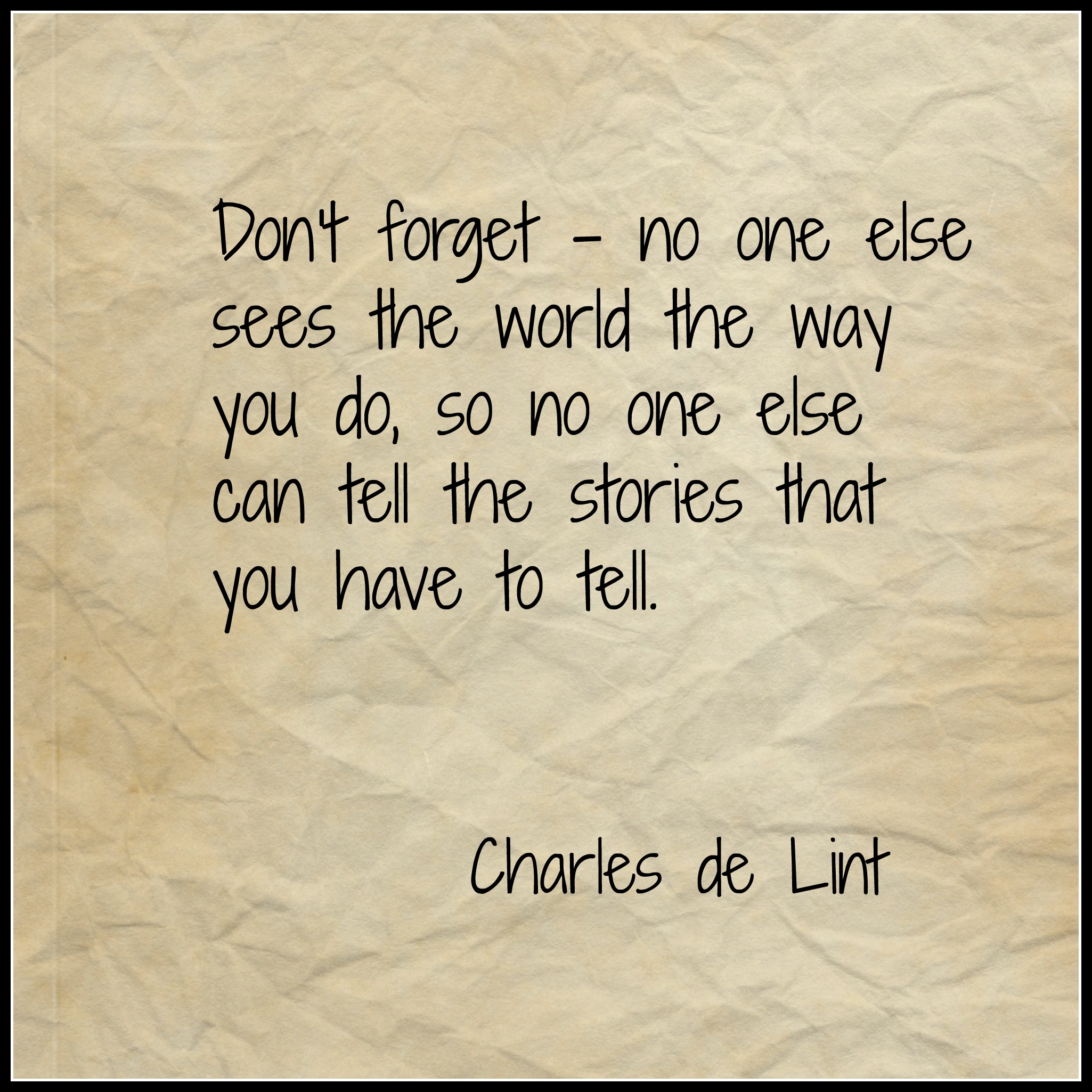
Part of the reasoning behind that advice is that no one sees the world quite the same way as you, so no one else can tell your stories. Another part is, if you want to see something there are bound to be other people who want to read that kind of story too. And even more, there will be people who don’t know they want to read that kind of story until they find yours. Then they will want more…Continue reading You don’t have to add diversity—just stop erasing it!→
Everyone claims that they evaluate a book, or movie, or other work of art based on the quality of the work, and not the identity of who made it. But that isn’t true. A woman writes a Star Trek-inspired story in which characters who were not involved romantically on screen are, or the characters cross-over with the characters of another fictional series, and it’s relegated to fanfic archives and looked down upon by serious people. A guy who has had several science fiction novels published writes a Star Trek-inspired story in which the fictional characters cross-over into the real world and discover a strange relationship between the real and fictional world, and it’s awarded a Hugo.
Knowing who did it changes our perception of the quality and importance of the work. Even though we don’t like to admit it.
For example, I have justified my enthusiasm for a movie or television series that everyone else I know thinks is terrible—and that I agree is badly written and/or poorly directed—simply because a particular actor or actress was in it. Similarly, there is an author (who I have written about before) whose activities promoting anti-gay laws and fundraising for anti-gay organizations caused me to pledge long ago that I will never again buy anything that he has written; and when asked my opinion of his stuff, I mention the reasons why I boycott him.
That’s a bit different than the blanket sort of de-valuation that either Kane or Penny were discussing in the above linked items.
And it isn’t just who produces it that matters in the way the powers that be evaluate a work of fiction. Even more important then who is writing it is who we (which is to say, the collective consciousness) believe is the intended audience. Red Shirts wasn’t dismissed out of hand as fan fiction not merely because it was written by a guy, but even more because it was perceived as being aimed at the dude-bros of geekdom. Many things in the story were crafted to appeal specifically to the guys who love space battles and love arguing about whether Han Solo or Captain Kirk would come out triumphant in various arenas of competition.
I want to pause for a moment and point out that I liked Red Shirts, just as I like BBC’s Sherlock. I’m a guy who grew up watching the original Trek series (during it’s original primetime run 1966-69) as well as reading Sherlock Holmes stories. Because I’m also a queer guy, I don’t entirely match the target audience, but I’m close enough for it to resonate. My point isn’t that those sorts of work are inherently bad. It’s that other work which is at least as good (if not better) gets relegated to various ghettos of the arts not because those works are inherently less worthy, but because they are perceived as being intended for the “wrong” audience.
If you have a girl or a woman as your lead character, your story won’t be marketed as serious science fiction or fantasy or mainstream fiction. Instead it will be channeled into Young Adult, or Romance, or some other “specialized” category. Heaven forfend that you have a queer protagonist! That is going to be perceived as a niche work at best.
How do we fix this? The first step is, if you really love science fiction or fantasy, make an effort to find works that don’t fall into that so-called mainstream audience. When you find something that you think is good, buy it, recommend it, look for other things by the same author and buy those as well. If you’re active on Goodreads, post positive reviews of these discoveries. If you bought the book from an online source that lets you rate and review works, write a review. All of those places have algorithms for recommending works to other people, and most of the algorithms are more likely to recommend a work if it has a lot of reviews.
If the work is published in a magazine, whether it be a paper publication or online, write in to say how much you liked the particular story. Let the people who published it and the person who wrote it know that you liked it! If they know there is an audience for that sort of story and that sort of protagonist, you’ll see more of that kind of thing.
If you find yourself wishing there was more work that has a particular kind of protagonist or is set in a particular kind of world, consider writing it yourself. Sometimes the only way to get more good art that includes us is to do it ourselves. And that’s okay. Because no matter how unusual you may think it is, I guarantee you that someone else out there is looking for it, too.
(Click to embiggen)I’m getting ready to do National Novel Writing Month (NaNoWriMo) again, which means that I’m also nagging, wheedling, and otherwise attempting to recruit people to join in the fun. It really can be fun. Usually people respond with worry that they can’t do it, or that they’ve tried it before and didn’t finish, and therefore they don’t want to set themselves up for failure again.
The problem with that is one thing which is certain to set you up for failure is not even giving it a go.
No matter what I say, some of you (and you know who you are) will continue to protest that you’re never able to finish, you never know what to write next, et cetera, et cetera.
To which I say: bull. Pure, unadulterated bull.
You know why that claim is pure bull? Humans are hardwired to tell stories. Over 2 millions years of natural selection has strengthened and perfected the neural machinery of language and more specifically story-telling. Stories are how we constantly make sense of the world. Another driver cuts you off in traffic? When you tell someone about it later, you use narrative tools to do so, attributing possible motives, build in dramatic pauses, and probably use some colorful language.
You’re human? You can read these words? Then you know how to tell a story.
The only reason you haven’t finished before is because you decided not to finish. You might claim that you didn’t know what to say next, or claim you wrote yourself into a corner, or ran out of time. But all of those things are lies to cover up the real problem. You are afraid that what you wanted to say next was not “good enough.” You were afraid that what you wanted to say next was “wrong.”
Don’t worry about whether it is good enough. It’s a first draft. Of course it isn’t perfect, yet. But if it gets you from one paragraph to the next, it’s good enough for a first draft. Keep going.
Don’t worry about being wrong. It isn’t a math quiz or a history exam. It’s a story. Not only that, it’s your story. There aren’t objectively wrong ways to get your characters from point A to point B. If you’ve written your protagonist into a corner, the next words you type can be, “suddenly, a trapdoor opened beneath her feet.” You’re out of the corner. Worry about making a smoother transition during the second draft.
I had started to type in the previous paragraph that there aren’t wrong ways to tell a story, but that isn’t true. There is one definitively wrong way: and that is to give up.
When it comes to the editing and revision stage, there will be all sorts of considerations about continuity, and what works in the particular kind of story you’re telling, and what will work for the kind of audience that wants to read the kind of story you’re telling. Those are all things that can be fixed by rewriting, deleting, tweaking, adding, and so forth. But it is utterly impossible to fix a story that isn’t written.
So stop making excuses. Roll up your sleeves, and write.
And if you won’t listen to me, then take if from Ray Bradbury:
“Don’t think. Thinking is the enemy of creativity. It’s self-conscious, and anything self-conscious is lousy. You can’t try to do things. You simply must do things.”
—Ray Bradbury
This is just one of many excellent worksheets to help you write to be downloaded from jamigold.com/for-writers/worksheets-for-writers/ (click to embiggen_I posted almost nothing all last week for a very specific reason. I have two very large editing/revision projects that have been dragging out for many more months than they should have taken. So I decided last week that,other than Friday Links and another “more of why I love sf/f” post I usually do on Thursdays, I couldn’t spend any time composing blog posts. It was my hope that this would make me finish one of the projects.The good news is I did make more progress last week than I have been most weeks. Unfortunately, I haven’t finished either project. But because one of the projects is editing a novel, I have been using a few tools to help in that process, one of which is the checklist shown here. Jami Gold has made this—and several other worksheets you might find useful—available for download in .doc format here at her blog.
This particular worksheet is based on a couple of articles. One by Jami Gold, How to Make the Most of a Scene; and another by Janice Hardy, Rule of Three: No, the Other One. Either of which you might find useful if you are writing a work of fiction or revising such a work.
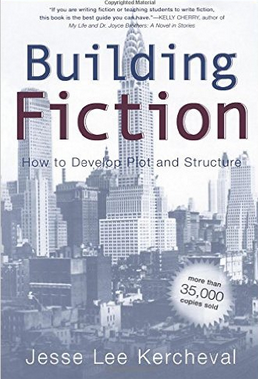
The cover of my copy doesn’t look like this…And as I usually do when I recommend any reference for creative writing, you ought to check out Jesse Lee Kercheval’s Building Fiction: How to Develop Plot and Structure
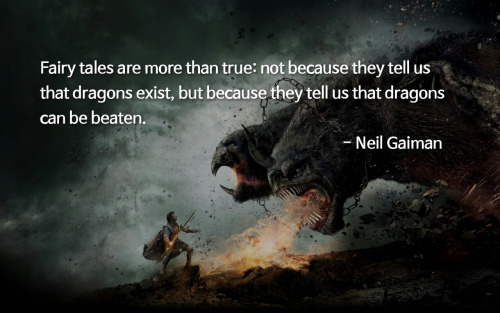
Fairy tales are more than true: not because they tell us that dragons exist, but because they tell us dragons can be beaten. – Neal Gaiman. (click to embiggen)A couple months ago I had to read a bunch of “stories” which were actually just sermons. Which was extremely ironic since the author of most of those stories (and the people who put those and similar stories onto a ballot we’ve already discussed to death) all claimed that they had taken the actions they had because they were tired of reading stories with messages1.
Over dinner last night, my husband pointed out2 that C.S. Lewis, even when writing stories that were meant to be Biblical allegory, remembered that the stories had to be stories first: fully-rounded characters that you care about facing obstacles that seem insurmountable which they overcome through their own actions. And that made me realize that even Lewis’s Christian apologetic novel, The Screwtape Letters was less preachy than some of the other stories we were discussing—because even while discoursing on the nature of human imperfection in the form of letters from a senior demon to his nephew (who is a Junior Tempter), Lewis created a demon who was, as a character, sympathetic and relatable.
I’ve written about this before, during which I quoted (and disagreed with) a Christian filmmaker’s argument that all fiction has a message. The same argument has been being repeated by a lot of people in the discussions specifically about sci fi/fantasy writing, with a new variant: maybe none of us (of any political opinion) notice the messages we agree with because we are so passionate about the things we believe.
I think this is just as wrong as the earlier version. All fiction tells stories, yes, and those stories will embody the values of the author in many ways. I’ve given the example that part of my fundamental temperament is a refusal to accept a no-win situation4, and therefore even when I write grim stories with unhappy endings5, there winds up being at least some hint of a glimmer of hope somewhere in the tone of the story.
But the C.S. Lewis example belies that notion that all fiction is message fic. Yes, some people find the allegory of the Narnia books not to their liking, but I haven’t met anyone who’s read them who can’t explain the plot. Yet, I read scores of reviews of “Parliament of Beast and Birds” earlier this summer (by some very smart people) who couldn’t find a plot6.
So I remain firm in believing that if your story is a message, you’re dong it wrong. That isn’t how you make good art.
I agree that messages are to be found in stories. But they ought to be more like that one alluded to in the Neal Gaiman quote, “Fairy tales are more than true: not because they tell us that dragons exist, but because they tell us dragons can be beaten.” They are meanings that can be inferred by the reader. They are meanings that different readers will interpret in different ways. The interpretations of some readers can contradict the interpretations of other readers and can contradict the interpretation of the author.
Some readers will come away from the story knowing that dragons can be beaten. Others will come away convinced that wizards always find loopholes. Others will say that kings always find ways to take credit for other people’s work. Others may say the message is never to underestimate the damsel. And some, of course, will say the message is humans would rather kill an endangered species than learn how to live with them.
If the story is art, if the storyteller has done their job, the world of the story should be vivid enough and rich enough for readers to find and see all of those sorts of things in the tale. Which is what you want. You want the reader to be transported into a world that they will experience and interpret themselves. You want the reader to share your vision, yes, but you want that vision to take on a life of its own and for the reader to find visions of their own.
That is the opposite of a sermon, whose goal is to bring a person around to thinking the “right” way. To adhere to the truth as defined by the speaker.
I want my readers to run through the imaginary world and find new things that I never dreamed of.
2. We were on the subject because he had been reading one of his favorite sci fi zine sites and had gotten pulled into the comments section of a book review, if I recall correctly3.
3. I was into my second glass of my favorite wine at my favorite restaurant, so I am probably getting the details wrong.
4. Intellectually, I know that lots of situations are no-win, but there’s always that one voice in the back of my head arguing that we should just spend a little more time and try something else…
5. And despite the fact that more than one reader has accused me of being a hopeless optimist who writes everything through rose-colored glasses, I actually have written more than a few tragedies.
6. Or figure out what the story was supposed to be about7.
7. Quick sum-up: imagine an idiot savant has read some Aesop’s Fables and then binge-read the entire Christian apocalyptic snuff-porn series, Left Behind8, and then attempts to write fanfic of it.
8. To be fair, much of the New Testament’s Book of Revelations is treated as snuff-porn by a lot of Xtians I knew growing up. One of them was me. It was my grandfather who pointed out to me that I was spending all my time and energy focusing on the end of the word, when god put us here to build each other up and make the world a better place.
Mythphile.com (Click to embiggen)Several times over the years I’ve gotten into discussions with co-workers (who are also technical writers) about the differences between writing fiction vs technical documentation vs other kinds of non-fiction, and why many of them believe you can’t be good at both kinds of writing. The usual feeling is that the requirements of most organizations needing technical writing are so regimented that they stamp out any possibility for creativity. The people who make this argument believe that technical writing is merely describing and presenting facts in the correct order, whereas fiction writing requires an artiste.
Others argue in the opposite direction. Once you learn basic spelling and grammar, they claim, fiction writing is just about making things up. It’s not possible to get anything wrong. If you accidentally contradict yourself, well, it’s your story, change it! They believe it’s much more difficult to learn and understand all the parts of a device or program or process and then explain it in a concise way.
Both arguments are exactly wrong. And both contain as much truth as falsehood.
A writer’s job—whether she is a novelist, technical writer, journalist, or historian—is to take an idea or vision they have in their own head, and use words to evoke or transfer that same knowledge to the mind of the reader. That process, the meeting of minds, is ultimately the same whether you are describing how to configure a clustered server application, an adventure in a distant galaxy, or the process to make your great-grandma’s chicken noodle casserole.
There are specifics in each of those scenarios that are different, but they all use the same skills. And non-fiction is never as straight forward as people think. This is why you end up with situations, such as the Stonewall movie I’m feeling trepidatious over (and wrote about yesterday). If you’re trying to tell someone about a series of actual events, you still have to make narrative decisions about where to begin, how much background information to include and when, which events to include and which to leave out, and where to end it.
German drama critic, Gustav Freytag, suggested this method of analysing the structure of stories in 1863. (englishbiz.co,uk Click to embiggen)For a novel or movie based on a historical event, that also means choosing viewpoint characters, constructing an emotional arc you think will resonate with the audience, and arranging events to follow that arc to reach a satisfying conclusion. Real life seldom happens in a neat, precise order that perfectly follows Freytag’s Triangle.
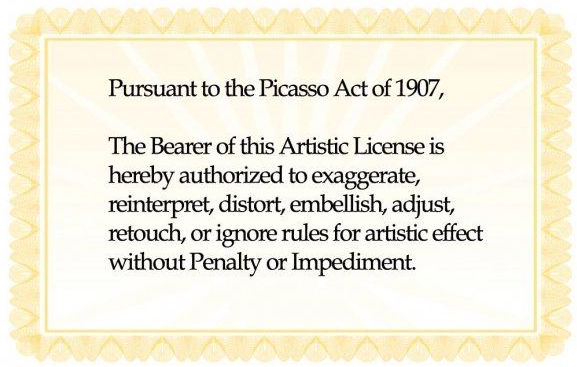
So you have to make compromises. You fudge the timing of events to make a more dramatic and satisfying story, perhaps. This is what we actually mean by “artistic license.” In order to tell the story in a way that moves people, you take a few liberties. In the 1995 movie about the Stonewall Riots that I mentioned yesterday, for instance, they take an event that happened in 1966 and drop it into 1969. The sip-in was an event organized by the Mattachine Society, the non-radical gay rights organization that had been around since 1950. Lots of states had laws against bars serving gay people—specifically in New York at the time, a bar could lose its license if it simultaneously served drinks to more than one gay person. A single openly gay person at a bar was okay, but two (such as a couple on a date!) was a big no-no. So this group of very respectable-looking people went from bar to bar, made a big announcement that they were gay, and asked to be served. They had to go to a bunch of bars before someone refused to serve them, at which point they could file a lawsuit, whose ultimate aim was to get the regulation thrown out in court as a violation of the Constitutional rights of association and assembly. Which they did.
None of the people involved in the sip-in had anything to do with the Stonewall riots later on. And the Stonewall Inn was not one of the bars where they tried to get served at. The makers of the 1995 movie, for whatever reason, decided to have the heroes of their movie being the guys that also stages the sip-in, and had them do it a month or so before the riots at Stonewall. It doesn’t really make much sense, and it certainly isn’t how it happened. The filmmaker was probably trying to come up with a way to show that his fictionalized versions of the real people who spontaneously rose up in the riots were actively fighting for their rights before that night. It was a way to show them as being active, aware participants in history, to give them agency in the plot. Because, apparently, deciding as an unarmed person to physically fight back against a bunch of armed police officers isn’t active enough!
I think that’s going to ultimately prove to be what’s happening with that brick-throwing scene that everyone is up in arms about in the trailer. The movie maker, having decided to tell the story through his fictional character who is not based on any specific participant in the riots, and who was crafted specifically to be an archetypical everyman, needs to do something active to show agency, and to move the audience to see him as the hero of his personal narrative. That doesn’t necessarily excuse it, but it would explain it.
It is a tough problem. When I was doing an edit pass on the first book in my Trickster series, I realized that I had spent so much time weaving all of the subplots together (and all the jokes—the word apocalypse may be in the title of the first book, but I am writing light fantasy!) so that all the characters get to the big climactic battle and have their emotional arcs culminate, I had turned my main protagonist (and one of the supporting protagonists) into a soccer ball. They were each propelled by events from one part of the plot to the next, seldom showing any agency. They each made decisions along the way, but I had wound up writing those scenes in such a way that each was always reacting to events outside his control. Fortunately it didn’t take a lot of revision to recast some of those scenes to make it clear that there were actual choices being made. I added one scene to give the main protagonist a more active role in shaping the end result of the plot. I think it worked.
As a storyteller, I know why these decisions about how to make a compelling tale out of historical events happen. Your hope is that the overall effect is to illuminate the past, show how far we’ve come, and introduce people unfamiliar with the topic to the struggles of the people involved. If not done right, you might still please the audience, but you’ve muddled things up, erased the real heroes, and sold the viewer a pretty but awful lie.
Yesterday I wrote about queer invisibility in movies, television, books, and other forms of cultural expression—specifically why being annoyed at us for trying to find hints of our existence in such things contributes to the culture of oppression. Comprehending that requires understanding decades of discrimination, the consequences of straight male privilege, and finding a way to empathize with people who have lived with the alienation, rejection, and oppression that results from the aforementioned discrimination.
Which can make the whole thing seem overwhelming.
But each of us who creates art and stories can contribute to the solution. Queers aren’t the only ones who are marginalized—or excluded completely—from most stories. And no writer is immune. For example, many years back at my monthly writer’s meeting I was receiving feedback on a chapter of a book I was writing. Another member of the group asked me why there were no women in the book. I’d read a number of chapters by that point, and it just seemed odd to her in a story where my protagonist was a middle school student that there had been no female characters, at all.
There are lots of topics boiling away in the real world that I keep wanting to comment on. Some of them are about drama in sci fi fandom, some are about controversies in the community of writers, some are arguments about civil rights, some are arguments about police use of force, and so on. Each of varying importance in the scheme of things, to be sure, but all involving real people and real harm in one way or another; therefore all worthy of some consideration.
But I’m supposed to be working on some hefty writing goals for the month. And I’m supposed to be trying to spend less of my time and energy getting outraged and ranting about things. So I keep stopping myself from writing about them, and try to turn my attention back to my fiction writing.
But even then, I am confronted with some of those same issues. What are the stories I’m trying to tell, and why am I telling them this way?…Continue reading The stories I have to tell→
This bon mot from Jean Oram really captures how I feel right now.
Editing is like killing your story and then very slowly bringing it back to life.
My Camp NaNoWriMo project is to take the rough draft of what I had originally intended to be one book, and turn it into two books. And I don’t want to just chop it in two—not just because I have really disliked several series which have been built that way, but also because one of the problems the first draft has is too many subplots to easily follow. I still think it’s quite doable. I have about half the the characters and their plots pulled out and getting resolved in one book, then the bulk of the next book is the other half of the characters and their plots, with some of the characters from the earlier book joining in for the big battle at the end.
To make the earlier book work as a book on its own, I’m changing one important event in the battle which is its ending, in a way which I believe will later solve an issue which was causing my writer’s group to get bounced out of the story. I hope.
But it has involved a whole lot less new writing than I had expect, so far. I’m still doing more cutting and revising of existing scenes than writing new stuff to fill in gaps. On the plus side, as I’m making this group of subplots work on their own, I’m fixing a bunch of timing issues that had been plaguing the first draft.
So I’m not just killing a book and very slowly bringing it back to life, I’ve killed a set of conjoined twins and am trying to bring them back to life as two self-sufficent beings.
In Sir Terry Pratchett’s brilliant novel1, Hogfather, one subplot3 is that an excess of belief causes the temporary creation of a bunch of minor godlings/fairies, such as the Oh-God of Hangovers or the Sock-eater. And one of those beings is the Cheerful Fairy. She is said to “look just like your first schoolteacher”9 and wasn’t very good at her job. She kept trying to get the wizards of Unseen University to engage in party games and other activities suitable for Hogswatch Night11.
I am once again embarking on a Camp NaNoWriMo project12. I’ve recruited several friends to join my cabin14. I’ve had most success at NaNoWriMo and Camp NaNoWriMo where I had writing buddies to check in with, and sometimes have word count races with. Camp NaNoWriMo is supposed to be a low-key version of National Novel Writing Month, where you either set a lower word count than the standard 50,000 words in a month, or you work on an editing or revising project. So I’m going to try to be more cheerleader rather than competitor with my buddies17. Thus, Cheerful Fairy!
 Yesterday, in reaction to a recent episode of the Cabbages and Kings podcast, I concluded by suggesting that if we can’t find stories which include people like ourselves, that one of the solutions is to write the stories ourselves. As the cliché goes, if you want a job done right you have to do it yourself. That isn’t to say that only queer writers should write queer characters, nor that only women should write women and girls as protagonists, nor that only people of color should write stories with people of color in the lead. My point is more of an outgrowth of the oft-repeated advice of many different writers that if you can’t find the kind of story you want, you should write it.






 Font Folly