Friday Links (I need more coffee edition)

Cup of coffee with the phrase, “Hello Darkness, my old friend.”
“Hello Darkness, my old friend.”
We’re STILL unpacking at the new place and still cleaning the old place. So not having a lot of time to work on things like this post.

Anyway, here are the links I found interesting this week, sorted into categories.

Links of the Week

‘Disgusted’ Women, Minorities Criticize Viral Atlantic Story ‘My Family’s Slave’.

Alex Tizon’s Brutal Honesty.

This Week in Restoring Our Faith in Humanity

Movement To Stop ‘Lunch Shaming’ Hits Seattle, Snohomish County.

This Week in the Economy

The self-made man is a myth, Arnold Schwarzenegger tells students.

If Declining Towns ‘Deserve to Die,’ Where Should Their Residents Go?

This week in the environment

Energy Department to Investigate Collapse at Hanford Nuclear Site.

News for queers and our allies:

Nevada outlaws anti-gay clinical therapy on children.

Joe Biden: Americans must stand with LGBT people around the world .

Stunning Photos Debunk The Myth That Queerness Is ‘Un-African’.

Huge win: Supreme Court won’t revive North Carolina GOP’s discriminatory voter suppression law.

Target doubles down on Pride celebrations despite anti-LGBT boycott.

Berkeley schools go beyond bathrooms to support gender non-conforming students.

BuzzFeed Threw Its First Queer Prom And It Was Seriously Beautiful.

Trans Students Must Be Protected from Hate Groups.

‘The Flash’ Star Keiynan Lonsdale Comes Out as Bisexual: ‘I’ve Become Bored of Being Insecure, Ashamed, Scared’.

Science!

The Amazing Dinosaur Found (Accidentally) by Miners in Canada.

Space bender: A galaxy cluster distorts the fabric of space, creating beautiful patterns of light.

Mars May Have Been Born in the Asteroid Belt.

Why Quantum Computers Might Not Break Cryptography.

Optical nanofiber ‘hears’ bacteria swim, cancer cells move.

Smithsonian Solves 150-Year-Old Mystery Death Of Collector And Puts Bones On Display.

Mars Rover Opportunity Begins Study of Valley’s Origin.

Scientists Found Sperm’s Power Switch—And a Way to Turn It Off.

Migratory birds bumped off schedule as climate change shifts spring.

This 36-Million-Year-Old Fossil Is a “Missing Link” in Whale Evolution.

This Week in Tech

“MP3 is dead” missed the real, much better story.
“MP3 is supported by everything, everywhere, and is now patent-free. There has never been another audio format as widely supported as MP3, it’s good enough for almost anything, and now, over twenty years since it took the world by storm, it’s finally free.”

INSIDE APPLE’S INSANELY GREAT (OR JUST INSANE) NEW MOTHERSHIP.

How to Accidentally Stop a Global Cyber Attack.

The WannaCry attack should be a wake-up call for consumers, businesses and governments.

Why Doesn’t Apple’s State-of-the-Art New Campus Include a Day Care? Seriously – a two-story yoga studio, but no on site day care?

This Week in Covering the News

Sinclair Requires TV Local Stations to Air Segments That Tilt to the Right.
“Tilt” is putting it mildly; they are full-fledged propaganda…

Culture war news:

Jordan may end reviled law on rape: Parliament is asked to repeal Article 308, which allows attackers to avoid prison if they marry their victims.

Gay, transgender rights in Texas under attack in state Legislature.

Man who killed trans woman with hammer sentenced to 49 years for hate crime.

Christian Mother Mourns Loss of Son She Abandoned for Being Gay (On His Wedding Day).

West Virginia Supreme Court Rules Anti-Gay Assaults Are Not Hate Crimes.

This Week in the Resistance:

My home state’s Attorney General is also and internationally-rated chess player. In this analysis for Time magazine, it shows: Washington AG: President Trump’s Aggression Will Be His Undoing.

This week in so-called Christians

About those Trump Voters for God? Stop Calling them “Fake Christians”. I understand the point he’s trying to make, but as a fellow survivor of an oppressive denomination, I will keep calling them “so-called Christians”

This Week Regarding the Lying Liar:

David Brooks is quite often an idiot, but he nails some important truths here which most of his fellow conservative pundits have yet to admit: When the World Is Led by a Child.
“We’ve got this perverse situation in which the vast analytic powers of the entire world are being spent trying to understand a guy whose thoughts are often just six fireflies beeping randomly in a jar… And out of that void comes a carelessness that quite possibly betrayed an intelligence source, and endangered a country.”

News about the Fascist Regime:

Trump Spurns Congress as He Signals Medical Marijuana Fight.
He’s spent his entire life ignoring and bypassing laws; we shouldn’t be surprised when he does it as president…

This week in Politics:

Vermont becomes first state to pass legislation legalizing all pot use.
(All previous legalization have been by a vote of the public)

Nevada recreational marijuana industry clears state hurdles.

How close is legal marijuana in PA?

This Week in Racists, White Nationalists, and other deplorables

Paul Babeu, Lando Voyles seek apology, retraction from new Pinal County Attorney.

Ex-Pinal County Sheriff Paul Babeu hearts the shiny badge and spiffy uniform of his erstwhile office so much that he seems loath to relinquish it online.

Farewells:

Sin City, S.H.I.E.L.D. alum Powers Boothe passes away at the age of 68.

Powers Boothe, Actor Known for ‘Deadwood’ and Other Dark Roles, Dies at 68.

Powers Boothe: Actor who revelled in playing charismatic villains and all-round bad guys.

Charles Esten Remembers ‘Kind and Charasmatic’ Powers Boothe

Chris Cornell, Soundgarden and Audioslave Frontman, Dies at 52.

Chris Cornell dead: What the Soundgarden singer said about great artists dying too young.

‘Devastating loss’: Music world mourns death of Soundgarden frontman Chris Cornell.

In Unmourned Departures:

Roger Ailes Will Be Remembered As a Pitiful Abuser, But His Legacy Lives On in Trump.

Things I wrote:

Weekend Update 5/13/2017: Pictures and words.

Confessions of a cluttering packrat, part 2.

Unknown Search Terms and other meta-blogging emphemera.

Where do plots come from?

Cromulent is as cromulent does — adventures with dictionaries.

Videos!

Chris Cornell – Nearly Forgot My Broken Heart:

(If embedding doesn’t work, click here.)

Chris Cornell “Nothing Compares 2 U” Prince Cover Live @ SiriusXM // Lithium:

(If embedding doesn’t work, click here.)

Soundgarden – Loud Love:

(If embedding doesn’t work, click here.)

ERASURE – Love You To The Sky (Official Lyric Video):

(If embedding doesn’t work, click here.)

Cromulent is as cromulent does — adventures with dictionaries

Looking up daughter-in-law in my unabridged Oxford English Dictionary.
I am a collector of dictionaries. I love browsing dictionaries, thesauruses, encyclopedias, and other references. But while I can be very pedantic and love reading dictionaries (comparing the various definitions and variants from one to another, teasing out interesting bits of the history of the language in the process, and discovering new nuances of meaning and usage), I am not a Prescriptionist. I don’t insist that people must always use words only one particular way.

In fact, I get irritated at the kind of people who use phrases such as “That’s not a real word!” when someone uses a word that they don’t believe is in the dictionary. One reason they annoy me is that they are usually wrong. For example, “embiggen” is a word that has been used in print since at least 1884—one hundred and thirty-six years ago. Similarly, another word I’ve seen people sneer at others for using, “kitty-corner” (and its variants cater-corner and catty-corner) have been in the language for many centuries, since at least medieval times when it was spelled “catre-cornered.”

But another reason they irritate me is that the dictionary definition of the word “word” is “a sequence of sounds or morphemes intuitively recognized by native speakers as constituting a basic unit of meaningful speech used in the forming of sentences.” In other words, if the people listening understand it, it’s a word.

But sometimes I run across a word or turn of phrase that I understand, but wonder why it’s needed. The last few years I’ve noticed a bunch of my evangelical relatives and their friends referring to the wives of their sons as “my daughter in love” and the husbands of their daughters as “my son in love.” Now, the first time I saw it in a Facebook update or where ever I read the update, I thought maybe it was a bit of autocorrect weirdness.

But I started seeing it more and more, and realized it couldn’t be that many autocorrects. So for some reason a bunch of people had decided to abandon the perfectly understandable and long-standing words “son-in-law” and “daughter-in-law” with phrases that sound similar, and mostly mean the same, but also seem to be a kind of virtue signaling, you know? As in, “see what a great relationship I have with my son-in-law/daughter-in-law?”

I admit, one reason it felt like virtue signaling to me is that, because most of the people I saw using the term are folks I’ve known for many, many years, I couldn’t help notice that one person with a gay son who happened to be married to another man kept referring to the husband of her son as “his friend.” I suppose it could be worse—she’s not calling him her son in shame or anything like that.

The Oxford English Dictionary cites as the first use in writing of the term “daughter-in-law” in the year 1536, but traces the use if the suffix “-in-law” (though it was spelled “yn law”) a couple of centuries earlier to approximately the year 1300. Daughter-in-law usually refers to the wife of one’s son, though it was sometimes used also to refer to step-daughters. Brother-in-law is oldest form of the suffix, which can refer to the brother of one’s spouse, the husband of one’s sibling, or even the husband of the sibling of one’s own spouse.

The law in question, by the way, isn’t related to civil marriage laws. The original sense of the word comes from older religious and social prohibitions against marrying the widow of one’s own brother. The widow can’t marry her late husband’s brother, because in the eyes of Sammy the Supreme Being or whoever, her late husband’s brother is the equivalent of her own brother. Once the person has married into the family, they become the equivalent of a blood relative to the other members of the family.

I realize to modern ears the “in-law” suffix might imply the one is required by law to accept the person, whether you wish to or not, having forgotten that the original law in question wasn’t like the modern sense of legislative constraints

I did some google searches on “son in love” and “daughter in love” with and without hyphens, hoping to find something to give a clue as to when this particular construction came about. Most of my searches weren’t very useful, leading to blog posts and articles that were fairly recent and didn’t strike me as the sort of thing that would become part of the American Evangelical gestalt. I also kept finding references (mostly at wedding sites, and usually under the heading of Religious Service) a poem that began with the phrase “You came to me not after nine months of waiting…” and is suggested as something that the mother of the groom could read at some point in the ceremony to welcome the bride into the family. Most of the sites list it without attribution, but I eventually found a version of the poem posted without blanks for the mother-in-law to fill in with things like her age and so forth, attributed to Roberta Anne Hahn. And it includes this sentiment:

Here was not a person I could call
“Daughter-in-Law,”
because that sounds like a contract
and doesn’t begin to describe our relationship.
Law has nothing to do with it… but LOVE does.

It’s the kind of poem my grandmother would have described as “lovely.” Words I find more accurate are “cheesy,” “corny,” “cloying,” “schmaltz,” and “eye-rollingly bad,” It is also way, way too long for a reading at a wedding and I feel great sympathy for any people who have had to sit through a reading of it. Since variants of this thing have apparently been read (or at least considered for reading) at the weddings of people who turned to the internet rather than the Book of Common Prayer for guidance on their religious marriage ceremony, I could see how “daughter-in-love” as a preferred term for the wife of one’s son would catch on in certain evangelical circles.

I do find it ironic that the original meaning of the “in-law” suffix came from religious law, and now the same people who are always clamoring about how god’s law should override man’s law are trashing a bit of god’s law under the uninformed notion that this word has something to do with the legislative code. But then, those folks aren’t known for reading much of their own holy book, anyway. Why should I expect them to know how to use a good dictionary?

Where do plots come from?

A cat peering at a Macbook Pro.
Sometimes there’s a lot more staring at the screen than pressing of the keys.
A lot of my stories, no matter what length, start out as imaginary conversations. I’ll be doing something and a couple of characters will start talking in my head. Sometimes I know the character already: they may be characters I have written stories about before, or they may be characters from a book or movie or series that I have watched, or they might be characters from a roleplaying campaign I’ve been involved in. Sometimes it is a weird mix from difference worlds (you should hear some of the arguments that Spike from Buffy the Vampire Slayer, Malcolm Merlin from Arrow, and my fantasy character the Zombie Lord get into while I’m trying to read something!). And other times I don’t know who the characters are, at all.

So I write it down (or as much as I can) and see if I can keep the conversation going. If I don’t know who some or all of the characters are, I try to figure out who they are. I ask myself why they are talking about this interesting thing? What is at stake? Why does each person in this conversation care?

Notice that I haven’t yet asked ‘What happens next?’ Some people operate under the mistaken notion that the plot of a story (play, movie, series, whatever form your story takes) is what happens—this happens, then this, and then this guy does that, then she does this, then another thing happens, et cetera.

Nope. Plot is a problem, obstacle, or riddle that confronts the protagonist at the beginning of the story, is resolved by the protagonist’s own actions at the end of the story, and forms the connection between all of the events in between. Plot can be described as the blow-by-blow style of the action of the story, but getting all those actions in order generally follows long after figuring out the central conflict.

So at this stage, I’m trying to find that problem or conflict that will drive the story. That means I’m also still trying to figure out who’s my protagonist(s). You might think that as soon as I figure out one, I’ll know the other, and generally that’s true, but a single problem/obstacle/mystery can confront mulitple people, who all have to deal with it. So finding the right protagonist for your tale among the involved characters can be a challenge.

One of my favorite examples of a conflict that can have more than one protagonist is illustrated wonderfully in two middle-grade books by Mary Stolz: A Dog on Barkham Street and The Bully of Barkham Street. In the first book, the protagonist, Edward, would love to be free of the constant bullying of Martin, another boy who lives on his street. Edward also would really love to have a dog of his own, and is a bit jealous that other boys who have dogs. The second book happens at exactly the same time, and for the most part involves the same series of events, but Martin is the progagonist who has no friends and constantly tried to prove that this doesn’t bother him by picking on others.

Some times it takes a really long time for me to sort out the plot and protagonist. Years ago I had an idea for a story set in the sci fi shared universe of the Tai-Pan Literary & Arts Project. I knew who all the involved characters were and I knew what the problem was. And I thought I knew who the protagonist was. So I wrote about half of the story and read what I had at the monthly writers’ meeting. I wasn’t even halfway through the opening scene before I knew I had it all wrong. Reading the scene aloud for the first time told me that I was approaching it wrong, but also feeling the energy in the room, as some people fidgeting and others started scribbling down critiques made it clear this wasn’t the compelling story I thought it was.

I tried starting the story at a slightly different place. But when I read that over to myself, I knew it was still wrong. So I set the story aside for a few months and worked on other stories, instead. Some time later I tried writing it from a different character’s viewpoint. Things seemed to be moving along a lot better, but when I shared it with the writers’ group it was clear, once again, that I hadn’t had it right. Once again, the story went onto a back burner and I worked on other things for many more months.

Sometimes you do have to set a story aside for a long time, let it percolate in your subconscious while you work on (and complete) other stories. It may take a long time.

I tried to tell this storfy from two other characters’ points of view, but it still didn’t work. Finally, I used a modified version of an exercise from Jesse Lee Kercheval’s excellent book, Building Fiction:

For every character in the story I wrote out the answers to these questions:

  1. What does this character want immediately/externally?
  2. What does this character want on a deeper, emotional level?
  3. What is preventing this character from getting the external thing they want?
  4. What is preventing the character from getting the internal thing they want?
  5. What is the moment in the story when the character believes that they will not get what they want?
  6. What is the character thinking and feeling at that point?

I did it for every character that I thought had any role at all in the story. And once I had those things written out, I realized that one problem was that the character whose viewpoint I tried at the beginning believes she will never get what she wants, so her reaction at the crisis point of the story is to shrug and cynically say, “I knew it!” And one of the other characters never, ever believes that he can’t get what he wants, because he sees several ways to get it at every point.

Finally I saw that one of the characters I had been thinking all along as a supporting character was the person who thinks she can solve the puzzle, then learns that the problem is different than she thought, then sees everything fall apart, and then could have an epiphany and turn the situation around. Suddenly, everything clicked. I was up late a couple of nights in a row getting the story through to the end, but this time I was sure I was correct. And the writers’ group confirmed it, not by saying, “You got it!” No, instead, everyone’s critiques were about little quibbles of grammar and the like.

The events that all of the failed versions of my story covered were the same, in the abstract, as what happens in the final version that worked and was eventually published. What was different was I found the character for whom those events represented something that could be lost, but still fought for, and for whom overcoming the issue required her growing or changing.

Figuring that out is where plots come from!

Unknown Search Terms and other meta-blogging emphemera

Cat with a manual typewriter.One of the things that I have enjoyed since moving my blogging to FontFolly.Net hosted on WordPress five years ago has been seeing all the information about traffic to my site at a glance. Such as the Referrers–a section of the dashboard that shows you when someone followed a link on another site to my blog, or used a search engine. That information is available over on my author site (SansFigLeaf.Com), but I have to work harder to get the logs and parse them. WordPress does the work for me.

I used to really enjoy about once a month looking at the list of Search terms that people use to get to the site. As more and more people use private or anonymous browsing options, that list doesn’t change much, with more and more searches lumped into the category of Unknown Search Terms. Not that I don’t begrudge anybody some privacy, but it was amusing to speculate as to why someone had typed “bland relish tray” or “ceramic figurine queen jubilee” into a search engine, and whether whatever post of mine it was that they clicked on was at least entertaining to them.

On the other hand, the person who once typed “collecting dictionaries” so far as I know never left a comment or asked any question about the topic. Which is kind of sad, because if they typed that search term in, I hope it was because they or someone they cared about collected dictionaries, just like I do, and it’s always fun to meet someone who shares your interests.

Search terms aren’t the only thing of interest. Another part of the dashboard lists all of my old blog posts that someone has clicked on today. Certain old blog posts come up again and again. When it is one of my series of posts about why I love science fiction and fantasy (which are usually a review of a book or series of books or a particular author or a movie or sci fi TV series), I understand, and hope that the person enjoyed the post. When it is a particular post I wrote some months back about some infamous closet cases: former anti-gay Congressman Aaron Schock and former Pinal, Arizona County Sheriff Paul Babeu, I know that most likely it means that there has been a new development in Schock’s criminal trial on federal corruption charges, because whenever a story about his case gets published on news sites, I get a few hits. This week, though, it seems the reason why is that there has been a new development in the federal corruption investigation against Babeu. So, it was interesting to learn that he may yet be brought to justice.

I am happy that the all-time most read post is one about writing, Time doesn’t work that way. Makes me think I should get some more of my draft posts about writing, storytelling, et cetera finished and uploaded.

Confessions of a cluttering packrat, part 2

I'm not going to show you any of the clutter or piles of junk. Instead, here is a shot of the densely packed flower bed in front of the house full of irises descended from a dozen rhizomes my maternal grandmother gave me years before she died. Before we hand over the keys I'm going to dig a bunch of these up and share them around to friends.
I’m not going to show you any of the clutter or piles of junk. Instead, here is a shot of the densely packed flower bed in front of the house full of irises descended from a dozen rhizomes my maternal grandmother gave me years before she died. Before we hand over the keys I’m going to dig a bunch of these up and share them around to friends.
I often describe myself as a “packrat, son of packrats, grandson of packrats, great-grandson of packrats—as is my husband!” But the last few weeks as we went through the most intense part of the move, and even worse now in the downhill phase, I’ve been admonishing myself with the word “hoarder!” Scolding myself and actively trying to amp up the embarrassment I feel when I realize I’ve hung onto something that should have been gotten rid of long ago. Which may sound harsh, but is entirely deserved, I assure you.

For instance, this weekend while cleaning out one of the closes at the old place (a closet next to the bathroom that we have previously referred to as the supplemental medicine cabinet) from which we had packed all the essentials weeks ago, I found a basket shoved in the very back of one shelf that include a bunch of hair ties sorted by color. I stopped using hair ties sometime around 1992 when I decided that my balding had progressed to a point where I should stop putting the long hair in back into a ponytail. So far as I know, Michael has never used hair ties. I recognized the ties and the basket right away, of course. They belongs to Ray. While the chemo thinned his hair a bit, Ray had never been a balding man, and he loved wearing his hair long, dying it interesting colors, and often wore different sorts of hair ties/binders in complementary or contrasting colors, depending on his mood. But Ray died 20 years ago. Sure, in the immediate aftermath of his death, I hung onto all sorts of things that some time later I was able to be a bit more rational about, but this is ridiculous!

It gets worse.

Also way back in the back of that shelf? A good dozen old prescription bottles all with Ray’s name on them. Part of why this is worse is that right after he died, at the request of the coroner’s office, I had bagged up what I thought was every single one of his prescriptions and handed them over. So it has been my belief for 20 years that there were no bottles of his medicine in the house. So clearly I haven’t been paying attention to the things that have been pushed to the back of this closet. Maybe that’s understandable, but…

There’s another closet where we kept tools and some other things. Like the aforementioned closet, we’d already pulled things out we knew we needed to keep some time ago. I knew that most of what we left behind at this point needs to be donated or otherwise gotten rid of, but we need to go through it to determine which things go to an electronics recycler, and which can go to Value Village. I thought that I owned exactly three of those outside light timers. These are devices which are equipped with a light sensor that will turn lights on automatically when the sun sets, and keep them on for the amount of time that you have selected. I believed that I owned three because for several years I used two outside, and then I found a fancier one that had multiple outputs, and I have found a specialized outdoor extension cord with a nifty stake and a lid device. I knew I was being a packrat for holding onto the two that I was no longer using, but what I didn’t know is that I actually owned a total of five of these things, at least one of which looks so shiny and new, that I don’t think it has ever actually been used!

There was a more amusing manifestation last week. While unpacking boxes of things from the kitchen, my husband was sorting cooking tools into piles, then selecting only a few of the best of each category. At one point he said, “We own too many pie servers!” When I disagreed, he said, “The only way we would need this many pie servers is if we hosted an Insane Pie Night!”

Studies have been conducted exploring the roots of hoarding behavior. Most articles, reports, and documentaries focus how hanging onto things relieves anxiety for some people, or on how the behavior is reinforced any time something that the hoarder has kept turns out to be useful for either the hoarder or a loved one. I have tried to explain how guilty I feel any time that I discard something which I don’t really need any longer–how I always hear the voice of my grandmothers, great-grandmothers, great-grandfather, et cetera admonishing me, “You might need that someday!” or “It’s wasteful to throw that away!”

But I think not enough attention is paid to another couple of aspects of human perception that plays into this behavior.

Whatever circumstances we grew up with feel normal; other circumstances aren’t just unusual, but feel wrong. For example, growing up among packrats means that I’m acclimated to rooms being stuffed full of things–bookcases that are packed not just with books lined up neatly, but with lots of extra books and other things stuffed into the spaces above the books on each shelf, behind the books, et cetera. Shelves that are mostly empty, with a small number of figurines or something tastefully displayed look wrong to me. Too much empty space in a room actually grates on my nerves, that’s how accustomed I am to having nearly every space available in a room used for storing something.

When an object is expected, we don’t really perceive it as separate from the environment. One of my friends sums this up as, “Once something has been left somewhere that it doesn’t belong for a couple of days, it becomes invisible to my husband.” I’ve done it zillions of times. For example, I come home from a Christmas gathering with friends with several gifts. Some of the gifts are books or other objects where I already have an idea of where it belongs, so I put them into spots on existing shelves or in a cabinet or whatever. But then there is the cool little toy or gadget someone gave me. I wind up leaving it on on end table or on a spot on a shelf in front of things which belong there, with the sincere intention to figure out later where it belongs… and then it just sits there. I never get around to figuring out where it should go (or whether maybe I should pass it on to someone else). It sits there for weeks or months, until some time when it is in the way. I’ll then pick it up, wonder briefly why it is there, of all places, and then, most likely, set it down in another place it doesn’t belong, where the whole process starts over.

It’s not that I don’t understand the importance of things having a place. Nor that I don’t realize that there is a cost to storing all this stuff I don’t actually need or use. Nor am I ignorant of just how much energy and time I waste looking for things when I can’t remember where they were left. It’s that dealing with it right that moment isn’t a priority, and once the object, whatever it is, has entered the category of being invisible, it never occurs to me to do anything about it when it isn’t actively hindering something.

I don’t have a solution to this. It’s a long hard fight that I have been waging with myself for years. I have reached a point in this move where I’m irritated enough at myself over this, that anything that I feel the slightest hesitation about whether we need it is being chucked into the nearest “get rid of it” box. I’ve felt an enormous sense of relief every time I’ve carried another load of things to Value Village. But I know how this works. I know that while I may be better at it for the next few months, the old behaviors will start creeping in.

The fight goes on!

Weekend Update 5/13/2017: Pictures and words

I keep saving various images to possibly use to illustrate a Friday Links post or a political commentary, then wind up using only a fraction of them. We have another busy weekend of hauling things to Value Village and cleaning out the old place, so no time to do much writing or commenting on anything that’s happened since I put together this week’s roundup of links, so, here are some of my recently collected images/memes/what-have-you:

“I hate when I wake up in the morning & Donald Trump is still president”
“TrumpCare: Pay more for less; 24 million lose insurance; 'Age Tax' for older Americans; Guts Medicaid; Huge tax cuts for millionaires”
“TrumpCare: Pay more for less; 24 million lose insurance; ‘Age Tax’ for older Americans; Guts Medicaid; Huge tax cuts for millionaires”
Nixon is no longer the most corrupt President in our history. Dubya is no longer the dumbest President in our history. Trump stole both titles in only 110 days.
Number of times each has been accused of sexual assault: Trump 14, O'Reilly 7, Ailes more than 20 times, Obama 0 (zero)!
Number of times each has been accused of sexual assault/harassment: Trump 14, O’Reilly 7, Ailes more than 20 times, Obama 0 (zero)!
“We had a choice between a woman who is the most qualified candidate ever to seek the presidency and a man who boasted about being a serial sex abuser, and some people still want to debate if sexism played a role in the election.”
“This man launched his campaign by demeaning Mexicans; spent his entire campaign using racist dog whistles; promised policies to harm refugees, immigrants, and citizens who are people of color; and some people still want to debate whether racism played a role in the election.”
“This infamous nemesis of the LGBT community was chosen as Trump's running mate, and people still want to debate whether homophobia and transphobia played a role in the election.”
“This infamous nemesis of the LGBT community was chosen as Trump’s running mate, and people still want to debate whether homophobia and transphobia played a role in the election.”
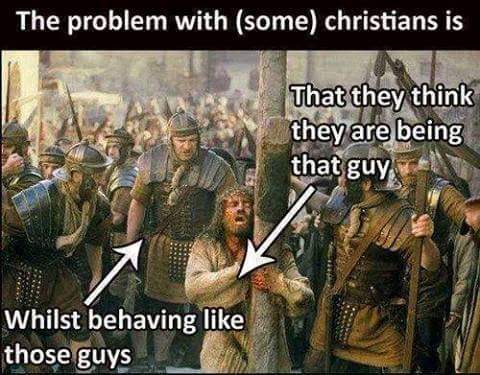
“The problem with (some) christians: That they think they are bing that guy (points to Jesus being lashed and tortured) whilst behaving like those guys (points to the roman soldiers beating Jesus).”
“A bunch of snowflakes = an avalanche” and “Make hate wrong again”
“We fight today for a better tomorrow.”

Friday Links (bengal cat and otter edition)

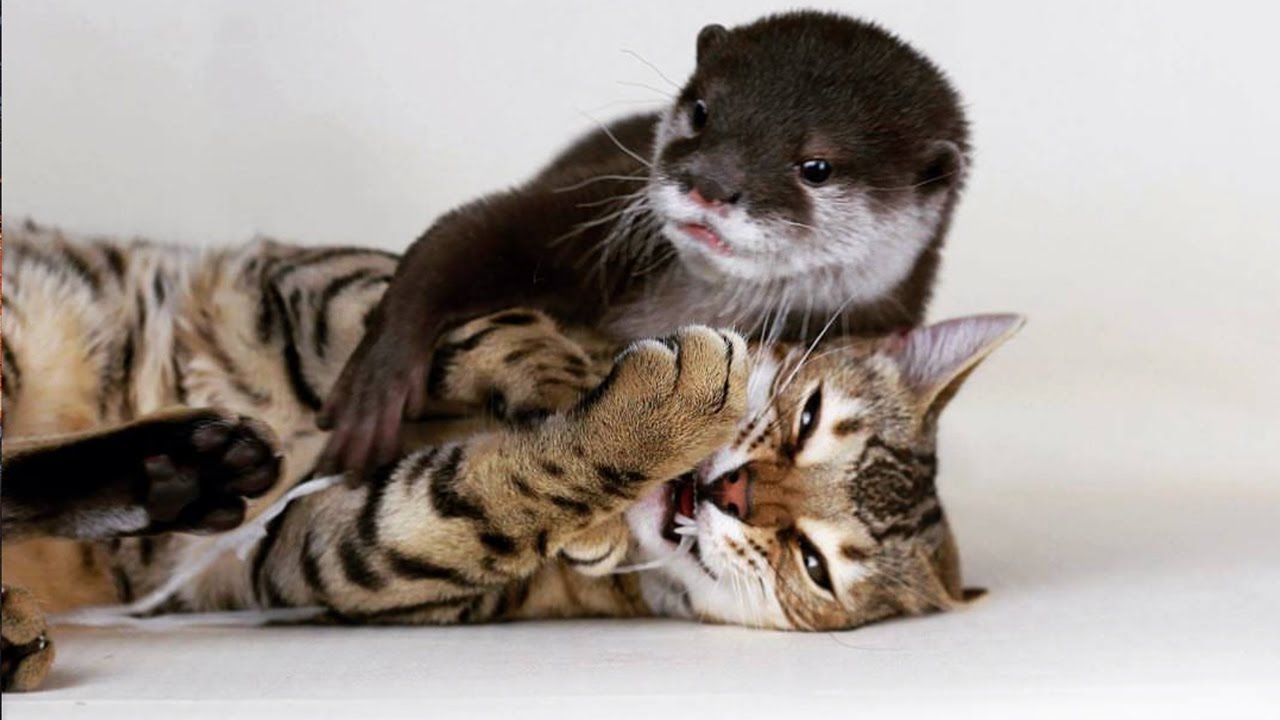
Sam The Bengal Cat & Pip The Otter
We’re still unpacking at the new place and still getting the last straggling things out of the old. I’m looking forward to some mythical day in the future where I’m not constantly exhausted. I have been slightly less sore most of this week, so that’s a good thing, right?

Anyway, here are the links I found interesting this week, sorted into categories.

Links of the Week

What Is “Free Speech,” Anyway?

It Was Cultural Anxiety That Drove White, Working-Class Voters to Trump.

No Strings Attached.

This Week in Seattle Area News

Our Weed Is So Good, a Seattle Cop Has Allegedly Been Exporting It to the East Coast.

Tacoma might sue opioid makers as part of battle against homelessness.

This week in the environment

Energy Department to Investigate Collapse at Hanford Nuclear Site.

Science!

Scientists Think They’ve Finally Found The Mechanism Behind Grey Hair And Baldness.

In a new book on duck sex, dancing birds, and human orgasms, Richard Prum argues against a cold and utilitarian view of nature’s splendor.

Comets Produce Their Own Oxygen, Planets Could Do The Same Without Needing Life.

Scientists warn thawing soil could suddenly unleash deadly pathogens unseen in centuries.

Getting to Grips With Time Crystals. What is That Really?

Daily dose of cannabis extract could reverse brain’s decline in old age, study suggests.

If science is murdered in a forest and nobody is around to hear it, does that mean the climate isn’t changing?

Humans Are Less Genetically Diverse Than Wheat. What Does That Mean for Our Species?

Scientific American: Why Don’t People Return Their Shopping Carts?

HIV life expectancy ‘near normal’ thanks to new drugs.

Oldest Evidence of Life on Earth Possibly Found in Australian Rocks.

Scientists are turning loose 40,000 sex-hungry mosquitos in Florida to fight Zika.

New 2D Quantum Material Can Conduct Electricity at Nearly the Speed of Light.

Scientists Say Greenland Sharks May Live 400 Years.

Science Fiction, Fantasy and Speculation!

“Tron Guy” Joins the Alt-Right (Except When It Comes to Furries).

ON THE NEED TO MAKE GREAT THINGS GREAT AGAIN.

Facing Facts: American Identity is Based on Alternate History.

This week in Words

‘Supposably’ vs. ‘Supposedly’ – They’re both real. But which are you supposed to use?

This Week in Tech

Steve Jobs’ custom Apple I and other historic machines are on display at Seattle museum.

An oldie, but a goodie by the late great David Carr from the days when the notion of someone posting something on a blog going viral was still new: One Man’s Musical Tastes as Fodder for a Flame War.

This week in Topics Most People Can’t Be Rational About

America’s Uniquely Lethal Domestic Violence Problem.

A statistical guide to firearms, intimate partner abuse, and the children, parents, and police who become victims, too.

Culture war news:

Stephen Fry Runs Afoul of Ireland’s Blasphemy Law for Disrespecting ‘Capricious, Mean-Minded, Stupid God’ on TV in 2015.

White Male Terrorists Are an Issue We Should Discuss.

Another Religious Right Claim Of Anti-Christian Persecution Gets Utterly Debunked.

‘Straight out of the Nazi playbook’: Hindu nationalists try to engineer ‘genius’ babies in India.

Baby born clutching IUD? Free abortion vacations? Nope — but such urban legends are very useful to the right.

Texas House passes bill protecting religious adoption agencies that deny services, turn away prospective parents.

Texas House votes to bar vaccinations of new foster children, even to prevent cancer.

The Creationist Suing Grand Canyon Park Officials for Discrimination Is Just a Bad Scientist.

This Week in Fighting Back in the Culture War:

Suing the trolls: A woman’s lawsuit against a neo-Nazi’s “troll storm” could change how to fight back against online harassment.

NCAC Demands Ohio High School Restore Eleanor & Park to English Curriculum.

This Week in the Resistance:

Dan Rather Just Gave The BEST Response To Trump’s Comey Firing.

In the wake of Trump’s brazen power play, it’s time to go nuclear.

This week in so-called Christians

Christian Minister Spent Over $30,000 on Fancy Clothes… Because He Sweat Too Much.

This Week Regarding the Lying Liar:

Poll: Trump’s health care and tax plans are very, very unpopular.

Behind Comey’s firing: An enraged Trump, fuming about Russia.

Donald Trump’s fear of the Russia scandal becomes more obvious.

Trump’s Tuesday night massacre.

News about the Fascist Regime:

Obama personally warned Trump against hiring Flynn as national security adviser: report.

Eric Trump ‘said we have all the funding we need out of Russia’, golf writer claims.

Trump Administration Cites Pro-Segregation Ruling To Defend Its Travel Ban.

Bad News for Everyone! The 2020 Census Is Already in Trouble.

Look past Jim Comey: The Census director’s sudden resignation may create serious long-term problems.

Grand jury subpoenas issued in FBI Russia probe: report.

Reporter arrested for asking Tom Price if domestic violence is a pre-existing condition under Trumpcare.

Acting FBI Director Contradicts Everything White House Has Said About FBI, Is Definitely Also Getting Fired.

This week in Politics:

How the Affordable Care Act Drove Down Personal Bankruptcy.

‘AN ACT OF MONSTROUS CRUELTY’ – Every Republican who voted for this abomination must be held accountable

Letter: Can’t get through to Chaffetz. Constituent discovers the congressman’s office has blocked all numbers coming from his own state…

Northwest Immigrant Rights Project Sues Feds Over Request to Stop Helping Undocumented People.

This Week in Racists, White Nationalists, and other deplorables

U.S. Far-Right Activists Promote Hacking Attack Against Macron.

Things I wrote:

Who are you going to believe?

“You’re not going to believe someone like that, are you?”

Questions some authors dread: Where do you get your ideas?

Videos!

BLADE RUNNER 2049 – Official Trailer:

(If embedding doesn’t work, click here.)

WONDER WOMAN – Rise of the Warrior [Official Final Trailer]:

(If embedding doesn’t work, click here.)

Jimmy Kimmel on Response to Emotional Monologue About Baby & Health Care Debate:

(If embedding doesn’t work, click here.)

Iron Sky The Coming Race – Official Teaser Trailer:

(If embedding doesn’t work, click here.)

Sam The Bengal Cat & Pip The Otter:

(If embedding doesn’t work, click here.)

Questions some authors dread: Where do you get your ideas?

“Yes I am writing you into my book! You're gruesomely butchered on page 76. You're welcome!”
“Yes I am writing you into my book! You’re gruesomely butchered on page 76. You’re welcome!”
Every writer who has ever given a reading at a bookstore or convention and/or appeared on writing panels at a convention, has been asked a variant of the question: “Where do you get your ideas?” Some authors dread it. Others have a funny answer. I am going to give you three answers: the funny answer, the truthful answer, and then the real answer:

  1. Once you obtain your Artist License, you receive a quota of ideas monthly from the Ideas of the Month Club™.
  2. No one really knows the exact nature of the alchemy in an author’s subconscious that synthesizes our experiences, conversations, and other information we encounter into ideas.
  3. The fact that you ask that question indicates you’re looking at the storytelling process completely wrong.

The funny answer is play on words. The term artistic license doesn’t describe an actual license one earns or applies for, but rather it describes the phenomenon of the distortion of fact or alterations of convention which is sometimes made in the name of art. A movie “based on real events” will take a lot of artistic license with the events in order to create an interesting and cohesive story, for instance. So the joke is a way to not answer the question; because the answer isn’t straightforward.

The truthful answer is that writers and other artists concoct their ideas usually unconsciously based on or in reaction to stories we’ve read, art we’ve seen, and so on, blended with things we’ve observed throughout our lives. Both art teachers and writing teachers I’ve known are fond of saying, “Hacks borrow, artists steal.” Humans have been telling each other stories through stories, painting, music, dance, and other art forms for tens of thousands of years. There is no such thing as a plot that hasn’t been used before. But a good storyteller doesn’t worry about that, because what makes a story ours is the individual spins we put on elements, our personal perspective, and our own style. Yes, that does mean that characters in our stories often contain elements of the personalities of people we know in real life. But they’ll contain elements from several people. Even when we intentionally base a character on someone we know, we make changes in order to fit the character into our story. Or we’ll combine the personality traits of the person we’re basing the character on with those from other people—maybe people who remind us of the person, maybe not.

The real answer may seem a little harsh, but the things that most people mean when they ask a writer about “ideas” are not the important part of writing. People asking that want to know why an author decided to make the second detective a robot, or where the notion of a flat world balanced on the back of four elephants riding through interstellar space on a giant turtle came from, or how someone came up with the idea of the character Yoda. Those things are, in one sense, merely window dressing. They aren’t the heart of each of the stories in which they occur. Sometimes, yes, a writer may start from a single question or a prompt from somewhere, but what makes the story are all the connections between the various elements. It’s how the author puts all those things together and makes them work together as the protagonist is confronted by a problem, deals with the problem and the complications that arise from it, and eventually resolves it (for good or ill) at the end.

All those elements that folks mean when they ask about ideas are part of the story. Some of them are even integral to the tale, but the magic is how they work together. Just thinking up the idea of a girl with a magical ability to control all things made out of paper, for instance, isn’t enough. The author has to put that character into a world, make her interact with the other characters, and most importantly make you believe, at least for a bit, that she’s a real person facing a very real crisis.

Sometimes we know where a particular idea came from. For instance, one night at my writers’ group, after we had gone over some scenes I had written from the first novel in the Trickster series involving some of the wizards, my friend Mark made the comment that he thought it would be funny if there was a mage in the world who was always wearing a whole bunch of gold chains, and generally conducted themself like a parody of the 70s or 80s gangster villain. It so happened that I needed a dangerous but comedic mage to fill the role of second-in-command for The Rage Regiment (a group of sort of anarchist wannabes that would figure more prominently in later parts of the series), I just hadn’t figured out her personality or anything. Mark’s description nudged me into filling in details (those dozens and dozens of gold chains around her neck each held magic amulets and the like, making her a walking arsenal; her flying carpet is a converted hearse, et cetera) that eventually came together as Sister Blister, underling to Mother Bedlam.

But the truth is, most of the time the author doesn’t know where the parts that a reader finds most interesting came from. We may know that we gave certain personality traits to a particular character because someone of our acquaintance has those traits and we find them interesting (or frustrating, or endearing, et cetera). And yes, sometimes we’ll base a character that horrible things will happen to on someone we have known in the past who we think deserved horrible things to happen to them. Or we’ll base a character on some other author’s character and give them a happy ending because we think that person deserved something better than what happened to them in the original story. But if we’re good, we’ll file the serial numbers off, and the vast majority of readers will never recognize the character we’ve created an alternate universe version of.

There is no simple answer. There is no magic process we can teach you, no sure-fire mechanism we can share that will generate “ideas” on demand. There are tricks we can use to help us write when we’re blocked and so forth. But the answer I gave above that I labeled truthful really is: no one knows the exact nature of the process. Our brains mix and match and percolate and conjoin all sorts of things from our life experiences, and sometimes something wonderful blossoms from it. And when it does, we have to get to work, making the something wonderful work in a story.

“You’re not going to believe someone like that, are you?”

About a month ago a political scandal reared its head in Seattle. An anonymous man filed a lawsuit against Mayor Ed Murray—our fist openly gay mayor, a man who served many years in the state legislature as an openly gay man—alleging that decades ago when the plaintiff was 15 years old, Murray had paid him for sex. Because of the age of the plaintiff at time, if the allegations are true, it would have been consider sexual assault, child rape, et cetera because the younger man was below the age of consent.

It was difficult to know how to respond to the allegations. The lawsuit was filed just six weeks before the filing deadline to run for mayor. The law firm representing the plaintiff is headed by a notorious anti-gay activitist. False accusations of sexual predation on underaged boys are lodged against gay men all the time. The lawyer handling the case has since behaved as if this is a crazy PR stunt rather than a case. For example, going online on local news sites to make long and very unlawyerly comments on stories about the case, or filing “motions” with the court that have nothing to do with the case but contain long press release-style recounting a of rumors about odd things that have happened around the mayor.

Three more accusers have stepped forward, two of whom had tried to make similar allegations some years ago, but were unable to convince police in Portland, Oregon in 1984 to file charges, and more recently even the local Republican-leaning paper felt there wasn’t enough evidence to print their story of being abused in a group home where Murray worked in the 80s. The paper rushed to publish the 9-year-old interviews as soon of the law suit was filed.

To be clear, among the reasons I leaned toward thinking the allegations are probably false is that in 1984 police in Portland, Oregon were not exactly known for being pro-gay, neither was the Multnomah County Prosecutor. At the time, Murray was an openly gay man with a degree in Sociology working with troubled youth. Not exactly the sort of person you would expect the police or prosecutors to go easy on in regards to charges of child rape. That led me to think that in the 1984 investigation it wasn’t merely a lack of corroborating evidence, but that there was actually evidence refuting the charges.

On the other hand, my own experience of surviving physical and emotional abuse from a parent, and how people didn’t believe me (even people who witnessed some of the abuse), as well as the many accounts of survivors of various kinds of abuse whose allegations are dismissed out of hand, the stastistics about rape victims being disbelieved, and so forth, made me reluctant to leap to the conclusion that the allegations were false.

But then there was the way Murray chose to defend himself. Rather than simply deny the allegations and say that he was looking forward to his day in court (the statute of limitations for criminal charges is long past, so it’s a civil lawsuit), Murray and his lawyer initially attacked the two non-anonymous accusers for their criminal records and drug histories. He suggested that the lawsuit was being filed for political purposes, and questioned why the plaintif was suing anonymously and waited so long to file.

Attacking the credibility of accusors is a classic abuser tactic. It doesn’t prove that Murray did it, but if he was able to dispel the scandal this way, it would have a chilling effect on abuse survivors who have less-than-perfect pasts.

The original plaintif then revealed his identity and explained that he had remained quiet all of these years because he didn’t want his father to know that he had worked as a prostitute during his teen years. His father having recently passed away, the plaintiff felt free to come forward now.

Certainly the attorney’s odd behavior (which has actually provoked sanctions from the judge) makes one wonder what his motives are for taking this case on contingency. Murray isn’t fabulously wealthy, so I’m not sure any judgement earned is going to justify the months of work the lawyer will undertake between now and the trial date (scheduled for next year). Since the initial filing of the case came off as a mini media circus, he clearly wasn’t hoping for a quick settlement to make the scandal go away. But no matter how impure the lawyer’s motives may be, it doesn’t mean the underlying allegations are false.

The four men in question have far from spotless records. But the other thing they have in common is that all four were, as teens, in very bad situations. It isn’t unexpected that coming from such a background they would find themselves turning to crime and drugs just to get by. And it is very difficult to break out of such a cycle once it is started. Vulnerable people, particular vulnerable teens, are exactly the sorts of victims certain types of abusers seek out, precisely because “respectable” people are disinclined to believe them.

On yet another hand, Murray is notoriously thin-skinned. He’s infamous for shouting at people who disagree with him, not to mention shouting at his own staff members when things don’t go his way. That means he’s exactly the sort of person who, if he is innocent of the charges, would react by attacking his accusers. But routinely shouting at people who work for you is also indicative of a particular kind of abusive person…

Fortunately, many prominent people were willing to make public statements about how the Mayor’s defense tactics cast a chilling effect on abuse victims and rape victims and so forth. The calls for him to at least drop his re-election campaign all focused on that, leaving the truth or faleshood of the allegations for a jury. So, yesterday he announced that he won’t seek re-election, though he plans to serve out his term.

If the allegations are false, it is sad that a man who has devoted so much of his life to furthering the cause of civil rights for queer people has had his career ended by them. If the allegations are true, it’s sad that his victims weren’t believed and that they felt unable to come forward publicly sooner. And it’s going to be infuriating when (not if) the usual anti-gay a-holes use this as an example that queer people are evil.

I hope the charges aren’t true, but if they are, I hope that a jury figures that out and that at least some form of justice is served. Because everyone, no matter their class, status, or past, deserves justice.

Who are you going to believe?

One night in the 90s my phone rang with the Caller ID showing a number I didn’t recognize. The area code of the number was for the region where my grandparents and several other relatives lived, so thinking that it was either one of my relatives or about them, I answered. The voice on the other end asked rather hesitantly to speak to me, by my old name (before I legally changed it). This made my heart race a bit, because if something awful had happened to my grandparents, I would expect anyone trying to contact next of kin would use that name.

I said, “Speaking. Who is this?”

“I don’t know if you remember be, but I’m —– ——-, I was one of your teachers at __________ Middle School?”

“COACH! What a surprise to hear from you!”

It is true that he had been one of my middle school teachers, but more importantly, he had been the coach of one of the team sports I mostly flailed at and specifically he was the coach who had taken time outside of school time to get me to a weight room and try to turn me into someone who wasn’t picked on so much at school. It was great to hear from him, but also a bit confusing. We hadn’t talked in decades.

He had gotten my phone number from my grandmother, and he’d been wanting to talk to some of his old students, specifically the ones he felt he hadn’t done enough for. I tried to argue that he had gone above and beyond for me, but he interrupted and told me to let him say his piece.

“We knew,” he said, “all of us knew which of the students were being mistreated at home. Some of you had the disturbing recurring bruises and such, others had less severe signs. We all knew, and we talked among ourselves about how we could help. But the law was different, then. If a teacher accused a parent of abuse, the teacher almost always lost their job, their career ended. It was our word against the parents’ and usually the kids would deny it, too, because they were too scared of the abusive parent…”

He went on for a bit, and I tried to assure him that I understood. I was well aware of how laws that protected teachers and doctors and so forth if they reported suspected abuse didn’t become common until years later. I also assured him that he had helped. “You believed in me. You talked me out of quitting. You showed me I could do more–could be more–than I believed I could. And that’s part of the reason a year or so later I was finally able to stand up to my dad. You’re one of the reasons I’m still alive to talk about it.”

As I said, he arranged for me to have workout time at the weight room up at the high school. That part that I haven’t mentioned is that he set it up so that the other kids didn’t know I was getting extra help. He made it clear that he understood that if my bullies knew I “needed extra help” it would make their bullying worse. He didn’t manage to turn me into a winning wrestler. But I got better, and discovered that I was actually good at running, so I joined the track team and later cross country. I was never a champion, but I stopped being the team member who always came in last. It didn’t make everything else in my life wonderful, but it made some parts better.

He still felt the need to ask forgiveness for not doing more. As we talked, I was able to put a few more pieces together. His wife had passed away less than a year before, so he had been rattling around their house with nothing but his memories and regrets. As he said, I wasn’t the only abused kid that had been one of his students. He mentioned a few who had died early deaths, from alcohol or drugs or suicide, and clearly he felt that their abusive childhoods had played a role. “I ran into your grandmother in the grocery store earlier this week, and she told me you lived in Seattle, doing something with computers. I was so glad to hear that you’re well.”

I tried to assure him that he had done good for me, and I knew he had done right by many others. “If it helps, I’ll say ‘you’re forgiven’ even though I never, ever felt wronged by you.”

It was an emotional night. I still tear up writing about it.

Domestic abuse is a complicated problem. So many forces in society enable the abuse and silence the abused. Abusers are good at presenting a respectable, reasonable facade. They are even better at casting doubt as to the reliability of any of their accusers. They are really good at teaching the abused to doubt themselves.

There is no simple solution to domestic abuse. Coach thought that if he made me into a better athlete, since my dad had been a champion in school, that maybe Dad wouldn’t abuse me as often. That’s not how it works. Abusers want control, and no success is ever good enough.

Yeah, Coach’s efforts to make me less of an athletic loser helped in many ways, but even more, his willingness to offer his time and ecouragement–to be a loving positive adult presence in my life–did far more in making me into a person who could make my own life better.

A few years later I learned from my aunt who still lived back there that Coach had died. I hope he believed me when I said he was one of the reasons my life had become better.

Thanks, Coach Clemens. Thank you for believing me. Thank you for believing in me. And thank you for teaching me to believe in myself.