That’s Dr. Freak to you — more adventures in dictionaries

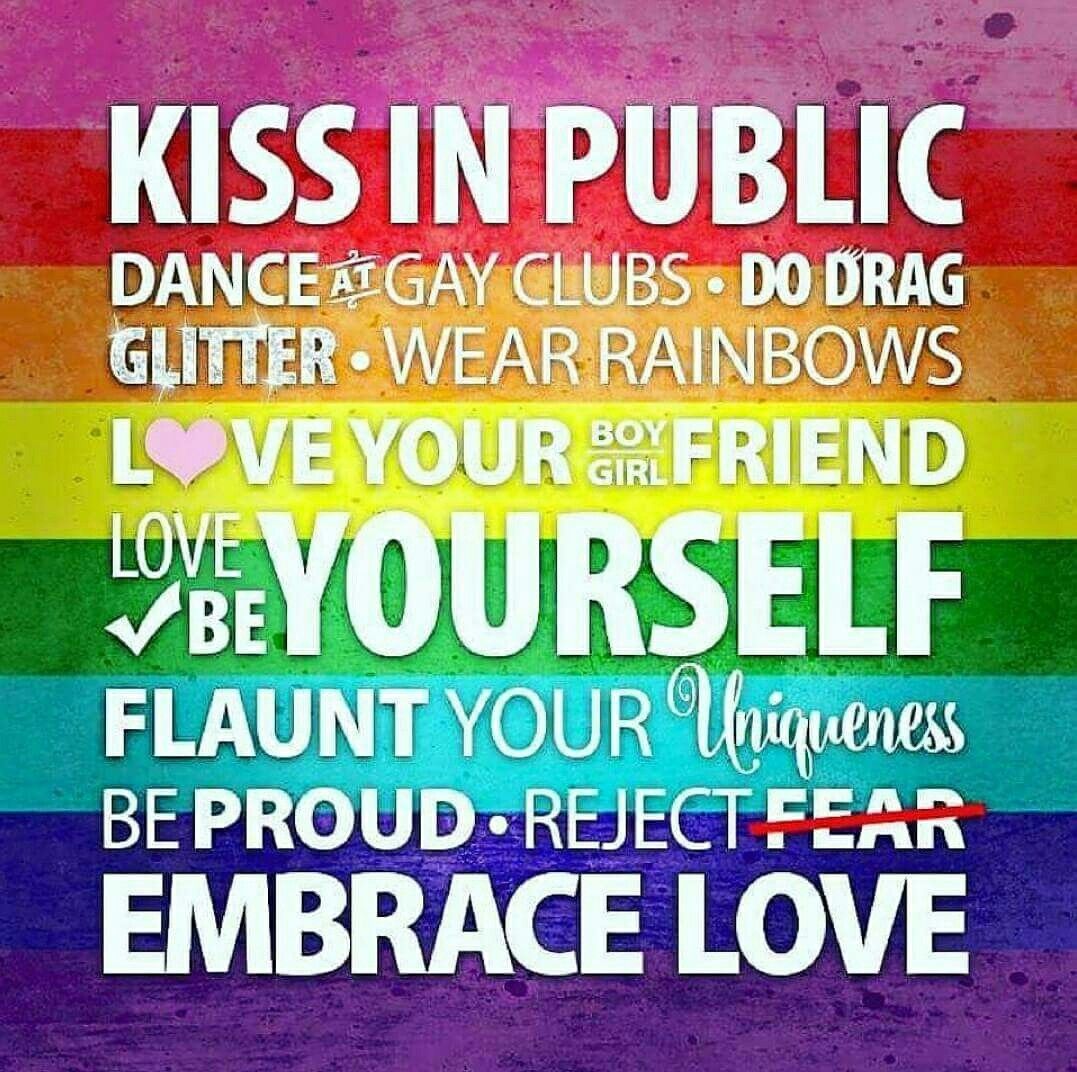
“Kiss in public; dance at gay clubs; do drag; do glitter; wear rainbows; love your boyfriend; love your girlfriend; love yourself; be yourself; flaunt your uniqueness; be proud; reject fear; embrace love”
(click to embiggen)
Pride Month hadn’t even started before complaints about why we even have Pride started crossing my various news and information streams. There are many, many reasons I can give, but the most important one is simply visibility. We still live in a society where queer kids are bullied by their own parents, thrown out on the streets at the encouragement of their churches, and told again and again that who they are and who they love is shameful and abnormal. And those messages don’t come just from overt bigots who spew anti-gay hate. That message also comes from so-called allies and even from other queer people who disparage those queers who dress outrageously or otherwise flaunt their uniqueness.

A couple months ago Newsweek used this picture to illustrate a story entitled, “The Street Skirmishes, Bar Brawls and Drunken Violence of American St. Patrick's Day”
A couple months ago Newsweek used this picture to illustrate a story entitled, “The Street Skirmishes, Bar Brawls and Drunken Violence of American St. Patrick’s Day”
The funny thing is that they never say such things about participants of St. Patrick’s Day parades. Even though a typical American Pride Parade is far less rowdy and has far less public drunkenness than the typical St. Patrick’s Day parade. Pride events have a whole lot less sexuality than typical Super Bowl commercials. Pride events have a lot less nudity than, say, Seattle’s annual Fremont Solstice Parade. But because the sexual innuendo and nudity in those other events are aimed at straight people, the outrageous costumes are being worn by straight people, and intoxicants are being publicly consumed by straight people, it seldom gets the same kind of coverage in the news, and certainly doesn’t provoke the public tut-tuting on social media that Pride events do. Remember that the original St. Patrick’s Day parades were political marches protesting discrimination against Irish people in America. When was the last time you heard of someone being fired for being Irish?

A person crossed my social media this week (I presume because I reblogged a bunch of pride comments and memes on my tumblr) to admonish me for provoking normal people by celebrating the freaks of the queer community. They claim that they aren’t at all homophobic, yet they use the same tactics and the same language as the rabid bigots. Just like the bigots, they say that being visible is flaunting our sex lives. They say we are freaks. As a certain famous man from Galilee once warned us to beware of people who claimed to be our friends: “by their fruits shall you know them.”

Since I promised that this would be an adventure in dictionaries, let’s look at that word, freak. I call your attention to the following excerpt from the Shorter Oxford Dictionary’s definition:

4 Something fanciful or extravagant; (more fully freak of nature) an abnormal or irregular occurrence, an abnormally developed person or thing, a monstrosity.
b A person regarded as strange because of their unusual appearance or behaviour.

This so-called ally is hardly the first person to call me a freak. One of my uncles used to refer to me as an over-educated freak as early as age 9, for instance. It was one of the mildest insults my eighth grade Reading and Literature teacher called me. Other teachers and school administrators told my parents that the bullying I experienced was impossible to stop as long as I failed to act like a normal boy.

What was the behavior they were referring to? Was I showing up at school wearing bondage gear or dressed as a drag queen? No, of course not. The sorts of behavior that was called out were things like:

  • I would rather read a book by myself than play sports
  • In elementary school when most boys hated the girls in class, I got along great with them
  • I knew more about cooking than I did about horsepower and gear ratios
  • My favorite TV shows were things like The Carol Burnett Show or The Partridge Family or The Mary Tyler Moore Show instead of Gunsmoke or The Streets of San Francisco
  • My favorite books were mostly science fiction
  • In middle school I treated girls I talked with as friends, rather than as objects of desire (and didn’t understand for a long time what the difference was between the way I interacted with girls and the way most of the other boys did)
  • I liked to draw and write fiction
  • I laughed at the wrong things
  • I liked to wear clothes that were interesting colors

Some of that list will not strike many people as gender nonconforming, particularly the science fiction bullet. But you need to understand that before 1977 and the advent of the original Star Wars movie (when I was a junior in High School), normal boys did not like sci fi.

The first Freedom Day Marches didn’t happen until I was in fourth grade, and they were not being covered on news stations and the like until several years later. All the bullying and teasing I got for being a sissy or a freak or “not a normal boy” was deeply rooted in homophobia that was hateful and destructive long, long before the first Pride. So don’t tell me that Pride causes homophobia. Anti-gay hatred was around for centuries before Pride.

And kids like me—kids who could never figure out why the way we talked or the way we walked or the things we found interesting were wrong—were subjected to that hatred and bigotry without appearing in public in fishnet stockings or elaborate make-up. We were bullied and mocked and scorned and ridiculed because our behavior wasn’t the usual expected of our gender. I was bullied because I didn’t understand why it was unusual for a boy to think that a pair of burgundy pants was cooler to wear than plain blue jeans. I was bullied because I thought a girl’s ideas were more interesting than what was hidden by her clothes. I was bullied because I would rather sing along (and dance or pretend to be a member of the band) to the radio than play cops and robbers.

Not all queer kids are gender nonconforming (but studies show that at least 75 percent of boys who were consistently identified as “sissies” during childhood will come out as gay as adults), just as not all queer male adults are into show tunes. But the scant number of queer athletes who have come out of the closet, as well as the large numbers of “straight acting” and “non-scene” gays, have been free to do so because the nonconforming or freakish queers decided not to take the hate and loathing lying down. The freaks decided to stop being ashamed of who they were and who they loved. The freaks decided to stop pretending to be non-freaks.

If those freaks hadn’t stood up, none of the assimilationist queers, none of the suit-and-tie or “masc for masc” gays would have the right to be out—they would all still be hiding in the closet and secretly having sex on the sly deeply steeped in self-loathing and guilt. And those folks who say that the freaks should stop flaunting who they are are no different and no less deplorable that the folks who fire gay bashing victims for talking about their assault or stab men for holding hands in public or murder trans people just for being who they are.

I’m not a drag queen and I don’t wear fetish gear to Pride. I wear my purple hats and various rainbow or unicorn-adorned t-shirts year round. I’m unashamed of my fabulous rainbow parasol and my purple earrings. But I cheer and clap for the people who do dress in drag or other outrageous clothes at Pride. I support their right to be there and be out and dress however they want without being harassed. Just as a woman wearing certain clothes in public doesn’t make it all right for someone to harass or sexually assault her, neither do queer and trans people wearing whatever they’re comfortable in make it right to exclude or denigrate them.

If my love of bright colors, glittery earrings, and silly t-shirts makes me a freak, I’m proud to join that fanciful and extravagant legion of the out and proud. If you’re going to call me a freak, fine, but that’s Doctor Freak to you, and don’t you forget it!


Who will judge the judges?

“His life will never be the one that he dreamed... that is a steep price to pay for 20 minutes of action.”
This was the judge’s rationale for giving such an incredibly light sentence (click to embiggen)
This is one of those news stories where I don’t want to wait until my Friday round-up of links to talk about it. Among the things voters did in the various states holding primaries on Tuesday, nearly 60% of the voters in one California district voters to recall (remove) a judge: Voters Recall Aaron Persky, Judge Who Sentenced Brock Turner.

The rest of this post is going to be about a sexual assault, including details that I found disturbing when reading earlier coverage of the case, and disturbing again while summarizing before stating my opinion about why the recall was justified. Don’t click through if you don’t want to read about such a crime… Continue reading Who will judge the judges?

Too much coffee, you say? Here, have some nice black tea…

“I like to have a cup of coffee to relax after a long cup of coffee.”
(Click to embiggen)
This week is not going at all as expected. Midday Monday I noticed that my throat felt a little scratchy and I seemed to be more distractible than usual. I coughed a bit later in the day, but it didn’t feel like anything serious. When I clocked out and left the office I did my usual thing, which is to launch an open-ended walk on my workout app then walk semi-randomly until I’d logged a mile. Because of the geography of the part of town my office is in, it isn’t that random. First I go uphill three blocks (because it is a very steep hill between the office’s street and the street where the nearest bus stops are), then I start the semi-random bit. At most corners I choose which way to go based on which crosswalk shows “Walk” then continue down that block until the next corner. If I get too many blocks away from the bus stop, rather than cross the street, I turn the corner and walk 3/4s of the way around the block to get me headed back, then start crossing streets based on the cross-walk sign. Then, when my watch taps my wrist and dings to tell me I’ve gone a mile, I take the quickest route from that point to the bus stop.

I do this because for years one important source of exercise was that I would walk all the way home from downtown on most workdays. When I lived in Ballard, that meant walking for a bit over an hour four or five times a week, right. Now that I’m in Shoreline the walk is closer to 10 miles and much of it would not be along pedestrian-friendly routes. So I do this walking thing that usually gets me a bit over 25 minutes of walking each day.

Anyway, on Monday the first problem was that I was wheezing more than a bit on the steep uphill part and coughed for a while. Later, when my watch binged to indicate a mile I continued to the corner, stopped, looked around, and literally muttered, “Where the heck am I?”

Instead of looping back when I reached certain streets as I usually do, I had just let the random crosswalk signs guide me. And I wasn’t really anywhere that I didn’t know—it was just that I was at a part of downtown that I haven’t walked through in many years, back when I worked at a different workplace. And businesses have been replaced and some buildings have been torn down and I had to look at the street signs to figure out where I was, instead of recognizing my surroundings. So then I turned around and made as short a walk back to the bus stop as I could.

That should have been a sign. But even when I got home and my husband told me he was afraid he was coming down with something, and I confessed to being a bit worried about the scratchy throat and cough, I still clung to the notion that it was just worse than usual hay fever because we’d gotten a shift in the weather on Sunday.

A couple hours before my alarm went off Tuesday morning, I woke myself up having a coughing fit. There were other symptoms the made it clear I had caught something. Once my alarm did go off, I did my usual morning meds, then logged in to the work system to send my boss a message that I was sick and wasn’t sure I’d be up to working from home. There were already messages from co-workers who were sick and not coming in. I crawled back into bed and for all intents and purposes slept through the rest of the day. Yeah, I woke up a few times to eat, run to the bathroom, chat with my husband when he got home, and even make dinner (if heating two frozen prepared things from counts as making), but mostly I just slept.

I had hoped to wake up feeling better and only having to decide whether to try to go into the office or work from home (so as to decrease the chances of infecting other people). But I felt much worse when I woke up than I had yesterday.

Napping, cold tablets, and coffee seem to have alleviated the symptoms a bit. Since I’ve woken up enough to bang out a silly blog post, I think I might be able to be productive this afternoon, so guess it’s time to give that a go.

Ode to the MacGuffin, or, moving the plot and subplots along

“McGuffin: noun, The MacGuffin is an object or device in a film, TV show, or a book which serves merely as a trigger for the plot.”
Heh, the text spells it both McGuffin and MacGuffin… (click to embiggen)
I didn’t quite mean to go so long before continuing my series of blog posts about subplots; additionally I have also been meaning for years to do a post on some 3rd of June1 about the 1967 hit song, “Ode to Billie Joe” and its unusual singer/songwriter, Bobbie Gentry. Then, because another blogger who did remember on June three to write about the song and they linked to an excellent podcast about the singer, I realized there is a connection between the subjects of plotting and the song. So I’m a couple of days late, but let’s talk about a narrative device which is often intimately related to subplots: the MacGuffin!

First, let’s deal with the song a bit. If you aren’t familiar with the song (which knocked the Beattles off the top of the pop charts for 4 weeks in 1967, then went on to make it into the top twenty of the Blues chart, the Soul chart, and finally the Country chart), you must listen to it once before we talk about it. Even if you are familiar, you really should listen again, and try to listen to it as a short story, rather than just some song:

The song is often retro-activily classified as Country, but at the time it was more clearly pop with a heavy blues influence. I think people classify it country because the story of the song is set in the south and she lets her Mississippi accent through.

Anyway, as a short story, it’s pretty phenomenal. And part of appeal of the song, clearly, is the mystery at the center of the song: what did the narrator and Billie Joe throw off the bridge earlier in the week, and why did Billie Joe commit suicide?

Over the years, Bobbie gave a very consistent answer: she didn’t know and it didn’t matter2. Many times she explained to interviewer, “It’s a MacGuffin. Alfred Hitchcock called the object that moves the plot along but isn’t really important on its own a MacGuffin, and writers have been using that term since the 1930s.” The song wasn’t about what happened, rather it was about unconscious cruelty. The family is sitting around the table discussing the suicide of someone they all know as casually as they ask each other to pass the biscuits, completely unaware that the suicide victim’s girlfriend is a member of their family, sitting right there listening to them.

The something that the narrator and Billie Joe were seen “throwing off the Tallahatchie Bridge” is one type of MacGuffin. It is something another character saw, and a third character comments on, which draws a connection in the minds of the audience between other events in the story. But exactly what it was and why it was thrown off aren’t important to the tale that the writer is sharing.

You’ll find a few different definitions of MacGuffin out there (also spelled McGuffin and Maguffin). My definition is:

  • A story element that draws the reader’s attention to certain actions and/or,
  • Drives the plot of a work of fiction (usually because several characters are willing to do almost anything to obtain it), but,
  • The specific nature of the object may be ambigious, undefined, left open to interpretation, or otherwise completely unimportant to the plot.

Alfred Hitchcock once said that in a thriller the MacGuffin is often a necklace (a small object which can be worth a lot of money, but may also hold sentimental value or be coveted for its beauty), while in a spy stories the MacGuffin is usually some mysterious papers. The important thing (storytelling-wise) about the MacGuffin is what it motivates the characters to do, not what it actually is. In the example of “Ode to Billie Joe” the thing thrown off the bridge is important because apparently it contributes to Billie Joe MacAllister’s decision to commit suicide, probably motivates the preacher to come tell Mama the news of the suicide, and draws the audience’s attention to the connection between the narrator and Billie Joe.

One might wonder how MacGuffins relate to subplots. As I’ve discussed before, subplots are sequences of events with plot-like structures that happen within a larger story an are sometimes only tangentially related to the main plot. And sometimes a way you can connect subplots more closely to the main plot, or even connect subplots which aren’t otherwise related to each other is with the use of a MacGuffin.

For example, many years ago when I became the editor-in-chief of a small sci fi fanzine, I inherited a project started by the previous editor. She had come up with a framing tale to allow contributors to write a large group story together. This allowed contributors who had trouble coming with with plots an easy situation to write some scenes about their characters in, for instance, and encouraged contributors to work with each other. When I became the editor, there were about 40,000 words worth of writing from a whole bunch of people… and most of it did not fit together very well.

I went through the whole thing, taking notes and trying to come up with an outline that would fit all the disparate pieces into the original framing tale. One of the contributors (and an Associate Editor), Mark, regularly wrote a lot of the stories we published, and had written several sequences with different characters which could have been turned into interesting plots on their own. So we talked at length before bringing the proposal back to the rest of the editorial board. There would need to be a lot of new stuff written to tie the pieces we had together and push the whole thing to an ending, and I proposed two MacGuffins to help us out.

A lot of the existing sequences (and the framing tale) involved a criminal deal (worth the equivalent of hundreds of millions of dollars) gone wrong. While the initiating event for the non-criminal characters was an anniversary party to celebrate the original maiden voyage of a spaceship. So, one MacGuffin would be the 36th Century equivalent of a bearer bond: a physical object containing some kind of encryption key which could be presented to a particular financial institution and be exchanged for the hundreds of millions of dollars—that could be cashed by anyone. The other was an anniversary present which the pirate captain charged his first mate with making certain was delivered to the captain of the ship celebrating the anniversary.

This gave us two packages that were both in the possession of one of the criminal leaders early in the story and then became separated in the chaos of the shoot out and the inconveniently times major earthquake. Many of the criminal characters believed that either of the lost packages was the fabulously valuable bearer bond, but weren’t sure which one. Other characters had no idea when either package was.

A lot of the sequences which had no other connection to the established plots could thus be connected merely by adding a few sentences where one or another of the characters came into contact with a package that looked important, and then losing it. Other sequences got a more firm connection to the plot by adding a few sentences where one or more of the characters was trying to find one of the packages.

The two MacGuffins on their own didn’t solve all the problems. We spent a few months dividing various sequences and subplots to members of the editorial board to write additional bridging material5. And then Mark and I would each re-write these sequences to make them fit with the others. After a few months of this, I started sensing a bit of dread from the other members of the editorial board when we got to the standing item of this story6, so one meeting when we got to that point I immediately said, “I think we’ve reached the point where I should take over and finish weaving the rest of the tale together, and then Mark can do a clean-up pass.” At least two members of the board audibly sighed and said something like, “Thank goodness.”

We published the final tale as 24 chapters in consecutive issues of the ‘zine. The final word count was a bit shy of 250,000 words. And those two MacGuffins really helped. In the penultimate chapter, one MacGuffin finally ended its journey, and I managed to make the delivery of the lost bearer bond to the pirate captain into the punchline to a joke. The other MacGuffin never made it to where it was originally destined, but it served as the final punchline to the entire story.

The objects themselves were not really important, particularly in light of the number of characters who were killed in the course of the tale7. But the objects provided through-lines for may subplots and kept the reader guessing until the very end.


Footnotes:

1. The opening lyrics of the song are, “It was the third of June, another sleepy, dusty Delta day”

2. Please don’t ping me to tell me that the 1976 movie based on the song reveals the answers. It doesn’t. Through a series of events involving a later minor hit of Ms. Gentry’s that was the theme of another movie, a studio approached her with the idea of making a movie based on her first hit. Per the agreement, her only involvement with the movie was they would use an existing recording of her singing the song in the soundtrack, and she would have one meeting with the screenwriter. Only one. He reported afterwards that the first question he asked her was why did Billie Joe commit suicide. He said Gentry laughed and told him, “I have absolutely no idea. That’s not why I wrote the song.” Then he asked her what they threw off the bridge, and she repeated that she had no idea. Left with no information he could use, the screenwriter made up a rather convoluted plot, and named the previously unnamed narrator of the song Bobbie, so that audiences would believe that the song was autobiographical3.

3. Which it wasn’t4.

4. In a very early interview about the song, when the interviewer was not happy with Bobbie’s explanation that it was a MacGuffin and pressed her repeatedly for an answer, Bobbie said, “I really don’t know. Maybe it was a ring or a locket that represented an engagement or something?” But clearly at this point she admits that she is guessing, too.

5. A lot of the authors or co-authors of some of the sequences had left the project, but we had permission to use the material, without always knowing how the absent writer had intended to end their sequence.

6. Yes, we were technically a fan project, but we had regular meetings and I had agendas for the meetings and we took minutes and everything. I’m that kind of editor!

7. It was a natural disaster story and the story of a criminal deal gone wrong, with multiple shoot-outs—of course characters died!

8. Edited to add: I should have linked to the podcast. Cocaine & Rhinestones Season 1, episode 4, “Bobbie Gentry: Exit Stage Left”.

Friday Five (Queer Pride begins baby edition)

(click to embiggen)
It’s the first Friday in June, and that means that it is now officially Pride Month! Wooooooo!

If you don’t celebrate Pride (or at least understand why we do), then I have no idea why you are reading my blog. But, it’s that time of year! Today I need to put out my rainbow flags to kick off a month a queer pride and remembrance.

It’s Friday! That means it’s time to present my Friday Five: This week you get the top five (IMHO) stories of the week of interest to queer people, top five stories about people who are less-than-wonderful, top five general interest stories, and top five videos (plus notable obituaries and a recap of my blog posts).

Queer stories of the Week:

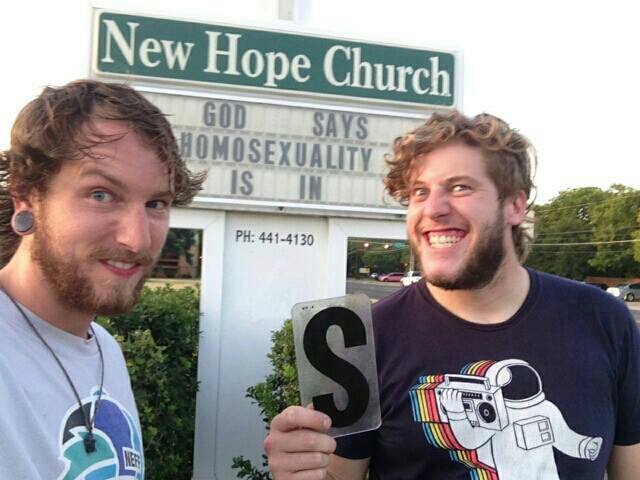
“God Says Homosexuality is in” (click to embiggen)
Meet the first trans man to model for an Andrew Christian campaign.

Catholic diocese banned gay valedictorian’s speech so he took matters into his own hands.

Transgender student wins battle to hear chosen name said at graduation.

Straight People Don’t Exist, New Research Says: A recent study shows that human sexuality is fluid and women are hornier than you think.

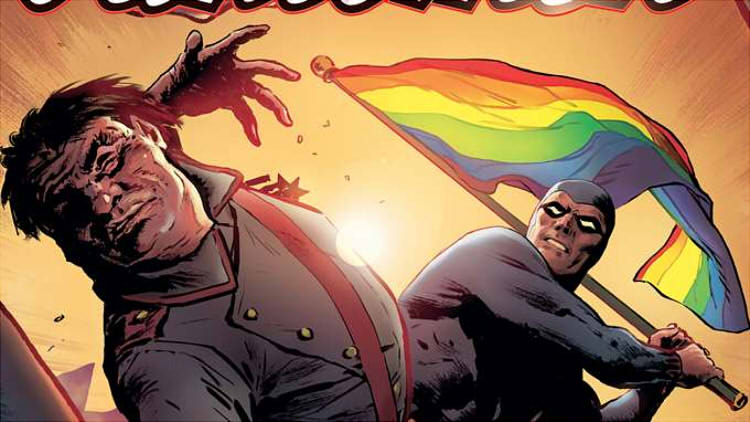
The Phantom Defeating Homophobes with a Pride Flag Is the Greatest Thing Ever.

Stories about horrible people:

Lots of thins are harder to spell than ‘lies.’
Congressional Candidate In Virginia Admits He’s A Pedophile . He doesn’t just admit that he is both a pedophile and a person who has advocated violence towards women, he is PROUD of it!

White House Blasts Samantha Bee Over Ivanka Slur, Demands TBS Cancel Show.

What Happened to Jill Stein’s Recount Millions? All indications are the bulk has gone to Jill herself, and various luxuries of the staff, not to litigating. Surprised?

Cold-blooded attacker repeatedly stabs gay couple who were holding hands.

Nazis deface hundreds of headstones in St. Louis cemetery — swastikas painted on headstones decorated with Memorial Day flowers.

Other stories of the Week:

Ad-Hominems & the Post-premodern Right.

This researcher programmed bots to fight racism on Twitter. It worked.

Debunking the 6 biggest myths about ‘technology addiction’.

The FBI wants you to do this one thing to your home router, now.

“Bankrupt” Catholic Archdiocese Agrees To $210 Million Settlement With 450 Sexual Abuse Victims.

In Memoriam:

Gardner Dozois, pioneering, genre-defining science fiction editor who helped launch my career.

Gardner Dozois, 1947 – 2018.

Gardner Dozois, 70, acclaimed science-fiction editor.

Alan Bean, moon-walking astronaut and artist, dies aged 8.

The Forgotten True Story of Alan Bean’s Unlikely Journey to the Moon.

Navy vet and fourth man on the moon Alan Bean just died at 86.

Things I wrote:

Weekend Update 5/26/2018: Bad takes, small steps, and more to some stories.

Formerly known as Decoration Day, or Memorial for Grandma.

Videos!

Samantha Bee calls Ivanka Trump a ‘feckless c***’:

(If embedding doesn’t work, click here.)

Full Frontal with Samantha Bee Clip:

(If embedding doesn’t work, click https://www.youtube.com/watch?v=b5f-uu1h8_w.)

Super Drags | Teaser [HD] | Netflix:

(If embedding doesn’t work, click here.)

Kesha – Hymn (Official Video):

]
\
(If embedding doesn’t work, click here.)

Jake Shears – Creep City (Official Video):

(If embedding doesn’t work, click here.)

Formerly known as Decoration Day, or Memorial for Grandma

My aunt sent me this picture of the flowers she put on Grandma's grave this year.
My aunt sent me this picture of the flowers she put on Grandma’s grave this year.
I’ve written many times before about why Memorial Day shouldn’t be confused or conflated with Veteran’s Day — and I am hardly the only person to draw attention to that distinction (Washington Post: Why Memorial Day is different from Veterans Day, CNN: Get it straight: The difference between Memorial Day and Veterans Day, Washington Examiner: Why you shouldn’t confuse Memorial Day and Veterans Day NPR: Memorial Day Dos and Don’ts.

Long before the Uniform Monday Holiday Act of 1968 made Memorial Day an official federal holiday, and even before the first federal observation of a day to decorate Union Soldier’s grave at Arlington National Cemetery back in 1868, and even before the Ladies’ Memorial Association of Columbus, Georgia suggested a day to honor those who died in the civil war there was another holiday observed in many parts of the country—long before the Civil War—called Decoration Day, which was a day to have family reunions and celebrate the lives of all of our deceased family members. It was usually observed on a Sunday in the spring, and frequently involved picnics in the cemeteries or potlucks at church. And my Grandmother was someone who observed that version faithfully her whole life, long before the official creation of the modern Memorial Day.

Eleven years ago this week my nice Grandma died literally while in the middle of putting silk flowers on the grave of one of my great aunts—which has contributed to my determination that the original holiday not be forgotten. In memory of Grandma, I’m reposting this (originally posted on Memorial Day 2014):

Memorial, part 2

copyright 2014 Gene Breshears
Flowers for Grandma’s grave.
Grandma always called it by the older name, Decoration Day. As I’ve written before, the original holiday was celebrated in many states as a day to gather at the grave sites of your parents, grandparents, et cetera, to honor the memory of their lives. It was often a time of picnics and family reunions. At least as much a celebration of their lives as a time of mourning. The connection to military deaths didn’t happen until 1868, and particularly in the south, was often seen as a pro-Union, pro-war, anti-southern celebration.

I didn’t understand most of those nuances when I was a kid. The modern version of the holiday, celebrated on the last Monday in May, didn’t even exist until I was a fifth-grader, when the Uniform Monday Holiday Act went into effect.

Grandma observed it faithfully. Every year, as May rolled around, she would begin calling distant relatives and old family friends. Grandma knew where just about every person descended from her own grandparents was buried, and she made certain that someone who lived nearby was putting flowers on the graves of those relatives by Memorial Day. She took care of all the family members buried within a couple hours drive of her home in southwest Washington.

She was putting flowers on the grave of my Great-aunt Maud (Grandma’s sister-in-law) seven years ago on the Friday before Memorial Day when she died. My step-grandfather said he was getting in position to take a picture of her beside the grave and the flowers (there are hundreds and hundreds of photos of Grandma beside graves with flowers on them in her photo albums) when she suddenly looked up, said, “I don’t feel good!” and pitched over.

One weekend she had blown out the candles on the cake celebrating her 84th birthday. The following Friday, while putting flowers on Great-aunt Maud’s grave, she died. And one week after that a bunch of us were standing at her graveside. It was just down to a few family members, and we were at that stage where you’re commenting on how pretty the flowers that so-and-so that no one had heard from in years were, when someone asked, “Isn’t grandpa’s grave nearby?”

Grandpa had died 23 years earlier, and was buried in one of a pair of plots he and Grandma had bought many years before. And after Grandma re-married, she and our step-grandfather had bought two more plots close by.

Anyway, as soon as someone asked that, my step-grandfather’s eyes bugged out, he went white as a sheet, and said, “Oh, no!” He was obviously very distressed as he hurried toward his car. Several of us followed, worried that he was having some sort of medical issue.

Nope. He and Grandma had been driving to various cemeteries all week long before her death, putting silk-bouquets that Grandma had made on each relative’s grave. Aunt Maud’s was meant to be the next-to-the-last stop on their journey. Grandpa’s silk flower bouquet was still in the trunk of the car. My step-grandfather was beside himself. He’d cried so much that week, you wouldn’t have thought he could cry any more, but there he was, apologizing to Grandma’s spirit for forgetting about the last batch of flowers, and not finishing her chore—for not getting flowers on Grandpa George’s grave by Memorial Day.

The next year, several of us had the realization that without Grandma around, none of us knew who to call to get flowers put on Great-grandma and Great-grandpa’s graves back in Colorado. None of us were sure in which Missouri town Great-great-aunt Pearl was buried, let alone who Grandma called every year to arrange for the flowers. Just as we weren’t certain whether Great-great-aunt Lou was buried in Kansas or was it Missouri? And so on, and so on. One of my cousins had to track down the incident report filed by the paramedics who responded to our step-grandfather’s 9-1-1 call just to find out which cemetery Great-aunt Maud was in.

copyright 2014 Gene Breshears
Flowers from us, Mom, and my Aunt Silly on Grandpa’s grave.
Mom and her sister have been putting flowers on Grandma’s and Grandpa’s graves since. Our step-grandfather passed away three years after Grandma, and he was buried beside her.

Some years before her death, Grandma had transferred the ownership of the plot next to Grandpa to Mom. So Mom’s going to be buried beside her dad. Mom mentions it whenever we visit the graves, and I don’t know if she realizes how much it chokes me up to think about it.

We had put the flowers in place. We had both taken pictures. Mom always worries that she won’t remember where Grandpa’s grave is (it’s seared in my head: two rows down from Grandma, four stones to the south). Michael helped Mom take a wide shot picture that has both Grandma’s and Grandpa’s spots in it.

I thought we were going to get away with both of us only getting a little teary-eyeed a few times, but as we were getting back into the car, Mom started crying. Which meant that I lost it.

Grandma’s been gone for seven years, now. But every time we drive down to visit Mom, there is a moment on the drive when my mind is wandering, and I’ll wonder what Grandma will be doing when we get there. And then I remember I won’t be seeing her. It took me about a dozen years to stop having those lapses about Grandpa. I suspect it will be longer for Grandma. After all, she’s the one who taught me the importance of Those Who Matter


And if you are one of those people offended if I don’t mention people who served our country in the armed forces on this day, please note that my Grandpa mentioned above served in WWII in Italy. Grandpa drove the vehicle that towed tanks that couldn’t be repaired in the field, and one of the two medals he was awarded in the war was for doing a repair of a tank while under fire. After the war, he came back to the U.S., met Grandma (who was at that point working as a nurse and trying to support her two daughters), and eventually married Grandma and adopted my mom and my aunt. Many years later, he was the person who taught me how to rebuild a carburetor (among other things). He was a hero many times over. And this post is also dedicated to his memory.

Weekend Update 5/26/2018: Bad takes, small steps, and more to some stories

“If you're more angry at children for demanding change than the gun violence taking their lives, they your are the problem.”
(click to embiggen)
Once again I’m going to talk about some stories that either didn’t make it into this week’s Friday Five or that broke after I posted the weekly round up of links, or the add new information to something I’ve posted about before. Some of this stories feel awfully familiar. Because first up we have a few different news about school shootings. A topic that we all wish would stop being relevant, but I refuse to become ho-hum about them, so let’s get into this:

Suspect wounds teacher, fellow student in 23rd school shooting in 2018. So, we’re up to 23 of these for the year, and please note that that isn’t 23 mass shootings, it is specifically 23 school shootings. At least this one didn’t go as horrifically as some of the previous ones, I guess that’s good news? Teacher credited with disarming student in Indiana school shooting.

Moving back in time a mere week, there’s been some developments in the Texas school shooting: Texas school shooting victim family sues attacker’s parents. And I applaud this. Technically, they shouldn’t have to do this, because Texas already has a law on the books making the owner of a gun that’s used in a crime liable if they can’t prove that they adequately secured it. The problem is, that we have this really stupid mindset about parents whose kids get hold of guns. When a small child gets hold of a gun and it goes off, often killing the child, we never charge the parents. We say this stupid, “They’ve been punished enough.” No, no they haven’t. Because we refuse to treat those incidents at the acts of criminal negligence that that are, people think of them as senseless tragedies. As if an unsecured gun were the equivalent of on earthquake or some other natural phenomenon. If we started prosecuting this parents, it would change the perspective.

I’m especially in favor of this since the shooter’s father has been going on news shows and telling people that his son is the real victim here. No, that teen-ager harassed and stalked a girl for four months, then murdered her and nine other people. He isn’t a victim, he is a murderer. Of course it’s not just the father that I think needs punished. A lot of headline writers do, to. It isn’t that his victim refused his advances. The headlines should say, “Shooter Harassed His Victim for Months Before Killing Her.”

Meanwhile: Publix will suspend political donations after protest by Parkland students. Good. Donating to the NRA or to politicians who refuse to enact that laws such as universal background checks including for private sales (supported by 77% of gun owners, and 87% of people who do not own guns) or closing the boyfriend loophole should be a toxic act that gets you shunned from polite society.

“Self-hatred is NOT therapy”
(click to embiggen)
Let’s get away from depressing topics and move to some good news: Hawaii becomes 12th state to ban ‘conversion therapy’ for LGBTQ youth. Hurrah! This so-called therapy is actually torture, and has been proven to lead to suicide and self-destructive behavior. And it never works. State-by-state we’re getting this insanity banned. Which is sort of amazing given the current political climate. We need to keep this fight going!

Finally, an interesting series of developments in the case of the lone man who accused George Takei of sexual assault last year: Exclusive: George Takei’s Accuser Has Changed His Story of Drugging and Assault. And it’s not that he merely was inconsistent with details, he admits that he lied about several things. The story goes into great depth about things such as: the lack of additional accusers, the victim’s story isn’t consistent with medical facts about drugs available at the time, when that is explained to him by two doctors the victim agrees that there probably never was an assault, a prosecutor’s analysis of the victim’s story is that no assault occurred, and more. My favorite thing is that the accuser’s boyfriend at the time (who was also an acquaintance of Takei) said his boyfriend never mentioned it for years. Also, the four people other news sources mentioned (but never named) who “corroborated” some of the accusers story, well, not so much. “He’s been telling it like a joke for years that time the Star Trek actor made a pass at him.”

As the reporter points out, in other cases of accusations of sexual assault, once the first report was made, dozens or more other people came forward to tell similar tales, and even more people came forward to say that they had been warned about the harasser. Not one single person has come forward with a similar tale about Takei. No one. No whispers, no rumors.

And now the only accuser says it was all a misunderstanding…

Friday Five (NFL hypocrisy edition)

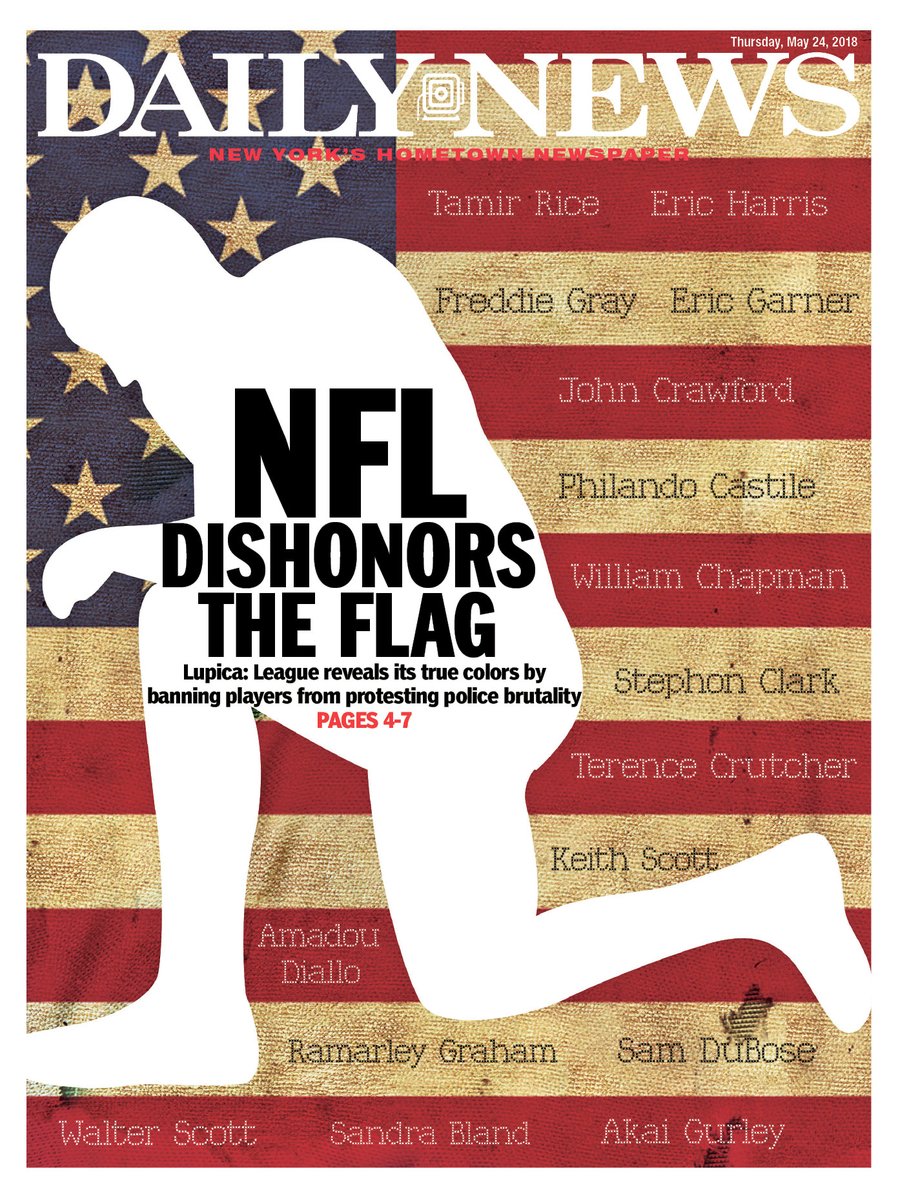
New York Daily News: NFL owners shame the national flag with new kneeling policy. (click to embiggen
It’s the final Friday of May!

The number of times this week that I and my boss commiserated about how crazy work has been for months and months now is just crazy. I’m looking forward to having this three-day weekend so much.

It’s Friday! That means it’s time to present my Friday Five: This week you get the top five (IMHO) stories of the week, plus the top five stories of interest to queer people, and top five videos (plus notable obituaries and a recap of my blog posts).

Stories of the Week:

Former NFL player lays waste to the league’s hypocrisy on the American flag with one perfect photo.

The Boys Are Not All Right.

The Definition of Insanity: Maybe it’s time to try a different approach to mass shootings.

The FBI’s mountain of uncrackable crimephones was nearly entirely imaginary.

There’s a Reason Conservative Christians Are So Bad At Fact-Checking the News.

News for Queers and our allies:

GLAAD just published its annual report on LGBTQ representation in movies, and… yikes.

Stop telling us about LGBT characters in blockbusters – show us instead.

Transgender kids’ brains resemble their gender identity, not their biological sex.

Updated: North Bend High School principal removed in ACLU settlement. I wrote about this earlier in the week. Alas, a friend who lives nearby reports that local news sources say this deplorable Principal has been reassigned to another job in the district, not actually fired.

More Americans Than Ever Support Same-Sex Marriage.

In Memoriam:

A Guide to the Many, Many Books of Philip Roth.

Bill Gold Dies: ‘Casablanca’, ‘The Exorcist’, ‘J. Edgar’ Poster Designer Was 97.

The Best of Bill Gold’s Movie Posters.

Things I wrote:

Sunday Funnies, part 29.

Wants to be rockstar, doesn’t want to make music, or How did he even get that gig?

Bigot Bulletin: Principal and Police Officer who harassed students at Oregon high school are both fired.

Don’t boo! Register to vote, confirm that you’re registered, show up, and vote!

Videos!

Ryan Amador – Loverboy (Official Video):

(If embedding doesn’t work, click here.)

Black and White – Adam Mac (Official Video):

(If embedding doesn’t work, click here.)

Stephen Colbert: Nice Try Deep State, Trump Has You Figured Out:

(If embedding doesn’t work, click here.)

Stephen King Got Blocked On Twitter By Trump:

(If embedding doesn’t work, click here.)

Last Week Tonight with John Oliver (HBO): Mike Pence:

(If embedding doesn’t work, click here.)

Don’t boo! Register to vote, confirm that you’re registered, show up, and vote!

“Your excuse sucks: 1. My vote doesn't matter, 2. I don't have time to vote, 3. Voting is too complicated, 4. Not voting is my way of voting against the system.”
“Your excuse sucks… ” (click to embiggen)
Many years ago, before my state switched to all mail-in voting, I was walking from the bus to my office on a Tuesday morning that happened to y Election Day. And I had walked over to the polling place (two blocks from my place at the time) and voted before I caught my bus to work. My office at the time was in a building that was literally across the street (in different direction) from the offices housing two of the local television stations. And I saw on the sidewalk ahead of me a cameraman and a young woman holding a microphone.

When I got to here, she stepped up and said, “Excuse me, sir, may we ask you a few questions?”

The camera was now pointed at me. I said, “Sure.”

“Did you know there was a primary election today?”

“Yes, of c–” I answered.

She interrupted me. “And did you vote this morning?”

I grinned. “Yes, as a matter of fact, I did.”

“I’m sure you know that many people don’t vote in the primary, sir. Why did you vote? Was there a particular issue on the ballot that drove you to vote today?”

I know that I blinked dumbly at her for a moment before I said. “Um, I always vote. I have never missed a primary, general election, or special election since I was old enough to register. Voting every time is what you’re supposed to do…”

But before I had finished that answer, she had dropped the microphone, turned to the cameraman and made a slashing motion across her throat. “Thank you, sir” she said perfunctorily, and turned her attention to someone else walking down the sidewalk.

Apparently that wasn’t he answer she was looking for.

I was reminded of this story because a lot of people I know are re-tweeting and re-blogging a comment from a blogger who I have frequently quoted before about how important it is to show up and vote. Except he doesn’t quite say it that way. In an earlier draft of this post I quoted him and then picked apart his arguments, but that isn’t really useful.

While it’s true that some demographics show up less consistently to vote, that isn’t the only problem. There are a lot of people pointing fingers at the voters for not showing up, but doing so ignores at least two other major issues:

  • Voters who do show up, but cast their votes for third-party candidates who can’t wint
  • Voters who look at the choices and are appalled that they get to choose between an ultra-conservative and a moderate conservative, so they don’t show up.

Both of these are different aspects of a big blind spot that most people suffer from and that the major media outlets completely ignore: The center is not where anyone pretends it is. The Democratic party is not, by any stretch of the imagination, a liberal party. The two major parties in this country are not sitting at opposite ends of a spectrum. The Republicans, yes, are super, neanderthal-ishly conservative, but the Democrats, are also conservative. Going by voting records, 90-some percent of the elected democrats in congress are more conservative than the majority of the U.S. population on topics of: gun control, health care for all, gay rights, women’s rights, tax policy, Social Security funding, and allowing businesses to discriminate against people for religious reasons.

And the establishment Democratic operation keeps endorsing candidates in that right-of-center realm. Which makes a lot of the natural Democratic base roll their eyes and either not show up, or come to the polls and throw away their votes by voting for third-party candidates.

There have been a number of primaries in various states in the last month or so where unprecedented numbers of Democratic voters are showing up. Some precincts ran out of ballots, so many more people than ever have before showed up! And in a number of these races the Democratic Congressional Campaign Committee is spending money endorsing a candidate who they think will appeal to the Trump voters. And in a lot of those races, all those extra democratic voters showing up are voting for candidates that actually espouse a few liberal policies. And they’re winning.

I don’t buy the line from the DCCC that those extra voters are picking losers. I think it’s the DCCC that keeps picking losers. Of the excuses I hear from people who either don’t vote and throw their votes away other ways is that they don’t feel they have a real choice. Even in races where the Republicans are fielding a foaming-at-the-mouth racist, and the Democrats are putting up someone who looks middle of the road. And that’s because the middle-of-the-road guy keeps making conciliatory remarks about the blatant racism, et al, of his opponent. And while there actually is a difference between the two, to a lot of folks looking on, it just doesn’t seem that way.

And we’ve been bitten before. The Democrats had solid majorities in both houses of Congress during the first two years of Obama’s presidency, and they didn’t enact any liberal policies. They spent two years begging and pleading with a few slightly less rightwing than Attila the Hun Republicans to get them to support a half-assed watered-down version of a couple of their promised initiatives. Even with more than 70% of the voters approving it, they didn’t even try to repeal Don’t-Ask- Don’t-Tell (allowing queer people to serve openly in the military) until the lame duck session after they lost their majority in the first midterm.

Yes, I agree with the blogger I alluded to above that it is on us to show up and vote. It’s on us to encourage others to show up and vote. But one of the ways we can encourage them to do that, is to give them candidates they actually believe in.

I’m looking at races this week where the milquetoast right-of-center candidate backed by the establishment Dems lost to a left-of-center candidate who enunciated some progressive ideas. I’m noticing that those are the races where people are turning out. I’m noticing that turn out is typical or less than typical in races where the only choices progressive voters are getting is several right-of-center safe bets.

That’s why, after a rather long discussion with a poor schmuck working the phone bank for the DCCC trying to convince me to increase my monthly donation to the DCCC because taking back the House is important, that I stopped my monthly donation to the DCCC, and increased the amount I’m giving every month to Run For Something and Let America Vote. And I’m going to keep picking actual progressive candidates to donate to directly.

And don’t bark at me about showing up. I’ve been showing up at Primary and General Election since 1978. Every one. I confess that I have missed about three Special Elections that happened way off-cycle in that time.

Now, we just need to get the rest of the liberals to do the same.

Bigot Bulletin: Principal and Police Officer who harassed students at Oregon high school are both fired

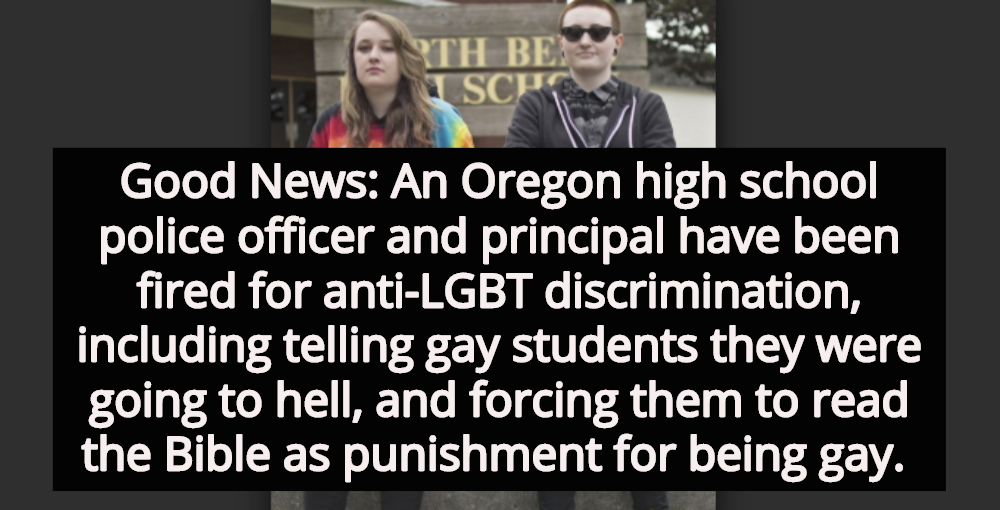
“Good news: An oregon high school police officer and principal have been fired for anti-LGBT discrimination, including telling gay students they were going to hell, and forcing them to read the Bible as punishment for being gay.”
(click to embiggen)
I decided that this can’t wait until Friday. This is an update to a news story I shared as part of a previous Weekend Update: Oregon School Officials Who Discriminated Against Gay Kids Fired.

For some background: Gay teen says she went to school resource officer after getting bullied — and he told her she’s going to hell. The “resource officer” is a local police officer assigned to the school supposedly for the purpose of protecting the students. But he wasn’t the only problem. The principal of the school punished gay kids who reported incidents of being harassed (including at least one incident where the principal’s son nearly ran two of the other kids down with his car while yelling anti-gay slurs). Teachers who tried to help the kids in varying ways were retaliated against by the Principal and the district Superintendent, and so on.

So the Oregon Department of Education sent in an investigator. The local officials admitted to several issues, including that they had forced the gay kids to read and recite passages from the Bible as part of their punishment. The ODE investigator issued a report finding that the actions of the officials probably constituted illegal discrimination under Oregon law as well as a violation of the U.S. Constitution’s requirement of separation of church and state. A final finding was pending, but the state ordered to school district to come to a settlement with the kids and their parents by the end of April. They didn’t.

During that time, many more former and current students came forward, with more incidents of anti-LGBT and racial discrimination. Meanwhile, the ACLU was pursuing a lawsuit against the district.

Monday things came to a head: ACLU OF OREGON REACHES SWEEPING SETTLEMENT WITH NORTH BEND SCHOOL DISTRICT OVER LGBTQ DISCRIMINATION AND BIBLE READING.

How sweeping?

  • Principal fired
  • District dismisses Resource Officer and requests local police assign a new officer
  • District will create a diversity committee (keep in mind that teachers already tried to set up a Gay-Straight Alliance and were stopped by the principal) which will hold celebrations for Coming Out Day and Ally Week and will issue an annual report on how the school is doing on issues of diversity, inclusion, et cetera
  • District will hire an anti-discrimination expert to help them craft policies to appropriately respond to harassment and discrimination
  • District will donate $1000 to a local queer support group

Additionally, as a result of the state investigation, the district will be under supervision of the state ODE for at least five years while all of this is monitored. The remaining bit of less than awesome news from my point of view on this is that even though the state’s investigation and the discovery process of the lawsuit found that the district Superintendent knew about all of this and committed some of the retaliation from teachers who tried to help the queer kids, he isn’t being fired. Maybe everyone assumes with the state breathing down his neck he’ll behave?

I get such a bee in my bonnet on these stories because of my own experiences being bullied as a kid. More than one teacher and administrator told my parents that until I acted like “the other boys” or “normal” there was nothing they could do to prevent the bullying incidents. Never mind that some of the worst bullying came from teachers. In middle school I was called “faggot” and “sissy” by four specific teachers far more often than most of the other kids. And then there was the time I was the one threatened with expulsion for being bullied again and again, unless I attending regular counseling sessions where, apparently, the counselor was trying to teach me to act like a normal boy.

A lot of people think that those kinds of days are behind us, but these incidents happening for the last several years at this school are merely one of many such cases. Fortunately, the ACLU keeps coming in to represent the students, and again and again the districts wind up paying big penalties for their discrimination, bigotry, and bullying. As Dan Savage has asked (many times) when will public school administrators get it through their thick heads?

And I agree with Dan on another thing. This story is a good reminder to go make a donation to the American Civil Liberties Union of Oregon!