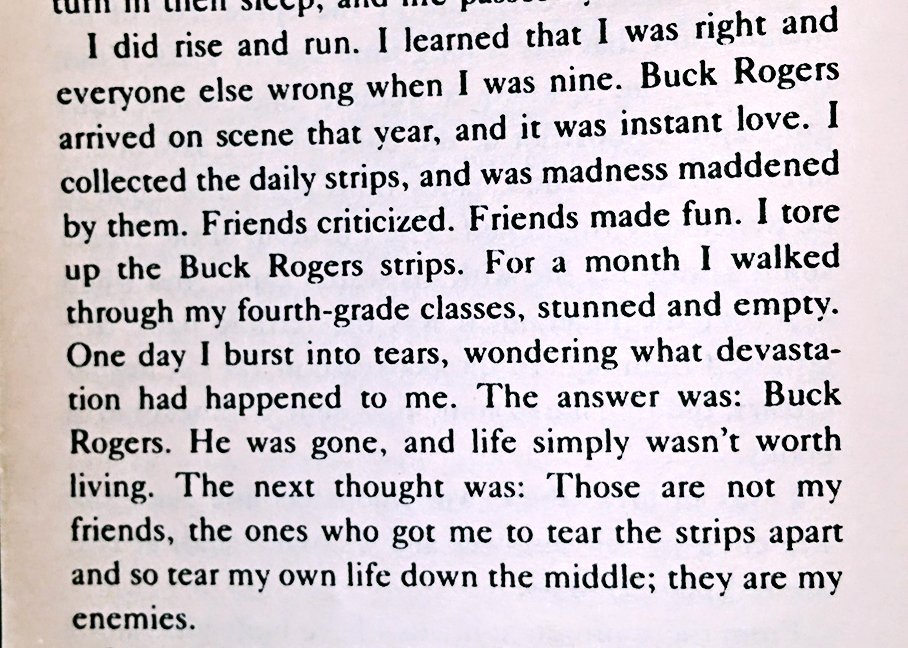

And yet it it can bother us a lot.
Some works of art (movies, books, TV series) are racist or sexist or misogynist or homophobic or transphobic or ableist, but still have some redeeming qualities. We’ve all liked something which had some problematic stuff in it. The original Dune novel is homophobic (the more evil a character was, the more gay they were, no good character is even bi-curious), for instance, but I still really enjoyed the novel when I read it as a teen (and the first few sequels). I still like the book, but now that I’ve become aware enough to recognize the homophobia, there is a caveat when I recommend it.
I wrote a lot of fan fiction in my late teens and early twenties and some of it utilized the same problematic trope as Dune: the few bisexual and gay characters I wrote back then tended to be at least a bit on the wicked side. This was true for a while even after I started coming out to myself as queer. So while I can’t excuse the inherent homophobia in a lot of stories written in the 50s, 60s, and even the 70s, I understand that it doesn’t always come from an actively malicious place. I’ve also written before about how shocked I was when, after someone pointed out a certain amount of sexism in a story I’d written, that when I looked at a lot of my other works with that in mind, there was casual sexism all over the place. So just because someone is able to enjoy a piece of art because of a small amount of problematic content that doesn’t necessarily mean that they endorse the prejudice.
However…
While I’m willing to let other people like whatever they want, I’m not required to approve of their choices or withhold judgment. If someone only likes things that are extremely anti-semetic, for instance, it’s perfectly okay to infer from that predilection that the person is more than okay with anti-semetism. Furthermore, if:
- the only works a person likes pushes a misogynist, homophobic, racist agenda;
- and/or if they actively try to exclude works that give marginalized people a place at the table;
- and/or if they actively harass fans who recommend works that center marginalized people;
- and/or if they campaign against writers or artists because of their race, ethnic background, sexual identity, et cetera;
- and/or if they say that portraying queers or people of color and so forth in a positive manner represents an existential threat to civilization…
…they have clearly shown that, like Bradbury’s classmates, they are not friends, and are actually enemies. Not just enemies of queers and other marginalized people, but in my not-so-humble opinion, enemies of science fiction/fantasy itself. I firmly believe and will always insist that sf/f is ultimately about hope. Even the most dystopian sci fi and gruesome horror hinges on a glimmer of hope. I am not being a hypocrite or intolerant if I decide to stop spending time with enemies (which includes exposing myself to their opinions). I am simply following Bradbury’s example: I’m taking my dinosaurs and leaving the room.
That’s enough about that, for now.
Voting on the Hugo Awards ends soon, and I’ve been fiddling with my ballot off and on for a while. Because of the move, I didn’t get around to downloading the Hugo Packet until later than usual. And because the unpacking is still going on and June at work was all about lots of very long hours, I’ve been having trouble reading all the stuff that made the ballot which I hadn’t already read.
Anyway, the status of my ballot as of Wednesday night is behind the link…
Continue reading Zen, Bradbury, and the Hugo Awards – more of why I love sf/f













 Font Folly